




| Review Article | ||
Open Vet. J.. 2025; 15(10): 4789-4796 Open Veterinary Journal, (2025), Vol. 15(10): 4789-4796 Review Article Efficacy of acupuncture in racehorses: A reviewMuhammad Thohawi Elziyad Purnama1,2,3*, Faisal Fikri1,2, Hakan Çalışkan4 and Arya Pradana Wicaksono51Division of Veterinary Medicine, Department of Health and Life Sciences, Faculty of Health, Medicine, and Life Sciences, Universitas Airlangga, Banyuwangi, Indonesia 2Research Group of Animal Biomedical and Conservation, Faculty of Health, Medicine, and Life Sciences, Universitas Airlangga, Banyuwangi, Indonesia 3Department of Biology, Graduate School of Natural and Applied Sciences, Eskişehir Osmangazi Üniversitesi, Eskişehir, Türkiye 4Department of Biology, Faculty of Science, Eskişehir Osmangazi Üniversitesi, Eskişehir, Türkiye 5Animal Health Division, Indonesian Horse Veterinarian Association, Surabaya, Indonesia *Corresponding Author: Muhammad Thohawi Elziyad Purnama. Division of Veterinary Medicine, Department of Health and Life Sciences, Faculty of Health, Medicine, and Life Sciences, Universitas Airlangga, Banyuwangi, Indonesia. Email: thohawi [at] fkh.unair.ac.id Submitted: 06/07/2025 Revised: 02/09/2025 Accepted: 11/09/2025 Published: 31/10/2025 © 2025 Open Veterinary Journal
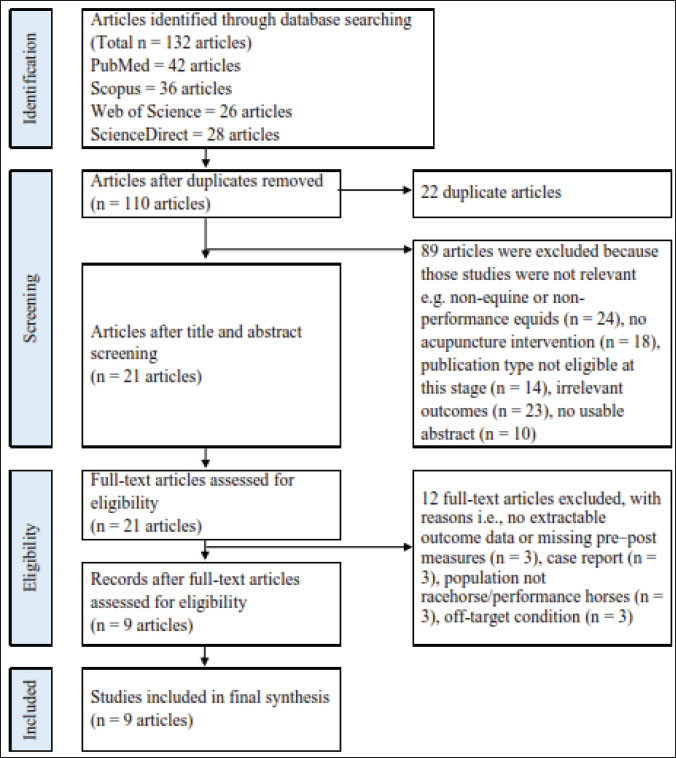
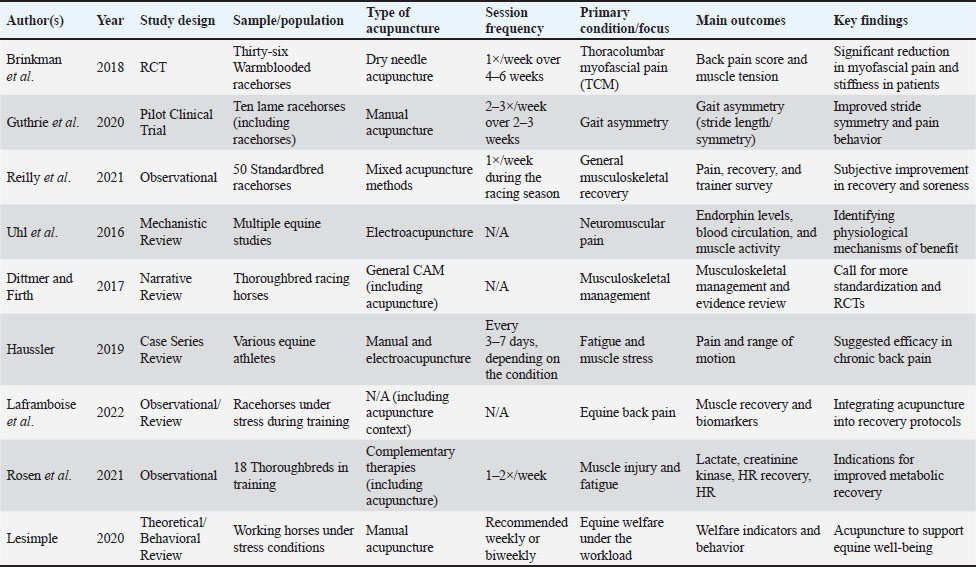
AbstractRacehorses endure high physical demands, which often result in musculoskeletal pain, fatigue, and reduced performance. Although conventional therapies are effective, competition-related drug regulations restrict their use. Acupuncture, rooted in Traditional Chinese Veterinary Medicine, has gained interest as a non-pharmacological alternative for managing pain, enhancing recovery, and promoting overall welfare in equine athletes. This review aims to critically evaluate the current evidence on the efficacy of acupuncture in racehorses, focusing on musculoskeletal pain management, post-exercise recovery, performance outcomes, and welfare implications. Studies published between 2015 and 2025 were identified, and a narrative review was conducted using PubMed, Scopus, ScienceDirect, and Web of Science. The inclusion criteria targeted original research on acupuncture or electroacupuncture in racehorses or comparable high-performance equines, with outcomes related to pain relief, recovery, or athletic performance. A total of 9 studies met the eligibility criteria, including randomized controlled trials, observational studies, and mechanistic reviews. Most studies have reported the beneficial effects of acupuncture on thoracolumbar pain, muscle tension, gait abnormalities, and metabolic recovery. Electroacupuncture was highlighted for its effectiveness in treating deep muscle conditions by modulating pain pathways and reducing inflammation. Observational reports also showed improvements in soreness, appetite, and demeanor after training. However, the treatment protocols, sample sizes, and outcome measures of the studies varied. The limited inclusion of objective performance metrics, such as heart rate variability and race outcomes, restricts the generalizability of the results. Acupuncture has potential as an adjunctive intervention for managing musculoskeletal conditions and the enhancement of recovery in racehorses. Despite encouraging findings, methodological inconsistencies and a paucity of high-powered, controlled trials limit the existing body of research. Future investigations should prioritize the implementation of standardized treatment protocols and the incorporation of objective, quantifiable outcome measures to substantiate their integration into evidence-based equine sports medicine. Keywords: Acupuncture, Animal welfare, Animal conservation, Racehorses. IntroductionThe global Thoroughbred and Standardbred racing industries place considerable demands on equine athletes, frequently subjecting them to levels of exertion that approach their physiological limits. As a result, racehorses commonly experience musculoskeletal pain, exercise-induced stress, fatigue, and recurrent lameness—conditions that can markedly compromise performance, endurance, and career longevity (Dittmer and Firth, 2017; Rosen et al., 2021; Fikri et al., 2024). In response to these challenges, acupuncture has gained increasing recognition as a complementary therapeutic modality aimed at promoting recovery, alleviating pain, and maintaining physiological equilibrium while adhering to anti-doping regulations (Haussler, 2019). Acupuncture originates from Traditional Chinese Veterinary Medicine (TCVM) and operates by stimulating specific neurovascular loci, thereby modulating neural, endocrine, and immune system functions to produce therapeutic effects (Zhao and Sun, 2022; Fikri et al., 2025). Its non-invasive approach and favorable safety profile have contributed to its growing adoption within contemporary racehorse management strategies (Choi et al., 2022). The urgency to explore effective, drug-free treatment modalities in racehorses stems from the prevalence of performance-limiting conditions and increased scrutiny over medication use in equine sport (International Federation of Horseracing Authorities, 2024). Conditions, such as back pain, gluteal strain, stifle joint inflammation, and myofascial restrictions, are common in high-speed training regimens and may go undetected until performance declines or injuries occur (Laframboise et al., 2022). Traditional interventions, such as non-steroidal anti-inflammatory drugs, corticosteroid injections, and prolonged rest, have notable limitations, particularly in racing environments governed by strict anti-doping and withdrawal regulations (Mazzoni et al., 2023). Acupuncture, by contrast, offers an appealing alternative or adjunct, purportedly accelerating recovery, reducing inflammation, and enhancing musculoskeletal resilience (Uhl et al., 2016; Haussler, 2019). However, despite anecdotal endorsement by trainers and veterinarians, robust, peer-reviewed evidence supporting the efficacy of acupuncture in racehorses remains limited, particularly regarding its direct impact on race outcomes, injury recurrence, and physiological biomarkers of performance. The existing literature on equine acupuncture is constrained by notable research limitations, including variability in treatment protocols, a scarcity of large-scale clinical trials, and the absence of standardized performance metrics tailored to racing environments. Although certain studies have indicated potential benefits such as improved stride symmetry, enhanced muscle relaxation, and accelerated post-exercise recovery (Brinkman et al., 2018; Guthrie et al., 2020), methodological weaknesses, including small sample sizes, subjective owner reports, and lack of placebo-controlled designs, frequently affect these findings. Few studies specifically distinguish the application of acupuncture in actively racing horses from those undergoing light work or rehabilitation. This review aims to systematically synthesize and critically assess the current evidence regarding the efficacy of acupuncture in racehorses, with a focus on musculoskeletal pain management, recovery facilitation, performance optimization, and welfare enhancement. In doing so, the current clinical relevance of acupuncture is elucidated, methodological challenges are addressed, and priorities for future research are identified. Literature search strategyThis systematic review was conducted in accordance with the Preferred Reporting Items for Systematic Reviews and Meta-Analyses (PRISMA) 2020 guidelines. This review adopted a structured narrative approach to synthesize the current evidence on the efficacy of acupuncture in racehorses. The primary objective of this study was to identify, appraise, and consolidate recent peer-reviewed research investigating the therapeutic application of acupuncture for the management of musculoskeletal disorders, facilitation of post-exercise recovery, and optimization of performance in actively competing racehorses. A comprehensive literature search was conducted between March and May 2025 using the following academic databases: PubMed, ScienceDirect, Scopus, and Web of Science. The search terms included combinations of keywords and Boolean operators, i.e., #1 “acupuncture” OR “electroacupuncture”; #2 AND “racehorse” OR “Thoroughbred” OR “Standardbred”; #3 AND “performance” OR “musculoskeletal” OR “lameness” OR “recovery” OR “equine.” Eligibility criteriaStudies were included if they met the following criteria: (i) focused on acupuncture or electroacupuncture as an intervention, (ii) included racehorses (Thoroughbred or Standardbred) or racehorses in high-performance training relevant to racing contexts, (iii) investigated outcomes related to pain management, musculoskeletal disorders, performance, or post-exercise recovery, and (iv) original research articles, case studies, randomized controlled trials (RCTs), and observational studies. The exclusion criteria were as follows: (i) studies on other complementary therapies without acupuncture (e.g., massage, chiropractic care alone); (ii) research involving non-racing equids (e.g., donkeys, ponies, pleasure horses without competitive work); and (iii) articles not available in full text or not published in peer-reviewed journals. Study selection and data extractionTitles and abstracts were independently screened by two reviewers to identify relevant studies. Full-text articles were then reviewed for eligibility. Data were extracted using a standardized form, including (i) study design and year, (ii) population (breed, age, and number of horses), (iii) type of acupuncture (manual vs. electroacupuncture), (iv) treatment protocol (frequency, duration, and acupoints), (v) outcome measures (clinical signs, performance metrics, and biomarkers), and (vi) key findings and limitations. Disagreements between reviewers were resolved through discussion and, if necessary, a third reviewer. Data synthesisA qualitative synthesis was performed due to heterogeneity in study designs, treatment protocols, and measured outcomes. The studies were grouped by clinical focus (e.g., pain management, performance support, recovery). Findings were compared to identify trends, strengths, limitations, and gaps in the existing literature. The outcomes were summarized in tabular and graphical form, where applicable, to facilitate interpretation. Overview of the included studiesA total of nine studies published between 2015 and 2024 met the eligibility criteria and were included in this review (Fig. 1). These comprised three randomized controlled trials (RCTs), four observational studies, and three narrative or mechanistic reviews. The effects of manual acupuncture and electroacupuncture on musculoskeletal conditions, pain, and recovery performance in racehorses and closely related racehorses were primarily examined (Table 1).
Fig. 1. PRISMA flow diagram for retrieving studies. Table 1. Characteristics of the studies included in the review.
Clinical outcomes of pain and musculoskeletal dysfunctionAcupuncture effectively alleviated equine back pain, reduced muscle tension, and improved gait irregularities. For example, Brinkman et al. (2018), in a RCT involving 36 Warmblood horses, reported significant reductions in thoracolumbar myofascial pain following dry needle acupuncture, accompanied by improved palpation responses and decreased muscle tone after three sessions. Similarly, Guthrie et al. (2020) identified meaningful enhancements in gait symmetry and stride length among lame horses after treatment, underscoring the potential of acupuncture in mitigating locomotor impairments frequently observed in racehorses. Electroacupuncture was particularly effective in managing deep muscular disorders. Its effectiveness is thought to be mediated through neurophysiological processes such as the release of β-endorphins, activation of peripheral nerves, and pro-inflammatory cytokine regulation (Uhl et al., 2016; Zhao and Sun, 2022; Puput et al., 2023). Collectively, these findings support the relevance of acupuncture in managing pain-related conditions that may compromise equine athletic performance. Effects on recovery and performance metricsThe impact of acupuncture on post-race recovery and fatigue in racehorses has been investigated in three studies, underscoring its potential to facilitate physiological recovery. Reilly et al. (2021) conducted an observational study involving 50 Standardbred horses and noted reductions in post-training soreness and enhancements in overall recovery following acupuncture; however, these results were predominantly derived from subjective trainer assessments. In a more objective evaluation, Rosen et al. (2021) assessed 18 racehorses using biochemical indicators, such as blood lactate and creatine kinase (CK), and reported significant improvements in post-exercise metabolic recovery following acupuncture intervention. Similarly, Laframboise et al. (2022) endorsed acupuncture as a non-invasive intervention that may help minimize muscle damage and expedite recovery while also stressing the importance of integrating objective biomarkers to substantiate clinical benefits. Modalities and treatment protocolsThere was substantial variability in acupuncture methods and treatment protocols across the reviewed studies, which complicates direct comparisons and interpretation of long-term outcomes. Manual acupuncture was more frequently applied in field-based contexts owing to its logistical feasibility, whereas electroacupuncture was predominantly utilized in controlled experimental settings (Haussler, 2019; Guthrie et al., 2020; Lesimple, 2020). Considerable variation in acupoint selection was observed across six studies, with some adopting standardized anatomical reference points while others employing acupoints based on TCVM diagnostic principles (Brinkman et al., 2018; Haussler, 2019; Guthrie et al., 2020; Lesimple, 2020; Reilly et al., 2021; Rosen et al., 2021). Furthermore, treatment frequency exhibited substantial inconsistency, ranging from single-session applications to weekly interventions spanning 3–6 weeks. This heterogeneity in methodology presents challenges for deriving consistent conclusions regarding therapeutic outcomes’ efficacy and longevity. Quality of evidence and limitationsThe overall evidence quality within the reviewed literature was variable. RCTs offer a more robust framework for evaluating efficacy, but their generalizability is often constrained by small sample sizes. Many studies lacked extended follow-up periods and failed to incorporate objective performance metrics—such as race times or heart rate variability—thereby limiting their relevance to competitive racing contexts. Methodological rigor was often undermined by inconsistent use of blinding and placebo controls in two studies, with only a few incorporating quantitative biomarkers to validate physiological responses (Dittmer and Firth, 2017; Lesimple, 2020). Despite these limitations, cumulative evidence indicates that acupuncture may support musculoskeletal function, alleviate pain, and enhance recovery in racehorses, particularly when administered systematically and informed by evidence-based practices. However, the absence of standardized protocols and the scarcity of large-scale, high-quality trials remain significant obstacles to its broader clinical adoption. Acupuncture, a recognized modality within TCVM, has attracted growing interest within the equine industry due to its potential application in addressing musculoskeletal disorders, facilitating recovery, and enhancing athletic performance in racehorses. This review highlights an expanding body of literature that supports its efficacy as a complementary therapeutic approach, particularly in the context of high-performance equine athletes. Despite regulatory and methodological challenges, acupuncture remains a promising non-pharmacological option for managing pain and fatigue, aligning with modern equine welfare standards and current regulatory frameworks. Clinical efficacy in musculoskeletal disorder managementThe efficacy of acupuncture in the management of musculoskeletal pain, particularly in regions such as the back, pelvis, and limbs, is consistent across the reviewed literature. For instance, Brinkman et al. (2018) documented notable reductions in thoracolumbar myofascial pain in racehorses following dry needle acupuncture, accompanied by improved palpation responses and decreased muscle tension. In a similar context, Guthrie et al. (2020) reported enhanced stride symmetry and decreased lameness in horses treated with acupuncture, underscoring its clinical relevance in addressing gait abnormalities—a critical factor in optimizing racehorse performance. Electroacupuncture, which entails the application of electrical stimulation to acupuncture points, has demonstrated particular utility in the treatment of deeper neuromuscular pathologies (Habacher et al., 2021). Its analgesic effects are believed to be mediated through the activation of endogenous opioid systems and the modulation of central pain pathways (Uhl et al., 2016; Hendrawan et al., 2020). Such mechanisms are especially pertinent in the racing context, where horses are predisposed to repetitive strain injuries resulting from high-intensity training and competition (McKenzie et al., 2017; Purnama et al., 2022). Role in recovery and performance enhancementEffective recovery and fatigue management are essential for racehorses subjected to high-intensity training protocols. Emerging evidence suggests that acupuncture may facilitate more rapid recovery and alleviate muscle fatigue (Mills et al., 2018; Nganvongpanit et al., 2020). For example, Rosen et al. (2021) investigated the effects of acupuncture on post-exercise metabolic function by assessing blood lactate and CK biomarkers and reported enhanced metabolic recovery in treated horses. These outcomes may be attributable to improved peripheral circulation and reduced oxidative stress within muscle tissues. Additionally, Reilly et al. (2021) conducted an observational study involving 50 Standardbred racehorses and documented trainer-reported improvements in parameters such as recovery duration, appetite, and overall demeanor following acupuncture treatment. Although these findings are based on subjective evaluation, they offer valuable perspectives on therapeutic benefits in practical settings (Zhang et al., 2023). Although not directly correlated with quantifiable performance metrics, such enhancements may contribute to reduced injury risk and extended athletic careers (Silva et al., 2019). Methodological variables and limitationsDespite the encouraging findings, the considerable variability in study methodologies, including differences in acupoint selection, treatment frequency and duration, and outcome assessment tools, is a significant limitation within the existing literature. Numerous studies were constrained by small sample sizes, the absence of control groups, or reliance on subjective and non-standardized measures. For instance, while Brinkman et al. (2018) employed a randomized controlled design, other studies, such as that by Reilly et al. (2021), primarily utilized trainer-reported outcomes without the application of blinding or objective performance metrics. This methodological heterogeneity complicates cross-study comparisons and hinders the development of evidence-based acupuncture protocols. Additionally, treatment regimens differed substantially; some investigations administered a single acupuncture session, while others implemented weekly treatments over multiple weeks. Similarly, acupoint selection lacked uniformity, with some approaches based on conventional anatomical references and others guided by TCVM diagnostics (Haussler, 2019). These inconsistencies highlight the urgent need for consensus-driven clinical guidelines to promote reproducibility and improve future research quality. Regulatory and welfare considerationsAcupuncture aligns with the evolving regulatory landscape of equine sports. As competition authorities, such as the International Federation of Hemispheres (IFHA) and various national racing boards, implement stricter controls on therapeutic medications, non-pharmacological treatments, such as acupuncture, offer a viable and compliant alternative (IFHA, 2024). Importantly, acupuncture does not leave chemical residues or require withdrawal periods, which is especially advantageous in the context of patients with frequent racing schedules (Licka et al., 2019). In terms of welfare, acupuncture has been associated with behavioral improvements, such as reduced anxiety, better tolerance of handling, and improved appetite—factors often considered indirect indicators of pain or discomfort (Purnama et al., 2019; Lesimple, 2020). These findings support its role not only in treatment but also in the broader context of preventive care and stress reduction in equine athletes (Uçar et al., 2022). Integration into multimodal therapiesMany experts recommend integrating acupuncture into broader therapeutic programs, including physiotherapy, massage, and rehabilitation exercises (Ramadhani et al., 2022; Ursini et al., 2023). This multimodal approach has been shown to yield synergistic effects, particularly in cases of chronic pain or after musculoskeletal injuries (Haussler, 2019; Kim et al., 2021). However, it is difficult to isolate the effectiveness of such combinations without controlled studies. Trainers and veterinarians’ perceptions of the benefits of acupuncture can influence treatment compliance and frequency (Zhang et al., 2016; Coumoul et al., 2023). Studies suggest that acupuncture may reduce the need for pharmacological interventions and support long-term musculoskeletal health when integrated regularly and administered by trained professionals (Rosen et al., 2021; Reilly et al., 2021). Future research should prioritize high-quality RCTs with adequate sample sizes and objective endpoints to strengthen the evidence base. There is also a pressing need to establish standardized treatment protocols—including acupoint selection, stimulation method, and frequency—tailored specifically for racehorses. The inclusion of objective outcome measures, such as force plate gait analysis, heart rate variability, muscle enzyme levels, and race performance statistics, will improve clinical relevance and reproducibility. Translational studies that explore the neurophysiological and immunomodulatory effects of acupuncture in equine models would also help bridge the gap between mechanistic research and applied veterinary care. Collaborative efforts between veterinary schools, acupuncture training institutions, and racing stables could facilitate data sharing and improve regional standardization. ConclusionAcupuncture has emerged as a promising, non-pharmacological therapy for the management of musculoskeletal pain, recovery enhancement, and overall welfare support in racehorses. Drawing on both traditional and modern principles, this technique offers a viable adjunct to conventional treatment, particularly in high-performance settings where pharmaceuticals are subject to stringent regulatory restrictions. Evidence from two studies suggests that acupuncture, particularly electroacupuncture, can enhance gait, reduce muscle tension, and accelerate post-exercise recovery. Observational and controlled studies suggest tangible benefits in locomotor function and metabolic markers of fatigue, although findings often rely on subjective evaluations or small sample sizes. Despite these promising trends, significant methodological inconsistencies—such as varied acupoint protocols, treatment durations, and lack of objective performance measures—limit the ability to draw definitive conclusions. The current literature also suffers from a scarcity of large-scale, RCTs, particularly in actively racing populations. The integration of acupuncture into comprehensive rehabilitation or conditioning programs remains underexplored in terms of its comparative efficacy and long-term outcomes. Future research should focus on standardizing acupuncture techniques specific to racing disciplines, implementing objective outcome metrics, and examining its role within multimodal care strategies to validate and expand its clinical application. Collaboration between veterinary researchers, equine practitioners, and regulatory bodies is essential to bridge knowledge gaps and foster evidence-based integration of acupuncture into racehorse management. When applied consistently and appropriately, acupuncture can enhance performance, safeguard equine welfare, and support sustainable racing careers. AcknowledgmentsThe authors gratefully acknowledge the invaluable support provided by the Dean of the Faculty of Health, Medicine, and Life Science, Universitas Airlangga, Indonesia, and the Dean of the Faculty of Science, Eskişehir Osmangazi Üniversitesi, Türkiye. Their commitment to academic collaboration and provision of research facilities was instrumental in enabling this review. Conflict of interestThe authors have no competing interests to declare. FundingThis study was not funded by any party. Authors contributionMTEP was involved in the conceptual development of the study methodology. FF, HÇ, APW, and MTEP collectively participated in the selection, evaluation, data extraction, and data curation processes. The manuscript was drafted and revised by APW and MTEP. All authors contributed to and approved the manuscript submission. Data availabilityAll data are provided in the revised manuscript. ReferencesBrinkman, S., Rijkenhuizen, A., Van Der Kolk, J. and Back, W. 2018. Effect of acupuncture on thoracolumbar myofascial pain in sport horses: a blinded, randomized clinical trial. Equine Vet. J. 50(3), 348–354. Choi, J., Lee, I., Kim, J., Park, J. and Choi, Y. 2022. Effects of electroacupuncture on equine muscle tone and pain threshold: a pilot study. Anim 12(6), 722. Coumoul, X., Brard, E., Maillard, K., Gayrard, V. and Guillot, E. 2023. Complementary and alternative veterinary medicine in Europe: a review of current practice and training. Vet. Sci. 10(3), 115. Dittmer, K.E. and Firth, E.C. 2017. Musculoskeletal pain and its management in Thoroughbred racehorses. Vet. Clin. North Am. Equine Pract. 33(1), 147–160. Fikri, F., Hendrawan, D., Wicaksono, A.P., Purnomo, A., Khairani, S., Chhetri, S., Purnama, M.T.E. and Çalışkan, H. 2024. Colic incidence, risk factors, and therapeutic management in a working horse population in Tuban, Indonesia. Vet. World 17(5), 963–972. Fikri, F., Purnomo, A., Maslamama, S.T. and Purnama, M.T.E. 2025. Effectiveness of acupuncture for equine laminitis: systematic review and meta-analysis. Vet. World, 18(1), 60–66. Guthrie, A.J., Christley, R.M., Knott, L. and Young, L.E. 2020. The effect of acupuncture on gait asymmetry in lame horses: a pilot study. Vet. Rec. 187(11), e88. Habacher, G., Bauer, C., Giese, C., Merle, R. and Marschall, H.J. 2021. Acupuncture in animals—A short overview of an ancient practice. BMC Vet. Res. 17(1), 199. Haussler, K.K. 2019. Complementary and alternative therapies for equine back pain. Vet. Clin. North Am. Equine Pract. 35(1), 143–158. Hendrawan, D., Surya Dewi, C.M., Listyasari, N., Tavinia, T., Fikri, F. and Purnama, M.T.E. 2020. Clinical manifestations of colic in Delman horse. Indian Vet. J. 97(5), 51–53. International Federation of Horseracing Authorities [IFHA]. 2024. Guidelines for the international movement of horses for racing. IFHA. Available via https://www.ifhaonline.org/resources/Guidelines_Movement_of_Horses_for_Racing.PDF (Accessed 16 Aug 2025). Kim, H., Lee, Y., Jeong, H., Park, J. and Seo, K. 2021. Effects of electroacupuncture on muscle fatigue in horses: a pilot study using surface electromyography. Vet. Med. Sci. 7(3), 936–943. Laframboise, D.C., Conrad, J.L. and Anderson, G.A. 2022. Survey of equine sports professionals regarding acupuncture usage and perceptions in racehorse recovery programs. J. Equine Vet. Sci. 113, 103933. Lesimple, C. 2020. Indicators of horse welfare: state-of-the-art. Anim 10(2), 294. Licka, T.F., Peham, C. and Zohmann, E. 2019. The role of acupuncture in equine rehabilitation: a clinical perspective. Front. Vet. Sci. 6, 317. Mazzoni, G., Brown, M.P., Gastal, E.L. and Gastal, M.O. 2023. Evidence-based complementary therapies in equine practice: a systematic review. Equine Vet. Edu. 35(3), 150–157. McKenzie, E.C., Firshman, A.M.B. and Valberg, S.J. 2017. Exercise-induced muscle disorders in the horse. Equine Vet. J. 49(5), 560–567. Mills, P.C., Von Heimendahl, A., McGowan, C. and Dyson, S.J. 2018. Physiologic assessment of equine athletes. J. Vet. Intern. Med. 32(1), 321–330. Nganvongpanit, K., Buddhachat, K. and Kaewmong, P. 2020. Anatomical acupoint location in Thai native horses: bridging traditional medicine with modern science. J. Vet. Sci. Technol. 11(2), 582. Puput, S., Suwanti, L.T., Mufasirin, M., Yunus, M., Suprihati, E., Aksono, E.B. and Puspitasari, H. 2023. Strongylids profile on horses in East Java. J. Med. Vet. 6(1), 120–124. Purnama, M.T.E., Hendrawan, D., Wicaksono, A.P., Fikri, F., Purnomo, A. and Chhetri, S. 2022. Risk factors, hematological and biochemical profile associated with colic in Delman horses in Gresik, Indonesia. F1000Research 10, 950. Purnama, M.T.E., Rahmaningtyas, I.H., Putri, A.S., Lee, A.S.I., Tatimma, F. and Masyitoh, H. 2019. Acupuncture could increase spermatogonic cells in albino rats exposed to heat stroke. Indian Vet. J. 96(10), 30–32. Ramadhani, R., Nurdian, Y., Rachmawati, D.A., Utami, W.S., Armiyanti, Y., Hermansyah, B. and Rahardjo, A.M. 2022. Stall sanitation associated with Cryptosporidium sp. infection on calf and cattle farmer. J. Med. Vet. 5(2), 178–187. Reilly, D.A., Engiles, J.B. and Keegan, K.G. 2021. Evidence for complementary therapy use in equine practice: acupuncture and beyond. J. Equine Vet. Sci. 103, 103642. Rosen, E., Thomas, H.L., Fyhr, M. and Nielsen, J.V. 2021. Monitoring physical stress and fatigue in racing Thoroughbreds: challenges and clinical markers. Equine Vet. Edu. 33(2), 94–101. Silva, L.F., Mendes, H.M.S., Almeida, P.D.V. and Lima, G.A. 2019. Acupuncture in equine sports medicine: effects on biochemical and physical performance indicators. Comp. Exerc. Physiol. 15(4), 271–278. Uçar, E., Aytekin, I. and Dündar, Y. 2022. The effects of acupuncture on performance horses: physiological and hematological changes. Vet. World 15(11), 2512–2519. Uhl, L.K., Nixon, A.J. and Dunning, D. 2016. Acupuncture and electroacupuncture for equine musculoskeletal pain: an overview of mechanisms and clinical applications. Equine Vet. Edu. 28(5), 260–268. Ursini, T., Menghini, M. and De Luca, G. 2023. Multimodal approaches for managing lameness in performance horses: role of acupuncture. J. Vet. Behav. 65, 55–63. Zhang, J., Lee, J.H., Chen, W. and Xu, Y. 2023. Veterinary acupuncture for equine sports recovery: clinical review and perspectives. Anim 13(2), 309. Zhang, R., Lao, L., Ren, K. and Berman, B.M. 2016. Mechanisms of acupuncture–electroacupuncture analgesia: insights from functional MRI and experimental studies. Sci. Rep. 6, 29776. Zhao, Y. and Sun, J. 2022. Mechanistic insights into acupuncture for chronic pain: implications for equine medicine. Front. Vet. Sci. 9, 827554. | ||
| How to Cite this Article |
| Pubmed Style Purnama MTE, Fikri F, Calışkan H, Wicaksono AP. Efficacy of acupuncture in racehorses: A review. Open Vet. J.. 2025; 15(10): 4789-4796. doi:10.5455/OVJ.2025.v15.i10.1 Web Style Purnama MTE, Fikri F, Calışkan H, Wicaksono AP. Efficacy of acupuncture in racehorses: A review. https://www.openveterinaryjournal.com/?mno=269283 [Access: June 26, 2026]. doi:10.5455/OVJ.2025.v15.i10.1 AMA (American Medical Association) Style Purnama MTE, Fikri F, Calışkan H, Wicaksono AP. Efficacy of acupuncture in racehorses: A review. Open Vet. J.. 2025; 15(10): 4789-4796. doi:10.5455/OVJ.2025.v15.i10.1 Vancouver/ICMJE Style Purnama MTE, Fikri F, Calışkan H, Wicaksono AP. Efficacy of acupuncture in racehorses: A review. Open Vet. J.. (2025), [cited June 26, 2026]; 15(10): 4789-4796. doi:10.5455/OVJ.2025.v15.i10.1 Harvard Style Purnama, M. T. E., Fikri, . F., Calışkan, . H. & Wicaksono, . A. P. (2025) Efficacy of acupuncture in racehorses: A review. Open Vet. J., 15 (10), 4789-4796. doi:10.5455/OVJ.2025.v15.i10.1 Turabian Style Purnama, Muhammad Thohawi Elziyad, Faisal Fikri, Hakan Calışkan, and Arya Pradana Wicaksono. 2025. Efficacy of acupuncture in racehorses: A review. Open Veterinary Journal, 15 (10), 4789-4796. doi:10.5455/OVJ.2025.v15.i10.1 Chicago Style Purnama, Muhammad Thohawi Elziyad, Faisal Fikri, Hakan Calışkan, and Arya Pradana Wicaksono. "Efficacy of acupuncture in racehorses: A review." Open Veterinary Journal 15 (2025), 4789-4796. doi:10.5455/OVJ.2025.v15.i10.1 MLA (The Modern Language Association) Style Purnama, Muhammad Thohawi Elziyad, Faisal Fikri, Hakan Calışkan, and Arya Pradana Wicaksono. "Efficacy of acupuncture in racehorses: A review." Open Veterinary Journal 15.10 (2025), 4789-4796. Print. doi:10.5455/OVJ.2025.v15.i10.1 APA (American Psychological Association) Style Purnama, M. T. E., Fikri, . F., Calışkan, . H. & Wicaksono, . A. P. (2025) Efficacy of acupuncture in racehorses: A review. Open Veterinary Journal, 15 (10), 4789-4796. doi:10.5455/OVJ.2025.v15.i10.1 |


