



| Research Article | ||
Open Vet. J.. 2026; 16(5): 2641-2658 Open Veterinary Journal, (2026), Vol. 16(5): 2641-2658 Research Article Heavy metal contamination pathways and health risk assessment in raw buffalo milk from Egyptian dairy environments: Implications for safety and sustainabilityAly M. Aly1, Eman M. Ismail2* and Islam M. Tork31Department of Natural Resources, Faculty of African Postgraduate Studies, Cairo University, Giza, Egypt 2Department of Veterinary Hygiene and Management, Faculty of Veterinary Medicine, Cairo University, Giza, Egypt 3Regional Center for Food and Feed (RCFF), Agricultural Research Center (ARC), Giza, Egypt *Corresponding Author: Eman M. Ismail. Department of Veterinary Hygiene and Management, Faculty of Veterinary Medicine, Cairo University, Giza, Egypt. Email: dr_eman252 [at] cu.edu.eg Submitted: 22/01/2026 Revised: 30/03/2026 Accepted: 08/04/2026 Published: 31/05/2026 © 2025 Open Veterinary Journal
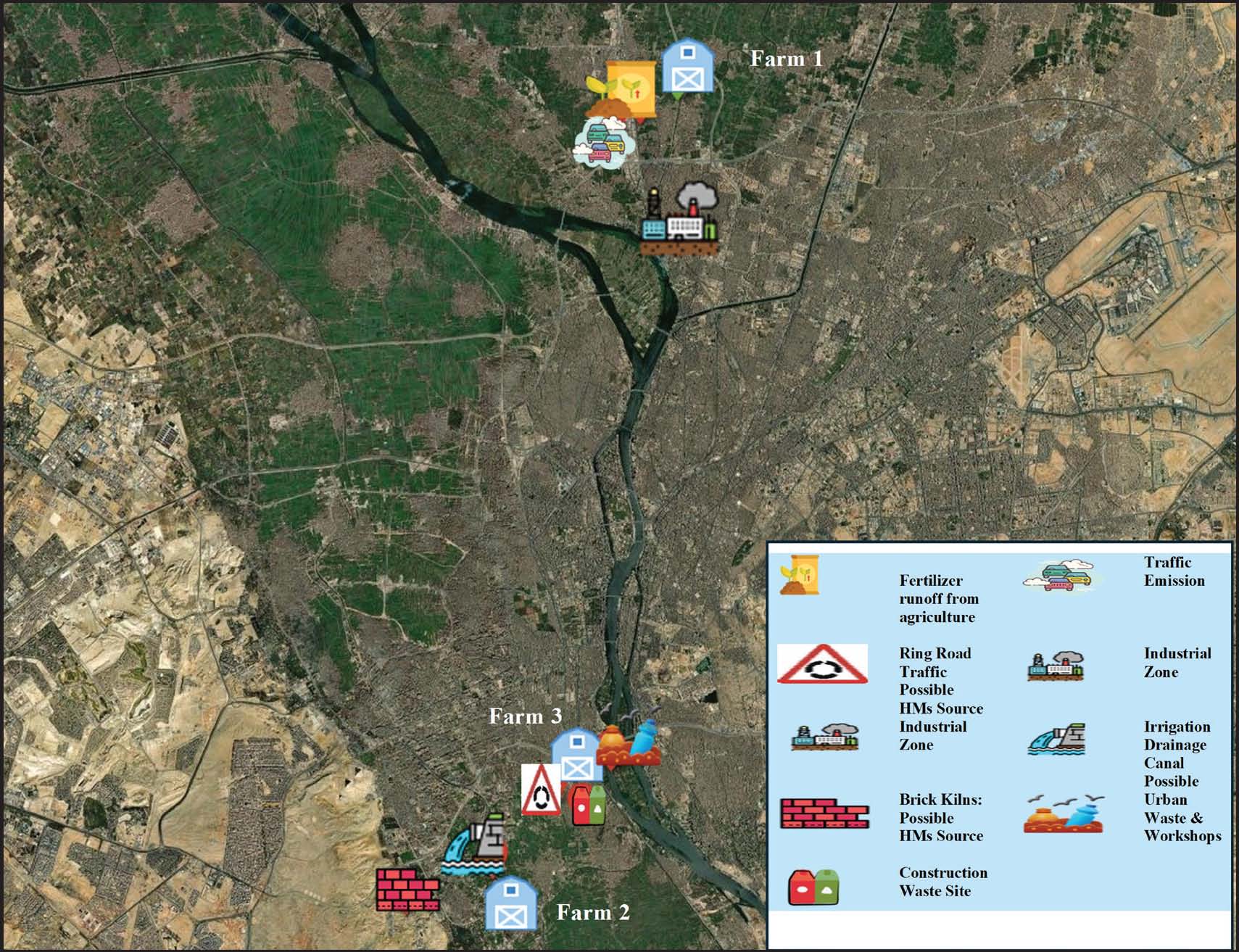
ABSTRACTBackground: Buffalo is an essential component of Egypt’s dairy industry. However, their environmental pollution threatens the production and sustainability of the sector. Heavy metal (HM) contamination in dairy systems is a growing environmental and public health concern, particularly in developing regions experiencing increased industrial and livestock intensification. Aim: This study aimed to evaluate HM contamination in buffalo milk across three environmentally distinct dairy farms in Egypt, identify potential environmental exposure pathways, and assess associated public health risks. Methods: ICP-MS/MS was employed to determine the concentrations of lead (Pb), mercury (Hg), cadmium (Cd), chromium (Cr), nickel (Ni), arsenic (As), and cobalt (Co) in composite milk samples (48) obtained twice weekly from three selected Buffalo dairies located in Al Qalyubia and Giza provinces, over two months, alongside tracing the possible contamination pathways of the collected environmental samples. Estimated daily intake (EDI) and target hazard quotient (THQ) were calculated for each metal based on the corresponding oral reference dose (RfDo) to evaluate public health implications. In addition, the water quality and the bedding nitrogen profile were assessed. Results: Significant differences (P < 0.05) were revealed among the farms in daily milk yield (DMY) and quality. Mercury, nickel, and cobalt were undetectable, whereas Pb, Cd, Cr, and As exceeded the maximum permissible limits of the Codex/WHO. Lead peaked in Farm 3 and arsenic in Farm 2, both of which were negatively correlated with DMY, with as far exceeding safety limits (>30 times the 0.01 mg/kg), indicating significant environmental exposure. The environmental matrices (water, feed, and bedding) showed notable metal enrichment with localized exceedances of turbidity, nitrite, and bromide, enhancing the water–feed–animal transfer pathway as a major contamination route. The calculated EDI and THQ values were below 1; however, the relatively high Pb and As concentrations underscore the need for continuous monitoring and mitigation strategies to ensure public safety. Conclusion: Spatial variations in HM contamination, milk production, and associated health risk assessments reflected local environmental contamination from industrial, agricultural, and municipal sources. These findings highlight the need for continuous monitoring, source tracing, and planned farm management practices to protect the health of consumers and the sustainability of Egypt’s buffalo dairy sector. Keywords: Bubalus bubalis, Estimated daily intake (EDI), ICP-MS/MS, Persistent environmental pollutants, Target Hazard Quotient (THQ). IntroductionBuffaloes (Bubalus bubalis) significantly contribute to Egypt’s dairy industry, accounting for the greatest proportion of national milk production and rural incomes (Rabie, 2020; Ismail et al., 2026). However, environmental pollution would not only affect milk safety but also question the sector’s productivity and long-term sustainability. Heavy metal contamination in dairy systems threatens animal health and human well-being, raising sustainability and food safety concerns. The industrial revolution, livestock intensification, municipal expansion, and vehicular emissions have accelerated the release of toxic metals into soil, water, and air, facilitating their entry into the food chain (Aamer et al., 2016; Alinezhad et al., 2024). Heavy metals are persistent environmental pollutants: lead, mercury, cadmium, chromium, nickel, arsenic, and cobalt are considered the most significant metals due to their environmental persistence, well-documented toxicity, and frequent detection in Egyptian agricultural settings, and their frequent detection worldwide (Malhat et al., 2012; Meshref et al., 2014; Amer et al., 2021; Alinezhad et al., 2024). Moreover, prolonged exposure to these metals has been associated with organ dysfunction, oxidative stress induction, endocrine and immune system disruption, reduced reproductive performance, and alterations in milk production and composition (Balali-Mood et al., 2021; Gupta et al., 2021; Teschke, 2021; Philip-Slaboh et al., 2023) From a public health perspective, milk safety is critical for food security and environmental sustainability. These metals can accumulate in dairy animals through contaminated feed, polluted drinking water, atmospheric deposition, and bedding materials and subsequently be transferred into milk (Ziarati et al., 2018; Monteverde et al., 2022). Because milk is widely consumed and considered a nutritionally essential food, the One Health framework emphasizes the interconnections among environmental quality, animal health, and human well-being, which requires comprehensive monitoring of contamination levels and pathways in dairy products (Ismail et al., 2021; A W Abdul Mounam, 2023; Laban et al., 2024). Health risk models, such as estimated daily intake (EDI) and target hazard quotient (THQ), are commonly used tools for evaluating the non-carcinogenic risks associated with dietary exposure to HMs (Islam et al., 2011; Ametepey et al., 2018; EPA, 2024). The EDI estimates the daily metal intake based on the body weight. THQ determines whether the exposure exceeds safety thresholds (NRC, 1983; Environmental Protection Agency (EPA), 1987). These models integrate contaminant concentrations in food with consumption patterns and toxicological reference values to better understand feed–animal–milk transfer dynamics and food chain contamination (Gasparini et al., 2024; Gasparini et al., 2025). Despite growing concerns regarding environmental contamination of dairy systems, limited information is available regarding HM contamination pathways in Egyptian buffalo production systems. Understanding how environmental matrices, such as feed, water, and bedding, contribute to metal transfer into milk is essential for developing effective mitigation strategies. Therefore, this study provides an integrated environmental and public health assessment of HM contamination in buffalo dairy farms across diverse districts in Egypt. This study aimed to: (1) measure the levels of selected HMs (Pb, Cd, Cr, As, Hg, Ni, and Co) in raw buffalo milk; (2) identify potential contamination pathways by analyzing feed, water, and bedding samples; (3) examine associations between HM levels and milk yield and composition; and (4) evaluate potential human health risks using EDI and THQ models. Materials and MethodsStudy design and durationThis study presented a short-term repeated cross-sectional observational study that aims to determine the levels of HM contamination in buffalo raw milk collected from three selected geographic zones in Egypt over 2 months (April–May 2024) to analyze its impact on milk yield and quality, besides the determination of potential health hazards associated with the consumption of buffalo milk in Egypt. Three dairy buffalo farms were selected and located in different geographic locations: Farm 1 (Mit Helfa, Qalyub, Al Qalyubia Governorate), Farm 2 (Al-badrashine, Giza District, Giza Governorate), and Farm 3 (Tersa, Giza District, Giza Governorate) (Fig. 1). Daily milk yield (DMY) was recorded twice for 15 selected buffaloes (Bubalus bubalis). The sample size (n=15) was determined using the Power Calculation Software (Biomath, 2024). A total of 48 milk, feed, bedding, and water samples were analyzed during the study period. Milk samples were collected for the determination of HM, health risk assessment, and quality evaluation. Water, feed, and bedding samples were collected to assess the dairy environment and potential contamination pathways. The selected buffaloes were multiparous in mid-lactation, with average body weights of 700 ± 7.07 kg (Farm 1), 660 ± 7.07 kg (Farm 2), and 600 ± 7.07 kg (Farm 3).
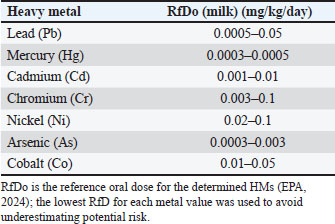
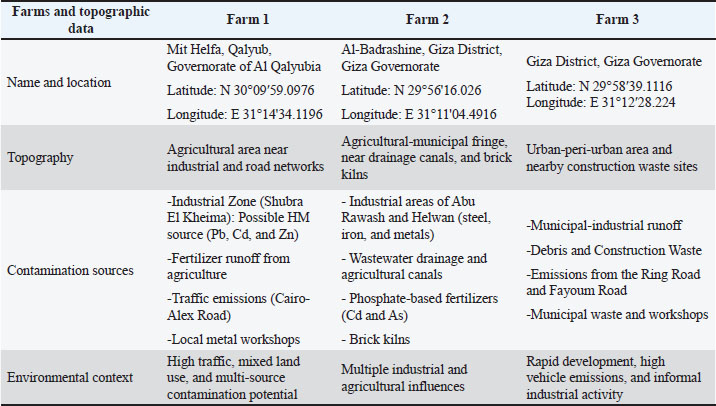
Fig. 1. Geolocation of the 3 buffalo farms in Al-Qalyubia and Giza, Egypt. Farm 1 is approximately 4.75 km from an industrial zone (Shubra El Kheima); Farm 2 is approximately 3.35 km from brick kilns and 1.42 km from an irrigation drainage canal. Farm 3 is located approximately 1.21 km from a construction waste site and 1.40 km from areas with intense anthropogenic activity. Topographical assessment of the selected farmsFarm 1 is situated in Mit Helfa, Qalyubia Governorate, in the Nile Delta, north of Cairo. Farms 2 and 3 are located within the Giza Governorate, southwest of Cairo, near the Nile. All are considered within the Greater Cairo metropolitan region. A checklist was developed for each farm location, covering the site location and boundaries, surrounding land use, and potential sources of contamination with environmental impacts. The following topographical data were collected about the site name and location: (administrative region, coordinates), topographical description (e.g., physical landscape features, land use (e.g., agricultural, industrial, and peri-urban), potential contamination sources (e.g., industrial zones, roads, and drainage canals) and their spatial relationship to the site, environmental context: any relevant notes on runoff, emissions, or other processes affecting the site. In addition to the spatial features and sources table involving the contamination source name (e.g., industrial zone, traffic, and so on), its type (e.g., industrial, transportation, agricultural), and potential impact (e.g., “Possible HMs Source: Pb, Cd, Zn”). Farm management and feeding of animalsThe 3 farm systems were similar, operating as closed systems and providing controlled feeding and management to ensure consistency in the diets of the animals. All buffaloes were fed a total mixed ration (TMR) formulated to meet their nutritional requirements acc. to Moran (2005). Daily basal diets were formulated on a dry matter basis, composed of 35% corn fodder, 12% barley straw, 10% flaxseed hulls, and 15% alfalfa hay (dried clover), providing a crude protein content of approximately 11.2% and a total digestible nutrients (TDN) value of 62.5%. Forty-two percent (42%) neutral detergent fiber (NDF) and thirty percent (30%) acid detergent fiber (ADF) were present, with major minerals including calcium (0.65%), phosphorus (0.48%), potassium (1.65%), and manganese at 55 ppm. The purpose of this diet preparation was to ensure adequate nutrient intake, maintain milk yield, and protect animal health under the study conditions. In addition, the buffaloes had access to well-ventilated open spaces, which promoted adequate movement and sun exposure, thereby contributing to their overall health and milk production. Milk production and quality assessmentMilk yield (kg) records were obtained twice daily (5 am and 5 pm) for five selected buffaloes in each investigated farm (n=15) to assess the average DMY. Additionally, the same buffalo was used to collect milk samples for laboratory analysis. Collection of the milk samplescomposite buffalo raw milk samples were collected from five selected buffaloes in each farm (n=15) (Nebraska Department of Agriculture, 2023) twice weekly for 2 months and then combined to obtain a pooled raw milk sample for each farm. Milk samples (48 replicates) (twice weekly* 3 farms* 8 weeks) were collected in bottles and transported to the laboratory in an insulated ice box (4°C ± 1°C) within 1–2 hours of collection, after which they were immediately stored at −20°C for up to 2 weeks before analysis. Before analysis, the samples were thawed gradually at 4°C overnight (≈12 hours), homogenized by gentle inversion and vortex mixing, and then aliquoted for digestion. Samples collected on the same day from each farm were pooled to obtain one representative composite sample per farm per sampling event. For statistical analysis, each sampling event was treated as an independent time-based replicate. Milk quality assessment (protein and fat %)Milk fat was analyzed using the Funke–Gerber method, which involved adding 10 ml of sulfuric acid (≥95%) to a clean Gerber butyrometer and 10.75 ml of well-mixed milk to prevent mixing errors. To aid in fat separation, 1 ml of amyl alcohol was added. The butyrometer was sealed, gently inverted, and centrifuged at 65°C for 5 minutes at 1100 rpm. After centrifugation, it was placed in a 65°C water bath for 5 minutes to ensure a transparent fat layer. The fat content was then directly read from the calibrated butyrometer scale acc. to Egyptian standards (ES): 155-1/2005 (ES, 2005; AOAC, 2023a). The Kjeldahl method was used to analyze milk protein using concentrated sulfuric acid (98%), a catalyst mixture (K2SO4 and CuSO4), and 40% sodium hydroxide (NaOH). Boric acid (4%) with a mixed indicator was prepared for titration, and calibration was performed using standard ammonium sulfate solutions. Milk samples (1 ml each) were digested with 10 ml of sulfuric acid in a Kjeldahl digestion unit and gradually heated from 100°C to 400°C until a clear solution was formed. The digested samples were cooled, diluted with deionized water, and transferred to a Kjeldahl distillation unit to release ammonia gas, which was titrated with 0.1 N HCl to the end point. The nitrogen content was then determined, and the protein concentration was calculated using a conversion factor of 6.38 for milk protein (AOAC, 2023b). Assessment of HM contamination in buffalo milkPooled milk samples (48 replicates) were transported to the central laboratory of the Regional Center for Food and Feed (RCFF), Agricultural Research Center (ARC), for detecting and quantifying Pb, Cd, Cr, As, Hg, Ni, and Co using ICP-MS/MS, a tandem mass spectrometry, based on mass-to-charge ratios (m/z). Calibration curves for all analyzed elements were constructed using multielement standard solutions (1–50 ng/ml). All target elements exhibited excellent linearity, with correlation coefficients (R²) greater than 0.999. The limits of detection (LOD) and limits of quantification (LOQ) were calculated as 3 and 10 times the standard deviation of the procedural blanks, respectively, divided by the slope of the calibration curve. Recovery percentages ranged from 92% to 120%, indicating acceptable accuracy. The standard deviation of the blank measurements was used to assess the background contribution and method sensitivity (Saribal, 2019). Each milk sample (1 ml) was digested using a heat block with 4 ml of nitric acid and 2 ml of hydrogen peroxide. The temperature gradually increased, starting at 80°C and reaching 140°C. The digested mixture was transferred into polypropylene tubes and diluted to a final volume of 10 ml using deionized water after cooling (AOAC, 2012 ; Şemen et al., 2017). Blank samples were processed using the same procedures to assess potential cross-contamination. All samples, including blanks and standard solutions, were analyzed using inductively coupled plasma mass spectrometry (ICP-MS/MS 8800) with helium and oxygen modes to achieve lower detection limits and enhanced sensitivity for targeted elements (Arı et al., 2022). Environmental dairy assessmentCollection of samples (water, feed, and bedding)Representative water, feed, and bedding samples were collected biweekly throughout the study duration (n=48; twice per week * 3 farms * 8), alongside milk samples for quality and HM assessments. Water samples (1 l) were collected from troughs, taps, and reservoirs in sterile plastic bottles; an additional 100 ml aliquot was acidified for HM determination. All samples were kept refrigerated and analyzed within 24 hour (International Dairy Federation (IDF), 2025; Keshtezar, 2025; Tadele et al., 2025). Each bedding sample was representatively grab-subsampled into 3–7 subsamples of approximately 50–100 g from different locations on the farm, pooled, and thoroughly mixed to obtain a composite sample of approximately 500 g (Nawar et al., 2019; Wu et al., 2022; Fusar Poli et al., 2024). Feed was collected as 3–5 subsamples per lot (roughage and concentrates) and pooled into 300–500 g composites (Singh Kuntal et al., 2022; He et al., 2024). Then, the feed and bedding samples were sealed and transported in an insulated container to the ARC’s central laboratory of the Regional Center for Food and Feed for further analysis. Water quality and heavy metal contamination tracing in the dairy environmentA comprehensive water quality report was conducted acc. To the APHA (2023) guidelines to evaluate the physicochemical characteristics of the collected water samples and assess the HM contamination levels. Physical analysis of water pH, salinity (ppt), and electrical conductivity (EC) (µs/cm) was performed on-site using a portable multi-parameter water quality meter (HI98194, Hanna Instruments, USA), while a nephelometer was used to measure turbidity (NTU) and total dissolved solids (TDS) (mg/l) through filtration. Chemical analyses of chloride (Cl), fluoride (F), bromide (Br), nitrite (NO2), nitrate (NO3), total phosphorus (TP), sulfate (SO4), and total hardness were also determined spectrophotometrically, expressed as mg/l. The Kjeldahl method was used to assess total nitrogen in bedding samples collected from the farms under study. In this method, the sample is digested with a catalyst in concentrated sulfuric acid (H2SO4), after which distillation and titration of ammonia occur (AOAC, 2023b), while the phenate colorimetric method for total ammonia nitrogen that reacts with phenol and hypochlorite under alkaline conditions to form indophenol blue, which is measured spectrophotometrically (EPA, 1993; APHA, 2023). These procedures ensure the accurate quantification of total nitrogen and ammonia, which are key indicators of bedding quality and environmental emissions, in buffalo farming systems. Additionally, HMs were measured at mg/L (ppm) in collected water (El Zlitne et al., 2022 ; APHA, 2023), and mg/kg in feed and bedding samples (Nicholson et al., 1999; Hejna et al., 2019; Tao et al., 2020). The samples were also dried, mineralized, and analyzed by ICP-MS/MS to measure the previously selected HMs. Analytical blanks were run in the same way as the samples, and the concentrations were determined using standard solutions prepared in the same acid matrix. All reagents were of analytical grade (Merck, USA). Standards for device calibration were established, and a standard reference material was used to validate the analysis. Health risk assessment (EDI and THQ calculation)Estimated daily intakeThe estimated daily intake of HMs determined from the consumption of raw buffalo milk was calculated. The EDI value is derived from the concentration of metals in milk, daily milk consumption rates, and the body weight of adult beings. The following equation was used to calculate the EDI of each determined HM acc. to Meshref et al. (2014): where Cmetal (mg/kg) is the concentration of HM in raw milk, Wmilk represents the daily average milk consumption; it was set to 200 ml (0.23 kg) of milk for an adult with an average BW of 60 kg. The daily milk consumption rate was derived from the FAOSTAT national food balance sheet data for Egypt and aligned with the FAO/WHO cluster diet exposure estimates (FAO/WHO, 2018; FAO, 2023). Reference oral dose (RfDo)The RfDo estimates the oral daily exposure of HMs to a human population without an appreciable risk of harmful effects during a lifetime, expressed as milligrams of HM per kilogram of body weight per day (mg/kg/day). EPA (2008, 2024) established the RfDo for HMs commonly found in milk. The lowest recommended value was conservatively selected to avoid underestimation of potential risk (Table 1). Table 1. Oral reference dose (RfDo) of heavy metals commonly found in milk.
Statistics and data analysisThe data were tabulated as a CVC file. Data were tested for normality using the Shapiro–Wilk test and for homogeneity of variances using Levene’s test. Data were analyzed using one-way analysis of variance in PASW Statistics, Version 24.0 (SPSS Inc., Armonk, NY) to assess differences in milk yield, fat, and protein content among the three farms. Post hoc comparisons were performed using the least significant difference test at a significance level of P < 0.05. Pearson correlation analysis was used to evaluate the potential contamination pathways of HM between milk and environmental samples (feed, water, and bedding) and their impact on milk production. Ethical approvalAll animal handling procedures were performed according to Good Veterinary Practices to ensure humane milking and animal safety. The Institutional Animal Care and Use Committee at Cairo University (CU-IACUC) ethically approved the study protocol (Approval No. CU-IFC-9-24). ResultsTopographical assessment of the selected farmsGiza and Qalyubia Governorates involve various buffalo farming and production systems. They are characterized by diverse population activities, including agriculture, industry, urbanization, and rural communities, making them a representative model of Egypt’s varied environments (Table 2). Table 2. Topographic findings of the selected farms.
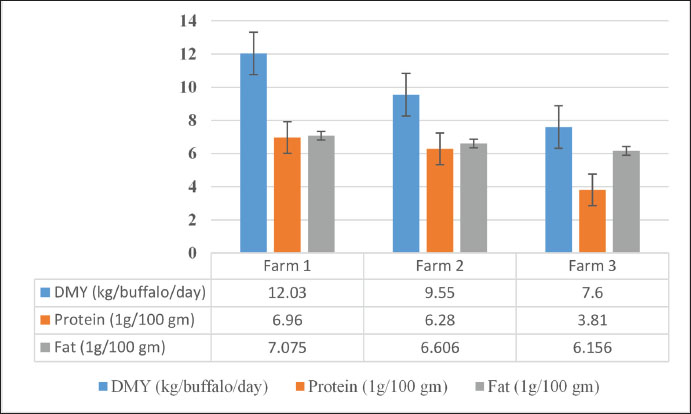
Milk production assessment among the investigated buffalo farmsAs shown in Figure 2, significant differences (P < 0.05) were observed among the three farms in terms of DMY, protein, and fat content of raw buffalo milk. Farm 1 recorded the highest average DMY (12.03 ± 0.21 kg/day), followed by Farm 2 (9.55 ± 0.26 kg/day) and Farm 3 (7.6 ± 0.23 kg/day), with all pairwise differences exceeding the least significant difference (LSD) value (0.6), indicating statistical significance. Correspondingly, protein content differed significantly across farms, with 6.96 ± 0.007, 6.28 ± 0.016, and 3.81 ± 0.02 g/100 g for Farms 1, 2, and 3, respectively (LSD=0.05). Also for fat content, Farm 1 (7.08 ± 0.006 g/100 g) has the highest value, followed by Farm 2 (6.60 ± 0.006 g/100 g) and Farm 3 (6.16 ± 0.03 g/100 g), all of which exceeded the LSD threshold (0.01). The consistently higher values in Farm 1 suggest potential differences in management, nutrition, or environmental factors.
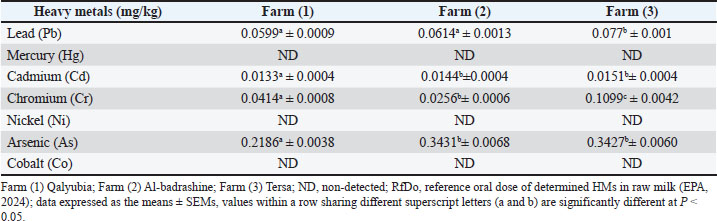
Fig. 2. Average daily milk yield (DMY) (kg/buffalo/day) and protein and fat content (g/100g) of raw buffalo milk in the three investigated buffalo dairy farms: Farm 1 (Qalyub), Farm 2 (Al-Badrashine), and Farm 3 (Tersa); Data expressed as the means ± SEMs, and significant differences were detected at P < 0.05. Assessment of the HM contamination burden in milk samplesThe contamination of buffalo milk samples with different HM concentrations was reported. No detection (ND) of Hg, Ni, or Co was observed in any of the examined milk samples across all locations (Table 3); they were either absent or below the analytical method’s detection limit. Pb and As levels were higher than the maximum permissible limits of the Codex/WHO in all examined milk samples. Farm 3 had the highest levels of most detected HMs (Pb, Cd, and Cr), suggesting a higher contamination risk in that district. Farm 2 (Al-badrashine) showed the highest As levels, suggesting a localized source of contamination. Farm 3 recorded the highest concentration of Pb (0.0770 mg/kg), followed by farm 2 (0.0614 mg/kg), while farm 1 recorded the lowest concentration (0.0599 mg/kg). The Cr contamination level significantly varied among the 3 locations (P < 0.05). The highest concentration was recorded in Farm 3 (0.1099 mg/kg), which was 4 times higher than that in Farm 1 (0.0414 mg/kg) and Farm 2 (0.0256 mg/kg); this may be related to either nutritional or environmental factors. The Cd level was also the highest in Farm 3, at 0.0151 mg/kg. Table 3. Mean concentrations ± SEM of HMs in composite raw buffalo milk samples (mg/kg) collected from different locations.
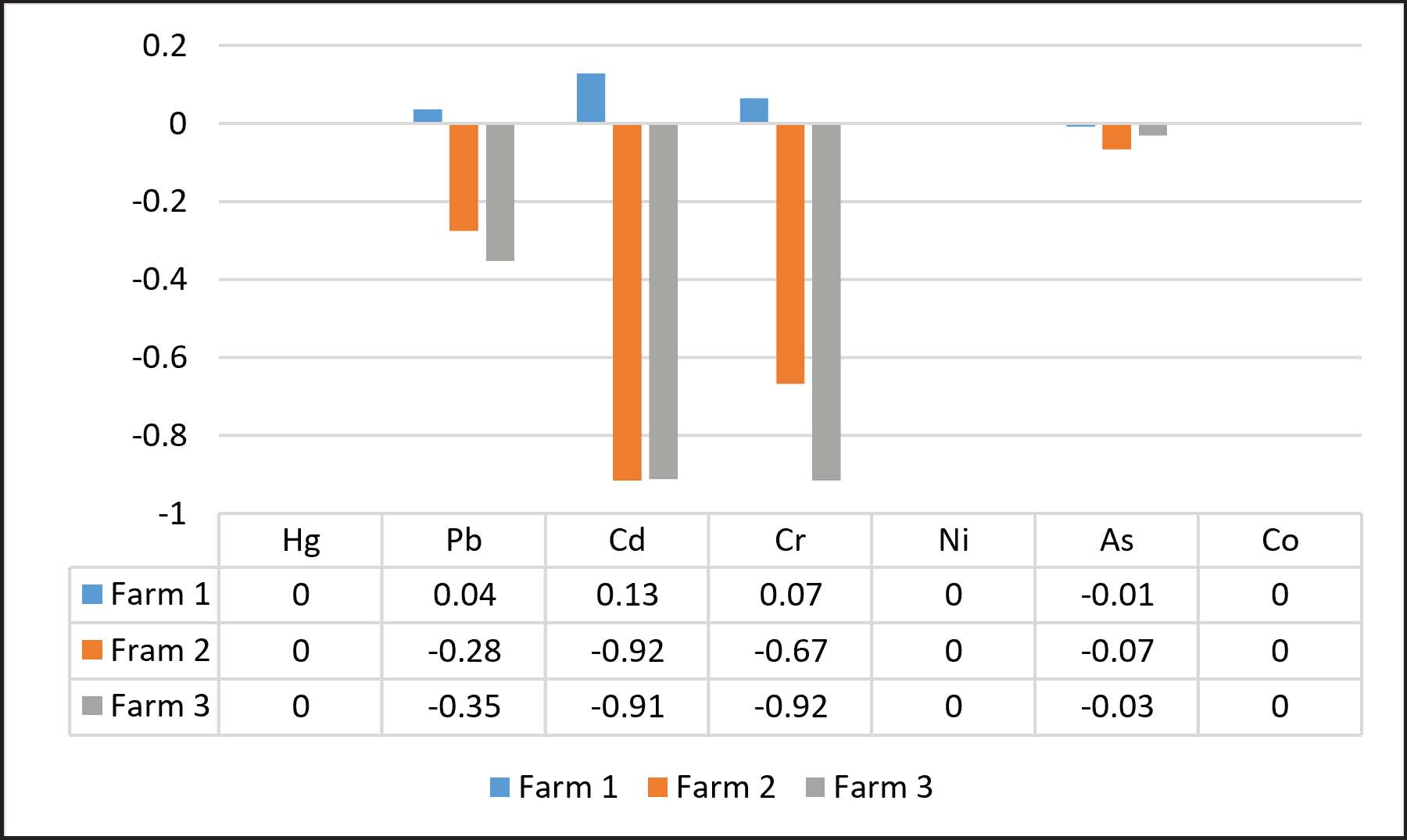
Impact of heavy metal contamination on milk productionCorrelation analysis was used to investigate the relationship between HM concentrations in raw buffalo milk and average DMY at the 3 study locations (Fig. 3). The results revealed variable correlations between milk production and HM levels. In Qalyubia, weak positive correlations were observed for Pb (r=0.037), Cd (r=0.129), and Cr (r=0.065), whereas no correlation was observed for other metals. In contrast, Badrashine showed strong negative correlations between milk yield and Cd (r=0.916), Cr (r=0.668), and Pb (r=0.275), indicating that these metals have a potential inhibitory effect on milk productivity. Similarly, Tersa exhibited a strong inverse association between milk yield and Cd (r=0.911), Cr (r=0.915), and Pb (r=0.352). These findings suggest that elevated Cd, Cr, and Pb levels may negatively affect milk production in buffaloes, particularly on farms with higher environmental contamination. In contrast, the absence of correlation with Hg, Ni, and Co suggests that these metals are present below the detection limits.
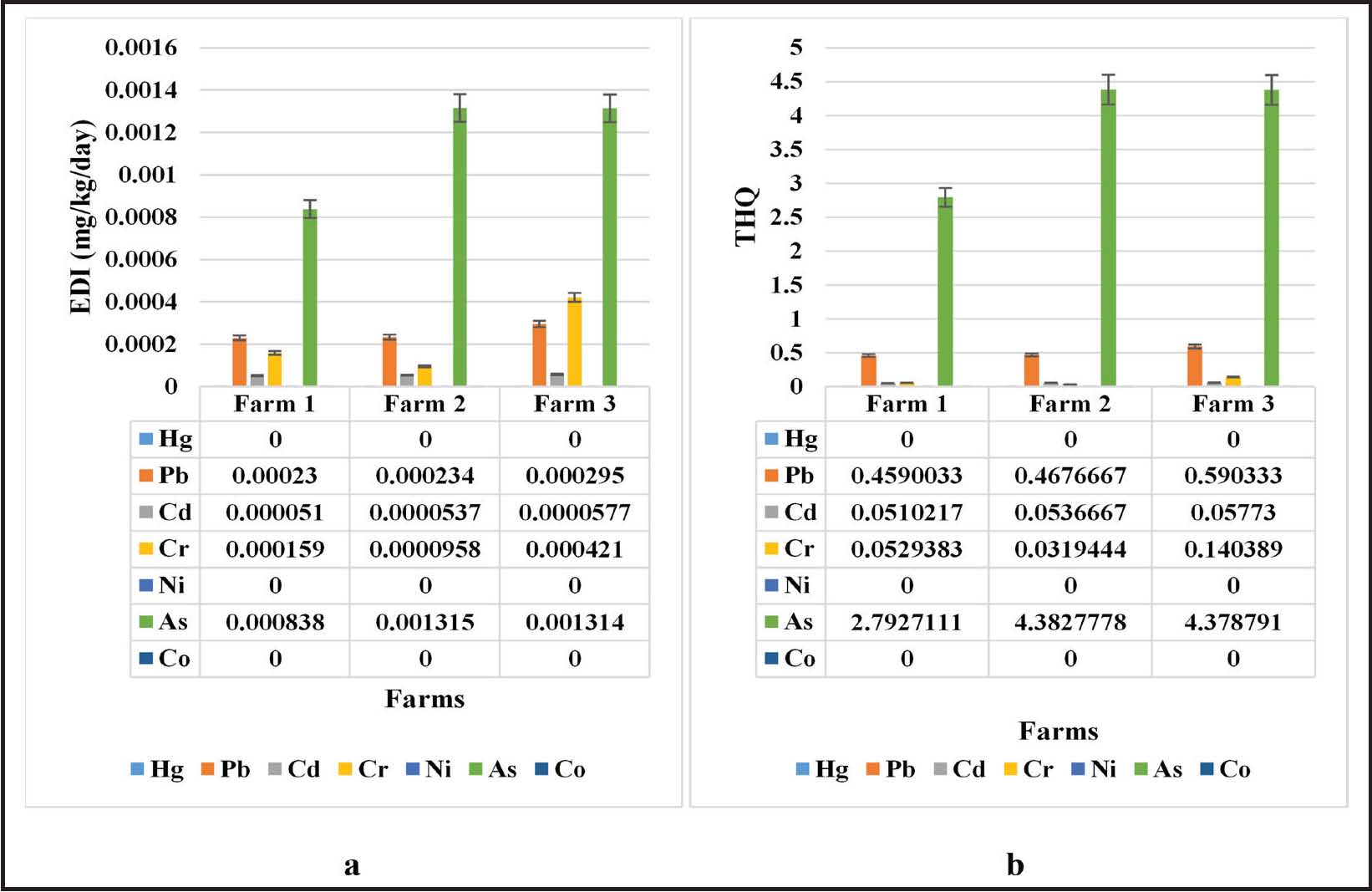
Fig. 3. Correlation patterns between heavy metal concentrations and milk yield across the three investigated farms. Strong negative correlations were observed in farms 2 and 3 among milk yield, Cd (r=0.92 and 0.91), and Cr (r=0.67 and 0.92), respectively, while Pb showed a moderate inverse correlation (r=0.26 and 0.35). No significant correlation was found among Farms 1 (Qalyub), 2 (Al-Badrashine), and 3 (Tersa); p > 0.05 was considered statistically significant. Health risks assessment of EDI and THQ associated with buffalo milk consumption contaminated with determined HMsAs illustrated in Figure 4, the EDI and THQ were zero for Hg, Ni, and Co; they were non-detectable (ND) in all milk samples from the farms under investigation. However, among the studied metals, Pb and As pose the most significant potential health risks. Pb had the maximum concentration in Tersa (0.077 mg/kg; EDI 0.0003 mg/kg/day; THQ 0.55), followed by Al-Badrashine (0.061 mg/kg; EDI 0.0002 mg/kg/day; THQ 0.4380) and Qalyub (0.0599 mg/kg; EDI 0.0002 mg/kg/day; THQ 0.4280). All THQ values are 1, indicating a positive point regarding health issues. As for cadmium, low concentrations were observed all over the sites (0.0133–0.0151 mg/kg; THQ 0.048–0.054). Chromium levels were found to be 0.1099 mg/kg; THQ, 0.131 for Tersa, which was the highest; THQ, 0.0414 mg/kg; THQ, 0.049 for Qalyub, which was moderate; and THQ, 0.0256 mg/kg; THQ, 0.030 for Al-Badrashine, which was the lowest, while all were not a cause of concern. The highest levels of arsenic were found in Al-Badrashine (0.3431 mg/kg; THQ 0.408) and Tersa (0.3427 mg/kg; THQ 0.408), with the lowest levels observed in Qalyub (0.2186 mg/kg; THQ 0.260), indicating significant exposure but still below the threshold level. In general, Pb and As pose potential health risks. Tersa had the highest Pb and Cr levels. Al-Badrashine exhibited high As. Meanwhile, Qalyub had the lowest levels of contamination. However, none of the THQ values exceeded unity; the relatively high Pb and As concentrations highlight the importance of continuous monitoring and mitigation strategies to ensure consumer safety.
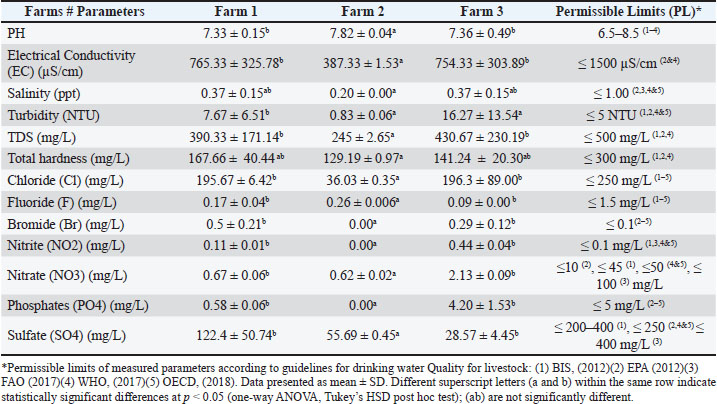
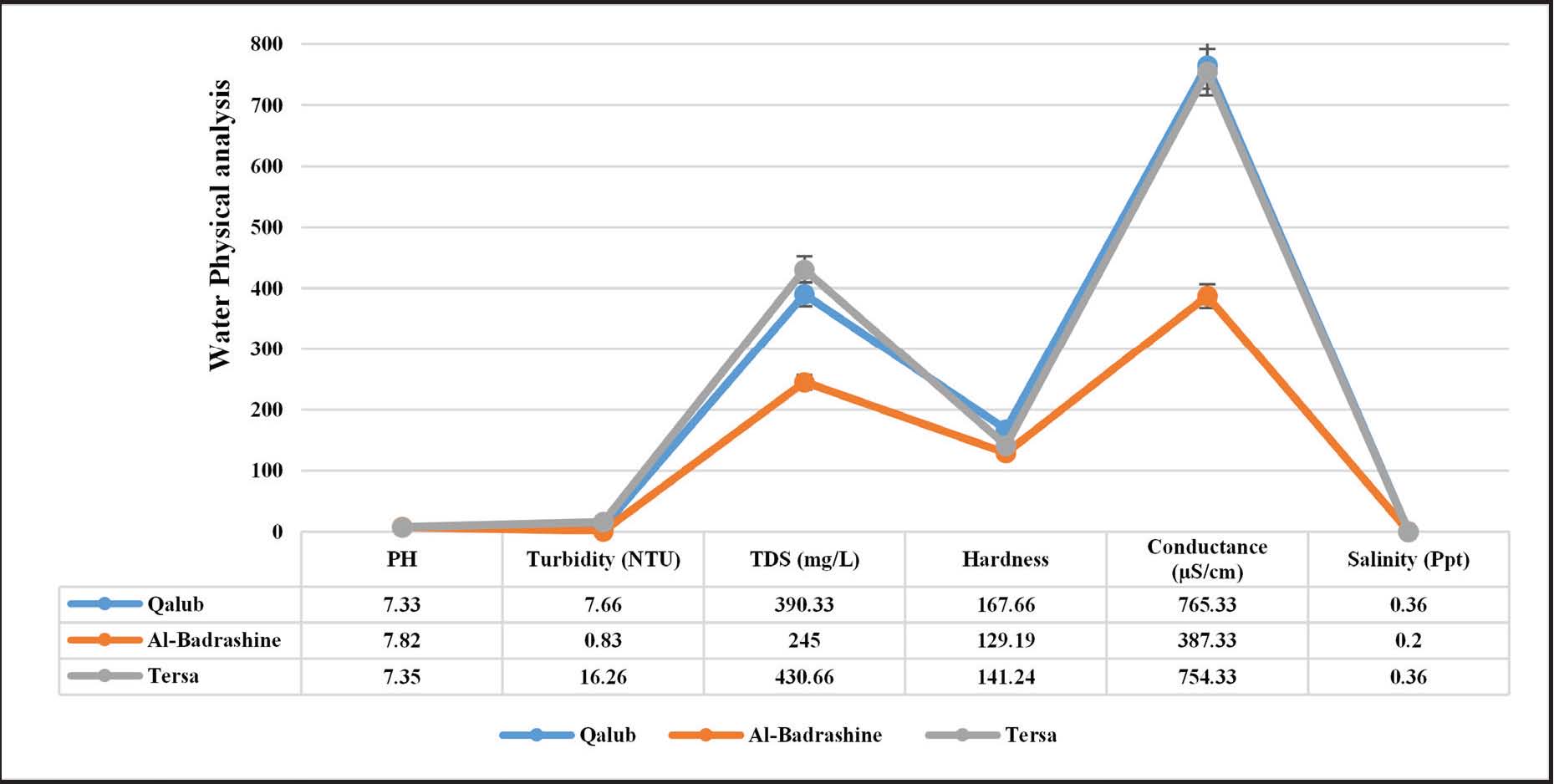
Fig. 4. (a) Estimated daily intake (EDI) (mg/kg body weight/day) and (b) Target Hazard Quotient (THQ) (dimensionless) of consumed raw buffalo milk in Qalyub (Farm 1), Al-Badrashine (Farm 2), and Tersa (Farm 3); THQ < 1 indicates that the health risk for the determined heavy metal. Environmental dairy assessment of water, feed, and beddingThe water quality assessment presented in Table 4 showed that most parameters were within the permissible limits. Considering the physical analysis (Fig. 5), the water pH ranged from 7.33 to 7.82. The turbidity reading was highest in Tersa (16.26 NTU), moderate in Qalyub (7.67 NTU), and normal in Al-Badrashine (0.83 NTU). TDS and conductance were highest in Tersa (430.67 mg/L; 754 µS/cm, respectively), followed by Qalyub (390.33 mg/l; 765 µS/cm), indicating a high mineral content. At least, Al-Badrashine was recorded. The hardness levels across the sites were moderate (129–168 mg/l). The salinity levels were similar in Qalyub and Tersa (0.37 ppt) but were lower in Al-Badrashine (0.2 ppt), indicating a more stable water quality. The major ions (Cl-, SO4²-, F-, NO3-) in all farms were within permissible limits, but nitrite exceeded the limit in Tersa (0.44 vs. 0.1 mg/l), and bromide was far above the limit in Qalyub (0.5 vs. 0.1 mg/L) and Tersa (0.29 vs. 0.1 mg/l). The minor chloride and sulfate fractions also surpassed the limits in Qalyub (Cl- 195.67, SO4²- 122.4) and Tersa (Cl-196.3, SO4²- 28.57). Overall, while most parameters were acceptable, bromide, nitrite, and secondary chloride/sulfate levels indicate localized contamination risks, particularly in Qalyub and Tersa. Table 4. Physicochemical water quality assessment of water samples collected from selected dairy farms.
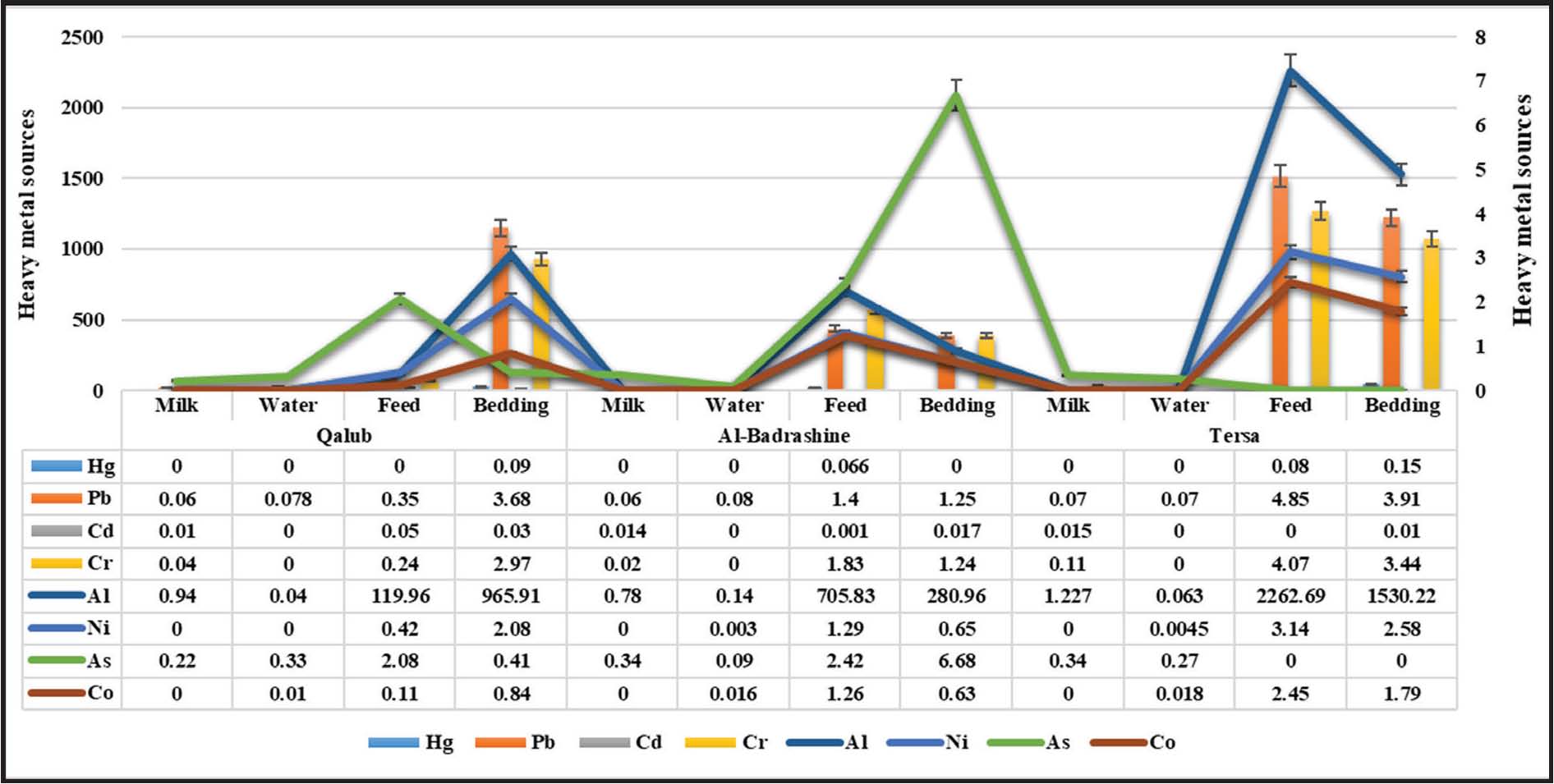
Fig. 5. Physical analysis of water samples through the investigated dairy farms; Data expressed as the means ± SEMs, significant differences were detected at P < 0.05. Bedding analysis showed moderate levels of nitrogen and ammonia in Qalyub (0.53; 0.48 mg/l) and Al-Badrashine (0.63; 0.59 mg/l), while Tersa had the highest nitrogen (2.03 mg/l) but lower ammonia (0.33 mg/l), indicating greater nitrogen loading and reduced ammonia accumulation. Environmental risk assessment, source tracing, and potential contamination pathwaysThe comparative analysis of contamination sources (Fig. 6) across Qalyub, Al-Badrashine, and Tersa farms revealed that feed and bedding were the predominant HM reservoirs, with Al, Pb, Cr, and Ni showing the highest burdens, particularly in Tersa. Arsenic and Hg were also detected across multiple pathways, whereas Cd and Co were detected at lower levels. In terms of aluminum, Tersa had the highest feed contamination (2262.69 ± 0.036 mg/kg) and bedding contamination (1530.22 ± 0.12 mg/kg). Then, Al-Badrashine, which had a high loading of aluminum in feed (705.83 ± 0.025 mg/kg) and bedding (280.96 ± 0.12 mg/kg), followed by Qalyub with feed (119.96 ± 0.012 mg/kg) and bedding (965.92 ± 0.12 mg/kg) sites. The bedding had high Pb levels. Tersa recorded the highest level (3.91 ± 0.0001 mg/kg), followed by Al-Badrashine recorded (1.25 ± 0.0001 mg/kg), and Qalyub recorded (3.68 ± 0.0001 mg/kg).
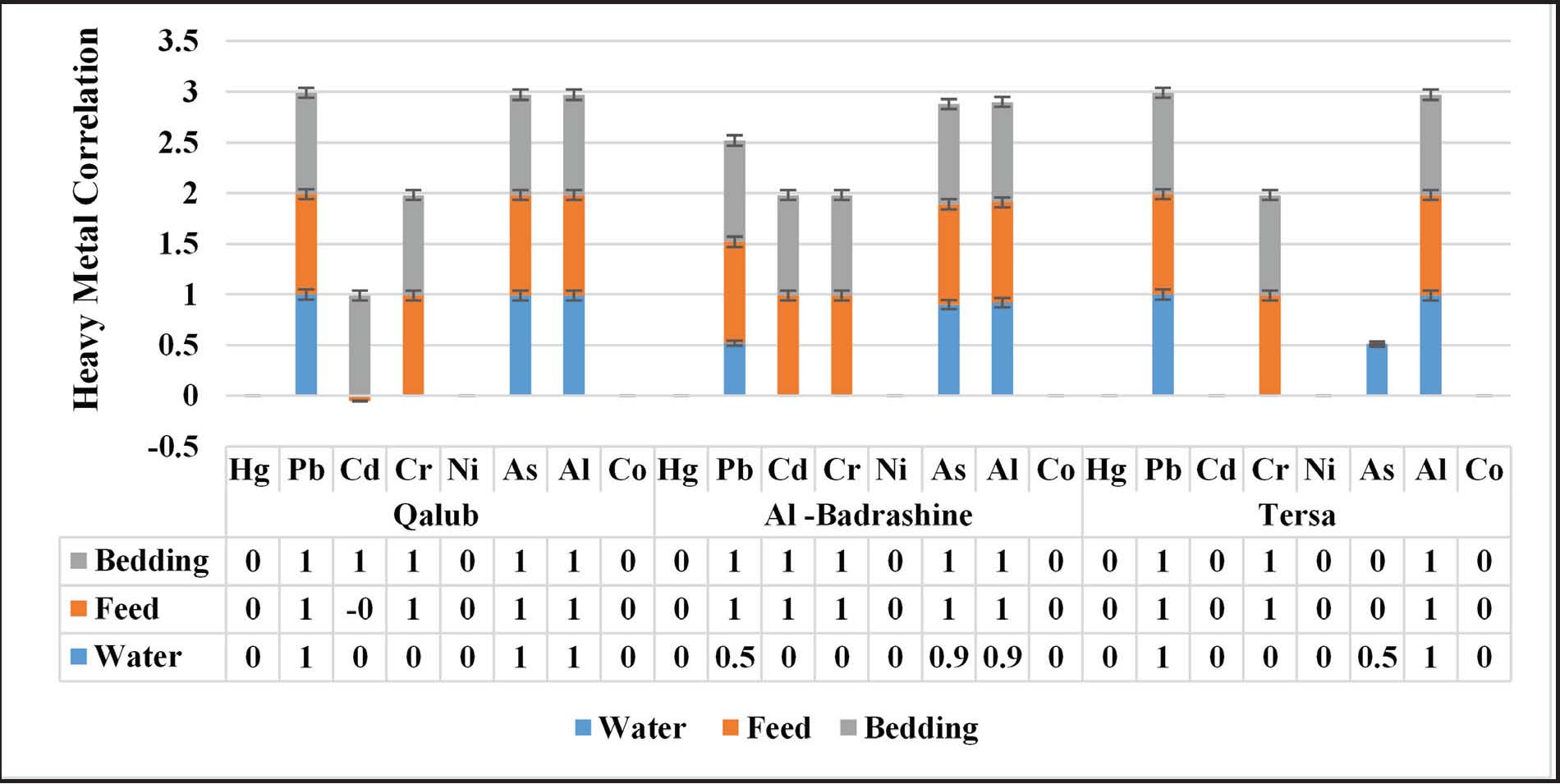
Fig. 6. Environmental risk assessment and potential contamination pathways of the determined heavy metals in water, feed, and bedding samples collected from the studied buffalo dairy farms; Data expressed as the means ± SEMs, significant differences were detected at P < 0.05; lines in the graphical figure represent Al, Ni, As, and Co, while the bars represent Cr, Pb, Hg, and Cd. Metal concentrations are expressed as mg/kg for solid matrices and mg/l for water samples. Arsenic (As) was observed in all pathways; in feed, the level was (2.08 ± 0.0009 mg/kg in Qalyub, (1.41 ± 0.0003 mg/kg in Al-Badrashine, and (2.42 ± 0.0004 mg/kg in Tersa, whereas the peak value was in bedding samples (6.69 ± 0.012 mg/kg) in Al-Badrashine. Similar to Ni, the chromium concentrations in bedding were 2.97 ± 0.0001 mg/kg (Qalyub), 1.24 ± 0.0012 mg/kg (Al-Badrashine), and 3.44 ± 0.0008 mg/kg (Tersa). The chromium feed values were 0.24 ± 0.0001, 1.83 ± 0.0002, and 4.07 ± 0.025 mg/kg. The feed and bedding were massively contaminated with nickel at the study site. The contamination was recorded as 0.42 ± 0.0001 and 2.08 ± 0.012 mg/kg in Qalyub, 1.29 ± 0.0002 and 0.65 ± 0.012 mg/kg in Al-Badrashine, and 3.14 ± 0.025 and 2.58 ± 0.012 mg/kg in Tersa, respectively. The amount of Hg in milk and water was negligible; however, it was found in bedding at concentrations of 0.09 ± 0.0001 mg/kg (Qalyub), 0.07 ± 0.0004 mg/kg (Al-Badrashine), and 0.15 ± 0.0025 mg/kg (Tersa). Cadmium was present at low levels, with milk concentrations of 0.014–0.015 ± 0.0012 mg/kg and feed concentrations up to 0.05 ± 0.0007 mg/kg in Qalyub. The analysis revealed the presence of cobalt in the bedding material, where its concentration was found to be 0.84 ± 0.0012 mg/kg in Qalyub, 0.63 ± 0.0012 mg/kg in Al-Badrashine, and 1.79 ± 0.0012 mg/kg in Tersa. Figure 7 shows a strong correlation between HM concentration in buffalo milk and environmental sources. The correlation between Pb, As, and Al with water, feed, and bedding was almost perfect (r= 0.99–1.0). In Al-Badrashine, there was a very high correlation (r= 0.99–1.0) among Pb, Cd, Cr, As, and Al with feed and bedding, while Pb (r=0.52) and water showed a moderate correlation (r=0.90–0.92). In Tersa, Pb and Al correlated perfectly with water and bedding (r=1.0), whereas As correlated moderately with water (r=0.51) and strongly with bedding (r=0.99). This study suggests that feed, bedding, and water are the main pathways for Pb, As, and Al transfer.
Fig. 7. Correlation analysis between heavy metal concentrations in buffalo milk and environmental sources of water, feed, and bedding samples. The correlations between Pb, As, and Al and water, feed, and bedding were almost perfect (r=0.99–1.0). In farm 2 (r=0.99–1.0) of Pb, Cd, Cr, As, and Al with feed and bedding, moderate correlation was observed between Pb (r=0.52), As (r=0.90–0.92), and water. In Tersa, Pb and Al correlated perfectly with water and bedding (r= 1.0), whereas As correlated moderately with water (r=0.51) and strongly with bedding (r=0.99). DiscussionBuffalo production plays an essential role in Egypt’s dairy sector, and the safety of buffalo milk is directly linked to the environmental conditions surrounding dairy farms. This study provides an integrative assessment of HM contamination in buffalo milk and its environmental determinants across three geographically distinct farms in the governorates of Giza and Qalyubia, Egypt. These areas represent diverse agricultural, industrial, and peri-urban environments, allowing for the evaluation of how different environmental conditions and anthropogenic activities influence the patterns of contamination and dairy productivity. Additionally, the accessibility of organized farms in these regions facilitated reliable data collection (Abdelnaby et al., 2023; Ismail et al., 2026). The findings revealed notable spatial variation in HM contamination among the farms under study, reflecting differences in environmental exposure, anthropogenic activities, and farm management practices. The concentrations of Pb, Cd, Cr, and As in milk exceeded the internationally recommended safety limits, whereas those of Hg, Ni, and Co remained below the detection limits. Elevated Pb, Cd, and As levels, particularly in Tersa and Al-Badrashine milk, suggest localized variations in environmental exposure, primarily associated with specific anthropogenic activities, such as industrial emissions, traffic-related pollution, agricultural inputs, and municipal waste accumulation. Similar contamination patterns have been reported in dairy production systems located near industrialized or peri-urban environments (Kerketta et al., 2013; Gupta et al., 2021; Singh et al., 2023; Souto et al., 2024). Boudebbouz et al. (2021) and Sharma et al. (2025) also reported that trace metals were absent or present at negligible levels in dairy products from less contaminated environments. Buffalo farming and production systems in Giza and Qalyubia encompass a broad spectrum of environmental and socio-economic conditions, with farms situated in distinct topographical settings that experience varying contamination risks. These factors likely influence the observed differences in milk production and quality across regions. Farm 1 (Mit Helfa, Qalyubia) is located in an agricultural area adjacent to industrial zones and major transportation routes. It is exposed to multiple anthropogenic sources of HM contamination, notably from the Shubra El-Kheima industrial zone, which has been linked to elevated levels of Pb, Cd, and zinc in soils and roadside dust due to industrial emissions and waste disposal (Mohammed et al., 2023). Runoff from agricultural fertilizers, particularly phosphate-based fertilizers, is recognized as a contributor to Cd and Pb accumulation in Nile Delta soils (Alamiri et al., 2014). Traffic emissions along the Cairo–Alexandria Road contribute to additional municipal HM deposition, including metals released from brake and tire wear, contaminating roadside soils in Greater Cairo as documented by El-Khaiary et al. (2015). Despite these potential sources, this farm exhibited higher milk yield and better milk quality parameters than the other farms, possibly reflecting more effective management and nutritional practices (Yeotikar, 2019; Abdelnaby et al., 2023; Laban et al., 2024; Shahzad et al., 2025) or lower environmental stress (Heidecke and Clark, 2024; Ismail et al., 2026) than at other locations. Effective farm management and reduced environmental contamination positively influence milk production and composition. Farm 2 (Al-Badrashine, Giza) is located in a peri-urban agricultural area influenced by nearby drainage canals, brick manufacturing, and traffic emissions. Industrial zones such as Abu Rawash and Helwan have been identified as sources of iron, steel, and other metal pollutants (Lowenthal et al., 2014). Agricultural runoff and wastewater discharged into irrigation drainage canals contribute to this, mainly due to the use of phosphate-based fertilizers containing cadmium and arsenic residues (Romeh et al., 2025). The presence of brick factories and kilns intensifies contamination risks through the atmospheric deposition of heavy-metal-laden particulates (Shahzad et al., 2025). Moreover, dense vehicular traffic on the nearby Ring Road contributes additional airborne metals, including Pb and Cr, which affect both urban and peri-urban farmland areas (Kosbar et al., 2025). Such conditions may facilitate metal accumulation in soils, irrigation water, and farm inputs. The intermediate milk yield and quality observed at this farm may reflect moderate environmental stress associated with these sources of contamination. These observations are consistent with the findings that HMs such as Cd and As can negatively affect lactation performance (Ziarati et al., 2018; Gupta et al., 2021). Elevated As levels in milk at this location further indicate localized environmental contamination, possibly linked to feed or water sources (Hussein et al., 2024). Farm 3 (Tersa, Giza District) is located in a peri–urban area characterized by construction waste sites and extensive municipal waste activities. The elevated HM concentrations observed in milk from this farm likely resulted from municipal and industrial runoff, informal industrial operations, and emissions from heavily trafficked corridors such as the Ring Road and Fayoum Road. These environmental conditions may contribute to increased metal deposition from atmospheric pollution, municipal runoff, and construction material degradation. The higher metal concentrations detected in milk samples from this farm coincided with lower milk yield and quality parameters, suggesting that environmental contamination may negatively affect the lactation performance of buffaloes. Strong inverse correlations between HM concentrations and milk yield underscore the negative impact of environmental contamination on lactation in buffalo. Therefore, the elevated environmental burdens, in addition to the environmental stress at this site, are likely responsible for the observed diminished milk yield and quality. These findings provide prior evidence linking environmental stress (Ismail et al., 2026) and HM exposure in livestock to impaired milk production and altered milk composition (Gupta et al., 2021; Hussein et al., 2024). Additionally, Elnazer et al. (2015) and the reported significant non-point sources of HMs with similar environmental contamination patterns in Greater Cairo, where informal workshops, mixed domestic and industrial waste disposal, and unregulated dumping contribute to elevated levels of environmental metals. Health risk assessment of milk consumption is essential for evaluating the potential public health implications of contaminated dairy products. Although the concentrations of several metals exceeded the recommended safety limits for milk, the EDI and THQ values for all investigated metals remained below the critical threshold of one. Based on established risk assessment guidelines, THQ values below unity indicate that the current exposure levels are unlikely to present major non-cancer health risks (EPA, 2019; Giri et al., 2022). Nevertheless, the relatively elevated Pb and As concentrations observed in some samples remain a concern, particularly considering the potential for cumulative exposure from multiple dietary sources. Similar findings have been reported in Egyptian contexts, where environmental contaminants in dairy products pose substantial public health risks (Hussein et al., 2024; Kosbar et al., 2025). These findings underscore the urgent need for stringent monitoring and regulatory measures to minimize metal exposure through milk consumption and protect public health. Lead (Pb) concentrations exceeded the maximum permissible limit of 0.02 mg/kg set by the Codex Alimentarius Commission (2019) and the European Food Safety Regulations (EC, 2006 ). Such elevated Pb levels in milk are likely due to higher levels of vehicular emissions and industrial waste deposition (Akele et al., 2017; Amer et al., 2021), which have been attributed in earlier reports to contaminated feed, soil, or galvanized milking equipment, which are common contamination pathways in rural dairy systems (Kerketta et al., 2013; WHO, 2017). Similarly, cadmium concentrations increased across the investigated farms and slightly exceeded the Codex and WHO thresholds (≤0.01 mg/kg), potentially linked to industrial activities (Sadeghian et al., 2024; Shetty et al., 2025). Chronic Cd exposure can impair renal function and disrupt calcium metabolism, which is a concern when coupled with long-term dairy consumption (EPA, 2012; FAO, 2017; WHO, 2017). Chromium (Cr) levels differed significantly among farms, with Tersa recording the highest concentration. The WHO guideline for total Cr in milk and drinking water is ≤0.05 mg/kg, and Farm 3 exceeded this limit, suggesting that elevated Cr levels may reflect runoff or groundwater contamination from industrial effluents, tanneries, or naturally mineralized soils (Rahman, 2006; Nazir et al., 2015; Zwierzchowski and Ametaj, 2019). Arsenic (As) contamination was the most critical contaminant detected in the milk samples. Its concentrations in milk samples exceeded the Codex/WHO guideline value of 0.01 mg/kg by more than 30 times, suggesting substantial environmental exposure. However, arsenic speciation (distinguishing inorganic from organic forms) was not performed. Because inorganic arsenic is considerably more toxic than organic species, the absence of speciation limits precise toxicological interpretation and risk stratification. Potential sources in peri-urban areas are contaminated feed, irrigation water, agricultural runoff, or industrial emissions (Rezaei et al., 2014; Yan et al., 2022). In areas such as Tersa, contaminated drinking water may represent a primary exposure pathway. It is quickly absorbed through the gastrointestinal tract and distributed through the bloodstream after ingestion. It can accumulate in different tissues and is partially excreted in milk. Contamination may originate from feed crops irrigated with polluted water or from bedding materials contaminated by soil particles or atmospheric deposition in other locations. These multiple exposure pathways highlight the importance of evaluating the entire farm environment when assessing the risks of dairy production. Chronic As exposure is known to cause hepatotoxic and carcinogenic effects, with milk acting as a bioaccumulation vector for both animals and humans. The presence of these HMs in milk poses potential health risks, including renal dysfunction, neurological disorders, and carcinogenic effects (Codex Alimentarius Commission, 2019 ; Alinezhad et al., 2024). Therefore, further studies incorporating AS analysis with speciation must better characterize potential public health risks. The presence of Pb, Cd, Cr, and As in milk highlights the importance of continuous environmental monitoring and regulatory control to ensure dairy safety and minimize potential public health risks (Yan et al., 2022; Sadeghian et al., 2024). The environmental assessment of feed, bedding, and water samples further supports the existence of a feed–environment–animal transfer pathway for HMs in dairy systems (Gasparini et al., 2024; Cavallini et al., 2025; Gasparini et al., 2025). Trace metal enrichment observed in feed and bedding materials indicates that farm input environmental contamination may play an important role in the transfer of pollutants into milk. These findings were consistent with previous reports of HM accumulation in dairy environments exposed to agricultural runoff, industrial emissions, and atmospheric deposition (Kerketta et al., 2013; Singh et al., 2023; Souto et al., 2024; Cavallini et al., 2025; Brambilla and Cavallini, 2026). In addition to trace metal concentrations, the physicochemical characteristics of water sources provide important context for interpreting the dynamics of contamination in dairy environments. In the present study, most water quality parameters, including pH, hardness, EC, TDS, and major anions (Cl-, NO3-, SO4²-), were within the internationally permissible limits (EPA, 2009; FAO, 2017; WHO, 2017; APHA, 2023), suggesting generally acceptable standard water quality. However, elevated turbidity and nitrite levels, along with detectable bromide in Farm 1, may indicate a localized contamination likely associated with agricultural runoff, organic waste leaching, or feed storage residues. Similarly, moderate variations in salinity and hardness reflected geochemical differences and potential mineral dissolution from surrounding soils, highlighting the need for monitoring and source protection. Such deviations, though marginal, are important because even low-level exceedances in physicochemical indicators can enhance HM bioavailability and mobility in the water–feed–animal continuum (Tadesse et al., 2018; Haftu and Sathishkumar, 2020). Similarly, the analysis of bedding materials indicated increased nitrogen loading and reduced ammonia conversion, reflecting the microbial activity and organic matter decomposition processes commonly observed in livestock housing environments (Singh Kuntal et al., 2022; Wu et al., 2022; Fusar Poli et al., 2024; He et al., 2024). Such conditions may indirectly contribute to HM accumulation by retaining contaminated dust and organic residues within the farm environment. Correlation analyses revealed associations between metal concentrations in environmental matrices and milk samples, suggesting that environmental contamination may influence the metal burden in dairy products. However, strong positive correlations were observed; therefore, these findings should be carefully interpreted. The repeated-composite sampling design and the limited number of farms may have reduced the variability between farms, potentially inflating the correlation coefficients. Therefore, although the results show strong associations, they do not confirm causal transfer mechanisms. Heavy metal contamination in dairy systems also raises broader environmental sustainability and food safety concerns. Modern dairy production increasingly emphasizes integrated monitoring of chemical contaminants to ensure the safety of animal-derived foods while protecting environmental resources (Cavallini et al., 2025; Brambilla and Cavallini, 2026). Recent studies have highlighted the importance of incorporating feed safety assessment and environmental monitoring within sustainable livestock production strategies (Gasparini et al., 2024; Cavallini et al., 2025; Gasparini et al., 2025). Additionally, agro-industrial byproducts and feed resources must be evaluated to account for both safety and environmental impacts to ensure sustainable livestock production (Jalal et al., 2025). In this context, the present study highlights the importance of implementing regular monitoring programs for environmental matrices and farm inputs to minimize HM contamination and safeguard both animal health and consumer safety. ConclusionThis study demonstrated significant spatial variation in HM contamination of buffalo milk across the investigated dairy farms in Egypt. Lead (Pb), cadmium (Cd), chromium (Cr), and arsenic (As) were detected at concentrations exceeding the internationally recommended safety limits, particularly in Tersa and Al-Badrashine, while Hg, Ni, and Co remained below the detection limits. Elevated Pb, Cd, and Cr concentrations were strongly associated with reduced milk yield, highlighting the negative impact of environmental contamination on buffalo productivity. Although the calculated EDI and THQ values remained below the critical threshold of 1, the consistently elevated levels of Pb and As indicate a potential long-term public health concern, especially under chronic exposure conditions. The strong correlations between milk contamination and environmental matrices (feed, bedding, and water) suggest that these are primary transfer pathways within the water–feed–animal continuum. These findings underscore the urgent need for continuous environmental monitoring, stricter regulatory enforcement, safe feed sourcing, and improved farm management practices in Egypt’s dairy sector to minimize HM exposure and safeguard animal productivity and consumer health. Funding This research received no specific grant. Authors’ contributionsAll authors contributed to the study’s thought and design. Aly M. Aly developed the hypothesis, managed the animal groups, collected farm samples, prepared the draft manuscript, and performed statistical analysis. Eman M. Ismail developed the hypothesis, assessed the topography of the farms, analyzed the data, and prepared the final manuscript. Islam M. Tork prepared and analyzed the samples. All authors have reviewed, revised, and approved the final manuscript. Conflict of interestThe authors declare that there is no conflict of interest. Data availabilityAll data supporting this study’s findings are available within the manuscript. Additional raw data can be obtained from the corresponding author upon reasonable request. ReferencesA W Abdul Mounam, M. 2023. Review: the health risks caused by heavy metals contamination of milk products. Diyala. J. Med. 24(2), 141–154; doi:10.26505/DJM.24027530504 Aamer, H., Hassan, D. and Kotb, S. 2016. Assessment of heavy metals pollution in groundwater and cow’s milk in Upper Egypt. Assiut. Vet. Med. J. 62(154), 230–239; doi:10.21608/avmj.2016.166626 Abdelnaby, A., Abdelaleem, N.M., Elshewy, E., Mansour, A.H. and Ibrahim, S.S. 2023. Application of bentonite clay, date pit, and chitosan nanoparticles as promising adsorbents to sequester toxic lead and cadmium from milk. Biol. Trace. Element. Res. 201(10), 4520–4533; doi:10.1007/s12011-022-03353-w Akele, M.L., Abebe, D.Z., Alemu, A.K., Assefa, A.G., Madhusudhan, A. and De Oliveira, R.R. 2017. Analysis of trace metal concentrations in raw cow’s milk from three dairy farms in North Gondar, Ethiopia: chemometric approach. Environ. Monit. Assess. 189(10), 499; doi:10.1007/s10661-017-6203-0 Alamiri, Y., Abd El-razek, M., Amer, N. and Mahfouz, S. Environmental Impact Assessment of Shubra Al-Kheima Power Plant. In Proceedings of the 10th ICCAE Conference, 2014, Cairo, Egypt, Military Technical College (MTC), 173, p 27 . Available via https://iccae.journals.ekb.eg/article_44204_feefc9a616e83772ed142d1a939ef173.pdf Alinezhad, Z., Hashemi, M. and Tavakoly Sany, S.B. 2024. Concentration of heavy metals in pasteurized and sterilized milk and health risk assessment across the globe: a systematic review. PLos One. 19(2), 296649; doi:10.1371/journal.pone.0296649 Amer, A., Makarem, H., Maghraby, M. and Alella, S. 2021. Lead, cadmium, and aluminum in raw bovine milk: residue level, estimated intake, and fate during artisanal dairy manufacture. J. Adv. Vet. Anim. Res. 8(3), 454–464; doi:10.5455/javar.2021.h534 American Public Health Association (APHA). 2023. Standard methods for the examination of water and wastewater (SMWW). 24th ed. Washington (DC). APHA Press. Ametepey, S.T., Cobbina, S.J., Akpabey, F.J., Duwiejuah, A.B. and Abuntori, Z.N. 2018. Health risk assessment and heavy metal contamination levels in vegetables from Tamale Metropolis, Ghana. Int. J. Food Contam. 5, 1–8; doi: 10.1186/s40550-018-0067-0 AOAC. 2023a. Association of Official Analytical Chemists methods of analysis. 22th ed., Washington, DC: AOAC. Available via https://www.aoac.org/official-methods-of-analysis/?utm AOAC. 2023b. Official Method 991.20: nitrogen (Total) in milk: Kjeldahl methods.In Official methods of analysis of AOAC International. Jr, L 22th, Rockville, MD: AOAC International, 20, https://doi.org/10.1093/9780197610145.003.3045 Arı, A., Ertürk Arı, P., Ermişer, D., Cındık, B., Yalçın, E. and Gaga, E.O. 2022. Multi-elemental Characterization of Semolina Samples by Inductively Coupled Plasma-Tandem Mass Spectrometry (ICP-MS/MS). Biol. Trace. Element. Res. 200, 3462–3473; doi:10.1007/s12011-021-02933-6 Association of Official Analytical Chemists, (AOAC). 2012. George WL. 19th Edition, ch. 50, No. 2011.14, p. 65. USA. Balali-Mood, M., Naseri, K., Tahergorabi, Z., Khazdair, M.R. and Sadeghi, M. 2021. Toxic Mechanisms of Five Heavy Metals: mercury, Lead, Chromium, Cadmium, and Arsenic. Front. Pharmacol. 12, 643972; doi:10.3389/fphar.2021.643972 Biomath, 2024. Power and sample size calculation for t-tests. Retrieved from http://www.biomath.info/power/ttest.htm, accessed Jan 2024. Boudebbouz, A., Boudalia, S., Bousbia, A., Habila, S., Boussadia, M.I. and Gueroui, Y. 2021. Heavy metals levels in raw cow milk and health risk assessment across the globe: a systematic review. Sci. Total. Environ. 741, 141830; doi:10.1016/j.scitotenv.2020.141830 Brambilla, G. and Cavallini, D. 2026. Concerns over adverse effects from methane inhibitors. Vet. Rec. 198(4), 184–185. Bureau of Indian Standards (BIS). 2012. Indian Standard IS 10500: Drinking Water — Specification (Second Revision). New Delhi: BIS. https://www.services.bis.gov.in/ Cavallini, D., Lamanna, M., Colleluori, R., Silvestrelli, S., Ghiaccio, F., Buonaiuto, G. and Formigoni, A. 2025. The use of rumen-protected amino acids and fibrous byproducts can increase the sustainability of milk production. Front. Vet. Sci. 12, 1588425; doi:10.3389/fvets.2025.1588425 Codex Alimentarius Commission. 2019. General Standard for Contaminants and Toxins in Food and Feed (CODEX STAN 193-1995, Rev. 2019). Rome: FAO/WHO. Available via https://www.fao.org/fao-who-codexalimentarius European Commission. 2006. Commission Regulation (EC) No 1881/2006 of 19 December 2006 setting maximum levels for certain contaminants in foodstuffs. Official J. European Union L 364, 5–24. Available via https://eur-lex.europa.eu/legal-content/EN/TXT/?uri=CELEX:32006R1881 Egyptian standards (ES). 2005. 155-1/2005 Physical and chemical methods for testing milk and milk products Part 1: Methods of samples preparation for analysis. Available via https://www.eos.org.eg/en https://www.eos.org.eg/en/standard/5195?utm El-Khaiary, M.I., El-Barbary, A.A. and El-Raey, M. 2015. Risk assessment and spatial distribution of heavy metals in municipal soils from Greater Cairo, Egypt. Environ. Monit. Assessment. 187(2), 689–420; doi:10.1155/2015/689420 Elnazer, A.A., Salman, S.A. and El-Naggar, A.H. 2015. Assessment of some heavy metals pollution and bioavailability in roadside soil of Alexandria–Marsa Matrouh highway, Egypt. Int. J. Ecol. 2015, 689420; doi:10.1155/2015/689420 El Zlitne, R.A., Sharaf, M.S., Eissa, A.E., Abdelbaky, A., Salem, H.M., Abeer E. Mahmoud, A.E., Sdeek, F.A., Ismail, M.M., Ismail, E.M. and Zaki, M.M. 2022. Heavy metals concentration patterns in the Atlantic horse meckrel (Trachurus trachurus), the Round sardinella (Sardinella aurita) and the Common panadora (Pagellus erythrinus) from northwestern Egyptian coasts. Egypt. J. Aquatic Biol. Fisheries 26(1), 63–81; doi: 10.21608/ejabf.2022.214549 Environmental Protection Agency (EPA), 1987. The Risk Assessment Guidelines of 1986. Office of Health and Environmental Assessment, Washington, DC. EPA/600/8-87/045. EPA 2019. Risk Assessment Guidance for Superfund: Volume I – Human Health Evaluation Manual (Part A). U.S. Environmental Protection Agency. https://www.epa.gov/risk/risk-assessment-guidance-superfund-rags EPA. 1993. Method 350.1: Nitrogen, Ammonia (Colorimetric, Automated Phenate). U.S. EPA Office of Research and Development. https://www.epa.gov/sites/production/files/2015-06/documents/epa-350.1.pdf EPA. 2008. Toxicological Review of Trichloroethylene (CAS No. 79-01-6). Integrated Risk Information System (IRIS), National Center for Environmental Assessment, Washington, DC. EPA/635/R-09/011F. EPA. 2009. National primary drinking water regulations: Drinking water standards and health advisories. U.S. EPA Office of Water. EPA. 2012. National Primary Drinking Water Regulations. Washington, DC: Office of Water, EPA 816-F-09-004. https://www.epa.gov/ground-water-and-drinking-water/national-primary-drinking-water-regulations EPA. 2024. Reference Dose (RfD): Description and Use in Health Risk Assessments Background Document 1A; March 15, 1993, Last updated on May 23, 2024. http://www.epa.gov/iris/reference-dose-rfd-description-and-use-health-risk-assessments FAO. 2017. Water quality for agriculture (FAO Irrigation and Drainage Paper No. 29, Rev. 1). FAO. https://www.fao.org/3/t0234e/t0234e00.htm FAO. 2023. FAOSTAT: Food balance sheets – Milk and dairy products consumption data. FAO. https://www.fao.org/faostat/ FAO/WHO. 2018. Global Environment Monitoring System (GEMS/Food) cluster diets for exposure assessment of chemicals in food. FAO & WHO. https://www.who.int/teams/nutrition-and-food-safety/databases/global-environment-monitoring-system-food-contamination Fusar Poli, S., Monistero, V., Pollera, C., Freu, G., Bronzo, V., Piccinini, R., Nocetti, M., Sala, G., Veiga Dos Santos, M., Moroni, P. and Addis, M.F. 2024. Impact of sample refrigeration and freezing on the bacteriological counts of different bedding materials for dairy cows. BMC. Vet. Res. 20(410), 20; doi:10.1186/s12917-024-04247-w Gasparini, M., Brambilla, G., Menotta, S., Albrici, G., Avezzù, V., Vitali, R., Buonaiuto, G., Lamanna, M. and Cavallini, D. 2024. Sustainable dairy farming and fipronil risk in circular feeds: insights from an Italian case study. Food. Addit. &. Contaminants. Part. A. 41(12), 1582–1593; doi:10.1080/19440049.2024.2414954 Gasparini, M., Castrezzati, G., Cavallini, D., Esposito, M., Giugliano, R., Menotta, S., Scortichini, G., Ubaldi, A., Vitali, R., Vivaldi, B. and Brambilla, G. 2025. Fipronil presence in feed materials: hints for a geographical risk analysis to support the transition towards safe and sustainable food systems. Food Addit. & Contaminants. Part A , 42(2), 1–14; doi: Giri, A., Roy, M., Sahoo, S. and Gayen, K.C. 2022. Heavy metal contamination in milk and milk products.In Biological and chemical hazards in food and food products. Eds., Ali Abdur Rahman, M. and Gadgil, A. Oakville, Canada: Apple Academic Press, pp: 21–40. doi: https://doi.org/10.1201/9781003189183 Gupta, A.R., Bandhyopadhyay, S., Sultana, F. and Swarup, D. 2021. Heavy metal poisoning and its impact on livestock health and production system. Indian J. Anim. Health 60(2), 1–23; doi:10.36062/ijah.2021.spl.00421 Haftu, Z. and Sathishkumar, P. 2020. Determination of Physicochemical Parameters and Heavy Metals Concentration in Drinking Water at Asgede Tsimbila District, Tigray, Ethiopia. Chem. Afr. 3, 419–426; doi:10.1007/s42250-020-00129-4 He, S., Zhang, R., Wang, R., Wu, D., Dai, S., Wang, Z., Chen, T., Mao, H. and Li, Q. 2024. Responses of nutrient utilization, rumen fermentation, and microorganisms to different roughage of dairy buffaloes. BMC Microbiol. 24(188), 24; doi:10.1186/s12866-024-03342-0 Heidecke, C., Clark, H. et al. (Eds.). 2024. International Research Symposium on Agricultural Greenhouse Gas Mitigation: From Research to Implementation, October 21–24, 2024, Berlin, Germany – Book of Abstracts (Thünen Working Paper No. 251). Johann Heinrich von Thünen Institute. https://www.thuenen.de/media/publikationen/thuenen-workingpaper/ThuenenWorkingPaper_251.pdf Hejna, M., Moscatelli, A., Onelli, E., Baldi, A., Pilu, S. and Rossi, L. 2019. Evaluation of concentration of heavy metals in animal rearing system. Italian J. Anim. Sci. 18(1), 1372–1384; doi:10.1080/1828051X.2019.1642806 Hussein, A.R., Ibrahim, Y.H. and Osman, R. 2024. Heavy Metals in Atmospheric Dust Deposition in Qalyubia Governorate, Egypt: occurrence and Diverse Impacts. Int. J. Environ. Climate Change 14(12), 204–217; doi:10.9734/ijecc/2024/v14i124619 International Dairy Federation (IDF). 2025. Methods of analysis & sampling. Retrieved November 17, from https://fil-idf.org/our-work/methods-of-analysis-and-sampling/ Islam, M.S., Ahmed, M.K., Habibullah-Al-Mamun, M. and Masunaga, S. 2011. Trace metals in soil and vegetables and associated health risk assessment. Environ. Monit. Assessment 186(12), 8727–8739; doi:10.1007/s10661-014-4040-y Ismail, E.M., Aly, A.M., Farag, H.S., Kamel, S. and Fahim, K.M. 2026. Heat stress in dairy buffalo: biometeorological, molecular, and adaptive strategies for climate change resilience in subtropical regions. Vet. Res. Commun. 50, 107; doi:10.1007/s11259-025-11009-y Ismail, E.M., Kadry, M., Elshafiee, E.A., Ragab, E., Morsy, E.A., Rizk, O. and Zaki, M.M. 2021. Ecoepidemiology and Potential Transmission of Vibrio cholerae among Different Environmental Niches: an Upcoming Threat in Egypt. Pathogens 10(2), 190; doi:10.3390/pathogens10020190 Jalal, H., Sucu, E., Cavallini, D., Giammarco, M., Akram, M.Z., Karkar, B., Gao, M., Pompei, L., Eduardo, J., Prasinou, P. and Fusaro, I. 2025. Rumen Fermentation Profile and Methane Mitigation Potential of Mango and Avocado Byproducts As Feed Ingredients and Supplements. Scientific. Rep. 15(1), 16164; doi:10.1038/s41598-025-00675-2 Kerketta, P., Baxla, S., Gora, R., Kumari, S. and Roushan, R. 2013. Analysis of physico-chemical properties and heavy metals in drinking water from different sources in and around Ranchi, Jharkhand, India. VET. WORLD 6(7), 370–375; doi:10.5455/VETWORLD.2013.370-375 Keshtezar, K. 2025. Water management in dairy operations: Efficiency and sustainability considerations. https://keshtezar.com/blog/posts/water-management-in-dairy-operations-efficiency-and-sustainability-considerations/ Kosbar, M.O., Saleh, N.A., Abbas, W.A., Hewehy, M.A. and Abou Alnel, N.A. 2025. Evaluation of the heavy metals mercury, lead and arsenic in atmospheric particulates of Tabbin residential area, Cairo, Egypt. J. Environ. Sci. 54(2), 538–557; doi:10.21608/jes.2025.324855.1879 Laban, S.E., Elhady, R.H., Zaki, M.M., Mohamed S.E., Nasr, S.A.E., Fahim, K.M., Aly, A.M., El Sabry, M.I., Attia, A.S.A. and Ismail, E.M. 2024. Evaluation of biosecurity practices applied on some dairy cattle farms in Egypt and their impact on milk quality and production. J. Adv. Vet. Res. 14, 1026–1032. Available via https://advetresearch.com/index.php/AVR/article/view/1932 Lowenthal, D.H., Gertler, A.W. and Labib, M.W. 2014. Particulate matter source apportionment in Cairo: recent measurements and comparison with previous studies. Int. J. Environ. Sci. Technol. 11, 657–670; doi:10.1007/s13762-013-0272-6 Malhat, F., Hagag, M., Saber, A. and Fayz, A.E. 2012. Contamination of cows milk by heavy metal in Egypt. Bull. Environ. Contamination Toxicol. 88, 611–613; doi:10.1007/s00128-012-0550-x Meshref, A.M.S., Moselhy, W.A. and Hassan, N.E.H.Y. 2014. Heavy metals and trace elements levels in milk and milk products. Food Measure. 8, 381–388; doi:10.1007/s11694-014-9203-6 Mohammed, A.M.F., Saleh, I.A., Zahran, H.R. and Abdel-Latif, N.M. 2023. Ecological and Risk Assessment of Heavy Metals in a Diverse Industrial Area of Al-Akrasha, Egypt. Atmosphere 14(12), 1745; doi:10.3390/atmos14121745 Monteverde, V., Camilleri, G., Arfuso, F., Pennisi, M., Perillo, L., Patitò, G., Gioia, G., Castronovo, C. and Piccione, G. 2022. Heavy metal levels in milk and serum of dairy cows from different farms located near an industrial area. Animals 12(19), 2574; doi:10.3390/ani12192574 Moran, J. 2005. Tropical Dairy Farming: Feeding Management for Smallholder Dairy Farmers in the Humid Tropics. Landlinks Press, Collingwood. https://doi.org/10.1071/9780643093133 National Research Council (NRC), 1983. Risk Assessment in the Federal Government: Managing the Process. Washington, DC.:NAS Press. Nawar, Z.M., Ahmed, S.A., El-Iraqi, G.K., Ismail, E.M., Khalefa, H.S. and El-Mosalamy, S.H. 2019. Impacts of corncobs as an alternative litter material on broiler welfare reared in deep litter system. Int. J. Vet. Sci. 8(4), 289–293. Nazir, R., Khan, M., Masab, M., Rehman, H., Rauf, N. and Shahab, S. 2015. Accumulation of heavy metals in the soil, water, and plants, and analysis of physico-chemical parameters of soil and water collected from Tanda Dam, Kohat, Pakistan. J. Environ. Chem. Ecotoxicol. 7(4), 49–58. Nebraska Department of Agriculture, 2023. Composite Milk Sampling. Animal & Plant Health Protection, Animal Health Program. In On-Farm Culturing for Better Milk Quality, Microsoft Word—Full WDMC 2009 /2/ Eds., Ruegg P, Godden S, Lago A, Bey R, Leslie K. Madison, Wisconsin: Milk Sample Collection: Wisconsin Veterinary Diagnostic Laboratory—University of Wisconsin Madison. Available via https://nda. nebraska.gov/animal/diseases/hpai_livestock/ Composite%20Milk%20Sampling.pdf Nicholson, F.A., Chambers, B.J., Williams, J.R. and Unwin, R.J. 1999. Heavy metal contents of livestock feeds and animal manures in England and Wales. Bioresource Technol. 70(1), 23–31; doi: 10.1016/S0960-8524(99)00017-6 Organisation for Economic Co-operation and Development (OECD). 2018. OECD Guidelines for the Testing of Chemicals: Section 4 — Health Effects and Environmental Safety. Paris: OECD Publishing. https://www.oecd-ilibrary.org/environment/oecd-guidelines-for-the-testing-of-chemicals-section-4-health-effects_20745788 Philip-Slaboh, T.P., Eleke, C. and Ezejiofor, A.N. 2023. Comparison of toxic heavy metals in the breast milk of diabetic and non-diabetic postpartum mothers in Yenagoa, Nigeria. PLos One. 18(4), 264658; doi:10.1371/journal.pone.0264658 Rabie, T.S.K.M. 2020. Potential climate change impacts on livestock and food security nexus in Egypt.In Climate Change Impacts on Agriculture and Food Security in Egypt. Ewis Omran, E.S. and Negm, A Springer Water. Cham, Switzerland: Springer, pp: 420–50. https://doi.org/10.1007/978-3-030-41629-4_17 Rahman, M. 2006. International research on arsenic contamination and health. J. Health. Popul. Nutr. 24(2), 123–128; https://pubmed.ncbi.nlm.nih.gov/17195554/ Rezaei, M., Akbari Dastjerdi, H., Jafari, H., Farahi, A., Shahabi, A., Javdani, H., Teimoory, H., Yahyaei, M. and Malekirad, A.A. 2014. Assessment of dairy products consumed on the Arak market as determined by heavy metal residues. Health 6(5), 323–327; doi:10.4236/health.2014.65047 Romeh, A.A.A., Negm, A.M. and Elhelbawy, M.A. 2025. Accumulation of heavy metals in soil, medicinal plants and agricultural crops irrigated with drain water. Case study of Bahr El-Baqar Drain, Egypt. Mar. Pollut. Bull. 217, 118105; doi:10.1016/j.marpolbul.2025.118105 Sadeghian, Y., Raeeszadeh, M. and Karimi Darehabi, H. 2024. The impact of metal and heavy metal concentrations on vancomycin resistance in Staphylococcus aureus within milk produced by cattle farms and the health risk assessment in Kurdistan Province, Iran. Animals 14(1), 1–15; doi: 10.3390/ani14010148 Saribal, D. 2019. ICP-MS Analysis of Trace Element Concentrations in Cow’s Milk Samples from Supermarkets in Istanbul, Turkey. Biol. Trace Element Res. 192(2), 289–297; doi: 10.1007/s12011-019-01674-7 Şemen, S., Mercan, S., Yayla, M. and Açıkkol, M. 2017. Elemental composition of green coffee and its contribution to dietary intake. Food. Chem. 15(215), 92–100; doi:10.1016/j.foodchem.2016.07.176 Shahzad, S., Ashraf, K., Ehsan, N., Sultan, K., Abbasi, A., Tabassum, S., Muzamil, A., Rebouh, N.Y. and Zaman, Q.U. 2025. Assessment of hazardous trace metals and associated health risk as affected by feed intake in buffalo milk. Scientific. Rep. 9841, 15; doi:10.1038/s41598-025-17327-3 Sharma, A., Gupta, S., Shrivas, K., Chakradhari, S., Pervez, S. and Deb, M.K. 2025. Heavy metal contamination in cow and buffalo milk from industrial and residential areas of Raipur, India: a health risk assessment. Food. Chem. Toxicol. 196, 115178; doi:10.1016/j.fct.2024.115178 Shetty, B.R., Jagadeesha, P.B. and Salmataj, S.A. 2025. Heavy metal contamination and its impact on the food chain: exposure, bioaccumulation, and risk assessment. J. Food 126, 105071; doi:10.1080/19476337.2024.2438726 Singh Kuntal, R., Gupta, R., Rajendran, D. and Patil, V. 2022. Livestock ration formulation for dairy cattle and buffalo (1st ed.). Boca Raton, FL: CRC Press; doi:10.1201/9781003231714 Singh, P., Kaur, R. and Sharma, N. 2023. Health risk assessment of arsenic, lead, and cadmium from milk in Punjab, India. Environ. Monit. Assessment. 195(3), 11256; doi:10.1007/s10661-023-11256-z Souto, M.R.S., Pimenta, A.M., Catarino, R.I.L., Leal, M.F.C. and Simões, E.T.R. 2024. Heavy metals in milk and dairy products: safety and analysis. Pollutants 5(3), 29; doi:10.3390/pollutants5030029 Tadele, E., Worku, D., Yigzaw, D., Muluneh, T. and Melese, A. 2025. Precision of dairy farming: navigating challenges and seizing opportunities for sustainable dairy production in Africa. Front. Anim. Sci. 6, 1541838; doi:10.3389/fanim.2025.1541838 Tadesse, M., Tsegaye, D. and Girma, G. 2018. Assessment of the level of some physico-chemical parameters and heavy metals of Rebu River in Oromia region, Ethiopia. MOJ. Biol. Med. 3(3), 99–118; doi:10.15406/mojbm.2018.03.00085 Tao, C., Wei, X., Zhang, B., Zhao, M., Wang, S. and Sun, Z. 2020. Heavy metal content in feedstuffs and feeds in Hubei province, China. Anim. Feed. Sci. Technol. 271, 114712; doi: 10.1016/j.anifeedsci.2020.114712 Teschke, R. 2021. Aluminum, arsenic, beryllium, cadmium, chromium, cobalt, copper, iron, lead, mercury, molybdenum, nickel, platinum, thallium, titanium, vanadium, and zinc: molecular aspects in experimental liver injury. Int. J. Mol. Sci. 23(20), 12213; doi:10.3390/ijms232012213 World Health Organization (WHO). 2017. Guidelines for Drinking-water Quality: Fourth Edition Incorporating the First Addendum. Geneva: WHO Press. Available via https://www.who.int/publications/i/ item/9789241549950 Wu, H., Wang, Y., Du, B., Li, H., Dong, L., Hu, H., Meng, L., Zheng, N. and Wang, J. 2022. Influence of dairy cows’ bedding material on the microbial structure and antibiotic resistance genes of milk. Front. Microbiol. 13, 830333; doi:10.3389/fmicb.2022.83033 Yan, M., Niu, C., Li, X., Wang, F., Jiang, S., Li, K. and Yao, Z. 2022. Heavy metal levels in milk and dairy products and health risk assessment: a systematic review of studies in China. Sci. Total. Environ. 851(Pt 1), 158161; doi:10.1016/j.scitotenv.2022.158161 Yeotikar, P.V. (2019). Effect of probiotic and amla powder supplementation on antioxidant status and milk production of summer stressed buffaloes in heavy metal polluted areas of Ludhiana (Doctoral dissertation, Guru Angad Dev Veterinary and Animal Sciences University). Guru Angad Dev Veterinary and Animal Sciences University, Ludhiana. Ziarati, P., Shirkhan, F., Mostafidi, M. and Zahedi, M.T. 2018. An overview of the heavy metal contamination in milk and dairy products. Acta. Scientific. Nutritional. Health. 2(6), 8–15; https://www.researchgate.net/publication/325487616 Zwierzchowski, G. and Ametaj, B.N. 2019. Mineral elements in the raw milk of several dairy farms in the province of Alberta. Foods 8(8), 345; doi:10.3390/foods8080345 | ||
| How to Cite this Article |
| Pubmed Style Aly AM, Ismail EM, Tork IM. Heavy metal contamination pathways and health risk assessment in raw buffalo milk from Egyptian dairy environments: Implications for safety and sustainability. Open Vet. J.. 2026; 16(5): 2641-2658. doi:10.5455/OVJ.2026.v16.i5.7 Web Style Aly AM, Ismail EM, Tork IM. Heavy metal contamination pathways and health risk assessment in raw buffalo milk from Egyptian dairy environments: Implications for safety and sustainability. https://www.openveterinaryjournal.com/?mno=307776 [Access: June 26, 2026]. doi:10.5455/OVJ.2026.v16.i5.7 AMA (American Medical Association) Style Aly AM, Ismail EM, Tork IM. Heavy metal contamination pathways and health risk assessment in raw buffalo milk from Egyptian dairy environments: Implications for safety and sustainability. Open Vet. J.. 2026; 16(5): 2641-2658. doi:10.5455/OVJ.2026.v16.i5.7 Vancouver/ICMJE Style Aly AM, Ismail EM, Tork IM. Heavy metal contamination pathways and health risk assessment in raw buffalo milk from Egyptian dairy environments: Implications for safety and sustainability. Open Vet. J.. (2026), [cited June 26, 2026]; 16(5): 2641-2658. doi:10.5455/OVJ.2026.v16.i5.7 Harvard Style Aly, A. M., Ismail, . E. M. & Tork, . I. M. (2026) Heavy metal contamination pathways and health risk assessment in raw buffalo milk from Egyptian dairy environments: Implications for safety and sustainability. Open Vet. J., 16 (5), 2641-2658. doi:10.5455/OVJ.2026.v16.i5.7 Turabian Style Aly, Aly M., Eman M. Ismail, and Islam M. Tork. 2026. Heavy metal contamination pathways and health risk assessment in raw buffalo milk from Egyptian dairy environments: Implications for safety and sustainability. Open Veterinary Journal, 16 (5), 2641-2658. doi:10.5455/OVJ.2026.v16.i5.7 Chicago Style Aly, Aly M., Eman M. Ismail, and Islam M. Tork. "Heavy metal contamination pathways and health risk assessment in raw buffalo milk from Egyptian dairy environments: Implications for safety and sustainability." Open Veterinary Journal 16 (2026), 2641-2658. doi:10.5455/OVJ.2026.v16.i5.7 MLA (The Modern Language Association) Style Aly, Aly M., Eman M. Ismail, and Islam M. Tork. "Heavy metal contamination pathways and health risk assessment in raw buffalo milk from Egyptian dairy environments: Implications for safety and sustainability." Open Veterinary Journal 16.5 (2026), 2641-2658. Print. doi:10.5455/OVJ.2026.v16.i5.7 APA (American Psychological Association) Style Aly, A. M., Ismail, . E. M. & Tork, . I. M. (2026) Heavy metal contamination pathways and health risk assessment in raw buffalo milk from Egyptian dairy environments: Implications for safety and sustainability. Open Veterinary Journal, 16 (5), 2641-2658. doi:10.5455/OVJ.2026.v16.i5.7 |


