




| Research Article | ||
Open Vet. J.. 2026; 16(5): 3014-3024 Open Veterinary Journal, (2026), Vol. 16(5): 3014-3024 Research Article Antibiotic resistance of Escherichia coli isolated from pigeon fecal samples in Bac Ninh, VietnamChu Thi Thanh Huong1, Cao Thi Bich Phuong1, Truong Lan Oanh2, Le Van Truong1 and Truong Ha Thai1*1Department of Veterinary Microbiology and Infectious Diseases, Faculty of Veterinary Medicine, Vietnam National University of Agriculture, Hanoi, Vietnam 2Department of Veterinary Public Health, Faculty of Veterinary Medicine, Vietnam National University of Agriculture, Hanoi, Vietnam *Corresponding Author: Truong Ha Thai. Department of Veterinary Microbiology and Infectious Diseases, Faculty of Veterinary Medicine, Vietnam National University of Agriculture, Hanoi, Vietnam. Email: ththai [at] vnua.edu.vn Submitted: 25/12/2025 Revised: 27/03/2026 Accepted: 07/04/2026 Published: 31/05/2026 © 2025 Open Veterinary Journal
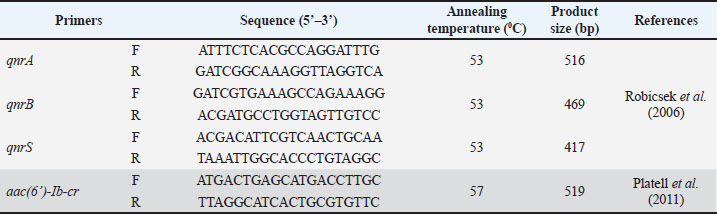
AbstractBackground: Pigeons are a potential reservoir for several pathogenic microorganisms, including Escherichia coli, Salmonella spp., Chlamydia spp., and Cryptococcus spp. These microorganisms can also be pathogenic and antibiotic-resistant bacteria, posing risks to food safety and public health. Aim: To determine antibiotic resistance and identify the qnr (qnrA, qnrB, qnrS) and aac(6’)-ib-cr genes in quinolone-resistant E. coli strains isolated from pigeon farms in Bac Ninh, Vietnam. Methods: A total of 128 fresh dropping fecal samples were collected from pigeon farms in Bac Ninh, Vietnam, and transported to the laboratory for analysis within 24 hours. The E. coli strains were identified using biochemical tests and Gram staining. The antibiotic susceptibility of the E. coli strains was assessed using the disc diffusion method. The Plasmid-mediated Quinolone Resistance (PMQR) genes of quinolone-resistant E. coli strains were detected using polymerase chain reaction. Results: In this study, 97/128 (75.8%) pigeon fecal samples tested positive for E. coli. The isolated strains showed the highest resistance to ampicillin at 69.1%, followed by sulfonamide and tetracycline at 64.9% and 52.6%, respectively. Gentamicin and trimethoprim/sulfamethoxazole were resistant by 45.4% and 48.5% of the isolates, respectively. Resistance of E. coli strains to norfloxacin, doxycycline, nalidixic acid, and cefotaxime ranged from 19.6% to 36.1%. Using the agar diffusion method, 11.3% of the isolated E. coli strains were suspected to be meropenem-resistant. Sixty-six (68.0%) of the 97 E. coli strains were identified as multi-drug resistant. All quinolone-resistant E. coli strains carried at least one PMQR gene. Of these, the qnrS, qnrA, qnrB, and aac(6')-ib-cr genes were detected at rates of 65.6%, 56.3%, 15.6%, and 18.8%, respectively. Conclusion: The E. coli strains originating from pigeons in the study area showed resistance to multiple antibiotics, potentially posing a risk of spreading antibiotic-resistant bacterial strains in livestock farming. Keywords: Antibiotic resistance, PMQRs, E. coli, Pigeon, Bac Ninh. IntroductionPigeon meat and eggs have recently become popular foods worldwide due to their high nutritional value. Pigeon farming has developed into an important part of the poultry industry in some countries (Wang et al., 2025). Pigeon farms for meat production are increasing in Vietnam due to low housing, feed, and veterinary care costs. However, the increasing breeding and trade of pigeons inadvertently lead to the risk of spreading infectious diseases, including zoonotic diseases (Pedersen and Clark, 2007), because pigeons are known to be potential hosts of several pathogenic microorganisms, including Escherichia coli, Salmonella spp., Chlamydia spp., and Cryptococcus spp. (Tanaka et al., 2005; Vasconcelos et al., 2018; Karim et al., 2020). Although most E. coli strains are harmless, some pathogenic strains can cause a variety of gastrointestinal or urinary tract infections, including septicemia, contributing to the global burden of diarrheal disease (Kao et al., 2015). Antibiotic resistance in human and animal pathogens, including E. coli, is often associated with food-producing animals (EFSA and ECDC, 2018). Notably, many important antibiotics, including fluoroquinolones (FQs) and cephalosporins, which are typically used only in human medicine, are also widely used in animal husbandry for the prevention and treatment of bacterial infections in livestock World Health Organization (WHO, 2017). Currently, epidemiological data on pathogens, including E. coli, in pigeons are limited. Furthermore, antibiotic classes such as tetracycline, sulfonamide, aminoglycoside, and quinolone are still commonly used to control bacterial diseases in pigeons due to the lack of effective vaccines to prevent bacterial diseases (Wang and Hu, 2022). However, the widespread use of these antibiotics has increased the level of antibiotic resistance in bacterial pathogens in both human and veterinary medicine (WHO, 2017; Founou et al., 2017). Antibiotics belonging to the quinolone group are widely used to treat bacterial infections in both human and veterinary medicine worldwide (Poirel et al., 2012; WHO, 2017). FQs resistance in Enterobacteriaceae species is associated with chromosomal mutations affecting DNA gyrase and DNA topoisomerase IV, along with the emergence of Plasmid-mediated Quinolone Resistance (PMQR) genes. The PMQR genes are systematically categorized into three classes based on their distinct mechanisms of action. Exemplars of these classes encompass various qnr alleles (such as qnrA, qnrB, qnrS, qnrC, and qnrD), efflux pump genes (including oqxAB and qepA), and a specific variant of aminoglycoside acetyltransferase denoted as aac-(6′)-Ib-cr (Strahilevitz et al., 2009; Poirel et al., 2012). As mentioned above, although pigeons are widely raised in Vietnam, there is limited research on this species, including nutrition, vaccination, and diseases. Furthermore, the lack of information on disease prevalence, antibiotic resistance, and the mechanisms of antibiotic resistance in Vietnamese pigeons, including E. coli, may pose difficulties in selecting appropriate antibiotics for treatment. Therefore, this study was conducted to determine antibiotic resistance and identify PMQR genes, such as qnrA, qnrB, qnrS, and aac(6’)-Ib-cr, in quinolone-resistant E. coli strains isolated from pigeon farms in Bac Ninh, Vietnam. Materials and MethodsSamplingIn this study, 128 fresh fecal samples were randomly collected from 32 different pigeon farms in Bac Ninh province, Vietnam, from January to December 2024, as suggested by local veterinarians. Each farm raised at least 1,000 pairs of breeding pigeons. The samples were collected according to the QCVN 01-83:2011/BNNPTNT guidelines of the Ministry of Agriculture and Rural Development (2011). Briefly, fresh fecal samples were carefully collected using sterile spoons. Each sample was placed in a separate sterile sample bag, labeled, stored at 4°C in a dry ice box, and immediately transported to the Department of Veterinary Microbiology and Infectious Diseases, Faculty of Veterinary Medicine, Vietnam National University of Agriculture for analysis within 24 hours. Isolation of E. coliAt the laboratory, approximately 1 g of each fecal sample was homogenized with buffered peptone water at a ratio of 1:9. Next, a loopful of the homogenized cultures was streaked onto Macconkey agar (Merck, Germany) and incubated at 37°C for 24 hours. Subsequently, the pink colonies were cultured on on eosin-methylene blue (EMB) (Merck, Germany) and incubated at 37°C for 24 hours. A typical colony exhibiting the green metallic sheen on EMB agar was streaked onto triple sugar iron agar (TSI; Merck, Germany) and incubated at 37°C for 24 hours. Colonies exhibiting a typical TSI profile, including glucose and lactose fermentation with gas production and no H2S, were confirmed as E. coli by Gram staining and biochemical tests, such as citrate utilization, indole production, the methyl red, and Voges-Proskauer reactions. All isolates were kept in brain heart infusion broth (BHI; Merck, Germany) supplemented with 50% glycerol at −20°C for subsequent experiments. Antibiotic susceptibility testing was performedA total of 97 E. coli strains from positive samples were selected for antibiotic susceptibility analysis according to the Clinical and Laboratory Standards Institute guidelines (CLSI, 2024). The agar diffusion method was performed on Mueller-Hinton agar (Merck, Germany) following Bauer et al. (1966). Ten different antibiotic agents (Oxoid, UK) belonging to seven groups were used, including penicillin [ampicillin (10 µg)], cephalosporins [cefotaxime (30 µg)], carbapenems [meropenem (10 µg)], tetracyclines [doxycycline (30 µg); tetracycline (30 µg)], aminoglycosides [gentamicin (10 µg)], quinolones [nalidixic acid (30 µg), norfloxacin (10 µg)], sulfonamides [sulfonamides (300 µg); trimethoprim/sulfamethoxazole (1.25/23.75 µg)]. The E. coli ATCC 25922 strain was used for quality control. An isolate was determined to be antibiotic-resistant or multidrug-resistant based on the definition of Magiorakos et al. (2012). Detection of the PMQR genesDNA was extracted using the TopPURE® Genomic DNA Extraction Kit (ABT, Vietnam) according to the manufacturer’s instructions. The PMQR genes, including qnrA, qnrB, qnrS, and aac(6’)-Ib-cr, were screened by single polymerase chain reaction (PCR) with the primers and product sizes listed in Table 1. PCR amplification reactions were performed in a 25 µl volume of reaction mixture containing 12.5 µl of GoTaq® Green master mix, 2× (Promega, USA), 1 µl (10 µM) of primers, 2 µl of DNA template, and 8.5 µl nuclease-free water. The PCR programs consisted of a hot start cycle of 94℃ for 5 minutes, followed by 30 cycles of 94℃ for 45 seconds, the corresponding temperature of each primer pair for 45 seconds, and 72℃ for 1 minute, and a final extension step of 72℃ for 5 minutes. Each experiment included positive control samples (containing template DNA of strains with known qnr, aac(6’)-ib-cr genes) and negative samples (no template DNA). The PCR products were electrophoresed on 1.5% agarose gel supplemented with RedSafe™ nucleic acid staining solution (Intron, Korea). Table 1. Primers used to detect PMQR genes.
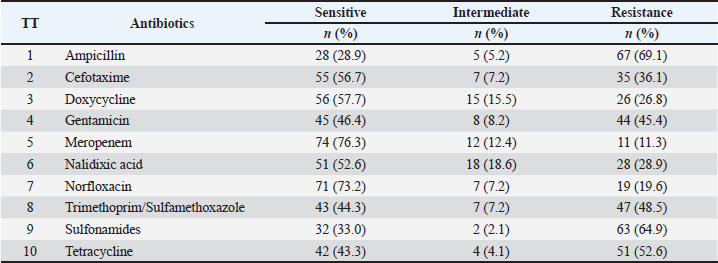
Data analysisThe isolation and antibiotic resistance rates of the E. coli strains were recorded and calculated using Microsoft Excel 2016. Ethical approvalThe present study was conducted by collecting samples in accordance with the guidelines of the Committee on Animal Research and Ethics (CARE), Faculty of Veterinary Medicine, Vietnam National University of Agriculture, Vietnam (Approval No. CARE-2024/01). ResultsAntibiotic resistance of E. coli strainsAfter conducting biochemical tests, 75.8% (97/128) of the fecal samples were E. coli-positive. The antibiotic resistance rates of the E. coli strains are presented in Table 2. The isolates exhibited the highest resistance to ampicillin (69.1%), followed by sulfonamides (64.9%) and tetracycline (52.6%). Gentamicin and trimethoprim/sulfamethoxazole were resistant at rates of 45.4% and 48.5%, respectively. Resistance to norfloxacin, doxycycline, nalidixic acid, and cefotaxime ranged from 19.6% to 36.1%. Using the agar diffusion method, 11.3% of the isolated E. coli strains were suspected to be meropenem-resistant. Table 2. Antibiotic resistance of E. coli isolated from pigeon farms in Bac Ninh, Vietnam (n=97).
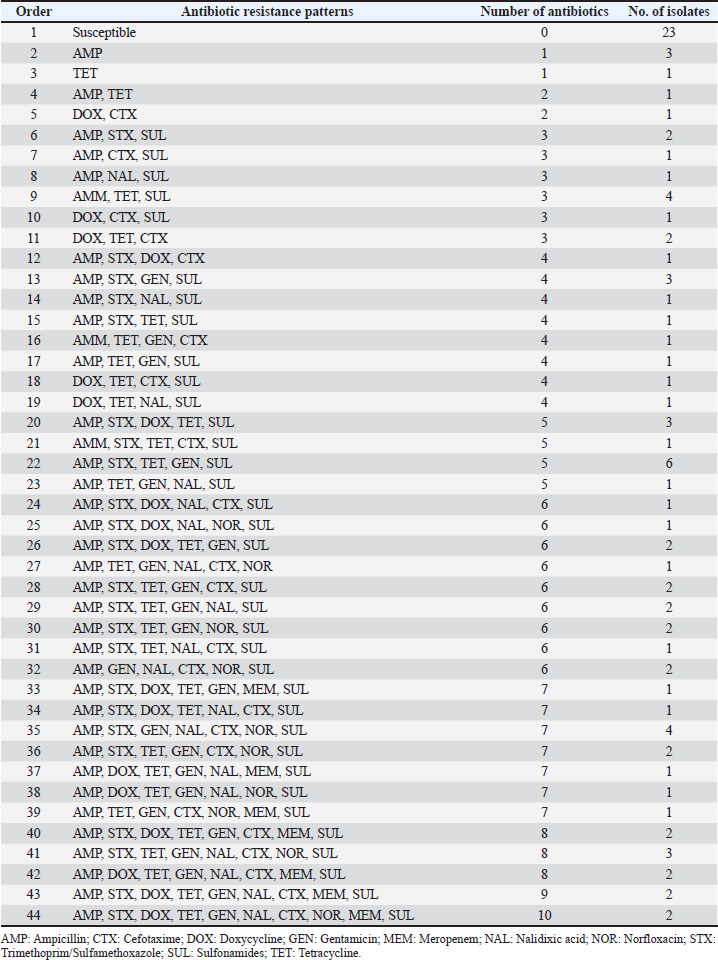
Antibiotic resistance profilesTable 3 presents the antibiotic resistance patterns of the E. coli strains. Of the 97 isolated strains, 23 were susceptible to all antibiotics. The remaining strains exhibited 43 different patterns of antibiotic resistance. Of which, 66 (68.0%) of the 97 E. coli strains were identified as multidrug resistant. The most common antibiotic resistance pattern was AMP-STX-TET-GEN-SUL, found in six isolates, followed by AMP-STX-GEN-NAL-CTX-NOR-SUL and AMP-TET-SUL, both found in four isolates. Multidrug-resistant E. coli strains are often simultaneously resistant to ampicillin, tetracycline, sulfonamides, trimethoprim/sulfamethoxazole, and/or other antibiotic classes. Table 3. Antibiotic resistance patterns of isolated E. coli strains (n=97).
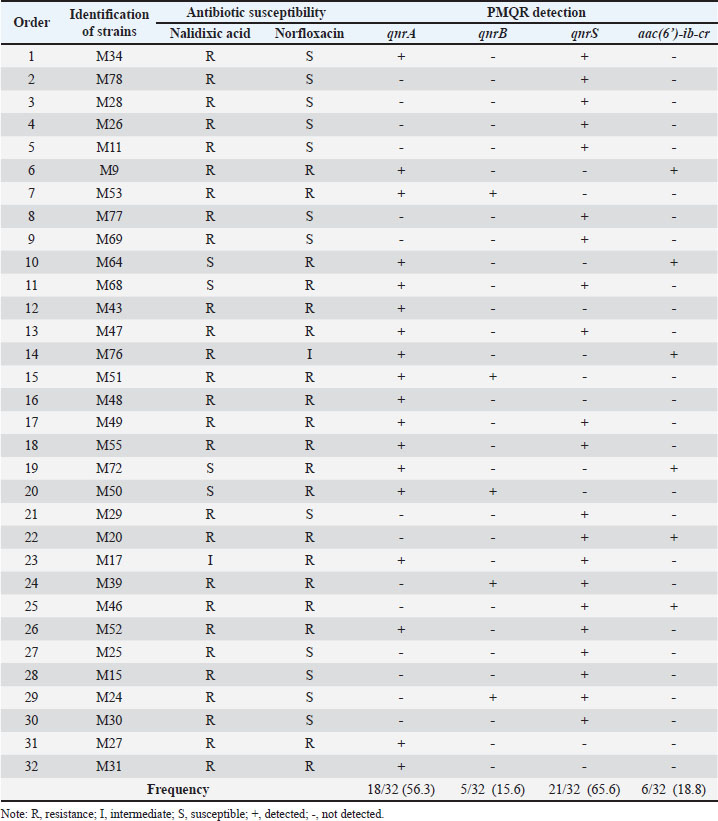
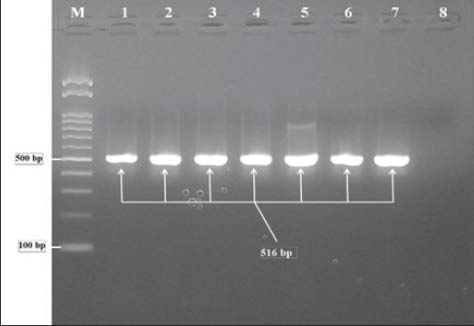
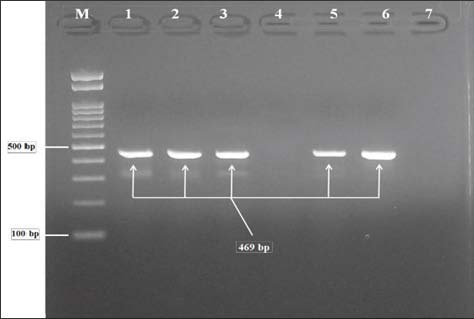
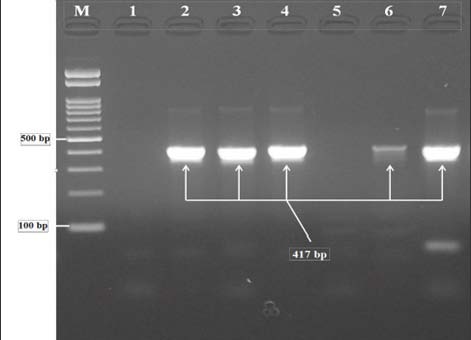
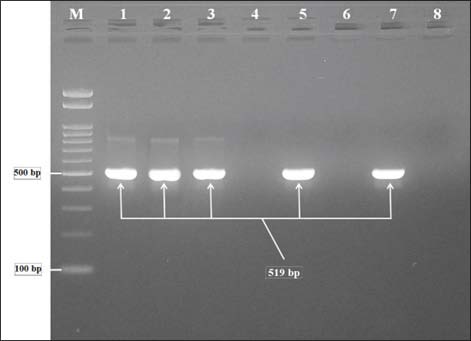
Detection of the PMQR genesThe PMQR genes detected in 32 quinolone-resistant E. coli strains are presented in Table 4 and Figures 1–4. All quinolone-resistant isolates carried at least one PMQR gene. The qnrS and qnrA genes were most commonly found in quinolone-resistant strains, with rates of 65.6% and 56.3%, respectively. Only 15.6% and 18.8% of the strains carried the qnrB and aac(6')-ib-cr genes, respectively. Table 4. Detection of the PMQRs gene from quinolone-resistant E. coli strains.
Fig. 1. Electrophoresis of the qnrA gene (M: marker (100 bp); Lane 1–6: positive qnrA; Lane 7: positive control; Lane 8: negative control).
Fig. 2. Electrophoresis of the qnrB gene (M: marker (100 bp); Lanes 1, 2, 3, and 5: positive qnrB; Lane 4: negative qnrB; Lane 6: positive control; Lane 7: negative control).
Fig. 3. Electrophoresis of the qnrS gene (M: marker (100 bp); Lane 1: negative control; Lane 2: positive control; Lane: 3, 4, 6, and 7: positive qnrS; Lane 5: negative qnrS).
Fig. 4. Electrophoresis of the aac(6’)-ib-cr gene. (M: marker (100 bp); Lanes 1, 2, 3, and 5: positive aac(6’)-ib-cr; Lanes 4 and 6: negative aac(6’)-ib-cr; Lane 7: positive coltrol; Lane 8: negative coltrol). DiscussionThe isolation rate of E. coli in the current study is comparable to the rates ranging from 50.0% to 69.9% reported in previous studies conducted in Bangladesh (Dey et al., 2013; Karim et al., 2020), India (Dutta et al., 2013), and China (Wang et al., 2025). However, this rate is lower than the 90.2% of E. coli-positive samples in a similar study conducted in Egypt (Hagag et al., 2022). Differences in isolation rates may be due to different techniques used, environment, climate, sample size, and regional variations (Karim et al., 2020). The common presence of E. coli in pigeon feces suggests that this species may play a role in the spread of pathogenic bacteria, thus creating a significant bio-risk (Abulreesh, 2011; Borges et al., 2017). The resistance rates of E. coli strains to tetracycline, sulfonamide, and ampicillin were higher than those of 39.0%–40.9% in a previous study conducted in China (Wang and Hu, 2022). Karim et al. (2020) reported similar resistance rates to tetracycline (52.38%) and ampicillin (71.43%) in E. coli strains isolated from pigeons in Bangladesh. Notably, high resistance rates to these antibiotics, ranging from 63.95% to 100%, have been observed in other studies in India (Dutta et al., 2013) and China (Wang et al., 2025). The high levels of resistance to tetracycline, sulfonamides, and ampicillin may be due to the long-term and widespread use of these drugs in both human and veterinary medicine worldwide. Surprisingly, despite being the most commonly used antibiotic for treating infections in livestock in Vietnam, doxycycline resistance was only 26.8%. Similar studies in Poland (Stegen et al., 2014), Egypt (Hagag et al., 2022), and Hungary (Kerek et al., 2025) reported doxycycline resistance rates ranging from 40.0% to 97.3%. The rate of resistance to trimethoprim/sulfamethoxazole (48.5%) is consistent with that reported in Poland (Stenzel et al., 2014). However, resistance to this antibiotic by pigeon-derived E. coli strains ranged from 17.1% in Iran (Ghanbarpour et al., 2020) to 80.0% in Egypt (Hagag et al., 2022). Furthermore, the proportion of gentamycin-resistant E. coli strains (45.4%) was higher than that reported in previous studies conducted in Bangladesh (Karim et al., 2020), China (Wang and Hu, 2022), and Egypt (Hagag et al., 2022). The widespread use of trimethoprim/sulfamethoxazole and gentamicin to treat bacterial infections in pigeons in the study area may be related to the high rate of resistance to these two antibiotics. The rate of resistance to nalidixic acid (28.9%) is in line with the results reported from Bangladesh, China, and India (Dutta et al., 2013; Karim et al., 2020; Wang and Hu, 2022). However, in a study in Egypt, Hagag et al. (2022) reported that 70% of E. coli strains were resistant to this antibiotic. The proportion of norfloxacin-resistant strains identified in this study is consistent with the results of other studies conducted in Poland (Stenzel et al., 2014). In contrast, only 6.9% of E. coli strains of pigeon origin were resistant to this antibiotic in a study conducted in India (Dutta et al., 2013). Cefotaxime is an essential antibiotic for treating infections; therefore, its use should be performed with caution and in accordance with the recommendations of the WHO (2017). However, numerous studies have reported the prevalence of cefotaxime-resistant E. coli strains originating from pigeons, ranging from 3.0% to 45.0% in China (Wang and Hu, 2022; Wang et al., 2025), 48.9% in Iran (Ghanbarpour et al., 2020), and up to 95.0% in Egypt (Hagag et al., 2022). Meropenem is an extremely important broad-spectrum drug in the treatment of serious human infections (WHO, 2017). Similar studies conducted in China (Wang and Hu, 2022; Wang et al., 2025), Spain (Capita et al., 2019; Cordero et al., 2019), and Poland (Kowalczyk and Wójcik-Fatla, 2025) have reported that pigeon-derived E. coli strains are completely susceptible or only mildly resistant to meropenem. In the current study, approximately 11.3% of the isolated E. coli strains were suspected to be meropenem-resistant. However, the determination of meropenem resistance using the agar diffusion method has limitations and is not recommended by the CLSI unless it is a clinical E. coli strain (CLSI, 2024). Therefore, further studies are needed to definitively determine whether these strains are resistant to meropenem by determining the minimum inhibitory concentration and/or molecular resistance mechanisms through screening of carbapenemase resistance genes (blaNDM, blaKPC, blaOXA-48, blaIMP, blaVIM). Treatment with one antibiotic may be associated with the development of resistance to another antibiotic due to cross-resistance and co-selection. The emergence of multi-drug resistant (MDR) E. coli associated with co-resistance to three or more different classes of antibiotics has been reported and reviewed previously (Magiorakos et al., 2012; Pouwels et al., 2018). Overall, the prevalence of MDR E. coli strains originating from pigeons varies across countries. MRD was identified in approximately 2.1%, 23.8%, 40.1%, 65.8%, and 98.33% of isolates in similar studies conducted in Poland (Kowalczyk and Wójcik-Fatla, 2025), Bangladesh (Karim et al., 2020), Iran (Ghanbarpour et al., 2025), Hungary (Kerek et al., 2025), and China (Ghanbarpour et al., 2020), respectively. In the current study, 68.0% of the E. coli strains were found to be MDR. This may be due to the exposure of breeding pigeons to multiple antibiotics throughout their 3–5 years rearing period on farms. Bacteria can become resistant to multiple drugs due to exposure to various antibiotics in their environment (Borges et al., 2017; Kerek et al., 2025). PMQRs are shown to play a significant role in FQs resistance because they can induce low levels of FQs resistance. The most common PMQR genes in gram-negative bacteria are qnrA, qnrB, qnrS, and aac(6’)-Ib-cr (Strahilevitz et al., 2009; Poirel et al., 2012). The proportion of quinolone-resistant isolates carrying the PMQR genes was generally consistent with previous studies in Argentina (Dominguez et al., 2018) and Egypt (Ibrahim et al., 2023). However, in similar studies in the Czech Republic (Röderova et al., 2017), Taiwan (Yeh et al., 2017), Tunisia (Kilani et al., 2020), and Iran (Javadi et al., 2024), these genes were screened at lower rates, ranging from 14.8% to 28.0%, in quinolone-resistant E. coli strains. Conversely, in studies conducted on poultry and wild birds in Korea (Oh et al., 2016) and Italy (Niero et al., 2018), these genes were detected in quinolone-resistant E. coli strains at rates ranging from 0.9% to 5.0%. Notably, except for the prevalence of the aac(6')-ib-cr gene in E. coli strains isolated from broiler chickens in Iran (Javadi et al., 2024), the qnrS gene was identified at the highest rates in quinolone-resistant E. coli strains isolated from various sources (Röderova et al., 2017; Yeh et al., 2017; Dominguez et al., 2018; Kilani et al., 2020; Ibrahim et al., 2023). Additionally, the authors reported that other PMQR genes, such as qnrA, qnrB, qnrC, qnrD, qepA… were detected at lower rates (Röderova et al., 2017; Dominguez et al., 2018; Ibrahim et al., 2023) or were not found in quinolone-resistant E. coli strains (Kilani et al., 2020). However, comparing research results is difficult due to differences in experimental design, sampling methods, sample types, and antibiotic use between countries. Many studies have demonstrated that the distribution of PMQR genes in bacterial strains could vary depending on the isolation source (Nishikawa et al., 2019; Kilani et al., 2020). ConclusionIn the current study, the isolated E. coli strains from pigeon feces were resistant to multiple antibiotics and carried plasmid genes conferring resistance to quinolones. Therefore, pigeon farms must carefully manage antibiotic use and establish monitoring procedures to minimize antibiotic resistance. Further studies should focus on determining whether the E. coli strains at pigeon farms express other genes associated with pathogenicity and antibiotic resistance. AcknowledgmentsThe authors would like to thank the students for sample transportation and the local veterinarian for their excellent technical assistance. Conflict of interestThe authors declare no conflicts of interest. FundingThis research received internal funding from the Vietnam National University of Agriculture (project code T2024-09-34). Authors’ contributionsC.T.T.H. set up the investigation and methodology and contributed to writing the manuscript. T.L.O. collected and analyzed the samples. C.T.B.P and L.V.T participated in the experiments and data analysis. T.H.T. provided supervision, methodology support, and writing. All authors have revised and approved the final version of the manuscript. Data availabilityData will be made available on reasonable request. ReferencesAbulreesh, H.H. 2011. Free living rock pigeon (Columba livia) as an environmental reservoir of Enteric bacterial pathogens resistant to antimicrobial drugs in Saudi Arabia. Curr. Res. Bacteriol. 4, 28–33; doi:10.3923/crb.2011.28.33 Bauer, A.W., Kirby, W.M.M., Sherris, J.C. and Turck, M. 1966. Antibiotic susceptibility testing by a standardized single disk method. Am. J. Clin. Pathol. 45(4), 493–496. Available via https://academic.oup.com/ajcp/article-abstract/45/4_ts/493/4821085?redirectedFrom=fulltext Borges, C.A., Cardozo, M.V., Beraldo, L.G., Oliveira, E.S., Maluta, R.P., Barboza, K.B., Werther, K. and Ávila, F.A. 2017. Wild birds and urban pigeons as reservoirs for diarrheagenic Escherichia coli with zoonotic potential. J. Microbiol. 55(5), 344–348; doi:10.1007/s12275-017-6523-3 Capita, R., Cordero, J., Molina-González, D., Igrejas, G., Poeta, P. and Alonso-Calleja, C. 2019. Phylogenetic diversity, antimicrobial susceptibility and virulence characteristics of Escherichia coli isolates from pigeon meat. Antibiotics (Basel) 8(4), 259; doi:10.3390/antibiotics8040259 Clinical and Laboratory Standards Institute (CLSI). 2024. Performance standards for antimicrobial susceptibility testing, 34th edition. CLSI supplement M100. Wayne, PA: Clinical and Laboratory Standards Institute, pp: 24–25. Available via https://pid-el.com/wp-content/uploads/2024/07/CLSI-M100.pdf Cordero, J., Alonso-Calleja, C., García-Fernández, C. and Capita, R. 2019. Microbial load and antibiotic resistance patterns of Escherichia coli and Enterococcus faecalis isolates from the meat of wild and domestic pigeons. Foods 8(11), 536; doi:10.3390/foods8110536 Dey, R.K., Khatun, M.M., Islam, M.A. and Hosain, M.S. 2013. Prevalence of multidrug resistant Escherichia coli in pigeon in Mymensingh, Bangladesh. Microbes Health 2(1), 5–7; doi:10.3329/mh.v2i1.17254 Dominguez, J.E., Redondo, L.M., Figueroa-Espinosa, R.A., Cejas, D., Gutkind, G.O., Chacana, P.A., Di Conza, J.A. and Fernández-Miyakawa, M.E. 2018. Simultaneous carriage of mcr-1 and other antimicrobial resistance determinants in Escherichia coli from poultry. Front. Microbiol. 9, 1679; doi:10.3389/fmicb.2018.01679 Dutta, P., Borah, M., Sarmah, R. and Gangil, R. 2013. Isolation, histopathology and antibiogram of Escherichia coli from pigeons (Columba livia). Vet. World. 6(2), 91–94. EFSA. and ECDC. 2018. The European Union summary report on antimicrobial resistance in zoonotic and indicator bacteria from humans, animals and food in 2016. EFSA J. 16(2), 5182; doi:10.2903/j.efsa.2018.5182 Founou, R.C., Founou, L.L. and Essack, S.Y. 2017. Clinical and economic impact of antibiotic resistance in developing countries: a systematic review and meta-analysis. PLos One 12(12), 189621; doi:10.1371/journal.pone.0189621 Ghanbarpour, R., Aflatoonian, M.R., Askari, A., Abiri, Z., Naderi, Z., Bagheri, M., Jajarmi, M., Shobeiri, S., Molaei, R. and Askari, N. 2020. Domestic and game pigeons as reservoirs for Escherichia coli harboring antimicrobial resistance genes. J. Glob. Antimicrob. Res. 22, 571–577; doi:10.1016/j.jgar.2020.02.015 Ibrahim, D., Awad, A. and Younis, G. 2023. Prevalence and characterization of quinolone-resistant Escherichia coli isolated from retail raw beef and poultry meat in Egypt. J. Adv. Vet. Anim. Res. 10(3), 490–499; doi:10.5455/javar.2023.j702 Javadi, B., Kafshdouzan, K., Emadi Chashmi, S.H. and Pazhand, O. 2024. Plasmid-mediated quinolone resistance in Escherichia coli isolates from commercial broiler chickens in Semnan, Iran. Iran. J. Microbiol. 16(2), 193–200. Kao, C.Y., Wu, H.M., Lin, W.H., Tseng, C.C., Yan, J.J., Wang, M.C., Teng, C.H. and Wu, J.J. 2015. Plasmid-mediated quinolone resistance determinants in quinolone-resistant Escherichia coli isolated from patients with bacteremia in a university hospital in Taiwan, 2001-2015. Sci. Rep. 6, 32281; doi: 10.1038/srep32281 Karim, S.J.I., Islam, M., Sikder, T., Rubaya, R., Halder, J. and Alam, J. 2020. Multi-drug resistant Escherichia coli and Salmonella spp. isolated from pigeons. Vet. World. 13, 2156–2165; doi:10.14202/vetworld.2020.2156-2165 Kerek, A., Szabó, A. and Jerzsele, A. 2025. Antimicrobial susceptibility profiles of Escherichia coli isolates from domestic pigeons in Hungary. Front. Vet. Sci. 12, 1642902; doi:10.3389/fvets.2025.1642902 Kilani, H., Ferjani, S., Mansouri, R., Boutiba-Benboubaker, I. and Abbassi, M.S. 2020. Occurrence of plasmid-mediated quinolone resistance determinants among Escherichia coli strains isolated from animals in Tunisia: specific pathovars acquired qnr genes. J. Glob. Antimicrob. Resist. 20, 50–55; doi:10.1016/j.jgar.2019.07.023 Kowalczyk, K. and Wójcik-Fatla, A. 2025. Phylogenetic characterization, virulence factors, and multi-drug resistance of Escherichia coli strains isolated from feces of feral pigeons (Columba Livia forma urbana). Ir. Vet. J. 78(1), 17; doi:10.1186/s13620-025-00306-2 Magiorakos, A.P., Srinivasan, A., Carey, R.B., Carmeli, Y., Falagas, M.E., Giske, C.G., Harbarth, S., Hindler, J.F., Kahlmeter, G., Olsson-Liljequist, B., Paterson, D.L., Rice, L.B., Stelling. J., Struelens, M.J., Vatopoulos, A., Weber, J.T. and Monnet, D.L. 2012. Multidrug-resistant, extensively drug-resistant and pandrug-resistant bacteria: an international expert proposal for interim standard definitions for acquired resistance. Clin. Microbiol. Infect. 18(3), 268–281; doi:10.1111/j.1469-0691.2011.03570.x Ministry of Agriculture and Rural Development (MARD). 2011. National technical regulation on animal diseases—General requirements for sample collection, storage and shipment. QCVN 01-83:2011/BNNPTNT, pp: 5–10. promulgated under Circular No. 71/2011/TT-BNNPTNT of MARD. Available via https://sgtvt.bacninh.gov.vn/documents/154127/14279228/QCVN+01-83- 2011-BNNPTNT.pdf/2a692d85-15d0-445c-969e-8964f5dadcad Hagag, A., Naguib, D., El-Nagar, A., Elgohary, A. and Mohamed, A. 2022. Prevalence, virulence genes, and antibiotic resistance of Escherichia coli and Salmonella spp. isolated from pigeons and humans. Mansoura. Vet. Med. J. 23(1), 4; doi:10.21608/mvmj.2021.88961.1072 Niero, G., Bortolaia, V., Vanni, M., Intorre, L., Guardabassi, L. and Piccirillo, A. 2018. High diversity of genes and plasmids encoding resistance to third-generation cephalosporins and quinolones in clinical Escherichia coli from commercial poultry flocks in Italy. Vet. Microbiol. 216, 93–98; doi:10.1016/j.vetmic.2018.02.012 Nishikawa, R., Murase, T. and Ozaki, H. 2019. Plasmid-mediated quinolone resistance in Escherichia coli isolates from commercial broiler chickens and selection of fluoroquinolone-resistant mutants. Poult. Sci. 98(11), 5900–5907; doi:10.3382/ps/pez337 Oh, J.Y., Kwon, Y.K., Tamang, M.D., Jang, H.K., Jeong, O.M., Lee, H.S. and Kang, M.S. 2016. Plasmid-mediated quinolone resistance in Escherichia coli isolates from wild birds and chickens in South Korea. Microb. Drug Resist. 22(1), 69–79; doi:10.1089/mdr.2015.0090 Pedersen, K. and Clark, L. 2007. A review of Shiga toxin Escherichia coli and Salmonella enterica in cattle and free-ranging birds: potential association and epidemiological links. Human-Wildlife Conflicts 1, 68–77; doi:10.26077/fn01-a919 Platell, J.L., Cobbold, R.N., Johnson, J.R., Heisig, A., Heisig, P., Clabots, C., Kuskowski, M.A. and Trott, D.J. 2011. Commonality among fluoroquinolone-resistant sequence type ST131 extraintestinal Escherichia coli isolates from humans and companion animals in Australia. Antimicrob. Agents Chemother. 55, 3782–3787; doi:10.1128/AAC.00306-11 Poirel, L., Cattoir, V. and Nordmann, P. 2012. Plasmid-mediated quinolone resistance; interactions between human, animal, and environmental ecologies. Front. Microbiol. 3, 24; doi:10.3389/fmicb.2012.00024 Pouwels, K.B., Freeman, R., Muller-Pebody, B., Rooney, G., Henderson, K.L., Robotham, J.V. and Smieszek, T. 2018. Association between use of different antibiotics and trimethoprim resistance: going beyond the obvious crude association. J. Antimicrob. Chemother. 73(6), 1700–1707; doi:10.1093/jac/dky031 Robicsek, A., Strahilevitz, J., Sahm, D.F., Jacoby, G.A. and Hooper, D.C. 2006. Qnr prevalence in ceftazidime-resistant Enterobacteriaceae isolates from the United States. Antimicrob. Agents Chemother. 50(8), 2872–2874. Röderova, M., Halova, D., Papousek, I., Dolejska, M., Masarikova, M., Hanulik, V., Pudova, V., Broz, P., Htoutou-Sedlakova, M., Sauer, P., Bardon, J., Cizek, A., Kolar, M. and Literak, I. 2017. Characteristics of quinolone resistance in Escherichia coli isolates from humans, animals, and the environment in the Czech Republic. Front. Microbiol. 7, 2147; doi:10.3389/fmicb.2016.02147 Stenzel, T., Bancerz-Kisiel, A., Tykałowski, B., Śmiałek, M., Pestka, D. and Koncicki, A. 2014. Antimicrobial resistance in bacteria isolated from pigeons in Poland. Pol. J. Vet. Sci. 17(1), 169–171; doi:10.2478/pjvs-2014-0023 Strahilevitz, J., Jacoby, G.A., Hooper, D.C. and Robicsek, A. 2009. Plasmid-mediated quinolone resistance: a multifaceted threat. Clin. Microbiol. Rev. 22, 664–689; doi:10.1128/CMR.00016-09 Tanaka, C., Miyazawa, T., Watarai, M. and Ishiguro, N. 2005. Bacteriological survey of feces from feral pigeons in Japan. J. Vet. Med. Sci. 67, 951–953; doi:10.1292/jvms.67.951 Vasconcelos, R.H., Teixeira, R.S.C., Silva, I.N.G., Lopes, E.S. and Maciel, W.C. 2018. Feral pigeons (Columba livia) as potential reservoirs of Salmonella spp. and Escherichia coli. Arq. Inst. Biol. 85, 1–6; doi:10.1590/1808-1657000412017 Wang, A. and Hu, C. 2022. Antimicrobial resistance analysis of Escherichia coli isolated from pigeons in Qingdao, Shandong province, China. Genes. (Basel). 13(9), 1510; doi:10.3390/genes13091510 Wang, J., Lu, Q., Yao, L., Zhang, W., Hu, Q., Guo, Y., Wen, G., Shao, H., Luo, Q. and Zhang, T. 2025. Research note: prevalence and genetic characteristics of pathogenic E. coli isolates from domestic pigeons in central China. Poult. Sci. 104(2), 104705; doi:10.1016/j.psj.2024.104705 WHO. 2017. Critically important antimicrobials for human medicine. Geneva, Switzerland: WHO. Available via http://apps.who.int/iris/bitstream/10665/255027/1/9789241512220-eng.pdf?ua=1 (Accessed 24 August 2020) Yeh, J.C., Lo, D.Y., Chang, S.K., Chou, C.C. and Kuo, H.C. 2017. Prevalence of plasmid-mediated quinolone resistance in Escherichia coli isolated from diseased animals in Taiwan. J. Vet. Med. Sci. 79(4), 730–735; doi:10.1292/jvms.16-0463 | ||
| How to Cite this Article |
| Pubmed Style Huong CTT, Phuong CTB, Oanh TL, . Antibiotic resistance of Escherichia coli isolated from pigeon fecal samples in Bac Ninh, Vietnam. Open Vet. J.. 2026; 16(5): 3014-3024. doi:10.5455/OVJ.2026.v16.i5.44 Web Style Huong CTT, Phuong CTB, Oanh TL, . Antibiotic resistance of Escherichia coli isolated from pigeon fecal samples in Bac Ninh, Vietnam. https://www.openveterinaryjournal.com/?mno=304430 [Access: June 26, 2026]. doi:10.5455/OVJ.2026.v16.i5.44 AMA (American Medical Association) Style Huong CTT, Phuong CTB, Oanh TL, . Antibiotic resistance of Escherichia coli isolated from pigeon fecal samples in Bac Ninh, Vietnam. Open Vet. J.. 2026; 16(5): 3014-3024. doi:10.5455/OVJ.2026.v16.i5.44 Vancouver/ICMJE Style Huong CTT, Phuong CTB, Oanh TL, . Antibiotic resistance of Escherichia coli isolated from pigeon fecal samples in Bac Ninh, Vietnam. Open Vet. J.. (2026), [cited June 26, 2026]; 16(5): 3014-3024. doi:10.5455/OVJ.2026.v16.i5.44 Harvard Style Huong, C. T. T., Phuong, . C. T. B., Oanh, . T. L. & (2026) Antibiotic resistance of Escherichia coli isolated from pigeon fecal samples in Bac Ninh, Vietnam. Open Vet. J., 16 (5), 3014-3024. doi:10.5455/OVJ.2026.v16.i5.44 Turabian Style Huong, Chu Thi Thanh, Cao Thi Bich Phuong, Truong Lan Oanh, and Le Van Truong Truong Ha Thai. 2026. Antibiotic resistance of Escherichia coli isolated from pigeon fecal samples in Bac Ninh, Vietnam. Open Veterinary Journal, 16 (5), 3014-3024. doi:10.5455/OVJ.2026.v16.i5.44 Chicago Style Huong, Chu Thi Thanh, Cao Thi Bich Phuong, Truong Lan Oanh, and Le Van Truong Truong Ha Thai. "Antibiotic resistance of Escherichia coli isolated from pigeon fecal samples in Bac Ninh, Vietnam." Open Veterinary Journal 16 (2026), 3014-3024. doi:10.5455/OVJ.2026.v16.i5.44 MLA (The Modern Language Association) Style Huong, Chu Thi Thanh, Cao Thi Bich Phuong, Truong Lan Oanh, and Le Van Truong Truong Ha Thai. "Antibiotic resistance of Escherichia coli isolated from pigeon fecal samples in Bac Ninh, Vietnam." Open Veterinary Journal 16.5 (2026), 3014-3024. Print. doi:10.5455/OVJ.2026.v16.i5.44 APA (American Psychological Association) Style Huong, C. T. T., Phuong, . C. T. B., Oanh, . T. L. & (2026) Antibiotic resistance of Escherichia coli isolated from pigeon fecal samples in Bac Ninh, Vietnam. Open Veterinary Journal, 16 (5), 3014-3024. doi:10.5455/OVJ.2026.v16.i5.44 |


