




| Research Article | ||
Open Vet. J.. 2026; 16(5): 2781-2791 Open Veterinary Journal, (2026), Vol. 16(5): 2781-2791 Research Article Mobile-based deep learning approach for the early diagnosis of canine skin and eye diseases using mobileNetV2Ayesha Taranum1*, Chandana M. Rao1, Farhana Kausar2 and Ambika Padinjareveedu Raghavan31Department of Computer Science and Engineering, Presidency University, Bengaluru, India 2Department of Computer Science and Engineering, Atria Institute of Technology, Bengaluru, India 3Department of Computer Science and Engineering, City Engineering College, Bengaluru, India *Corresponding Author: Ayesha Taranum. Department of Computer Science and Engineering, Presidency University, Bengaluru, India. Email: ayeshagce [at] gmail.com Submitted: 28/11/2025 Revised: 30/03/2026 Accepted: 10/04/2026 Published: 31/05/2026 © 2025 Open Veterinary Journal
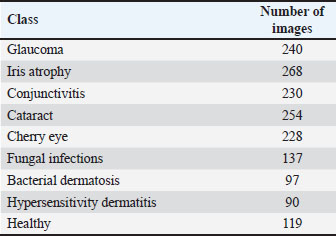
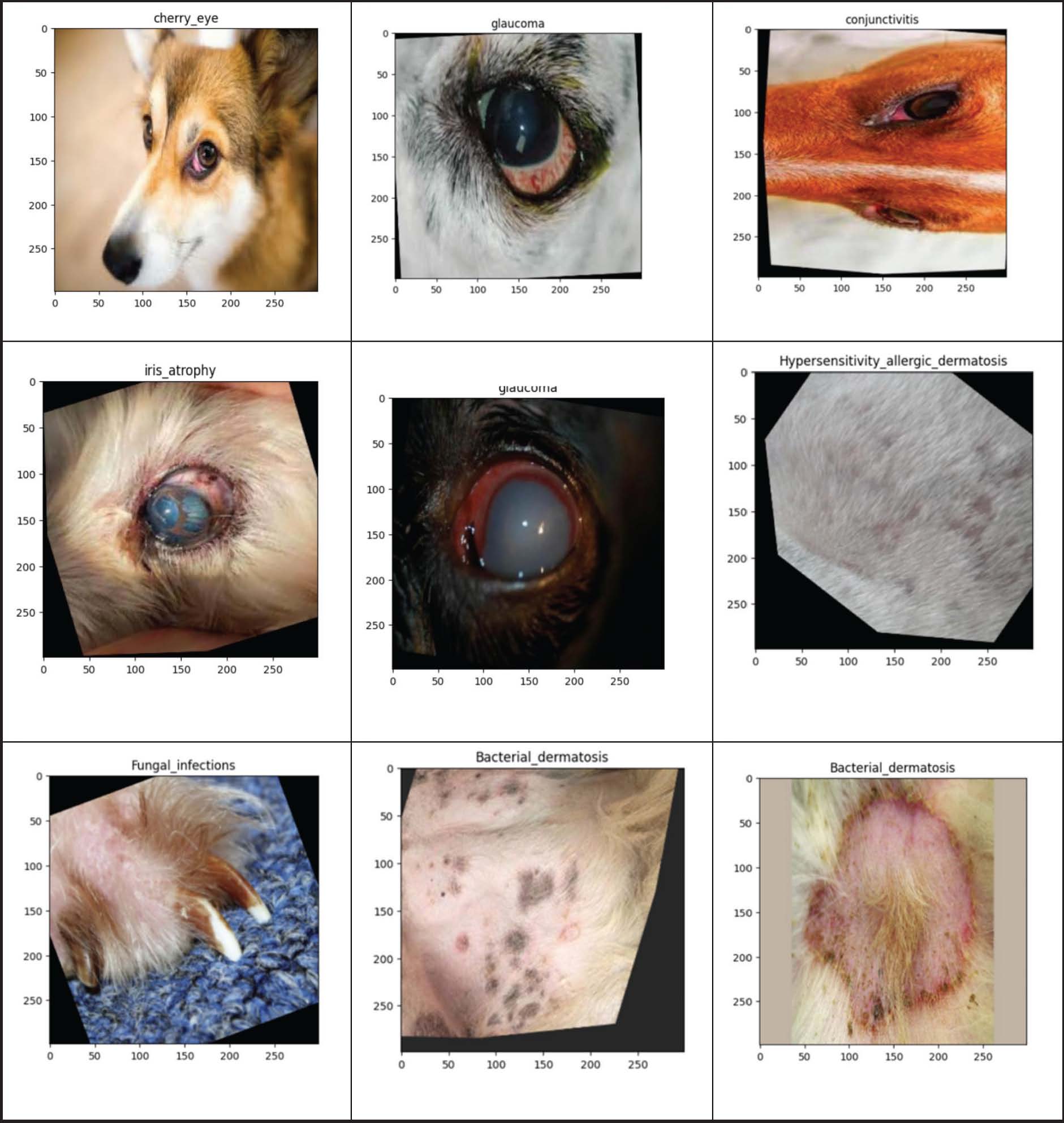
ABSTRACTBackground: Canine skin and eye diseases are common and can lead to serious health complications if not detected early. Limited access to veterinary care in remote areas further delays diagnosis and treatment. Aim: This study aims to develop a mobile-based deep learning approach for the early diagnosis of canine skin and eye diseases using the MobileNetV2 architecture. Methods: A dataset comprising images of nine canine disease classes was collected and pre-processed. Data augmentation techniques were applied to improve model generalization. A MobileNetV2-based model was trained and evaluated, and the trained model was integrated into a mobile application for real-time disease classification. Results: The proposed model achieved a training accuracy of 93.22% and a validation accuracy of 86.31%. Comparative analysis demonstrated that MobileNetV2 outperformed InceptionV3 and ResNet50 in terms of accuracy and efficiency for mobile deployment. Conclusion: The proposed system provides an efficient, accessible, and cost-effective solution for early diagnosis of canine skin and eye diseases, particularly in resource-limited settings. Keywords: Canine diseases, Deep learning, MobileNetV2, Skin and eye diagnosis, Veterinary AI. IntroductionRecently, both pet owners and veterinary professionals have expressed concern over the health and welfare of pets, particularly dogs, driven by growing awareness of animal welfare and zoonotic health risks (American Veterinary Medical Association, 2022; World Organization for Animal Health, 2023). Skin and eye diseases are among the most common diseases affecting dogs, characterized by considerable discomfort and serious complications if not treated. Traditional diagnostic approaches for canine skin and eye conditions typically require direct veterinary consultation; however, access to such care may be delayed due to logistical constraints, financial limitations, or limited awareness among pet owners (FAO, WHO and WOAH, 2022; WHO and WOAH, 2023). In such cases, early and precise detection is critical not only to ensure animal welfare but also to minimize the potential of zoonotic transmission of infectious diseases to humans. Despite the tremendous strides in veterinary medicine, the early detection of skin and eye disorders in dogs remains challenging, especially in rural or underdeveloped areas. Deep learning approaches have also been explored to improve classification performance in canine dermatological analysis using multispectral image acquisition (Hwang et al., 2022). Unfortunately, there are only a few reliable and helpful low-cost means for non-specialists to rapidly identify potential health concerns in pets. Most pet owners either visit clinics belatedly or purely based on visual judgment, thereby aggravating the preventable conditions (Taranum et al., 2024). This study aims to make the identification of canine skin and eye diseases more widely accessible by enabling preliminary disease classification through smartphones using MobileNetV2 deep learning models. By reducing the reliance on traditional, centralized veterinary clinics, the proposed approach allows pet owners and non-expert users to perform early screening at home. The widespread adoption of mobile devices provides an opportunity to support timely disease awareness, facilitate early intervention, and improve pet health management through accessible and user-friendly technology. In an attempt to solve the problem, a lightweight deep learning model using the MobileNetV2 architecture was trained using a carefully selected dataset containing skin and eye disorders in dogs (Howard et al., 2019). MobileNetV2 is a lightweight convolutional neural network (CNN) designed for mobile and resource-constrained devices. To achieve an effective balance between accuracy and computational efficiency, it employs inverted residuals with linear bottlenecks and depth-wise separable convolutions. The dataset consists of over 1,600 preprocessed and improved annotated photos to improve generalization. A smartphone app for Android was then developed using this model, enabling users to take or upload photos of their affected areas. After processing the image, the app instantly displays the most likely disease classification. In terms of prediction consistency and efficiency, MobileNetV2 outperformed more sophisticated models like InceptionV3 according to standard metrics such as accuracy, F1-score, and confusion matrices. The proposed system supports pet owners by providing preliminary, model-based disease classification using a CNN integrated into an intuitive mobile application. The nine targeted conditions were selected based on their prevalence and visible manifestations. For example, conjunctivitis and cherry eye often present with redness and discharge, while fungal and bacterial dermatoses exhibit hair loss, scaling, or erythema, making image-based screening feasible yet challenging. The system assists in early disease awareness and encourages timely consultation with veterinary professionals by offering automated analysis of images captured by users. The platform can be extended to include community support features, emergency assistance, and telemedicine services in future work, thereby enhancing its role as a comprehensive digital tool for pet health management. Related workNumerous researchers have implemented neural network (NN) techniques for classification and identification tasks (Selvaraju et al., 2017). An artificial neural network (ANN) is a brain-inspired computational model composed of interconnected neurons organized in layers that learn complex patterns from data by adjusting connection weights during training. Convolutional neural networks, a specialized class of ANNs, are particularly effective for image-based tasks but require substantial training data and computational resources. Previous studies have indicated that CNN-based methods deliver highly accurate results for medical image recognition (Rathod et al., 2018). Thoutam et al. (2023) conducted significant work on canine skin disease classification and employed deep learning techniques for automated detection. Because many skin diseases differ only by subtle visual features, accurate classification heavily relies on visual pattern recognition. However, certain image enhancement techniques may negatively impact the performance of pretrained CNN models during transfer learning fine-tuning (Howard et al., 2019). Motiani (2024) presented a deep learning-based approach for pet health management using images of publicly available canine skin diseases. Kim et al. (2024) proposed a mobile application to detect canine skin diseases using a U-Net-based segmentation model implemented with TensorFlow Lite. Their system captured images of lesion areas in dogs and performed segmentation to localize the affected regions. The application also integrated external services, such as location-based veterinary hospital search, to support pet owners. The model was trained on a dataset of images of skin diseases in dogs, and the Kakao map application programming interface was used to provide the locations of animal hospitals. The app captures and processes images of suspected lesion areas on dogs. The U-Net model achieved a high Dice coefficient, indicating precise lesion segmentation. Transfer learning is a deep learning technique in which a model developed for a task is reused as the starting point for a model on a second task (Rodriguez et al., 2021). Researchers have created consensus models for each dog’s skin disease by combining the best models developed using normal and multispectral images through deep learning (Mehdy et al., 2017). Unsupervised learning approaches have also been explored for the detection of canine diseases, particularly where labeled data are limited (Student, 2019). Deep convolutional NNs have been used to classify skin lesions, including canine skin diseases, using dermoscopic images (Tschandl et al., 2018). For instance, a study used transfer learning to train a publicly available skin lesion dataset comprising over three types of skin diseases, and classification was performed using various models, including Inceptionv3. In this study, a comparative analysis of six different transfer learning networks for multi-class skin cancer classification was conducted, and Inceptionv3 was among the best models. In this study, an image style transfer algorithm was applied for the detection of skin diseases through image augmentation, and Inceptionv3 was applied for classification (Selvaraju et al., 2017). Akay et al. (2021) proposed a deep learning model based on MobileNetV2 for sclerotic skin classification. A simple, inexpensive, and accurate screening tool for systemic sclerosis (SSc). This study proposed a new DL network architecture composed of MobileNetV2 and fully connected layers implemented on a laptop with a 2.5 GHz Intel Core i7. The MobileNetV2 architecture outperformed the traditional CNN approach in terms of accuracy and efficiency. High accuracy was achieved in the training, validation, and testing phases for both normal and SSc skin image classification. Materials and MethodsThe proposed system has a realistic and deployment-focused workflow. First, the canine skin and eye images were collected and preprocessed, and then the images were resized, normalized, and augmented. Next, the MobileNetV2 architecture is fine-tuned using transfer learning, and the resulting model is trained on the canine skin and eye image dataset. The trained model is then further embedded in an Android mobile application to predict diseases based on real-time images. Transfer learning using pre-trained DL architectures has demonstrated strong performance in skin disease classification tasks, particularly when training data is limited (Nasr et al., 2021). The first step was to compile and organize a dataset that would be used to train and assess the proposed AI model. Gathering the datasetMotiani (2024) used the same “Dogs Skin Disease Dataset” but implemented a different modeling approach. Images of dogs with various skin conditions, including bacterial dermatosis, fungal infections, hypersensitive allergies, and healthy skin, are included in this dataset. This dataset contains 119 images of healthy skin, 97 images of bacterial dermatosis, 137 images of fungal infection, and 90 images of hypersensitive allergy. These pictures were carefully chosen to be used in the training and validation stages of our study. The images were converted from the Blue, Green, Red color format to the Red, Green, Blue (RGB) color format to ensure consistency with the expected color channel order for our model. The labels provided in the Kaggle datasets were originally assigned based on visual disease descriptions accompanying the images and metadata provided by the dataset contributors. These datasets exclude histopathological confirmation or formal clinical veterinary records. Labels should therefore be interpreted as visually inferred disease categories rather than gold-standard clinical diagnoses. As part of the data preparation process, we divided the labeled data into two distinct image datasets for training and evaluation (Motiani, 2024). The first dataset, “dog-diseases-9class,” comprises 1,223 images specifically annotated for five canine eye conditions: glaucoma, cherry eye, iris atrophy, conjunctivitis, and cataract. This dataset was pre-processed and formatted in YOLOv11 annotation style, with images resized to 640 × 640 pixels using stretch transformation and auto-orientation with Exchangeable Image File Format metadata stripping. Owing to its comprehensive preprocessing and augmentation, this dataset was directly utilized without further modifications. Data augmentation included random horizontal and vertical flips, rotation (±15°), zoom (0.8–1.2), brightness and contrast adjustment, and minor translation. Augmentations were uniformly applied across classes during training to reduce class imbalance and overfitting. There are 443 photos in the second dataset, “dogs-skin-disease-dataset,” which are divided into four categories: bacterial dermatosis (97 photos), fungal infections (137 photos), hypersensitivity dermatitis (90 photos), and healthy (119 photos). These pictures needed to be further enhanced and refined because they were originally taken from the internet. To address the class imbalance and enhance model generalization, supplementary high-quality images were manually collected and incorporated into the model. Although the eye-disease dataset was originally preprocessed at 640 × 640 resolution for YOLO-style annotations, all images from both datasets were uniformly resized to 128 × 128 pixels before being passed to the MobileNetV2 classifier to ensure architectural compatibility. Furthermore, various data augmentation techniques were applied to this dataset to enhance its variability and mitigate the overfitting risk during model training. Dataset specificationTable 1. Distribution of the dataset. Various images are illustrated in Fig. 1. The images used in this study were collected from publicly available datasets and open-source online repositories, including Kaggle, which are commonly used in academic research and benchmarking. These images are labeled according to dataset annotations provided by the original sources and are intended for research and educational purposes rather than direct clinical diagnosis. Although the dataset labels serve as the ground truth for model training and evaluation, the proposed system is designed to support preliminary screening and not to replace professional veterinary diagnosis. Table 1. Distribution of the dataset.
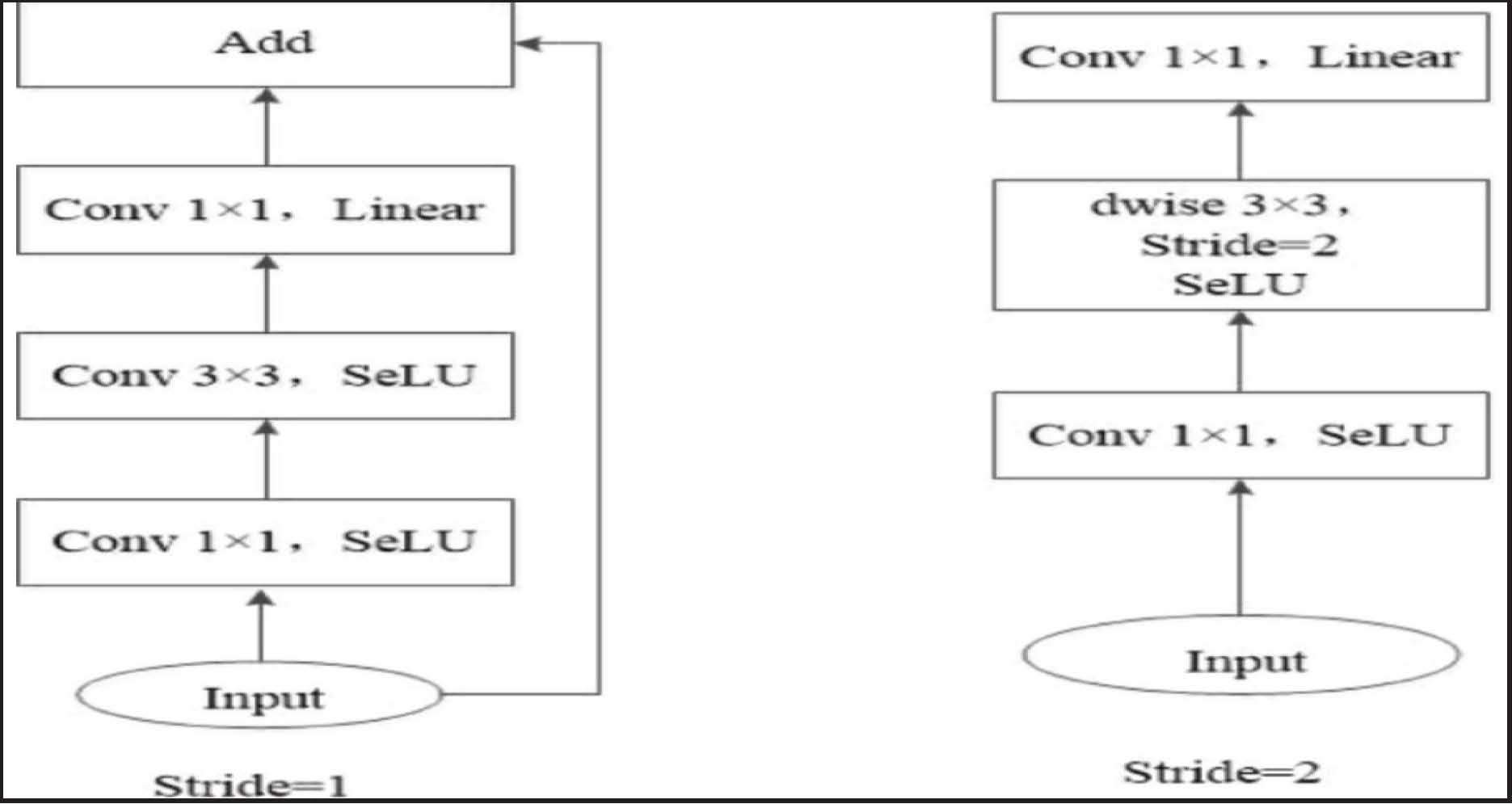
Fig. 1. Sample training images used for model training and evaluation. Model trainingMobileNetV2MobileNetV2 is a lightweight CNN designed for efficient deployment on mobile and resource-constrained devices. It employs depth-wise separable convolutions, inverted residuals, and linear bottleneck layers to significantly reduce computational cost and model size while maintaining strong representational capability. Compared to conventional CNN architectures, this design enables faster inference and lower power consumption, making MobileNetV2 a good choice for real-time image classification tasks in mobile applications. In Figure 2, MobileNetV2 architecture illustrating inverted residual blocks. With separable convolutions and linear bottlenecks for efficient feature extraction.
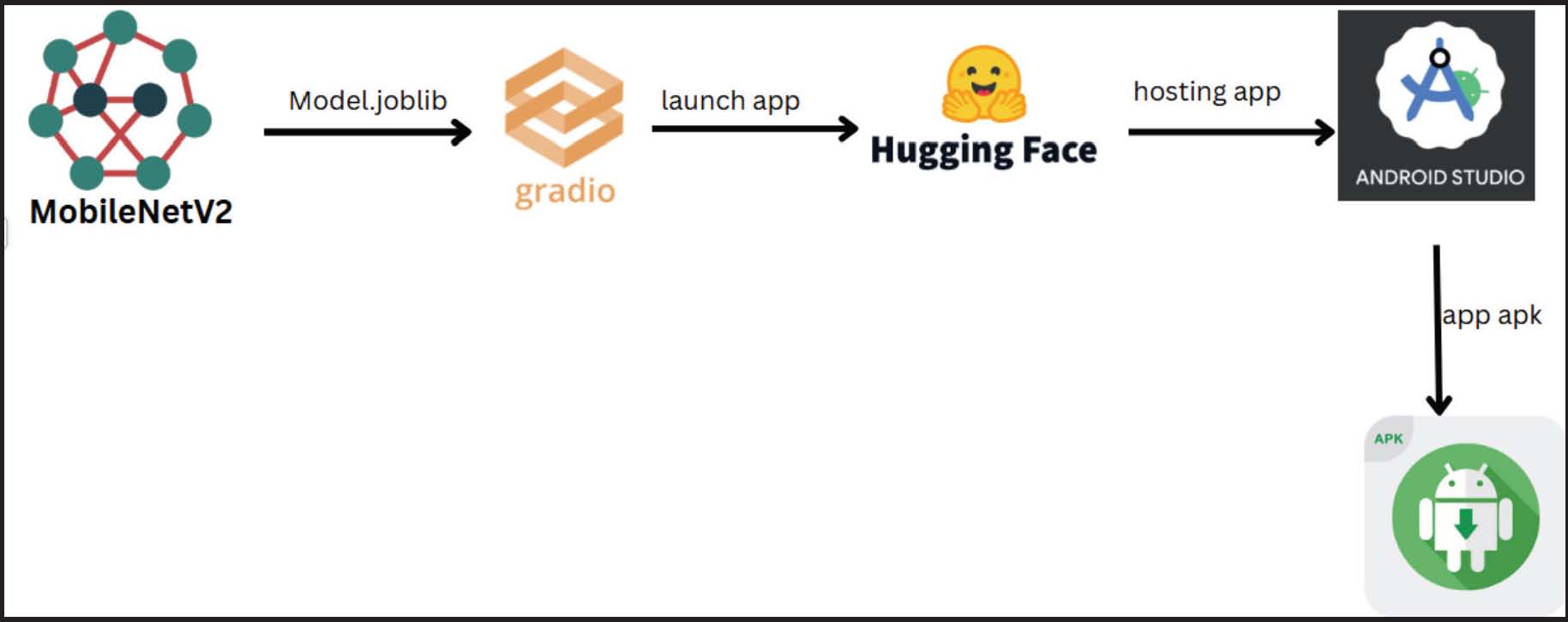
Fig. 2. MobileNetV2 architecture showing inverted residual and linear bottleneck blocks. MobileNetV2 was employed as the core model for image-based disease classification in this study due to its suitability for mobile deployment. The model was trained using RGB images resized to 128 × 128 pixels. The final network output comprises nine probability values corresponding to five canine eye diseases (glaucoma, cherry eye, iris atrophy, conjunctivitis, and cataract) and four skin-related conditions (healthy, fungal infection, bacterial dermatosis, and hypersensitivity dermatitis). A Global Average Pooling layer was used before the final dense classification layer to mitigate overfitting. The model was optimized using categorical cross-entropy loss, and training was conducted for 25 epochs. The combined dataset was randomly split into training (80%) and validation (20%) subsets using stratified sampling to preserve class distribution across all nine disease categories. Development of mobile applicationsAndroid Studio is the central development environment for crafting user-friendly mobile applications. Developers can build an application where users can interact directly with the app. A key feature enabled by Android Studio is the integration of ML models. This allows the trained model to be efficiently incorporated into the app, making it a lightweight and powerful diagnostic tool. A trained MobileNetV2 model is saved as a Model.joblib file, and Gradio is used to launch a web application interface. Hugging Face is used to host this application. Android Studio is used to develop and host the mobile application, generating a Caninehealth.apk file that can be installed on Android devices. This workflow demonstrates how MobileNetV2 is packaged and deployed for mobile use (Fig. 3). In the current prototype, inference is performed remotely via a Gradio interface hosted on Hugging Face, with the Android application acting as a client. In future releases, full on-device inference using TensorFlow Lite is planned to enable offline usage and enhanced data privacy.
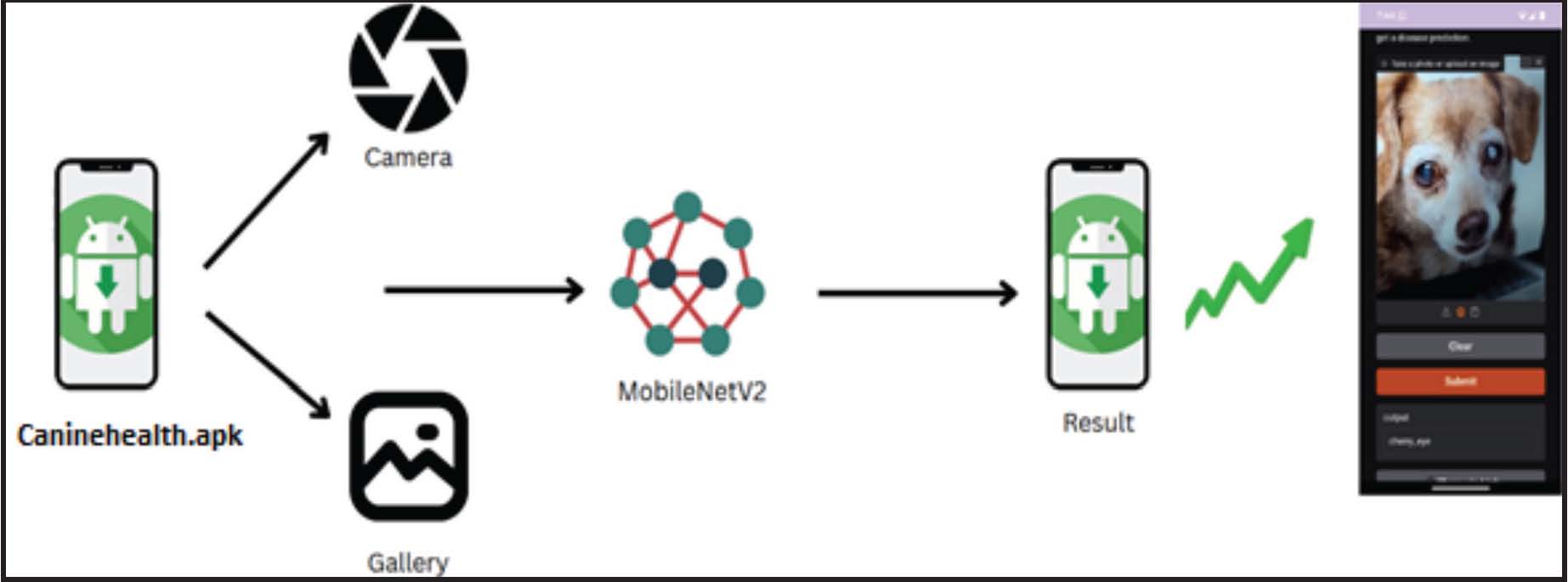
Fig. 3. Packaging and deployment of MobileNetV2. Figure 4 illustrates the main application screens, including (a) image acquisition via smartphone camera or gallery upload and (b) disease prediction output displayed to the user. The arrows indicate the sequential flow from image selection to model inference and visualization of the results. The predicted disease class is displayed along with confidence information, enabling preliminary screening of skin and eye conditions in dogs. The design of the application, which was coordinated in Android Studio, makes it easier for users to interact with it by allowing them to either take live photos with their phone’s camera or choose pre-existing images from their gallery. Following the processing of an image by the embedded MobileNetV2 model, the results, including the anticipated disease type, are displayed on the user’s Android phone screen. The designed mobile application enables users to take and upload photographs using a smartphone camera. This makes it suitable for implementation within a practical working environment. This demonstrates the practical applicability of the proposed system.
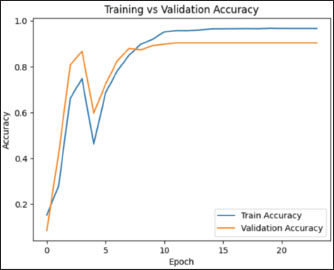
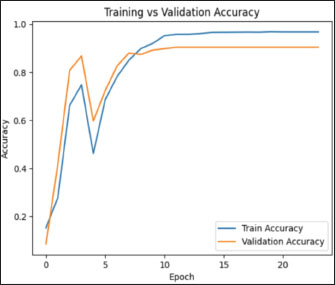
Fig. 4. The user interface and workflow of the proposed Android application. Ethical approvalThis study uses publicly available datasets obtained from open-source repositories such as Kaggle. No live animal experimentation or clinical trials were conducted. All images were used strictly for research and educational purposes. The proposed system is intended for preliminary screening only and does not replace professional veterinary diagnosis. ResultsThe model was trained for 25 epochs and achieved training accuracy of 93.22% and validation accuracy of 86.31%. The gap between training and validation accuracy indicates that the model effectively learned discriminative features while maintaining reasonable generalization to unseen data. As shown in Figure 5, both training and validation accuracy steadily increase during the initial epochs and gradually plateau near 0.9, indicating convergence and stable learning behavior. The absence of a sharp divergence between the two curves indicates limited overfitting, demonstrating that the MobileNetV2 architecture can balance model complexity and generalization for this multi-class classification task.
Fig. 5. Training accuracy versus validation accuracy. The graph (Fig. 6) depicts the trend of the training loss versus validation loss of our MobileNetv2 model, revealing a significant decrease in loss over epochs, with occasional spikes in validation loss—likely due to mini-batch variance or overfitting tendencies early in training. However, both losses converge toward zero, indicating a positive sign.
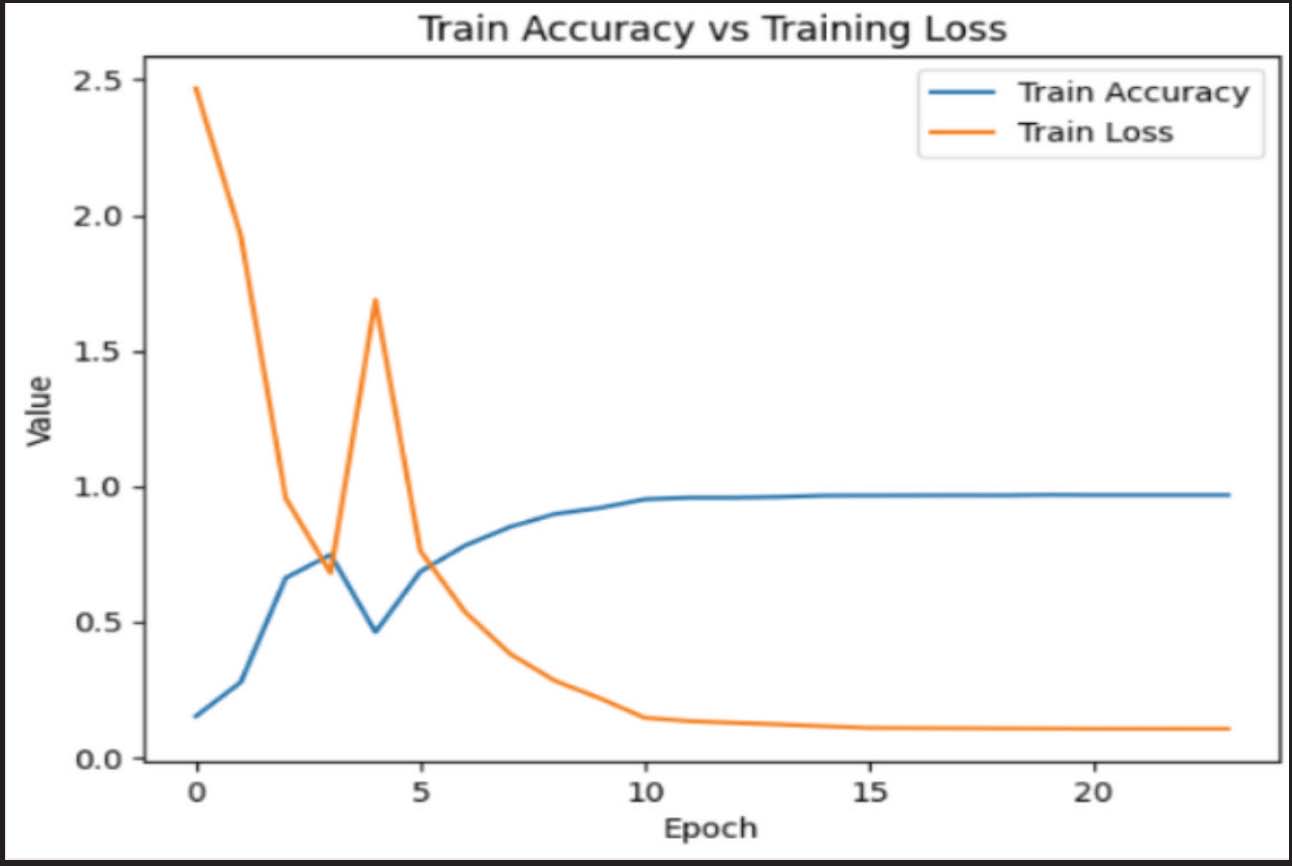
Fig. 6. Training loss versus validation loss. Figure 7 illustrates the relationship between training accuracy and training loss for the MobileNetV2 model. As training progresses, the training accuracy increases, whereas the training loss decreases, indicating effective network optimization and successful convergence during the learning process.
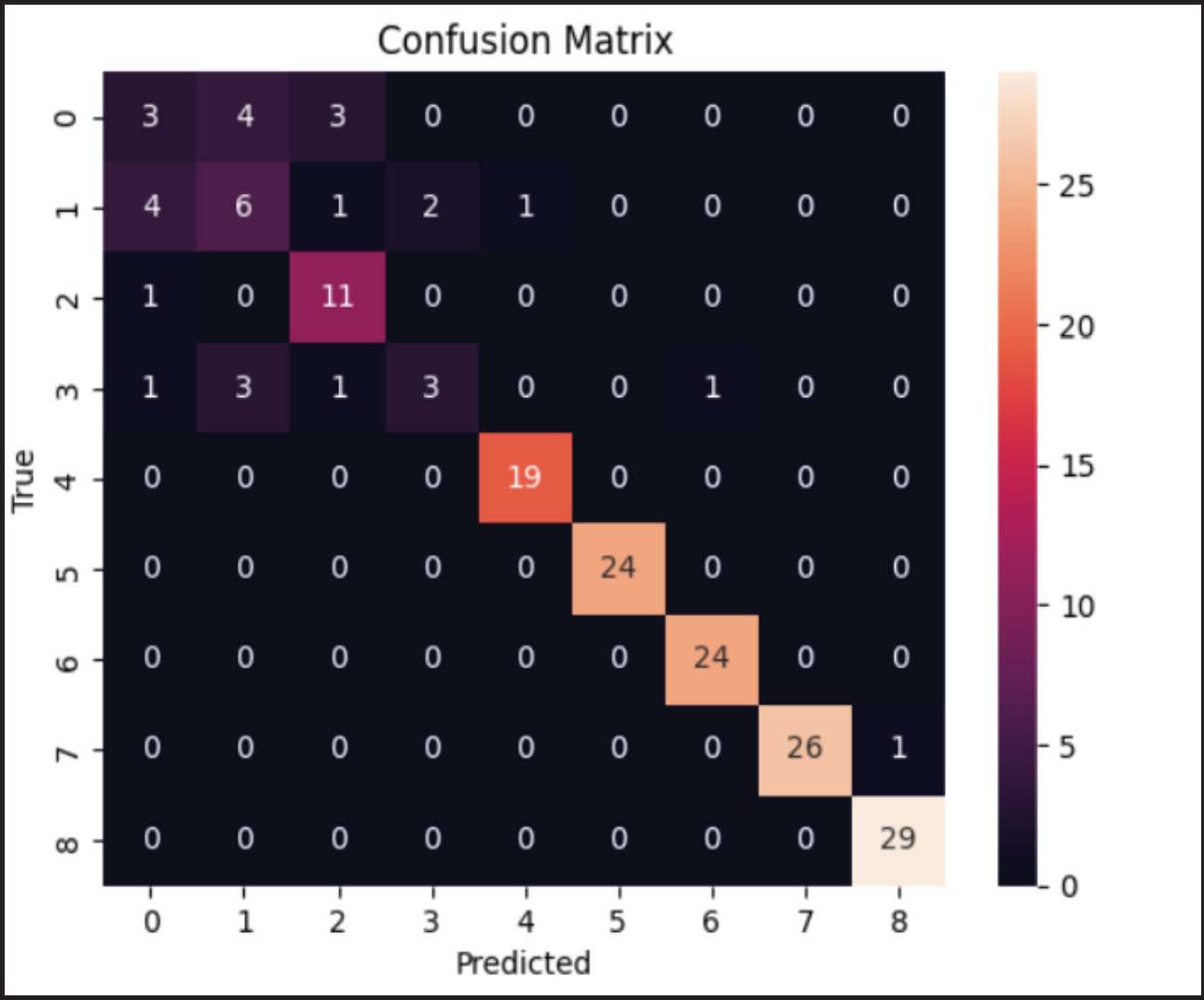
Fig. 7. Shows the inverse relationship between training accuracy and training loss, indicating that model optimization is stable and effective. Collectively, these plots indicate a well-trained model with minimal overfitting and strong generalization capabilities. This confusion matrix illustrates the performance of the model in classifying data into nine categories (labeled 0–8). The confusion matrix 0–8 is labeled with nine diseases as Glaucoma, Iris Atrophy, Conjunctivitis, Cataract, Cherry Eye, Fungal Infection, Bacterial Dermatosis, Hypersensitivity Dermatitis, and Healthy. The rows indicate the true labels, whereas the columns show the labels predicted by the model, making it easy to spot where the model gets things right or wrong. The diagonal elements indicate correctly classified instances, whereas off-diagonal elements indicate misclassifications. For example, class 8 has the highest accuracy, with 29 correct predictions, and class 7 has 26 correct predictions. The model performs well in the higher-labeled classes (Fig. 8).
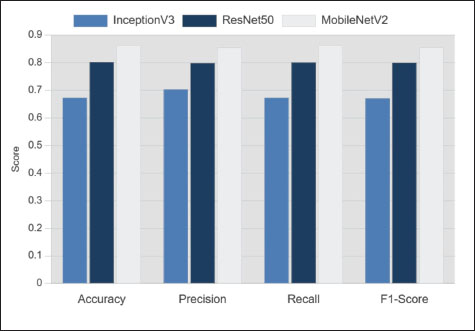
Fig. 8. Confusion matrix of the MobileNetV2 classifier for 9 canine skin and eye disease classes. MobileNetV2 was selected for this study over InceptionV3 and ResNet50 because of its better suitability for mobile application deployment. InceptionV3, ResNet50, and MobileNetV2 were all initialized with ImageNet pre-training, trained on the same dataset splits, and optimized using identical training parameters (epochs, batch size, optimizer, and learning rate) for a fair comparison. The highly efficient architecture of MobileNetV2, which is characterized by inverted residuals and linear bottlenecks, allows for a smaller model size and much lower computational costs than InceptionV3. This efficiency translates into reduced memory and battery consumption on mobile devices, as well as faster inference times, to provide a responsive and lightweight application. This efficiency translates into faster inference times as well as lower memory and battery consumption on mobile devices to provide a responsive and lightweight application. Although ResNet50 offers high accuracy, MobileNetV2 is the more logical and ideal option for our particular application. This is because it maintains a good balance between performance and mobile environments’ limited resources. InceptionV3, ResNet50, and MobileNetV2 are three well-known DL models whose performance metrics on a classification task are displayed in the classification report in Table 2. Under the same experimental conditions, MobileNetV2 achieved higher accuracy and lower computational overhead than the compared models, with the highest accuracy (86.31%), precision (85.46%), recall (86.31%), and F1-score (85.53%), demonstrating a stable and well-balanced performance across all evaluation metrics. With an accuracy of 80.15% and a closely aligned F1-score of 79.90%, ResNet50 is a well-rounded model that is marginally less effective than MobileNetV2. In contrast, InceptionV3 performed relatively poorly on all metrics, with an accuracy of 67.26% and an F1-score of 67.07%, indicating that it is less efficient for this specific task. Overall, MobileNetV2 is the most suitable model in terms of accuracy and generalization capability (Fig. 9). Table 2. Comparison of the performance of InceptionV3, ResNet50, and MobileNetV2 on the same test dataset.
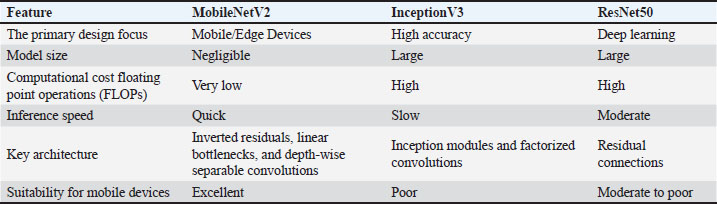
Fig. 9. Comparison of different CNN models. As shown in Table 3, MobileNetV2 exhibits lower model size and computational cost than InceptionV3 and ResNet50, which are key factors for deployment on resource-constrained devices. These characteristics are a direct consequence of its architectural design, which is based on depth-wise separable convolutions and inverted residuals, thereby reducing the parameter count and computational complexity. In comparison with other models, such as InceptionV3 and ResNet50, both are very powerful models in terms of accuracy. However, they become much larger in size and computationally expensive, making them less practical for on-device usage, where application size and battery life, or real-time performance, are important. Thus, MobileNetV2 provides a very optimized and practical solution for mobile application studies (Thoutam et al., 2023). This study focuses on model efficiency and classification performance; user usability and clinical adoption by pet owners or veterinarians were not evaluated and remain as potential directions for future work. Table 3. Comparison of the architectural and computational features of MobileNetV2, InceptionV3, and ResNet50.
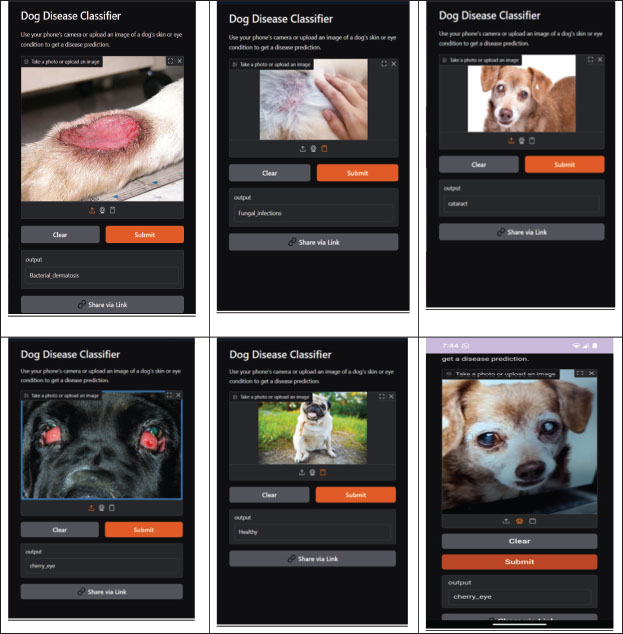
Our application integrates the MobileNetV2 model for the efficient and accurate detection of skin and eye diseases in dogs. The system can identify lesion areas and classify disease types in four common canine skin conditions and five common eye-related disorders. Fig. 10 shows that by accessing the camera or gallery of the app, scanning the affected area will allow the model to infer the name of the disease and highlight the lesion region. This provides dog owners with a time-saving, accessible, and reliable means of early diagnosis and timely care. A few samples of the application outputs are shown in Fig. 10.
Fig. 10. Mobile application outputs. ConclusionThis paper presents a deep learning-based mobile application for the classification of canine skin and eye conditions using image data. The proposed system is based on the MobileNetV2 architecture, selected for its computational efficiency and suitability for mobile deployment. The model was trained on curated and augmented datasets comprising five eye and four skin disease categories. Experimental results show that MobileNetV2 achieved a training accuracy of 93.22% and validation accuracy of 86.31%, outperforming InceptionV3 and ResNet50 in terms of classification accuracy while maintaining a lower computational footprint. The developed application enables image-based disease classification using captured or uploaded images, demonstrating the feasibility of deploying DL models for preliminary disease screening in mobile environments. Clinical effectiveness, usability, and real-world adoption remain topics for future investigation. LimitationThis study has certain limitations. The dataset used for training and evaluation of this model is limited in size and may not fully represent the diversity of canine skin and eye diseases across different breeds and environmental conditions. Image quality, lighting variations, and mobile device camera specifications influenced the performance of the proposed model. Additionally, the model currently supports a predefined set of disease categories, which are limited to rare or previously unseen conditions. These limitations will be addressed in future work by expanding the dataset and incorporating additional disease classes. Future workThe current implementation of the proposed system is limited to image-based classification of canine skin and eye conditions using a mobile application. Future work may extend this system by integrating additional non-diagnostic support features, such as location-based services to identify nearby veterinary clinics or emergency centers, and optional links to veterinary contact information. These features are not part of this implementation and are suggested solely as potential enhancements to support users after preliminary screening. Further studies are required to evaluate the effectiveness, usability, and clinical relevance of such extensions. Communication with licensed veterinarians for online diagnosis and professional advice is possible using a virtual consultation platform. Community features can be added to allow pet owners to communicate and share advice regarding pets, plan playdates, and discuss how best to take care of them (Stone et al., 2023). A Pet Centric Services Locator will help identify nearby dog-friendly parks/walking trails, pet shops, and grooming parlors in proximity. A section dedicated to Care Tips and Health Advice. Integrating an AI chatbot could also provide instantaneous answers to common pet owners’ queries. User input from the feedback received would go a long way in upgrading the app. Taken together, these additions can create a far more holistic and supportive experience in terms of pet care. This research is still based on the existing dataset and can identify only 9 types of dog disease. Therefore, the most important prospect for research is to increase the dataset and develop this model to diagnose more skin diseases with higher accuracy. Ethical deployment considerations include clear in-app disclaimers, guidance encouraging veterinary consultation, and transparency regarding model limitations. Future versions will incorporate responsible-AI principles, such as uncertainty reporting and explain ability, to support safer decision-making. AcknowledgmentsThe authors express their sincere gratitude to Presidency University for providing the necessary support and resources to carry out this research work. Conflict of interestThe authors declare that there is no conflict of interest. FundingThis research work was carried out without any external funding. Authors’ contributionsAyesha Taranum conceived the study, performed data collection, model development, and drafted the manuscript. Chandana M Rao contributed to data preparation and analysis. Dr. Farhana Kausar and Dr. Ambika P R provided guidance, reviewed, and critically revised the manuscript. All authors contributed to the work and approved the final version of the manuscript. Data availabilityThe datasets used in this study are publicly available and can be accessed from the sources cited in the references. ReferencesAkay, M., Du, Y., Sershen, C.L., Wu, M., Chen, T.Y., Assassi, S., Mohan, C. and Akay, Y.M. 2021. Deep learning classification of systemic sclerosis skin using the MobileNetV2 model. IEEE Open J. Eng. Med. Biol. 2, 104–110. Almuayqil, S.N., Abd El-ghany, S. and Elmogy, M. 2022. Computer-aided diagnosis for early signs of skin diseases using multi-types feature fusion based on a hybrid deep learning model. Electronics . American Veterinary Medical Association. 2022. Trends in pet ownership and veterinary care. Schaumburg, IL: AVMA. Esteva, A., Kuprel, B., Novoa, R.A., Ko, J., Swetter, S.M., Blau, H.M. and Thrun, S. 2017. Dermatologist-level classification of skin cancer with deep neural networks. Nature 542, 115–118. Food and Agriculture Organization of the United Nations, World Health Organization, World Organization for Animal Health. 2022. One Health Joint Plan of Action (2022–2026). Rome, Italy: FAO. Howard, A., Sandler, M., Chu, G., Chen, L.C., Chen, B., Tan, M. and Adam, H. Searching for MobileNetV3. In Proc IEEE/CVF Int Conf Comput Vis (ICCV), 2019, pp 1314–1324. Hwang, S., Shin, H. and Park, K. 2022. Classification of dog skin diseases using deep learning with images captured from a multispectral imaging device. Mol. Cell. Toxicol. 18(3), 275–284; doi:10.1016/j.molct.2022.02.084 Jain, S., Singhania, U., Tripathy, B., Nasr, E.A., Aboudaif, M.K. and Kamrani, A.K. 2021. Deep learning-based transfer learning for classification of skin cancer. Sensors 21(23), 8142. Kim, B.K., Byun, J.Y. and Cha, K.A. 2024. Mobile app for detecting canine skin diseases using U-Net image segmentation. J. Korea. Soc. Ind. Inf. Syst. 29(4), 25–34; doi:10.1016/j.jsi.2024.04.024 Mehdy, M.M., Ng, P.Y., Shair, E.F., Saleh, N.I.M. and Gomes, C. 2017. Artificial neural networks in image processing for early detection of breast cancer. Comput. Math. Methods Med. 2017, 2610628. Motiani Y. 2024. Dogs skin disease dataset. Available via https://www.kaggle.com/datasets/yashmotiani/dogs-skin-disease-dataset (Accessed May 2025). Rathod, J., Waghmode, V., Sodha, A. and Bhavathankar, P. Diagnosis of skin diseases using convolutional neural networks. In Proc 2nd Int Conf Electron Commun Aerosp Technol (ICECA),2018 , pp 1048–1051. Rodriguez, J., Cabello, M., Rochel, R. and Rubio, E. The effect of image enhancement algorithms on convolutional neural networks. In Proc 25th Int Conf Pattern Recognit (ICPR), 2021, pp 6723–6728. Selvaraju, R.R., Cogswell, M., Das, A., Vedantam, R., Parikh, D. and Batra, D. Grad-CAM: visual explanations from deep networks via gradient-based localization. In Proc IEEE Int Conf Comput Vis (ICCV), 2017, pp 618–626. Stone, P. 2023. Responsible AI in animal health applications. IEEE Ethics Tech. Rep. 1, 1–12. Student , B.E. 2019. Multi-criterion disease detection for canines using unsupervised machine learning. Int. J. Eng. Sci. Taranum, A., Metan, J., Yogegowda, P.A. and Krishnappa, C.D. 2024. Canine disease prediction using multi-directional intensity proportional pattern with correlated textural neural network. Int. Arab. J. Inf. Technol. 21(5), 899–914. Thoutam, N., Mandloi, I., Kumari, A., Sonule, S. and Torawane, V. 2023. Detection and classification of dog skin disease using deep learning. Nashik, India: Sandip Institute of Technology and Research Center. Tschandl, P., Rosendahl, C. and Kittler, H. 2018. The HAM10000 dataset: a large collection of multi-source dermatoscopic images of common pigmented skin lesions. Sci. Data. 5, 180161. Wan, L., Ai, Z., Chen, J., Jiang, Q., Chen, H., Li, Q., Lu, Y. and Chen, L. 2022. Detection algorithm for pigmented skin disease based on classifier-level and feature-level fusion. Front. Public. Health. 10, 912345; doi:10.1016/j.fph.2022.01245 World Organization for Animal Health. 2023. Animal health and welfare: Global priorities and challenges. Paris, France: WOAH. | ||

| How to Cite this Article |
| Pubmed Style Taranum A, Rao CM, Kausar F, Raghavan AP. Mobile-based deep learning approach for the early diagnosis of canine skin and eye diseases using mobileNetV2. Open Vet. J.. 2026; 16(5): 2781-2791. doi:10.5455/OVJ.2026.v16.i5.20 Web Style Taranum A, Rao CM, Kausar F, Raghavan AP. Mobile-based deep learning approach for the early diagnosis of canine skin and eye diseases using mobileNetV2. https://www.openveterinaryjournal.com/?mno=300006 [Access: June 26, 2026]. doi:10.5455/OVJ.2026.v16.i5.20 AMA (American Medical Association) Style Taranum A, Rao CM, Kausar F, Raghavan AP. Mobile-based deep learning approach for the early diagnosis of canine skin and eye diseases using mobileNetV2. Open Vet. J.. 2026; 16(5): 2781-2791. doi:10.5455/OVJ.2026.v16.i5.20 Vancouver/ICMJE Style Taranum A, Rao CM, Kausar F, Raghavan AP. Mobile-based deep learning approach for the early diagnosis of canine skin and eye diseases using mobileNetV2. Open Vet. J.. (2026), [cited June 26, 2026]; 16(5): 2781-2791. doi:10.5455/OVJ.2026.v16.i5.20 Harvard Style Taranum, A., Rao, . C. M., Kausar, . F. & Raghavan, . A. P. (2026) Mobile-based deep learning approach for the early diagnosis of canine skin and eye diseases using mobileNetV2. Open Vet. J., 16 (5), 2781-2791. doi:10.5455/OVJ.2026.v16.i5.20 Turabian Style Taranum, Ayesha, Chandana M. Rao, Farhana Kausar, and Ambika Padinjareveedu Raghavan. 2026. Mobile-based deep learning approach for the early diagnosis of canine skin and eye diseases using mobileNetV2. Open Veterinary Journal, 16 (5), 2781-2791. doi:10.5455/OVJ.2026.v16.i5.20 Chicago Style Taranum, Ayesha, Chandana M. Rao, Farhana Kausar, and Ambika Padinjareveedu Raghavan. "Mobile-based deep learning approach for the early diagnosis of canine skin and eye diseases using mobileNetV2." Open Veterinary Journal 16 (2026), 2781-2791. doi:10.5455/OVJ.2026.v16.i5.20 MLA (The Modern Language Association) Style Taranum, Ayesha, Chandana M. Rao, Farhana Kausar, and Ambika Padinjareveedu Raghavan. "Mobile-based deep learning approach for the early diagnosis of canine skin and eye diseases using mobileNetV2." Open Veterinary Journal 16.5 (2026), 2781-2791. Print. doi:10.5455/OVJ.2026.v16.i5.20 APA (American Psychological Association) Style Taranum, A., Rao, . C. M., Kausar, . F. & Raghavan, . A. P. (2026) Mobile-based deep learning approach for the early diagnosis of canine skin and eye diseases using mobileNetV2. Open Veterinary Journal, 16 (5), 2781-2791. doi:10.5455/OVJ.2026.v16.i5.20 |


