




| Research Article | ||
Open Vet. J.. 2026; 16(5): 2892-2898 Open Veterinary Journal, (2026), Vol. 16(5): 2892-2898 Research Article Foodborne antimicrobial resistance risks in traditional markets in West Sumatra: a one health investigation of Escherichia coli in chicken meatEngki Zelpina*, Prima Silvia Noor, Yurni Sari Amir and Suliha SulihaPoliteknik Pertanian Negeri Payakumbuh, Jalan Raya Negara, Lima Puluh Kota, Indonesia *Corresponding Author: Engki Zelpina. Politeknik Pertanian Negeri Payakumbuh, Tanjung Pati, Harau, Lima Puluh Kota, Indonesia. Email: engkizelpina03 [at] gmail.com Submitted: 10/11/2025 Revised: 30/03/2026 Accepted: 10/04/2026 Published: 31/05/2026 © 2025 Open Veterinary Journal
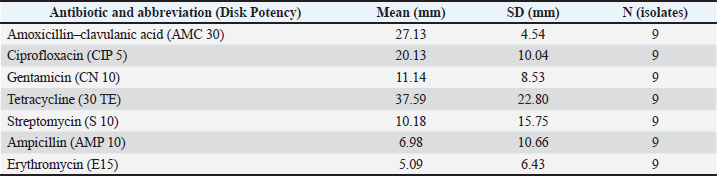
AbstractBackground: Escherichia coli is a prevalent bacterial contaminant in poultry meat, functioning as an indicator of fecal contamination and antibiotic misuse in animal husbandry. The rising prevalence of antimicrobial-resistant (AMR) E. coli strains is a significant concern for food safety and public health, especially in areas where traditional markets are the primary meat distribution channels. Aim: This study sought to ascertain the prevalence and antibiotic resistance profiles of E. coli isolated from chicken meat in traditional markets in West Sumatra, Indonesia, and to evaluate the potential relationships among resistance patterns. Methods: A total of 65 chicken thigh meat samples were obtained from 5 traditional markets between July and September 2025. Isolation and identification of E. coli were performed using microbiological and biochemical techniques in accordance with the SNI 2897:2008 standard. Antimicrobial susceptibility testing was conducted with the Kirby-Bauer disk diffusion method on MHA, with the results were interpreted in accordance with CLSI 2023. Seven antibiotics were evaluated: amoxicillin–clavulanic acid, ciprofloxacin, gentamicin, tetracycline, streptomycin, ampicillin and erythromycin. Results: Escherichia coli was detected in 9 (13.8%) samples. The highest resistance rates were observed for streptomycin (66.7%), erythromycin (66.7%), and ampicillin (55.6%), while amoxicillin–clavulanic acid exhibited the highest susceptibility (77.8%). Substantial positive correlations (r > 0.87, p < 0.01) among gentamicin, streptomycin, and ampicillin suggested potential mechanisms of co-resistance. Conclusion: Escherichia coli isolates from chicken meat in traditional markets exhibited antibiotic resistance, posing a risk of MDR. It is imperative that local authorities implement robust monitoring and surveillance frameworks to systematically evaluate the presence of pathogens and the development of antimicrobial resistance across the food chain. Keywords: AMR, Chicken meat, Escherichia coli, Foodborne. IntroductionAMR is a crucial global health issue in the 21st century, compromising the effectiveness of existing therapeutic drugs and posing a substantial threat to food security and public health (World Health Organization [WHO], 2023). The development of resistant bacterial strains is a result of the widespread and often unregulated use of antibiotics in human healthcare and animal husbandry (Van Boeckel et al., 2019). The World Health Assembly and Food and Agriculture Organization (FAO, 2020) assert that AMR constitutes not merely a medical concern but a one health challenge, interconnecting human, animal, and environmental health. Foodborne bacteria, especially those originating from cattle and poultry, constitute significant reservoirs and transmission routes for AMRs (O’Neill, 2016). Escherichia coli (E. coli) has a crucial function as both a commensal and a sentinel organism in the surveillance of antimicrobial resistance (Poirel et al., 2018). Although the majority of E. coli strains are non-pathogenic, they can acquire and propagate antibiotic resistance genes via horizontal gene transfer (Carattoli, 2009). The detection of E. coli in meat, especially chicken, signifies fecal contamination and insufficient sanitary practices during slaughter, processing, or retail (Adzitey, 2020; Sari et al., 2020; Rizaldi and Zelpina, 2023). E. coli serves as a genetic reservoir for MDR determinants, facilitating their transfer to pathogenic bacteria responsible for human infections (Davies and Davies, 2010; Li et al., 2020). Poultry is one of the most widely consumed animal proteins, and its production has experienced significant growth worldwide, including in Indonesia (Khan et al., 2020). However, in chicken farming, the use of antibiotics often fails to comply with standard operating procedures, which has an impact on the resulting poultry products (Nhung et al., 2017; Alam et al., 2021; Sumiati et al., 2021). Alam et al., 2020). The intended meaning is that E. coli isolated from chicken meat shows increased resistance to β-lactam, tetracycline, aminoglycoside, and fluoroquinolone antibiotics. (Saleha et al., 2018; Elbehiry et al., 2020). Numerous investigations in Indonesia have shown the pervasive occurrence of antibiotic-resistant E. coli in poultry and meat products. Notwithstanding the execution of Indonesia’s National Action Plan on AMR (Koesoemawardani et al., 2020), surveillance remains inadequate, especially in traditional markets where small-scale poultry sellers operate under low supervision and substandard hygiene practices (Rizaldi and Zelpina, 2020; Dewi et al., 2022). Traditional markets are crucial to Indonesia’s meat distribution system; however, they frequently lack sufficient sanitation facilities, refrigeration, and biosecurity measures. These conditions promote bacterial contamination and the survival of resistant strains (Sari et al., 2020; Dewi et al., 2022). The unregulated use of antibiotics in chicken farms, coupled with inadequate retail cleanliness standards, constitutes a significant public health issue. Antibiotic-resistant E. coli found in chicken meat can serve as a conduit for the transfer of MDR genes to consumers, thereby facilitating the wider spread of resistance within populations (Adzitey et al., 2015; Ramírez-Castillo et al., 2018). This study aims to evaluate the prevalence and resistance profiles of E. coli isolated from chicken meat sold in traditional markets in West Sumatra, given the inadequate data on antimicrobial resistance in this context. This study aimed to uncover patterns of MDR and ascertain the medications that remain effective against these isolates. The results of this research are anticipated to enhance the understanding of AMR propagation within the poultry food chain and to aid in the formulation of a one-health-oriented surveillance and antibiotic stewardship program in Indonesia. Materials and MethodsStudy area and sampling methodsThis study was conducted in Payakumbuh City and Limapuluh Kota Regency, West Sumatra Province, Indonesia, between July and September 2025. Samples were collected at 2 traditional markets in Payakumbuh City and 3 markets in Limapuluh Kota Regency. There were no criteria for selecting chicken meat vendors; the only samples taken were chicken thighs. Sample analysis was conducted at the Animal Health and Disease Laboratory, Payakumbuh State Agricultural Polytechnic, Limapuluh Kota Regency, West Sumatra, Indonesia. Sampling technique and criteria usedThe method used for sampling chicken meat was purposive sampling. A total of 65 chicken meat samples were collected (n=34 from Payakumbuh City; n=31 from Lima Puluh Kota Regency). Each sample was approximately 500 g from chicken meat traders, placed into bags aseptically, transported in an insulated ice box at 4°C, and delivered to the laboratory within 2 hours for microbiological analysis. Isolation and identification of E. coli Isolation and identification of E. coli were performed in accordance with the Indonesian National Standard (SNI 2897:2008) for testing microbial contamination in meat, eggs, milk, and their processed products. Approximately 25 g of chicken meat samples was homogenized in 225 ml of 0.1% peptone water. 1 milliliters of the pre-enrichment was streaked onto EMB agar (Oxoid, UK) and incubated at 37°C for 24 hours. Colonies with a characteristic metallic green color were initially identified as E. coli. The suspected colonies were further confirmed biochemically using the IMViC test series (Indole, Methyl Red, Voges–Proskauer, and Citrate). A typical E. coli isolate exhibits the following profile: Indole (+), Methyl Red (+), Voges–Proskauer (−), and Citrate (−). Throughout the isolation and antibiotic susceptibility testing procedures, E. coli ATCC 25922 was used as a reference control strain to ensure the accuracy and reliability of the results. Antibiotic susceptibility testing was performedAntibiotic susceptibility was determined using the Kirby–Bauer disk diffusion method on Mueller–Hinton Agar (MHA) following the Clinical and Laboratory Standards Institute (CLSI) M100, 33rd Edition (2023) guidelines for Enterobacterales. A standardized bacterial suspension equivalent to 0.5 McFarland standard (≈ 1.5 × 10⁸ CFU/mL) was prepared in sterile saline. The suspension was evenly spread over the agar surface using a sterile cotton swab. Antibiotic disks were placed 25 mm apart, and the plates were incubated at 37°C for 18–24 hours. Seven antibiotics (Oxoid, UK) representing different antimicrobial classes were tested to determine the susceptibility profiles of E. coli isolates. The β-lactam group was represented by amoxicillin–clavulanic acid (AMC, 30 µg), a combination of penicillin and a β-lactamase inhibitor, and ampicillin (AMP, 10 µg), a penicillin derivative. Ciprofloxacin (CIP, 5 µg), belonging to the fluoroquinolone class, was used to assess DNA gyrase inhibitor resistance. The aminoglycoside class was represented by gentamicin (CN, 10 µg) and streptomycin (S, 10 µg), which interfere with bacterial protein synthesis. Tetracycline (TE, 30 µg), a broad-spectrum antibiotic from the tetracycline class, was included because of its frequent use in poultry production. Finally, erythromycin (E, 15 µg), a macrolide antibiotic that targets the bacterial ribosome, was tested to evaluate the resistance of the isolates. These antibiotics were selected based on their clinical relevance and frequent application in veterinary and human medicine. Inhibition zone diameters (mm) were measured and interpreted according to the CLSI 2023 breakpoints. Isolates were classified as susceptible (S), intermediate (I), or resistant (R). Interpretations of antibiotics not explicitly listed in the CLSI table for Enterobacterales (e.g., streptomycin and erythromycin) were based on comparative references (Kaya et al., 2018). Statistical analysisInhibition zone measurements were recorded in millimeters (mm) for each antibiotic tested, and statistical analysis was performed using Microsoft Excel 2021 and SPSS version 26. Descriptive statistics, including means and standard deviations (Mean ± SD), were calculated to summarize the antimicrobial susceptibility results. The prevalence of resistance (%) for each antibiotic was determined based on the proportion of E. coli isolates classified as resistant according to the CLSI (2023) breakpoints. Pearson correlation coefficients (r) were calculated to assess the strength and direction of the linear relationship between the inhibition zone diameters of various antibiotics to evaluate potential relationships between antibiotic resistance patterns. Correlations were interpreted as strong and significant when the correlation coefficient exceeded 0.7 (p=0.05). Ethical approvalNot necessary for this manuscript. ResultsA total of 9 (13.8%) E. coli isolates were found in all the chicken meat samples obtained from the 65 sellers. The inhibitory zones of E. coli isolates from chicken meat samples exhibited considerable heterogeneity among different antibiotics. Table 1 summarizes the mean and standard deviation (Mean ± SD) data. The maximum mean inhibition zone observed was for tetracycline (37.59 ± 22.80 mm), signifying a robust inhibitory action. Ampicillin (6.98 ± 10.66 mm) and erythromycin (5.09 ± 6.43 mm) had the lowest mean zones, consisted with elevated resistance levels among the isolates. Table 1. Mean ± SD of inhibition zone diameters (mm) for E. coli isolates.
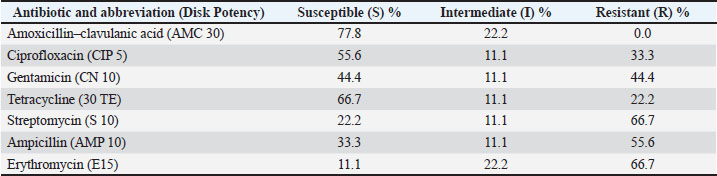
The inhibitory zones were analyzed according to the guidelines for Enterobacterales (CLSI M100, 33rd Edition, 2023). The findings indicated a significant resistance to certain frequently utilized antibiotics, notably streptomycin, ampicillin, and erythromycin. Conversely, the majority of isolates exhibited susceptibility to amoxicillin–clavulanic acid and tetracycline (Table 2). Table 2. Antimicrobial susceptibility profile of E. coli isolates (n=9) categorized according to CLSI 2023 breakpoints.
Streptomycin had the highest resistance rate (66.7%), followed by erythromycin (66.7%) and ampicillin (55.6%). Amoxicillin–clavulanic acid was the sole confirmed antibiotic exhibiting >75% activity, signifying its sustained activity against E. coli isolates from poultry flesh. Pearson correlation coefficients were used to investigate potential correlations among antibiotic responses (Table 3). The presence of robust positive correlations (r > 0.7, p < 0.05) suggests that resistance to one antibiotic may be associated with resistance to another, indicating the presence of potential shared resistance mechanisms or co-selection events. Table 3. Pearson correlation coefficients (r) between the inhibition zone diameters of the paired antibiotics
A significant positive correlation was observed between the zones of inhibition for gentamicin, streptomycin, and ampicillin (Table 4), suggesting that aminoglycoside and β-lactam resistance may be genetically linked through a shared plasmid or integron. This correlation suggests that resistance determinants for gentamicin, streptomycin, and ampicillin may coexist within the same mobile genetic element, thereby facilitating the spread of MDR. Table 4. Strong and significant Pearson correlations (r > 0.7, p < 0.05)
DiscussionThe present study revealed that E. coli isolated from chicken meat sold in traditional markets in West Sumatra, Indonesia, exhibited substantial antimicrobial resistance to several commonly used antibiotics. The highest levels of resistance were found against streptomycin (66.7%), erythromycin (66.7%), and ampicillin (55.6%), while the lowest resistance rates were observed for amoxicillin–clavulanic acid (0%) and tetracycline (22.2%). Furthermore, strong correlations (r > 0.87, p < 0.05) were found among gentamicin, streptomycin, and ampicillin resistance patterns, suggesting the presence of coselection or shared resistance mechanisms. These findings are consistent with trends observed in both regional and global contexts and highlight the persistence of AMR as a serious public health concern within food production systems. The observed resistance to β-lactam antibiotics, particularly ampicillin, is consistent with findings from other regions of Indonesia and beyond (Adzitey, 2020). β-lactam antibiotics have been widely used in human and veterinary medicine due to their broad-spectrum activity. However, extensive use in poultry farming—often without veterinary oversight—has promoted the emergence of β-lactamase-producing E. coli strains (Poirel et al., 2018). These enzymes, particularly TEM- and SHV-type β-lactamases, hydrolyze the β-lactam ring, rendering the antibiotic ineffective (Carattoli, 2009). The moderate susceptibility observed for amoxicillin-clavulanic acid (77.8%) can be attributed to the presence of clavulanate, a β-lactamase inhibitor that restores amoxicillin activity by preventing enzymatic degradation (CLSI, 2023). The high resistance to streptomycin and gentamicin, representatives of the aminoglycoside class suggests the prevalence of AMEs in the bacterial isolates. Such enzymes, including acetyltransferases (AAC), phosphotransferases (APH), and nucleotidyltransferases (ANT), alter the antibiotic molecule and prevent its binding to the bacterial ribosome (Ramírez-Castillo et al., 2018). Crucially, the observed interclass co-resistance between streptomycin, gentamicin, and ampicillin suggests that distinct resistance determinants are carried on the same mobile genetic element, thereby promoting horizontal gene transfer (Li et al., 2020). The strong positive correlations (r > 0.87) between gentamicin, streptomycin, and ampicillin highlight the potential for resistance gene co-selection. This means that the use of one antibiotic may indirectly select for resistance to others, even from different classes, if the corresponding genes are physically linked on the same mobile genetic element (Davies and Davies, 2010). This genetic linkage is a key factor: Plasmid-mediated resistance is a well-documented phenomenon in E. coli isolated from food animals, particularly those carrying the blaTEM, aadA1, and aac(3)-IIa genes (Poirel et al., 2018; Li et al., 2020). These co-resistance mechanisms are the primary driver for the emergence of multidrug-resistant (MDR) strains—defined as isolates resistant to three or more antibiotic classes (Magiorakos et al., 2012). MDR E. coli has been widely reported in poultry production systems worldwide, posing a significant threat to human health through the food chain. In Egypt, for instance, Elbehiry et al. (2020) reported that 61% of E. coli isolated from broiler meat exhibited MDR patterns, whereas in Vietnam, 70% of isolates were resistant to at least three antibiotic classes (Nhung et al., 2017). The findings of the current study are consistent with regional trends. Several studies in Indonesia have documented a similar resistance profile among poultry E. coli isolates. Lukman et al. (2020) found that E. coli from street-vended kebab was resistant to gentamicin. Although the resistance rates observed in the present study are slightly lower, they remain alarming, particularly considering that the isolates originated from traditional retail markets rather than farms. This suggests a sustained transmission cycle and highlights the risk of consumer exposure to MDR strains at the point of sale. Comparable findings have been observed across Southeast Asia in a broader regional context. In Malaysia, Saleha et al. (2018) reported that E. coli isolated from retail chicken meat showed high resistance to ampicillin (80%) and streptomycin (75%). In Vietnam, 65% of poultry-derived E. coli were resistant to FQs (Nhung et al., 2017). These parallels reflect the widespread misuse of antibiotics in the poultry sector across developing countries, where regulatory oversight and enforcement remain limited. Traditional markets play a crucial role in the environment’s dissemination of antibiotic-resistant bacteria, including E. coli. These isolates may arise from multiple sources, such as fecal contamination during slaughter, cross-infection via cutting surfaces, and contact with water or vendors’ contaminated hands (Sari et al., 2020; Dewi et al., 2022). The prevailing high temperature and humidity in these markets, coupled with unsanitary handling of chicken meat, facilitate bacterial growth and proliferation, significantly increasing the risk of E. coli contamination. Upon entering the human food chain, resistant E. coli can inhabit the gut microbiota or transfer resistance genes to other harmful bacteria via horizontal gene transfer. This highlights the urgent need to enhance hygiene protocols, such as routine equipment sanitation, ensuring access to running water, and segregating raw and cooked items at traditional marketplaces. Regarding tetracycline, while the isolates demonstrated a notable susceptibility rate (66.7% susceptible), a significant proportion (22.2%) exhibited resistance. Tetracycline is among the most extensively utilized antibiotics in chicken production owing to its cost-effectiveness and broad-spectrum efficacy. Resistance generally arises via the acquisition of the tet(A) and tet(B) genes, which encode efflux pumps or ribosomal protection proteins (Roberts, 2019). Tetracycline resistance rates in E. coli from broiler chickens in adjacent countries such as Thailand and Malaysia frequently exceed 70% (Nhung et al., 2017; Saleha et al., 2018). The comparatively lower resistance rates found in this study may indicate either decreased tetracycline utilization among small-scale poultry farmers in West Sumatra or localized differences in resistance gene carriage. The observed ciprofloxacin resistance of 33.3% in this investigation aligns with findings from other studies conducted in Indonesia and Bangladesh (Alam et al., 2020; Lukman et al., 2020). Fluoroquinolone resistance in E. coli is predominantly facilitated by mutations in the gyrA and parC genes, which encode DNA gyrase and topoisomerase IV, respectively. Moreover, plasmid-mediated quinolone resistance (PMQR) genes, including qnrA, qnrB, and aac(6’)-Ib-cr, have been identified in poultry isolates (Carattoli, 2009). These genes confer low-level resistance, enabling bacteria to withstand initial fluoroquinolone exposure and thereby favoring the progressive accumulation or further chromosomal mutations that lead to high-level resistance. The high resistance to erythromycin (66.7%) is consistent with the intrinsic resistance of E. coli to macrolides, largely due to low outer membrane permeability and active efflux pumps (Kaya et al., 2018). Additionally, erythromycin resistance genes, such as erm(B) and mph(A), can be transferred via plasmids and integrons, promoting cross-resistance with other antibiotic classes (Li et al., 2020). Although macrolides are not commonly used in poultry production, environmental exposure or gene transfer from commensal bacteria can explain their presence. This observation strongly reinforces the interconnectedness of AMR determinants across bacterial species and environmental compartments as a critical component of the one health approach. The presence of antibiotic-resistant E. coli in chicken meat poses significant direct and indirect risks to consumers and the broader community. Consumers may acquire resistant strains through direct contact during meat handling, cross-contamination in kitchens, or undercooked meat consumption (Adzitey et al., 2015). Once acquired, these resistant bacteria can persist in the intestinal microbiota and potentially transfer their resistance genes to pathogenic bacteria, contributing to reservoirs of community-level resistance and treatment failure. The situation is particularly concerning in regions such as West Sumatra, where traditional markets dominate the food distribution system, and consumer awareness of hygiene is limited. Therefore, the findings of this study emphasize the need for immediate actions, including education campaigns targeting vendors and consumers, along with stringent policy enforcement, to improve sanitation standards in traditional markets. The results of this study align with one health perspective, which recognizes that the health of humans, animals, and the environment is inherently interconnected. AMR surveillance and control require collaborative efforts across all sectors. For Indonesia, implementing a sustainable health program should involve integrating veterinary surveillance, environmental monitoring, and public health data into a centralized national AMR database (Koesoemawardani et al., 2020). In addition, stricter regulations on antibiotic sales, improved access to veterinary guidance, and the promotion of antimicrobial stewardship programs at the farm level are critical. Encouraging non-antibiotic alternatives, such as probiotics, vaccines, and biosecurity measures, could reduce antibiotic dependence in poultry farming. Ultimately, reducing the prevalence of resistant E. coli in the poultry supply chain will not only improve food safety but also significantly slow the global spread of resistance genes. Overall, E. coli isolated from chicken meat in traditional markets of West Sumatra exhibits resistance to multiple antibiotic classes, with clear evidence of coresistance among aminoglycosides and β-lactams. ConclusionBased on the research that has been conducted, it can be concluded that E. coli bacterial isolates isolated from chicken meat showed a high prevalence of resistance to streptomycin (66.7%), erythromycin (66.7%), and ampicillin (55.6%). In contrast, amoxicillin-clavulanic acid remained highly effective, showing the highest level of susceptibility (77.8%), indicating that β-lactamase inhibition is a viable strategy against resistant E. coli isolates. A strong positive correlation between gentamicin, streptomycin, and ampicillin resistance (r > 0.87, p < 0.05) indicates the presence of a shared resistance mechanism mediated by mobile genetic elements. The presence of these multidrug-resistant strains in the food supply chain poses a significant risk for zoonotic disease transmission and the spread of antimicrobial resistance at the community level. AcknowledgmentsThe authors would like to thank the Directorate General of Research and Development, Ministry of Higher Education, Science, and Technology, and the Payakumbuh State Agricultural Polytechnic for supporting and funding this research. FundingThis research was funded by the Directorate General of Higher Education, Research, and Technology, as stated in contract number No. 3136/AL.04/2025). Authors' contributionsAll authors have contributed to this research. EZ, PSN, YSA, and SS were responsible for data collection and manuscript drafting. EZ and PSN contributed to the manuscript’s critical revision. All authors have read and approved the final version of the manuscript. Conflict of interestThe authors declare no conflicts of interest. Data availabilityData supporting the findings of this study are available from the corresponding author upon reasonable request. ReferencesAdzitey, F., Huda, N. and Rahmat Ali, G. 2015. Microbial safety and quality of meat in Ghana. Food Control 55, 200–206; doi:10.1016/j.foodcont.2015.02.035 Adzitey. and F. 2020. The frequency and antimicrobial susceptibility of Escherichia coli isolated from beef in Ghana. Powerful Food Agric. 6(1), 1718269; doi:10.1080/23311932.2020.1718269h Alam, S.B., Sultana, M., Sarker, S. and Hossain, M.A. 2020. The prevalence and antimicrobial resistance of Escherichia coli isolated from broiler chicken meat in Bangladesh. Vet. World. 13(10), 2052–2059; doi:10.14202/vetworld.2020.2052-2059 Bakhshi, M., Bafghi, M., Astani, A., Ranjbar, V.R., Zandi, H. and Vakili, M. 2017. Antimicrobial resistance profile of Escherichia coli obtained from chickens afflicted with colibacillosis in Yazd, Iran. J. Food. Qual. Hazards. Control. 4(2), 74–78; doi:10.1016/j.jfqhc.2017.01.004 Carattoli. and A. 2009. Resistance plasmid families within Enterobacteriaceae. Antimicrob. Agents Chemother. 53(6), 2227–2238; doi:10.1128/AAC.01707-08 Clinical and Laboratory Standards Institute (CLSI) 2023. Performance Standards for Antimicrobial Susceptibility Testing, 33rd ed. CLSI in Wayne, Pennsylvania Davies, J. and Davies, D. 2010. The beginnings and changes in antibiotic resistance. Microbiol. Mol. Biol. Rev. 74(3), 417–433; doi:10.1128/MMBR.00016-10 Dewi, P.N., Sumiati, E. and Yusuf, M. 2022. Hygiene and microbial contamination in Indonesia's traditional poultry markets. IJVS 20(2), 45–54; doi:10.1016/j.jvs.2022.02.045 Elbehiry, A., Marzouk, E., Al-Dubaib, M. and Elsayed, E. 2020. Characterization of the molecular structure and antibiotic resistance of Escherichia coli isolated from chicken meat in Egypt. Anim 10(10), 1880; doi:10.3390/ani10101880 FAO (2020). The FAO’s plan of action for 2021- 2025 to fight AMR. FAO in Rome Kaya O Filazi. and Tiryaki, O. 2018. Antimicrobial resistance of Escherichia coli isolated from raw kebab and minced meat in Turkey. Food Sci. Technol. 38(3), 498–503. Khan, M.S., Siddique, A.B., Ferdous, J. and Islam, M.T. 2020. A review of antimicrobial resistance in Escherichia coli from poultry. Vet. World 13(2), 393–407; doi:10.14202/vetworld.2020.393-407 Koesoemawardani, D., Sumiati, E. and Lestari, P. 2020. Monitoring antimicrobial resistance in Indonesia: advancements and obstacles. One. Health. J. 12, 100203; doi:10.1016/j.onehlt.2020.100203 Li, J., Wang, J., Liu, F., Wang, L. and Guo, J. 2020. Plasmid-mediated co-resistance to aminoglycosides and β-lactams in Escherichia coli derived from poultry. Front. Microbiol. 11, 1110; doi:10.3389/fmicb.2020.01110 Lukman, D.W., Sari, D.Y. and Pisestyani, H. 2020. The presence and antibiotic resistance of Escherichia coli in street-vended kebabs in Dramaga, Bogor, Indonesia. J. Food Qual. Hazards Control 7(4), 175–180; doi:10.1016/j.jfqhc.2020.175 Magiorakos, A.P., Srinivasan, A., Carey, R.B., Carmeli, Y., Falagas, M.E., Giske, C.G. and Monnet, D.L. 2012. Multidrug-resistant, extensively drug-resistant, and pandrug-resistant bacteria: an international expert consensus on provisional standard definitions. Clin. Microbiol. Infect. 18(3), 268–281; doi:10.1111/j.1469-0691.2011.03570.x Nataro, J.P. and Kaper, J.B. 1998. Escherichia coli that causes diarrhea. Clin. Microbiol. Rev. 11(1), 142–201; doi:10.1128/CMR.11.1.142 Nhung, N.T., Cuong, N.V., Campbell, J., Hoa, N.T. and Thwaites, G. 2017. A review of the use of antimicrobials and antimicrobial resistance in animal production in Southeast Asia. Antibiotics 6(3), 37; doi:10.3390/antibiotics6030037 O'Neill, J. 2016. Final report and recommendations on how to deal with drug-resistant infections around the world. London: The Antimicrobial Resistance Review. Poirel, L., Madec, J.Y., Lupo, A., Schink, A.K., Kieffer, N., Nordmann, P. and Schwarz, S. 2018. Escherichia coli's resistance to antibiotics. Microbiol. Spect. 6(4), 289–316; doi:10.1128/microbiolspec Ramírez-Castillo, F.Y., Moreno-Flores, A.C., Avelar-González, F.J., Márquez-Díaz, F., Harel, J. and Guerrero-Barrera, A.L. 2018. An assessment of multidrug-resistant Escherichia coli isolates in fecal matter from animals and humans, as well as in drinking water from agricultural communities. BMC. Vet. Res. 14, 233; doi:10.1186/s12917-018-1576-8 Rizaldi, A. and Zelpina, E. 2020. Detection of Salmonella sp. and Escherichia coli on Chicken Meat at Tamiang Layang Market. Microbiol. Indones. 14(3), 117–120; doi:10.5454/mi.14.3.5 Rizaldi, A. and Zelpina, E. 2023. Determination the prevalence of Escherichia coli and Salmonella sp. in chicken breast sold in traditional markets of East Barito Regency, Indonesia. J. Food Safe. &. Hyg. 9(1), 45–49; doi:10.18502/jfsh.v9i1.12691 Roberts, M.C. 2019. Ways that bacteria can become resistant to tetracyclines and macrolides. Antibiotics 8(2), 56; doi:10.3390/antibiotics8020056 Saleha, A.A., Zunita, Z. and Jalila, A. 2018. Antimicrobial resistance of Escherichia coli isolated from retail poultry meat in Malaysia. MJVR 9(2), 33–39; doi:10.1016/j.mjvr.2018.09.010 Sari, D.A., Saputra, A. and Hidayat, T. 2020. Microbial contamination in Indonesian traditional markets and its ramifications for food safety. J. Food. Saf. Hyg. 6(2), 89–97; doi:10.1016/j.jfsh.2020.09.007 Sumiati, E., Dewi, P.N. and Lestari, P. 2021. Misuse of antibiotics in smallholder poultry farms in Indonesia: consequences for antimicrobial resistance. Vet. World 14(12), 3139–3146; doi:10.14202/vetworld.2021.3139-3146 Van Boeckel, T.P., Brower, C., Gilbert, M., Grenfell, B.T., Levin, S.A., Robinson, T.P. and Laxminarayan, R. 2019. Worldwide patterns of antimicrobial utilization in livestock. Science 364(6443), eaaw1944; doi:10.1126/science.aaw1944 World Health Organization. 2023. Report from the global antimicrobial resistance and use surveillance system for 2023. Geneva: WHO. | ||


| How to Cite this Article |
| Pubmed Style Zelpina E, Noor PS, Amir YS, Suliha S. Foodborne antimicrobial resistance risks in traditional markets in West Sumatra: A one health investigation of Escherichia coli in chicken meat. Open Vet. J.. 2026; 16(5): 2892-2898. doi:10.5455/OVJ.2026.v16.i5.31 Web Style Zelpina E, Noor PS, Amir YS, Suliha S. Foodborne antimicrobial resistance risks in traditional markets in West Sumatra: A one health investigation of Escherichia coli in chicken meat. https://www.openveterinaryjournal.com/?mno=295590 [Access: June 26, 2026]. doi:10.5455/OVJ.2026.v16.i5.31 AMA (American Medical Association) Style Zelpina E, Noor PS, Amir YS, Suliha S. Foodborne antimicrobial resistance risks in traditional markets in West Sumatra: A one health investigation of Escherichia coli in chicken meat. Open Vet. J.. 2026; 16(5): 2892-2898. doi:10.5455/OVJ.2026.v16.i5.31 Vancouver/ICMJE Style Zelpina E, Noor PS, Amir YS, Suliha S. Foodborne antimicrobial resistance risks in traditional markets in West Sumatra: A one health investigation of Escherichia coli in chicken meat. Open Vet. J.. (2026), [cited June 26, 2026]; 16(5): 2892-2898. doi:10.5455/OVJ.2026.v16.i5.31 Harvard Style Zelpina, E., Noor, . P. S., Amir, . Y. S. & Suliha, . S. (2026) Foodborne antimicrobial resistance risks in traditional markets in West Sumatra: A one health investigation of Escherichia coli in chicken meat. Open Vet. J., 16 (5), 2892-2898. doi:10.5455/OVJ.2026.v16.i5.31 Turabian Style Zelpina, Engki, Prima Silvia Noor, Yurni Sari Amir, and Suliha Suliha. 2026. Foodborne antimicrobial resistance risks in traditional markets in West Sumatra: A one health investigation of Escherichia coli in chicken meat. Open Veterinary Journal, 16 (5), 2892-2898. doi:10.5455/OVJ.2026.v16.i5.31 Chicago Style Zelpina, Engki, Prima Silvia Noor, Yurni Sari Amir, and Suliha Suliha. "Foodborne antimicrobial resistance risks in traditional markets in West Sumatra: A one health investigation of Escherichia coli in chicken meat." Open Veterinary Journal 16 (2026), 2892-2898. doi:10.5455/OVJ.2026.v16.i5.31 MLA (The Modern Language Association) Style Zelpina, Engki, Prima Silvia Noor, Yurni Sari Amir, and Suliha Suliha. "Foodborne antimicrobial resistance risks in traditional markets in West Sumatra: A one health investigation of Escherichia coli in chicken meat." Open Veterinary Journal 16.5 (2026), 2892-2898. Print. doi:10.5455/OVJ.2026.v16.i5.31 APA (American Psychological Association) Style Zelpina, E., Noor, . P. S., Amir, . Y. S. & Suliha, . S. (2026) Foodborne antimicrobial resistance risks in traditional markets in West Sumatra: A one health investigation of Escherichia coli in chicken meat. Open Veterinary Journal, 16 (5), 2892-2898. doi:10.5455/OVJ.2026.v16.i5.31 |


