




| Review Article | ||
Open Vet. J.. 2026; 16(5): 2581-2600 Open Veterinary Journal, (2026), Vol. 16(5): 2581-2600 Review Article Endocrine diseases in Brazilian small-animal hospitals and referral caseloads: A systematic review and meta-analysis of proportionsMarina Louza Palmeira de Carvalho1*, Douglas Segalla Caragelasco2, Gabriela Nunes Marsiglio Librais3 and Alessandra Martins Vargas11Canine and Feline Endocrinology and Metabolism Division, National Association of Small Animal Veterinary Clinicians, São Paulo, Brazil 2Small Animal Clinical and Cytopathology Division, National Association of Small Animal Veterinary Clinicians, São Paulo, Brazil 3Department of Anatomy and Cell Biology, University of Western Ontario, London, Canada *Corresponding Author: Marina Louza Palmeira de Carvalho. Canine and Feline Endocrinology and Metabolism Division, National Association of Small Animal Veterinary Clinicians, São Paulo, Brazil. Email: contato [at] marinalouza.com.br Submitted: 05/11/2025 Revised: 27/03/2026 Accepted: 07/04/2026 Published: 31/05/2026 © 2025 Open Veterinary Journal
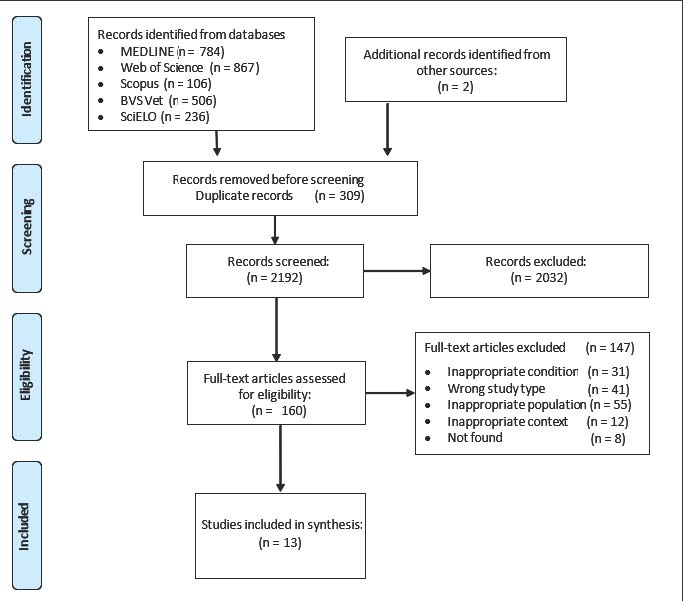
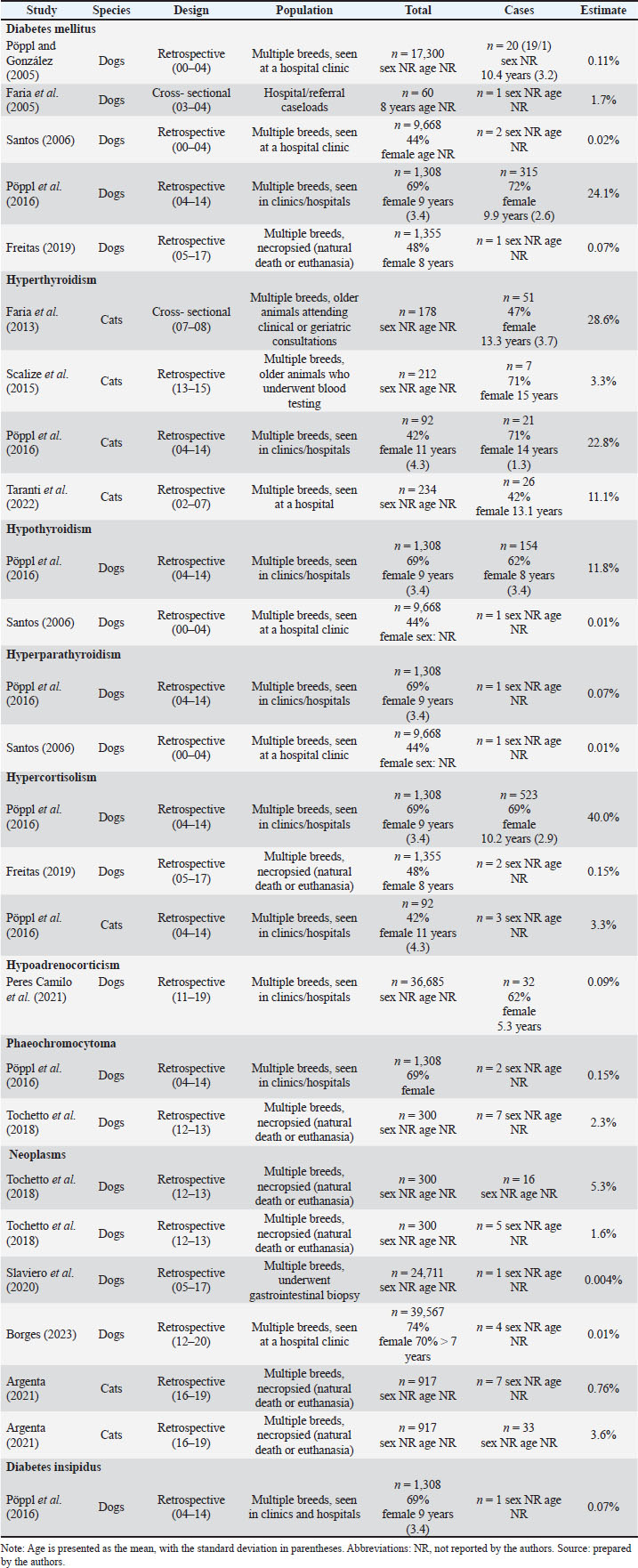
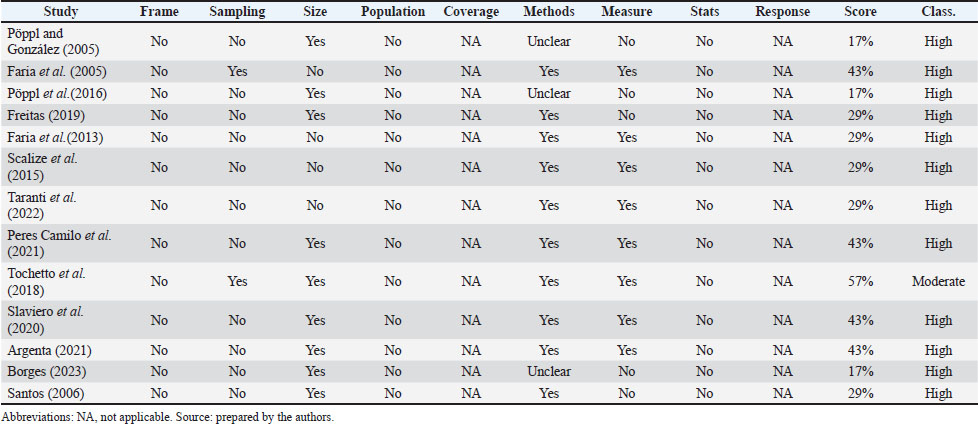
AbstractEndocrinopathies are common chronic disorders in small-animal practice, and accurate estimation depends on standardized diagnostic criteria and denominator-defined populations. Brazilian epidemiological evidence is mostly drawn from hospital and referral settings, resulting in fragmented coverage, limited generalizability, and marked heterogeneity between studies. Conversely, VetCompass in the United Kingdom integrates standardized primary-care electronic records and supports denominator-based population inference. Searches were updated in January 2026 and covered PubMed, Web of Science, Scopus, VETINDEX, LILACS (via BVS-Vet), SciELO, and gray literature (2005–2025). A total of 2,501 records were identified, of which 13 met the eligibility criteria. Two reviewers independently screened the studies, extracted the data, and appraised the methodological quality using the JBI checklist. Random-effects meta-analyses of proportions were undertaken where appropriate, with heterogeneity quantified using I². When quantitative synthesis was not appropriate, results were synthesized narratively. In Brazilian dogs, reported frequencies varied widely across studies and were strongly setting-dependent, consistent with referral and selection effects. Estimates across outcomes ranged from low frequencies in broad hospital caseloads to substantially higher proportions in specialized endocrinology referral cohorts (e.g., diabetes mellitus, hypothyroidism, and hypercortisolism). Hyperparathyroidism was consistently rare (0.01%–0.07%). Hypoadrenocorticism was uncommon (0.09% in a multicenter cohort). In cats, the frequency of hyperthyroidism also varied substantially by setting. Evidence on diabetes mellitus was limited to a single endocrinology referral cohort, reflecting a selected population. Therefore, Brazilian results are reported as study-specific frequencies. Where pooled, these estimates should be interpreted strictly as setting-specific pooled proportions from Brazilian hospitals and referral caseloads, not as population prevalence. VetCompass estimates are used as a primary-care benchmark to contextualize Brazilian hospital-based frequencies and illustrate setting effects (primary versus tertiary care) and not to infer true between-country differences in population prevalence. As a primary-care benchmark, UK studies report canine hypercortisolism at 0.28% (95% confidence intervals: 0.25–0.31), hypothyroidism at 0.23%, and diabetes mellitus at ~0.34%. The prevalence of feline hyperthyroidism is 2.4% overall and 8.7% among cats aged ≥10 years. Overall, the Brazilian evidence base largely reflects tertiary-care caseloads, and most studies were at high risk of bias. This reinforces the need for multicenter primary-care surveillance in Brazil supported by harmonized diagnostic criteria and interoperable electronic records. Keywords: Brazil, Cats, Dogs, Endocrinopathies, Frequency. IntroductionEndocrine diseases are among the most clinically impactful and commonly managed chronic conditions in small-animal practice (Marif et al., 2024). Hypercortisolism (Cushing’s syndrome), canine hypothyroidism, hypoadrenocorticism (Addison’s disease), and feline hyperthyroidism are the most frequently seen diagnoses. In 2023, the American Animal Hospital Association published clinical guidelines on selected endocrinopathies in dogs and cats, outlining standardized definitions, diagnostic pathways, and evidence-based therapeutic recommendations (Bugbee et al., 2023). Estimates of the frequency of endocrine diseases vary markedly across study settings. Primary-care databases with clear denominators and standardized case definitions tend to yield lower estimates that are more reliable for generalization. However, referral and hospital cohorts are shaped by case mix and disproportionately include chronic, complex, and more thoroughly investigated patients, which can push frequencies upwards (Westreich, 2012; O′Neill et al., 2014). In addition, differences in diagnostic criteria, confirmation methods, and denominator reporting can contribute to substantial heterogeneity between studies (Aromataris et al., 2024). The epidemiological evidence base in Brazil has not yet reached a high level of consistency. Although endocrine disorders are clinically important, published data remain fragmented and are largely derived from retrospective teaching-hospital or referral caseloads. Many cohorts use convenience sampling, apply diversified diagnostic approaches, and incompletely report denominators. These limitations reduce external validity and contribute to substantial between-study heterogeneity (Pöppl et al., 2016; Sargeant et al., 2016; Martins et al., 2019; Taranti et al., 2022). In comparison, the United Kingdom has developed nationwide primary-care surveillance through the VetCompass program, which integrates anonymized electronic health records from veterinary practices. By using standardized diagnostic terminology (VeNom coding) and large denominators, VetCompass studies provide robust frequency estimates and allow evaluation of risk factors in companion animals (Stephens et al., 2014; O′Neill et al., 2016). Brazil still lacks a systematic synthesis of endocrine disorder frequency data that would allow estimates to be interpreted in light of health care settings. To address this gap, the present study systematically collates Brazil-based data on endocrinopathies in dogs and cats and interprets the resulting frequency and proportion estimates in relation to published primary-care studies in the United Kingdom, which are used as an external reference for setting context rather than for direct cross-country comparisons. This protocol-registered review was conducted using established systematic review methods and reported in accordance with recognized reporting standards (Joanna Briggs Institute, 2014; Higgins and Green, 2019; Page et al., 2021). Through critical appraisal, the review aims to (i) contextualize setting-specific frequency estimates of major endocrinopathies in Brazil; (ii) elucidate how structural differences between tertiary and primary care influence observed frequency and proportion estimates through selection and denominator effects; and (iii) highlight the importance of prioritizing national primary-care data aggregation and interoperability, with reliable denominators, to support surveillance and population-based inference in Brazil. This study aimed to systematically identify and synthesize Brazil-based studies on endocrine diseases in dogs and cats and, where appropriate, to pool proportion estimates using meta-analysis. MethodologyThis systematic review was conducted in line with the Cochrane Handbook for Systematic Reviews of Interventions (Higgins and Green, 2019) and the JBI Manual for Systematic Reviews of Prevalence and Incidence Data (Joanna Briggs Institute, 2014), including studies published between January 2005 and December 2025. The reporting followed the Preferred Reporting Items for Systematic Reviews and Meta-Analyses (PRISMA) 2020 guidelines (Page et al., 2021). The protocol was prespecified and prospectively registered on the Open Science Framework (https://doi.org/10.17605/OSF.IO/6AHXY). The aim was to synthesize setting-specific frequency/proportion estimates of endocrine diseases in Brazilian dogs and cats and to summarize the reported clinical and demographic profiles. Eligibility criteriaTypes of studies: Observational cross-sectional studies and longitudinal studies (baseline data only) were included. Clinical trials were considered eligible when the samples were comparable to the target population. Reviews, case-control studies, case series/reports, conference reports, and abstracts without full text were excluded. Population and setting: The target population comprised dogs and cats receiving veterinary care in Brazil across primary care, hospital, referral, and tertiary settings. Studies with denominators restricted to screen-positive animals or to those undergoing targeted endocrine testing were excluded. Tertiary/referral cohorts were retained when the denominator represented the full caseload over a defined period, but were interpreted as setting-specific and at a higher risk of selection bias. Target condition: Endocrine diseases were defined using the DeCS terminology. The diagnostic criteria were aligned with species-appropriate standards. Minimum diagnostic criteria were operationalized a priori for each endocrinopathy, drawing on the 2023 AAHA guidance and the diagnostic approaches reported in the included Brazilian studies. Quantitative synthesis was only eligible for cases described as clinician-diagnosed and supported by recognized laboratory/hormonal testing. For diabetes mellitus (DM), eligibility required documented hyperglycemia with evidence consistent with DM (e.g., glucosuria and increased fructosamine) rather than isolated, potentially stress-related hyperglycemia. Studies were accepted for feline hyperthyroidism when the diagnosis was confirmed by increased serum total thyroxine above a stated threshold or the laboratory reference interval. Eligibility for canine hypothyroidism required a low thyroid hormone concentration with confirmatory testing consistent with primary hypothyroidism and clinical compatibility. Eligibility for hypercortisolism required a compatible clinical presentation and at least one accepted endocrine function test [e.g., adrenocorticotropic hormone (ACTH) stimulation or low-dose dexamethasone suppression]. Adrenal ultrasonography was considered supportive but insufficient in isolation; diagnoses based only on clinical suspicion, treatment history, or imaging findings were considered inadequate. The diagnostic approach of each study was mapped to prespecified minimum criteria during extraction. Pooling was restricted to comparable case definitions, and the remaining evidence was synthesized narratively. Information sources and search strategySystematic searches were conducted in MEDLINE/PubMed, Web of Science, Scopus, VETINDEX, LILACS (via BVS-Vet), and SciELO for studies published between January 2005 and December 2025, with searches last updated in January 2026, using free-text terms combined with MeSH/DeCS. Gray literature was screened via Google Scholar, VetTeses (via BVS-Vet), and the CAPES Theses and Dissertations Catalogue. The complete search strategy is provided in Appendix 1. No minimum sample-size threshold was applied because denominator-based Brazilian evidence is sparse and often setting-specific. Instead, denominator clarity, a defined study period, and explicit setting characterization were prioritized; small samples were retained but interpreted cautiously due to imprecision. Meta-analysis was considered only when clinically and methodologically comparable denominators were available across multiple studies. When this condition was not met, results were summarized descriptively and synthesized narratively in accordance with Synthesis Without Meta-analysis (SWiM) guidance. Study selection and managementThe records were imported into Zotero for initial deduplication and then uploaded to Rayyan (Ouzzani et al., 2016) for further deduplication and independent title/abstract screening by two reviewers. Full texts were assessed against eligibility criteria, with disagreements resolved by discussion and, if needed, by a third author. The selection process and exclusions are summarized in the PRISMA 2020 flow diagram presented in the Results section. Data extraction and quality assessmentData were extracted using a pre-tested form that gathers bibliographic details, study attributes (design, setting, period, sample size, ethics, and funding), population characteristics, diagnostic methods, and outcomes (denominator, case counts, and frequency/proportion estimates with 95% confidence intervals (95% CI), when reported or calculable). Furthermore, the methodological quality of the included studies was appraised using the JBI checklist for prevalence studies, which comprises nine items scored as “yes,” “no,” “unclear,” or “not applicable” (Munn et al., 2014). The item-level methodological quality assessment is presented in Supplementary Table S2. The general risk of bias was classified according to the thresholds used in previous systematic reviews (Polmann et al., 2019; Valesan et al., 2021): studies with fewer than 49% of items rated “yes” were considered to have a high risk of bias, those with 50%–69% “yes” ratings were considered to have a moderate risk, and those with at least 70% “yes” ratings were considered to have a low risk of bias. Where appropriate, proportions were pooled using random-effects meta-analysis in R (Posit Team, 2024), primarily with the metafor (Viechtbauer and W, 2010) and meta (Balduzzi et al., 2019) packages. To stabilize variances and constrain confidence intervals between 0 and 1, we transformed raw proportions using the Freeman–Tukey double-arcsine method (Freeman and Tukey, 1950; Barendregt et al., 2013), and reported pooled estimates with 95% CI. When meta-analysis was not feasible due to sparse data, limited comparability, or substantial heterogeneity, findings were synthesized narratively in accordance with the SWiM guidance (Campbell et al., 2020). For quantitative syntheses, heterogeneity was assessed using forest plots and quantified using Cochran’s Q (p < 0.10), I², τ², and 95% prediction interval. Prespecified subgroup analyses (design, sex, age group, and Brazilian region) were not performed because several strata included fewer than three studies. For the same reason, publication bias (funnel plots/Egger’s test) was not assessed because each endocrinopathy had fewer than 10 eligible studies. ResultsA total of 2,501 records were retrieved (2,499 from 6 databases and 2 from gray literature) in searches last updated in January 2026 (coverage from January 2005 to December 2025). After removing duplicates, 2,192 unique records underwent title and abstract screening; 160 were subsequently assessed in full text, leading to 13 studies that satisfied the eligibility criteria. The PRISMA 2020 diagram details the selection flow (Fig. 1).
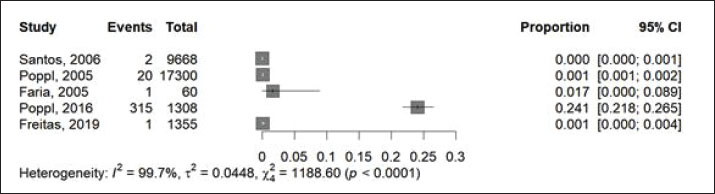
Fig. 1. PRISMA 2020 flow diagram. Source: Adapted from Page et al. (2021). The characteristics of the included studies are summarized in Supplementary Table S1. Among the 13 included studies, 8 (61%) reported data only for dogs. (Faria et al., 2005; Pöppl and González, 2005; Santos, 2006; Tochetto et al., 2018; Freitas, 2019; Slaviero et al., 2020; Peres Camilo et al., 2021; Borges, 2023), 4 (31%) focused solely on cats (Faria et al., 2013; Scalize et al., 2015; Argenta, 2021; Taranti et al., 2022), and 1 study (8%) included both species (Pöppl et al., 2016). The frequency of diabetes mellitus in dogs has been reported in five studies (Faria et al., 2005; Pöppl and González, 2005; Santos, 2006; Pöppl et al., 2016; Freitas, 2019). Two studies assessed phaeochromocytoma (Pöppl et al., 2016; Tochetto et al., 2018), hypercortisolism (Pöppl et al., 2016; Freitas, 2019), hypothyroidism, and hyperparathyroidism (Santos, 2006; Pöppl et al., 2016). Other endocrinopathies appeared in single reports: hypoadrenocorticism (Peres Camilo et al., 2021), adrenal adenoma (Tochetto et al., 2018), adrenal cortical carcinoma (Tochetto et al., 2018), gastrointestinal neuroendocrine carcinoma (Slaviero et al., 2020), thyroid carcinoma (Borges, 2023), and diabetes insipidus (Pöppl et al., 2016). In feline studies, hyperthyroidism was the most frequently reported condition (n=4) (Faria et al., 2013; Scalize et al., 2015; Pöppl et al., 2016; Taranti et al., 2022). Hypercortisolism (Pöppl et al., 2016) and endocrine neoplasms of the adrenal and thyroid glands (Argenta, 2021) appeared in a single study. Most studies used a retrospective design, with only two employing a cross-sectional approach (Faria et al., 2005; Faria et al., 2013). The majority of the studies were conducted in a single center, usually university’s hospitals or referral services. An exception was Peres Camilo et al. (2021) which combined data from two centers, and Pöppl et al. (2016) which involved several institutions. Six studies were from Southern Brazil, five from the Southeast, and two from the Northeast. Public funding (CNPq, CAPES, FAPERJ, and FAPESB) was acknowledged by six studies. Four authors reported no conflicts of interest, and the remainder provided no disclosure. Nine reports (69%) were peer-reviewed journal articles (mainly Acta Scientiae Veterinariae and Pesquisa Veterinária Brasileira), while the remaining proportion consisted of academic theses or dissertations. Furthermore, eight studies were presented in Portuguese (61%) and five in English (39%). Diabetes mellitusFive observational studies published between 2005 and 2019 reported the frequency of diabetes mellitus in hospital and university settings, totalling 29,691 dogs. Estimates ranged from 0.02% to 24.1%, likely reflecting differences in the study design, eligibility criteria, and clinical setting. The primary analysis, including all five studies (Fig. 2), yielded a setting-specific pooled proportion for diabetes mellitus across Brazilian hospital/referral dog caseloads, but heterogeneity was very high (I²=99.7%, p < 0.0001), indicating major between-study differences in case mix and referral structure. This heterogeneity was largely driven by Pöppl et al. (2016)a specialized endocrinology service cohort (24.1%; 95% CI: 21.8%–26.5%).
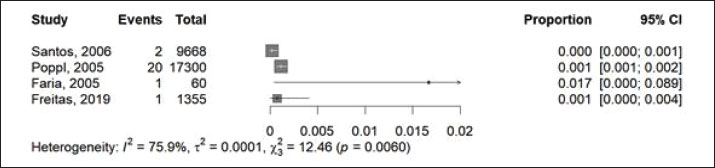
Fig. 2. Forest plot of the estimated frequency of diabetes mellitus across five Brazilian studies in dogs. In the sensitivity analysis, excluding Pöppl et al. (2016)reduced heterogeneity to 75.9% (p=0.0060) (Fig. 3). The remaining four studies (Pöppl and González, 2005; Faria et al., 2005; Santos, 2006; Freitas, 2019) yielded considerably lower and more consistent estimates. Santos (2006)reported 0.02% (95% CI: 0.0%–0.1%) based on two events among 9,668 cases, whereas Pöppl and González (2005)found 0.11% (95% CI: 0.1%–0.2%) with 20 events among 17,300 cases. Freitas (2019)reported a similar estimate of 0.07% (95% CI: 0.0%–0.4%) with one event among 1,355 cases. Faria et al. (2005)reported a higher estimate of 1.7% (95% CI: 0.0%–8.9%), based on one event among 60 cases, with a wide CI due to the small denominator.
Fig. 3. Forest plot of the estimated frequency of diabetes mellitus across four Brazilian studies in dogs. The persistence of moderate-to-high heterogeneity even after excluding the main outlier indicated that additional factors (such as center-specific case-mix differences and diagnostic criteria) contributed to variability across studies. The sensitivity analysis showed that removing Pöppl et al. (2016) was methodologically justified for an appropriate interpretation of the data, as its inclusion would distort any conclusions regarding overall estimates of diabetes mellitus in Brazilian hospital-based caseloads. Regarding the feline population, only one Brazilian study (Pöppl et al., 2016) provided data, analyzing 92 cats from an endocrinology service, of which 39 (42%) had diabetes mellitus, within a referral endocrinology service caseload, not interpretable as population frequency. Thyroid and parathyroid dysfunctionsHypothyroidismTwo studies (Santos, 2006; Pöppl et al., 2016) have investigated the frequency of hypothyroidism in dogs treated in emergency services or endocrinology clinics. These study-specific proportions from hospital and endocrinology-service cohorts were highly discordant, as the forest plot (Fig. 4) revealed substantial heterogeneity between the two studies. Pöppl et al. (2016)identified 154 positive cases among 1,308 dogs, yielding a frequency of 11.8% (95% CI: 10.1%–13.6%). In contrast, Santos (2006)reported one positive case among 9,668 animals, corresponding to a frequency of 0.01% (95% CI: 0.0%–0.1%).
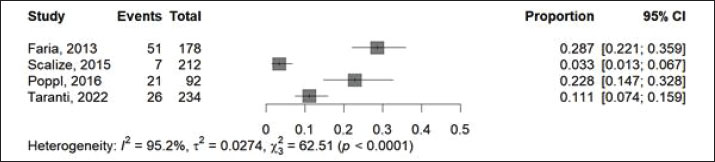
Fig. 4. Forest plot of the estimated frequency of hypothyroidism in Brazilian dogs. Statistical heterogeneity measures indicated that pooling these results was inappropriate. The I² value was 99.8%, suggesting that nearly all observed variations were due to differences between studies rather than sampling errors. The chi-square test (χ²) yielded 527.99 (p < 0.0001), rejecting the homogeneity null hypothesis. The between-study variance was also high (τ²=0.0572), further supporting the magnitude of the observed heterogeneity. Eligible Brazilian studies on feline hypothyroidism were not identified. HyperthyroidismFor hyperthyroidism, four Brazilian studies (Faria et al., 2013; Scalize et al., 2015; Pöppl et al., 2016; Taranti et al., 2022) included cats aged >7 years or cats with clinical suspicion of thyroid disease, with sample sizes ranging from 92 to 234. The samples were mainly mixed-breed cats, with diagnoses based on total T4 and clinical assessment. The primary analysis, including all four studies, produced a setting-specific pooled proportion of 14.7% for feline hyperthyroidism across selected Brazilian hospital/referral cohorts, with very high heterogeneity (I²=95.2%, p < 0.0001) (Fig. 5). Individual study estimates varied substantially, ranging from 3.3% (95% CI: 1.3%–6.7%) in Scalize et al. (2015)to 28.7% (95% CI: 22.1%–35.9%) in Faria et al. (2013). Pöppl et al. (2016)reported a rate of 22.8% (95% CI: 14.7%–32.8%), and Taranti et al. (2022)reported a rate of 11.1% (95% CI: 7.4%–15.9%). As denominators were frequently limited to older and suspected cats, pooled estimates therefore summarize selected caseloads rather than national frequencies.
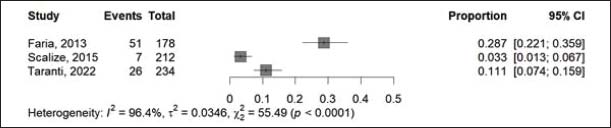
Fig. 5. Forest plot of the estimated frequency of hyperthyroidism across four Brazilian studies in cats. In the sensitivity analysis, excluding Pöppl et al. (2016)did not reduce heterogeneity (I²=96.4%, p < 0.0001), indicating that this study was not the primary driver of between-study variability (Fig. 6). The remaining three studies continued to show a wide spread of estimates, with Faria et al. (2013)remaining the highest, Taranti et al. (2022)intermediate, and Scalize et al. (2015)the lowest. The persistence of extremely high heterogeneity suggests that differences between studies likely reflect fundamental differences in feline population characteristics across the contributing veterinary services.
Fig. 6. Forest plot of the estimated frequency of hyperthyroidism across three Brazilian studies in cats. HyperparathyroidismCanine hyperparathyroidism was reported in two retrospective Brazilian studies. In a multicenter clinic/hospital cohort, Pöppl et al. (2016) identified one case among 1,308 dogs (0.07%), whereas Santos reported one case among 9,668 dogs (0.01%). Overall, these study-specific hospital-based proportions were extremely low (range: 0.01%–0.07%), and heterogeneity was moderate (I²=51.3%), although the small number of contributing studies limited the inference. No eligible Brazilian data on feline hyperparathyroidism were identified. Adrenal gland disordersHypercortisolismHypercortisolism in dogs was described in two retrospective hospital/referral cohorts (Pöppl et al., 2016; Freitas, 2019), which evaluated 2,663 animals and documented 525 affected cases. The two studies showed extremely high heterogeneity (p < 0.0001). Pöppl et al. (2016)reported a frequency of 40.0% (523/1,308; 95% CI: 37.3%–42.7%), whereas Freitas (2019)reported a markedly lower frequency of 0.15% (2/1,355; 95% CI: 0.02%–0.53%), indicating that genuine between-study differences rather than chance reflected nearly all observed variation. Although a pooled estimate was mathematically generated, heterogeneity was extreme (I²=99.9%). Therefore, the combined value was considered to have limited interpretability and not emphasized as a meaningful summary measure. Forest plots for hyperparathyroidism, hypoparathyroidism, and pheochromocytoma are shown in Figures 7–9, respectively.
Fig. 7. Forest plot of the estimated hyperparathyroidism frequency in Brazilian dogs.
Fig. 8. Forest plot of the estimated hypercortisolism frequency in Brazilian dogs.
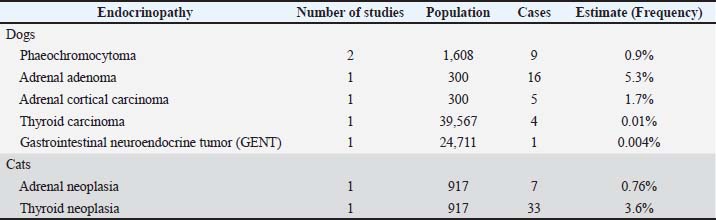
Fig. 9. Forest plot of the estimated frequency of phaeochromocytoma in Brazilian dogs. In cats, evidence was limited to a single report (Pöppl et al., 2016), which found three cases among 92 animals (3.3%) in a referral service. Similarly, this estimate should be interpreted as a referral-based frequency and not as representative of the wider feline population. HypoadrenocorticismIn Paraná, Peres Camilo et al. (2021)documented hypoadrenocorticism in 32 of 36,685 dogs, resulting in a frequency estimate of 0.09%. The diagnosis was confirmed by basal cortisol and ACTH stimulation testing. The cases were predominantly female (62.5%) and mixed-breed dogs (40.6%). No eligible Brazilian studies describing feline hypoadrenocorticism were identified during the review period, aligned with the recognized rarity of this condition in cats. Endocrine neoplasmsCanine endocrine neoplasms were documented in four retrospective studies using necropsy material, biopsy submissions, or hospital records (Table 1). Among these reports, three included malignant tumors and two described benign lesions. Among benign lesions, 5.3% (16/300) of adrenal gland biopsies were reported by Tochetto et al. (2018). Phaeochromocytoma has been reported in two studies (Pöppl et al., 2016; Tochetto et al., 2018). When their data were combined, the setting-specific pooled proportion for phaeochromocytoma across these selected pathology/hospital-derived canine cohorts was 0.90% (95% CI: 0.0%–4.3%), with marked heterogeneity (I²=92%). Table 1. Frequency of neoplasms in dogs and cats.
The malignant neoplasms reported included adrenocortical carcinoma in 1.6% (5/300) of necropsied dogs (Tochetto et al., 2018), thyroid carcinoma in 0.01% (4/39,567) of histopathology accessions from a university hospital (Borges, 2023), and gastrointestinal neuroendocrine carcinoma in 1/24,711 biopsy submissions (Slaviero et al., 2020). Feline endocrine neoplasia was documented only in the necropsy series of Argenta (2021)in which 0.76% (7/917) of cats had adrenal tumors and 3.6% (33/917) had thyroid tumors. Histopathological analysis revealed 17 thyroid follicular adenomas, one cortical thyroid adenoma, and one follicular thyroid carcinoma, leaving other lesions unspecified. Diabetes insipidusDiabetes insipidus was reported in a single retrospective study conducted in Brazil based on medical records from a university hospital, private clinics, and independent veterinarians (Pöppl et al., 2016). Among the 1,308 dogs that were examined between 2004 and 2014, only one case was identified, reflecting a frequency of 0.07%. The current review yielded no eligible Brazilian studies reporting feline diabetes insipidus. Risk of bias (methodological quality)The assessment identified limitations related to design, convenience sampling, incomplete population description, and variable diagnostic ascertainment. Random sampling was reported in only two studies (Faria et al., 2005; Faria et al., 2013), although methods were not described. Eligibility criteria were often unclear, and clinical case definitions were inconsistently standardized, whereas laboratory and histopathological confirmation were generally more uniform. According to the JBI prevalence checklist (Munn et al., 2014), 12 of the 13 studies were judged as having a high risk of bias (<50% “yes” responses). Only Tochetto et al. (2018)reached a moderate risk, supported by random sampling and necropsy-based histopathology. DiscussionThe available estimates for small-animal endocrinopathies in Brazil are derived mainly from hospital and tertiary-care case series, which tend to produce inflated and highly heterogeneous frequency estimates. The limited number of eligible studies also precluded the assessment of publication bias and prespecified subgroup analyses, highlighting the fragility of the national evidence base. These limitations restrict the generalizability to the national primary-care population of dogs and cats. In contrast, UK estimates largely arise from primary-care cohorts (VetCompass), with defined denominators (i.e., animals attending participating practices) and standardized electronic case definitions. VetCompass is a welfare-focused surveillance and research program headed by the Royal Veterinary College that collates anonymised primary-care electronic patient records to describe disease frequency and identify risk factors (Royal Veterinary College, 2026). By leveraging large-scale primary-care data with defined denominators, this program supports surveillance and evidence generation relevant to clinical decision-making and welfare. In the present study, VetCompass estimates were used to contextualize Brazilian hospital-based frequencies and to illustrate setting effects (primary care versus tertiary care) rather than to infer between-country differences in population prevalence. For example, primary care data from the UK estimated canine hypercortisolism at 0.28% (95% CI: 0.25–0.31) among 210,824 dogs (2009–2014) (O’Neill et al., 2016), whereas Brazilian hospital/referral studies reported markedly higher study-specific frequencies, ranging from 0.15% to 40.0%, reflecting strong setting and denominator effects. Canine hypoadrenocorticism was the only clear exception, with a prevalence of 0.06% in the UK (Schofield et al., 2021), similar to 0.09% in Brazil. Breed predisposition, insurance coverage, and diagnostic screening practices are associated with higher diagnostic probability in the UK (Stephens et al., 2014; O’Neill et al., 2016), suggesting that observed differences partly reflect diagnostic access and ascertainment rather than true epidemiological variation. The prevalence of feline hyperthyroidism in the UK is 2.4% overall and 8.7% in cats aged ≥10 years (Stephens et al., 2014), whereas the Brazilian studies yielded a setting-specific pooled proportion of 14.7%, which is consistent with referral-based sampling. Canine hypothyroidism poses diagnostic difficulties, partly because of euthyroid sick syndrome and inconsistent T4 and thyroid-stimulating hormone thresholds. In the UK primary-care records, the annual prevalence was 0.23% (O’Neill et al., 2022), whereas Brazilian hospital-based studies reported highly discordant study-specific proportions, ranging from 0.01% to 11.8%. For canine DM, the UK data indicate an annual prevalence of approximately 0.34% in first-opinion practice (Mattin et al., 2014; O’Neill et al., 2016) and approximately 0.39% in cats (Waite et al., 2025), both markedly lower than the setting-specific pooled Brazilian hospital-based estimate for canine DM (2.1%), whose wide CI and I² ≈ 100% reflect instability and bias. In Brazil, evidence of feline diabetes mellitus was limited to a referral endocrinology service cohort (42%), which should not be interpreted as representative. Differences in scale between Brazil and the UK should not be interpreted as purely biological; the data source and care pathway are the main determinants. In Brazil, evidence is largely derived from university hospitals and referral centers, often based on convenience samples, which inflates observed proportions and skews age and breed distributions. However, referral selection is unlikely to be the sole determinant of the observed differences. The emerging literature also suggests that broader biological and clinical-context factors—including metabolic status, diet-related physiology, and host–microbiome interactions—may influence the expression and recognition of chronic endocrine phenotypes in companion animals. However, the present review is based on secondary observational data and cannot disentangle these upstream biological influences from healthcare-setting and denominator effects (Shah et al., 2024). Although electronic practice management and medical record systems are increasingly used in Brazil, these data are typically held at the clinic level and are not routinely interoperable or aggregated into a unified national primary care database for dogs and cats (Pimazzoni, 2023). This limitation hampers denominator-defined primary-care epidemiology and contributes to the predominance of tertiary and hospital caseload series in the literature. Notably, professional bodies have released publicly supported proposals to develop a unified national database for companion animals, and recent sector-wide initiatives such as the Sistema de Indicadores Veterinários (SIV), a national census of veterinary services led by the Associação Brasileira de Hospitais Veterinários, may help characterize the delivery landscape and support future standardization and data-sharing efforts (Conselho Regional de Medicina Veterinária de Santa Catarina, 2025). Methodologically, Brazilian hospital-based frequencies and UK primary-care estimates describe different populations and are not directly comparable. Tertiary services reflect selected caseloads, whereas primary care captures animals for routine care. ConclusionThe current Brazilian evidence base for small-animal endocrinopathies is dominated by hospital and tertiary-care caseloads; therefore, the resulting estimates should be interpreted as setting-specific proportions and may overstate the frequency of endocrine disorders relative to the wider companion-animal population. Interpretation is further constrained by a lack of harmonized diagnostic criteria and inconsistent recording of key variables (age, breed, and body size, body condition, insurance status, and practice type), which reduces comparability across studies and weakens risk-factor analyses. In Brazil, primary care data are usually kept within individual clinic systems and are rarely shared or pooled at the national level, which limits denominator-based inference. In the UK, studies using VetCompass rely on predefined case definitions and VeNom-coded electronic records, enabling stratified estimates and multivariable analyses (Stephens et al., 2014; O’Neill et al., 2016). In this context, VetCompass serves as a reference point for placing Brazilian hospital-based frequencies in perspective and for illustrating how care setting (primary versus tertiary care) can shape observed proportions, rather than as a basis for inferring true between-country differences in population prevalence. Accordingly, the Brazilian estimates summarized in this article should be understood primarily as descriptions of tertiary-care caseloads. These data can help identify clinical patterns and inform hypothesis generation, but they do not represent the prevalence at the population level. Recent initiatives, including the SIV and related professional proposals, reflect the early steps toward a more coordinated national data collection and surveillance. A practical next step is investment in multicentre primary-care research networks supported by standardized electronic records, harmonized diagnostic criteria, and regionally representative sampling. This infrastructure would strengthen Brazilian veterinary epidemiology and support more robust and equitable international comparisons. AcknowledgmentNone. Conflict of interestThe authors have no conflicts of interest to report. FundingThis study was not supported by any specific grant. Authors’ contributionsAll authors contributed to the study’s conception and design. MC: Conceptualization, protocol development, literature search, methodology, data curation, data analysis, and original manuscript drafting; DC: Supervision, protocol development, and critical manuscript review; GM: English language editing and critical revision; AV: Critical manuscript review. All authors have approved the final version of the manuscript. Data availabilityThe data supporting this study’s findings are available within the article and its supplementary materials. ReferencesArgenta, F.F. 2021. Pathological aspects of non-infectious cardiovascular diseases in dogs and cats. PhD thesis, Federal University of Rio Grande do Sul, Porto Alegre, Brazil. Aromataris, E., Lockwood, C., Porritt, K., Pilla, B. and Jordan, Z. 2024. JBI manual for evidence synthesis. Adelaide, Australia: JBI; doi: 10.46658/JBIMES-24-03. Balduzzi, S., Rücker, G. and Schwarzer, G. 2019. How to perform a meta-analysis with R: a practical tutorial. Evid-Based. Ment. Health. 22, 153–160. Barendregt, J.J., Doi, S.A., Lee, Y.Y., Norman, R.E. and Vos, T. 2013. Meta-analysis of prevalence. J. Epidemiol. Community. Health. 67, 974–978. Borges, F.V. 2023. Retrospective study of the most common neoplasms in dogs treated at the Veterinary Hospital of the Federal University of Uberlândia, from 2012 to 2020. Undergraduate thesis, Federal University of Uberlândia, Uberlândia, Brazil. Bugbee, A., Rucinsky, R., Cazabon, S., Kvitko-White, H., Lathan, P., Nichelason, A. and Rudolph, L. 2023. 2023 AAHA selected endocrinopathies of dogs and cats guidelines. J. Am. Anim. Hosp. Assoc. 59, 113–135. Campbell, M., Mckenzie, J.E., Sowden, A., Katikireddi, S.V., Brennan, S.E., Ellis, S., Hartmann-Boyce, J., Ryan, R., Shepperd, S., Thomas, J., Welch, V. and Thomson, H. 2020. Synthesis without meta-analysis (SWiM) in systematic reviews: reporting guideline. BMJ 368, 6890. Conselho Regional de Medicina Veterinária de Santa Catarina (CRMV-SC). 2025. Pesquisa nacional sobre serviços veterinários busca traçar panorama do setor. Florianópolis, Brazil: . Available via https://www.crmvsc.gov.br/pesquisa_abre.php?id=9091 (Accessed 02 February 2026). Faria, P.F., Araújo, D.F. and Soto-Blanco, B. 2005. Glucemia in obese and elderly dogs. Acta Sci. Vet. 33, 47–50. Faria, V.P., Corgozinho, K.B., Moreira, L., Ferreira, A.M.R. and Souza, H.J.M. 2013. Clinical and laboratory evaluation of hyperthyroid domestic cats with or without palpable thyroid gland. Pesq. Vet. Bras. 33, 80–85. Freeman, M.F. and Tukey, J.W. 1950. Transformations related to the angular and the square root. Ann. Math. Statist. 21, 607–611. Freitas, J.L. 2019. Causes of death and correspondence between clinical diagnosis and necropsy findings in 1,355 dogs: a retrospective study (2005-2017). M.S. thesis, Federal University of Bahia, Salvador, Brazil. Higgins, J. and Green, S. 2019. Cochrane handbook for systematic reviews of interventions. John Wiley & Sons. Joanna Briggs Institute. 2014. Joanna Briggs Institute Reviewers’ Manual. The Joanna Briggs Institute. Marif, H., Ahmad, A., Sulaiman, R. and Ali, B. 2024. Endocrinopathies in small animals: a comprehensive review. Bas. J. Vet. Res. 23(4), 242–257; doi: 10.23975/bjvr.2024.149732.1087 Martins, F.S.M., Carvalho, G.L.C., Jesus, L., Pöppl, A.G. and González, F.H.D. 2019. Epidemiological, clinical, and laboratory aspects in a case series of canine hyperadrenocorticism: 115 cases (2010–2014). Pesq. Vet. Bras. 39(11), 900–908; doi: 10.1590/1678-5150-PVB-6105 Mattin, M., O'Neill, D., Church, D., Mcgreevy, P.D., Thomson, P.C. and Brodbelt, D. 2014. An epidemiological study of diabetes mellitus in dogs attending first opinion practice in the UK. Vet. Rec. 174, 349. Munn, Z., Moola, S., Riitano, D. and Lisy, K. 2014. The development of a critical appraisal tool for use in systematic reviews addressing questions of prevalence. Int. J. Health. Policy. Manag. 3, 123–128. O’Neill, D.G., Khoo, J.S.P., Brodbelt, D.C., Church, D.B., Pegram, C. and Geddes, R.F. 2022. Frequency, breed predispositions and other demographic risk factors for diagnosis of hypothyroidism in dogs under primary veterinary care in the UK. Canine. Med. Genet. 9, 11. O′Neill, D.G., Church, D.B., Mcgreevy, P.D., Thomson, P.C. and Brodbelt, D.C. 2014. Prevalence of disorders recorded in dogs attending primary-care veterinary practices in England. PLos One 9(3), e90501. O'Neill, D.G., Scudder, C., Faire, J.M., Church, D.B., Mcgreevy, P.D., Thomson, P.C. and Brodbelt, D.C. 2016. Epidemiology of hyperadrenocorticism among 210,824 dogs attending primary care veterinary practices in the UK from 2009 to 2014. J. Small Anim. Pract. 57, 365–373. Ouzzani, M., Hammady, H., Fedorowicz, Z. and Elmagarmid, A. 2016. Rayyan—a web and mobile app for systematic reviews. Syst. Rev. 5, 210. Page, M.J., McKenzie, J.E., Bossuyt, P.M., Boutron, I., Hoffmann, T.C., Mulrow, C.D., Shamseer, L., Tetzlaff, J.M., Akl, E.A., Brennan, S.E., Chou, R., Glanville, J., Grimshaw, J.M., Hróbjartsson, A., Lalu, M.M., Li, T., Loder, E.W., Mayo-Wilson, E., McDonald, S., McGuinness, L.A., Stewart, L.A., Thomas, J., Tricco, A.C., Welch, V.A., Whiting, P. and Moher, D. 2021. The PRISMA 2020 statement: an updated guideline for reporting systematic reviews. BMJ 372, n71. Peres Camilo, C., Lahm Cardoso, M.J., Nassar De Marchi, P. and Fagnani, R. 2021. Canine hypoadrenocorticism: a retrospective study of 32 cases from 2011 to 2018. Turk. J. Vet. Anim. Sci. 45, 78–85. Pimazzoni, R.C. 2023. Desenvolvimento de sistema de informações em saúde veterinária com prontuário eletrônico e recursos de geolocalização. MSc thesis, Universidade de São Paulo, Brazil. Available via https://www.teses.usp.br/teses/disponiveis/74/74134/tde-16022024-170716/publico/ME5598601COR.pdf (Accessed 02 February 2026). Polmann, H., Domingos, F.L., Melo, G., Stuginski‐Barbosa, J., Guerra, E.N.D.S., Porporatti, A.L., Dick, B.D., Flores‐Mir, C. and De Luca Canto, G. 2019. Association between sleep bruxism and anxiety symptoms in adults: a systematic review. J. Oral Rehabil. 46, 482–491. Pöppl, A.G. and González, F.H.D. 2005. Epidemiologic and clinical-pathological features of canine diabetes mellitus. Acta Sci. Vet. 33, 33–40. Pöppl, A.G., Coelho, I.C., Silveira, C.A., Moresco, M.B. and Carvalho, G.L.C. 2016. Frequency of endocrinopathies and characteristics of affected dogs and cats in Southern Brazil (2004-2014). Acta. Sci. Vet. 44, 1379. Posit Team. 2024. RStudio: integrated development environment for R. Boston, MA: Posit Software, PBC. Available via http://www.posit.co (Accessed 02 February 2026). Royal Veterinary College. 2026. VetCompass™ (Veterinary Companion Animal Surveillance System). London, United Kingdom: Royal Veterinary College. Available via https://www.vetcompass.org/ (Accessed 02 February 2026). Santos, A.G. 2006. Epidemiological profile of the canine population assisted by the Centro de Controle de Zoonoses Paulo Dacorso Filho. M.S. thesis, Federal Rural University of Rio de Janeiro, Rio de Janeiro, Brazil. Sargeant, J.M., O’Connor, A.M., Dohoo, I.R., Erb, H.N., Cevallos, M., Egger, M., Ersbøll, A.K., Martin, S.W., Nielsen, L.R., Pearl, D.L., Pfeiffer, D.U., Sanchez, J., Torrence, M.E., Vigre, H., Waldner, C. and Ward, M.P. 2016. Methods and processes of developing the strengthening the reporting of observational studies in epidemiology–veterinary (STROBE-Vet) statement. Prev. Vet. Med. 134, 188–196; doi: 10.1016/j.prevetmed.2016.09.005 Scalize, L.P., Pacini, T. and Jericó, M.M. 2015. Retrospective study of the prevalence of hyperthyroidism in domestic cats at the Anhembi Morumbi University Veterinary Hospital (2013-2015). J. Contin. Educ. Vet. Med. Anim. Sci. CRMV-SP 13, 48. Schofield, I., Woolhead, V., Johnson, A., Brodbelt, D.C., Church, D.B. and O'Neill, D.G. 2021. Hypoadrenocorticism in dogs under UK primary veterinary care: frequency, clinical approaches and risk factors. J. Small. Anim. Pract. 62, 343–350. Shah, H., Trivedi, M., Gurjar, T., Sahoo, D.K., Jergens, A.E., Yadav, V.K., Patel, A. and Pandya, P. 2024. Decoding the gut microbiome in companion animals: impacts and innovations. Microorganisms 12, 1831; doi:10.3390/microorganisms12091831 Slaviero, M., Argenta, F.F., Ehlers, L.P., Lorenzo, C.D., Pavarini, S.P., Driemeier, D. and Sonne, L. 2020. Primary nonlymphoid gastrointestinal neoplasms in dogs in Rio Grande do Sul. Pesq. Vet. Bras. 40, 61–71. Stephens, M.J., Neill, D.G.O., Church, D.B., Mcgreevy, P.D., Thomson, P.C. and Brodbelt, D.C. 2014. Feline hyperthyroidism reported in primary care veterinary practices in England: prevalence, associated factors and spatial distribution. Vet. Rec. 175, 458. Taranti, L., Haipek, K., Furtado, P.V., Oliveira, C.A., Filgueira, K.D., Sellera, F.P., Gargano, R.G. and Reche-Júnior, A. 2022. Prevalence, clinical and epidemiological features of feline hyperthyroidism at a veterinary teaching hospital in Brazil: a retrospective study. Acta Vet. Brasilica. 16, 227–231. Tochetto, C., Rosa, F.B., Silva, T.M., Caprioli, R.A., Fighera, R.A. and Kommers, G. 2018. Adrenal lesions in 300 dogs. Pesq. Vet. Bras. 38, 119–128. Valesan, L.F., Da-Cas, C.D., Réus, J.C., Denardin, A.C.S., Garanhani, R.R., Bonotto, D., Januzzi, E. and De Souza, B.D.M. 2021. Prevalence of temporomandibular joint disorders: a systematic review and meta-analysis. Clin. Oral. Investig. 25, 441–453. Viechtbauer, W. 2010. Conducting meta-analyses in R with the metafor package. J. Stat. Softw. 36, 1–48. Waite, O., Gostelow, R., Wright, E., Jepson, R.E., Brodbelt, D.C. and O'Neill, D.G. 2025. Frequency, risk factors, and mortality for diabetes mellitus in 1,225,130 cats under primary veterinary care in the United Kingdom in 2019. J. Vet. Intern. Med. 39, e70161. Westreich, D. 2012. Berkson’s bias, selection bias, and missing data. Epidemiology 23(1), 159–164. Supplementary MaterialTable S1. Characteristics of included studies.
Table S2. Risk of bias assessment of included studies (JBI checklist for studies reporting prevalence). Abbreviations: NA, not applicable. Source: prepared by the authors.
APPENDIXAppendix 1. Search strategy.
| ||





| How to Cite this Article |
| Pubmed Style Carvalho MLPD, Caragelasco DS, Librais GNM, Vargas AM. Endocrine diseases in Brazilian small-animal hospitals and referral caseloads: A systematic review and meta-analysis of proportions. Open Vet. J.. 2026; 16(5): 2581-2600. doi:10.5455/OVJ.2026.v16.i5.2 Web Style Carvalho MLPD, Caragelasco DS, Librais GNM, Vargas AM. Endocrine diseases in Brazilian small-animal hospitals and referral caseloads: A systematic review and meta-analysis of proportions. https://www.openveterinaryjournal.com/?mno=294790 [Access: June 26, 2026]. doi:10.5455/OVJ.2026.v16.i5.2 AMA (American Medical Association) Style Carvalho MLPD, Caragelasco DS, Librais GNM, Vargas AM. Endocrine diseases in Brazilian small-animal hospitals and referral caseloads: A systematic review and meta-analysis of proportions. Open Vet. J.. 2026; 16(5): 2581-2600. doi:10.5455/OVJ.2026.v16.i5.2 Vancouver/ICMJE Style Carvalho MLPD, Caragelasco DS, Librais GNM, Vargas AM. Endocrine diseases in Brazilian small-animal hospitals and referral caseloads: A systematic review and meta-analysis of proportions. Open Vet. J.. (2026), [cited June 26, 2026]; 16(5): 2581-2600. doi:10.5455/OVJ.2026.v16.i5.2 Harvard Style Carvalho, M. L. P. D., Caragelasco, . D. S., Librais, . G. N. M. & Vargas, . A. M. (2026) Endocrine diseases in Brazilian small-animal hospitals and referral caseloads: A systematic review and meta-analysis of proportions. Open Vet. J., 16 (5), 2581-2600. doi:10.5455/OVJ.2026.v16.i5.2 Turabian Style Carvalho, Marina Louza Palmeira De, Douglas Segalla Caragelasco, Gabriela Nunes Marsiglio Librais, and Alessandra Martins Vargas. 2026. Endocrine diseases in Brazilian small-animal hospitals and referral caseloads: A systematic review and meta-analysis of proportions. Open Veterinary Journal, 16 (5), 2581-2600. doi:10.5455/OVJ.2026.v16.i5.2 Chicago Style Carvalho, Marina Louza Palmeira De, Douglas Segalla Caragelasco, Gabriela Nunes Marsiglio Librais, and Alessandra Martins Vargas. "Endocrine diseases in Brazilian small-animal hospitals and referral caseloads: A systematic review and meta-analysis of proportions." Open Veterinary Journal 16 (2026), 2581-2600. doi:10.5455/OVJ.2026.v16.i5.2 MLA (The Modern Language Association) Style Carvalho, Marina Louza Palmeira De, Douglas Segalla Caragelasco, Gabriela Nunes Marsiglio Librais, and Alessandra Martins Vargas. "Endocrine diseases in Brazilian small-animal hospitals and referral caseloads: A systematic review and meta-analysis of proportions." Open Veterinary Journal 16.5 (2026), 2581-2600. Print. doi:10.5455/OVJ.2026.v16.i5.2 APA (American Psychological Association) Style Carvalho, M. L. P. D., Caragelasco, . D. S., Librais, . G. N. M. & Vargas, . A. M. (2026) Endocrine diseases in Brazilian small-animal hospitals and referral caseloads: A systematic review and meta-analysis of proportions. Open Veterinary Journal, 16 (5), 2581-2600. doi:10.5455/OVJ.2026.v16.i5.2 |


