




| Research Article | ||
Open Vet. J.. 2026; 16(3): 1646-1653 Open Veterinary Journal, (2026), Vol. 16(3): 1646-1653 Research Article Effects of combined plant bioactives and probiotic supplementation on ram semen quality outside the breeding seasonNatalya Zdravkova Miteva*, Nikolay Ivanov, Ivan Slavov, Kamelia Zhelyazkova, Ivelina Alexandrova and Stayka LalevaAgricultural Academy Sofia, Agricultural Institute, Stara Zagora, Bulgaria *Corresponding Author: Natalya Miteva. Agricultural Academy Sofia, Agricultural Institute, Stara Zagora, Bulgaria. Submitted: 24/09/2025 Revised: 05/02/2026 Accepted: 18/02/2026 Published: 31/03/2026 © 2026 Open Veterinary Journal
ABSTRACTBackground: According to many authors, supplementation with a combination of probiotics and bioactive plants influences sexual activity and improves sperm production in rams after mating. It has also been reported to increase ejaculate volume, improve sperm motility and concentration, and result in a low abnormal sperm percentage. Aim: This study aimed to investigate the influence of a combination of bioactive substances contained in three plant species (Thymus vulgaris L., Origanum vulgare L., and Tribulus terrestris) and a probiotic (ZOOVIT LL) on some basic indicators of ram semen during the breeding season. Methods: The study was conducted at the experimental base of the Agricultural Institute in the city of Stara Zagora for 2 months in 2025. Eighteen clinically healthy rams of the Bulgarian Dairy Synthetic Population (BDSP) breed, aged 3–5 years, were raised indoors in group pens with an outdoor yard for walking. The control group (CG) was fed grass hay and 1.2 kg compound feed. Experimental group 1-EG1 received grass hay and 1.2 kg compound feed with supplement (Tribulus terrestris 4 g/kg, T.s vulgaris L. 2 g/kg and O. vulgare L. 2 g/kg) per animal/day and experimental group 2 -EG2 - grass hay, 1.2 kg of compound feed with supplement (Tribulus terrestris 4 g/kg, T. vulgaris L. 2 g/kg and O. vulgare L. 2 g/kg) + ZOOVIT LL 120 ml per animal/day per animal/day manufactured by the “LB Lact BAS” Laboratory. Semen was collected using an artificial vagina, simulating natural ejaculation conditions, and the ejaculate volume was determined using a graduated pipette. For more precise analysis, including pH determination and detailed sperm parameters such as concentration, total motility, and progressive motility, specialized equipment such as the TESTO 205 and the AndroVision® system was used. Results: The combined application of bioactive substances and probiotics showed statistically significant deviations in volume between the 42nd and 49th days (p ≤ 0.05) in EG2. Both experimental groups reported statistically significant increases in concentration on the 42nd (p ≤ 0.05) and 49th days (p ≤ 0.001), compared to the CG. Progressive sperm motility was significantly improved in EG1 from day 14 (p ≤ 0.05) to day 49 (p ≤ 0.001), while EG2 demonstrated significant increases on day 14 (p ≤ 0.05), 28 (p ≤ 0.001), and 42 days (p ≤ 0.001), relative to CG. Conclusion: The co-supplementation of BDSP ram diets with plant bioactive substances and probiotics (T. vulgaris L., O. vulgare L., T. terrestris, and ZOOVIT LL) significantly and sustainably enhanced the key ex vivo semen quality indicators (ejaculate volume, sperm concentration, and total and progressive motility) via synergistic effects. However, in vivo field trials are necessary to validate whether this better semen quality translates into superior pregnancy rates. Keywords: Origanum vulgare L., Thymus vulgaris L., Tribulus terrestris, Ram semen, Probiotic. IntroductionThe reproductive ability of rams is one of the main factors for increasing sheep farming productivity and production efficiency. The reproductive process depends on many factors. Improving the quantitative and qualitative indicators of ram semen, especially when artificial insemination is applied, is of great importance for the production results. Researchers are increasingly turning to bioactive compounds, plant-derived metabolites, and probiotics to reduce the use of synthetic hormones. Several studies have reported the positive influence of bioactive substances (such as saponins, alkaloids, and flavonoids) on reproductive behavior (courtship, mating) and on increasing sensitivity to hormones (Gauthaman and Adikan, 2005; Gauthaman and Ganeson, 2008; Patel et al., 2011). Tribulus terrestris is one of the most frequently studied plants. In Bulgaria, the research began in the late 1960s and continues to this day. Numerous authors and studies have confirmed that orally administered T. terrestris has a rapid and positive effect on ram semen parameters. According to Gauthaman and Ganeson (2008), the primary active ingredients linked to reproductive health benefits are furostanol-type steroidal saponins, notably protodioscin and prototribestin. Dona et al. (2025) and Costa and Santos (2024) further elaborated that these compounds modulated hormonal levels by potentially increasing luteinizing hormone release, which consequently stimulated testosterone synthesis and enhanced spermatogenesis. Mirzadeh et al. (2019) investigated the effect of administering different amounts of T. terrestris on the quantitative and qualitative characteristics of the semen of mature male lambs. Another possibility for using a plant extract as an enhancer of the medium for sperm dilution and storage at 5°C was suggested by Pour et al. (2015). The use of common thyme (Thymus vulgaris L.) for medicinal purposes was first documented in 1589. Thyme leaves are an excellent source of potassium, calcium, iron, manganese, magnesium, and selenium (Sharangi Guha, 2013). Khnissi et al. (2024) evaluated the protective effect of a thyme essential oil nanoemulsion during liquid ram semen preservation. The addition of T. vulgaris L. essential oil to the cryopreservation medium reduced cooling-induced stress, leading to increased sperm progressiveness and motility (Gumus and Ercan Imik, 2017). Oregano (Origanum vulgare L.) is one of the aromatic perennial herbs of the Lamiaceae family, which is known worldwide by various names. The primary biological activity of O. vulgare L. is attributed to phenolic compounds present in its essential oil and extracts. Carvacrol and thymol are the main active substances, followed by rosmarinic acid (a major polyphenol). These compounds are well-documented for their potent antioxidant, anti-inflammatory, and antimicrobial properties (Baricevic et al., 2001; Fei et al., 2017; Leyva-López et al., 2017; Gayoso et al., 2018). Oregano essential oil supplementation improves the antioxidant activity of sperm (Zarhouti et al., 2023). Increased sperm motility through the addition of OREO can effectively promote the ability of spermatozoa to reach and penetrate the oocyte (Dcunha et al., 2024). Al-Najar et al. (2022) studied the effect of fresh oregano leaves as a feed additive in the ration of Awassi breed nursery rams on sexual activity and sperm quality parameters. An increase in the values of antioxidant enzymes in seminal plasma and increased levels of the hormones studied were reported. Probiotics have beneficial effects on the health of host animals by improving intestinal microbial balance (Sissons, 1989; Schrezenmeir and De Vrese, 2001). The most commonly used microorganisms in probiotic products are from the genera Lactobacillus, Streptococcus, Bacillus, and yeast strains of the genus Saccharomyces, which are normal inhabitants of the digestive tract of healthy animals (Piva and Rossi, 1999). Hristov et al. (2017) observed positive results on seminal fluid parameters in male breeders with the combination of a probiotic and an extract from the plant T. terrestris. According to them, the combination of probiotics and plant extract increases sexual activity and improves sperm production in rams out of the mating period. The authors reported greater ejaculate volume, improved sperm motility and concentration, and reduced abnormal sperm percentage. The aim of the present study was to investigate the influence of a combination of bioactive substances contained in three plant species (T. vulgaris L., O. vulgare L., and T. terrestris) and a probiotic (ZOOVIT LL) on some basic indicators of semen from rams out of the breeding season. The novelty of this research is that it is a specific four-component combination administered orally as a dietary supplement to target semen parameters in rams out of the typical breeding season, representing a unique synergistic approach not previously reported in combination in the available literature. Materials and MethodsAnimalsThe study was conducted for 2 months at the experimental base of the Agricultural Institute in the city of Stara Zagora in 2025. The subjects were 18 clinically healthy, randomly selected male Bulgarian Dairy Synthetic Population (BDSP) rams aged 3–5 years, housed indoors in open-access group pens. No significant differences in the initial body weight or age were observed between the groups. The experiments were conducted in accordance with the requirements of the European Union Directive on animal experimentation (Directive 86/609/EEC). Three groups of animals were formed: a control group and two experimental groups. Each group includes 6 rams. The experimental animals were identified using individual ear tags. Before the start of the experiment, the rams were subcutaneously dewormed with Pandex® 1% (Biovet, Peschtera) at a dose of 0.2 mg/kg by the farm veterinarian in accordance with the adopted deworming program. FeedingControl group (CG)–basic ration: ad libitum meadow hay + 1.2 kg of compound feed with 15% crude protein (CP15%), water supplied by automatic drinkers. Experimental group 1—basic ration: ad libitum meadow hay + 1.2 kg of compound feed with 15% crude protein (CP15%), with supplement (Tribulus terrestris 4 g/kg, T. vulgaris L. 2 g/kg and O. vulgare L. 2 g/kg) per animal/day, and water was supplied by automatic drinkers. The doses used are the result of preliminary trials aimed at optimizing the synergistic effect of the herbs. Experimental group 2—basic ration: ad libitum meadow hay + 1.2 kg of compound feed with 15% crude protein (CP15%), with supplement (Tribulus terrestris 4 g/kg, T. vulgaris L. 2 g/kg and O. vulgare L. 2 g/kg) + ZOOVIT LL probiotic manufactured by the “LB Lact BAS” Laboratory in the city of Plovdiv, 120 ml per animal/day, water is supplied from automatic drinkers. The strains included in the probiotic composition were as follows: Lactobacillus delbrueckii subsp. Bulgaricus—3.5 × 10⁷ CFU/ml Lactobacillus rhamnosus—2.1 × 10⁷ CFU/ml Lactobacillus casei—1.8 × 10⁷ CFU/ml Streptococcus thermophilus—2.9 × 10⁷ CFU/ml. Probiotic yeast: Kluyveromyces lactis—3.0 × 10⁵ CFU/ml *CFU, colony-forming unit (viable microbes per 1 ml of solution). Supplements of T. terrestris, T. vulgaris L., and O. vulgare L. were included in the basic ration by adding them to the pelleted compound feed produced at the experimental base of the Agricultural Institute. Research methodsEjaculates were obtained once a week (Wednesday) using the same operator certified for this activity. Each ram produced 2 ejaculates within 1 hour. Ejaculates were immediately evaluated macroscopically after collection. The results were reported on days 0, 7, 14, 21, 28, 35, 42, and 49 from the beginning of the experiment (March–April). The artificial vagina method is a common technique used to collect semen from male animals, such as rams, bulls, and stallions, by simulating mating conditions (Jane, 2011; Hi, 2018). This method aims to mimic the temperature, pressure, and lubrication provided by a female’s vagina during copulation, allowing for the collection of ejaculates with quality comparable to natural mating (Blesbois et al., 2023). The ejaculate volume was determined using a graduated pipette with a 0.1 ml graduation. A hand-held T-shaped automatic device (TESTO 205) was used to determine the pH. The AndroVision® Minitube system (Germany), a compact mobile CASA equipped with a professional high-frequency camera and stable focus adjustment, was used for a more precise sperm analysis (concentration, total motility, and progressive motility). The heating system in the analysis area reached + 370C in few seconds, so the ejaculate was examined under optimal temperature conditions. The following indicators were determined: concentration (Conc.) in × 109/ml, total sperm motility (TM%), and PM (PM%). The IBM SPSS Statistics 19 program was used for statistical data processing. Data were processed using one-way analysis of variance. The statistical parameters determined were mean values and standard deviation (SD). The statistical significance level was set at p ≤ 0.05. Ethical approvalNot needed for this study. ResultsFigure 1 shows the data on the volume of ejaculate from rams in the control and both experimental groups throughout the experiment.
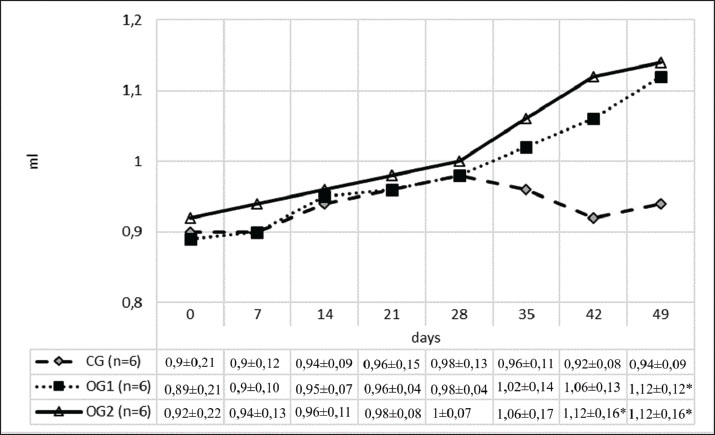
Fig. 1. Effect of plant bioactive substances and probiotic on ejaculate volume (ml). All values are expressed as mean ± SD. * (p < 0.05); n=6, number of ejaculates; control group, CG; experimental group 1, EG1; experimental group 2, EG2. In the control group, minimal fluctuations in ejaculate volume were observed throughout the period, with values ranging from 0.90 ± 0.21 to 0.98 ± 0.13 ml. The highest volume values were recorded on the 28th day (0.98 ± 0.13 ml), and the volume decreased to 0.94 ± 0.09 ml on the 49th day. The total change was within 14%. Throughout the entire experimental period, the ejaculate volume values in the control group remained significantly (p < 0.05) lower than those in both experimental groups (p 0.05). In the first experimental group (plant bioactive substances), a gradual and steady increase in ejaculate volume was observed—from 0.89 ± 0.21 ml at the beginning to 1.10 ± 0.12 ml on the 49th day (≈ 25%). The best results were reported in the second experimental group (herbal supplements + probiotic). The ejaculate volume increased from 0.92 ± 0.22 to 1.14 ± 0.16 ml (≈ 25%). The increase in ejaculate volume was relatively uniform, but in the second experimental group statistically significant deviations were observed between the 42nd and 49th days (p ≤ 0.05), indicating the positive impact of the combined application of plant bioactive substances and probiotics. Table 1 presents the changes in the pH of the semen. From the beginning of the study period, a slight but gradual decrease in the pH values occurred in all three studied groups CG (from 7.62 ± 0.12 to 7.48 ± 0.03), EG1 (from 7.61 ± 0.10 to 7.46 ± 0.03), and EG2 (from 7.60 ± 0.11 to 7.46 ± 0.01). The values measured in the control group showed greater variations compared with the experimental values. Despite the fluctuations, no statistically significant differences in this parameter were found between the groups. Table 1. Influence of plant bioactive substances and probiotic supplementation on the pH of SPBM ram semen.
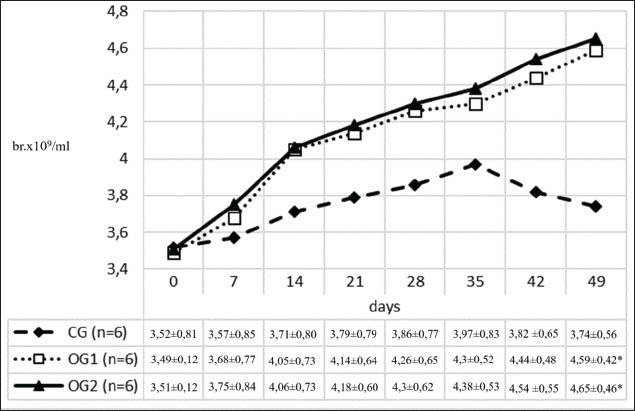
The changes in sperm concentration (×109/ml) in the control and experimental groups are presented on Figure 2. The average sperm concentration in the control group ranged from 3.52 ± 0.81 × 10⁹/ml to 3.97 ± 0.56 × 10⁹/ml. In the experimental groups, a steady increase in the values of this indicator was registered from the beginning to the end of the experimental period, from 3.49 ± 0.12 ml to 4.44 ± 0.48 ml for the first experimental group and from 3.51 ± 0.12 ml to 4.54 ± 0.55 ml for the second experimental group. On day 49, a statistically significant difference (p ≤ 0.05) was reported for this indicator in the semen of rams from both experimental groups. The statistically significant difference in sperm concentration at day 49 was due to the cumulative, synergistic effect of the supplements that have optimized sperm production within this time frame.
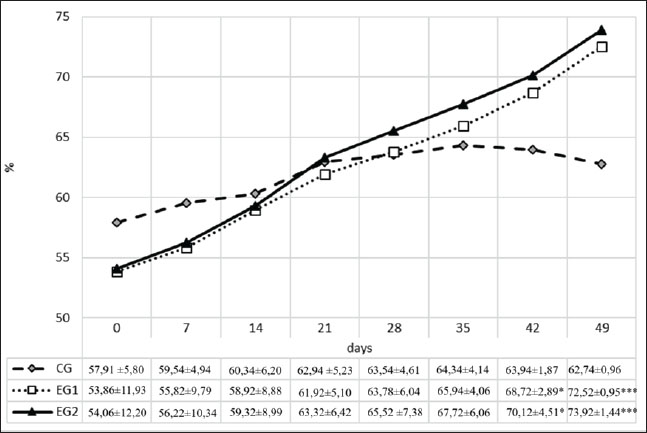
Fig. 2. Influence of the bioactive plant substances and probiotic on the concentration of SPBM ram semen, number × 109/ml. All values are expressed as mean ± SD. * (p < 0.05); n=6, number of ejaculates; control group, CG; experimental group 1, EG1; experimental group 2, EG2. Figure 3 shows the effect of the addition of plant bioactive substances and probiotic on total sperm motility. Total sperm motility in the control group increased and reached its highest value on day 35 (64.34%), after which it decreased (62.74%). An increase in the total sperm motility was observed in the experimental groups from the beginning to the end of the experiment.
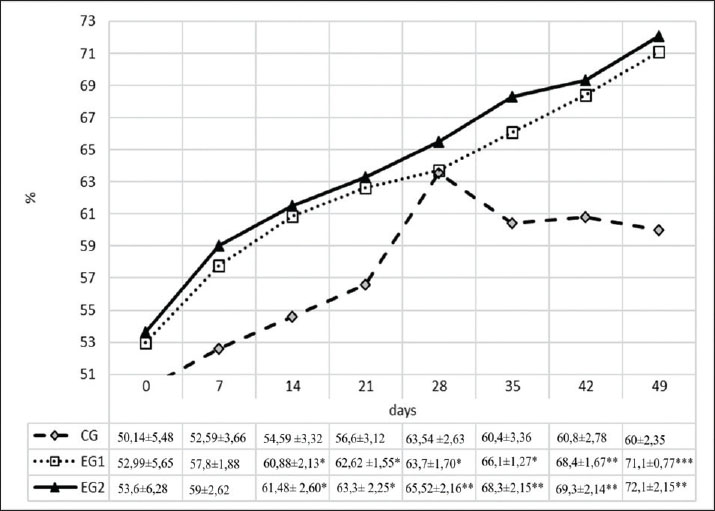
Fig. 3. Influence of plant bioactive substances and probiotic supplementation on the total motility of sperm of SPBM ram semen. All values are expressed as mean ± SD. * (p < 0.05), * * * (p < 0.001); n=6, number of ejaculates; control group, CG; experimental group 1, EG1; experimental group 2-EG2. The total motility of spermatozoa in the first experimental group (plant bioactive substances) ranged from 53.86% to 72.52%, with the highest values being recorded after the 35th day. The total sperm motility in the second experimental group (treated with plant bioactive substances + probiotic) ranged from 54.06% to 73.92% within the experimental period. Statistically significant differences in the indicator values were reported in the experimental groups compared to the control group on the 42nd day (p ≤ 0.05), and on the 49th day (p ≤ 0.001). This gives us reason to believe that the increase in the total motility of sperm in rams from the experimental groups was not an accidental result but was due to the addition of plant bioactive substances and probiotics. Figure 4 shows the changes in progressive sperm motility in the control and experimental groups. After an initial increase in the values from 50.14% on day 0 to 63.54% on day 28, a decrease in the values of the indicator was observed by day 49 in the control group.Increased progressive sperm motility was found in the first experimental group, with statistically significant differences from the 14th day of the experiment (p ≤ 0.05) onward. The differences on the 42nd day (p ≤ 0.01) , and on the 49th day (p ≤ 0.001) were even more pronounced, supporting the need for the synergistic effect of the supplements, as progressive sperm motility requires less time to report the effect.
Fig. 4. Influence of plant bioactive substances and probiotic supplementation on the progressive motility of spermatozoa of SPBM ram semen, %. All values are expressed as mean ± SD. * (p < 0.05), * * (p < 0.01), * * * (p < 0.001); n=6, number of ejaculates; control group, CG; experimental group 1, EG1; experimental group 2, EG2. The progressive motility of spermatozoa increased from 53.60% on day 0 to 72.10% on day 49 in the second experimental group (plant bioactive substances + probiotic). Statistically significant differences in the progressive motility of spermatozoa were reported on days 14 (61.48%; p ≤ 0.05), day 28 with a p ≤ 0.001 (65.52%; p ≤ 0.001) and day 42 with a (69.30% to 72.10%; p ≤ 0.001). DiscussionIn this study, the values of the indicators volume, pH, concentration, total, and progressive motility of spermatozoa were positively affected by the addition of plant bioactive substances and probiotic ZOOVIT LL. The larger volume of ejaculate in the experimental groups allowed the production of more doses for insemination. Our results confirm those obtained by Kistanova (2005) when Bio-Pro-I and Tribestan were used in rams during the breeding season. Hristov et al. (2017) monitored the changes in semen quantity and quality following the application of the Tribestan—Lactina® complex. In addition to the increased ejaculate volume, they also reported an increase in sexual activity, sperm concentration, and motility in rams out of the breeding season. Our results for concentration, total sperm motility, and progressive sperm motility are in agreement with these data. The increase in the volume, concentration, and total and progressive motility of spermatozoa after dietary supplementation with bioactive substances of plant origin was similar to the results reported by Sharawy et al. (2015). The authors found that sperm volume, concentration, and total and progressive motility increased significantly when male breeders were fed T. terrestris extract. Sahin et al. (2016) reported similar results, showing an increase in sperm motility of up to 84.29% (p ≤ 0.05) when animals were fed T. terrestris. Furthermore, both the plant extracts (T. vulgaris L. and O. vulgare L., rich in flavonoids and phenolics) and the probiotic ZOOVIT LL likely contributed to an enhanced antioxidant defense system. Plant-derived antioxidants, such as the thymol and carvacrol found in thyme and oregano essential oils, function as potent reactive oxygen species scavengers, mitigating the deleterious effects of oxidative stress on sperm function and integrity. Studies in rams have shown that the use of T. vulgaris extract at optimal concentrations significantly improved post-thaw sperm quality, including total and progressive motility, by enhancing antioxidant status and protecting membrane integrity (Khnissi et al., 2024). Similarly, the beneficial effects of O. vulgare on ram semen parameters have been confirmed. Dietary supplementation of Awassi rams with fresh oregano leaves increased Superoxide Dismutase, Glutathione Peroxidase, and Total Antioxidant Capacity activity in seminal plasma, improved sperm motility and viability, and decreased abnormalities (Al-Najar et al., 2022). In vitro studies have also demonstrated that O. vulgare extract can improve sperm motility and reduce lipid peroxidation in ram semen. Probiotics, such as Lactobacillus species, are known to possess antioxidant and anti-inflammatory properties, which help protect sperm integrity and improve motility parameters. This aligns with the findings of Sahin et al. (2016); and Cao et al. (2023), who demonstrated that probiotics can alleviate sperm inflammation and oxidative stress. Improving the quality and quantity of semen, especially during the natural breeding season, offers a strategic advantage for Artificial Insemination operations. This approach would facilitate the optimization and consistent management of reproductive cycles, ensuring a reliable year-round supply of high-quality semen doses and maximizing the genetic potential across the flock. The lack of a detailed qualitative and quantitative analysis of the specific active ingredients (e.g., saponins, flavonoids, thymol, and carvacrol) in the administered compounds is a significant limitation of this study. The absence of these data restricts our ability to establish a definitive cause-and-effect relationship between the observed biological effects and specific compounds. Consequently, while positive outcomes were noted, identifying the bioactive components that are primarily responsible for the improvements in ram semen quality remains challenging in terms of the precise optimization of the supplementation protocol for future applications. ConclusionThe co-supplementation of BDSP ram diets with plant bioactive substances and probiotics significantly and sustainably enhanced the key ex vivo semen quality indicators (ejaculate volume, sperm concentration, total, and progressive motility) via synergistic effects; however, in vivo field trials are necessary to validate whether this enhanced semen quality translates into superior pregnancy rates. AcknowledgmentNone. Conflict of interestThe authors declare that the research was conducted without any commercial or financial relationships that could be understood as a potential conflict of interest. FundingFunding: This study was funded by the Science Research Fund of the Ministry of Education, project No. KP-06-N76/6. Authors contributionNM, KG, IS, NI, IA, and SL drafted and edited the manuscript, respectively. SL participated in the critical review of the final manuscript. SL edited the citations. All six authors have read and approved the final version of the manuscript. Data availabilityAll data supporting the findings of this study are available within the manuscript. ReferencesAl-Najar, E.M., Abdullah, A.M., Al-Rubaye, T.A. and Hadi, S.M. 2022. Evaluation of Marjoram Leaves (Oregano vulgare) as a feed supplement on semen quality in Awasian pollination rams. Arch. Razi Inst. 77(5), 1831–1835; doi:10.22092/ARI.2022.358366.2211 Baricevic, D., Milevoj, L. and Borstnik, J. 2001. Insecticidal effect of oregano (Origanum vulgare L. ssp. hirtum Letswaart) on dry bean weevil (Acanthoscelides obtectus Say). Horticultural. Sci. 7(2), 84–88; doi:10.31421/IJHS/7/2/272 Blesbois, É., Silva, R. de O., Govoroun, M., Guignot, F., Hopkins, B.K., Liptói, K., Magistrini, M., McGrew, M.J., Mermillod, P., Parnpai, R., Várkonyi, E.P., Purdy, P.H., Rajamohan, A., Santiago‐Moreno, J., Somfai, T. and Souza‐Fabjan, J.M.G. 2023. Innovations in cryoconservation of animal genetic resources—Practical guide. Eds., Boes, J., Boettcher, P. and Honkatukia, M. FAO Animal Production and Health Guidelines. Cao, T., Wang, S., Pan, Y., Guo, F., Wu, B., Zhang, Y., Wang, Y., Tian, J., Xing, Q. and Liu, X. 2023. Characterization of semen, gut, and urine microbiota in patients with different semen abnormalities. Front. Microbiol. 14, 1182320; doi:10.3389/fmicb.2023.1182320 Costa, R. and Santos, M.I.S. 2024. Perfil das prescrições de fitoterápicos anabolizantes comercializados por uma farmácia magistral no Rio de Janeiro. Vigilância Sanitária Em Debate 1, 1–12; doi: 10.22239/2317-269x.02156 Dcunha, R., Hussein, R.S., Ananda, H., Kumari, S., Kumar Adiga, S., Kannan, N. and Zhao Y Kalthur. 2024. Current insights and latest updates in sperm motility and assisted reproduction applications. Reproductive. Sci. 29(1), 7–25; doi:10.1007/s43032-020-00408-y Dona, S., Kintoko, K. and Saiful, B.M. 2025. The role of Tribulus terrestris on male infertility based on clinical trials perspective: a narrative review. Pharmacoscript. 2018;8(2):461. doi:10.36423/pharmacoscript.v8i2.2171 Fei, H., Guang-qiang, M., Ming, Y., Li, Y., Wei, X., Li Y Ji. and Cheng, S. 2017. Chemical composition and antioxidant activities of essential oils extracted from different parts of oregano. J. Zhejiang. Univ. Sci. B. (Biomed. &. Biotechnol). 18(1), 79–84. Gauthaman, K. and Adaikan, P.G. 2005. Effect of Tribulus terrestris on nicotinamide adenine Gadinucleotide phosphate-diaphorase activity and androgen receptors in rat brain. J. Ethnopharmacol. 96, 127–132; doi:10.1016/j.jep.2004.08.030 Gauthaman, K. and Ganesan, A.P. 2008. The hormonal effects of Tribulus terrestris and its role in the management of male erectile dysfunction—an evaluation using primates, rabbit and rat. Phytomedicine 15, 44–54; doi:10.1016/j.phymed.2007.11.011 Gayoso, L., Roxo, M., Cavero, R.Y., Calvo, M.I., Ansorena, D., Astiasaran, I. and Wink, M. 2018. Bioaccessibility and biological activity of extracts of Melissa officinalis, Lavandula latifolia, and Origanum vulgare: influence of in vitro gastrointestinal digestion. J. Funct. Foods. 44, 146–154; doi:10.1016/j.jff.2018.03.003 Gumus, R. and Ercan N Imik. 2017. Effect of thyme essential oil (Thymus vulgaris) added to quail diets on performance, blood parameters, and serum and liver tissue antioxidative metabolism. Braz. J. Poultry. Sci. 19(2), 297–304. Hi, K. 2018. The use of artificial insemination (AI) technology in improving milk, beef and reproductive efficiency in tropical Africa: a review. J. Dairy Vet. Sci. 5(2), 1–10; doi:10.19080/jdvs.2018.05.555660 Hristov, K., Parvanov, P., Vasilev, N. and Fasulkov I Karadaev. 2017. Effect of non-hormonal agents Trivestan and Lactina® on the sexual behavior and quality of semen in rams during non-breeding season. Bulgarian. J. Vet. Med. 20(Suppl. 1), 297–301. Jane. 2011. Artificial Insemination in Farm Animals. Ed., Manafi M. Rijeka, Croatia: IntechOpen, pp: 1–25. Khnissi, S., Maaloul, R., Chalouati, H., Mara, L., Aouadi, D., Adouani, B., Dattena, M. and Khemiri, I. Fattouch, S. 2024. Nanotechnologyassisted cryopreservation of ovine semen: evaluation of Thymus vulgaris essential oil as a natural antioxidant, Front Anim Sci, 5, doi:10.3389/fanim.2024.1479602 Khnissi, S., Salem, I.B., Bejaoui, B., Fattouch, S., Mustapha, S.B., Haj., Kacem, R., M'Hamdi, N., Martin, P., Dattena, M. and Lassoued, N. 2024. Antioxidant capacity of thyme (Thymus vulgaris) essential oil and its effect on in vivo fertility of rams subjected to testicular heat stress. J. Anim. Physiol. Anim. Nutr. 109, 437–448; doi:10.1111/jpn.14063 Kistanova. 2005. Improvement of reproductive performance of rams by the biologically active substances–plant extract and probiotic. Biotechnol. Anim. Husbandry. 21(5-6), 69–72; doi:10.2298/BAH0506069K Leyva-López, N., Gutiérrez-Grijalva, E., Vazquez-Olivo, G. and Heredia, J. 2017. Essential oils of Oregano: biological activity beyond their antimicrobial properties. Molecules 22(6), 989; doi:10.3390/molecules22060989 Mirzadeh, K., Beiranvand, S., Vakili, S.T. and Mohammadabadi T Minkazemizadeh. 2019. Effect of different levels of Tribulus terrestris powder on quantity and quality characteristics of sperm of Arabic male lambs. Anim. Sci. J. (Pajouhesh. &. Sazandegi). 129, 15–24; doi:10.22092/asj.2019.126413.1933 Patel, D., Kumar, R., Prasad, S. and Hemalatha, S. 2011. Pharmacologically screened aphrodisiac plant—a review of current scientific literature. Asian Pac. J. Trop. Biomed. 1, 131–138; doi:10.1016/S2221-1691(11)60140-8 Piva, G. and Rossi, F. 1999. Alternatives to antibiotics as growth promoters: new additives. Ciheam. Options. Mediterraneennes. 37, 83–105. Pour, S.S., Pirestani, A. and Alirezai M Shafiyei. 2015. The effect of adding different levels of aqueous extract of Tribulus terrestris in the extender on sperm motility Afshari rams at 5°C. J. Chem. Pharm. Res. 7(4), 957–959. Sahin, K., Orhan, C., Akdemir, F., Tuzcu, M., Gencoglu, H., Sahin, N., Turk, G., Yilmaz, I., Ozercan, I.H. and Juturu, V. 2016. Comparative evaluation of the sexual functions and NF-κB and Nrf2 pathways of some aphrodisiac herbal extracts in male rats. BMC. Complement. Altern. Med. 16, 318; doi:10.1186/s12906-016-1303-x Schrezenmeir, J. and De Vrese, M. 2001. Probiotics, prebiotics, and synbiotics—approaching a definition. Am. J. Clin. Nutr. 73, 361s–364s; doi:10.1093/ajcn/73.2.361s Sharangi AB Guha. 2013. Wonders of leafy spices: medicinal properties that ensure human health. Sci. Int. 2013, 312–317; sciintl.2013.312.317 Sharawy, S.M., Saleh, N.H., Attalah, S.A., Absy, G.M. and Doaa, H.K. 2015. Effect of plant extract of Tribulus terrestris and probiotics on the reproductive performance, total cholesterol and testosterone hormone levels of rams. MENA. Sci. J. 1, 14–19; doi:10.5281/zenodo.21959 Sissons, J. 1989. Potential of probiotic organisms to prevent diarrhea and promote digestion in farm animals. J. Sci. Food. Agri. 49(49), 1–14; doi:10.1002/jsfa.2740490102 Zarhouti, A., Mbaye, M.M., Addoum, B., Louanjli, N., and El Khalfi, B. and Soukri, A. 2023. Impact of Origanum vulgare supplementation on the quality of human asthenozoospermic sperm. Scientific World J. 2023:8093795; doi: 10.1155/2023/8093795 | ||

| How to Cite this Article |
| Pubmed Style Miteva NZ, Ivanov N, Slavov I, Zhelyazkova K, Alexandrova I, Laleva S. Effects of combined plant bioactives and probiotic supplementation on ram semen quality outside the breeding season. Open Vet. J.. 2026; 16(3): 1646-1653. doi:10.5455/OVJ.2026.v16.i3.22 Web Style Miteva NZ, Ivanov N, Slavov I, Zhelyazkova K, Alexandrova I, Laleva S. Effects of combined plant bioactives and probiotic supplementation on ram semen quality outside the breeding season. https://www.openveterinaryjournal.com/?mno=286132 [Access: June 27, 2026]. doi:10.5455/OVJ.2026.v16.i3.22 AMA (American Medical Association) Style Miteva NZ, Ivanov N, Slavov I, Zhelyazkova K, Alexandrova I, Laleva S. Effects of combined plant bioactives and probiotic supplementation on ram semen quality outside the breeding season. Open Vet. J.. 2026; 16(3): 1646-1653. doi:10.5455/OVJ.2026.v16.i3.22 Vancouver/ICMJE Style Miteva NZ, Ivanov N, Slavov I, Zhelyazkova K, Alexandrova I, Laleva S. Effects of combined plant bioactives and probiotic supplementation on ram semen quality outside the breeding season. Open Vet. J.. (2026), [cited June 27, 2026]; 16(3): 1646-1653. doi:10.5455/OVJ.2026.v16.i3.22 Harvard Style Miteva, N. Z., Ivanov, . N., Slavov, . I., Zhelyazkova, . K., Alexandrova, . I. & Laleva, . S. (2026) Effects of combined plant bioactives and probiotic supplementation on ram semen quality outside the breeding season. Open Vet. J., 16 (3), 1646-1653. doi:10.5455/OVJ.2026.v16.i3.22 Turabian Style Miteva, Natalya Zdravkova, Nikolay Ivanov, Ivan Slavov, Kamelia Zhelyazkova, Ivelina Alexandrova, and Stayka Laleva. 2026. Effects of combined plant bioactives and probiotic supplementation on ram semen quality outside the breeding season. Open Veterinary Journal, 16 (3), 1646-1653. doi:10.5455/OVJ.2026.v16.i3.22 Chicago Style Miteva, Natalya Zdravkova, Nikolay Ivanov, Ivan Slavov, Kamelia Zhelyazkova, Ivelina Alexandrova, and Stayka Laleva. "Effects of combined plant bioactives and probiotic supplementation on ram semen quality outside the breeding season." Open Veterinary Journal 16 (2026), 1646-1653. doi:10.5455/OVJ.2026.v16.i3.22 MLA (The Modern Language Association) Style Miteva, Natalya Zdravkova, Nikolay Ivanov, Ivan Slavov, Kamelia Zhelyazkova, Ivelina Alexandrova, and Stayka Laleva. "Effects of combined plant bioactives and probiotic supplementation on ram semen quality outside the breeding season." Open Veterinary Journal 16.3 (2026), 1646-1653. Print. doi:10.5455/OVJ.2026.v16.i3.22 APA (American Psychological Association) Style Miteva, N. Z., Ivanov, . N., Slavov, . I., Zhelyazkova, . K., Alexandrova, . I. & Laleva, . S. (2026) Effects of combined plant bioactives and probiotic supplementation on ram semen quality outside the breeding season. Open Veterinary Journal, 16 (3), 1646-1653. doi:10.5455/OVJ.2026.v16.i3.22 |


