




| Research Article | ||
Open Vet. J.. 2025; 15(6): 2500-2510 Open Veterinary Journal, (2025), Vol. 15(6): 2500-2510 Research Article Chitosan nanoparticles loaded with Aloe vera gel as a natural preservative for enhancing the shelf life and quality of mutton meatJasim M. Fayyad1* and Majid J. AL-Saadi11Department of Veterinary Public Health, College of Veterinary Medicine, University of Baghdad, Baghdad, Iraq *Correspondence to:Jasim M. Fayyad, Department of Veterinary Public Health, College of Veterinary Medicine, University of Baghdad, Baghdad, Iraq. Email: jassem.faiad2104p [at] covm.uobaghdad.edu.iq Submitted: 27/02/2025 Revised: 30/04/2025 Accepted: 06/05/2025 Published: 30/06/2025 © 2025 Open Veterinary Journal
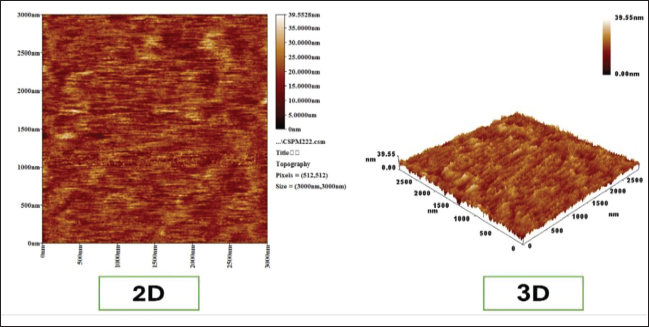
ABSTRACTBackground: Meat quality and safety are essential issues in the food industry because oxidation and microbial growth directly affect their shelf life and physical and chemical properties. Chitosan and Aloe vera gel are natural compounds known for their antioxidant and antimicrobial properties, making them promising agents for developing food preservation technologies. Aim: This study aimed to assess the effects of chitosan nanoparticles (CNPs) and A. vera gel on mutton meat’s physicochemical, microbiological, and oxidative properties during refrigerated storage at 4 °C. Methods: Mutton samples were treated in four groups (control, CNPs loaded with A. vera gel, CNPs alone, and A. vera gel alone). They analyzed six aging intervals (0, 1, 2, 5, 8, and 12 days) in a factorial arrangement (4×6). Key chemical parameters, including thiobarbituric acid reactive substances and pH values, as well as microbial counts, particularly the growth of Pseudomonas aeruginosa, were evaluated. Results: CNPs loaded with A. vera gel improved sensory characteristics, reduced lipid oxidation, and inhibited P. aeruginosa growth more effectively than other treatments or the control. Conclusion: These findings highlight the potential of 2% CNPs loaded with A. vera gel as a natural preservative to enhance refrigerated mutton’s quality and shelf life, which may have promising applications in the food industry. Keywords: Aloe vera, Chitosan nanoparticles, Mutton meat, Pseudomonas aeruginosa, Refrigerator storage.. IntroductionMicrobial contamination is a major issue in the meat manufacturing sector because of its adverse effects on raw meat and meat products (Ashaolu et al., 2021). Many different processes are used in the meat manufacturing industry to inhibit and prevent the growth of microbes and to provide safe products with a desirable shelf life. The most widely used final preservation techniques include physical processes such as heat treatment, packaging, evaporation, refrigeration, and curing, as well as organic preservative chemical techniques (Buncic et al., 2014). Chemical additives cause adverse effects on the food due to the change in nutritional and sensory characteristics of meals (Kaveh et al., 2022). Nitrates are chemical preservatives that produce numerous carcinogenic and toxic substances. Nitrates are a common preservative used by meat manufacturers to inhibit microbial growth, delay lipid oxidation, improve aroma, flavor, and odor, and impart a pink color to meat. Chemicals can affect human health and promote pathogen resistance. Inhibiting the growth of hazardous microbes and hindering food spoilage (Liu et al., 2021). Recently, natural preservatives have been used as alternatives to chemical preservatives. Preservatives from natural resources are produced in various forms, such as powdered substances obtained by drying techniques and solutions like essential oils. Natural preservatives are applied directly to inhibit the growth of bacteria and extend the shelf life of meat products. Combining natural preservatives with other food processing techniques enhances their antibacterial properties (Olszewska et al., 2020; Altaee et al., 2020; Al-Saadi and Al-Musawi, 2024). The Food and Drug Administration (FDA) has approved the internal administration of A. vera gel in the USA, classifying it as a “nutritional supplement” A. vera has been authorized by the FDA for use as an organic food flavor. Annex I of Regulation No. 1831/2003 of the European Commission allows A. vera to be utilized in the livestock nutrition sector as a function of a sensory additive known as a “flavoring substance” to enhance the fragrance and flavor of feeding stuff (Franz et al., 2005). Aloe vera was previously used in several meat products, such as burgers (Soltanizadeh and Ghiasi-Esfahni, 2015), rolls of meat (Rathour et al., 2019), turkey meat (Kavuşan et al., 2023), chicken fillet (Soltan Dallal et al., 2023), dry-cured fermented sausage (Uşan et al., 2021), and quails’ meat (Jumaa et al., 2021). Research has investigated the use of plant-derived essential oils in meat products because of their superior antibacterial properties compared to extracts. It can add only a tiny amount of essential oil to meat and other meat products because a large amount affects sensory qualities. Nanotechnology has been used as a novel method to enhance the quality and safety of food due to the growing need for safe and clean products (Aparco et al., 2021). The use of nanotechnology can also increase the amount of meat and the quality of meat products, as well as improve their hygiene and safety. This can be achieved by prolonging food shelf life and more effectively preventing microbial contamination than traditional food preservation methods (Onyeaka et al., 2022). Nanotechnology can enhance the efficiency of ingredients in the food industry, improve the absorption of bioactive substances, improve their stability, and improve the physical characteristics of products (Andi et al., 2023). Nanotechnology is one of the modern applied sciences used in various aspects of the food industry: food processing, packaging, labeling, safety, and biosensors. Nanotechnology has been applied to meat products (Majd et al., 2024), milk (Al-Dujaily and Mahmood, 2022), and vegetables (Al-Malikshah and Abdulrasoo, 2024). Chitosan has been demonstrated to prolong the preservation period of meat and meat products by retarding the growth of spoilage microorganisms and maintaining the quality of the product (Inanli et al., 2020). Chitosan encapsulation slowed down bacterial growth and lipid degradation, reduced water loss, and controlled the pH value. A reduced amination process was observed due to the low total counts of viable and psychrotrophic microbes. Encapsulation of chitosan can reduce the oxidative rancidity of lipids by generating free chelating ions) Wu et al., 2018). Active compounds can enhance the preservation properties of chitosan-based films (Sun et al., 2022). This study offers a novel approach that combines Chitosan nanoparticles (CNPs) and A. vera to preserve mutton meat, which has not been sufficiently tested before. This is not just an improvement to conservation, but an attempt to replace chemical preservatives with a more natural, effective, and sustainable one. Materials and MethodsPreparation of chitosan nanoparticlesChitosan was dissolved in deionized distilled water and treated in an ultrasonic bath for 30 minutes to produce nanomaterials with specialized modifications via chemical and Sol-Gel methods. The pH was increased to 12 using NaOH and stirred with a magnetic stirrer on the rotor for an hour at room temperature. The pH was then lowered to four using hydrochloric acid, and the solution was stirred on a magnetic stirrer for one hour at room temperature. After adjusting the pH to 7 with NaOH, the solution was stirred for 60 minutes at ambient temperature on a rotor using a magnetic stirrer (Ghadi et al., 2014; Jasim, 2021). Aloe vera preparationA limited number of leaves of A. vera (Barbadensis Miller) were selected and exposed to a complete washing process using water. The yellow layer immediately under the green surface was peeled with care using a pointed knife, taking care to avoid the vascular bundles. Subsequently, the thickest membrane was obtained. The lower layer was also removed to eliminate the substantial amount of mucilage that usually adheres to it. Scraping the mucilaginous, clear gel required a spatula. We evenly mixed 50 ml of natural, clear A. vera extracts via a magnetic stirrer and filtered them using Whatman filter paper. Finally, they transferred it into a sterilized, clean glass jar and stored it in a refrigerator (Kamble et al., 2023). Preparation of CNPs loaded with Aloe veraAloe vera gel was loaded into CNP solution at a molar ratio of 1:1, stirred for about an hour at ambient temperature, and then ultrasonicated for 45 minutes (Kamble et al., 2023). Preparation of the mutton meat sampleOne hundred fifty meat samples—75 imported meat and 75 fresh meat—were randomly collected from the local market in different Baghdad areas. The collected meat sample was scraped from all sides, and a stomacher was used to grind 25 mg of the sample. Four groups received equal amounts of the mutton meat. The initial group (G1) was regarded as the control, followed by chitosan nanoparticles loaded with A. vera (CNPs-AV) (G2), CNPs 2% (G3), and A. vera gel (G4). All groups were dipped in the prepared solutions for 2 min and placed on a sieve to remove excess solution. After being carefully wrapped in plastic bags, each group was kept in a refrigerator at 4°C. They were examined on the first day of treatment and every 2, 5, 8, and 12 days. Each group was examined for microbiological safety, degradation criteria (shelf-life indicators), and sensory evaluation. Confirmation of Nanoparticles materialsAtomes force microscope (AFM)AFM has been used to study topography and surface morphology. The surface of nanomaterials can be observed in two and three dimensions using AFM. However, due to factors that affect results, such as pollution, surface analysis (AFM) requires careful attention (Fadhil and Hadi, 2015). Fourier-transform infrared spectroscopy (FTIR)Infrared spectroscopy is fundamental in giving an idea of the composition of matter. The infrared spectrum helps to determine the type of chemical groups because each chemical group absorbs a type of radiation of a specific frequency in a specific spectral range (400–4000 cm1) during the formation of Nanoparticles (Zaki et al., 2022; Mater, 2023; Ahmed et al., 2023). Microbiological examinationTen grams of mutton meat samples were initially homogenized using 90 ml of saline diluent to produce 10-fold serial dilutions. To count Pseudomonas aeruginosa bacteria, 0.1 mm of each dilution was spread on Cetrimide agar (Specific for P. aeruginosa) and Neutral agar and left at 37 °C for 24 hours (APHA, 1992). After incubation, colonies with greenish-blue pigmentation (pyocyanin production) and grape-like odor were counted. Chemical and physical testspH MeasurementFive grams of mutton meat from each group were homogenized with distilled water (20 ml) in a stomacher for a few minutes. pH values were measured using a pH meter previously calibrated with two buffer solutions (pH 4 and 7) (Da Silva et al., 2020). Determination of thiobarbituric acid values (TBA)The estimation of TBA-reactive compounds resulting from lipid peroxidation during preservation was conducted using a previously described procedure (Ozunlu et al., 2018), and mixed 5 g of mutton meat with 50 ml of trichloroacetic acid (20%) (TCA). Next, 5 ml of the filtered solution was combined with 5 ml of 0.02% TBA solution. The mixture was then cooled in a water bath at 80 °C for about 30 minutes. Subsequently, the absorbance was detected at 532 nm using a spectrophotometer, and the level of TBAs was measured as milligrams of malonaldehyde per kilogram of the sample. Sensory examinationThe meat samples were heated to 180 °C and then cooked for 45 minutes. Subsequently, eight trained panelists from the Department of Veterinary Public Health at the University of Baghdad were selected. The panel members examined a randomly selected sample. The assessment was conducted using a 5-point Likert scale (Soni et al., 2018). Participants were chosen based on their physical condition, including having healthy teeth, not smoking, no allergies, and no desire to eat the specific examined item. They were also required to accurately identify the smell, taste, and appearance of mutton meat. The sensory evaluation included the overall acceptance (tastes, color, odor, and tenderness) of the mutton meat. The panelists may use redistilled water to cleanse their palates between samples (Valipour et al., 2017). Statistical analysisStatistical analysis was performed using the statistical analysis system (SAS, 2018) software to evaluate the effects of different groups on the study parameters. The least significant difference (LSD) test and independent t-test were applied to determine significant differences between groups. Significance was assessed based on P-values for total bacterial count (TBC), pH, TBA reactive substances (TBARS), and sensory evaluation scores. Ethical approvalNot needed for this study. ResultsConfirmation of nanoparticles materialsAtomes force microscope (AFM)The result of nanoparticle chitosan shows the particle size ranging from 20.0 to 75.0 nm with an average size of 47.62 nm. As shown in Figure 1. Fourier-transform infrared spectroscopy (FTIR)The change in the bonds and the interaction kinetics between the compounds is evidence of the extract’s link to chitosan and the formation of the nanoparticles.
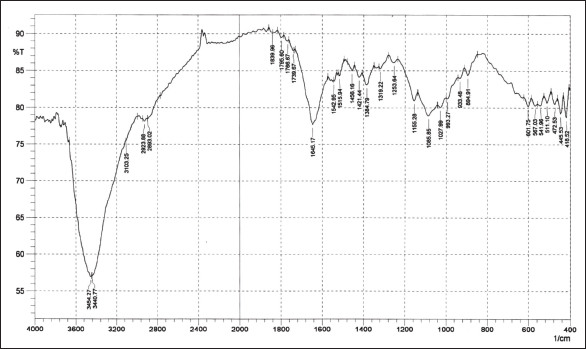
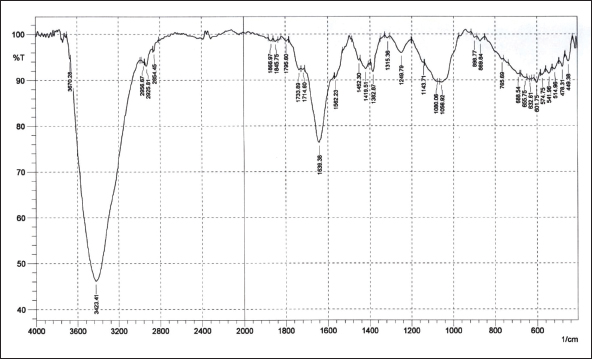
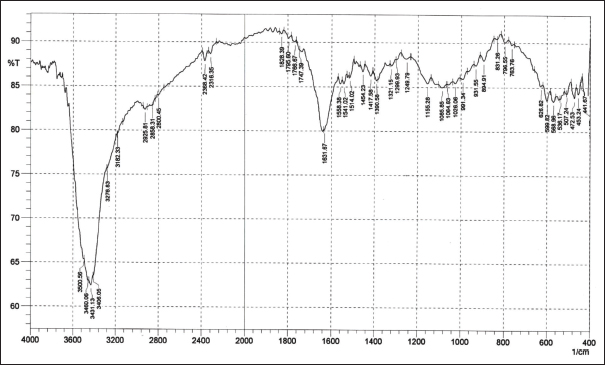
Fig. 1. Atomic force microscopy of Chitosan NPs synthesized using sol-gel methods illustrates 2D and 3D topological structures. Characterizing the chemical structure of the CNPs, A. vera gel, and CNPs-AV, FTIR spectroscopy was conducted in Figures 2–4. Peaks in a narrow range were observed at 3440.77–3454.27 cm–1 for CNPs, 3423.41 cm–1 for A. vera gel, and 3406.05–3460.06 cm–1 for CNPs-AV. These peaks correspond to the stretching vibrations of –NH2 and –OH groups. The region corresponding to 2923.88–2893.02 cm–1 for CNPs, 2956.67–2925.81 cm–1 for A. vera gel, and 2858–2925.81 cm–1 for CNPs-AV is associated with the stretching vibrations of the C–H or –CH3 groups. The existence of N-acetyl groups or C=O stretching vibrations of amide I appears to be evident as a band at 1645.17 cm–1 in the CNP spectra, while the band at 1631.67 cm–1 in CNPs-AV spectra possibly belongs to NH primary amine groups. The band at 1639.38 cm–1 in A. vera gel may also be caused by the C=C stretching vibrations of alkenes. Moreover, the peak at 1714.60–1733.89 cm–1 corresponds to the carbonyl (C=O) groups of acids, ketones, or aldehydes.
Fig. 2. FTIR spectra of chitosan nanoparticles, showing the main functional groups and changes in the chemical structure resulting from transformation into the nanoparticles.
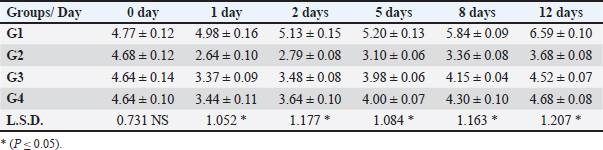
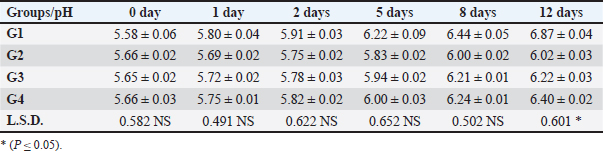
Fig. 3. FTIR spctra of aloe vera gel showing, the main functional groups and active compounds that contribute to its biological properties. The characteristic bands at 1384.79 cm–1 for CNPs, 1382.87 cm–1 for A. vera gel, and 1390.58 cm–1 for CSNPs-AV were attributed to C–N stretching (amide III). Total Pseudomonas aeruginosa count (TBC)The P. aeruginosa count (TBC) was lower on zero days. Subsequently, increased significantly with storage time, and reached the highest values on day 12 in all groups. Notably, significant differences (P < 0.05) were observed among the G1, G2, G3, and G4 groups throughout the refrigerator storage period. The mean TBC in the G2-treated samples was 3.68 ± 0.08 CFU·g–1 at the 12th day of storage, which was the lowest among the samples. At 12 days, the TBC values for the G3 and G4 groups were also significantly decreased, measuring at 4.52 ± 0.07 and 4.68 ± 0.08 CFU·g–1, respectively. In contrast, the highest was 6.59 ± 0.10 CFU·g–1 at 12 days in the untreated control group. Storage duration was found to have a statistically significant effect on bacterial growth (P < 0.05); this was confirmed in all groups (Table 1). Physical–chemical traitspH value of mutton meatIn the control group, the pH showed a slight, but not significant, decrease (P > 0.05) on days one and two and, a significant increase on 12 days of storage (Table 2). Samples treated with G2, G3, and G4 maintained lower pH during the storage period, with pH values of 6.00 ± 0.02, 6.21 ± 0.01, and 6.24 ± 0.01, respectively, on the 18th day. On day 12, of the experiment, the control group recorded a significant increase in pH value, reaching 6.87 ± 0.04, indicating significant changes in pH. In contrast, sample G2 showed, statistical stability in pH values (6.02 ± 0.03), reflecting the effectiveness of the treatment in reducing acid–base changes compared with the control group.
Fig. 4. FTIR spectra of chitosan nanoparticles loaded on aloe vera gel, showing the main functional groups and possible interactions between chitosan and aloe vera gel, indicating the success of the loading process and its effect on the chemical structure. Table 1. Pseudomonas aeruginosa count in mutton meat at Refrigerator temperature.
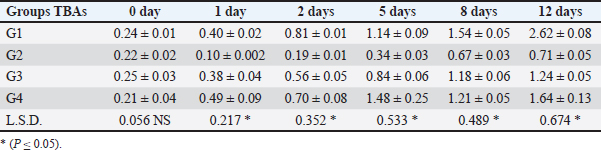
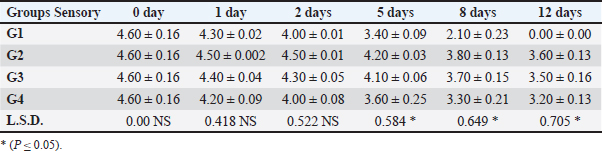
Thiobarbituric acid (TBAs)The results presented in Table 3 demonstrate the effect of CNPs-AV on the TBA reactive substances (TBA) values of mutton meat samples during refrigerated storage. Significant effects (P < 0.05) on the TBA values were observed in G2 and G3 on days 2, 5, and 8 of storage at 4 °C. By day 12, the TBA values significantly increased (P < 0.05) across all groups. On day 5, the highest TBA value was recorded in the control group (G1) at 1.14 MDA mg/kg, whereas the lowest TBA value (0.34 MDA mg/kg) was observed in G2. On day 8, the TBA value in G1 increased to 1.45 MDA mg/kg, while G2 maintained the lowest value at 0.67 MDA mg/kg. By day 12, the TBA value in G1 peaked at 2.62 MDA mg/kg, in contrast to the significantly lower value of 0.71 MDA mg/kg in G2. Sensory evaluationThe results of the sensory analysis of the mutton meat samples are in Table 4. Storage time had significant effects (P < 0.05) on sensory attributes such as color, odor, and overall acceptability. The panelists assessed the samples according to a five-point hedonic scale in which a score of 5 was classified as “excellent” and a score of 1 as “unacceptable”. The control samples were found to be unacceptable after 8 days of refrigerated storage. Alternatively, CNP-coated samples maintained higher acceptability (3.8). On day 12, CNP+AV recorded a score of 3.6, indicating higher retention of sensory quality. Mutton meat treated with Chitosan and A. vera also significantly slowed the alteration of the red color, as the mutton retained an acceptable appearance even after 12 days of storage. DiscussionConfirmation of nanoparticles materialsAtomes force microscope (AFM)Nanoparticles with smaller sizes give more variety, are more stable, and allow a controlled release of bioactive materials, which are beneficial for improving the quality of meat products. This is consistent with the findings of Lee et al. (2020), who emphasized the importance of nanoparticle sizes in improving the shelf life of meat products by suppressing microbial growth and lipid oxidation. The findings demonstrate how the size of nanoparticles affects how they interact with the surfaces of meat, helping to maintain its freshness and safety. Table 2. pH result of mutton meat at refrigerator temperature.
Table 3. TBA result of mutton meat at refrigerated temperature.
Table 4. Sensory result of mutton meat at different refrigerator temperatures.
Fourier-transform infrared spectroscopy (FTIR)The results demonstrate the effective interaction of A. vera gel with chitosan nanoparticles, as indicated by the spectral alterations in the functional groups. Peaks observed in the range of 3406.05–3460.06 cm–1 consistent with findings from Yahya et al. (2022), who determined this band as indicative of –NH2 and –OH stretching vibrations, suggesting an interaction between the nanocomponents and the plant extract. The peaks at 1645.17 cm–1 and 1631.67 cm–1 further support the interactions between the amide and carbonyl groups, consistent with the findings of Torres-Giner et al. (2017), which documented similar bands indicative of stable nanostructure formation. The presence of peaks within the range of 1383.70–1318.53 cm–1 supports the hypothesis that A. vera contains amide III bands, indicating chemical interaction among the components of the nanosystem. Furthermore, Torres-Giner et al. (2017) reported a strong band at 1,018.99 cm–1 attributed to C–O and C–OH groups of the glycan moieties of CSNPs-AV. This study demonstrated similar observations with bands at 1,085.85 cm–1 corresponding to CNPs; 1,056.92–1,080 cm–1 was A. vera gel, while 1,085.85 cm–1 was corresponding to CNPs-AV. Based on these results, it can be concluded that the incorporation of A. vera gel with chitosan nanoparticles resulted in obvious modifications to its chemical composition, which enhances its potential in food and industrial applications, especially in improving the stability and safety of food products. Total Pseudomonas aeruginosa count (TBC)Results showed chitosan to have potent antibacterial activities against psychrotrophic bacteria (P. aeruginosa), consistent with the findings of Higueras et al. (2014). Similarly, Serrano-León et al. (2018), Shaltout et al. (2019), and Younis et al. (2019) reported that 2% chitosan efficiently decreased psychrotrophic bacterial counts during refrigerator storage for up to 7 days. These results are consistent with Da Lima et al. (2024), who demonstrated that chitosan coatings combined with 4% or 8% rosemary extract a significant reduction in psychrotrophic and mesophilic bacteria over 8 days of refrigerated beef storage. Aloe vera gel active compounds such as phenols, tannins, and flavonoids are responsible for preventing bacterial growth by blocking enzymes needed for critical metabolic pathways as well as denaturing proteins and leading to cell death (Fadhil et al., 2024). Sadeq and Lafta (2024), Hashim and Ibrahim (2024), and others reported have demonstrated similar antibacterial effects of A. vera leaf extracts, with effectiveness against P. aeruginosa and other microorganisms. The nanoparticles investigated here also showed antimicrobial action against P. aeruginosa. Our results are consistent with the study performed by Hamid and Mahmood (2021), who reported that A. vera supported gold nanoparticles inhibited P. aeruginosa. Salih et al. (2017) demonstrated that positively charged synthesized AgNPs affect membrane permeability and function by interacting with negatively charged bacterial cell walls. In addition, this result was consistent with Shahrezaee et al. (2018), who found that adding A. vera extract (3.5%) to the meat of chicken produced a significant reduction in bacterial count in chicken after 14 days of storage at 4 °C. Abdelhady et al. (2022) reported that both chitosan and chitosan nanoparticles significantly reduced bacterial counts in minced meat samples over 9 days of refrigerated storage, with nanoparticles demonstrating the greatest efficacy compared to controls. This is consistent with the findings of Khitam et al. (2018) and Saeed and Abdulwahid. (2022), who pointed out that these nanomaterials can attach and disrupt bacterial cell walls. The use of chitosan, A. vera, and their nanoparticle formulations exhibited a synergistic effect, significantly enhancing the reduction of P. aeruginosa counts and extending the shelf life to 12 days in refrigerator storage. This result agrees with a previous study by Abd El-Emam et al. (2024) reporting that the combination of A. vera with CNPs enhanced bioactivity. Physical–chemical traitspH value of mutton meatThis increasing trend in the pH of the meat sample during refrigerated storage is due to the activity of proteolytic bacteria and endogenous enzyme activity, which promote the formation of alkaline ammonia compounds to increase meat pH. This result is consistent with the findings by Suo et al. (2016) and Saeed and Abdulwahid (2022). However, the pH increase is due to microbial and enzymatic activities-especially proteolytic bacteria (Ali et al., 2023). Microbiological spoilage during storage leads to texture degradation and the formation of nitrogenous compounds (ammonia, trimethylamine, histamine, and so on), which also contribute to pH increase (Samani et al., 2022) and the breakdown of proteins (Souza et al., 2020). These results are consistent with the observations of Chauhan et al. (2016), who noted a gradual increase in pH across all groups during refrigerated storage. Furthermore, the author reported that the application of A. vera gel to chicken bites increased the pH values after 14 days of refrigerated storage. The slightly acidic nature of A. vera gel contributes to lowering the pH of treated meat, inhibiting the growth of certain bacteria. This effect results in reduced production of acidic by-products and more stable pH over time. Overall, using CNPs-loaded A. vera, CNPs, and A. vera treatments effectively slowed the rise in pH, demonstrating its potential to maintain meat quality during storage by inhibiting bacterial and enzymatic activity. Thiobarbituric acid (TBAs)These results are consistent with findings by Karakosta et al. (2022), who reported an initial TBA value of 0.76 mg MDA/kg in meat, which increased over time, reaching 2.12 mg MDA/kg in control samples and remaining at 0.74 and 0.69 mg MDA/kg for samples treated with chitosan and chitosan coatings containing laurel essential oil, respectively, after 6 days of refrigerated storage. The lower TBA values determined in the CNP-loaded A. vera and CNP-treated groups are likely attributable to the antioxidant effect of both treatments, subsequently, the TBA values were maintained below 1.5 mg MDA/kg during storage. Chitosan’s effectiveness in retarding lipid oxidation is due to its oxygen barrier properties and inherent antioxidant activity, as found by Yuan et al. (2016). Additionally, A. vera supplementation increases the antioxidant capability of the coating, increasing its protective potential in meat foods (Salia et al., 2021). These findings highlight that CNP-loaded A. vera coatings have the potential to preserve meat quality during refrigerated storage at 4 °C and are proven by the lower total P. aeruginosa count values of treated samples than the control group due to reduced lipid oxidation. Sensory evaluationThe sensory scores of all the chitosan-treated samples were higher than those of the control, indicating the potential of CNPs and CNP+AV to preserve sensory characteristics. These results are consistent with founding of Abdelhady et al. (2022), who observed better sensory scores in meat treated with chitosan or CNPs. Additionally, the use of CNPs resulted in considerable inhibition of microbial growth, prolonged shelf life, and improved sensory characteristics. Similar results were reported by Youssef and El-Masry (2018), who found that chitosan nanoparticles (2%) preserved the sensory characteristics of treated chicken samples in a refrigeration storage period of up to 12 days. In conclusion, the application of CNPs and CNP+AV effectively maintained sensory characteristics, such as color and odor, while delaying spoilage in mutton meat. ConclusionThis study results show CNPs and CNP+AV significantly maintained the quality of mutton meat during refrigerator storage at 4 °C. The treatments improved the meat qualities and shelf life by significantly decreasing lipid oxidation, microbial growth, and improving the pH value. CNP+AV demonstrated enhanced efficacy in preserving acceptable TBA values, reducing microbial counts, and improving sensory assessment compared with untreated samples. The sensory research demonstrated that CNP+AV effectively maintains sensory characteristics, including color, odor, and general acceptability, and furthermore, achieving scores even after 12 days of storage. The results demonstrate the efficacy of chitosan-based nanoparticle coatings, particularly in combination with A. vera, as natural, bioactive alternatives for extending the shelf life of meat. The results support their utilization in the meat sector to increase product quality, minimize spoiling, and increase customer satisfaction during prolonged storage durations. AcknowledgmentsThanks to the College of Veterinary Medicine, the University of Baghdad, this research was supported. Conflict of interestThe author declares that there is no conflict of interest. FundingThis research received no specific grant. Author contributionJ.F.: conceptualization, data collection, and writing of the original manuscript draft. M.A: review and editing. All authors have approved the final manuscript for publication. Data availabilityAll data supporting the findings of this study are available in the manuscript, and no additional data sources are required. ReferencesAbd El-Emam, M.M, El-Demerdash, A.S., Abdo, S.A., Abd-Elfatah, E.B., El-Sayed, M.M., Qelliny, M.R., Eldin, Z.E. and Shehata, A.A. 2024. The ameliorative role of Aloe vera-loaded chitosan nanoparticles on Staphylococcus aureus induced acute lung injury: targeting TLR/NF-κB signaling pathways. Open Vet. J. 14(1), 416–427. Abdelhady, E.M., Mostafa, N.Y., El-Magd, M.A. and Kirrella, G.A. 2022. Effect of chitosan powder and nanoparticles as natural preservatives for beef minced meat. Pakistan J. Zool. 55(5), 1–5. Ahmed, N.F., Saadedin, S.M.K. and Abdulhameed, E.H.S. 2023. Synthesis and characterization of nano-chitosan loaded with mint essential oil for application in minced beef preservation. Acta Biomed. 94(1), e2531–6745. Al-Dujaily, A.H. and Mahmood, A.K. 2022. Evaluation of the antibacterial and antibiofilm activity of biogenic silver nanoparticles and gentamicin against Staphylococcus aureus isolated from caprine mastitis. Iraqi J. Vet. Med. 46(1), 10–16. Ali, H.A., Zangana, B.S. and Abdullah, I.H. 2023. The effect of using aqueous extract of Cyperus rotundus tubers on characteristics and shelf life of chicken nuggets. Iraqi J. Vet. Med. 48(2), 32–40. Al-Malikshah, Z.R.J. and Abdulrasoo, I.J. 2024. Spraying nano chitosan loaded with NPK, nettle, and green tea extract as a tool for improving potato productivity. Iraqi J. Agric. Sci. 55, 175–185. Al-Saadi, M.J. and Al-Musawi, J.E.Q. 2024. Effects of heat stress on some productive and histological traits in broiler feed 3% and 5% mint powder supplement. J. Anim. Health Prod. 12(2), 128–135. Altaee, M.F., Yaaqoob, L.A. and Kamona, Z.K. 2020. Evaluation of the biological activity of nickel oxide nanoparticles as antibacterial and anticancer agents. Iraqi J. Sci. 61(11), 2888–2896. Andi, T.U., Mohammad, F., Rina, W. and Teguh, W. 2023. Nanoemulsion application in meat product and its functionality: a review. J. Anim. Sci. Technol. 65(2), 275–292. Aparco, R.H., Laime, M.D.C.D., Tadeo, F.T. and Carbajal, G.N. 2021. Nanoemulsion: food quality and safety in meat and vegetable products. Int. J. Innov. Sci. Eng. Technol. 8, 379–385. APHA (American Public Health Association) 1992. Compendium of methods for the microbiological examination of foods. Washington, DC: APHA. Ashaolu, T.J., Khalifa, I., Mesak, M.A., Lorenzo, J.M. and Farag, M.A. 2021. A comprehensive review of the role of microorganisms on texture change, flavor, and biogenic amines formation in fermented meat with their action mechanisms and safety. Crit. Rev. Food Sci. Nutr. 20(1), 1–18. Buncic, S., Nychas, G.-J., Lee, M.R.F., Koutsoumanis, K., Hébraud, M., Desvaux, M., Chorianopoulos, N., Bolton, D., Blagojevic, B. and Antic, D. 2014. Microbial pathogen control in the beef chain: recent research advances. Meat Sci. 97(3), 288–297. Chauhan, P., Das, A.K. and Kandeepan, G. 2016. Effect of Aloe vera gel-based edible coating containing Moringa oleifera leaf extract on the quality of chicken bites. J. Food Process. Technol. 7(10), 627. Da Lima, A.F., Leite, R.H.L. and Pereira, M.W.F. 2024. Chitosan coating with rosemary extract increases shelf life and reduces water losses from beef. Foods. 13, 1353. Da Silva, B., Silva, A.C., Francisco, V.C., Ribeiro, F.A., Nassu, R.T. and Calkins, C.R. 2020. Effects of freezing and thawing on microbiological and physicochemical properties of dry-aged beef. Meat Sci. 161, 108003. Fadhil, F.A. and Hadi, I.H. 2015. Preparation and characterization of zinc oxide nanoparticles by laser ablation of zinc in isopropanol. Eng. Technol. J. 33, 791–798. Fadhil, K.B., Saeed, I.O. and Saleh, M.K. 2024. Detection of active compounds in Aloe vera leaf extract and their inhibitory effect on Pseudomonas aeruginosa. Tech. Bio Chem Med. 8, 76–82. Franz, C., Bauer, R., Carle, R., Tedesco, D., Tubaro, A. and Zitterl-Eglseer, K. 2005. Study the assessment of plants/herbs, plant/herb extracts, and their naturally or synthetically produced components as “additives” for animal production. EFSA FEEDAP. 1, 1–20. Ghadi, A., Mahjoub, S., Tabandeh, F. and Talebnia, F. 2014. Synthesis and optimization of chitosan nanoparticles: potential applications in nanomedicine and biomedical engineering. Caspian J. Intern. Med. 5(3), 156. Hamid, O.S. and Mahmood, S.S. 2021. The synergistic effect of nanoparticle loaded with ceftazidime antibiotic against multidrug-resistant Pseudomonas aeruginosa. Iraqi J. Agric. Sci. 52, 828–835. Hashim, R.K. and Ibrahim, O.M.S. 2024. Comparative evaluation of the phytochemical and morphological analysis and anti-inflammatory effect of Lantana camara on mice animal model. Iraqi J. Vet. Med. 48, 73–80. Higueras, L., López-Carballo, G., Hernández-Muñoz, P., Catalá, R. and Gavara, R. 2014. Antimicrobial packaging of chicken fillets based on the release of carvacrol from chitosan/cyclodextrin films. Int. J. Food Microbiol. 188, 53–59. Inanli, A.G., Tümerkan, E.T.A., Abed, N.E., Regenstein, J.M. and özogul, F. 2020. The impact of chitosan on seafood quality and human health: a review. Trends Food Sci. Technol. 97, 404–416. Jasim, N.A. 2021. Efficacy of Paromomycin-loaded chitosan nanoparticles as a therapeutic agent against Giardia lamblia. MSc thesis, College of Science for Women, University of Baghdad, Baghdad, Iraq. Jumaa, F.F., Nadia, N.A., Al-Hajo, N.A.A., Abdulwahid, A.S. and Al-Mijbel, A.A. 2021. Chitosan effect on meat quality in local quails’ meat. Iraqi J. Market Res. Consumer Prot. 13, 149–158. Kamble, A.K., Hingane, L.D., Khade, P.B., Korade, A. and Bagwan, L.R. 2023. Formulation and evaluation of Aloe vera gel. Int. J. Pharm. Res. Appl. 8, 1918–1925. Karakosta, L.K., Vatavali, K.A. and Kosma, I.S. 2022. The combined effect of chitosan coating and laurel essential oil (Laurus nobilis) on the microbiological, chemical, and sensory attributes of water buffalo meat. Foods 11, 1664. Kaveh, S., Mahoonak, A.S., Ghorbani, M. and Jafari, S.M. 2022. Fenugreek seed (Trigonella foenum-graecum) protein hydrolysate loaded in nanosized liposomes: characteristic, storage stability, controlled release and retention of antioxidant activity. Ind. Crops Prod. 182, 114908. Kavuşan, H.S., Çalişkan, S., Turgut, F. and Serdaroğlu, M. 2023. Exploring the effects of comminution level and natural antioxidant incorporation on the quality and oxidative stability of turkey meat system. Acta Univ. Sapientiae, Aliment. 16, 32–48. Khitam, S.S., Alhtheal, E.D. and Azhar, B. 2018. Effect of zinc oxide nanoparticles prepared from zinc sulfate (ZnSO4) against gram-negative and gram-positive microorganisms in vitro. Iraqi J. Vet. Med. 42(1), 18–22. Lee, J., Kim, S., and Park, H. 2020. Nanoparticle applications in food preservation: a review. J. Food Sci. 85(5), 1234–1245. Liu, Z., Hu, S., Soteyome, T., Bai, C., Liu, J. and Wang, Z. 2021. Intense pulsed light for inactivation of foodborne gram-positive bacteria in planktonic cultures and bacterial biofilms. LWT-Food Sci. Technol. 152, 112374. Majd, A.A., Alrubeii, A.M.S. and Al-Hadedee, L.T. 2024. The use of electrospun iron oxide nanofiber in coating frozen beef burgers. Iraqi J. Agric. Sci. 55(3), 1170–1177. Mater, H.N. 2023. Anticancer activity of nano curcumin combined with vincristine against tumor cell lines. PhD thesis, College of Science, University of Baghdad, Baghdad, Iraq. Olszewska, M.A., Gedas, A. and Simões, M. 2020. Antimicrobial polyphenol-rich extracts: applications and limitations in the food industry. Food Res. Int. 134, 109214. Onyeaka, H., Passaretti, P., Miri, T. and Al-Sharify, Z.T. 2022. The safety of nanomaterials in food production and packaging. Curr.Res. Food Sci. 5, 763–774. Ozunlu, O., Ergezer, H. and GökÇe, R. 2018. Improving the physicochemical, antioxidative, and sensory quality of raw chicken meat by using acorn extracts. LWT. 98, 477–480. Rathour, M., Malav, O.P., Kumar, P., Chatli, M.K. and Mehta, N. 2019. Functional chevon rolls fortified with cinnamon bark and Aloe vera powder extracts. Haryana Vet. 58, 1–5. Sadeq, Z.E. and Lafta, I.J. 2024. Pseudomonas aeruginosa is an effective indicator for screening quorum sensing inhibition by plant extracts. Iraqi J. Vet. Med. 48(1), 54–62. Saeed, A.A. and Abdulwahid, M.T. 2022. Evaluating the effect of ZnO NPs synthesized by ginger (Zingiber officinale) on Escherichia coli biofilm gene using real-time PCR. Iranian J. Ichthyol. 1, 390–396. Salia, K.A., Ravib, A.P. and Shamsudeenc, S.P. 2021. Aloe vera incorporated chitosan/nanocellulose hybrid nanocomposites as potential edible coating material under humid conditions. J. Sib. Fed. Univ. Biol. 14(4), 475–497. Salih, A.N.A., Ibrahim, O.M.S. and Eesa, M.J. 2017. Antibacterial activity of biosynthesized silver nanoparticles against Pseudomonas aeruginosa in vitro. Iraqi J. Vet. Med. 41(1), 60–65. Samani, E.S., Jooyandeh, H. and Behbahani, B.A. 2022. Shelf-life extension of buffalo meat using Farsi gum edible coating containing Shirazi thyme essential oil. Food Sci. Nutr. 00, 1–12. Serrano-León, J.S., Bergamaschi, K.B. and Yoshida, C.M. 2018. Chitosan active films containing agro-industrial residue extracts for shelf-life extension of the chicken restructured product. Food Res. Int. 108, 93–100. Shahrezaee, M., Soleimanian-Zad, S., Soltanizadeh, N. and Akbari-Alavijeh, S. 2018. Use of Aloe vera gel powder to enhance the shelf life of chicken nuggets during refrigeration storage. LWT. 95, 380–386. Shaltout, F., El-Diasty, E. and Hassan, A.M. 2019. Effect of nano chitosan and onion extract as coating materials on the quality properties of chicken fillet meat during refrigeration. Glob.Vet. 21, 368–372. Soltan Dallal, M.M., Karimaei, S., Hajighasem, M., Hashemi, J.M., Foroushani, A.R., Ghazi-Khansari, M. and Partoaza, A. 2023. Evaluation of zinc oxide nanocomposite with Aloe vera gel for packaging of chicken fillet against Salmonella typhi and Salmonella paratyphi A. Food Sci. Nutr. 11, 5882–5889. Soltanizadeh, N. and Ghiasi-Esfahani, H. 2015. Qualitative improvement of low-meat beef burger using Aloe vera. Meat Sci. 99, 75–80. Soni, A., Gurunathan, K. and Mendiratta, S.K. 2018. Effect of essential oils incorporated edible film on quality and storage stability of chicken patties at refrigeration temperature (4 ± 1°C). J. Food Sci. Technol. 55, 3538–3546. Souza, V.G., Rodrigues, C. and Valente, S. 2020. Eco-friendly ZnO/chitosan bio-nanocomposites films for packaging fresh poultry meat. Coatings. 10, 110. Sun, J., Li, Y., Cao, X., Yao, F., Shi, L. and Liu, Y. 2022. A film of chitosan blended with ginseng residue polysaccharides as an antioxidant packaging for prolonging the shelf life of fresh-cut melon. Coatings. 12(468), 1–9. Suo, B., Li, H., Wang, Y., Li, Z., Pan, Z. and Ai, Z. 2016. Effects of ZnO-nanoparticle-coated packaging film on pork meat quality during cold storage. J. Sci. Food Agric. 97, 2023–2029. Torres-Giner, S.,Wilkanowicz, S., Melendez-Rodriguez, B. and Lagaron, J.M. 2017. Nanoencapsulation of Aloe vera in synthetic and naturally occurring polymers by electrohydrodynamic processing of interest in food technology and bioactive packaging. J. Agric. Food Chem. 65, 4439–4448. Uşan, E., KılıÇ, G.B. and KılıÇ, B. 2021. Effects of Aloe vera utilization on physicochemical and microbiological properties of Turkish dry fermented sausage. J. Food Sci. Technol. 58(1), 1–12. Valipour, K.F., Ariaii, P., Khademi, S.D. and Nemati, M. 2017. Effect of chitosan edible coating enriched with eucalyptus essential oil and α-tocopherol on silver carp fillets quality during refrigerated storage. J. Food Saf. 37(1), e12295. Wu, T., Ge, Y., Li, Y., Xiang, Y., Jiang, Y., and Hu, Y. 2018. Quality enhancement of sizeable yellow croaker treated with edible coatings based on chitosan and lysozyme. Int. J. Biol. Macromol. 120, 1072–1079. Yahya, R., Al-Rajhi, A.M.H. and Alzaid, S.Z. 2022. Molecular docking and efficacy of Aloe vera gel based on chitosan nanoparticles against Helicobacter pylori and its antioxidant and anti-inflammatory activities. Polymers. 14(2994), 1–12. Youssef, D.Y. and EL-Masry, D.M.A. 2018. Effect of chitosan nanoparticles on the shelf life of chilled chicken meat and decontamination of Staphylococcus aureus and Salmonella typhimurium. Anim. Health Res. J. 6(1), 2356–7767. Yuan, G., Chen, X. and Li, D. 2016. Chitosan films and coatings containing essential oils: the antioxidant and antimicrobial activity, and application in food systems. Food Res. Int. 89, 117–128. Zaki, A.A., Khalafalla, M., Alharbi, K.H. and Khalil, K.D. 2022. Synthesis, characterization, and optical properties of chitosan–La2O3 nanocomposite. Bull. Mater. Sci. 45(3), 1–8. | ||
| How to Cite this Article |
| Pubmed Style Fayyad JM, Al-saadi MJ. Chitosan nanoparticles loaded with Aloe vera gel as a natural preservative for enhancing the shelf life and quality of mutton meat. Open Vet. J.. 2025; 15(6): 2500-2510. doi:10.5455/OVJ.2025.v15.i6.22 Web Style Fayyad JM, Al-saadi MJ. Chitosan nanoparticles loaded with Aloe vera gel as a natural preservative for enhancing the shelf life and quality of mutton meat. https://www.openveterinaryjournal.com/?mno=245043 [Access: June 26, 2026]. doi:10.5455/OVJ.2025.v15.i6.22 AMA (American Medical Association) Style Fayyad JM, Al-saadi MJ. Chitosan nanoparticles loaded with Aloe vera gel as a natural preservative for enhancing the shelf life and quality of mutton meat. Open Vet. J.. 2025; 15(6): 2500-2510. doi:10.5455/OVJ.2025.v15.i6.22 Vancouver/ICMJE Style Fayyad JM, Al-saadi MJ. Chitosan nanoparticles loaded with Aloe vera gel as a natural preservative for enhancing the shelf life and quality of mutton meat. Open Vet. J.. (2025), [cited June 26, 2026]; 15(6): 2500-2510. doi:10.5455/OVJ.2025.v15.i6.22 Harvard Style Fayyad, J. M. & Al-saadi, . M. J. (2025) Chitosan nanoparticles loaded with Aloe vera gel as a natural preservative for enhancing the shelf life and quality of mutton meat. Open Vet. J., 15 (6), 2500-2510. doi:10.5455/OVJ.2025.v15.i6.22 Turabian Style Fayyad, Jasim M., and Majid J. Al-saadi. 2025. Chitosan nanoparticles loaded with Aloe vera gel as a natural preservative for enhancing the shelf life and quality of mutton meat. Open Veterinary Journal, 15 (6), 2500-2510. doi:10.5455/OVJ.2025.v15.i6.22 Chicago Style Fayyad, Jasim M., and Majid J. Al-saadi. "Chitosan nanoparticles loaded with Aloe vera gel as a natural preservative for enhancing the shelf life and quality of mutton meat." Open Veterinary Journal 15 (2025), 2500-2510. doi:10.5455/OVJ.2025.v15.i6.22 MLA (The Modern Language Association) Style Fayyad, Jasim M., and Majid J. Al-saadi. "Chitosan nanoparticles loaded with Aloe vera gel as a natural preservative for enhancing the shelf life and quality of mutton meat." Open Veterinary Journal 15.6 (2025), 2500-2510. Print. doi:10.5455/OVJ.2025.v15.i6.22 APA (American Psychological Association) Style Fayyad, J. M. & Al-saadi, . M. J. (2025) Chitosan nanoparticles loaded with Aloe vera gel as a natural preservative for enhancing the shelf life and quality of mutton meat. Open Veterinary Journal, 15 (6), 2500-2510. doi:10.5455/OVJ.2025.v15.i6.22 |


