Open Veterinary Journal, (2026), Vol. 16(6): 3879-3893
Research Article
10.5455/OVJ.2026.v16.i6.57
Valorization of pomegranate peel extract as a bioactive natural preservative in white soft cheese: Impact on Escherichia coli O157:H7 and Pseudomonas aeruginosa
Rana A. ElHennawy1*, Mohamady A. Halawa1, Ola W. Hegab1,
Ramzy Hamouda2 and Ashraf A. Moawad1
1Department of Food Hygiene and Control, Faculty of Veterinary Medicine, Cairo University, Giza, Egypt
2Animal Reproductive Research Institute (ARRI), Haram, Egypt
*Corresponding Author: Rana A. ElHennawy. Department of Food Hygiene & Control, Faculty of Veterinary Medicine, Cairo University, Cairo, Egypt. Email: rana.elhennawy [at] cu.edu.eg
Submitted: 15/03/2026 Revised: 05/05/2026 Accepted: 13/05/2026 Published: 20/06/2026
© 2025 Open Veterinary Journal
This is an Open Access article distributed under the terms of the Creative Commons Attribution-Non Commercial-No Derivatives License (http://creativecommons.org/licenses/by-nc-nd/4.0/), which permits non-commercial re-use, distribution, and reproduction in any medium, provided the original work is properly cited, and is not altered, transformed, or built upon in any way.
ABSTRACT
Background: Cheese preservation remains a substantial challenge in food safety, particularly for white soft cheese, due to its short shelf life. Consequently, the use of natural preservatives, especially plant-derived extracts, has received increasing attention.
Aim: This study aimed to evaluate the effectiveness of pomegranate peel extract (PPE) against Escherichia coli O157:H7 and Pseudomonas aeruginosa. This study highlights the capability of using agricultural waste as a sustainable source of natural antibacterial and antioxidant compounds, serving as an alternative to synthetic preservatives to extend shelf life and improve the microbiological safety of white soft cheese.
Methods: Pomegranate peels were extracted with 70% ethanol, and a cytotoxicity assay was used to assess the safety of the extract. The total phenolic content, total flavonoid content, DPPH percentage, and extraction yield percentage were determined. Antibacterial activity was evaluated by determining the MIC and MBC. Based on their results, 2% PPE was selected for incorporation into cheese. The effect of 2% PPE on the survival of E. coli O157:H7 and P. aeruginosa was monitored during storage. Furthermore, sensory characteristics were evaluated, and shelf life was determined based on chemical and microbiological parameters.
Results: Total phenolic, flavonoid, DPPH%, and extraction yield% were 283.05 mg GAE/g, 85.40 mg QE/g, 90.10%, and 30.00%, respectively. The MIC values were 1% and 1.5% for E. coli O157:H7 and P. aeruginosa, respectively, while the MBC values were 1.5% and 2%, respectively. The application of 2% PPE resulted in the complete elimination of E. coli O157:H7 and P. aeruginosa within 28 and 21 days of storage, respectively. Shelf-life evaluation demonstrated an extension of shelf-life up to 35 days in PPE-treated cheese compared with the control (14 days). PPE 2% reduced the sensory attributes of the treated cheese compared with the control.
Conclusion: Pomegranate peel extract exhibited strong antibacterial and antioxidant properties. Its application in soft cheese represents a sustainable strategy for valorizing agricultural waste while producing natural bioactive compounds that enhance cheese safety and extend its shelf life.
Keywords: Cytotoxicity, E. coli O157:H7, Pomegranate peel extract, Pseudomonas aeruginosa, White soft cheese.
Introduction
Cheese is a high-demand, nutrient-dense dairy product that serves as a convenient snack or part of various meals (Nájera et al., 2021). Additionally, there is a high expectation that cheese production will increase substantially until 2027 due to a 9% increase in milk production in developed countries; approximately 37% of this increase is expected to be converted into cheese (OECD/FAO, 2018). Cheese preservation is one of the most pressing global issues that must be addressed. As cheese is an outstanding source of nutrition, it is ideal for both consumer health and microbial multiplication (Majoie et al., 2020). Among these microorganisms, Shiga toxin-producing Escherichia coli O157:H7 is a highly pathogenic bacterium. It can contaminate cheese due to inadequate heat treatment or post-pasteurization contamination and cause a hassle that is expressed in some symptoms, such as fever, nausea, cramps, and diarrhea (Ingham et al., 2000). The worst scenario is being more virulent and causing life-threatening conditions such as hemolytic uremic syndrome (HUS), chronic kidney disease, and neurologic problems (FDA, 2024). Pseudomonas aeruginosa is one of the major causes of food decomposition that must be given special attention, as it not only limits the shelf-life of cheese but is also responsible for horrible infections and deaths among patients, especially multidrug-resistant strains (Hojat et al., 2024). Antibacterial resistance is a threatening condition worldwide, resulting in approximately 700,000 deaths per year and is forecast to lead to 10 million fatalities and approximately US$100 trillion in economic loss annually by 2050 if a radical solution is not taken (World Health Organization [WHO], 2021).
The World Health Organization (WHO), 2023, defines preservatives as “substances that are added to food for the prevention of growth of pathogenic and spoilage microorganisms and consequently aid in prolonging the shelf-life of foods.” The list of food additives, including preservatives used in cheese, is listed by the Commission Regulation (EU) No. 1129/2011, such as sorbic acid and sorbates, nisin, natamycin, propionic acid and propionates, and so on. Although it is allowed to be added to food, the extensive and cumulative dose causes serious health problems over time (Abdulmumeen et al., 2012; Zhu et al., 2023; Ukwatta et al., 2024). Nowadays, consumers have sufficient awareness to consider the disadvantages and drawbacks of chemical preservatives in their decisions and direct their support toward natural preservatives, as well as the functional dairy products, which is a promising approach for promoting public health and aligning the nutrition demand (Ritota and Manzi, 2020; Elkot and Ismail, 2025; Ukwatta et al., 2025). Every year, millions of tons of leftover fruit and vegetables are wasted worldwide. This leads to the loss of valuable resources. It also causes environmental pollution, energy waste, and carbon emissions. Therefore, it is important to reuse this waste. It can be converted into useful products for environmental protection and food preservation (Di Maro et al., 2024). One of these natural preservatives is pomegranate (Punica granatum) peels, which contribute about 50% of the fruit weight and are well known for their rich polyphenol (e.g., gallic acid, ellagic acid, and caffeic acid) and flavonoid contents (e.g., catechin, gallocatechin, and epicatechin) that not only act as antibacterial but also antioxidants, anti-inflammatories, antimutagens, antiulcer, anticarcinogens, and antihypertensives (Bakhti et al., 2025; Chen et al., 2020; Kaderides et al., 2021). The pomegranate peel extract (PPE) affects the bacteria by disrupting bacterial cells, leading to membrane damage, perforation, and subsequent lysis (Ismayati et al, 2026).
This study aimed to evaluate the use of pomegranate peel extract (PPE) as a natural, low-toxicity, and nutritionally valuable preservative to enhance the safety and shelf life of white soft cheese by controlling pathogenic and spoilage microorganisms. Addressing these microbial challenges represents an important step toward improving dairy product safety and quality.
Materials and Methods
Preparation of the pomegranate peel extract
Fresh pomegranate fruits (Punica granatum L.) (3 kilos) were purchased from the Giza Central Market, Giza District, Giza Governorate, Egypt (GPS coordinates: 30.0131). Fruits were selected based on their uniform size, full maturity, and absence of any visible physical damage. The pomegranates were washed exhaustively with distilled water, and then the peels were pared and dried at 50°C in an oven. The dried peels were ground into a fine powder (100 g) and kept in an airtight container. Ethanolic extraction was obtained by mixing the peel powder with ethanol (70%) at a ratio of 1:10, followed by continuous stirring for 24 hours on a magnetic stirrer (WiseStir MSH-20A). Subsequently, the mixture was filtered through Whatman Number 4 filter paper. The filtrate was concentrated using a rotary evaporator, and the extract was kept in a sealed bottle at −20 °C for additional examinations (Fig. 1) (AbdelRazek, 2024).
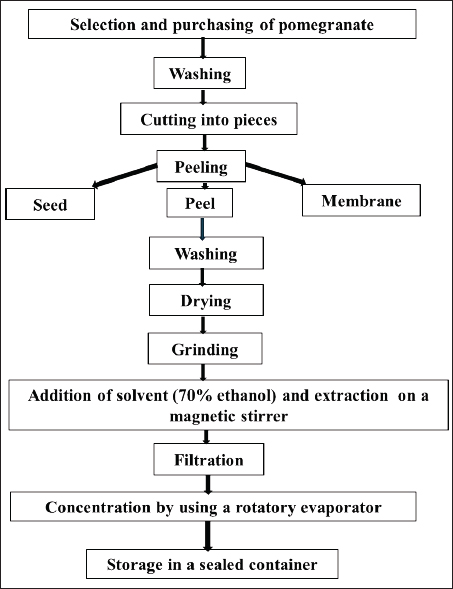
Fig. 1. Preparation of the pomegranate peel extract.
Tests on pomegranate peel extract (PPE)
Determination of the total phenolic content
Total phenolic content (TPC) was determined using the Folin–Ciocalteu assay, with gallic acid as the standard. Briefly, 1 ml of the extract or gallic acid standard solution (100–500 µg/ml) was mixed with 9 ml of distilled water, followed by the addition of 1 ml of Folin–Ciocalteu reagent (Merck, Germany). After incubation for 3–5 min, 10 ml of 7.5% sodium carbonate solution was added. The mixture was then incubated at room temperature for 90 minutes. Absorbance was measured at 765 nm using a spectrophotometer (Zayed et al., 2024). TPC was expressed as mg gallic acid equivalents per gram of dry extract (mg GAE/g). All measurements were performed in triplicate.
Determination of the TFC
The TFC was determined using an aluminum chloride colorimetric assay. A volume of 0.5 ml of the extract or standard quercetin solutions at concentrations of 20, 40, 60, 80, and 100 µg/ml was mixed with 0.5 ml of 2% aluminum chloride solution to examine the sample and standard curve, respectively. Subsequently, 3 ml of 5% potassium acetate solution (Merck, Germany) was added to the solution. The reaction mixtures were then incubated for 40 min in the dark at room temperature. The absorbance was measured at 510 nm. The data were expressed as mg quercetin equivalents per gram sample dry extract (QE)/g. The analysis was performed in triplicate (Mammen and Daniel, 2012).
Determination of the antioxidant assay
The oxidative stress reduction activity was determined using the 2,2-diphenyl-1-picrylhydrazyl (DPPH) assay. First, to prepare the DPPH solution, DPPH was dissolved in 0.1 mM methanol. The test was started by adding 1 ml of DPPH solution to 100 μl of pomegranate extract solution. The mixture was then kept 1 in a dark room for 2 hours. Finally, measurement occurred at 516 nm using the spectrophotometer. The control consisted of a DPPH solution mixed with methanol (without the sample). The analysis was performed in triplicate (Polile et al., 2024).
DPPH inhibition was calculated using the following formula:

Where AC is the absorbance of the control, and AE is the absorbance of the sample.
Determination of the extraction yield (%)
The extraction yield (%) was calculated as follows: (Ranjha et al., 2020)

Cytotoxicity assay
Cytotoxicity was assessed according to Van de Van de Loosdrecht et al. (1994) using a tetrazolium-based colorimetric MTT (3-(4,5-dimethylthiazol-2-yl)-2,5-diphenyltetrazolium bromide) assay with the following steps: first, WI 38 cells (1 × 10⁵ cells/ml) were seeded into 96-well plates (100 µl/well) and incubated at 37 °C for 24 hours to form a confluent monolayer. The growth medium was discarded, and the cells were washed. Samples were progressively diluted by half in serum-containing RPMI and added to the wells, while untreated wells served as controls. Plates were incubated at 37 °C and examined for cytotoxic effects. Cell viability was assessed using the MTT assay by adding 20 µl MTT solution (5 mg/ml) and incubating for 4 hours at 37 °C (5% CO2). Formazan crystals were dissolved in dimethyl sulfoxide, and absorbance was determined at 560 nm with background subtraction at 620 nm. The analysis was performed in triplicate.
The cytotoxicity percentage was calculated as follows:
Cytotoxicity %=(1-(OD treatment-OD blank)/OD Control-OD blank) x 100
Preparation of the inoculum
The E. coli O157: H7 strain was obtained from a previous study (Karmy et al., 2021). The strain identity was confirmed by biochemical tests followed by molecular confirmation using polymerase chain reaction. P. aeruginosa ATCC 15442 was obtained from the Department of Microbiology, Faculty of Veterinary Medicine, Cairo University, Egypt. The strains were first refreshed by inoculation into tryptic soy broth (TSB) at 37◦/24 hours for E. coli O157: H7 and at 25◦/ 48 hours for P. aeruginosa, afterward streaking on HiCrome™ MacConkey Sorbitol Agar Base (SMAC) and Oxoid Pseudomonas Agar Base media (CM0559), respectively, to ensure the purity of the colonies for further examinations.
Minimum inhibitory concentration (MIC) and minimum bactericidal concentration (MBC) determination
MIC was determined by the microdilution method corresponding to CLSI (2024). Briefly, 100 µl of nutrient broth was added as a diluent to each well of a flat-bottom 96-well microplate. The positive columns contained 100 µl of nutrient broth and 100 µl of bacterial culture, whereas the negative ones enclosed 200 µl of nutrient broth. In the first well, 100 µl of PPE was added to 100 µl of nutrient broth, and a 2-fold serial dilution was performed. Subsequently, 100 µl of culture bacteria was introduced to each well and then incubated at 37◦ /24 hours for E. coli O157 and at 25◦/48 hours for P. aeruginosa. The final inoculum concentration was adjusted to 106 CFU/ml. This was achieved by suspending colonies in sterile saline and standardizing the turbidity against a 0.5 McFarland standard (equivalent to 1.5 × 10⁸ CFU/ml), followed by a 2-fold serial dilution to obtain the desired final concentration of 106 CFU/ml. The MIC was determined by visual inspection of turbidity in the culture control column, while no turbidity was observed in the sterility control column. Turbidity indicates bacterial growth and multiplication; therefore, confirmation was performed by adding 10 µl of MTT reagent (5 mg/ml in PBS) to each well, followed by incubation for 4 hours. The absence of purple formazan color development indicated the MIC, confirming complete inhibition of bacterial growth. All experiments were conducted in triplicate. The MBC analysis was identified by inoculation from well above the MIC onto the agar plate, followed by incubation (24 hours for E. coli O157: H7 and 48 hours for P. aeruginosa). After incubation, the agar plates were checked for bacterial growth.
Laboratory manufacturing of soft white cheese
Fresh buffalo milk was purchased from a dairy farm in Cairo to ensure that it was not adulterated and free from preservatives. Fat % and acidity were examined according to the Gerber and titratable acidity methods, respectively (AOAC, 2019). The obtained values were 8% and 0.14%. The absence of inhibitory substances was also evaluated by inoculating raw milk with P. aeruginosa ATCC 15442 and E. coli O157: H7, followed by incubation for 4 h at 25 °C and 37 °C for 4 hours. Subsequently, the samples were plated on selective media and incubated for 48 and 24 hours, respectively, and bacterial growth was assessed (Commission Decision 195 No. 180/1991).
For cheese preparation, raw milk was heated to 80°C for 30 minutes, followed by rapid cooling, salt 2% was added, and then the temperature was elevated to 55°C (temperature of perfect activity of microbial rennet) (Reniplus, 2000). Calcium chloride (Sigma Chemical Company) was added at 0.02%. The curd had formed within 3 hours, and the whey drainage continued for approximately 12 hours. Finally, the cheese was sliced into cubes and kept in the refrigerator while soaked in its whey (control cheese without PPE) (Abou-Donia, 2008). PPE-treated cheese was used as the control cheese, but PPE was added at a rate of 2% before rennet addition. The same treatments were repeated with the inoculation of E. coli O157:H7 (5.15 log CFU/g) and P. aeruginosa (4.70 log CFU/g) as tested microorganisms. The microorganisms were gently massaged by hand in a sealed bag just after manufacturing the curd to confirm the uniform distribution of microorganisms all over the cheese (Gadotti et al., 2014). Detection and counting of E. coli O157:H7 and P. aeruginosa were performed on their specific media according to APHA guidelines (2004).
The investigation and examinations were repeated in triplicate, and the results were recorded. Treatments were examined at day zero and stored in the refrigerator for additional examinations on days 3, 7, 14, 21, 28, and 35.
Sensory evaluation
Sensory assessment was performed by 10 qualified and trained panelists from the Department of Food Hygiene and Control, Faculty of Veterinary Medicine, Cairo University, Cairo, Egypt. Panelists were pre-selected on the basis of their prior experience in sensory evaluation of dairy products and their ability to consistently discriminate between samples. Participants also underwent preliminary training sessions to familiarize them with the evaluation criteria and use of the dairy products judging scorecard. The quality and overall acceptability of the examined samples were evaluated according to the dairy products judging scorecard, which had been recognized by the American Dairy Science Association in the following way: (1–10) points for flavor, including the taste and smell, (1–5) points for color and appearance; and (1–5) points for body and texture, referring to the mouth feel, with an overall acceptability of 20 points. A higher score indicates better overall acceptability (Lawless and Heymann, 2010).
Chemical analysis
Chemical parameters, including TA and pH, were measured. Titratable acidity was determined according to the methods of AOAC (2019). The pH was measured using a calibrated pH meter (Adwa AD1030 Professional pH-ORP-Temp Bench Meter, Hungary) to determine the hydrogen ion concentration.
Microbiological examination
Different microbiological parameters, including aerobic plate count, total yeast, total mold, psychrotrophic, and coliform counts, were assessed to determine the shelf life (APHA, 2004).
Statistical analysis
Data analysis was performed using SPSS 23 using an independent sample T-test. The data presented in this article are conveyed in the form of Mean ± SD.
Ethical approval
Not needed for this study.
Results
Total phenolic, flavonoid, and antioxidant activity and PPE extraction yield
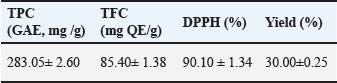
The total phenolic content of pomegranate peel ethanolic extract was found to be 283.05 ± 2.60 mg GAE/g, as shown in Table 1. The total flavonoid content was found to be 85.40 ± 1.38 mg QE/g. Conversely, the DPPH result was estimated to be 90.10% ± 1.34%. The extraction yield percentage was 30% ± 0.25%.
Table 1. Total phenolic content, total flavonoid content, DPPH content, and extraction yield percentage of pomegranate peel extract (Mean ± SD).
Cytotoxicity assay
The results of the cytotoxicity assay are illustrated in Figure 2. Cell viability was 57.73% at the highest tested concentration (10%). A concentration-dependent increase in cell viability was observed with decreasing PPE concentrations, reaching 97.93% at 0.5%. The highest cell viability was recorded at 0.5% PPE, whereas 96.87% viability was recorded at 1% PPE. At the concentration of 2% PPE, which was incorporated into cheese in the current study, the cell viability was 91.74%, corresponding to a toxicity level of approximately 13.25%, indicating that this concentration is considered safe for human consumption. Correspondingly, the pictures of the cells in Figure 2 reflect the cytotoxicity effect of different concentrations of PPE on WI-38 cells.
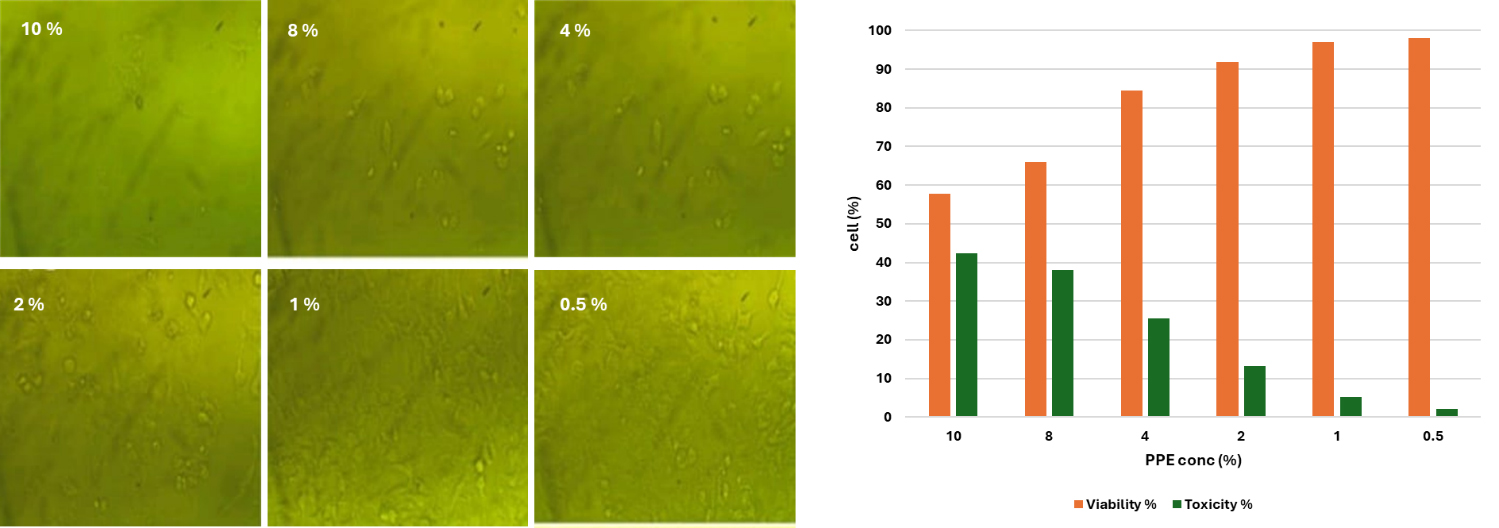
Fig. 2. Cytotoxicity assay of PPE on WI 38 cells at different concentrations.
Minimum inhibitory concentration (MIC) and minimum bactericidal concentration (MBC)
The results illustrated in Table 2 showed that the MIC of PPE against E. coli O157:H7 was 1% (10 mg/ml), while the MBC, which referred to the complete killing of all E. coli O157:H7 present, was 1.5% (15 mg/ml). The MIC against P. aeruginosa was 1.5%, and the MBC was 2% (20 mg/ml).
Table 2. MIC and MBC of PPE on E. coli O157: H7 and
P. aeruginosa.

Effect of PPE on E. coli O157: H7 concentration in white soft cheese
Figure 3 illustrates the effect of PPE on E. coli O157:H7 growth in white soft cheese. The initial count at day zero was 5.15 log CFU/g, which decreased by approximately 1 log after 1 week, indicating the strong antibacterial activity of PPE. After 14 days, the count was further reduced to 3.57 log CFU/g (≈2 log reduction), and complete elimination was observed by day 28. Overall, the application of 2% PPE resulted in an approximately 5-log reduction of E. coli O157:H7. In contrast, the control sample showed a much lower reduction, decreasing from 5.15 log CFU/g at day zero to 3.48 log CFU/g after 28 days of storage.
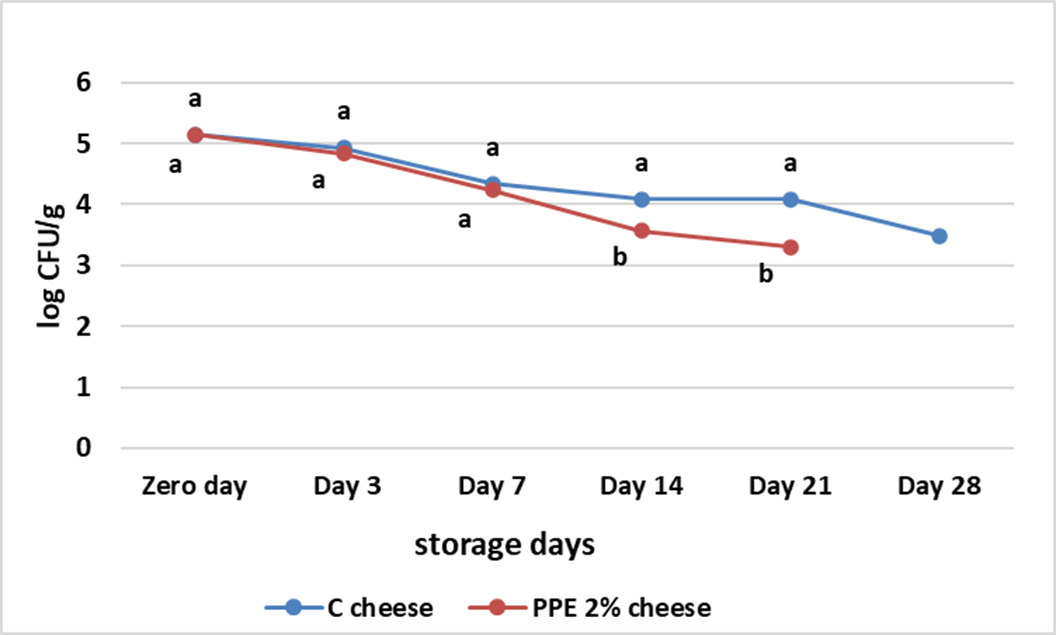
Fig. 3. Survival of E. coli O157:H7 in different white soft cheese treatments log CFU/g.
Survival of Pseudomonas aeruginosa following white soft cheese treatment
Figure 4 shows that both treatments started with an initial count of 4.70 log CFU/g on day 0. In PPE-treated cheese, the count decreased by approximately 2 log cycles during the first 2 weeks of storage, reaching 2.46 log CFU/g. In contrast, the control sample exhibited an increase of approximately 2 log CFU/g after 21 days of storage, reaching 6.70 log CFU/g. Conversely, cheese treated with 2% PPE showed complete elimination of P. aeruginosa by day 21 of storage.
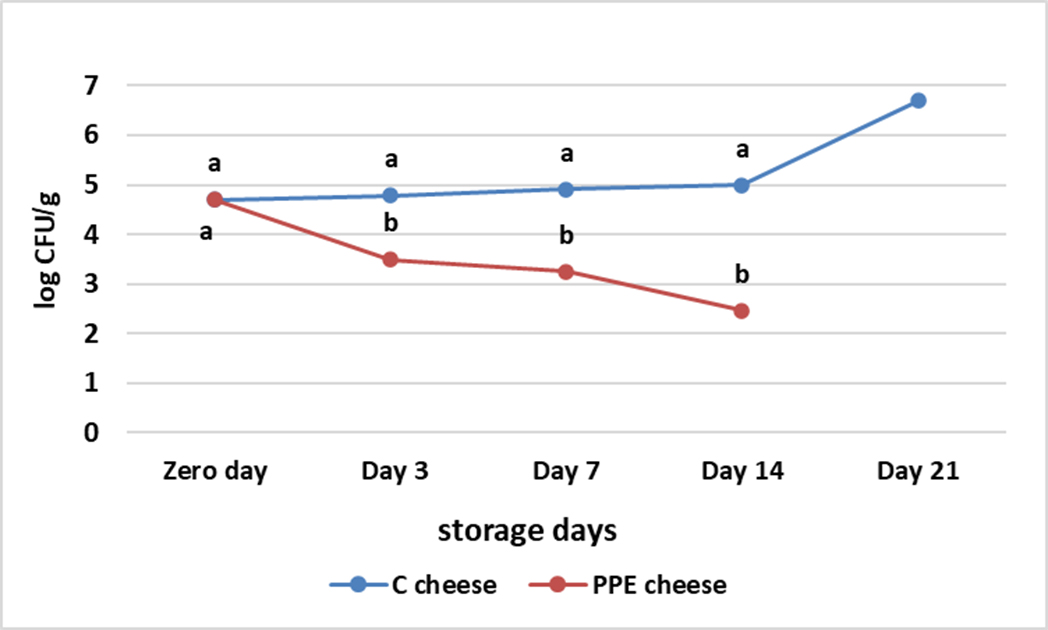
Fig. 4. Survival of Pseudomonas aeruginosa in different white soft cheese treatments, log CFU/g.
Sensory evaluation
The sensory evaluation results are presented in Figure 5. On day 0, the flavor score was higher in the control cheese (9.66) than in the PPE-treated cheese (6.33). During storage, flavor scores declined in both samples, reaching 8.33 and 5.66 for the control and 5.66 for PPE cheese after 14 days. Regarding color and appearance, the control cheese had higher scores than the PPE-treated cheese. At day zero, the control sample recorded a mean value of 5.00, whereas the PPE cheese showed a lower initial score of 2.66, which further decreased during storage in both treatments. Similarly, body and texture scores were consistently higher in the control cheese (5.00, 4.66, and 3.66 at day 0, 7, and 14, respectively) than in the PPE cheese (3.66, 3.06, and 2.83 at the same storage intervals). Overall, all sensory attributes contributed to the overall acceptability, which was highest in the control cheese, followed by the PPE-treated cheese.
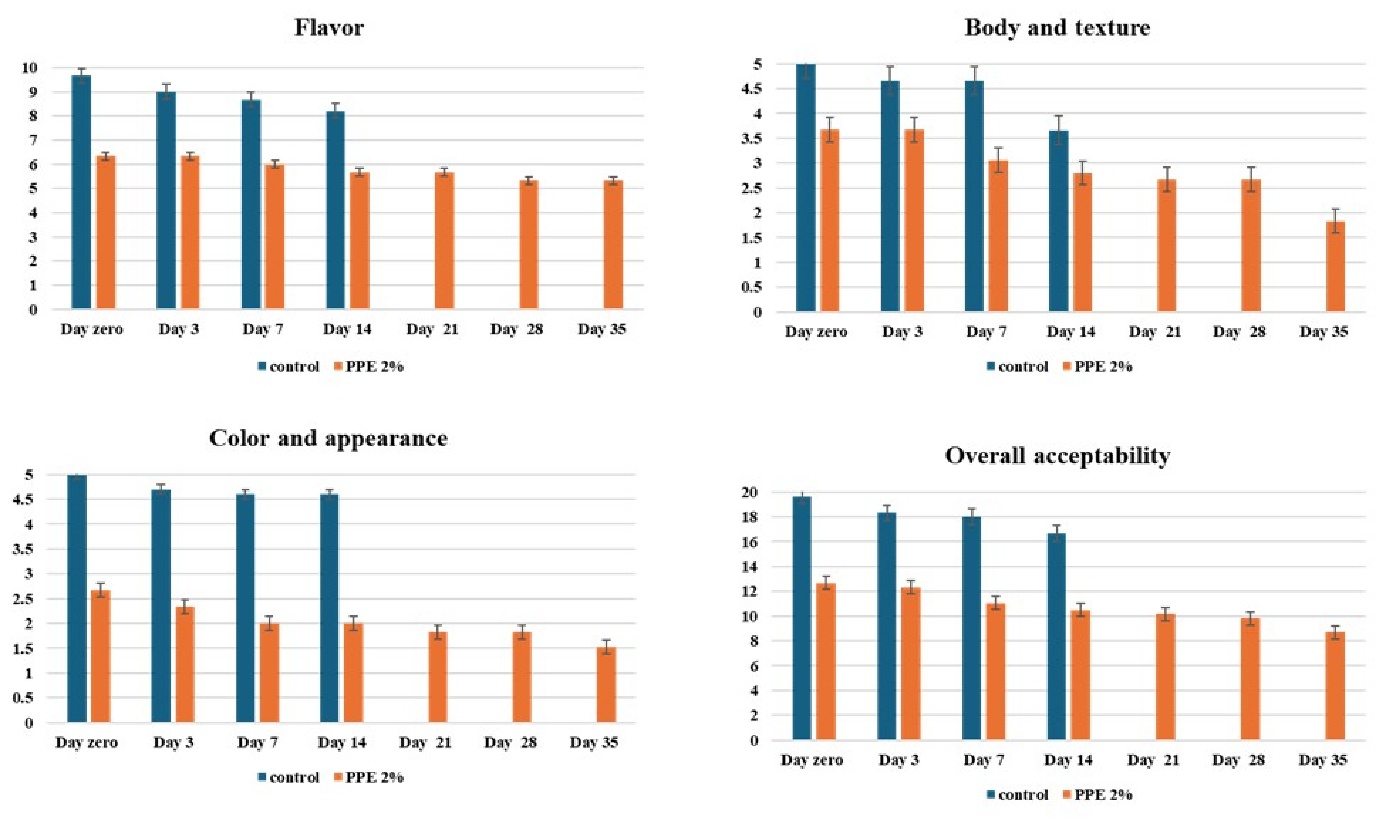
Fig. 5. Sensory evaluation (mean ±SD) of different white soft cheese treatments during refrigeration and storage.
Chemical analysis
The TA and pH of white soft cheese were monitored throughout the storage period, as shown in Figure 6. In the control (uninoculated) cheese, the initial pH was 6.9 at day zero, which slightly decreased to 6.83 by day 14, followed by spoilage at day 21. In contrast, the titratable acidity showed an inverse trend, increasing from 0.05% on day 0 to 0.12% at the end of the storage period. Compared with the control, the PPE-treated cheese (2%) exhibited a lower initial pH of 6.7, which gradually decreased to 6.36 by day 35, while spoilage occurred at day 42. The titratable acidity increased over time, reaching 0.21% on day 35 of storage. In the cheese samples artificially inoculated with E. coli O157:H7, the pH of the control was 6.88 at day zero and gradually decreased to 6.70 after 28 days of storage, while the titratable acidity increased slightly from 0.21% to 0.24%. In comparison, the PPE-treated cheese started at a pH of 6.66, which decreased to 6.55 by the end of storage, whereas acidity increased from 0.13% to 0.23%. Similarly, the initial pH of the control sample inoculated with Pseudomonas aeruginosa was 6.96, decreasing to 6.55 after 21 days of storage. The PPE-treated cheese exhibited a decrease from 6.62 to 6.18 over the same storage period. Meanwhile, titratable acidity increased from 0.06% and 0.12% at day zero to 0.16% and 0.23% after 3 weeks in the control and PPE-treated samples, respectively.
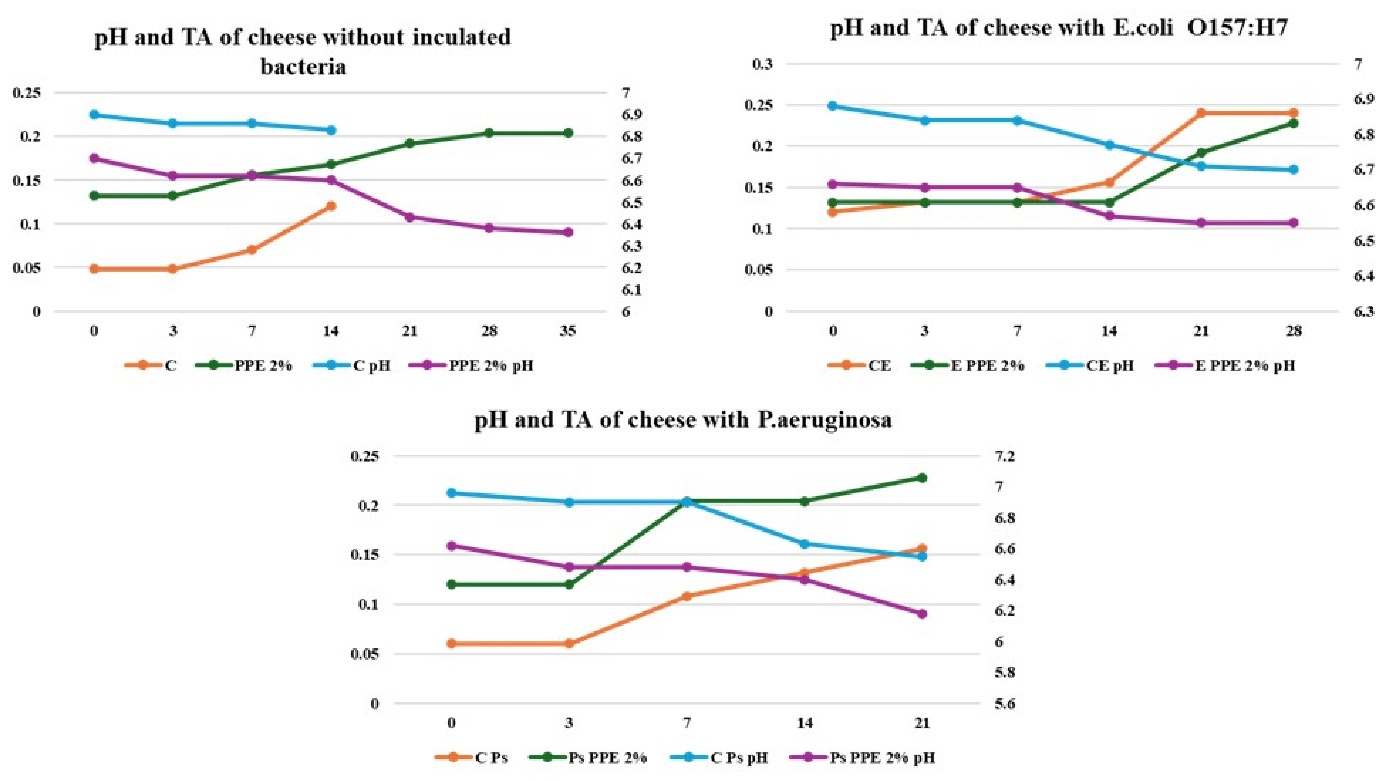
Fig. 6. pH and TA of control cheese and cheese fortified with 2% PPE without and with inoculated bacteria during 35 days of refrigeration storage.
Microbiological examination and shelf-life of soft white cheese samples
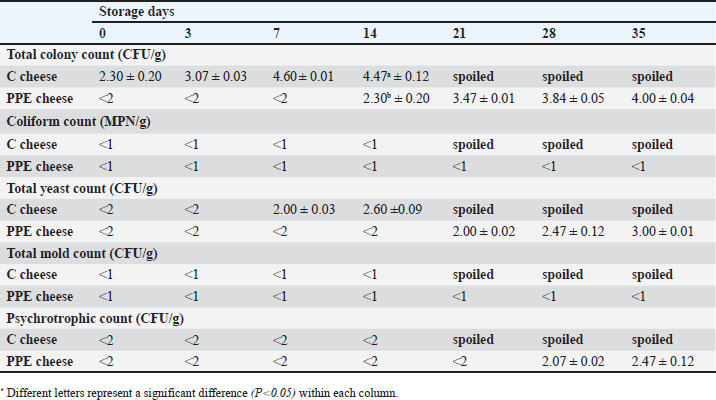
Microbial parameters are shown in Table 3. The mean values of total colony count (TCC) were 2.30 ± 0.20, 3.07 ± 0.03, 4.60 ± 0.01, and 4.47 ± 0.12 log CFU/g in the control cheese at 0, 3, 7, and 14 days of storage, respectively. In PPE cheese, TCC was below the detection limit (<2) in the first week of storage. On day 14, the count was 2.30 ± 0.20 log CFU/g and reached up to 4.00 ± 0.04 log CFU/g on day 35 of storage. Coliforms were not detected in either treatment throughout the storage period. The yeast started to appear in the control treatment on the 7th day (2.00 ± 0.03 log CFU/g) and reached up to 2.60 ± 0.09 log CFU/g on day 14. In contrast, the yeast count in the PPE cheese did not appear until day 21 (2.00 ± 0.02 log CFU/g), and on day 35, the count was 3.00 ± 0.01 log CFU/g. However, the mold counts were below the detection limit in both the control (C) and PPE-treated cheese samples. The total psychrotrophic count was undetectable in C cheese throughout the entire storage period, but was observed in PPE cheese (2.07 ± 0.02 log CFU/g) on day 28 of storage, reaching 2.47 ± 0.12 log CFU/g on day 35. On day 21 of storage, the control cheese spoiled, whereas the shelf life of the PPE-treated cheese extended to 35 days; spoilage was observed on day 42 of storage.
Table 3. Microbiological examination of uninoculated white soft cheese treated with CFU/g (Mean ± SD).
Discussion
Total phenolic, flavonoid, and antioxidant activity and PPE extraction yield
The determination of total phenolic and flavonoid contents serves as a significant guide to the overall quality of the extract, as they represent the main bioactive compounds found in the extract. PPE contains several bioactive compounds responsible for numerous biological activities, including antibacterial, anticancer, anti-angiogenic, and antiallergic effects. In addition, they exhibit antiprovocative activities, which refer to their ability to reduce inflammatory responses and limit the release of pro-inflammatory mediators (Tumbarski et al., 2025). The determination of DPPH is an important indicator of the antioxidant and scavenging activities of PPE. The present study’s total phenolic content was comparable to that reported by El-Shafei et al. (2017) (287.54 mg GAE/g). It was higher than the values reported by Tumbarski et al. (2025) (172.86 mg GAE/g) and Morsy et al. (2018) (215.2 mg GAE/g) but lower than that reported by Javani-Seraji et al. (2023) (520 mg GAE/g).
The total flavonoid content was 85.40 mg QE/g, which was similar to that reported by Hadjadj et al. (2018) (85.74 mg QE/g). However, it was higher than the studies of El-Shafei et al. (2017) and Morsy et al. (2018), which were 73.75 and 70.4 mg/ml, respectively.
Conversely, the DPPH result was lower than the results of El-Shafei et al. (2017) and Elzaher et al. (2024), which were 98.63% and 95.36%, respectively. However, it was higher than the result of Hadjadj et al. (2018). The extraction yield percentage was found to be similar to the result obtained by Spizzirri et El-Ashaal et al. (2025) (29%) and higher than the result reported by Maghraby et al. (2026) (24%) and Tabar et al. (2025) (11.87%). The dissolved agent had a positive effect on the yield and concentration of the active compounds, as well as the extraction method. Previous studies have reported that ethanolic extraction at 70% results in a higher yield and higher bioactive material than other concentrations. This is why the results estimate the high yield and satisfactory results, thanks to the solvent used (Georgieva et al., 2022).
Cytotoxicity assay
The safety of PPE was tested on WI-38 cells. Cytotoxicity increased with increasing PPE concentration (Modaeinama et al., 2015; Keta et al., 2020). The highest concentration tested was 10, which represents the maximum concentration potentially applicable in food systems. Furthermore, the use of 2% PPE resulted in 91.74% cell viability, which has been previously reported as safe for food applications without adverse effects (Altunkaya et al., 2013). ISO 10993-5 defines cytotoxicity as a decrease in cell viability of >30%. In contrast, the tested material induced only an approximately 8% decrease in cell viability, demonstrating excellent biocompatibility and confirming its safety for potential food-related applications.
Minimum inhibitory concentration (MIC) and minimum bactericidal concentration (MBC)
The antibacterial activity of PPE was attributed to the presence of phenolic and flavonoid compounds, such as punicalagin and ellagic acid, previously reported in pomegranate peel (Bakhti et al., 2025). The MIC values reported in the present study were considerably lower than those reported by Nuamsetti et al. (2012), who reported MICs of 499 and 207 mg/ml for ethanolic and hot water pomegranate peel extracts, respectively. In that study, the ethanolic extract exhibited a higher MIC value than the hot water extract. These findings indicate that the extraction method plays a crucial role in determining the recovery efficiency of antibacterial compounds from pomegranate peels. Meanwhile, the obtained MIC result of E. coli was aligned with the study of Wu et al. (2025), while it was higher than that of Al-Zoreky’s (2009) study.
The MIC of P. aeruginosa was lower than that reported by Alexandre et al. (2019), who reported that the MIC ranged from 15.63 to 62.5 mg/ml, and the MBC was 62.5 mg/ml (6.25%). However, the study by Nozohour et al. (2018) revealed slightly similar MIC results, which ranged between 12.5 and 16.2 mg/ml, while MBC was 25 to 30 mg/ml.
Although the concentration selected in our study to be incorporated in cheese may be relatively high, it remains appropriate for targeting Gram-negative bacteria such as E. coli O157:H7 and P. aeruginosa, as these microorganisms exhibit high resistance and robust survival mechanisms. Lower concentrations may be sufficient to inhibit less resistant bacterial strains such as S. aureus (Maghraby et al., 2026). Previous studies have consistently demonstrated that PPE exhibits higher antibacterial efficacy against Gram-positive bacteria due to the absence of an outer membrane, which facilitates the diffusion and penetration of bioactive compounds into the bacterial cell. Gram-negative bacteria possess a complex outer membrane rich in lipopolysaccharides (LPS), which acts as a selective permeability barrier and limits the entry of antibacterial agents. Additionally, the presence of porin channels and efflux pump systems contributes to the increased resistance of Gram-negative bacteria to plant-derived extracts. Consequently, higher PPE concentrations are often required to achieve inhibitory and bactericidal effects against Gram-negative strains (Alexandre et al., 2019; Hamaideh et al., 2025).
Effect of PPE on E. coli O157: H7 concentration in white soft cheese
Shiga toxin-producing E. coli (STEC) is commonly associated with fecal contamination of food and represents a serious public health concern because of its potential to cause severe complications, including kidney failure. Milk and dairy products are classified as high-risk foods because their rich nutritional composition supports microbial survival and growth. Among these pathogens, E. coli O157:H7 is particularly hazardous as it can be transmitted through the consumption of raw milk, inadequately heat-treated milk, or post-processing contamination, leading to high morbidity and mortality rates, especially among infants and adults (Addo et al., 2011; Oluwarinde et al., 2023; Loor-Giler et al., 2025). Therefore, effective microorganism control is essential, highlighting the need for safe and natural antibacterial strategies in dairy products. Our result is compatible with that obtained by Wu et al. (2025), who used PPE with the same concentration (2%). Al Al-Moghazy et al. (2023) also reported a reduction of about 2 log CFU/g in cheese within 2 weeks. PPE at 2% resulted in an approximately 5 log CFU/g reduction of E. coli O157:H7, compared with the control treatment, which showed only approximately 2 log CFU/g reduction during storage. This reduction in control cheese is related to the effect of refrigerating temperature and increasing the acidity on the growth of E. coli O157:H7 (Alemdar and Ağaoğlu, 2016; Adhikari et al., 2018). E. coli O157: H7 was eliminated by PPE due to its active ingredients, such as flavonoids and tannins (Chen et al, 2020). PPE is considered a rich source of polyphenolics such as gallic acid, ellagic acid, caffeic acid, vanillin, naringenin, and rosmarinic acid. Although E. coli O157: H7 has a more complex cell membrane structure that partially blocks the passage of antibacterial agents, the flavonoids, tannins, and other functional constituents enhance the cell membrane rupture, causing oxidative stress, blocking vital enzymes, and consequently inhibiting bacterial growth (Elzoghbiy et al., 2022). Previous studies have demonstrated that pomegranate peel extract exhibits superior antibacterial activity compared to other fruit peel extracts. Hanafy et al. (2021) reported that PPE showed a significantly stronger inhibitory effect against E. coli than ethanolic and methanolic extracts of orange and banana peels, highlighting its higher efficacy as a natural antimicrobial agent.
Survival of P. aeruginosa following white soft cheese treatment
Pseudomonas aeruginosa is an opportunistic, psychrotrophic, ubiquitous, highly resistant, and highly adaptable bacterium. These characteristics make it not only a spoilage bacterium but also a pathogen that affects the urinary and respiratory tracts and can lead to a high mortality rate. In addition to highly adhesive characteristics that aid in the biofilm formation and spoilage of food, it causes huge economic losses on all levels (Li et al., 2022). Therefore, control of these resistant microorganisms is the target of all food industry systems and at the medical field level. The results revealed that the P. aeruginosa count in PPE cheese was reduced by 2 log CFU/g with storage for approximately 2 weeks. According to the study conducted by Elbarbary and Abdelmotilib (2023), a 3% concentration of PPE reduced P. aeruginosa by approximately 1 log after 24 hours and 2 log after 36 hours, whereas a 5% concentration resulted in only a 1 log reduction after 36 h of storage. Similarly, Devatkal et al. (2013) reported that PPE at concentrations of 1%, 5%, and 10% reduced bacterial counts within 30 hours.
Although Pseudomonas spp. possess a complex cell wall structure characterized by a thin peptidoglycan layer (1–7 nm) located between the cytoplasmic and outer membranes, this outer membrane serves as a strong barrier that limits the penetration of active compounds. However, bioactive constituents such as flavonoids, tannins, and phenolic compounds can disrupt cell membrane integrity, leading to cell lysis and bacterial death. In particular, gallic acid and other functional compounds enhance membrane permeability, induce oxidative stress, inhibit essential enzymes, and ultimately suppress bacterial growth (Suručić et al, 2025). In addition, Hanafy et al. (2021) reported that PPE exhibits strong antioxidant, antibacterial, and antifungal activities, which are attributed to its high content of phenols, flavonoids, and tannins.
Sensory evaluation
The obtained results showed that the control cheese had higher flavor scores than the cheese treated with 2% PPE. A gradual decline in flavor was observed in both treatments during storage, which may be attributed to normal biochemical changes, such as lipolysis and proteolysis, leading to the formation of free peptides and amino acids that can influence flavor characteristics (Lashkari et al, 2020). In addition, the color and appearance of the PPE cheese were lower than those of the control cheese. This result was similar to that obtained by El-Shafei et al. (2017), Morsy et al. (2018) and Parafati et al. (2021) for cream cheese, meatball, and artisanal cheese, respectively. The body and texture score of PPE were lower than that of the control cheese. Parafati et al. (2021) reported similar findings. The firmer body and texture observed in PPE-treated cheese compared with the control can be attributed to the interaction between PPEs, particularly tannins, and milk proteins. These interactions result in the formation of protein–polyphenol complexes, resulting in a more compact and rigid protein network. Additionally, the presence of phenolic compounds reduces the water-holding capacity and promotes whey expulsion, resulting in a lower moisture content (Mehanna et al., 2014).
Chemical analysis
The chemical parameters of cheese changed during storage; an increase in acidity and a decrease in pH values were observed, as reported by El-Kholy et al. (2016). Compared with the control, the cheese treated with 2% PPE had a lower pH and a higher acidity value; this may be due to the acidic characteristics of the extract as described by Ullah et al. (2012), Panza et al. (2021), and Mowafi et al. (2023). The TA of the PPE cheese was lower than that determined by El-Shafei et al. (2017) (0.36%), while the pH was 4.79. In addition, in the study by Mahajan et al. (2015), the pH was lower than our result. Cheese treatments artificially inoculated with E. coli O157:H7 and P. aeruginosa showed lower pH values, which were reduced by storage, as reported by Bellio et al. (2018). This finding could be explained as E. coli ferments lactose and other carbohydrates, yielding acids (as lactic and acetic acid) and gases, such as CO2, which lowers the pH of the cheese (Saad et al., 2001). In addition, P. aeruginosa growth results in several metabolites that decrease pH values (Chang et al., 2024).
Microbiological examination and shelf-life of soft white cheese samples
According to the Egyptian Standard ES: 1008/2005-1, the permissible microbiological limits for assessing the quality and shelf stability of white soft cheese are ≤1 log10 CFU/g for coliforms, ≤2.60 log10 CFU/g for yeasts, and ≤1 log10 CFU/g for molds. The antibacterial effect of PPE was evident in the current study, as demonstrated by the differences in microbiological parameter counts between the control and PPE-treated cheese samples. Moreover, the absence of coliforms in both treatments throughout the storage period ensures overall hygienic quality. El-Ashaal et al. (2025) reported higher results for all microbial parameters. El El-Shafei et al. (2017) indicated that the use of 1% PPE in cream cheese extended the shelf life of cream cheese by up to 45 days. Similarly, Mahajan et al. (2015) reported that the application of 1% and 2% PPE prolonged the shelf life of cheese by up to 21 days. In the present study, the addition of 2% PPE demonstrated superior microbiological performance, extending the shelf life of the cheese by up to 35 days, compared to only 14 days for the control cheese.
Conclusion
The present study demonstrated that PPE possesses significant bioactive properties, as confirmed by TPC(283.05 mg GAE/g), total flavonoid content of 85.40 mg QE/g, and antioxidant activity (DPPH scavenging) of 90.10%, which collectively support its strong antimicrobial potential. The extract exhibited marked antibacterial activity against both E. coli O157:H7 and P. aeruginosa, leading to the complete elimination of the tested pathogens in soft cheese after storage for 21 and 28 days, respectively. The incorporation of 2% PPE significantly extended the shelf-life of white soft cheese by up to 35 days compared with the control cheese, which spoiled within 21 days. Based on the cytotoxicity results, PPE can be considered safe for food applications, highlighting its potential as a natural alternative to chemical preservatives, which may pose health risks with prolonged or cumulative exposure even within permitted limits. Furthermore, the use of fruit byproducts, such as pomegranate peels, contributes to environmental sustainability by reducing agricultural waste and promoting waste valorization in food systems. However, certain limitations were identified. The study did not include detailed chemical characterization of the extract using advanced analytical techniques, such as high-performance liquid chromatography (HPLC) or liquid chromatography-tandem mass spectrometry (LC MS/MS); therefore, the specific bioactive compounds responsible for the antimicrobial activity were not fully identified. In addition, the antioxidant stability within the cheese matrix during storage was not evaluated. Future studies are recommended to focus on compound profiling and improving formulation strategies, such as nanoencapsulation or combining PPE with other natural agents to reduce the required concentration, minimize potential sensory impact, and enhance consumer acceptability while maintaining antimicrobial efficacy.
Acknowledgments
Not applicable.
Funding
This study did not receive any funding support.
Authors’ contribution
All authors contributed equally to this study.
Conflict of interest
The authors declare no conflict of interest.
Data availability
All data were provided in the manuscript.
References
AbdelRazek, G.M. 2024. Effect of pomegranate peel extract (Punica granatum) against plant parasitic nematodes. EJDR 74(2), 419–436; doi:10.21608/ejdr.2024.340694.1192
Abdulmumeen, H.A., Risikat, A.N. and Sururah, A.R. 2012. Food: its preservatives, additives, and applications. Int. J. Chem. Biochem. Sci. 1, 36–47; doi:10.13140/2.1.1623.5208
Abou-Donia, S.A. 2008. Origin, history, and manufacturing process of Egyptian dairy products: an overview. Alex. J. Food. Sci. Technol. 5, 51–62; doi:10.21608/ajfs.2008.20141
Addo, K., Mensah, G., Aning, K., Nartey, N. and Nipah, G. 2011. Risk of Escherichia coli O157: h7 transmission linked to the consumption of raw milk in the state of Ghana. Int. Food. Res. J. 20(2), 1001–1005; doi:10.1111/j.1365-3156.2010.02666.x
Adhikari, A., Yemmireddy, V.K., Costello, M.J., Gray, P.M., Salvadalena, R., Rasco, B. and Killinger, K. 2018. Effect of storage time and temperature on the viability of E. coli O157: h7, Salmonella spp., Listeria innocua, Staphylococcus aureus, and Clostridium sporogenes vegetative cells and spores in vacuum-packed canned pasteurized milk cheese. Int. J. Food Microbiol. 286, 148–154; doi:10.1016/j.ijfoodmicro.2018.07.027
Alemdar, S. and Ağaoğlu, S. 2016. Behavior of Escherichia coli O157: h7 during the ripening of herby cheese manufactured from raw milk. Food. Health. 2(1), 49–56; doi:10.3153/JFHS16005
Alexandre, E.M.C., Silva, S., Santos, S.A.O., Silvestre, A.J.D., Duarte, M.F., Saraiva, J.A. and Pintado, M. 2019. Antimicrobial activity of pomegranate peel extracts performed by high-pressure and enzymatic-assisted extraction. Food Res. Int. 115, 167–176; doi:10.1016/j.foodres.2018.08.044
Al-Moghazy, M., Abou Baker, D.H. and El-Sayed, H.S. 2023. Antimicrobial-prebiotic: novel dual approach of pomegranate peel extract in vitro and in the food system. Bicoastal Agric. Biotechnol. 49, 102664; doi:10.1016/j.bcab.2023.102664
Altunkaya, A., Hedegaard, R.V., Harholt, J., Brimer, L., Gökmen, V. and Skibsted, L.H. 2013. Palatability and chemical safety of apple juice fortified with pomegranate peel extract. Food &. Function 4(10), 1468–1473; doi:10.1039/c3fo60150a
Al-Zoreky, N.S. 2009. Antimicrobial activity of pomegranate (Punica granatum L.) fruit peels. Int. J. Food. Microbiol. 134(3), 244–248; doi:10.1016/j.ijfoodmicro.2009.07.002
AOAC. 2019. Official Methods of Analysis of AOAC International. Rockville, MD: AOAC Int..
APHA. 2004. Standard Methods for Examination of Dairy Products. Washington, D.C.: 17th.
Bakhti, S., Bekada, A., Bouzouina, M. and Benabdelmoumene, D. 2025. Pomegranate Peel Extract Fortified Yogurt: effect on physicochemical, microbiological, and sensory quality of functional dairy product. Asian J. Dairy Food Res. 44(1), 8–15; doi:10.18805/ajdfr.DRF-426
Bellio, A., Bianchi, D.M., Vitale, N., Vernetti, L., Gallina, S. and Decastelli, L. 2018. Behavior of Escherichia coli O157: h7 during the manufacture and ripening of Fontina Protected Designation of Origin cheese. J. Dairy. Sci. 101(6), 4962–4970; doi:10.3168/jds.2017-13458
Chang, G., Li, Q., Wang, T., Zhang, B., Wu, W., Lv, C. and Wang, X. 2024. Characterization of Pseudomonas spp. contamination and in situ spoilage potential in the pasteurized milk production process. Food. Res. Int. 188, 114463; doi:10.1016/j.foodres.2024.114463
Chen, J., Liao, C., Ouyang, X., Kahramanoğlu, I., Gan, Y. and Li, M. 2020. Antimicrobial activity of pomegranate peel and its applications in food preservation. J. Food. Qual. 1(1), 8850339; doi:10.1155/2020/8850339
CLSI M07-A10. 2024. Methods for Dilution Antimicrobial Susceptibility Tests for Bacteria That Grow Aerobically, 10th Edition
Commission Decision 91/180/EEC: Of 14 February 1991 laying down certain methods of analysis and testing of raw milk and heat-treated milk. [(accessed on 20 April 2024)];OJEU. 1991 459 93:1–48. Available via http://data.europa.eu/eli/dec/1991/180/oj
Devatkal, S.K., Jaiswal, P., Jha, S.N., Bharadwaj, R. and Viswas, K.N. 2013. Antibacterial activity of aqueous extract of pomegranate peel against Pseudomonas stutzeri isolated from poultry meat. J. Food. Sci. Technol. 50(3), 555–560; doi:10.1007/s13197-011-0351-y
Di Maro, M., Gargiulo, L., Gomez D’ayala, G. and Duraccio, D. 2024. Exploring antimicrobial compounds from agri-food waste for sustainable applications. Int. J. Mol. Sci. 25(23), 13171; doi:10.3390/ijms252313171
El-Ashaal, E.S., Elshoky, H.A., El-Sayed, N.M. and Elwahsh, N.A.A. 2025. Enhanced preservation of Domiati cheese using edible nanocoatings of carboxymethyl chitosan loaded with pomegranate peel extract. Food. Res. Int. 219, 116993; doi:10.1016/j.foodres.2025.116993
Elbarbary, N.K. and Abdelmotilib, N.M. 2023. Effect of natural antimicrobials on the reduction of Pseudomonas aeruginosa in frozen chicken products. J. Adv. Vet. Res. 13(3), 501–507; doi:10.5455/javr.2023.24
El-Kholy, W., El-Khalek, A.B.A., Mohamed, S.H.S., Fouad, M.T. and Kassem, J.M. 2016. Tallaga cheese as a new functional dairy product. Am. J. Food Technol. 11, 182–192; doi:10.3923/ajft.2016.182.192
Elkot, W.F. and Ismail, H.A. 2025. Technological advances in functional dairy foods and their role in human nutrition: a review. Aswan J. Agric. Biol. Sci. 1(1), 24–33; doi:10.21608/AJABS.2025.397996.1005
El-Shafei, S., Abdeen, E.M.M. and Abozed, S.S. 2017. Using pomegranate peel extracts as natural antioxidants in cream cheese manufactured from goat’s milk. ZJAR 44(6), 2649–2664; doi:10.21608/zjar.2017.51375
Elzaher, M.A.S.A., El-Kholany, E.A., Bakr, Y.M., Khattab, E.S. and Ghazy, M.B. 2024. Evaluation of the biological activity of pomegranate peel extract as an antioxidant, antimicrobial, and anticancer. Res. J. Pharm. Tech. 17(6), 2744–2752; doi:10.52711/0974-360X.2024.00430
Elzoghbiy A Sh., M Mansour, M., H Elhaw, M. and E Mekky, A. 2022. Phytochemical Analysis of Pomegranate Peel Extract (PPE) with the evaluation of its efficacy as an anti-rancidity of oils, anti-bacterial, and anti-candida agent. Al-Azhar. Med. J. 51(3), 1851–1866; doi:10.21608/amj.2022.246585
ES: 1008/ 2005-1 (Egyptian Organization for Standardization). 2005. The Egyptian Standard of soft cheese: 1008/2005-1. Egyptian Organization for Standardization and Quality Control, Cairo, Egypt
Food and Drug Administration (FDA). 2024. Outbreak Investigation of E. coli O157:H7: Raw Cheddar Cheese (February 2024). Available via https://www.fda.gov/food/outbreaks-foodborne-illness/outbreak-investigation-e-coli-o157h7-raw-cheddar-cheese-february-2024
Gadotti, C., Nelson, L. and Diez-Gonzalez, F. 2014. Inhibitory effect of combinations of caprylic acid and nisin on Listeria monocytogenes in queso fresco. Food. Microbiol. 39(1), 1–6; doi:10.1016/j.fm.2013.10.007
Georgieva., Vasileva., Parzhanova., Chalova., Ivanova. and Slavov. 2022. Factors affecting the amount of biologically active substances in extracts of Bulgarian medical plants typical of Western Rhodopes. Bulg. Chem. Commun. 54, 74–80; doi:10.34049/bcc.54.1.MAEP06
Hadjadj, S., Benyahkem, M., Lamri, K. and Ould El Hadj-khelil, A. 2018. Potential assessment of pomegranate (Punica granatum L.) fruit peels as a source of natural antioxidants. Pharmacophore 9, 29–34.
Hamaideh, S., Olaimat, A.N., Al-Holy, M., Al-Nabulsi, A., Al-Qadiri, H.M., Hamed, S. and Holley, R.A. 2025. The antimicrobial activity of pomegranate peel extract incorporated in edible chitosan and gelatin coatings against Salmonella enterica on Medjool dates. Ital. J. Food Sci. 37(4), 90–106; doi:10.15586/ijfs.v37i4.3161
Hanafy, S.M., Abd El-shafea, Y.M., Saleh, W.D. and Fathy, H.M. 2021. Chemical profiling, in vitro antimicrobial and antioxidant activities of pomegranate, orange and banana peel-extracts against pathogenic microorganisms. J. Gene. Eng. Biotech. 19(1), 80; doi:10.1186/s43141-021-00151-0
Hojat, L.S., Wilson, B.M., Satlin, M.J., Perez, F., Mojica, M.F., Singer, M.E., Bonomo, R.A. and Epstein, L.H. 2024. 14-Year Epidemiologic study of Pseudomonas aeruginosa bloodstream infection incidence and resistance in the Veterans Health Administration system, 2009–2022. JAC-Antimicrobial. Resist. 6(2), dlae031; doi:10.1093/jacamr/dlae031
Ingham, S.C., Su, Y.C. and Spangenberg, D.S. 2000. Survival of Salmonella typhimurium and Escherichia coli O157: h7 in cheese brines. Int. J. Food Microbiol. 61(1), 73–79; doi:10.1016/S0168-1605(00)00331-7
Ismayati, M., Nurfajrin Solihat, N., Puspita Sari, F., Fatriasari, W., Krishanti, N.P.R.A., Saputro Wibowo, D., Qomariah, I., Mumtaz, N., Ismawati., Yuniastri, R. and Risnasari, I. 2026. Bioactive extracts from plant biomass: antioxidant, antibacterial, and physicochemical characterization. Biochem. Syst. Ecol. 124, 105161; doi:10.1016/j.bse.2025.105161
ISO 10993-5:2009. 2009. Biological evaluation of medicaldevices—Part 5: Tests for in vitro cytotoxicity; German version ENISO 10993-5:2009
Javani-Seraji, S., Bazargani-Gilani, B. and Aghajani, N. 2023. Influence of extraction techniques on the efficiency of pomegranate (Punica granatum L.) peel extracts in oxidative stability of edible oils. Food. Sci. Nutr. 11(5), 2344–2355; doi:10.1002/fsn3.3244
Kaderides, K., Kyriakoudi, A., Mourtzinos, I. and Goula, A.M. 2021. Potential of pomegranate peel extract as a natural additive in foods. Trends Food Sci. Technol. 115, 380–390; doi:10.1016/j.tifs.2021.06.050
Karmy, H.M., Abdelaziz, M.A., Ghaith, D.M., Helmy, N.M., ELMasry, D., Badr, H. and Kassem, S. 2021. Antibacterial effect of chitosan curcumin nanoparticles and selenium nanoparticles against Escherichia coli O157 and Salmonella species. Biochem. & Cellular Arch. 21(2), 5213–5224.
Keta, O.D., Deljanin, M., Petković, V., Zdunić, G., Janković, T., Živković, J. and Šavikin, K. 2020. Pomegranate (Punica granatum L.) Peel Extract: a potential cytotoxic agent against different cancer cell lines. Rec. Nat. Prod. 14(5), 326–339; doi:10.25135/rnp.170.19.11.1477
Lashkari, H., Varidi, M.J., Eskandari, M.H. and Varidi, M. 2020. Effect of pomegranate juice on the manufacturing process and characterization of feta-type cheese during storage. J. Food Qual. 1(1), 11; doi:10.1155/2020/8816762
Lawless, H.T. and Heymann, H. 2010. Sensory Evaluation of Food: principles and Practices. Springer Science and Business Media. Ithaca, NY: Springer Science and Business Media; doi:10.1007/978-1-4419-6488-5
Li, X., Gu, N., Huang, T.Y., Zhong, F. and Peng, G. 2022. Pseudomonas aeruginosa: a typical biofilm-forming pathogen and an emerging but underestimated pathogen in food processing. Front. Microbiol. 13, 1114199; doi:10.3389/fmicb.2022.1114199
Loor-Giler, A., Robayo-Chico, M., Puga-Torres, B., Hernandez-Alomia, F., Santander-Parra, S., Piantino Ferreira, A., Muslin, C. and Nuñez, L. 2025. Escherichia coli O157: h7, a Common Contaminant of Raw Milk from Ecuador: Isolation and Molecular Identification. Foods 14(3), 410; doi:10.3390/foods14030410
Maghraby, Y., Ibrahim, A.S., Hegab, O.W., Zahran, H.A. and Abdel-Latif, E.F. 2026. Upcycling Pomegranate Peel into Functional Yoghurt: chemical Profile, Antioxidant Capacity, and Anti–Staphylococcus aureus Activity. Food Saf. Health , doi:10.1002/fsh3.70088
Mahajan, D., Bhat, Z.F. and Kumar, S. 2015. Pomegranate (Punica granatum) rind extract as a novel preservative in cheese. Food. Biosci. 12, 47–53; doi:10.1016/j.fbio.2015.07.005
Majoie, G.A., Mousse, W., Haziz, S.I.N.A., Farid, B.A.D.E., Ahouissou, O.R., Adjanohoun, A. and Lamine, B.M. 2020. Microbial quality of artisanal yoghurt and dug products collected in schools of Cotonou and Abomey-Calavi (Benin). Afr. J. Food. Sci. 14(5), 112–118; doi:10.5897/AJFS2020.1946
Mammen, D. and Daniel, M. 2012. A critical evaluation of the reliability of two aluminum chloride chelation methods for the quantification of flavonoids. Food. Chem. 135(3), 1365–1368; doi:10.1016/j.foodchem.2012.05.109
Mehanna, N. S., Hassan, Z. M. R., El-Din, H. M. F., Ali, A. A. E., Amarowicz, R., and El-Messery, T. M. 2014. Effect of interaction of phenolic compounds with milk proteins on the cell line. In Food Nutr. Sci (5). 2130-2146. doi: 10.4236/fns.2014.522226
Modaeinama, S., Abasi, M., Abbasi, M.M. and Jahanban-Esfahlan, R. 2015. Anti-tumoral properties of Punica granatum (Pomegranate) peel extracted on different human cancer cells. Asian Pac. J. Cancer Prev. 16(14), 5697–5701; doi:10.7314/APJCP.2015.16.14.5697
Morsy, M.K., Mekawi, E. and Elsabagh, R. 2018. Impact of pomegranate peel nanoparticles on quality attributes of meatballs during refrigerated storage. LWT. -. Food. Sci. Technol. 89, 489–495; doi:10.1016/j.lwt.2017.11.022
Mowafi, I.R., Mowafi, M.R. and Abd-Alla, A.A. 2023. Assessment of Ice cream with Pomegranate extract properties. SVU. Int. J. Agric. Sci. 5(1), 161–168; doi:10.1007/s13197-011-0351
Nájera, A.I., Nieto, S., Barron, L.J.R. and Albisu, M. 2021. A review of the preservation of hard and semi-hard cheeses: quality and safety. IJERPH 18(18), 9789; doi:10.3390/ijerph18189789
Nozohour, Y., Golmohammadi, R., Mirnejad, R. and Fartashvand, M. 2018. Antibacterial activity of pomegranate (Punica granatum L.) seed and peel alcoholic extracts on Staphylococcus aureus and Pseudomonas aeruginosa isolated from health centers. J. Appl. Biotechnol. Rep. 5(1), 32–36; doi:10.29252/jabr.01.01.06
Nuamsetti, T., Dechayuenyong, P. and Tantipaibulvut, S. 2012. Antibacterial activity of pomegranate fruit peels and arils. ScienceAsia 38, 319–322; doi:10.2306/scienceasian1513-1874.20
OECD/FAO. 2018. Dairy and dairy products.In OECD-FAO Agricultural Outlook 2018–2027. editor Rome, Italy: FAO, pp: 163–74.
Oluwarinde, B.O., Ajose, D.J., Abolarinwa, T.O., Montso, P.K., Du Preez, I., Njom, H.A. and Ateba, C.N. 2023. Safety properties of Escherichia coli O157: h7 specific bacteriophages: recent advances for Food Safety. Foods 12(21), 3989; doi:10.3390/foods12213989
Panza, O., Conte, A. and Del Nobile, M.A. 2021. Pomegranate by-products as a natural preservative to prolong the shelf-life of breaded cod sticks. Molecules 26(8), 2385; doi:10.3390/molecules26082385
Parafati, L., Pesce, F., Siracusa, L., Fallico, B., Restuccia, C. and Palmeri, R. 2021. Pomegranate byproduct extracts as ingredients for producing experimental cheese with enhanced microbiological, functional, and physical characteristics. Foods 10(11), 2669; doi:10.3390/foods10112669
Polile, R. P., Matamane, R. P., and Tlou, L. 2024. Assessment of 2, 2-diphenyl-1-picrylhydrazyl (DPPH) radical scavenging, total antioxidant activity, ferric reducing power, and phytochemical analysis of the methanolic extract of Malva parviflora. doi:10.7176/JNSR/15-2-03
Ranjha, M.M.A.N., Amjad, S., Ashraf, S., Khawar, L., Safdar, M.N., Jabbar, S., Nadeem, M., Mahmood, S. and Murtaza, M.A. 2020. Extraction of Polyphenols from Apple and Pomegranate Peels Employing Different Extraction Techniques for the Development of Functional Date Bars. Int. J. Fruit. Sci. 20, S1201–S1221; doi:10.1080/15538362.2020.1782804
Ritota, M. and Manzi, P. 2020. Natural preservatives from plants in cheese making. Animals 10(4), 749; doi:10.3390/ani10040749
Saad, S.M.I., Vanzin, C., Oliveira, M.N. and Franco, B.D.G.M. 2001. Influence of lactic acid bacteria on survival of Escherichia coli O157: h7 in inoculated Minas cheese during storage at 8.5 C. J. Food. Prot. 64(8), 1151–1155; doi:10.4315/0362-028x-64.8.1151
Spizzirri, U.G., Motta, M.F., Ferraro, S., Strigaro, S., Benincasa, C., Nicoletti, R., Astuto, F., Comite, U., Malivindi, R. and Aiello, F. 2025. Antiproliferative Evaluation of Dextran Polymer-Based Pomegranate Ethanolic Extract. Inter. J. Mol. Sci. 26(21), 10618.
Suručić, R., Travar, M., Kundaković Vasović, T., Radović Selgrad, J., Suručić, L., Momčilović, M., Stojiljković, M.P. and Škrbić, R. 2025. In Vitro and In Silico analysis of differential antibacterial activity of pomegranate polyphenols against gram-positive and gram-negative bacteria. Antibiotics 14(9), 912; doi:10.3390/antibiotics14090912
Tabar, M.N., Nateghi, L., Ravan, M.H. and Rashidi, L. 2025. Encapsulation of walnut husk and pomegranate peel extracts by alginate and chitosan-coated nanoemulsions. Int. J. Bio. Macromolecules 301, 140349.
Tumbarski, Y., Ivanov, I., Vrancheva, R., Mazova, N. and Nikolova, K. 2025. Pomegranate peels: a promising source of biologically active compounds with potential application in cosmetic products. Cosmetics 12(4), 169; doi:10.3390/cosmetics12040169
Ukwatta, R.H., Yuan, R., Ma, Y., Xiong, X., Hu, Y., Li, C. and Xue, F. 2025. Effect of lipid addition on the physiochemical, structural, and photoactive antibacterial properties of cornstarch-chlorophyllin composite film. Food Res. Inter. 202, 115699;
doi:10.1080/10408398.2023.2205937
Ukwatta, R.H., Zheng, Y., Ma, Y., Xue, F., Xiong, X. and Li, C. 2024. The characterisation of cornstarch-based chlorophyllin composite film for preservation of shrimp under photodynamic irradiation. Int. J. Food Sci. Tech. 59(6), 3950–3966; doi:10.1111/ijfs.17147
Ullah, N., Ali, J., Khan, F.A., Khurram, M., Hussain, A., Rahman, I.U. and Ullah, S. 2012. Proximate composition, mineral content, antibacterial and antifungal activity evaluation of pomegranate (Punica granatum L.) peel powder. Middle East J. Sci. Res. 11(3), 396–401.
Van De Loosdrecht, A.A., Beelen, R.H.J., Ossenkoppele, G., Broekhoven, M.G. and Langenhuijsen, M.M.A.C. 1994. A tetrazolium-based colorimetric MTT assay to quantify human monocyte-mediated cytotoxicity against leukemic cells from cell lines and patients with acute myeloid leukemia. J. Immunol. Methods 174(1-2), 311–320.
WHO (World Health Organization). 2021. Antimicrobial Resistance. Available from: https://www.who.int/news-room/fact-sheets/detail/antimicrobial-resistance
World Health Organization (WHO). 2023. Food additives. https://www.who.int/news-room/fact-sheets/detail/food-additives
Wu, W., Mis Solval, K. and Chen, J. 2025. Inhibition of Salmonella enterica and Enterohemorrhagic Escherichia coli by ethanolic extracts of pomegranate peels. Microbiol. Res. 16(1), 13; doi:10.3390/microbiolres16010013
Zayed, A., Zahran, H.A., Li, Z., Khalifa, I., Serag, A., Fayek, N.M., Nicolescu, A., Mocan, A., Capanoglu, E. and Farag, M.A. 2024. Olive solid wastes: uHPLC-MS/MS-based biochemometric approach for investigating the effect of conventional versus modern extraction methods on in vitro antioxidant, α-glucosidase, and lipase actions. Food. Biosci. , 62; doi:10.1016/j.fbio.2024.105496
Zhu, S., Ukwatta, R.H., Cai, X., Zheng, Y., Xue, F., Li, C. and Wang, L. 2023. The physiochemical and photodynamic inactivation properties of corn starch/erythrosine B composite film and its application on pork preservation. Int. J. Bio. Macromolecules. 225, 112–122; doi:10.1016/j.ijbiomac.2022.12.080