




| Research Article | ||
Open Vet. J.. 2026; 16(6): 3438-3443 Open Veterinary Journal, (2026), Vol. 16(6): 3438-3443 Research Article Synergistic effects of flaxseed and vitamin E on growth, lipid metabolism, and antioxidant status in Japanese QuailJamal A. Embark1, Yousef A. Khanfas2, Mohammed Altayib Alsalh3 and Abdulhamed M. Etriieki4,5,6*1Department of Zoology, Faculty of Science, University of Sabratha, Sabratha, Libya 2Department of Animal and Poultry Science, High Institute of Agricultural Technology, Gheran, Tripoli, Libya 3Department of Environment and Natural Resources, Faculty of Science, University of Gharyan, Gharyan, Libya 4Department of Zoology, Faculty of Science, University of Gharyan, Gharyan, Libya 5Department of Histology, Faculty of Dentistry, South Mediterranean University, Tripoli, Libya 6Department of Medical Laboratory, Al-Madina National University, Gharyan, Libya *Corresponding Author: Abdulhamed M. Etriieki. Department of Zoology, Faculty of Science, University of Gharyan, Gharyan, Libya. Email: Abdulhamed.etriieki [at] gu.edu.ly Submitted: 14/03/2026 Revised: 05/05/2026 Accepted: 13/05/2026 Published: 05/06/2026 © 2025 Open Veterinary Journal
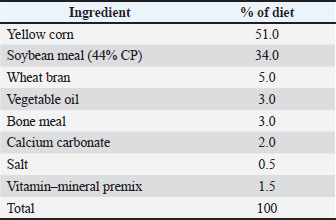
AbstractBackground: Poultry is the fastest-growing animal in the agriculture sector, and feed cost contributes 70%–80% of production cost; therefore, many efforts have been evaluated to reduce feed cost. One of these ways to improve feed efficiency is the use of natural feed additives in the diet, especially after reducing the use of antibiotics in poultry diets. Flaxseed contains bioactive compounds, particularly omega-3 fatty acids (α-linolenic acid) and lignans, which are used to improve energy metabolism and play antioxidant and anti-inflammatory effects in poultry diets. Vitamin E plays a vital function in protecting polyunsaturated fatty acids from oxidative damage, preserving cell membrane integrity, and supporting immune functions. Aim: This study aimed to evaluate the physiological and productive effects of flaxseed (Linum usitatissimum) and vitamin E supplementation, individually or in combination, in Japanese quail (Coturnix japonica). Methods: A total of 120 quails were randomly assigned to four dietary treatments: commercial diet (control), commercial diet with flaxseed, commercial diet with vitamin E, and commercial diet with both flaxseed and vitamin E, each group comprising three replicates with 10 chicks per replicate, and the study lasted 5 weeks following 1 week of adaptation. Results: The combined supplementation markedly enhanced growth performance, improving body weight gain, feed efficiency, and survivability compared with the control group. Serum biochemical analysis revealed improved protein metabolism and a healthier lipid profile, with reductions in cholesterol, triglycerides, and low-density lipoprotein, alongside an increase in high-density lipoprotein. Antioxidant indices confirmed strengthened defense mechanisms, as glutathione levels increased and malondialdehyde concentrations decreased, while liver enzyme activities, aspartate transaminase and alanine transaminase were reduced, indicating improved hepatic function. The synergistic interaction between omega-3 fatty acids from flaxseed and the antioxidant role of vitamin E contributed to better metabolic efficiency and oxidative stability. Conclusion: These findings highlight that flaxseed and vitamin E can be fed to Japanese quail as promising natural feed additives that can enhance productivity, health status, and sustainability in quail production. Keywords: Flaxseed, Growth performance, Japanese quail, Vitamin E. IntroductionThe poultry industry is increasingly focused on natural and sustainable feed additives that can enhance productivity, health, and product quality while reducing reliance on synthetic growth promoters. Japanese quail (Coturnix japonica) is widely recognized as a valuable model species due to its rapid growth, short generation interval, and economic importance in meat and egg production. Optimizing its dietary regimen through functional feed supplementation has therefore become a subject of considerable scientific interest. Flaxseed (Linum usitatissimum) is a rich source of bioactive compounds, particularly omega-3 fatty acids (α-linolenic acid) and lignans, which have been shown to modulate lipid metabolism, improve energy utilization, and exert antioxidant and anti-inflammatory effects in poultry species (Banerjee et al., 2021; Pan et al., 2021). Recent studies confirm that flaxseed inclusion in quail diets reduces serum cholesterol and triglycerides while enhancing growth performance and carcass quality (Hasan et al., 2021; El-Beltagi et al., 2022). Vitamin E (α-tocopherol), a lipid-soluble antioxidant, plays a critical role in protecting polyunsaturated fatty acids from oxidative damage, maintaining cell membrane integrity, and supporting immune and reproductive functions (Surai, 2020). Newer investigations highlight its importance in mitigating oxidative stress under challenging production environments, including heat stress in quail (Astuti et al., 2024) and improving egg production and metabolic efficiency when combined with selenium (Ameen et al., 2024). Given that omega-3 fatty acids are highly susceptible to peroxidation, combining flaxseed with vitamin E is hypothesized to produce synergistic benefits. This dual supplementation may stabilize dietary lipids, enhance antioxidant defense systems, and improve overall physiological resilience. Recent findings in poultry confirm that such combinations reduce oxidative stress biomarkers, improve lipid profiles, and promote growth efficiency (Ahmed et al., 2020; Kumar et al., 2022). However, limited research has specifically addressed the combined effects of flaxseed and vitamin E in Japanese quail, representing a gap in the literature. Therefore, the present research investigated the effects of flaxseed and vitamin E (individual and combined) supplementation on growth performance, biochemical parameters, and antioxidant status in Japanese quail. The outcomes are expected to provide a practical and sustainable feeding strategy that enhances productivity and health while supporting environmentally responsible poultry production. Materials and MethodsExperimental site and durationThe experiment was conducted at the Poultry Research Unit, Department of Zoology, Faculty of Science, Sabratha University, Libya, during January and February 2025. The trial lasted for 5 weeks following a one-week adaptation period. Experimental birds and managementIn vivo experiment, a total of 120 unsexed Japanese quails (Coturnix japonica) were used in this study and obtained from a commercial hatchery. The birds were placed in wire mesh at the bottom of the cages under controlled conditions, and each cage was equipped with two adjustable nipple drinkers and front-mounted feed. On day 7 of age, the chickens were weighed and randomly distributed to four dietary treatments according to their initial body weight (BW) (average 28 ± 0.5 g). The birds were reared in cages of identical size (50 × 50 cm floor area and 80 cm in height) and subjected to similar management practices (lighting, feeding, and watering) throughout the experiment except for the diets offered. There were 3 cages per treatment with 10 birds per cage. The initial room temperature was 35°C and was then decreased by 2°C per week; relative humidity: 65% ± 5%; lighting program: 22 hours light, and 2 hours darkness with a minimum light intensity of 20 lux throughout the experiment. Feed and fresh water were provided ad libitum throughout the experimental period, and the health of the birds was observed every day. Experimental design and dietary treatmentsBirds were assigned to four dietary treatments: T1 (Control): birds were fed a commercial diet without supplementation; T2 (Flaxseed): commercial diet + 6% ground flaxseed; T3 (Vitamin E): commercial diet + 182 IU/kg vitamin E (Senobar-Kalati et al., 2012); T4 (Combination): commercial diet + 6% flaxseed + 182 IU/kg vitamin E in a completely randomized design. The birds were provided with feed and fresh water for ad libitum consumption. Commercial diet compositionThe ingredients of the commercial diets used in this experiment are shown in Table 1. The diet was manufactured at a private factory to meet the nutrient requirements of quails according to NRC (1994) for Japanese quails. A chemical analysis was performed for the diet following AOAC (1995). Table 1. Composition of the commercial diet for Japanese quail (as-fed basis).
Calculated nutrient compositionCrude protein: 22%; Metabolizable energy (ME): 2900 kcal/kg; Calcium: 1.0%; and Available phosphorus: 0.45%. Experimental dietsThe experimental diets were formulated by supplementing the commercial diet with flaxseed and/or vitamin E 182 IU/kg), as shown in Table 2. Table 2. Experimental diets for Japanese quail.
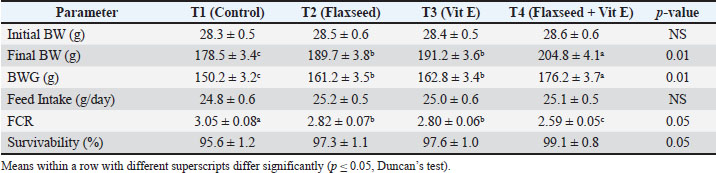
Growth performance measurementsBody weight: recorded weekly; feed intake (FI): measured daily per replicate; weight gain (WG): calculated as final BW—initial BW; feed conversion ratio (FCR): calculated as FI/WG; survivability (%): calculated as the proportion of birds alive at the end of the experiment. Blood sampling and biochemical analysisAt the end of the trial, three birds per replicate were randomly selected and fasted for 12 hours before blood collection. Approximately 3 ml of blood was drawn from the wing vein, centrifuged at 3,000 rpm for 15 minutes, and serum was stored at −20°C until chemical analysis started. Serum was analyzed for total protein, albumin, globulin, glucose, cholesterol, triglycerides, high-density lipoprotein (HDL), and low-density lipoprotein (LDL) using commercial diagnostic kits (Biolabo, France). Liver function was assessed by measuring aspartate transaminase (AST) and alanine transaminase (ALT) activities. Antioxidant and oxidative stress markersGlutathione (GSH) was determined according to Ellman (1959), while malondialdehyde (MDA) was measured using the thiobarbituric acid method (Buege and Aust, 1978). Statistical analysisData were analyzed using one-way analysis of variance test (SPSS v25.0). When significant differences were detected, means were compared using Duncan’s (1955) multiple range test at p ≤ 0.05. Results are expressed as mean ± standard error (SE). The statistical model utilized was: yi=µ + Ti + Eijk, where: yi=response; µ=overall mean; Ti=treatment effect; Eijk=experimental error. Ethical approvalThe Animal Research Ethics Board of the Poultry Research Unit, Department of Zoology, Faculty of Science, Sabratha University, Libya, granted ethical approval of this research (approved on 2 February 2025); the procedures were carried out according to the guidelines of the Poultry Research Unit, Department of Zoology, Faculty of Science, Sabratha University, Libya. ResultsGrowth performanceDietary supplementation with flaxseed and vitamin E significantly improved growth performance parameters in Japanese quail (Table 3). Birds in T2 (flaxseed) and T3 (vitamin E) groups showed higher body weight gain (BWG) and better FCR compared with the control diet (T1). The combination group (T4) exhibited the greatest improvement, with the highest final body weight and the most efficient FCR (p < 0.01). Survivability was also enhanced in supplemented groups, particularly in T4. Table 3. Effect of flaxseed and vitamin E supplementation on growth performance of Japanese quail (Mean ± SE).
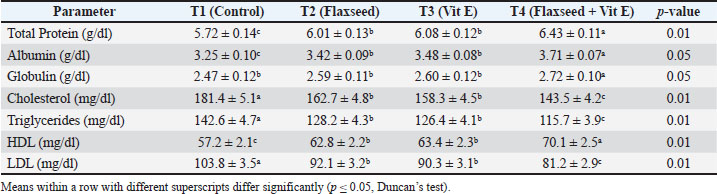
Blood biochemical parametersDietary treatments significantly influenced serum protein and lipid profiles (Table 4). The combination group (T4) recorded the highest total protein and albumin levels, while cholesterol, triglycerides, and LDL concentrations were markedly reduced. HDL was significantly elevated in supplemented groups, with the greatest increase observed in T4 (p < 0.01). Table 4. Effect of flaxseed and vitamin E supplementation on serum biochemical parameters of Japanese quail (Mean ± SE).
Liver enzymes and antioxidant markersSupplementation with flaxseed and vitamin E significantly reduced AST and ALT activities, indicating improved hepatic function (Table 5). Antioxidant indices showed a marked reduction in MDA levels and an increase in GSH concentration, particularly in the combination group (T4). Table 5. Effect of dietary treatments on liver enzymes and antioxidant markers in Japanese quail (Mean ± SE).
DiscussionAs presented in Table 3, dietary supplementation with flaxseed and vitamin E significantly enhanced growth performance in Japanese quail. Birds in the combination group (T4) achieved the highest final body weight (204.8 g), which was 15% greater than that of the control group (178.5 g). BWG followed a similar trend, with T4 recording 176.2 g compared to 150.2 g in the control, representing a 17% improvement. Importantly, the feed conversion ratio improved from 3.05 in the control diet to 2.59 in T4, indicating superior feed efficiency. Survivability also increased, reaching 99.1% in T4 compared with 95.6% in the control. These findings suggest that the synergistic interaction between flaxseed-derived omega-3 fatty acids and the antioxidant role of vitamin E enhanced nutrient utilization and physiological resilience. Comparable improvements in growth performance with vitamin E supplementation have been reported in broilers (Sadiq et al., 2023; Singh et al., 2023), supporting the current results The present findings corroborate earlier reports that flaxseed supplementation enhances serum HDL while decreasing cholesterol and triglycerides in poultry (Ahmed et al., 2020; Hasan et al., 2021). Vitamin E has also been shown to improve reproductive efficiency, immune response, and oxidative stability in quail (Akhter et al., 2022). More recent studies emphasize its role in mitigating oxidative stress under challenging production environments (Sadiq et al., 2023; Singh et al., 2023). Taken together, these studies and the current results confirm that combined supplementation provides superior protection against oxidative stress, hepatic dysfunction, and lipid imbalance compared to individual supplementation. ConclusionThis study demonstrated that dietary supplementation with flaxseed (6%) and vitamin E (182 IU/kg diet) significantly enhanced growth performance, metabolic efficiency, and antioxidant capacity in Japanese quail. The combined treatment (T4) yielded the greatest improvements, with body weight and feed conversion ratio increased by 15%, survivability reaching 99.1%, and marked reductions in serum cholesterol (−21%), triglycerides (−19%), and LDL (−22%), alongside a 23% rise in HDL. Antioxidant defense was strengthened, as MDA decreased (−21%) and GSH increased (+13%), with improved hepatic function indicated by lower AST (−22%) and ALT (−20%). These findings highlight flaxseed and vitamin E as effective natural feed additives that promote quail health and sustainable production and can be used in quail feed without an expectation of issues, while future research should explore impacts on carcass quality, egg traits, and consumer benefits. AcknowledgmentsThe authors would like to thank the staff of Poultry Research Unit, Department of Zoology, Faculty of Science, Sabratha University, Libya, for their tremendous helping to provide the birds and manufacturing the experimental diets. We would like to acknowledge the laboratory group in the College of Science at the University of Sabratha for ongoing help and skillful assistance in the sample collections and chemical analyses. Conflict of interestAll of the authors declare that there is no conflict of interest concerning the publication of this study. FundingAll of the authors declare that there are no grants, external funding, or financial assistance regarding this study. Authors' contributionsAll of the authors made an equal contribution to this manuscript. Data availabilityAll of the data that support the results of this study are available in the manuscript, and no additional data are available. ReferencesAbdulla, M. 2019. Regulation of gene expression by flaxseed oil in cholesterol biosynthesis. Mol. Nutr. Food. Res. 63, e1800983; doi:10.1002/mnfr.201800983 Ahmed, M.S., Rehman, H. and Khan, M.A. 2020. Impact of dietary flaxseed and vitamin E on the lipid profile and oxidative status of broilers. Br. Poultry Sci. 61, 452–461; doi:10.1080/00071668.2020.1764567 Akhter, S., Rahman, M.M. and Hasan, M.A. 2022. Dietary vitamin E supplementation enhances reproductive performance and immune response in Japanese quail. J. Anim. Physiol. Anim. Nutr. 106, 401–410; doi:10.1111/jpn.13600 Ameen, A.M., Al-Shammari, K.A. and Jassim, H.S. 2024. Combined supplementation of vitamin E and selenium improves metabolic efficiency and egg production in laying quail. J. Anim. Physiol. Anim. Nutr. 108, 550–558; doi:10.1111/jpn.2024.14567 AOAC. Association of Official Analytical Chemists. 1995. Official Methods of Analysis, 16th. Ed. Arlington, VA: Association of Official Analytical Chemists. Astuti, D., Rahmawati, N. and Prasetyo, H. 2024. Effects of dietary vitamin E supplementation on oxidative stress and heat tolerance in Japanese quail. Poultry Sci. 103(1), 1–10; doi:10.1016/j.psj.2023.103456 Banerjee, S., Kumar, R. and Singh, A. 2021. Omega-3-rich flaxseed enhances bile secretion and reduces cholesterol in quail. Int. J. Poultry. Res. 18, 115–123; doi: 10.3923/ijpr.2021.115.123 Buege, J.A. and Aust, S.D. 1978. Microsomal lipid peroxidation. In Methods in Enzymology. Eds., Fleischer. and Packer. Academic Press, 52, pp: 302–10; doi:10.1016/S0076-6879(78)52032-6 Duncan, D.B. 1955. Multiple range and multiple F tests. Biometrics 11, 1–42; doi: 10.2307/3001478 El-Beltagi, H.S., Mohamed, A.A. and Mekki, B.B. 2022. Flaxseed bioactive compounds and their effects on lipid metabolism in poultry. Animals 12, 1278; doi:10.3390/ani12101278 Ellman, G.L. 1959. Tissue sulfhydryl groups. Arch. Biochem. Biophys. 82, 70–77; doi:10.1016/0003-9861(59)90090-6 Hasan, M.A., Ahmed, M.S. and Rehman, H. 2021. Flaxseed and vitamin E synergistically improve the oxidative stability and growth performance in poultry. Poultry Sci. 100, 101230; doi:10.1016/j.psj.2021.101230 Kumar, P., Singh, R. and Mehta, A. 2022. Role of antioxidants in improving performance and health status of poultry. World’s. Poultry. Sci. J. 78, 501–514; doi:10.1080/00439339.2022.2091234 N.R.C. National Research Council. 1994. Nutrient requirement of poultry, 9th rev. Ed. Washington, D.C National Research Council. National Academy Press. Pan, X., Chen, H. and Li, J. 2021. The role of flaxseed lignans in oxidative stress regulation and inflammation control. J. Anim. Feed Sci. 30, 101–110; doi:10.22358/jafs/130123/2021 Sadiq, R.K., Abrahimkhil, M.A., Rahimi, N. and Banuree, S.Z. 2023. Effects of dietary vitamin E on growth performance and immune system of broiler chickens. J. World’s. Poultry Res. 13, 120–126; doi:10.36380/jwpr.2023.15 Senobar-Kalati, H., Shams-Shargh, M., Dastar, B. and Zerehdaran, S. 2012. Effect of higher levels of dietary vitamin E on humoral immune response, water holding capacity and oxidative stability of meat in growing Japanese quail (Coturnix coturnix japonica). Arch. Geflugelk. 76, 99–104. Singh, P.K., Prasad, S.K., Shekhar, A., Kumar, S., Kumar, K., Kumar, P. and Ganguly, B. 2023. Effect of different vitamin E sources on growth performance, nutrient utilization, antioxidant status, and carcass characteristics in broiler chicken. Indian J. Anim. Sci. 93, 475–480; doi:10.18805/IJAS-D-22-1234 Surai, P.F. 2020. Vitamin E in animal nutrition: biochemistry and physiology. Poultry. Sci. 99, 965–976; doi:10.1016/j.psj.2019.12.002 | ||


| How to Cite this Article |
| Pubmed Style Embark JA, Khanfas YA, Alsalh MA, Etriieki AM. Synergistic effects of flaxseed and vitamin E on growth, lipid metabolism, and antioxidant status in Japanese Quail. Open Vet. J.. 2026; 16(6): 3438-3443. doi:10.5455/OVJ.2026.v16.i6.14 Web Style Embark JA, Khanfas YA, Alsalh MA, Etriieki AM. Synergistic effects of flaxseed and vitamin E on growth, lipid metabolism, and antioxidant status in Japanese Quail. https://www.openveterinaryjournal.com/?mno=313868 [Access: June 26, 2026]. doi:10.5455/OVJ.2026.v16.i6.14 AMA (American Medical Association) Style Embark JA, Khanfas YA, Alsalh MA, Etriieki AM. Synergistic effects of flaxseed and vitamin E on growth, lipid metabolism, and antioxidant status in Japanese Quail. Open Vet. J.. 2026; 16(6): 3438-3443. doi:10.5455/OVJ.2026.v16.i6.14 Vancouver/ICMJE Style Embark JA, Khanfas YA, Alsalh MA, Etriieki AM. Synergistic effects of flaxseed and vitamin E on growth, lipid metabolism, and antioxidant status in Japanese Quail. Open Vet. J.. (2026), [cited June 26, 2026]; 16(6): 3438-3443. doi:10.5455/OVJ.2026.v16.i6.14 Harvard Style Embark, J. A., Khanfas, . Y. A., Alsalh, . M. A. & Etriieki, . A. M. (2026) Synergistic effects of flaxseed and vitamin E on growth, lipid metabolism, and antioxidant status in Japanese Quail. Open Vet. J., 16 (6), 3438-3443. doi:10.5455/OVJ.2026.v16.i6.14 Turabian Style Embark, Jamal A., Yousef A. Khanfas, Mohammed Altayib Alsalh, and Abdulhamed M. Etriieki. 2026. Synergistic effects of flaxseed and vitamin E on growth, lipid metabolism, and antioxidant status in Japanese Quail. Open Veterinary Journal, 16 (6), 3438-3443. doi:10.5455/OVJ.2026.v16.i6.14 Chicago Style Embark, Jamal A., Yousef A. Khanfas, Mohammed Altayib Alsalh, and Abdulhamed M. Etriieki. "Synergistic effects of flaxseed and vitamin E on growth, lipid metabolism, and antioxidant status in Japanese Quail." Open Veterinary Journal 16 (2026), 3438-3443. doi:10.5455/OVJ.2026.v16.i6.14 MLA (The Modern Language Association) Style Embark, Jamal A., Yousef A. Khanfas, Mohammed Altayib Alsalh, and Abdulhamed M. Etriieki. "Synergistic effects of flaxseed and vitamin E on growth, lipid metabolism, and antioxidant status in Japanese Quail." Open Veterinary Journal 16.6 (2026), 3438-3443. Print. doi:10.5455/OVJ.2026.v16.i6.14 APA (American Psychological Association) Style Embark, J. A., Khanfas, . Y. A., Alsalh, . M. A. & Etriieki, . A. M. (2026) Synergistic effects of flaxseed and vitamin E on growth, lipid metabolism, and antioxidant status in Japanese Quail. Open Veterinary Journal, 16 (6), 3438-3443. doi:10.5455/OVJ.2026.v16.i6.14 |


