




| Research Article | ||
Open Vet. J.. 2026; 16(5): 2677-2684 Open Veterinary Journal, (2026), Vol. 16(5): 2677-2684 Research Article Molecular identification of Escherichia coli in poultry wet markets in Sulaymaniyah Province, IraqAlle Mahamood Rashid1, Zaid Khalaf Khidhir1 and Eman Dhahir Arif2*1Department of Animal Science, College of Agricultural Engineering Science, University of Sulaimani, Sulaymaniyah, Iraq 2Department of Microbiology, College of Veterinary Medicine, University of Sulaimani, Sulaymaniyah, Iraq *Corresponding Author: Eman Dhahir Arif. Department of Microbiology, College of Veterinary Medicine, University of Sulaimani, Sulaymaniyah, Iraq. Email: eman.aref [at] univsul.edu.iq Submitted: 14/02/2026 Revised: 14/04/2026 Accepted: 23/04/2026 Published: 31/05/2026 © 2025 Open Veterinary Journal
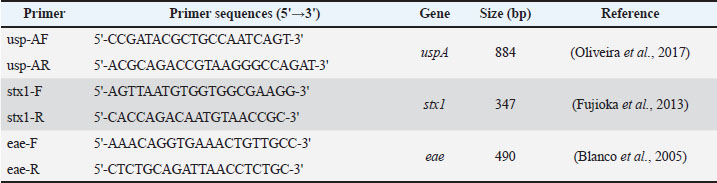
AbstractBackground: Escherichia coli is an enteric bacterium that is one of the leading causes of gastrointestinal illnesses, particularly when food products, including poultry, become contaminated during slaughter and processing. Microbial contamination of poultry meat is likely in markets with poor sanitary conditions. Aim: This study aimed to molecularly investigate the contamination of poultry wet markets by E. coli and assess the occurrence of selected virulence genes in the Sulaymaniyah Province, Iraq. Methods: We examined 134 E. coli isolates from 210 specimens collected from poultry carcasses, equipment, and workers, as well as from water at Sulaymaniyah wet markets. We extracted genomic DNA using the boiling method and used polymerase chain reaction testing to identify the species-specific uspA gene and two virulence genes (stx1 and eae). Then, we performed partial sequencing on specific samples to conduct phylogenetic analysis using MEGA-11 software. Results: Escherichia coli was found in 116 (55.24%) of 210 samples. The rates of E. coli detection on machine surfaces were the highest (86% in total; 26/30). Determining that stx1 and eae virulence genes were identified in samples positive for uspA. The highest number of 116 uspA-positive samples was found in carcasses (39), machines (26), and tables (23). The overall presence of virulence genes was minimal. In the phylogenetic analysis, the E. coli isolate (Accession PV941795) was closely related to strain lhrS16 and formed a cluster independent of other divergent lineages. Conclusion: The findings of the research demonstrate a critical health hazard in society that needs to be addressed by poultry wet markets by instituting better cleanliness standards. Keywords: Escherichia coli, eae, poultry, PCR, Stx1. IntroductionThe issue of food safety is a significant aspect of the overall public health policy it contributes to avoiding short-term and long-term illnesses (Asghar et al., 2025). Food contamination, such as diarrhea and various forms of cancer, is one of the leading causes of illness in the global community (Hussain, 2016). According to Lee et al. (2023)foodborne diseases cause approximately 2.2 million deaths annually, of which 1.9 million are deaths in children (Gritsch et al., 2022). According to the World Health Organization, more than 600 million people become victims of foodborne diseases every year, causing approximately 420,000 deaths annually around the world (Tidman et al., 2023). These diseases are caused by a variety of pathogens, such as bacteria, viruses, fungi, parasites, and toxic substances that contaminate food and water and cause more than 2,500 distinct diseases (Todd, 2020; Almaary, 2023; Al Sulivany et al., 2024). Microbial contamination of meat is usually determined using indicator colonies such as Escherichia coli (E. coli). Escherichia coli is a rod-shaped Gram-negative anaerobic bacterium that can be found in the gastrointestinal tract of warm-blooded animals, including birds and mammals (Sora et al., 2021; Sharef et al., 2025). Although most of the strains are harmless, some are pathogenic and pose a high risk to the general population. Escherichia coli is widely used to test food and water safety because of its use as an indicator of fecal contamination (Anjum et al., 2021; Rasul et al., 2025). Only a few types of E. coli strains cause diarrhea. The O157:H7 strain belongs to the category of E. coli that produces a toxin that damages the lining of the small intestine. Bloody diarrhea could result from this. Even a small amount of E. coli can cause illness. Vomiting, diarrhea, and abdominal cramping are signs of infection. In extreme circumstances, it can cause renal failure and even death. Undercooked ground beef and raw milk are just a few of the sources that have been connected to outbreaks of E. coli illness, which is usually transmitted by contaminated food or water (Hemin, 2023). Polymerase chain reaction (PCR) is a commonly used, rapid, and precise way to identify pathogenic bacteria in food. It is more sensitive and specific than conventional bacterial culture methods (Ye et al., 2025). In addition, a 2025 study in the journal Frontiers in Public Health has indicated that rt-PCR has a 100% detection rate in identifying pathogenic bacteria in cosmetic formulations, which has underscored its wide applicability and superior accuracy in various settings (Bolzon et al., 2025). The discriminatory ability of the technique has been further expanded by the development of digital PCR and machine learning-driven systems, enabling the specific identification of many bacterial species, including complex or low-quantum samples. These conclusions prove that PCR is not only an accurate diagnostic process but is also essential to control infection, clinical decision-making, and surveillance of the general health of the population, particularly in the face of the increasing challenge of antibiotic resistance (Bolzon et al., 2025). Shiga toxin-producing E. coli (STEC) and enteropathogenic E. coli contain virulence genes associated with severe gastrointestinal disease, including stx1, stx2, and eae (Panel et al., 2020). Conventional methods of detection rely on biochemical and culture methods, but molecular methods, especially PCR, can be used to identify virulence genes within a short period and with great accuracy (Ador et al., 2021). The current research intends to identify E. coli and their virulence genes, including stx1 and eae, using PCR in a poultry wet market in the Sulaymaniyah Province, Iraq. Materials and MethodsSample collectionA total of 134 E. coli isolates were isolated through culture (Rashid et al., 2026) from 210 samples collected from six different locations across Sulaymaniyah Province in various poultry wet markets, including carcasses, workers’ hands, and different equipment used in the poultry wet market, such as tables, knives, and de-feathering machines used for removing feathers from the chicken. Water samples were also taken. Extraction of the genomic DNAColony extraction involved transferring 2–3 colonies from freshly cultured bacteria, which were then mixed with 150 μl of ddH₂O and preheated at 95°C for 10 minutes in a thermal cycler (Blue-Ray, Taiwan). Purified DNA was obtained for 1 minute, after which the supernatant served as the PCR template (Espinosa et al., 2013). A Nanodrop Spectrophotometer (Blue-Ray, Taiwan) was used to measure the DNA concentration and purity. PrimersAs shown in Table 1, the forward and reverse primers were in lyophilized form and supplied by Macrogen, Korea, for the identification of E. coli isolates and their virulence genes. Table 1. Primers used in this study.
PCR amplificationGene amplification was performed using EasyTaq® PCR SuperMix (2X) Taq PCR mix (GeNet Bio, Korea). 0.2 ml PCR tubes were used for this process. Each tube contained 1 μl (10 pmol) of forward primers, 1 μl (10 pmol) of reverse primers, 5 μl of DNA, and 10 μl of the PCR mixture. To achieve a total volume of 20 μl, 3 μl of diethylpyrocarbonate treated water was added. Amplification was performed using a PCR thermocycler program (Blue-Ray- Taiwan). The thermal profiles of all genes are shown in Table 2. Table 2. PCR cycling program for uspA, stx1, and eae.
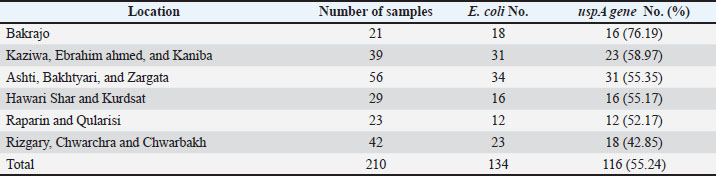
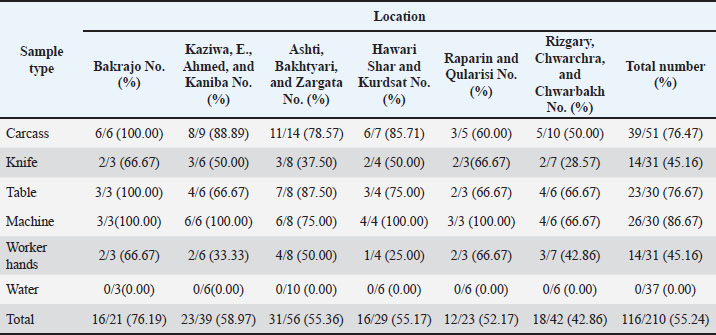
The PCR result was then examined after 9 μl of PCR product was loaded onto a 1% agarose gel (TransGene, China) in 1x Tris/Borate/EDTA buffer (Addbio Inc., Korea). The gel was stained with ethidium bromide (TransGen, China) and subjected to electrophoresis for 60 minutes at 80 V. The amplified DNA bands were visualized using an ultraviolet transilluminator (BIO-RAD, USA). The size of the PCR products was estimated according to the migration pattern of a 100-bp DNA ladder (GeneSand, China). Sequencing of uspA and phylogenetic analysisFive samples were sent for partial DNA sequencing to confirm the identity of the isolates. Briefly, 20 µl of the PCR amplicons of the uspA gene and their corresponding gene primers were sent for sequencing. After removing the junk sequences, especially at both ends of the DNA sequences, the acquired DNA sequences were analyzed and aligned with other reported DNA sequences in GenBank using Bioedit and MEGA-11 (Molecular Evolutionary Genetics Analysis version11) (Kumar et al., 2018). The Tamura3_parameter model with 1,000 bootstrap replicates was used to determine phylogenetic relationships (Tamura et al., 2021). Ethical approvalThis study was ethically permitted by the institutional animal care and use committee in the College of Agricultural Engineering Sciences, University of Sulaimani (UV.AGR.2024.1). ResultsDetection of uspAThe results in Table 3 show the number of positive samples of E. coli isolate and uspA gene according to the locations. Six regions were sampled: Bakrajo, Raparin, Qularisi, Kurdsat, Kaziwa, Bakhtyari, and Rizgary. Bakrajo had the highest overall pollution rate of 76.19% (16/18), whereas Rizagry and its surroundings had the lowest pollution rate of 42.85% (18/23). A total of 210 samples were collected. Of these, 134 yielded E. coli isolates using culture. PCR targeting the uspA gene confirmed that 116 (55.24%) of these isolates were E. coli. Table 4 shows the number of positive samples of E. coli isolates with the uspA gene for various samples. The evaluated samples were carcasses, knives, tables, machines, hands, and water. The E. coli detection rates were highest on machine surfaces, with an overall positivity of 86.67% (26/30). Tables also had a high contamination rate of 76.67% (23/30), followed by carcasses at 76.47% (39/51). However, the water tests were completely free of E. coli (0/37), indicating no contamination in the tested water sources. Table 3. Number of positive E. coli isolates and uspA gene samples according to location.
Table 4. Number of positive E. coli isolates and uspA gene samples from various samples.
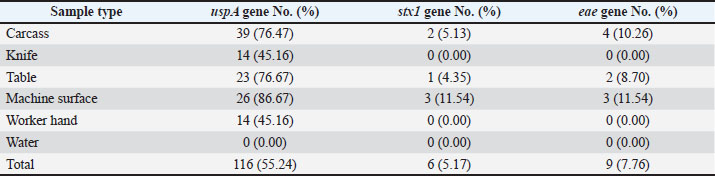
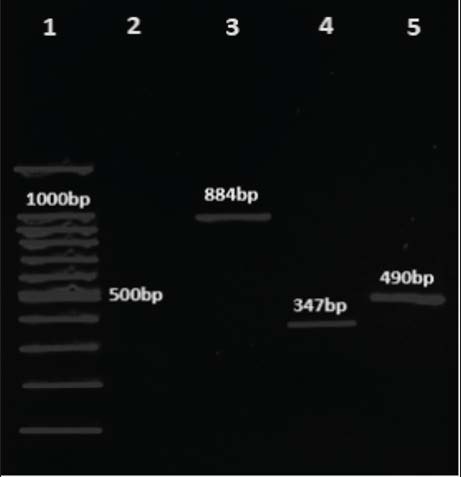
Detection of stx1 and eae genesTable 5. Identification of stx1 and eae virulence genes in samples positive for uspA. The virulence genes were also observed in these samples. The carcasses contained 2 (5.13%) stx1 and 4 (10.26%) eae gene-positive samples, machines contained three of each, and tables contained 1 (4.35%) stx1 and 2 (8.70%) eae gene-positive samples. No virulence genes were identified in knives, hands, and water samples. A single pair of primers was used for the amplification of the uspA genes, which measured 884 bp. The expected 347 and 490-bp amplicons were visualized through agarose gel electrophoresis, confirming the presence of the stx1 and eae genes in these isolates, respectively, as shown in (Fig. 1). Table 5. Number of samples positive for uspA, stx1, and eae genes from various samples.
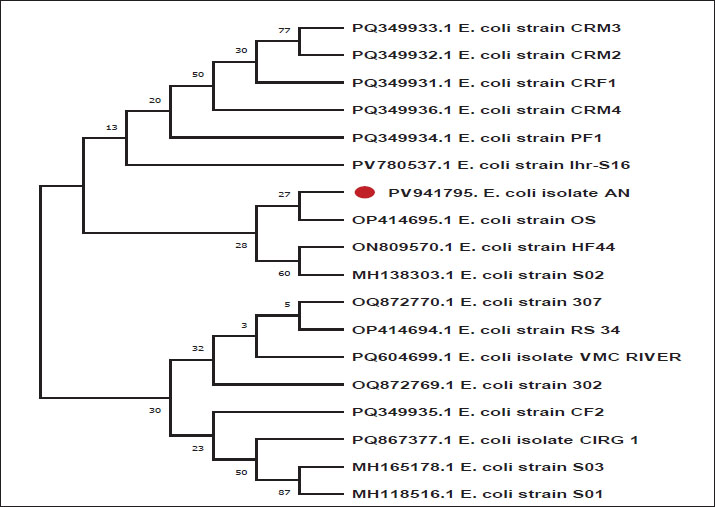
Fig. 1. Agarose gel electrophoresis showing the following PCR amplicons: uspA (884 bp, lane 3), stx1 (347 bp, lane 4), and eae (490 bp, lane 5). DNA size marker (lane 1) and negative control (no DNA in the PCR reaction mix, lane 2) are included in the analysis. Sequencing analysisThe results were confirmed by determining the sequence of the PCR product, which was named E. coli strain AN and received the accession number PV941795 in National Center for Biotechnology Information (NCBI) GenBank. Phylogenetic analysisThe PCR-amplified sequence of a positive E. coli sample was submitted to the International Nucleotide Sequence Database (INSD), overseen by the NCBI, with the accession number PV941795. To determine the evolutionary position and genetic relatedness of the isolate, a phylogenetic analysis was performed using a selection of gene sequences from field strains and closely related reference strains obtained from GenBank. The field isolate PV941795 grouped closely with E. coli strain lhr-S16 (PV780537.1) in the resulting phylogenetic tree with modest bootstrap support (27%; Fig. 2). Furthermore, this cluster was different from other divergent branches, such as OS (OP414695.1), HF44 (ON809570.1), and S02 (MH138303.1), among others, and from another clade made up of CRM1–CRM4 and PF1 strains (PQ349933.1 to PQ349934.1). The field strain shares high genetic similarity with international isolates, particularly from places such as Vietnam, India, and possibly the Middle East.
Fig. 2. A phylogenetic tree based on the partial uspA gene sequence of the PV941795 isolate was constructed using the Tamura 3-parameter model with 1,000 bootstrap replicates. DiscussionPoultry production has grown rapidly worldwide because people want affordable, high-protein meat, and chickens are growing rapidly. However, poultry meat can easily spoil and often pick up bacteria during slaughter and handling (Swedan and Abu Alrub, 2019; Saewan et al., 2021). This study demonstrated the cleanliness and safety of poultry products in wet markets across Sulaymaniyah Province, Iraq, focusing on detecting E. coli as a sign of contamination. In 116/210 samples on a diverse range of environmental and processing surfaces, the uspA gene identified E. coli (55.24%). This shows that there is a worrying level of contamination of the meat processing environments examined (Faille et al., 2018). Surfaces of the machines had the highest contamination rate of 86.67%, followed by 76.67% on the tables and 76.47% on the carcasses. Notably, 100% of all the machine samples from Bakrajo, Raparin, Kurdsat, and Kaziwa were positive. This could be because the biofilm formed on the complex surfaces of the machines, and hand contamination is due to inconsistent glove use. Carcass contamination percentages also reflected other studies around the globe, such as Thilakarathne et al. (2025)who reported that the percentages of E. coli in carcasses in Bangladesh abattoirs were 70%–80%, which is comparable to the 66.6% in this case. In this study, it is noteworthy that the water samples used were contaminated with zero, which is the opposite of the findings of Kabir et al. (2020)who concluded that water is a popular method through which E. coli is transmitted in developing countries. This implies that the sampled facilities have a reasonably good water quality control system. Low or undetectable E. coli levels in water samples do not necessarily indicate the absence of microbial contamination. Escherichia coli is commonly used as an indicator of fecal pollution, but it does not represent all pathogens, and its absence may not reflect true water quality (Nowicki et al., 2021). The relationship between E. coli and pathogenic microorganisms is not always consistent, as pathogens may still be present even when E. coli is not detected (Motlagh et al., 2019). Bacteria can enter a viable but non-culturable state, in which they remain alive but cannot be detected by standard culture methods, leading to false-negative results (Richiardi et al., 2023). In addition, culture-based methods have limitations in sensitivity, especially under environmental stress conditions that reduce bacterial detectability (Foddai and Grant, 2020). Therefore, relying on E. coli alone is insufficient, and using multiple microbial indicators is recommended to accurately assess water quality (Nowicki et al., 2021). Despite having fewer samples, Rizgary had the lowest positivity rate (42.85%), highlighting the need for more localized research. In contrast, Bakrajo had the highest overall contamination (76.19%), possibly as a result of inadequate resources or laxer enforcement of hygiene regulations. These geographical differences are consistent with Dorado-García et al. (2018)who found that regional differences in infrastructure and sanitation standards are frequently correlated with microbiological contamination. According to Dorado-García et al. (2018)samples of worker hands and knives had moderate contamination rates (45.16% each), which could be a result of the uneven glove or personal hygiene use of staff members. The total lack of E. coli in the water indicates successful mitigation in at least one crucial area of hygiene. However, the results generally concur with international literature in identifying carcasses, tables, and machinery as persistent contamination locations (Mothiba et al., 2023). These findings highlight the necessity of improved cleaning procedures, focused interventions in high-risk areas, and regular molecular monitoring to reduce the dangers to public health posed by contaminated meat products (Sogore et al., 2024). In this study, stx1 and eae genes were detected in 5.41% and 8.11%, respectively, of uspA-positive samples from poultry processing environments, primarily in carcasses, machinery, and tables. These findings are consistent with the results of other poultry studies, such as the study by Sogore et al. (2024) which found similar low prevalence rates of these virulence genes (approximately 410%) in fresh poultry meat and processing facilities. The lack of these genes in water, knives, and hand samples confirms the effective hygiene practices in those areas, which is contrary to the regular presence of STEC contamination in the hands of workers and in water and open zones in Egypt. The occurrence of stx1 and eae in high-contact areas, despite the small aggregate detection rate, continues to be a threat to civil well-being and highlights the requirement to keep the settings where chicken processing occurs clean and under molecular control (Elmonir et al., 2018). According to phylogenetic analysis, one sequenced isolate (PV941795) could be similar to strain lhr-S16 (PV780537.1). Nevertheless, the lack of an outgroup reduces the evolutionary interpretation’s robustness, and the bootstrap support for this clustering was weak (27%). As a result, these findings should be regarded as preliminary and suggestive rather than definitive. Similar weakly supported clustering patterns have been documented in studies on poultry, where phylogenetic resolution was limited due to a lack of sequence data (Shaiber et al., 2020). Stronger phylogenetic resolution and more trustworthy insights into genetic relatedness will require future research using more isolates, additional virulence markers, such as stx2, and clearly defined outgroups (Clermont et al., 2021; Aworh et al., 2021). ConclusionThis study found E. coli contamination in Sulaymaniyah Province’s poultry wet markets, especially on carcasses, machine surfaces, and tables. There was little immediate pathogenic risk, as evidenced by the low prevalence of stx1 and eae. These results support the necessity of ongoing molecular monitoring to avert possible food safety problems and emphasize the need for better sanitation and hygiene practices in high-risk areas. Strengthening cleaning procedures and conducting routine molecular monitoring, including additional virulence markers like stx2 and antimicrobial resistance testing, are recommended to provide a more thorough assessment of food safety risks in Iraq’s poultry markets. AcknowledgmentsThe authors would like to thank the research center at the University of Sulaimani, Sulaymaniyah, Iraq, for providing this study. Conflict of interestThe authors declare no conflict of interest. FundingNone. Authors’ contributionsAlle Mahamood Rashid: Article writing and practical work. Zaid Khalaf Khidhir: statistical analysis. Eman Dhahir Arif: grammatical corrections and editing. Data availabilityData are available upon request. ReferencesAdor, M.A.A., Haque, M.S., Paul, S.I., Chakma, J., Ehsan, R. and Rahman, A. 2021. Potential application of PCR based molecular methods in fish pathogen identification: a review. Aquac. Stud. 22(1), 21. Al Sulivany, B.S., Abdulrahman, P., Ahmed, D.Y., Naif, R.O. and Omer, E.A. 2024. Transmission of zoonotic infections (bacteria, parasites, viruses, and fungi) from aquaculture to humans and molecular methods for organism identification. J. Zoonotic Dis. 8(4), 580–591. Almaary, K.S. 2023. Food-borne diseases and their impact on health. Biosci. Biotechnol. Res. Asia. 20(3), 745–755. Anjum, M.F., Schmitt, H., Börjesson, S., Berendonk, T.U., Donner, E., Stehling, E.G., Boerlin, P., Topp, E., Jardine, C., Li, X., Li, B., Dolejska, M., Madec, J.Y., Dagot, C., Guenther, S., Walsh, F., Villa, L., Veldman, K., Sunde, M., Krzeminski, P., Wasyl, D., Popowska, M., Järhult, J., Örn, S., Mahjoub, O., Mansour, W., Thái, Đ.N., Elving, J. and Pedersen, K. 2021. The potential of using E. coli as an indicator for the surveillance of antimicrobial resistance (AMR) in the environment. Curr. Opin. Microbiol. 64, 152–158. Asghar, S., Iftikhar, A., Umar, A., Tahir, S. and Abid, J. 2025. Food safety considerations to achieve global health outcomes under food security issues. In One Health horizons: integrating biodiversity, biosecurity, and sustainable practices. Eds., Farooqi, S.H., Kholik, K. and Zaman, M.A. Faisalabad, Pakistan: Unique Scientific Publishers, pp: 31–9. Aworh, M.K., Kwaga, J.K.P., Hendriksen, R.S., Okolocha, E.C. and Thakur, S. 2021. Genetic relatedness of multidrug resistant Escherichia coli isolated from humans, chickens and poultry environments. Antimicrob. Resist. Infect. Control. 10(1), 58. Blanco, M., Schumacher, S., Tasara, T., Zweifel, C., Blanco, J.E., Dahbi, G., Blanco, J. and Stephan, R. 2005. Serotypes, intimin variants and other virulence factors of eae positive Escherichia coli strains isolated from healthy cattle in Switzerland. Identification of a new intimin variant gene (eae-η2). BMC. Microbiol. 5(1), 15882459. Bolzon, V., Bulfoni, M., Nencioni, A. and Nencioni, E. 2025. Development of real-time PCR methods for quality control detection of pathogenic bacteria in cosmetic preparations. Front. Public Health 13, 1572201. Clermont, O., Condamine, B., Dion, S., Gordon, D.M. and Denamur, E. 2021. The E phylogroup of Escherichia coli is highly diverse and mimics the whole E. coli species population structure. Environ. Microbiol. 23(11), 7139–7151. Dorado-García, A., Smid, J.H., Van Pelt, W., Bonten, M.J.M., Fluit, A.C., Van Den Bunt, G., Wagenaar, J.A., Hordijk, J., Dierikx, C.M., Veldman, K.T., De Koeijer, A., Dohmen, W., Schmitt, H., Liakopoulos, A., Pacholewicz, E., Lam, T.J.G.M., Velthuis, A.G., Heuvelink, A., Gonggrijp, M.A., Van Duijkeren, E., Van Hoek, A.H.A.M., De Roda Husman, A.M., Blaak, H., Havelaar, A.H., Mevius, D.J. and Heederik, D.J.J. 2018. Molecular relatedness of ESBL/AmpC-producing Escherichia coli from humans, animals, food and the environment: a pooled analysis. J. Antimicrob. Chemother. 73(2), 339–347. Elmonir, W., Abo-Remela, E. and Sobeih, A. 2018. Public health risks of Escherichia coli and Staphylococcus aureus in raw bovine milk sold in informal markets in Egypt. J. Infect. Dev. Ctries. 12(7), 533–541. Espinosa, I., Báez, M., Percedo, M.I. and Martínez, S. 2013. Evaluation of simplified DNA extraction methods for Streptococcus suis typing. Rev. Salud Anim. 35(1), 59–63. Faille, C., Cunault, C., Dubois, T. and Bénézech, T. 2018. Hygienic design of food processing lines to mitigate the risk of bacterial food contamination with respect to environmental concerns. Innov. Food Sci. Emerg. Technol. 46, 65–73. Foddai, A.C.G. and Grant, I.R. 2020. Methods for detection of viable foodborne pathogens: current state-of-art and future prospects. Appl. Microbiol. Biotechnol. 104(10), 4281–4288. Fujioka, M., Otomo, Y. and Ahsan, C.R. 2013. A novel single-step multiplex polymerase chain reaction assay for the detection of diarrheagenic Escherichia coli. J. Microbiol. Methods. 92(3), 289–292. Gritsch, S., Batchelor, T.T. and Gonzalez Castro, L.N. 2022. Diagnostic, therapeutic, and prognostic implications of the 2021 World Health Organization classification of tumors of the central nervous system. Cancer 128(1), 47–58. Hemin, M. 2023. Escherichia coli and its effects on public health. J. Immunol. Tech. Infect. Dis. 12(1), 1. Hussain, M. 2016. Food contamination: major challenges of the future. Foods 5(2), 21. Kabir, M.N., Aras, S., Wadood, S., Chowdhury, S. and Fouladkhah, A.C. 2020. Fate and biofilm formation of wild-type and pressure-stressed pathogens of public health concern in surface water and on abiotic surfaces. Microorganisms 8(3), 408. Kumar, S., Stecher, G., Li, M., Knyaz, C. and Tamura, K. 2018. MEGA X: molecular evolutionary genetics analysis across computing platforms. Mol. Biol. Evol. 35(6), 1547–1549. Lee, D., Gibson, J.M., Brown, J., Habtewold, J. and Murphy, H.M. 2023. Burden of disease from contaminated drinking water in countries with high access to safely managed water: a systematic review. Water. Res. 242, 120244. Mothiba, D.P., Khabo-Mmekoa, C.M., Ngobeni-Nyambi, R. and Momba, M.N.B. 2023. Assessing the occurrence of host-specific Faecal Indicator markers in water systems as a function of water, sanitation and hygiene practices: a case study in rural communities of Vhembe District municipality, South Africa. Pathogens 13(1), 16. Motlagh, A.M. and Yang, Z. 2019. Detection and occurrence of indicator organisms and pathogens. Water Environ. Res.91(10), 1402–1408. Nowicki, S., Delaurent, Z.R., De Villiers, E.P., Githinji, G. and Charles, K.J. 2021. The utility of Escherichia coli as a contamination indicator for rural drinking water: evidence from whole genome sequencing. PLos One 16(1), e0245910. Oliveira, R.V., Oliveira, M.C. and Pelli, A. 2017. Disease infection by Enterobacteriaceae family in fishes: a review. J. Microbiol. Exp. 4(5), 128. Panel, E.B., Koutsoumanis, K., Allende, A., Alvarez‐ Ordóñez, A., Bover‐Cid, S., Chemaly, M., Davies, R., De Cesare, A., Herman, L., Hilbert, F., Lindqvist, R., Nauta, M., Peixe, L., Ru, G., Simmons, M., Skandamis, P., Suffredini, E., Jenkins, C., Monteiro Pires, S., Morabito, S., Niskanen, T., Scheutz, F., Da Silva Felício, M.T., Messens, W. and Bolton, D. 2020. Pathogenicity assessment of Shiga toxinproducing Escherichia coli (STEC) and the public health risk posed by contamination of food with STEC. Efsa. J. 18(1), e05967. Rashid, A.M., Khidhir, Z.K. and Arif, E.D. 2026. Isolation and identification of E. coli from a Poultry Wet Market in Sulaymaniyah Province, Iraq. NTU. J. Agric. Vet. Sci. “in press” Rasul, Z.S., Khidhir, Z.K. and Arif, E.D. 2025. Hygienic status of modern animal slaughterhouse in Sulaymaniyah Province, Iraq. Egypt. J. Vet. Sci. 57(9), 289–297. Richiardi, L., Pignata, C., Fea, E., Bonetta, S. and Carraro, E. 2023. Are indicator microorganisms predictive of pathogens in water?. Water 15(16), 2964. Saewan, S., Khidhir, Z. and Al Bayati, M. 2021. The impact of storage duration and conditions on the formation of biogenic amines and microbial content in poultry meat. Iraqi J. Vet. Sci. 35, 183–188. Shaiber, A., Willis, A.D., Delmont, T.O., Roux, S., Chen, L.X., Schmid, A.C., Yousef, M., Watson, A.R., Lolans, K., Esen, O.C., Lee, S.T.M., Downey, N., Morrison, H.G., Dewhirst, F.E., Mark Welch, J.L. and Eren, A.M. 2020. Functional and genetic markers of niche partitioning among enigmatic members of the human oral microbiome. Genome. Biol. 21(1), 292. Sharef, N. A., Khidhir, Z. K. and Arif, E. D. 2025. Evaluating the hygienic quality of fish meat and environmental contamination with Escherichia coli. Egypt. J. Aquat. Biol. Fish. 29(4), 149–162. Sogore, T., Guo, M., Sun, N., Jiang, D., Shen, M. and Ding, T. 2024. Microbiological and chemical hazards in cultured meat and methods for their detection. Compr. Rev. Food. Sci. Food. Saf. 23(4), e13392. Sora, V.M., Meroni, G., Martino, P.A., Soggiu, A., Bonizzi, L. and Zecconi, A. 2021. Extraintestinal pathogenic Escherichia coli: virulence factors and antibiotic resistance. Pathogens 10(11), 1355. Swedan, S. and Abu Alrub, H. 2019. Antimicrobial resistance, virulence factors, and pathotypes of Escherichia coli isolated from drinking water sources in Jordan. Pathogens 8(2), 86. Tamura, K., Stecher, G. and Kumar, S. 2021. MEGA11: molecular evolutionary genetics analysis version 11. Mol. Biol. Evol. 38(7), 3022–3027. Thilakarathne, D.S., Gamage, B.Y.I., Kottawatta, K.S.A., Abayawansha, K.G.R., Gunawardana, W.S.N. and Kalupahana, R.S. 2025. Decadal trends in antimicrobial susceptibility of Escherichia coli and Salmonella spp. in chicken from small-scale farm shops in Kandy district, Sri Lanka. J. Natl. Sci. Found. Sri. Lanka. 52(4), 419–433. Tidman, R., Kanankege, K.S.T., Bangert, M. and Abela-Ridder, B. 2023. Global prevalence of 4 neglected foodborne trematodes targeted for control by WHO: a scoping review to highlight the gaps. PLos Negl. Trop. Dis. 3(3), 11073. Todd, E. 2020. Food-borne disease prevention and risk assessment. Int. J. Environ. Res. Public Health 17(14), 5129. Ye, Y., Li, L., Chen, Y., Li, B. and Xu, Z. 2025. Molecular methods for rapid detection and identification of foodborne pathogenic bacteria. World J. Microbiol. Biotechnol. 41(5), 175. | ||

| How to Cite this Article |
| Pubmed Style Rashid AM, Khidhir ZK, Arif ED. Molecular identification of Escherichia coli in poultry wet markets in Sulaymaniyah Province, Iraq. Open Vet. J.. 2026; 16(5): 2677-2684. doi:10.5455/OVJ.2026.v16.i5.10 Web Style Rashid AM, Khidhir ZK, Arif ED. Molecular identification of Escherichia coli in poultry wet markets in Sulaymaniyah Province, Iraq. https://www.openveterinaryjournal.com/?mno=310539 [Access: June 26, 2026]. doi:10.5455/OVJ.2026.v16.i5.10 AMA (American Medical Association) Style Rashid AM, Khidhir ZK, Arif ED. Molecular identification of Escherichia coli in poultry wet markets in Sulaymaniyah Province, Iraq. Open Vet. J.. 2026; 16(5): 2677-2684. doi:10.5455/OVJ.2026.v16.i5.10 Vancouver/ICMJE Style Rashid AM, Khidhir ZK, Arif ED. Molecular identification of Escherichia coli in poultry wet markets in Sulaymaniyah Province, Iraq. Open Vet. J.. (2026), [cited June 26, 2026]; 16(5): 2677-2684. doi:10.5455/OVJ.2026.v16.i5.10 Harvard Style Rashid, A. M., Khidhir, . Z. K. & Arif, . E. D. (2026) Molecular identification of Escherichia coli in poultry wet markets in Sulaymaniyah Province, Iraq. Open Vet. J., 16 (5), 2677-2684. doi:10.5455/OVJ.2026.v16.i5.10 Turabian Style Rashid, Alle Mahamood, Zaid Khalaf Khidhir, and Eman Dhahir Arif. 2026. Molecular identification of Escherichia coli in poultry wet markets in Sulaymaniyah Province, Iraq. Open Veterinary Journal, 16 (5), 2677-2684. doi:10.5455/OVJ.2026.v16.i5.10 Chicago Style Rashid, Alle Mahamood, Zaid Khalaf Khidhir, and Eman Dhahir Arif. "Molecular identification of Escherichia coli in poultry wet markets in Sulaymaniyah Province, Iraq." Open Veterinary Journal 16 (2026), 2677-2684. doi:10.5455/OVJ.2026.v16.i5.10 MLA (The Modern Language Association) Style Rashid, Alle Mahamood, Zaid Khalaf Khidhir, and Eman Dhahir Arif. "Molecular identification of Escherichia coli in poultry wet markets in Sulaymaniyah Province, Iraq." Open Veterinary Journal 16.5 (2026), 2677-2684. Print. doi:10.5455/OVJ.2026.v16.i5.10 APA (American Psychological Association) Style Rashid, A. M., Khidhir, . Z. K. & Arif, . E. D. (2026) Molecular identification of Escherichia coli in poultry wet markets in Sulaymaniyah Province, Iraq. Open Veterinary Journal, 16 (5), 2677-2684. doi:10.5455/OVJ.2026.v16.i5.10 |


