




| Research Article | ||
Open Vet. J.. 2026; 16(5): 2667-2676 Open Veterinary Journal, (2026), Vol. 16(5): 2667-2676 Research Article Real time PCR identification of Ixodes holocyclus from imported cats and associated health risksAyman Albanna and Omar A. Al-Mahmood*Department of Veterinary Public Health, College of Veterinary Medicine, University of Mosul, Mosul, Iraq *Corresponding Author: Omar A. Al-Mahmood. Department of Veterinary Public Health, College of Veterinary Medicine, University of Mosul, Mosul, Iraq. Email: omar.a.almoula [at] uomosul.edu.iq Submitted: 27/1/2025 Revised: 25/03/2026 Accepted: 14/04/2026 Published: 31/05/2026 © 2025 Open Veterinary Journal
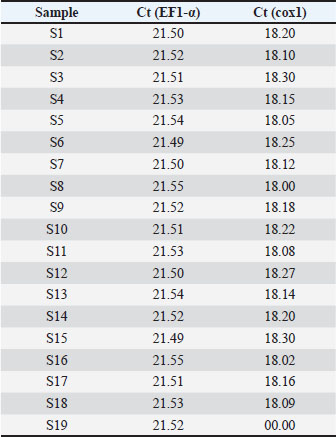
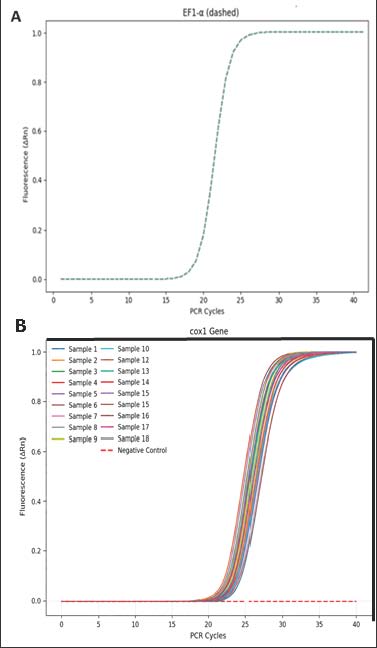
AbstractBackground: Ticks are ectoparasites of major veterinary and medical importance due to their capacity to vector numerous pathogens. Bacterial, viral, and protozoan diseases that affect livestock and companion animals can cause economic losses and reduce productivity. To protect animal health, ensure food safety, and reduce the incidence of tick-borne disease in humans, effective surveillance and integrated control of ticks are essential. Aim: The objective of this article was to employ morphological identification and molecular techniques to detect and confirm Ixodes holocyclus ticks infesting imported domestic cats. Methods: A study of a total of 100 imported domestic cats from importers, which were brought to the veterinary clinic for regular check-ups. Under a stereomicroscope, ticks were identified by their morphology and using standard taxonomic keys. DNA obtained from every individual tick sampled was examined by targeting tick-specific gene markers through conventional PCR. Real-time PCR detects and confirms the types of tick species and their associated pathogens in their natural habitats. Results: The results of morphological identification revealed the presence of the tick in 18 out of 100 cats (18%), exhibiting the morphological characteristics of the I. holocyclus. The positive samples were then identified as isolates using conventional PCR based on the cox1 mitochondrion. The cox1 gene had Ct values of 18.00 to 18.30; for EF1-α, it was around 21.49 to 21.55, and thus consistent. The melt curve data of both genes produced a single peak, indicating the high specificity of the assay. A phylogenetic analysis of the 18 sequenced isolates based on partial mitochondrial COX1 gene sequences showed four clusters. The largest cluster was comprised of 11 isolates that were closely related to OQ675411.1 (Ixodes holocyclus isolate H1). Overall, the isolates were confirmed as Ixodes holocyclus, with minor differences. Conclusion: The real-time PCR method was able to detect Ixodes holocyclus ticks with speed, accuracy, and 100% specificity. Ticks can infest cats, allowing them to carry these parasites into both the house and the environment. This also raises the risk of transmission, including zoonotic transmission. Furthermore, this can also pose a public health hazard. Keywords: Animal public health, Imported cat, Ixodes holocyclus, Phylogenic tree. IntroductionTicks are one of the most important ectoparasites affecting human and veterinary health in the world due to their ability to transmit many pathogens, including bacteria, protozoa, and viruses (Brites-Neto, Duarte et al., 2015). The Australian paralysis tick (Ixodes holocyclus) is a medically and economically important species within this group due to the high neurotoxicity, and as a vector of multiple zoonotic agents through the salivary neurotoxins it produces that interrupt neuromuscular transmission by interfering with acetylcholine secretion from nerve terminals. (Bagnall and Doube, 1975). Although I. holocyclus is typically found along eastern coastal Australia, its movement across borders with domestic animals because of globalization can lead to the transfer of this species to other countries where it is not found (Ruppin et al., 2012). In recent years, it has been a growing concern that domestic cats and dogs imported from Australia and areas close to Australia geographically, like New Zealand; Papua New Guinea; Southeast Asia, could accidentally introduce I. holocyclus into new places where the weather and plants may help it settle down (Dybing, 2017). The life cycle of I. holocyclus has three stages, including the larva, nymph, and adult. Each stage needs a different blood meal from a vertebrate host (Apanaskevich et al., 2014). Different developmental stages of the parasite utilize cats, dogs, and small wild mammals as common hosts (Mendoza Roldan et al., 2023). Adult female ticks for this species produce a powerful salivary neurotoxin that causes paralysis called “tick paralysis.” It is ascending paralysis, which is progressive and often fatal (Pienaar et al., 2018). Without rapid intervention, tick paralysis can cause neuromuscular blockade, which may subsequently result in respiratory failure, aspiration pneumonia, and cardiac complications. (O'Keeffe and Donaldson, 2023). The level of clinical symptom outcomes in cats ranges from mild incoordination to severe paralysis and death depending on tick load, duration of attachment, and the immune status of the animal (Akin et al., 2025). Recent quarantine and veterinary surveillance programs have recorded the finding of Ixodes species ( I. ricinus and I. hexagonus) at a variety of entry points on imported cats and dogs in Asia and the Middle East (Buczek and Buczek, 2020). The accidental introduction of I. holocyclus, which is also known as I. holocyclus presents two problems. First, the threat of envenomation to its companion animals. Second, the tick-borne pathogens it brings along to the wild type region affect livestock and humans (Hall‐Mendelin et al., 2011). The study shows that the species is able to carry several microorganisms of public health concern, namely Rickettsia australis, which causes Queensland tick typhus, and Borrelia-associated spirochaetes, which are Lyme-like disease-causing pathogens (Graves et al., 2016). Many of these pathogens can survive and multiply, potentially being infectious in several host species. Their introduction in non-endemic areas could start new zoonotic transmission cycles (Hussain-Yusuf et al., 2020).Cats are challenging hosts regarding surveillance and control of ticks. Grooming behavior frequently removes superficial ectoparasites, leading to a general underestimate of the prevalence of infestation (Mooring, 2024). It would also appear that subclinical infestations might sometimes remain unnoticed by owners or inspectors, with viable ticks having ample opportunity to survive and detach within transport crates or at destination ports (van der Elst, 2023). The implication of detecting I. holocyclus on imported cats is more than a mere veterinary anomaly; it represents a biosecurity breach that has broader ecological and health implications (Kumar and Vennila, 2022). The establishment of I. holocyclus populations following an introduction could be facilitated by climate similarities between Australia’s eastern coast and other temperate or subtropical environments (Kumar and Vennila, 2022). Studies using climate-based modeling have identified suitable habitats in various parts of Asia and the Middle East, implying that if introduction events were to occur, local populations could become established should there be insufficient surveillance or vector control (Tahir et al., 2023). From a public health perspective, there is an urgent need to address the presence of I. holocyclus in imported animals (Jimenez et al., 2024). Human exposure to like that of I. holocyclus poses certain risks, including tick paralysis, allergic reactions, and secondary infections after tick bites (Diaz et al., 2014). Children and immunocompromised hosts are most susceptible to neurotoxins. Veterinary staff, customs officers, and pet owners handling imported cats are also at risk of direct contact (Lado et al., 2016). The early detection and management of possible introductions will require a "One Health" approach because of the complex interrelationships between hosts, vectors, and environment. Despite the increasing awareness of exotic tick introductions, scientific literature on I. holocyclus infestations in imported cats remains scarce (Buczek and Buczek, 2020). Most of the literature so far has been directed toward domestic infestations within Australia or has emphasized canine hosts over felines. Although one of the most extensively transported companion animals, cats have been largely neglected in research regarding tick migration by hosts. Such neglect might potentially overlook the possible contribution of cats to transporting exotic tick species to new areas. While it is clear from the global statistics of pet transport that cats are just as much translocated as dogs, it becomes imperative to rectify this omission in epidemiological assessments. (Morelli et al., 2021). Thus, the documentation of detection, morphological identification, and molecular confirmation of I. holocyclus in imported cats provides the essential foundation for further epidemiological inquiry and strengthening importation regulations (Wijnveld and Elsyid). This study investigates the presence of Ixodes holocyclus in cats imported from endemic areas, describes the morphological and genetic characterization of the tick, and outlines the biosecurity implications associated with animals and humans. Materials and MethodsUnder ethical approval underpinning, a total of 100 imported domestic cats that came to the veterinary clinic for regular check-ups were selected for this study. These domestic cats came from various places ( Canada, UK and USA). All domestic cats were thoroughly examined, including being checked for ectoparasites such as ticks, particularly the Ixodes holocyclus, which commonly infested these areas (Honnas et al., 2020). The total number of cats identified as carriers of I. holocyclus was only 18 for the purposes of this research, indicating the possibility of a public health issue. Morphological identificationTicks were carefully removed from infected cats using sterile forceps, and they were immediately fixed in 70% ethanol for further morphological identification (Mohammed et al., 2023). For morphological identification of I. holocyclus, a stereomicroscope was used, depending on characteristic traits such as the shape of the scutum, the presence or absence of festoons, the capitulum shape, and coxal spurs (OKE, 2023). Prior to commencing any process for molecular identification, morphological identification was the standard procedure for confirming infection with I. holocyclus (Chao et al., 2014). Molecular identificationStudy design and sample collectionEvery cat inspected was examined for ticks, and only mature ticks (Ixodes holocyclus) were obtained from each infested cat using sterile forceps. The ticks collected were immediately transferred to sterile tubes with 70% ethanol for preservation and subsequently transported to the laboratory for molecular analysis (Levin et al., 2016, Teo et al., 2025). Before the extraction of DNA, the preserved tick was sterilized. To ensure a complete breakdown of the tick tissues and external keratinized structures around the cells, we physically disrupted each tick sample using liquid nitrogen (Halos et al., 2004). The genomic DNA extraction of these samples was done for molecular analysis. Conventional PCR (cox1 Gene)Total genomic DNA from individual ticks was extracted using a commercial DNA extraction kit according to the manufacturer's recommendation (Thermo Fisher Co.) for the DNA of high quality to be appropriate for the PCR amplification (Perumalsamy et al., 2025). Given that parts of the mitochondrial cytochrome oxidase subunit 1 gene are all species-specific and conserved, this gene was used as the target for conventional PCR (Viricel and Rosel, 2012). The conventional PCR reactions were performed with a final volume of 25 μL by mixing template DNA, specific cox1 primers, Taq DNA polymerase (Promega co.), dNTPs, MgCl₂, and buffer. Thermal cycling started with initial denaturation at 95°C for 5 minutes and then continued with 35 cycles of denaturation at 95°C for 30 s, annealing at 55°C for 30 s, and extension at 72°C for 45 s (Kundave, 2017). It ended with a final extension at 72°C for 10 min. Amplified products were observed on 1.5% agarose gel stained with ethidium bromide under UV illumination. A band of the expected size indicated the presence of I. holocyclus DNA in the tick samples, compared to the 1 kb ladder (Promega co.). Phylogenetic analysisAfter genomic DNA purification, sequencing was performed by Psomagen Inc. (Humanizing Phenomics, Seoul, South Korea). All samples were examined to remove ambiguous and low-quality sequences. Each nucleotide sequence was a product of forward and reverse sequencing. The sequences obtained were subjected to BLAST analysis available in the National Center for Biotechnology Information to confirm their identity and that of closely related sequences. The phylogenetic analysis incorporated sequences of representative references owing to high similarity to the analyzed sequence and downloaded from the NCBI GenBank database. MEGA X was used to carry out multiple sequence alignment of the obtained sequences and reference sequences. After alignment, the Neighbor-Joining (NJ) method was employed for constructing the phylogenetic tree with MEGA X software using the Kimura 2-parameter model for computing the evolutionary distances among the sequences. The bootstrap analysis with 1000 replicates to obtain the reliability tree topology. Real-time PCR (cox1 Gene and EF1-α Reference Gene)To quantitatively measure the amount of I. holocyclus present, quantitative real-time PCR analysis was carried out using the SYBR Green method, with cox1 gene primers used in the conventional PCR assay. The housekeeping gene EF1-α served as the comparison gene (Table 1) (Xie et al., 2020). Table 1. Primer sequences for PCR and qPCR for the detection of Ixodes holocyclus. The primer sequences for the cox1 gene and the EF1-α reference gene, as well as the size and orientation (5’ to 3’), are shown in the table below.
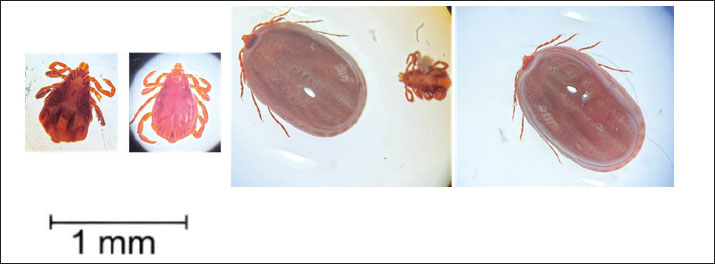
qPCR reactions were carried out in a 20 μL reaction volume, with the following reagent combinations: SYBR Green Master Mix (1×) (Promega co.), forward and reverse primers (each at a concentration of 0.2 μM), and a template DNA (2 μL) (Albanna and Al-Layla, 2020). Amplification and detection were carried out in a real-time PCR thermal cycler utilizing the following thermal protocol: initial denaturation for 10 minutes at 95°C, followed by 40 cycles consisting of denaturation for 15 s at 95°C and annealing for 60 s at 60°C. In each run, negative controls (without template DNA) and positive controls (validated I. holocyclus DNA templates) were also included. After the completion of the amplification reactions, the melting curves of the amplified products were examined to ensure that the reactions that had been conducted were specific. Statistical analysisAnalysis of the qPCR data was done to estimate the relative target gene expression in relation to reference gene expression. The subsequent analysis was performed using the Ct values from the amplification curves obtained. We used the comparative Ct method to calculate relative quantification of gene expression (2⁻ΔCt), where ΔCt is the Ct value of the target gene homologue minus the Ct value of the reference gene (EF1-α). All reactions were carried out with three repeats. The average CT values and standard deviations were determined for each sample. All data handling and statistical calculations were done using MS Excel and GraphPad Prism software, and data were expressed as Mean ± SD. A p-value of less than 0.05 was considered statistically significant (Leelatanawit et al., 2012). Ethical approvalThe study protocol was approved by the Institutional Animal Care and Use Committee (IACUC) in the College of Veterinary Medicine, University of Mosul, Iraq (Approval No. UM.VET.2025.116; 15 May 2025). All procedures in the study with animals were in accordance with the ethical guidelines approved by the IACUC, with permission to use 100 animals during the study period, ranging from 5 June to 5 November 2025. ResultsMorphological diagnosisOf the hundred pet cats surveyed in the veterinary clinic, 18% showed a positive infestation of I. holocyclus tick. The only adult tick obtained from imported domestic cats had its own distinctive morphology, which corresponds to the species of I. holocyclus. These included scutum presence with festoons and a characteristic capitulum (Fig. 1). The other 82 domestic cats had no infestations detectable through clinical examination.
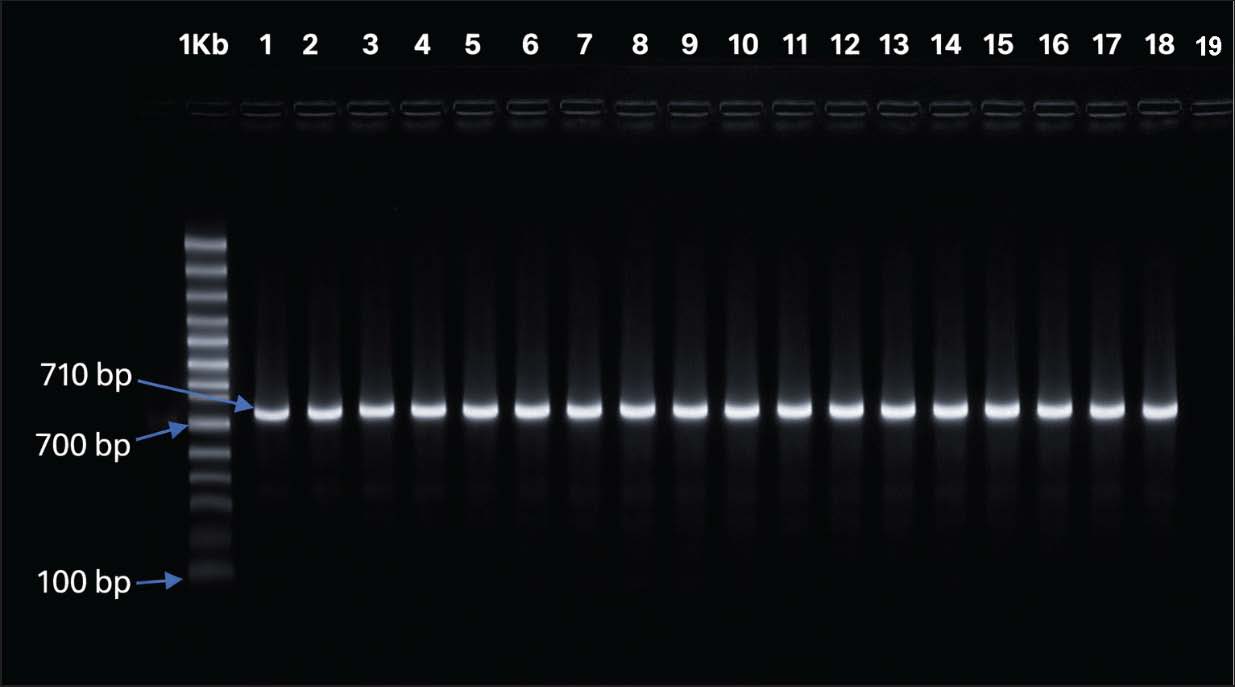
Fig. 1. Morphological identification of Ixodes holocyclus at various stages of feeding. Conventional PCR (cox1 Gene)Molecular identification of the ticks sampled, performed using conventional PCR and targeting the cox1 gene of I. holocyclus, confirmed the morphological analysis. Tick samples were collected from eighteen infected cats, one fragment of the expected size (~710 bp), which appeared as a single band after being analyzed using agarose gel electrophoresis, while nineteen were negative controls (Fig. 2).
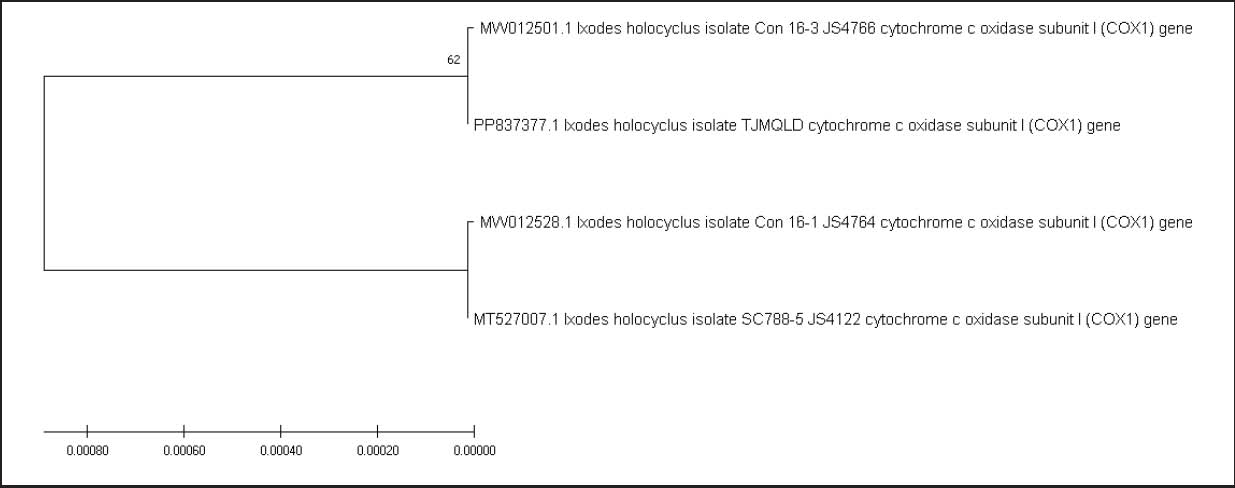
Fig. 2. Agarose gel electrophoresis of conventional PCR products from 18 Ixodes holocyclus-positive samples, while No. 19 is negative control. The amplified cox1 gene shows bands at approximately 710 bp, confirming species-specific detection. First Lane was DNA ladder 1Kb; lanes 1–18: amplified tick samples. Phylogenic tree analysisThe phylogenetic analysis of the collected tick isolates from domestic cats and the comparison of the reference sequences from the National Center for Biotechnology Information GenBank database based on partial mitochondrial COX1 gene sequences were performed to show their genetic relationship. Eighteen sequenced isolates were included in the analysis. The phylogenetic tree illustrates the presence of four different clusters in I holocyclus. The largest cluster was cluster 1, which had 11 isolates (C1–C11). In general, all the isolates had a high degree of similarity, forming a tight cluster with the reference OQ675411.1 (isolated from I. holocyclus H1) at a genetic distance of 0.000. It is important to note that many isolates were classified in the same group as the reference. The second cluster consists of three isolates (C12, C13, and C14), which are grouped together close to OP811122.1 (I. holocyclus isolate T5) in the phylogenetic tree, suggesting their relatedness. The third cluster described three isolates (C15, C16, and C17) forming a separate branch but whose position is still within the I. holocyclus clade and closely related to MN123456.1 (I. holocyclus isolate S3). The final cluster formed a separate branch, which was similar to MW876543.1 (I. holocyclus isolate X7). It would have been interesting to analyze these groups in relation to the origin of the cat species to see if there is any correlation. Nevertheless, it can be said that no significant genetic changes were found among these isolates. In essence, all these isolates of cat ticks are grouped into four different phylogenetic clusters of I. holocyclus (Fig. 3).
Fig. 3. Phylogenetic tree based on the mitochondrial COX1 gene sequences of 18 analyzed strains and related reference sequences retrieved from GenBank. The tree was constructed using the Neighbor-Joining method in MEGA X with 1000 bootstrap replicates, and the scale bar represents nucleotide substitutions per site. Real-time PCR (cox1 Gene and EF1-α Reference Gene)Real-time PCR rapidly detected and quantified I. holocyclus in positive samples, with Cox1 Ct values ranging from 18.00 to 18.30, indicating a high DNA load, while EF1-α was consistently amplified in all samples (Ct 21.49–21.55) (Fig. 4; Table 2). No Cox1 amplification was observed in negative samples, confirming assay specificity. Overall, 18% of cats were positive, and the combined use of morphological identification, conventional PCR, and real-time PCR provided a highly sensitive, reliable, and multilayered diagnostic approach for I. holocyclus detection. The real-time PCR assay exhibited highly consistent amplification of samples. The Ct values for reference gene EF1-α were 21.49 to 21.55 (mean ± SD: 21.52 ± 0.02) while that of cox1 was 18.00 to 18.30 (mean ± SD: 18.16 ± 0.09). The assay was highly reproducible since the coefficient of variation for both genes was below 1%. Table 2. Real-time PCR Ct values for the Ixodes holocyclus cox1 gene in 18 samples. Ct values are normalized using EF1-α as the reference gene to allow accurate quantification of parasite DNA. In contrast, No.19 represented to negative control.
Fig. 4. Real-time PCR amplification curves for 18 Ixodes holocyclus samples showing the EF1-α reference gene (A) and cox1 target gene (B). EF1-α curves are tightly clustered, confirming stable expression for normalization of cox1 quantification. In contrast, No.19 represented to negative control. DiscussionTicks are important ectoparasitic threats as they spread a variety of pathogens that can compromise the health of humans and animals (Hall‐Mendelin et al., 2011). Of the various harmful ticks identified, Ixodes holocyclus is among the most dangerous due to its efficacy in transferring harmful substances in the form of microorganisms that may lead to zoonosis (Boulanger et al., 2019). The importation of domestic cats infested with the identified species of tick may have severe consequences for the health of the domestic animal. Furthermore, the domestic animal may serve as a reservoir, resulting in human health-related infections due to human association (Amoah, 2021). In the current research, the number of imported cats identified to contain I. holocyclus through morphology is 18 out of 100 (18%). Morphologically based studies are a fast and inexpensive primary technique, relying on observable characteristics where scutum, festoon, and capitulum shapes are used. At the same time, the effectiveness of this technique may be affected by damaged individuals, young ticks, and the level of the observer's experience, making it necessary to have additional methods for accurate identification (Jamil et al., 2022). The conventional PCR based on the mitochondrial cox1 gene was used to confirm the tick identity at the molecular level. A distinct fragment corresponding to I. holocyclus was amplified in all 18 positive samples, while no amplification was detected in the negative samples (Chitimia et al., 2010). The sensitivity of the PCR was enhanced by targeting the highly repetitive cox1 gene that helps in achieving species-specific sequences. The matching result between morphological identification and molecular data establishes the validity of using the cox1 gene for tick identification (Elyasigorji et al., 2023). Phylogenetic analysis performed on the COX1 gene demonstrated that all produced tick isolates obtained from cats belong to Ixodes holocyclus (Song et al., 2011). The identification by molecular means was further corroborated with a high degree of confidence, as most of the isolates were closely clustered with reference sequences available in the National Center for Biotechnology Information GenBank database (Duan et al., 2021). The four clusters that the isolates were grouped into indicate that the studied cat population had very little genetic variation. According to genetic diversity, it may be the result of natural evolutionary divergence or due to differences in geographic origin and host-associated adaptation among the isolates (Galdikaitė-Brazienė, 2016). Real-time PCR analysis was performed with proper normalization based on the reference gene EF1-α. The results of the amplification curve analysis show that there was consistent and early amplification (Ct=18.00-18.30 cycles) of the cox1 gene compared to the EF1-α gene (Ct=21.49-21.55 cycles) (Valenzuela-Castillo et al., 2017). This was consistent with the high copy number of mitochondrial DNA. The melt curve analysis for cox1 and EF1-α genes demonstrated a single sharp peak for both genes that verified the specificity of the amplification reaction without non-specific amplification (Liu et al., 2023). The clustering of the EF1-α gene melt curves verified its appropriateness as a candidate reference gene in quantitative analysis. These results verify the efficacy of real-time PCR not only for its application in detection but also in evaluating the quantification level of the tick infestation that has potential application in the infestation risk of pathogen transfer via assessing the risk of transmission (Dai et al., 2017). The combination of morphological and molecular techniques offers a well-founded method of diagnosis. While morphological examination offers an immediate tool for screening, molecular methods can be applied in cases when ticks are damaged or in immature stages. Among them, real-time PCR allows quantification and enables one to estimate parasite load, which may be related to the risk of pathogen transmission to humans and other animals. Their application and judicious combination ensure accuracy and reproducibility, highly necessary in surveillance programs related to zoonotic parasites (Starck et al., 2018). These results align with published literature emphasizing sequencing as a critical confirmatory tool in veterinary and public health investigations (Numan et al., 2023). This finding has profound implications for public health since the detection of I. holocyclus in imported cats does not preclude the possibility of these ticks carrying pathogenic microorganisms that could lead to human infection. Cats with infestations of tick’s act as vectors and may introduce ticks into home environments, thereby providing opportunities for zoonotic transmission. Awareness among veterinarians and pet owners involves a need for preventive measures, such as regular ectoparasite screening, proper removal of ticks, and monitoring for clinical signs of tick-borne disease (Buczek and Buczek, 2020). The current techniques may thus serve as a model approach to veterinary practices and health units in successfully preventing the spreading of zoonotic parasites through companion animals. ConclusionThe present study demonstrates the detection of the presence of Ixodes holocyclus in imported domestic cats examined at a vet clinic. The identification of the tick specimens was performed confidently by morphological identification, conventional PCR targeting the cox1 gene, and real-time PCR with EF1-α used as a housekeeping reference gene. Quantitative PCR analysis of 18% of the samples studied gave positive results with respective Ct values within the amplification range studied. Likewise, detectability was further confirmed by melt-curve analysis showing specific amplification. With the constant increase in EF1-α, we may certainly say that it is good as a normalizer. The integration of morphological and molecular methods for the detection of ticks in companion animals is of great value. The continued monitoring and screening of imported pets will help to improve the ectoparasite surveillance in veterinary settings. Limitations of the studyThe small size of the study and its narrow geographical applicability limited study outcomes. Moreover, they did not perform molecular characterization of all tick-borne pathogens, which might underestimate pathogen diversity. AcknowledgmentWe would like to thank the clinics that participated in this investigation. We sincerely appreciate their help. FundingThe authors did not receive any financial support for this study. Authors' ContributionsAyman Albanaa and Omar Al-Mahmood contributed to the conception and design of the study. Ayman Albanaa conducted data collection and laboratory analyses. Omar Al-Mahmood performed data analysis and interpretation. Both authors contributed to drafting and revising the manuscript and approved the final version. Conflict of interestThe authors declare that there are no conflicts of interest. Data availabilityAll data were provided in the manuscript. ReferencesAkin, I., Ozcan, O. and Ozturan, Y.A. 2025. Parasites and lameness in domestic animals. Journal 49(3), 1–16. Albanna, D.A. and Al-Layla, D.A. 2020. Using real-time PCR to investigate some antibiotic resistance genes from Streptococcus agalactiae isolates from ewe mastitis cases in Nineveh province. Journal 17(3), 26. Amoah, L. 2021. Potential transmission of zoonoses between the human-domestic-wildlife interface and its implication for sustainable health (Master’s thesis). University of Ghana. Apanaskevich, D.A., Oliver, J., Sonenshine, D. and Roe, R. 2014. Life cycles and natural history of ticks. Journal 1, 59–73. Bagnall, B. and Doube, B. 1975. The Australian paralysis tick Ixodes holocyclus. Blackwell Publishing. Blackwell Publishing. Boulanger, N., Boyer, P., Talagrand-Reboul, E. and Hansmann, Y. 2019. Ticks and tick-borne diseases. Journal 49(2), 87–97. Brites-Neto, J., Duarte, K.M. and Martins, T.F. 2015. Tick-borne infections in human and animal populations worldwide. Journal 8(3), 301. Buczek, A. and Buczek, W. 2020. Importation of ticks on companion animals and the risk of spread of tick-borne diseases to non-endemic regions in Europe. Journal 11(1), 6. Chao, L., -L.., Liu, L., -L.., Ho, T., -Y.., Shih, C. and -M. 2014. First detection and molecular identification of Borrelia garinii spirochete from Ixodes ovatus tick ectoparasitized on stray cat in Taiwan. Journal 9(10), e110599. Chitimia, L., Lin, R., -Q.., Cosoroaba, I., Wu, X., -Y.., Song, H., -Q.., Yuan, Z., -G.., Zhu, X. and -Q. 2010. Genetic characterization of ticks from southwestern Romania by sequences of mitochondrial cox1 and nad5 genes. Journal 52(3), 305–311. Dai, T., -M.., Lü, Z., -C.., Liu, W., -X.., Wan, F. and -H. 2017. Selection and validation of reference genes for qRT-PCR analysis during biological invasions: the thermal adaptability of Bemisia tabaci MED. Journal 12(3), 173821. Diaz, J. H. 2014. Ticks, including tick paralysis. In Principles and Practice of Infectious Diseases (pp. 3266). Duan, D.Y., Chen, Z., Fu, Y.T., Liu, G.H., Suleman, T.Y. and Cheng, M.J. 2021. Characterization of the complete mitochondrial genomes of two Ixodes ticks, I. nipponensis and Ixodes (Pholeoixodes) sp. Journal 35(3), 513–522. Dybing, N. (2017). Invasive animals and the Island Syndrome: Parasites of feral cats and black rats from Western Australia and its offshore islands (Master’s thesis). Murdoch University. Elyasigorji, Z., Izadpanah, M., Hadi, F. and Zare, M. 2023. Mitochondrial genes as strong molecular markers for species identification. Journal 66(1), 81–93. Galdikaitė-Brazienė, E. (2016). Genetic variability of Ixodes ticks in Baltic countries (Master’s thesis). Vytauto Didžiojo Universitetas. Graves, S.R., Jackson, C., Hussain-Yusuf, H., Vincent, G., Nguyen, C., Stenos, J. and Webster, M. 2016. Ixodes holocyclus tick-transmitted human pathogens in north-eastern New South Wales, Australia. Journal 1(1), 4. Hall-Mendelin, S., Craig, S.B., Hall, R., O’donoghue, P., Atwell, R., Tulsiani, S. and Graham, G.C. 2011. Tick paralysis in Australia caused by Ixodes holocyclus Neumann. Journal 105(2), 95–106. Halos, L., Jamal, T., Vial, L., Maillard, R., Suau, A., Le Menach, A., Boulouis, H., -J.. and Taussat, M. 2004. Determination of an efficient and reliable method for DNA extraction from ticks. Journal 35(6), 709–713. Honnas, C.M., Athey, J.M., Verocai, G.G., Snowden, K.F., Esteve-Gasent, M.D. and Mankin, J.M. 2020. Apparent Ixodes tick paralysis in a cat from North America. Journal 6(2), 2055116920964001. Hussain-Yusuf, H., Stenos, J., Vincent, G., Shima, A., Abell, S., Preece, N.D., Tadepalli, M., Hii, S.F., Bowie, N. and Mitram, K. 2020. Screening for Rickettsia, Coxiella and Borrelia species in ticks from Queensland, Australia. Journal 9(12), 1016. Jamil, M., Latif, N., Ullah, A., Ullah, N., Ali, M., Jabeen, N., Khan, I., Qazi, I. and Ramzan, M. 2022. Identification and morphological key of Pakistani ticks. Journal 14(2), 1–5. Jimenez, I.A., Vega-Mariño, P.A., Villacres, T. and Houck, E.L. 2024. Review of One Health in the Galápagos Islands (Part 1): historical perspective, invasive species, and emerging infectious diseases. Journal 5, 1351707. Kumar, N. K., and Vennila, S. (2022). Pests, pandemics, preparedness and biosecurity. 153. Kundave, V. (2017). Molecular characterization of and development of multiplex PCR for concurrent diagnosis of other tick borne infections of bovines (Master’s thesis). Indian Veterinary Research Institute. Lado, K.T., Chuchu, S., Miheso, K., Okoth, S., Kassie, A. and Otto, M. 2016. Veterinary public health handbook. 1st edn, Juba, South Sudan: Vétérinaires Sans Frontières Suisse (VSF Suisse). Leelatanawit, R., Klanchui, A., Uawisetwathana, U. and Karoonuthaisiri, N. 2012. Validation of reference genes for real-time PCR of reproductive system in the black tiger shrimp. Journal 7(12), e52677. Levin, M.L., Schumacher, L.B. and Acarology, A. 2016. Manual for maintenance of multi-host ixodid ticks in the laboratory. Journal 70(3), 343–367. Liu, J., Liang, M., Lin, T., Zhao, Q., Wang, H., Yang, S., Guo, Q., Wang, X., Guo, H. and Cui, L. 2023. A LAMP-based toolbox developed for detecting the major pathogens affecting the production and quality of the Chinese medicinal crop Aconitum carmichaelii. Journal 107(3), 658–666. Mendoza Roldan, J.A., Otranto, D.J. and Vectors. 2023. Zoonotic parasites associated with predation by dogs and cats. Journal 16(1), 55. Mohammed, N.H., Alhayali, N.S. and Ali, A. 2023. Morphological and molecular detection of hard ticks in stray cats in Mosul city, Iraq. Journal 16(1), 47. Mooring, M.S. 2024. Programmed grooming after 30 years of study: a review of evidence and future prospects. Journal 14(9), 1266. Morelli, S., Diakou, A., Di Cesare, A., Colombo, M. and Traversa, D.J. 2021. Canine and feline parasitology: analogies, differences, and relevance for human health. Journal 34(4), e00266–e00220. Numan, M., Alouffi, A., Almutairi, M.M., Tanaka, T., Ahmed, H., Akbar, H., Rashid, M.I., Tsai, K., -H.. and Ali, A. 2023. First detection of Theileria sinensis-like and Anaplasma capra in Ixodes kashmiricus: with notes on cox1-based phylogenetic position and new locality records. Journal 13(20), 3232. O’Keeffe, T. and Donaldson, R.E. 2023. Mechanical ventilation in dogs and cats with tick paralysis. Journal 10, 1071191. OKE. (2023). Morphological and molecular identification of Culicoides species, their host preference and involvement in the transmission of filarial parasites in Benue State, Nigeria. Perumalsamy, N., Subramanian, M., Sharma, R., Elango, A. and Nagarajan, S.A. 2025. A simple improved method for extracting DNA from ethanol-preserved hard ticks and its applications. Journal 127, 105709. Pienaar, R., Neitz, A.W. and Mans, B.J. 2018. Tick paralysis: solving an enigma. Journal 5(2), 53. Ruppin, M., Sullivan, S., Condon, F., Perkins, N., Lee, L., Jeffcott, L. and Dart, A.J. 2012. Retrospective study of 103 presumed cases of tick (Ixodes holocyclus) envenomation in the horse. Journal 90(5), 175–180. Song, S., Shao, R., Atwell, R., Barker, S. and Vankan, D.J. 2011. Phylogenetic and phylogeographic relationships in Ixodes holocyclus and Ixodes cornuatus inferred from COX1 and ITS2 sequences. Journal 41(8), 871–880. Starck, J.M., Mehnert, L., Biging, A., Bjarsch, J., Franz-Guess, S., Kleeberger, D. and Hörnig, M.J.Z.L. 2018. Morphological responses to feeding in ticks (Ixodes ricinus). Journal 4(1), 20. Tahir, F., Madandola, M. G., and Al-Ghamdi, S. G. (2023). Enhancing resilience: Surveillance strategies for monitoring the spread of vector-borne diseases. 263–276. Teo, E., Atwell, R., Russell, H., Lambert, T., Webster, R., Yappa, A., McDonagh, P., Harper, G., Barker, D. and Kelava, S.J.A.V. 2025. Attachment-site preferences of Ixodes holocyclus, the eastern paralysis tick of Australia: insights from 10,311 cases of tick infestations in dogs and cats. Journal 103(11), 731–734. Valenzuela-Castillo, A., Mendoza-Cano, F., Enríquez-Espinosa, T., Grijalva-Chon, J.M., Sánchez-Paz, A.J.M. and Probes, C. 2017. Selection and validation of candidate reference genes for quantitative real-time PCR studies in the shrimp Penaeus vannamei under viral infection. Journal 33, 42–50. van der Elst, L. A. (2023). Parasitic species and zoonotic diseases affecting companion animals in resource-limited and rural communities in South Africa. Viricel, A. and Rosel, P.E.J.M.M.S. 2012. Evaluating the utility of cox1 for cetacean species identification. Journal 28(1), 37–62. Wijnveld, M., and Elsyid, L. (n.d.). Molecular identification and phylogenetic analysis of ticks collected in Basra City, Iraq. Xie, M., Zhong, Y., Lin, L., Zhang, G., Su, W., Ni, W., Qu, M. and Chen, H. 2020. Evaluation of reference genes for quantitative real-time PCR normalization in the scarab beetle Holotrichia oblita. Journal 15(10), 240972. | ||

| How to Cite this Article |
| Pubmed Style Albanna A, Al-mahmood OA. Real time PCR identification of Ixodes holocyclus from imported cats and associated health risks. Open Vet. J.. 2026; 16(5): 2667-2676. doi:10.5455/OVJ.2026.v16.i5.9 Web Style Albanna A, Al-mahmood OA. Real time PCR identification of Ixodes holocyclus from imported cats and associated health risks. https://www.openveterinaryjournal.com/?mno=308206 [Access: June 26, 2026]. doi:10.5455/OVJ.2026.v16.i5.9 AMA (American Medical Association) Style Albanna A, Al-mahmood OA. Real time PCR identification of Ixodes holocyclus from imported cats and associated health risks. Open Vet. J.. 2026; 16(5): 2667-2676. doi:10.5455/OVJ.2026.v16.i5.9 Vancouver/ICMJE Style Albanna A, Al-mahmood OA. Real time PCR identification of Ixodes holocyclus from imported cats and associated health risks. Open Vet. J.. (2026), [cited June 26, 2026]; 16(5): 2667-2676. doi:10.5455/OVJ.2026.v16.i5.9 Harvard Style Albanna, A. & Al-mahmood, . O. A. (2026) Real time PCR identification of Ixodes holocyclus from imported cats and associated health risks. Open Vet. J., 16 (5), 2667-2676. doi:10.5455/OVJ.2026.v16.i5.9 Turabian Style Albanna, Ayman, and Omar A. Al-mahmood. 2026. Real time PCR identification of Ixodes holocyclus from imported cats and associated health risks. Open Veterinary Journal, 16 (5), 2667-2676. doi:10.5455/OVJ.2026.v16.i5.9 Chicago Style Albanna, Ayman, and Omar A. Al-mahmood. "Real time PCR identification of Ixodes holocyclus from imported cats and associated health risks." Open Veterinary Journal 16 (2026), 2667-2676. doi:10.5455/OVJ.2026.v16.i5.9 MLA (The Modern Language Association) Style Albanna, Ayman, and Omar A. Al-mahmood. "Real time PCR identification of Ixodes holocyclus from imported cats and associated health risks." Open Veterinary Journal 16.5 (2026), 2667-2676. Print. doi:10.5455/OVJ.2026.v16.i5.9 APA (American Psychological Association) Style Albanna, A. & Al-mahmood, . O. A. (2026) Real time PCR identification of Ixodes holocyclus from imported cats and associated health risks. Open Veterinary Journal, 16 (5), 2667-2676. doi:10.5455/OVJ.2026.v16.i5.9 |


