





| Research Article | ||
Open Vet. J.. 2026; 16(6): 3367-3375 Open Veterinary Journal, (2026), Vol. 16(6): 3367-3375 Research Article Genetic characterization of avian nephritis virus detected in chickens based on capsid protein in VietnamPham Quynh Yen Thanh1, Nguyen Thi Thuy Hang2, Tran Ngoc Bich1, Nguyen Thanh Lam1, Tran Duy Khang1 and Nguyen Phuc Khanh1*1Faculty of Veterinary Medicine, College of Agriculture, Can Tho University, Campus II, Ninh Kieu Ward, Vietnam 2Faculty of Biochemistry & Food Technology, Vinh Long University of Technology Education, Long Chau Ward, Vietnam *Corresponding Author: Nguyen Phuc Khanh. Faculty of Veterinary Medicine, College of Agriculture, Can Tho University, Ninh Kieu Ward, Vietnam. Email: npkhanh [at] ctu.edu.vn Submitted: 14/01/2026 Revised: 27/04/2026 Accepted: 07/05/2026 Published: 05/06/2026 © 2025 Open Veterinary Journal
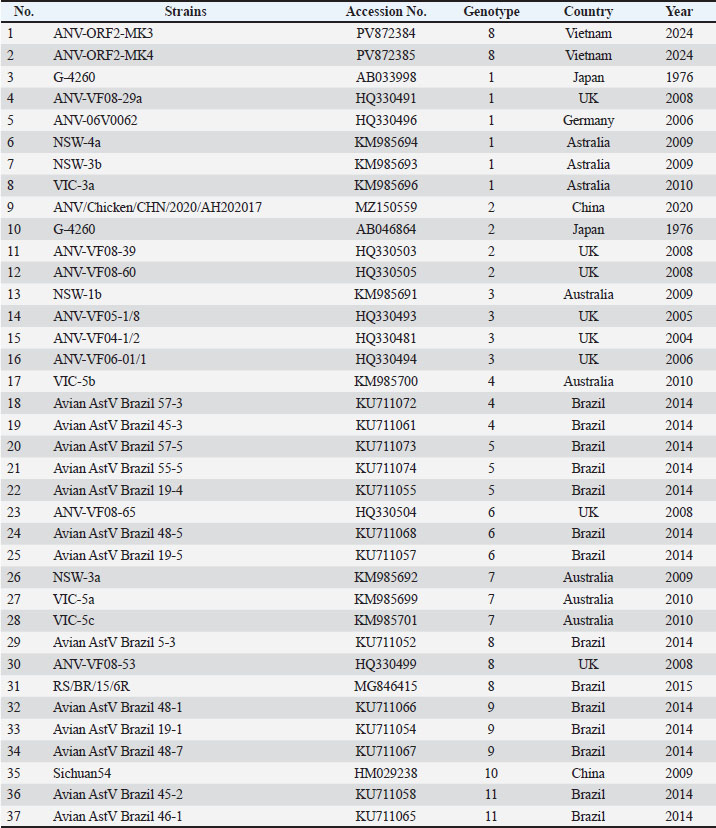
AbstractBackground: Avian nephritis virus (ANV) infections in commercial broiler flocks cause gastroenteritis and renal diseases, leading to economic losses in the poultry industry. Aim: To determine the genetic diversity of ANV strains by analyzing the ORF2 gene sequences. Methods: A total of 140 suspected samples of ANV were isolated from broiler chickens collected in Ben Tre Province, Vietnam, between 2024 and 2025. Molecular diagnosis was performed using real-time RT-PCR, and positive samples were subsequently sequenced. The obtained sequences were compared with reference ANV strains in GenBank to assess genetic similarity, variation, and recombination. Results: Overall, 24/140 (17.14%) samples were positive for ANV. Two ANV strains, referred to as ANV-ORF2-MK3 (PV872384) and ANV-ORF2-MK4 (PV872385), were sequenced. Phylogenetic analysis revealed that the ANV-ORF2-MK3 (PV872384) and ANV-ORF2-MK4 (PV872385) strains were clustered with Avian AstV Brazil 5-3 (KU711052), ANV-VF08-53 (HQ330499), and RS/BR/15/6R (MG846415) strains. Both strains showed high nucleotide and amino acid sequence identity with ANV-VF08-53 (nucleotide: 75.63% and 75.52%; amino acid: 76.06% and 75.90%, respectively), and genotype 8 was identified. Additionally, amino acid sequence analysis of the isolated strains compared with reference strains indicated substantial variability, particularly in regions 416 to 424, 448 to 489, and 558 to 566. A recombination signal was detected at the N-terminal region of the ANV-ORF2-MK4 strain. Conclusion: This study represents the first genetic characterization of ANV strains circulating in Vietnam based on the ORF2 gene. The findings provide additional insights into the genetic diversity of the ANV ORF2 gene. Keywords: Avian nephritis virus, Ben Tre province, Genetic characterization, ORF2, Vietnam. IntroductionAstroviruses are considered etiological agents of gastroenteritis and other enteric diseases in various mammalian and avian species. Enteric diseases are a serious concern in animal health, causing significant economic losses to the poultry industry (Nuñez et al., 2018). In broiler production, feed conversion efficiency is of great interest; therefore, the poultry has a good intestinal tract, as it plays the most fundamental role. Any disruption in feed conversion can impair nutrient absorption, promote poor growth, increase mortality, and increase treatment costs (Ali et al., 2021). In South Korea, 51.7% of chicken farms showed multiple infections, with ANV being the most common enteric virus (Chen et al., 2022). The ANV-infected chicks exhibited typical symptoms and lesions, including diarrhea, stunting, tubular lesions, interstitial nephritis, and high mortality (Mándoki et al., 2006; Pantin-Jackwood et al., 2011). In addition, younger chickens are more susceptible to ANV infection (Imada et al., 2000). ANV infection has been reported worldwide and has also been detected in other avian species such as turkeys, ducklings, and pigeons (Biđin et al., 2011; Zhao et al., 2011). ANV belongs to a group of small, non-enveloped viruses with a diameter of approximately 28 to 30 nm (de Wit et al., 2011; Lagan Tregaskis et al., 2021). The ANV genome comprises a positive-sense single-stranded RNA molecule of approximately 6.9 kb, organized into three open reading frames (ORFs) including ORF1a, ORF1b, and ORF2, flanked by a 5′ untranslated region (5′ UTR) and a 3′ poly(A) tail. ORF1a is located immediately downstream of the 5′ UTR and encodes a serine protease. It is linked to ORF1b through a ribosomal frameshift motif, allowing the translation of both ORFs from the same RNA template. ORF1b encodes an RNA-dependent RNA polymerase (RdRp), the most conserved region of the genome. ORF2 encodes the structural proteins of the virion as a polyprotein precursor and represents the most variable region of the genome (Imada et al., 2000). Studies on the molecular characteristics of ANV in the Mekong Delta, Vietnam, remain limited. Therefore, the aim of this study was to identify the genetic diversity of the ANV capsid protein gene (ORF2) from mixed samples collected from commercial chicken flocks in Ben Tre province that exhibit signs of enteritis, diarrhea, stunting, and high mortality in chicks. This study provides preliminary insights into the pathogenicity and molecular characteristics of ANV, providing valuable data for the prevention and control of ANV infections. Materials and MethodsSamples collectionBetween 2024 and 2025, 140 mixed samples (kidneys and intestines from different chickens) were collected from commercial chicken farms in Ben Tre province (10°10′N 106°30′E), the Mekong Delta. The sample processing procedure was performed according to the method of Majó and Dolz (2012). The chickens had been diagnosed with enteritis problems, such as stunting syndrome, diarrhea, apathy, and dried legs, which causes mortality in young chicks. The collected samples were immediately transferred to the laboratory and kept at −20°C until processing. ANV detection by real-time RT-PCRTotal RNA was extracted from mixed samples using the TopPURE [at] Viral DNA/RNA Extraction Kit (ABT, Vietnam), according to the manufacturer’s instructions. After that, cDNA synthesis was performed using the SensiFASTTM cDNA Synthesis Kit (Bioline, UK) as follows: a 10 µl total reaction volume consists of 3.5 µl of RNase-free water, 4 µl of extracted RNA, 0.5 µl of reverse transcriptase primer, and 2 μl of 5x TransAmp Buffer. Then, the reaction mixture was incubated at 25°C for 10 minutes, followed by heating at 42°C for 15 minutes, 85°C for 5 minutes, and chilled on ice for at least 1 minute. The synthesized cDNA was immediately used for PCR amplification. The amplification reaction UTR region was performed by the 2x SensiFASTTM SYBR Kit (Bioline, UK) according to the protocol of the manufacturer with forward primer (5′- GTAAACCACTGGTTGGCTGACT -3′) and reverse primer (5′- TACTCGCCGTGGCCTCG -3′) (Smyth et al., 2010). Real-time PCR reaction was performed as follows: initial denaturation at 95°C for 2 minutes, 40 cycles of 95°C for 5 seconds, 60°C for 10 seconds, 72°C for 15 seconds, and the end with the 60°C to 95°C melting curve. FQD-96A (Bioer) was used for the real-time RT-PCR protocol. ORF2 gene amplication by RT-PCRRT-PCR was performed to amplify the ORF2 gene using the MyTaqTM Mix 2x Kit (Bioline, UK). ORF2 was amplified using the published primers (5′-ACC TTG AAT CCC TGT GGG GCA-3′) and (5′- AAA AGT TAG CCA ATT CAA AAT TAA TTC-3′) (Todd et al., 2011). The PCR reaction was performed as follows: initial denaturation at 95°C for 60 seconds, 40 cycles of degeneration at 95°C for 15 seconds, annealing at 60°C for 15 seconds, extension at 72°C for 30 seconds, and 1 cycle of final extension at 72°C for 3 minutes with a holding temperature of 4°C. PCR products were detected on 1.5% agarose gel electrophoresis for confirmation and visualized by subsequent UV trans-illumination. Sequencing and phylogenetic analysisThe PCR products were purified using Mega quick-spinTM (Intro Biotechnology, Korea). Subsequently, they were sequenced using Sanger sequencing. The genetic relationship of the ORF2 gene of the ANV isolates was compared with other ANV isolates of different genotypes retrieved from the National Center for Biotechnology Information (NCBI) database (Table 1). Additional publicly available ORF2 gene sequences obtained from the National Center for Biotechnology Information were aligned using the ClustalW algorithm in MEGA 6.0. Phylogenetic analysis was conducted using the maximum likelihood method with 1,000 bootstrap replicates based on the general time reversible model. Table 1. GenBank accession numbers and sources of isolated and reference ANV strains.
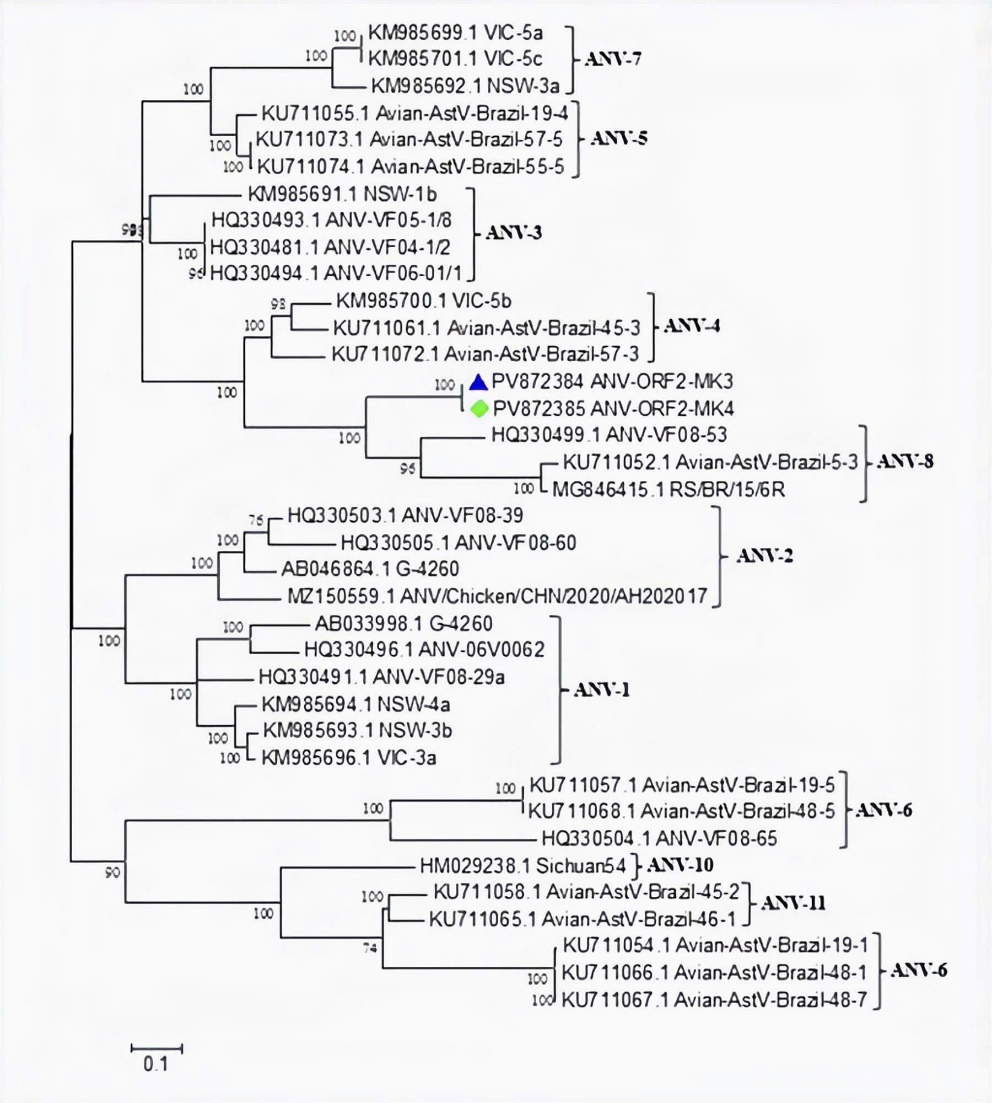
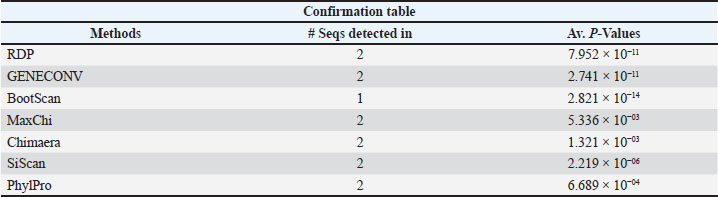
Recombination analysisRecombination Detection Program 4 (RDP4) v4.70 was used to detect the potential recombination events in the ORF2 gene of the detected ANV strains. The RDP4 analysis incorporates multiple detection methods, including RDP, GENECONV, BootScan, MaxChi, Chimaera, SiScan, and PhylPro. Recombination events with a p-value < 0.05 were considered statistically significant. Ethical approvalThis study complied with the institutional rules for the care and use of laboratory animals and was approved by the Ministry of Agriculture and Rural Development of Vietnam (TCVN 8402:2010). ResultsDetection of anv in chickensClinical observations of ANV-infected chickens revealed signs of depression, lethargy, anorexia, diarrhea, stunted growth, and dry shanks, with a high mortality rate. Postmortem examination of ANV-infected birds revealed pale and swollen kidneys. Additionally, out of 140 tested samples, 24 (17.14%) were positive for ANV using real-time RT-PCR. Phylogenetic analysis and pairwise sequence comparison of the ORF2 geneA phylogenetic tree was constructed based on the ORF2 gene nucleotide sequences to assess the genetic relationships between the detected ANV strains and 35 reference strains retrieved from the National Center for Biotechnology Information. The ANV strains were divided into two branches. The first branch contained ANV strains belonging to genotypes 1, 2, 3, 4, 5, 7, and 8. The two detected strains, ANV-ORF2-MK3 and ANV-ORF2-MK4, were clustered in the same group as Avian AstV Brazil 5–3 (KU711052) and RS/BR/15/6R (MG846415) that were isolated in Brazil in 2014 and 2015, respectively, and ANV-VF08-53 (HQ330499) that was isolated in the UK in 2008. These strains belong to genotype 8 (Fig. 1).
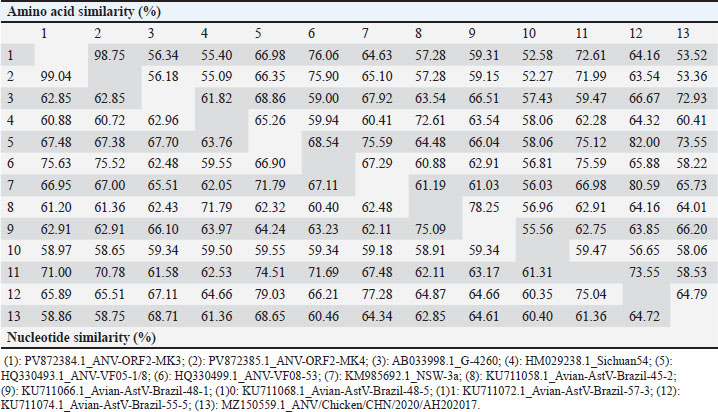
Fig. 1. Phylogenetic relationships of the detected and published ANV strains based on ORF2 nucleotide sequences determined using MEGA 6 with the Clustal W method The analysis of nucleotide and amino acid similarities between the two detected ANV strains and 11 reference strains representing 11 genotypes, based on the capsid protein gene, was consistent with the phylogenetic distribution of ANV sequences in the genetic tree (Table 2). The detected ANV strains, ANV-ORF2-MK3 and ANV-ORF2-MK4, shared a high nucleotide similarity of approximately 99.04%. Their nucleotide similarities with the 11 reference strains ranged from 58.65% to 75.63%. The ANV-ORF2-MK3 and ANV-ORF2-MK4 strains showed 75.63% and 75.52% similarities with the ANV-VF08-53 strain (HQ330499), respectively. In addition, the amino acid sequence alignments indicated 98.75% similarity between ANV-ORF2-MK3 and ANV-ORF2-MK4. Both strains also shared 76.06% and 75.90% amino acid similarity with ANV-VF08-53 (HQ330499), respectively. Table 2. Nucleotide and amino acid similarities of the ORF2 gene between detected ANV strains and ANV reference strains from different genotypes.
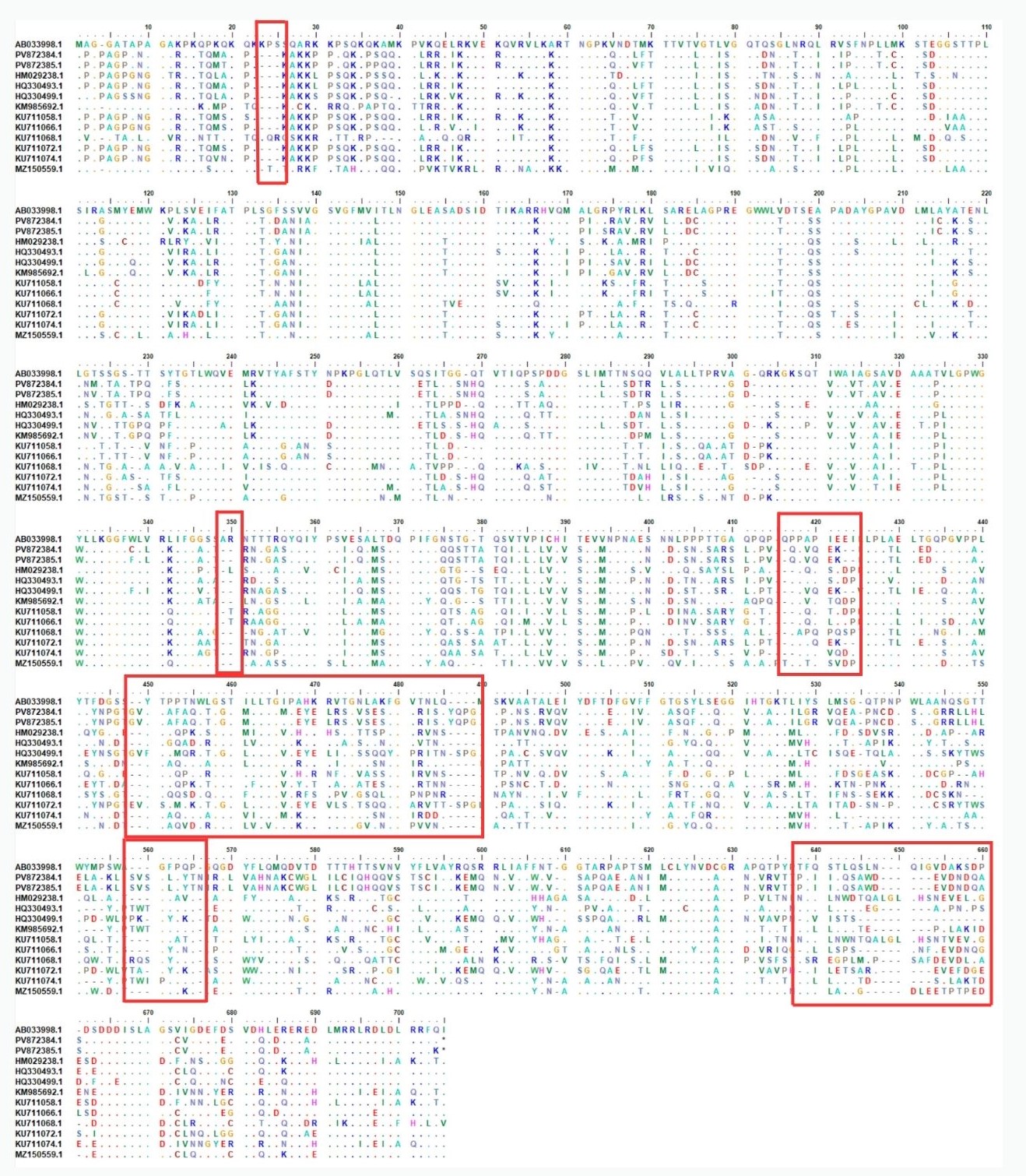
Mutation of amino acid sequences in the ORF2 proteinThe strain G-4260 (AB033998), belonging to genotype 1, was used as a preference to compare the amino acid variations of the ORF2 protein (Fig. 2). When comparing the two isolated strains with G-4260, deleted mutations were detected in regions 23 to 25, 349 to 350, 416 to 424, and 651 to 653. In addition, insertion mutations occurred in regions 448 to 489 and 558 to 566. The amino acid changes between the two isolated strains and ANV-VF08-53 (HQ330499) revealed that the insertion mutations in ANV-ORF2-MK3 and ANV-ORF2-MK4 were mainly located in the regions 560 to 566 and 638 to 660. The two isolated strains, ANV-ORF2-MK3 and ANV-ORF2-MK4, exhibited numerous substitution mutations distributed evenly across the polypeptide chain compared with the reference strain.
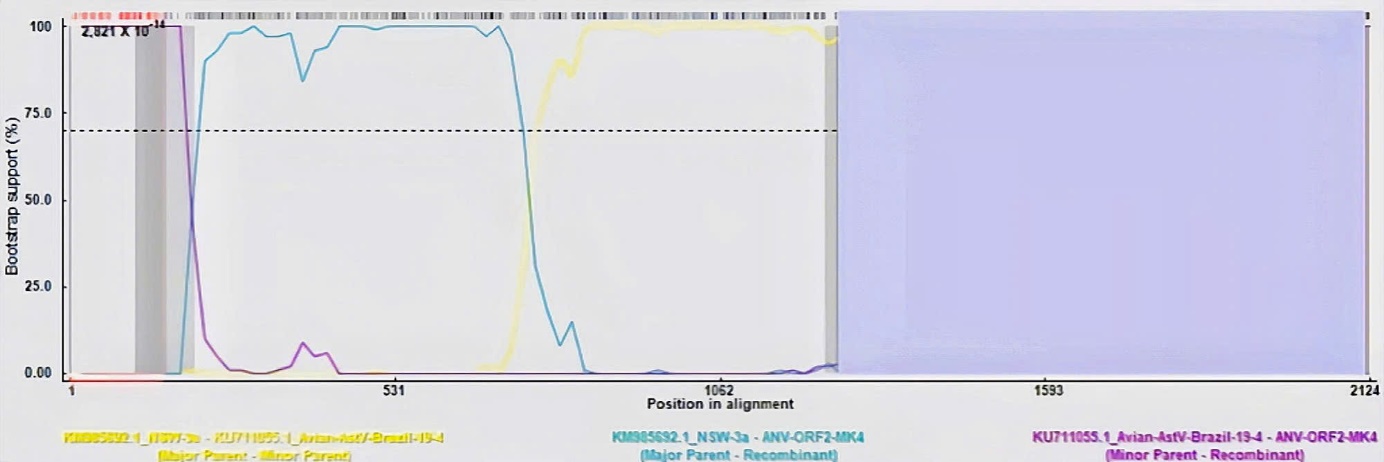
Fig. 2. Amino acid sequence analysis of the ORF2 gene between the detected and referenced ANV strains. Recombination analysisAmong the 37 nucleotide sequences used to construct the phylogenetic tree, recombination signals were detected in the ANV-ORF2-MK4 strain. The ANV-ORF2-MK4 strain showed evidence of recombination in the nucleotide region spanning positions 1 to 155 (Fig. 3 and Table 3). A significant p-value (<0.05) was obtained using multiple detection methods, including RDP (7.952 × 10⁻¹¹), GENECONV (2.741 × 10⁻¹¹), BootScan (2.821 × 10⁻¹⁴), MaxChi (5.336 × 10-03), Chimaera (1.321 × 10-03), SiScan (2.219 × 10-06), and PhylPro (6.689 × 10-04). The major parent of the recombinant strain ANV-ORF2-MK4 was identified as NSW-3a (KM985692) of genotype 7, whereas the minor parent was Avian AstV Brazil 19-4 (KU711055) of genotype 5.
Fig. 3. Plot of the recombinant fragment identified in the Ben Tre province ANV-ORF2-MK4 strain. Table 3. Putative ANV recombination events (RDP4 software P-value).
DiscussionANV was first identified in Japan in 1976 from rectal swabs of 1-week-old broiler chickens. Infected chickens exhibited clinical signs such as lethargy, fatigue, poor appetite or reduced feed intake, increased water consumption, diarrhea, stunting, and dry legs (Mándoki et al., 2006; de Wit et al., 2011; Gowthaman et al., 2015). Since its discovery in Japan, ANV has been reported worldwide. In Nigeria, the ANV positivity rate in chickens aged 8–20 weeks was reported to be 92.3% (Oluwayelu et al., 2012). According to Nuñez et al. (2018) the prevalence of ANV in Brazil is approximately 7.86%. Zhao et al. (2011) detected ANVs in healthy laying hens in Sichuan province, China, with 62 out of 192 samples (32.3%) testing positive. More recently, in 2022, Yin et al. (2022) reported that 16 out of 20 tissue samples (80%) collected from a flock of broiler chickens in Anhui province were positive for ANV; these chickens exhibited intestinal and kidney disease, as well as RSS. The genetic characterization of ANVs in the Mekong Delta, Vietnam, is poorly studied. The prevalence of ANV in chickens varies according to factors such as time, geographical location, climate, and living conditions. ANV exhibits considerable genetic diversity, with classification into seven genotypes (1–4, 7, 8, and 10) based on the whole genome or 11 genotypes (1–11) based on the capsid protein gene sequence. To date, three serological groups of ANV have been identified: ANV-1, ANV-2, and ANV-3 (Lagan Tregaskis et al., 2021). The analysis of ANV genotypes and their genetic diversity indicates that different genotypes may correspond to distinct serological groups. The results of the similarity comparison (Table 2) and phylogenetic analysis (Fig. 1) indicate that both isolated ANV strains are closely related to the ANV-VF08-53 strain (HQ330499), which belongs to genotype 8 and was isolated in the UK in 2008. Todd et al. (2011) demonstrated that ANV strain classification based on pairwise comparison and phylogenetic analysis is independent of geographical origin or sampling year. In particular, phylogenetic analysis of the ORF2 gene from strain ANV/Chicken/CHN/2020/AH202017, isolated in China in 2020, showed a close relationship with strain VIC-6a/Australia/2014, which was detected in Australia in 2010. The nucleotide and amino acid similarity rates between the two detected strains and the ANV-VF08-53 strain (HQ330499) were relatively low. According to Todd et al. (2011) pairwise comparison of ORF2 gene sequences revealed that the nucleotide and amino acid identities ranged from 59% to 100% and from 54% to 100%, respectively. These findings explain the relatively low nucleotide and amino acid similarity rates observed in this study. The two isolated strains ANV-ORF2-MK3 (PV872384) and ANV-ORF2-MK4 (PV872385) showed a very high level of similarity, suggesting that ANV genotype 8 is circulating stably in broiler flocks in Ben Tre Province during the study period. Since the ORF2 gene encodes the capsid protein, which contains important antigenic determinants, the high amino acid similarity indicates that the antigenic properties of the two strains are nearly similar. This information provides a useful basis for selecting potential vaccine candidates and maintaining the reliability of molecular diagnostic methods, such as reverse transcription-polymerase chain reaction (RT-PCR). Therefore, strengthening biosecurity measures and improving the nutritional management of young chickens, especially in commercial flocks showing gastrointestinal and renal disease symptoms, are important to reduce the impact of the disease. According to Todd et al. (2011) the comparison of capsid protein sequences from six representative ANVs (ANV-2, VF04-1/2, ANV-1, VF08-13/7, VF08-3a, and VF08-65) revealed conserved or semi-conserved regions and variable regions. Specifically, nine variable regions were identified within the capsid sequence: 15 to 38 (A), 113 to 127 (B), 221 to 240 (C), 338 to 355 (D), 393 to 419 (E), 433 to 454 (F), 460 to 488 (G), 520 to 544 (H), and 615 to 641 (I). The gene encoding the capsid protein is located in the ORF2 region and is the most variable part of the genome. It plays a crucial role in viral pathogenicity and antigenicity because it contains epitopes that interact with the host immune system (Todd et al., 2011; Arias and DuBois, 2017). Zhao et al. (2011) reported that while some ANV strains may be harmless, many strains are pathogenic due to capsid protein amino acid sequence mutations. Similarly, Pantin-Jackwood et al. (2011) noted that amino acid changes in the ORF2 region can alter the pathogenicity and antigenicity of the virus. According to Simon-Loriere and Holmes (2011) positive-sense single-stranded RNA viruses have a higher recombination rate than negative-sense single-stranded RNA viruses. ANV is a positive-sense single-stranded RNA virus that exhibits high genetic diversity during replication due to point mutations and recombination events, which generate new variants. Hewson et al. (2015) demonstrated that the ORF1 region is highly conserved with limited variation across the Astrovirus genus. Conversely, the ORF2 region is considered the most variable region in the ANV genome (Loor-Giler et al., 2024). The genetic diversity of RNA viruses is primarily driven by error-prone RNA-dependent RNA polymerase (RdRp), which introduces frequent point mutations, as well as by recombination events. Sequence differences in the first half of the C region of the capsid protein may be considered more significant than those in the N region in ANV, as they determine antigenic diversity, including serotype variation (Todd et al., 2011). In this study, the ANV-ORF2-MK4 strain showed recombination signals in the N-terminal regions, which is a novel finding, as previous reports have confirmed that recombination primarily occurs in the C-terminal regions (Todd et al., 2011; Lagan Tregaskis et al., 2021). These results highlight the need for more in-depth studies, as antigenic shifts caused by intergenic recombination within the capsid gene, particularly in the spike coding region, may result in increasing viral pathogenicity and antigenic variability. Such recombination further complicates the phylogenetic mapping of highly diverse ANV strains. ConclusionThe present study confirmed the presence of ANVs in chickens in Ben Tre province, Vietnam. Genetic characterization analysis of the ORF2 gene showed that the two strains, ANV-ORF2-MK3 (PV872384) and ANV-ORF2-MK4 (PV872385), had the highest nucleotide and amino acid similarity rates with strain ANV-VF08-53, both above 75%, belonging to genotype 8. The amino acid sequences of both strains displayed multiple mutations within the variable regions E, F, and G. Notably, the ANV-ORF2-MK4 strain exhibited recombination between two strains: NSW-3a (KM985692, genotype 7) and Avian AstV Brazil 19-4 (KU711055, genotype 5). The research results provide important data for developing accurate diagnostic tools and guiding the development of appropriate vaccines for disease prevention in the local field. In the future, further molecular epidemiological surveillance and studies on viral pathogenicity and antigenic variation are necessary to respond to emerging recombinant variants of ANV. AcknowledgementsThe authors are grateful to the Faculty of Veterinary Medicine, Can Tho University, and cooperating farms in Ben Tre for field assistance. FundingThe Can Tho University Improvement Project VN14-P6 is funded in part by a Japanese ODA loan. Authors' contributionsAll authors contributed to the research, writing process, and data analysis. Conflict of interestThe authors declare that there is no conflict of interest. Data availabilityAll data supporting the findings of this study are available within the manuscript. ReferencesAli, M.Z., Moula, M.M., Bhuiyan, Z.A., Giasuddin, M. and Shin, H.J. 2021. First Isolation and Molecular Characterization of Chicken Astrovirus and Avian Nephritis Virus in Chickens in Bangladesh. Front. Vet. Sci. 8, 769489. Arias, C. and Dubois, R. 2017. The astrovirus capsid: a review. Viruses. 9(1), 15. Biđin, M., Lojkić, I., Biđin, Z., Tišljar, M., Majnarić, D. and Mikec, M. 2011. Detection and characterization of avian nephritis virus in ducklings. Avian Pathol. 40(2), 173–177. Chen, L., Chen, L., Wang, X., Huo, S. and Li, Y. 2022. Detection and molecular characterization of enteric viruses in poultry flocks in Hebei province, China. Animals. 12(20), 2873. De Wit, J.J., Dam, G.B.T., De Laar, J.M.A.M.V., Biermann, Y., Verstegen, I., Edens, F. and Schrier, C.C. 2011. Detection and characterization of a new astrovirus in chicken and turkeys with enteric and locomotion disorders. Avian. Pathol. 40(5), 453–461. Gowthaman, V., Singh, S., Dhama, K., Barathidasan, R., Srinivasan, P., Saravanan, S., Gopalakrishnamurthy, T., Deb, R., Mathapati, B. and Ramakrishnan, M. 2015. Detection and partial genetic characterisation of a novel variant of Avian nephritis virus in Indian poultry flocks showing diverse clinical signs. Acta Vet. Hung. 63(4), 499–507. Hewson, K.A., Wawegama, N.K., O’Rourke, D., Putri, K., Chamings, A., Noormohammadi, A.H. and Ignjatovic, J. 2015. The C-terminal end of the capsid protein of Avian Nephritis Virus is antigenic and induces broadly cross-reactive antibodies. J. Virological Methods. 221, 106–114. Imada, T., Yamaguchi, S., Mase, M., Tsukamoto, K., Kubo, M. and Morooka, A. 2000. Avian nephritis virus (ANV) as a new member of the family Astroviridae and construction of infectious ANV cDNA. J. Virol. 74(18), 8487–8493. Lagan Tregaskis, P., Devaney, R. and Smyth, V.J. 2021. The First Whole Genome Sequence and Characterisation of Avian Nephritis Virus Genotype 3. Viruses. 13(2), 235. Loor-Giler, A., Castillo-Reyes, S., Santander-Parra, S., Caza, M., Kyriakidis, N.C., Ferreira, A.J.P. and Nuñez, L. 2024. Development of a fast and sensitive RT-qPCR assay based on SYBR® green for diagnostic and quantification of Avian Nephritis Virus (ANV) in chickens affected with enteric disease. BMC Vet. Res. 20(1), 33. Majó, N. and Dolz, R. 2012. Atlas of avian necropsy: macroscopic diagnosis sampling. Servet USA. Mándoki, M., Bakonyi, T., Ivanics, E., Nemes, C., Dobos-Kovács, M. and Rusvai, M. 2006. Phylogenetic diversity of avian nephritis virus in Hungarian chicken flocks. Avian Pathol. 35(3), 224–229. Nuñez, L.F.N., Parra, S.H.S., De La Torre, D., Catroxo, M.H., Buim, M.R., Chacon, R.V., Ferreira, C.S.A. and Piantino Ferreira, A.J. 2018. Isolation of avian nephritis virus from chickens showing enteric disorders. Poult. Sci. 97(10), 3478–3488. Oluwayelu, D.O., Smyth, V. and Todd, D. 2012. Detection of avian nephritis virus and chicken astrovirus in Nigerian indigenous chickens. Afr. J. Biotechnol. 11, 3949–3957. Pantin-Jackwood, M.J., Strother, K.O., Mundt, E., Zsak, L., Day, J.M. and Spackman, E. 2011. Molecular characterization of avian astroviruses. Arch. Virol. 156(2), 235–244. Simon-Loriere, E. and Holmes, E.C. 2011. Why do RNA viruses recombine?. Nature Rev. Microbiol. 9(8), 617–626. Smyth, V.J., Jewhurst, H.L., Wilkinson, D.S., Adair, B.M., Gordon, A.W. and Todd, D. 2010. Development and evaluation of real-time TaqMan® RT-PCR assays for the detection of avian nephritis virus and chicken astrovirus in chickens. Avian. Pathol. 39(6), 467–474. Todd, D., Trudgett, J., Smyth, V.J., Donnelly, B., Mcbride, N. and Welsh, M.D. 2011. Capsid protein sequence diversity of avian nephritis virus. Avian. Pathol. 40(3), 249–259. Yin, L., Zhou, Q., Huang, J., Mai, K., Yan, Z., Wei, X., Shen, H., Li, Q., Chen, L. and Zhou, Q. 2022. Characterization and pathogenicity of a novel avian nephritis virus isolated in China. Avian Pathol. 51(1), 87–96. Zhao, W., Hua, X.G., Yuan, C.L., Cui, L., Shan, T.L., Dai, X.Q., Zhu, A.L., Yu, Y., Zhu, C.X. and Yang, Z.B. 2011. Sequence analyses of the representative Chinese-prevalent strain of avian nephritis virus in healthy chicken flocks. Avian Dis. 55(1), 65–69. | ||
| How to Cite this Article |
| Pubmed Style Thanh PQY, Hang NTT, Bich TN, Lam NT, Khang TD, Khanh NP. Genetic characterization of avian nephritis virus detected in chickens based on capsid protein in Vietnam. Open Vet. J.. 2026; 16(6): 3367-3375. doi:10.5455/OVJ.2026.v16.i6.8 Web Style Thanh PQY, Hang NTT, Bich TN, Lam NT, Khang TD, Khanh NP. Genetic characterization of avian nephritis virus detected in chickens based on capsid protein in Vietnam. https://www.openveterinaryjournal.com/?mno=306725 [Access: June 26, 2026]. doi:10.5455/OVJ.2026.v16.i6.8 AMA (American Medical Association) Style Thanh PQY, Hang NTT, Bich TN, Lam NT, Khang TD, Khanh NP. Genetic characterization of avian nephritis virus detected in chickens based on capsid protein in Vietnam. Open Vet. J.. 2026; 16(6): 3367-3375. doi:10.5455/OVJ.2026.v16.i6.8 Vancouver/ICMJE Style Thanh PQY, Hang NTT, Bich TN, Lam NT, Khang TD, Khanh NP. Genetic characterization of avian nephritis virus detected in chickens based on capsid protein in Vietnam. Open Vet. J.. (2026), [cited June 26, 2026]; 16(6): 3367-3375. doi:10.5455/OVJ.2026.v16.i6.8 Harvard Style Thanh, P. Q. Y., Hang, . N. T. T., Bich, . T. N., Lam, . N. T., Khang, . T. D. & Khanh, . N. P. (2026) Genetic characterization of avian nephritis virus detected in chickens based on capsid protein in Vietnam. Open Vet. J., 16 (6), 3367-3375. doi:10.5455/OVJ.2026.v16.i6.8 Turabian Style Thanh, Pham Quynh Yen, Nguyen Thi Thuy Hang, Tran Ngoc Bich, Nguyen Thanh Lam, Tran Duy Khang, and Nguyen Phuc Khanh. 2026. Genetic characterization of avian nephritis virus detected in chickens based on capsid protein in Vietnam. Open Veterinary Journal, 16 (6), 3367-3375. doi:10.5455/OVJ.2026.v16.i6.8 Chicago Style Thanh, Pham Quynh Yen, Nguyen Thi Thuy Hang, Tran Ngoc Bich, Nguyen Thanh Lam, Tran Duy Khang, and Nguyen Phuc Khanh. "Genetic characterization of avian nephritis virus detected in chickens based on capsid protein in Vietnam." Open Veterinary Journal 16 (2026), 3367-3375. doi:10.5455/OVJ.2026.v16.i6.8 MLA (The Modern Language Association) Style Thanh, Pham Quynh Yen, Nguyen Thi Thuy Hang, Tran Ngoc Bich, Nguyen Thanh Lam, Tran Duy Khang, and Nguyen Phuc Khanh. "Genetic characterization of avian nephritis virus detected in chickens based on capsid protein in Vietnam." Open Veterinary Journal 16.6 (2026), 3367-3375. Print. doi:10.5455/OVJ.2026.v16.i6.8 APA (American Psychological Association) Style Thanh, P. Q. Y., Hang, . N. T. T., Bich, . T. N., Lam, . N. T., Khang, . T. D. & Khanh, . N. P. (2026) Genetic characterization of avian nephritis virus detected in chickens based on capsid protein in Vietnam. Open Veterinary Journal, 16 (6), 3367-3375. doi:10.5455/OVJ.2026.v16.i6.8 |


