





| Research Article | ||
Open Vet. J.. 2026; 16(6): 3660-3670 Open Veterinary Journal, (2026), Vol. 16(6): 3660-3670 Research Article Comparative evaluation of dome trap designs versus standard nzi traps for fly control in semi-extensive cattle farming systems across Timor’s different ecological zones Island, IndonesiaAven Bernard Oematan1, Raden Wisnu Nurcahyo2*, Joko Prastowo2, Dwi Priyowidodo2 and Gunawan Gunawan1,31Doctoral Program of Sain Veteriner, Faculty of Veterinary Medicine, Gadjah Mada University, Yogyakarta, Indonesia 2Department of Parasitology, Faculty of Veterinary Medicine, Gadjah Mada University, Yogyakarta, Indonesia 3Research Center of Public Health and Nutrition, National Research and Inovation Agency, Cibinong, Indonesia *Corresponding Author: Raden Wisnu Nurcahyo. Department of Parasitology, Faculty of Veterinary Medicine, Gadjah Mada University, Yogyakarta, Indonesia. Email: wisnu-nc [at] ugm.ac.id Submitted: 15/12/2025 Revised: 14/04/2026 Accepted: 24/04/2026 Published: 11/06/2026 © 2025 Open Veterinary Journal
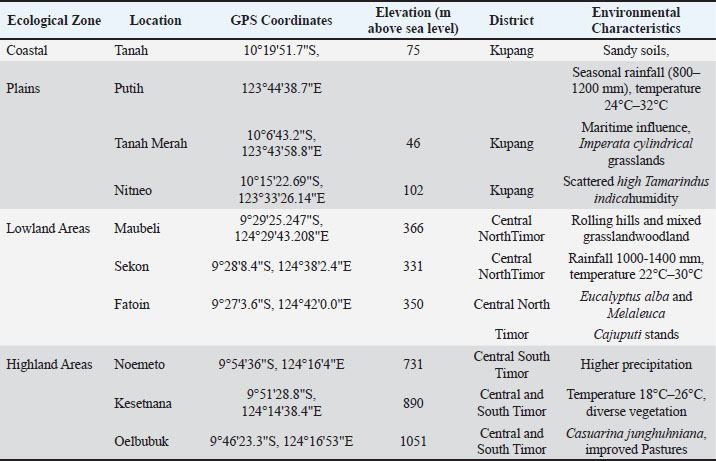
AbstractBackground: Flies are important vectors transmitting various pathogens in livestock systems. Effective, economical, and environmentally sustainable fly control strategies are needed, particularly in semi-extensive cattle farming systems. Aim: This study aimed to evaluate the effectiveness of three dome trap designs compared with the standard Nzi trap in different ecological zones. Methods: Field experiments were conducted in three ecological zones of Timor Island, Indonesia (coastal, lowland, and highland) in May 2023. Four trap types (Dome 1, Dome 2, Dome 3, and Nzi) were deployed near cattle, and fly collections were performed at 2-hour intervals. Data were analyzed using one-way ANOVA followed by Tukey’s HSD test. Results: A total of 8,538 flies representing eight species were collected, dominated by Musca domestica (68.39%). The coastal zone had the highest abundance. Dome 3 showed the highest capture numerically; however, no significant differences were observed among trap types (p=0.053). Fly activity peaked at mid-morning and decreased in the afternoon. Environmental factors such as elevation, temperature, and humidity influenced fly abundance. Conclusion: Although Dome 3 showed higher numerical performance, all trap types demonstrated comparable effectiveness. These findings provide baseline data for improving fly monitoring and control strategies in semi-extensive livestock systems. Keywords: Diptera, Dome trap, Fly monitoring vector control, Nzi trap, Semi-extensive grazing. IntroductionGenetic and environmental factors, including parasitic infestations, influence livestock production, which can significantly reduce productivity and cause economic losses (Cilek and Tekin, 2005; Cilek, 2009). Dipteran flies constitute one of the most significant arthropod pest groups affecting livestock. Production systems globally serve as mechanical and biological vectors for numerous pathogenic organisms, including viruses, bacteria, protozoa, and helminths (Abbas and Hafez, 2021; Geden et al., 2021; Amjad et al., 2024). Semi-extensive cattle farming systems represent the predominant livestock management approach in tropical and subtropical regions, and fly populations can be reached economically damaging levels, causing direct production losses through reduced feed intake and impaired weight gain, decreased milk production, and increased veterinary costs (Miranda et al., 2021; Boonsaen et al., 2024). The economic impact of fly infestations on cattle production is substantial, with annual losses exceeding USD 2.2 billion in the United States alone, whereas global losses are projected to reach USD 6 billion annually (Duvallet, 2022; Andrew P. Griffith et al., 2022; Altosid, 2025). In developing countries, where semi-extensive systems predominate, limited access to modern pest management technologies and insufficient veterinary infrastructure often exacerbate these impacts (Geden, 2005; Hogsette and Foil, 2018; Rahmawati 2025). Temporary fly control strategies include multiple approaches, including rotational grazing management, mechanical methods, biological control agents, and chemical interventions (Gerry et al., 2020; Koala et al., 2022; Abbas et al., 2023; Ahmed et al., 2024; Getahun et al., 2024; González et al., 2024). Among these options, trap-based monitoring and control systems are increasingly recognized as economically viable, environmentally sustainable, and operational solutions for livestock producers (Iaea, 2024; Hulwani et al., 2025). Mechanical trapping methods offer several advantages, including reduced environmental impact and the absence of chemical residues in animal products, minimal pest resistance development, and cost-effectiveness for resource-limited farming operations (Mihok, 2002; Abubakar et al., 2018). The Nzi trap, which was originally developed in Kenya for tsetse fly control, has consistently effectiveness across diverse geographical regions and climatic conditions for capturing Dipteran species (Meyer and Hall 1996; Oloo et al., 2014; Mihok). This trap design incorporates the optimal color combinations of blue and black fabrics that exploit the target fly’s visual attraction mechanisms species (Otabil et al., 2018 ; Phetcharat et al., 2024 ). The blue-black color scheme mimics the visual characteristics of the preferred host animals, while the silhouette of the trap resembles the shapes of livestock that naturally attract blood-feeding flies (Kogan, 1998; Rodríguez-Pérez et al., 2013). Recent research has expanded our understanding of fly behavior and sensory perception. Visual stimulus plays a crucial role in host-seeking behavior (Santer, 2014; Torr et al., 2018; Birkett et al., 2019; Rayaisse et al., 2020; Tirados et al., 2023; Santer and Allen, 2024; Santaera et al., 2025). Ultraviolet radiation influences fly activity patterns, with many species using ultraviolet radiation wavelengths to differentiate potential hosts from background vegetation (Suarsa et al., 2024; Shahanaz et al., 2025). Peak fly activity typically coincides with optimal UV intensities during midday hours, while extreme heat stress drives flies to seek shelter on host animals to avoid desiccation (Taylor et al., 2012; Koala et al., 2022). Despite the proven effectiveness of Nzi traps in various ecosystems, limited research has been conducted by comparing alternative trap designs specifically optimized for semi-extensive grazing. Systems in semi-arid tropical environments (Machtinger et al., 2021; Ickowicz et al., 2022). The unique ecological characteristics of Timor Island, including its semi-arid climate, topographical features, and traditional livestock management practices, present distinct challenges and opportunities for developing improved fly control technologies (Wang et al., 2019; Department of Agriculture, 2024). The development of novel trap designs requires the consideration of multiple factors, including construction materials, geometric configuration, color combinations, operational durability, and economic feasibility for smallholder farmers, particularly because flies are important mechanical vectors of animal and human pathogens (Graczyk et al., 2001; Baldacchino et al., 2018; Wang et al., 2019; Rochon et al., 2021; Department of Agriculture, 2024). Dome-shaped trap configurations offer potential advantages, including enhanced visual attraction. from multiple angles, improved structural stability under windy conditions, and simplified construction Requirements using locally available materials (Samuel et al., 2015; Zhu et al., 2016). This study aimed to evaluate the effectiveness of three dome trap designs compared with the standard Nzi trap for capturing flies in livestock environments. The findings of this study are expected to provide useful information for the development of practical and cost-effective methods for monitoring fly populations in livestock production systems Materials and MethodsStudy area and selection of sitesThe research was conducted in May 2023 across three representative ecological zones of Timor Island, East Nusa Tenggara Province, Indonesia, namely the Central (Kupang), Lowland (North Timor District), and Highland (Central South Timor) zones. Study sites were strategically selected to encompass the major ecological gradients present on the island, representing typical semi-extensive cattle farming environments found throughout the Indonesian archipelago (Hilmiati et al., 2024). Coastal Zone (Kupang District): Three villages were selected, including Tanah Putih (10°19'51.7"S, 123°44'38.7"E, 75 m elevation), Tanah Merah (10°6'43.2"S, 123°43'58.8"E, 46 m elevation), and Nitneo (10°15'22.69"S, 123°33'26.14"E, 102 m elevation). This zone is sandy soils, seasonal rainfall patterns (800–1200 mm annually), and temperatures ranging from 24°C to 32°C. The vegetation consists primarily of savanna grasslands dominated by the Imperata Cylindrica, Themeda triandra, and scattered Tamarindus indica. Lowland Zone (Central North Timor District): Sampling sites included Maubeli (9°29'25.247"S, 124°29'43.208"E, elevation of 366 m), Sekon (9°28'8.4"S, 124°38'2.4"E, elevation of 331 m), and Fatoin (9°27'3.6"S, 124°42'0.0"E, 350 m elevation). This region experiences slightly higher rainfall (1000 mm–1400 mm annually) and more moderate temperatures (22°C–30°C). The landscape features rolling hills with mixed grassland-woodland vegetation, including Eucalyptus alba, Melaleuca cajuputi, and Indigenous grasses. Highland Zone (Central South Timor District): Noemeto (9°54'36"S, 124°16'4"E, 731 m elevation), Kesetnana (9°51'28.8"S, 124°14'38.4"E, 890 m elevation), and Oelbubuk (9°46'23.3"S, 124°16'53"E, elevation: 1051 m). Highland areas receive higher precipitation with cooler temperatures (18°C–26°C) and diverse vegetation, including Casuarina junghuhniana, Schleichera oleosa, and improved pasture species. This zone is characterized by semi-arid conditions with distinct seasonal rainfall patterns and temperature variations that strongly influence vegetation structure and livestock management practices (Robertson et al., 2009). The geographical and environmental characteristics of all study sites are summarized as follows, as provided in Table 1. Table 1. Study site characteristics across the ecological zones of the East Nusa Tenggara Province Indonesia.
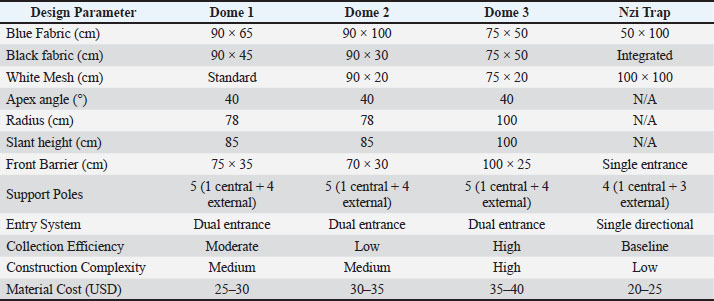
Trap design and constructionNzi trap configurationThe standard Nzi trap was constructed using blue-black cotton following established protocols. fabric (0.5 m × 1.0 m) and white mosquito netting (1.0 m × 1.0 m) (Mihok, 2002). The framework consisted of one central support pole and three external poles with six tension points to maintain trap stability and ensure optimal fabric positioning. The blue-black fabric component was positioned to maximize visual contrast, while the collection chamber used fine mesh to retain scaptured flies while allowing adequate airflow. Comparative summary of the structure Specifications of the dome and Nzi traps are shown in Table 2. Table 2. Technical specifications and dimensional parameters of the designs of dome traps compared with the standard Nzi trap.
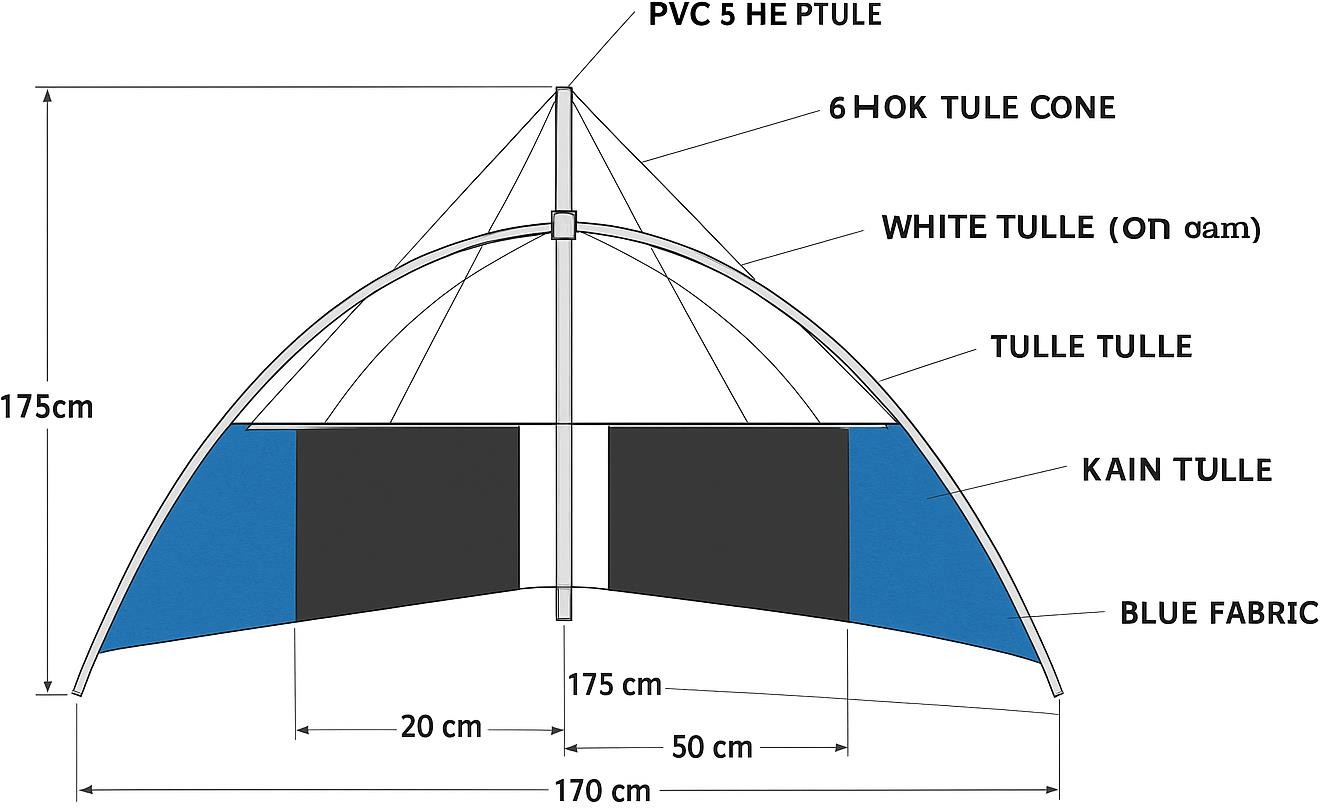
Design of dome trapsThis study developed three dome trap variations by incorporating attractive color combinations (blue, black, white) into novel geometric configurations to enhance capture efficiency. Dome 1 specificationsBlue fabric panel (90 cm × 65 cm), black fabric section (90 cm × 45 cm), Apex angle, 40°; radius, 78 cm; slant height, 85 cm. Front barrier panel: blue fabric (75 cm length × 35 cm in height). This design emphasizes compact construction suitable for space constraints. Dome 2 configurationBlue fabric component (90 cm × 100 cm), black section (90 cm × 30 cm), White mesh panel (90 cm × 20 cm), apex angle 40°, radius 78 cm, and slant height 85 cm. Front barrier: Blue fabric (70 cm length × 30 cm). This intermediate design balances the material requirements with enhanced visual attraction. Dome 3 designblue fabric panel (75 cm × 50 cm), black fabric section (75 cm × 50 cm), white Mesh component (75 cm × 20 cm), apex angle 40°, radius 100 cm, and slant height 100 cm. Front barrier Panel: 100 cm length × 25 cm height. This large design maximizes the visual target area and internal capture volume. All dome traps incorporated dual entrance systems with blue fabric paired front barriers, panels, and complementary non-barred openings. The support structure comprised one central pole and four external support posts to maintain the dome shape and structural integrity in the field conditions. Precision-cut fabric pieces are sewn to form a hemispherical collection of chambers with strategically positioned entry points. A schematic cross-sectional view of the dome Trap design is presented in Figure 1 to clarify the structural components and entry system.
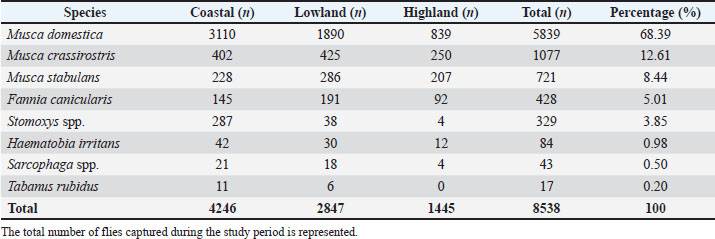
Fig. 1. Cross-section of a dome-type fly trap the trap consists of a ½-inch PVC central pole with a 6-hole ½-inch PVC connector supporting a ⅝-inch PVC frame. The upper section is a cone of white tulle, while the sides feature 75 cm-high panels of white tulle, black fabric, and blue fabric. Overall dimensions: height, 175 cm; base width, 170 cm (segments, 20 cm + 50 cm + 50 cm). Field deployment and data collectionTraps were deployed simultaneously at each study location with standard spacing (minimum 50 Meters between the traps) to minimize the interference effects. Positioning relative to the livestock maintained consistent 5–10-meter distances, with Nzi trap entrances oriented toward cattle and dome traps. Utilized omnidirectional entry points. All traps were installed at sunrise (approximately 06:00 local time) and remained operational until sunset (approximately 18:00 local time). Fly collections were conducted at five sampling intervals per day (08:00, 10:00, 12:00, 14:00, and 16:00), resulting in 15 sampling observations per trap during the 3-day deployment period. Fly collection followed systematic 2-hour intervals beginning at 08:00 and continuing through 16:00 local time. During each collection period, captured flies were carefully transferred to labeled containers. Using soft forceps to minimize specimen damage. Immediate preservation using 70% ethanol to ensure morphological integrity for subsequent identification. Species identification and morphological analysisTaxonomic identification employs standardized morphological keys developed for the Southeast region Asian Diptera, with a particular emphasis on livestock-associated species (Indonesian Center for Animal Research and Development, 2024). Primary diagnostic features included wing venation patterns, antennal structure, mouthpart morphology, body size and coloration, and reproductive organ characteristics where applicable. Specimens were examined using a stereomicroscope (Olympus SZ61, 10–40× magnification) with fiber optic illumination systems to enhance the visualization of morphological details. Digital photography. Documented key diagnostic features for verification and quality control. Identification accuracy was confirmed through cross-referencing with authenticated specimen collections. Consultation with regional taxonomic experts. Statistical analysis and data managementQuantitative analyses were conducted to evaluate the effectiveness of the trap and describe the temporal activity patterns of the flies. Differences in fly capture among trap types (Dome 1, Dome 2, Dome 3, and Nzi trap) were analyzed using one-way analysis of variance (ANOVA) with a significance level set at α=0.05. When significant differences were detected, Tukey’s honest significant difference post hoc test was applied for pairwise comparisons among trap types. We examined temporal activity patterns by comparing fly captures across different sampling times. Descriptive statistics, including the mean and standard deviation, were calculated for each trap type and collection period. The population structure was further characterized using standard ecological indices: Relative abundance=(Number of individuals of species i/Total number of individuals collected) × 100 Species diversity=Shannon–Wiener Index (H'=-Σpi ln pi) All statistical analyses were performed using SPSS version 28.0, and graphical visualizations were generated using R version 4.3.2. Data were tested for normality using the Shapiro–Wilk test before analysis, and data transformations were applied when necessary to meet statistical assumptions. Temporal activity patterns were analyzed using repeated-measures analysis of variance followed by Tukey’s honest significant difference post-hoc tests for multiple comparisons (Field, 2013). Ethical approvalThis research protocol was reviewed and approved by the Animal Ethics Committee of the Faculty of Veterinary Medicine, Universitas Gadjah Mada, with approval number 93/EC-FKH/int./2024. ResultsOverall fly capture and species compositionA total of 8,538 individual flies representing eight species across three dipteran families were collected during the study period. The dominant species was Musca domestica (5,839 individuals; 68.39%), followed by Musca crassirostris (1,077; 12.61%) and Musca stabulans (721; 8.44%). Other species included Fannia canicularis (5.01%), Stomoxys spp. (3.85%), Haematobia irritans (0.98%), Sarcophaga spp. (0.50%), and Tabanus rubidus (0.20%). Species richness varied across ecological zones, with five species recorded in the coastal zone and eight species each in the lowland and highland zones. The coastal zone exhibited the highest fly abundance (4,246 individuals), followed by the lowland (2,847) and highland zones (1,445). The species composition and their distribution across the ecological zones are detailed in Table 3. Table 3. Species composition and abundance of captured flies across ecological zones
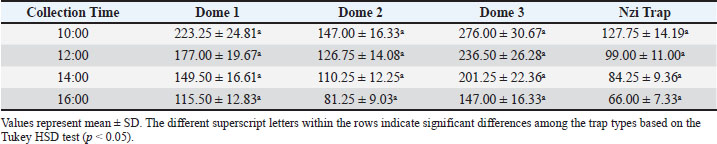
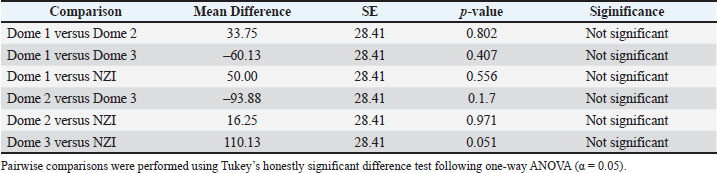
Comparison of trap performanceThe total number of flies captured differed numerically among trap types. Dome 3 recorded the highest number of captures (1,908 individuals), followed by Dome 1 (1,393), Dome 2 (1,019), and the Nzi trap (844). However, one-way ANOVA showed that these differences were not statistically significant (F₃,₁₂=3.42, p=0.053). Results of Tukey’s HSD post hoc analysis also indicated no significant pairwise differences among trap types. Table 4 shows the mean (± SD) number of flies captured by each trap type at different sampling times, whereas Table 5 summarizes the results of the one-way ANOVA and Tukey’s HSD post hoc analyses comparing fly captures among trap types. Table 4. Mean (±SD) fly captures by trap type at different collection times.
Table 5. One-way ANOVA and Tukey’s HSD post hoc comparisons of fly capture among trap types.
Temporal activity patternsAll trap types exhibited consistent diurnal activity patterns. Fly activity peaked at 10:00, with mean captures of 276 ± 30.67 (Dome 3), 223.25 ± 24.81 (Dome 1), 147 ± 16.33 (Dome 2), and 127.75 ± 14.19 (Nzi). Capture rates declined progressively throughout the day, reaching their lowest levels at 16:00 across all trap types. Species-specific distribution patternsMusca domestica was the most abundant species in all ecological zones, with the highest densities observed in coastal areas. Musca crassirostris was more frequently recorded in lowland and highland zones, whereas Stomoxys spp. showed higher abundance in coastal environments. Tabanus rubidus was predominantly found in lowland areas and was rarely observed in highland zones. Regional ecological patternsCoastal Zone: The coastal zone recorded the highest abundance (4,246 individuals), dominated by M. domestica (73.2%). Lowland Zone: The lowland zone showed the highest species diversity (eight species) with 2,847 individuals. Highland Zone: The highland zone recorded the lowest abundance (1,445 individuals) but maintained relatively high species richness (eight species). Environmental correlation analysisCorrelation analysis demonstrated a significant negative relationship between elevation and total fly abundance (r=−0.67, p < 0.001), which is consistent with previous ecological studies showing that elevational gradients strongly influence insect diversity and abundance (Guo et al., 2021; Huang et al., 2022; Shen, 2022; Zhao et al., 2023; Liao et al., 2024). Temperature was positively correlated with Stomoxys spp. abundance (r=0.78, p < 0.01), while humidity showed a moderate positive correlation with M. domestica populations (r=0.65, p < 0.05). DiscussionTrap performance in field conditionsThe present study demonstrated that although Dome 3 recorded the highest number of fly captures, the differences among trap types were not statistically significant. This finding is consistent with previous studies indicating that variability in field conditions often reduces the ability to detect significant differences among trap designs (Mihok, 2002; Oloo et al., 2014). Environmental heterogeneity, including host proximity, wind patterns, habitat structure, and diurnal fly activity patterns, has been shown to strongly influence trap performance (Geden, 2005; Zahn et al., 2020; Machtinger et al., 2021). Therefore, the non-significant statistical result observed in this study does not necessarily indicate that all traps perform identically in practical applications. Influence of trap design and visual attractionThe higher numerical performance of Dome 3 may be attributed to its larger surface area and optimized color configuration. Previous studies have shown that visual cues, particularly color contrast and geometric structure, play a critical role in fly attraction (Dearden et al., 2024; Santer and Allen, 2024). The blue-black color combination used in the dome traps is known to mimic host animals and enhance attraction efficiency in dipteran flies (Otabil et al., 2018; Phetcharat et al., 2024). Additionally, omnidirectional trap designs may provide advantages over directional traps such as the Nzi, especially in open grazing systems (Mihok, 2002). Ecological dominance of Musca domesticaThe dominance of Musca domestica (68.39%) observed in this study aligns with findings from tropical livestock systems, where this species typically represents the majority of fly populations due to its high reproductive capacity and ecological adaptability (Machtinger et al., 2021; El Ashmawy et al., 2021). Livestock environments provide ideal breeding conditions for M. domestica, particularly due to the accumulation of organic waste such as cattle manure (Smith et al., 2022). This species is also recognized as an important mechanical vector for pathogens, including Escherichia coli, Salmonella spp., and Cryptosporidium spp. (El Ashmawy et al., 2021; Sari et al., 2024; Shehata et al., 2024). Environmental influence on fly abundanceThe significantly higher fly abundance observed in coastal areas may be explained by favorable environmental conditions, including higher temperature and humidity. These factors accelerate larval development and increase adult survival rates in flies (Zhu et al., 2016; El Ashmawy et al., 2021; Li et al., 2023). Conversely, the negative correlation between elevation and fly abundance observed in this study is consistent with ecological theory, where cooler temperatures at higher altitudes limit insect metabolism and population growth (Hodkinson, 2005). Species distribution and vector potentialThe presence of Stomoxys spp. and Haematobia irritans highlights the potential economic and epidemiological impact of fly infestations in cattle systems. These species are known to cause production losses through blood-feeding behavior and to act as vectors for pathogens (Walsh et al., 1978; Cook, 2020; Maas and Gerry 2020). The higher abundance of Stomoxys spp. in coastal environments suggests that these areas may represent higher-risk zones for vector-borne disease transmission. Study limitations and future researchThe relatively short duration of sampling may have limited the ability to detect statistically significant differences among trap types. Previous studies have suggested that longer monitoring periods are required to capture variability in insect populations under natural conditions (Vreysen et al., 2013). Future studies should incorporate longer sampling periods and increased replication to better evaluate trap performance and optimize fly control strategies in semi-extensive livestock systems. ConclusionThis study evaluated the performance of three dome trap designs compared with the standard Nzi trap for capturing flies in semi-extensive cattle grazing systems on Timor Island. Although no statistically significant differences were observed among trap types, Dome 3 consistently demonstrated higher numerical captures, suggesting potential practical advantages for field application. The study confirmed that Musca domestica dominates fly populations in tropical livestock systems, with species distribution and abundance strongly influenced by ecological factors, particularly elevation and climatic conditions. Peak fly activity during mid-morning highlights critical periods for effective monitoring and control interventions. These findings provide essential baseline data for the development of sustainable fly surveillance and management strategies in tropical cattle production systems. Further studies with extended sampling duration and increased replication are necessary to more robustly assess trap performance and optimize vector control approaches. AcknowledgmentsThe author expresses his gratitude and appreciation to the Indonesia Education Scholarship, Center for Higher Education Funding and Assessment, and Indonesian Endowment Fund for Education. Conflicts of interestThe authors have no competing financial or professional interests related to this research. Authors' contributionsABO designed the study and drafted the manuscript. RWN, JP, and DP supervised the study and revised the manuscript; GWN drafted and reviewed the manuscript. All authors have read and approved the final version. Data availabilityAll data are presented in this research. ReferencesAbbas, M., Abbas, S., Faraz, I., Hussain, N., Aslam, M., Irshad, M., Khaliq, M., Ghaffar, A., Parveen, Z., Nadeem, M., Ullah, S. and Iqbal, M.A. 2023. Comparing Traditional and Contemporary Approaches to Integrated Pest Management in Major Field Crops. Pak. J. Agricult. Res. 36(3), 183–192; doi: 10.17582/JOURNAL.PJAR/2023/36.3.183.192 Abbas, N. and Hafez, A.M. 2021. Resistance to insect growth regulators and age-stage, two-sex life table in Musca domestica from different dairy facilities. PLos One. 16, doi: 10.1371/journal.pone.0248693 Abubakar, B.A., Falmata, K., Abdulmalik, A. and Ali, M. 2018. Survey of flies (Order: Diptera) of medical and veterinary importance infesting livestock in Maiduguri, Borno State, Nigeria. J. Sci. Agri. 2, 97–100. Ahmed, S., Marwat, S.N.K., Brahim, G.B., Khan, W.U., Khan, S., Al-Fuqaha, A. and Koziel, S. 2024. IoT based intelligent pest management system for precision agriculture. Scientific Rep. 14(1), 1–15; doi:10.1038/s41598-024-83012-3 Altosid. 2025. Economic Benefits of Using Altosid® IGR for Horn Fly Control. https://www.altosidigr.com/blog/horn-flies-impact-on-cattle/ Amjad, N., Mukhtar, M.K., Khan, H.A.A., Khan, S.Y. and Waliat, S. 2024. Comparative Toxicity and Resistance to Insecticides in Musca domestica from Some Livestock Farms of Punjab, Pakistan. Pak. J. Zool. 56(1), 207–215; doi:10.17582/journal.pjz/20221020081040 Andrew P. Griffith, Smith, K. V., DeLong, K., Boyer, C. N., Griffith, A. P., Smith, K. V., Karen DeLong, C. N. B., Martinez, C. C., Schexnayder, S., & Trout Fryxell, R. T. 2022. Costs Of Horn Fly Control for Cow-Calf. University of Tennessee Institute of Agriculture, 115(1), 1–8. Baldacchino, F., Muenworn, V., Desquesnes, M., Desoli, F., Charoenviriyaphap, T. and Duvallet, G. 2018. Transmission of pathogens by Stomoxys flies (Diptera: muscidae): A review. Parasites. &. Vectors. 11, 336; doi:10.1186/s13071-018-2926-9 Birkett, M.A., Pickett, J.A. and Logan, J.G. 2019. Behavioural responses of biting flies to visual and olfactory cues in livestock systems. Parasites &. Vectors 12, 1–12; doi:10.1186/s13071-019-3456-1 Boonsaen, P., Nevot, A., Onju, S., Fossaert, C., Chalermwong, P., Thaisungnoen, K., Lucas, A., Thévenon, S., Masmeatathip, R., Jittapalapong, S. and Desquesnes, M. 2024. Measurement of the Direct Impact of Hematophagous Flies on Feeder Cattle: an Unexpectedly High Potential Economic Impact. Insects 15(10), 1–20; doi:10.3390/insects15100735 Cilek, S. 2009. Reproductive traits of Holstein cows raised at Polatli State Farm in Turkey. J. Anim. Vet. Adv. 8(1), 1–5. Çi̇lek, S. and Emin Tekin, M. 2005. Environmental factors affecting milk yield and fertility traits of Simmental cows raised at the Kazova State Farm and phenotypic correlations between these traits. Turkish J. Vet. Anim. Sci. 29(4), 987–993. Cook, D. 2020. A historical review of management options used against the stable fly (Diptera: muscidae). Insects 11(5), 11; doi:10.3390/insects11050313 Dearden, A.E., Wood, M.J., Frend, H.O., Butt, T.M. and Allen, W.L. 2024. Visual modelling can optimise the appearance and capture efficiency of sticky traps used to manage insect pests. J. Pest. Sci. 97(1), 469–479; doi:10.1007/s10340-023-01604-w Department of Agriculture, F. 2024. Lumpy skin disease vector management guide (Issue June). Duvallet, G. 2022. A new trap to control stable and black flies, 2022. Arthropod Manage. Tests , 47; doi:10.1093/amt/tsac115 El Ashmawy, W.R., Abdelfattah, E.M., Williams, D.R., Gerry, A.C., Rossow, H.A., Lehenbauer, T.W. and Aly, S.S. 2021. Stable fly activity is associated with dairy management practices and seasonal weather conditions. PLoS One, 16(7), e0253946. Geden, C.J. 2005. Methods for monitoring outdoor populations of house flies, Musca domestica L. (Diptera: Muscidae). J. Vector Ecol. 30(2), 244–250. Field, A. 2013. Discovering statistics using IBM SPSS statistics 4th ed. London, UK: Sage Publications. Geden, C.J., Nayduch, D., Scott, J.G., Burgess, E.R., Gerry, A.C., Kaufman, P.E., Thomson, J., Pickens, V. and Machtinger, E.T. 2021. House fly (Diptera: muscidae): Biology, pest status, current management prospects, and research needs. J. Integr. Pest Manage. 12(1), 39; doi:10.1093/jipm/pmaa021 Gerry, A.C., Talley, J.L., Wasala, L.P., Fletcher, J. and DeSilva, U. 2020. Integrated pest management for livestock flies. Vet. Clinics. North. Amer. Food. Anim. Pract. 36, 123–140; doi:10.1016/j.cvfa.2019.12.003 Getahun, M.N., Baleba, S.B.S., Ngiela, J., Ahuya, P. and Masiga, D. 2024. Multimodal interactions in Stomoxys navigation reveal synergy between olfaction and vision. Scientific Rep. 14(1), doi:10.1038/s41598-024-68726-8 González, M.A., Duvallet, G., Morel, D., De Blas, I., Barrio, E. and Ruiz-Arrondo, I. 2024. An Integrated Pest Management Strategy Approach for the Management of the Stable Fly Stomoxys calcitrans (Diptera: muscidae). Insects 15(4), 15; doi:10.3390/insects15040222 Graczyk, T.K., Knight, R., Gilman, R.H. and Cranfield, M.R. 2001. The role of non-biting flies in the epidemiology of human infectious diseases. Microbes. Infection. 3(3), 231–235; doi:10.1016/S1286-4579(01)01371-5 Guo, Y., Li, X. and Zhao, Z. 2021. Elevational gradients influence insect diversity and community structure. Ecol. Evol. 11, 12345–12357; https://doi.org/ Hilmiati, N., Ilham, N., Nulik, J., Rohaeni, E.S., Derosari, B., Basuki, T., Hau, D.K., Ngongo, Y., Lase, J.A., Fitriawaty, F., Surya, S., Qomariyah, N., Hadiatry, M.C., Ahmad, S.N., Qomariah, R., Suyatno, S., Munir, I.M., Hayanti, S.Y., Panjaitan, T. and Yusriani, Y. 2024. Smallholder Cattle Development in Indonesia: learning from the Past for an Outcome-Oriented Development Model. Int. J. Design Nature Ecodynamics 19(1), 169–184; doi:10.18280/ijdne.190119 Hodkinson, I.D. 2005. Terrestrial insects along elevation gradients: species and community responses to altitude. Biol. Rev. 80(3), 489–513. Hogsette, J.A. and Foil, L.D. 2018. Blue and Black Cloth Targets: effects of Size, Shape, and Color on Stable Fly (Diptera: Muscidae) Attraction. J. Econ. Entomol. 111(2), 974–979; doi:10.1093/jee/toy015 Hilmiati, N., Ilham, N., Nulik, J., Rohaeni, E.S., Derosari, B., Basuki, T., Hau, D.K., Ngongo, Y., Lase, J.A., Fitriawaty, F., Surya, S., Qomariyah, N., Hadiatry, M.C., Ahmad, S.N., Qomariah, R., Suyatno, S., Munir, I.M., Hayanti, S.Y., Panjaitan, T. and Yusriani, Y. 2024. Smallholder Cattle Development in Indonesia: learning from the Past for an Outcome-Oriented Development Model. Int.J. Design Nature Ecodynamics 19(1), 169–184;doi:10.18280/ijdne.190119 Huang, J., Zhang, X., Liu, Y., Li, Q. and Wang, X. 2022. Metabarcoding reveals massive species diversity of Diptera and strong environmental effects including elevation. Ecol. Evol. 12(2), e8535; doi:10.1002/ece3.8535 Hulwani, N.Z., Hestriyasha, A. and Valentina, A. 2025. Innovative control of fruit fly (Bactrocera dorsalis) on tomato plants (Solanum lycopersicum) using the push-pull technique for sustainable food security. J. Agrosociology. Sustainability. 3(1), 19–35; doi:10.61511/jassu.v3i1.2025.1891 IAEA. 2024. Socio-economic impact assessment of the tsetse fly eradication campaign in the Niayes area of Senegal. https://www.iaea.org/resources/technical-report/socio-economic-impact-assessment-of-the-tsetse-fly-eradication-campaign-in-the-niayes-area-of-senegal Ickowicz, A., Hubert, B., Blanchard, M., Blanfort, V., Cesaro, J.D., Diaw, A., Lasseur, J., Thi Thanh Huyen, L., Li, L., Mauricio, R.M., Cangussu, M., Müller, J.P., Quiroga Mendiola, M., Quiroga Roger, J., Vera, T.A., Ulambayar, T. and Wedderburn, L. 2022. Multifunctionality and diversity of livestock grazing systems for sustainable food systems throughout the world: are there learning opportunities for Europe?. Grass. Forage. Sci. 77(4), 282–294; doi:10.1111/gfs.12588 Indonesian Center for Animal Research and Development. 2024. The 4th International Seminar on Livestock Production and Veterinary Technology. Bogor, Indonesia. Koala, L., Tirados, I., Nikiema, A.S., Thomsen, E., Mccall, P.J. and Dabire, R.K. 2022. Prospects for developing efficient targets for the xenomonitoring and control of Simulium damnosums l., the major vectors of onchocerciasis in Africa. Med. Vet. Entomol. 36(3), 235–246; doi:10.1111/mve.12598 Kogan, M. 1998. Integrated pest management: historical perspectives and contemporary developments. Annu. Rev. Entomol. 43, 243–270; doi:10.1146/annurev.ento.43.1.243 Li, T., Khan, S., Wei, M., Li, H., Wen, T., Guo, J. and Jin, D. 2023. Utilizing Black Soldier Fly Larvae to Improve Bioconversion and Reduce Pollution: a Sustainable Method for Efficient Treatment of Mixed Wastes of Wet Distiller Grains and Livestock Manure. Molecules 28(15), 28; doi:10.3390/molecules28155735 Liao, Z., Zhang, J., Shen, X., Zhu, M., Lan, X., Cui, J., Guan, Y., Zhang, Y., Deng, Z., Tang, T., Liu, F., Yang, D. and Zhang, Y. 2024. Elevation and human disturbance interactively influence the patterns of insect diversity on the southeastern periphery of the Tibetan Plateau. Insects 15(9), 669. Maas, J. and Gerry, A.C. 2020. Beef Cattle Fly Control in 2011. Anim. Sci. , 1–6. Machtinger, E.T., Gerry, A.C., Murillo, A.C. and Talley, J.L. 2021. Filth Fly Impacts to Animal Production in the United States and Associated Research and Extension Needs. J. Integr. Pest. Manage. 12(1), doi:10.1093/jipm/pmab026 Meyer, H. J., and Hall, R. D. 1996. Non-chemical Horn Fly Traps. Beef Cattle Handbook, 3801, 1– (Diptera: Tabanidae) on a Beef Cattle and a Buffalo Farm in Nakhon Si Thammarat Province, Southern Thailand. Insects, 15(10); doi:10.3390/insects15100818 Miranda, C.D., Crippen, T.L., Cammack, J.A. and Tomberlin, J.K. 2021. Black soldier fly, Hermetia illucens (L.), and house fly, Musca domestica L., larvae reduce livestock manure and possibly associated nutrients. Environ. Pollut. 282, 116976. Mihok, S. 2002. The development of a multipurpose trap (the Nzi) for tsetse and other biting flies. Bull. Entomol. Res. 92(5), 385–403. Oloo, F., Sciarretta, A., Mohamed-Ahmed, M.M., Kröber, T., McMullin, A., Mihok, S. and Guerin, P.M. 2014. Standardizing visual control devices for tsetse flies. PLoS Negl. Trop. Dis. 8(11), e3334. Otabil, K.B., Gyasi, S.F., Awuah, E., Obeng-Ofori, D., Rodríguez-Pérez, M.A., Katholi, C.R. and Unnasch, T.R. 2018. The search for an efficient black fly trap for xenomonitoring of onchocerciasis. J. Parasitol. Res. 2018, 5902367. Phetcharat, Y., Wongtawan, T., Fungwithaya, P., Amendt, J. and Sontigun, N. 2024. Species diversity and seasonal abundance of Stomoxyinae and Tabanid flies on cattle and buffalo farms. Insects 15(10), 818. Rahmawati. 2025. Analisis Ekonomi Produksi pada Peternakan Sapi Potong dengan Sistem Pemeliharaan Ekstensif dan Semi-Intensif di Kabupaten Sorong, Papua Barat Daya. Jurnal Ilmiah Peternakan Terpadu 13(1), 216–228. Rayaisse, J.B., Tirados, I., Esterhuizen, J., Mpiana, S., Solano, P., Lehane, M.J. and Torr, S.J. 2020. Improving tsetse fly control strategies: recent advances in trap and target technologies. Trends. Parasitology. 36(10), 890–901; doi:10.1016/j.pt.2020.07.002 Robertson, A.W., Moron, V. and Swarinoto, Y. 2009. Seasonal predictability of daily rainfall statistics over Indramayu District, Indonesia. Int. J. Climatol. 29(10), 1449–1462. Rochon, K., Hogsette, J.A., Kaufman, P.E., Olafson, P.U., Swiger, S.L. and Taylor, D.B. 2021. Stable fly (Diptera: muscidae)—Biology, management, and research needs. J. Integr. Pest Manage. 12(1), 1–16; doi:10.1093/jipm/pmab015 Rodríguez-Pérez, M.A., Adeleke, M.A., Burkett-Cadena, N.D., Garza-Hernández, J.A., Reyes-Villanueva, F., Cupp, E.W., Toé, L., Salinas-Carmona, M.C., Rodríguez-Ramírez, A.D., Katholi, C.R. and Unnasch, T.R. 2013. Development of a Novel Trap for the Collection of Black Flies of the Simulium ochraceum complex. PLos One 8(10), 1–11; doi:10.1371/journal.pone.0076814 Samuel, A., Philip, N., Ingonga, J. and Peter, N. 2015. Comparative Analysis of the Effectiveness of Sand Fly Traps with Different Baits. IOSR. J. Pharm. Biol. Sci. Ver. II. 10(4), 2319–7676; doi:10.9790/3008-10421624 Santaera, G., Zeni, V., Manduca, G., Canale, A., Mele, M., Benelli, G., Stefanini, C. and Romano, D. 2025. Development of an autonomous smart trap for precision monitoring of hematophagous flies on cattle. Smart. Agricult. Technol. 10, 100842; doi:10.1016/j.atech.2025.100842 Santer, R.D. 2014. A Colour Opponent Model That Explains Tsetse Fly Attraction to Visual Baits and Can Be Used to Investigate More Efficacious Bait Materials. PLos Neglected. Trop. Dis. 8(12), doi:10.1371/journal.pntd.0003360 Santer, R.D. and Allen, W.L. 2024. Optimising the colour of traps requires an insect’s eye view. Pest. Manage. Sci. 80(3), 931–934; doi:10.1002/ps.7790 Sari, S.N., Tosepu, R., Salma, W.O., Zainuddin, A., Saptaputra, S.K. and Indriyani, L. 2024. Testing The Effectiveness of Types of Bait and Colors of Fly Traps for Controlling Flies at (Diptera: tabanidae) on a Beef Cattle and a Buffalo Farm in Nakhon Si Thammarat Province, Southern Thailand. Insects 15(10), 15; doi:10.3390/insects15100818 Shahanaz, E., Zwally, K.M., Powers, C., Lyons, B., Kaufman, P., Athrey, G. and Taylor, T.M. 2025. Flies as Vectors of Foodborne Pathogens Through Food Animal Production: factors Affecting Pathogen and Antimicrobial Resistance Transmission. J. Food Prot. 88(7), 100537; doi:10.1016/j.jfp.2025.100537 Shehata, A., El-Waseif, A., Waheeb, H., Emam, D., El-Tabakh, M. and Elghwas, D. 2024. Abundance and molecular identification of house fly Musca domestica (Diptera: muscidae) with study to associate pathogenic bacteria. J. Microbiol. Biotechnol. Food. Sci. 13(5), e10580; doi:10.55251/jmbfs.10580 Shen, H. 2022. Impacts of climate change on insect abundance across climatic regions. In Proceedings of the International Conference on Environmental Systems. SciTePress, Setúbal, Portugal. Smith, K.V., Delong, K.L., Griffith, A.P., Boyer, C.N., Martinez, C.C., Schexnayder, S.M. and Trout Fryxell, R.T. 2022. Costs of Horn Fly (Diptera: muscidae) Control for Cow-calf Producers in Tennessee and Texas, 2016. J. Econ. Entomol. 115(1), 371–380; doi:10.1093/jee/toab239 Suarsa, A., Sugiartiningsih, S., Kusumawati, E., Fitriani, I.D., Pratiwi, N. and Fadilah, Y. 2024. Sustainability Practices in Indonesian Cattle Farming: insights from the SAFA Framework. Organic Farming 10(2), 120–132; doi:10.56578/of100203 Taylor, D.B., Moon, R.D. and Mark, D.R. 2012. Economic impact of stable flies (Diptera: muscidae) on dairy and beef cattle production. J. Med. Entomol. 49(1), 198–209; doi:10.1603/ME10050 Abubakar, B.A., Falmata, K., Abdulmalik, A. and Ali, M. 2018. Survey of flies (Order: Diptera) of medical and veterinary importance infesting livestock in Maiduguri, Borno State, Nigeria. J. Sci. Agri. 2, 97–100; doi:10.25081/jsa.2018.v2.1038 Tirados, I., Esterhuizen, J., Lehane, M.J. and Torr, S.J. 2023. Advances in vector surveillance and trapping technologies for biting flies. Curr. Res. Parasitology &. Vector-Borne Dis. 3, 100120; doi:10.1016/j.crpvbd.2023.100120 Torr, S.J., Hargrove, J.W. and Vale, G.A. 2018. Strategies for controlling tsetse flies and African trypanosomiasis. Trends Parasitology 34(6), 460–472; doi:10.1016/j.pt.2018.03.006 Vreysen, M.J.B., Seck, M.T., Sall, B. and Bouyer, J. 2013. Tsetse flies: their biology and control using area-wide integrated pest management approaches. J. Invertebrate. Pathol. 112(SUPPL.1), S15–S25; doi:10.1016/j.jip.2012.07.026 Walsh, J.F., Davies, J.B., Le Berre, R. and Grams, R. 1978. Standardization of criteria for assessing the effect of simulium control in onchocerciasis control programmes. Trans. Roy. Soc. Trop. Med. Hygiene 72(6), 675–676; doi:10.1016/0035-9203(78)90039-1 Wang, J.N., Hou, J., Wu, Y.Y., Guo, S., Liu, Q.M., Li, T.Q. and Gong, Z.Y. 2019. Resistance of House Fly, Musca domestica L. (Diptera: muscidae), to Five Insecticides in Zhejiang Province, China: The Situation in 2017. Can. J. Infect. Dis. Med. Microbiol. 2019, doi:10.1155/2019/4851914 Zahn, L.K., Gerry, A.C. and Mullens, B.A. 2020. Diurnal flight activity of house flies (Musca domestica) on dairies. Insects 11(6), 391; doi:10.3390/insects11060391 Zhao, L., Gao, R., Liu, J., Liu, L., Li, R., Men, L. and Zhang, Z. 2023. Effects of environmental factors on the spatial distribution pattern and diversity of insect communities along altitude gradients in Guandi Mountain, China. Insects 14(3), 224; doi:10.3390/insects14030224 Zhu, J.J., Zhang, Q.H., Taylor, D.B. and Friesen, K.A. 2016. Visual and olfactory enhancement of stable fly trapping. Pest Manage. Sci. 72(9), 1765–1771; doi:10.1002/ps.4207 | ||
| How to Cite this Article |
| Pubmed Style Oematan AB, Nurcahyo RW, Prastowo J, Priyowidodo D, Gunawan G. Comparative evaluation of dome trap designs versus standard nzi traps for fly control in semi-extensive cattle farming systems across Timor’s different ecological zones Island, Indonesia. Open Vet. J.. 2026; 16(6): 3660-3670. doi:10.5455/OVJ.2026.v16.i6.37 Web Style Oematan AB, Nurcahyo RW, Prastowo J, Priyowidodo D, Gunawan G. Comparative evaluation of dome trap designs versus standard nzi traps for fly control in semi-extensive cattle farming systems across Timor’s different ecological zones Island, Indonesia. https://www.openveterinaryjournal.com/?mno=303233 [Access: June 26, 2026]. doi:10.5455/OVJ.2026.v16.i6.37 AMA (American Medical Association) Style Oematan AB, Nurcahyo RW, Prastowo J, Priyowidodo D, Gunawan G. Comparative evaluation of dome trap designs versus standard nzi traps for fly control in semi-extensive cattle farming systems across Timor’s different ecological zones Island, Indonesia. Open Vet. J.. 2026; 16(6): 3660-3670. doi:10.5455/OVJ.2026.v16.i6.37 Vancouver/ICMJE Style Oematan AB, Nurcahyo RW, Prastowo J, Priyowidodo D, Gunawan G. Comparative evaluation of dome trap designs versus standard nzi traps for fly control in semi-extensive cattle farming systems across Timor’s different ecological zones Island, Indonesia. Open Vet. J.. (2026), [cited June 26, 2026]; 16(6): 3660-3670. doi:10.5455/OVJ.2026.v16.i6.37 Harvard Style Oematan, A. B., Nurcahyo, . R. W., Prastowo, . J., Priyowidodo, . D. & Gunawan, . G. (2026) Comparative evaluation of dome trap designs versus standard nzi traps for fly control in semi-extensive cattle farming systems across Timor’s different ecological zones Island, Indonesia. Open Vet. J., 16 (6), 3660-3670. doi:10.5455/OVJ.2026.v16.i6.37 Turabian Style Oematan, Aven Bernard, Raden Wisnu Nurcahyo, Joko Prastowo, Dwi Priyowidodo, and Gunawan Gunawan. 2026. Comparative evaluation of dome trap designs versus standard nzi traps for fly control in semi-extensive cattle farming systems across Timor’s different ecological zones Island, Indonesia. Open Veterinary Journal, 16 (6), 3660-3670. doi:10.5455/OVJ.2026.v16.i6.37 Chicago Style Oematan, Aven Bernard, Raden Wisnu Nurcahyo, Joko Prastowo, Dwi Priyowidodo, and Gunawan Gunawan. "Comparative evaluation of dome trap designs versus standard nzi traps for fly control in semi-extensive cattle farming systems across Timor’s different ecological zones Island, Indonesia." Open Veterinary Journal 16 (2026), 3660-3670. doi:10.5455/OVJ.2026.v16.i6.37 MLA (The Modern Language Association) Style Oematan, Aven Bernard, Raden Wisnu Nurcahyo, Joko Prastowo, Dwi Priyowidodo, and Gunawan Gunawan. "Comparative evaluation of dome trap designs versus standard nzi traps for fly control in semi-extensive cattle farming systems across Timor’s different ecological zones Island, Indonesia." Open Veterinary Journal 16.6 (2026), 3660-3670. Print. doi:10.5455/OVJ.2026.v16.i6.37 APA (American Psychological Association) Style Oematan, A. B., Nurcahyo, . R. W., Prastowo, . J., Priyowidodo, . D. & Gunawan, . G. (2026) Comparative evaluation of dome trap designs versus standard nzi traps for fly control in semi-extensive cattle farming systems across Timor’s different ecological zones Island, Indonesia. Open Veterinary Journal, 16 (6), 3660-3670. doi:10.5455/OVJ.2026.v16.i6.37 |


