




| Research Article | ||
Open Vet. J.. 2026; 16(2): 802-808
Open Veterinary Journal, (2026), Vol. 16(2): 802-808 Research Article The efficacy of psyllium combined with aloe vera in treating sand accumulation in equine intestinesNour Borashid1, Belal Hakami2, Zahra Alyousef1, Hussain Ballan3,Mohammad Alsalman1, Arwa alwabari1,and Turke Shawaf1*1Department of Clinical Sciences, College of Veterinary Medicine, King Faisal University, Al-Ahsa, Saudi Arabia 2Department of Internal Medicine, Equine Hospital, King Abdulaziz Equestrian Field, Ariaml, Riyadh, Saudi Arabia 3Department of Animal Production, College of Veterinary Medicine, Idlib University, Idlib, Syria *Corresponding Author: Turke Shawaf. Department of Clinical Sciences, College of Veterinary Medicine, King Faisal University, Al-Ahsa, Saudi Arabia. Email: tshawaf [at] kfu.edu.sa Submitted: 02/12/2025 Revised: 11/01/2026 Accepted: 19/01/2026 Published: 28/02/2026 © 2026 Open Veterinary Journal
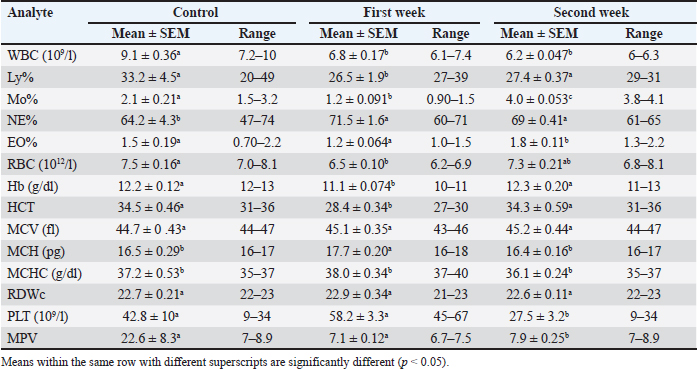
AbstractBackground: Sandy enteropathy is more common in horses living in sandy environments, such as those in Saudi Arabia. Sand accumulation in the intestines can be eliminated and prevented by administering psyllium husk. Aim: This study focuses on the combination of psyllium and aloe vera extract, known for its protective and anti-inflammatory properties. Methods: Fourteen Arabian horses with naturally acquired sand accumulation were randomly assigned to two groups: the psyllium group (PG, n=7) and the psyllium and aloe vera group (PAG, n=7), both of which were treated daily for 7 days. Efficacy was evaluated via daily fecal sand analysis (sedimentation test) and hematological assessment on days 0 and 14. Results: PG showed a reduction in inflammation indicators, evidenced by a significant decrease in the white blood cell (WBC) count from 9.1 ± 0.36 to 6.2 ± 0.047 × 10⁹ by day 14. In contrast, PAG exhibited a more complex immunomodulatory response, characterized by a more significant final decrease in WBC count (7.8–5.3 ± 0.33 × 10⁹/l). Interestingly, the percentage of neutrophils in PG was high during the treatment period, where the percentage was 71.5 ± 1.6 and 69 ± 0.41 during the first and second weeks, respectively. In contrast, a decrease in neutrophils was observed in PAG during the treatment period, where the percentage was recorded as 45.7 ± 0.73 and 50.1 ± 0.43 during the first and second weeks, respectively. The amount of sand in the excreted PG fluctuated, reaching its highest point on day 5 at 8.86% and ending at 4.71% on day 7. PAG began with a similar sand concentration of 5.43%. The sand excretion peaked at 7.14% on day 1 and then followed a general downward trend for the rest of the week. The lowest concentration for this group was 2.28% on day 6. Conclusion: The combination of psyllium and aloe vera appears to result in lower overall mean sand excretion and a more modulated immune response. Keywords: Aloe vera, Colic, Horse, Psyllium, Sand. IntroductionSand enteropathy, or sand colic, which refers to the intestinal accumulation of sand in horses, is a major veterinary concern worldwide, particularly in areas characterized by sandy soils and arid climates (Bither and Sullivan, 1954; Turek et al., 2019; Muller, 2024; Entwisle et al., 2025). Sand accumulation in the large colon of these horses occurs as a result of being raised on sandy soils or when horses inadvertently ingest sand or dirt while grazing or feeding from the ground (Ferraro, 1973; Kilcoyne et al., 2017; Niinisto et al., 2019). Symptoms of sand accumulation range from chronic intermittent diarrhea and weight loss to severe abdominal pain (colic) and even fatal intestinal obstructions or ruptures (Udenberg, 1979; Bertone et al., 1988; Kilcoyne et al., 2017; Niinisto et al., 2018). There is a growing need to develop clear diagnostic and therapeutic techniques to reduce the economic impact of treatment costs, decreased performance, and potential mortality on the equine industry (Hart et al., 2013; Niinisto et al., 2018; Mienaltowski et al., 2020). Horses in Saudi Arabia are commonly housed or trained on sandy soils, which significantly raises the incidence and severity of sand accumulation (Al-Ghamdi, 2008). The unique geographical and environmental factors in this region place horses at greater risk for sand ingestion and retention in the intestine, making the study of sand enteropathy of utmost importance in horses living in desert environments (Al-Ghamdi, 2008; Turek et al., 2019). Specific data on sand colic cases remains an area requiring further research, although some reports and research have indicated the presence of this phenomenon in Saudi Arabia (Al-Ghamdi, 2008; Al-Qudari et al., 2015; Turek et al., 2019). Accurate and early diagnosis of sand accumulation is crucial for the successful prevention of sand colic, treatment of horses, and control of intestinal accumulation with sand (Arbaga et al., 2024; Entwisle et al., 2025). Several diagnostic methods, such as radiography, ultrasound, and fecal sedimentation testing, can be used to confirm the presence of sand in the intestine (Loschelder and Gehlen, 2017; Hassel et al., 2020; Arbaga et al., 2024; Entwisle et al., 2025). Psyllium mucilage, a soluble fiber that expands through water absorption, is one of the most important preparations used in horses with colic intestinal accumulation (Kaikkonen et al., 2016; Mienaltowski et al., 2020). Psyllium forms a gelatinous mass in the intestine, believed to float and trap sand particles, facilitating their movement and elimination through the digestive tract (Po et al., 2023). Some studies have suggested that the effectiveness of psyllium in removing sand may be enhanced when combined with other laxatives, such as mineral oil or magnesium sulfate (Niinisto et al., 2014). Moving the accumulated sand in the intestine may affect the intestinal mucosa and the natural flora, in addition to the fact that psyllium may alter intestinal flora levels (Hammock et al., 1998; Husted et al., 2005; Hotwagner and Iben, 2008; Hassel et al., 2020). Recently, there has been increased interest in aloe vera extract in the field of equine health due to its purported anti-inflammatory, soothing, and gastroprotective properties (Fehrmann-Cartes et al., 2019; Haasbroek et al., 2019; Kim et al., 2019). It is known to support digestive health, balance pH, and aid in healing the gastrointestinal mucosa, making it a promising candidate for mitigating the irritating effects of sand movement on the intestinal lining during psyllium use (Shokraneh et al., 2016; Loschelder and Gehlen, 2017; Naini et al., 2021). Information on the potential synergistic efficacy of combining aloe vera extract with psyllium in the treatment of sand enteropathy is insufficient. This study aimed to investigate the combined efficacy of psyllium extract and aloe vera as a comprehensive treatment strategy for sand enteropathy, particularly in horses living in sandy environments, such as those in Saudi Arabia. Materials and MethodsAnimalsA total of 14 Arabian horses (10 mares, four geldings), aged 5–18 years (mean ± SD: 9.5 ± 2.8 years) and weighing 330–480 kg (mean ± SD: 415 ± 45 kg), were enrolled in the study. All horses exhibited mild recurrent colic, weight loss, mild chronic diarrhea, or sand-eating behavior. Animals could not be categorized based on the length of the problem because the duration of the sand impaction was unknown. Horses were sourced from farms in a sandy environment within the Kingdom of Saudi Arabia, where they were routinely exposed to sand ingestion. All horses were housed individually in stalls with rubber matting throughout the 7-day treatment period to prevent further sand ingestion and were provided with free access to water and hay. Treatment groups and treatment regimensThe horses were randomly allocated into two treatment groups (n=7 per group). Psyllium group (PG): horses in this group received psyllium husk powder (1 g/kg body weight; Psyllium Husk, Sankhla Mehandi, India) once daily for seven consecutive days. The second group received psyllium with aloe vera (PAG): Horses in this group received psyllium husk powder (1 g/kg body weight) combined with 20 g/100 kg body weight of 99% pure aloe vera extract (Sankhla Mehandi, India) once daily for seven consecutive days. Aloe vera extract was mixed with psyllium immediately before administration. Blood sample collection and analysisBlood samples (5 ml) were collected from each horse via jugular venipuncture into ethylenediaminetetraacetic acid tubes at two time points: immediately before the treatment (day 0) and 14 days after the start of treatment (day 14). Blood samples for hematological examination were analyzed within 45 minutes of collection using CELL-DYN 3700 for a complete hematological profile, including total and differential white blood cell (WBC) count, total red blood cell (RBC) count, hemoglobin (Hb), hematocrit (HCT), mean corpuscular volume (MCV), mean corpuscular hemoglobin (MCH), MCH concentration (MCHC), red cell distribution width (RDWc), platelet (PLT) count, and mean platelet volume (MPV). Fecal sand analysisFecal samples (approximately 200 g) were collected daily from each horse for seven consecutive days, starting from day 0. Samples were analyzed for sand content using a standardized sedimentation test. Briefly, fresh feces were mixed with 1 l of water, allowed to settle for 30 minutes, and the supernatant was decanted. This process was repeated until the supernatant was clear. The remaining sediment was dried at 100°C, and the sand’s dry weight was measured. The percentage of sand in the fecal samples was calculated daily to monitor sand clearance. Statistical analysisFor the statistical analysis, Graph Pad Prism 7 software was used to calculate the minimum and maximum values to determine the mean range, mean, and SD. The normality of data distribution was assessed using the Shapiro–Wilk test. Differences in hematological parameters and fecal sand percentage between groups and time points were evaluated using repeated measures ANOVA. A p-value of <0.05 will be considered statistically significant. Ethical approvalThe study protocol and medications were approved for research by the Ethics Committee at King Faisal University in Saudi Arabia (Approval number: KFU-REC-2024). ResultsBlood samples were analyzed on days 0 (pre-treatment) and 14 (post-treatment). The mean and SEM for the parameters are presented in Table 1 (PG) and Table 2 (psyllium and aloe vera group) (Table 1). WBC count significantly decreased from 9.1 ± 0.36 (109/l) pretreatment to 6.2 ± 0.047 (109/l) by day 14, suggesting reduced inflammation. The percentage of lymphocytes (Ly%) decreased on day 7 (26.5% ± 1.9%) and remained below pretreatment levels. Conversely, the percentage of neutrophils (NE%) increased and remained elevated until day 14 of treatment (69 ± 0.41). Monocytes (Mo)% initially decreased but then increased by day 14 (4.0 ± 0.053). RBC count, Hb, and HCT showed a transient decrease by day 7 but recovered to near control levels by day 14. PLT initially increased by day 7 [58.2 ± 3.3 (109/l)] but significantly decreased to 27.5 ± 3.2 (109/l) by day 14, falling below the control level (Table 1). Table 1. Mean, SEM, and range of hematological values before treatment and 7 and 14 days from the start of treatments with PG in horses affected with sand accumulation. p values calculated between parameters in control camels before and 7, 14 days after the start of treatment.
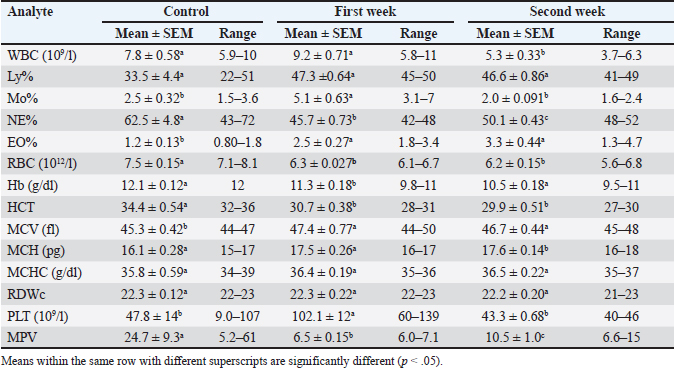
Table 2. Mean, SEM, and range of hematological values before treatment and 7 and 14 days after the start of treatments with psyllium husk powder and aloe vera (PAG) in horses affected by sand accumulation. p values calculated between parameters in control camels before and 7, 14 days after the start of treatment.
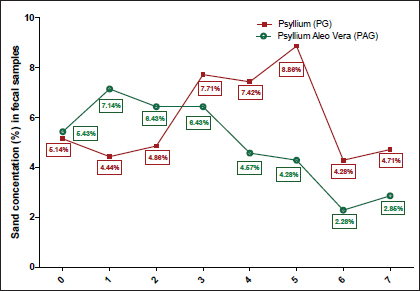
The hematological parameters in horses treated with psyllium and aloe vera showed that WBC count initially increased by day 7 [9.2 ± 0.71 (109/l)] before significantly decreasing to 5.3 ± 0.33 (109/l) by day 14, falling below control. Ly% increased from 33.5% ± 4.4% to 46.6% ± 0.86% by day 14. On the other hand, a decrease in the neutrophil percentage (NE%) was observed on day 7 (45.7 ± 0.73), and it remained until day 14 (50.1 ± 0.43) below the levels compared to the period before treatment. Mo% significantly increased by day 7 (5.1% ± 0.63%) before returning to near control levels by day 14. Eosinophils (EO)% consistently increased throughout the treatment, reaching 3.3% ± 0.44% by day 14. The RBC count, Hb, and HCT all decreased by day 7 and remained lower than the control levels by day 14. PLT showed a substantial increase by day 7 [102.1 ± 12 (109/l)], followed by a decrease to 43.3 ± 0.68 (109/l) by day 14 (Table 2). Fecal sand content was monitored (Fig. 1) daily for 8 days post-treatment in the PG and PAG. PG started with a sand concentration of 5.14%. The amount of sand excreted fluctuated, reaching 8.86% on day 5. After this peak, the concentration dropped sharply on day 6 and ended at 4.71% on day 7. PAG began with a similar sand concentration of 5.43%. The sand excretion peaked at 7.14% on day 1 and then followed a general downward trend for the rest of the week. The lowest concentration for this group was 2.28% on day 6. The addition of aloe vera (PAG) appears to result in a more consistent and earlier decline in sand concentration in the feces compared with the psyllium-only (PG), which showed more erratic excretion and a later peak. By the end of the 7-day period, the PAG had a lower sand concentration (2.85%) than the PG (4.71%).
Fig. 1. Sand concentration in fecal samples from horses treated with psyllium or psyllium with aloe vera extract on the day of treatment and 7 days after the start of treatment. DiscussionSand enteropathy is a persistent challenge in horses raised in sandy environments, such as those in Saudi Arabia (Al-Ghamdi, 2008; Turek et al., 2019). This study aimed to evaluate the combination of aloe vera with psyllium (PAG) compared with conventional psyllium alone (PG) to determine whether the purported anti-inflammatory and mucosal-protective properties of aloe vera are effective in enhancing sand clearance and mitigating the systemic effects of sand impaction and movement. Our results are consistent with studies indicating that combination treatments are often more effective at achieving optimal sand removal while reducing the negative effects of single treatments (Niinisto et al., 2014; Niinisto et al., 2018). The combination of magnesium sulfate with psyllium has shown encouraging results in intestinal sand expulsion through a prokinetic effect (Niinisto et al., 2014), whereas the combination of aloe vera extract is fundamentally different. Aloe vera gel is rich in polysaccharides and glycoproteins, which have anti-inflammatory and wound-healing effects on the intestinal mucosa (Kim et al., 2019; Naini et al., 2021). Combining aloe vera gel with psyllium creates a synergistic effect. Psyllium acts as a propellant and mobilizer for sand by absorbing water (Kaikkonen et al., 2016; Niinisto et al., 2018), while aloe vera gel reduces irritation and spasm by soothing the colonic lining (Salim et al., 2024). Aloe vera may also reduce local smooth muscle spasm, improving the propulsive movement required to move heavy sand through the intestine (Haasbroek et al., 2019). The natural lubricating properties of aloe vera may help lubricate the intestinal lining, allowing the dense psyllium-sand mixture to flow through without causing friction and erosion in the intestinal lining. In contrast, the amount of sand excreted in the horses’ feces during the treatment period was greater in the group receiving psyllium alone than in the group receiving psyllium with aloe vera (Fig.1), which may have affected the treatment period. These results could be explained by the fact that aloe vera has a viscous effect (Shokraneh et al., 2016) and may delay sand expulsion, or that the anti-inflammatory properties of aloe vera may reduce intestinal motility (Naini et al., 2021; Salim et al., 2024), which may delay sand excretion. Conversely, the lower overall mean and reduced variability in PAG suggest a more consistent effect across the group, potentially indicating a treatment that is less subject to individual variations in gut motility or sand impaction severity. Both groups showed a final decrease in WBC counts by day 14, indicating that the chronic inflammatory condition caused by sand accumulation was successfully resolved. In the PG group, this decrease was stable and sustained. However, the PAG group showed an initial, temporary increase in WBC counts by day 7 before stabilizing at a final count (5.3 ± 0.33 × 10⁹/l) lower than the final count in the PG group (6.2 ± 0.047 × 10⁹/l). This suggests that the PAG combination may lead to a more profound resolution of chronic inflammation (Fehrmann-Cartes et al., 2019; Salim et al., 2024). The Ly% and neutrophils was notable in this study. A significant increase in lymphocytes and a decrease in neutrophils were observed in the first and second weeks of treatment in the PAG (Table 2), whereas an increase in the neutrophil percentage and a decrease in the lymphocyte percentage were observed in the PG (Table 1). These results confirm that the increased lymphocyte count in the psyllium-aloe vera group indicates an improved immune response during sand expulsion and its effect on reducing inflammation (Fehrmann-Cartes et al., 2019; Haasbroek et al., 2019; Akanmu et al., 2020), evident in the decreased neutrophil count in the same group. However, the high NE% and low Ly% in the group treated with psyllium alone (PG) indicate inflammatory activity during sand movement and a decline in the horses' immunity levels. These results may be explained by the fact that aloe vera contains components that interact with the immune system (Fehrmann-Cartes et al., 2019; Naini et al., 2021), the presence of which may induce a temporary mobilization of gut-associated lymphoid tissue, as the physical irritant and the new mucosal barrier are removed from the gastrointestinal tract. Moreover, the elevated lymphocyte percentage in PAG compared to PG indicates a deeper systemic immunomodulation, possibly associated with the immune response of the gut to the significant dietary change and the introduction of a new, biologically active substance (Sánchez et al., 2020). Eosinophils are key players in hypersensitivity reactions and an immune response directed toward mucosal surfaces and tissue repair (Rotting et al., 2008; Brosnahan, 2020). The consistent increase in EO% up to 3.3% ± 0.44% by day 14 in the PAG group strongly supports the hypothesis that the aloe vera component triggers a favorable, yet unique, immunological response related to mucosal healing (Panahi et al., 2020). The RBC count, Hb, and HCT levels decreased in the PAG group compared with those in the PG group, with values returning to near-baseline by day 14. One possibility is that this reflects a mild, transient hemodilution effect if the horses in the PAG group were in a more hydrated state systemically, possibly due to the effect of aloe vera on fluid dynamics within the gut, thereby diluting the blood components (Akanmu et al., 2020; Maiuolo et al., 2022). The interpretation of these promising results must be viewed considering the limitations of the study. First, the sample size of n=7 per group is relatively small and limits the statistical power of the study. Second, fecal sand analysis provides a measure of excretion, but it is highly susceptible to day-to-day fluctuations and is not the gold standard for quantifying the total volume of sand accumulation remaining in the colon. ConclusionIn conclusion, the combination of psyllium husk and aloe vera extract represents a promising and novel therapeutic approach for the medical management of sand enteropathy in high-risk horses. Both treatments facilitate sand excretion and influence hematological profiles. However, the combination of psyllium and aloe vera appears to result in lower overall mean sand excretion and a more modulated immune response. AcknowledgementsThe authors would like to thank the Veterinary Teaching Hospital, College of Veterinary Medicine, King Faisal University (Al-Hasa, Saudi Arabia) for their kind cooperation in conducting this valuable study. Many thanks to TAMIVET factory for providing psyllium husk powder to perform the study. Conflict of interestThe authors have no competing interests to declare. FundingThis work was supported by the Deanship of Scientific Research, Vice Presidency for Graduate Studies and Scientific Research, King Faisal University, Saudi Arabia (Grant No.: KFU260517). Authors' contributionsNB, BH, ZA, and TS performed the examination; MA, AA, BH, and TS performed the laboratory work. TS, NB, and HB drafted the manuscript. The final manuscript was approved by all authors. Data availabilityAll data are within the manuscript. ReferencesAkanmu, A.M., Hassen, A. and Adejoro, F.A. 2020. Hematology and serum biochemical indices of lambs using Moringa oleifera, Jatropha curcas, and aloe vera leaf extract as anti-methanogenic additives. Antibiotics (Basel). 9, 9. Al-Ghamdi, G.M. 2008. Most common diseases impacting horse health in the major regions of Saudi Arabia. Adv 7, 581–583. Al-Qudari, A., Ghamdi, A. and Al-Jabr, O. 2015. Prevalence of gastrointestinal parasites in horses in the Eastern province of Saudi Arabia King Saud University. Basic Appl. Sci. 16, 37–47. Arbaga, A., Hassan, H., Kasem, M. and Kamr, A. 2024. Ultrasonography as an accurate tool for the diagnosis of equine sand colic with special reference to hematological and biochemical alterations. Curr. Vet. Res. 6, 168–176. Bertone, J.J., Traub-Dargatz, J.L., Wrigley, R.W., Bennett, D.G. and Williams, R.J. 1988. Diarrhea associated with sand in the gastrointestinal tract. J. Am. Vet. Med. Assoc. 193, 1409–1412. Bither, H.D. and Sullivan, E.M. 1954. Sand colic. Cornell Vet. 44, 294–298. Brosnahan, M.M. 2020. Eosinophils of the horse: part II: eosinophils in clinical diseases. Eq. Vet. Edu. 32, 590–602. Entwisle, I.G., Byrne, D.P., Lester, G.D. and McConnell, E.J. 2025. The radiographic area of large intestinal sand accumulation in horses may determine its clinical significance. Aust. Vet. J. 8 890–893. Fehrmann-Cartes, K., Coronado AJ Hernandez., Allende. and Feijoo. 2019. Antiinflammatory effects of aloe vera on intestinal inflammation induced by soy meal in zebrafish. Fish Shellfish Immunol. 95, 564–573. Ferraro. 1973. Diagnosis and treatment of horse sand colic. Vet. Med. Small Anim. Clinics 68, 736. Haasbroek, A., Willers, C., Glyn, M., Du Plessis, L. and Hamman, J. 2019. Intestinal drug absorption enhancement by aloe vera gel and whole leaf extract: in vitro investigations into the mechanisms of action. Pharmaceutics 11, 36. Hammock, P.D., Freeman, D.E. and Baker, G.J. 1998. Failure of psyllium mucilloid to hasten the evaluation of sand from the equine large intestine. Vet. Surg. 27, 547–554. Hart, K.A., West, L., Mayer, J.R., House, A.M., Gold, J.R. and Giguere, S. 2013. Management of sand enteropathy in 62 horses. Equine. Vet. J. 45, 465–469. Hassel, D.M., Curley, T. and Hoaglund, E.L. 2020. Evaluation of fecal sand clearance in horses with naturally acquired colonic sand accumulation with a probiotic, prebiotic, and psyllium-containing Product. J. Equine. Vet. Sci. 90, 102970. Hotwagner, K. and Iben, C. 2008. Sand from the equine intestine with mineral oil, with and without psyllium. J. Anim. Physiol. Anim. Nutr. (Berl). 92, 86–91. Husted, L., Andersen, M.S., Borggaard, O.K., Houe, H. and Olsen, S.N. 2005. Risk factors for fecal sand excretion in Icelandic horses. Equine. Vet. J. 37, 351–355. Kaikkonen, R., Niinistö, K., Lindholm, T. and Raekallio, M. 2016. Comparison of psyllium feeding at home and nasogastric intubation of psyllium and magnesium sulfate in the hospital as a treatment for naturally occurring colonic sand (geosediment) accumulations in horses: a retrospective study. Acta Vet. Scand. 58, 73. Kilcoyne, I., Dechant, J.E., Spier, S.J., Spriet, M. and Nieto, J.E. 2017. Clinical findings and management of large colon sand accumulations in 153 horses. Vet. Surg. 46, 860–867. Kim, M.W., Kang, J.H., Shin, E., Shim, K.S., Kim, M.J., Lee, C.K., Yoon, Y.S. and Oh, S.H. 2019. Processed aloe vera gel attenuates NSAID-induced small intestinal injury by enhancing mucin expression. Food Funct. 10, 6088–6097. Loschelder, J.A. and Gehlen, H. 2017. Sand colic in the horse-review and case examples. Pferdeheilkunde 33, 591–596. Maiuolo, J., Musolino, V., Gliozzi, M., Carresi, C., Scarano, F., Nucera, S., Scicchitano, M., Oppedisano, F., Bosco, F., Macri, R., Palma, E., Muscoli, C. and Mollace, V. 2022. Involvement of the intestinal microbiota in the appearance of multiple sclerosis: aloe vera and Citrus bergamia as potential candidates for intestinal health. Nutrients 14(10), 220. Mienaltowski, M.J., Belt, A., Henderson, J.D., Boyd, T.N., Marter, N., Maga, E.A. and Depeters, E.J. 2020. Psyllium supplementation is associated with changes in the fecal microbiota of horses. BMC. Res. Notes 13(4), 459; doi:10.1016/j.bmcrn.2013.04.009 Muller, C.E. 2024. Dry matter concentration, particle size distribution, and presence of sand in the feces of horses with and without colic. J. Equine Vet. Sci. 139, 105126. Naini, M.A., Zargari-Samadnejad, A., Mehrvarz, S., Tanideh, R., Ghorbani, M., Dehghanian, A., Hasanzarrini, M., Banaee, F., Koohi-Hosseinabadi, O., Tanideh, N. and Iraji, A. 2021. Anti-inflammatory, antioxidant, and healing-promoting effects of aloe vera extract in rats with experimental colitis. Evid. Based Complement Alternat. Med. 2021, 9945244. Niinisto, K., Hewetson, M., Kaikkonen, R., Sykes, B.W. and Raekallio, M. 2014. Comparison of the effects of enteral psyllium, magnesium sulfate, and their combination on the removal of sand from large horse colons. Vet. J. 202, 608–611. Niinisto, K.E., Maatta, M.A., Ruohoniemi, M.O., Paulaniemi, M. and Raekallio, M.R. 2019. Owner-reported clinical signs and management-related factors in intestinal sand accumulation in horses. J. Equine Vet. Sci. 80(10), 10–15. Niinisto, K.E., Ruohoniemi, M.O., Freccero, F. and Raekallio, M.R. 2018. Treatment of sand accumulations in the large equine colon with psyllium and magnesium sulfate. Vet. J. 238, 22–26. Panahi, Y., North, R., Zamani, A. and Sahebkar, A. 2020. Therapeutic effects of aloe vera and olive oil combination cream versus topical betamethasone for atopic dermatitis: a randomized double-blind clinical trial. J. Pharmacopuncture. 23, 173–178. Po, B.T., Campos-Krauer, J.M., Sullivan, K.E. and Warren D Vyas. 2023. Effect of psyllium husk supplementation on equine fecal nutrient composition and in vitro fermentation. J. Equine Vet. Sci. 124, 140. Rotting, A.K., Freeman, D.E., Constable, P.D., Moore, R.M., Eurell, J.C., Wallig, M.A. and Hubert, J.D. 2008. Effects of Strongylus vulgaris parasitism on eosinophil distribution and accumulation in equine large intestinal mucosa. Equine. Vet. J. 40, 379–384. Salim, R.H., Salloum, A.M., Alsalameh, S.A., Khazem, M.R. and Hajeer, M.Y. 2024. Antimicrobial properties of aloe vera ethanol extract as a denture disinfectant: an in vitro study. Cureus 16, e59916. Sánchez, M., González-Burgos, E., Iglesias, I. and Gómez-Serranillos, M.P. 2020. Pharmacological update properties of aloe vera and its major active constituents. Molecules 25(4.4), 2001. Shokraneh, M., Ghalamkari, G., Toghyani, M. and Landy, N. 2016. Influence of drinking water containing Aloe vera (Aloe barbadensis Miller) gel on broiler growth performance, intestinal microflora, and humoral immune responses. Vet. World. 9, 1197–1203. Turek, B., Witkowski, M. and Drewnowska, O. 2019. Enterolithiasis in horses: analysis of 15 surgically treated cases in Saudi Arabia. Iran. J. Vet. Res. 20, 270–276. Udenberg T. 1979. Case report: equine colic associated with sand impaction of the large colon. Can Vet J. 20(10), 269–272. | ||
| How to Cite this Article |
| Pubmed Style Borashid N, Hakami B, Alyousef Z, Ballan H, Alsalman M, Alwabari A, Shawaf T. The efficacy of psyllium combined with aloe vera in treating sand accumulation in equine intestines. Open Vet. J.. 2026; 16(2): 802-808. doi:10.5455/OVJ.2026.v16.i2.3 Web Style Borashid N, Hakami B, Alyousef Z, Ballan H, Alsalman M, Alwabari A, Shawaf T. The efficacy of psyllium combined with aloe vera in treating sand accumulation in equine intestines. https://www.openveterinaryjournal.com/?mno=301021 [Access: June 26, 2026]. doi:10.5455/OVJ.2026.v16.i2.3 AMA (American Medical Association) Style Borashid N, Hakami B, Alyousef Z, Ballan H, Alsalman M, Alwabari A, Shawaf T. The efficacy of psyllium combined with aloe vera in treating sand accumulation in equine intestines. Open Vet. J.. 2026; 16(2): 802-808. doi:10.5455/OVJ.2026.v16.i2.3 Vancouver/ICMJE Style Borashid N, Hakami B, Alyousef Z, Ballan H, Alsalman M, Alwabari A, Shawaf T. The efficacy of psyllium combined with aloe vera in treating sand accumulation in equine intestines. Open Vet. J.. (2026), [cited June 26, 2026]; 16(2): 802-808. doi:10.5455/OVJ.2026.v16.i2.3 Harvard Style Borashid, N., Hakami, . B., Alyousef, . Z., Ballan, . H., Alsalman, . M., Alwabari, . A. & Shawaf, . T. (2026) The efficacy of psyllium combined with aloe vera in treating sand accumulation in equine intestines. Open Vet. J., 16 (2), 802-808. doi:10.5455/OVJ.2026.v16.i2.3 Turabian Style Borashid, Nour, Belal Hakami, Zahra Alyousef, Hussain Ballan, Mohammad Alsalman, Arwa Alwabari, and Turke Shawaf. 2026. The efficacy of psyllium combined with aloe vera in treating sand accumulation in equine intestines. Open Veterinary Journal, 16 (2), 802-808. doi:10.5455/OVJ.2026.v16.i2.3 Chicago Style Borashid, Nour, Belal Hakami, Zahra Alyousef, Hussain Ballan, Mohammad Alsalman, Arwa Alwabari, and Turke Shawaf. "The efficacy of psyllium combined with aloe vera in treating sand accumulation in equine intestines." Open Veterinary Journal 16 (2026), 802-808. doi:10.5455/OVJ.2026.v16.i2.3 MLA (The Modern Language Association) Style Borashid, Nour, Belal Hakami, Zahra Alyousef, Hussain Ballan, Mohammad Alsalman, Arwa Alwabari, and Turke Shawaf. "The efficacy of psyllium combined with aloe vera in treating sand accumulation in equine intestines." Open Veterinary Journal 16.2 (2026), 802-808. Print. doi:10.5455/OVJ.2026.v16.i2.3 APA (American Psychological Association) Style Borashid, N., Hakami, . B., Alyousef, . Z., Ballan, . H., Alsalman, . M., Alwabari, . A. & Shawaf, . T. (2026) The efficacy of psyllium combined with aloe vera in treating sand accumulation in equine intestines. Open Veterinary Journal, 16 (2), 802-808. doi:10.5455/OVJ.2026.v16.i2.3 |