




| Research Article | ||
Open Vet. J.. 2026; 16(1): 165-174 Open Veterinary Journal, (2026), Vol. 16(1): 165-174 Research Article Farmers’ knowledge of African swine fever disease prevention practice: A case of biosecurity in small-scale pig farms in the Mekong Delta, VietnamQui Hoang Nguyen*, Linh Thuy Nguyen, Dang Cong Chau and Thu Thi Anh NguyenDepartment of Animal Science and Veterinary Medicine, School of Agriculture-Aquaculture, Tra Vinh University, Trà Vinh, Vietnam *Corresponding Author: Qui Hoang Nguyen. Department of Animal Science and Veterinary Medicine, School of Agriculture-Aquaculture, Tra Vinh University, Trà Vinh, Vietnam. Email: nhqui [at] tvu.edu.vn Submitted: 01/11/2025 Revised: 15/12/2025 Accepted: 26/12/2025 Published: 31/01/2026 © 2025 Open Veterinary Journal
AbstractBackground: African swine fever (ASF) has caused huge losses in the pig farming industry in Vietnam, mainly affecting small-scale pig farmers. Due to the lack of information concerning ASF, farmers cannot prevent it and improve their biosecurity toward ASF disease. Aim: This study aimed to assess the influence of sociodemographic and production characteristics on knowledge toward ASF-related information and ASF prevention practices. Methods: A random sampling method was used to select respondents. Thus, 204 pig farms in Ben Tre province were selected. Data were analyzed using a descriptive method and multiple linear regression analysis. Results: The results showed that most of the farmers were male and joined in farm activities with 1–2 family members who had high experience in pig farming. Farmers had gained knowledge about ASF and applied effective prevention measures on their farms. In addition, primary occupation and piglet source exerted a significant effect on both the knowledge of ASF and the prevention ability. General livestock technical training (non-ASF) showed a negative association with ASF knowledge and prevention practices, whereas ASF-specific training significantly improved farmers’ understanding and implementation of ASF prevention measures. Regarding other factors, income, piglet number, and treatment practices at farms were additionally associated with farmers’ implementation of ASF prevention. Engagement in training on ASF biosecurity measures significantly enhanced the understanding and implementation of ASF prevention practices. Conclusion: Sociodemographic and training factors significantly impact farmers’ disease prevention capabilities, underscoring the need for ASF-targeted training to improve disease prevention in small-scale pig farming. This study recommended that further training strategies focused on ASF prevention practice should be implemented. Keywords: Disease management, Farming practice, Rural area, Information, Transmission. IntroductionPig farming is also known as the most preferred livestock farming in Vietnam and has economic significance to smallholder farmers, especially in rural areas. Up to 80% of the total income of pig farmers is earned from selling pigs mainly produced by small-scale producers (Huong et al., 2023). Currently, African swine fever (ASF) has emerged as a major threat to the pig industry in Vietnam. The first outbreak of ASF, a viral disease, occurred in Vietnam in 2019 and spread rapidly throughout the country (Jeong et al., 2019) . ASF is a highly fatal disease for pigs, and no effective vaccine or treatment exists at the time, making the prevention of the outbreaks challenging. The change in income due to ASF ranged from −0.3 to −0.45% in rural areas, while the live pork market price dropped from US$1.61/kg live weight to 1.39 USD/kg live weight after the first ASF outbreak, along with the increased production costs due to the outbreak, which had severe consequences for farmers’ profits (Nguyen-Thi et al., 2021). Globally, biosecurity is considered the most important measure to avert ASF outbreaks (Alarcón et al., 2021; Klein et al., 2024). In wealthy nations, extensive farms frequently implement stringent biosecurity measures to safeguard pigs against disease introduction (Nielsen et al., 2021). However, applying these measures in small-scale farms is challenging. Veterinarian officers and policy makers have expressed concerns that not all pig farmers are adequately prepared to solve the problem. In addition, pig farmers reported that they did not consider ASF to be a potential threat to their income in the interviews of farmers’ perceptions toward the threat of ASF (Klein et al., 2023). Previous research has found that rural pig farmers in Vietnam lack the financial resources and knowledge to adequately apply disease prevention (Qui et al., 2024b). Furthermore, sociodemographic factors such as education level, farming experience, and access to information also significantly help or hinder farmers’ practice of disease prevention measures (Qui et al., 2024a). Farmers with low incomes, little training, and little information about diseases often find it challenging to implement effective disease prevention measures (Qui et al., 2024a; Qui et al., 2024b). Lack of information may lead to a higher risk of disease spread in rural areas where small-scale livestock farming is predominant (Nga et al., 2021). Previous research on factors influencing farmers’ decisions about animal disease prevention has also shown that risk perception influences farmers’ behavior (Doidge et al., 2021). Some research has also recorded that knowledge and attitudes influence biosecurity and are related to farmers’ biosecurity behavior (O’Kane et al., 2017; Qui et al., 2024a). Social science approaches in veterinary epidemiology are increasingly recognized for their role in explaining the influence of stakeholder behavior on disease prevention and management (Biesheuvel et al., 2021). However, knowledge regarding the causes and impacts of farmers’ biosecurity prevention practices to control and manage animal diseases remains limited (Hidano et al., 2018). Understanding factors affecting farmers’ knowledge and ASF disease prevention practices becomes increasingly important, as ASF continues to severely threaten the pig industry of Vietnam, especially small-scale farms. This study aimed to ascertain how social and production factors of pig farmers affect the practice of ASF prevention measures in small-scale farms. It will provide an overview of the difficulties faced by farmers to elaborate on more effective support policies and training programs. Materials and MethodsResearch locationThis study was conducted from January to March 2025 in Ben Tre Province, Vietnam. Ben Tre has a long pig farming tradition, which is important to the agricultural sector in the Mekong Delta and Vietnam. Ben Tre was chosen as the study location because of the large number of pig farmers operating in small-scale farms, especially those that are vulnerable to ASF. In addition, in recent years, ASF has had a significant impact on the pig sector in Ben Tre province, which was considered a major source of income for many farmers. Therefore, the study conducted in Ben Tre province provided insight into the effectiveness of ASF control practice, thereby facilitating the development of solutions to improve pig production and disease prevention in the area. Data collectionData collection was conducted through a direct survey of 204 pig farming households in Ben Tre province. The sample size of 204 farmers was selected to ensure high representativeness and accuracy in assessing factors affecting knowledge and ASF prevention measures. The sample size was determined according to the sampling method of Levine and Stephan (2010). With an unknown population, at least 30 samples were selected in each data collection unit (collection unit was commune in this study) to ensure representativeness for the study population. In addition, to increase the accuracy of the analysis model, the study was conducted in three districts with the most significant number of pigs, with a sample size of 70 samples in the district (06 households did not complete the survey questionnaire). A stratified random selection method was used to obtain the sample, guaranteeing that all farming households in communes with a high prevalence of pig farming could participate. The sampling could minimize bias in data collection and accurately reflect the epidemic situation across various province regions. The survey was designed with detailed questions on farmers’ demographics, farming experience, farmers’ knowledge of ASF, and preventive measures. Specifically, Part 1 asked about demographics, including age, gender, education level, livestock farming experience, income, and household labor. Part 2: Pig production and management, including herd size, disease treatment methods, livestock training, and ASF prevention training. Part 3 focused on people’s knowledge, questions about ASF, and farmers’ applied biosecurity measures to prevent ASF. Data analysisInvestigators with expertise in the veterinary field collected data, ensuring the quality and consistency of the information. After collection, the data were entered and statistically processed to analyze the relationship between sociodemographic factors and pig farmers’ knowledge about ASF and ASF prevention measures. Data from the Ben Tre pig farmers were examined using SPSS v.26 Software (IBM Corp., Armonk, NY) to assess factors influencing the knowledge of pig farmers about ASF and its prevention practices. Multiple linear regression (MLR) analysis was then performed to determine the relationship between farmers’ socio-demographic and economic characteristics, knowledge of ASF, and ability to perform biosecurity. Knowledge to prevent ASF in farming households was the dependent variable in the model. The independent variables included in the regression model included sociodemographic and economic factors, including: age of the interviewee (farm owner): quantitative variable; gender of the interviewee (farm owner): binary variable (0=female, 1=male); livestock experience: quantitative variable; main occupation of the interviewee: binary variable (1 is pig farming; 0 is having other side jobs); education level: binary variable (0=not completed high school, 1=completed high school); income: quantitative variable; farm labor: quantitative variable; pig herd size: quantitative variable; origin of pig breed: binary variable (0=imported from outside, 1=self-produced). Two different training-related variables were included in the regression models; general livestock technical training is participating in training programs focusing on general pig husbandry practices, such as feeding, breeding, housing, and general farm management, that did not necessarily include ASF content. In contrast, ASF prevention training was defined as the involvement in activities that included training on ASF transmission routes, clinical signs, biosecurity measures, and disease prevention strategies. The regression analysis treated these two variables as distinct binary indicators (0=no participation; 1=participation). The independent variable, knowledge of pig farmers, was calculated by summing the scores from the ASF prevention measures that farmers used at the farm according to the survey questionnaire, with each yes answer being 1 point and no answer being no point. The total number of questions about pig farmers’ knowledge of ASF was 12, equivalent to 12 points; similarly, the total number of questions about implementing ASF prevention measures at the farm was 13, equivalent to 13 points. The MLR was used to determine the relationship between the dependent and independent variables. The regression model is based on Equation 1: Y=β0 + β1 X1 + β2 X2 +...+ βn Xn + ε where:
From Equation 1, the MLR was applied to determine the relationship between the independent variables and the knowledge of pig farmers about ASF and ASF prevention measures, thereby establishing the following formula: Y=β0 + β1 (Age) + β2 (Gender) + β3 (Experience) + β4 (Occupation) + β5 (Education) + β6 (Labor) + β7 (Training for animal husbandry) + β8 (Training for ASF prevention) + β9 (Income) + β10 (Treatment) + β11 (Pig number) + β12 (Pig source) where:
From there, a hypothesis test was conducted with
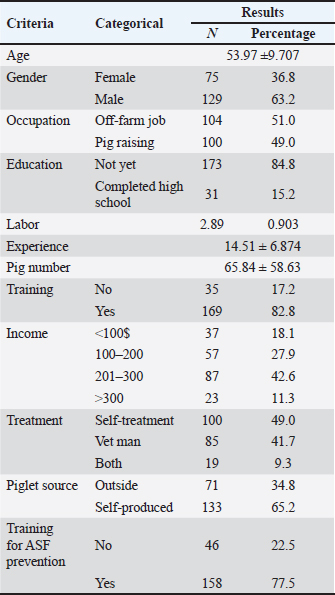
Ethical approvalThis study involved only questionnaire-based surveys with farmers and did not include any experimental procedures on animals; therefore, approval from an animal ethics committee was not required. For survey data, participation was voluntary, informed consent was obtained, and confidentiality and anonymity of respondents were fully ensured. ResultsSocial profile of pig farmers in the Mekong DeltaThe survey results (Table 1) show that most pig farmers are middle-aged, with a higher proportion of men than women. Fifty percent of the respondents were not mainly involved in pig farming, indicating that this activity is often perceived as a supplementary career. The survey group predominantly demonstrated low educational attainment, with most participants lacking a high school diploma, yet several had significant experience in pig farming. Most households received training in pig farming techniques, indicating an interest in enhancing their professional skills. Pig farming income is generally low for most households; however, the substantial number of pigs raised indicates the potential for enhancement through effective technical and management practices. Disease prevention measures, especially ASF, were of interest to many people, and training was provided to reduce production risks. Table 1. Sociological characteristics of the pig farmers.
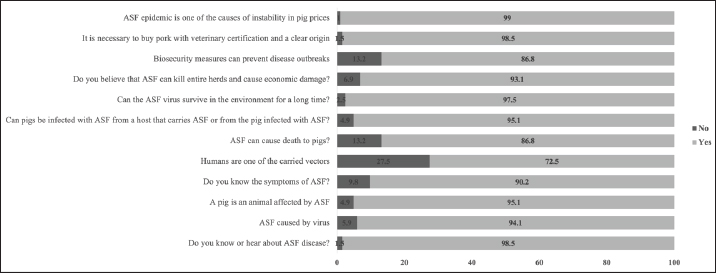
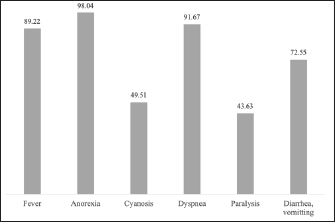
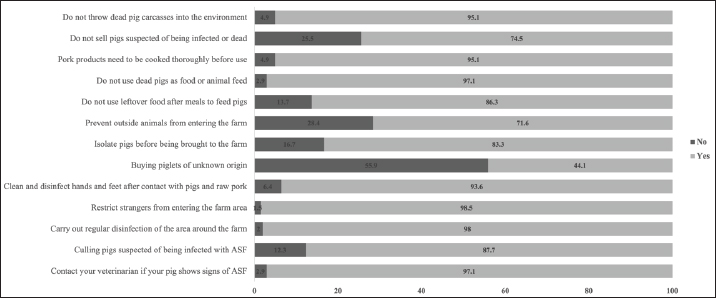
Farmers’ knowledge of ASF information and ASF prevention practicesFigures 1 and 2 show that most farmers have general knowledge about ASF. Most farmers have been trained and understand that ASF is caused by a virus that mainly infects pigs and has serious economic effects. However, some still have certain misconceptions, for instance, that people cannot be a host of a disease. A deep understanding of the risk posed by ASF concerning the possibility that it may kill pigs and the fact that the virus can stay in an area for years is, however, relatively high. At the same time, a strong consensus exists on the crucial role of biosecurity measures and ensuring that pork has clear quarantine origins to prevent the spread of the disease. The results show that pig farmers are well-prepared regarding ASF knowledge. The results in Figure 3 show that farmers are highly aware of ASF prevention and control. Most farmers are willing to contact veterinarians and take safety measures, such as regular disinfection and restricting access by strangers to the farm. However, some shortcomings remain in prevention practices, especially the purchase of unknown piglets from unknown sources and the lack of widespread quarantine of newly imported pigs/piglets. This can increase the risk of spreading the infectious disease. Another problem is that a few farmers still sell pigs suspected of being sick or dead, thereby increasing the risk of spreading the disease to the environment. Notably, most farmers have implemented effective biosecurity measures, such as not using leftover food or dead pigs as animal feed and being aware of the proper disposal of dead pigs. However, raising awareness of the origin of piglets and quarantine still needs to be promoted through training and biosecurity practice programs.
Fig. 1. Pig farmers’ knowledge of ASF information.
Fig. 2. Common symptoms recorded at the farms
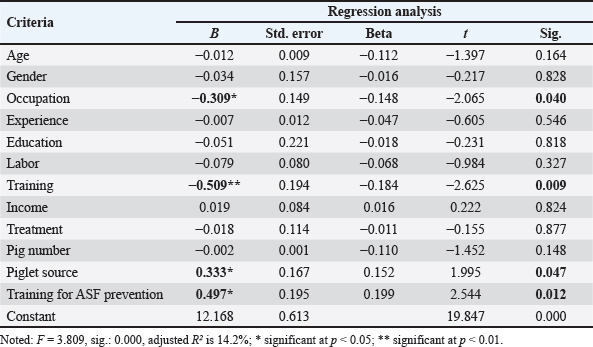
Fig. 3. Pig farmers’ knowledge of ASF prevention practices. Effect of social profiles on farmers’ knowledge of ASF informationRegression analysis in Table 2 shows that several variables significantly impact farmers’ general knowledge of ASF. Specifically, the main occupation significantly negatively impacts ASF knowledge (B=−0.309, p=0.040), indicating that farmers specializing in pig farming may lack information about ASF. Surprisingly, training in pig farming techniques has a negative impact (B=−0.509, p=0.009), indicating that general knowledge training has not increased people’s awareness of ASF. On the other hand, the pig breeding origin positively impacts farmers’ knowledge of ASF (B=0.333, p=0.047), indicating that those who breed pigs on their farms have a better understanding of ASF. Participation in training on ASF prevention measures was positively and significantly associated with the overall level of knowledge about the disease (B=0.497, p=0.012). Age, gender, experience, and the number of pigs raised also had no influence on the level of knowledge on ASF prevention practices. The form of the framework could be as follows: Table 2. Factors affecting farmers’ ASF knowledge.
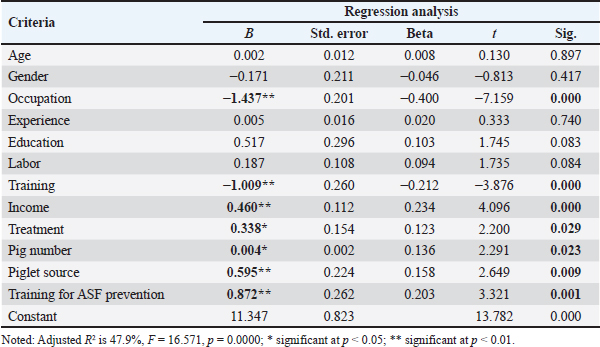
Y=12.168 + (−0.309) × occupation + (−0.509) ×training + 0.333 × piglet source + 0.497× training for ASF prevention. Effect of social profiles on farmers’ knowledge of ASF prevention practicesThe regression analysis results in Table 3 show that some social profile factors significantly influence the ability of farming households to prevent ASF. Main occupation has a negative impact on the ability to prevent the disease (B=−1.437, p < 0.001); farmers who only focus on pig farming may limit the ability to apply ASF prevention measures. Training also has a significant negative impact (B=−1.009, p < 0.001). In contrast, income, treatment method, number of pigs raised, and pig breed origin all had positive and significant effects (B=0.460, p < 0.001; 2B=0.338, p=0.029; B=0.004, p=0.023; and B=0.595, p=0.009), indicating that those who applied appropriate treatments, raised more pigs, or produced their pig breeds had better disease prevention. Participation in ASF prevention training also had a significant positive effect (B=0.872, p=0.001), confirming the importance of training in improving disease prevention. Age, gender, experience, and number of workers did not significantly affect the prevention of ASF. The form of the framework could be as follows: Table 3. Influence on the ability to prevent ASF in farms.
Y=11.347 + (−1.437) × occupation + (−1.009) × training + 0.460 × income + 0.338 × treatment 0.004 × piglet source + 0.595 × piglet source + 0.497 × training for ASF prevention. DiscussionThe results of the sociological information correspond with previous studies on livestock farmers in the Mekong Delta (Qui et al., 2020; Qui et al., 2021; Qui et al., 2024a). Most pig farmers in this study are male, with a comparatively advanced average age, although they still fall within the working age bracket. At this age, livestock farmers have the experience of making family decisions, especially in livestock farming. In addition, most of them have a lot of experience and a relatively high level of education (in case of farmers in Mekong Delta) to meet the application of technical processes in livestock farming (Qui et al., 2020). Households are the primary source of labor, using family labor to limit labor costs (Koledoye, 2024). In addition to sociodemographic factors, the survey’s biosecurity measures showed a relatively uniform level of implementation among pig farmers, with a relatively high proportion of households applying ASF prevention measures. The result is also partly reflected in the study of Cuc et al. (2020). In addition, most farmers implemented disinfection of barns, restriction of entry of strangers into the farm, and personal hygiene after contact with pigs (Štukelj et al., 2021). These actions demonstrate the importance of biosecurity in preventing ASF, which has been relatively well disseminated among the livestock community. However, some practices were still not widely applied in the current study, such as quarantining new pigs before entering the farm, one of the crucial measures to prevent the spread of the disease. The reason for this may stem from a lack of understanding of the benefits of quarantine or limited facilities, especially in small-scale livestock farms. This is also partly reflected in the study of Cuc et al. (2020). The study showed that many factors, including main occupation, income, training, treatment, pig number, piglet source, and training, influence the knowledge of pig farmers about ASF and ASF prevention practices. The regression analysis results showed that the main occupation of pig farming has a negative and statistically significant impact on the ability to prevent ASF. The difference in knowledge and practical experience between people whose main job is pig farming and those who have a side job outside of pig farming can explain this. People who have jobs outside the livestock industry often have additional funds from their side jobs to partly support the finances for pig farming. Doing other jobs also partly supports farmers by providing them with more information channels through friends, books, and social activities. In addition, Tran (2015) showed that doing extra work outside of farming will also increase farmers’ income, thereby increasing investment in technology or capital that is beneficial for increasing agricultural production efficiency later. Pig farming is an activity that requires significant investment in time, skills, and finance (Malak-Rawlikowska et al., 2021). Participation in supplementary employment beyond farm activities can alleviate farm liquidity constraints, resulting in enhanced productivity and increased farm income (Anang and Apedo, 2023). The results regarding income indicate a correlation with individuals’ knowledge of ASF prevention. Low-income households frequently encounter challenges in financing biosecurity measures. Costs such as acquiring disinfectants, renovating barns for animal housing, and employing personnel to manage diseases are considered related expenses. Particular activities are rarely implemented by low-income families; thus, there is a poor emphasis on disease prevention. Evidence in Otieno et al. (2023) indicates that agricultural revenue is necessary for implementing biosecurity activities. Moreover, increased income enables access to many information sources, including newspapers, magazines, smartphones, and online services for information surveillance. Therefore, those who live in low-income households may have difficulty comprehending or implementing preventive measures. Otieno et al. (2023) found that exposure to diverse information regarding biosecurity measures is the most important factor in determining biosecurity implementation. In addition, depending on their scale or income source, small-scale livestock farmers may utilize local feed (Linh et al., 2022) or may not be able to afford expensive equipment (Dhraief et al., 2019). The best strategy to close the knowledge gap is through training (Dione et al., 2020). The results of the analysis indicate that ASF prevention training has a positive and statistically significant effect on farmers’ knowledge and ability to apply biosecurity measures on farms. This reflects that targeted training plays an essential role in raising farmers’ awareness and capacity to cope with the disease. Farmers who have attended training courses may have a better understanding of prevention procedures, such as cleaning barns, isolating new animals, and other measures to prevent the spread of ASF virus (Liu et al., 2021; Štukelj et al., 2021). Through training, farmers can also recognize early symptoms of the disease and know how to handle it quickly, thereby limiting risks. Furthermore, through training, people will understand the benefits of applying biosecurity to prevent ASF, thereby minimizing the damage caused by ASF. Mutua and Dione (2021) noted that farmers change their behavior toward applying biosecurity through training. Trained farmers not only have knowledge but also the ability to apply what they have learned in practice, which helps improve disease prevention (Dione et al., 2020). Training on farming techniques has not provided knowledge about ASF prevention measures for pig farmers, but focusing on ASF prevention has brought positive results. This study affirms the critical role of disease prevention training programs to help farmers improve their understanding of the disease and effective prevention methods. Training focusing on disease prevention measures will help farmers gain knowledge on ASF prevention issues. A key finding of this study is the negative relationship between general livestock technical training and ASF-related knowledge and prevention practices, which needs clarification. Similar themes have been observed in other studies showing that training helps improve biosecurity only if its content is aimed directly at disease prevention targets, and general husbandry training can have little or no effect on disease-specific practices (Dione et al., 2020; Mutua and Dione, 2021). In addition, general training could also predispose certain farmers to resort to nonbiosecurity measures or production-oriented strategies, thus undermining ASF-specific risks. Specifically, to meet the need for biosecurity measures, farmers need to have knowledge about the disease and be able to apply biosecurity procedures, which can be provided through training. Farmers’ knowledge regarding disease prevention will rise in accordance with their participation in training programs focused on disease prevention (Qui et al., 2024a). Participation in training on various livestock techniques may enhance farmers’ awareness; however, this increase in knowledge does not ensure improved biosecurity practices, particularly in the context of ASF prevention, as the training content may not directly address this issue. According to Dione et al. (2020), training substantially enhances farmers’ understanding of biosecurity. Different explanatory factors appear to influence various biosecurity objectives. The size of a pig herd positively influences farmers’ understanding of their capacity to prevent ASF. Farmers with large herds exhibit increased motivation to protect their livestock due to the associated high property values, substantial profits, and heightened knowledge of disease prevention practices (Otieno et al., 2023). Additionally, farmers may possess sufficient financial and human resources to contemplate the implementation of preventive measures, such as housing improvements, the use of disinfectants, or comprehensive biological prevention protocols in pig production (Dhraief et al., 2019). Farmers managing extensive pig herds may experience significant losses due to ASF infection and are likely to implement more stringent precautions. Mathobela et al. (2024) also examined sustainable practices in large-scale farming. Also, large-scale farms intensively pay attention to organizations that provide technical support. These farms may receive better assistance, advice, and training on biosecurity, leading to a greater ability to apply disease prevention practices. Further elaboration can be seen in Alarcón et al. (2021). The origin of piglets is also an essential factor affecting the ability to prevent ASF; households that produce piglets themselves have a better ability to prevent the disease than households that import piglets from outside. This can be attributed to the ability of the piglets to be controlled, which decreases the chances of getting infected from other unknown farms. The long-distance transportation of pigs between farms is a work-related source of contamination by ASF pathogens, and the movement of pigs from one farm to another plays a central role in the spread of the virus (Sykes et al., 2023). If strict quarantine and health checks on both equipment and pigs are not implemented, the risk of ASF infection in the current pig herd will increase (Juszkiewicz et al., 2023). When households produce their pigs, they can monitor the entire breeding and care process, thereby ensuring that biosecurity measures are appropriately followed and limiting the possibility of pathogens being introduced from outside, as most pathogens are introduced from outside breeding stock (Eblé et al., 2019). Thus, this work implies that a clear and safe breeding stock origine is a measure that can prevent diseases. Pig farmers who practice self-medication on-farm have upgraded their biosecurity against ASF. Thus, it may help to explain why when farmers are personally involved in the treatment process, they are more likely to be the ones who identify early signs of the disease, limiting access to pigs, and quarantining affected animals, which are all cardinal principles of biosecurity (Liu et al., 2021; Štukelj et al., 2021; Sykes et al., 2023). This approach enables improved management of infection sources and ensures treatment of infected animals, thereby mitigating the risk of ASF transmission within the herd. Veterinary personnel may also serve as vectors for infection originating from other farms (Carr and Howells, 2018). Therefore, limiting exposure to external factors may increase the ability to prevent ASF. ConclusionASF is a significant challenge for the pig industry in Vietnam, especially among smallholder farmers. Although farmers are aware of ASF and its prevention measures, they still face many difficulties in implementing biosecurity, mainly due to financial constraints, the scale of production, access to disease information, and a lack of disease prevention training programs. Farmers who produce piglets and manage the treatment activities by themselves can enhance biosecurity compliance. However, more skills training content is pending than knowledge on biosecurity for ASF implementation remained an issue. AcknowledgmentWe acknowledge the support of time and facilities from Tra Vinh University (TVU) for this study. Conflict of interestWe certify that there is no conflict of interest with any financial, personal, or other relationships with other people or organizations related to the material discussed in the manuscript. FundingNone. Authors’ contributionsQui, N. H. and Thu, N. T. A.: Research design; Linh, N. T. and Dang, C. C.: Data analysis; Qui, N. H.: Methodology; Qui, N. H. and Thu, N. T. A.: Validation; Thu, N. T. A.: Investigation; Qui, N. H., Dang, C. C., and Thu, N. T. A.: Data curation; Qui, N. H.: Writing-original draft preparation; Qui, N. H., Linh, N. T. and Thu, N. T. A.: Writing—review and editing. All authors have read and approved the published version of the manuscript. Data availabilityAll data were provided in the manuscript. ReferencesAlarcón, L.V., Allepuz, A. and Mateu, E. 2021. Biosecurity in pig farms: a review. Porc. Health. Manag. 7(5), 5. Anang, B.T. and Apedo, C.K. 2023. The influence of off-farm work on farm income among smallholder farm households in northern Ghana. Cogent. Econ. Finance. 11, 2196861. Biesheuvel, M.M., Santman-Berends, I.M.G.A., Barkema, H.W., Ritter, C., Berezowski, J., Guelbenzu, M. and Kaler, J. 2021. Understanding farmers’ behavior and their decision-making process in the context of cattle diseases: a review of theories and approaches. Front. Vet. Sci. 8, 687699. Carr, J. and Howells, M. 2018. Biosecurity on pig and poultry farms: principles for the veterinary profession. In Pract. 40(6), 238–248. Cuc, N.T.K., Dinh, N.C., Quyen, N.T.L. and Tuan, H.M. 2020. Biosecurity level practices in pig and poultry production in Vietnam. Adv. Anim. Vet. Sci. 8, 1068–1074. Dhraief, M.Z., Bedhiaf, S., Dhehibi, B., Oueslati-Zlaoui, M., Jebali, O. and Ben-Youssef, S. 2019. Factors affecting innovative technologies adoption by livestock holders in arid area of Tunisia. J. Econ. Agric. Environ. 4(3), 3–18. Dione, M.M., Dohoo, I., Ndiwa, N., Poole, J., Ouma, E., Amia, W.C. and Wieland, B. 2020. Impact of participatory training of smallholder pig farmers on knowledge, attitudes and practices regarding biosecurity for the control of African swine fever in Uganda. Transbound. Emerg. Dis. 67, 2482–2493. Doidge, C., Ferguson, E., Lovatt, F. and Kaler, J. 2021. Understanding farmers’ naturalistic decision making around prophylactic antibiotic use in lambs using a grounded theory and natural language processing approach. Prev. Vet. Med. 186, 105226. Eblé, P.L., Hagenaars, T.J., Weesendorp, E., Quak, S., Moonen-Leusen, H.W. and Loeffen, W.L.A. 2019. Transmission of African Swine Fever Virus via carrier (survivor) pigs does occur. Vet. Microbiol. 237, 108345. Hidano, A., Enticott, G., Christley, R.M. and Gates, M.C. 2018. Modeling dynamic human behavioral changes in animal disease models: challenges and opportunities for addressing bias. Front. Vet. Sci. 5, 137. Huong, L.T.T., Takahashi, Y., Duy, L.V., Chung, D.K. and Yabe, M. 2023. Development of livestock farming system and technical efficiency: a case study on pig production in Vietnam. J. Fac. Agric. Kyushu. Univ. 68, 79–90. Jeong, D.G., Yoon, S.W., Kwon, H.M., Trinh, T.B.N., Nguyen, T.L., Bui, T.T.N., Oh, J., Kim, J.B., Cheong, K.M. and Van Tuyen, N. 2019. Outbreak of African swine fever, Vietnam, 2019. Emerg. Infect. Dis. 25, 1433–1435. Juszkiewicz, M., Walczak, M., Woźniakowski, G. and Podgórska, K. 2023. African Swine Fever: transmission, spread, and control through biosecurity and disinfection, including polish trends. Viruses 15, 2275. Klein, L., Gerdes, U., Blome, S., Campe, A. and Grosse Beilage, E. 2024. Biosecurity measures for the prevention of African swine fever on German pig farms: comparison of farmers’ own appraisals and external veterinary experts’ evaluations. Porc. Health Manag. 10, 14. Klein, L., Hessling-Zeinen, S., Adler, F., Gerdes, U., Blome, S., Beilage, E.G. and Campe, A. 2023. Exploring pig farmers‘ decision-making concerning biosecurity measures against African Swine Fever. Prev. Vet. Med. 217, 105949. Koledoye, G. 2024. Family labour utilization among small scale arable crop farmers: evidence from Akoko South West Local Government Area of Ondo State, Nigeria. Eurasian J. Agri. Res. 8, 96–106. Le, V.P., Jeong, D.G., Yoon, S.W., Kwon, H.M., Trinh, T.B.N., Nguyen, T.L., Bui, T.T.N., Oh, J., Kim, J.B., Cheong, K.M., Van Tuyen, N., Bae, E., Vu, T.T.H., Yeom, M., Na, W. and Song, D. 2019. Outbreak of African swine fever, Vietnam, 2019. Emerg. Infect. Dis. 25, 1433–1435. Levine, D.M. and Stephan, F. 2010. Even you can learn statistics: a guide for everyone who has ever been afraid of statistics, 2nd ed. Upper Saddle River, NJ: FT Press. Linh, N.T., Dong, N.T.K. and Thu, N.V. 2022. A survey of Muscovy duck production in rural areas of Tra Vinh Province, Vietnam. J. Indonesian Trop. Anim. Agric. 47, 138–145. Liu, Y., Zhang, X., Qi, W., Yang, Y., Liu, Z., An, T., Wu, X. and Chen, J. 2021. Prevention and control strategies of african swine fever and progress on pig farm repopulation in China. Viruses 13, 2552. Malak-Rawlikowska, A., Gębska, M., Hoste, R., Leeb, C., Montanari, C., Wallace, M. and De Roest, K. 2021. Developing a methodology for aggregated assessment of the economic sustainability of pig farms. Energies 14, 1760. Mathobela, R.M., Molotsi, A.H., Marufu, M.C., Strydom, P.E. and Mapiye, C. 2024. Transitioning opportunities for sub-Saharan Africa’s small-scale urban pig farming towards a sustainable circular bioeconomy. Int. J. Sustain. Agric. Res. 22, 2315918. Mutua, F. and Dione, M. 2021. The context of application of biosecurity for control of African Swine Fever in smallholder pig systems: current gaps and recommendations. Front. Vet. Sci. 8, 689811. Nga, N.T.D., Hung, P.V., Vy, L.T.L., Huyen, N.T.T., Ha, D.N. and Huong, G. 2021. Swine production and challenges in Vietnam after African swine fever: a case study in peri-urban Hanoi, Vietnam. Vietnam. J. Agri. Sci. 4, 965–977. Nguyen-Thi, T., Pham-Thi-Ngoc, L., Nguyen-Ngoc, Q., Dang-Xuan, S., Lee, H.S., Nguyen-Viet, H., Padungtod, P., Nguyen-Thu, T., Nguyen-Thi, T., Tran-Cong, T. and Rich, K.M. 2021. An assessment of the economic impacts of the 2019 African swine fever outbreaks in Vietnam. Front. Vet. Sci. 8, 686038. Nielsen, S.S., Alvarez, J., Bicout, D.J., Calistri, P., Canali, E., Drewe, J.A., Garin-Bastuji, B., Gonzales Rojas, J.L., Herskin, M., Miranda Chueca, M., Michel, V., Padalino, B., Pasquali, P., Roberts, H.C., Sihvonen, L.H., Spoolder, H., Stahl, K., Velarde, A., Viltrop, A., Winckler, C., Blome, S., More, S., Gervelmeyer, A., Antoniou, S.E. and Gortázar Schmidt, C. 2021. African swine fever and outdoor farming of pigs. EFSA. J. 19, 6639. O’Kane, H., Ferguson, E., Kaler, J. and Green, L. 2017. Associations between sheep farmer attitudes, beliefs, emotions and personality, and their barriers to uptake of best practice: the example of footrot. Prev. Vet. Med. 139, 123–133. Otieno, W.A., Nyikal, R.A., Mbogoh, S.G. and Rao, E.J.O. 2023. Adoption of farm biosecurity practices among smallholder poultry farmers in Kenya – An application of latent class analysis with a multinomial logistic regression. Prev. Vet. Med. 217, 105967. Qui, N., Nguyen, T. and Nguyen, L. 2024a. Factors affecting highly pathogenic avian influenza vaccination practices at poultry farms in Tra Vinh, Vietnam. Open Vet. J. 14, 794–804. Qui, N.H., Guntoro, B. and Syahlani, S.P. 2020. The social profile, constraints, and its impact on Swine Herd Size in Tra Vinh Province, Vietnam. Trop. Anim. Sci. J. 43, 385–390. Qui, N.H., Guntoro, B., Syahlani, S.P. and Linh, N.T. 2021. Factor affecting the information Sources and communication channels toward pig farmer’s perception of African swine fever in Tra Vinh province, Vietnam. Trop. Anim. Sci. J. 44, 248–254. Qui, N.H., Thu, N.T.A. and Linh, N.T. 2024b. The awareness and behavior’s farmer towards highly pathogenic avian influenza prevention in Tra Vinh, Vietnam. J. Indonesian. Trop. Anim. Agric. 49, 169–180. Štukelj, M., Prodanov-Radulović, J. and Bellini, S. 2021. Cleaning and disinfection in the domestic pig sector. In Understanding and combatting African Swine Fevereds. Eds., Iacolina, L., Penrith, M.L., Bellini, S., Chenais, E., Jori, F., Montoya, M., Ståhl, K. and Gavier-Widén, D. Wageningen, The Netherlands: Wageningen Academic Publishers, pp: 283–304. Sykes, A.L., Galvis, J.A., O’Hara, K.C., Corzo, C. and Machado, G. 2023. Estimating the effectiveness of control actions on African swine fever transmission in commercial swine populations in the United States. Prev. Vet. Med. 217, 105962. Tran, T.Q. 2015. Nonfarm employment and household income among ethnic minorities in Vietnam. Econ. Res. 28, 703–716. | ||
| How to Cite this Article |
| Pubmed Style Nguyen QH, Nguyen LT, Chau DC, Nguyen TTA. Farmers’ knowledge of African swine fever disease prevention practice: A case of biosecurity in small-scale pig farms in the Mekong Delta, Vietnam. Open Vet. J.. 2026; 16(1): 165-174. doi:10.5455/OVJ.2026.v16.i1.16 Web Style Nguyen QH, Nguyen LT, Chau DC, Nguyen TTA. Farmers’ knowledge of African swine fever disease prevention practice: A case of biosecurity in small-scale pig farms in the Mekong Delta, Vietnam. https://www.openveterinaryjournal.com/?mno=293965 [Access: June 26, 2026]. doi:10.5455/OVJ.2026.v16.i1.16 AMA (American Medical Association) Style Nguyen QH, Nguyen LT, Chau DC, Nguyen TTA. Farmers’ knowledge of African swine fever disease prevention practice: A case of biosecurity in small-scale pig farms in the Mekong Delta, Vietnam. Open Vet. J.. 2026; 16(1): 165-174. doi:10.5455/OVJ.2026.v16.i1.16 Vancouver/ICMJE Style Nguyen QH, Nguyen LT, Chau DC, Nguyen TTA. Farmers’ knowledge of African swine fever disease prevention practice: A case of biosecurity in small-scale pig farms in the Mekong Delta, Vietnam. Open Vet. J.. (2026), [cited June 26, 2026]; 16(1): 165-174. doi:10.5455/OVJ.2026.v16.i1.16 Harvard Style Nguyen, Q. H., Nguyen, . L. T., Chau, . D. C. & Nguyen, . T. T. A. (2026) Farmers’ knowledge of African swine fever disease prevention practice: A case of biosecurity in small-scale pig farms in the Mekong Delta, Vietnam. Open Vet. J., 16 (1), 165-174. doi:10.5455/OVJ.2026.v16.i1.16 Turabian Style Nguyen, Qui Hoang, Linh Thuy Nguyen, Dang Cong Chau, and Thu Thi Anh Nguyen. 2026. Farmers’ knowledge of African swine fever disease prevention practice: A case of biosecurity in small-scale pig farms in the Mekong Delta, Vietnam. Open Veterinary Journal, 16 (1), 165-174. doi:10.5455/OVJ.2026.v16.i1.16 Chicago Style Nguyen, Qui Hoang, Linh Thuy Nguyen, Dang Cong Chau, and Thu Thi Anh Nguyen. "Farmers’ knowledge of African swine fever disease prevention practice: A case of biosecurity in small-scale pig farms in the Mekong Delta, Vietnam." Open Veterinary Journal 16 (2026), 165-174. doi:10.5455/OVJ.2026.v16.i1.16 MLA (The Modern Language Association) Style Nguyen, Qui Hoang, Linh Thuy Nguyen, Dang Cong Chau, and Thu Thi Anh Nguyen. "Farmers’ knowledge of African swine fever disease prevention practice: A case of biosecurity in small-scale pig farms in the Mekong Delta, Vietnam." Open Veterinary Journal 16.1 (2026), 165-174. Print. doi:10.5455/OVJ.2026.v16.i1.16 APA (American Psychological Association) Style Nguyen, Q. H., Nguyen, . L. T., Chau, . D. C. & Nguyen, . T. T. A. (2026) Farmers’ knowledge of African swine fever disease prevention practice: A case of biosecurity in small-scale pig farms in the Mekong Delta, Vietnam. Open Veterinary Journal, 16 (1), 165-174. doi:10.5455/OVJ.2026.v16.i1.16 |


