




| Research Article | ||
Open Vet. J.. 2026; 16(1): 118-125 Open Veterinary Journal, (2026), Vol. 16(1): 118-125 Research Article Ethnobotanical anthelmintics of the Napu People in Indonesia during the schistosomiasis-endemicSamarang Samarang1,2*, Fadjar Satrija1, Yuli Widiyastuti2, Yusuf Ridwan1,3, Rachmalina Soerachman2, Made Agus Nurjana2, Harto Widodo2, Chaidir2, Moh Iqbal4, Setia Pranata2, Junus Widjaja2, Hayani Anastasia2, Gunawan Gunawan2 and Octaviani Octaviani21Division of Parasitology and Medical Entomology, School of Veterinary Medicine and Biomedical Sciences, IPB University Indonesia, Bogor, Indonesia 2National Research and Innovation Agency, Health Research Organization, Cibinong Science Center, Bogor, Indonesia 3Faculty of Medicine, IPB University Indonesia, Bogor, Indonesia 4Biology Department, Faculty of Mathematic and Natural Science, Tadulako University, Palu City, Indonesia *Corresponding Author: Samarang Samarang. Division of Parasitology and Medical Entomology, School of Veterinary Medicine and Biomedical Sciences, IPB University Indonesia, Bogor, Indonesia. Email: sama001 [at] brin.go.id Submitted: 30/09/2025 Revised: 27/11/2025 Accepted: 09/12/2025 Published: 31/01/2026 © 2025 Open Veterinary Journal
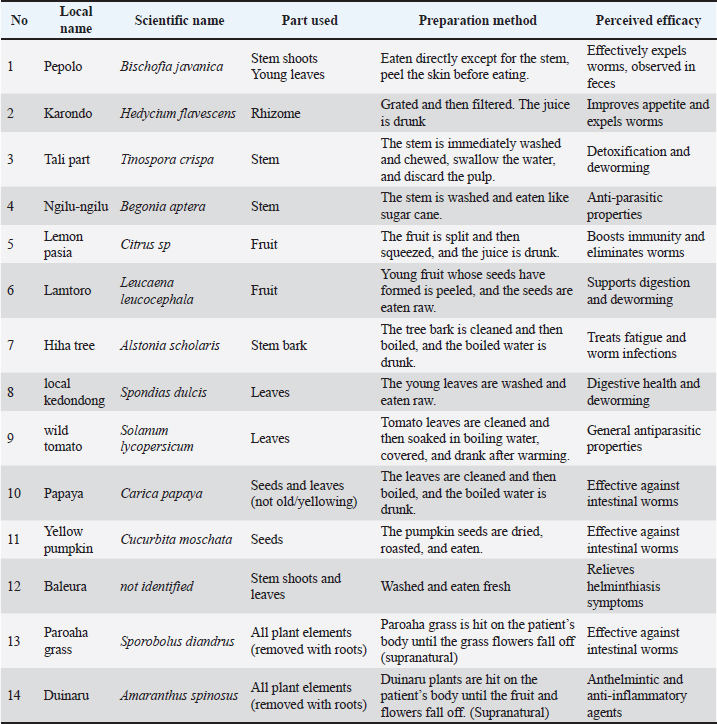
AbstractBackground: The highland community of Napu in Poso Regency, Central Sulawesi, possesses unique traditional and supernatural knowledge and practices for managing helminthiasis, locally known as Kekaindoro. Helminthiasis is considered a dangerous condition, even though it does not directly cause death. Aim: This study aimed to explore the community’s understanding of helminthiasis, their use of medicinal plants (MPs), and perceptions of the efficacy of these treatments. Methods: A cross-sectional study design was employed, with data collected through in-depth interviews. Qualitative ethnomedicine data provided insights into the helminthiasis concepts of the community, their use of traditional treatments, and the cultural practices associated with their application. Results: The Napu community links helminthiasis to barefoot activities in fields, gardens, or ditches, allowing worms to penetrate the skin. Fourteen local MP were identified as treatments: Pepolo, Karondo, Tali Pahit, pumpkin, wild tomato, local kedondong, Hiha tree, Duinaru, Bleura, Paroaha, lamtoro, lemon pasia, papaya, and ngilu-ngilu. These plants are consumed raw, boiled, or juiced, with Pepolo being the most common because of its availability and effectiveness, as evidenced by worm expulsion in feces. Traditional knowledge is passed down orally without standardized dosages or guidelines. While the community views MP as safer than modern drugs, younger generations are shifting toward modern medicine for convenience. Conclusion: This study highlights the diverse traditional plant-based practices used by the Napu community to manage helminthiasis, despite the lack of standardized dosing and timing. Scientific evaluation of these plants is needed to confirm their efficacy and inform their integration into evidence-based control efforts. Keywords: Anthelmintic, Ethnobotanical, Helminthiasis, Schistosomiasis, Traditional medicine. IntroductionHelminthiasis remains a significant health issue, particularly in rural and remote areas, such as the Napu Highlands (Edoa et al., 2024). The World Health Organization (WHO) estimates that over 1.5 billion people are infected with helminths, with high prevalence rates in developing countries. In Indonesia, helminthiasis continues to be a public health concern, especially in regions with limited access to healthcare facilities and adequate sanitation (Lee et al., 2023). The prevalence of soil-transmitted helminth (STH) in Indonesia is 28.12%. Higher rates have been reported in Papua, reaching 50% in school-age children in Jayapura (Wardani et al., 2022) and 33.8% in Central Java (Kurscheid et al., 2020). Studies in Central Sulawesi and Donggala have reported prevalence rates of 31.6% and 17%, respectively (Chadijah et al., 2014; Samarang et al., 2016). Geographical conditions, suboptimal hygiene practices, and low community awareness of the dangers of helminthiasis exacerbate infection rates in the Napu Highlands (Legesse and Babanto, 2023). Previous studies reported a prevalence of 12.24% of STH infections in the Napu community, with schistosomiasis at 4.62% and a co-infection rate of 1.9% (Nurwidayati et al., 2015). The impact of helminthiasis on public health is severe, particularly in children (Weatherhead et al., 2017). Helminth infections can impair growth and development, anemia, and malnutrition, resulting in reduced learning capacity and productivity (Ngegba et al., 2023). In adults, helminthiasis can hinder work performance and deteriorate the overall quality of life. Therefore, integrated efforts for controlling and treating helminthiasis are essential. Public education, improved access to treatment, and improved sanitation are crucial steps to eliminate helminthiasis and enhance public health in the Napu Highlands. According to the WHO, approximately 80% of the population in Asia and Africa relies on traditional medicine. The WHO recognizes that traditional medicine can address various infectious, acute, and chronic diseases, as knowledge about traditional remedies is continuously passed down through generations (Leonti and Casu, 2013). In modern Indonesia, the use of traditional herbal medicine is predominantly focused on ready-to-use herbal products. According to Basic Health Research (2018)48% of Indonesians use ready-made herbal formulations, 31.8% prepare their own herbal remedies, and 24.6% utilize medicinal plants (MP) as alternative treatments (Suganda et al., 2018). The use of herbal-based medicines is increasing globally, yet it contrasts with the declining public interest in independently cultivating or producing herbal remedies (Enioutina et al., 2017). Knowledge passed down through generations forms unique local wisdom within communities. Indonesia is an archipelagic country with an area of 9 million km2 and a total of around 17,500 islands, making it a megabiodiversity country. A study of the flora of this country states that an estimated 25% of the world’s flora is in Indonesia, which ranks seventh. Approximately 40% of them are native plants of Indonesia (Kusmana and Hikmat, 2015). The large number of tribes or ethnicities that utilize biodiversity has great potential (Nugroho, 2017). The use of traditional medicine is knowledge that has been passed down from generation to generation and is still maintained. The Napu tribe, also known as the Pekurehua tribe, inhabits the Napu Valley (North Lore) area of Poso Regency, Central Sulawesi, and still uses many traditional medicines and treatments to overcome their health problems (Adhil M Iqbal and Ramadanil, 2019). In Indonesia, approximately 7,000 plant species with medicinal properties have been recorded (Navia et al., 2022). Through the Research on MP and Jamu, the Health Research and Development Agency has documented the use of MP by various ethnic groups in Indonesia. However, data on alternative treatments for helminthiasis, particularly in schistosomiasis-endemic areas, remain scarce (van Wyk and Prinsloo, 2020). Local knowledge about helminthiasis requires further scientific literacy to establish a database of potential MP. This can serve as a foundation for developing ethnomedicine to support national policies in combating helminthiasis. Exploratory research, documentation, and scientific development are expected to produce safe, affordable, eco-friendly, and effective alternative treatments for helminthiasis. Materials and MethodsStudy sitesThe study was conducted in the Napu Highlands, encompassing 15 villages across 3 districts in Poso Regency, Central Sulawesi Province: East Lore, North Lore, and Central Lore. This ethnomedicine research on helminthiasis employed a cross-sectional design with two approaches: anthropology and ecology. Collection of data on plantsData on plants and the characteristics of traditional healers (battra) as key informants were collected through in-depth interviews using semi-structured questionnaires. Plant data collection involved plant documentation through inventory and transect methods. The key informants in this study were battra, individuals recognized by the local community for their knowledge and expertise in treating helminthiasis using MP in their formulations. The selection of battra followed the snowball sampling method, involving village intermediaries such as community leaders, tribal chiefs, village heads, informal leaders, healthcare workers, or other trusted sources (Handcock and Gile, 2011). Data analysisThe collected information includes socio-cultural data, battra characterization, and MP details, including their use, parts used, and preparation methods, and is analyzed thematically (Heriyanto and 2018, 2018). Ethical approvalThis research protocol was approved by the Health Research Ethics Committee, National Research and Innovation Agency (BRIN) number: 025/KE.03/SK/02/2024). ResultsEthnomedicine in the Napu communityBeliefs in traditional medicineThe Napu ethnic community has resided in the Napu Highlands of Poso Regency, Central Sulawesi, for generations, preserving their local culture, which includes traditional medicine. This practice incorporates the use of MP as an alternative treatment alongside supernatural healing methods that integrate plants for a holistic approach. They believe that the plants available in their gardens and nearby forests can treat various ailments, including helminthiasis. This belief is reinforced by the rich biodiversity of the forests and environment surrounding their settlements, which are abundant with MP. The interview findings reveal that the Napu community remains highly reliant on natural resources for their traditional medical practices. Traditional healing practicesBefore the introduction of modern medicine, the Napu community relied on MP, which were passed down through generations, as part of their local wisdom. When someone, especially a child, fell ill, the parents immediately sought MP around their settlements. This reliance on herbal medicine reflects the deep connection between the Napu people and their environment. The following statement from one informant illustrates this practice: "In the past, before medicines from the community health center were available, we would go to the forest to find plants like Pepolo if a child was sick, for example, refusing to eat, feeling weak, having a swollen stomach, or looking pale. We gave it to the child to eat, and they would usually recover." Geographic and cultural contextThe settlements of the Napu community, surrounded by valleys and forests, support the continuation of traditional helminthiasis treatments using plants. Informants explained that while working in gardens or hunting in the forest, they often consumed certain plants believed to have medicinal properties, knowledge passed down orally from their elders. This practice highlights cultural values that persist, even as modern health care services have become available. Community concepts of helminthiasisThe Napu community, particularly in the Napu Highlands, refers to helminthiasis by the local term Kekaindoro. Nearly all informants stated that Kekaindoro is considered dangerous because its symptoms can disrupt daily activities, especially in children, although this condition does not directly cause death. The identified key symptoms include loss of appetite, weakness, an enlarged abdomen with visible abdominal veins, and pale facial appearance. Informants believe that helminthiasis is caused by habits such as working or playing barefoot in rice fields, ditches, or gardens, which allow worms to enter the body through the skin’s pores, particularly the feet. The community distinguishes between worm types: KaindoroLarge worms that are commonly observed and characterized by their long form. LuhoaSmall worms (such as pinworms or Schistosoma), considered more dangerous due to their association with serious diseases, such as schistosomiasis. Use of MP and traditional remedies for helminthiasisThe use of MP demonstrates unique variations in preparation methods among individuals and families. The Napu community uses various traditional MP, the knowledge of which has been passed down through generations. Fourteen plant species commonly used for the treatment of helminthiasis are presented in Table 1, along with the plant parts utilized, preparation methods, and the perceived therapeutic benefits. Table 1. List of plants used by the Napu ethnic community to treat helminthiasis.
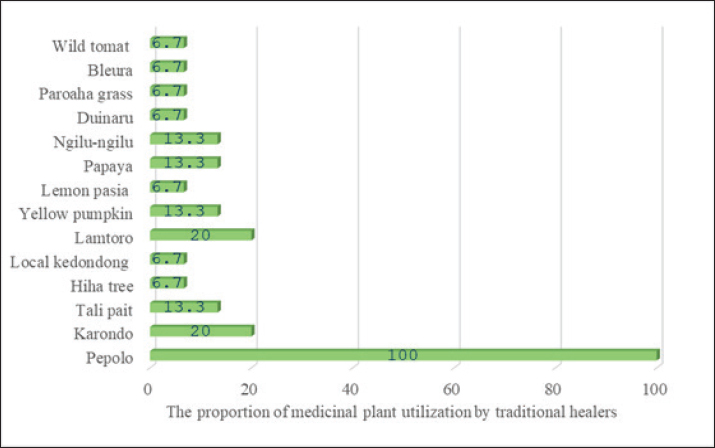
These MP are sourced from forest edges, within the forest, in gardens, or around residential areas. Nearly all plants can be consumed directly without a specific dosage. Consumption is carried out as needed, without age restrictions, and is suitable for children and adults. Figure 1 shows the percentage of plants used by traditional healers (N=15) for helminthiasis treatment.
Fig. 1. Proportion of plant usage by Napu ethnic traditional healers for helminthiasis treatment based on local wisdom, 2024. Dosage and consumption patternsThe Napu ethnic community possesses profound knowledge about helminthiasis and its treatment. Most informants reported no specific rules for consuming MP, with usage being flexible and without precise dosages. However, one informant recommended consuming Pepolo in the morning before meals for greater effectiveness, as worms are believed to be more active in searching for food at that time. Regarding the perceived effects of MP, the Napu people believe that plants such as Pepolo are highly effective in treating helminthiasis. After consumption of MP, worms are typically expelled with feces within a few hours or by the next day. Informants reported that: Large worms (Kaindoro) are often visible during defecation, and small worms (Luhoa) are believed to be expelled as well. The community perceives these MP as having no side effects and considers them safer than modern chemical drugs. In addition, Pepolo is valued for its other benefits, such as quenching thirst when in the forest without access to water. Changes in trends in traditional medicineThe Napu ethnic community continues to use traditional MP. However, some informants mentioned that the younger generation tends to prefer modern deworming medication from health centers, as it is considered more practical. Despite this shift, the community still maintains their belief in the efficacy of MP as part of their cultural heritage. The trust in the effectiveness of local MP remains strong, although it is gradually changing with the availability of modern medications. DiscussionTraditional medicine is believed to provide healing benefits for various health complaints and continues to evolve. Approximately 80% of the population in developing countries relies on traditional medicine, particularly that derived from plants (Kristiyanto et al., 2020). Several factors influence people’s perceptions, beliefs, and interest in traditional medicine, including knowledge, cultural practices that are passed down through generations, and social status (Abdelmola et al., 2021), as well as factors such as religion, marital status, occupation, age, and education level (Chali et al., 2021). The ease of accessibility and financial affordability, along with the inclusion of traditional medicine in government health insurance, are factors that influence people’s preference for traditional medicine (Legesse and Babanto, 2023). The availability of health care facilities is closely linked to geographical conditions, with rural or more remote communities using traditional medicine more than urban populations (Febriyanti et al., 2024). The use of traditional medicine in Indonesia has increased in recent years. Although most of the population (73.8%) uses traditional health care services, the proportion remains limited and unevenly distributed across provinces (Rifka and Idris, 2023). Traditional medicine is used not only for treatment but also for maintaining health, prevention, diagnosis, and the improvement or treatment of both physical and mental conditions (Hoenders et al., 2024). Traditional medicine practices are vast and diverse across countries. Traditional medicine is commonly used in Indonesia for degenerative diseases, such as cancer or malignant tumors, arthritis/rheumatism, high cholesterol, stroke, diabetes, and kidney disease (Pengpid and Peltzer, 2018). In other countries, coughs, headaches, and intestinal/stomach infections are common ailments treated with traditional medicine. The failure of pathogens to respond to therapeutic agents is one of the challenges in treating infections, leading to chronic infections, complications, and preventable deaths (Rizvi et al., 2022). Traditional medicine, especially plant-based remedies, holds great potential for addressing infections because plants synthesize various compounds with diverse biological activities. Several plant extracts, including anthelmintics, have shown potential for development (Jayawardene et al., 2021). The concept of helminthiasis among the Napu ethnic community in Central Sulawesi is not only a medical issue but also carries complex cultural and ecological dimensions. In Napu’s local knowledge, helminthiasis is perceived as a condition linked to the balance between humans, the environment, and unseen natural forces. As described by Hamzari and H (2011) in his study of communities in the Lore Lindu region, local health perspectives are closely tied to traditional practices, ecological values, and the utilization of natural resources (Hamzari and H, 2011). The Napu people generally associate helminthiasis with consumption patterns, forest and agricultural land management, and water quality. As a result, the management of helminthiasis extends beyond medical interventions with anthelmintic drugs, incorporating environmental and social strategies. This concept aligns with previous research on helminthiasis in Indonesia, emphasizing the importance of understanding cultural contexts, risk factors, and local lifestyles in developing effective control programs (Gupta et al., 2021). Anthropological research on the Napu community shows that their understanding of diseases, including helminthiasis, is often intertwined with the construction of ethnic identity and socio-economic adaptation. The Napu people do not merely view helminthiasis as a “disease” that needs to be cured but also as a symptom of the disruption of harmony between humans and nature. For instance, adaptations to changes in agricultural practices and deforestation around the Lore Lindu National Park can influence the distribution of intestinal parasites and the risk of helminth infections. In this context, previous research focusing on the epidemiological and socio-cultural factors of helminthiasis provides an important foundation for a more holistic understanding of the disease. The integration of medical, ecological, and cultural perspectives is crucial in developing helminthiasis control strategies that are sensitive to the local context of the Napu community (Lapat et al., 2024). The use of MP and traditional remedies for helminthiasis within the Napu ethnic community is deeply rooted in local knowledge, passed down through generations. The use of these plants is typically not regulated by strict dosage standards, as the remedies are largely based on traditional practices rather than precise scientific measurements. The community believes in the effectiveness of these plants, often consuming them in varying amounts as needed, with no specific age or quantity limitations. For instance, Pepolo (Bischofia javanica) is commonly consumed in the morning before meals, based on the belief that worms are more active during this time. Although there is no standardized dosage, many studies have reported that the plants, especially Pepolo, effectively expel worms from the body, often seen in feces within hours or by the next day (Mascarini-Serra, 2011). In terms of consumption patterns, the community practices flexibility in how they incorporate these plants into their daily routine. The local people often harvest these plants from their surrounding forests, gardens, or even residential areas and consume them raw, boiled, or as juices, depending on the plant’s characteristics. This flexible consumption pattern contrasts with modern medicine, which requires specific doses and treatment schedules. Despite the absence of formalized dosages, the community’s reliance on these plants reflects a deep connection to their environment and a traditional understanding of health, where the holistic approach of using MP is seen as an effective and natural way to combat helminthiasis without the need for synthetic chemicals (van Wyk and Prinsloo, 2020). However, as the younger generation shifts toward modern medicine, this traditional approach faces challenges in maintaining its relevance in the community’s healthcare practices (Gumisiriza et al., 2019). The trend in traditional medicine has undergone significant changes over the years, influenced by accessibility, modernization, and the availability of alternative treatments. Traditional medicine remains a crucial part of healthcare in many rural and remote areas, such as the Napu ethnic community in Central Sulawesi. However, as modern health care systems have become more accessible, particularly through government-sponsored health care programs, there has been a shift toward the use of modern medicines. The younger generation prefers modern treatments, such as deworming medications, provided at local health centers (puskesmas) because they are considered more practical and efficient. These shifts are evident in the transition from holistic and natural treatments using local plants, such as Pepolo (B. javanica), to pharmaceutical solutions (Legesse and Babanto, 2023; Rifka and Idris, 2023). Traditional medicine, including the use of MP, has been a cornerstone of healthcare for generations. However, the growing popularity of modern medicine has posed challenges to the preservation and practice of traditional treatments for both parasitic and viral diseases (Chen et al., 2024). The growing reliance on modern medicine stems from its convenience and ease of use. However, the urgent demand for effective treatments has shifted many research efforts toward exploring traditional medicine as an alternative or complementary approach (Prasansuklab et al., 2020). There is a strong belief in the effectiveness of traditional medicine, particularly in managing conditions such as helminthiasis. Many in the Napu community report that local plants provide relief and are safer alternatives to chemical drugs (Hoenders et al., 2024). Despite this, the younger population’s preference for modern medicine highlights a generational shift, where convenience and accessibility are prioritized over the cultural and ecological knowledge embedded in traditional practices (Gumisiriza et al., 2019). This transition presents an opportunity for integrating traditional knowledge with modern healthcare practices, creating a more inclusive and culturally sensitive approach to health and disease management, particularly in areas with limited access to modern healthcare facilities (Maina, 2024). A comparison between traditional and modern treatments shows clear differences in perceived effectiveness, accessibility, and safety (Kendi, 2024). Plant-based traditional remedies are valued for their availability and perceived mild effects, yet they lack standardized dosing and scientific validation (Jain et al., 2013). In contrast, modern anthelmintic drugs, such as albendazole and mebendazole, along with praziquantel, are widely accessible and considered more practical, especially by younger generations (Ramasubramaniaraja and Babu, 2010). However, the exclusive reliance on modern medicine may limit the preservation and scientific exploration of locally used plant-based therapies (Pannu and Kumari, 2024). Understanding how both approaches are used and perceived is essential for designing culturally grounded and integrated strategies for controlling helminthiasis in the Napu community. ConclusionThe Napu ethnic group in Indonesia, living in a schistosomiasis-endemic area, maintains a diverse set of traditional plant-based practices, collectively known as kekaindoro, to manage helminthiasis. These remedies, which are transmitted orally across generations and applied through both traditional and supernatural methods, remain an important component of community health. However, their use is gradually declining as younger generations increasingly prefer modern anthelmintic drugs provided by local health centers due to perceptions of practicality and faster effects. Although the community considers traditional treatments to be effective, these practices lack standardized dosing, clinical validation, and integration into formal health services. Among the various MP identified, Pepolo is the most frequently used and perceived as the most effective, making it a promising candidate for further scientific investigation. Therefore, systematic phytochemical profiling, toxicity assessment, and in vitro–in vivo evaluation of Pepolo and other commonly used plants to verify their anthelmintic potential should be included in future studies. Integrating validated traditional remedies into community-based control strategies may strengthen the management of local helminthiasis and schistosomiasis in this endemic region. AcknowledgmentThe authors would like to thank the traditional healers as informants, Mrs. Wati as the Head of Wuasa Health Center, the National Research and Innovation Agency (BRIN), which has provided financial support, and all participants for their participation in this study. Conflict of interestThe authors declare that the research was conducted without any commercial or financial relationships that could be understood as a potential conflict of interest. FundingThis research was financially supported by the National Research and Innovation Agency (Grant No. 6/III.9/HK/2025). Authors' contributionSamarang, R., Nurjana, M.A., Pranata, S., Octaviani, as the main contributor and members, cleaned and analyzed the data. Widodo, H., Anastasia, H., Ridwan, Y., Iqbal, M., Widjaja, J., and Gunawan, Chaidir, were responsible for the analysis and drafting of the manuscript. Samarang, Ridwan, Y., Widiyastuti, Y., and Satrija, F. coordinated the team and made the final decision on the final manuscript. Data availabilityThe datasets generated and analyzed in the current study are available from the corresponding author. ReferencesAbdelmola, A.O., Bahri, A., Abuallut, I., Refaei, B.A., Hakami, W.K., Abutaleb, A.K., Mahzari, S.M., Mashragi, M.A., Es’haq, S.A. and Aldarbi, K.F. 2021. Prevalence, knowledge, and perception of the use of Jazan herbal medicines in Saudi Arabia. J. Fam. Med. Prim. Care. 10, 2386–2393. Adhil M Iqbal. and Ramadanil. 2019. Study of the ethnobotany family Euphorbiaceae used by the Pekurehua Tribe in Wuasa and Kaduwaa, North Lore, Poso, Central Sulawesi. Natural. Sci. J. Sci. Technol. 8, 51–60. Chadijah, S., Sumolang, P.P.F. and Veridiana, N.N. 2014. Association of Knowledge, practice, and environmental sanitation with soil-transmitted helminth prevalence in elementary school students in Palu Municipality. Media Litbangkes 24, 50–56. Chali, B.U., Hasho, A. and Koricha, N.B. 2021. Traditional Medicine preference and practice and associated factors in Jimma Town, Southwest Ethiopia. Evidence-Based Complementary Alternative Med. 2021, 1–7. Chen, Y., Zhang, C. and Feng, Y. 2024. Medicinal plants for the management of post-COVID-19 fatigue: a literature review on the role and mechanisms’. J. Tradit. Complement. Med. 15(1), 15–23. Edoa, J.R., Adégbitè, B.R., Honkpéhèdji, Y.J., Zinsou, J.F., Boussougou-Sambe, S.T., Woldearegai, T.G., Mordmüller, B., Adegnika, A.A. and Dejon Agobé, J.C. 2024. Epidemiology of soil-transmitted helminth infections and the differential effect of treatment on the distribution of helminth species in rural areas of Gabon. Trop. Med. Health 52(3), 2–13. Enioutina, E.Y., Salis, E.R., Job, K.M., Gubarev, M.I., Krepkova, L.V. and Sherwin, C.M.T. 2017. Herbal medicines: challenges in the modern world. Part 5. status and current directions of complementary and alternative herbal medicine worldwide. Expert. Rev. Clin. Pharmacol. 10(3), 327–338. Febriyanti, R.M., Saefullah, K., Susanti, R.D. and Lestari, K. 2024. Knowledge, attitude, and use of traditional medicine within the plural medical system in West Java, Indonesia. BMC Complement Med. Ther. 24, 1–13. Gumisiriza, H., Birungi, G., Olet, E.A. and Sesaazi, C.D. 2019. Medicinal plant species used by local communities around Queen Elizabeth National Park, Maramagambo Central Forest Reserve, and Ihimbo Central Forest Reserve, Southwest Uganda. J. Ethnopharmacol. 239, 1–55. Gupta, D., Jai P.N. and Yadav, S.J. 2021. Strategic communication in health and development: concepts, applications, and programming. J. Health Manag. 23, 95–108. Hamzari, H. 2011. Community-based sustainable rattan conservation: a case study in Lore Lindu National Park, Central Sulawesi, Indonesia. Biodiversitas 12, 241–245. Handcock, M.S. and Gile, K.J. 2011. Comment: On the concept of snowball sampling. Sociol. Methodol. 41(1), 367–371. Heriyanto, 2018. Thematic analysis sebagai Metode Menganalisa Data untuk Penelitian Kualitatif. ANUVA 2, 317–324. Hoenders, R., Ghelman, R., Portella, C., Simmons, S., Locke, A., Cramer, H., Gallego-Perez, D. and Jong, M. 2024. A review of the WHO strategy on traditional, complementary, and integrative medicine from the perspective of academic consortia for integrative medicine and health. Front. Med. 11(1), 1–15. Jain, P., Singh, S., Singh, S.K., Verma, S.K., Kharya, M.D. and Solanki, S. 2013. Antihelmintic potential of herbal drugs. Int. J. Res. Develop. Pharm. Life Sci. 2, 412–427. Jayawardene, K.L.T.D., Palombo, E.A. and Boag, P.R. 2021. Natural products are a promising source for anthelmintic drug discovery. Kendi, N.N. 2024. The impact of traditional medicine integration with modern health care in Africa. Newport. Int. J. Scientific. Exp. Sci. 5, 18–21. Kristiyanto, J., Mamosey, W.E. and Damis, M. 2020. Budaya Pengabatan Etnomedisin Di Desa Porelea Kecamatan Pipikoro Kabupaten Sigi Sulawesi Holistik. Sulawesi Holistik 13(1), 1–15. Kurscheid, J., Laksono, B., Park, M.J., Clements, A.C.A., Sadler, R., Mccarthy, J.S., Nery, S.V., Soares-Magalhaes, R., Halton, K., Hadisaputro, S., Richardson, A., Indjein, L., Wangdi, K., Stewart, D.E. and Gray, D.J. 2020. Epidemiology of soil-transmitted helminth infections in Semarang, Central Java, Indonesia. PLos Negl. Trop. Dis. 14 (12), 1–17. Kusmana, C. and Hikmat, A. 2015. The biodiversity of flora in Indonesia. J. Natural Resour. Environ. Manage. 5, 187–198. Lapat, J.J., Opee, J., Apio, M.C., Akello, S., Ojul, C.L., Onekalit, R., Joseph Francis, O., Lalweny, D., Latigo, K.J.P., Lebu, S., Ochola, E. and Bongomin, F. 2024. A one health approach toward the control and elimination of soil-transmitted helminthic infections in endemic areas. IJID One Health 2, 100021; doi:10.1016/j.ijid.2008.00.10011 Lee, P., Kurscheid, J.M., Laksono, B., Park, M.J., Clements, A.C.A., Lowe, C., Stewart, D.E. and Gray, D.J. 2023. Model validation for a knowledge and practices survey towards prevention of soil-transmitted helminth infections in rural villages in Indonesia. Sci. Rep. 13(1), 1–11. Legesse, F.M. and Babanto, A.M. 2023. Factors Associated With the Use of Traditional Medicine in Wolaita Zone, Southern Ethiopia. Sage Open 13(1), 1–10. Leonti, M. and Casu, L. 2013. Traditional medicines and globalization: current and future perspectives in ethnopharmacology’. Front. Pharmacol. 4(92), 1–13. Maina, M.F. 2024. Integrating traditional medicine with modern healthcare: addressing maternal and mental health in Uganda. IDOSR. J. Appl. Sci. 9, 76–82. Mascarini-Serra, L. 2011. Prevention of soil-transmitted helminth infection. J. Glob. Infect. Dis. 3, 175–182. Navia, Z.I., Adnan T., Harmawan. and Suwardi. 2022. Ethnobotanical study of wild medicinal plants in the Serbajadi protected forest of East Aceh District, Indonesia. Biodiversity 23, 4959–4970. Ngegba, M., Hinckley, E., Koroma, M., Ngegba, A. and Oladele, O. 2023. Implications of the prevalence and intensity of soil-transmitted helminthes on rural farmers’ productivity in selected districts of Sierra Leone. Zeszyty. Naukowe. SGGW. W. Warszawie-Problemy. Rolnictwa. Światowego. 23, 32–45. Nugroho, A.W. 2017. Review: konservasi Keanekaragaman Hayati Melalui Tanaman Obat Dalam Hutan Di Indonesia Dengan Teknologi Farmasi: Potensi dan Tantangan. Jurnal Sains Dan Kesehatan 1(1), 377–383. Nurwidayati, A., Sumolang, P.P.F. and Rauf, A. 2015. Co-infection of Schistosoma japonicum and Soil-Transmitted Helminth in an Endemic Area of Schistosomiasis, Poso Regency, Central Sulawesi, Indonesia. Ekologi Kesehatan 14, 41–47. Pannu, A. and Kumari, P. 2024. A review of traditional anthelmintic approaches: exploring medicinal plants and polyherbal formulations for effective and safe gastrointestinal parasite treatment. Anti-Infect. Agents 23(1), 1–23. Pengpid, S. and Peltzer, K. 2018. Use of traditional and complementary medicine in Indonesia: results of a national survey conducted in 2014–2015. Complement. Ther. Clin. Pract. 33, 156–163. Prasansuklab, A., Brimson, J.M. and Tencomnao, T. 2020. Potential Thai medicinal plants for neurodegenerative diseases: a review focusing on the anti-glutamate toxicity effect. J. Tradit. Complement. Med. 10(3), 301–308. Ramasubramaniaraja, R. and Babu, M.N. 2010. Anthelmintic studies and medicinal herbs: an overview. Int. J. Pharm. Sci. Rev. Res. 3, 39–47. Rifka, N. and Idris, H. 2023. Factors associated with the use of traditional health services in indonesia: a secondary analysis of basic health research in Indonesia. Makara J. Health Res. 27, 36–40. Rizvi, S.A.A., Einstein, G.P., Tulp, O.L., Sainvil, F. and Branly, R. 2022. Introduction to traditional medicine and their role in prevention and treatment of emerging and re-emerging diseases. Biomolecules. 12(10), 1–29. Samarang, Nurjana, M.A. and Sumolang, P.P.F. 2016. Prevalence of soil transmitted helminth at 10 elementry school in Labuan sub district Donggala district Central Sulawesi. JHECDs. 2(2), 33–38. Suganda, D., Riyanto, S. and Darmayanti, N. 2018. Preservation of local wisdom in traditional medicine in West Java, Indonesia. Int. J. Res. Humanities. Social. Stud. 5, 40–48. van Wyk, A.S. and Prinsloo, G. 2020. Health, safety and quality concerns of plant-based traditional medicines and herbal remedies. South. Afr. J. Botany. 133(1), 54–62. Wardani, Y.F., Lubis, T.A. and Laksono, I.S. 2022. Trichuris dysentery syndrome, a neglected tropical disease: a case series. Paediatrica. Indonesiana. (Paediatrica. Indonesiana). 62, 430–434. Weatherhead, J.E., Hotez, P.J. and Mejia, R. 2017. The global state of helminth control and elimination in children. Pediatr. Clin. North. Am. 64(4), 867–877. | ||
| How to Cite this Article |
| Pubmed Style Samarang S, Satrija F, Widiyastuti Y, Ridwan Y, Soerachman R, Nurjana MA, Widodo H, Chaidir , Iqbal M, Pranata S, Widjaja J, Anastasia H, Gunawan G, Octaviani O. Ethnobotanical anthelmintics of the Napu People in Indonesia during the schistosomiasis-endemic. Open Vet. J.. 2026; 16(1): 118-125. doi:10.5455/OVJ.2026.v16.i1.11 Web Style Samarang S, Satrija F, Widiyastuti Y, Ridwan Y, Soerachman R, Nurjana MA, Widodo H, Chaidir , Iqbal M, Pranata S, Widjaja J, Anastasia H, Gunawan G, Octaviani O. Ethnobotanical anthelmintics of the Napu People in Indonesia during the schistosomiasis-endemic. https://www.openveterinaryjournal.com/?mno=287389 [Access: June 27, 2026]. doi:10.5455/OVJ.2026.v16.i1.11 AMA (American Medical Association) Style Samarang S, Satrija F, Widiyastuti Y, Ridwan Y, Soerachman R, Nurjana MA, Widodo H, Chaidir , Iqbal M, Pranata S, Widjaja J, Anastasia H, Gunawan G, Octaviani O. Ethnobotanical anthelmintics of the Napu People in Indonesia during the schistosomiasis-endemic. Open Vet. J.. 2026; 16(1): 118-125. doi:10.5455/OVJ.2026.v16.i1.11 Vancouver/ICMJE Style Samarang S, Satrija F, Widiyastuti Y, Ridwan Y, Soerachman R, Nurjana MA, Widodo H, Chaidir , Iqbal M, Pranata S, Widjaja J, Anastasia H, Gunawan G, Octaviani O. Ethnobotanical anthelmintics of the Napu People in Indonesia during the schistosomiasis-endemic. Open Vet. J.. (2026), [cited June 27, 2026]; 16(1): 118-125. doi:10.5455/OVJ.2026.v16.i1.11 Harvard Style Samarang, S., Satrija, . F., Widiyastuti, . Y., Ridwan, . Y., Soerachman, . R., Nurjana, . M. A., Widodo, . H., Chaidir, ., Iqbal, . M., Pranata, . S., Widjaja, . J., Anastasia, . H., Gunawan, . G. & Octaviani, . O. (2026) Ethnobotanical anthelmintics of the Napu People in Indonesia during the schistosomiasis-endemic. Open Vet. J., 16 (1), 118-125. doi:10.5455/OVJ.2026.v16.i1.11 Turabian Style Samarang, Samarang, Fadjar Satrija, Yuli Widiyastuti, Yusuf Ridwan, Rachmalina Soerachman, Made Agus Nurjana, Harto Widodo, Chaidir, Moh Iqbal, Setia Pranata, Junus Widjaja, Hayani Anastasia, Gunawan Gunawan, and Octaviani Octaviani. 2026. Ethnobotanical anthelmintics of the Napu People in Indonesia during the schistosomiasis-endemic. Open Veterinary Journal, 16 (1), 118-125. doi:10.5455/OVJ.2026.v16.i1.11 Chicago Style Samarang, Samarang, Fadjar Satrija, Yuli Widiyastuti, Yusuf Ridwan, Rachmalina Soerachman, Made Agus Nurjana, Harto Widodo, Chaidir, Moh Iqbal, Setia Pranata, Junus Widjaja, Hayani Anastasia, Gunawan Gunawan, and Octaviani Octaviani. "Ethnobotanical anthelmintics of the Napu People in Indonesia during the schistosomiasis-endemic." Open Veterinary Journal 16 (2026), 118-125. doi:10.5455/OVJ.2026.v16.i1.11 MLA (The Modern Language Association) Style Samarang, Samarang, Fadjar Satrija, Yuli Widiyastuti, Yusuf Ridwan, Rachmalina Soerachman, Made Agus Nurjana, Harto Widodo, Chaidir, Moh Iqbal, Setia Pranata, Junus Widjaja, Hayani Anastasia, Gunawan Gunawan, and Octaviani Octaviani. "Ethnobotanical anthelmintics of the Napu People in Indonesia during the schistosomiasis-endemic." Open Veterinary Journal 16.1 (2026), 118-125. Print. doi:10.5455/OVJ.2026.v16.i1.11 APA (American Psychological Association) Style Samarang, S., Satrija, . F., Widiyastuti, . Y., Ridwan, . Y., Soerachman, . R., Nurjana, . M. A., Widodo, . H., Chaidir, ., Iqbal, . M., Pranata, . S., Widjaja, . J., Anastasia, . H., Gunawan, . G. & Octaviani, . O. (2026) Ethnobotanical anthelmintics of the Napu People in Indonesia during the schistosomiasis-endemic. Open Veterinary Journal, 16 (1), 118-125. doi:10.5455/OVJ.2026.v16.i1.11 |


