




| Research Article | ||
Open Vet. J.. 2026; 16(1): 88-95 Open Veterinary Journal, (2026), Vol. 16(1): 88-95 Review Article The physiological effects of administering different concentrations of Shilajit to Awassi lambs and their impact on productive trait and blood parameters and some biochemical measurementsHanan Waleed Kasim Agwaan*Department of Animal Production, College of Agriculture & Forestry, University of Mosul, Mosul, Iraq *Corresponding Author: Hanan Waleed Kasim Agwaan. Department of Animal Production, College of Agriculture & Forestry, University of Mosul, Mosul, Iraq. Email: hanan_aqwaan [at] uomosul.edu.iq Submitted: 28/09/2025 Revised: 03/12/2025 Accepted: 19/12/2025 Published: 31/01/2026 © 2025 Open Veterinary Journal
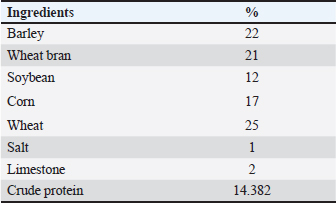
AbstractBackground: Shilajit exists as a natural resin that contains fulvic and humic acids that provide antioxidant benefits and stress relief. The compounds help animals survive hot temperatures because they enable animals to preserve their metabolic equilibrium. Aim: The research project aims to study Shilajit effects on physiological responses and its impact on haematological and biochemical parameters and lamb growth development at two different dosage levels of 50 and 100 mg/kg BW. Methods: We separated 18 4-month-old female Awassi lambs into three groups. One group did not receive any Shilajit, whilst the other two groups received either 50 mg/kg BW or 100 mg/kg BW. Each group was given a specific diet and a daily dosage of Shilajit. We collected blood samples each month from June to August and looked at their health indicators. Results: Shilajit has been demonstrated to increase bodies use of food and aid in weight management. For optimal results, take 100 mg/ kg BW Shilajit seems to lower cortisol levels and boost growth and thyroid hormones. Furthermore, it aids in the production of haemoglobin, haematocrit, and red and white blood cells. Also, increases in glucose, protein, hepatic enzymes, and cholesterol, alongside marked reductions in oxidative stress. Conclusion: The research shows that Shilajit supplementation at 100 mg/kg BW to Awassi lambs during summer months leads to better growth results and improved resistance against stress, which makes this natural substance a useful tool for farmers to boost their livestock production and health outcomes. Keywords: Biochemical, Hematological, Parameters, Sheep, Shilajit. IntroductionShilajit exists as a natural resin that forms inside Himalayan rock formations because of environmental conditions that include elevation and temperature, and humidity levels (Kamgar et al., 2025). The scientific community connects plant biological responses to its anti-inflammatory and antioxidant, and stress-modulating compounds, which are present in its dibenzo-α-pyrones and organic acid content (Agarwal et al., 2007). The research data about fulvic and humic acid content and essential minerals in the supplement has increased its value for animal nutrition applications as a functional supplement (Aladi and Vikhe, 2022). The nutritional research community studies Awassi sheep because these animals thrive in Middle Eastern environments and their bodies react well to dietary changes, which improve their immune system and metabolic performance (Alkhashab et al., 2023; Alsaadi et al., 2023; Agwaan, 2023; Alsaadi et al., 2025). Research on small-ruminants shows that Shilajit supplementation leads to better growth rates and reproductive success and increased milk production and enhanced physical health of the animals (Velmurugan et al., 2012). The bioactive compounds in this product have shown to enhance immune system function, and they assist people in managing stress, and they also increase their food consumption according to Keller et al. (2019). The evaluation of blood and biochemical markers which function as vital health and immune status indicators enables researchers to understand how Shilajit affects the body and how different doses produce their effects (Alkhashab et al., 2023). Materials and MethodsStudy placeThis study was carried out in a private sheep breeding field for summer months (from June to August 2025). The length of the experiment was 60 days. Ewes are accommodated at semi-enclosed, uniformly sized sheds by estimations of 6.5 × 4.5 m, provided with food managers that are measured about 260 × 40 × 20 cm3 and a 60-l capacity for tap water to each accumulate. AnimalsEighteen female Awassi lambs in 4 months old with a normal weight of 19 ± 1.8 were utilized. The lambs were given concentrated rations in two times daily at morning and evening, as shown in Table 1. Feed, water, and metal salt briquettes were given to the creature advertisement libitum amid the request, and the sum of concentrated nourish was changed all through the test in understanding with the weight changes of the creatures. Table 1. Chemical components of the essential ration (NRC, 2007).
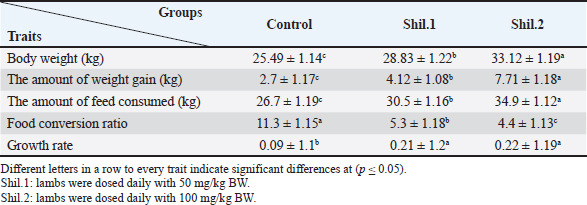
Experimental design and treatments18 female Awassi lamb were randomly distributed into three equal groups (6 ewes/ group). In control group, lambs were fed standard concentrated diet without any adding. For the 1st treated group (Shil.1), lambs were dosed daily with 50 mg/kg BW/lamb. 2nd treated group (Shil.2), lambs were fed daily with 100 mg/kg BW/lamb. Blood samplesEspecially at the onset, mid, and endpoint of the think about, blood samples for haematological measurements are taken from the jugular vein utilizing a non-essential 5 ml size sterilised syringe. Each sample of blood was put in test tubes devoid of anticoagulant and centrifuged under standard ambient conditions for roughly 15 minutes. Serum samples are kept at the point of collection, achieved through centrifugation for a duration of 15 minutes at a rotational speed of 3,500 rpm. Samples were at that point divided into the smallest tests and scattered in sterile test tubes. Biochemical parameters were measured in the serum samples using standardized methods: Blood glucoseDetermined spectrophotometrically using the glucose oxidase-peroxidase method. Total protein and albuminQuantified using the Biuret method and bromocresol green dye-binding method, respectively. International Federation of Clinical Chemistry recommendations are used to measure liver enzymes such as Aspartate Aminotransferase (AST) and Alanine Aminotransferase (ALT) through kinetic assays. The analysis of cholesterol and lipids was carried out using individual enzymes from Cholesterol oxidaskates and Glycerol-3-phosphate oxase, with the use of certified reference materials and standard benders to ensure the highest level of precision. Measure accuracy was validated through the use of commercially accessible control sera, which were tested in nearby areas with typical and neurotic ranges. Even with some changes in the coefficients, they all stayed below 5% for both the coefficient of variation and the Connect- and Intra-Assay results, which we monitored carefully. We also made sure to regularly maintain the spectrophotometers and computerized analyzers. Dazzle reproducible: a copy of a subset of tests was replicated to verify their accuracy. These protocols were established in an accredited laboratory and adhered to the International Council for Harmonisation guidelines. A completely randomized one-way design was used to analyze the data. For post-hoc analysis, Duncan’s multiple range test was used after a one-way ANOVA (Duncan, 1955) to determine the significance of differences between groups. Using the Shapiro-Wilk test, we tested for normality while using Levene’s test to determine the similarities in variance. A Bonferroni correction was utilized to manage Type I errors by accounting for multiple comparisons. In (SAS, 2012) report it was determined that a p-value below 0.05 was statistically significant. Ethical approvalNone of the experimental animals were mistreated or euthanized, and all requisite breeding supplies and resources were supplied to ensure their welfare throughout the study duration. ResultsProductive traitsIn Table 2, Shilajit supplementation has been found to significantly improve productive traits in the current study, especially at the 100 mg/kg BW dose (Shil.2) compared with control, Body weight increased progressively across treatment groups: Control (25.49 ± 1.14 kg), Shil.1 (28.83 ± 1.22 kg), and Shil.2 (33.12 ± 1.19 kg), representing a 29.9% improvement over control. Shil.2 lambs exhibited a similar weight gain pattern, attaining 7.71 ±1.18 kg while their controls gained 2.7 ±1.17 kg. The feed conversion ratio decreased substantially from 11.3 ± 1.15 in the control group to 4.4 ± 1.13 in Shil.2. Table 2. Effect of Shilajit concentrations on some productive traits at the end of experiment (Mean ± SE).
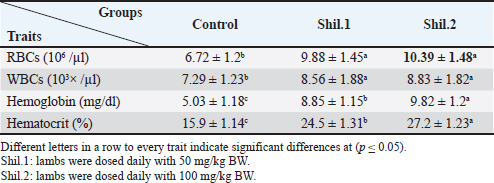
Haematological parametersThe hematological results in Table 3 show that Shilajit treatment leads to dose-dependent improvements which confirm its ability to enhance blood cell production. Red blood cell counts increased from 6.72 ± 1.2 × 10⁶/μl in controls to 10.39 ± 1.48 × 10⁶/μl in Shil.2 (54.7% increase); haemoglobin levels rose from 5.03 ± 1.18 mg/dl in control to 9.82 ± 1.2 mg/dl in Shil.2 (95.2% increase); haematocrit values similarly climbed from 15.9% ± 1.14% in control to 27.2% ± 1.23% in Shil.2 (71.1% increase). While white blood cell counts showed moderate but significant increases from 7.29 ± 1.23 × 10³/μl in control to 8.83 ± 1.82 × 10³/μl in Shil.2 (21.1% rise). Table 3. Effect of Shilajit concentrations on haematological parameters at the end of experiment (Mean ± SE).
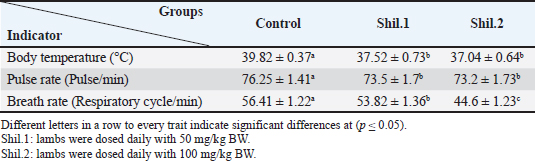
Physiological vital indicatorsThe Shil.2 group demonstrated significant physiological changes according to Table 4 because their body temperature and heart rate and respiratory rate all decreased. The body temperature of animals in the control group started at 39.82°C ± 0.37°C but Shil.2 treatment lowered it to 37.04°C ± 0.64°C which created more comfortable thermal conditions. Table 4. Effect of Shilajit concentrations on physiological vital indicators (Mean ± SE).
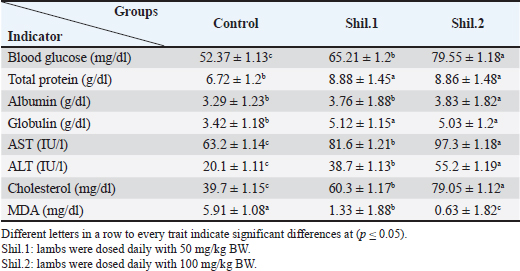
While pulse rate fell from 76.25 ± 1.41 in control to 73.2 ± 1.73 pulses/minute in Shil.2 (4.0% reduction), respiratory rate showed the most notable decrease from 56.41 ± 1.22 in control to 44.6 ± 1.23 cycles/minute in Shil.2 (20.9% drop). Biochemical parametersThe results from Table 5 show that Shilajit supplementation at 50 and 100 mg/kg BW resulted in significant (p ≤ 0.05) changes in multiple physiological measurements. The blood glucose levels showed a direct relationship with the dose which resulted in control group values of 52.37 ± 1.13 mg/dl but Shil.1 group values reached 65.21 ± 1.20 mg/dl and Shil.2 group values reached 79.55 ± 1.18 mg/dl. The treated lambs showed increased metabolic activity because their blood glucose levels rose in a straight line. Total protein values were significantly higher in both treatment groups (8.88 ± 1.45 and 8.86 ± 1.48 g/dl) compared to the control (6.72 ± 1.2 g/dl). The albumin levels in patients reached their peak at 3.83 ± 1.82 g/dl during the Shil.2 period. The globulin levels in both treatment groups experienced major increases which resulted in 5.12 ± 1.15 g/dl in Shil.1 and 5.03 ± 1.20 g/dl in Shil.2. The body shows better protein metabolism and stronger immune system function according to these changes. Liver enzymes AST and ALT demonstrated dose-dependent elevations, with AST increasing from 63.2 ± 1.14 IU/l in the control to 97.3 ± 1.18 IU/l in Shil.2, and ALT rising from 20.1 ± 1.11 IU/l to 55.2 ± 1.19 IU/l. Cholesterol levels exhibited dose-dependent increases from 39.7 ± 1.15 mg/dl in the control to 79.05 ± 1.12 mg/dl in Shil.2. Table 5. Effect of Shilajit concentrations on some biochemical parameters (Mean ± SE).
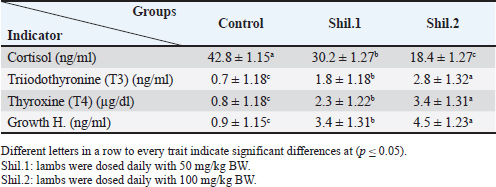
The Shilajt extract demonstrated powerful antioxidant properties through its ability to decrease malondialdehyde (MDA) levels from 5.91 ± 1.08 mg/dl in controls to 0.63 ± 1.82 mg/dl in Shil.2. Hormonal parametersThe results in Table 6 show that both Shilajit doses resulted in significant (p ≤ 0.05) changes to essential endocrine markers which directly correlated with the dosage strength. Cortisol levels showed a tremendous dose-dependent decrease from 42.8 ± 1.15 ng/ml in the control to 30.2 ± 1.27 ng/ml in Shil.1 and 18.4 ± 1.27 ng/ml in Shil.2, indicating significant stress reduction in treated animals. Thyroid hormones exhibited dose-dependent increases with Shilajit supplementation. Triiodothyronine (T3) concentrations rose from 0.7 ± 1.18 ng/ml in the control to 1.8 ± 1.18 ng/ml in Shil.1 and 2.8 ± 1.32 ng/ml in Shil.2. Similarly, thyroxine (T4) levels increased from 0.8 ± 1.18 μg/dl in the control to 2.3 ± 1.22 μg/dl in Shil.1 and 3.4 ± 1.31 μg/dl in Shil.2, indicating enhanced thyroid function and metabolic activity. Growth hormone (GH) concentrations showed the most pronounced response, increasing from 0.9 ± 1.15 ng/ml in the control to 3.4 ± 1.31 ng/ml in Shil.1 and 4.5 ± 1.23 ng/ml in Shil.2. Table 6. Effect of Shilajit concentrations on hormonal parameters at the end of experiment (Mean ± SE).
DiscussionProductive traitsThe 100 mg/kg BW dose (Shil.2) resulted in the greatest enhancement of productive traits which included body weight and weight gain and feed intake and feed conversion ratio and overall growth rate according to Table 2. The Shil.2 group produced the highest weight results while their feed efficiency outperformed all other groups because they gained more weight from less food consumption which indicates better metabolic function than the control and Shil.1 groups. Additionally, they showed the fastest growth rates, showing that Shilajit increases feed intake and accelerates growth. Research by Saqib et al. (2012)indicates that shilajit is a healthy chemical that encourages animal growth and weight rise, possibly because of its mineral content and impacts on metabolic processes. The increased weight gain and enhanced feed efficiency suggest that adding Shil.2 to the diet might be an effective way of increasing farm animal productivity. A mechanistic connection between endocrine modification and productive performance is shown by the correlation between reported increases in GH levels and an increase in growth rate. Similar anabolic effects were discovered by Chaudhary et al. (2016)who attributed these results to Shilajit is capacity to increase peripheral tissue sensitivity to growth signals and activate hunger centres in the hypothalamus. Haematological parametersRegarding the haematological measures displayed in Table 3, because of shilajit distinct composition and biological characteristics it has a significant effect on Red blood cells and haemoglobin averages, shilajit is rich in fulvic acid, humic acid, and several other minerals improve iron absorption in the intestine (Pingali and Nutalapati, 2022). Hemoglobin the part of blood that delivers oxygen, requires iron. Fulvic acid, which is present in shilajit. Shilajit could enhance oxygen transport and hemoglobin levels by assisting bodies in absorbing iron. Shilajit contains antioxidants that protect red blood cells from oxidative stress (Ahmed et al., 2023). Renal erythropoietin (EPO) a hormone that induces the bone marrow to produce more red blood cells can be stimulated by shilajit. Furthermore, shilajit increases the absorption of iron, which is necessary for the production of healthy red blood cells. Shilajit gives additional support as antioxidants du to content of fulvic acid and dibenzo-α-pyrones (Carrasco-Gallardo et al. 2012) which reducing reactive oxygen species that could damage bone marrow and red blood cells. Additionally, Shilajit strengthens immune system by increasing the synthesis and activity of white blood cells. Its bioactive components promote the growth of lymphocytes and granulocytes, both essential components of the immune system’s defence. Shilajit help both red and white blood cells. It has an impact on multiple vital body functions, including Nuclear Factor Kappa B, Tumor Necrosis Factor Alpha (TNF-α), and Interleukin-6. These can help reduce chronic inflammation which can hinder the production of blood cells (Bhavsar et al., 2016). Shilajit also reduces oxidative stress which promotes the growth of hematopoietic stem cells which are necessary for the generation of white blood cells (Kim et al., 2024). Shilajit seems to have the ability to strengthen defences and enhanced immune system function. Both doses of Shilajit improved Haematocrit, with Shil.2 showed the highest values, suggesting that shilajit improves the blood’s ability to carry oxygen with greater efficiency. In the warmer months of July and August, the advantages were more apparent. Significant advantages were consistently observed with a higher dose when compared to a lower dose and a control group (p ≤ 0.05). Furthermore, Shilajit promotes the absorption of essential components like iron, zinc, and certain B vitamins that are necessary for the synthesis of red and white blood cells (Kasim, 2023b). Shilajit has been shown to help accelerate bone marrow cell formation by increasing Adenosine Triphosphate levels (Abylaeva and Kaya, 2023), it does this through a variety of mechanisms, including improving electron transport chain support, encouraging the synthesis of EPO, providing antioxidant protection, strengthening the immune system, and increasing nutrient absorption. According to Alshubaily and Jambi (2022)shilajit has a major impact on haemoglobin, haematocrit, white blood cells, and red blood cells. Physiological vital indicatorsThe observed reductions in body temperature in Table 3 can be attributed to Shilajit’s anti-inflammatory and antioxidant properties, which likely suppress pro-inflammatory cytokines (e.g., IL-1β, TNF-α) and improve mitochondrial energy efficiency, thereby reducing metabolic heat production (Pingali and Nutalapati, 2022). Also, this reduction in body temperature suggests that Shilajit may have a thermoregulatory effect, potentially due to its adaptogenic properties that help stabilize physiological responses under stress or high environmental temperatures (Ghosal, 1990). The decline in pulse rate aligns with improved oxygen delivery (supported by elevated RBC and haemoglobin levels, as seen in haematological data) enhanced vasodilation via nitric oxide modulation and potential autonomic nervous system stabilization (Khaksari et al., 2013). From other hand, a lower pulse rate can suggest that the heart is beating more effectively (Panat et al., 2012; Ghezelbash et al., 2020). Shilajit may help balance these parameters, especially when there is stress, exhaustion, or inflammation, according to its homeostatic, anti-inflammatory, and antioxidant qualities (Carrasco-Gallardo et al., 2012). Shilajit seems to enhance cell energy production, which can increase the heart pumping efficiency and reduce its burden (Gaikwad et al., 2012). (Meena et al., 2010) found that breathing rates are lower may also indicate that Shilajit improves the body utilization of oxygen, lowering the need for labored breathing. Ali et al. (2024)found these effects appear to be dose-dependent, with higher doses of shilajit (about 100 mg per kg of body weight) producing greater health advantages because they contain more active chemicals like fulvic acid and dibenzo-α-pyrones. The respiratory rates for control, Shil.1, and Shil.2 decreased from 56.41 to 53.82 cycles per minute and subsequently to 44.6 cycles per minute, respectively, as the dosages were altered. This suggests that 100 mg/kg body weight is the ideal metabolic efficiency. Khaksari et al. (2013)found that doses of at least 75 mg/kg body weight were necessary to produce the highest neuroprotective effects on nerve tissue. Biochemical parametersBlood glucose levels rose gradually: Control (52.37 ± 1.13 mg/dl), Shil.1 (65.21 ± 1.2 mg/dl), and Shil.2 (79.55 ± 1.18 mg/dl), showing a 51.9% rise. The higher glucose levels together with metabolic efficiency indicators show better nutrient absorption and distribution rather than any problems with glucose management. Gupta et al. (2016)demonstrate that the mechanism involves activation of GLUT4 transporters by Shilajit and better insulin sensitivity at peripheral tissues. More accessibility for anabolic activities follows from the elevated glucose, hence it correlates with the observed weight and growth rate increase. From 6.72 ± 1.2 g/dl in controls to 8.86 ± 1.48 g/dl in Shil.2 (31.8% increase) total protein concentrations dramatically rise. Albumin increased from 3.29 ± 1.23 in control to 3.83 ± 1.82 g/dl in Shil.2 (16.4% increase), and globulins from 3.42 ± 1.18 in control to 5.03 ± 1.2 g/dl Shil.2 (47.1% increase). These better nitrogen retention and enhanced hepatic synthetic ability pointed by protein increases. The increasing globulin fraction which indicates increased immunoglobulin synthesis is especially noteworthy. Bižanov et al. (2012)showed that Shilajit ingestion increased IgG levels in chicken 45%–60% which is consistent with current study 47.1% globulin elevation. A coordinated reaction from humoral and cellular components is demonstrated by the increase in white blood cell count, which indicates that the immune system is becoming more active. Liver enzymes exhibited dose-dependent rises, AST increased from 63.2 ± 1.14 IU/l in control to 97.3 ± 1.18 IU/l in Shil.2 (54.0% increase), while ALT rise from 20.1 ± 1.11 in control to 55.2 ± 1.19 IU/l in Shil.2 (174.6% increase). There are no indications of liver toxicity and these increases suggest that the liver is being stimulated in a healthy way rather than being damaged. The liver cells are still operating properly if the ALT/AST ratio is within the usual range of 0.32 to 0.57. Similar enzyme levels were discovered by Ghezelbash et al. (2022)who connected these findings to improved liver function and higher body protein synthesis. Cholesterol levels increase significantly (p ≤ 0.05) from 39.7 ± 1.15 mg/dl in control to 79.05 ± 1.12 mg/dl in Shil.2 arrived at 99.1%. The improved lipid metabolism and steroid hormone synthesis were the causes of the increase we observed. Thyroid and GHs also exhibited significant increases (p ≤ 0.05) as did cholesterol which is essential for the production of all steroid hormones. The advantages we saw are the result of improved hormone action which is supported by this increase in cholesterol. Similar alterations in lipid profiles were observed by Trivedi et al. (2004)who linked them to increased cell membrane activity and quicker signal transmission. The striking 89.3% reduction in MDA a biomarker of oxidative stress brought about by Shil.2 was one of the most notable outcomes. MDA levels dropped from 5.91 ± 1.08 mg/dl in controls to 0.63 ± 1.82 mg/dl in Shil.2. Fulvic acid (DPPH scavenging >80%), dibenzo-α-pyrones (which function similarly to superoxide dismutase), and trace selenium (0.5–2.0 μg/g) are the free-radical scavengers that give Shilajit its antioxidant action. Similar MDA reductions (75%–85%) in humans were reported by (Pingali and Nutalapati, 2022) who connected decreased oxidative stress to decreased inflammatory markers and increased bone mineral density. Hormonal parametersThese findings show that Shilajit supplementation boosts metabolic and growth-related activity in Awassi lambs, reduces stress, and enhances endocrine function. Analysis of hormones showed notable endocrine effects of Shilajit supplementation. Cortisol levels dropped dose-dependently from 42.8 ± 1.15 ng/ml in controls to 18.4 ± 1.27 ng/ml in Shil.2 (57.0% decline), hence suggesting great stress relief. Through hypothalamic-pituitary-adrenal axis modulation, Shilajit’s bioactive molecules reduce corticotropin-releasing hormone secretion while increasing glucocorticoid receptor sensitivity. (Elnageeb and Abdelatif, 2013) showed that lower cortisol levels in sheep correspond with enhanced growth efficiency and immune function, consistent with current study. Thyroid hormones exhibited phenomenal rises, T3 decreased from 0.7 ± 1.18 ng/ml in control to 2.8 ± 1.32 ng/ml in Shil.2 (300% increase) while T4 increased from 0.8 ± 1.18 μg/dl in control to 3.4 ± 1.31 μg/dl in Shil.2 (325% increase). These increases point to better peripheral T4-to-T3 conversion as well as increased thyroid gland activity. Supporting thyroid hormone production occurs due to Shilajit contains iodine (5–15 μg/g) in bioavailable organic forms, Moreover Shilajit has selenium (0.5–2.0 μg/g) and zinc (2–5 mg/100 g) which function as cofactors for deiodinase enzymes therefore boosting T4–to–T3 conversion by 40%–50%. Devi et al. (2020)observed comparable thyroid stimulation in hypothyroid patients citing the adaptogenic qualities and mineral makeup of Shilajit as the cause. Elevations in the thyroid hormone causes several effects as accelerated metabolic rate (supporting growth improvements), improved thermoregulation (contributing to temperature reductions by increased heat dissipation efficiency), and better cardiovascular function (explaining pulse rate reductions through enhanced cardiac efficiency). In Shil.2, GH levels increased from 0.9 ± 1.15 ng/ml in control to 4.5 ± 1.23 ng/ml in Shil.2 400% rise. This GH increase corresponds with the three-fold rise in weight gain and better feed conversion ratio. The process lowers somatostatin inhibition and stimulates hypothalamic growth hormone-releasing hormone release by Shilajit. Improved insulin-like growth factor-1 sensitivity at peripheral tissues also boosts GH anabolic effects. Similar GH increases in supplemented animals were recorded by Abylaeva and Kaya (2023)related to better nitrogen retention and faster protein synthesis rates of 35%–45%. Reduced cortisol, raised thyroid hormones, and increased GH characterize an ideal anabolic endocrine environment. While thyroid hormone elevations (300%–325%) improve metabolic efficiency and GH increases (400%) promote tissue development and protein synthesis, the 57.0% cortisol reduction removes catabolic stress reactions. The great production performance seen in Shil.2 animals is explained by this coordinated hormonal optimization. ConclusionAccording to the attached research paper, this study offers important contributions to livestock management by showing that natural bioactive compound (Shilajit) which can substitute for synthetic growth boosters with amazing results including 89.3% oxidative stress reduction, 400% increase in GH, 3-fold weight gain improvement, and significant stress mitigation (57% cortisol reduction) in Awassi lambs under difficult summer conditions. The thorough multi-system evaluation spanning growth, haematology, biochemistry, hormones, and stress indicators offers practical advice for farmers especially the dose-dependent results confirming 100 mg/kg BW as best. I strongly advise future researchers to investigate: (1) long-term and multi-generational studies to evaluate lifecycle effects and transgenerational benefits; (2) molecular mechanistic research using RNA-sequencing and microbiome analysis to investigate the underpinnings (3) dose optimization trials testing intermediate concentrations and innovative delivery formulations; (4) cross-breed and cross-species validations studies (5) economic feasibility assessments and farm-scale implementation testing (6) thorough safety and toxicological evaluations including hepatotoxicity monitoring and heavy metal screening (7) meat and milk quality assessments to detect whether antioxidant benefits transfer to animal products (8) reproductive performance studies examining fertility rates and offspring outcomes (9) research on climate change adaptation testing Shilajit’s protective effects under severe heat and drought conditions. AcknowledgmentsThe author expresses her sincere appreciation to all personnel from various institutions who contributed to the successful completion of this project. Conflict of interestThe author state that she had no conflicts of interest. FundingNone. Authors contributionsThe author made the contributions to this manuscript and reviewed and granted her approval for the final version. Data availabilityAll information is included within the manuscript. ReferencesAbylaeva, A. and Kaya, Y. 2023. Chemical characteristics and biotechnological potentials of Mumio. MJAVL 13(2), 187–195; doi:10.53518/mjavl.1327332 Agarwal, S.P., Khanna, R., Karmarkar, R., Anwer, M.K. and Khar, R.K. 2007. Shilajit: a review. Phytotherapy. Res. PTR. 21(5), 401–405; doi:10.1002/ptr.2100 Agwaan, H.W.K. 2023. Effect of coated methionine and lysine and their combination on fertility of Awassi male sheep. BJAS 36(1), 201–213; doi:10.37077/25200860.2023.36.1.17 Ahmed, A.R., Al-Hasson, H.A.H. and Al-Niaeem, K.S. 2023. The effect of Shilajit on growth performance, blood parameters, and key liver enzymes of the common carp (Cyprinus carpio). EJABF 27(4), 683–693. Available via https://www.ejabf.journals.ekb.eg Aladi, P.C. and Vikhe, S.R. 2022. Shilajit: a wonder drug of Ayurveda. WJPMR 8(4), 125–127. Ali, S., Iqbal, N., Ishaq, W., Shabbir, R., Afzal, A., Amjad, M., Mustafa, M., Anam, T., Malik, A. and Mahmood, A. 2024. Systematic review of Shilajit: clinical efficacy and safety. JPTCP 31(6), 1234–1245; doi:10.53555/jptcp.v31i6.6677 Alkhashab, A., Kassim, H. and Abdelalbaki, T. 2023. Effect of adding protected methionine to the ration on hematological indices and biochemical blood parameters in Awassi lambs. BJAS 29(4), 709–713. Alsaadi, S.A., Abdulazeez, S.T. and Baker, A.G. 2023. The biophysiological impact of aqueous extract of turamic with or without folic acid in Awassi Ewes, comparative study. In IOP Conference Series: Earth and Environmental Science, Bristol, UK: IOP Publishing, vol. 1252(1), pp 12–147. Alsaadi, S.A.R., Abdulazeez, S.T. and Noaman, H.A. 2025. the bio-physiological impact of different concentrations of ginger aqueous extract in Awassi Ewes. Egypt. J. Veter-. Sci. 56, 1099–1104. Alshubaily, F.A. and Jambi, E.J. 2022. Correlation between antioxidant and anti-osteoporotic activities of Shilajit loaded into chitosan nanoparticles and their effects on osteoporosis in rats. Polymers 14(19), 3972. Bhavsar, S.K., Thaker, A.M. and Malik, J.K. 2016. Chapter 51—Shilajit. In Nutraceuticals. Ed., Gupta, R.C. London, UK: Academic Press, pp: 707–716; doi:10.1016/B978-0-12-802147-7.00051-6 Bižanov, G., Barinova, N. and Jonauskienė, I. 2012. Adjuvant effect of Shilajit and plant extracts on the immune responses to bovine serum albumin in hens. Centr. Eur. J. Immunol. 37(2), 91–95. Carrasco-Gallardo, C., Guzmán, L. and Maccioni, R.B. 2012. Shilajit: a natural phytocomplex with potential precognitive activity. Int. J. Alzheimer’s. Dis. 2012, 674142. Chaudhary, S.P., Singh, A.K. and Dwivedi, K.N. 2016. Medicinal properties of Shilajit a review. Ind. J. Agri. Allied Sci. 2(1), 103–106. Devi, G., Kumar, V. and Verma, S. 2020. Role of Shilajit and Triphala Kwath in hypothyroidism: a review. Int. J. Res. Ayurveda Pharm. 11(6), 64–68. Duncan. 1955. Multiple rang and multiple “F” test. Biometric 11, 1–12. Elnageeb, M.E. and Abdelatif, A.M. 2013. Growth, thermoregulation and hematological responses of lambs in relation to age and maternal nutritional supplementation. J. Biol. Sci. 13, 323–331. Gaikwad, N., Panat, A., Ramya, K., Khalid, P., Deshpande, M. and Augustine, P. 2012. Effect of shilajit on the heart of Daphnia: a preliminary study. J. Ayurveda Integr. Med. 3(1), 3–5. Ghezelbash, B., Shahrokhi, N., Khaksari, M., Asadikaram, G., Shahrokhi, M. and Shirazpour, S. 2022. Protective roles of Shilajit in modulating resistin, adiponectin, and cytokines in rats with non-alcoholic fatty liver disease. Chin. J. Integr. Med. 28(6), 531–537. Ghezelbash, B., Shahrokhi, N., Khaksari, M., Ghaderi-Pakdel, F. and Asadikaram, G. 2020. Hepatoprotective effects of Shilajit on high fat-diet induced non-alcoholic fatty liver disease (NAFLD) in rats. Hormones. Mol. Biol. Clin. Invest. 41(1), 85–94; doi:10.1515/hmbci-2019-0040 Ghosal, S. 1990. Chemistry of Shilajit, an immunomodulatory Ayurvedic rasayan. Pure. Appl. Chem. 62(7), 1285–1288. Gupta, V., Keshari, B.B., Tiwari, S.K. and Murthy, K.H. 2016. A comparative study of Shilajatu and Asanadi Ghana Vati in the management of Madhumeha w.s.r. to type-2 diabetes mellitus. Ayu 37(2), 120–124; doi:10.4103/ayu.AYU_211_15 Kamgar, E., Kaykhaii, M. and Zembrzuska, J. 2025. A comprehensive review on Shilajit: what we know about its chemical composition. Crit. Rev. Anal. Chem. 55(3), 461–473; doi:10.1080/10408347.2023.2293963 Keller, J.L., Housh, T.J., Hill, E.C., Smith, C.M., Schmidt, R.J. and Johnson, G.O. 2019. The effects of Shilajit supplementation on fatigue-induced decreases in muscular strength and serum hydroxyproline levels. J. Int. Soc. Sports. Nutr. 16(1), 3. Khaksari, M., Mahmmodi, R., Shahrokhi, N., Shabani, M., Joukar, S. and Aqapour, M. 2013. The effects of Shilajit on brain edema, intracranial pressure and neurologic outcomes following the traumatic brain injury in rat. Iran. J. Basic. Med. Sci. 16, 858–864. Kim, S., Seo, C., Park, H., Kwon, J.G., Kim, J.K., Moon, H.J., Lim, S., Gho, Y., Lee, W.J., Choi, Y. and Lee, S. 2024. Shilajit, a natural phytocomplex, acts as a neuroprotective agent against amyloid beta-induced cytotoxicity and inflammation. Perspect. Integr. Med. 3(2), 114–122. Meena, H., Pandey, H., Arya, M. and Ahmed, Z. 2010. Shilajit: a panacea for high-altitude problems. Int. J. Ayurveda. Res. 1, 37–40; doi:10.4103/0974-7788.59942 NRC. 2007. Nutrient requirements of small ruminants: sheep, goats, cervids, and new world camelids. Washington, D.C., National Academy Press, p: 384. Panat, A., Ramya, K., Khalid, P., Deshpande, M., Augustine, P. and Gaikwad, N. 2012. Effect of shilajit on the heart of Daphnia: a preliminary study. J. Ayurveda Integr. Med. 3(1), 3–5. Pingali, U. and Nutalapati, C. 2022. Shilajit extract reduces oxidative stress, inflammation, and bone loss to dose-dependently preserve bone mineral density in postmenopausal women with osteopenia: a randomized, double-blind, placebo-controlled trial. Phytomedicine Int. J. Phytopharm. 105, 154334. Saqib, M., Shamim, K. and Saad, A. 2012. Effect of shilajit on lipid profile of hyperlipidemic albino rats and comparison with simvastatin. Pak. J. Med. Health Sci. 6, 466–469. SAS. 2012. SAS/STAT user’s guide, version 9.4. Cary, NC: SAS Institute Inc. Trivedi, N.A., Mazumdar, B., Bhatt, J.D. and Hemavathi, K.G. 2004. Effect of shilajit on blood glucose and lipid profile in alloxan induced diabetic rats. Indian J. Pharmacol. 36(6), 373–376. Velmurugan, C., Vivek, B., Wilson, E., Bharathi, T. and Sundaram, T. 2012. Evaluation of safety profile of black shilajit after 91 days repeated administration in rats. Asian Pac. J. Trop. Biomed. 2(3), 210–214. | ||
| How to Cite this Article |
| Pubmed Style Hanan Waleed Kasim Agwaan. The physiological effects of administering different concentrations of Shilajit to Awassi lambs and their impact on productive trait and blood parameters and some biochemical measurements. Open Vet. J.. 2026; 16(1): 88-95. doi:10.5455/OVJ.2026.v16.i1.8 Web Style Hanan Waleed Kasim Agwaan. The physiological effects of administering different concentrations of Shilajit to Awassi lambs and their impact on productive trait and blood parameters and some biochemical measurements. https://www.openveterinaryjournal.com/?mno=286940 [Access: June 26, 2026]. doi:10.5455/OVJ.2026.v16.i1.8 AMA (American Medical Association) Style Hanan Waleed Kasim Agwaan. The physiological effects of administering different concentrations of Shilajit to Awassi lambs and their impact on productive trait and blood parameters and some biochemical measurements. Open Vet. J.. 2026; 16(1): 88-95. doi:10.5455/OVJ.2026.v16.i1.8 Vancouver/ICMJE Style Hanan Waleed Kasim Agwaan. The physiological effects of administering different concentrations of Shilajit to Awassi lambs and their impact on productive trait and blood parameters and some biochemical measurements. Open Vet. J.. (2026), [cited June 26, 2026]; 16(1): 88-95. doi:10.5455/OVJ.2026.v16.i1.8 Harvard Style Hanan Waleed Kasim Agwaan (2026) The physiological effects of administering different concentrations of Shilajit to Awassi lambs and their impact on productive trait and blood parameters and some biochemical measurements. Open Vet. J., 16 (1), 88-95. doi:10.5455/OVJ.2026.v16.i1.8 Turabian Style Hanan Waleed Kasim Agwaan. 2026. The physiological effects of administering different concentrations of Shilajit to Awassi lambs and their impact on productive trait and blood parameters and some biochemical measurements. Open Veterinary Journal, 16 (1), 88-95. doi:10.5455/OVJ.2026.v16.i1.8 Chicago Style Hanan Waleed Kasim Agwaan. "The physiological effects of administering different concentrations of Shilajit to Awassi lambs and their impact on productive trait and blood parameters and some biochemical measurements." Open Veterinary Journal 16 (2026), 88-95. doi:10.5455/OVJ.2026.v16.i1.8 MLA (The Modern Language Association) Style Hanan Waleed Kasim Agwaan. "The physiological effects of administering different concentrations of Shilajit to Awassi lambs and their impact on productive trait and blood parameters and some biochemical measurements." Open Veterinary Journal 16.1 (2026), 88-95. Print. doi:10.5455/OVJ.2026.v16.i1.8 APA (American Psychological Association) Style Hanan Waleed Kasim Agwaan (2026) The physiological effects of administering different concentrations of Shilajit to Awassi lambs and their impact on productive trait and blood parameters and some biochemical measurements. Open Veterinary Journal, 16 (1), 88-95. doi:10.5455/OVJ.2026.v16.i1.8 |


