




| Research Article | ||
Open Vet. J.. 2026; 16(1): 81-87 Open Veterinary Journal, (2026), Vol. 16(1): 81-87 Research Article Effect of dietary lemon citrus peel as a natural feed additive on egg yield and quality parameters in spent laying hensBushra M. W. Al-Obaidi1, Osama A. Saeed2*, Hassan M. Alnori2 and Zubeida M. Jasim31Department of Public Health, College of Veterinary Medicine, University of Fallujah, Iraq 2Department of Animal Production, College of Agriculture, University of Anbar, Ramadi, Iraq 3Department of Food Sciences, College of Agriculture, University of Anbar, Ramadi, Iraq *Corresponding Author: Osama A. Saeed, Department of Animal Production, College of Agriculture, University of Anbar, Ramadi, Iraq. Email: osama_anwr85 [at] uoanbar.edu.iq Submitted: 27/09/2025 Revised: 29/11/2025 Accepted: 11/12/2025 Published: 31/01/2026 © 2025 Open Veterinary Journal
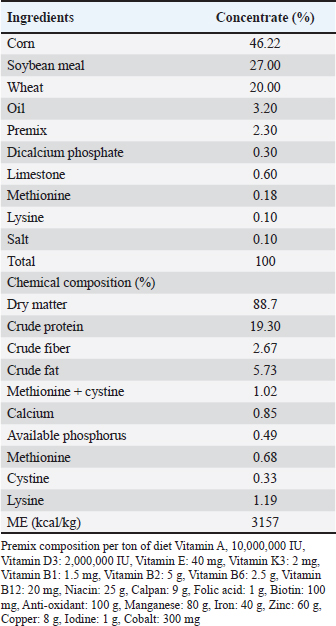
AbstractBackground: The demand for sustainable, natural feed additives in the poultry industry is gradually increasing to make production more efficient and increase the quality of the products, especially in spent laying hens. Aim: This study examined the benefits of dietary dried lemon citrus peel (DLCP) supplementation on egg performance and egg quality in aged laying hens at the end of their production life. Methods: Eighty Lohmann hens at 64 weeks postmolt age and 2700 ± 75 g average body weight were randomly divided into four dietary treatment groups: basal diet (control, T1), basal diet + 10 g/kg DLCP (T2), basal diet + 15 g/kg DLCP (T3), and basal diet + 20 g/kg DLCP (T4). The experiment lasted for 4 weeks with four replicates of five hens for each treatment. The productivity performance and internal and external egg quality traits were evaluated. Results: The egg production rates were significantly higher (p < 0.05) in T3 and T4 than in T1 and T2 (mean egg obtained=27.75 and 26.75 eggs, respectively). In all tested groups, feed intake increased step by step throughout the weeks, whereas the maximum feed intake (112.60 g) was noted in T4. T3 showed only a marginal difference after T4 but had a similar trend. Feed conversion ratios were also improved in the T3 (2.59) and T4 (2.60) groups compared with the control group (3.30), whereas egg mass values were increased in the T3 (47.10 g) and T4 (49.90 g) groups. In T4, external egg quality traits: egg weight (69.05 g), shell thickness (3.00 mm), and shell weight (9.00 g) were maximized. Conclusion: Similarly, T4 showed better results for the internal quality attributes such as yolk height, width, and weight. The T4 group showed a higher egg production of about 15% than the control group, indicating a clear improvement in laying performance. Based on this finding, a diet containing 20 g/kg DLCP will enhance production and egg quality and can sustainably facilitate the use of agricultural residues for layer feeding. Keywords: Dried lemon citrus peel, Egg production, Egg quality, Feed additive, Spent hens. IntroductionThe expanding need for sustainable food generation has motivated many forward-thinking nations to embrace circular farming practices, through which fruit and vegetable processing residues are valorized to decrease environmental impacts (Râpă et al., 2024). Incorporating plant-derived waste materials into animal feed not only reduces waste but also enhances the financial sustainability of poultry production (Zhang et al., 2023; Al-Obaidi et al., 2024). The poultry industry is particularly searching for cost-effective, natural, well-disposed choices to synthetic additives to enhance creation proficiency and item quality. Dried lemon citrus peel (DLCP), a commonly available by-product of agricultural and industrial activities, is rich in bioactive flavonoids (hesperidin and naringin), essential oils, pectin, and antioxidants (Hafeez et al., 2023). The characteristics of these bioactives were their antimicrobial, hypocholesterolemic, and antioxidant activity, which implies that the citrus peel could potentially be used as a natural feed additive for improving the health status and performance of laying hens (Klangpetch et al., 2016). Orange peel inclusion has been studied previously, and the results showed a positive effect on egg quality traits, including albumen height, yolk color, and Haugh unit, with no negative effects were observed on feed intake and overall performance (Goliomytis et al., 2019; Wan et al., 2021; Ahmed et al., 2022). However, the direct impact of DLCP supplementation on egg production performance, especially in the spent laying hens, has not been well studied. Given the lack of research in this field, that lemon peel has a specific phytochemical composition may benefit egg production and quality of EG in late-phase laying hens. A few of the constituents inhibit gut microbes and increase feed utilization and amelioration of oxidative stress. The chemical stand point of lemon peels has also been documented to contain several constituents, i.e., isoflavones, flavones, catechins, anthocyanins, and other phenolics (Al-Obaidi et al., 2020; Hafeez et al., 2023). These bioactives can also improve the oxidative stability of poultry products and prolong their shelf life (Ashraf et al., 2024). These bioactive constituents have shown antimicrobial and anti-inflammatory effects, and also can extend the shelf life of poultry products due to their enhanced oxidative stability (Rafiei and Khajali, 2021; Huang et al., 2025). Overall, citrus peels are a natural feed supplement and can be used in many ways. It is safe and inexpensive. It endorses international efforts to decrease antibiotic use and develop sustainable poultry production systems. The aim of the present study was to evaluate the effects of different levels of DLCP in diets offered to spent layers during the last phase of production on performance and eggshell quality, a period with reduced profitability and integrity of eggs. In particular, the study aimed to evaluate the influence of different levels of inclusion on egg production performance and both internal and external quality characteristics in eggs in deserve to establish an optimum supplementation rate that ensures the quality of eggs and the achievement of proficiency for older laying hens. Materials and MethodsDietary treatmentsA total of 80 Lohmann laying hens, 64-week-old (average body weight: 2,700 ± 75 g), were purchased from a commercial farm. The experiment was designed as a complete randomized design at the poultry unit of the College of Veterinary Medicine, University of Fallujah. Birds were randomly assigned to one of four nutritional treatments, with 4 replicates per treatment and 5 hens/replicate. The pen (5 hens per pen) was used as the experimental unit, and four replicates were used per treatment. Although this number was limited because of facility constraints, it allowed for the preliminary evaluation of treatment effects. Before data on ADG and FCR were collected, there was a 7-day adaptation period. All hens were housed in an environment-controlled poultry structure through natural and mechanical ventilation systems for uniform air exchange. Throughout the experimental phase, an ambient temperature of 22°C ± 2°C was maintained with a relative humidity of 55%–65%. A 16 hour light: 8 hour dark photoperiod was provided throughout the study using fluorescent lighting (average intensity 15 lux). The birds were housed in a floor housing system with deep litter of clean wood shavings at a depth of approximately 8 cm. Each pen measured 1.5 m × 1.5 m (2.25 m²) and housed 5 hens, providing a stocking density of about 0.22 m² per bird. Feeders and nipple drinkers were placed in each pen to allow ad libitum access to feed and water. The facility was cleaned daily, and litter was replaced as needed to maintain hygienic conditions. Hens received a standard layer mash diet planned to meet or surpass (NRC, 1994) nutritional demands, with experimental diets prepared by supplementing the base feed with graded DLCP levels (Table 1). Table 1. Formulation and calculated ratio of the basal diet with chemical analysis of the experimental diets.
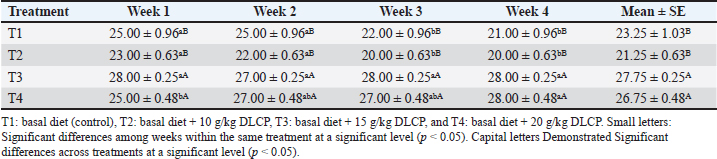
Table 2. Effect of graded DLCP levels on egg production (%) of spent laying hens over 4 weeks.
Preparation of the lemon citrus peel additiveThe DLCP additive was prepared by sourcing lemon citrus peels from a local market, manually cutting them into pieces using a stainless steel knife, thoroughly washing and air drying them at ambient temperature until achieving a consistent weight, then grinding the dried peels into medium fragments using a grinder, homogenizing, and storing them in airtight plastic containers until use. Dietary treatmentsThe experimental treatments were as follows: T1: basal diet (control) T2: Basal diet + 10 g/kg DLCP T3: Basal diet + 15 g/kg DLCP T4: Basal diet + 20 g/kg DLCP Productive performanceThe feed intake and feed conversion ratio (FCR) were weekly recorded in the pen and calculated as an index of productive efficiency (Farhan et al., 2024; Sani et al., 2024). All birds were kept on their respective experimental diets for 7 days before data collection. This was done to ensure the acceptance of feeds and the physiological stabilization of birds. Daily egg production was observed for each replicate and expressed as a percentage per hen-day as follows:
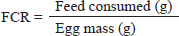
FCR was calculated as follows:
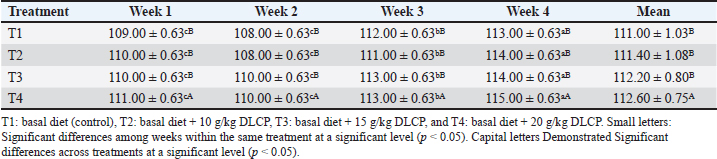
Evaluation of egg qualityThe estimation of egg quality involved evaluating 10 eggs per treatment group collected at random and stored overnight at 30°C, weighing them, and taking internal measurements (yolk height, albumen height, shell thickness) in addition to external parameters (egg weight, yolk weight, albumen weight, and shell weight). Egg weights were recorded individually using an analytical balance (Model AB204-S, Mettler Toledo, Switzerland). For internal quality, eggs were broken on a flat glass plate (25 × 25 cm) to measure. The albumen height was taken at the thick albumen with the help of a digital caliper (Model CD-6 C, Mitutoyo, Japan). The yolk was separated, weighed, and then the medium height was recorded. To assess external quality, shell thickness was measured at three equatorial locations of the egg (after membrane removal) with a digital caliper described above. Statistical analysisStatistical analyses were conducted at the pen level using the GLM procedure (SAS, 2009). Data are presented as means ± SE, and treatment effects were considered significant at P < 0.05. Ethical approvalNot needed for this study. ResultsEgg production ratesThe laying rates of hens fed 15 and 20 g/kg DLCP (T3 and T4) were significantly higher than those of the control group (T1), and the egg production value was significantly higher in hens fed 10 g/kg DLCP (T2). Production was fairly constant over the 4-week experimental period, and no significant differences were observed between any of the treatments on a weekly basis. The highest enhancement of production was observed in T3 and T4, confirming a positive reaction toward the increase of DLCP inclusion compared with that produced from T1 and T2. Feed consumptionFeed intake is presented in Table 3 because there was a gradual increase in the different habits from weeks 1 to 4. The DLCP level T4: birds had the highest feed intake in general, followed by T3, T2, and T1. For each treatment, the intake at week 4 was significantly higher than in previous weeks. This reflects a general trend of increasing feeding behavior with DLCP supplementation, particularly at 20 g/kg, which has a favorable impact on total feed intake. Table 3. Effect of graded DLCP levels on the feed intake (g/hen/day) of spent laying hens over 4 weeks.
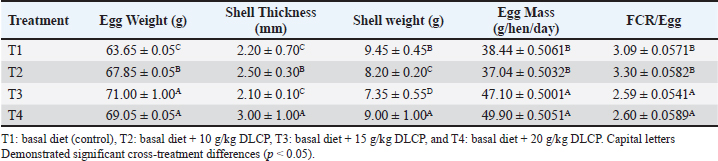
External egg quality, egg mass, and feed conversion ratioIn Table 4, hens from T3 and T4 obtained a better egg mass and feed conversion efficiency compared with those from T1 and T2, indicating that high DLCP levels exerted an improvement on the productive efficiency. In terms of external egg quality, the shell traits, including shell weight and thickness, were best shown in T4, with more advantages than those in other treatments (good for shell strength and mineralization). In contrast, birds on the lower DLCP levels (T1 and T2) were inferior with regard to the overall quality traits of external indicators. Table 4. Effect of DLCP on the quality of external eggs, egg mass, and feed conversion ratio.
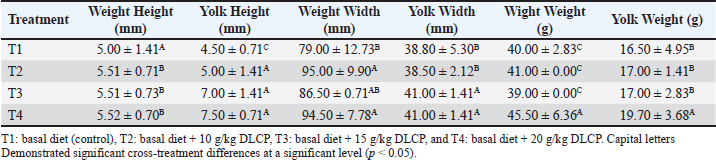
Internal egg qualityAccording to Table 5, all internal quality characteristics, including yolk height, yolk width, yolk index, and yolk weight, were significantly (p < 0.05) increased in T4 treatment. T3 presented intermediate enhancement, especially in yolk height and width, while T1 and T2 remained the lowest values of internal quality. These results may also indicate that the addition of DLCP, even at high levels, would increase the egg’s internal quality with a focus on yolk texture and nutritional quality. Table 5. Effect of DLCP levels on internal egg quality parameters.
DiscussionSpent laying hens typically experience a decline in egg yield later in the laying cycle, followed by rapid deterioration of egg quality and excess feed intake. Modifications injure profitability in industrial poultry production. Older hens often produce negatively impacted eggs. These eggs have weak shells, poor internal quality, and low market value (Cheng and Ning, 2023). A major focus of the poultry industry is to continue the production of eggs and maintain their quality. As people age, the production period reduces, and the risk of metabolic diseases increases. This requires an economical and natural nutritional approach. Based on the World Health Organization recommendations regarding the promotion of plant-derived byproducts rather than synthetic additives, lemon citrus peel was evaluated for the first time in late-phase laying hens. Supplementation of DLCP (10, 15, and 20 g/kg) significantly improved egg production, egg mass, feed conversion ratio, and internal and external egg quality parameters. The enhancements in shell quality and egg general characteristics in the top DLCP groups might be due to the naturally existing nutrients or bioactive compounds, as frequently reported in citrus by-products. Citrus peels are known to contain minerals and plant secondary metabolites with the potential to support eggshell formation as well as normal laying hens’ oxidative balance (Alnaimy, 2017; Seidavi et al., 2020). In this study, no chemical analysis of the used DLCP was conducted. However, the observed positive growth response indicates that nutritional compounds normally present in citrus peel materials might have contributed to these improvements. The secretion of digestive enzymes and alteration of the intestinal structure by DLCP polyphenols and organic acids improve nutrient absorption. Similarly, calcium bioavailability may also improve due to the presence of DLCP phytochemicals and organic acids. Increased calcium absorption causes more efficient calcification of the shell, which causes the shells of group T4 to become heavier and thicker. DLCP contains citric acid, which works as a chelating agent that contributes to the increased solubility of minerals in the intestinal lumen. Supports shell and albumen quality. Citrus peel antioxidants can neutralize lipid peroxides, thereby safeguarding yolk quality and prolonging egg shelf life. Pectin and essential oils from the peel also exhibit mild prebiotic and antimicrobial effects, modulating the intestinal microbiota toward beneficial species (e.g., Lactobacillus), which improves feed efficiency and metabolic stability. Therefore, the observed decline in the feed conversion ratio at higher DLCP inclusion could be attributed to this. Our study conforms to García et al. (2024) who found that eggshell quality improved for quails with the addition of lemon peel powder at 2 g/kg in their diet. In the same manner, Abd El Latif et al. (2023) found that 10%–40% orange fruit peel meal produced significantly higher egg weights. Ahmed et al. (2022)showed that incorporating up to 10% dried orange peel in hen diets improved the feed conversion ratio, egg quality, and Haugh unit without affecting egg production. Gültepe et al. (2019) discovered that administering 0.5%–5% lemon juice in drinking water boosted output, consistent with the gains in production seen in our present work. A previous study showed that the higher the feed intake and egg production in laying hens receiving 2%–4% fresh lemon in their diet (Wan et al., 2021). In contrast, Sevim et al. (2021) found that supplementing quail diets with 300 mg/kg of lemon peel oil did not impact productive traits, although feed intake increased. Similarly, in broiler research (Basir and Toghyani, 2017; Hafeez et al., 2023), no significant variances in performance were observed when diets were supplemented with dried lemon peel, lemon pulp powder, or lemon peel extract at fluctuating levels. The variation between these findings may reflect the varied species of birds used, production phase, dose levels, and processing methods of citrus by-products. The improvement of feed conversion ratio that was obtained in our experiment seems to be consistent with the results reported by (Ebrahimi et al., 2013), who also found better feed efficiency in layers fed citrus by products. Citric acid and flavonoids may optimally act together to increase intestinal villus height, enzymatic digestion, and nutrient utilization, which leads to better feed efficiency. Furthermore, hesperidin and naringin contribute to fat metabolism regulation due the down regulation of hepatic HMG-CoA reductase, cholesterol content in yolk, and energy efficiency on eggs (Silva et al., 2013). In addition, the pectin and volatile oils in citrus peel may be beneficial to gut health and nutrient utilization, which might be potential explanations for these performance advantages. Collectively, present findings highlighted that lemon citrus peel was a promising, eco-friendly, and effective feed additive which could support the manufacturing outputs and egg quality of spent laying hens in toward to last phase of production cycle. This is in line with the general aim of using less synthetic additives for poultry feed worldwide and to opt for more sustainable dietary ingredients. ConclusionThe results of this study can be concluded that the DLCP in the diet at a level of 10, 15, and 20 g/kg could be used for LSL hens in the late period of the laying cycle, with a large improvement appearing to be achieved with a dose being up to 20 g/kg. At this level of supplementation, the feed conversion ratio, percentage of egg production, total egg weight, egg mass, external qualities of eggs, and reproductive traits were found to be significantly better. Furthermore, 20 g/kg DLCP had positive effects on the internal and external quality of eggs. These results indicate that further study is needed to identify the perfect level of lemon citrus peel in layer hen diets for improving productive and reproductive performance. In addition to the biological findings, future studies should include the economic part to evaluate the cost-benefit of including DLCP in commercial diets. These assessments will ascertain whether productivity improvements yield actual financial benefits for producers. The organoleptic and consumer acceptance tests of eggs from DLCP-fed birds are also recommended to check for the potential effects of flavor, aroma, yolk color, and the overall market acceptance of the eggs. Including these criteria would provide a better understanding of the economic and consumer perceptions of DLCP supplementation in poultry production systems. AcknowledgmentsThe authors express gratitude to the poultry farm personnel associated with the College of Veterinary Medicine in Fallujah for their assistance and collaboration. FundingNot applicable Authors’ contributionsBushra M. W. AL-Obaidi conducted laboratory analysis, analyzing and interpreting results. Osama A. Saeed, Hassan M. Alnori, and Zubeida M. Jasim, all taking part in the study’s design, carried out the statistical analysis and helped with the manuscript’s preparation. The final article was reviewed and approved by all authors. Conflict of interestWe have no conflicts of interest to declare. Data availabilityAll relevant data and materials are available in the main manuscript. ReferencesAbd El Latif, M.A., Abdel-Wareth, A.A.A., Daley, M. and Lohakare, J. 2023. Effect of dietary orange peel meal and multi-enzymes on productive, physiological and nutritional responses of broiler chickens. Animals 13, 2473. Ahmed, S., Hasan, M., Resmi, S., Islam, M. and Rahman, M. 2022. Effect of dried orange peel on egg production and quality of laying hen. Bangladesh. J. Anim. Sci. 51, 98–106. Alnaimy, A. 2017. Using of citrus by-products in farm animals feeding. Open Access J. Sci. 1, 58–67. Al-Obaidi, B.M., Hazaa, I.K., Abdualmajeed, O.M., Mahmood, S.K., Mahmood, E. ., Alnori, H. . and Saeed, O. A. 2024. Effect of partial substitution of soybean meal with guar meal on blood biochemistry characteristics in broiler chickens. In IOP Conference Series: Earth and Environmental Science (Vol. 1371, Article 072001). IOP Publishing, Najaf, Iraq. Al-Obaidi, B.M., Jameel, Y.J., Al-Shuwaili, M.A. and Yousif, M. 2020. Effect of laying hens strain and age on internal and external eggs quality. Biochem. &. Cellular. Arch. 20, 241–244. Ashraf, H., Iahtisham-Ul-Haq., Butt, M.S., Nayik, G.A., Ramniwas, S., Damto, T., Ali Alharbi, S. and Ansari, M.J. 2024. Phytochemical and antioxidant profile of citrus peel extracts in relation to different extraction parameters. Int. J. Food. Properties. 27, 286–299. Basir, R. and Toghyani, M. 2017. Effect of dietary graded levels of dried lemon (Citrus aurantifulia) pulp on performance, intestinal morphology, and humoral immunity in broiler chickens. Int. J. Recycling Organic Waste Agriculture 6, 125–132. Cheng, X. and Ning, Z. 2023. Research progress on bird eggshell quality defects: a review. Poultry. Sci. 102, 102283. Ebrahimi, A., Qotbi, A.A.A., Seidavi, A., Laudadio, V. and Tufarelli, V. 2013. Effect of different levels of dried sweet orange (Citrus sinensis) peel on broiler chickens growth performance. Arch. Anim. Breeding 56(11), 11–17. García, A.S., Olgun, O., Gül, E.T., Kilinç, G. and Yildiz, A. 2024. The potential of lemon peel powder as an additive in layer quails (Coturnix coturnix Japonica): an experimental study. An. Acad. Bras. Ciênc. 96, e20230640. Gültepe, E.E., Iqbal, A., Çetingül, I.S., Uyarlar, C., Özçinar, U. and Bayram, I. 2019. Effects of lemon juice on performance, egg quality trait, and some blood parameters of laying hens in the late phase of production. Acta. Veterinaria. Eurasia. 45, 56–62. Hafeez, A., Ahmad, I., Naz, S., Alonaizan, R., Al-Akeel, R.K., Khan, R.U. and Tufarelli, V. 2023. Effect of lemon (Citrus limon, L.) peel powder on oocyst shedding, intestinal health, and performance of broilers exposed to E. tenella challenge. Animals 13, 3533. Huang, J., Xu, X., Liu, C. and Liu, L. 2025. Exploring the Potential of Lemon Peel Extracts in Cosmetics: chemical Composition and Bioactive Properties. J. Microbiol. Biotechnol. 35, e2412042. Klangpetch, W., Phromsurin, K., Hannarong, K., Wichaphon, J. and Rungchang, S. 2016. Antibacterial and antioxidant effects of tropical citrus peel extracts to improve the shelf life of raw chicken drumettes. Int. Food. Res. J. 23, 700. M. Farhan, S., M. Alnori, H., I. Yousif, S., Mirzan, N., Abdulateef, S., M. Jebril, N., A. Al-azzami, A., A. Saeed, O., F. Sulaiman, B. and Y. Sardary, S. 2024. Innovative strategies in the use of vitamin E and rosemary as antimicrobial agents for enhancing the safety and preservation of minced poultry meat during refrigeration. Anbar. J. Agricult. Sci. 22, 1570–1580. NRC. 1994. “Nutrient requirements of poultry: 1994,” National Academies Press. Rafiei, F. and Khajali, F. 2021. Flavonoid antioxidants in chicken meat production: potential application and future trends. World’s Poultry Sci. J. 77, 347–361. Râpă, M., Darie-Niță, R. N., and Coman, G. 2024. Valorization of fruit and vegetable waste into sustainable and value-added materials. Waste 2, 258–278. Sani, U.M., Samuel, T., Ahmed, N.K., Baba, T.A., Saeed, O.A., Khalifa, D.H. and Mahmood, E.K. 2024. Egg quality traits of nigerian indigenous chickens reared under scavenging and improved feeding condition in relation to exotic chickens eggs. Acta Scientiarum. Anim. Sci. 46, e68751. SAS. 2009. Statistical Analysis Systems Institute. INC., Cary. North Carolina, USA. Seidavi, A., Zaker-Esteghamati, H. and Salem, A.Z.M. 2020. A review on practical applications of Citrus sinensis by-products and waste in poultry feeding. Agroforestry Syst. 94, 1581–1589. Sevim, B., Gökmen, S.A., Cufadar, Y., Curabay, B. and Bahtiyarca, Y. 2021. The effect of addition of orange and lemon peel essential oils and mixtures to breeder quail rations on performance, egg quality and hatch parameters. Turkish. J. Agriculture-Food. Sci. Technol. 9, 1988–1992. Silva, V.K., Morita, V.D.S. and Boleli, I.C. 2013. Effect of pectin extracted from citrus pulp on digesta characteristics and nutrient digestibility in broilers chickens. Revista. Brasileira. De. Zootecnia. 42, 575–583. Wan, Y., Ma, R., Qi, R., Li, Y., Liu, W., Li, J., Liu, L., Zheng, J., Yue, J. and Zhan, K. 2021. Dietary fresh lemon improves the albumen quality, immune status and lipid metabolism of Jingfen laying hens during the late laying period. Italian J. Anim. Sci. 20, 834–841. Zhang, L., Ren, J. and Bai, W. 2023. A review of poultry waste-to-wealth: technological progress, modeling and simulation studies, and economic-environmental and social sustainability. Sustainability 15, 5620. | ||

| How to Cite this Article |
| Pubmed Style Al-obaidi BMW, Saeed OA, Alnori HM, Jasim ZM. Effect of dietary lemon citrus peel as a natural feed additive on egg yield and quality parameters in spent laying hens. Open Vet. J.. 2026; 16(1): 81-87. doi:10.5455/OVJ.2026.v16.i1.7 Web Style Al-obaidi BMW, Saeed OA, Alnori HM, Jasim ZM. Effect of dietary lemon citrus peel as a natural feed additive on egg yield and quality parameters in spent laying hens. https://www.openveterinaryjournal.com/?mno=286823 [Access: June 26, 2026]. doi:10.5455/OVJ.2026.v16.i1.7 AMA (American Medical Association) Style Al-obaidi BMW, Saeed OA, Alnori HM, Jasim ZM. Effect of dietary lemon citrus peel as a natural feed additive on egg yield and quality parameters in spent laying hens. Open Vet. J.. 2026; 16(1): 81-87. doi:10.5455/OVJ.2026.v16.i1.7 Vancouver/ICMJE Style Al-obaidi BMW, Saeed OA, Alnori HM, Jasim ZM. Effect of dietary lemon citrus peel as a natural feed additive on egg yield and quality parameters in spent laying hens. Open Vet. J.. (2026), [cited June 26, 2026]; 16(1): 81-87. doi:10.5455/OVJ.2026.v16.i1.7 Harvard Style Al-obaidi, B. M. W., Saeed, . O. A., Alnori, . H. M. & Jasim, . Z. M. (2026) Effect of dietary lemon citrus peel as a natural feed additive on egg yield and quality parameters in spent laying hens. Open Vet. J., 16 (1), 81-87. doi:10.5455/OVJ.2026.v16.i1.7 Turabian Style Al-obaidi, Bushra M. W., Osama A. Saeed, Hassan M. Alnori, and Zubeida M. Jasim. 2026. Effect of dietary lemon citrus peel as a natural feed additive on egg yield and quality parameters in spent laying hens. Open Veterinary Journal, 16 (1), 81-87. doi:10.5455/OVJ.2026.v16.i1.7 Chicago Style Al-obaidi, Bushra M. W., Osama A. Saeed, Hassan M. Alnori, and Zubeida M. Jasim. "Effect of dietary lemon citrus peel as a natural feed additive on egg yield and quality parameters in spent laying hens." Open Veterinary Journal 16 (2026), 81-87. doi:10.5455/OVJ.2026.v16.i1.7 MLA (The Modern Language Association) Style Al-obaidi, Bushra M. W., Osama A. Saeed, Hassan M. Alnori, and Zubeida M. Jasim. "Effect of dietary lemon citrus peel as a natural feed additive on egg yield and quality parameters in spent laying hens." Open Veterinary Journal 16.1 (2026), 81-87. Print. doi:10.5455/OVJ.2026.v16.i1.7 APA (American Psychological Association) Style Al-obaidi, B. M. W., Saeed, . O. A., Alnori, . H. M. & Jasim, . Z. M. (2026) Effect of dietary lemon citrus peel as a natural feed additive on egg yield and quality parameters in spent laying hens. Open Veterinary Journal, 16 (1), 81-87. doi:10.5455/OVJ.2026.v16.i1.7 |


