




| Research Article | ||
Open Vet. J.. 2025; 15(12): 6697-6708 Open Veterinary Journal, (2025), Vol. 15(12): 6697-6708 Research Article Dynamic changes in the sperm quality of Azolla pinnata as a forage alternative to Garut ramAeni Nurlatifah1, Kurniawan Dwi Prihantoko1, Jean Baptiste Menassol2, Herdis Herdis3, Erni Damayanti4, Athhar Manabi Diansyah4, Ismah Ulfiyah Azis4, Faheem Ahmed Khan5, Mashitah Shikh Maidin6, Fatmawati Mustofa7 and Dela Ayu Lestari7*1Department of Nutrition and Feed Science, Faculty of Animal Science, Gadjah Mada University, Yogyakarta, Indonesia 2Faculty of Animal Science, L’Institut Agro, Montpellier University, Montpellier, France 3Research Center for Animal Husbandry, National Research and Innovation Agency, Jakarta, Indonesia 44Department of Animal Production, Faculty of Animal Science, Hasanuddin University, Makassar, Indonesia 5Department of Transfusion Medicine and Clinical Microbiology, Faculty of Allied Health Sciences, Chulalongkorn University, Bangkok, Thailand 6Department of Biology, Faculty of Science, Universiti Putra Malaysia, Serdang, Selangor Darul Ehsan, Malaysia 7Department of Animal Science, Faculty of Animal and Agriculture Sciences, Diponegoro University, Semarang, Indonesia *Corresponding Author: Dela Ayu Lestari. Department of Animal Science, Faculty of Animal and Agriculture Sciences, Diponegoro University, Semarang, Indonesia. Email: delaayulestari [at] ymail.com Submitted: 09/09/2025 Revised: 01/11/2025 Accepted: 13/11/2025 Published: 31/12/2025 © 2025 Open Veterinary Journal
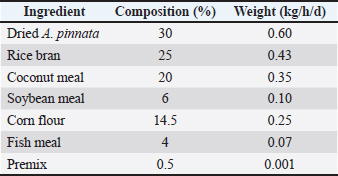
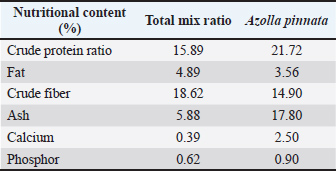
AbstractBackground: Reproductive efficiency in Garut rams is essential for livestock productivity. Nutritional interventions, such as Azolla pinnata, a protein-rich aquatic fern, have potential as a sustainable feed supplement and may improve sperm quality and fertility, although its specific effects remain poorly understood. Aim: To evaluate the impact of A. pinnata supplementation on sperm quality, hormonal profiles, and reproductive performance in Garut rams. Methods: Ten Garut rams (~20 months) with a body weight of 42.20 ± 2.03 kg were fed a diet containing 30% A. pinnata for 90 days. Semen was analyzed for motility, progressive motility, acrosome integrity, and kinematic variables. The follicle-stimulating hormone (FSH), luteinizing hormone (LH), and testosterone levels were measured. The fertility efficiency was evaluated using the S/C parameter, which is defined as the average number of inseminations required for an ewe to become pregnant. Correlation analyses explored the relationships between sperm traits and hormones. Results: Significant (p < 0.05) improvements in sperm motility and progressive motility were observed after day 60, reaching peak values at days 75 and 90. Acrosome integrity increased concurrently, whereas the kinematic distance parameters (distance curvilinear, distance average path, and distance straight line) remained unchanged. The concentrations of FSH, LH, and testosterone progressively increased, with testosterone showing a strong positive correlation (r > 0.7, p < 0.05) with sperm motility and viability. Fertility efficiency improved as S/C decreased from 2.2 ± 0.3 on day 15–1.2 ± 0.1 by day 90. Conclusion: Supplementation with A. pinnata enhances sperm motility, acrosome integrity, hormonal balance, and reproductive efficiency in Garut rams. These findings support its potential as a sustainable feed ingredient for improving the reproductive performance of small ruminants. Further, metabolomic and proteomic studies are warranted to clarify the molecular mechanisms underlying these reproductive benefits. Keywords: Azolla pinnata, Garut rams, Hormone level, Reproductive performance, Sperm Kinematic. IntroductionGarut rams, a highly regarded indigenous breed in Indonesia, are recognized for their exceptional meat quality and reproductive traits (Nurlatifah et al., 2023). These rams are integral to small ruminant farming systems in the region, contributing significantly to both meat production and livestock farming’s economic stability. The maintenance and enhancement of reproductive performance in Garut rams are critical for improving herd productivity, particularly in breeding programs designed to optimize meat yield and genetic quality (Herdis et al., 2019). The precision of breeding programs is essential for enhancing the genetic potential of rams, especially in terms of fertility and semen quality. Achieving higher reproductive efficiency through assisted reproductive technologies, such as artificial insemination (AI), depends on the availability of high-quality semen (Ariyanto et al., 2020). A decline in semen quality can negatively impact conception rates and overall reproductive success. Strategies aimed at improving semen quality, including nutritional interventions, are necessary to ensure the sustainability and effectiveness of breeding programs in small ruminants (Kleemann et al., 2021). Nutritional factors have a significant impact on these parameters, as adequate dietary protein, minerals, and antioxidants are essential for spermatogenesis, sperm maturation, and hormonal regulation. The genus Azolla is a small, free-floating aquatic fern belonging to the family Salviniaceae that forms a unique symbiotic association with the nitrogen-fixing cyanobacterium Anabaena azollae. This symbiosis allows Azolla to efficiently fix atmospheric nitrogen, making it a valuable natural biofertilizer. Beyond its agricultural role, the genus has attracted considerable attention for its diverse applications as an organic fertilizer to enhance soil fertility, as a high-protein feed ingredient for livestock and aquaculture, as a potential functional food due to its rich nutrient profile, and as an environmentally friendly resource for carbon sequestration, wastewater treatment, and greenhouse gas emission mitigation. Azolla pinnata is the most widely distributed species across tropical and subtropical Asia, particularly in Indonesia. It is characterized by rapid growth, high adaptability to local environmental conditions, and a superior crude protein content exceeding 20%, making it a promising and locally available forage alternative for ruminants. Owing to these attributes, Azolla pinnata has gained increasing attention as sustainable feed supplement rich in crude protein, fiber, and essential micronutrients. Its inclusion in livestock diets improves productivity, growth, and overall health, especially in small ruminants (Korsa et al., 2024). Therefore, this species was selected in the present study to evaluate its potential as a forage ingredient in animal rations, substituting conventional terrestrial forages. However, the specific effects of A. pinnata supplementation on semen quality and reproductive function in rams remain poorly understood despite its well-documented nutritional value (El Naggar and El-Mesery, 2022). Several studies have suggested that the bioactive components in A. pinnata—including amino acids, fatty acids, vitamins, and antioxidants—may play a role in maintaining sperm membrane integrity, reducing oxidative stress, and supporting hormonal synthesis. These mechanisms are closely associated with improved sperm motility and fertility potential in male rats. This study aimed to evaluate the effects of A. pinnata supplementation on sperm quality, hormonal profiles, and reproductive performance in Garut rams. The primary objective of this study was to determine whether dietary Azolla inclusion can enhance reproductive capacity by influencing key aspects of semen quality and hormonal regulation. Additionally, the study seeks to elucidate the relationship between nutrition, semen characteristics, and hormonal activity, providing a scientific basis for understanding the mechanisms through which Azolla may improve reproductive outcomes in rams. Azolla pinnata is hypothesized to improve reproductive performance through enhanced sperm quality and hormonal regulation based on its nutritional composition. Therefore, this study was conducted to test the hypothesis that A. pinnata dietary supplementation improves sperm quality, hormonal profiles, and reproductive efficiency in Garut rams. Azolla pinnata was included based on previous evidence of its high protein content, essential amino acids, and bioactive compounds that may support spermatogenesis, hormonal balance, and fertility in ruminants. To the best of our knowledge, the reproductive data of Azolla-fed Garut rams have not been reported in the context of CASA-based sperm kinematics and their correlations with hormonal profiles. Materials and MethodsAnimal selectionA total of 10 head of Garut rams with a body weight of 42.20 ± 2.03 kg and an age of 20 months were included in this study. Each ram was kept in an individual cage of 1.5 m². The animal had access to water freely via a water channel flow. The experiment was conducted at Berkah Farm, Garut, West Java, Indonesia (7°38’35.2”S, 107°44’29,5”E). The temperature and humidity within the animal housing were recorded and ranged from 20°C to 28°C with humidity ranging from 57% to 99% during the experimental period. The study was conducted using a completely randomized design with repeated measurements over a 90-day feeding period. Ten Garut rams (n=10) received a diet supplemented with Azolla pinnata, and weekly semen and blood samples were collected to evaluate changes over time. Total mix ration formulation and nutritional contentThe rams were fed a total mixed ration at 3.5% body weight on a dry matter basis. The ratio of Azolla pinnata and concentrate was 30:70 on a dry matter basis. The concentrates comprised rice bran, soybean meal, corn flour, coconut meal, fish meal, and premix. The nutrient content of the total mix ration was designed to meet the requirements for breeding rams according to the National Research Council in 2007. Table 1 shows the composition and weight of feed ingredients. Table 2 shows the nutritional content of A. pinnata and the total mix ratio. Table 1. Composition of feed ingredients in the total mix containing Azolla pinnata.
Table 2. Nutritional content of the total mix ration and Azolla pinnata.
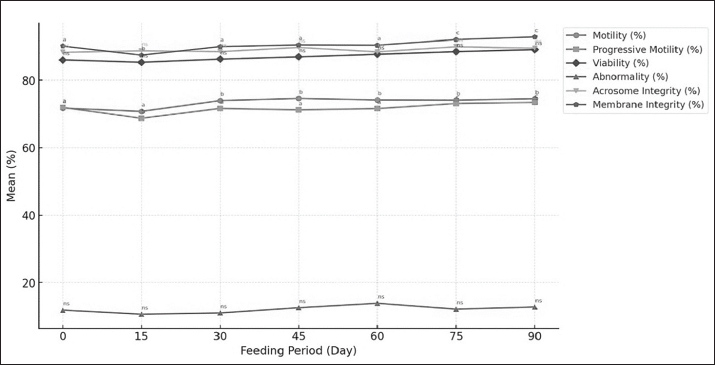
Semen collection, evaluation, and cryopreservationSemen was collected from Garut rams once a week using an artificial vagina. Semen samples were collected once a week for 13 consecutive weeks (90 days) using an artificial vagina. Before evaluation, each sample was collected directly into a clean, dry, graduated plastic tube maintained at 37°C. Sperm quality was assessed in terms of motility, progressive motility, kinematics, abnormality, viability, and acrosome integrity (Diansyah et al., 2023a). Motility, progressive motility, and kinematic characteristics were measured using a glass slide and the CASA Sperms system (Vision Version 3.7.5, Minitub, Germany) (Diansyah et al., 2020). The kinematic parameters observed were the velocity average path (VAP), velocity curvilinear (VCL), velocity straight line (VSL), distance average path (DAP), distance curvilinear (DCL), distance straight line (DSL), straightness, linearity (LIN), and wobble (WOB) (Rahmat et al., 2024). Viability and abnormalities were assessed using 2% eosin staining under a trinocular microscope at 400x magnification (AxioCam Erc 5s, ZESS, Germany). Dead sperm appeared red, and abnormalities such as detached tails, broken tails, and unusual head shapes were detected (Surahman et al., 2021). A formalin-saline solution was used to examine acrosome integrity, and undamaged acrosomes appeared as black tips on the sperm head under a trinocular microscope (Diansyah et al., 2023b). A commercial extender (Andromed, Germany) was used to produce frozen semen. The semen straws were equilibrated at 5°C for 4 hours, cryopreserved in liquid nitrogen vapor for 15 minutes, and stored at −196°C (Diansyah et al., 2022). Measurement of hormones using an enzyme-linked immunosorbent assayThe concentrations of follicle-stimulating hormone (FSH), luteinizing hormone (LH), and testosterone were measured using enzyme-linked immunosorbent assay (ELISA) protocols. Blood samples were obtained via jugular venipuncture, which coincided with the collection of semen. Blood samples were collected concurrently with semen sampling via jugular venipuncture into vacutainer tubes using 18-G sterile disposable needles. The samples were centrifuged at 3,000 rpm for 15 minutes to separate the serum, which was then kept at −20°C until analysis (Ma et al., 2018). An ELISA kit, which is commercially available and specific to each hormone, was used in accordance with the manufacturer’s recommendations for rams. Serum samples and standards were introduced to 96-well microplates pre-coated with hormone-specific antibodies, incubated, and subsequently treated with an enzyme-labeled secondary antibody and substrate solution to trigger a colorimetric reaction. The reaction was halted by adding sulfuric acid, and absorbance was recorded at 450 nm using a microplate reader. Hormone concentrations were determined from standard curves created for each hormone, with all samples tested in duplicates for precision, and results were reported in ng/ml (Yin et al., 2018; Oematan et al., 2023). Conception and pregnancy ratesThe reproductive capacity of rams was assessed by examining the conception rate calculated in ewes following AI using semen from rams that received certain feed treatments. Semen frozen from each treatment was inseminated into 12 ewes for observation. The determination of conception rates was achieved through the implementation of pregnancy diagnoses, which were conducted a minimum of 45 days post-insemination. These diagnoses were facilitated using transabdominal ultrasonography (Yusuf et al., 2024). Statistical analysisThe observed parameters included sperm quality, sperm movement characteristics, hormone levels, and reproductive success. The data were then analyzed using parametric statistical techniques. A preliminary assessment was conducted to assess the normality of the distribution of all parameter values and the homogeneity of variances before conducting the statistical analysis. Given that the data followed a normal distribution, paired sample t-tests were used to compare sperm quality, hormone levels, and reproductive success among the feed treatment groups. Statistical significance was set at p < 0.05. All statistical analyses were conducted using the Statistical Package for the Social Sciences version 25 for Windows (IBM Corp., Chicago, IL, USA). Ethical approvalAll experimental procedures involving animals were conducted in accordance with ethical guidelines for animal welfare. The Animal Ethics Commission of the National Research and Innovation Agency approved this study’s animal models and experimental designs with certificate number 204/KE.02/SK/11/2023, issued on 10 November 2023 and valid until 10 May 2024. ResultsSperm quality and kinematics in Garut rams during the feeding period of Azolla pinnataAs illustrated in Figure 1, there were alterations in sperm quality indicators, such as motility, progressive motility, viability abnormalities, acrosome integrity, and membrane integrity, throughout a 90-day feeding period in Garut rams. The graph highlights significant differences (p < 0.05) between days. No differences in motility were observed between day 0 and day 15; however, significant improvements were evident from day 60 onward. The values recorded at days 60, 75, and 90 were significantly higher than those from the earlier days, a progressive increase in motility after day 60. A significant difference in progressive motility was observed between days 0 and 15.
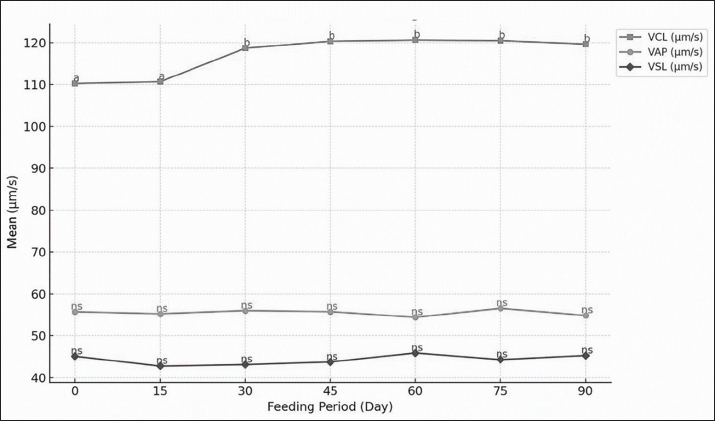
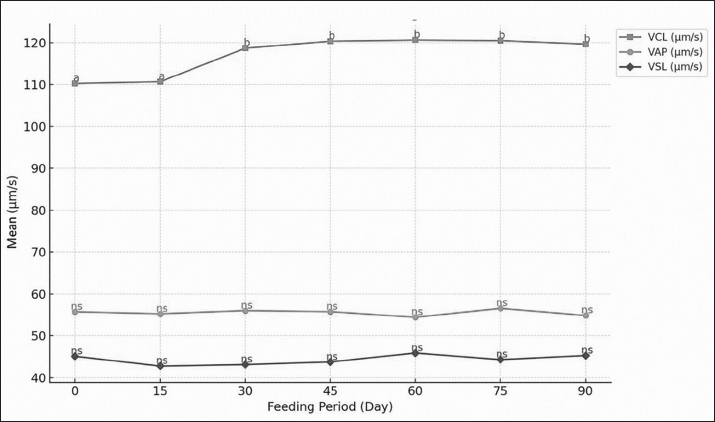
Fig. 1. Sperm quality in Garut rams during Azolla Pinnata feeding periods; different superscripts in the same line indicate significant differences at p < 0.05. A marked enhancement in the values was observed from day 30 onward, with significant differences noted at each subsequent time point. The maximum values recorded on day 90 were significantly higher than those recorded on earlier days, indicating a continuous enhancement throughout the study period. The viability demonstrated significant increases from day 0 to day 30, followed by additional enhancements from days 45 to 60. Measurements at days 75 and 90 were markedly greater than those observed in the earlier days, with a steady rise in sperm viability over the entire observation timeframe. Abnormality showed small numerical increases at some time points; however, there were no statistically significant between-day differences (all ns). Accordingly, the apparent increase in acrosome integrity should be interpreted cautiously and does not support a treatment-related increase in abnormalities. Acrosome integrity displayed significant enhancements starting at day 15, with values at days 30, 45, 60, 75, and 90 being considerably greater than those at day 0. The peak values were observed on day 90, highlighting a substantial improvement in acrosome integrity across the 90-day timeframe. Membrane integrity remained consistent, showing no significant differences throughout the 90-day feeding period, as indicated by the superscripts label, mark on the graph. Figure 2 shows the parameters of sperm velocity, including VCL, VAP, and VSL, in Garut rams during a 90-day feeding trial with A. pinnata. The graph demonstrates significant variations (p < 0.05), where different superscripts indicate statistical significance in the same row. The VCL parameter showed a notable increase starting from day 60, with values at days 60, 75, and 90 being significantly higher than those observed earlier (day 0 and day 15). Conversely, neither VAP nor VSL showed significant variations during the feeding period. The values for these two parameters remained fairly consistent, as shown by the superscripts label implying no significant differences over the 90-day period.
Fig. 2. Sperm velocity in Garut Rams during Azolla Pinnata feeding periods; different superscripts in the same line indicate significant differences at p < 0.05. As depicted in Figure 3, the sperm distance parameters (DCL, DAP, and DSL) were measured in Garut rams throughout a 90-day feeding regimen with A. pinnata. The graph indicates that no significant differences (ns) were observed among the various time points for all parameters. The DCL, DAP, and DSL values remained fairly consistent over the entire feeding period, with no notable changes detected at any particular time point. The feeding treatment of A. pinnata did not significantly affect the distance parameters of sperm movement during the 90-day timeframe.
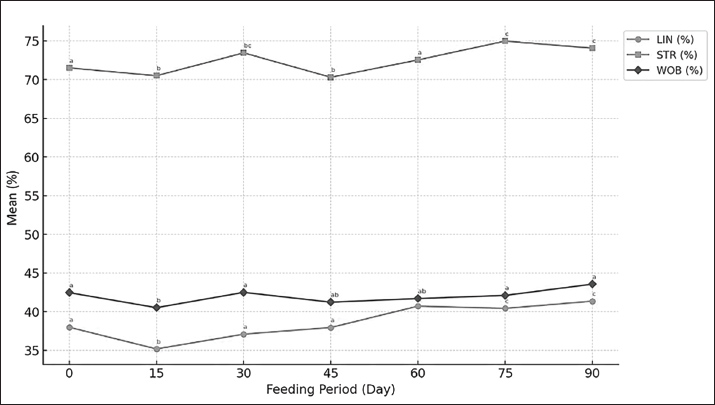
Fig. 3. Sperm distance in Garut rams during Azolla Pinnata feeding periods; different superscripts in the same line indicate significant differences at p < 0.05. Figure 4 shows the parameters of sperm motion, such as LIN, STR, and WOB, for Garut rams during a 90-day feeding period with A. pinnata. The graph reveals statistically significant differences (p < 0.05) among the days, indicated by different superscripts within the same row. Remarkable improvements in LIN were observed, with values at days 60, 75, and 90 being significantly higher than those at days 0 and 15, indicating a steady enhancement in sperm linearity after day 60. STR also showed significant variations across time, with values markedly greater at days 60, 75, and 90 than at days 0, 15, and 30, reflecting a consistent increase in sperm straightness. WOB exhibits a gradual increase throughout the feeding period, with significant differences at days 30, 60, 75, and 90 compared with day 0. The highest WOB value on day 90 indicates a substantial improvement in sperm wobble.
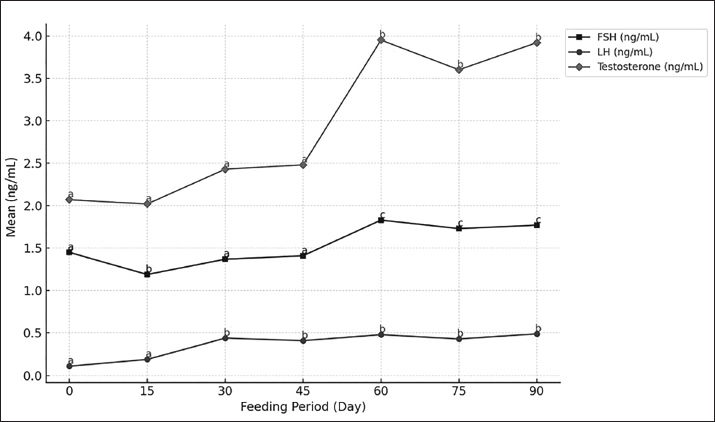
Fig. 4. Sperm motion in Garut rams during Azolla Pinnata feeding periods; different superscripts in the same line indicate significant differences at p < 0.05. Hormone level in Garut rams during the feeding period of Azolla pinnataFigure 5 shows the concentrations of FSH, LH, and testosterone in Garut rams over a 90-day period of feeding with A. pinnata. The graph reveals significant differences (p < 0.05) at various time points, which are indicated by different superscripts on the same line. FSH levels demonstrate a significant increase throughout the study duration, with significantly higher values recorded on days 60, 75, and 90 than those recorded on days 0, 15, and 30. The highest levels were noted on day 90, indicating a consistent increase in FSH concentrations during the feeding period. LH levels show significant growth beginning on day 45, with measurements on days 60, 75, and 90 being significantly greater compared to earlier time points (days 0, 15, and 30). The highest LH concentration was noted on day 90, demonstrating a distinct upward trend in LH levels throughout the feeding period. Testosterone levels showed a gradual rise over time, with significant differences observed between days 0 and 15 and between days 45 and 60. The study found that testosterone concentration peaked on day 90, highlighting a significant rise in testosterone levels as the study period concluded.
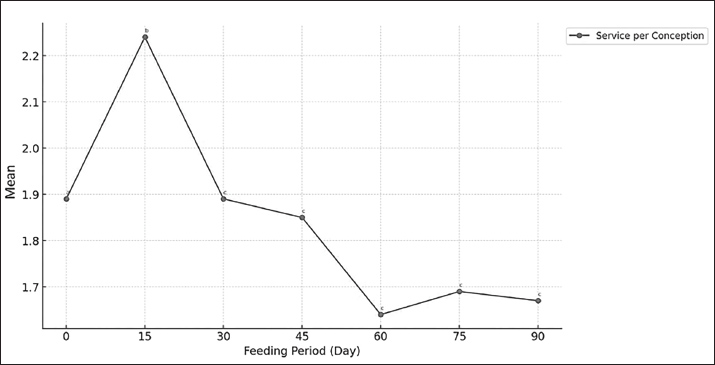
Fig. 5. Hormone level in Garut rams during Azolla Pinnata feeding periods; different superscript letters in the same line indicate significant differences at p < 0.05. Reproductive capacity in Garut rams during the feeding period of Azolla pinnataAs detailed in Figure 6, the reproductive ability, as indicated by the Service per Conception, is defined as the average number of inseminations required for an ewe to become pregnant. A total of 12 ewes were used for fertility testing, and the S/C value represents the mean fertility response corresponding to semen from each sampling period, which was monitored over a 90-day feeding period involving A. pinnata. The graph demonstrates significant differences (p < 0.05), as indicated by distinct superscripts on the same line. The service per conception value reached its highest level around day 15, with an average of approximately 2.2, which was notably higher than the values observed at later time points. On day 30, a consistent decline was recorded, with significant differences between day 15 and the subsequent days. The lowest values were observed on days 60, 75, and 90, indicating a reduction in SPC as the feeding duration progressed.
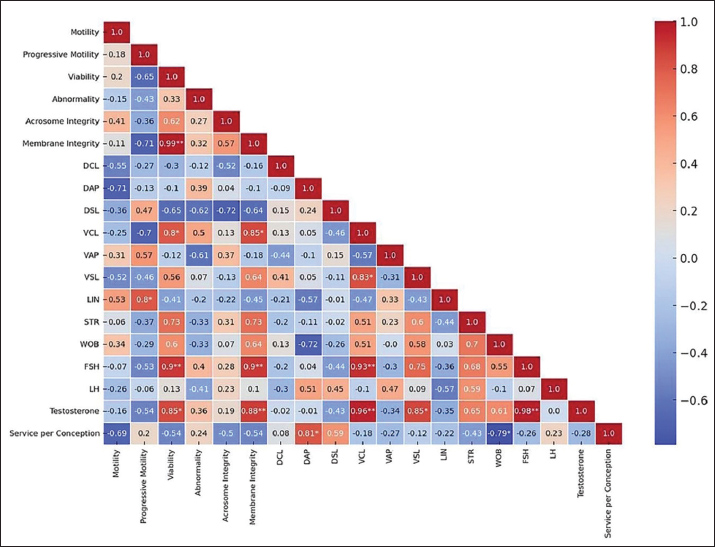
Fig. 6. Reproductive capacity in Garut rams during Azolla Pinnata feeding periods; different superscripts in the same line indicate significant differences at p < 0.05. Correlation between all parameters in the Garut Rams during the feeding periods of Azolla pinnataFigure 7 illustrates several notable positive correlations that are statistically significant (p < 0.05), showing strong associations among various sperm quality, kinematic, and hormonal factors. Significant positive relationships were identified between LIN and motility, VCL and motility, VCL and membrane integrity, VCL and VSL, and testosterone and motility. Additionally, significant positive correlations were observed between testosterone and VSL, as well as between service per conception and DAP, highlighting the interconnectedness of these parameters, where improved sperm quality and motility corresponded with better structural integrity and hormonal levels. However, this association is presented descriptively without causal interpretation. Several parameters exhibited highly significant positive correlations (p < 0.01), further emphasizing the link between sperm quality and reproductive traits. Significant positive correlations were detected between membrane integrity and viability, FSH and viability, testosterone and viability, FSH and membrane integrity, testosterone and VCL, and testosterone and FSH. These findings indicated that higher testosterone levels, with improved sperm membrane integrity, were associated with enhanced sperm viability and motility. Conversely, a significant negative correlation (p < 0.05) was found between Service per Conception and Wobble, suggesting that increased WOB values were linked to fewer services per conception, implying that sperm with better motility characteristics may contribute to greater reproductive efficiency.
Fig. 7. Pearson correlation between all parameters in Garut rams during Azolla pinnata feeding periods. means differ significantly at p < 0.05; means differ significantly at p < 0.01. DiscussionPart rams, a local breed in Indonesia, are highly valued for their superior meat quality and reproductive traits, contributing significantly to the region’s livestock industry. It is crucial to enhance the performance of Garut rams to improve herd productivity and ensure the sustainability of livestock operations, given their critical role in small-scale farming. The ability of Garut rams to improve sperm quality, motility, and hormonal profiles is a key factor in optimizing breeding programs and ensuring better fertility outcomes (Santoso et al., 2024). Consistent with our findings on Azolla, prior studies across multiple ram breeds (e.g., Zandi, Suffolk, Afshari × Booroola Merino) reported that dietary supplementation with Saccharomyces cerevisiae, long-chain omega-3 fatty acids (fish oil), trace minerals (Zn–Mn–Cu), selenium, and phytogenic compounds (e.g., Astragalus polysaccharides) can enhance reproductive efficiency by improving semen quality (motility, viability, and membrane integrity), supporting endocrine function, and mitigating oxidative stress via improved rumen fermentation, membrane-lipid remodeling, and upregulated antioxidant defenses. Azolla pinnata supplementation resulted in significant improvements in sperm motility, progressive motility, and acrosome integrity over the 90-day feeding period. Existing literature supports the effectiveness of these improvements, which demonstrates that dietary supplementation can enhance sperm motility by providing essential nutrients needed for ATP production and membrane integrity (Rahmat et al., 2024). Sperm motility, a critical factor for fertilization, is directly related to sperm energy metabolism, which is facilitated by essential nutrients found in Azolla, such as proteins and fatty acids (Surahman et al., 2021). The observed improvement in motility is probably due to the direct impact of these nutrients on sperm functionality and fertilizing potential. Azolla Pinnata provides a dense matrix of essential amino acids, polyunsaturated fatty acids (PUFA; chiefly linoleic and α-linolenic acids), and antioxidant phytochemicals (carotenoids, flavonoids, and polyphenols) (Golzary et al., 2021). Multiple compositional surveys across Azolla species, including A. pinnata, have reported high crude protein content with balanced amino-acid profiles and measurable PUFA fractions, along with antioxidant-rich extracts (Al-Huqail et al., 2025). These constituents are relevant for sperm function because amino acids support ATP-generating enzymes and structural proteins, PUFA contribute to plasma- and acrosomal-membrane fluidity, and antioxidants buffer reactive oxygen species (ROS) that otherwise impair sperm membranes and organelles (Islam et al., 2021). However, while significant improvements in motility and acrosome integrity were observed, no significant changes in sperm distance parameters, including DCL, DAP, and DSL, were observed. This finding raises important questions about the factors that influence sperm movement. Although sperm velocity and motion are crucial for successful fertilization, they are also influenced by a range of factors beyond the sperm's intrinsic characteristics, such as the viscosity of the semen and the environment within the female reproductive tract (Van de Hoek et al., 2022). While motility directly affects the sperm’s ability to swim toward the oocyte, the distance traveled, as measured by parameters such as DCL and DSL, may be more dependent on external factors such as the uterine environment and the reproductive tract’s physiological properties (Diniz et al., 2021). These parameters are less likely to be influenced by dietary changes, especially in the short term, and a more complex interaction between sperm behavior and the female reproductive system may be required for measurable changes to occur. In terms of sperm motion, sperm velocity was also evaluated using parameters such as VCL, VAP, and VSL. Sperm velocity is a critical aspect of sperm function, as faster sperm are more likely to reach and fertilize the egg. VCL, VAP, and VSL are key kinematic parameters that reflect the speed and trajectory of sperm during movement (Al-Hadithy and Cedden, 2023). The study found a notable increase in VCL starting from day 60, with significantly higher values at days 75 and 90 compared with earlier time points. Azolla supplementation positively influenced sperm velocity, particularly curvilinear velocity, which is associated with more efficient and directed sperm movement. The increase in VCL supports the idea that Azolla supplementation provides the nutrients necessary for improved sperm motility and trajectory, as VCL is influenced by the sperm’s energy reserves and the integrity of its flagellum (Tesfa et al., 2023). In contrast, VAP and VSL did not show significant changes, suggesting that the overall movement pattern of sperm (i.e., whether they travel in straight lines or average paths) remained unaffected while curvilinear velocity improved. VAP and VSL are more reflective of sperm precision and directional swimming, which may not be as responsive to dietary changes as curvilinear velocity (Rizkallah et al., 2022). This indicates that while Azolla supplementation improves the general motility of sperm, it may not directly influence the sperm’s ability to maintain a straight trajectory or optimize their path during movement. Sperm velocity parameters, such as VAP and VSL, may depend on more complex factors, including sperm-egg interaction, environmental conditions within the reproductive tract, and the sperm’s ability to adapt to the female reproductive environment (Fernandez-Novo et al., 2021). Sperm mitochondrial membrane potential is tightly coupled with motility, capacitation, acrosome reaction, and Deoxyribonucleic Acid integrity; mitochondrial dysfunction or redox imbalance depresses motility and compromises acrosomal stability. Dietary PUFA and antioxidants can help maintain membrane architecture and mitochondrial membrane potential by reducing lipid peroxidation and sustaining oxphos capacity (Li et al., 2025). In male ruminants, PUFA incorporation into sperm membranes is linked with improved membrane integrity and acrosomal resistance, whereas excessive ROS exacerbated by high membrane PUFA necessitates adequate antioxidant buffering (Castro et al., 2025). In this context, the PUFA + antioxidant bundle naturally present in Azolla is a plausible driver of the observed gains in motility and acrosome integrity via membrane-lipid remodeling and mitochondrial redox protection. The correlation analysis also revealed significant relationships between sperm motility, progressive motility, and acrosome integrity, highlighting the interconnectedness of these sperm quality parameters. Sperm motility is highly correlated with sperm kinematics, as faster sperm tend to exhibit better motility and greater ability to navigate the female reproductive tract (Bae et al., 2024). Additionally, acrosome integrity, which is vital for fertilization, was positively correlated with motility parameters, indicating that sperm with intact acrosomes are more likely to exhibit higher motility. The significant positive correlations between testosterone and motility parameters further reinforce the role of hormonal regulation in maintaining sperm function. These findings indicate that hormonal factors, such as testosterone, directly influence sperm performance by improving motility and acrosome integrity, which are essential for successful fertilization (Norman, 2021). Interpretation of the S/C–DAP association. We reported a positive correlation between S/C and DAP for completeness; however, we did not infer causality. A clear biological mechanism linking path amplitude DAP to the number of services per conception has not been established, and the finding may be sensitive to the small sample size, repeated measurements within rams, and multiple comparisons. Accordingly, we treat this correlation as exploratory, report its effect size and confidence interval without mechanistic claims, and suggest confirmation in larger, controlled studies that model within-animal correlation (e.g., mixed-effects or repeated-measures correlation) and apply multiplicity adjustment. Despite the promising findings related to sperm quality, no significant changes in sperm distance were observed, emphasizing the importance of considering multiple factors when assessing sperm function. Although motility and acrosome integrity are critical factors for fertilization success, short-term dietary interventions are less likely to influence other aspects of sperm movement, such as distance traveled (Asaduzzaman and Bari, 2025). Sperm movement distance by factors such as semen viscosity, female reproductive tract characteristics, and sperm-egg interactions. These factors may not be affected by nutritional supplementation in the same manner as motility or acrosome integrity (Pascal et al., 2023). This study has several limitations that should be considered when interpreting the findings. First, the sample size was small (n=10 rams), which limits statistical power and generalizability. Second, the statistical analysis did not model within-animal correlation (e.g., via repeated-measures ANOVA or linear mixed-effects models), although data collection involved repeated measurements within rams. Consequently, standard errors and p-values may be biased, confidence intervals may be imprecise, and the results should be regarded as hypothesis-generating. Third, the study did not include a concurrent control group fed a conventional ration, nor a pre-supplementation baseline on a conventional diet. Accordingly, causal attribution to Azolla is limited; unmeasured time trends, seasonality, management changes, and regression to the mean cannot be ruled out. Future studies should incorporate a randomized controlled or crossover/Latin-square design with wash-in/washout periods and a standardized conventional-ration comparator. Fourth, we focused on conventional semen quality parameters and CASA-derived kinematics without molecular analyses, limiting mechanistic inference; future work incorporating metabolomics/proteomics is warranted. Metabolomics and proteomics could reveal changes in the metabolic pathways and protein expression involved in sperm function, providing a more comprehensive understanding of how Azolla influences sperm health. Metabolomics, for instance, can identify key metabolites that are altered in response to dietary changes, helping to explain improvements in sperm motility and acrosome integrity (Gholami et al., 2023). Proteomic analysis could further elucidate the proteins involved in sperm maturation and motility, shedding light on the molecular effects of Azolla supplementation. Future proteomic–metabolomic work should focus on potential targets related to mitochondria (bioenergetics and redox/Δψm), membrane lipid remodeling (phospholipid/PUFA dynamics and membrane stability), acrosome/flagellum structure (acrosomal and axonemal scaffolds linked to motility), and steroidogenesis and endocrine crosstalk (pathways connecting testicular steroid synthesis with sperm function). ConclusionIn conclusion, A. pinnata supplementation improved sperm motility, acrosome integrity, and hormonal profiles in Garut rams over a 90-day feeding period, indicating its potential to enhance reproductive efficiency. However, the absence of a control group limits the ability to attribute these effects solely to A. pinnata. Future studies, including a defined control group and varying supplementation levels, are required to confirm these findings. The results agree with previous reports showing improved semen quality and hormonal balance in ruminants following protein- and antioxidant-rich feed supplementation. Overall, A. pinnata shows promise as a sustainable feed ingredient to support fertility in Garut rams, pending validation through controlled trials. AcknowledgmentsThe authors express their sincere gratitude to Berkah Farms for facilitating this research and providing valuable support. Conflict of interestThe authors declare no conflict of interest. FundingNo funding was received for this study. Authors' contributionsAN, KDP, and JBM conceived and designed the study. AN and AMD performed the experiments, collected the data, and conducted the primary analyses. HH, FAK, MSM, and FM contributed resources, field support, and analytical tools. ED and DAL verified the analytical methods and supervised the revision process. IUA assisted with data curation and literature review. AN and AMD drafted the manuscript. KDP, JBM, ED, DAL, IUA, FAK, MSM, HH, and FM reviewed and edited the manuscript. DAL coordinated the submission and acted as the corresponding author. All authors have read and approved the final version of the manuscript. Data availabilityAll data supporting this study’s findings are available within the manuscript. ReferencesAl-Hadithy, S. and Cedden, F. 2023. The massive impact of ram's sperm starvation on the fertilization and blastocyst rates in terms of sperm quality and capacitation. J. Agr. Sci. 29(2), 455–463. Al-Huqail, A.A., Aref, N.M.A., Khan, F., Sobhy, S.E., Hafez, E.E., Khalifa, A.M. and Saad-Allah, K.M. 2024. Azolla filiculoides extract improved salt tolerance in wheat (Triticum aestivum L.) is associated with prompting osmostasis, antioxidant potential and stress-interrelated genes. Scientific. Rep. 14(1), 11100. Ariyanto, K.B., Khotijah, L., Astuti, D.A., Arifiantini, R.I. and Menassol, J.B. 2020. Semen quality of garut rams feed by different protein sources and their implementation potential in small farms of West Java. J. Agripet. 20(1), 47–55. Asaduzzaman, M. and Bari, F.Y. 2025. The current and advanced situation of ram semen quality in Bangladesh. Vet. Integ. Sci. 23(3), 1–15. Bae, J.W., Hwang, J.M., Lee, W.J., Kim, D.H., Yi, J.K., Ha, J.J., Oh, D.Y. and Kwon, W.S. 2024. Application of sperm motion kinematics and motility-related proteins for prediction of male fertility. Theriogenology 218, 223–230. Castro, M., Leal, K., Pezo, F. and Contreras, M.J. 2025. Sperm Membrane: molecular Implications and Strategies for Cryopreservation in Productive Species. Animals 15(12), 1808. National Research Council. 2007. Nutrient Requirement of Small Ruminant (Sheep, Goat, Cervids, and New World Camelids). The National Academies Press. Washington, D.C.: The National Academies Press, pp: 271–93. Diansyah, A.M., Yusuf, M. and Kaiin, E.M. 2020. The quality of sperm post-immobilization at some parts of FH sperm using laser diodes. Conf. Ser.: Earth. Enviro. Sci.,492(1), 012074. Diansyah, A.M., Yusuf, M., Toleng, A.L. and Dagong, M.I.A. The effect of thawing duration on the sperms quality of Bali polled bull. Proceedings Of The 4th International Conference Of Animal Science And Technology (ICAST 2021) 9–10 November 2021 Makassar, Indonesia. In AIP. Conf. Proc. 2628(1), p 70007. Diansyah, A.M., Yusuf, M., Toleng, A.L., Dagong, M.I.A., Maulana, T. and Hasrin. 2023b. The sperm post-thawing quality and proteomic seminal plasma on fertility performance of Bali-polled bull. Adv. Anim. Vet. Sci. 11(4), 517–525. Diansyah, A.M, Yusuf, M., Latief Toleng, A. and Ihsan Andi Dagong, M. 2022. Characteristic and kinematics of bali-polled bull sperms. Adv. Anim. Vet. Sci. 10(8), 1787 -1796. Diniz, W., Modi, L., Chaudhari, N., Chaudhary, S., Pandor, M. and Kumar, D. 2021. Antioxidant effect of quercetin in tris egg yolk citrate extender on Surti buck semen preserved at refrigerated temperature. Int. J. Livest. Res. 11(1), 87–92. El Naggar, S. and El-Mesery, H.S. 2022. Azolla pinnata as unconventional feeds for ruminant feeding. Bulletin. Nat. Res. Cent. 46(1), 66. Fernandez-Novo, A., Santos-Lopez, S., Barrajon-Masa, C., Mozas, P., De Mercado, E., Caceres, E., Garrafa, A., Gonzalez-Martin, J.V., Perez-Villalobos, N., Oliet, A., Astiz, S. and Perez-Garnelo, S.S. 2021. Effect of extender, storage time and temperature on kinetic parameters (CASA) on bull semen samples. Biology 10(8), 806. Gholami, D., Sharafi, M., Esmaeili, V., Nadri, T., Alaei, L., Riazi, G. and Shahverdi, A. 2023. Beneficial effects of trehalose and gentiobiose on human sperm cryopreservation. PLos One. 18(4), 271210. Golzary, A., Hosseini, A. and Saber, M. 2021. Azolla filiculoides as a feedstock for biofuel production: cultivation condition optimization. Int. J. Energy. Water. Resour. 5(1), 85–94. Herdis, H., Surachman, M., Darmawan, I.W.A. and Afifah, A. 2019. The role of sucrose as extracellular cryoprotectant in maintaining the Garut rams’ frozen semen quality. International Conference On Biology And Applied Science (ICOBAS) 13–14 Malang, Indonesia. AIP. Conf. Proc. 2120(1), 80019. Islam, M.M., Umehara, T., Tsujita, N. and Shimada, M. 2021. Saturated fatty acids accelerate linear motility through mitochondrial ATP production in bull sperm. Reproductive. Med. Biol. 20(3), 289–298. Kleemann, D.O., Kelly, J.M., Arney, L.J., Len, J., Tilbrook, A.J. and Walker, S.K. 2021. Sexual behaviour, semen quality and fertility of young Border Leicester rams administered melatonin during spring. Anim. Reprod. Sci. 231, 106804. Korsa, G., Alemu, D. and Ayele, A. 2024. Azolla plant production and their potential applications. Int. J. Agro. 1(1), 1716440. Li, Y., Lou, Z., Liu, F., Liu, Y., Wang, C., Wang, Y., Qian, W., Li, D. and Xu, T. 2025. The impact of lipid metabolism on ferroptosis in myocardial ischemia–reperfusion injury. Apoptosis 2025, 1–15. Ma, Y., Xu, Z., Gu, G., Ren, F., Jin, H. and Zhu, W. 2018. Effects of storage conditions on urinary LH and FSH measurement using immunochemiluminometric assay. Clin. Lab. 64(5), 877–882. Norman, S.T. 2021. Breeding Soundness Evaluation:comparative Review of Different Standards. Editors' Richard, M., Hopper, D.V.M., and Diplomat, A.C.T. In Bovine reproduction. John Wiley & Sons, Inc: United Kingdom. pp: 79–97. Nurlatifah, A., Hafid, A., Sitaresmi, P.I., Santoso, S., Anwar, R.I., Hudaya, M.F., Kusumaningrum, D.A., Azizah, N., Wahyuni, D.S., Herdis, H., Lupitasari, F.B.I., Mahari, D.A. and Rizal, M. 2023. Comparison enzymatic and non-enzymatic antioxidant in sperm quality of Garut ram chilled semen to enhance rural livestock commodity. Adv. Anim. Vet. Sci. 11(12), 1918–1926. Oematan, G., Hartatia, E., Mullik, M.L., Taratiba, N., Dami Dato, T.O., Lestari, G.A.Y. and Oematan, G.T.S. 2023. Konsentrasi Hormon Testosteron dan Profil Darah Sapi Bali yang Diberi Chromolaena Odorata, Analog Hidroksi Metionin dan Minyak Nabati (Testosterone Hormone Concentration and Blood Profile of Bali Cows Given Chromolaena Odorata, Hydroxy Analogues). Jurnal Nukleus Peternakan 10(1), 9–20. Pascal, C., Nechifor, I., Florea, M.A., Pânzaru, C., Simeanu, D. and Mierliță, D. 2023. Diet Influence on sperm quality, fertility, and reproductive behavior in karakul of Botoșani Rams. Agriculture 13(11), 2168. Rahmat, R., Yusuf, M., Latief Toleng, A., Herdis, H., Manabi Diansyah, A. and Hasrin, H. 2024. The quality of bali bull sexed sperms using freeze dry albumin at different concentrations of sexing medium. Adv. Anim. Vet. Sci. 12(2), 249–258. Rizkallah, N., Chambers, C.G., De Graaf, S.P. and Rickard, J.P. 2022. Factors affecting the survival of ram spermatozoa during liquid storage and options for improvement. Animals 12(3), 244. Santoso, S., Herdis, H., Anwar, R.I., Mahari, D.A. and Lupitasari, F.B.I. The role of raffinose to maintain chilled semen quality of Garut ram’s (Ovis aries) to support Indonesian sheep germplasm conservation. Proceedings Of The 1st International Conference On Food And Agricultural Sciences (ICFAS) 2022: 24–25 November 2022, Bogor, Indonesia. In AIP. Conf. Proc. 2957(1), p. 70. Surahman, S., Yusuf, M., Garantjang, S. and Toleng, A.L. Sperms motility, viability, and abnormality of the frozen semen at different bull breeds. In IOP. Conf. Ser.: Earth. Environ. Sci.,2021 788(1), pp 12–140. Surahman, S., Yusuf, M., Garantjang, S. and Toleng, A.L. Sperms motility, viability, and abnormality of the frozen semen at different bull breeds. The 3rd International Conference of Animal Science and Technology 3-4 November 2020, Makassar, Indonesia. In IOP.Conf. Ser.: Earth. Environ. Sci.,2021 788(1), pp 12–140. Tesfa, A., Lakew, E., Shibesh, E., Demis, C., Lakew, M. and Besufkad, S. 2024. Breeding soundness evaluation in ram and bucks under community-based breeding program (CBBP) sites of the Amhara Region, Ethiopia [Internet]. Vet. Med. Sci. 2024, 2024. Van De Hoek, M., Rickard, J.P. and De Graaf, S.P. 2022. Motility assessment of ram spermatozoa. Biology 11(12), 1715. Yin, L., Tang, Y., Chen, X. and Sun, Y. 2018. Measurement differences between two immunoassay systems for LH and FSH: a Comparison of Roche Cobas e601 vs. Abbott Architect i2000sr. Clin. Lab. 64(3), 295–301. Yusuf, M., Toleng, A.L., Hasrin, H., Baharun, A., Diansyah, A.M., Santoso, S. and Rahmat, R. 2024. The reproductive tract score and characteristic of cervical mucus on fertility rate of Bali heifers. Adv. Anim. Vet. Sci. 12(12), 2403–2409. | ||
| How to Cite this Article |
| Pubmed Style Nurlatifah A, Prihantoko KD, Menassol JB, Herdis H, Damayanti E, Diansyah AM, Azis IU, Khan FA, Maidin MS, Mustofa F, Lestari DA. Dynamic changes in the sperm quality of Azolla pinnata as a forage alternative to Garut ram. Open Vet. J.. 2025; 15(12): 6697-6708. doi:10.5455/OVJ.2025.v15.i12.50 Web Style Nurlatifah A, Prihantoko KD, Menassol JB, Herdis H, Damayanti E, Diansyah AM, Azis IU, Khan FA, Maidin MS, Mustofa F, Lestari DA. Dynamic changes in the sperm quality of Azolla pinnata as a forage alternative to Garut ram. https://www.openveterinaryjournal.com/?mno=282646 [Access: June 26, 2026]. doi:10.5455/OVJ.2025.v15.i12.50 AMA (American Medical Association) Style Nurlatifah A, Prihantoko KD, Menassol JB, Herdis H, Damayanti E, Diansyah AM, Azis IU, Khan FA, Maidin MS, Mustofa F, Lestari DA. Dynamic changes in the sperm quality of Azolla pinnata as a forage alternative to Garut ram. Open Vet. J.. 2025; 15(12): 6697-6708. doi:10.5455/OVJ.2025.v15.i12.50 Vancouver/ICMJE Style Nurlatifah A, Prihantoko KD, Menassol JB, Herdis H, Damayanti E, Diansyah AM, Azis IU, Khan FA, Maidin MS, Mustofa F, Lestari DA. Dynamic changes in the sperm quality of Azolla pinnata as a forage alternative to Garut ram. Open Vet. J.. (2025), [cited June 26, 2026]; 15(12): 6697-6708. doi:10.5455/OVJ.2025.v15.i12.50 Harvard Style Nurlatifah, A., Prihantoko, . K. D., Menassol, . J. B., Herdis, . H., Damayanti, . E., Diansyah, . A. M., Azis, . I. U., Khan, . F. A., Maidin, . M. S., Mustofa, . F. & Lestari, . D. A. (2025) Dynamic changes in the sperm quality of Azolla pinnata as a forage alternative to Garut ram. Open Vet. J., 15 (12), 6697-6708. doi:10.5455/OVJ.2025.v15.i12.50 Turabian Style Nurlatifah, Aeni, Kurniawan Dwi Prihantoko, Jean Baptiste Menassol, Herdis Herdis, Erni Damayanti, Athhar Manabi Diansyah, Ismah Ulfiyah Azis, Faheem Ahmed Khan, Mashitah Shikh Maidin, Fatmawati Mustofa, and Dela Ayu Lestari. 2025. Dynamic changes in the sperm quality of Azolla pinnata as a forage alternative to Garut ram. Open Veterinary Journal, 15 (12), 6697-6708. doi:10.5455/OVJ.2025.v15.i12.50 Chicago Style Nurlatifah, Aeni, Kurniawan Dwi Prihantoko, Jean Baptiste Menassol, Herdis Herdis, Erni Damayanti, Athhar Manabi Diansyah, Ismah Ulfiyah Azis, Faheem Ahmed Khan, Mashitah Shikh Maidin, Fatmawati Mustofa, and Dela Ayu Lestari. "Dynamic changes in the sperm quality of Azolla pinnata as a forage alternative to Garut ram." Open Veterinary Journal 15 (2025), 6697-6708. doi:10.5455/OVJ.2025.v15.i12.50 MLA (The Modern Language Association) Style Nurlatifah, Aeni, Kurniawan Dwi Prihantoko, Jean Baptiste Menassol, Herdis Herdis, Erni Damayanti, Athhar Manabi Diansyah, Ismah Ulfiyah Azis, Faheem Ahmed Khan, Mashitah Shikh Maidin, Fatmawati Mustofa, and Dela Ayu Lestari. "Dynamic changes in the sperm quality of Azolla pinnata as a forage alternative to Garut ram." Open Veterinary Journal 15.12 (2025), 6697-6708. Print. doi:10.5455/OVJ.2025.v15.i12.50 APA (American Psychological Association) Style Nurlatifah, A., Prihantoko, . K. D., Menassol, . J. B., Herdis, . H., Damayanti, . E., Diansyah, . A. M., Azis, . I. U., Khan, . F. A., Maidin, . M. S., Mustofa, . F. & Lestari, . D. A. (2025) Dynamic changes in the sperm quality of Azolla pinnata as a forage alternative to Garut ram. Open Veterinary Journal, 15 (12), 6697-6708. doi:10.5455/OVJ.2025.v15.i12.50 |


