Open Veterinary Journal, (2026), Vol. 16(3): 1590-1600
Research Article
10.5455/OVJ.2026.v16.i3.16
Retrospective epidemiological assessment of bovine theileriosis in Gaza Province, Southern Mozambique
Priscília Tsamba1, Omar M. Mavilingue1, Guido A. Nchowela2,3, Avelino R. Miguel4,5, Carcésia C. Matuassa1, Helder Alfredo2, Edvânia C. Manave1, Benedito Machanja2, Sarney R. G. Fernando1,6,
Iúnice Simbine1, Ilídio F. Manuel1, Izaidino J. Muchanga7,8, Taís Deta1, Elina M. Ualema1, Lúcel Fernandes1 and Célio Alfredo1,9*
1Department of Veterinary Medicine, Faculty of Veterinary Medicine and Animal Science, Save University, Chongoene, Gaza Province, Mozambique.
2Faculty of Health Sciences, Zambezi University, Provincial Hospital, Tete City, Mozambique
3Centro de Investigação, Instituto Português de Oncologia do Porto Francisco Gentil, E, P. E, Rua Dr António Bernardino de Almeida, Porto, Portugal
4Department of Forestry Engineering, Faculty of Agronomy and Forestry Engineering, Zambezi University, Mocuba City, Zambézia Province, Mozambique
5Herpetology Laboratory, Federal University of Santa Maria, Santa Maria, Rio Grande do Sul, Brazil
6Faculdade de Medicina Veterinária e Zootecnia (FMVZ), Universidade de São Paulo(USP), São Paulo, Brazil
7Saint Thomas University of Mozambique, Xai-Xai City, Mozambique
8Department of Community Medicine, Information and Health Decision Sciences, Faculty of Medicine, University of Porto, Porto, Portugal
9Laboratório de Parasitologia Victor Caeiro, MED (Mediterranean Institute of Agriculture, Environment and Development), University of Evora, Evora, Portugal
*Corresponding Author: Célio Alfredo. Department of Veterinary Medicine, Faculty of Veterinary Medicine and Animal Science, Save University, Chongoene, Gaza Province, Mozambique.
Email: celioalfredoluis [at] gmail.com
Submitted: 19/08/2025 Revised: 15/01/2026 Accepted: 02/02/2026 Published: 31/03/2026
© 2026 Open Veterinary Journal
This is an Open Access article distributed under the terms of the Creative Commons Attribution-Non Commercial-No Derivatives License (http://creativecommons.org/licenses/by-nc-nd/4.0/), which permits non-commercial re-use, distribution, and reproduction in any medium, provided the original work is properly cited, and is not altered, transformed, or built upon in any way.
Abstract
Background: Tick-borne diseases represent one of the main challenges for livestock production in several countries and are directly related to significant economic losses in the livestock sector. These diseases compromise productivity and limit the full development of the activity, resulting in reduced growth rates, fertility problems, increased abortions, decreased meat and milk production, and increased herd mortality.
Aim: This study aimed to assess the epidemiological pattern of bovine theileriosis (BT) in Gaza province between 2016 and 2024.
Methods: We conducted a retrospective study, using data from the records of BT at the Regional Veterinary Laboratory in Xai-Xai, Gaza Province, Mozambique. Meteorological data on temperature and precipitation were also obtained from the National Institute of Meteorology to better understand the occurrence patterns of Theileriosis. For data analysis, we used SPSS, version 23, and multiple linear regression to assess the degree of association between climatic variables (temperature and precipitation) and the occurrence of BT cases.
Results: A total of 343 cases were reported over the 9 years of analysis. The number of cases varied significantly across districts, with Limpopo having the highest number of cases (n=122). The year 2018 had the highest number of cases (n=158). The monthly distribution of Theileriosis showed a higher number of cases in March (n=146) and May (n=40). Multiple regression analysis revealed no statistically significant association between temperature and precipitation patterns and Theileriosis occurrence (p=0.230), explaining only 1.9% of the total observed variance (adjusted R²=0.0197).
Conclusion: To the best of our knowledge, this is the first study conducted in the country based on consultation of Theileriosis records, and it provides a basis for future planning. The study was limited by the absence of information regarding the age of the animals, sex, type of farming system, clinical manifestations that the animals presented at the time of sample collection, and clinical outcome, as well as the absence of information related to the results of polymerase chain reaction analysis, which was carried out in Maputo, the country’s capital. These gaps highlight the need for training to standardize and improve the documentation of Theileriosis cases in the province and country in general. Intensive and timely interventions, especially tick control, should be prioritized in the districts of Limpopo, Bilene, and Chibuto during the peak period from March to May. Similarly, animal health authorities in the region should make a concerted effort to strengthen the surveillance of Theileriosis, particularly in underserved districts due to their remote location in relation to the Regional Veterinary Laboratory.
Keywords: Cattle, Mozambique, Prevalence, Theileriosis.
Introduction
Tick-borne diseases are a major problem in livestock production in several countries, particularly in the tropical and subtropical regions of Asia, Africa, and Latin America, where these diseases have been associated with numerous economic losses in the livestock sector due to animal morbidity and mortality (Muhanguzi et al., 2014). Several tick species, notably the genera Rhipicephalus, Ixodes, and Haemaphysalis, act as potential vectors of pathogens of veterinary importance, which play a major role in the transmission of pathogens associated with Anaplasmosis, Babesiosis, Theileriosis, Borreliosis, Rickettsiosis, and Ehrlichiosis (Zhang et al., 2014; Almazán et al., 2018; Zhao et al., 2020; Trujillo et al., 2024).
In recent years, the density and abundance of ticks have increased on a global scale, particularly in tropical regions. Climate change, including variations in temperature and precipitation, tends to alter the ecological behavior of these vectors, directly influencing their ability to survive and reproduce. These changes also affect the likelihood of interaction between vectors and hosts, including domestic animals such as cattle, and may thus influence disease transmission dynamics (Nemaungwe et al., 2023).
Recent estimates indicate that the direct and indirect losses associated with tick-borne diseases in sub-Saharan Africa range from 10% to 80% and are greatly influenced by the type of disease or pathogen involved (Chepkony et al., 2021). The main biological vectors involved in the spread of theileriosis are the species Rhipicephalus appendiculatus, R. duttoni, and R. zambesiensis (Manyenyeka et al., 2021). Theileriosis alone is responsible for the death of approximately one million animals (cattle), resulting in estimated economic losses of approximately $300 million in sub-Saharan Africa alone (Shekede et al., 2021).
Controlling Theileriosis in sub-Saharan Africa poses a major challenge for animal health, as with other tick-borne diseases. The hot and humid climate, which is favorable to the proliferation of ticks in the region, creates conditions for the proliferation of a wide variety of species capable of infecting animals and humans (Djiman et al., 2024). In addition, livestock farming in this region of Africa is generally extensive, leading to greater exposure of animals to habitats prone to ticks and the spread of pathogens (Djiman et al., 2024). Chemical control of ticks has been widely used; however, this control practice is not always fully effective, and vaccination is the most sustainable option (Morrison, 2015).
As in other sub-Saharan African countries, tick-borne diseases pose a major challenge to animal health authorities in Mozambique. According to data released by the Ministry of Agriculture and Rural Development, the tick-borne diseases of greatest relevance to animal health include: Theileriosis, Anaplasmosis, Babesiosis, and Rickettsiosis, with Theileriosis being the disease with the highest number of reported cases in the southern provinces of the country, particularly Maputo and Gaza (MADER - Ministério da Agricultura e Desenvolvimento Rural, 2021). These diseases negatively affect production and limit the full development of activities due to reduced growth rates, fertility problems, abortions, decreased meat and milk production, and livestock mortality (Muhanguzi et al., 2014). Despite regular updates on the occurrence of Theileriosis in Mozambique, information on specific prevalence rates is still in its infancy. In addition, knowledge regarding the evolution of Theileriosis cases remains lacking, especially in areas considered to have the greatest livestock potential. Given this scenario, this study was specifically designed to survey cases of Theileriosis reported in the province of Gaza, southern Mozambique, between 2016 and 2024. The investigation considered not only the disease evolution by district and month but also its correlation with climatic variables, such as temperature and precipitation. By providing more consistent evidence on the epidemiological patterns of Theileriosis, this study seeks not only to broaden the scientific understanding of the disease but also to provide concrete support for the formulation of public policies, the strengthening of epidemiological surveillance programs, and the adoption of more effective control measures. Ultimately, such advances are expected to contribute to the sustainability of livestock farming in Mozambique, ensuring greater food security, income generation, and resilience in the agricultural sector.
Materials and Methods
Description of the study area
The study was conducted in Gaza, covering 12 of the 14 districts of the province (Fig. 1). The province is located in the south of the country, north of Maputo, the national capital. With an area of 75,709 km² and a population of 1,446,654, the province is bordered to the north by the provinces of Inhambane and Manica, to the south by the province of Maputo, to the west by Zimbabwe and South Africa, and to the southwest by the Indian Ocean (Nhaurire et al., 2023).
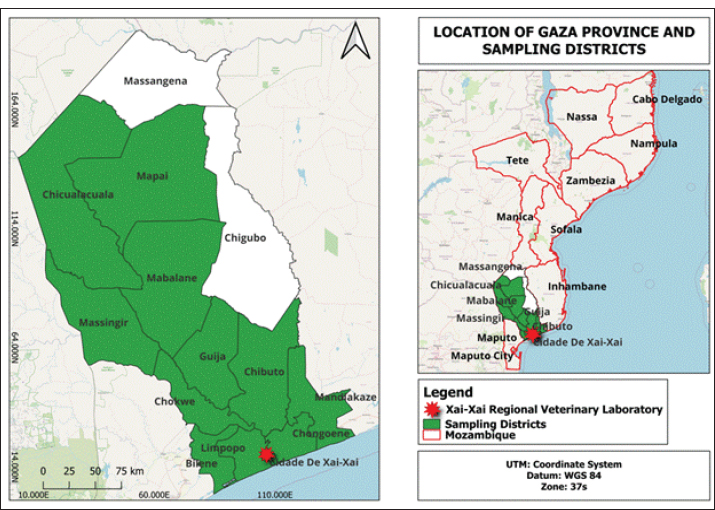
Fig. 1. Spatial distribution of the districts sampled for investigating Bovine Theileriosis in Gaza Province, Mozambique.
The province has a dry tropical climate with a humid tropical coastal strip. The average annual temperature ranges from 23 °C along the coast to 25 °C inland, with an annual rainfall of approximately 600 mm. The province generally has the largest area of drought in the country. The difference between the two seasons, dry and rainy, is not so clear, and the rainy season runs from November to March, a hot and humid period (Milhano, 2008; Muhala and Hasimuna, 2020).
According to data released by the National Authorities, Gaza Province has the largest cattle herd in the country, with approximately 543,852 cattle (MADER - Ministério da Agricultura e Desenvolvimento Rural, 2021). Animal production in the province’s districts follows a traditional system and plays an important role in communities’ subsistence, where ruminant production is one of the main sources of wealth and livelihood for communities (Miambo et al., 2022).
Study design
We conducted a retrospective study to analyze the occurrence of Bovine Theileriosis (BT) in the districts of Gaza Province from 2016 to 2024. Temperature and precipitation data were obtained for the same time interval to identify possible relationships between climatic conditions and disease incidence.
The information was extracted from official records and transferred to a pre-structured form designed to ensure standardization and systematization of the data. Data collection occurred weekly, ensuring the process’s continuity and consistency. At the end of each session, the records were subjected to verification and validation to ensure the reliability of the information. Data verification was carried out in two distinct stages, monitored by two supervisors: (1) after extracting the information from the records and allocating it to the spreadsheets; and (2) after entering it into the Excel file, before exporting to the data analysis program, to verify the parity and consistency of the information and simultaneously remove entry or typing errors. Only after this stage were the data entered into the statistical analysis program, SPSS, 23.
Data collection
Data were collected between September 2024 and May 2025 from 2 Mozambican institutions: the Regional Veterinary Laboratory and the National Institute of Meteorology. The Regional Laboratory is the institution responsible for receiving and processing samples sent by teams from the District Economic Activities Services in Gaza and Inhambane. The analyses carried out in this laboratory mainly focus on the application of techniques based on optical microscopy. In cases where accurate diagnosis is difficult, samples are sent to Maputo, the capital of the country, for analysis using PCR-based molecular methods. The laboratory results are sent to the animal health authorities in each district for registration and subsequent intervention. The National Institute of Meteorology is the supervisory institution responsible for monitoring the country’s climate and providing up-to-date information on temperature patterns, precipitation, and extreme events such as cyclones and floods.
To collect data on Bovine Theileriosis cases reported in the Gaza province, we consulted the record books at the Regional Veterinary Laboratory. The collected data included the number of samples received each year, their origin (districts), their distribution by month, and the number of negative and positive samples. Our data collection form also covered aspects such as the animals’ sex, age group, breeding system, and clinical signs observed in the animals from which the samples were collected. The information contained in the forms was transferred to an Excel spreadsheet. Simultaneously, data on average monthly temperatures for each district and information on average monthly rainfall were obtained. This information was obtained over a period of three months directly from Excel files stored on computers at the National Institute of Meteorology, using specific forms for data collection.
Data analysis
The data allocated in the Excel spreadsheet were duly verified and validated. The information was then exported to SPSS (Statistical Package for the Social Sciences) version 23, where descriptive data analyses were performed (number of samples received and analyzed during the period, their distribution by year, month, and district, number of negative and positive samples during the period, and their respective distribution). Theileriosis cases were compared by district, year, and month using the chi-square test at a significance level of 0.05. Multiple linear regression was used to assess the degree of association between climatic variables (temperature and precipitation) and the occurrence of BT. Additionally, multiple regression was applied with the interaction term between climatic variables (temperature and precipitation) to investigate possible synergistic effects between these environmental variables. The Poisson regression model was applied to make the analyses more consistent, as it allows the modeling of event counts and can include independent variables such as temperature and precipitation. The variance inflation factor (VIF) was calculated to check for multicollinearity between the independent variables.
Ethical approval
This research was approved by the Scientific Department of the Faculty of Veterinary Medicine and Zootechnics, Save University, document reference 12/FMVZ/UniSave/2024, and by the Regional Veterinary Laboratory, located in the city of Xai-Xai, through note number 07/IIAM/CZS/LRVG/2025.
Results
Between 2016 and 2024, 1.413 samples suspected of Theileriosis were recorded at the Regional Veterinary Laboratory in Gaza Province, of which 343 (24.3%) were positive and 1070 (75.7%) were negative. The record books did not contain information on the age of the animals, sex, type of farming system, clinical manifestations that the animals presented at the time of sampling, clinical outcome, or polymerase chain reaction (PCR) analysis results.
Analysis of the distribution of Theileriosis by district showed significant variations (X2 p < 0.01), with the district of Limpopo presenting the highest number of cases (n=122), followed by Bilene (n=70). The districts of Chicualacuala (n=1), Mabalane (n=3), Guijá (n=4), and Massingir (n=4) had the lowest number of cases of Theileriosis during the review period (Fig. 2).
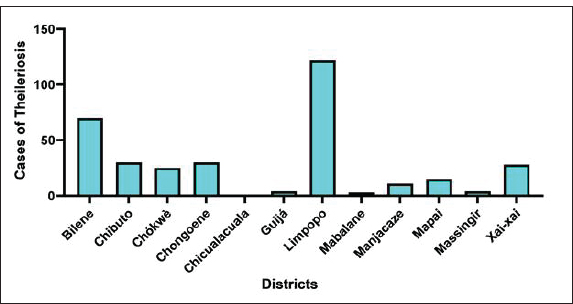
Fig. 2. Distribution of Bovine Theileriosis cases by district in Gaza Province, Mozambique.
The monthly distribution of Theileriosis indicated a higher number of cases in March (n=146), May (n=40), December, and June (both n=27 cases). The lowest number of cases was observed in January (n=1), with statistically significant differences (X2 p < 0.02; Fig. 3). Regarding seasonality, we observed that the season influences the occurrence of Theileriosis cases, although cases were recorded in both seasons. The rainy and hot season (November to March) had the highest number of cases, with a cumulative total of 200 cases, compared with the dry and cool season (April to October), which recorded a cumulative total of 143 cases.
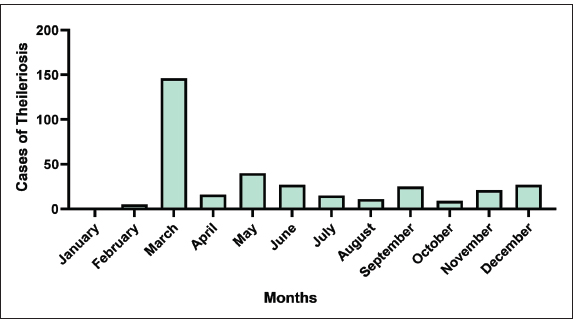
Fig. 3. Monthly distribution of Bovine Theileriosis cases in Gaza Province, Mozambique.
When comparing the annual distribution of Theileriosis cases, we found that 2018 had the highest number of cases (n=158), followed by 2019 (n=63), 2020 (n=61), and 2017 (n=46; (p < 0.01). The years with the lowest number of cases were 2016 (n=2), 2022 (n=5), and 2024 (n=8). In 2021 and 2023, no samples were collected for the diagnosis of BT in all districts of Gaza Province (Fig. 4).
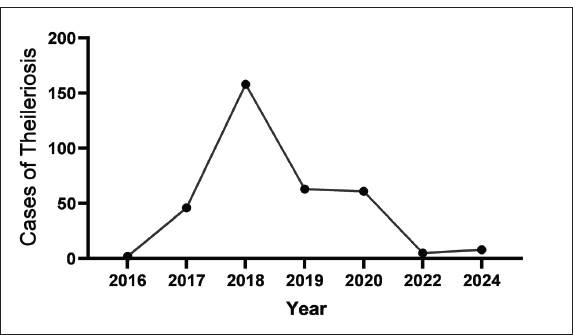
Fig. 4. Distribution of cases of Bovine Theileriosis in Gaza Province, Mozambique.
Using simple regression, the relationship between positive samples and the precipitation variable showed that the number of positive samples increases as precipitation increases. Although the graph shows an upward trend between precipitation and the number of positive samples, the data show greater dispersion, with points scattered around the regression line, suggesting greater data variability and low correlation. In the relationship between positive samples and the temperature variable, the number of positive samples increased as the temperature increased slightly (Fig. 5). However, although the graph showed an upward trend between temperature and the number of positive samples, the data showed greater dispersion, with points scattered around the regression line, suggesting a weak correlation.
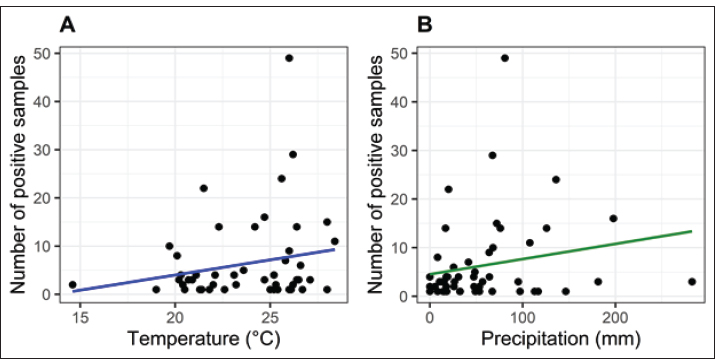
Fig. 5. Simple regression between the number of positive samples for Bovine Theileriosis and climatic variables (temperature and precipitation) in Gaza, Mozambique.
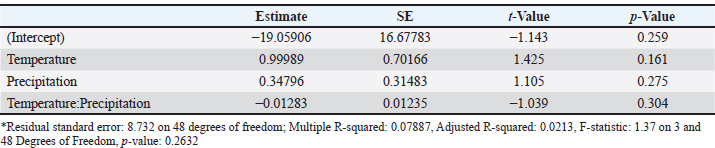
Our multiple regression results for positive samples and climate variables (temperature and precipitation) indicated that the model was not statistically significant (p=0.230), explaining only 1.9% of the total observed variance (adjusted R²=0.0197). The individual effects of environmental variables, temperature (β=0.455; p=0.334) and precipitation (β=0.022; p=0.363), had positive coefficients, although the two environmental variables were not statistically significant. The model adjusted to capture possible combined effects between environmental variables (temperature and precipitation) was also not statistically significant (p=0.263), maintaining low explanatory power (adjusted R²=0.0213; Tables 1 and 2; Fig. 5). The variance inflation factor (VIF) was also calculated to make the analyses more consistent, and the value obtained was less than 2, indicating moderate and acceptable multicollinearity.
Table 1. Multiple regression results between positive bovine theileriosis samples and individual climate variables (temperature and precipitation) in Gaza Province, Mozambique.

Table 2. Adjusted model results assessing the combined effects of temperature and precipitation on the occurrence of Bovine Theileriosis in Gaza Province, Mozambique.
Discussion
The prevalence of Bovine Theileriosis observed in this study, as determined by microscopy, was 24.3% (343/1413). This value demonstrates that the infection is widespread in the region, falling within the range of prevalences reported in other contexts where the disease can be considered endemic, although with some differences in prevalence rates between countries in the region. For example, a prevalence of 33.7% was recorded in Zimbabwe (Silwamba et al., 2023), whereas similar rates have been reported in India, ranging from 31.05% to 32.69% (Chauhan et al., 2015; Kumar et al., 2015; Kala et al., 2018). These differences in prevalence patterns between countries and regions may be associated with differences in the level of exposure of animals, possibly due to factors such as vector population density, management practices, acaricide use, and pasture availability, all of which influence the dynamics of tick infestation. In addition, the use of microscopy as a diagnostic method may have influenced the rate obtained because the technique has lower sensitivity, particularly in cases of subclinical infections or low parasitemia. Surprisingly, Kerario et al. (2017) reported a lower average prevalence (14.2%) in Tanzania, an endemic area, using PCR, which is considered more sensitive. This difference reinforces the importance of considering not only geographical and ecological variation between regions, different levels of exposure to the vector, and variations in health management, but also the diagnostic method used, since microscopy tends to underestimate the true prevalence of infection.
In the present study, the prevalence was determined exclusively by microscopic observation of Giemsa-stained peripheral blood smears, reflecting the technical limitations and structural reality of the Regional Veterinary Laboratory, which faces significant financial constraints. Although this technique is still widely used in several countries as a confirmatory tool when combined with clinical evaluation (Kala et al., 2018; OIE, 2020), it has significant limitations. Although it is an accessible and low-cost method, its sensitivity is reduced in subclinical or chronic infections, which require considerable experience in reading slides due to low parasitemia levels. In addition, microscopic identification of the piroplasmid form can be time-consuming and prone to error, particularly in carrier animals (Chauhan et al., 2015; Kala et al., 2018; OIE, 2020; Chamuah et al., 2023).
Alternatively, complementary tests are sent to the Central Veterinary Laboratory in Maputo, where molecular techniques and biochemical analyses can be applied, and the results are subsequently sent to the Regional Laboratory in Gaza. However, a critical weakness is the absence of a structured system for recording and documenting the results from the Regional Laboratory in Gaza. This gap compromises the traceability of cases and means that some diagnoses remain without a formal conclusion, which negatively impacts the quality of epidemiological studies and the formulation of public policies. Therefore, effective strategies to mitigate Theileriosis and other hemoparasitoses in Mozambican livestock are limited, perpetuating damage to animal health and productivity. Given this scenario, investing in strengthening regional laboratory capacity is essential. The gradual adoption of molecular methods, such as PCR, combined with microscopy, is recommended to ensure more sensitive and accurate diagnoses. Simultaneously, the creation of standardized systems for recording and managing diagnostic data is essential to improve the quality of epidemiological studies and enable comparative analyses between different regions of the country. The continuous training of technicians and veterinarians in the identification of haemoparasites is also a strategic measure, ensuring greater accuracy even with limited resources. Finally, integrating laboratory diagnosis with active surveillance programs and tick vector control policies could contribute decisively to reducing the prevalence of theileriosis and mitigating its economic impact on Mozambican livestock farming.
The districts with the highest number of cases of Theileriosis (Limpopo, Bilene, and Chibuto) are located near the city of Xai-Xai, where the Regional Veterinary Laboratory is located. The geographical proximity to the laboratory infrastructure probably facilitated the shipment and submission of samples, facilitating the detection of cases and contributing to more consistent epidemiological surveillance in these areas. In contrast, fewer cases were reported in more distant districts, such as Chicualacuala, Mabalane, Guijá, and Massingir.
For this reason, technical and financial factors appear to have played a decisive role, particularly the logistical difficulties related to transporting samples and moving laboratory teams to collect samples in more remote areas, which reinforces the idea that cases are being underreported in these districts, and not simply the absence of the disease. Therefore, these results of the distribution of BT cases may likely reflect a bias of accessibility or reporting, and the current data set cannot validly represent the true distribution of the disease in remote districts such as Chicualacuala, Mabalane, Guija, and Massingir.
The concentration of Theileriosis cases in March and May suggests the influence of environmental, climatic, or social factors characteristic of this period that may be affecting the transmission and detection of the disease. In Mozambique, March corresponds to the end of the rainy season and the beginning of the transition to a colder and drier climate, conditions that may favor changes in vector dynamics and, consequently, impact the incidence of infections or the probability of obtaining positive samples. However, the increase in cases in March may also reflect a single large outbreak of Theileriosis in the region or an unusual increase in testing efforts by joint teams from the Provincial Livestock Services, District Economic Activities Services, and the Regional Veterinary Laboratory during the peak year of 2018.
Updated data on the main tick species that act as potential vectors for Bovine Theileriosis transmission are not yet available in Mozambique. However, previous studies have reported the involvement of species such as Rhipicephalus appendiculatus and blue ticks of the genus Boophilus, which play a crucial role in the transmission of the disease in the center of the country on the border with Malawi and in southern Mozambique, transmission has been associated with ticks of the species Amblyomma hebraeum, Dias (1950, 1975). Similarly, these authors demonstrated that the potential vectors of BT showed marked seasonal activity in both Maputo and Gaza provinces, with peak activity in February and March (Travassos and Santos, 1950; Dias and Travassos, 1975). Interestingly, in this study, March was the month with the highest number of cases. However, these data are old, and further studies are needed to update the information on the seasonal pattern and risk factors of Bovine Theileriosis in Mozambique.
Stress associated with the transition period between seasons may increase the susceptibility of animals to disease development (Silwamba et al., 2023). This indirect effect involves complex mechanisms, including the influence of climatic conditions on the density, distribution, and multiplication of pathogens and their vectors, such as ticks, which play a central role in the transmission and spread of theileriosis (Ali et al., 2020). The reduction in the number of cases in January and February can be attributed to the typical climatic events in Mozambique during this period, marked by intense and prolonged rainfall. Although slight, the downward trend observed in the subsequent colder months may reflect both a real decrease in the disease burden and a reduction in testing activity or demand for veterinary care outside the period of highest incidence. According to Monoldorova et al. (2024) excessive or prolonged rainfall can reduce tick populations. Furthermore, the number of larvae tends to decrease significantly as the climate becomes colder, thereby reducing the transmission rate of Theileriosis and, consequently, the number of cases reported during these periods.
The observed seasonal pattern, in which the number of cases increases substantially during the rainy and hot season, was also observed in a study in Zimbabwe (Manyenyeka et al., 2024) and corroborated by others who found higher prevalences during this period compared to the dry and cold season (Kumar et al., 2015; Dharanesha, 2020; Yean et al., 2025). The hot and rainy season, characterized by high rainfall and high temperatures, creates favorable conditions for tick vector reproduction and multiplication (Yenew et al., 2025). In contrast, the dry season has mild temperatures and low rainfall, which are periods when ticks are less abundant (Abdela and Bekele, 2016). However, Silwamba et al. (2023) observed that statistical analysis of seasonal variation did not reveal significant differences between seasons for the occurrence of Theileriosis, although there are more positive cases in the rainy season. The higher number of cases recorded in 2018 may be associated with the occurrence of an amplified transmission event, such as a large-scale outbreak, or an intensification of testing and surveillance. According to data obtained from veterinary authorities, 2018 was marked by a severe outbreak of Foot-and-Mouth Disease, affecting thousands of cattle in the districts of Chibuto, Manjacaze, Chongoene, Xai-Xai, Limpopo, Bilene, and Chokwe. This outbreak resulted in restrictions on the movement and sale of cattle, which was also accompanied by a severe shortage of vaccines. In addition, livestock farming in 2018 was also affected by drought and heavy rains that destroyed crops and left many families at risk of starvation, making the overall situation in the province even more critical. Thus, these events may have contributed to the focus on foot-and-mouth disease and climatic events, and as a result, large proportions of patients with Theileriosis
The overall downward trend observed in subsequent years may reflect the impact of several effective animal health interventions, including prevention programs and improvements in surveillance, or changes in demand patterns for animal health care.
The low count in recent years, such as 2022 and 2024, may indicate both successful containment of the disease and a consequent reduction in the agent circulation, as well as limitations in operational capacity and available resources for testing. The annual analysis also revealed an irregular pattern in the distribution of cases, marked by a complete absence of records in 2021 and 2023. Although this gap could at first glance be interpreted as an absence of infections in those years, the information provided by the Regional Veterinary Laboratory indicates that part of the formal documentation of the processed samples was lost. This episode greatly limited our analysis of Bovine Theileriosis cases in the region because the absence of information in 2021 and 2023 compromised the integrity of our time series of cases. Therefore, a broader and more comprehensive overview of the epidemiology of Bovine Theileriosis cases in the province could not be obtained due to the lack of information from 2021 and 2023, which remain a dark period without data. The factors that determined the total absence of information in these two years likely influenced the collection of samples in 2022 and 2024, marked by the submission of only 5 and 8 samples, respectively, to the Regional Laboratory. Among the factors that may have contributed to this gap are the lack of strict physical or digital archiving protocols, the turnover of technical staff, work overload associated with other laboratory demands and the impact of the COVID-19 pandemic, which in 2021 still significantly affected laboratory and logistical operations in various sectors.
Although climatic variables (temperature and precipitation) may have a direct influence on the number of cases of theileriosis (Nemaungwe et al., 2023), the results of this study did not confirm such an association. The absence of statistical significance observed may be related to different factors, including the omission of relevant variables with a potential impact on the observed outcomes, including the missing monthly data (as occurred in 2021; and 2023), because disturbed time series can bias or reduce the model’s ability to detect true seasonal patterns. These findings indicate that socioeconomic or livestock management variables (e.g., livestock movement, acaricide effectiveness and compliance, grazing practices, and local vector density) are much stronger predictors than climate factors.
In addition, the records of the Regional Veterinary Laboratory were marked by a complete absence of data on the age of the animals, sex, and breeding systems, despite the fact that in Mozambique, livestock farming is predominantly carried out by the family sector, which has applied the extensive breeding system. The absence of this information greatly limited the analysis of the determinants of infection because, in most cases, the characteristics of the farming system are stronger predictors than climatic variables in clarifying risk factors associated with a higher probability of infection in animals, as verified in a retrospective study conducted in Zimbabwe, where location and farming system were the two main factors associated with the infection of animals with BT (Manyenyeka et al., 2021).
Conclusion
As this is a retrospective study, there were limitations due to the absence of information in the records, such as age, sex, breed of animals, presence or absence of vectors on the animals surfaces, type of breeding system, data on Theileriosis in 2021 and 2023, clinical manifestations of the animals at the time of sample collection, clinical outcome, and results from complementary tests carried out in the country’s capital, Maputo. These gaps compromise the detailed characterization of cases and restrict a broader understanding of factors associated with the occurrence of Theileriosis. Therefore, it is essential to improve registration and documentation systems to enable more complete analyses of the spatiotemporal dynamics of the disease, strengthen epidemiological surveillance, and support the implementation of more effective measures and policies for its control. Intensive and timely tick control interventions should also be carried out in Limpopo, Bilene, and Chibuto districts, especially during the peak period from March to May. Similarly, animal health authorities in the region should make a concerted effort to strengthen surveillance for Theileriosis, particularly in underserved districts such as Chicualacuala, Mabalane, Guijá, and Massingir. Finally, it is recommended that future studies prioritize the modeling of risk factors associated with a higher probability of infection or transmission of BT in Gaza, given the results of the regression models in this study.
Acknowledgments
The authors would like to thank the staff at the Regional Veterinary Laboratory, especially Dr Luísa Francisco Matusse Guiliche, for their availability and support in obtaining information on theileriosis.
Funding
This study received financial support from the Faculty of Veterinary Medicine and Zootechnics, Save University, through the Institutional Development Fund (FDI), reference PE-164 and by FCT - Fundação para a Ciência e Tecnologia, I.P. by project reference PRT/BD/154829/2022 and DOI https://doi.org/10.54499/PRT/BD/154829/2022.
Authors' contributions
PT: Study design and conception, data collection, organization and verification of data in spreadsheets, manuscript writing. OMM: Study design and conception, data collection, organization and verification of data in spreadsheets, manuscript writing. GAN: Statistical analysis of data, manuscript review. ARM: Statistical analysis of data, manuscript review and translation. CCM: Organization and verification of data in spreadsheets, manuscript writing. BM: Organization and verification of data in spreadsheets, manuscript review. SRGF: Organization and verification of data in spreadsheets, manuscript review. LF: Organization and verification of data in spreadsheets, manuscript writing. HA: Organization and verification of data in spreadsheets and manuscript writing. IS: Organization and verification of data in spreadsheets and writing of the manuscript. ECM: Organization and verification of data in spreadsheets and writing of the manuscript. IFM: Organization and verification of data in spreadsheets and writing of the manuscript. IJM: Statistical analysis of data and revision of the manuscript. TD: Organization and verification of data in spreadsheets and writing of the manuscript. EMU: Organization and verification of data in spreadsheets and writing of the manuscript. CA: Study design and conception, supervision, coordination of data collection, writing of the manuscript, and critical review of the manuscript. All authors have read and approved the final version of the manuscript.
Conflicts of interest
The authors declare no conflicts of interest in this study.
Data availability
The data supporting this research are not publicly available. However, these data are available from the authors upon reasonable request and with the permission of the Regional Veterinary Laboratory, Xai-Xai City, Gaza Province, Mozambique, and the National Institute of Meteorology of Mozambique.
References
Abdela, N. and Bekele, T. 2016. Bovine Theileriosis and its Control: a Review. Adv. Biol. Res. 10(4), 200–212; doi: 10.5829/idosi.abr.2016.10.4.10310
Ali, M.Z., Carlile, G. and Giasuddin, M. 2020. Impact of global climate change on livestock health: bangladesh perspective. Open Vet. J. 10(2), 178–188; https://pmc.ncbi.nlm.nih.gov/articles/PMC7419064/
Almazán, C., Tipacamu, G.A., Rodríguez, S. and Mosqueda, J. 2018. Immunological control of ticks and tick-borne diseases that impact cattle health and production. Front. Biosci. 23, 1535–1155.
Chamuah, J.K., Awomi, L.T., Mollier, R.T., Singh, M., Aier, I. and Perumal, P. 2023. Haemoparasites of domestic bovines and their diagnostic pattern: a review. Biotica Res. Today 5(8), 600–605; doi:10.54083/BioResToday/5.8.2023/600-605
Chauhan, H.C., Patel, B.K., Bhagat, A.G., Patel, M.V., Patel, S.I., Raval, S.H., Panchasara, H.H., Shrimali, M.D., Patel, A.C. and Chandel, B.S. 2015. Comparison of molecular and microscopic technique for detection of Theileria annulata from the field cases of cattle. Vet. World 8(11), 1370–1374; doi:10.14202/vetworld.2015.1370-1374
Chepkony, R., van Bommel, S., and van Langevelde, F. 2021. Interactive effects of biological, human and environmental factors on tick loads in Boran cattle in tropical drylands. Parasit. Vectors, 14(1),188. doi:10.1186/s13071-021-04683-9
Dharanesha, N. K., Giridhar, P., Byregowda, S. M., Venkatesh, M. D., & Ananda, K. J. 2017. Seasonal prevalence of haemoparasitic diseases in crossbred cattle of Mysore and adjacent districts of Karnataka. J. Parasitic Dis, 41(3), 773–777. doi: 10.1007/s12639-016-0848-5
Dias, J.A. and Travassos, S. 1977. Theileriosis in Mozambique. In Herson, J.B. and Campbell, M. eds. In Theileriosis: report of a Workshop Held in Nairobi, Kenya, 7-9 December 1976. Ottawa: International Development Research Centre, 43-45.
Dias JA Travassos. and Santos. 1977. Theileriosis in Mozambique.In Theileriosis: report of a Workshop Held in Nairobi, Kenya, 7-9 December 1976. Henson, J.B. and Campbell, M Nairobi, Kenya: International Development Research Centre, pp: 43–5.
Djiman, T.A., Biguezoton, A.S. and Saegerman, C. 2024. Tick-Borne Diseases in Sub-Saharan Africa: a Systematic Review of Pathogens, Research Focus, and Implications for Public Health. Pathogens (Basel. Switzerland). 13(8), 697; doi:10.3390/pathogens13080697
Kabi, F., Masembe, C., Muwanika, V., Kirunda, H. and Negrini, R. 2014. Geographic distribution of non-clinical Theileria parva infection among indigenous cattle populations in contrasting agro-ecological zones of Uganda: implications for control strategies. Parasites. Vectors. 7(414), 1–9; http://www.parasitesandvectors.com/content/7/1/414
Kala, S., Gopal Deo, B. and Kumari, N. 2018. Epidemiological Aspects of Theileriosis in Cattle in and around Patna, Bihar, India. Int. J. Curr. Microbiol. Appl. Sci. 1183, 1183–1191; doi:10.20546/ijcmas.2018.703.140
Kerario, I.I., Simuunza, M.C., Chenyambuga, S.W., Koski, M., Hwang, S.G. and Muleya, W. 2017. Prevalence and risk factors associated with Theileria parva infection in cattle in three regions of Tanzania. Trop. Anim. Health Prod. 49(8) 1613-1621; doi:10.1007/s11250-017-1367-8
Kumar, V., Kaur, P., Pal, W., Sharma, H. and Kumar, P. 2015. Theileriosis in cattle: prevalence and seasonal incidence in Jalandhar district of Punjab (India). Int. J. Recent. Scientific. Res. 2998, 2998–2999; http://www.recentscientific.com
MADER - Ministério da Agricultura e Desenvolvimento Rural. 2020. Inquérito Agrário Integrado. Moçambique, pp 81.
MADER - Ministério da Agricultura e Desenvolvimento Rural. 2021. Relatório de Fitossanidade e Sanidade Animal. Moçambique, pp 21.
Manyenyeka, M., Tagwireyi, W.M., Marufu, M.C., Spargo, R.M. and Etter, E. 2021. Spatio-temporal clustering and risk factor analysis of bovine theileriosis (Theileria parva) in Zimbabwe from 1995 to 2018. Transbound. Emerg. Dis. 69(3), 1186–1196; doi:10.1111/tbed.14081
Miambo, R. D., Afonso, S. M., Noormahomed, E. V., Malatji, M. P., and Mukaratirwa, S. 2022. Prevalence and molecular characterization of cystic hydatidosis in livestock slaughtered in southern Mozambique. J Parasit Dis, 46(2),186-195. doi:10.1007/s12639-021-01434-6
Milhano, A. 2008. Gestão dos recursos hídricos em Moçambique: Gaza – rio Limpopo. Lisboa: Tese de mestrado. Instituto Superior De Ciencias Do Trabalho E Da Empresa.
Monoldorova, S., Lee, S., Yun, S., Park, S., Jeong, J.U., Kim, J., Lee, I.Y., Jun, H., Park, C.H., Byeon, H.S., Han, M., Youn, S.Y., Cho, Y.S., Yun, Y.M., Lee, K.J. and Jeon, B.Y. 2024. Seasonal dynamics of ticks and tick-borne pathogens in Republic of Korea. Pathogens 13(12), 13; https://www.mdpi.com/2076-0817/13/12/1079
Morrison, W.I. 2015. The aetiology, pathogenesis and control of theileriosis in domestic animals. Revue. Scientifique. Et. Tech. (Int. Office. Epizootics). 34(2), 599–611; doi:10.20506/rst.34.2.2383
Muhala, V., Rumieque, A., and Hasimuna, O. J. 2020. Aquaculture production in Mozambique: Approaches and practices by farmers in Gaza province. Egypt J. Aquatic Res, 47(2), 171–177. doi:10.1016/j.ejar.2020.11.004
Muhanguzi, D., Picozzi, K., Hatendorf, J., Thrusfield, M., Welburn, S., Kabasa, J. and Waiswa, C. 2014. Prevalence and spatial distribution of Theileria parva in cattle under crop-livestock farming systems in Tororo District, Eastern Uganda. Parasites. &. Vectors. 1, http://www.parasitesandvectors.com/content/7/1/91
Nemaungwe, T.M., Van Dalen, E.M.S.P., Waniwa, E.O., Makaya, P.V., Chikowore, G. and Chidawanyika, F. 2023. Biogeography of the theileriosis vector, Rhipicephalus appendiculatus under current and future climate scenarios of Zimbabwe. Exp. Appl. Acarology 90(1-2), 67-82; doi:10.1007/s10493-023-00796-1
Nhaurire, A.F., Wells-Brown, T. and Capurchande, R. 2023. Water committees in the implementation of decentralization measures in the water sector in Gaza Province, Mozambique: ownership and resistance. AQUA. —. Water. Infrastructure. Ecosystems. Soc. 72(11); doi:10.2166/aqua.2023.059
Shekede, M.D., Chikerema, S.M., Spargo, M., Gwitira, I., Kusangaya, S., Mazhindu, A.N. and Ndhlovu, D.N. 2021. Spatial clustering of fourteen tick species across districts of Zimbabwe. BMC Vet. Res. 17, 91; doi:10.1186/s12917-021-02792-2
Silwamba, I., Chijikwa, J., Mutemwa, V. K., Chanda, J., Nkhata, A., Chapple, J., et al. 2023. Retrospective analysis of laboratory diagnostic data to assess the seasonal and proportional distribution of major tick-borne diseases in cattle from selected smallholder farms, Zambia. De Gruyter, 1–7. https://doi.org/10.1515/ovs-2022-0120
rujillo, E., Ramos-Vega, A., Monreal-Escalante, E., Almazán, C., and Angulo, C. 2024. Overview of Recombinant Tick Vaccines and Perspectives on the Use of Plant-Made Vaccines to Control Ticks of Veterinary Importance. Vaccines, 12(10), 1178. doi:10.3390/vaccines12101178
Yean, S., Prasetyo, D.B., Ren, T., Krib, D., Sen, S., Chea, B., Tum, S., Sorn, S., Sum, S. and Boyer, S. 2025. Seasonal dynamic of ticks infesting cattle (Bos indicus) farms in two provinces in Cambodia. PLos One 20(4), 1-16.
Yenew, A.S., Dagnachew Nigatu, S., Seyoum, Z. and Chanie, M. 2025. Epidemiology of Ticks and Tick-Borne Hemopathogens of Cattle in Two Selected Districts of Northwest Ethiopia. Vet. Med. Sci. 11, 1–14; doi:10.1002/vms3.70293
Zhang, X.C., Yang, Z.N., Lu, B., Ma, X.F., Zhang, C.X. and Xu, H.J. 2014. The composition and transmission of microbiome in hard tick, Ixodes persulcatus, during blood meal. Ticks. Tick-Borne. Dis. 5, 864–870.
Zhao, L., Li, J., Cui, X., Jia, N., Wei, J., Xia, L., Wang, H., Zhou, Y., Wang, Q., Liu, X., Yin, C., Pan, Y., Wen, H., Wang, Q., Xue, F., Sun, Y., Jiang, J., Li, S. and Cao, W. 2020. Distribution of Haemaphysalis longicornis and associated pathogens: analysis of pooled data from a China field survey and global published data. Lancet. Planet. Health 4, 320–e329.