




| Research Article | ||
Open Vet. J.. 2025; 15(12): 6306-6315 Open Veterinary Journal, (2025), Vol. 15(12): 6306-6315 Research Article Analysis of the emotional bond perception between elderly guardians and health professionals with companion animals in the one health perspectiveEugênio Rodrigues Bezerra Junior, Sophia Omena Ribeiro, Evilda Rodrigues de Lima, Rita de Cássia Carvalho Maia*, Jean Carlos Ramos Silva and José Wilton Pinheiro JuniorDepartment of Veterinary Medicine, Federal Rural University of Pernambuco-Rua Dom Manoel de Medeiros s/n, Recife-Pernambuco, Brazil *Corresponding Author: Rita de Cássia Carvalho Maia. Federal Rural University of Pernambuco-Rua Dom Manoel de Medeiros s/n, Recife-Pernambuco, Brazil. Email: rita.carvalho [at] ufrpe.br Submitted: 12/08/2025 Revised: 03/11/2025 Accepted: 17/11/2025 Published: 31/12/2025 © 2025 Open Veterinary Journal
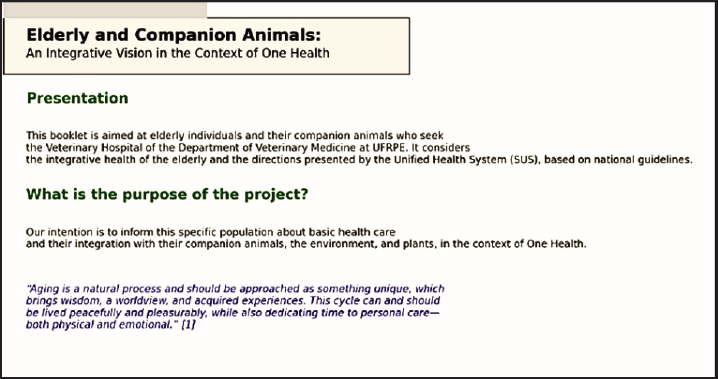
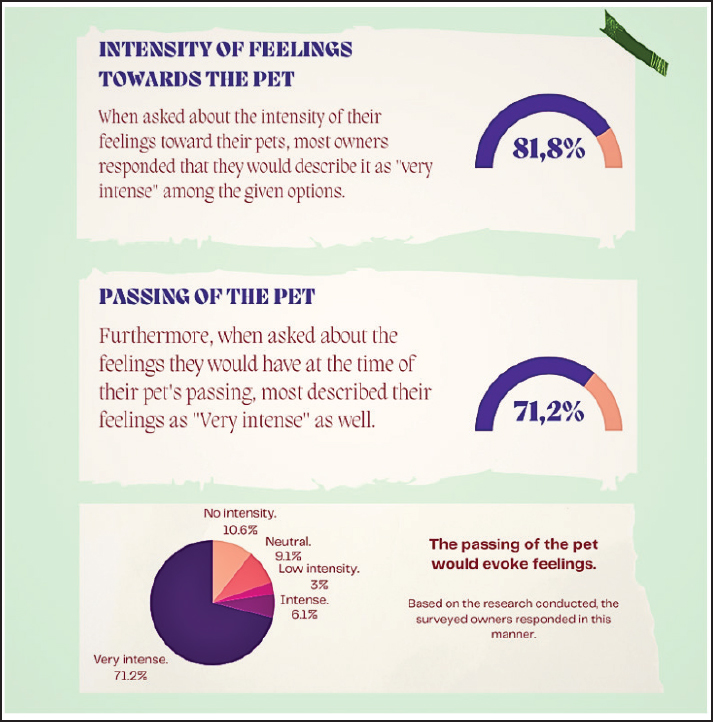
AbstractBackground: The One Health approach integrates human, animal, and environmental health; however, its relationship to the emotional bond between elderly pet guardians and veterinary professionals remains underexplored. Understanding this dynamic is essential for promoting animal welfare and owners’ well-being. Aim: To evaluate the emotional bond between elderly pet guardians and animal health professionals within the One Health framework. Methods: This cross-sectional study was conducted from August 2023 to February 2024 at the Veterinary Hospital HVU of UFRPE. Participants included 66 older elderly owners (>60 years) seeking veterinary care and all hospital professionals. Data were collected through a structured questionnaire and analyzed descriptively, including the frequency distribution of absolute and relative data. Results: Most guardians were women (62.1%), aged 60–69 years (77.7%), and 89.3% owned dogs. Additionally, 60.6% had pets for over 5 years, and 77.3% were first-time owners. A strong emotional bond was observed, with 92.4% reporting improved mental health due to pet companionship. Despite this, 65.5% were unaware of the One Health concept, though all expressed interest in learning more about vaccination, parasite control, and emotional health improvement linking animals, people, and their environment. Among professionals, 100% recognized the emotional dependence of guardians on pets, and 53.1% considered this bond beneficial. Conclusion: Elderly pet guardians demonstrate a strong emotional connection with their animals, which positively impacts their mental health. However, knowledge of One Health is limited, underscoring the need for targeted educational initiatives to enhance awareness and support holistic well-being in this population. Keywords: Companion animals, Elderly health, Health education, One Health. IntroductionThe elderly population in Brazil is projected to grow significantly by 2050, underscoring the importance of understanding factors that can enhance the quality of life for this demographic. In this context, psychology plays a crucial role in evaluating how companion animal interactions benefit the elderly. Therefore, developing support strategies that foster a welcoming environment and improve well-being is essential (Gomes et al., 2017). Human–animal relationships span cultures and time, reflecting bonds rooted in historical transitions from rural to urban societies. Due to the modern lifestyle and extended life expectancy, this connection has gained increasing attention, particularly among older adults who value the loyalty and affection provided by companion animals (Heiden and Santos, 2009). Interaction with animals offers diverse benefits to human well-being, including companionship, increased sociability, behavioral changes, and improved self-concept. Companion animals foster emotional dependence while promoting a sense of responsibility. Additionally, they contribute to the physical and mental health of their owners by alleviating loneliness, reducing stress, and mitigating social isolation (Faraco, 2008). Elderly individuals frequently reside alone or in multigenerational households with limited social interaction, which may intensify emotional and dependency challenges. In such cases, animals emerge as emotional expression facilitators, functioning as calming agents and reliable attachment and support sources. They promote emotional stability by enabling new ways of thinking and behaving, integrating seamlessly into the lives of their owners (Beck and Katcher, 2003). The One Health approach is an intersectoral framework that emphasizes the interconnectedness of human, animal, and environmental health. Beyond its focus on zoonotic diseases or antimicrobial resistance, One Health addresses a broad spectrum of health issues, ranging from prevention and health promotion to crisis detection, preparedness, and recovery, including mental distress reduction. Effective governance, communication, and collaboration are required to identify co-benefits, risks, and equitable solutions on local, national, and global levels (Mettenleiter et al., 2022; CDC, 2023). Research examining the emotional bond between elderly individuals and companion animals is increasingly relevant, considering the aging global population, although there is scarce research from Latin America, particularly Brazil, where aging populations and pet ownership are both rising. Coexistence with pets not only enhances mental and emotional health among older adults but also fosters healthier social environments (McConnell et al., 2019). This study aims to assess the perceptions of elderly guardians and animal health professionals regarding the emotional bond with companion animals, contextualized within the One Health framework. Materials and MethodsStudy areaThe research was conducted at the University Veterinary Hospital of the Federal Rural University of Pernambuco (HVU/UFRPE), Recife, PE, Brazil, between August 2023 and February 2024. SamplingThe sample size was calculated based on the number of consultations conducted at HVU/UFRPE in 2022, totaling 1,788 consultations across clinical medicine, surgical clinics, and preventive veterinary medicine. For elderly population estimates, data from the Brazilian Institute of Geography and Statistics IBGE were utilized, which indicated that individuals aged over 60 comprised 15.8 of the total population in 2022. Thus, a convenience sample of 66 elderly guardians was selected from those who sought care at HVU/UFRPE between 2023 and 2024, considering the average number of consultations in previous years. Additionally, all health professionals working at HVU/UFRPE were included in the study, comprising 16 veterinarians, 3 surgical residents, 3 clinical surgical technicians, 3 field professionals, 2 clinical residents, 2 technicians in small animal clinical medicine, 2 anesthesiology technicians, and 1 veterinary anesthesiology resident. Inclusion and exclusion criteriaElderly guardians aged 60 years of both sexes who sought care for their animals at HVU/UFRPE and expressed interest in participating were included in the study. Animal health professionals working at HVU/UFRPE were also included. The exclusion criteria were as follows: not owning a companion animal, being under 60 years of age, or refusing to participate in the study. Survey instrumentsThis was an analytical cross-sectional study with data collected using two structured questionnaires. One questionnaire targeted elderly guardians and was divided into sections addressing their sociodemographic profile, knowledge of the One Health concept, and their perception of the emotional bond with companion animals. The second questionnaire was directed at animal health professionals and assessed their perceptions regarding the emotional relationship between elderly guardians and their pets, the benefits of this relationship for physical and mental health, challenges in attending to these guardians and their animals, and opportunities for improving professional practices, particularly through interdisciplinary collaboration. Both questionnaires used a Likert scale ranging from 1 (none) to 5 (excellent), following the methodology of the study. The Likert scale was chosen for its clarity and ease of application, ensuring accessibility for both participants and researchers. Questionnaire applicationQuestionnaires were administered in a designated room after the animal's clinical stabilization. Procedures were conducted following pre-established guidelines coordinated with the administration of HVU/UFRPE to ensure appropriate use of facilities. Participants were invited to participate in the study, provided with detailed instructions, and asked to sign an informed consent form. Ethical principles were strictly adhered to, with the informed consent process guaranteeing participants’ right to opt out and ensuring their anonymity. All procedures followed the ethical standards outlined during the project's approval by the Ethics Committee. The questionnaires were adapted from validated instruments used in previous studies on human animal interaction (Faraco, 2008; McConnell et al., 2019) and were reviewed by a panel of three experts in veterinary public health and psychology to ensure content validity. A pilot test with 10 participants was conducted to assess clarity, and Cronbach’s alpha coefficients of 0.81 (guardians) and 0.84 (professionals) indicated good internal consistency. Health educationAn illustrative educational booklet on One Health and elderly care (Fig. 6) was developed and distributed to participating guardians at HVU/UFRPE.
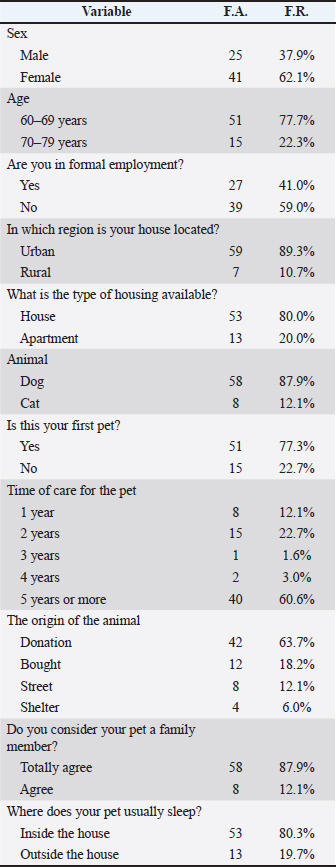
Fig. 6. Distributed to guardians attending the University Veterinary Hospital of the Federal Rural University of Pernambuco. Data analysisData were analyzed using descriptive statistics, including absolute and relative frequencies for categorical variables and means and standard deviations for continuous variables. Data were entered into a digital form using Microsoft Excel® and subsequently analyzed with Epi Info™ 7.2.3.1. Inconsistent responses were checked against the original questionnaires, and missing data (<5%) were excluded from the analysis. Given the exploratory nature of the study and the modest sample size, the analysis was restricted to descriptive statistics to provide an overview of patterns and trends. Future studies with larger samples may allow for inferential analyses to assess associations between variables. Ethical approvalThis study was submitted to the Research Ethics Committee on Human Research of Federal Rural University of Pernambuco (CEP/UFRPE) and approved under License CAAE 71387123.1.0000.9547. ResultsGuardiansTables 1 and 2 present the sociodemographic and behavioral data of elderly guardians, encompassing variables analyzed during the research conducted at the University Veterinary Hospital of the Federal Rural University of Pernambuco (HVU/UFRPE) from 2023 to 2024. Table 1. Presenting the sociodemographic and behavioral data of elderly guardians attending the University Veterinary Hospital of the Federal Rural University of Pernambuco (HVU/UFRPE).
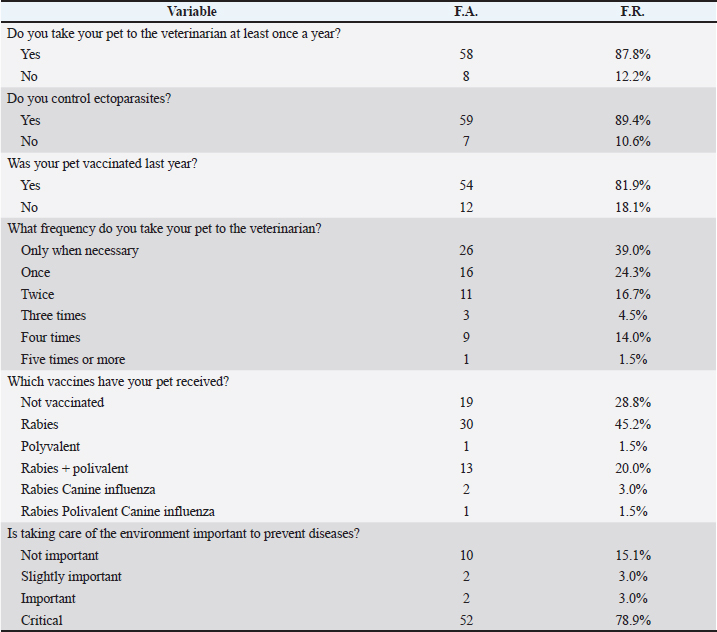
Table 2. This study presents an analysis of the variables associated with health care practices for animals owned by elderly guardians at the University Veterinary Hospital of the Federal Rural University of Pernambuco HVU UFRPE during the 2023 2024 period.
Health professionalsA total of 32 health professionals working at HVU/UFRPE were interviewed, with 18 female and 14 male participants. The results of the analysis of the health professionals’ perceptions regarding the emotional bond and care provided to pet owners are presented in Figures 1–4. Regarding the emotional dependence between older adult’s pet owners and their animals, 100% of the professionals (32/32) agreed that there is significant emotional dependence.
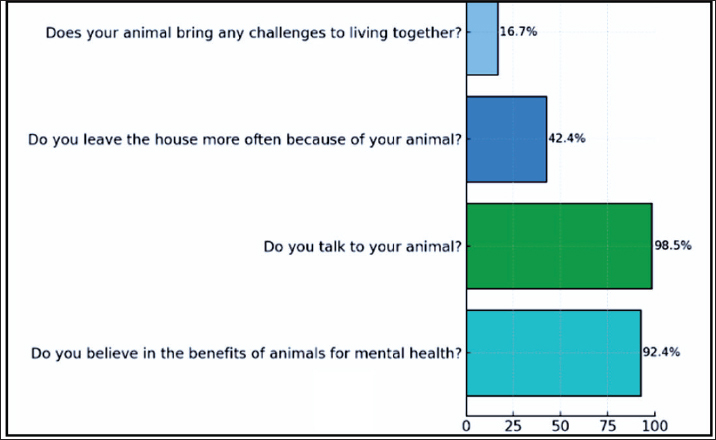
Fig. 1. Perception of the benefits of companion animals on the mental health of elderly guardians treated at the University Veterinary Hospital of the Federal Rural University of Pernambuco (HVU/UFRPE) during the 2023–2024 period.
Fig. 2. Perception of the benefits of living with companion animals for elderly guardians treated at the University Veterinary Hospital of the Federal Rural University of Pernambuco (HVU/UFRPE) during the 2023–2024 period.
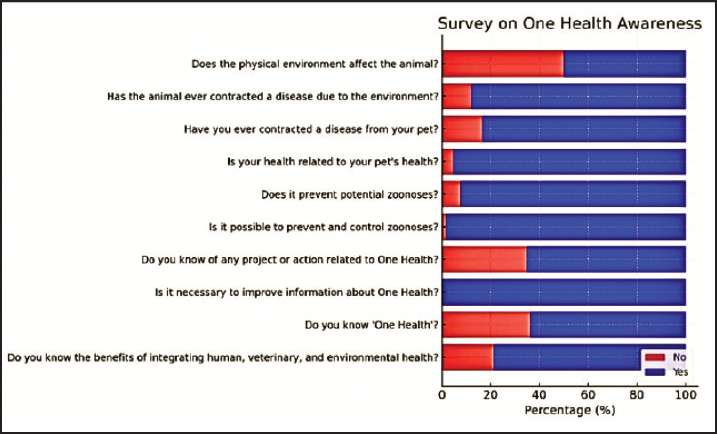
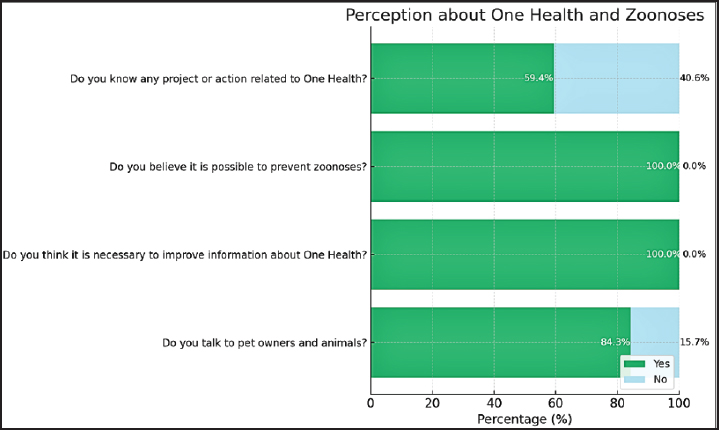
Fig. 3. Perception analysis of One Health aspects among elderly guardians treated at the University Veterinary Hospital of the Federal Rural University of Pernambuco (HVU/UFRPE) during the 2023–2024 period.
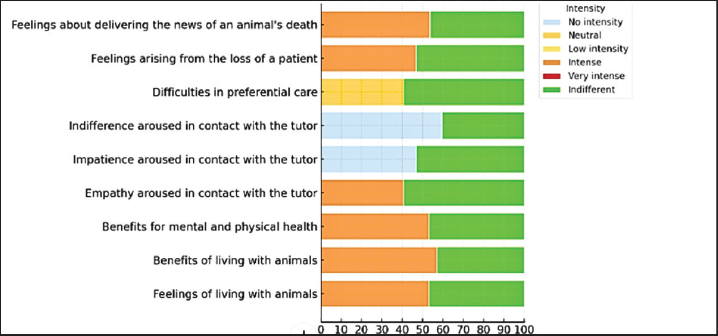
Fig. 4. Analysis of the perception of well-being among animal health professionals and their interaction with elderly pet owners regarding their coexistence with companion animals, at the University Veterinary Hospital of the Federal Rural University of Pernambuco, from 2023 to 2024. Figure 5 shows the results of the analysis of the perception of animal health professionals who work at HVU/UFRPE regarding One Health and preferential care. Furthermore, regarding other questions posed to animal health professionals, the data analysis revealed that approximately 78.1% responded negatively when asked if they feel overwhelmed or have sufficient time to provide more appropriate care for the elderly, indicating that they do not feel overwhelmed or lack the necessary time. In contrast, 21.9% reported feeling overwhelmed or insufficiently time constrained. When questioned about the availability of resources to implement preferential practices, approximately 71.9% affirmed the presence of such resources, demonstrating that the majority are equipped to perform these practices.
Fig. 5. Analysis of the perception of One Health among animal health professionals working at the University Veterinary Hospital of the Federal Rural University of Pernambuco from 2023 to 2024. However, 28.1% indicated a lack of adequate resources, highlighting a potential barrier to effective care. Finally, when asked about the intention to incorporate Primary Care Physicians, the results were overwhelmingly positive, with 90.7% of respondents expressing their intent to implement such practices, while only 9.3% did not. Health educationAn illustrative booklet on the One Health concept and elderly care (Fig. 6) was distributed to 50 individuals attending the HVU/UFRPE. This group comprised elderly guardians, veterinary medicine students, and HVU/UFRPE professionals. DiscussionThis study represents a pioneering effort in the state of Pernambuco, Brazil, providing significant insights into the relationship between elderly guardians and their companion animals, dogs and cats, emphasizing the impact of this relationship on the guardians’ health and well-being. By exploring this dynamic, the research contributes meaningfully to the One Health framework, which seeks to understand the complex interactions among human, animal, plant, and environmental health. This study highlights the critical role of animal welfare in promoting the health and quality of life of older adult individuals. Human–animal interaction yields manifold benefits to human well-being, which extend beyond simple companionship. Strong emotional bonds with companion animals contribute to reduced loneliness, improved mental health outcomes, and lower chronic stress in elderly populations (Faraco, 2008). These relationships also encourage increased sociability, enhance self-concept, and personal responsibility among caretakers. From the standpoint of animal health, the attachment formed with human guardians frequently results in more conscientious care: regular veterinary assessments, systematic vaccination, effective parasite control, and overall improved welfare of companion animals. Such practices align with improved animal health status, which in turn reinforces the human–animal bond. Environmental health benefits also follow: elderly guardians who adopt responsible practices such as proper disposal of animal waste, adherence to prophylactic measures, and ensuring vaccination help reduce the circulation of pathogens in the community and mitigate public health risks, thereby contributing to ecosystem integrity. This composite of human, animal, and environmental well-being exemplifies the One Health paradigm, underscoring the need for cross-disciplinary collaboration among veterinarians, physicians, psychologists, and social workers. In recognizing these intersectoral linkages, public policy and educational initiatives may be developed to raise awareness of One Health among the elderly. Such initiatives can promote preventive health behaviors, diminish healthcare expenditures, and bolster public health system resilience. Based on the findings in Pernambuco, the majority of elderly guardians treated at the hospital were women (62.1%), a result that corroborates previous studies, such as the one by Ferreira et al. (2017), which suggested that women tend to form stronger emotional attachments to companion animals. The emotional bond between elderly guardians and their pets is fundamental for their well-being, as discussed by Lima and Souza (2004), who argued that emotional connections evolved from human–animal relationships rooted in early predation and later domestication. These affective bonds are essential not only for the emotional well-being of individuals but also for building a mutual partnership that transcends mere co-existence. These connections provide a source of affection and companionship that fosters belonging and security in elderly individuals. Systematic reviews further confirm that companion animals contribute positively to the mental health of older adults by alleviating the symptoms of depression and anxiety, enhancing the quality of life, and attenuating the behavioral and psychiatric symptoms of dementia (Hughes et al., 2020). The responses of animal health professionals at the hospital indicated that 100% (32/32) of the respondents recognized the intense emotional dependence between older adults’ guardians and their companion animals. This emotional dependence can be interpreted through attachment theory, which posits that emotional support, security, and companionship are provided by bonds formed with pets. The presence of a pet can alleviate loneliness and depression, which are common among the elderly population. Sable (2006) interaction with pets offers psychological benefits such as stress reduction and the promotion of mental well-being. The daily routine of caring for animals instills purpose and responsibility in older adult owners, contributing to their overall quality of life (McConnell et al., 2019). These findings align with evidence that pet ownership encourages active routines such as regular walking with dogs, thereby improving physical activity, cardiovascular health, and mobility in older age (Thorpe et al., 2006; Hughes et al., 2020). However, elderly guardians face challenges in managing pet care, including physical limitations and financial constraints. As highlighted by Miltiades and Shearer (2011), greater attachment to pets may paradoxically increase depression when individuals lack adequate resources to meet their animals’ needs. This underscores the importance of contextualizing benefits and ensuring supportive networks that enable sustainable pet care in older populations (Hughes et al., 2020). The study also underscores the importance of understanding the concept of one health. One Health promotes an integrated and unified approach to optimize the health of people, animals, and ecosystems. It acknowledges the interdependence of human, animal, plant, and environmental health and encourages collaborative efforts across sectors to address health threats and promote sustainable development (OHHLEP, 2022). While most elderly guardians were unaware of the One Health approach, the study revealed that they engaged in practices aimed at preventing zoonoses. As depicted in Figure 3, approximately 92.4% of pet owners reported treating their animals for zoonotic diseases; however, these practices were largely disconnected from the One Health concept. Furthermore, approximately 63.6% of older adults pet owners were unfamiliar with the One Health framework, which underscores the need for increased awareness and education regarding this concept. Although many animal health professionals acknowledge the importance of One Health, a notable gap exists between theoretical knowledge and practical application. Additionally, the research revealed that challenges remain in fostering empathy and understanding in interactions with elderly guardians. Moreover, the study highlights the need for more effective communication and integrated care that aligns with the One Health principles. Despite the recognition of the importance of preferential care for older patients guardians, and their pets, the study found that most animal health professionals reported not feeling overwhelmed or lacking time to provide such care. Approximately 78.1% of the respondents indicated that they did not feel overwhelmed or lacked the necessary time, while 21.9% expressed the opposite. Regarding resources for preferential care, 71.9% of respondents felt that they were adequately equipped, while 28.1% noted a lack of resources, indicating a potential barrier to the effective implementation of these practices. Finally, 90.7% of respondents expressed a positive intention to implement preferential care practices, with only 9.3% indicating otherwise. This study has some limitations that should be considered. This study was conducted in a single veterinary hospital in Pernambuco with a small convenience sample, which restricts generalizability. The cross sectional design precludes causal inference, and the reliance on self reported questionnaires may have introduced social desirability bias. Moreover, while many guardians reported preventive practices, such as vaccination, the lack of explicit awareness of One Health reveals a knowledge practice gap. Finally, cultural differences in pet ownership and elderly care may limit the applicability of these findings to other contexts. Despite the study's limitations, the emotional bonds between elderly guardians and their companion animals clearly provide important psychological benefits, highlighting the urgent need to integrate One Health principles more effectively into educational initiatives and clinical practice. This study underscores the importance of fostering a holistic approach to care for the elderly that includes the health and well-being of their companion animals. By addressing the knowledge gaps and enhancing empathy in professional care, improving the overall quality of life for elderly individuals and ensure better health outcomes for both humans and animals is possible. The broader literature reinforces this view: companion animals can serve as effective adjuncts in improving physical and mental health outcomes in older adults, but the success of these benefits depends on adequate social, economic, and intersectoral support (Faraco, 2008; Hughes et al., 2019). Regarding the perception of animal health professionals on the emotional connections between elderly owners and their companion animals, as illustrated in Figure 4, aging brings factors that significantly impact emotional and social wellbeing. In this context, pets play an essential role as emotional support agents, ensuring companionship and enhancing mental health (Caetano, 2010; Fukushima et al., 2016; Alves and Steyer, 2019). Animal health professionals can contribute to this dynamic not only through their medical expertise in animal care but also by engaging in interdisciplinary work, promoting a more holistic approach to supporting elderly pet owners (Meijboom and Nieuwland, 2018). The findings of this study allow for targeted analyses of the relationship between elderly owners and their pets, with a focus on the developed emotional dependencies. Such studies serve as valuable guidelines for the formulation of public policies aimed at creating more inclusive environments for older patients’ guardians. These policies would consider not only the medical needs of pets but also their owners’ social and emotional needs. Based on this understanding, a proposal for a policy to better support elderly guardians at the hospital has been developed, and it should be implemented and periodically evaluated to assess its real impact on the elderly population. AcknowledgmentsThe authors would like to acknowledge the Veterinary Hospital at the Federal Rural University of Pernambuco for granting access to its facilities to conduct this research. The authors also thank the One Health Professional Master’s Program for its academic and institutional support. Conflict of interestThe authors declare that they have no known competing financial interests or personal relationships that could have influenced the work reported in this article. FundingThis study received no external funding. The authors covered all costs using personal resources. Author’s contributionsEugênio Rodrigues Bezerra Junior and Sophia Omena Ribeiro: study conception, data collection and analysis, and manuscript writing. Evilda Rodrigues de Lima and Jean Carlos Ramos Silva: Critical content review, statistical analysis, and methodological contribution. Rita de Cássia Carvalho Maia and José Wilton Pinheiro Junior: Discussion of results and contribution to the final manuscript structure. All authors reviewed, discussed, and agreed to their individual contributions before and during the submission of the article. Data availabilityAll data supporting this study’s findings are available within the manuscript. ReferencesAlves, L. and Steyer, S. 2019. Interação humano-animal: o apego interespécie. Perspectiva Em Psicologia 23(2), 124–142. Beck, A.M. and Katcher, A.H. 2003. Future directions in human-animal bond research. Am. Behav. Scientist 47(1), 79–93. Caetano, E.C.S. 2010. As contribuições da TAA–terapia assistida por animais à psicologia. Monografia (Trabalho de conclusão de curso) - Universidade do Extremo Sul Catarinense, Criciúma. Centers for Disease Control and Prevention (CDC). 2023. One Health. Paris: CDC. Faraco. 2008. Interação humano-animal. Ciência. Veterinária. Nos. Trópicos. 11, 31–35. Ferreira, E.A., Paloski, L.H., Costa, D.B., Fiametti, V.S., De Oliveira, C.R., De Lima Argimon, I.I., Gonzatti, V. and Irigaray, T.Q. 2017. Animal hoarding disorder: a new psychopathology?. Psychiatry. Res. 258, 221–225. Fukushima, R.L.M., Vicente, A.L., Fuzaro Júnior, G., Machado, M.R.C. and Costa, J.L.R. 2016. O que vamos fazer depois do trabalho? Reflexões sobre a preparação para aposentadoria (pp. 153). Cultura Acadêmica. Gomes, F.R.H., Vagetti, G.C. and Oliveira V de. 2017. Envelhecimento humano: cognição, qualidade de vida e atividade física. Appris 1, 1–128. Heiden, J. and Santos, W. 2009. Benefícios psicológicos da convivência com animais de estimação para os idosos. ÁGORA. Revista. De. Divulgação. Científica. 16(2esp.), 487–496. Hughes, M.J., Verreynne, M.L., Harpur, P. and Pachana, N.A. 2020. Companion animals and health in older populations: a systematic review. Clin. Gerontologist 43(4), 365–377. Lima, M. and Sousa L. 2004. A influência positiva dos animais de ajuda social. Interações. Sociedade. E. As. Novas. Modernidades. 4, 156–174. Miltiades, H. and Shearer, J. 2011. Attachment to pet dogs and depression in rural older adults. Anthrozoös 24(2), 147–154. Mcconnell, A.R., Paige Lloyd, E. and Humphrey, B.T. 2019. We are family: viewing pets as family members improves wellbeing. Anthrozoös 32(4), 459–470. Meijboom, F.L.B. and Nieuwland, J. 2018. Manifold health: the need to specify One Health and the importance of cooperation in (bio)ethics. In Springer, S. and Grimm, H. (Eds.), Professionals in Food Chains (pp. 266–271). Wageningen, The Netherlands: Wageningen Academic Publishers. Mettenleiter, T. C., Markotter, W., Charron, D. F., Adisasmito, W. B., Almuhairi, S., Behravesh, C. B. and Zhou, L. 2023. The one health high-level expert panel (OHHLEP). One Health Outlook 5(1), 18. Sable, M. 2006. Pets and human health: the influence of pets on human health and well-being. J. Social Work 52(1), 93–99. Thorpe, R.J., Kreisle, R.A., Glickman, L.T., Simonsick, E.M., Newman, A.B. and Kritchevsky, S. 2006. Physical activity and pet ownership in year 3 of the Health ABC study. J. Aging Phys. Activity 14(2), 154–168. | ||
| How to Cite this Article |
| Pubmed Style Junior ERB, Ribeiro SO, Lima ERD, Maia RDCC, Silva JCR, Junior JWP. Analysis of the emotional bond perception between elderly guardians and health professionals with companion animals in the one health perspective. Open Vet. J.. 2025; 15(12): 6306-6315. doi:10.5455/OVJ.2025.v15.i12.14 Web Style Junior ERB, Ribeiro SO, Lima ERD, Maia RDCC, Silva JCR, Junior JWP. Analysis of the emotional bond perception between elderly guardians and health professionals with companion animals in the one health perspective. https://www.openveterinaryjournal.com/?mno=276925 [Access: June 26, 2026]. doi:10.5455/OVJ.2025.v15.i12.14 AMA (American Medical Association) Style Junior ERB, Ribeiro SO, Lima ERD, Maia RDCC, Silva JCR, Junior JWP. Analysis of the emotional bond perception between elderly guardians and health professionals with companion animals in the one health perspective. Open Vet. J.. 2025; 15(12): 6306-6315. doi:10.5455/OVJ.2025.v15.i12.14 Vancouver/ICMJE Style Junior ERB, Ribeiro SO, Lima ERD, Maia RDCC, Silva JCR, Junior JWP. Analysis of the emotional bond perception between elderly guardians and health professionals with companion animals in the one health perspective. Open Vet. J.. (2025), [cited June 26, 2026]; 15(12): 6306-6315. doi:10.5455/OVJ.2025.v15.i12.14 Harvard Style Junior, E. R. B., Ribeiro, . S. O., Lima, . E. R. D., Maia, . R. D. C. C., Silva, . J. C. R. & Junior, . J. W. P. (2025) Analysis of the emotional bond perception between elderly guardians and health professionals with companion animals in the one health perspective. Open Vet. J., 15 (12), 6306-6315. doi:10.5455/OVJ.2025.v15.i12.14 Turabian Style Junior, Eugênio Rodrigues Bezerra, Sophia Omena Ribeiro, Evilda Rodrigues De Lima, Rita De Cássia Carvalho Maia, Jean Carlos Ramos Silva, and José Wilton Pinheiro Junior. 2025. Analysis of the emotional bond perception between elderly guardians and health professionals with companion animals in the one health perspective. Open Veterinary Journal, 15 (12), 6306-6315. doi:10.5455/OVJ.2025.v15.i12.14 Chicago Style Junior, Eugênio Rodrigues Bezerra, Sophia Omena Ribeiro, Evilda Rodrigues De Lima, Rita De Cássia Carvalho Maia, Jean Carlos Ramos Silva, and José Wilton Pinheiro Junior. "Analysis of the emotional bond perception between elderly guardians and health professionals with companion animals in the one health perspective." Open Veterinary Journal 15 (2025), 6306-6315. doi:10.5455/OVJ.2025.v15.i12.14 MLA (The Modern Language Association) Style Junior, Eugênio Rodrigues Bezerra, Sophia Omena Ribeiro, Evilda Rodrigues De Lima, Rita De Cássia Carvalho Maia, Jean Carlos Ramos Silva, and José Wilton Pinheiro Junior. "Analysis of the emotional bond perception between elderly guardians and health professionals with companion animals in the one health perspective." Open Veterinary Journal 15.12 (2025), 6306-6315. Print. doi:10.5455/OVJ.2025.v15.i12.14 APA (American Psychological Association) Style Junior, E. R. B., Ribeiro, . S. O., Lima, . E. R. D., Maia, . R. D. C. C., Silva, . J. C. R. & Junior, . J. W. P. (2025) Analysis of the emotional bond perception between elderly guardians and health professionals with companion animals in the one health perspective. Open Veterinary Journal, 15 (12), 6306-6315. doi:10.5455/OVJ.2025.v15.i12.14 |


