




| Case Report | ||
Open Vet. J.. 2025; 15(12): 6801-6804 Open Veterinary Journal, (2025), Vol. 15(12): 6801-6804 Case Report Chronic spasmodic colic management in a thoroughbred horse: A case report from BangladeshRupsana Perven Borsha1*, Maruf Hasan2 and Md. Abdul Zabbar31Department of Anatomy, Histology and Physiology, Sher-e-Bangla Agricultural University, Dhaka, Bangladesh 2Hajee Mohammad Danesh Science & Technology University, Dinajpur, Bangladesh 3Department of Genetics and Plant Breeding, Sher-e-Bangla Agricultural University, Dhaka, Bangladesh *Corresponding Author: Rupsana Perven Borsha. Department of Anatomy, Histology and Physiology, Sher-e-Bangla Agricultural University, Dhaka, Bangladesh. Email: rupsanaborsha.anhp [at] sau.edu.bd Submitted: 04/08/2025 Revised: 02/11/2025 Accepted: 15/11/2025 Published: 31/12/2025 © 2025 Open Veterinary Journal
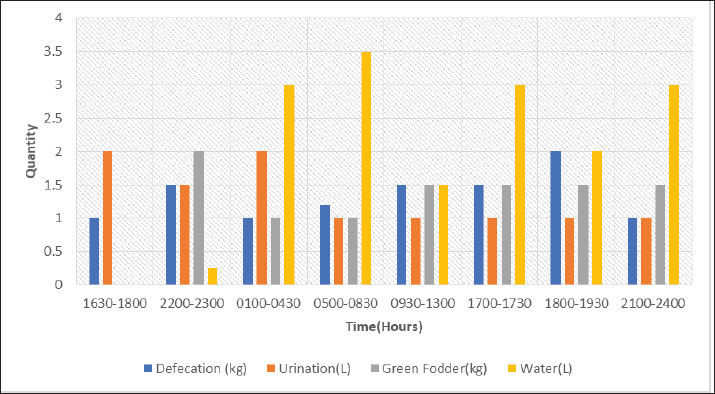
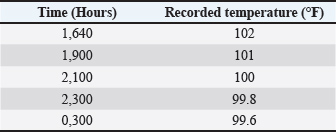
AbstractBackground: Equine colic refers to severe abdominal pain caused by gastrointestinal tract dysfunction. A clinical case of equine colic was reported from a riding school in the Chattogram coastal area of Bangladesh. The animal was a 10-year-old gelding thoroughbred horse with a body weight of 500 kg. Case Description: Visible clinical signs included anorexia, bruxism, restlessness with rolling side to side and pawing by the front leg on both sand and hard surfaces, dehydration, looking at the flank, abdominal distension, and increased intestinal motility detected via rectal palpation. The case was treated using intravenous fluids to rehydrate the animal. Tiemonium methyl-sulphate was administered twice intravenously to mitigate the intestinal spasm. Flunixin meglumine was administered for pain relief. Omeprazole and 7.5% sodium-bi-carbonate was administered twice intravenously to reduce the gastric lesion during colic. Secnidazole was administered empirically due to concerns about bacterial overgrowth. Finally, the symptoms of the animal completely resolved within 12 hours of treatment initiation. Conclusion: The majority of colic cases can be effectively handled through proper management practices. This study has revealed that the affected horse started to respond to the treatment successfully after 12 hours. The major shortcomings of this study are the absence of radiography and ultrasound assessment due to resource constraints. Moreover, the case study was an in-depth analysis of a single case, and further studies are required to determine the possible interactions and outcomes of medication. Keywords: Thoroughbred horse, Colic, Sodium bicarbonate, Flunixin meglumine, Omeprazole. IntroductionColic is a common clinical condition with mild to severe abdominal pain in horses rather than a specific disease. It has become a prime concern for horse owners in Bangladesh. Mild colic may rapidly turn into fatal if left untreated. Colic is recognized as a frequent health concern in horses (Wormstrand et al., 2014). Equine colic represents a medical crisis, with approximately one in five instances potentially becoming life-threatening for horses (Curtis et al., 2015; Bowden et al., 2020). Recurrent colic of any type may indicate underlying conditions such as Equine Gastric Ulcer Syndrome or intestinal adhesions. Intense abdominal discomfort can occur due to persistent acidity for 10 hours or longer. Alternative causes include indigestion, intestinal blockage, abrupt changes in diet, insufficient physical activity, exposure to toxic substances, and a history of colic in horses (Ducharme et al., 1983). Colic can also arise as a result of abdominal surgery-related complications (Xavier et al., 2020). Colic is mainly a condition that needs to be managed, and in most cases, it may resolve independently or can be successfully treated without the need for surgery, except in situations involving strangulated lesions (Van der Linden et al., 2003). However, early diagnosis of colic by radiography or ultrasonography with an understanding of the required effective medication, can help the animal heal quickly. Case DetailsThis case of equine colic was reported from a Riding School in the Chattogram area of Bangladesh. The animal was a 10-year-old thoroughbred gelding weighing approximately 500 kg. The primary obvious sign of the case was abdominal discomfort noted at 16:45 hours and at 17:45 hours, manifested by pawing with forelimbs and repeated rolling, and bruxism (teeth grinding) on both sand and hard surfaces. Refused to take water and feed with a small amount of green fodder. Normal feces were passed twice after the onset of the case with less urination. Previous history revealed its third time colic within the past 2 years. In October 2024, mild pawing and side rolling symptoms were observed. No notable sign of dyspnea, and vigorous restlessness was recorded. The patient recovered within 5–6 hours after following the same treatment protocol used in this study. As of now, it had shown the vigorous restlessness with rolling and pawing, an elevation of temperature 102°F, cessation of water intake, which leads to dehydration (evidenced by marked depression of the supraorbital fossa), abdominal spasm, and bruxism. Therefore, in this context, the animal was confirmed with chronic spasmodic colic. TreatmentThe treatment was started immediately after the onset of colic signs with omeprazole injection at a dose rate of 0.8 mg/kg body weight at 1730 hours to stop further gas production and injection of 100 ml of 7.5% sodium bicarbonate IV to neutralize the persistent acidity. Although, it is commonly used in human medication, it can also exert a rapid recovery in horses due to their simple stomach. In addition, to stop the intestinal spasm, tiemonium methyl sulfate at a dose rate of 0.08 mg/kg body weight was administered intravenously at 1800 hours. During close observation, the animal again identified with pawed and strove to lie down. Flunixin meglumine (1.1 mg/kg IV) was administered for analgesia at 2100 hours. After first dose of Tiemonium Methyl-Sulphate second dose was given at 2300 hours. As the animal was dehydrated and offered lukewarm water, normal and saline water were rejected. At 2,300 hours, 4,000 ml normal saline was infused through the jugular vein at 2300 hours. As the horse was not stable, exercise was performed between fluid infusions when pawing was present. At 100 hours, diazepam at a dose rate of 0.04 mg/kg body weight IV was administered to sedate the horse. Drowsiness became prominent, and 2 hours later, 3,000 ml of water was spontaneously taken. The condition began to improve. Concentrated feed mixed with green fodder was offered at 0400 hours, and intake was 2.5 kg of total mix ration. No further symptoms of colic were noted except for odorous feces. Tab Secnidazole 14 mg/kg body weight with feed for the next 3 days at 24 hours intervals, continued. All the treatments responded positively within the expected time, and the animal started taking the concentrates after the recovery of colic pain. DiscussionIn Table 1, the initial temperature recorded at the start of the colic episode was 102°F. By 1900 hours, the temperature had decreased to 101°F, and by 2,100 hours, it was 100°F. Eventually, between 2300 hours and 300 hours, the temperature declined from 99.8°F to 99.6°F and returned to normal. Heart rate was 85 beats per minute during the onset of pain, which later became normal following treatment. In addition, during colic pain, the respiration rate was slightly higher at approximately 35 breaths per minute. Figure 1 illustrates the history of defecation, urination, green fodder consumption, and water consumption throughout the treatment period. Initially, the feed intake was 2.5 kg, which increased to 3.5 kg by the end of the experiment. Likewise, water uptake increased from 0.25 L to 3 L. Following treatment, the feces became normal, shifting from an abnormally pellet-like consistency and foul state to a well-formed consistency. Urination decreased from 2 L to 1 L after the colic signs were addressed. The frequency of urination decreased over time due to the cessation of water intake in the specified time, which is similar to the findings of Seanor et al. (1984). Flunixin meglumine (1.1 mg/kg IV) was administered for analgesia Radostits et al. (2007). Consistent with Gitari et al. (2017), flunixin meglumine provided effective analgesia, indicating that flunixin meglumine is the most suitable agent for inhibiting visceral pain, effectively alleviating pain for a duration of 8–12 hours, thus addressing uncomplicated medical colic. Dehydration is frequently observed in horses with colic, as indicated by Radostits et al. (2007). This study also identified a notable indication of dehydration. The primary cause of dehydration was enterotoxigenic shock. Sykes and Jokisalo (2015) suggested using antacids to prevent colic-associated gastric ulcers. In this case, omeprazole and sodium bicarbonate were effective in addressing the related gastritis. Owing to the gastrointestinal disturbances caused by flunixin, omeprazole is administered to help alleviate its side effects and decrease the gastric lesions that can occur during colic (Bishop et al., 2022). The animal was kept in an open enclosure for free movement after the onset of colic under close observation. It helps to reduce and expel stomach gas, which ultimately assists in relieving stomach pain.
Fig. 1. Record of defecation, urine, green fodder and water intake. Table 1. Record of the temperature.
ConclusionHorses are susceptible to various medical conditions, such as dermatitis, bacterial and viral infection, laminitis, anorexia, diarrhea, and dehydration, including colic, which can vary in severity from mild to severe and potentially pose serious life threats. The primary reason for colic in horses is digestive system dysfunction. Most colic cases can be successfully managed with prompt and appropriate care. The reported gelding showed the typical symptoms of gastric spasmodic colic with discomfort, frequent lying down, and pawing, whereas the defecation was normal, and urination frequency decreased over the time period due to water intake cessation in the specified time. To alleviate clinical signs, analgesics, tiemonium methyl sulphate, flunixin meglumine, and normal saline, 7.5% Sodium-bi-carbonate, Omeprazole were given for first 12 hours the dose and requirement were calculated. Moreover, secnidazole was administered for three consecutive days to heal the latent wound of the intestine. However, the horse completely recovered from the symptoms of colic within 12 hours, and fecal consistency normalized by day 3. AcknowledgmentsNone reported. Conflict of interestThe authors have no conflicts of interest to declare. No AI-assisted technologies were used in the generation of this manuscript. FundingThe authors received no specific grant for this research. Authors' contributionsR.P.B. reviewed the cases and wrote the manuscript. M.H. conceptualized the study, prepared the table, and reviewed the manuscript. M.A.Z. reviewed the manuscript. Data availabilityThe data supporting the findings of this study are available upon request from the corresponding author. ReferencesBishop, R.C., Kemper, A.M., Wilkins, P.A. and Mccoy, A.M. 2022. Effect of omeprazole and sucralfate on gastrointestinal injury in a fasting/NSAID model. Equine Vet. J. 54, 829–837. Bowden, A., England, G.C.W., Brennan, M.L., Mair, T.S., Furness, W.A., Freeman, S.L. and Burford, J.H. 2020. Indicators of ‘critical’ outcomes in 941 horses seen out-of-hours for colic. Vet. Rec. 187(12), 492. Curtis, L., Burford, J.H., Thomas, J.S.M., Curran, M.L., Bayes, T.C., England, G.C.W. and Freeman, S.L. 2015. Prospective study of the primary evaluation of 1016 horses with clinical signs of abdominal pain by veterinary practitioners, and the differentiation of critical and noncritical cases. Acta Vet. Scand. 57(1), 69. Ducharme, N.G., Hackett, R.P., Ducharme, G.R. and Long, S. 1983. Surgical treatment of colic: results in 181 horses. Vet. Surg. 12, 206–209. Gitari, A., Nguhiu, J., Varma, V. and Mogoa, E. 2017. Occurrence, treatment protocols, and outcomes of colic in horses within Nairobi County, Kenya. Vet. World 10(10), 1255–1263. Radostits, O.M., Gay, C.C., Blood, D.C. and Hinchcliff, K.W. 2007. Veterinary medicine: a text book of the diseases of cattle, sheep, pigs, goats, and horses. Seanor, J.W., Byars, T.D. and Boutcher, J.K. 1984. Renal disease associated with colic in horses. Mod. Vet. Pract. 65, 26–29. Sykes, B.W. and Jokisalo, J.M. 2015. Rethinking equine gastric ulcer syndrome: part 2 – Equine squamous gastric ulcer syndrome (ESGUS). Equine Vet. Educ. 27(5), 264–268. Van Der Linden, M.A., Laffont, C.M. and Van Oldruitenborgh-oosterbaan, M.M.S. 2003. Prognosis in equine medical and surgical colic. J. Vet. Intern. Med. 17, 343–348. Wormstrand, B.H., Ihler, C.F., Diesen, R. and Krontveit, R.I. 2014. Surgical treatment of equine colic - a retrospective study of 297 surgeries in Norway 2005-2011. Acta Vet. Scand. 56, 38. Xavier, M., Anees, R., Vijayakumar, K. and Rathish, R.L. 2020. Management of a case of acute equine colic in Wayanad district, Kerala. J. Indian Vet. Assoc. 18(2), 70–73. | ||
| How to Cite this Article |
| Pubmed Style Borsha RP, Hasan M, Zabbar MA. Chronic spasmodic colic management in a thoroughbred horse: A case report from Bangladesh. Open Vet. J.. 2025; 15(12): 6801-6804. doi:10.5455/OVJ.2025.v15.i12.58 Web Style Borsha RP, Hasan M, Zabbar MA. Chronic spasmodic colic management in a thoroughbred horse: A case report from Bangladesh. https://www.openveterinaryjournal.com/?mno=275204 [Access: June 26, 2026]. doi:10.5455/OVJ.2025.v15.i12.58 AMA (American Medical Association) Style Borsha RP, Hasan M, Zabbar MA. Chronic spasmodic colic management in a thoroughbred horse: A case report from Bangladesh. Open Vet. J.. 2025; 15(12): 6801-6804. doi:10.5455/OVJ.2025.v15.i12.58 Vancouver/ICMJE Style Borsha RP, Hasan M, Zabbar MA. Chronic spasmodic colic management in a thoroughbred horse: A case report from Bangladesh. Open Vet. J.. (2025), [cited June 26, 2026]; 15(12): 6801-6804. doi:10.5455/OVJ.2025.v15.i12.58 Harvard Style Borsha, R. P., Hasan, . M. & Zabbar, . M. A. (2025) Chronic spasmodic colic management in a thoroughbred horse: A case report from Bangladesh. Open Vet. J., 15 (12), 6801-6804. doi:10.5455/OVJ.2025.v15.i12.58 Turabian Style Borsha, Rupsana Perven, Maruf Hasan, and Md. Abdul Zabbar. 2025. Chronic spasmodic colic management in a thoroughbred horse: A case report from Bangladesh. Open Veterinary Journal, 15 (12), 6801-6804. doi:10.5455/OVJ.2025.v15.i12.58 Chicago Style Borsha, Rupsana Perven, Maruf Hasan, and Md. Abdul Zabbar. "Chronic spasmodic colic management in a thoroughbred horse: A case report from Bangladesh." Open Veterinary Journal 15 (2025), 6801-6804. doi:10.5455/OVJ.2025.v15.i12.58 MLA (The Modern Language Association) Style Borsha, Rupsana Perven, Maruf Hasan, and Md. Abdul Zabbar. "Chronic spasmodic colic management in a thoroughbred horse: A case report from Bangladesh." Open Veterinary Journal 15.12 (2025), 6801-6804. Print. doi:10.5455/OVJ.2025.v15.i12.58 APA (American Psychological Association) Style Borsha, R. P., Hasan, . M. & Zabbar, . M. A. (2025) Chronic spasmodic colic management in a thoroughbred horse: A case report from Bangladesh. Open Veterinary Journal, 15 (12), 6801-6804. doi:10.5455/OVJ.2025.v15.i12.58 |


