




| Research Article | ||
Open Vet. J.. 2025; 15(12): 6401-6407 Open Veterinary Journal, (2025), Vol. 15(12): 6401-6407 Research Article Effect of ashwagandha (Withania somnifera) on endocrine and reproductive traits in Awassi sheepAshraf Kamil Azeez1*, Afraah Mustafa Mohammad1, Nawar Bahaa Abdul-jabbar1, Ghadir Kamil Ghadir2 and Zaid Khalid Alani21Department of Animal Production, College of Agriculture, Tikrit University, Tikrit, Iraq 2College of Pharmacy, Al-Farahidi University, Baghdad, Iraq *Corresponding Author: Ashraf Kamil Azeez. Department of Animal Production, College of Agriculture, Tikrit University, Tikrit, Iraq. Email: Ashraf.kamil [at] tu.edu.iq Submitted: 23/07/2025 Revised: 27/10/2025 Accepted: 08/11/2025 Published: 31/12/2025 © 2025 Open Veterinary Journal
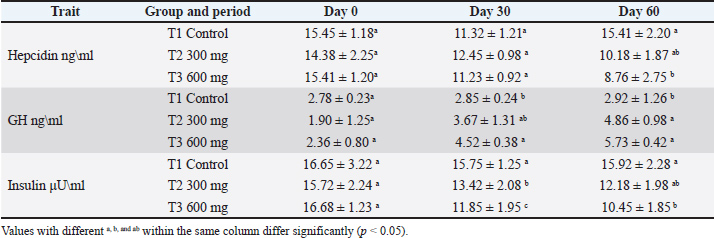
AbstractBackground: Although ashwagandha, or Withania somnifera, is used as a broad-spectrum treatment for a wide range of illnesses, including reproductive issues, and to improve fertility, it is also considered a potent adaptogen and anti-stressor that may assist in improving physical performance. Aim: This study aimed to evaluate the effect of two doses of ashwagandha on physiological and reproductive parameters in Awassi sheep in Iraq. Methods: Thirty Awassi ewes were randomly assigned to three groups (10 each) for 60 days: a control (placebo), 300 mg/day ashwagandha, and 600 mg/day ashwagandha. Physiological (hepcidin, growth hormone, insulin, TSH, T3, T4) and reproductive (estrogen, progesterone, FSH, LH) parameters were measured on days 0, 30, and 60, and body weights were recorded weekly. Results: The experimental data demonstrated that both experimental groups showed increased growth hormone levels along with decreased hepcidin and insulin levels, and thyroid hormone levels (T3 and T4) increased significantly (p < 0.05) in both experimental groups after ashwagandha administration compared to the control group. Both experimental groups demonstrated significantly elevated estrogen, progesterone, and FSH levels compared with the control group. This study demonstrates that ashwagandha supplementation improves the physiological and reproductive functions of Awassi sheep, which can help boost their performance. Conclusion: Ashwagandha supplementation enhanced the metabolic and reproductive performance of Awassi sheep. It lowered insulin and hepcidin levels, increased growth hormone and thyroid hormone levels, and elevated estrogen, progesterone, and FSH levels, indicating improved metabolism and reproductive function. Keywords: Ashwagandha, Awassi sheep, Physiological traits, Reproductive capabilities. IntroductionNumerous bioactive compounds from medicinal plants provide essential treatment modalities for various ailments and health promotion practices dating back to ancient times. The medicinal plant ashwagandha (Withania somnifera) has a prominent position in Ayurveda because it has been used by traditional Indian medicine practitioners for over three millennia (Dar et al., 2016). Ashwagandha, also known as Indian ginseng and Indian winter cherry. The natural habitat of this plant spans arid areas in India, North Africa, and the Middle East (Wiciński et al., 2023). Ashwagandha has gained popularity in recent years because scientific studies have confirmed its anti-stress, anti-inflammatory, antioxidant, anticancer, antidiabetic, and immune-boosting properties (Chandrasekhar et al., 2012). Ashwagandha has a favorable impact on the nervous system and endocrine and reproductive systems (Ambiye et al., 2013). Ashwagandha comprises over 50 active constituents, with withanolide being the predominant steroid lactones. Other components include alkaloids, flavonoids, and glycosides (Gaurav, 2023). The Awassi sheep breed is highly important across Iraq and the Middle East because of its ability to thrive in harsh conditions (Al-Dabbas et al., 2008). Awassi sheep, in particular, make up approximately 58% of Iraq’s livestock, with the ability to improve the agricultural economy and food security systems (Tabbaa et al., 2008). However, Awassi sheep farming in Iraq has a variety of challenges and issues. These issues include decreased reproductive efficiency and effects on environmental, nutritional, and health factors (Alkass et al., 2021). Physiological and reproductive functions of animals are primarily hormonally regulated. Sheep have a variety of crucial physiological hormones, including thyroid hormones (T3 and T4), which regulate metabolism and growth; growth hormone, which stimulates tissue growth and development; hepcidin, which regulates iron absorption and distribution; and insulin, which regulates blood sugar levels (Wiciński et al., 2023). Additionally, estrogen and progesterone are reproductive cycle regulators, whereas follicle-stimulating hormone (FSH) and lactate dehydrogenase Luteinizing hormone (LH) are regulators that stimulate egg development and production (Nasimi Doost Azgomi et al., 2018). Ashwagandha has beneficial effects on the hormonal and endocrine systems in various animal species. According to Sharma et al. (2018), ashwagandha root extract resulted in 41.5% and 19.6% higher levels of human T3 and T4, respectively. Imbibe et al. (2013) showed that ashwagandha increased male testosterone levels by 17% and LH levels by 34%. A study by Rodriguez-Sánchez et al. (2024) showed that two doses of ashwagandha (100 mg/kg and 200 mg/kg) administered to Black Belly rams for 40 days resulted in enhanced scrotal circumference and ejaculate volume while also improving sexual behavior. Although several investigations have examined the effects of ashwagandha on many animal species, research remains deficient about its specific impacts on Awassi sheep, especially regarding physiological and reproductive measures. Therefore, this research will provide the necessary knowledge about the supplementation of ashwagandha in Awassi sheep to improve their physiological and reproductive aspects in Iraq. Hence, the objective of the research is to evaluate the effect of two doses of ashwagandha (300 mg and 600 mg per day) on physiological parameters (hepcidin, growth hormone, TSH, T3, T4, and insulin) and reproductive parameters (estrogen, progesterone, FSH, and LH) in Awassi sheep in Iraq. Materials and MethodsAnimals and experimental designThis study was conducted at a private farm in Samarra, Iraq, from October 1 to December 1, 2024. The study included 30 Awassi ewes aged 2–3 years with an average weight of 45 ± 8 kg. A veterinarian examined all animals before beginning the experiment to confirm that they were healthy and free from diseases and internal and external parasites. Suitable group pens were used to house the animals under environmental conditions, in addition to the animals going out to graze daily. The study animals were randomly assigned to three equal groups of 10 ewes each. Group 1 (control) received the standard diet with a placebo. Group 2: The ewes received their standard diet with a daily supplement of 300 mg of ashwagandha capsules. Group 3: The ewes in this study received their standard diet with an additional 600 mg of Ashwagandha capsulated each day. All animal weights were measured weekly over 60 days (Rodriguez-Sánchez et al., 2020). The standard balanced ration fed to all groups satisfied their nutritional needs according to the 2007 guidelines of the National Research Council. The feed ration included 60% concentrate feed composed of barley, yellow corn, soybean meal, minerals, and vitamins, as well as 40% roughage made up of wheat straw and dried alfalfa. Animals received their feed twice daily during morning and evening sessions (3% of their live body weight) while having access to fresh water all day. Preparation of ashwagandhaThe study sourced high-quality ashwagandha (Withania somnifera) tablets from Himalaya Herbal Health care, which specializes in medicinal plant extracts. The Certificate of Analysis confirmed that each tablet contained 500 mg of standardized ashwagandha root powder with at least 5% withanolide to ensure product quality and concentration. To ensure full consumption of the dose, the ashwagandha tablets were ground and added to a calculated amount of starch to make capsules (300 mg and 600 mg). Each animal from the experimental groups received their individual dose in the morning before feeding to ensure that they consumed their designated dose. Sample collection and measurementBlood samples were collected from all animals at three stages: The blood samples were collected from all animals at three distinct points: before the experiment started on day 0, 30 days into the experiment, and at the conclusion of the experiment on day 60. We collected 10 ml of blood samples from the jugular vein before feeding in the early morning through sterile Vacutainer tubes without anticoagulant for blood serum collection. Serum was separated by centrifugation at 3,000 rpm for 15 minutes, then the samples were distributed into Eppendorf tubes and storing them at −20°C until analysis. Hormonal testsSerum levels of multiple hormones were measured using enzyme-linked immunosorbent assay (ELISA) technology with a commercial kit specifically designed by Cusabio Biotech Co., Ltd, China, following the manufacturer’s instructions. Each test was measured using a microplate reader operating at wavelengths that matched the manufacturer’s instructions for the respective tests. Statistical analysisSAS (version 9.4) software (SAS Institute, Cary, North Carolina, USA) was used for the statistical analysis of the data. Data analysis was conducted using a complete randomized design (CRD). The following statistical model was used to identify the significant differences between treatments using Duncan’s multiple range test with a p < 0.05 significance level: Yij=μ + Ti + eij. Ethical approvalThe experimental animal treatment approach has obtained ethical approval from the Department of Animal Production, College of Agriculture, Tikrit University, Iraq, dated September 7, 2024. ResultsEffect of ashwagandha on physiological traitsHepcidin, growth hormone, and insulin levelsThe effect of adding two different doses of ashwagandha (300 and 600 mg) on the level of hepcidin in the blood serum of Awassi sheep during the experimental period is shown in Table 1. The results showed no significant differences in the level of hepcidin between the three groups before the start of the experiment (day 0) and after 30 days. However, at the end of the experiment (day 60), there was a significant decrease (p < 0.05) in the level of hepcidin in the third experimental group compared with the control. Additionally, blood serum growth hormone levels during the trial period are shown in Table 1. The results showed no significant difference between the three groups at the beginning of the experiment. However, at 30 days, a significant increase (p < 0.05) in the growth hormone level was observed in the third group compared with the control group. At the end of the experiment (day 60), a significant increase (p < 0.05) in the growth hormone level was recorded in both experimental (2nd and 3rd) groups compared to the control group. Table 1. Effect of ashwagandha on the levels of hepcidin, GH, and insulin.
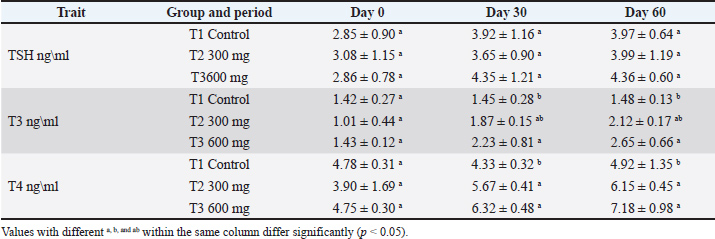
TSH, T3, and T4The TSH levels in the three groups did not differ significantly over the trial period (Table 2). Awassi sheep’s blood serum T3 hormone levels during the experiment period showed no significant differences among the three groups prior to the start of the experiment (Table 2), but 30 and 60 days after the experiment began, there was a significant increase (p < 0.05) in the third group’s T3 hormone levels when compared to the control group. Additionally, the same table (Table 2) shows how ashwagandha affected the amount of T4 hormone in the Awassi sheep’s blood serum over the course of the trial. According to the results, the levels of T4 hormone in the three groups did not differ significantly prior to the experiment. The levels of T4 hormone in the two experimental groups were significantly higher (p < 0.05) than in the control group 30 and 60 days after the experiment began. Table 2. Effect of ashwagandha on TSH, T3, and T4 hormone levels.
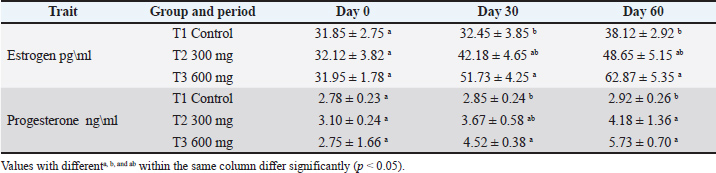
Effect of ashwagandha on reproductive traitsEstrogen and progesterone levelsTable 3 shows the impact of administering two distinct dosages of ashwagandha on the amount of estrogen in the blood serum of Awassi sheep throughout the trial. Before the experiment began, the results revealed no significant differences in the estrogen levels of the three groups. However, 30 days after the experiment began, the third group’s estrogen levels significantly increased (p < 0.05) compared to the control group during both the 30- and 60-day experimental periods. The female sex hormone estrogen plays a key role in fertility and regulates the development of secondary sexual characteristics in women and the reproductive cycle. Table 3 illustrates how the addition of ashwagandha affected progesterone levels during the experimental period. Before the trial, the progesterone levels in each group were not significantly different from one another. However, after 30 and 60 days of the experiment, the progesterone levels of the third experimental group significantly increased (p < 0.05) compared to the control group. Table 3. Serum estrogen and progesterone concentrations in Awassi ewes supplemented with different ashwagandha doses.
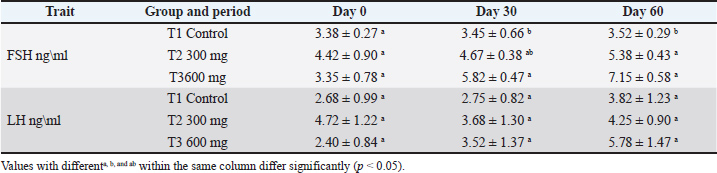
FSH and LH levelsTable 4 shows the effect of ashwagandha supplementation on the FSH level in the blood serum of Awassi sheep during the trial period. The results did not reveal a significant difference in FSH levels between the three groups prior to the trial, but 30 days after the experiment started, the third treatment’s FSH level significantly increased (p < 0.05) in comparison to the control, and sixty days later (day 60), the two experimental treatments’ FSH levels significantly increased (p < 0.05) in comparison to the control. Additionally, Table 4 demonstrated how Ashwagandha affected the LH level in the blood serum of Awassi sheep during the trial; there was no discernible variation in LH levels across the three groups at this time. Table 4. Serum FSH and LH concentrations in Awassi ewes supplemented with different ashwagandha doses.
DiscussionHigh hepcidin levels limit the release of iron from storage and decrease iron absorption from the intestine, making it a crucial hormone in controlling iron distribution and absorption in the body (Ganz, 2011). Therefore, a decrease in this hormone may result in increased iron absorption and availability for various vital bodily functions. The outcomes are consistent with those of Sehgal et al. (2015), who found that ashwagandha extract improved iron absorption and raised hemoglobin levels in anemic mice by lowering hepcidin levels. They also support the findings of Mishra et al. (2000), who discovered that the active ingredients of ashwagandha, particularly withanolides, control the expression of the hepcidin gene in the liver, lowering the blood levels of the enzyme. Since inflammation stimulates the production of hepcidin, the effect can be explained by the capacity of ashwagandha to reduce inflammation and enhance liver function (Chandrasekhar et al., 2012). Strong antioxidants found in ashwagandha also shield and enhance the activity of liver cells, which may have an effect on the synthesis of hepcidin (Dar et al., 2016). Growth hormone is a vital hormone that controls the metabolism and growth processes of the body. It is responsible for controlling blood sugar and lipid levels as well as promoting the growth of bone and muscle (Wiciński et al., 2023). These outcomes are consistent with those of Raut et al. (2012), who found that after 30 days of treatment, the administration of ashwagandha extract increased the growth hormone levels of mice by as much as 25%. Additionally, these results align with a study performed by Archana and Madhavan (2011) that showed that ashwagandha extract increased the release of pituitary growth hormone, possibly due to its effects on the hypothalamic–pituitary–adrenal axis. Ashwagandha may have the effect that has been observed because it regulates the hypothalamic–pituitary–adrenal axis, which lowers cortisol levels and increases the release of growth hormone (Chandrasekhar et al., 2012). Ashwagandha's active ingredients, particularly withanolides, may also activate GABA receptors in the brain, which could influence the pituitary gland's production of growth hormone and other hormones from the hypothalamus (Wiciński et al., 2023). Insulin is a crucial hormone that controls blood sugar levels because it makes it easier for glucose to enter cells and be used as an energy source (Gaurav, 2023). Both the study by Andallu and Radhika (2000) which demonstrated that ashwagandha lowers blood sugar and insulin levels in patients with type 2 diabetes, and the findings of Anwer et al. (2008) who discovered that ashwagandha extract lowers blood insulin levels and improves cell sensitivity to it in mice with insulin resistance, are in agreement with these findings. Ashwagandha’s capacity to increase cell sensitivity to insulin may account for this impact, as it reduces the requirement for high doses of the hormone to maintain normal blood sugar levels (Anwer et al., 2008). The active ingredients of ashwagandha, particularly its flavonoids and withanolides, may also control the expression of genes for proteins such as IRS-1 and GLUT4, which are involved in glucose metabolism, enhancing cells’ reaction to insulin (Gaurav, 2023). Thyroid hormones (T3 and T4) play a crucial role in controlling the body’s growth, development, and metabolism (Wiciński et al., 2023). These findings agree with those of Panda and Kar (1999) who demonstrated that ashwagandha improves thyroid function and raises thyroid hormone levels in mice. Sharma et al. (2018) also found that after 8 weeks of treatment, ashwagandha root extract increased T3 levels by 41.5% and T4 levels by 19.6% in patients with SCH. Ashwagandha’s capacity to enhance thyroid function and modulate the hypothalamic–pituitary–thyroid axis may account for this impact (Wiciński et al., 2023). Even though it was not statistically significant, the active compounds in ashwagandha, especially withanolides, may also increase the pituitary gland’s production of TSH, which in turn causes the thyroid gland to produce more T3 and T4 (Sharma et al., 2018). Furthermore, the anti-inflammatory and antioxidant qualities of ashwagandha may shield the thyroid gland from inflammation and oxidative stress, enhancing its functionality (Dar et al., 2016). These findings are consistent with those of Nasimi Doost Nasimi Doost Azgomi et al. (2018) who showed in their systematic review that ashwagandha can increase estrogen levels in female mice by up to 32% during a 30-day treatment period. These results also align with a study by Mahdi et al. (2011) that showed that ashwagandha enhances women’s reproductive function by controlling sex hormones, particularly estrogen, levels. Ashwagandha’s capacity to enhance ovarian function and control the hypothalamic–pituitary–ovarian axis may account for this impact (Wiciński et al., 2023). According to Nasimi Doost Nasimi Doost Azgomi et al. (2018), the active ingredients in ashwagandha, especially withanolides, may also enhance the production of FSH in the pituitary gland, which would increase the production of estrogen in the ovaries. Additionally, the anti-inflammatory and antioxidant qualities of ashwagandha may shield the ovaries from inflammation and oxidative stress, enhancing their functionality (Dar et al., 2016). According to Nasimi Doost Azgomi et al. (2018), progesterone is a crucial female sex hormone that controls the reproductive cycle and primes the uterine lining for pregnancy. These outcomes align with the results of a systematic study by Nasimi Doost Nasimi Doost Azgomi et al. (2018), who showed that ashwagandha increases progesterone levels in female rats by as much as 45% during a 30-day treatment period. Furthermore, they follow research by Mahdi et al. (2011), who demonstrated that ashwagandha improved women’s reproductive function by adjusting progesterone and other sex hormone levels. This may be because ashwagandha can improve the function of the ovaries and the corpus luteum, which produces progesterone, and help control the hypothalamic–pituitary–ovarian axis (Wiciński et al., 2023). FSH and LH levelsThe pituitary gland secretes two crucial gonadotropins, FSH and LH, which control gonadal functions in both males and females (Wiciński et al., 2023). These findings align with the research conducted by Rodriguez-Sánchez et al. (2024), who demonstrated that ashwagandha enhances the fertility and sexual behavior of black belly rams by controlling the levels of reproductive hormones, such as FSH. However, these outcomes contradict those of Ambiye et al. (2013), who discovered that after 90 days of therapy, ashwagandha root extract increased the LH levels of male rams by 34%. Ashwagandha’s capacity to enhance pituitary function and control the hypothalamic–pituitary–gonadal (HPG) axis may account for this impact (Wiciński et al., 2023). Additionally, ashwagandha’s ability to lower cortisol levels may contribute to an increase in gonadotropin secretion, as elevated cortisol inhibits GnRH secretion, which in turn reduces FSH and LH secretion (Chandrasekhar et al., 2012). Ashwagandha’s active compounds may stimulate GABA receptors in the hypothalamus, facilitating the secretion of GnRH, which in turn stimulates the release of FSH from the pituitary gland (Ambiye et al., 2013). The study focused on hormonal indicators because they directly reveal metabolic and reproductive responses to ashwagandha. Parameters such as hematology or body weight were not necessary for the study aims, although they could be included in future work to complement these outcomes. ConclusionThe results of this study confirm the positive impact of ashwagandha supplementation on physiological and reproductive parameters in Awassi sheep. Ashwagandha treatment groups at both 300 and 600 mg doses exhibited significant reductions in hepcidin and insulin levels. Lower hepcidin levels suggest improved iron absorption, and reduced insulin levels indicate enhanced insulin sensitivity. In addition, both doses significantly increased the levels of growth hormone, T3, and T4, reflecting a positive effect on metabolic functions and growth. The findings also revealed significant improvements in reproductive hormones. Estrogen, progesterone, and follicle-stimulating hormone levels were significantly elevated in the ashwagandha-treated groups, indicating enhanced reproductive functions. These results support the hypothesis that ashwagandha possesses therapeutic properties as a natural, safe, and effective supplement to enhance the physiological and reproductive performance of Awassi sheep. The study recommends a daily dose of 600 mg for optimal results and suggests potential applications in other livestock species. Further research is needed to explore the long-term effects, optimal dosages, and economic feasibility of using ashwagandha to improve animal productivity and food security in Iraq. AcknowledgmentThe authors would like to thank the Department of Animal Production, College of Agriculture, Tikrit University, Iraq. FundingNo funding. Authors’ contributionsAshraf Kamil Azeez and Afrah Mustafa Mohammad conducted the research, prepared the manuscripts, and ensured the accuracy of descriptions. The primary authors, Nawar Bahaa Abdul-Jabbar and Ghadir Kamil Ghadir, collected the samples and processed the research data. Zaid Khalid Alani developed the research strategy, organized the content, performed statistical analysis, and edited the manuscript. Conflict of interestThe authors have no conflicts of interest to declare. Data availabilityLaboratory investigations were carried out in the physiology labs of Tikrit and Samarra Universities, while the experiment was carried out in the animal field of the National Crops Project (Samarra) in 2025. In order to find the most current and pertinent data on sheep and their physiological reactions, the references utilized in this study were gathered from scientific databases including Scopus, PubMed, and Web of Science, using keywords and thorough searches. ReferencesAl-Dabbas, F.M., Hamra, A.H. and Awawdeh, F.T. 2008. Effect of vitamin A or E supplementation on reproductive performance and milk production in Awassi ewes. Livestock Res. For Rural Develop. 20(12), 1–10. Alkass, J.E., Hermiz, H.N. and Baper, M.I. 2021. Aspects of reproductive efficiency in Awassi ewes: a review of the literature. Iraqi. J. Agricult. Sci. 52(1), 20–27. Ambiye, V.R., Langade, D., Dongre, S., Aptikar, P., Kulkarni, M. and Dongre, A. 2013. Clinical evaluation of the spermatogenic activity of the root extract of Ashwagandha (Withania somnifera) in oligospermic males: a pilot study. Evidence-Based. Complementary Alternative Med. 2013, 571420. Andallu, B. and Radhika, B. 2000. Hypoglycemic, diuretic, and hypocholesterolemic effects of winter cherry (Withania somnifera, Dunal) root. Indian J. Exp. Biol. 38(6), 607–609. Anwer, T., Sharma, M., Pillai, K.K. and Iqbal, M. 2008. Effect of Withania somnifera on insulin sensitivity in rats with non-insulin-dependent diabetes mellitus. Basic Clin. Pharmacol. &. Toxicol. 102(6), 498–503. Archana, R., and Namasivayam, A. 2011. Antistressor effect of Withania somnifera on brain neurotransmitters in rats. J. Ethnopharmacol. 134(3), 974–979. Chandrasekhar, K., Kapoor, J. and Anishetty, S. 2012. A prospective, randomized double-blind, placebo-controlled study of safety and efficacy of a high-concentration full-spectrum extract of ashwagandha root in reducing stress and anxiety in adults. Indian J. Psychol. Med. 34(3), 255–262. Doi: 10.4103/0253-7176.106022 Dar, P.A., Singh, L.R., Kamal, M.A. and Dar, T.A. 2016. Unique medicinal properties of W. somnifera: phytochemical components and therapeutic potential. Curr. Pharm. Design 22(5), 535–540. Ganz, T. 2011. Hepcidin and iron regulation 10 years later. Blood 117(17), 4425–4433. Gaurav, K. 2023. Ashwagandha (Withania somnifera): a comprehensive review of its pharmacological activities, phytochemistry, and therapeutic applications. J. Ethnopharmacology. 301, 115848. Mahdi, A.A., Shukla, K.K., Ahmad, M.K., Rajender, S., Shankhwar, S.N., Singh, V. and Dalela, D. 2011. I. W. somnifera improves semen quality in stress-related male fertility. Evidence-Based. Complementary. Alternative. Med. 2011, 576962. Mishra, L.C., Singh, B.B. and Dagenais, S. 2000. Scientific basis for the therapeutic use of W. somnifera (ashwagandha): a review. Alternative. Med. Rev. 5(4), 334–346. Nasimi Doost Azgomi, R., Zomorrodi, A., Nazemyieh, H., Fazljou, S.M.B., Sadeghi Bazargani, H., Nejatbakhsh, F., Moini Jazani, A. and Ahmadi Asrbadr, Y. 2018. Effects of Withania somnifera on reproductive system: a systematic review of the available evidence. BioMed. Res. Int. 2018, 4076430. Panda, S. and Kar, A. 1999. Withania somnifera and Bauhinia purpurea regulate circulating thyroid hormone concentrations in female mice. J. Ethnopharmacology 67(2), 233–239. Raut, A. A., Rege, N. N., Tadvi, F. M., Solanki, P. V., Kene, K. R., Shirolkar, S. G. and Pandey, S. N. 2012. Exploratory study to evaluate tolerability, safety, and activity of Ashwagandha (Withania somnifera) in healthy volunteers. J. Ayurveda Integr. Med. 3(3), 111 -114. Rodriguez-Sánchez, A.J., Meza-Herrera, C.A., De Santiago-miramontes, A., Navarrete-Molina, C., Veliz-Deras, F.G., Ordoñez-Morales, J.Z., Flores-Salas, J.M. and Marin-Tinoco, R.I. 2024. Circular economy, dairy cow feed leftovers, and Withania somnifera supplementation: effects on Black Belly ram's libido, sperm quality, sexual behavior, and hemogram values. Biology 13(9), 656. Rodriguez-Sánchez, J.A., Salem, A.Z.M., Kholif, A.E. and Elghandour, M.M.M. 2020. Influence of W. somnifera extract and monensin on dairy ewe performance, metabolic status, and methane production. Anim. Feed. Sci. Technol. 264, 114469. Sehgal, N., Gupta, A., Valli, R.K., Joshi, S.D., Mills, J.T., Hamel, E., Khanna, P., Jain, S.C., Thakur, S.S. and Ravindranath, V. 2015. Withania somnifera reverses the pathology of Alzheimer’s disease by enhancing low-density lipoprotein receptor-related protein in the liver. Proc. Nat. Acad. Sci. 109(9), 3510–3515. Sharma, A. K., Basu, I. and Singh, S. 2018. Efficacy and safety of ashwagandha root extract in subclinical hypothyroid patients: a double-blind, randomized placebo-controlled trial. J. Altern. Complement. Med. 24(3), 243–248. Doi: 10.1089/acm.2017.0183 Tabbaa, M.J., Alnimer, M.A., Shboul, M. and Titi, H.H. 2008. Reproductive characteristics of Awassi ewes artificially or naturally mated with Jordanian or Syrian Awassi rams. Anim. Reprod. 5(1/2), 23–29. Wiciński, M., Fajkiel-Madajczyk, A., Kurant, Z., Kurant, D., Gryczka, K., Falkowski, M., Wiśniewska, M., Słupski, M., Ohla, J. and Zabrzyński, J. 2023. Can ashwagandha benefit the endocrine system?—a review. Int. J. Mol. Sci. 24(22), 16513. | ||
| How to Cite this Article |
| Pubmed Style Azeez AK, Mohammad AM, Abdul-jabbar NB, Ghadir GK, Alani ZK. Effect of ashwagandha (Withania somnifera) on endocrine and reproductive traits in Awassi sheep. Open Vet. J.. 2025; 15(12): 6401-6407. doi:10.5455/OVJ.2025.v15.i12.24 Web Style Azeez AK, Mohammad AM, Abdul-jabbar NB, Ghadir GK, Alani ZK. Effect of ashwagandha (Withania somnifera) on endocrine and reproductive traits in Awassi sheep. https://www.openveterinaryjournal.com/?mno=272762 [Access: June 26, 2026]. doi:10.5455/OVJ.2025.v15.i12.24 AMA (American Medical Association) Style Azeez AK, Mohammad AM, Abdul-jabbar NB, Ghadir GK, Alani ZK. Effect of ashwagandha (Withania somnifera) on endocrine and reproductive traits in Awassi sheep. Open Vet. J.. 2025; 15(12): 6401-6407. doi:10.5455/OVJ.2025.v15.i12.24 Vancouver/ICMJE Style Azeez AK, Mohammad AM, Abdul-jabbar NB, Ghadir GK, Alani ZK. Effect of ashwagandha (Withania somnifera) on endocrine and reproductive traits in Awassi sheep. Open Vet. J.. (2025), [cited June 26, 2026]; 15(12): 6401-6407. doi:10.5455/OVJ.2025.v15.i12.24 Harvard Style Azeez, A. K., Mohammad, . A. M., Abdul-jabbar, . N. B., Ghadir, . G. K. & Alani, . Z. K. (2025) Effect of ashwagandha (Withania somnifera) on endocrine and reproductive traits in Awassi sheep. Open Vet. J., 15 (12), 6401-6407. doi:10.5455/OVJ.2025.v15.i12.24 Turabian Style Azeez, Ashraf Kamil, Afraah Mustafa Mohammad, Nawar Bahaa Abdul-jabbar, Ghadir Kamil Ghadir, and Zaid Khalid Alani. 2025. Effect of ashwagandha (Withania somnifera) on endocrine and reproductive traits in Awassi sheep. Open Veterinary Journal, 15 (12), 6401-6407. doi:10.5455/OVJ.2025.v15.i12.24 Chicago Style Azeez, Ashraf Kamil, Afraah Mustafa Mohammad, Nawar Bahaa Abdul-jabbar, Ghadir Kamil Ghadir, and Zaid Khalid Alani. "Effect of ashwagandha (Withania somnifera) on endocrine and reproductive traits in Awassi sheep." Open Veterinary Journal 15 (2025), 6401-6407. doi:10.5455/OVJ.2025.v15.i12.24 MLA (The Modern Language Association) Style Azeez, Ashraf Kamil, Afraah Mustafa Mohammad, Nawar Bahaa Abdul-jabbar, Ghadir Kamil Ghadir, and Zaid Khalid Alani. "Effect of ashwagandha (Withania somnifera) on endocrine and reproductive traits in Awassi sheep." Open Veterinary Journal 15.12 (2025), 6401-6407. Print. doi:10.5455/OVJ.2025.v15.i12.24 APA (American Psychological Association) Style Azeez, A. K., Mohammad, . A. M., Abdul-jabbar, . N. B., Ghadir, . G. K. & Alani, . Z. K. (2025) Effect of ashwagandha (Withania somnifera) on endocrine and reproductive traits in Awassi sheep. Open Veterinary Journal, 15 (12), 6401-6407. doi:10.5455/OVJ.2025.v15.i12.24 |


