





| Research Article | ||
Open Vet. J.. 2026; 16(8): 5624-5630 !
Open Veterinary Journal, (2026), Vol. 16(8): 5624–5630 Research Article Epidemiological investigation of tick parasitism and associated risk factors in dromedary camels from central LibyaKhdija Suleman Mohamed Ali*Department of Zoology, Faculty of Science, Aljufra University, Aljufra, Libya *Corresponding Author: Khdija Suleman Mohamed Ali. Department of Zoology, Faculty of Science, Aljufra University, Aljufra, Libya. Email: khdija.ali [at] ju.edu.ly Submitted: 19/05/2026 Revised: 19/06/2026 Accepted: 26/06/2026 Published: 20/08/2026 © 2025 Open Veterinary Journal
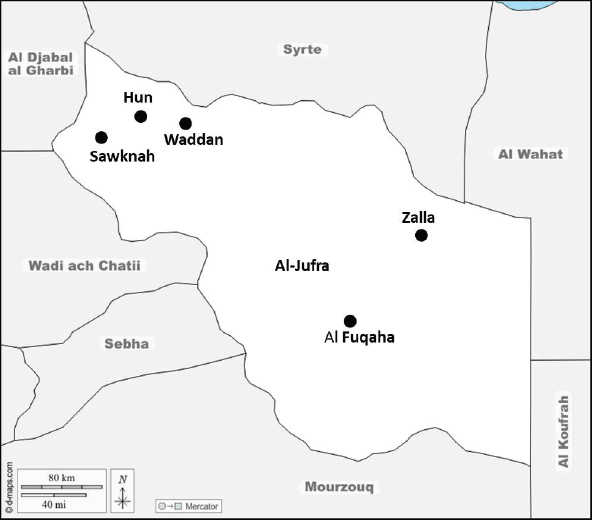
AbstractBackground: Infestation with ticks is a principal problem faced by camel herds in arid and semiarid areas. In addition to their harmful effects on economic status, ticks play an essential role in the transmission of various pathogens that are vital for veterinary and human medicine. However, there is little data available on tick infestations of dromedary camels in Libya. Aim: This study aimed to estimate the prevalence and intensity of tick infestations and analyze some epidemiological risk factors of tick infestations among dromedary camels (Camelus dromedarius) in Central Libya. Methods: An epidemiological study was conducted on 600 randomly chosen camels of different ages and sex groups between January 2024 and December 2025. Demographic characteristics, including age, sex, anti-tick treatment, and seasonal migration, were obtained by interviewing the farmers through a structured questionnaire. The intensity of tick infestation was classified as mild, moderate, or severe, based on the number of ticks collected per animal. Morphological identification of tick species was performed, and associations of tick infestations and investigated epidemiological risk factors were estimated using the chi-square test. Results: The prevalence of tick infestations was 97.8% (587/600). All collected tick samples were identified as Hyalomma dromedarii. Severe tick infestations prevailed (38.5%), and moderate and mild tick infestations accounted for 30.2% and 29.2%, respectively, whereas only 2.2% of the camels examined lacked tick infestations. Although the prevalence rate of tick infestations was somewhat different depending on age, sex, anti-tick treatment, and seasonal migration, none of these factors exhibited any statistically significant association with tick infestations (P > 0.05). The prevalence of tick infestation was highest in camels aged > 7 years (99.0%). Conclusion: This study showed a very high prevalence of tick infestation among dromedary camels in Central Libya, with H. dromedarii being the predominant tick species. The predominance of moderate and severe infestation levels highlights the need for improved tick control measures and continuous epidemiological surveillance. Further studies incorporating molecular detection of tick-borne pathogens and acaricide resistance assessment are recommended. Keywords: Camelus dromedarius, Hyalomma dromedarii, Libya, Risk factors, Tick infestation. IntroductionThe one-humped camel (Camelus dromedarius) is a key component in livestock production systems in arid and semi-arid areas, especially in North Africa and the Middle East, playing a vital role in food security via meat and milk production, traditional transport, and pastoralism. Despite their impressive adaptive mechanisms to desert conditions, dromedary camels are highly vulnerable to ectoparasite infestations, particularly by ticks, which represent one of the most challenging problems in camel health and productivity in extensive and semi-intensive production systems (Diall, 2022; Wasswa et al., 2026) Ticks represent a major problem in veterinary and public health because they directly affect host animals by causing blood loss, skin irritation, reduced body condition, and decreased productivity. Indirectly, they are responsible for transmitting several pathogens, including Anaplasma spp., Theileria spp., Rickettsia spp., and the highly pathogenic CCHFV (Tawana et al., 2022; Abdelbaset et al., 2023; El-Alfy et al., 2024). As such, tick infestation in camels is increasingly becoming a health challenge that requires attention because it involves interactions among the health of animals, humans, and ecosystems. The genus Hyalomma, especially H. dromedarii, represents the most prevalent parasite of camels in arid and hyper-arid ecosystems. This tick is highly adaptable to extreme temperatures and water scarcity, allowing it to survive in desert ecosystems in North Africa, including Libya (Aziz et al., 2026). It shows high ecological fitness, correlated with favorable environmental and host conditions, making camels its main reservoir host in such ecosystems (Thinhinan et al., 2023). Recent findings indicate that climate change, increasing temperature, habitat modification, and increased movement of animals have contributed to changes in tick populations’ geographical and seasonal distribution. These environmental determinants also increase the risk of tick-borne diseases (Parola and Raoult, 2019). In North African countries, including Libya, there is a paucity of epidemiological data on tick infestation in camels, especially in the central regions of the country. Currently, there are few reports indicating that H. dromedarii is the most dominant species, together with occasional occurrences of Rhipicephalus spp. and Haemaphysalis spp., with variations in prevalence attributable to seasonal and environmental determinants (El-Metenawy et al., 2023; Yirsa et al., 2025). Several studies have reported widespread infestations of hard ticks in domestic animals in Libya. Surveys conducted in various parts of Libya have recently demonstrated a diverse range of tick species, with Hyalomma spp. being the most dominant tick genus in livestock (Eljadar et al., 2022; Shebani et al., 2024). However, studies focusing on host- and management-related risk factors are lacking (Elmhallia and Garboui, 2024). The prevalence and intensity of tick infestation depend on several host- and environmental-related variables, such as age, sex, body condition, management system, grazing habit, and seasonality (Khan et al., 2022). These findings demonstrate the interplay between host characteristics and environmental exposure in determining tick distribution patternsthe distribution pattern of ticks (Nuttall, 2021; El-Alfy et al., 2024). In addition to being significant ectoparasites, ticks are vectors of a broad spectrum of pathogens infecting animals and humans. In North Africa, ticks associated with camels, especially H. dromedarii, have been shown to transmit a number of tick-borne pathogens such as Anaplasma spp., Babesia spp., Theileria spp., Coxiella burnetii, and Rickettsia spp. Recent studies in Libya and nearby countries revealed the presence of zoonotic and veterinary-important pathogens in ticks collected from livestock and camels, underscoring the increasing importance of tick-borne diseases in the region (Abdelkadir et al., 2019; Abdelbaset et al., 2023; Djiman et al., 2024). Moreover, a systematic review by El-Alfy et al. (2024) showed that dromedary camels in North Africa and the Middle East play the role of hosts and reservoirs for a number of tick-borne pathogens. In Libya, molecular screening of tick-associated bacteria and protozoa showed that camels and their ticks could play a crucial role in the epidemiology of zoonotic and transboundary pathogens (Eljadar et al., 2022; Fahmy et al., 2024). The ecological adaptation of H. dromedarii to the arid habitat and its prevalence in dromedary camels necessitate the continuous epidemiological surveillance of tick infestations. Tick infestation constitutes one of the significant limiting factors to livestock production, leading to considerable economic losses due to blood loss, skin damage, decreased growth rate, milk production, and fertility, and expenses incurred for management and control (Benakhla et al., 2018; Dantas-Torres, 2019; Ahmed et al., 2021). Severe infestation may cause stress, anemia, and secondary infections, which would reduce animal productivity. The most common camel ticks include H. dromedarii, which is regarded as the major tick species in arid and semi-arid environments due to its great ability to survive under desert conditions and being a known vector for various pathogens of both medical and veterinary significance (Elati et al., 2021; Aziz et al., 2026). Recent studies have emphasized the increasing significance of camel ticks in the epidemiology of tick-borne diseases in North Africa and adjacent areas (Abdelbaset et al., 2023; Djiman et al., 2024; El-Alfy et al., 2024). However, despite their economic and epidemiological importance, very few reports have been published on tick infestation and associated risk factors among camels in Central Libya. Therefore, the current study was designed to assess the prevalence of tick infestation and the selected risk factors among dromedary camels in Central Libya. Although the economic and epidemiological relevance of dromedary camel farming in Libya is currently growing, there is still a dearth of up-to-date information regarding tick infestations among dromedary camels in the central region of Libya. Hence, this study was designed to determine the prevalence of tick infestations among dromedary camels in Central Libya and the correlation between infestation prevalence and some epidemiological risk factors, including age, sex, infestation intensity, treatment, seasonal migration, and clinical symptoms. Materials and MethodsStudy area and study periodThis cross-sectional epidemiological study was conducted between January 2024 and December 2025 in Al-Jufra District, Central Libya. The study area is characterized by an arid desert climate and is located between 27°–29° N latitude and 15°–18° E longitude. The region experiences extremely hot summers and mild winters, with average annual temperatures ranging from 22°C to 30°C and summer temperatures frequently exceeding 40°C. Relative humidity is generally low (20%–40%), while annual rainfall is scarce and irregular, typically below 50 mm. Livestock production in the area is predominantly based on extensive pastoral systems involving long-distance grazing and seasonal animal movements in search of pasture and water resources. These environmental and management conditions provide favorable habitats for the survival and maintenance of camel-associated ticks, particularly Hyalomma spp. (Estrada-Peña and de la Fuente, 2021). Figure 1 shows a map of the geographical location of the study area and sampling sites. Study animalsA total of 600 dromedary camels (C. dromedarius) of different ages and both sexes were randomly selected from the study area. Herds were included based on accessibility and willingness of owners to participate in the study. The number of camels examined varied among herds depending on herd size and the owner’s consent, with approximately 18–50 camels sampled per herd. Because camel production in the study area is predominantly based on extensive pastoral systems with mobile and variable herd structures, the exact number of participating herds was not recorded. Therefore, herd selection was based on accessibility and owner willingness (convenience sampling), whereas individual camels within accessible herds were randomly selected whenever possible. During each herd visit, animals were randomly selected whenever possible. Camels were categorized into 4 age groups: <1 year, 1–3 years, 4–7 years, and >7 years. Age determination was based on the owners’ records and dentition examination when applicable. These age categories were established for the epidemiological comparison. Age, sex, tick infestation status, infestation intensity, antitick treatment, and seasonal migration were recorded for each animal. The movement of camels between grazing areas in search of pasture and water resources was defined as seasonal migration. The type of acaricide used, frequency of application, and time since the last treatment were not consistently available for all examined animals. Tick examination and infestation intensity assessmentCamels were physically restrained and systematically examined for ticks. Ticks were collected from common predilection sites, including the ears, neck, axillary region, inguinal region, and tail area, using forceps to avoid damage to the mouth. Animals were classified as either infested or non-infested. The intensity of tick infestation was determined according to the total number of ticks collected from each camel. Because no standardized classification system for tick infestation intensity in camels is currently available, infestation intensity was categorized for epidemiological purposes as mild (<50 ticks/animal), moderate (50–100 ticks/animal), or severe (>100 ticks/animal). The collected tick specimens were examined under a Leica EZ4 stereomicroscope (Leica Microsystems, Wetzlar, Germany) and identified morphologically using the taxonomic keys described by Walker et al. (2003) and Estrada-Peña et al. (2018). Specimens were initially assigned to the genus Hyalomma based on characteristic morphological features, including prominent lateral eyes, festoons along the posterior body margin, elongated mouthparts, and pale-banded legs. Species identification was subsequently confirmed as H. dromedarii using diagnostic characteristics such as the morphology of the basis capituli, scutum, spiracular plates, adanal and subanal plates in males, and the shape of the genital aperture in females. All collected specimens were identified as H. dromedarii based on these criteria.
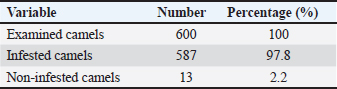
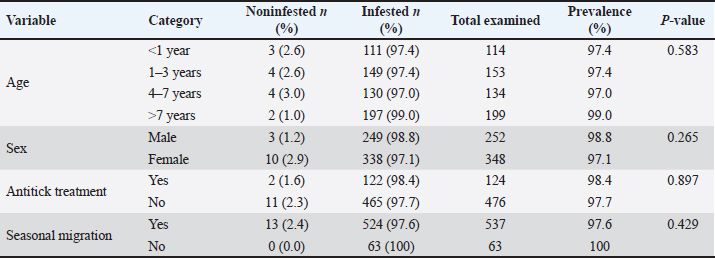
Fig. 1. Geographic distribution of the study area and sampling sites of dromedary camels in Al-Jufra District, Central Libya. Statistical analysisData were analyzed using SPSS version 25 (IBM Corp., Armonk, NY, USA). Descriptive statistics were used to determine the prevalence and intensity of tick infestation. Associations between tick infestation status and categorical epidemiological variables were assessed using the chi-square test. Prior to the analysis, the assumptions of the chi-square test were evaluated by examining the expected cell frequencies. Statistical significance was set at P < 0.05. Ethical approvalThe study involved noninvasive physical examination and tick collection procedures routinely used in field epidemiological investigations. To minimize stress and discomfort, all animals were handled in accordance with accepted animal welfare practices. Verbal informed consent was obtained from camel owners before their animals were included in the study. ResultsTotal prevalence of tick infestations in camelsIn total, 600 dromedary camels (C. dromedarius) in central Libya were examined for tick infestations. Of these, 587 camels (97.8%) were infested with ticks, whereas only 13 camels (2.2%) were free from tick infestations (Table 1). Morphological identification of all collected ticks revealed that they were H. dromedarii. Association between tick infestation and epidemiological risk factorsTable 2 summarizes the association between tick infestation and investigated epidemiological risk factors. The prevalence rate of tick infestation was relatively stable among all tested categories and varied within a range of 97.0%–99.0%. However, there were some differences based on age, sex, anti-tick treatment, and seasonal migration; none of these variables were significantly associated with tick infestations (P > 0.05). The highest prevalence of tick infestation was detected in camels older than 7 years (99.0%) compared to camels aged 4–7 years (97.0%). In addition, the prevalence rate of tick infestation was slightly higher in males (98.8%) than in females (97.1%), in treated camels (98.4%) than in untreated camels (97.7%), and in non-migratory camels (100%) than in migratory camels (97.6%). However, these differences were not statistically significant. Table 1. Overall prevalence of tick infestation among camels examined.
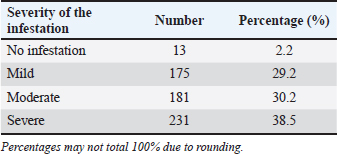
Severity of the infestationThe severity of tick infestation was classified into mild, moderate, and severe groups, as explained in the Materials and Methods section. Severe infestation was the most common form found in the surveyed camels, accounting for 38.5% of the total, moderate infestation for 30.2%, and mild infestation for 29.2%. Only 2.2% of the camels were free of tick infestation (Table 3). Moderate to severe forms of infestation are dominant, indicating high levels of tick infestations among camels in the area, which may reflect favorable environmental and management conditions that support the persistence and proliferation of ticks. DiscussionThe present study revealed a remarkably high prevalence of tick infestation (97.8%) among dromedary camels (C. dromedarius) in Central Libya, highlighting the importance of ticks in camel production systems under arid and semi-arid conditions. Ticks are among the most important ectoparasites affecting livestock worldwide, particularly in desert environments where ecological conditions favor their persistence and transmission (Jongejan and Uilenberg, 2004; Ahmed et al., 2021). The high prevalence observed in this study may be attributed to extensive grazing practices, continuous exposure to infested environments, and insufficient tick control measures. Morphological examination identified all collected specimens as H. dromedarii, the predominant camel-associated tick species in the arid regions of North Africa. This finding is consistent with previous studies reporting the predominance of H. dromedarii in camels raised under Saharan and desert conditions (Elghali and Hassan, 2009; Gharbi et al., 2013; Elati et al., 2021). The ecological adaptation of this species to harsh desert environments likely contributes to its widespread distribution among camel populations. Although previous studies from Libya have reported the occurrence of several hard tick species infesting livestock, including species of Hyalomma and Rhipicephalus (Elmhallia and Garboui, 2024; Shebani et al., 2024), all tick specimens collected in the present study were morphologically identified as H. dromedarii. This finding may reflect the strong ecological adaptation of H. dromedarii to arid environments and its marked preference for dromedary camels. Nevertheless, the predominance of a single tick species in this study does not exclude the occurrence of other hard tick species in Libya. Table 2. Association between tick infestation and epidemiological risk factors among dromedary camels in Central Libya.
Table 3. Severity of tick infestation among camels examined.
The prevalence recorded in the present study was higher than that previously reported in southern Libya, where a prevalence of 76.4% among camels in Sebha was documented by Fahmy et al. (2024). Differences between studies may be related to climatic conditions, sampling periods, management systems, and tick control practices. Similar high infestation rates have been reported in neighboring North African countries, particularly Tunisia and Sudan, where camels are reared under comparable environmental conditions (Elghali and Hassan, 2009; Gharbi et al., 2013; Elati et al., 2021). The predominance of moderate and severe infestation levels observed in this study suggests a substantial tick burden within the investigated camel population. Heavy tick infestations adversely affect animal health and productivity through blood loss, skin irritation, anemia, reduced body condition, and decreased production performance (Elsawy et al., 2024). In addition, camel ticks are recognized vectors of several pathogens of veterinary and public health importance, including Anaplasma spp., Babesia spp., Theileria spp., Ehrlichia spp., and Coxiella burnetii (Abdelkadir et al., 2019; Abdel-Shafy et al., 2020; Khalafalla, 2023; Ullah et al., 2024). No significant association was detected between tick infestation prevalence and age, sex, anti-tick treatment, or seasonal migration. Similar findings regarding age-related infestation patterns have been reported among camels in Tunisia (Elati et al., 2021). The absence of significant associations may reflect the uniformly high exposure of camels to tick-infested environments under extensive pastoral management systems, where animals of different ages and sexes share similar ecological conditions. Clinical signs were more frequently observed among infected animals, with general weakness being the most common finding. Although such clinical manifestations are not specific to tick infestation and may result from various infectious or non-infectious conditions, heavy tick burdens have been associated with blood loss, stress, and reduced animal performance (Khalafalla, 2023). Therefore, the observed clinical findings should be interpreted cautiously in the absence of laboratory investigations for tick-borne pathogens. limitation of the present study is that herd selection was based on accessibility and owner willingness rather than a predefined sampling frame, and the exact number of participating herds was not recorded. Therefore, caution should be exercised when extrapolating the findings to the entire camel population of Central Libya. Nevertheless, the relatively large sample size provides useful baseline epidemiological information for the study region. The predominance of H. dromedarii in the examined camels highlights the need for continued epidemiological surveillance and effective tick control programs. Further studies incorporating molecular detection of tick-borne pathogens and investigations of acaricide resistance are required to better understand the veterinary and public health significance of camel ticks in Libya. AcknowledgmentsWe would like to sincerely thank all camel owners and breeders in the central region of Libya for their valuable cooperation and support. Special thanks are extended to Mr. Abdelhakim Suleiman for his outstanding efforts in facilitating direct coordination and communication with the camel breeders, which greatly contributed to the successful completion of this work. FundingNone. Authors contributionsThe author was exclusively responsible for the conception and design of the study, epidemiological investigation, field sampling, tick identification, data management, statistical analysis, interpretation of findings, and manuscript preparation. The author critically reviewed and approved the final manuscript and takes full accountability for the scientific integrity of the work Conflict of interestNot necessary for this manuscript. Data availabilityThe datasets generated and/or analyzed during the current study are available from the corresponding author upon reasonable request. ReferencesAbdel-Shafy, S., Allam, N.A., Mediannikov, O. and Parola, P. 2020. Molecular detection of tick-borne pathogens in camel ticks. Ticks Tick Borne Dis. 11(5), 101489. Abdelbaset, A.E., Kwak, M.L., Nonaka, N. and Nakao, R. 2023. Human-biting ticks and zoonotic tick-borne pathogens in North Africa: Diversity, distribution, and trans-Mediterranean public health challenges. One Health 16, 100547; doi:10.1016/j.onehlt.2023.100547 Abdelkadir, K., Palomar, A.M., Portillo, A., Oteo, J.A., Ait-Oudhia, K. and Khelef, D. 2019. Presence of Rickettsia aeschlimannii, “Candidatus Rickettsia barbariae” and Coxiella burnetii in ticks from livestock in Northwestern Algeria. Ticks Tick Borne Dis. 10(4), 924–928; doi:10.1016/j.ttbdis.2019.04.018 Ahmed J,J., Alp H.H., Aksin, M. and Seitzer, U. 2021. Current status of ticks and tick-borne diseases in livestock. Pathogens 10(8), 941. Aziz, M.U., Cassens, J., Allawaï-Sanigue, J., Lontsi-Demano, M., Tchuinkam, T., Sparagano, O.A., Oliver, J.D. and Butaye, P.2026. Diversity and distribution of Hyalomma ticks and tick-borne pathogens in dromedary camels in Chad. Vet. Sci. 13(5), 443; doi:10.3390/vetsci13050443 Benakhla, A., Stachurski, F. and Kruif, A. 2018. Tick infestation in camels in arid regions of North Africa. Vet. Parasitol. Reg. Stud. Rep. 14, 87–93. Dantas-Torres, F. 2019. Biology and ecology of ticks and epidemiology of tick-borne diseases. Parasites Vectors 12, 60. Diall, O., Desquesnes, M., Faye, B., Dia, M.L., Jacquiet, P., Sazmand, A., Otranto, D. and Touratier, L. 2022. Development of a control strategy towards elimination of Trypanosoma evansi infection (surra) in camels in Africa. Acta Trop. 234, 106583; doi:10.1016/j.actatropica.2022.106583 Djiman, T.A., Biguezoton, A.S. and Saegerman, C. 2024. Tick-borne diseases in Sub-Saharan Africa: a systematic review of pathogens, research focus, and implications for public health. Pathogens 13(8), 697; doi:10.3390/pathogens13080697 El-Alfy, E.S., Abbas, I., Saleh, S., Elseadawy, R., Fereig, R.M., Rizk, M.A. and Xuan, X. 2024. Tick-borne pathogens in camels: a systematic review and meta-analysis of the prevalence in dromedaries. Ticks Tick Borne Dis. 15(1), 102268; doi:10.1016/j.ttbdis.2023.102268 Elati, K., Bouaicha, F., Dhibi, M., Ben Smida, B., Mhadhbi, M., Obara, I., Amairia, S., Bouajila, M., Rischkowsky, B., Rekik, M. and Gharbi, M. 2021. Phenology and phylogeny of Hyalomma spp. ticks infesting one-humped camels (Camelus dromedarius) in the Tunisian Saharan bioclimatic zone. Parasite 28, 44; doi:10.1051/parasite/2021038 Elghali, A. and Hassan, S.M. 2009. Ticks (Acari: Ixodidae) infesting camels (Camelus dromedarius) in Northern Sudan. Onderstepoort J. Vet. Res. 76(2), 177–185. Eljadar, M.S., Sallam, N.H., Soltan, M.A., El Gawady, H.M. and Abouelhassan, E.M. 2022. Morphological and molecular studies on tick species in Ismailia Governorate in Egypt and Al Gabal Al Akhdar in Libya. Open Vet. J. 12(6), 985–994. Elmhallia, F.H. and Garboui, S.S. 2024. Identification and distribution of hard ticks species (Acari: Ixodidae) on the Northeastern Coast of Libya. Int. J. Sci. Basic Appl. Res. (IJSBAR) 73(1), 130–138. Elsawy, B.S.M., Abdel-Ghany, H.S.M., Alzan, H.F., Abdel-Shafy, S. and Shahein, Y.E. 2024. Molecular screening of piroplasms and Anaplasmataceae agents in Hyalomma dromedarii ticks from camels over different seasons in Egypt. Exp. Appl. Acarol. 93(4), 849–868; doi:10.1007/s10493-024-00957 Estrada-Peña, A., de la Fuente, J. and Salman, M. 2021. Ticks as vectors: taxonomy, biology and ecology. Revue Scientifique et Technique 27(1), 5–19. Estrada-Peña, A., Mihalca, A.D. and Petney, T. 2018. Ticks of Europe and North Africa: A guide to species identification. Springer. Fahmy, S., Ahmed, R., Al-Kilani, A. and Alrifae, K. 2024. Protozoan parasites in camels (Camelus dromedarius) infested with ticks during summer and winter in Libya. J. Egypt. Soc. Parasitol. 54, 197–203; doi:10.21608/jesp.2024. Gharbi, M., Sassi, L., Dhibi, M., Darghouth, M.A. and Rekik, M. 2013. Population dynamics of ticks infesting the one-humped camel (Camelus dromedarius) in central Tunisia. Ticks Tick Borne Dis. 4(6), 488–491; doi:10.1016/j.tickbd.2013.09.010. Jongejan, F. and Uilenberg, G. 2004. The global importance of ticks. Parasitology 129(suppl129(Suppl.), S3–S14; doi:10.1017/S0031182004005967 Khalafalla, A.I. 2023. Zoonotic diseases transmitted from camels. Front. Vet. Sci. 10, 1244833. Khan, S.S., Ahmed, H., Afzal, M.S., Khan, M.R., Birtles, R.J. and Oliver, J.D. 2022. Epidemiology, distribution and identification of ticks on livestock in Pakistan. Int. J. Environ. Res. Public Health 19(5), 3024; doi:10.3390/ijerph19053024 Nuttall, P.A. 2021. Climate change and expansion of tick vectors. Biologia 77(6), 2–10; doi:10.1007/s11756-021-00927-2 Parola, P. and Raoult, D. 2019. Ticks and tick-borne bacterial diseases in humans. Vet. Res. 32(5), 487–499. Shebani, S.A., Albbani, A.M., Saadawi, W.K. and Shaibi, T. 2024. Diversity of hard ticks parasitizing farm animals in the Qarabulli region, Northwestern Libya. Open Vet. J. 14(6), 1442–1446; doi:10.5455/OVJ.2024.v14.i6.11 Tawana, M., Onyiche, T.E., Ramatla, T., Mtshali, S. and Thekisoe, O. 2022. Epidemiology of ticks and tick-borne pathogens in domestic ruminants across Southern African Development Community (SADC) region from 1980 until 2021: a systematic review and meta-analysis. Pathogens 11(8), 929; doi:10.3390/pathogens11080929 Thinhinane D., Chahed, S., Beneldjouzi, A., Eddaikra, N. and Brahmi, K. 2023. Diversity of hard tick (Acari: Ixodidae) infesting small ruminants in some breeding farms in Tizi-Ouzou area (Northern Algeria). Bulletin de la Société Royale des Sciences de Liège 92(1), 53–70; doi:10.255118/0037-9565.11396 Ullah, S., Alouffi, A., Khan, M., Khan, M., Tila, H., Tanaka, T., da Silva Vaz, I., Jr., Almutairi, M.M. and Ali, A. 2024. Molecular detection of Rickettsia aeschlimannii, Candidatus Rickettsia shennongii, Rickettsia sp., and Coxiella burnetii in ticks collected from camels. Sci. Rep. 14(1), 22129; doi:10.1038/s41598-024-73663-7 Walker, A.R., Bouattour, A., Camicas, J.L., Estrada-Peña, A., Horak, I.G., Latif, A.A., Pegram, R.G. and Preston, P.M. 2003. Ticks of domestic animals in Africa: A guide to identification of species. Bioscience Reports. Wasswa, A.T., Rascón-García, K., Kakuru, M., et al. 2026. Systematic review and meta-regression analysis of the prevalence of tick-borne pathogens in ticks and livestock in Uganda from 1980 to 2024. Sci. Rep. 16, 3808; doi:10.1038/s41598-025-33956-x Yirsa, T., Tizazu, Y., Berihun, A. and Zegeye, A. 2025. Prevalence and species identifications of camel ixodid ticks in Habru District, North Wollo Zone, Northeast Ethiopia. Vet Med Sci. 11(3), e70338. | ||
| How to Cite this Article |
| Pubmed Style Khdija Suleman Mohamed Ali. Epidemiological investigation of tick parasitism and associated risk factors in dromedary camels from central Libya. Open Vet. J.. 2026; 16(8): 5624-5630. doi:10.5455/OVJ.2026.v16.i8.53 Web Style Khdija Suleman Mohamed Ali. Epidemiological investigation of tick parasitism and associated risk factors in dromedary camels from central Libya. https://www.openveterinaryjournal.com/?mno=321524 [Access: September 04, 2026]. doi:10.5455/OVJ.2026.v16.i8.53 AMA (American Medical Association) Style Khdija Suleman Mohamed Ali. Epidemiological investigation of tick parasitism and associated risk factors in dromedary camels from central Libya. Open Vet. J.. 2026; 16(8): 5624-5630. doi:10.5455/OVJ.2026.v16.i8.53 Vancouver/ICMJE Style Khdija Suleman Mohamed Ali. Epidemiological investigation of tick parasitism and associated risk factors in dromedary camels from central Libya. Open Vet. J.. (2026), [cited September 04, 2026]; 16(8): 5624-5630. doi:10.5455/OVJ.2026.v16.i8.53 Harvard Style Khdija Suleman Mohamed Ali (2026) Epidemiological investigation of tick parasitism and associated risk factors in dromedary camels from central Libya. Open Vet. J., 16 (8), 5624-5630. doi:10.5455/OVJ.2026.v16.i8.53 Turabian Style Khdija Suleman Mohamed Ali. 2026. Epidemiological investigation of tick parasitism and associated risk factors in dromedary camels from central Libya. Open Veterinary Journal, 16 (8), 5624-5630. doi:10.5455/OVJ.2026.v16.i8.53 Chicago Style Khdija Suleman Mohamed Ali. "Epidemiological investigation of tick parasitism and associated risk factors in dromedary camels from central Libya." Open Veterinary Journal 16 (2026), 5624-5630. doi:10.5455/OVJ.2026.v16.i8.53 MLA (The Modern Language Association) Style Khdija Suleman Mohamed Ali. "Epidemiological investigation of tick parasitism and associated risk factors in dromedary camels from central Libya." Open Veterinary Journal 16.8 (2026), 5624-5630. Print. doi:10.5455/OVJ.2026.v16.i8.53 APA (American Psychological Association) Style Khdija Suleman Mohamed Ali (2026) Epidemiological investigation of tick parasitism and associated risk factors in dromedary camels from central Libya. Open Veterinary Journal, 16 (8), 5624-5630. doi:10.5455/OVJ.2026.v16.i8.53 |


