




| Research Article | ||
Open Vet. J.. 2026; 16(8): 5631-5643 !
Open Veterinary Journal, (2026), Vol. 16(8): 5631–5643 Research Article Animal welfare as a foundation for sustainable poultry farming systems: A bibliometric analysisSutiastuti Wahyuwardani1, Aswin Rafif Khairullah1*, Eni Siti Rohaeni2, Lisa Praharani2, Eko Handiwirawan2, Susan Maphilindawati Noor1, Bachtar Bakrie2, Prima Mei Widiyanti1, Siti Sehat Tan3, Rantan Krisnan2, Sri Suryatmiati Prihandani1, Rini Damayanti1, Endang Romjali2, Yelsi Listiana Dewi2 and Andi Ishak31Research Center for Veterinary Science, National Research and Innovation Agency (BRIN), Bogor, Indonesia 2Research Center for Animal Husbandry, National Research and Innovation Agency (BRIN), Bogor, Indonesia 3Research Center for Behavioral and Circular Economics, National Research and Innovation Agency (BRIN), Kuningan, Jakarta Selatan, Indonesia *Corresponding Author: Aswin Rafif Khairullah. Research Center for Veterinary Science, National Research and Innovation Agency (BRIN), Bogor, Indonesia. Email: aswi002 [at] brin.go.id Submitted: 17/05/2026 Revised: 07/07/2026 Accepted: 16/07/2026 Published: 20/08/2026 © 2025 Open Veterinary Journal
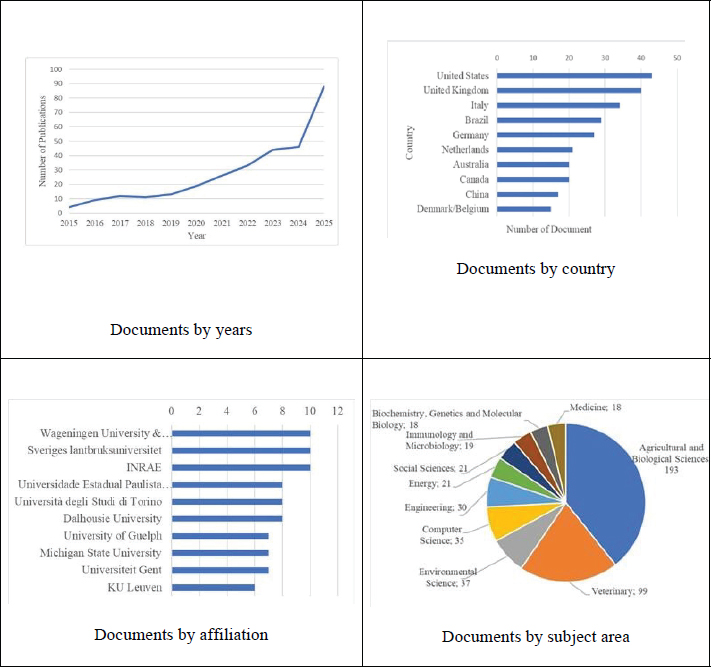
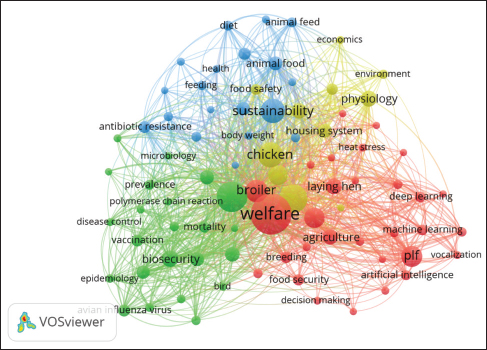
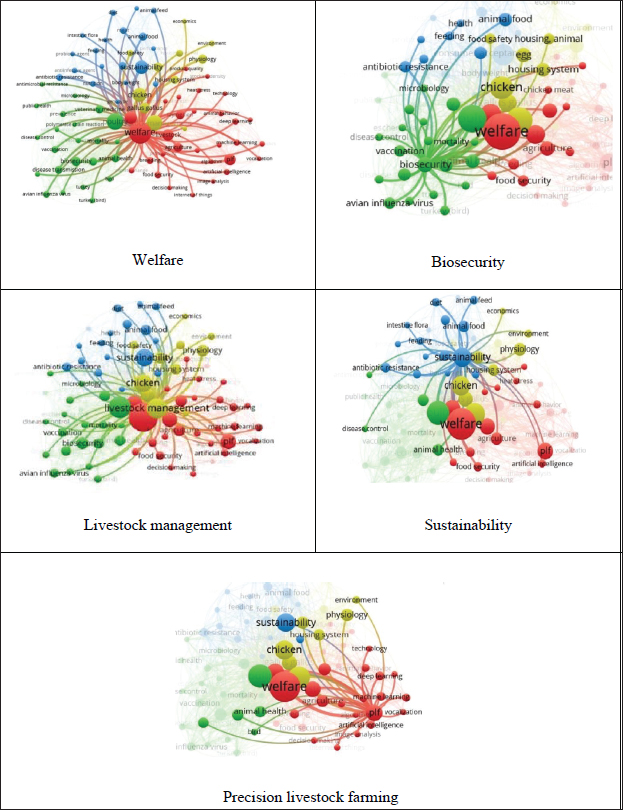
AbstractBackground: Due to growing concerns regarding biosecurity, zoonotic diseases, antimicrobial resistance, environmental sustainability, and food security, animal welfare has become an increasingly important component of sustainable poultry production systems. Recent advances in precision livestock farming (PLF) and digital monitoring technologies have transformed poultry welfare research into a multidisciplinary field that integrates animal science, epidemiology, sustainability, and One Health perspectives. Aim: This study conducted a bibliometric analysis of global poultry welfare research published between 2015 and 2025 to identify publication trends, thematic structures, emerging research themes, and future research directions. Methods: In May 2026, bibliographic data were retrieved from the Scopus database using keyword combinations related to animal welfare, poultry, duck, sustainability, biosecurity, and PLF. We included only English-language journal articles published between 2015 and 2025. Bibliometric analyses were performed using Bibliometrix/Biblioshiny in RStudio and VOSviewer version 1.6.20. Keyword co-occurrence, thematic mapping, overlay visualization, density analysis, and thematic evolution analyses were conducted. Results: A total of 305 publications were identified. Scientific production increased substantially after 2021, with the United States contributing the highest number of publications. Animal welfare emerged as a central research theme that is interconnected with sustainability, epidemiology, biosecurity, antimicrobial resistance, consumer acceptance, and PLF. Emerging themes included artificial intelligence, behavioral monitoring, image analysis, bioacoustics, and automated welfare assessment systems. Sustainability- and One Health-related topics also demonstrated increasing prominence, although their integration within the broader poultry welfare research framework remains an emerging area. Conclusion: Poultry welfare research is evolving toward integrated, sustainable, and technology-driven approaches. Future studies should strengthen the interdisciplinary integration of animal welfare science, biosecurity, sustainability, PLF, and One Health to support resilient poultry production systems. Keywords: Animal welfare, Poultry, Biosecurity, Sustainability, Precision livestock farming, Bibliometric analysis. IntroductionThe global poultry sector plays a crucial role in supporting food security, economic development, and the increasing demand for affordable animal protein (Kleyn and Ciacciariello, 2021). Poultry production systems, including broiler chickens, laying hens, and ducks, contribute substantially to global meat and egg supplies because of their efficient feed conversion, rapid growth rates, and adaptability to diverse production environments (Mottet and Tempio, 2017). With the continued growth of the global population and changing dietary preferences, poultry production is expected to expand further in the coming decades (Henchion et al., 2021). Urban and peri-urban poultry production systems also play an important role in local livelihoods, income generation, and household food security in many low-income countries (Assan et al., 2026). However, these systems face increasing challenges associated with environmental management, disease transmission, biosecurity, and sustainability (Gilbert et al., 2017; Gržinić et al., 2023). Consequently, the intensification of poultry production has raised concerns regarding animal welfare, public health, and the long-term sustainability of livestock systems (Niba, 2025). Animal welfare is one of the most important issues in modern poultry production (Bessei, 2018). Intensive farming systems may expose poultry to various welfare challenges, including high stocking densities, restricted movement, behavioral limitations, poor air quality, heat stress, environmental stressors, and increased susceptibility to disease (EFSA AHAW Panel et al., 2023). Poor welfare conditions may negatively affect productivity, immune function, physiological stability, product quality, and farm resilience (Colditz and Hine, 2016). Consequently, animal welfare is increasingly recognized not only as an ethical responsibility but also as an essential component of sustainable livestock production and resilient food systems (Buller et al., 2018; Sardar et al., 2023). Recent poultry welfare research has evolved beyond conventional production-oriented approaches and increasingly incorporates sustainability, biosecurity, epidemiology, PLF, and One Health perspectives (Schillings et al., 2021; Yalçın and Yalçın, 2026). Concerns regarding zoonotic diseases, antimicrobial resistance, climate change, food security, and consumer awareness have accelerated the development of welfare-oriented management systems in poultry production (de Abreu Filho et al., 2025). Advances in digital agriculture technologies, including artificial intelligence, behavioral monitoring, computer vision, bioacoustics, and automated welfare assessment systems, have facilitated the emergence of more integrated and data-driven approaches to poultry welfare management (Natsir et al., 2025). These developments demonstrate that poultry welfare is increasingly positioned within broader sustainable and resilient livestock production frameworks (Rowe et al., 2019). Despite the rapid growth of poultry welfare research, the scientific landscape of this field remains highly multidisciplinary and fragmented (Neethirajan, 2025). Previous studies have frequently focused on specific welfare indicators, production systems, diseases, or technological applications without comprehensively examining the broader relationships among welfare, sustainability, biosecurity, epidemiology, production physiology, consumer perspectives, and digital livestock technologies (Korver, 2023). Although research on poultry welfare has expanded substantially, studies focusing on duck welfare and other alternative poultry species remain comparatively underrepresented relative to chicken- and broiler-oriented research (Nkukwana, 2018). Bibliometric analysis is a systematic approach for evaluating the development, structure, and evolution of scientific research fields (Gutiérrez-Salcedo et al., 2018). By quantitatively mapping publication trends, keyword relationships, thematic clusters, and emerging research directions, bibliometric methods can identify dominant themes, interdisciplinary linkages, research gaps, and future research opportunities within complex scientific domains (Fergnani, 2019; Mejia et al., 2021; Gan et al., 2022). In poultry welfare research, bibliometric approaches can provide a systematic understanding of the intellectual structure, thematic evolution, and emerging research directions within the field (Sinclair et al., 2020; Platto et al., 2025). Animal welfare, sustainability, biosecurity, and PLF are increasingly recognized as interconnected components of modern poultry production systems. Animal welfare is considered an essential dimension of sustainable livestock production because welfare improvements contribute to animal health, productivity, and societal acceptance of animal production systems (Broom, 2019; Sardar et al., 2023). Biosecurity measures support animal welfare by reducing disease risks and improving animal health, thereby contributing to sustainable production systems. Advances in PLF technologies further strengthen this relationship by enabling continuous monitoring of animal behavior, health status, and environmental conditions, facilitating early disease detection and evidence-based management decisions (Berckmans, 2017; Li et al., 2020; Schillings et al., 2021). Therefore, understanding how these interconnected themes have evolved within the scientific literature is important for identifying current research priorities and future directions in poultry welfare research. Accordingly, this study aimed to conduct a comprehensive bibliometric analysis of research on global poultry welfare published between 2015 and 2025 using the Scopus database and VOSviewer version 1.6.20. Specifically, the objectives were to (1) analyze publication trends and bibliographic characteristics, (2) identify dominant thematic clusters and interdisciplinary relationships, (3) evaluate emerging themes related to sustainability, biosecurity, and precision livestock farming (PLF), and (4) identify research gaps and future directions in poultry welfare studies. Materials and MethodsStudy designThis study employed a bibliometric approach to analyze global scientific trends related to animal welfare in poultry production systems. Bibliometric analysis enables the systematic evaluation of publication patterns, thematic developments, and conceptual relationships within a research field (Donthu et al., 2021). The analysis particularly focused on research themes associated with sustainability, biosecurity, PLF, production management, epidemiology, and One Health perspectives. Bibliometric mapping and visualization were conducted using Bibliometrix/Biblioshiny in RStudio and VOSviewer version 1.6.20 (Aria and Cucurullo, 2017). Biblioshiny was used to analyze annual scientific production, thematic evolution, thematic mapping, and conceptual structures, whereas VOSviewer was used to construct keyword co-occurrence networks, clustering analysis, and visualization maps. The analytical framework positioned animal welfare as the central theme interconnected with sustainability, biosecurity, PLF, epidemiology, and One Health-related concepts. This framework guided the formulation of the search strategy, keyword selection, data categorization, and thematic interpretation throughout the study. Data source and search strategyThe bibliographic data were retrieved from the Scopus database in May 2026. Scopus was chosen because of its extensive coverage of peer-reviewed international literature and compatibility with bibliometric analysis tools. This search aimed to identify publications on animal welfare in poultry and duck production systems, with a focus on sustainability, biosecurity, animal health, and PLF. Searches were conducted in the TITLE-ABS-KEY field using Boolean operators. The search query was as follows: TITLE-ABS-KEY(“animal welfare”) AND (poultry OR chicken OR broiler OR “laying hen” OR duck OR turkey OR quail OR goose OR waterfowl) AND (biosecurity OR sustainability OR “precision livestock farming” OR “smart farming”) AND (PUBYEAR > 2014 AND PUBYEAR < 2026) AND (LIMIT-TO(DOCTYPE,”ar”) OR LIMIT-TO(DOCTYPE,”re”)) AND (LIMIT-TO(LANGUAGE,”English”)) Filters were applied to include publications from 2015 to 2025, limited to English-language articles and reviews. A total of 305 publications were obtained for bibliometric analysis after screening. Scopus was used as the sole database because of its broad multidisciplinary coverage, rich citation metadata, and compatibility with Bibliometrix/Biblioshiny and VOSviewer (Donthu et al., 2021). However, using a single database may have limited the inclusion of relevant studies indexed elsewhere. Data extraction and preparationBibliographic records were exported from Scopus in CSV format, including information on titles, abstracts, author keywords, citations, affiliations, and references. Subsequently, the exported dataset was processed before bibliometric analysis. Data cleaning and keyword standardization were conducted to improve the bibliometric network’s interpretability. A thesaurus file was created and implemented in VOSviewer to remove generic and noninformative indexing terms such as “article,” “animal,” “nonhuman,” and “survey.” Singular and plural keyword forms were standardized, for example, “broilers” was changed to “broiler” and “laying hens” to “laying hen.” In addition, synonymous and semantically related terms were harmonized to reduce thematic fragmentation within the network. For example, abbreviations and full expressions referring to the same concept were merged into a single standardized keyword. The cleaning procedure was iteratively conducted through repeated evaluation of the network outputs and refinement of the thesaurus file until coherent and stable thematic clusters were obtained. Bibliometric and network analysisBibliometric analyses were conducted using Bibliometrix/Biblioshiny in RStudio and VOSviewer version 1.6.20. Biblioshiny was used to generate annual publication trends, thematic maps, thematic evolution analyses, conceptual structures, and keyword frequency distributions. VOSviewer was used to construct keyword co-occurrence networks, overlay visualizations and density visualization maps. The analysis primarily focused on author keywords to identify dominant research themes and conceptual relationships within poultry welfare research. Additional analyses using all keywords were performed to evaluate broader interdisciplinary linkages among welfare, sustainability, biosecurity, epidemiology, production physiology, and PLF. Keyword co-occurrence analysis was performed using the full counting method with ASN. The Louvain clustering algorithm was used to identify thematic clusters within the bibliometric network. Several keyword occurrence thresholds were iteratively tested to optimize network readability and cluster stability. A minimum occurrence threshold of 5 keywords was selected for the primary analysis because it generated interpretable thematic structures while minimizing excessive fragmentation. Visualization and thematic interpretationThe bibliometric maps were interpreted based on the node size, link strength, cluster distribution, density concentration, and temporal evolution patterns. In the network visualization, the node size represented the keyword occurrence frequency, whereas the link thickness indicated the strength of the relationships among the keywords. Keywords with stronger conceptual relationships were positioned within the network. Overlay visualization was used to identify temporal shifts and emerging research themes, whereas density visualization highlighted areas with high thematic concentration within poultry welfare research. Biblioshiny thematic mapping was used to classify research themes into motor, niche, emerging or declining, and basic themes according to their centrality and density values. The resulting thematic clusters were qualitatively interpreted to identify the major research domains in global poultry welfare research. The relationships among animal welfare, sustainability, biosecurity, PLF, antimicrobial resistance, epidemiology, production physiology, consumer acceptance, and One Health-related topics were given particular attention. Reliability and LimitationsKeyword standardization and thematic interpretation were conducted iteratively through repeated refinement of the thesaurus file and network parameters to improve the reliability of the bibliometric analysis. The final bibliometric maps were selected based on cluster stability, conceptual coherence, and visual interpretability. Nevertheless, several limitations should be acknowledged. First, the analysis relied exclusively on the Scopus database and may not capture all relevant publications indexed in other databases. Second, bibliometric mapping reflects conceptual relationships among keywords rather than individual studies’ methodological quality. Third, despite the implementation of keyword cleaning and standardization procedures, differences in keyword selection and indexing practices may influence thematic representation. Ethical approvalNot needed for this study. ResultsAnalysis of global research trendsThe literature search conducted in the Scopus database identified 305 publications related to global poultry welfare research published between 2015 and 2025. The final bibliometric dataset comprised English-language journal articles that met the predefined inclusion criteria. The retrieved publications reflected several interconnected research domains, including animal welfare, sustainability, biosecurity, epidemiology, food safety, physiology, housing systems, and PLF. Citation analysis was conducted to identify the most influential authors, publications, journals, institutions, and countries contributing to global poultry welfare research. Figure 1 illustrates the annual scientific production on poultry welfare research from 2015 to 2025. Annual scientific production increased substantially between 2015 and 2025, from 4 publications in 2015 to 89 publications in 2025. The growth became more pronounced after 2020, indicating an increasing scientific interest in poultry welfare research. The dataset exhibited an annual growth rate of 36.22%. Citation analysis revealed several influential contributors to global poultry welfare research (Table 1). Neethirajan S was the most locally cited author with 29 citations. The most productive institutions were the Swedish University of Agricultural Sciences and the University of Guelph, each contributing 14 publications. At the country level, Italy was the most influential contributor with 1,051 citations, followed by the United Kingdom (791 citations) and the United States (547 citations). Animals was the leading journal with 42 publications, followed by Poultry Science (28 publications) and Sustainability (12 publications). The most highly cited publication was Hafez and Attia (2020) in Frontiers in Veterinary Science with 326 citations, followed by Halachmi et al. (2019) in the Annual Review of Animal Biosciences (292 citations) and Astill et al. (2018) in Computers and Electronics in Agriculture (285 citations). The distribution of subject areas highlighted the interdisciplinary nature of poultry welfare research. Agricultural and Biological Sciences represented the largest proportion of publications, followed by Veterinary Science, Environmental Science, Computer Science, Engineering, and Social Sciences. Keyword co-occurrence network analysisCo-occurrence network visualization of keywords in global poultry welfare research generated using VOSviewer (Fig. 2). Node size represented keyword occurrence frequency; larger nodes indicate topics that receive more research attention. Link thickness reflects the strength of co-occurrence relationships between keywords, whereas colors indicate clusters identified by the clustering algorithm. Animal welfare emerged as the largest and most central node, demonstrating its pivotal role in connecting multiple research domains. The study identified 4 major thematic clusters: welfare and production-related systems, biosecurity and disease control, sustainability and food-system perspectives, and physiology and environmental management. The dense interconnections among clusters indicate a highly integrated and multidisciplinary research field in which welfare is increasingly linked with sustainability, animal health, management practices, and technological innovations. The network structure further demonstrated that animal welfare functions as a central connecting theme linking sustainability, biosecurity, production management, and technology-based monitoring approaches. This finding highlights the increasingly integrated nature of poultry welfare research. Major thematic domains in research on global poultry welfareThe analysis identified 5 dominant thematic domains in global poultry welfare research: welfare, biosecurity, livestock management, sustainability, and PLF (Fig. 3). Welfare emerged as the central and most interconnected theme, linking animal health, production management, housing systems, and sustainability. Biosecurity was closely associated with disease prevention, epidemiology, vaccination, and antimicrobial resistance, whereas livestock management encompassed factors related to feeding practices, housing conditions, and productivity. Sustainability-related themes were related to food safety, environmental management, and resource efficiency. Precision livestock farming represented an emerging technology-oriented domain that integrates AI, machine learning, behavioral monitoring, and automated welfare assessment. Collectively, these thematic domains demonstrate the increasingly multidisciplinary and technology-driven nature of poultry welfare research.
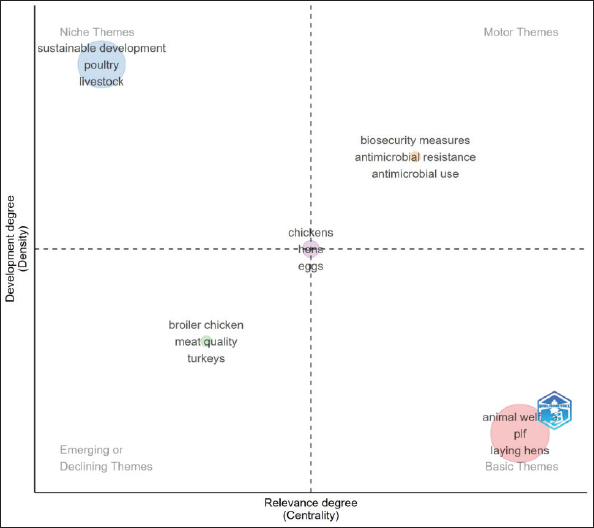
Fig. 1. Annual scientific production, leading countries, institutional affiliations, and subject area distribution of global poultry welfare research indexed in Scopus between 2015 and 2025. The figure summarizes publication trends over time and highlights the most productive countries, institutions, and disciplinary subject areas contributing to the field. Thematic map analysisA thematic map of global poultry welfare research was generated using Biblioshiny (Fig. 4). The horizontal axis represented centrality, indicating the relevance and connectivity of a theme within the overall research field, whereas the vertical axis represented density, reflecting the level of thematic development and internal cohesion. Motor themes (upper-right quadrant) are well-developed and strategically important, niche themes (upper-left quadrant) are specialized but relatively isolated, basic themes (lower-right quadrant) constitute fundamental topics with broad relevance, and emerging or declining themes (lower-left quadrant) represent either newly developing or fading research areas, respectively. The map indicates that biosecurity and AMR function as motor themes driving contemporary poultry welfare research. Animal welfare and PLF are fundamental themes that remain central to the field and continue to support the development of multiple research directions. Sustainable development and consumer-related topics are positioned as niche themes, while machine learning, biosecurity subtopics, and production-oriented themes occupy emerging or transitional positions, suggesting that the discipline’s research priorities are evolving. Table 1. Most influential contributors to global poultry welfare research
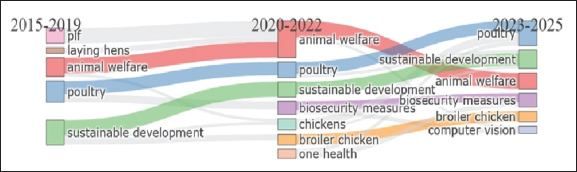
Thematic evolution analysisThe thematic evolution analysis illustrated the temporal transformation of major research themes in poultry welfare research between 2015 and 2025 (Fig. 5). During the 2015–2019 period, animal welfare, poultry, sustainability, laying hens, and PLF were the dominant themes. Between 2020 and 2022, these themes evolved toward broader topics related to poultry production, sustainable development, biosecurity measures, broiler chickens, and animal welfare between 2020 and 2022. In the most recent period (2023–2025), poultry, sustainability, animal welfare, biosecurity measures, and broiler chickens remained the most prominent themes, indicating continuity and the growing integration of welfare, sustainability, and disease prevention research. The emergence of antimicrobial resistance, biosecurity measures, and sustainable development themes reflects the increasing attention to responsible production systems and public health considerations. Although the One Health concept emerged during the thematic evolution process, it did not emerge as a dominant theme, suggesting that its integration into poultry welfare research remains an area of ongoing development. Chicken- and broiler-related research remained dominant throughout the study period, whereas research on duck welfare remained comparatively underrepresented within the bibliometric landscape. The relatively limited representation of duck welfare themes suggests that this area remains insufficiently explored and warrants greater research attention within the broader poultry welfare landscape. Future studies should focus on developing species-specific welfare assessment protocols, evaluating housing and management systems, and applying PLF technologies for behavioral and health monitoring in duck production systems. Greater attention is also needed to investigate the relationships among duck welfare, productivity, sustainability, environmental impacts, and consumer expectations to support evidence-based management and policy development.
Fig. 2. Co-occurrence network visualization of major research themes in global poultry welfare research. Node size represented keyword occurrence frequency, link thickness indicates the strength of co-occurrence relationships, and colors denote thematic clusters identified by the clustering algorithm. The network highlights conceptual linkages among animal welfare, biosecurity, physiology, disease transmission, and production-related topics.
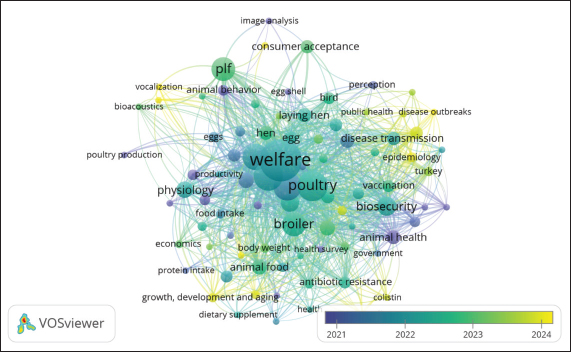
Fig. 3. Major thematic domains identified in global poultry welfare research through keyword co-occurrence analysis. Keywords are grouped into thematic clusters based on their co-occurrence patterns, with each color representing a distinct research domain. Overlay visualization and emerging research trendsThe overlay visualization analysis demonstrated substantial temporal evolution within the research on global poultry welfare (Fig. 6). Earlier publications were mainly associated with conventional production-oriented themes, including feeding management, body weight, physiology, productivity, housing systems, and disease prevention. Recent publications have increasingly emphasized PLF, artificial intelligence (AI), bioacoustics, image analysis, behavioral monitoring, consumer acceptance, sustainability, and antimicrobial resistance, reflecting a shift toward technology-assisted and sustainability-oriented welfare management approaches.
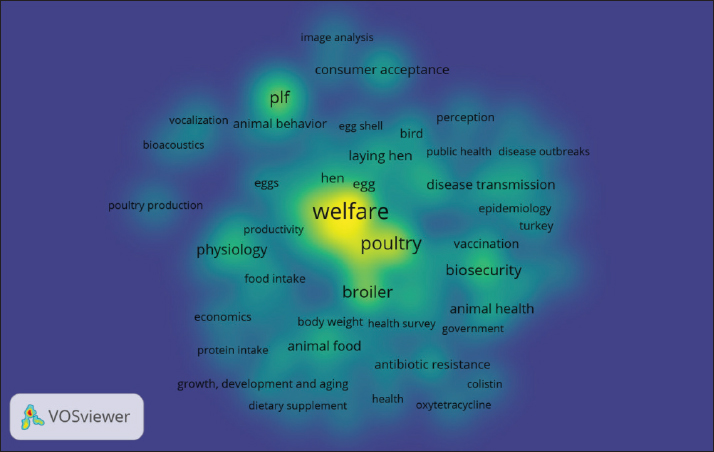
Fig. 4. Thematic map of global poultry welfare research illustrating the positioning of research themes based on relevance (centrality) and degree of development (density). Motor themes (upper-right quadrant) are highly developed and central to the field; niche themes (upper-left quadrant) are specialized but relatively isolated; basic themes (lower-right quadrant) represent fundamental topics with broad relevance; and emerging or declining themes (lower-left quadrant) reflect topics with low centrality and density. Density visualization and concentration of researchDensity visualization analysis identified areas of high thematic concentration and dominant research activity within global poultry welfare research (Fig. 7). The most concentrated area within the bibliometric network was the welfare-related keywords. Additional high-density themes were associated with biosecurity, epidemiology, sustainability, food security, consumer acceptance, PLF, behavioral monitoring, image analysis, and bioacoustics. Duck-related keywords demonstrated relatively low density and limited network centrality compared with chicken- and broiler-related keywords. DiscussionThe bibliometric findings demonstrated a substantial increase in global scientific interest in poultry welfare research between 2015 and 2025. The increasing publication trend observed after 2021 suggests growing international concern regarding sustainable poultry production, animal welfare integration, environmental management, and resilient livestock systems (Bist et al., 2024). Similar trends have been reported in recent studies on livestock sustainability, highlighting the increasing importance of welfare-oriented production systems in response to global food security and environmental challenges (Kazanski et al., 2025). The geographical concentration of publications in countries such as the United States, the United Kingdom, Brazil, Italy, and Germany reflects the dominant role of intensive poultry-producing countries with advanced livestock research infrastructures. This finding indicates that poultry welfare research is predominantly driven by countries with advanced livestock production systems and remains strongly associated with technologically advanced production systems, strong veterinary research capacity, and established scientific infrastructures (Bessei, 2018). Animal welfare functions as the central conceptual framework connecting multiple interdisciplinary domains, including sustainability, epidemiology, biosecurity, production physiology, PLF, and digital monitoring technologies, according to the co-occurrence network analysis. The strong linkage between welfare and production-related keywords suggests that welfare is increasingly recognized not only as an ethical issue but also as an important determinant of productivity, disease resistance and production sustainability (Vidza et al., 2025).
Fig. 5. Thematic evolution map of global poultry welfare research showing the continuity, emergence, and transformation of major research themes across three time periods (2015–2019, 2020–2022, and 2023–2025). Connecting flows indicate thematic relationships and the evolution of research priorities over time.
Fig. 6. VOSviewer overlay visualization of keyword co-occurrence in global poultry welfare research. Earlier topics are shown in blue, whereas more recently emerging topics are shown in yellow, indicating that research interests have evolved over time. The emergence of the themes of biosecurity, epidemiology, and antimicrobial resistance indicates increasing scientific awareness regarding the relationship between poultry welfare, disease prevention, and public health. Poor welfare conditions may increase disease susceptibility and pathogen transmission, thereby influencing both farm productivity and zoonotic disease risks (Esposito et al., 2023). The growing prominence of avian influenza and antimicrobial resistance-related keywords further highlights the importance of integrating welfare management into broader veterinary public health frameworks (Raphael et al., 2024). Sustainability-related themes were also central to the bibliometric network. The increasing use of keywords associated with food security, environmental management, life cycle assessment, circular economy approaches, and consumer acceptance reflects the growing concern regarding the environmental and societal implications of poultry production systems (Şimşek et al., 2024). Similar sustainability challenges have been reported in intensive livestock systems characterized by high resource demands, nutrient accumulation, and environmental pressures (Prasad et al., 2019).
Fig. 7. Density visualization map of keyword co-occurrence in global poultry welfare research. Warmer colors indicate highly frequent and strongly connected research themes, whereas cooler colors indicate less prominent topics. The emergence of PLF and digital monitoring technologies represented one of the most important thematic developments identified in this study. Keywords associated with AI, behavioral monitoring, image analysis, bioacoustics, and automated welfare assessment systems have become increasingly prominent in recent years. These findings indicate a rapid transition from conventional observational welfare assessment to automated, data-driven, and precision-based poultry management systems (Li et al., 2020). Despite the broad thematic diversification observed in the bibliometric network, research on duck welfare remained comparatively underrepresented relative to studies on chickens and broilers. Duck-related keywords exhibited lower occurrence frequencies, reduced network centrality, and weaker thematic integration. This finding suggests that research on global poultry welfare remains heavily focused on industrial chicken production systems (El Sabry and Almasri, 2023). Duck welfare is strongly influenced by environmental management, water access, housing systems, and behavioral opportunities (Chen et al., 2015; Abdel-Hamid et al., 2020; House et al., 2020). Nevertheless, standardized welfare assessment protocols for ducks remain limited, particularly in small-scale and developing-country production systems. Therefore, greater scientific attention toward duck welfare may be required to improve welfare assessment, environmental adaptation, and sustainable production management in alternative poultry systems (EFSA AHAW Panel et al., 2023). The thematic evolution and overlay visualization analyses further demonstrated that interdisciplinary and systems-oriented approaches are increasingly being adopted in poultry welfare research (Weimer et al., 2025). The growing integration of welfare science, sustainability frameworks, epidemiology, biosecurity, consumer behavior, PLF, and digital monitoring technologies reflects the increasingly multidisciplinary nature of contemporary poultry welfare research (Nassar, 2026). The bibliometric analysis suggests that future global poultry welfare research will likely evolve toward integrated, sustainability-oriented, and technology-assisted management approaches incorporating PLF, antimicrobial stewardship, behavioral monitoring, environmental sustainability, and One Health perspectives (Korver, 2023; Mata, 2026). ConclusionThis bibliometric study demonstrates that global poultry welfare research has evolved into a multidisciplinary and rapidly expanding field between 2015 and 2025. Animal welfare emerged as a central research theme interconnected with sustainability, biosecurity, epidemiology, PLF, antimicrobial resistance, and One Health-related approaches. The findings indicate a clear shift toward more integrated, technology-driven, and sustainability-oriented poultry production systems. The analysis also revealed increasing research interest in digital welfare monitoring technologies, including AI, behavioral monitoring, bioacoustics, and automated welfare assessment systems. In addition, sustainability, food security, consumer acceptance, and disease prevention have become increasingly important components of poultry welfare research. Despite the rapid expansion of poultry welfare research, several important areas, including One Health integration, advanced digital welfare assessment, and interdisciplinary sustainability frameworks, remain relatively less developed. Future studies should strengthen the integration of animal welfare, biosecurity, environmental sustainability, PLF, and public health perspectives to support more resilient poultry production systems. AcknowledgmentsThe authors would like to thank the National Research and Innovation Agency. FundingThis study is part of a research project funded by the Research organization for Health, the National Research and Innovation Agency of Indonesia. Author’s ContributionsSW, SSP, and ARK: Conceived, designed, and coordinated the study. LP, ER, and ESR: designed data collection tools, supervised field sample and data collection, performed laboratory work, and entered data. BB, EH, and SMN: Validation, supervision, and formal analysis of the data. PMW, AI, and SST: Contributed analysis tools. RK, YLD, and RD: Carried out the statistical analysis and interpretation and participated in the preparation of the manuscript. All authors have read, reviewed, and approved the final version of the manuscript. Conflict of interestThe authors declare no conflict of interest. Data availabilityAll data are available in the revised manuscript. ReferencesAbdel-Hamid, S.E., Saleem, A.Y., Youssef, M.I., Mohammed, H.H. and Abdelaty, A.I. 2020. Influence of housing systems on duck behavior and welfare. J. Adv. Vet. Anim. Res. 7(3), 407–413. Aria, M. and Cuccurullo, C. 2017. bibliometrix: an R-tool for comprehensive science mapping analysis. J. Informetr. 11(4), 959–975. Assan, N., Sibanda, J., Mukuwapasi, B., Charachimwe, R.R. and Masama, E. 2026. Nurturing resilient urban animal agriculture for food security in Sub-Saharan Africa: a triad approach to social, economic, and environmental sustainability. J. Front. Multidiscip. Res. 7(1), 136149. Astill, J., Dara, R.A., Fraser, E.D.G. and Sharif, S. 2018. Detecting and predicting emerging disease in poultry with the implementation of new technologies and big data: a focus on avian influenza virus. Front. Vet. Sci. 5(1), 263. Berckmans, D. 2017. General introduction to precision livestock farming. Anim. Front. 7(1), 6–11. Bessei, W. 2018. Impact of animal welfare on worldwide poultry production. World’s Poult. Sci. J. 74(2), 211–224. Bist, R.B., Bist, K., Poudel, S., Subedi, D., Yang, X., Paneru, B., Mani, S., Wang, D. and Chai, L. 2024. Sustainable poultry farming practices: a critical review of current strategies and future prospects. Poult. Sci. 103(12), 104295. Broom, D.M. 2019. Animal welfare complementing or conflicting with other sustainability issues. Appl. Anim. Behav. Sci. 219(1), 104829. Buller, H., Blokhuis, H., Jensen, P. and Keeling, L. 2018. Towards farm animal welfare and sustainability. Animals (Basel) 8(6), 81. Chen, Y., Aorigele, C., Yan, F., Li, Y., Cheng, P. and Qi, Z. 2015. Effect of production system on welfare traits, growth performance and meat quality of ducks. South Afr. J. Anim. Sci. 45(2), 173–179. Colditz, I.G. and Hine, B.C. 2016. Resilience in farm animals: biology, management, breeding and implications for animal welfare. Anim. Prod. Sci. 56(1), 1961–1983. de Abreu Filho, H.R., Rufino, J.P.F., da Silva Gomes, M.F., Paixão, R.M., Carvalho, J.R., de Abreu, J.F.S. and de Oliveira, A.T. 2025. Environmental, technological, and animal welfare challenges in Latin American poultry production: a systematic review of sustainability and efficiency. World’s Poult. Sci. J. 81(4), 1169–1185. Donthu, N., Kumar, S., Mukherjee, D., Pandey, N. and Lim, W.M. 2021. How to conduct a bibliometric analysis: an overview and guidelines. J. Bus. Res. 133(1), 285–296. EFSA AHAW Panel (EFSA Panel on Animal Health and Welfare), Nielsen, S.S., Alvarez, J., Bicout, D.J., Calistri, P., Canali, E., Drewe, J.A., Garin-Bastuji, B., Gonzales Rojas, J.L., Schmidt, C.G., Herskin, M.S., Miranda Chueca, M.Á., Padalino, B., Pasquali, P., Roberts, H.C., Spoolder, H., Stahl, K., Velarde, A., Viltrop, A., Winckler, C., Tiemann, I., de Jong, I., Gebhardt-Henrich, S.G., Keeling, L., Riber, A.B., Ashe, S., Candiani, D., García Matas, R., Hempen, M., Mosbach-Schulz, O., Rojo Gimeno, C., Van der Stede, Y., Vitali, M., Bailly-Caumette, E. and Michel, V. 2023. Welfare of broilers on farm. EFSA J. 21(2), e07788. El Sabry, M.I. and Almasri, O. 2023. Global waterfowl production: stocking rate is a key factor for improving productivity and well-being-a review. Trop. Anim. Health Prod. 55(6), 419. Esposito, M.M., Turku, S., Lehrfield, L. and Shoman, A. 2023. The impact of human activities on zoonotic infection transmissions. Animals (Basel) 13(10), 1646. Fergnani, A. 2019. Mapping futures studies scholarship from 1968 to present: a bibliometric review of thematic clusters, research trends, and research gaps. Futures 105(1), 104–123. Gan, J., Li, J., Wang, Z. and Wang, L. 2022. Bibliometric analysis of global research trends on one health. Eur. J. Integr. Med. 56(1), 102203. Gilbert, M., Xiao, X. and Robinson, T.P. 2017. Intensifying poultry production systems and the emergence of avian influenza in China: a ‘One Health/Ecohealth’ epitome. Arch. Public Health 75(1), 48. Gržinić, G., Piotrowicz-Cieślak, A., Klimkowicz-Pawlas, A., Górny, R.L., Ławniczek-Wałczyk, A., Piechowicz, L., Olkowska, E., Potrykus, M., Tankiewicz, M., Krupka, M., Siebielec, G. and Wolska, L. 2023. Intensive poultry farming: a review of the impact on the environment and human health. Sci. Total Environ. 858(Pt 3), 160014. Gutiérrez-Salcedo, M., Martínez, M.Á., Moral-Munoz, J.A., Herrera-Viedma, E. and Cobo, M.J. 2018. Some bibliometric procedures for analyzing and evaluating research fields. Appl. Intell. 48(1), 1275–1287. Hafez, H.M. and Attia, Y.A. 2020. Challenges to the poultry industry: current perspectives and strategic future after the COVID-19 outbreak. Front. Vet. Sci. 7(1), 516. Halachmi, I., Guarino, M., Bewley, J. and Pastell, M. 2019. Smart animal agriculture: application of real-time sensors to improve animal well-being and production. Annu. Rev. Anim. Biosci. 7(1), 403–425. Henchion, M., Moloney, A.P., Hyland, J., Zimmermann, J. and McCarthy, S. 2021. Review: trends for meat, milk and egg consumption for the next decades and the role played by livestock systems in the global production of proteins. Animal 15(Suppl 1), 100287. House, G.M., Sobotik, E.B., Nelson, J.R. and Archer, G.S. 2020. Effects of ultraviolet light supplementation on Pekin duck production, behavior, and welfare. Animals (Basel) 10(5), 833. Kazanski, C.E., Balehegn, M., Jones, K., Bartlett, H., Calle, A., Garcia, E., Hawkins, H.J., Mayberry, D., McDonald-Madden, E., Odadi, W.O., Zionts, J., Clark, M., Garnett, T., Herrero, M., Van Zanten, H.H.E., Ritten, J., Mallmann, G., Harrison, M.T., Bossio, D.A. and Gennet, S. 2025. Context is key to understand and improve livestock production systems. Glob. Food Secur. 45(1), 100840. Kleyn, F.J. and Ciacciariello, M. 2021. Future demands of the poultry industry: will we meet our commitments sustainably in developed and developing economies? World’s Poult. Sci. J. 77(2), 267–278. Korver, D.R. 2023. Review: current challenges in poultry nutrition, health, and welfare. Animal 17(Suppl 2), 100755. Li, N., Ren, Z., Li, D. and Zeng, L. 2020. Review: automated techniques for monitoring the behaviour and welfare of broilers and laying hens: towards the goal of precision livestock farming. Animal 14(3), 617–625. Mata, F. 2026. The impact of precision livestock farming technologies on productivity, animal welfare, and environmental sustainability. J 9(2), 13. Mejia, C., Wu, M., Zhang, Y. and Kajikawa, Y. 2021. Exploring topics in bibliometric research through citation networks and semantic analysis. Front. Res. Metr. Anal. 6(1), 742311. Mottet, A. and Tempio, G. 2017. Global poultry production: current state and future outlook and challenges. World’s Poult. Sci. J. 73(2), 245–256. Nassar, F.S. 2026. Strategic role of poultry production sciences in shaping the future of global food security and strengthen sustainability. Poult. Sci. 105(5), 106617. Natsir, M.H., Mahmudy, W.F., Tono, M. and Nuningtyas, Y.F. 2025. Advancements in artificial intelligence and machine learning for poultry farming: applications, challenges, and future prospects. Smart Agric. Technol. 12(1), 101307. Neethirajan, S. 2025. Rethinking poultry welfare—Integrating behavioral science and digital innovations for enhanced animal well-being. Poultry 4(2), 20. Niba, A.T. 2025. Emerging peri-urban and urban animal production in the western highlands of cameroon: the search for novel strategies for improving sustainability and productivity. Trop. Agric. 102(1), 124–140. Nkukwana, T.T. 2018. Global poultry production: current impact and future outlook on the South African poultry industry. S. Afr. J. Anim. Sci. 48(5), 869–884. Platto, S., Normando, S., Serres, A., Manteca, X. and Temple, D. 2025. One welfare: bibliometric review of world literature. Front. Vet. Sci. 12(1), 1627981. Prasad, C.S., Anandan, S., Gowda, N.K.S., Schlecht, E. and Buerkert, A. 2019. Managing nutrient flows in Indian urban and peri-urban livestock systems. Nutr. Cycl. Agroecosyst. 115(1), 159–172. Raphael, R., As, D., Karnaver, P., Devy, R.A., Devi Priya, M. and Jose, J. 2024. Mapping research trends in one health: a comprehensive review. Cureus 16(9), e70047. Rowe, E., Dawkins, M.S. and Gebhardt-Henrich, S.G. 2019. A systematic review of precision livestock farming in the poultry sector: is technology focussed on improving bird welfare? Animals (Basel) 9(9), 614. Sardar, M.A., Khan, M.I.A., Salman, M. and Ullah, I. 2023. Farm animal welfare as a key element of sustainable food production: animal welfare and sustainable food production. Lett. Anim. Biol. 3(2), 1–8. Schillings, J., Bennett, R. and Rose, D.C. 2021. Exploring the potential of precision livestock farming technologies to help address farm animal welfare. Front. Anim. Sci. 2(1), 639678. Şimşek, E.K., Kara, M., Kalıpçı, M.B. and Eren, R. 2024. Sustainability and the food industry: a bibliometric analysis. Sustainability 16(7), 3070. Sinclair, M., Zhang, Y., Descovich, K. and Phillips, C.J.C. 2020. Farm animal welfare science in china-a bibliometric review of chinese literature. Animals (Basel) 10(3), 540. Vidza, M.S., Budka, M., Chai, W.K., Thrush, M. and Alves, M.T. 2025. The applications of complex network analysis in aquaculture and capture fisheries: a systematic review of trends, challenges, and future directions. Sustain. Futures 10(1), 101382. Weimer, S.L., Myhre, E., Nieuwenhoven, A.N., Arreaga, R., Barger, K., Newberry, R.C., Tarrant, K.J. and Fraley, G.S. 2025. Research and innovation perspectives: poultry welfare in 2050. Poult. Sci. 104(11), 105799. Yalçın, S. and Yalçın, S.S. 2026. Mapping one health and sustainability from 2007 to 2024: multi-period evolution with bibliometric and content insights from Türkiye’s oldest veterinary journal. Publications 14(1), 12. | ||

| How to Cite this Article |
| Pubmed Style Wahyuwardani S, Khairullah AR, Rohaeni ES, Praharani L, Handiwirawan E, Noor SM, Bakrie B, Widiyanti PM, Tan SS, Krisnan R, Prihandani SS, Damayanti R, Romjali E, Dewi YL, Ishak A. Animal welfare as a foundation for sustainable poultry farming systems: A bibliometric analysis. Open Vet. J.. 2026; 16(8): 5631-5643. doi:10.5455/OVJ.2026.v16.i8.54 Web Style Wahyuwardani S, Khairullah AR, Rohaeni ES, Praharani L, Handiwirawan E, Noor SM, Bakrie B, Widiyanti PM, Tan SS, Krisnan R, Prihandani SS, Damayanti R, Romjali E, Dewi YL, Ishak A. Animal welfare as a foundation for sustainable poultry farming systems: A bibliometric analysis. https://www.openveterinaryjournal.com/?mno=321230 [Access: September 04, 2026]. doi:10.5455/OVJ.2026.v16.i8.54 AMA (American Medical Association) Style Wahyuwardani S, Khairullah AR, Rohaeni ES, Praharani L, Handiwirawan E, Noor SM, Bakrie B, Widiyanti PM, Tan SS, Krisnan R, Prihandani SS, Damayanti R, Romjali E, Dewi YL, Ishak A. Animal welfare as a foundation for sustainable poultry farming systems: A bibliometric analysis. Open Vet. J.. 2026; 16(8): 5631-5643. doi:10.5455/OVJ.2026.v16.i8.54 Vancouver/ICMJE Style Wahyuwardani S, Khairullah AR, Rohaeni ES, Praharani L, Handiwirawan E, Noor SM, Bakrie B, Widiyanti PM, Tan SS, Krisnan R, Prihandani SS, Damayanti R, Romjali E, Dewi YL, Ishak A. Animal welfare as a foundation for sustainable poultry farming systems: A bibliometric analysis. Open Vet. J.. (2026), [cited September 04, 2026]; 16(8): 5631-5643. doi:10.5455/OVJ.2026.v16.i8.54 Harvard Style Wahyuwardani, S., Khairullah, . A. R., Rohaeni, . E. S., Praharani, . L., Handiwirawan, . E., Noor, . S. M., Bakrie, . B., Widiyanti, . P. M., Tan, . S. S., Krisnan, . R., Prihandani, . S. S., Damayanti, . R., Romjali, . E., Dewi, . Y. L. & Ishak, . A. (2026) Animal welfare as a foundation for sustainable poultry farming systems: A bibliometric analysis. Open Vet. J., 16 (8), 5631-5643. doi:10.5455/OVJ.2026.v16.i8.54 Turabian Style Wahyuwardani, Sutiastuti, Aswin Rafif Khairullah, Eni Siti Rohaeni, Lisa Praharani, Eko Handiwirawan, Susan Maphilindawati Noor, Bachtar Bakrie, Prima Mei Widiyanti, Siti Sehat Tan, Rantan Krisnan, Sri Suryatmiati Prihandani, Rini Damayanti, Endang Romjali, Yelsi Listiana Dewi, and Andi Ishak. 2026. Animal welfare as a foundation for sustainable poultry farming systems: A bibliometric analysis. Open Veterinary Journal, 16 (8), 5631-5643. doi:10.5455/OVJ.2026.v16.i8.54 Chicago Style Wahyuwardani, Sutiastuti, Aswin Rafif Khairullah, Eni Siti Rohaeni, Lisa Praharani, Eko Handiwirawan, Susan Maphilindawati Noor, Bachtar Bakrie, Prima Mei Widiyanti, Siti Sehat Tan, Rantan Krisnan, Sri Suryatmiati Prihandani, Rini Damayanti, Endang Romjali, Yelsi Listiana Dewi, and Andi Ishak. "Animal welfare as a foundation for sustainable poultry farming systems: A bibliometric analysis." Open Veterinary Journal 16 (2026), 5631-5643. doi:10.5455/OVJ.2026.v16.i8.54 MLA (The Modern Language Association) Style Wahyuwardani, Sutiastuti, Aswin Rafif Khairullah, Eni Siti Rohaeni, Lisa Praharani, Eko Handiwirawan, Susan Maphilindawati Noor, Bachtar Bakrie, Prima Mei Widiyanti, Siti Sehat Tan, Rantan Krisnan, Sri Suryatmiati Prihandani, Rini Damayanti, Endang Romjali, Yelsi Listiana Dewi, and Andi Ishak. "Animal welfare as a foundation for sustainable poultry farming systems: A bibliometric analysis." Open Veterinary Journal 16.8 (2026), 5631-5643. Print. doi:10.5455/OVJ.2026.v16.i8.54 APA (American Psychological Association) Style Wahyuwardani, S., Khairullah, . A. R., Rohaeni, . E. S., Praharani, . L., Handiwirawan, . E., Noor, . S. M., Bakrie, . B., Widiyanti, . P. M., Tan, . S. S., Krisnan, . R., Prihandani, . S. S., Damayanti, . R., Romjali, . E., Dewi, . Y. L. & Ishak, . A. (2026) Animal welfare as a foundation for sustainable poultry farming systems: A bibliometric analysis. Open Veterinary Journal, 16 (8), 5631-5643. doi:10.5455/OVJ.2026.v16.i8.54 |


