




| Review Article | ||
Open Vet. J.. 2026; 16(8): 5863-5873 !
Open Veterinary Journal, (2026), Vol. 16(8): 5863–5873 Review Article Toxoplasma gondii prevalence in Chinese avian species: A narrative reviewMingye He*, Jixiang Zhang, Jin Liu, Xia Wang, Xiaofang Xie and Yi XieYiyang Vocational & Technical College, Yiyang, Hunan, China *Corresponding Author: Mingye He, Yiyang Vocational and Technical College, Yiyang, Hunan, China. Email: hemingye123 [at] 163.com Submitted: 15/05/2026 Revised: 14/07/2026 Accepted: 28/07/2026 Published: 20/08/2026 © 2025 Open Veterinary Journal
AbstractToxoplasma gondii (T. gondii) is a neurotropic apicomplexan protozoan that infects a diverse range of hosts, posing a significant health risk to ~one-third of the global population. In most cases, infection remains asymptomatic, with clinical manifestations primarily observed in immunocompromised individuals and pregnant women. Avian species serve as intermediate hosts that may facilitate the spread of T. gondii to humans and carnivorous animals. This review presents a comprehensive summary of the prevalence and epidemiological characteristics of T. gondii in avian species across China, focusing on associated risk factors. To identify studies on T. gondii infection in avian species in China, a comprehensive literature search was conducted across six electronic databases, including PubMed, Science Direct, Web of Science, Wanfang, China National Knowledge Infrastructure, and Weipu. After screening the full texts, 38 articles covering tissue or serum samples from 24,397 chickens, 2,939 ducks, 1,159 geese, 640 pigeons, and 1,869 other avian populations were included in this review. The average detection rates of this pathogen were 13.85% (3,380/24,397) in chickens, 9.19% (270/2,939) in ducks, 6.56% (76/1,159) in geese, 11.25% (72/640) in pigeons, and 14.83% (277/1,869) in other avian species. Moreover, factors such as age and breeding models appeared to be associated with variations in the prevalence of T. gondii among Chinese chicken populations. This review demonstrates a high prevalence of T. gondii among avian species in China, indicating a considerable risk of zoonotic transmission and highlighting the potential role of birds in spreading the infection across multiple host species. Keywords: Avian species, China, Epidemiology, Toxoplasma gondii, Zoonotic potential. IntroductionToxoplasmosis is a zoonotic parasitic infection caused by the protozoan Toxoplasma gondii (Chen et al., 2024). Notably, T. gondii, as well as a diverse range of warm-blooded animal species, is known to infect ~one-third of the global human population (Zaki et al., 2024). As an opportunistic pathogen, it does not typically produce clinical symptoms in individuals with a competent immune system. However, infection in immunocompromised hosts, including pregnant women and older individuals, can result in severe clinical manifestations (Nasiru Wana et al., 2020). Humans become infected with T. gondii by ingestion of tissue cysts present in undercooked or raw meat, as well as the consumption of environmentally resilient oocysts from contaminated water, soil, vegetables, and surfaces (Severance et al., 2016). Avian species, such as chickens and ducks, serve as important intermediate hosts for T. gondii, providing tissue cysts that can perpetuate the parasite’s life cycle when consumed by definitive hosts, and also serve as valuable sentinels for monitoring environmental oocyst contamination (Nie et al., 2022; Penezić et al., 2025) (Fig. 1). China has one of the largest poultry populations in the world, and poultry products such as chicken, duck, and goose are widely consumed throughout the country. The presence of diverse wild bird species in China likely contributes to the increased transmission of T. gondii among wild animals. However, the overall prevalence of T. gondii among different avian species in China has not been thoroughly studied. This review presents a systematic analysis of the epidemiology of T. gondii in avian species across China to identify potential risk factors. The results offer critical insights into the transmission dynamics and prevention of T. gondii in both poultry and wild bird populations, thereby guiding prevention and control efforts. MethodologyThe literature search strategyThe review comprehensively examined the epidemiological features of T. gondii across different avian species in China. A literature search was performed in six electronic bibliographic databases, namely PubMed, Science Direct, Web of Science, Wanfang, China National Knowledge Infrastructure (CNKI), and Weipu, for articles published from January 1, 2010, to December 31, 2025. Notably, studies were included if they met the following criteria: (1) cross-sectional or surveillance studies reporting original prevalence data on T. gondii infection in avian species; (2) involved domestic poultry (chickens, ducks, geese, or pigeons) or other avian species; (3) used serological methods or molecular technologies for detection; and (4) were published in either English or Chinese, including both peer-reviewed journal articles and academic theses. Case reports, reviews, conference abstracts, or duplicate publications without original data were excluded.
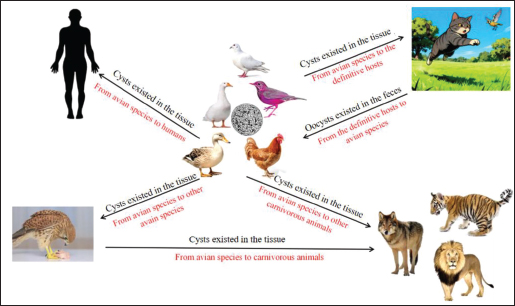
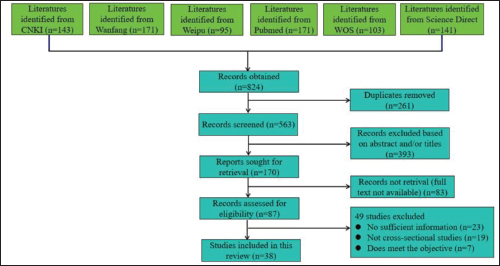
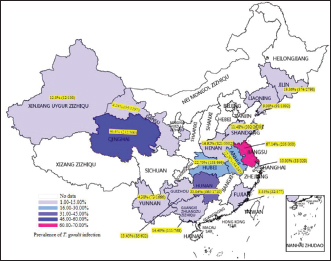
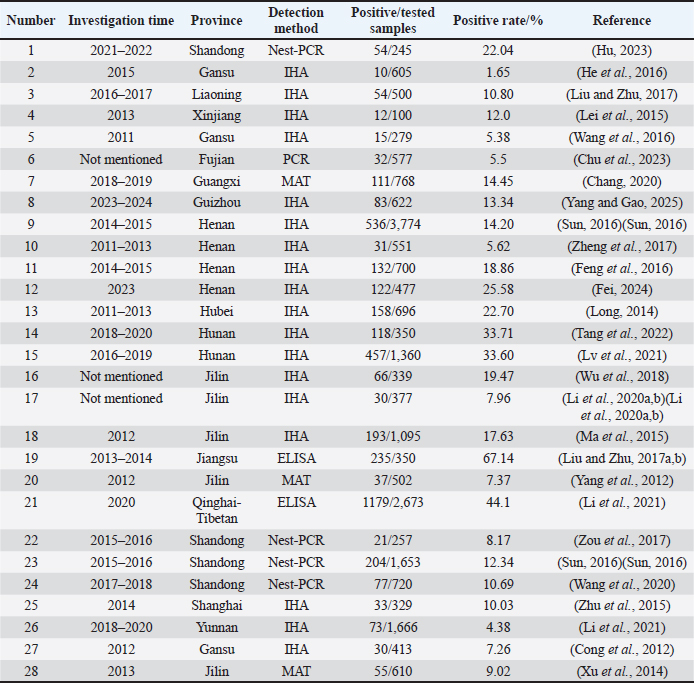
Fig. 1. Role of birds in T. gondii transmission dynamics. The following search terms were used in various combinations: “Toxoplasma gondii” or “T. gondii” or “Toxoplasmosis” AND “prevalence” or “seroprevalence” or “epidemiology” AND “chicken” or “chick” or “duck” or “goose” or “pigeon” or “wild birds” AND “China” or “mainland China.” Two authors (J.Z. and J. L.) conducted the literature screening process independently to ensure adherence to the eligibility criteria, and the final literature retrieved in this review was mediated by the third author (M.H.). When multiple studies reported data from the same population or overlapping sampling periods, only the larger sample size study was retained. For studies that applied more than one diagnostic method to the same samples, the method with higher sensitivity was used to extract the results for analysis. Data integration and quantitative analysisThe inclusion of graphs and tables in this review aims to illustrate the transmission dynamics and prevalence rates of T. gondii among various avian species. The reported prevalence data from each eligible study were extracted and summarized across different avian hosts. Pooled prevalence estimates with 95% confidence intervals were calculated for each avian species using the EpiTools epidemiological calculator. Notably, these pooled estimates are presented for descriptive purposes without formal meta-analysis, including heterogeneity testing or meta-regression. Differences in prevalence across subgroups, such as age, feeding regimens, and collection periods, are described based on the original findings reported in the included studies. Literature searchA total of 824 articles were retrieved from the CNKI, Wanfang, Weipu, PubMed, Web of Science, and ScienceDirect databases (Fig. 2). Of these, 261 duplicates were identified and removed, resulting in 563 unique articles for subsequent evaluation. After screening the titles and abstracts, 393 records were excluded. Furthermore, 83 articles were excluded because their full texts could not be accessed despite attempts using institutional subscriptions, inter-library loan services, and direct communication with the corresponding authors. A further 49 studies were considered ineligible for reasons such as insufficient information or not aligning with the study’s objectives. Consequently, 38 studies were included in the final analysis. Prevalence of T. gondii in domestic poultry and wild birds in ChinaPrevalence of T. gondii among chickens in ChinaTo provide a comprehensive analysis of the epidemiological characteristics of T. gondii among chickens in China, this review incorporates data from 28 representative studies conducted across various regions of China between January 1, 2010, and December 31, 2025. The information is summarized in Supplementary Table 1. A total of 24,397 serum or tissue samples collected from chickens in16 provinces or cities were examined. Among these, 3,380 samples were positive for T. gondii-specific antibodies or nucleic acids, resulting in an overall prevalence of 13.85% (3,380/24,397). Moreover, prevalence in most provinces or regions (n=13, 81.25%) ranged from 0.0% to 30.0%. Notably, Jiangsu, Qinghai, and Hunan provinces demonstrated the highest detection rates, with prevalence values of 67.14% (235/350), 46.40% (232/500), and 33.04% (565/1,710), respectively (Fig. 3).
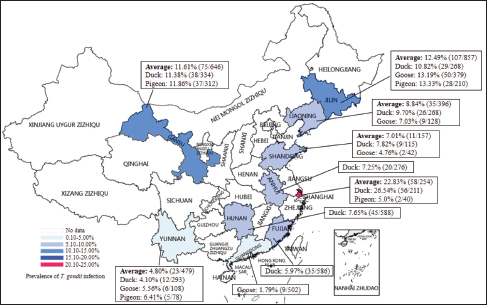
Fig. 2. Flow diagram of the literature search, screening, and study selection process for the included studies. Several subgroup variables, including detection method, gender, age, breeding model, and time period, were incorporated to compare the prevalence of T. gondii across different chicken populations in China. The primary diagnostic methods employed for detecting T. gondii included nested polymerase chain reaction (nested-PCR), enzyme-linked immunosorbent assay (ELISA), microscopic agglutination test (MAT), and indirect hemagglutination assay (IHA) (Table 1). Among these, the ELISA method demonstrated a higher detection rate than the other techniques. The prevalence of T. gondii infection within the chicken flock varied across distinct developmental stages, with positivity rates of 15.51% (363/2,341) and 24.31% (781/3,213) in younger and older chickens, respectively. Chickens raised in free-range farms exhibited a higher infection rate of 18.09% (805/4,450) than those reared in caged farms, which showed a positive rate of 7.32% (445/6,077). No notable differences in prevalence were observed between sexes or across different sampling periods. Prevalence of T. gondii in ducks, geese, and pigeons in ChinaIn total, 12 articles have examined the prevalence of T. gondii among these species across China (Cong et al., 2012; Wang et al., 2012; Yang et al., 2012; Du et al., 2015; Zhu et al., 2015; Zou et al., 2017; Li et al., 2020a,b; Li et al., 2021; Lv et al., 2021; Liu, 2023; Li et al., 2024). The average detection rates of this pathogen were 9.19% (270/2,939) in ducks, 6.56% (76/1,159) in geese, and 11.25% (72/640) in pigeons. The prevalence of T. gondii infection in ducks from different regions ranged from 4.10% in Yunnan (Li et al., 2021) to 26.54% in Shanghai (Zhu et al., 2015) (Fig. 4). The detection rates of T. gondii-specific antibodies or DNA in geese populations from five provinces were 1.79% in Guangdong (Wang et al., 2012), 4.76% in Shandong (Zou et al., 2017), 5.56% in Yunnan (Li et al., 2021), 7.03% in Liaoning (Yang et al., 2012), and 13.19% in Jilin (Li et al., 2020a,b). Similarly, the detection rates in Chinese pigeon populations were 5.0% in Shanghai (Zhu et al., 2015), 6.41% in Yunnan (Li et al., 2021), 11.86% in Gansu (He et al., 2016), and 13.33% in Jilin (Du et al., 2015).
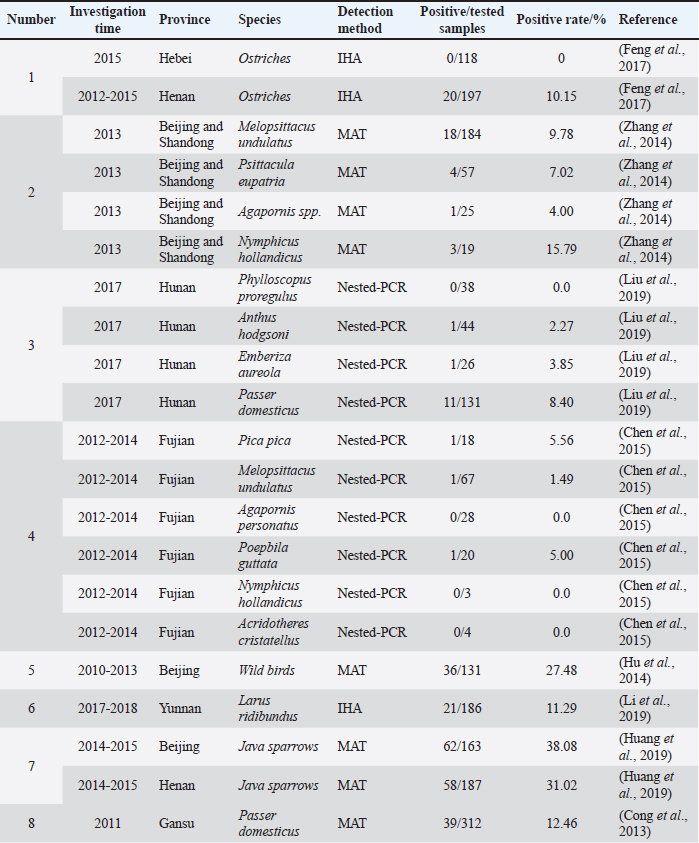
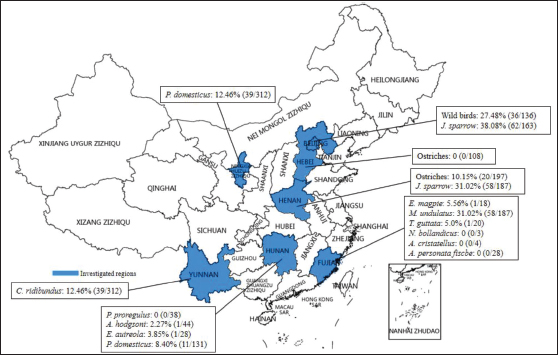
Fig. 3. Map of T. gondii infection among chickens in mainland China. Prevalence of T. gondii in wild or domesticated avian species in ChinaA diverse range of wild and domesticated avian species are present in China. Recent research has increasingly focused on the epidemiological characteristics of T. gondii within these avian populations (Cong et al., 2013; Zhang et al., 2014; Chen et al., 2015; Feng et al., 2017; Li et al., 2019; Liu et al., 2019; Huang et al., 2019), as summarized in Table 2 and Figure 5. A total of 1,869 serum or tissue samples were collected from wild or domesticated birds to investigate the prevalence of T. gondii in China. Among these samples, an average of 14.83% (277/1,869) tested positive for T. gondii. Researchers have investigated the prevalence of T. gondii across >18 wild species, with the highest detection rate of 34.29% (120/350) in Java sparrows (Huang et al., 2019). Moreover, several risk factors, such as feeding behavior, developmental stage, and seasonal variations, were found to significantly influence its prevalence (Zhang et al., 2014; Hu et al., 2014; Li et al., 2019). For instance, the seropositivity rate for T. gondii antibodies was markedly greater in carnivorous birds than in omnivorous species (Hu et al., 2014). Table 1. Pooled detection rate of T. gondii infection across various chicken populations in China.
Fig. 4. Map of T. gondii infection in ducks, geese, and pigeons in mainland China. DiscussionPrevalence of T. gondii among chickens in ChinaDespite substantial advancements in feed hygiene management standards, T. gondii remains one of the most critical food-borne parasites in China, posing a significant threat to public health (Liu et al., 2025). A wide range of warm-blooded animals, including carnivores, herbivores, and poultry, are susceptible to T. gondii infection (Farhab et al., 2025). Of particular importance, poultry plays a critical role in facilitating the transmission of this pathogen among various host species (Guo et al., 2015). Therefore, a systematic review was conducted to assess the prevalence of T. gondii across various poultry species in China. The mean prevalence of T. gondii in Chinese chicken populations was determined to be 13.85% (3,380/24,397), corroborating findings from a prior meta-analysis that reported an overall positivity rate of 14.50% (3,852/25,719) among Chinese chickens between 1996 and 2021 (Nie et al., 2022). Moreover, the prevalence observed in China was notably lower than the global average prevalence of 23.60% (10,645/45,111), as documented by Zaki et al. (2024). Compared with other livestock species within China, the prevalence in chickens was lower than that in goats (9.9%) (Wei et al., 2021) and cattle (10.1%) (Gong et al., 2020) (29%) (Zhang et al., 2019). Collectively, these findings suggest a substantial prevalence of T. gondii infection within chicken populations in China, highlighting the need for continued surveillance. Table 2. Epidemiological characteristics of T. gondii within these avian populations.
Fig. 5. T. gondii infection among domesticated avian species in mainland China. Notably, the prevalence of T. gondii in chicken populations across China varied considerably across subgroups, including age, breeding model, and diagnostic methods employed (Table 1). Specifically, studies using ELISA reported higher detection rates than those using other techniques, such as IHA, MAT, or PCR/nested-PCR. Generally, ELISA offers superior sensitivity and detection efficiency compared with IHA and MAT (Wei et al., 2021). Meanwhile, PCR and nested-PCR techniques can specifically identify target DNA even at low concentrations (Rostami et al., 2018). Only two studies incorporated ELISA in their methodologies, and the higher prevalence observed in these studies may reflect a combination of regional, population, and study design factors rather than a direct effect of the diagnostic method itself. Therefore, the limited application of ELISA is unlikely to have substantially influenced the overall findings of this review. Furthermore, the prevalence of T. gondii infection was markedly greater in chickens aged >6 months (24.31%, 781/3213) than in those aged 6 months (15.51%, 363/2,341). This age-related trend has been similarly documented in other animal species, including sheep (Wang et al., 2021), goats (Wei et al., 2021), cattle (Gong et al., 2020), and pigs (Zhang et al., 2019). Several factors may account for this phenomenon. First, older chickens have prolonged cumulative exposure to environmental reservoirs of T. gondii oocysts, such as feline feces, contaminated soil, and water sources. Second, there are significant behavioral differences; older chickens, especially those reared in free-range or backyard systems, tend to forage over wider areas, increasing the likelihood of oocyst ingestion, whereas younger chickens are typically confined to cleaner brooding environments with enhanced biosecurity measures. Third, interpreting serological results in younger birds is challenging because of the presence of maternally derived antibodies, which are difficult to differentiate from antibodies generated by an active infection, as well as age-related differences in immune response that can influence test sensitivity. These factors need to be considered when comparing prevalence between different age groups. Lastly, prevailing farming practices in China result in most chickens aged 6 months being commercial broilers raised indoors and slaughtered at an early age, whereas those aged >6 months are primarily layers, breeders, or free-range birds with extended environmental exposure. Taken together, these factors provide a comprehensive explanation for the observed age-associated pattern in the prevalence of T. gondii infection. Similarly, chickens reared under free-range farming systems demonstrated a significantly higher prevalence of infection (18.09%, 805/4,450) than those raised in caged farming conditions (7.32%, 445/6,077). This difference is attributable to factors inherent to FRFH practices. Unlike caged chickens, free-range chickens have increased exposure to cat feces, as felids are the definitive hosts of T. gondii and can shed a high concentration of oocysts in their feces. Additionally, free-range chickens are more prone to ingesting water contaminated with oocysts, consuming feed tainted by oocysts present in the soil, and residing in proximity to areas frequented by cats, such as farmhouse yards or granaries. Although clinical manifestations are typically absent, older chickens and those raised in free-range environments are at elevated risk of T. gondii oocyst exposure and subsequent infection. Based on the periods during which samples were collected, the data were categorized into three distinct groups: 2010–2015, 2016–2020, and 2021–2025. The results revealed that the detection rate between 2021 and 2025 was significantly elevated compared with the two preceding periods. Despite substantial progress in selective breeding practices, the prevention and control measures addressing T. gondii infection in chickens have not been comprehensively addressed. However, another explanation should be considered. The 2021–2025 period had the smallest sample size among the three groups. Alternatively, only three studies were included in this section, which may introduce statistical instability and limit the findings’ representativeness. Prevalence of T. gondii among other avian species in ChinaThis review also provided a summary of the prevalence of T. gondii in various avian species in China, including ducks, geese, pigeons, and wild birds. The overall positive rates were 9.19% (270/2,939) for ducks, 6.56% (76/1,159) for geese, 11.25% (72/640) for pigeons, and 14.83% (277/1,869) for wild birds. These poultry species, including ducks, geese, and pigeons, constitute significant sources of meat for human consumption, thereby posing substantial and widespread food-borne health risks within the Chinese population (Yang et al., 2024). A high prevalence of T. gondii has been observed among wild bird species in China. Small wild birds serve as natural prey for various carnivorous birds, including raptors, as well as other carnivorous animals, including the definitive hosts. The widespread occurrence of T. gondii in wild bird populations facilitates and complicates the transmission dynamics of this parasite across different animal hosts. Therefore, the development of control strategies for T. gondii in livestock and wildlife should comprehensively account for the environmental transmission risks associated with wild avian species. Limitations in this reviewIt is important to acknowledge that several limitations of this review warrant consideration. First, the absence of a formal meta-analysis precluded the calculation of heterogeneity metrics, the generation of forest plots, and the assessment of publication bias; consequently, prevalence estimates were presented as simple arithmetic summaries rather than statistical effect sizes. Second, no risk-of-bias evaluation was conducted for the individual included studies. Third, the diagnostic heterogeneity among the studies likely contributed to the observed variability in the prevalence rates. Fourth, the possibility of publication bias cannot be excluded, given the tendency for studies with positive results to be preferentially published. Fifth, most studies did not provide information on T. gondii genotypes, and the targeted genetic markers varied, thereby preventing strain characterization. Sixth, the analysis of risk factors was confined to detection method, gender, age, breeding model, and sampling periods, whereas other potentially relevant factors, such as the presence of cats, altitude, and temperature, were not investigated. Seventh, there is a potential for overlap in study populations across different publications. Finally, the pathogenic effects and implications of co-infection with T. gondii in avian hosts remain insufficiently explored (Hiob et al., 2017), and epidemiological data from certain regions, particularly for ducks, pigeons, geese, and wild birds, remain inadequate. ConclusionIn summary, this review conducted a comprehensive systematic analysis of existing studies that evaluated the prevalence of T. gondii infection among avian species in China. Although the clinical manifestations of T. gondii infection in avian species are generally inconspicuous, this pathogen is widely distributed among these populations. This widespread prevalence may pose a significant risk of zoonotic transmission to humans and facilitate the spread of this pathogen across diverse host species. Considering these findings, effective control is imperative to mitigate the adverse effects on public health and limit the transmission of this pathogen among diverse hosts. AcknowledgmentsNone. FundingThis work was supported by the Hunan Provincial Natural Science Foundation of China (2025JJ70413), the Science and Technology Project in Yiyang City (2023-102), and the Key Project of Hunan Vocational Education and Adult Education Association (XH2025008). Author’s contributionsMingye He: Data analysis, Funding acquisition, and original draft writing. Zhenjiang Zhang: Data analysis, revision of the draft, and figure preparation. Jixiang Zhang and Jin Liu: Data collection and preparation of figures. Xia Wang and Xiaofang Xie: Methodology and Validation. Yi Xie: preparation of the table. All authors have read and approved the final version of the manuscript. Data availabilityAll data underpinning the conclusions presented in this manuscript are included within the article. Conflict of interestAll authors declare that they have no competing interests. ReferencesChang , Q.H. (2020) Establishment of a modified agglutination test (MAT) for Toxoplasma gondii and epidemiological investigation of dogs, cats, chickens, and goats in Guangxi Province, China Guangxi University. 2020. Chen, C., Qin, S.Y., Yang, X., et al. (2024). Global prevalence and risk factors associated with Toxoplasma gondii infection in wild birds: a systematic review and meta-analysis. J Am Coll Cardiol. 57, 67–79. Chen, C., Qin, S.Y., Yang, X., Li, X.M., Cai, Y., Lei, C.C., Zhao, Q., Elsheikha, H.M. and Cao, H. 2024. Global prevalence and risk factors associated with Toxoplasma gondii infection in wild birds: a systematic review and meta-analysis. Prev. Vet. Med. 226, 106187. Chen, R., Lin, X., Hu, L., Chen, X., Tang, Y., Zhang, J., Chen, M., Wang, S. and Huang, C. 2015. Genetic Characterization of Toxoplasma gondii from zoo wildlife and pet birds in Fujian, China. Iran. J. Parasitol. 10(4), 663–668. Chu, M.J., Huang, L.Y., Miao, W.Y. and et al. 2023. Toxoplasma gondii in chickens from farmers’ markets in Fujian Province, Southeastern China. Pathogens 12, 1243. Cong, W., Huang, S.Y., Zhou, D.H. and et al. 2012. First report of Toxoplasma gondii infection in market-sold adult chickens, ducks and pigeons in northwest China. Parasit. Vectors 5, 110. Cong, W., Huang, S.Y., Zhou, D.H., Zhang, X.X., Zhang, N.Z., Zhao, Q. and Zhu, X.Q. 2013. Prevalence and genetic characterization of Toxoplasma gondii in house sparrows (Passer domesticus) in Lanzhou, China. Korean J. Parasitology 51(3), 363–367; doi:10.3347/kjp.2013.51.3.363 Du, L., Yang, D., Zhai, T., Gong, P., Zhang, X. and Li, J. 2015. Detection of Neospora caninum-DNA in brain tissues from pigeons in Changchun, Jilin (China). Vet. Parasitol. 214, 171–173; doi:10.1016/j.vetpar.2015.09.005 Farhab, M., Aziz, M.W., Shaukat, A., Cao, M.X., Hou, Z., Huang, S.Y., Li, L. and Yuan, Y.G. 2025. Review of toxoplasmosis: what we still need to do. Vet. Sci. 12(8), 772; doi:10.3390/vetsci12080772 Fei, J. 2024. Seroprevalence of Toxoplasma gondii infection in chickens in partial regions of Xinyang City. Poultry Sci. 46(5), 95–97. Feng, Y., Lu, Y., Wang, Y., Zhang, L. and Yang, Y. 2017. Toxoplasma gondii and Neospora caninum in farm-reared ostriches (Struthio camelus) in China. BMC Vet. Res. 13(1), 301. Feng, Y.J., Lu, Y.Y., Wang, Y.H. and et al. 2016. Toxoplasma gondii and Neospora caninum in free-range chickens in Henan Province of China. J. Biol. Sci. 57, 67–79. Gong, Q.L., Li, J., Li, D., Tian, T., Leng, X., Li, J.M., Shi, K., Zhang, N.Z., Du, R. and Zhao, Q. 2020. Seroprevalence of Toxoplasma gondii in cattle in China from 2010 to 2019: a systematic review and meta-analysis. Acta. Trop. 211, 105439. Guo, M., Dubey, J.P., Hill, D., Buchanan, R.L., Gamble, H.R., Jones, J.L. and Pradhan, A.K. 2015. Prevalence and risk factors for Toxoplasma gondii infection in meat animals and meat products destined for human consumption. J. Food. Prot. 78(2), 457–476; doi:10.4315/0362-028X.JFP-14-328 He, Y.C., Li, S., Li, X.R. and et al. 2016. Serological survey of animal toxoplasmosis in Zhangye City of Gansu Province. Chin. J. Anim. Quarant. 33, 12–13. Hiob, L., Koethe, M., Schares, G., Goroll, T., Daugschies, A. and Bangoura, B. 2017. Experimental Toxoplasma gondii and Eimeria tenella co-infection in chickens. Parasitol. Res. 116(11), 3189–3203. Hu, C.M., Wang, B.B., Sun, X.N., et al. (2014). Seroprevalence of Toxoplasma gondii in wild birds rescued in Beijing, China. Chin J Vet Med. 50(2), 14–17. (In Chinese). Hu, R. 2023. Investigation on Neospora and Toxoplasma infection of poultry and Neospora NC5 polymorphism analysis in the Bengbu city region. Int. J. Biol. Chem. Biol. Bengbu Med. Coll. Huang, S.Y., Fan, Y.M., Chen, K., Yao, Q.X. and Yang, B. 2019. Seroprevalence and risk assessment of Toxoplasma gondii in Java sparrows (Lonchura oryzivora) in China. BMC Vet. Res. 15(1), 129; doi:10.1016/j.bmcvr.2019.09.012 Lei, C.H., Cai, Y.Q., Bao, Z.Z. and et al. 2015. Serological investigation of Toxoplasma gondii infection of free-range chickens and sparrows in a free-range chicken farm. Int. J. Vet. Sci. 57, 67–72. Li, C., Li, J., Li, W.F. and et al. 2019. Survey of serum antibodies against Toxoplasma gondii in wintering black-beaked gulls in Kunming Dianchi and risk factor analysis. China Poultry 41(5), 74–76. Li, G., Zheng, W., Yang, J. and et al. 2020. Seroprevalence and epidemiology of Toxoplasma gondii in animals in the Qinghai-Tibetan Plateau Area, China. Pathogens. 202010432. 10, 432. Li, K., Liu, X.C. and Zhao, J. 2021. Investigation and genotyping of Toxoplasma gondii infection in Yunnan Province, China. Anim. Husbandry. Vet. Med. 53, 105–111. Li, M.H., Yang, B.T., Yin, Z.W. and et al. 2020. A Seroepidemiological survey of Toxoplasma gondii and chlamydia infection in chickens, ducks, and geese in Jilin Province, Northeastern China. Vector. Borne. Zoonotic. Dis. 20, 825–830; doi:10.1016/j.vbzd.2020.01.002 Li, S. A., Huang, L. Y., Guo, X. D., Miao, W. Y., Lin, Y. S., and Zhou, D. H. (2024). First identified Toxoplasma gondii Type I in market-sold ducks in Fujian province, China: a significant for public health. 103, 104024; doi: 10.1016/j.psj.2024.104024 Liu, M.T., Jiang, W.X., Gui, B.Z. and et al. 2019. Molecular prevalence and genetic characterization of Toxoplasma gondii in wild birds in Hunan Province, China. Vector Borne Zoonotic Dis. 19(5), 378–383. Liu, P., Tang, H., Xu, Q., Dong, Y., Chen, F., Zhao, D., Tang, B., Sun, X., Liu, X., Liu, M. and Wang, Y. 2025. The seroprevalence and distribution of Toxoplasma gondii in pigs in China from 2000 to 2023: a systematic review and meta-analysis. Anim. Dis. 5(1), 26; doi:10.1186/s44149-025-00173-y Liu, S. Q. (2023). Research on cytokines related to innate immunity and parasite load in NRTUA-infected chickens Tianjin Agricultural University (In Chinese). Liu, S.Y. and Zhu, J.Y. 2017. Epidemiological investigation of Toxoplasma gondii in layer chickens in Dashiqiao Area, Liaoning Province. Modern. J. Anim. Husbandry. Vet. Med. 8, 40–42. Liu, X.C., He, Y., Han, D.G., Zhang, Z.C., Li, K., Wang, S., Xu, L.X., Yan, R.F. and Li, X.R. 2017. Detection of Toxoplasma gondii in chicken and soil of chicken farms in Nanjing region, China. Infect. Dis. Poverty. 6(1), 62; doi:10.1016/j.idp.2017.09.012 Long, X. 2014. The serological survey of Toxoplasma gondii infection in chickens from Jingzhou City. Yangtze University, 2014. (In Chinese). Lv, Q.Y., Quan, M.X., Tang, H.L., Wu, X.T., Liu, G.H., Li, F. and Hu, S.F. 2021. Seroprevalence, risk factors, and genotypes of Toxoplasma gondii in free-range chickens intended for human consumption in China. Foodborne. Pathog. Dis. 18(4), 253–259. Ma, L., Wang, Z.D., Li, J.P. and et al. 2015. Seroprevalence of Toxoplasma gondii infection in freelance chickens in Jilin Province, northeastern China. Trop. Biomed. 32(4), 693–698; doi:10.1016/j.trbiomed.2015.09.016 Miyagaki, M., Zong, Y., Yang, M., Zhang, J., Zou, Y., Ohno-Matsui, K. and Kamoi, K. 2024. Ocular Toxoplasmosis: advances in Toxoplasma gondii biology, clinical manifestations, diagnostics, and therapy. Pathogens 13, 898; doi:10.1016/j.pathogens.2024.08.098 Nasiru Wana, M., Mohd Moklas, M.A., Watanabe, M., Nordin, N., Zasmy Unyah, N., Alhassan Abdullahi, S., Ahmad Issa Alapid, A., Mustapha, T., Basir, R. and Abd. Majid, R. 2020. A Review on the prevalence of Toxoplasma gondii in humans and animals reported in Malaysia from 2008-2018. Int. J. Environ. Res. Public Health 17(13), 4809; doi:10.1016/j.ijenph.2020.08.007 Nie, L.B., Gong, Q.L., Wang, Q. and et al. 2022. Prevalence of Toxoplasma gondii infection in chickens in China during 1993-2021: a systematic review and meta-analysis. Parasitol. Res. 121(1), 287–301. Penezić, A., Uzelac, A., Breka, K., Simin, S., Ovari, K., Pantelić, I., Ćirković, V., Ćirović, D. and Klun I. 2025. Understanding Toxoplasma gondii transmission in an ecological context-the contribution of wild avian species from urban environments. Front. Vet. Sci. 12, 1634254. Rostami, A., Karanis, P. and Fallahi, S. 2018. Advances in serological, imaging techniques and molecular diagnosis of Toxoplasma gondii infection. Infection 46(3), 303–315. Severance, E.G., Xiao, J., Jones-Brando, L., Sabunciyan, S., Li, Y., Pletnikov, M., Prandovszky, E. and Yolken, R. 2016. Toxoplasma gondii-A gastrointestinal pathogen associated with human brain diseases. Int. Rev. Neurobiol. 131, 143–163. Sun, H.Y., Zhang, Y., Zhang, L.L., et al. (2016). Serological investigation and analysis of Toxoplasma gondii infection in chickens in Xinyang region. J Infect Dis. 2016;28:287–92. Sun, P. (2016). Investigation and analysis of Toxoplasma gondii infection in chicken products in Shandong Province, China. Shandong Agricultural University (In Chinese). Tang, W.Q., Li, F., Zhou, Y.J. 2022. The investigation of Toxoplasma gondii infection in some areas of Hunan Province. J Microbiol. 58, 59–69. Wang, M., Ye, Q., Zhang, N.Z. and Zhang, D.L. 2016. Seroprevalence of Toxoplasma gondii infection in food-producing animals in Northwest China. Chin. J. Zoonoses 32(7), 608–612. Wang, R., Zhao, N., Zhang, H., Wang, F., Li, H., Liu, Y., Zhao, X. and Zhang, X. 2020. Prevalence of Toxoplasma gondii infections in chicken hearts from farmers’ markets and supermarkets in the Tai’an Region of China. J. Food. Prot. 83(2), 338–341; doi:10.1016/j.jfp.2020.03.016 Wang, X.Q., Gao, Y., Li, G.Y., He, Y., Yuan, Z.G., Weng, Y.B. and Lin, R.Q. 2012. Seroprevalence of Toxoplasma gondii in Geese from Qingyuan, Guangdong, China. Chin. J. Vet. Sci. 48, 10–12. Wang, W., Gong, Q.L., Li, M.H., Wei, X.Y., Chen, Y., Jiang, J., Ni, H.B., Lyu, C. and Wang, C.R. 2021. The prevalence of Toxoplasma gondii in sheep in China: a systematic review and meta-analysis. Res. Vet. Sci. 138, 19–29; doi: 10.1016/j.rvsc.2021.05.016 Wei, X.Y., Gong, Q.L., Zeng, A. and et al. 2021. Seroprevalence and risk factors of Toxoplasma gondii infection in goats in China from 2010 to 2020: a systematic review and meta-analysis. Infect. Dis. Prev. Vet. Med. 57, 105230. Wu, S.J., Zhao, D.Z., Sun, F.L. and et al. 2018. The preliminary investigation of Toxoplasma gondii serology in the Yanbian Area. J. Biol. Sci. 57, 103. Xu, Y., Wang, F.Y., Liu, X.Y., et al. (2014). A modified agglutination test for diagnosing toxoplasmosis in chicken. Chin J Vet Sci. 34, 1781–1783. Yang, N., Mu, M.Y., Li, H.K. and et al. 2012. Seroprevalence of Toxoplasma gondii infection in slaughtered chickens, ducks, and geese in Shenyang, northeastern China. Parasites Vectors 5, 237. Yang, Y.Y. and Gao, H. 2025. Epidemiological characteristics and risk factors analysis of Toxoplasma gondii infection in chickens in Bijiang district, Tongren city from 2023 to 2024. Hunan J. Anim. Sci. Vet. Med. 2, 12–14. Yang, Z., Yuan, H., Nie, L., Wen, Q., Li, H., Yang, L., Song, Y., Luo, X., Zhang, X.X. and Yuan, Z.G. 2024. Deciphering the epidemiological dynamics: Toxoplasma gondii seroprevalence in mainland China’s food animals, 2010-2023. Front. Cell. Infect. Microbiol. 14, 1381537; doi:10.3389/fcimb.2024.1381537 Zaki, L., Olfatifar, M., Ghaffarifar, F. and et al. 2024. Global prevalence of Toxoplasma gondii in birds: a systematic review and meta-analysis. J. Am. Coll. Cardiol. 25, 350. Zhang, X.X., Ren, W.X., Tan, Q.D., Hou, G., Fei, Y.C., Zhao, L.J., Zhao, Q. and Sun, D. 2019. Meta-analysis of Toxoplasma gondii in pigs intended for human consumption in Mainland China. Acta. Trop. 198, 105081. Zhang, X.X., Zhang, N.Z., Tian, W.P. and et al. 2014. First report of Toxoplasma gondii seroprevalence in pet parrots in China. Vector. Borne. Zoonotic. Dis. 14(6), 394–398; doi:10.1016/j.vbzd.2014.09.010 Zheng, B., Li, J.N., Ren, H.B. and et al. 2017. Seroprevalence of chickens infected with Toxoplasma gondii in Xinxiang of Henan Province. J. Med. Pest. Control. 33(5), 476–478. Zhu, J., Sheng, M.H., Chen, L.E. and et al. 2015. The serological survey of Toxoplasma gondii infection in poultry in Songjiang District. J. Virol. 57, 67–79. Zou, Y., Nie, L.B., Zhang, N.Z., Zou, F.C., Zhu, X.Q. and Cong, W. 2017. First genetic characterization of Toxoplasma gondii infection in poultry meat intended for human consumption in eastern China. Infect. Genet. Evol. 55, 172–174; doi:10.1016/j.ige.2017.09.010
Supplementary Table 1. Brief information of 28 representative studies investigating the prevalence of T. gondii among Chinese chicken populations. | ||

| How to Cite this Article |
| Pubmed Style He M, Zhang J, Liu J, Wang X, Xie X, Xie Y. Toxoplasma gondii prevalence in Chinese avian species: A narrative review. Open Vet. J.. 2026; 16(8): 5863-5873. doi:10.5455/OVJ.2026.v16.i8.74 Web Style He M, Zhang J, Liu J, Wang X, Xie X, Xie Y. Toxoplasma gondii prevalence in Chinese avian species: A narrative review. https://www.openveterinaryjournal.com/?mno=320974 [Access: September 04, 2026]. doi:10.5455/OVJ.2026.v16.i8.74 AMA (American Medical Association) Style He M, Zhang J, Liu J, Wang X, Xie X, Xie Y. Toxoplasma gondii prevalence in Chinese avian species: A narrative review. Open Vet. J.. 2026; 16(8): 5863-5873. doi:10.5455/OVJ.2026.v16.i8.74 Vancouver/ICMJE Style He M, Zhang J, Liu J, Wang X, Xie X, Xie Y. Toxoplasma gondii prevalence in Chinese avian species: A narrative review. Open Vet. J.. (2026), [cited September 04, 2026]; 16(8): 5863-5873. doi:10.5455/OVJ.2026.v16.i8.74 Harvard Style He, M., Zhang, . J., Liu, . J., Wang, . X., Xie, . X. & Xie, . Y. (2026) Toxoplasma gondii prevalence in Chinese avian species: A narrative review. Open Vet. J., 16 (8), 5863-5873. doi:10.5455/OVJ.2026.v16.i8.74 Turabian Style He, Mingye, Jixiang Zhang, Jin Liu, Xia Wang, Xiaofang Xie, and Yi Xie. 2026. Toxoplasma gondii prevalence in Chinese avian species: A narrative review. Open Veterinary Journal, 16 (8), 5863-5873. doi:10.5455/OVJ.2026.v16.i8.74 Chicago Style He, Mingye, Jixiang Zhang, Jin Liu, Xia Wang, Xiaofang Xie, and Yi Xie. "Toxoplasma gondii prevalence in Chinese avian species: A narrative review." Open Veterinary Journal 16 (2026), 5863-5873. doi:10.5455/OVJ.2026.v16.i8.74 MLA (The Modern Language Association) Style He, Mingye, Jixiang Zhang, Jin Liu, Xia Wang, Xiaofang Xie, and Yi Xie. "Toxoplasma gondii prevalence in Chinese avian species: A narrative review." Open Veterinary Journal 16.8 (2026), 5863-5873. Print. doi:10.5455/OVJ.2026.v16.i8.74 APA (American Psychological Association) Style He, M., Zhang, . J., Liu, . J., Wang, . X., Xie, . X. & Xie, . Y. (2026) Toxoplasma gondii prevalence in Chinese avian species: A narrative review. Open Veterinary Journal, 16 (8), 5863-5873. doi:10.5455/OVJ.2026.v16.i8.74 |


