




| Case Report | ||
Open Vet. J.. 2026; 16(8): 5888-5896 !!
Open Veterinary Journal, (2026), Vol. 16(8): 5888–5896 Case Report Short-term therapy with molnupiravir for feline infectious peritonitis: A case series of eight male catsYu Sahashi1*, Miwako Sahashi1 and Yoshiaki Hikasa1,21Sahashi Veterinary Hospital, Inagawa, Kawabe-gun, Japan 2Joint Department of Veterinary Medicine, Faculty of Agriculture, Tottori University, Tottori, Japan *Corresponding Author: Yu Sahashi. Sahashi Veterinary Hospital, Inagawa, Kawabe-gun, Japan. Email: yu-sahashi [at] hotmail.co.jp Submitted: 14/05/2026 Revised: 11/07/2026 Accepted: 22/07/2026 Published: 20/08/2026 © 2025 Open Veterinary Journal
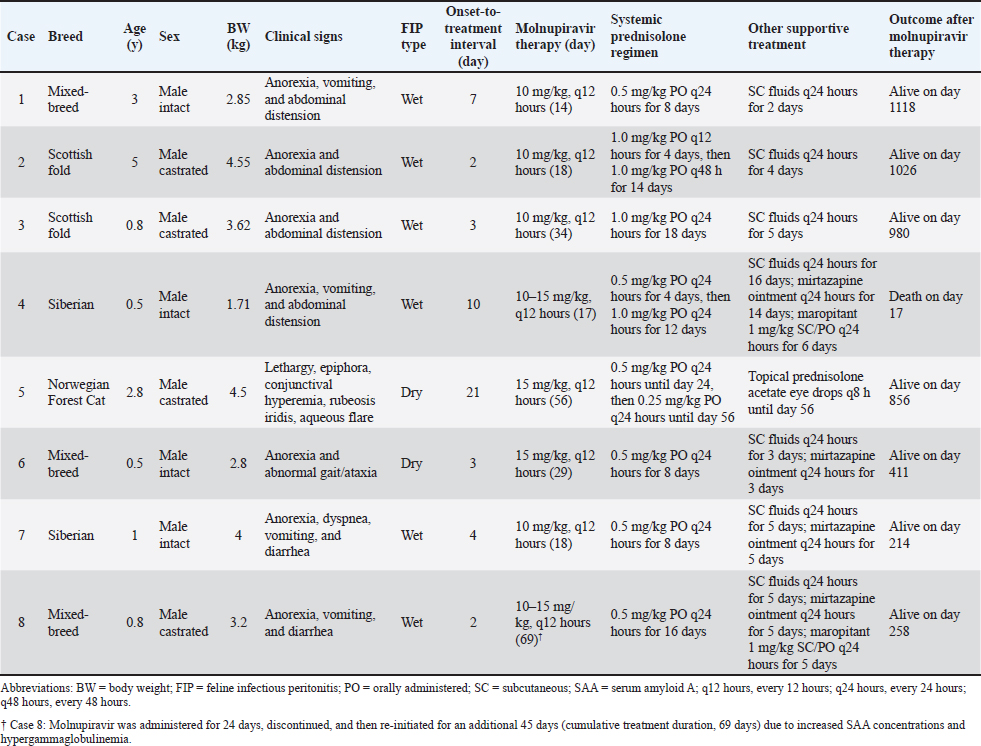
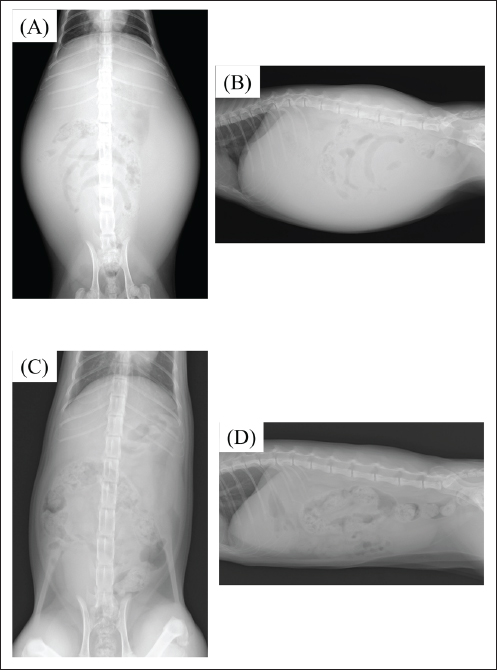
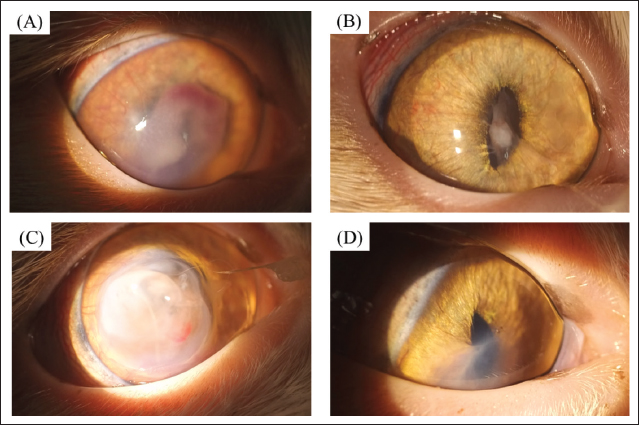
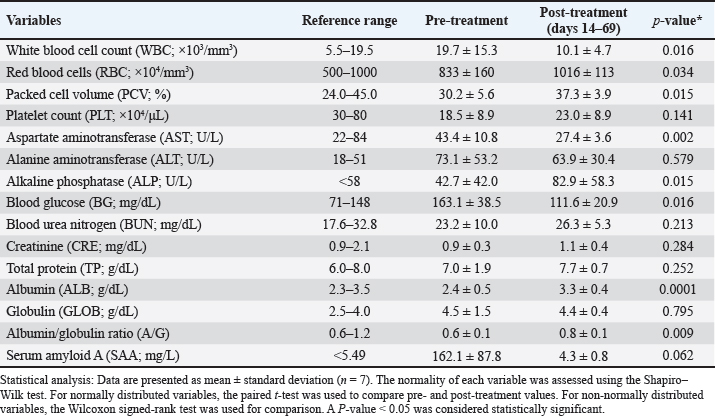
AbstractBackground: Feline infectious peritonitis (FIP) is a fatal disease caused by feline coronavirus infection. Even when antiviral therapy is available, standard treatment regimens often require a prolonged therapy duration and may rely on unlicensed drugs. Molnupiravir, an orally administered nucleoside analogue, is increasingly being used off-label for the treatment of FIP. Case Description: This retrospective case series included eight client-owned cats with FIP, including effusive (n=6) and non-effusive (ocular n=1; neurologic n=1) types. Molnupiravir (10–15 mg/kg, orally q12 hours) was administered for 14–69 days based on therapeutic response, together with case-specific supportive therapy, including systemic prednisolone with individualized tapering regimens. Seven of eight cats showed prompt improvement in clinical symptoms after molnupiravir administration. Ascites resolved within 14–18 days in five of the six cats with effusive FIP. One cat with advanced disease did not respond to treatment and died. No adverse effects attributable to molnupiravir administration were observed. At the final follow-up (214–1118 days after treatment initiation), all seven surviving cats were alive, and no further recurrence was observed. Conclusion: These findings suggest that individualized, response-based short-course molnupiravir therapy may be a potential treatment option for inducing remission in selected cats with FIP that show an early response to treatment. However, careful patient selection, post-treatment monitoring, and consideration of the risks associated with adjunctive glucocorticoid administration are required. Prospective controlled studies are warranted to optimize dosing strategies, discontinuation criteria, and long-term safety. Keywords: Duration of therapy; Feline coronavirus; Off-label antiviral use; Nucleoside analogue; Response-based treatment. IntroductionFeline infectious peritonitis (FIP) is a fatal disease caused by pathogenic variants of feline coronavirus (FCoV). It predominantly affects young cats and can present in effusive (wet) or non-effusive (dry) forms. with some cases involving ocular or neurological manifestations (Pedersen, 2009). Historically, FIP has been considered an untreatable disease because of its rapid progression and high mortality rate (Pedersen, 2009). However, the development of nucleoside analogs has substantially changed the therapeutic landscape of FIP. GS-441524, an active metabolite of remdesivir, has been demonstrated to be markedly effective as a therapeutic agent for FIP in both experimental and clinical settings (Pedersen et al., 2019; Coggins et al., 2023; Green et al., 2023; Taylor et al., 2023). However, GS-441524 is an unapproved drug in many countries, resulting in the widespread use of unregulated or unapproved alternatives such as Mutian® (Katayama and Uemura, 2021). Approved veterinary antiviral options for FIP, therefore, remain limited. Molnupiravir is an orally available nucleoside analogue that has been reported as an off-label antiviral option for cats with naturally occurring FIP and for cats that did not respond to GS-441524-like treatment or relapsed after such treatment (Roy et al., 2022; Sase, 2023; Clark et al., 2025; Yoshida et al., 2025). Molnupiravir is not registered as a veterinary drug for the treatment of FIP, and information on its optimal dose, treatment duration, discontinuation criteria, and long-term safety in cats remains limited. In this case series, molnupiravir was selected because oral administration was feasible, previous veterinary reports described its use in cats with FIP, and no veterinary antiviral drug specifically approved for FIP was available in our clinical setting. The objective of this retrospective case series was to describe clinical responses, observed adverse events, and long-term outcomes in cats with naturally occurring FIP that received individualized, response-based short-course molnupiravir because completion of a conventional prolonged antiviral regimen was considered impractical. Case DetailsEight client-owned male cats aged 6 months to 5 years were diagnosed with FIP based on clinical signs, laboratory and imaging findings, and polymerase chain reaction (PCR) results when available. Ethical approval was not required for the molnupiravir therapy because no experimental procedures were performed solely for research; however, informed consent was essential for inclusion. All diagnostic and therapeutic procedures were performed as part of routine clinical care in client-owned cats, and written informed consent was obtained from all owners for diagnostic procedures, off-label molnupiravir treatment, and publication of anonymized case information. Veterinarians were responsible for any adverse reactions that may occur as a result of this unlicensed use for cats. They were also required to retain medical records for at least 3 years, including the name of the formulation, dosage, and manufacturer. The cats included in this case series were FIP cases in which completing the conventional 84-day antiviral regimen was considered impractical (e.g., difficulties in medicating and owner-related limitations). Therefore, a response-based shorter treatment regimen was used. Patient signalment, diagnostic methods, treatment protocols, and outcomes are summarized in Table 1. PCR was performed by a commercial diagnostic laboratory (IDEXX Laboratories, Tokyo, Japan). Abdominal effusion samples were submitted from cats with effusive disease. A fine-needle aspirate from the suspected renal lesion in Case 8 was submitted at the time of suspected recurrence. The assay targeted the feline coronavirus spike (S) gene. Detection of the S-gene target in an appropriate clinical sample was considered supportive of FIP when interpreted together with compatible clinical, clinicopathologic, and imaging findings. Cases 1–4, 7, and 8 were diagnosed with effusive FIP based on compatible clinical signs, clinicopathologic abnormalities, imaging findings, and detection of the S-gene target in abdominal effusion samples. When the S-gene target was not detected or PCR testing was not performed, FIP was clinically diagnosed based on a combination of compatible clinical signs, protein electrophoresis findings or hyperglobulinemia, a decreased albumin-to-globulin ratio, elevated feline coronavirus antibody titers, and imaging findings. Relevant differential diagnoses were excluded where applicable. Case 5 was clinically diagnosed with ocular FIP based on granulomatous ocular lesions, marked hyperglobulinemia, and high feline coronavirus antibody titers. Case 6 was diagnosed based on neurologic signs, including abnormal gait with inability to walk normally and ataxia, in combination with hyperglobulinemia and elevated feline coronavirus antibody titers. Mentation was normal, and no seizures were observed. In Case 5, anterior uveitis was diagnosed based on the presence of epiphora, conjunctival hyperemia, rubeosis iridis, aqueous flare detected by slit-lamp biomicroscopy, and an intraocular granulomatous lesion. No photophobia was observed. The intraocular pressure was not measured at the initial ophthalmic examination. Molnupiravir was administered orally at 10–15 mg/kg q12 hours, based on previously reported case series data (Roy et al., 2022). Supportive care was provided according to the clinical condition of each cat and included subcutaneous fluid therapy, transdermal mirtazapine for appetite stimulation, and maropitant (1 mg/kg q24 hours) for control of vomiting, as needed. Systemic prednisolone was orally administered to all cats as an adjunctive anti-inflammatory therapy at an initial dose of 0.5–1.0 mg/kg per dose, q24 hours or q12 hours as clinically indicated. Prednisolone was tapered by reducing the dose and/or extending the dosing interval according to the clinical response. Table 1 summarizes, for each case, the systemic prednisolone regimen, including dose, dosing interval, treatment duration, and tapering schedule where applicable, as well as other supportive treatments. Case 5 also received topical prednisolone acetate eye drops q8 h for FIP-associated anterior uveitis. No adverse effects attributable to molnupiravir were observed in any cat. Overall, seven of the eight cats showed clinical improvement after initiation of molnupiravir therapy. In most surviving cats (Cases 1–3 and 5–8), appetite improved within 2–5 days after treatment initiation. Among the six cats with effusive FIP, abdominal effusion resolved within approximately 14–18 days in five cats (Cases 1–3, 7, and 8). Treatment with molnupiravir was discontinued after confirming the resolution of abdominal effusion and absence of inflammatory lesions on follow-up abdominal ultrasonography. Representative abdominal radiographs of Case 2 taken before treatment and on day 18 after treatment are shown in Figure 1. Clinical improvement was also observed in the two cats with non-effusive FIP. In Case 5 with ocular FIP, the intraocular granulomatous lesion markedly regressed by day 31 of therapy (Fig. 2). In Case 6 with neurologic FIP, appetite returned within 3 days of treatment initiation, and the gait abnormality and ataxia were no longer evident by day 7. Thereafter, molnupiravir was discontinued on day 29 as blood parameters returned to the reference ranges. Hematologic and biochemical variables before and after molnupiravir treatment (on days 14 to 69) in the seven surviving cats are summarized in Table 2. For simplicity, the data in the table are presented as means ± standard deviations. The data were analyzed for normality using the Shapiro–Wilk test, and statistical significance (P < 0.05) between pre- and post-treatment values was assessed using the paired t-test for normally distributed variables and the Wilcoxon signed-rank test for non-normally distributed variables. The white blood cell count, aspartate aminotransferase (AST), and blood glucose levels decreased significantly after molnupiravir treatment, whereas the red blood cell count, packed cell volume (PCV), albumin concentration, and albumin/globulin ratio (A/G) increased significantly. The alkaline phosphatase (ALP) also increased significantly. The mean serum amyloid A (SAA) concentration decreased markedly after treatment, but the difference was not statistically significant. Exact P-values are shown in Table 2. Table 1. Summary of patient signalment, clinical characteristics, treatments, and outcomes of eight cats with feline infectious peritonitis (FIP) treated with molnupiravir.
Fig. 1. Abdominal radiographs of Case 2 with effusive feline infectious peritonitis before and after molnupiravir therapy. Ventrodorsal (A) and right lateral (B) views obtained before treatment show marked abdominal distension, diffuse soft-tissue opacity, and poor visualization of abdominal organ margins, consistent with severe abdominal effusion. Ventrodorsal (C) and right lateral (D) views obtained on day 18 of treatment show resolution of abdominal effusion and improved serosal detail. Special cases included one fatal case, one case of suspected recurrence after temporary discontinuation of molnupiravir, and one case of suspected secondary feline herpesvirus reactivation with corneal ulceration. Case 4 with effusive FIP showed no clinical improvement despite molnupiravir treatment and supportive care and died on day 17 of therapy. Abdominal effusion and persistent fever were observed until death, consistent with advanced disease.
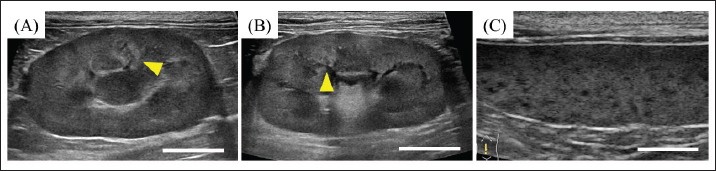
Fig. 2. Ocular findings during molnupiravir therapy in Case 5 with ocular feline infectious peritonitis. At the initial examination (A), conjunctival hyperemia, rubeosis iridis, aqueous flare detected by slit-lamp biomicroscopy, a fibrinous clot in the anterior chamber, and an intraocular granulomatous lesion are observed, consistent with FIP-associated anterior uveitis. The lesion was interpreted as an intraocular granulomatous lesion and was not considered superficial corneal granulation tissue. On day 31 of treatment (B), marked regression of the intraocular lesion is evident. On day 56 (C), corneal ulceration developed during treatment with systemic prednisolone and topical prednisolone acetate, and feline herpesvirus-1 reactivation was clinically suspected. After modification of ophthalmic treatment, including topical antiviral and antimicrobial therapy, the corneal lesion had improved by day 94 (D). In Case 8 with effusive FIP, molnupiravir treatment was temporarily discontinued on day 24 after the resolution of clinical signs and abdominal effusion, normalization of the A/G ratio, and reduction of the SAA concentration to within the reference interval. On re-examination on day 31, the serum SAA concentration was markedly elevated (>225 mg/L), and abdominal ultrasonography revealed mottled splenic echotexture and renal lesions suspected to be granulomatous (Figure 3). Although the FCoV S-gene target was not detected by PCR in a fine-needle aspirate of the kidney, recurrence of FIP was clinically suspected based on the increased SAA concentration, hypergammaglobulinemia, and imaging findings. Molnupiravir was therefore resumed and continued for an additional 45 days (cumulative treatment duration, 69 days). The renal lesions resolved by day 71, and no further recurrence was observed thereafter. In Case 5, corneal ulceration developed on day 56 during treatment with systemic prednisolone and topical prednisolone acetate. Feline herpesvirus-1 reactivation was clinically suspected because the cat had a previous episode of feline viral rhinotracheitis in which feline herpesvirus-1 was detected by PCR. However, swab testing performed at the time of corneal ulceration was negative for feline herpesvirus-1, feline calicivirus, Chlamydia felis, Mycoplasma spp., and Bordetella bronchiseptica. The modified ophthalmic regimen consisted of topical idoxuridine, lomefloxacin, and diclofenac ophthalmic drops q8 h, together with acyclovir ophthalmic ointment q12 hours, from days 57 to 94. The corneal lesion had improved by day 94. The follow-up duration was calculated from the initiation of molnupiravir therapy to the last confirmed clinical status, defined as the last hospital visit or owner communication confirming survival and absence of clinical signs suggestive of FIP recurrence. Cases 1 and 2 were followed by telephone confirmation with the owners at the time of manuscript submission, whereas Cases 3 and 5–8 were assessed during subsequent hospital visits for routine preventive care or health examinations. None of the seven surviving cats were lost to follow-up, and all remained alive with no clinical evidence of FIP recurrence at the final follow-up. Table 2. Hematologic and biochemical variables before and after molnupiravir treatment in the seven surviving cats with feline infectious peritonitis.
Fig. 3. Abdominal ultrasonographic findings in Case 8 with effusive feline infectious peritonitis on day 31 after initiation of molnupiravir therapy. The left (A) and right (B) kidneys show poorly defined renal architecture with focal hypoechoic lesions suspected to represent granulomatous lesions (yellow arrowheads). The spleen (C) shows heterogeneous parenchymal echogenicity with a mottled echotexture. The FCoV S-gene target was not detected by PCR in a fine-needle aspirate of the kidney. Recurrence of FIP was nevertheless clinically suspected based on the increased SAA concentration, hypergammaglobulinemia, and imaging findings. Scale bars=10 mm in all panels. DiscussionThis case series suggests that response-based short-course molnupiravir therapy may induce remission in selected cats with FIP. However, because FIP is characterized by persistent viral replication and immune-mediated inflammation, treatment duration should be determined based on feline-specific clinical responses, inflammatory markers, and imaging findings rather than extrapolation from protocols used for other coronavirus infections. The 12-week (84-day) course of antiviral therapy has been widely adopted as a standard of care in feline practice, mainly based on the field trial of the nucleoside analog GS-441524 (Pedersen et al., 2019). This prolonged regimen aims to ensure sustained viral suppression and prevent relapse in the disease characterized by persistent viral replication. Nevertheless, it remains uncertain whether 84-day treatment is required for all cats with FIP. Recently, a prospective randomized study demonstrated that the therapeutic effect of a 42-day course of oral GS-441524 treatment was non-inferior to that of a conventional 84-day protocol for cats with exudative FIP (Zuzzi-Krebitz et al., 2024), suggesting that the duration of molnupiravir treatment may also be shortened in cases that show early therapeutic response. In that report, many cats showed rapid improvement in clinical symptoms, including resolution of effusions and normalization of blood inflammatory markers, within the first month of therapy, and the remission rate was maintained over the 24-week follow-up period. These findings suggest that in certain cases, the duration of antiviral therapy may be shortened if early and robust treatment responses are observed. Shorter treatment durations may also reduce financial burden, improve owner compliance, and limit the risk of cumulative drug-related adverse effects or antiviral resistance. Conversely, for cats with advanced disease or delayed treatment response, the treatment period may still need to be extended. The current consensus guidelines for antiviral therapy recommend an individualized treatment duration based on improvements in clinical findings and inflammatory markers rather than a fixed treatment period (Tasker et al., 2023; Zuzzi-Krebitz et al., 2024). For example, it has been proposed that early discontinuation of therapy may be considered when clinical signs have resolved and inflammatory markers such as alpha-1-acid glycoprotein have returned to normal levels and remained stable for at least 2 weeks, while antiviral therapy is recommended for 12 weeks or longer in cats with persistent clinical signs or abnormal laboratory parameters (Tasker et al., 2023; Zuzzi-Krebitz et al., 2024). In Case 8, recurrence was suspected 7 days after molnupiravir discontinuation despite the resolution of clinical signs and abdominal effusion and normalization of the SAA concentration and A/G ratio at the time of withdrawal. Current recommendations emphasize response-based treatment duration and monitoring of clinical status, hematologic and biochemical variables, and acute-phase proteins during antiviral therapy for FIP (Tasker et al., 2026). In clinical practice, assessment of treatment efficacy and discontinuation should be based on a combination of clinical findings, including appetite, activity, body weight, and body temperature; hematologic and biochemical variables, particularly serum globulin concentration, albumin concentration, and A/G ratio; acute-phase proteins, such as AGP or SAA; and imaging findings, including resolution of effusion or organ lesions. Treatment should not be discontinued solely based on apparent clinical improvement, especially when markedly shortened response-based courses are used. Based on the early suspected recurrence observed in Case 8, re-evaluation within 1–2 weeks after withdrawal may be considered when markedly shortened response-based courses are used. No clear association was apparent between the onset-to-treatment interval and treatment duration in this small case series. Treatment duration appeared to be influenced more by clinical response, disease subtype, inflammatory markers, imaging findings, and complications, such as suspected recurrence, than by onset-to-treatment interval alone. Prednisolone was administered as an adjunctive anti-inflammatory therapy during the early treatment phase in all cats in this case series. This approach differs from the recommendations of the ABCD guidelines, which do not support the routine use of systemic corticosteroids for FIP, although topical corticosteroids may be indicated for uveitis (Tasker et al., 2023). In the present cases, systemic prednisolone was administered with individualized treatment durations and tapered according to clinical response; detailed dosing, duration, and tapering regimens are provided in Table 1. However, because all cats received systemic prednisolone and no antiviral monotherapy control group was included, the independent contribution of molnupiravir to the observed clinical improvement could not be distinguished from the potential effects of adjunctive anti-inflammatory therapy. Therefore, the use of systemic prednisolone in all cases represents an important confounding factor and a limitation of this case series. In Case 5, corneal ulceration developed during treatment with systemic prednisolone and topical prednisolone acetate for FIP-associated anterior uveitis. Although swab testing during this episode was negative for feline herpesvirus-1 and other common feline respiratory pathogens, the cat had a previous history of PCR-confirmed feline viral rhinotracheitis, and based on the clinical presentation and previous history, feline herpesvirus-1 reactivation was clinically suspected. In this case, combined systemic and topical glucocorticoid exposure may have contributed to corneal ulceration or recrudescence of latent herpesvirus infection. Therefore, cats receiving glucocorticoids for ocular FIP, particularly those with a history of feline herpesvirus-1 infection, should be closely monitored for corneal complications, and ophthalmic treatment should be promptly modified if corneal ulceration is detected. Future prospective studies comparing antiviral monotherapy with combination therapy are needed to clarify the risks and benefits of adjunctive systemic corticosteroids during molnupiravir treatment for FIP. The applicability of a uniform 84-day treatment protocol is further challenged by pharmacological differences among antiviral agents. GS-441524, an oral prodrug of the remdesivir parent nucleoside, inhibits viral RNA-dependent RNA polymerase through premature chain termination, whereas molnupiravir is metabolized to β-D-N4-hydroxycytidine and exerts its antiviral effect by inducing lethal mutagenesis during viral replication (Cox et al., 2021; Swanstrom and Schinazi, 2022; Pedersen et al., 2019). These distinct mechanisms of action may influence viral clearance dynamics and resistance profiles. In fact, cats with suspected treatment failure during therapy with a drug similar to GS-441524 have been reported to respond to subsequent molnupiravir administration (Roy et al., 2022), suggesting that cross-resistance between these agents is limited. Molnupiravir was administered twice daily in the present cases based on previous clinical reports and recent pharmacokinetic data in cats. Molnupiravir is an orally administered prodrug that is rapidly converted to its active metabolite, β-D-N4-hydroxycytidine. Because the plasma half-life of the active metabolite is relatively short, twice-daily administration may be appropriate to maintain antiviral exposure during treatment (Roy et al., 2022; Cerna et al., 2025). On the other hand, optimizing the duration of molnupiravir treatment may also be important from a safety perspective. In cats with FIP, GS-441524 and remdesivir are generally well tolerated, and their adverse effects are mainly limited to injection-site discomfort and transient elevations of hepatic enzyme activities (Pedersen et al., 2019; Coggins et al., 2023; Taylor et al., 2023). In contrast, molnupiravir has been reported to produce adverse effects, including neutropenia, alopecia of the hair or whiskers, and reversible neurologic signs, particularly at higher dosages in cats (Sase, 2023; Clark et al., 2025). No adverse effects directly attributable to molnupiravir were observed during short-course administration in the present cases. Therefore, from a safety perspective, minimizing the duration of treatment with molnupiravir without compromising efficacy may be beneficial. Additional caution is warranted when considering the use of molnupiravir in breeding cats, pregnant or lactating queens, and very young kittens. Because molnupiravir exerts its antiviral effect by inducing lethal mutagenesis during viral replication, potential reproductive and developmental risks should be considered when it is used off-label in cats (Swanstrom and Schinazi, 2022). Although the clinical relevance of these concerns to feline patients remains unclear, the present case series did not include breeding cats, pregnant or lactating queens, or very young kittens. Therefore, the use of molnupiravir in these populations should be avoided or considered only after careful risk-benefit assessment and owner counseling until feline-specific safety data become available. Study limitationsThis study has several limitations. Because this study was a retrospective case series with a small sample size and without a control group, it could not directly compare response-based short-course molnupiravir therapy with antiviral monotherapy, conventional 84-day protocols, or other antiviral agents such as GS-441524. Selection bias may also be present because the enrolled cats were cases in which completion of prolonged antiviral therapy was considered impractical. In addition, all cats received systemic prednisolone, which confounds the assessment of molnupiravir’s independent therapeutic effect. The study population was demographically limited, as all cats were male and aged 6 months to 5 years. Therefore, the findings of this study cannot be generalized to female cats, pregnant or lactating queens, geriatric cats, or very young kittens. Finally, the optimal treatment duration and standardized discontinuation criteria could not be determined. Larger prospective controlled studies are needed. ConclusionIn this retrospective case series, individualized, response-based short-course molnupiravir therapy was associated with clinical remission in seven of eight male cats with FIP. However, one cat with advanced effusive FIP died despite treatment, and suspected recurrence occurred in one cat after early discontinuation of molnupiravir. All cats received systemic prednisolone, and one cat treated with systemic and topical glucocorticoids developed corneal ulceration with clinically suspected feline herpesvirus reactivation. These findings suggest that short-course molnupiravir therapy may be a potential treatment option in selected cats that show an early and robust response. However, careful patient selection, post-treatment monitoring, and consideration of adjunctive glucocorticoid-related risks are required. Larger prospective controlled studies are needed to define optimal dosing, treatment duration, discontinuation criteria, and long-term safety. AcknowledgmentsNone declared. FundingNo funding was declared for this study. Authors’ ContributionsYS designed the study, collected and analyzed the clinical data, and drafted the manuscript. MS contributed to clinical case management and data collection. YH supervised the study and critically revised the manuscript. All authors have read and approved the final version of the manuscript. Conflict of InterestThe authors declare no conflicts of interest related to this report. Data AvailabilityThe data supporting the findings of this case series are available upon reasonable request from the corresponding author. ReferencesCerna, P., Wittenburg, L., Hawley, J., Willis, M., Siegenthaler, B. and Lappin, M.R. 2025. Pharmacokinetics of molnupiravir in cats with naturally occurring feline infectious peritonitis. Pathogens 14(7), 666; doi:10.3390/pathogens14070666. Clark, T.M., Coggins, S.J., Korman, R., King, J. and Malik, R. 2025. Treatment of feline infectious peritonitis in cats with molnupiravir: clinical observations and outcomes for 54 cases. Aust. Vet. J. 103(6), 339–353; doi:10.1111/avj.13433. Coggins, S.J., Norris, J.M., Malik, R., Govendir, M., Hall, E.J., Kimble, B. and Thompson, M.F. 2023. Outcomes of treatment of cats with feline infectious peritonitis using parenterally administered remdesivir, with or without transition to orally administered GS-441524. J. Vet. Intern. Med. 37(5), 1772–1783; doi:10.1111/jvim.16803. Cox, R.M., Wolf, J.D. and Plemper, R.K. 2021. Therapeutically administered ribonucleoside analogue MK-4482/EIDD-2801 blocks SARS-CoV-2 transmission in ferrets. Nat. Microbiol. 6(1), 11–18; doi:10.1038/s41564-020-00835-2. Green, J., Syme, H. and Tayler, S. 2023. Thirty-two cats with effusive or non-effusive feline infectious peritonitis treated with remdesivir and GS-441524. J. Vet. Intern. Med. 37(5), 1784–1793; doi:10.1111/jvim.16804. Katayama, M. and Uemura, Y. 2021. Therapeutic effects of Mutian® Xraphconn on 141 client-owned cats with feline infectious peritonitis predicted by total bilirubin levels. Vet. Sci. 8(12), 328; doi:10.3390/vetsci8120328. Pedersen, N.C. 2009. A review of feline infectious peritonitis virus infection: 1963-2008. J. Feline Med. Surg. 11(4), 225–258; doi:10.1016/j.jfms.2008.09.008. Pedersen, N.C., Perron, M., Bannasch, M., Montgomery, E., Murakami, E., Liepnieks, M. and Liu, H. 2019. Efficacy and safety of the nucleoside analog GS-441524 for treatment of cats with naturally occurring feline infectious peritonitis. J. Feline Med. Surg. 21(4), 271–281; doi:10.1177/1098612X19825701. Roy, M., Jacque, N., Novicoff, W., Li, E., Negash, R. and Evans, S.J.M. 2022. Unlicensed molnupiravir is an effective rescue treatment following failure of unlicensed GS-441524-like therapy for cats with suspected feline infectious peritonitis. Pathogens 11(10), 1209; doi:10.3390/pathogens11101209. Sase, O. 2023. Molnupiravir treatment of 18 cats with feline infectious peritonitis: a case series. J. Vet. Intern. Med. 37(5), 1876–1880; doi:10.1111/jvim.16832. Swanstrom, R. and Schinazi, R.F. 2022. Lethal mutagenesis as an antiviral strategy. Science 375(6580), 497–498; doi:10.1126/science.abn0048. Tasker, S., Addie, D.D., Egberink, H., Hofmann-Lehmann, R., Hosie, M.J., Truyen, U., Belak, S., Boucraut-Baralon, C., Frymus, T., Lloret, A., Marsilio, F., Pennisi, M.G., Thiry, E., Mostl, K. and Hartmann, K. 2023. Feline infectious peritonitis: European Advisory Board on Cat Diseases guidelines. Viruses 15(9), 1847; doi:10.3390/v15091847. Taylor, S.S., Coggins, S., Barker, E.N., Gunn-Moore, D.A., Jeevaratnam, K., Norris, J.M., Hughes, D., Stacey, E., MacFarlane, L., O’Brien, C., Korman, R., McLauchlan, G., Salord Torres, X., Taylor, A., Bongers, J., Espada Castro, L., Foreman, M., McMurrough, J., Thomas, B., Royaux, E., Calvo Saiz, I., Bertoldi, G., Harlos, C., Work, M., Prior, C., Sorrell, S., Malik, R. and Tasker, S. 2023. Retrospective study and outcome of 307 cats with feline infectious peritonitis treated with legally sourced veterinary compounded preparations of remdesivir and GS-441524 (2020-2022). J. Feline Med. Surg. 25(9), 1098612X231194460; doi:10.1177/1098612X231194460. Tasker, S., Spiri, A.M., Hartmann, K., Addie, D.D., Belak, S., Bergmann, M., Egberink, H., Frymus, T., Hofmann-Lehmann, R., Marsilio, F., Pennisi, M.G., Thiry, E., Truyen, U., Boucraut-Baralon, C., Mostl, K. and Hosie, M.J. 2026. Update on treatment of feline infectious peritonitis: European Advisory Board on Cat Diseases (ABCD) guidelines. Viruses 18(4), 452; doi:10.3390/v18040452. Yoshida, S., Sugawara-Suda, M., Sasaoka, K., Sasaki, N., Yokoyama, N., Nakamura, K., Morishita, K., Kim, S., Sunaga, T. and Takiguchi, M. 2025. Evaluation of the course of improvement with molnupiravir treatment for feline infectious peritonitis. Can. Vet. J. 66(5), 546–554. Zuzzi-Krebitz, A.M., Buchta, K., Bergmann, M., Krentz, D., Zwicklbauer, K., Dorsch, R., Wess, G., Fischer, A., Matiasek, K., Honl, A., Fiedler, S., Kolberg, L., Hofmann-Lehmann, R., Meli, M.L., Spiri, A.M., Helfer-Hungerbuehler, A.K., Felten, S., Zablotski, Y., Alberer, M., von Both, U. and Hartmann, K. 2024. Short treatment of 42 days with oral GS-441524 results in equal efficacy as the recommended 84-day treatment in cats suffering from feline infectious peritonitis with effusion-a prospective randomized controlled study. Viruses 16(7), 1144; doi:10.3390/v16071144. | ||
| How to Cite this Article |
| Pubmed Style Sahashi Y, Sahashi M, Hikasa Y. Short-term therapy with molnupiravir for feline infectious peritonitis: A case series of eight male cats. Open Vet. J.. 2026; 16(8): 5888-5896. doi:10.5455/OVJ.2026.v16.i8.77 Web Style Sahashi Y, Sahashi M, Hikasa Y. Short-term therapy with molnupiravir for feline infectious peritonitis: A case series of eight male cats. https://www.openveterinaryjournal.com/?mno=320933 [Access: September 03, 2026]. doi:10.5455/OVJ.2026.v16.i8.77 AMA (American Medical Association) Style Sahashi Y, Sahashi M, Hikasa Y. Short-term therapy with molnupiravir for feline infectious peritonitis: A case series of eight male cats. Open Vet. J.. 2026; 16(8): 5888-5896. doi:10.5455/OVJ.2026.v16.i8.77 Vancouver/ICMJE Style Sahashi Y, Sahashi M, Hikasa Y. Short-term therapy with molnupiravir for feline infectious peritonitis: A case series of eight male cats. Open Vet. J.. (2026), [cited September 03, 2026]; 16(8): 5888-5896. doi:10.5455/OVJ.2026.v16.i8.77 Harvard Style Sahashi, Y., Sahashi, . M. & Hikasa, . Y. (2026) Short-term therapy with molnupiravir for feline infectious peritonitis: A case series of eight male cats. Open Vet. J., 16 (8), 5888-5896. doi:10.5455/OVJ.2026.v16.i8.77 Turabian Style Sahashi, Yu, Miwako Sahashi, and Yoshiaki Hikasa. 2026. Short-term therapy with molnupiravir for feline infectious peritonitis: A case series of eight male cats. Open Veterinary Journal, 16 (8), 5888-5896. doi:10.5455/OVJ.2026.v16.i8.77 Chicago Style Sahashi, Yu, Miwako Sahashi, and Yoshiaki Hikasa. "Short-term therapy with molnupiravir for feline infectious peritonitis: A case series of eight male cats." Open Veterinary Journal 16 (2026), 5888-5896. doi:10.5455/OVJ.2026.v16.i8.77 MLA (The Modern Language Association) Style Sahashi, Yu, Miwako Sahashi, and Yoshiaki Hikasa. "Short-term therapy with molnupiravir for feline infectious peritonitis: A case series of eight male cats." Open Veterinary Journal 16.8 (2026), 5888-5896. Print. doi:10.5455/OVJ.2026.v16.i8.77 APA (American Psychological Association) Style Sahashi, Y., Sahashi, . M. & Hikasa, . Y. (2026) Short-term therapy with molnupiravir for feline infectious peritonitis: A case series of eight male cats. Open Veterinary Journal, 16 (8), 5888-5896. doi:10.5455/OVJ.2026.v16.i8.77 |


