




| Research Article | ||
Open Vet. J.. 2026; 16(8): 5810-5820 !
Open Veterinary Journal, (2026), Vol. 16(8): 5810–5820 Research Article Improved protein digestibility and fermentability of dairy cattle ration containing Lys-Met and protected tropical forages: A three-step in vitro assessmentAnnisa Rosmalia1*, Deska Sandanda1, Idat Galih Permana1, Despal Despal1 and Cahyo Budiman21Department of Animal Nutrition and Feed Technology, Faculty of Animal Science, IPB University, Bogor, Indonesia 2Department of Animal Production and Technology, Faculty of Animal Science, IPB University, Bogor, Indonesia *Corresponding Author: Annisa Rosmalia. Department of Animal Nutrition and Feed Technology, Faculty of Animal Science, IPB University, Bogor, Indonesia 16680. Email: annisarosmalia [at] apps.ipb.ac.id Submitted: 28/04/2026 Revised: 11/07/2026 Accepted: 23/07/2026 Published: 20/08/2026 © 2025 Open Veterinary Journal
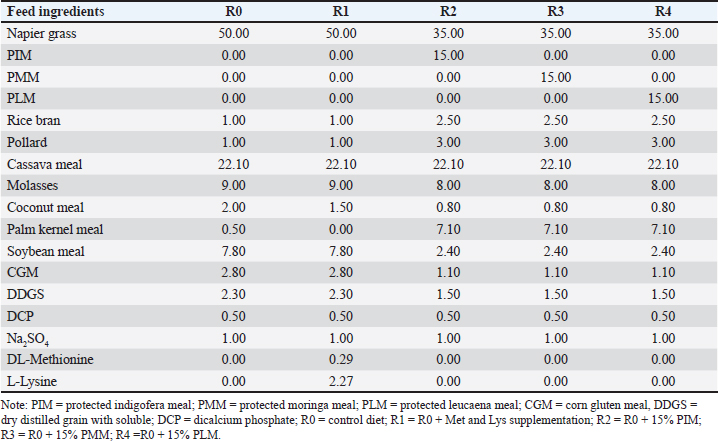
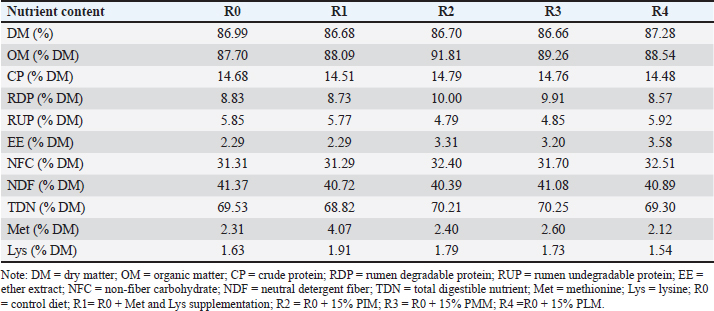
AbstractBackground: Improving protein utilization in dairy diets requires an appropriate balance between rumen degradable protein (RDP) and rumen undegradable protein (RUP), along with sufficient availability of limiting amino acids such as lysine (Lys) and methionine (Met). Tropical forages offer an alternative protein source; however, some species (Indigofera and Moringa) contain high RDP, necessitating protection to increase bypass protein. Meanwhile, Leucaena had high levels of RUP and total phenolic compounds. Lys and Met are involved in protein synthesis, and their supplementation may enhance protein utilization. However, studies on protected tropical forages, as well as on Lys & Met supplementation in relation to rumen fermentation and post-ruminal digestibility, remain limited. Aim: This study aimed to evaluate the effects of lysine and methionine supplementation and protected protein from tropical forages on rumen fermentation and post-ruminal nutrient digestibility. Methods: Post-ruminal digestibility was analyzed using a three-step in vitro method. Protein protection was applied via a moist-heat method to enhance the availability of bypass proteins. The experiment employed a randomized block design with 5 dietary treatments and 4 blocks based on rumen fluid. The treatments consisted of R0 (control diet), R1 (R0+ Lys Met supplementation), R2 (R0+15% protected indigofera), R3 (R0+15% protected moringa), and R4 (R0+15% protected leucaena). The measured parameters included rumen pH, ammonia (NH3) concentration, total and partial volatile fatty acids, protozoal population, microbial protein synthesis, and degradation and digestibility of dry matter (DM), organic matter (OM), and crude protein (CP). Data were analyzed using analysis of variance followed by Duncan’s test. Results: Treatments did not affect rumen fermentation characteristics or protozoa populations. R2 treatment significantly decreased the butyrate proportion. No significant effects were observed on total DM and OM digestibility, whereas significant differences (p < 0.05) were found in degradable (D) and undegradable (UD) OM fractions and total CP digestibility. Conclusion: In conclusion, lysine and methionine supplementation or the inclusion of 15% protected tropical forages maintained fermentation characteristics and nutrient digestibility, with protected Moringa showing the most optimal performance among protected forage treatments by improving post-ruminal digestibility. Keywords: Amino acid, In vitro, Moist heating, Protein, Tropical forage. IntroductionMilk is a complete food that provides amino acids, fat, calcium, and minerals for human nutrition, with bovine milk accounting for more than 80% of global milk production (Arrichiello et al., 2022). The demand for milk is increasing in regions such as Africa and Southeast Asia. However, improving dairy productivity in these areas remains challenging, particularly under tropical conditions (Henchion et al., 2021; Thornton et al., 2022). Poor-quality feed, heat stress, and a heavy reliance on locally available feed resources often constrain tropical dairy systems (Burrow, 2022; Michael et al., 2022). Adequate nutrient supply, especially protein utilization, is essential for dairy productivity. Optimizing protein intake while minimizing nitrogen (N) losses is a key objective in precision dairy nutrition. This requires establishing an optimal balance between rumen degradable protein (RDP) and rumen undegradable protein (RUP) to ensure an adequate N supply for microbial protein synthesis (MPS). Despite N supply, MPS production depends on energy synchronization and sufficient sulfur availability (Pathak, 2008). High-producing cows generally require a higher dietary protein supply, particularly in the form of RUP, than low-producing cows (Hristov and Duinkerken, 2026). Enhancing the RUP fraction in the ration has been proposed as a strategy to improve protein utilization efficiency in dairy systems. Previous studies have characterized protein degradability in tropical feedstuffs (Guadayo et al., 2019; Pazla et al., 2023; Permana et al., 2024) and have evaluated ideal synchronization between RDP and energy supply in dairy diets (Rosmalia et al., 2022; Permana et al., 2025). However, the extent to which these feeding strategies enhance RUP availability and contribute to post-ruminal protein supply remains unclear. Tropical forages represent promising alternative protein sources due to their adaptability, availability, and economic value for farmers (Leondro et al., 2024). Species such as Leucaena, Indigofera, and Moringa contain relatively high protein levels (>20%) and amino acid profiles, including lysine (Lys, 1.21%–2.37%) and methionine (Met, 0.31%–0.58%) (Agbo, 2015; Prasetyo et al., 2023; Putra et al., 2025). Despite this potential, some forages, such as Indigofera and Moringa, exhibited high RDP contents of 73.88% and 71.41%, respectively. (Permana et al., 2024), which may limit their contribution to post-ruminal protein supply. In contrast, Leucaena has a low RDP (46.15%), but its utilization is limited by antinutritional substances, such as mimosine, which may exert toxic effects, particularly in animals not yet adapted to Leucaena-based diets (Suharti et al., 2020; McSweeney et al., 2025). Protein protection strategies are required to reduce ruminal degradation and increase RUP supply to address these limitations. The recommended RUP level for dairy cattle is 40% of CP (Rosmalia et al., 2022). Techniques that protect proteins, such as autoclaving heat treatment, have been shown to effectively protect proteins from ruminal degradation while reducing antinutritional compounds without impairing digestibility (Rosmalia et al., 2024). Lys & Met are often limiting in dairy rations for milk production and milk protein synthesis in high-producing dairy cows, despite their essential roles in MPS production and meeting AA requirements for animals (Schwab and Broderick, 2017). These AAs regulate key cellular processes by driving the synthesis of milk proteins via mTOR signaling, promoting cell proliferation and β-casein synthesis, and supporting fatty acid oxidation through carnitine metabolism (Cao et al., 2022; Saleem et al., 2025). Supplementation with limiting amino acids, particularly Lys & Met at 0.29% and 2.27% of dry matter (DM), respectively, has been reported to improve fermentation and nutrient utilization (Chung et al., 2006). Although previous studies have evaluated protein degradability, protein protection methods, or AA supplementation separately, information on the effects of Lys & Met supplementation and protected tropical forages on rumen fermentation and protein utilization, particularly post-ruminal digestibility, remains limited. Therefore, a modified three-step in vitro procedure was used to evaluate the effects of incorporating protected forage meals from selected tropical species and supplementing Lys and Met on in vitro fermentation characteristics and nutrient digestibility of dairy rations. Materials and MethodsExperimental dietsThe experimental diets were formulated for lactating dairy cattle following the NASEM guidelines (NASEM, 2021), targeting a 50:50 forage-to-concentrate ratio, 14% CP, 40% RUP, 30%–35% non-fiber carbohydrate (NFC), and 40% neutral detergent fiber (NDF). Indigofera, Moringa, and Leucaena were selected based on their amino acid profiles, particularly their methionine (Met) and lysine (Lys) contents (Agbo, 2015; Prasetyo et al., 2023; Putra et al., 2025). Each forage was subjected to moist-heat treatment (autoclaved, 120°C for 1 hour) to reduce ruminal protein degradation (Rosmalia et al., 2024). Protected Indigofera meal (PIM), protected Moringa meal (PMM), and protected Leucaena meal (PLM) were included at 15% of the diet, replacing part of the forage portion. The dietary treatments consisted of R0=control diet, R1=R0 + Met and Lys supplementation, R2=R0 + 15% PIM, R3=R0 + 15% PMM, and R4=R0 + 15% PLM. The supplementation of Met and Lys in R1 was set at 0.29% and 2.27%, respectively, based on the recommendation by Chung et al. (2006). The nutrient content of the diets was measured using NIRS (Buchi NIRFlex N-500 Solids Cell, made in Switzerland). Tables 1 and 2 present the feed ingredients and nutrient content of the treatment diets, respectively. In vitro fermentabilityThe laboratory fermentation trial was conducted following the method first proposed by Tilley and Terry (1963). Rumen fluid was obtained from cannulated dairy cattle and served as the microbial inoculum. Approximately 0.5 g of each sample was weighed and transferred into fermentation tubes, followed by the addition of a McDougall’s buffer and rumen fluid mixture at a 4:1 ratio. To ensure anaerobic conditions, CO2 gas was flushed into the tubes for 15 seconds before sealing them with rubber stoppers. Incubation was performed for 4 hours in a shaking water bath at 39°C for 4 hours. At the end of the incubation period, the rumen pH was measured using a calibrated pH meter. Subsequently, 1 ml of the fermentation medium was mixed with 1 ml trypan blue formal saline solution for protozoal enumeration. An additional 20 ml aliquot was added with 0.1 ml of H2SO4 and stored for MPS analysis. Fermentation was terminated by adding 0.2 ml HgCl2, and the samples were centrifuged at 3,500 rpm for 15 minutes to separate the supernatant for subsequent analysis. Ammonia (NH3) concentration was measured using the Conway microdiffusion technique (Masterson, 2014), while the total VFA concentration was determined through a modified steam distillation procedure. Protozoal populations were counted microscopically at 40 × magnification (Rosmalia et al., 2022). MPS production was quantified using the Lowry method, as described by Makkar et al. (1982). The resulting supernatant was further analyzed to determine individual VFA components using a gas chromatograph (8890 GC system, Agilent Technologies) according to the procedure described by Sarwono et al. (2022). The identification and quantification of individual VFAs, including acetate, propionate, butyrate, valerate, isovalerate, and isobutyrate, were performed using a Volatile Free Acid Mix standard (Supelco, CRM46975). Table 1. Feed composition of diets (%).
Table 2. Nutrient content of diets.
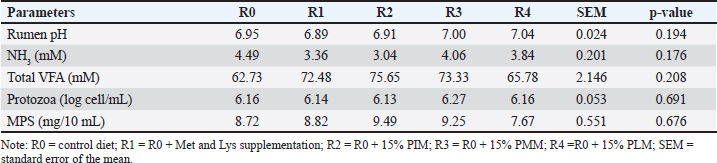
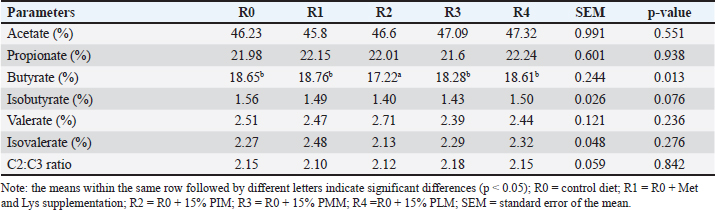
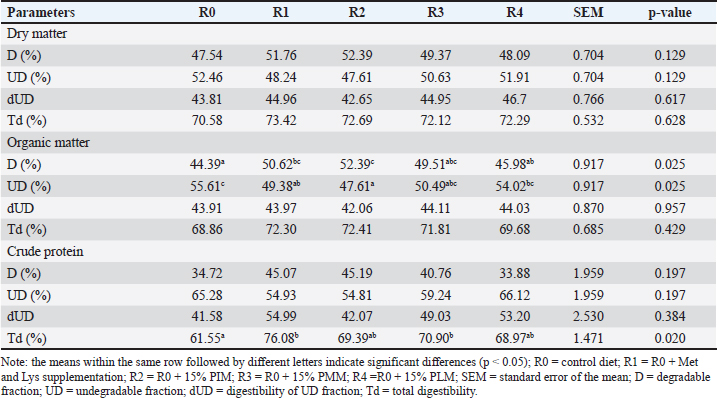
In vitro degradability and digestibilityIn vitro digestibility was evaluated using a modified three-step in vitro procedure as described by Gargallo et al. (2006). For the ruminal degradation phase, 5 g of each dietary sample (in duplicate) was weighed and placed into labeled nylon bags (Tafetta, 5 × 10 cm) (Despal et al., 2022). The bags were tightly sealed using an impulse sealer and then placed in the rumen fistula (n=3; approximately 500 kg body weight; 4 years old) for 48 hours to assess DM and OM degradation. Each treatment was replicated 4 times. After incubation, the bags were washed under running water for 3 minutes and then cleaned for 10 minutes in an ultrasonic water bath. Subsequently, the bags were dried in a forced-air oven at 60°C for 48 hours, and the remaining residues were analyzed for DM, OM, and CP to estimate ruminal degradability. Rumen-incubated residues (0.5 g; duplicate) were placed into local nylon bags (N57, 5x5 cm) for post-ruminal digestion. Up to 12 bags were placed in each 1 L incubation jar containing 800 mL of pepsin-HCl solution (HIMedia), and the jar was incubated in a shaking water bath at 39°C for 1 h. The solution was discarded after incubation, and the nylon bags were rinsed with tap water. The bags were then transferred to a clean incubation jar, with a maximum of 12 bags per bottle, and 800 mL of pancreatin solution was added. This solution consisted of 0.5 M KH2PO4 buffer supplemented with 50 ppm thymol (HIMedia) and 8 g/L pancreatin (3NF/USP, HIMedia). Subsequently, the samples were incubated for 24 hour at 39°C in a shaking water bath. After this incubation period, the bags were washed in an ultrasonic water bath for 20 minutes until the rinse water became clear, and then dried at 60°C for 48 hours. The remaining residues were analyzed for DM, OM, and CP. The total digestibility (Td) of DM, OM, and CP was calculated using the following equation: Total Digestibility=Rumen Degradability + (Undegraded Fraction × Post-ruminal Digestibility). Statistical analysisData were analyzed using one-way analysis of variance in SPSS software (IBM SPSS ver. 25) under a randomized block design. The statistical model applied was as follows: Yij=µ + τi + αj + εij, where Yij represents the observed response, µ is the overall mean, τi denotes the fixed effect of dietary treatments (i=1–5), αj indicates the random effect of block (j=1–4), and εij corresponds to the experimental error. Differences among treatments were considered statistically significant at p < 0.05, and mean separations were performed using Duncan’s test. Ethical approvalThe animal used as the inoculum source for the in vitro study received ethical approval from the IPB Animal Ethics Committee (No. 395/KEH/SKE/XI/2025). The donor animal was managed and fed in accordance with the nutritional recommendations outlined in the National Academy of Sciences and Medicine (NASEM, 2021). ResultsFermentation characteristicsTable 3 presents the ruminal fermentation characteristics of the experimental diets. The rumen pH remained within the optimal range for microbial activity (6.89–7.04) (McDonald et al., 2010) and was not affected by the treatments. Similarly, NH3 concentration, total VFA, protozoa population, and MPS did not differ significantly among treatments. The molar proportions of acetate (C2), propionate (C3), and valerate (C5), and the C2:C3 ratio were comparable across all diets (Table 4). However, the proportion of C4 differed significantly (p < 0.05), with the lowest value observed in the R2 treatment (17.22%). Moreover, branched-chain VFA (BCVFA), including isobutyrate and isovalerate, were not influenced by dietary treatments. Degradability and digestibility in vitroTable 5 shows the degradable fraction (D), undegradable fractions (UD), digestibility of UD fraction (dUD), and total digestibility (Td) of DM, OM, and CP in the treatment diets. Dietary treatments did not significantly influence the D, UD, dUD, or Td of DM. However, significant differences (p < 0.05) were detected between the degradable and undegradable fractions of OM. The R2 diet had the highest degradable OM fraction (52.39%) and the lowest undegradable OM fraction (47.61%), whereas the R1 diet had the lowest degradable OM (44.39%) and the highest undegradable OM (55.61%). However, neither the dUD nor the Td of OM differed among treatments. In addition, supplementation with lysine and methionine, along with the inclusion of protected tropical forage in the diet, resulted in a significant increase in total CP digestibility compared with the control (R0), with improvements ranging from 7% to 14%. Table 3. Fermentation characteristics of diets.
Table 4. Individual VFA profiles and diet C2 to C3 ratio.
Table 5. In vitro degradability and digestibility of diets
The highest TdCP values were observed in R1 (76.08%) and R3 (70.90%). However, the D, UD, and dUD fractions of CP were not significantly affected by the treatments. DiscussionFermentation characteristicsThe rumen pH observed in this study (6.89–7.04) was slightly higher than the values reported by Qomariyah et al. (2025), who recorded pH levels of 6.77–6.90 in diets supplemented with 10% unprotected Leucaena and Indigofera. Another study reported even lower pH values (6.45–6.46) in diets supplemented with Lys and Met (Chung et al., 2006). Despite these differences, the pH measured in the present study remained within the optimal range (5.8–7.2) required to support microbial growth and fermentative activity (McDonald et al., 2010), while rumen pH reached 8.01, potentially leading to alkalosis (Darwin and Blignaut, 2019). This finding is consistent with previous studies that showed that protected protein in dairy rations, processed through heating and formaldehyde, did not interfere with rumen pH (Rosmalia et al., 2023a; Arif et al., 2024). The similar NH3 concentrations among treatments were due to the relatively similar protein content in each diet (14.48%–14.79%). In this study, NH3 levels ranged from 3.04 to 4.49 mM. The R0 treatment (4.49 mM) was in the optimal range for rumen microbial growth (4–12 mM), whereas the other treatments were below this threshold (Soliva et al., 2015). This may be related to the use of cassava meal (22.10%) as a source of NFC. Previous studies have shown that higher NFC inclusion (35% from corn and cassava) resulted in NH3 levels ranging from 5.13 to 6.92 (Rosmalia et al., 2023b), whereas cassava-based diets tend to produce lower NH3 concentrations than corn-based diets (Putridinanti et al., 2019). Lower NH3 concentrations in high-NFC diets are commonly associated with improved microbial utilization of ammonia, driven by increased energy availability for fermentation (Gao and Oba, 2016; Zhang et al., 2020). Thus, low ruminal NH3 levels might reflect enhanced nitrogen incorporation into microbial protein rather than decreased ammonia production. This observation is in agreement with a previous finding that improving the balance between degradable carbohydrates and protein can reduce ruminal NH3 levels and enhance lactation performance (Chen et al., 2024). MPS production can still be maintained at NH3 concentrations as low as 3 mM (Dijkstra et al., 2013). Ruminal NH3 concentration is influenced by factors such as protein intake, retention time, feed degradability, and rumen pH (Permana et al., 2025). The absence of significant differences in total VFA among treatments is likely related to the similar TDN levels (68.82%–70.25%) across diets (Sahroni et al., 2021), indicating comparable energy availability from carbohydrate metabolism. Chung et al. (2006) reported no effects of Met & Lys supplementation on total VFA or rumen pH. These findings suggest that neither limiting AA nor the inclusion of protected tropical forages limited microbial access to fermentable substrates, indicating that the protection did not substantially alter substrate availability or ruminal degradation processes and thus did not affect overall fermentation patterns. Total VFA concentrations in this study (62.73–75.65 mM) were within the lower range of normal rumen fermentation values (70–150 mM) (McDonald et al., 2010). This relatively low VFA production is likely associated with the high NDF content in the diets (40.39%–41.27%), exceeding the optimal level (28%–32%) recommended for rumen health and production performance (NASEM, 2021). High dietary fiber (NDF) levels limit substrate fermentability, thereby reducing VFA production (Shi et al., 2023). Structural carbohydrates, such as lignocellulose and lignohemicellulose, are more resistant to microbial degradation, leading to slower fermentation rates and lower VFA concentration (Meteab et al., 2025). In addition to fiber content, total VFA is affected by feed composition, rumen pH, microbial abundance and activity, as well as the availability of fermentable carbohydrates (Wang et al., 2020; Pressman and Kebreab, 2024. Supplementation with Met & Lys, as well as the inclusion of protected tropical forage, did not affect the molar proportions of acetate, propionate, and the C2:C3 ratio, likely because NFC (31.31%–32.51%) and NDF (40.39%–41.37%) levels were comparable across diets (Rosmalia et al., 2023b). In contrast, the R2 treatment (protected Indigofera meal) resulted in the lowest butyrate proportion (17.22%). This reduction may be associated with differences in feed composition, including levels of phenolic compounds (tannin) and sulfur content. A previous study also reported that moderate to high inclusion levels of Indigofera (13%–23%) could suppress butyrate-producing bacteria (Latief et al., 2026), although microbial populations were not evaluated in this study. In addition, previous studies have shown that condensed tannin can reduce butyrate formation, although it depends on dietary composition and tannin characteristics (Yanza et al., 2021; Tian et al., 2024). The tannin content of Indigofera leaves ranges from 3.0% to 5.7% (Antari et al., 2022), although specific data on condensed tannin fraction in Indigofera remains unreported. Furthermore, the relatively low sulfur content of Indigofera (0.12% DM), compared with Moringa (1.44% DM) and Leucaena (0.20% DM) (Isnaini et al., 2025), may have contributed to the lower butyrate proportion in R2, as sulfur availability has been shown to stimulate butyrate formation in the rumen (Wu et al., 2021). Since sulfur is required by rumen microbes for the synthesis of sulfur-containing AA, such as Met. Met plays a role in rumen metabolism as a precursor of S-adenosylmethionine (SAM), which supports microbial growth and VFA production, including butyrate formation (Costa et al., 2025). Supplementation with protected Met & Lys tended to increase butyrate by promoting the relative abundance of butyrate-producing bacteria (Tao et al., 2025), although another study reported no consistent effects on butyrate or the C2:C3 ratio (Wang et al., 2025). In the present study, Met & Lys were used in unprotected form, which may explain the limited response observed in butyrate concentration. Isobutyrate and isovalerate (BCVFA) are produced through the ruminal deamination of branched-chain amino acids (BCAA), namely valine, isoleucine, and leucine, which are used by microbes, especially ruminal cellulolytic microbes, to synthesize their BCAA (Liu et al., 2018). Although molar BCVFA concentrations were not significantly affected (p > 0.05), the inclusion of protected forages in treatments R2, R3, and R4 tended to decrease isobutyrate levels (p=0.076). This trend may be associated with the availability of BCAA due to protein protection, which limits deamination and consequently lowers BCVFA production (Liu et al., 2023). In addition to NH3, BCVFAs are recognized as an indicator of protein degradation in the rumen (Apajalahti et al., 2019). Supplementing limiting AA and protected tropical forages did not alter ruminal ecology, as shown by protozoa, which are typically responsive to dietary starch levels, lipid supplementation, or plant secondary compounds (Newbold et al., 2015). The NFC levels (31.31%–32.51%), consisting of starch, sugars, and pectin, remained consistent and comparable in the present study, thereby supporting similar protozoa populations across the treatment diets. In addition, the inclusion of tropical forages at 15% in a protected form could reduce their bioactivity, thereby minimizing potential anti-protozoal effects and contributing to the observed stability in protozoa counts (Permana et al., 2022; Kim et al., 2023). In this study, MPS did not differ among diets and ranged from 7.16 to 9.49 mg/10 mL. This is consistent with the experimental diet formulation, in which NFC and RDP levels were balanced according to the NASEM (2021) recommendations, thereby supporting stable microbial growth across treatments. The MPS value observed in this study exceeds that reported in previous studies using cassava meal as an NFC source (5.40–7.49 mg/10 mL) (Rosmalia et al., 2023b). High MPS indicates optimal synchronization of protein and energy metabolism and is associated with decreased NH3 levels and increased glutamate dehydrogenase (GDH) activity, reflecting the incorporation of ammonia into microbial protein (Zhang et al., 2020; Syamsi et al., 2022). In vitro degradability and digestibilityThe digestibility of the experimental diets was assessed using a modified three-step in vitro method that separated DM and OM into D, UD, dUD, and Td fractions. Diets did not alter DM degradation kinetics, post-ruminal digestibility, or Td. The absence of significant differences was likely due to the relatively similar TDN contents (68.82%–70.25%) and rumen fermentation characteristics across treatments, as indicated by comparable ruminal pH, NH3 concentration, total VFA production, and MPS. This condition indicates that microbial activity and substrate utilization in the rumen were maintained at comparable levels, resulting in similar degradation patterns across treatments. Moist-heating applied to protected forages conserves total DM digestibility, supporting this finding (Rosmalia et al., 2024). A previous study reported that a diet containing 14% CP, 65%–70% TDN, and 55%–65% RDP, supplemented with Leucaena and Indigofera, resulted in total DM, OM, and CP digestibility values of 73.97%–75.61%, 74.39%–76.97%, and 60.90%–67.73%, respectively (Putri et al., 2021). In contrast, significant differences in the D and UD fractions of OM indicate shifts in organic substrate utilization rather than changes in Td. The highest degradable OM was observed in the R2 treatment (52.39%), while the lowest was observed in the R0 treatment (44.39%). Improvement in OM degradability with supplementation limiting AA and the inclusion of protected tropical forages showed better synchronization between energy and nitrogen availability in the rumen, thereby reinforcing microbial activity without increasing fermentation end-products (Zhang et al., 2020). Limiting AA supplementation may also enhance microbial metabolic efficiency and attachment to feed particles, thereby improving degradation kinetics without altering fermentability. Hassan et al. (2021) revealed that Met supplementation elevated the relative abundance of Firmicutes, a major carbohydrate-fermenting bacterium, suggesting a potential role in improving degradability. A previous study also reported that supplementation with an AA mixture increased microbial performance, resulting in a 46% increase in growth rate and a 15% improvement in growth efficiency (Atasoglu et al., 2004). Replacing grasses with alternative forages, such as legumes, likely enhanced OM availability because protein degradability in tropical forages is generally higher than that in grasses (Martin et al., 2016). Indigofera rapidly degraded in the rumen due to its high soluble fraction (Ernawati and Abdullah, 2022; Darma et al., 2023). In this study, protected treatment did not decrease OM degradability. However, some forages, such as Leucaena, that contain phenolic compounds can limit rumen degradability (Wróbel et al. 2025), resulting in the D fractions of OM in R2 and R3 being comparable to those in R0. Leucaena is characterized by a relatively slow rate of ruminal degradation (Permana et al., 2024). In addition, Moringa has antimicrobial properties that may inhibit rumen microbial activity and consequently affect OM degradation (Rusmah and Adriani 2025). The Td of CP was high in the R1 (76.08%) and R3 (70.90%) treatments. The improvement in TdCP may be associated with enhanced protein utilization efficiency due to Lys & Met supplementation, as evidenced by high MPS production and the dUD fraction, which were observed at 8.82 mg/10 mL and 54.99%, respectively, compared to the R0. However, the Lys and Met used in the R1 treatment were unprotected and thus likely underwent extensive ruminal degradation, limiting their direct contribution to post-ruminal acid supply. Consequently, the observed response in R1 may be attributed more to microbial protein synthesis than to the supplemented AA’s direct intestinal absorption. The MPS and UD fractions are supplied to the duodenum, where their high post-ruminal digestibility provides an AA source for the host and contributes to the overall total protein digestibility (Parand et al., 2015; Manoukian et al., 2021). Although statistically comparable to the R3 treatment, the TdCP in the R2 and R4 treatments was numerically low at 69.39% and 68.97%, respectively. This may be related to an increasing ADICP fraction due to heat treatment, which could lead to decreased protein digestibility (Maxin et al., 2013; Vaga et al, 2017). Heat processing alters the physical and chemical structures of proteins, potentially slowing or inhibiting enzymatic digestion (Loveday, 2023). In addition, Leucaena contains high levels of total phenolic compounds (17.07 %DM), particularly condensed tannin, which is resistant to acidic conditions and proteolytic enzymes, resulting in reduced nitrogen digestibility (Zhang et al., 2019; Darma et al., 2023). In contrast, the total phenolic content of Indigofera and Moringa was low, at 3.25% and 4.69% DM, respectively (Qadir et al., 2022; Darma et al., 2023). The R3 treatment (protected Moringa) resulted in a high TdCP of 70.90%, consistent with a previous study that found that a 15% protein supplement with Moringa leaves in the ration improves rumen fermentation and nutrient digestibility in growing buffalo calves (Abdel-raheem and Hassan, 2021). The protein digestibility of individual Moringa is higher than that of Leucaena (Sumadi et al., 2017) due to the higher soluble protein fraction in Moringa than in Leucaena (20.60% vs 17.15%) (Guadayou et al., 2019; Permana et al., 2024). In this study, heat treatment for protein protection in Moringa was shown to achieve optimal results. This is also supported by a previous study using tannin-based protein protection that Moringa provides resistance from ruminal proteolysis while maintaining post-ruminal digestibility, compared to other forages such as Indigofera (Jayanegara et al., 2019). Overall, the Td of DM, OM, and CP in this study ranged from 61.55% to 73.42%, which is classified as high digestibility (>60%) (Ahmed et al., 2022). ConclusionSupplementation with Met and Lys or inclusion of 15% protected tropical forages in the dairy ration maintained ruminal fermentation patterns, microbial ecology, and in vitro dry matter and organic matter digestibility, while improving protein digestibility. Among treatments, protected Moringa meal preserved ruminal nitrogen utilization and protein digestibility without disrupting rumen fermentation, highlighting its potential as a strategic protein source to enhance dairy ration efficiency under tropical conditions. AcknowledgementsWe thank Putri Apriliyanti Nurhasanah and Karima Jastika Ahmad for their support in sample collection and Dr. Dwierra Evvyernie and the Dairy Nutrition Laboratory team for their cooperation throughout this study. Conflict of InterestThe authors have no conflicts of interest to declare. FundingThe IPB University Community Fund provided funding under the Young Scientist Research 2025 scheme (Ref. 12460/IT3.D10/PT.01.03/P/B/2025). Authors’ contributionAR: conceptualization, data interpretation, methodology, and writing of the initial draft. DS: formal analysis and data curation. IGP: validation and supervision of data. D: methodology, manuscript drafting, and review. CB: supervision, manuscript drafting, and review. All authors have reviewed and approved the final version of the manuscript. Data AvailabilityAll data related to the findings of this study are presented in the manuscript. ReferencesAbdel-raheem, S.M. and Hassan, E.H. 2021. Effects of dietary inclusion of Moringa oleifera leaf meal on nutrient digestibility, rumen fermentation, ruminal enzyme activities and growth performance of buffalo calves. Saudi J. Biol. Sci. 28, 4430–4436. Agbo, A.N. 2015. Evaluation of Leucaena leucocephala (lam de wit) leafmeal in the diet of Heterobranchus longifilis Valenciennes. thesis, Ahmadu Bello Univ. Ahmed, S., Abdu, S., Amodu, J., Hassan, M., Ishiaku, Y., Salisu, S., Hassan, R. and Sani, R. 2022. Nutrient digestibility and rumen metabolite profile concentration of growing yankasa rams fed Brachiaria mulato II base total mixed ration at different percent body weight. FUDMA J. Sci. 6, 268–274. Atasoglu, C.E.N.G.İ.Z. and Guliye, A.Y. 2004. Use of stable isotopes to measure de novo synthesis and turnover of amino acid-C and—N in mixed micro-organisms from the sheep rumen in vitro. Br. J. Nutr. 91, 253–261. Antari, R., Anggraeny, Y.N., Putri, A.S., Sukmasari, P.K., Mariyono, N.H.K., Aprilliza, M.N. and Ginting, S. 2022. Nutritive and antinutritive contents of Indigofera zollingeriana: its potency for cattle feed in Indonesia. Livest Res. Rural Dev. 34, 1–12. Apajalahti, J., Vienola, K., Raatikainen, K., Holder, V. and Moran, C.A. 2019. Conversion of branched-chain amino acids to corresponding isoacids- an in vitro tool for estimating ruminal protein degradability. Front. Vet. Sci. 6, 1–11. Arif, S.I.Z., Salsabila, L.N., Rosmalia, A., Permana, I.G., Despal, D. and Evvyernie, D. 2024. Effect of non-fiber carbohydrate sources with formaldehyde protected soybean on in vitro fermentability and digestibility. Int. J. Dairy Sci. 19, 1–7. Arrichiello, A., Auriemma, G. and Sarubbi, F. 2022. Comparison of nutritional value of different ruminant milks in human nutrition. Int. J. Funct. Nutr. 3, 1–10. Burrow, H.M. 2022. Overcoming major environmental and production challenges in cattle owned by smallholder farmers in the tropics. Caraka Tani J. Sustain. Agric. 37, 161–170. Cao, Y., Hu, G., Li, W., Wang, J., Ge, Y., Li, F., Guo, W., Kan, X., Fu, S. and Liu, J. Lysine promotes proliferation and β-casein synthesis through the SLC6A14-ERK1/2-CDK1-mTOR signaling pathway in bovine primary mammary epithelial cells. J. Therm. Biol. 110, 1–8. Chen, P., Wang, M., Abdelsattar, M.M. and Wang, Z. 2024. Optimizing dietary rumen-degradable starch to rumen-degradable protein ratio improves lactation performance and nitrogen utilization efficiency in mid-lactating Holstein dairy cows. Front. Vet. Sci. 11, 1–13. Chung, Y.H., Bateman, H.G., Williams, C.C., Stanley, C.C., Gantt, D.T., Braud, T.W., Southern, L.L., Ward, J.D., Hoyt, P.G. and Sod, G.A. 2006. Effects of methionine and lysine on fermentation in vitro and in vivo, nutrient flow to the intestine, and milk production. J. Dairy Sci. 89, 1613–1620. Costa, T.C., Nascimento, K.B., Danés, M.A.C., Gionbelli, M.P. and Duarte, M.S. 2025. Rumen-protected methionine for dairy and beef cattle: current perspectives on methionine role, supplementation strategies, metabolism, health, and performance. Front. Anim. Sci. 6, 1–17. Darma, I.N.G., Jayanegara, A., Sofyan, A., Budiartilaconi, E., Ridla, M. and Herdian, H. 2023. Evaluation of nutritional values of tree-forage legume leaves from Gunungkidul District, Indonesia. Biodiversitas. 24, 2733–2745. Darwin and Blignaut, D. 2019. Alkaline treatment for preventing acidosis in the rumen culture fermenting carbohydrates: an experimental study in vitro. J. Adv. Vet. Anim. Res. 6, 100–107. Despal, D., Alifianty, O.F., Pratama, A.P., Febrianti, F., Evvyernie, D., Wijayanti, I., Nuraina, N., Agustiyani, I. and Rosmalia, A. 2022. In situ degradation of dairy cattle feedstuffs using reusable local nylon fabric bags. Vet. World 15, 2234–2243. Dijkstra, J., Reynolds, C.K., Kebreab, E., Bannink, A., Ellis, J.L., France, J. and van Vuuren, A.M. 2013. Challenges in ruminant nutrition: towards minimal nitrogen losses in cattle. In Energy and protein metabolism and nutrition in sustainable animal production. Wageningen Academic Publishers, pp: 47–58. Ernawati, A. and Abdullah, L. 2022. Ruminal macro mineral solubility of Indigofera zollingeriana top-leaves from plants with different planting density using in vitro technique. IOP Conf. Ser. Earth Environ. Sci. 1020: 1–16. Gao, X. and Oba, M. 2016. Effect of increasing dietary nonfiber carbohydrate with starch, sucrose, or lactose on rumen fermentation and productivity of lactating dairy cows. J. Dairy Sci. 99, 291–300. Gargallo, S., Calsamiglia, S. and Ferret, A. 2006. Technical note: a modified three-step in vitro procedure to determine intestinal digestion of proteins. J. Anim. Sci. 84, 2163–2167. Guadayo, G.F., Rayos, A.A., Merca, F.E., Tandang, A.G., Loresco, M.M. and Angeles, A.A. 2019. Prediction of in situ ruminal degradability of forages in Buffaloes using the in vitro gas production technique. Trop. Anim. Sci. J. 42, 128–136. Hassan, F.-U., Guo, Y., Li, M., Tang, Z., Peng, L., Liang, X. and Yang, C. 2021. Effect of methionine supplementation on rumen microbiota, fermentation, and amino acid metabolism in in vitro cultures containing nitrate. Microorganisms. 9, 1717. Henchion, M., Moloney, A.P., Hyland, J., Zimmermann, J. and McCarthy, S. 2021. Review: trends for meat, milk and egg consumption for the next decades and the role played by livestock systems in the global production of proteins. Animal. 15, 100287. Hristov, A.N. and Van Duinkerken, G.. 2026. Invited review : perspectives on nitrogen in dairy cattle nutrition. J. Dairy Sci. 109, 2074–2107. Isnaini, R., Despal, Permana, I.G., Zahera, R., Rosmalia, A. and Farras, M.N. 2025. NIRS-based prediction of mineral content and DCAD status for sustainable livestock nutrition. Biodiversitas. 26, 3281–3293. Jayanegara, A., Yaman, A. and Khotijah, L. 2019. Reduction of proteolysis of high protein silage from Moringa and Indigofera leaves by addition of tannin extract. Vet. World 12, 211–217. Kim, H., Kim, B., Yoo, D., Moon, J., Kwon, I., Lee, Y. and Seo, J. 2023. In vitro evaluation of Aloe saponaria as a potential feed additive to modulate ruminal fermentation and microbial diversity fermentation and microbial diversity. J. Appl. Anim. Res. 51, 115–122. Latief, M., Sjofjan, O., Syamsu, J. and Suyadi, S. 2026. In vitro Gas production and rumen microbiome structural shifts in response to graded inclusion of Indigofera zollingeriana pellet concentrate. J. Anim. Health Prod. 14, 486–496. Leondro, H., Prihandini, P.W., Tribudi, Y.A., Krisnaningsih, A.T.N., Hadiani, D.P.P., Wijaya, A.K., Ramsiati, D.T., Chanafi, M. and Wulansari, W.I. 2024. Production and nutritional values of herbaceous legumes in tropical climates of Indonesia. Adv. Anim. Vet. Sci. 12, 381–386. Liu, H., Yang, C. and Chen, K. 2023. Comparison of the effects of rumen-protected and unprotected L -leucine on fermentation parameters, bacterial composition, and amino acids metabolism in in vitro rumen batch cultures. Front. Microbiol. 14, 1282767. Liu, Q., Wang, C., Guo, G., Huo, W.J., Zhang, Y.L., Pei, C.X., Zhang, S.L. and Wang, H. 2018. Effects of branched-chain volatile fatty acids supplementation on growth performance, ruminal fermentation, nutrient digestibility, hepatic lipid content and gene expression of dairy calves. Anim. Feed Sci. Technol. 237, 27–34. Loveday, S.M. 2023. Protein digestion and absorption: the influence of food processing. Nutr. Res. Rev. 36, 544–559. Makkar, H.P.S., Sharma, O.P., Dawra, R.K. and Negi, S.S. 1982. Simple determination of microbial protein in rumen liquor. J. Dairy Sci. 65, 2170–2173. Manoukian, M., Delcurto, T., Kluth, J., Carlisle, T., Davis, N., Nack, M., Wyffels, S., Scheaffer, A. and Van Emon, M. 2021. Impacts of rumen degradable or undegradable protein supplementation with or without salt on nutrient digestion, and VFA concentrations. Animals. 11, 1–12. Martin, C., Copani, G. and Niderkorn, V. 2016. Impacts of forage legumes on intake, digestion and methane emissions in ruminants. Legum. Perspect. 12, 241–25. Masterson, B. 2014. Conway’s microdiffusion analysis: eight years on and still counting! Biochemist. 36, 34–39. Maxin, G., Ouellet, D.R. and Lapierre, H. 2013. Ruminal degradability of dry matter, crude protein, and amino acids in soybean meal, canola meal, corn, and wheat dried distillers grains. J. Dairy Sci. 96, 5151–5160. McDonald, P., Edwards, R.A., Greenhalgh, J.F.D., Morgan, C.A., Sinclair, L.A. and Wilkinson, R.G. 2010. Animal nutrition, 7th ed. Pearson, London. McSweeney, C.S., Halliday, M. and Mackie, R.I. 2025. Rumen Synergistota: new insights into their role in mimosine and fluoroacetate toxicity of ruminant livestock. Appl. Environ. Microbiol. 91, 1–16 Meteab, M., Khorshed, M., El-Essawy, A.M., Nassar, M. and El-Bordeny, N. 2025. In vitro gas production and rumen fermentation for diets containing increasing levels of Panicum maximum cv. Mombasa with or without spirulina. Trop. Anim. Health Prod. 57, 25. Michael, P., Cruz, C.R.D, Nor, N.M., Jamli, S. and Meng, G.Y. 2022. The potential of using temperate–tropical crossbreds and agricultural by-products, associated with heat stress management for dairy production in the tropics: a review. Animals. 12, 1–16. NASEM. 2021. Nutrient requirement of dairy cattle, 8th ed. Washington, DC: National Academies of Sciences Engineering and Medicine. Newbold, C.J., De la Fuente, G., Belanche, A., Ramos-Morales, E. and McEwan, N.R. 2015. The role of ciliate protozoa in the rumen. Front. Microbiol. 6, 1–14. Parand, E., Vakili, A., Mesgaran, M.D., Van Duinkerken, G. and Yu, P. 2015. Truly absorbed microbial protein synthesis, rumen bypass protein, endogenous protein, and total metabolizable protein from starchy and protein-rich raw materials: model comparison and predictions. J. Agric. Food Chem. 63, 6518–6524. Pathak, A.K. 2008. Various factors affecting microbial protein synthesis in the rumen. Vet. World. 1, 186–189. Pazla, R., Zain, M., Despal, Tanuwiria, U.H., Putri, E.M., Makmur, M., Zahera, R., Sari, L.A., Afnan, I.M., Rosmalia, A., Yulianti, Y.I., Putri, S.D., Mushawwir, A. and Apriliana, R.A. 2023. Evaluation of rumen degradable protein values from various tropical foliages using in vitro and in situ methods. Int. J. Vet. Sci. 12, 860–868. Permana, I.G., Despal, Rosmalia, A. and Rahayu, M.D. 2022. Inclusion of different level leucaena in dairy ration to balance rumen degradable and undegradable protein ratio. IOP Conf. Ser. Earth Environ. Sci. 1020 012013. Permana, I.G., Rosmalia, A., Anggarini, F.Y., Despal, D., Toharmat, T. and Evvyernie, D. 2025. Optimizing tropical dairy goat diets: balancing rumen degradable protein, non-fiber carbohydrates, and sulfur requirements. Anim. Biosci. 38, 475–488. Permana, I.G., Rosmalia, A., Rahmat, S.F.I., Despal and Zahera, R. 2024. Characterization of protein degradation in tropical dairy feedstuff using the in sacco method. J. Ilmu. Ternak. Vet. 29, 181–192. Prasetyo, A., Rimbawanto, E. and Hartoyo, B. 2023. Isolation and extraction of Indigofera zollingeriana leaves as leaf flour concentrate based on isoelectric point, amino acids, and antinutrients (In Indonesia). ANGON J. Anim. Sci. Technol. 5, 68–77. Pressman, E.M. and Kebreab, E. 2024. A review of key microbial and nutritional elements for mechanistic modeling of rumen fermentation in cattle under methane-inhibition. Front. Microbiol. 15, 1488370. Putra, N.A., Jalaluddin, M., Arif, M.A., Ubaidillah, Sunjaya, T., Herjayanto, M. and Syamsunarno, M.B. 2025. Evaluation on the use of moringa (Moringa oleifera) leaf flour fermented by Aspergillus niger and Rhizopus sp. as a feed ingredient for Nile tilapia (Oreochromis niloticus). AACL Bioflux, 18, 1154–1169. Putri, E.M., Zain, M., Warly, L. and Hermon, H. 2021. Effects of rumen-degradable-to-undegradable protein ratio in ruminant diet on in vitro digestibility, rumen fermentation, and microbial protein synthesis. Vet. World. 14, 640–648. Putridinanti, A., Noviandi, C., Gunawan, Agus, A., Harper, K. and Poppi, D. 2019. A comparison of three highly fermentable carbohydrate sources (corn, cassava powder or cassava pulp) on in vitro digestion. IOP Conf. Ser. Earth Environ. Sci. 387 012106, 1–5. Qadir, R., Anwar, F., Bashir, K., Tahir, M.H., Alhumade, H. and Mehmood, H. 2022. Variation in nutritional and antioxidant attributes of Moringa oleivfera L. leaves at different maturity stages. Front. Energy Res10, 1–7. Qomariyah, N., Ella, A., Nurhayu, A., Pongtuluran, A.M., Usman and Idaryani. 2025. Effects of legume-based concentrates on nutrient digestibility and performance in Balinese cattle. Adv. Anim. Vet. Sci. 13, 2305–2312. Rosmalia, A., Kusdiana, C.M.P., Permana, I.G., Evvyernie, D., Despal, D. and Toharmat, T. 2023a. Comparation of moist heating and formaldehyde protein protection methods and their impact on dairy ration fermentability and digestibility. IOP Conf. Ser. Earth Environ. Sci. 1183 012012. Rosmalia, A., Permana, I. G. and Despal, D. 2022. Synchronization of rumen degradable protein with non-fiber carbohydrate on microbial protein synthesis and dairy ration digestibility. Vet. World 15, 252–261. Rosmalia, A., Permana, I.G., Despal, D.T.T., Pambudi, F.R. and Arif, S.I.Z. 2023b. Effect of dietary non-fiber carbohydrate sources and sulfur supplementation on in vitro ruminal fermentation and digestibility of the dairy ration. Iran. J. Appl. Anim. Sci. 13, 231–240. Rosmalia, A., Permana, I.G., Despal and Toharmat, T. 2024. In sacco and in vitro evaluation of heating and formaldehyde treated protein feed. Am. J. Anim. Vet. Sci. 19, 74–85. Rusmah, R.A. and Adriani, L. 2025. The effectiveness of coagulant stems and seeds of Moringa oleifera in improving the quality of well water. J. Green Chem. Environ. Eng. 1, 140–154. Sahroni, W.P., Permana, I.G. and Despal. 2021. Reformulation of dairy cow diets based on rumen degradable protein and total digestible nutrient with varying levels on in vitro fermentability and digestibility. IOP Conf. Ser. Earth Environ. Sci. 888 012075. Seleem, M.S., Samy, A., Elsaadawy, Z.W., Lu, M., Todd, R., Callaway and Dengpan, B. 2026. Overview of encapsulated lysine and methionine and their impacts on transition cow performance and health. Anim. Res. One Health. 4, 145–166. Sarwono, K.A., Rohmatussolihat, R., Watman, M., Ratnakomala, S., Astuti, W.D., Fidriyanto, R., Ridwan, R. and Yantyati, W. 2022. Characteristics of fresh rice straw silage quality prepared with addition of lactic acid bacteria and crude cellulase. AIMS Agric. Food. 7, 481–499. Schwab, C.G. and Broderick, G.A. 2017. A 100-year review: protein and amino acid nutrition in dairy cows. J. Dairy Sci. 12, 100941–10112. Shi, R., Dong, S., Mao, J., Wang, J., Cao, Z., Wang, Y., Li, S. and Zhalo, G. 2023. Feeding behavior, rumen fermentation, and production performance during the period of peak-lactation. Animals. 13, 2876. Soliva, C.R., Amelchanka, S.L. and Kreuzer, M. 2015. The requirements for rumen-degradable protein per unit of fermentable organic matter differ between fibrous feed sources. Front. Microbiol. 6, 1–17. Suharti, S., Alwi, W. and Wiryawan, K.G. 2020. Isolation of mimosine-degrading bacteria from sheep and cattle that fed leucaena leaves and it’s effect on in vitro fermentation characteristics (In Indonesian). Sains Peternakan. 18, 23–30. Sumadi, S.A. and Sutrisno. 2017. Production of total protein and in vitro protein digestibility of moringa leaf (In Indonesian). J. Sain Peternak. Indones. 12, 419–423. Syamsi, A.N., Ifani, M. and Subagyo, Y. 2022. The protein-energy synchronization index of the tropical legumes for ruminants. J. Peternak. 19, 29–37. Tao, R., Wang, K., Han, X., Tang, X., Wang, D., Ding, Y., Ma, Y., Jiang, M., Liu, S., Huang, Y., Fan, C., Zhuo, Z. and Cheng, J. 2025. Effects of supplementing rumen-protected lysine and methionine on apparent digestibility, rumen fermentation parameters, and microbial profiles in lactating dairy cows under different environmental conditions. Animals. 15, 3439. Thornton, P., Nelson, G., Mayberry, D. and Herrero, M. 2022. Impacts of heat stress on global cattle production during the 21st century: a modelling study. Lancet Planet. Health 6, e192–e201. Tian, K., Aldian, D., Luo, G., Sossou, A. and Yayota, M. 2024. Condensed tannin-induced variations in the rumen metabolome and the correlation with fermentation characteristics in goats. Anim. Sci. J., 95, e13925. Tilley, J.M.A. and Terry, R.A. 1963. A two-stage technique for the in vitro digestion of forage crops. Grass Forage Sci. 18, 104–111. Vaga, M., Hetta, M. and Huhtanen, P. 2017. Effects of heat treatment on protein feeds evaluated in vitro by the method of estimating utilisable crude protein at the duodenum. J. Anim. Physiol. Anim. Nutr. 101, 1259–1272. Wang, H., Liu, H., Pan, S., Ma, Z., Wang, Y., Liu, J., Wang, C. and An, Z. 2025. Effects of lipopolysaccharide infusion on feed intake, apparent digestibility, rumen fermentation and microorganisms of young Holstein bulls fed diets with different ratios of lysine and methionine. Front. Vet. Sci. 11, 1–9. Wang, L., Zhang, G., Li, Y. and Zhang, Y. 2020. Effects of high forage/concentrate diet on volatile fatty acid production and the microorganisms involved in VFA production in cow rumen. Animals 10, 223. Wróbel, B., Zielewicz, W. and Paszkiewicz-Jasińska, A. 2025. Improving forage quality from permanent grasslands to enhance ruminant productivity. Agriculture 15, 1438. Wu, H., Li, Y., Meng, Q. and Zhou, Z. 2021. Effect of high sulfur diet on rumen fermentation, microflora, and epithelial barrier function in steers. Animals 11. Yanza, Y.R., Fitri, A., Suwignyo, B., Elfahmi, H.N., Kumalasari, N.R., Irawan, A. and Jayanegara, A. 2021. The utilisation of tannin extract as a dietary additive in ruminant nutrition: a meta-analysis. Animals 11, 3317. Zhang, J., Xu, X., Cao, Z., Wang, Y., Yang, H., Azarfar, A. and Li, S. 2019. Effect of different tannin sources on nutrient intake, digestibility, performance, nitrogen utilization, and blood parameters in dairy cows. Animals 9. Zhang, J., Zheng, N., Shen, W. and Zhao, S. 2020. Synchrony degree of dietary energy and nitrogen release influences microbial community, fermentation, and protein synthesis in a rumen simulation system. Microorganisms 8, 231 | ||
| How to Cite this Article |
| Pubmed Style Rosmalia A, Sandanda D, Permana IG, Despal D, Budiman C. Improved protein digestibility and fermentability of dairy cattle ration containing Lys-Met and protected tropical forages: A three-step in vitro assessment. Open Vet. J.. 2026; 16(8): 5810-5820. doi:10.5455/OVJ.2026.v16.i8.69 Web Style Rosmalia A, Sandanda D, Permana IG, Despal D, Budiman C. Improved protein digestibility and fermentability of dairy cattle ration containing Lys-Met and protected tropical forages: A three-step in vitro assessment. https://www.openveterinaryjournal.com/?mno=318949 [Access: September 04, 2026]. doi:10.5455/OVJ.2026.v16.i8.69 AMA (American Medical Association) Style Rosmalia A, Sandanda D, Permana IG, Despal D, Budiman C. Improved protein digestibility and fermentability of dairy cattle ration containing Lys-Met and protected tropical forages: A three-step in vitro assessment. Open Vet. J.. 2026; 16(8): 5810-5820. doi:10.5455/OVJ.2026.v16.i8.69 Vancouver/ICMJE Style Rosmalia A, Sandanda D, Permana IG, Despal D, Budiman C. Improved protein digestibility and fermentability of dairy cattle ration containing Lys-Met and protected tropical forages: A three-step in vitro assessment. Open Vet. J.. (2026), [cited September 04, 2026]; 16(8): 5810-5820. doi:10.5455/OVJ.2026.v16.i8.69 Harvard Style Rosmalia, A., Sandanda, . D., Permana, . I. G., Despal, . D. & Budiman, . C. (2026) Improved protein digestibility and fermentability of dairy cattle ration containing Lys-Met and protected tropical forages: A three-step in vitro assessment. Open Vet. J., 16 (8), 5810-5820. doi:10.5455/OVJ.2026.v16.i8.69 Turabian Style Rosmalia, Annisa, Deska Sandanda, Idat Galih Permana, Despal Despal, and Cahyo Budiman. 2026. Improved protein digestibility and fermentability of dairy cattle ration containing Lys-Met and protected tropical forages: A three-step in vitro assessment. Open Veterinary Journal, 16 (8), 5810-5820. doi:10.5455/OVJ.2026.v16.i8.69 Chicago Style Rosmalia, Annisa, Deska Sandanda, Idat Galih Permana, Despal Despal, and Cahyo Budiman. "Improved protein digestibility and fermentability of dairy cattle ration containing Lys-Met and protected tropical forages: A three-step in vitro assessment." Open Veterinary Journal 16 (2026), 5810-5820. doi:10.5455/OVJ.2026.v16.i8.69 MLA (The Modern Language Association) Style Rosmalia, Annisa, Deska Sandanda, Idat Galih Permana, Despal Despal, and Cahyo Budiman. "Improved protein digestibility and fermentability of dairy cattle ration containing Lys-Met and protected tropical forages: A three-step in vitro assessment." Open Veterinary Journal 16.8 (2026), 5810-5820. Print. doi:10.5455/OVJ.2026.v16.i8.69 APA (American Psychological Association) Style Rosmalia, A., Sandanda, . D., Permana, . I. G., Despal, . D. & Budiman, . C. (2026) Improved protein digestibility and fermentability of dairy cattle ration containing Lys-Met and protected tropical forages: A three-step in vitro assessment. Open Veterinary Journal, 16 (8), 5810-5820. doi:10.5455/OVJ.2026.v16.i8.69 |


