





| Research Article | ||
Open Vet. J.. 2026; 16(8): 5802-5809 !
Open Veterinary Journal, (2026), Vol. 16(8): 5802–5809 Research Article Molecular detection and phylogenetic characterization of pathogenic Leptospira in commensal rats from Indonesian fishing portsDian Indriasari1, Upik Kesumawati Hadi2, Agus Ari Wibowo3, Eko Budi Nuridaryanto3, Marliah Santi4, Marina Makbul4, Agus Sutomo4 and Supriyono Supriyono2*1Postgraduate Student of Veterinary Biomedical Sciences,School of Veterinary Medicine and Biomedical Sciences, IPB University, Bogor, Indonesia 2Division of Parasitology and Medical Entomology, School of Veterinary Medicine and Biomedical Sciences, IPB University, Bogor, Indonesia 3Vector and Reservoir Laboratory, Public Health Laboratory Center, Jakarta, Indonesia 4Bandung Class I Health Quarantine Center, Indonesia *Corresponding Author: Supriyono Supriyono. IPB University, Division of Parasitology and Medical Entomology, School of Veterinary Medicine and Biomedical Sciences, IPB University, Bogor, Indonesia. Email: supriyono84 [at] apps.ipb.ac.id Submitted: 16/04/2026 Revised: 09/07/2026 Accepted: 24/07/2026 Published: 20/08/2026 © 2025 Open Veterinary Journal
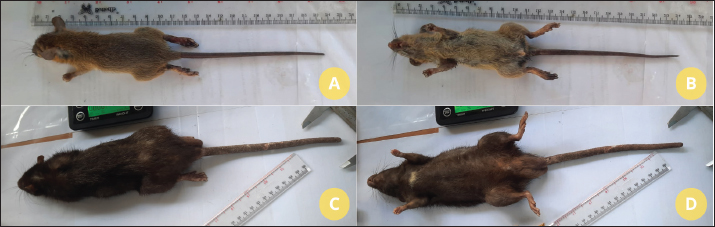
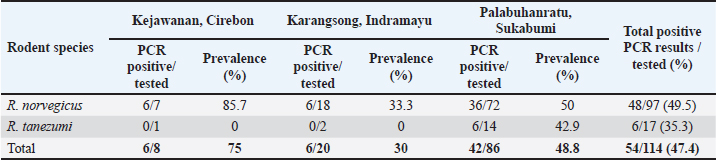
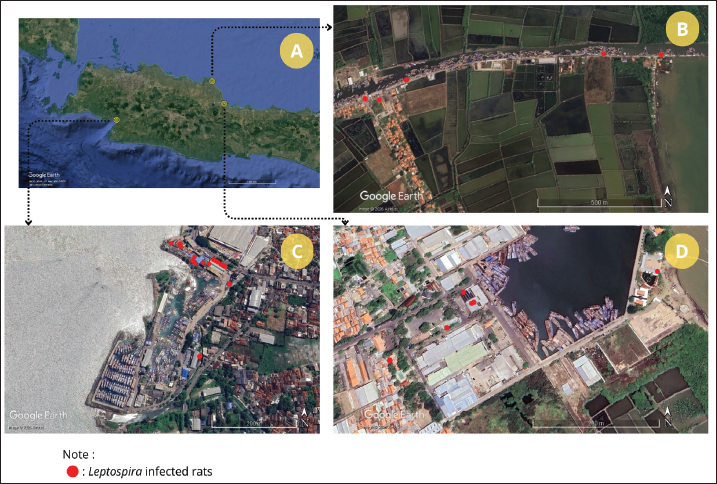
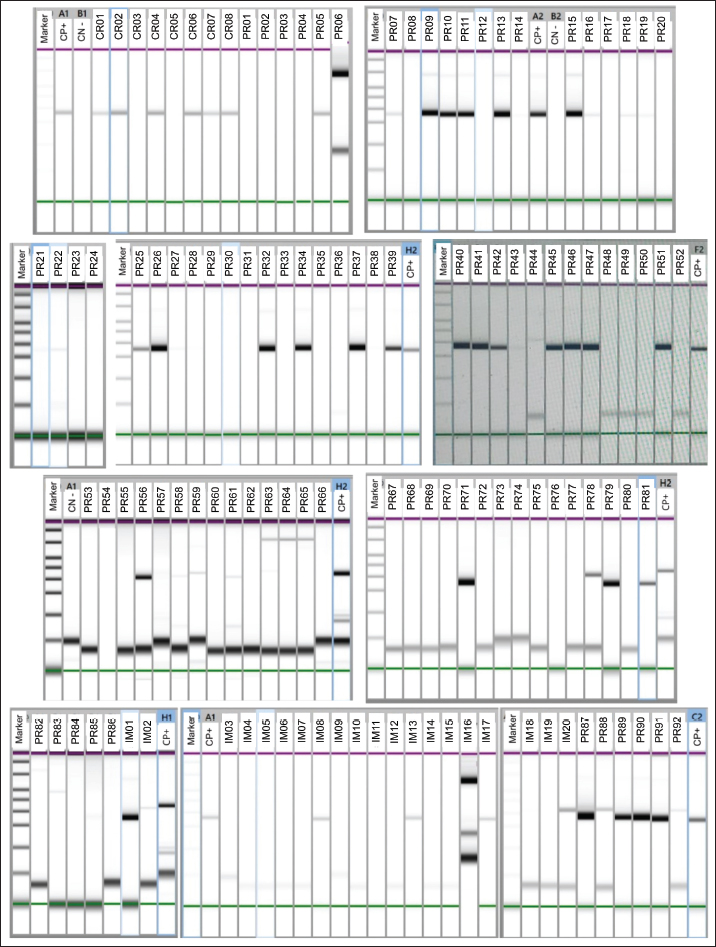
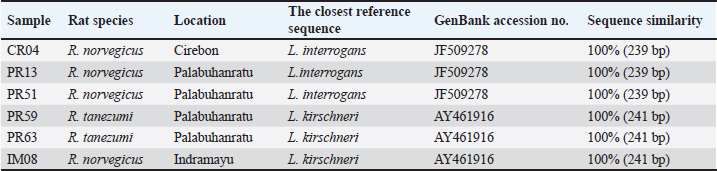
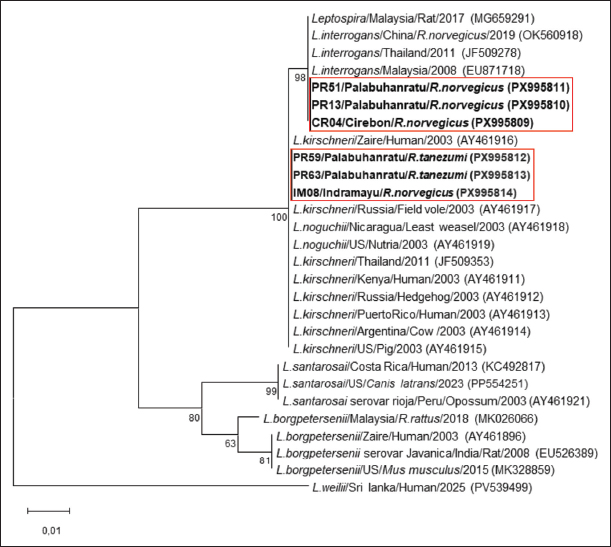
AbstractBackground: Leptospirosis is a zoonotic disease caused by the pathogenic Leptospira. The presence of commensal rats in seaport areas poses a potential risk of transmission of leptospirosis. Aim: This study aimed to investigate the prevalence and molecular characteristics of pathogenic Leptospira in rats captured from three fishing ports in West Java, Indonesia: Kejawanan (Cirebon), Karangsong (Indramayu), and Palabuhanratu (Sukabumi). Methods: Rat trapping was conducted using single live traps from July to August 2025, followed by species identification based on morphological characteristics. Pathogenic Leptospira was detected using polymerase chain reaction (PCR) targeting the lipL32 gene. Positive samples were sequenced for species confirmation and phylogenetic analysis. Results: A total of 114 rats, consisting of Rattus norvegicus (85.1%) and Rattus tanezumi (14.9%), were captured, with an overall trap success rate of 7.13%. PCR results revealed that 47.4% of rats were positive for pathogenic Leptospira, with the highest prevalence in Kejawanan (75%), followed by Palabuhanratu (48.8%) and Karangsong (30%). Phylogenetic analysis demonstrated that the detected Leptospira clustered within Leptospira interrogans and Leptospira kirschneri. Conclusion: These findings confirm the circulation of pathogenic Leptospira among commensal rats in fishing port environments and highlight their role as reservoirs with potential zoonotic risk. Strengthening surveillance and rodent control is important for reducing the risk of leptospirosis transmission in port areas. Keywords: Commensal rats, Fishing port, Leptospira, Leptospirosis, Zoonotic disease. IntroductionLeptospirosis is a zoonotic infectious disease caused by Leptospira bacteria. It is invasive and can cause systemic inflammation (Sun et al., 2020) with clinical manifestations varying from mild influenza-like symptoms to severe forms that can cause kidney failure, pulmonary hemorrhage, and death (Gasem et al., 2020). Transmission occurs through direct or indirect contact with the urine of infected animals, primarily via contaminated water or soil, or through open wounds, abrasions, and mucous membranes (Wunder et al., 2018; Samrot et al., 2021). Taxonomically, Leptospira belongs to the phylum spirochetes, is thin-spiral shaped with curved tips, and has periplasmic flagella that support motility and the ability to penetrate host tissue (Wunder et al., 2018). This genus consists of more than 20 species that are grouped into pathogens, intermediates, and saprophytes based on their molecular characteristics and virulence levels (Wunder et al., 2018; Samrot et al., 2021). More than 300 serovars are grouped into around 24 serogroups based on variations in lipopolysaccharide antigens that play a role in the epidemiological dynamics of the disease (Wunder et al., 2018). Rodents are the primary reservoirs of pathogenic Leptospira and play a crucial role in maintaining the transmission cycle within the environment (Cosson et al., 2014). These bacteria can colonize the renal tubules of rodents without causing clinical symptoms and are subsequently persistently excreted through the urine (Wunder et al., 2018). Commensal rodents, such as Rattus norvegicus and Rattus tanezumi, are closely associated with human activities, thereby increasing the risk of zoonotic transmission (Ebani, 2022). Globally, leptospirosis represents a significant public health concern, with an estimated one million cases and tens of thousands of deaths occurring annually (Costa et al., 2015). The highest disease burden is reported in tropical and subtropical regions, where environmental conditions support bacterial survival and high exposure to animal reservoirs (Costa et al., 2015). In Indonesia, leptospirosis remains a public health challenge due to atypical clinical manifestations and limited diagnostic capacity, which potentially leads to underdiagnosis (Gasem et al., 2020). National data have shown fluctuations in cases over the last decade, with a significant surge in 2023 to 2,554 cases and a CFR that remained high at approximately 8.03% in 2023 and 2024 (Kementerian Kesehatan Republik Indonesia, 2025). During the 2022–2024 period, the distribution of cases was concentrated in several provinces on Java Island, with West Java province consistently reporting cases. Fishing ports are strategic areas that serve not only the movement of ships, goods, and people but also as hubs for economic activities such as marine product loading and unloading, marketing, and fish catches distribution. These activities can create environmental conditions that favor the presence of commensal rodents, particularly by increasing the availability of food sources and harborage (Ebani, 2022). Furthermore, rodents can disperse across regions via transport vessels, thereby potentially introducing pathogens to new locations. Given the role of rodents as the primary reservoir for Leptospira (Cosson et al., 2014), the presence of commensal rodents in fishing ports may increase the risk of leptospirosis transmission to workers and the surrounding community. Based on these conditions, this study aims to detect pathogenic Leptospira in commensal rodents at fishing ports in West Java province, specifically the Kejawanan Fishing Port in Cirebon, the Karangsong Fishing Port in Indramayu, and the Palabuhanratu Fishing Port in Sukabumi. The results of this study are expected to provide baseline data to strengthen reservoir surveillance and enhance early warning efforts to prevent and control leptospirosis in port areas. Materials and MethodsCollection methodRat trapping was conducted from July to August 2025 at three fishing port locations in West Java Province, Indonesia: Kejawanan Port in Cirebon, Karangsong Port in Indramayu, and Palabuhanratu Port in Sukabumi. A total of 100 traps were set for 4 consecutive days at fish markets, offices, warehouses, and food processing areas. A total of 100 traps were set for 4 consecutive days at fish markets, offices, warehouses, and food processing areas. The captured rats were euthanized by intramuscular injection using a combination of ketamine (70–100 mg/kg body weight) and xylazine (2 mg/kg body weight). The collected rats were identified to the species level based on external morphological measurements – including body, tail, hindfoot, and ear length – as well as body weight, female nipple counts, and pelage characteristics (Ristiyanto et al., 2014). Kidney organs were dissected using safety protocols, which were then preserved in glass vials containing 70% ethanol for subsequent detection of pathogenic Leptospira. DNA extraction and polymerase chain reaction amplificationThe Zymo Quick-DNA Miniprep Plus Kit (Zymo Research) was used to extract DNA. Homogenized kidney samples were incubated overnight at 55°C, followed by centrifugation to obtain the supernatant. The supernatant was mixed with GB Buffer and transferred to a Zymo-spin column. DNA was purified through sequential washing steps using DNA Pre-Wash Buffer and g-DNA Wash Buffer, followed by elution using DNA Elution buffer. DNA amplification targeting the lipL32 gene, a specific marker for pathogenic Leptospira spp., was performed using specific primers with targeted 242 bp. The primer sequences used were lipL32 F 5′-AAGCATTACCGCTTGTGGTG-3′ and lipL32 R 5′-GAACTCCCATTTCAGCGATT-3′ (Podgoršek et al., 2020). Polymerase chain reaction (PCR) reactions were performed in a total volume of 25 µL containing 12.5 µL of PCR Master Mix GoTaq® Green Master Mix, 1 µL of forward primer 10 µM, 1 µL of reverse primer 10 µM, 5 µL of DNA template, and 5.5 µL of nuclease-free water. Amplification was performed using a SensoQuest Labcycler thermal cycler under the following conditions: initial denaturation at 95°C for 2 minutes; 35 cycles of denaturation at 95°C for 1 minutes, annealing at 55°C for 30 seconds, and extension at 72°C for 1 minutes; followed by a final extension at 72°C for 5 minutes. The PCR products were analyzed using an Agilent 4150 TapeStation system. Each PCR run included positive and negative controls, consisting of a confirmed positive sample obtained from the BBLKM laboratory and nuclease-free water, respectively. Phylogenetic analysis and BLAST analysisThe sequencing results were analyzed using MEGA version 12. The obtained sequences were compared with reference sequences in GenBank using the Basic Local Alignment Search Tool for Nucleotides (BLASTn). A phylogenetic tree was constructed using the neighbor-joining method with 1,000 bootstrap replicates. All DNA sequences were deposited in GenBank under accession numbers PX995809–PX995814. Ethical approvalThe procedures involving the rats were conducted under ethical clearance number 358/KEH/SKE/VIII/2025, issued by the Animal Ethics Committee of the School of Veterinary Medicine and Biomedical Sciences, IPB University. ResultsSpecies identificationThe total number of trapped rats across the three study sites was 114, consisting of R. norvegicus (97; 85.1%) and R. tanezumi (17; 14.9%). Figure 1 shows the rat species captured at the study sites. The highest trapping success was recorded at Palabuhanratu Fishing Port (10.75%), while the lowest was observed at Kejawanan Port (2%), with an overall average trapping success of 7.13%. Table 1 presents the data on captured rats from the 3 study locations. Leptospira detection in ratsPCR using the lipL32 primer revealed that 54 of 114 rats (47.4%, 95% CI 38.22–64.32) tested positive for pathogenic Leptospira. The highest prevalence was observed at Kejawanan Port, Cirebon (75%), followed by Palabuhanratu (48.8%) and Indramayu (30%) (Table 2). Across all study sites, R. norvegicus had the highest prevalence, reaching 85.7% in Kejawanan, 50% in Palabuhanratu, and 33.3% in Karangsong. Figure 2 shows the distribution of Leptospira in rats across the study sites. Figure 3 shows the representative electrophoresis results of the PCR products. Phylogenetics analysisAmong all samples that tested positive for Leptospira, 6 samples with the highest amplification band quality were selected for sequencing. Table 3 presents the characteristics of the sequenced isolates and their BLAST analysis results. Phylogenetic analysis showed that three isolates shared 100% sequence identity with Leptospira interrogans based on a 239-bp partial lipL32 gene sequence, whereas the other three isolates shared 100% sequence identity with L. kirschneri based on a 241-bp partial lipL32 gene sequence. The phylogenetic tree demonstrated that the study isolates clustered closely with reference sequences of L. interrogans and L. kirschneri retrieved from GenBank (Fig. 4).
Fig. 1. Rats captured at Palabuhanratu Port: (A) R. tanezumi dorsal view, (B) R. tanezumi ventral view, (C) R. norvegicus dorsal view, and (D) R. norvegicus ventral view. Table 1. Rodent species and trap success at the study sites.
Table 2. Detection of pathogenic Leptospira in rat kidney samples from the 3 study sites.
Fig. 2. Map of sampling sites and distribution of rats with Leptospira infection. (A) Sampling sites of 3 fishing ports in West Java, Indonesia. Detailed site maps of (B) Karangsong Port, Indramayu, (C) Palabuhanratu Port, Sukabumi, and (D) Kejawanan Port, Cirebon. DiscussionThe rodent species captured at the three study sites were predominantly R. norvegicus (Norway rat), which is likely associated with the study sites’ characteristics as densely populated urban environments. R. norvegicus is commonly found in sewers and drainage systems in urban residential areas and markets. It exhibits peri-domestic behavior, where most of its activities occur outside houses and in their surroundings. However, it may occasionally enter houses (Ristiyanto et al., 2014). Mulyono et al. (2016), Sholichah et al. (2021), Susanna et al. (2021), and Wulandari et al. (2023) reported that R. norvegicus is the dominant rat species in urban and densely populated environments, including port areas. The detection of pathogenic Leptospira in rats at all study sites indicates that the bacteria circulate within commensal rodent populations in the port areas. Most Leptospira-positive rats were identified as R. norvegicus, highlighting the important role of this species as a reservoir. The higher prevalence of Leptospira in R. norvegicus than in R. tanezumi is likely associated with differences in habitat characteristics. R. norvegicus is a terrestrial species that inhabits wet and humid environments, which favor the survival of Leptospira. In contrast, R. tanezumi is more arboreal and occupies relatively drier environments (Mulyono et al., 2016). These findings are consistent with those of previous studies conducted in Indonesia and other countries. In Maumere City, the prevalence of Leptospira-infected rats was reported to be 4.5% at El Say Port and 4.3% in Wuring. In Semarang City, the prevalence of Leptospira-positive rats reached 43.2%, with R. norvegicus having the highest prevalence (76.47%) (Sholichah et al., 2021). A study in Bantul, Yogyakarta, reported an overall prevalence of 20.4%, with R. norvegicus as the dominant species (43%) compared to R. tanezumi (31%) (Joharina et al., 2019). The prevalence of pathogenic Leptospira in rats in the port areas of Surabaya reached 56.67% at Tanjung Perak Port and 43.75% at Gresik Port, all of which were detected in R. norvegicus (Wulandari et al., 2023). Globally, the dominance of R. norvegicus as a reservoir of Leptospira has also been reported in several countries, including Hong Kong (2.8%) (Anuwong et al., 2025), Madagascar (44.9%) (Rahelinirina et al., 2019), Brazil (68.0%) (Pellizzaro et al., 2019), and Vienna, Austria (25%) (Desvars-Larrive et al., 2020).
Fig. 3. Electrophoresis of PCR products of the lipL32 gene. Table 3. BLAST identification and sequence similarity analysis of Leptospira isolates based on partial lipL32 gene sequences.
Fig. 4. Phylogenetic tree of lipL32 using the neighbor-joining tree. The identification of L. interrogans in this study is consistent with previous findings in Indonesia. A study conducted in Surabaya reported that Leptospira isolates obtained from R. norvegicus consistently clustered within the L. interrogans clade based on the lipL32 gene, with a high prevalence observed in urban rat populations (Wikurendra et al., 2025). Similarly, research in Maumere demonstrated that all Leptospira sequences detected in commensal rats clustered with L. interrogans (Mulyono et al., 2016). Collectively, these findings suggest that L. interrogans is widely distributed and plays a dominant role in the leptospirosis transmission cycle in Indonesia. The presence of L. kirschneri alongside L. interrogans in this study indicates the cocirculation of multiple pathogenic Leptospira species within commensal rat populations. Both L. interrogans and L. kirschneri are pathogenic Leptospira species and have previously been reported in rodents in Bangladesh (Krijger et al., 2019) and Malaysia (Azhari et al., 2018). Philip et al. (2020) identified L. interrogans and L. kirschneri as the predominant species causing human leptospirosis in central Malaysia. The detection of these pathogenic species in rats highlights the potential public health risk of zoonotic transmission, particularly in port environments where close interaction between rodents, contaminated environments, and humans may increase the risk of leptospirosis. From an epidemiological perspective, the presence of L. interrogans and L. kirschneri in commensal rats within port areas has significant implications for the risk of leptospirosis transmission to port workers, fishermen, and surrounding communities who may be exposed to environments contaminated with infected rodent urine. The cocirculation of multiple pathogenic Leptospira species is epidemiologically important because humans and rats share the same environment within port areas, creating continuous opportunities for transmission and maintenance of the infection cycle in the environment. ConclusionThe rodent species captured at the 3 study sites were predominantly R. norvegicus (Norway rat), followed by R. tanezumi. Molecular detection and phylogenetic analysis based on the lipL32 gene demonstrated that Leptospira clustered with L. interrogans and L. kirschneri. The findings confirm the presence of pathogenic Leptospira and reinforce the role of commensal rats as key reservoirs in the transmission cycle of leptospirosis in fishing port areas. Strengthening rodent surveillance and implementing integrated control measures are essential for reducing the risk of leptospirosis transmission in port environments. AcknowledgmentsWe would like to thank the Laboratory of Veterinary and Medical Entomology, School of Veterinary Medicine and Biomedical Sciences, IPB University, and Bandung Class I Health Quarantine Center. FundingGrants from the Ministry of Research, Technology, and Higher Education through the BIMA program supported this work (grant no. 006/C3/DT.05.00/PL/2025). Authors’ ContributionsDian Indriasari contributed to the conception and design of the project, data collection, methodology, and manuscript writing. Supriyono and Upik Kesumawati Hadi contributed to the study design, methodology, supervision, and manuscript review. Agus Ari Wibowo and Eko Budi Nuridaryanto contributed to the study and methodology. Marliah Santi, Marina Makbul, and Agus Sutomo contributed to data collection. All authors have read and approved the final version of the manuscript. Conflict of InterestThe authors declare no conflict of interest. Data AvailabilityAll data supporting the findings of this study, including the GenBank accession numbers of the detected Leptospira sequences (PX995809–PX995814), are available within the manuscript. ReferencesAzhari, N.N., Ramli, S.N.A., Joseph, N., Philip, N., Mustapha, N.F., et al. 2018. Molecular characterization of pathogenic Leptospira sp. in small mammals captured from the human leptospirosis suspected areas of Selangor state, Malaysia. Acta Tropica. 188, 68–77. Cosson, J.F., Picardeau, M., Mielcarek, M., Tatard, C., Chaval, Y., Suputtamongkol, Y., et al. 2014. Epidemiology of Leptospira transmitted by rodents in Southeast Asia. PLoS Negl Trop. Dis. 8(6), e2902. Costa, F., Hagan, J.E., Calcagno, J., Kane, M., Torgerson, P., Martinez-Silveira, M.S., et al. 2015. Global morbidity and mortality of leptospirosis: a systematic review. PLoS Negl Trop. Dis. 9(9), e0003898. Desvars-Larrive, A., Smith, S., Munimanda, G., Bourhy, P., Waigner, T., Odom, M., Gliga, D.S. and Walzer, C. 2020. Prevalence and risk factors of Leptospira infection in urban brown rats (Rattus norvegicus), Vienna, Austria. Urban Ecosyst. 23(4), 775–784. Ebani, V.V. 2022. Commensal rodents: still a current threat. Pathogens 11(12), 1483. Gasem, M.H., Hadi, U., Alisjahbana, B., Tjitra, E., Hapsari, M.M.D.E.A., Lestari, ES., et al. 2020. Leptospirosis in Indonesia: diagnostic challenges associated with atypical clinical manifestations and limited laboratory capacity. BMC Infect. Dis. 20(1), 179. Joharina, A.S., Pujiyanti, A., Nugroho, A., Martiningsih, I. and Handayani, F.D. 2019. Peran tikus sebagai reservoir Leptospira di tiga ekosistem di Kabupaten Bantul, Yogyakarta. Bul. Penelit. Kes. 47(3), 191–198. Kementerian Kesehatan Republik Indonesia 2025. Profil kesehatan Indonesia 2024. Jakarta: Kementerian Kesehatan RI. Krijger, I.M., Ahmed, A.A., Goris, M.G., Groot Koerkamp, P.W. and Meerburg, B.G. 2019. Prevalence of Leptospira infection in rodents from Bangladesh. Int. J. Environ. Res. Public Health. 16(12), 2113. Mulyono, A., Ristiyanto, R., Rahardianingtyas, E., Putro, D.B.W. and Joharina, A.S. 2016. Prevalensi dan identifikasi Leptospira patogenik pada tikus komensal di Kota Maumere, Flores. Vektora 8(1), 31–40. Pellizzaro, M., Martins, C.M., Yamakawa, A.C., Ferraz, D.D., Morikawa, V.M., Ferreira, F., Santos, A.P., Biondo, A.W. and Langoni, H. 2019. Molecular detection of Leptospira spp. in rats as early spatial predictor for human disease in an endemic urban area. PLoS One 14(5), e0216830. Philip, N., Bahtiar Affendy, N., Ramli, S.N.A., Arif, M., Raja, P., Nagandran, E., et al. 2020. Leptospira interrogans and Leptospira kirschneri are the dominant Leptospira species causing human leptospirosis in Central Malaysia. PLoS Negl. Trop. Dis. 14(3), e0008197. https://doi.org/10.1371/journal.pntd.0008197. Podgoršek, D., Ružić-Sabljić, E., Logar, M., Pavlović, A., Remec, T., Baklan, Z., Pal, E. and Cerar, T. 2020. Evaluation of real-time PCR targeting the lipL32 gene for diagnosis of Leptospira infection. BMC microbiol. 20(1), 59. Rahelinirina, S., Bourhy, P., Andriamiaramanana, F., Garin, B. and Rajerison, M. 2019. High prevalence of Leptospira spp. in rodents in an urban setting in Madagascar. Am. J. Trop. Med. Hyg. 100(5), 1079. Ristiyanto, H.F.D, Boewono D.T and Heriyanto B. 2014. Penyakit tular rodensia. Yogyakarta: Gadjah Mada University Press. Samrot, A.V., Sean, T.C., Bhavya, K.S., Sahithya, C.S., Chan-Drasekaran, S., Palanisamy, R., et al. 2021. Leptospiral infection, pathogenesis and its diagnosis – a review. Pathogens 10(2), 145. Sholichah, Z., Ikawati, B., Marbawati, D., Khoeri, M.M. and Ningsih, D.P. 2021. Peran Tikus Got (Rattus norvegicus) dari kelompok tikus dan suncus sebagai penular utama leptospirosis di Kota Semarang. Jurnal Vektor. Penyakit. 15(1), 53–62. Sun, A.H., Liu, X.X. and Yan, J. 2020. Leptospirosis is an invasive infectious and systemic inflammatory disease. Biomed. J. 43(1), 24–31. Susanna, D., Nova, RI. and Rozek, L. 2021. The existence and characteristics of rats and shrews in endemic leptospirosis areas and types of ectoparasites: a case study of West Jakarta, Indonesia. F1000Research 10, 335. Uea-Anuwong, T., Wen, C., Qing, H., Li, F., Thibeaux, R. and Magouras, I. 2025. Detection of pathogenic Leptospira spp. in peridomestic Rattus norvegicus in Hong Kong. One Health 21, 101158. Wikurendra, E.A., Rangga, J.U., Asih, A.Y.P. and Sinulingga, T.S. 2025. Polymerase chain reaction–driven detection of Leptospira spp. in urban rat populations of Surabaya, Indonesia. IJID One Health. 8, 100074. Wulandari, I.S. and Satoto, T.B. 2023. Potential transmission of leptospirosis from rats and ectoparasites in the Health Office of Port of Surabaya Class I. BKM Public Health and Community Med. 39(09), e9756. Wunder, E.A.Jr, Eshghi, A. and Benaroudj, N. 2018. Pathogenesis of Leptospira. Front. Cell. Infect. Microbiol. 8, 322. | ||

| How to Cite this Article |
| Pubmed Style Indriasari D, Hadi UK, Wibowo AA, Nuridaryanto EB, Santi M, Makbul M, Sutomo A, Supriyono S. Molecular detection and phylogenetic characterization of pathogenic Leptospira in commensal rats from Indonesian fishing ports. Open Vet. J.. 2026; 16(8): 5802-5809. doi:10.5455/OVJ.2026.v16.i8.68 Web Style Indriasari D, Hadi UK, Wibowo AA, Nuridaryanto EB, Santi M, Makbul M, Sutomo A, Supriyono S. Molecular detection and phylogenetic characterization of pathogenic Leptospira in commensal rats from Indonesian fishing ports. https://www.openveterinaryjournal.com/?mno=317614 [Access: September 03, 2026]. doi:10.5455/OVJ.2026.v16.i8.68 AMA (American Medical Association) Style Indriasari D, Hadi UK, Wibowo AA, Nuridaryanto EB, Santi M, Makbul M, Sutomo A, Supriyono S. Molecular detection and phylogenetic characterization of pathogenic Leptospira in commensal rats from Indonesian fishing ports. Open Vet. J.. 2026; 16(8): 5802-5809. doi:10.5455/OVJ.2026.v16.i8.68 Vancouver/ICMJE Style Indriasari D, Hadi UK, Wibowo AA, Nuridaryanto EB, Santi M, Makbul M, Sutomo A, Supriyono S. Molecular detection and phylogenetic characterization of pathogenic Leptospira in commensal rats from Indonesian fishing ports. Open Vet. J.. (2026), [cited September 03, 2026]; 16(8): 5802-5809. doi:10.5455/OVJ.2026.v16.i8.68 Harvard Style Indriasari, D., Hadi, . U. K., Wibowo, . A. A., Nuridaryanto, . E. B., Santi, . M., Makbul, . M., Sutomo, . A. & Supriyono, . S. (2026) Molecular detection and phylogenetic characterization of pathogenic Leptospira in commensal rats from Indonesian fishing ports. Open Vet. J., 16 (8), 5802-5809. doi:10.5455/OVJ.2026.v16.i8.68 Turabian Style Indriasari, Dian, Upik Kesumawati Hadi, Agus Ari Wibowo, Eko Budi Nuridaryanto, Marliah Santi, Marina Makbul, Agus Sutomo, and Supriyono Supriyono. 2026. Molecular detection and phylogenetic characterization of pathogenic Leptospira in commensal rats from Indonesian fishing ports. Open Veterinary Journal, 16 (8), 5802-5809. doi:10.5455/OVJ.2026.v16.i8.68 Chicago Style Indriasari, Dian, Upik Kesumawati Hadi, Agus Ari Wibowo, Eko Budi Nuridaryanto, Marliah Santi, Marina Makbul, Agus Sutomo, and Supriyono Supriyono. "Molecular detection and phylogenetic characterization of pathogenic Leptospira in commensal rats from Indonesian fishing ports." Open Veterinary Journal 16 (2026), 5802-5809. doi:10.5455/OVJ.2026.v16.i8.68 MLA (The Modern Language Association) Style Indriasari, Dian, Upik Kesumawati Hadi, Agus Ari Wibowo, Eko Budi Nuridaryanto, Marliah Santi, Marina Makbul, Agus Sutomo, and Supriyono Supriyono. "Molecular detection and phylogenetic characterization of pathogenic Leptospira in commensal rats from Indonesian fishing ports." Open Veterinary Journal 16.8 (2026), 5802-5809. Print. doi:10.5455/OVJ.2026.v16.i8.68 APA (American Psychological Association) Style Indriasari, D., Hadi, . U. K., Wibowo, . A. A., Nuridaryanto, . E. B., Santi, . M., Makbul, . M., Sutomo, . A. & Supriyono, . S. (2026) Molecular detection and phylogenetic characterization of pathogenic Leptospira in commensal rats from Indonesian fishing ports. Open Veterinary Journal, 16 (8), 5802-5809. doi:10.5455/OVJ.2026.v16.i8.68 |


