




| Research Article | ||
Open Vet. J.. 2026; 16(8): 5140-5149 !
Open Veterinary Journal, (2026), Vol. 16(8): 5140–5149 Research Article Effects of selenium- and tocopherol-fortified waste mushroom powder on hematological and biochemical parameters in KUB chickensElly Tugiyanti1, Ismoyowati Ismoyowati1, Che Minh Tung2, Irfan Fadlurrohman1 and Fitri Yunitasari1*1Department of Animal Production, Faculty of Animal Science, Jendral Soedirman University, Purwokerto, Indonesia 2Department of Animal Science, Faculty of Animal Science and Veterinary Medicine, Nong Lam University, Ho Chi Minh City, Vietnam *Corresponding Author: Fitri Yunitasari. Department of Animal Production, Faculty of Animal Science, Jendral Soedirman University, Purwokerto, Indonesia. Email: fitri.yunitasari [at] unsoed.ac.id Submitted: 15/04/2026 Revised: 23/06/2026 Accepted: 05/07/2026 Published: 08/08/2026 © 2025 Open Veterinary Journal
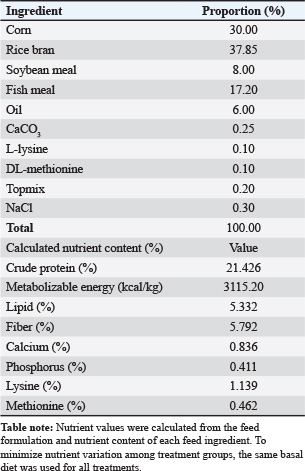
AbstractBackground: The use of natural feed additives from agricultural by-products has gained increasing attention in poultry production. Selenium- and tocopherol-fortified waste mushroom powders may offer functional benefits in poultry diets, but their effects on hematological and biochemical responses in indigenous chickens remain limited. Aim: This study aimed to evaluate the effects of selenium- and tocopherol-fortified waste mushroom powders on hematological, lipid, and blood biochemical parameters in KUB (Kampung Unggul Balitbangtan) starter chickens. Methods: A completely randomized design was used with 140-day-old KUB chicks assigned to seven dietary treatments, with four replicate cages per treatment and five birds per replicate cage. The replicate cage was used as the experimental unit. One bird was randomly selected from each replicate cage for blood sampling. The treatments consisted of a basal diet and basal diets supplemented with 0.07% fortified waste mushroom powder from Pleurotus ostreatus, Auricularia auricula-judae, Agaricus bisporus, or their two-species combinations. Selenium was supplied as sodium selenite and tocopherol as dl-alpha-tocopheryl acetate, providing 0.30 mg selenium/kg diet and 50 mg tocopherol/kg diet in the mushroom-supplemented treatments. Data were analyzed using one-way analysis of variance followed by Tukey’s test at P < 0.05. Results: Dietary treatment did not significantly affect erythrocyte count, hemoglobin concentration, packed cell volume, leukocyte count, total plasma protein, fibrinogen, total cholesterol, high-density lipoprotein cholesterol, triglycerides, glucose, albumin, AST, ALT, creatinine, uric acid, urea, or BUN (P > 0.05). LDL cholesterol was significantly affected by treatment (P < 0.05), with lower values observed in chickens receiving Agaricus bisporus (J3) and the combination of P. ostreatus + A. bisporus (J5) compared with the control group. Conclusion: Selenium- and tocopherol-fortified waste mushroom powder showed no evident adverse effects on the measured hematological, hepatic, and renal biochemical indicators in KUB starter chickens. The supplementation may selectively reduce LDL cholesterol, but further studies including growth performance, oxidative stress biomarkers, histopathology, dose-response evaluation, and longer feeding periods are needed before practical recommendations can be made. Keywords: KUB chicken, LDL cholesterol, Selenium, Tocopherol, Waste mushroom powder. IntroductionNative chickens remain important in Indonesian poultry production because they support smallholder farming systems and show good adaptability to local environments. The KUB chicken is a selected Indonesian native chicken strain developed to improve productivity while maintaining adaptability under tropical production conditions (Insani et al., 2022; Sinurat et al., 2022). KUB chickens require nutritional strategies that can support physiological stability, blood health, nutrient utilization, and metabolic balance during the starter phase because early growth is sensitive to dietary composition and feed additives (Sinurat et al., 2022; Madej et al., 2024). The use of agricultural by-products as feed ingredients has gained increasing attention in poultry nutrition because they can support feed resource efficiency, reduce organic waste, and strengthen circular feed systems (Vlaicu et al., 2024). In modern poultry production, feed additives are increasingly being explored to improve poultry health, intestinal function, productivity, environmental efficiency, and welfare (Perera and Ravindran, 2025). Mushroom waste is a potential resource because edible mushroom production generates residues that may still contain nutritional and functional compounds. Mushroom-derived residues, including stems, stalks, and spent mushroom materials, have been explored in poultry diets because they may provide bioactive compounds and support sustainable feed formulation (Bormon et al., 2024; Stamps et al., 2025). Mushrooms contain bioactive compounds such as β-glucans, polysaccharides, phenolics, sterols, chitin, and antioxidants. These compounds are relevant in poultry nutrition because they may contribute to intestinal function, immune modulation, oxidative balance, lipid-related responses, and general physiological status (Suberu et al., 2024; Salahuddin et al., 2025). Pleurotus ostreatus, commonly known as the oyster mushroom, has received attention as a potential poultry feed supplement because its residue contains nutritional and bioactive components that may influence broiler chicken performance, meat quality, blood characteristics, and health status (Bormon et al., 2024). Oyster mushroom waste has also been reported to influence serum cholesterol, fatty acid profile, oxidative stability, and immune-related parameters in laying hens, supporting its relevance as a functional feed ingredient (Karageorgou et al., 2024). Auricularia auricula-judae, commonly known as the wood-ear mushroom, is a polysaccharide-rich edible mushroom with functional compounds related to lipid metabolism and inflammatory regulation. Although its application in poultry feed remains less documented than that of Pleurotus and Agaricus species, its polysaccharide fraction has been associated with lipid-related and anti-inflammatory responses in experimental nutrition studies (Liu et al., 2022; Zhou et al., 2023). Agaricus bisporus, commonly known as the button mushroom, has practical relevance because its powder, stalk, and stem residues have been examined as dietary ingredients in poultry. Dietary use of A. bisporus powder has been associated with serum lipid profile, intestinal morphology, and meat quality responses in broilers, while A. bisporus stalk replacement has been evaluated for productive performance, egg quality, serum biochemistry, and intestinal microbiota in laying hens (Aziz-Aliabadi et al., 2024; Han et al., 2025). Waste mushroom powder is also relevant to sustainable feed development because residual mushroom materials can retain fiber-like compounds, polysaccharides, polyphenols, flavonoids, and other functional components after processing (Navarro-Simarro et al., 2024; Stamps et al., 2025). These characteristics increase the value of mushroom residues when they are used at appropriate inclusion levels and are supported by safety evaluation. White mushroom stem powder has been explored as a sustainable substitute for soybean meal in layer diets, while brown mushroom stem waste has been studied as an eco-friendly ingredient in laying hen nutrition (Martín et al., 2023; Abdel-Wareth et al., 2025). This evidence supports the need to evaluate mushroom waste not only as an alternative ingredient but also as a functional additive that may influence blood and metabolic indicators in poultry. Selenium and tocopherol are frequently associated with antioxidant protection in poultry (Calik et al., 2022). Selenium contributes to antioxidant defense through selenium-dependent enzymes, whereas tocopherol supports membrane stability and helps limit lipid peroxidation. Supplementation with selenium and vitamin E may influence the expression of antioxidant-related genes, physiological responses, and stress resilience in broilers (Elgendey et al., 2022; Si et al., 2026). Oxidative balance remains important for poultry health because oxidative stress can affect immune function, metabolic regulation, intestinal integrity, and overall physiological performance (Oke et al., 2024). Therefore, the combination of mushroom waste with selenium and tocopherol is relevant because mushroom-derived compounds may contribute to gut and lipid-related responses, while selenium and tocopherol may support physiological stability during the starter phase (Calik et al., 2022; Suberu et al., 2024). However, this study did not directly measure oxidative stress biomarkers or molecular pathways. Therefore, the role of selenium and tocopherol is interpreted cautiously as part of a nutritional strategy, rather than as proof of a specific antioxidant mechanism. Blood parameters are useful indicators for evaluating the physiological safety of new dietary interventions in poultry (Kareem et al., 2024). Hematological variables, including erythrocyte count, leukocyte count, packed cell volume, hemoglobin, total plasma protein, and fibrinogen, can reflect oxygen transport capacity, immune status, protein metabolism, and inflammatory response (Sokolenko et al., 2024). Blood biochemical variables, including lipid fractions, glucose, albumin, liver enzymes, and kidney function indicators, provide additional information on metabolic response and organ-function status (Zálešáková et al., 2025). In poultry feeding studies, hematological and biochemical traits have been widely used to assess physiological effects, metabolic status, immune response, and safety responses (Attia et al., 2022; Youssef et al., 2023; Zalesakova et al., 2025). Previous studies have discussed the possible roles of mushroom-based feed supplements in immune response, gut function, lipid profile, antioxidant status, and production-related traits in poultry (Salahuddin et al., 2025; Suberu et al., 2024; Toros et al., 2024). However, information on selenium- and tocopherol-fortified waste mushroom powder in KUB chickens is limited. The novelty of this study lies in evaluating waste mushroom powders from P. ostreatus, A. auricula-judae, and A. bisporus, fortified with selenium and tocopherol, in KUB starter chickens through an integrated assessment of hematological parameters, lipid profile, and liver and kidney function biochemical indicators. This study aimed to evaluate the effects of selenium- and tocopherol-fortified waste mushroom powder, administered individually or in two-species combinations, on hematological and biochemical parameters in KUB starter chickens. The primary endpoint was LDL cholesterol, whereas the secondary endpoints were hematological parameters, other lipid fractions, glucose, albumin, liver enzymes, and kidney function indicators. Fortified waste mushroom powder was hypothesized to reduce LDL cholesterol without adverse effects on blood profile and organ function indicators. Materials and MethodsStudy design and site selectionThis study used a CRD to evaluate the effects of selenium- and tocopherol-fortified waste mushroom powder on hematological and biochemical parameters in KUB starter chickens. A total of 140-day-old KUB chicks were assigned to seven dietary treatments, with four replicate cages per treatment and five birds per replicate cage. Thus, this study included 28 replicate cages as experimental units. The experiment was conducted at the Experimental Poultry Facility of the Faculty of Animal Science, Jenderal Soedirman University, Purwokerto, Indonesia. The feeding trial was conducted during the starter phase. The chicks underwent a 6-day adaptation period, and the dietary treatments were applied from day 7 to day 35. The broader 3-month study period included experimental preparation, feed preparation, adaptation, dietary treatment, blood sampling, laboratory analysis, data processing, and manuscript preparation. Experimental animals, randomization, and housingA total of 140 unsexed day-old KUB chicks were used in this study. Upon arrival, the chicks were observed for general health and weighed to obtain the initial body weight. Chicks showing abnormal physical conditions or extreme body weights were excluded from the trial. The chicks were randomly distributed into seven dietary treatments after initial body weight observation to reduce variation among groups. Each treatment consisted of four replicate cages, each of which contained five birds. The chicks were reared in disinfected battery cages measuring approximately 100 cm × 70 cm × 60 cm. The stocking density was five birds per cage. Each cage was equipped with a feeder and a drinker. The brooder was preheated for 1–2 h to provide a stable brooding environment before chick placement. During the first week, brooding temperature was maintained at approximately 32–34 °C and gradually reduced during the following weeks according to chick age and comfort. The lighting program was maintained at approximately 23 h light and 1 h dark during the adaptation period, followed by 20 h light and 4 h dark during the treatment period. Ventilation was maintained to support air circulation and reduce ammonia accumulation. The cage cleanliness, feed availability, drinking water availability, temperature, ventilation, and mortality were checked daily. Feed and drinking water were provided ad libitum throughout the study. Biosecurity was maintained through the regular cleaning of cages, feeders, drinkers, and the surrounding experimental area. Health managementBird health was monitored daily throughout the experiment. Vaccination was conducted according to the routine poultry health program applied at the experimental facility. Newcastle disease vaccination was administered during the early brooding period, and infectious bursal disease vaccination was administered during the starter phase. No therapeutic antibiotics were administered during the study period. Any morbidity, mortality, or abnormal clinical signs were recorded daily. Treatments and dietsSeven dietary treatments were tested using a basal starter diet and selenium- and tocopherol-fortified waste mushroom powder. The treatment groups were as follows: J0: basal diet without waste mushroom powder J1: basal diet + 0.07% Pleurotus ostreatus waste mushroom powder J2: basal diet + 0.07% Auricularia auricula-judae waste mushroom powder J3: basal diet + 0.07% Agaricus bisporus waste mushroom powder J4: basal diet + 0.07% mixed P. ostreatus and A. auricula-judae waste mushroom powder J5: basal diet + 0.07% mixed P. ostreatus and A. bisporus waste mushroom powder J6: basal diet + 0.07% mixed A. auricula-judae and A. bisporus waste mushroom powder The total inclusion level of waste mushroom powder was maintained at 0.07% of the diet for the combination treatments. Therefore, each mushroom species contributed 0.035% in the two-species combination treatments. This approach was used to maintain equivalent total mushroom powder inclusion across all treatments. The inclusion level of 0.07% was selected based on previous studies that used lower mushroom supplementation levels in poultry diets, including 300 mg/kg basal diet, equivalent to approximately 0.03% oyster mushroom powder, and other mushroom-based supplement levels ranging from approximately 0.002% to 0.05%. The mushroom powder level was increased to 0.07% in the present study to evaluate whether a slightly higher low-dose inclusion of fortified waste mushroom powder could influence hematological and biochemical responses without disrupting basal nutrient balance or feed palatability. Basal diet and nutrient compositionThe basal diet was developed as a starter diet for KUB chickens. The same basal diet was used across all treatment groups, and waste mushroom powder was added at a low level of inclusion. The diet was developed to be approximately isocaloric and isonitrogenous. Table 1 presents the ingredient and nutrient composition of the basal starter diet. Table 1. Ingredients and nutrient composition of the basal starter diet.
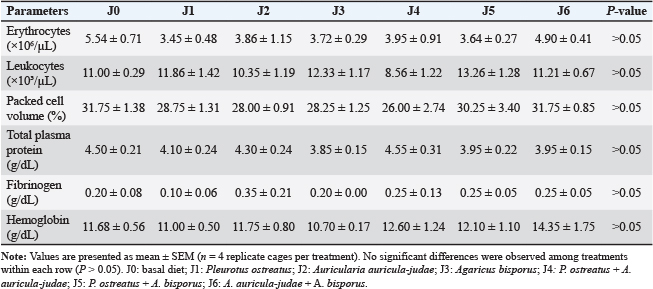
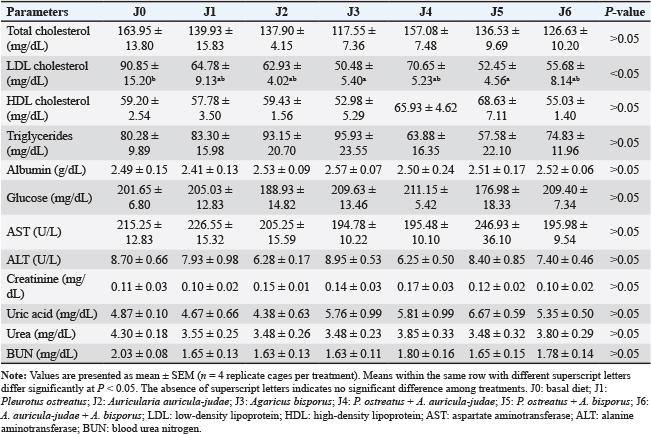
Fortification with selenium and tocopherolThe waste mushroom powder used in the supplemented treatments was fortified with selenium and tocopherol before incorporation into the basal diet. Selenium was supplied as feed-grade sodium selenite, and tocopherol was supplied as feed-grade dl-alpha-tocopheryl acetate. The fortified premix was prepared to provide an additional 0.30-mg selenium/kg diet and 50-mg tocopherol/kg diet in the mushroom-supplemented treatments. Selenium and tocopherol fortification levels were the same for all mushroom-supplemented treatments. The control group received only the basal diet, including selenium and vitamin E from the basal vitamin-mineral premix. The final selenium and tocopherol concentrations were calculated based on the premix formulation and inclusion rate. The final concentrations in the completed diets were not independently verified by laboratory analysis. Preparation of waste mushroom powder and premixWaste portions of oyster (P. ostreatus), wood-ear (A. auricula-judae), and button (A. bisporus) mushrooms were obtained from local mushroom producers in Purwokerto, Central Java, Indonesia. Waste materials included residual edible portions, stems, stalks, and unused parts generated during mushroom handling and preparation. The materials were sorted to remove spoiled parts, washed with clean water, and drained. To improve drying uniformity, the mushroom materials were sliced into thin pieces. The sliced materials were oven-dried at 40 °C for 24 h, milled into powder using a feed grinder, cooled in a desiccator, and sieved through a 60-mesh sieve to obtain a uniform particle size. The powder was stored in airtight containers in a dry and dark place at room temperature before use. For premix preparation, the required amount of mushroom powder was first mixed with a small portion of basal feed as a carrier. Then, selenium and tocopherol were gradually added to the mushroom powder premix. The premix was mixed manually for 10 min and then mixed mechanically for 15 min to improve homogeneity. The premix was incorporated into the remaining basal diet and mixed again before feeding. The same stepwise mixing procedure was applied to all diets. Experimental schedule and feedingAll chicks received a basal starter diet during the 6-day adaptation period. Dietary treatments were applied from day 7 to day 35. Feed was offered twice daily at 07:00 and 15:00, and drinking water was available ad libitum. Environmental conditions, including temperature, ventilation, cage hygiene, feed availability, water availability, and mortality, were monitored daily. The feeding program followed the nutritional needs of the starter chickens. Blood samplingBlood samples were collected for hematological and biochemical analyses at the end of the treatment period on day 35. One bird was randomly selected from each replicate cage. The selected bird represented the average body weight and general health condition of its replicate cage. A total of 28 birds were sampled, representing seven treatments and four replicate cages per treatment. Blood sampling was conducted in the morning after approximately 6 h of feed withdrawal to reduce biochemical parameter variation. Drinking water was available before sampling. Approximately 2–3 ml of blood was aseptically collected from the brachial vein using sterile disposable syringes. Blood samples for hematological analysis were transferred into tubes containing an anticoagulant, ethylenediaminetetraacetic acid. The samples were gently homogenized and analyzed within 4 h of collection to prevent cellular degradation. For biochemical analysis, blood samples were collected in plain tubes without an anticoagulant. The samples were allowed to clot at room temperature and then centrifuged at 3,000 rpm for 10 min to separate the serum. Serum was transferred into sterile microtubes and stored at −20 °C until biochemical analysis. Hematological analysisHematological analysis included erythrocyte count, leukocyte count, packed cell volume, hemoglobin concentration, total plasma protein, and fibrinogen. The total erythrocyte count was determined manually using a hemocytometer after dilution with Natt-Herrick solution following standard avian hematological procedures. Erythrocytes were counted under a light microscope at 400× magnification, and the results were expressed as ×106 cells/µL. Hemoglobin concentration was measured using the cyanmethemoglobin method with spectrophotometric reading at 540 nm. The packed cell volume was determined using the microhematocrit method. Capillary tubes were centrifuged at 12,000 rpm for 5 min, and a microhematocrit reader was used to read the packed cell volume. The total leukocyte count was determined using a hemocytometer after dilution with Natt-Herrick solution and expressed as ×103 cells/µL. The total plasma protein was measured using a refractometer. Fibrinogen was estimated using the heat precipitation method based on the difference between total plasma protein before and after heat precipitation. All hematological measurements were performed in duplicate, and the mean value was used for statistical analysis. The differential leukocyte count and heterophil-to-lymphocyte ratio were not included in the final analysis because this study focused on total leukocyte count and general blood profile indicators. Blood biochemical analysisBlood biochemical analysis included total cholesterol, low-density lipoprotein (LDL) cholesterol, high-density lipoprotein (HDL) cholesterol, triglycerides, glucose, albumin, aspartate aminotransferase, alanine aminotransferase, creatinine, uric acid, urea, and blood urea nitrogen. Commercial diagnostic kits and a semiautomatic biochemical analyzer were used to analyze serum samples at the Animal Health Laboratory, Faculty of Animal Science, Jenderal Soedirman University, Purwokerto, Indonesia. Total cholesterol, triglycerides, glucose, albumin, creatinine, uric acid, urea, and blood urea nitrogen levels were determined using enzymatic colorimetric methods according to standard laboratory procedures. HDL and LDL cholesterol levels were determined using enzymatic colorimetric lipid assay procedures. Aspartate aminotransferase and alanine aminotransferase activities were measured using kinetic enzymatic methods. Internal quality control was performed according to the standard operating procedures of the laboratory to ensure analytical consistency across samples. Statistical analysisData were analyzed using a completely randomized design. The replicate cage was considered the experimental unit because dietary treatments were applied at the cage level. Because one bird was sampled from each replicate cage, each treatment had four experimental units for hematological and biochemical analyses. Data were tested for normality using the Shapiro–Wilk test and for homogeneity of variance using Levene’s test. Normally distributed and homogeneous data were analyzed using one-way analysis of variance (ANOVA) to evaluate the effect of dietary treatment. When significant treatment effects were detected, the means were separated using Tukey’s honest significant difference test. Statistical significance was set at P < 0.05. Results are presented as mean ± standard error of the mean. All statistical analyses were performed using the Statistical Package for the Social Sciences version 31.0.1.0. Ethical approvalAll animal handling, feeding, blood collection, and laboratory procedures were conducted in accordance with animal welfare principles and institutional guidelines for the care and use of experimental animals. The study protocol was approved by the Indonesian Veterinary Medical Association, Central Java II Branch, under ethical clearance number 026/PDHI-Jateng-II/I/2025, dated January 20, 2025. Animal handling and blood collection were carefully performed to minimize stress and ensure animal welfare. ResultsHematological parametersTable 2 presents the hematological parameters of KUB starter chickens fed selenium- and tocopherol-fortified waste mushroom powder. Dietary treatment had no significant effect on erythrocyte count, leukocyte count, packed cell volume, total plasma protein, fibrinogen, or hemoglobin concentration (P > 0.05). Erythrocyte count ranged from 3.45 ± 0.48 to 5.54 ± 0.71 ×10⁶/µL, while leukocyte count ranged from 8.56 ± 1.22 to 13.26 ± 1.28 ×10³/µL. Packed cell volume ranged from 26.00 ± 2.74% to 31.75 ± 1.38%, and hemoglobin concentration ranged from 10.70 ± 0.17 to 14.35 ± 1.75 g/dL. The total plasma protein level ranged from 3.85 ± 0.15 to 4.55 ± 0.31 g/dL, whereas fibrinogen level ranged from 0.10 ± 0.06 to 0.35 ± 0.21 g/dL. Biochemical parameters of bloodTable 3 presents the blood biochemical parameters of KUB starter chickens. Dietary treatment significantly affected LDL cholesterol (P < 0.05). The J3 treatment, containing Agaricus bisporus waste mushroom powder, and the J5 treatment, containing the combination of Pleurotus ostreatus and A. bisporus waste mushroom powder, showed significantly lower LDL cholesterol values than the control group. LDL cholesterol was 90.85 ± 15.20 mg/dL in J0, 50.48 ± 5.40 mg/dL in J3, and 52.45 ± 4.56 mg/dL in J5. No significant differences were observed among treatments for total cholesterol, high-density lipoprotein cholesterol, triglycerides, glucose, albumin, AST, ALT, creatinine, uric acid, urea, or BUN (P > 0.05). Total cholesterol ranged from 117.55 ± 7.36 to 163.95 ± 13.80 mg/dL. HDL cholesterol ranged from 52.98 ± 5.29 to 68.63 ± 7.11 mg/dL, whereas TGs ranged from 57.58 ± 22.10 to 95.93 ± 23.55 mg/dL. Glucose ranged from 176.98 ± 18.33 to 211.15 ± 5.42 mg/dL, and albumin ranged from 2.41 ± 0.13 to 2.57 ± 0.07 g/dL. The liver enzyme and kidney function indicators remained statistically comparable among the treatments. Table 2. Hematological parameters of KUB starter chickens under different dietary treatments.
Table 3. Blood biochemical parameters of KUB starter chickens under different dietary treatments.
DiscussionThis study evaluated the effects of selenium- and tocopherol-fortified waste mushroom powder on hematological and biochemical parameters in KUB starter chickens. The main finding was a selective reduction in LDL cholesterol in chickens receiving Agaricus bisporus waste mushroom powder and the combination of P. ostreatus and A. bisporus. In contrast, the hematological profile, other lipid fractions, glucose, albumin, liver enzyme indicators, and kidney function indicators remained statistically unchanged. This pattern indicates that the supplementation affected LDL cholesterol levels without producing broader changes in the measured blood profile. The absence of significant differences in erythrocyte count, hemoglobin concentration, packed cell volume, leukocyte count, total plasma protein, and fibrinogen suggests that the supplemented diets did not cause detectable disruption in the general hematological profile of KUB starter chickens. This finding is consistent with poultry feeding studies showing that, when used at appropriate levels, natural or mushroom-based feed materials may be included without adverse changes in selected blood indicators (Bormon et al., 2024). In poultry nutrition studies, hematological and biochemical traits are commonly used to assess physiological response, immune status, metabolic balance, and safety (Youssef et al., 2023). The stable erythrocyte count, hemoglobin concentration, and packed cell volume indicate that the treatments did not alter oxygen transport–related indicators. Similarly, the unchanged leukocyte count, total plasma protein, and fibrinogen indicate that no measurable inflammatory or protein metabolism disturbance was detected based on the variables analyzed. This interpretation should be limited to the measured blood parameters and the starter phase because the study did not include longer feeding periods, tissue-level evaluation, or immune challenge assessment. The significant reduction in LDL cholesterol in J3 and J5 represents the most relevant biochemical response in this study. This result partly agrees with previous poultry studies showing that A. bisporus powder or stalk materials may influence lipid-related responses, serum biochemistry, intestinal morphology, and productive traits, depending on bird type, dose, and production stage (Aziz-Aliabadi et al., 2024; Han et al., 2025). In the present study, however, only LDL cholesterol differed significantly, so the finding should be interpreted as a selective LDL response rather than a general improvement in lipid metabolism. Compared with the control group, LDL cholesterol was reduced by approximately 44.4% in J3 and 42.3% in J5. This indicates that the LDL response was not only statistically significant but also biologically relevant under the conditions of this trial. However, the mechanism underlying this reduction cannot be confirmed because beta-glucan concentration, bile acid excretion, lipid transporter activity, oxidative stress biomarkers, and gene expression were not measured. Mushroom-derived compounds such as polysaccharides, beta-glucans, phenolics, sterol-like compounds, and dietary fiber fractions may contribute to lipid digestion, absorption, or transport. However, we did not measure bile acid excretion, cholesterol synthesis, lipid transporter activity, oxidative stress biomarkers, and gene expression. Therefore, the lower LDL cholesterol observed in J3 and J5 should be considered a biochemical outcome, not direct evidence of a specific lipid-regulating mechanism. This cautious interpretation is important because responses to mushroom-based supplements can vary according to mushroom species, inclusion level, bird age, and measured endpoint (Suberu et al., 2024; Salahuddin et al., 2025). The lower LDL cholesterol in J5 may reflect a possible combined effect of P. ostreatus and A. bisporus waste mushroom powders. However, the design did not directly test the interaction effects among mushroom species, selenium, and tocopherol. Therefore, the result should not be described as synergistic confirmation. Although J5 showed numerically favorable values in some lipid-related variables, only LDL cholesterol significantly differed. Previous research on oyster mushroom waste in laying hens showed changes in cholesterol-related indicators, fatty acid profile, oxidative stability, and immune parameters, but those findings do not prove the same mechanism in KUB starter chickens (Karageorgou et al., 2024). The nonsignificant results for total cholesterol, high-density lipoprotein cholesterol, and triglycerides are also important. These findings show that supplementation did not produce a consistent change across the entire lipid profile. Numerical differences among treatments should not be interpreted as clear biological effects because they were not statistically significant. Thus, the most defensible interpretation is that fortified waste mushroom powder selectively affected LDL cholesterol under the conditions of this trial. Dietary treatment did not significantly affect glucose and albumin levels, indicating no measurable change in circulating glucose or serum protein status during the starter phase. AST and ALT also remained statistically comparable among treatments, indicating no evident alteration in liver enzyme activity based on the measured blood indicators. Creatinine, uric acid, urea, and BUN levels did not differ significantly, indicating no detectable change in the measured kidney function indicators. These results support the absence of evident adverse responses in the measured biochemical variables, but they do not confirm long-term hepatic or renal safety. Selenium and tocopherol fortification may have supported the physiological tolerance of the supplemented diets, but this mechanism cannot be confirmed because the antioxidant enzyme activity and oxidative stress biomarkers were not measured. Selenium and vitamin E can influence antioxidant-related gene expression and physiological responses in broilers, while oxidative balance is recognized as important for poultry health under production stress (Elgendey et al., 2022; Oke et al., 2024). Therefore, in this study, selenium and tocopherol should be interpreted as part of the fortified feed strategy rather than as confirmed drivers of the LDL response. Selenium- and tocopherol-fortified waste mushroom powder at 0.07% inclusion may be considered for further evaluation as a value-added feed ingredient in KUB starter diets. Treatments other than J3 and J5 did not significantly reduce LDL cholesterol levels, but they also did not show unfavorable blood responses. This indicates that fortified mushroom waste may have potential for use in poultry nutrition, particularly in relation to LDL cholesterol response. However, practical recommendations must remain cautious because growth performance, feed intake, FCR, mortality-adjusted performance, and economic feasibility were not evaluated. The safety interpretation should be limited to the outcomes measured. The absence of significant changes in hematological variables, AST, ALT, creatinine, uric acid, urea, and BUN during the starter phase suggests no evident adverse response based on blood profile and selected organ-function indicators. However, this does not prove long-term safety, tissue-level safety, or production benefits. Furthermore, evidence is needed before fortified waste mushroom powder can be recommended for wider application in commercial or smallholder KUB chicken production. Several limitations should be acknowledged. First, the study was limited to the starter phase, so the long-term effects of supplementation remain unknown. Second, the experimental design was not arranged as a factorial design and did not include mushroom-only, selenium-only, tocopherol-only, or selenium × tocopherol treatment groups. Therefore, the individual effects of mushroom powder, selenium, tocopherol, and their possible interactions could not be separated. Third, the chemical characterization of waste mushroom powder, including dry matter, crude protein, crude fat, crude fiber, beta-glucan concentration, total phenolic content, and antioxidant capacity, was not performed. Therefore, the contribution of specific bioactive compounds to the observed LDL cholesterol response could not be confirmed. Fourth, oxidative stress biomarkers, antioxidant enzyme activity, inflammatory markers, histopathology, and lipid metabolism-related molecular pathways were not evaluated. Fifth, growth performance, feed intake, feed conversion ratio, and economic outcomes were not measured. Sixth, only one inclusion level was tested, so a dose–response relationship could not be established. Finally, no a priori power analysis was conducted to determine the minimum sample size required to detect treatment effects. Therefore, non-significant findings should be interpreted cautiously, particularly for variables with relatively high biological variation. Future studies should evaluate the different inclusion levels of selenium- and tocopherol-fortified waste mushroom powder to identify the optimal dose for KUB chickens. Growth performance, feed intake, feed conversion ratio, oxidative stress markers, antioxidant enzyme activity, immune indicators, liver and kidney histopathology, and lipid metabolism-related gene expression should be further investigated. Field validation under smallholder and semi-intensive production systems is also needed to determine whether the LDL-lowering response observed in this study remains consistent under practical farming conditions. Economic analysis should also be included to assess the feasibility of using waste mushroom powder as a functional feed ingredient. ConclusionIn conclusion, selenium- and tocopherol-fortified waste mushroom powder did not show evident adverse effects on the measured hematological parameters of KUB starter chickens. The erythrocyte count, leukocyte count, packed cell volume, hemoglobin, total plasma protein, and fibrinogen levels remained statistically comparable among the treatments. Among the biochemical variables, the supplementation may selectively reduce LDL cholesterol, particularly in chickens receiving Agaricus bisporus and the combination of P. ostreatus + A. bisporus. Other biochemical parameters, including total cholesterol, high-density lipoprotein cholesterol, triglycerides, glucose, albumin, AST, ALT, creatinine, uric acid, urea, and BUN, were not significantly affected. These findings indicate that selenium- and tocopherol-fortified waste mushroom powder may have potential for further evaluation as a functional feed ingredient for KUB starter chickens, mainly based on its LDL cholesterol response and the absence of evident adverse changes in the measured blood indicators. However, this potential requires further confirmation through studies that include growth performance, feed intake, feed conversion ratio, oxidative stress biomarkers, liver and kidney histopathology, dose-response evaluation, and field validation before practical feeding recommendations can be made. AcknowledgementsThe authors gratefully acknowledge the Faculty of Animal Science, Universitas Jenderal Soedirman, Indonesia, for providing research facilities and technical support. The authors would like to express their sincere appreciation to all staff and laboratory assistants involved in this study for their valuable assistance during the experimental and analytical processes. Conflict of interestThe authors declare no conflict of interest. FundingThis study received no specific grant. Authors’ contributionsElly Tugiyanti: Project administration, investigation, and writing of the original draft. Ismoyowati: Methodology, data curation, and validation Che Minh Tung: Formal analysis, visualization, and writing, review, and editing. Irfan Fadlurrohman: Collection of samples, laboratory analysis, and data processing. Fitri Yunitasari: Conceptualization, methodology, supervision, manuscript review, and correspondence. All authors have read and approved the final version of the manuscript. Data availabilityAll data supporting this study’s findings are available within the manuscript. ReferencesAbdel-Wareth, A.A.A., Stamps, K.G., Salahuddin, M., Balan, V., Mohammadi, M., Kim, W.K., Zhu, W., Ahmed, A.A., Gray, C.D., Aviña, A.M.W., Rounds-Carter, T., Carr, T., Williams, A., Bakare, A. and Lohakare, J. 2025. Utilizing brown mushroom stem waste as an eco-friendly alternative to soybean meal in layer chick nutrition. Front. Vet. Sci. 12, 1637147; doi:10.3389/fvets.2025.1637147 Attia, Y.A., Al-Khalaifah, H., Abd El-hamid, H.S., Al-Harthi, M.A., Alyileili, S.R. and El-Shafey, A.A. 2022. Antioxidant status, blood constituents and immune response of broiler chickens fed two types of diets with or without different concentrations of active yeast. Animals 12(4), 453; doi:10.3390/ani12040453 Aziz-Aliabadi, F., Noruzi, H. and Imari, Z.K. 2024. Garlic (Allium sativum) and mushroom (Agaricus bisporus) powder: investigation of performance, meat quality, serum profile lipid, and intestinal morphology in broilers. Vet. Med. Sci. 10(5), e70031; doi:10.1002/vms3.70031 Bormon, C.C., Akib, G., Rifat, A., Hossain, M., Uddin, N., Hossain, F.M.A., Azzam, M.M., Farouk, M.H., Das, R. and Mahfuz, S.U. 2024. Effects of oyster mushroom (Pleurotus ostreatus) stem residue supplementation on growth performance, meat quality and health status of broilers. Poultry Sci. 103(10), 104054; doi:10.1016/j.psj.2024.104054 Calik, A., Emami, N.K., Schyns, G., White, M.B., Walsh, M.C., Romero, L.F. and Dalloul, R.A. 2022. Influence of dietary vitamin E and selenium supplementation on broilers subjected to heat stress, Part II: oxidative stress, immune response, gut integrity, and intestinal microbiota. Poultry Sci. 101(6), 101858; doi:10.1016/j.psj.2022.101858 Elgendey, F., Al Wakeel, R.A., Hemeda, S.A., Elshwash, A.M., Fadl, S.E., Abdelazim, A.M., Alhujaily, M. and Khalifa, O.A. 2022. Selenium and/or vitamin E upregulate the antioxidant gene expression and parameters in broilers. BMC Vet. Res. 18(310), 1–9; doi:10.1186/s12917-022-03411-4 Han, K.L., Yan, Y., Li, Y., Li, S.T., Jia, R.L., He, C.N., Wang, Z.B. and Zhang, T.W. 2025. Effect of Agaricus bisporus stalk replacement of soybean on productive performance, egg quality and intestinal microbiota of laying hens. Vet. Med. Sci. 11(70185), 1–9; doi:10.1002/vms3.70185 Insani, G.A., Maharani, D., Silvia, S., Handayani, V.P. and Wihandoyo, W. 2022. Reproduction and growth performance of Kampung Unggul Balitbangtan (KUB) chicken cross. Buletin Peternakan 46(3), 154–159; doi:10.21059/buletinpeternak.v46i3.74401 Karageorgou, A., Mouiki, D., Lolou, D.M., Hager-Theodorides, A.L., Theodorou, G., Massouras, T., Diamantopoulou, P., Simitzis, P., Politis, I. and Goliomytis, M. 2024. The influence of dietary supplementation with oyster mushroom waste on laying hens’ performance, egg quality and immune parameters. Poultry. Sci. 103(12), 104320; doi:10.1016/j.psj.2024.104320 Kareem, D.U., Amos, A.T., Idowu, O.P.A., Bonagurio, L.P. and Idowu, O.M.O. 2024. Blood profile as a health indicator in broiler chickens fed diets of different particle sizes supplemented with multienzyme. Agricultura Tropica Et Subtropica 57(1), 45–59; doi:10.2478/ats-2024-0005 Liu, Q., Ma, R., Li, S., Fei, Y., Lei, J., Li, R., Pan, Y., Liu, S. and Wang, L. 2022. Dietary supplementation of Auricularia auricula-judae polysaccharides alleviate nutritional obesity in mice via regulating inflammatory response and lipid metabolism. Foods 11(7), 942; doi:10.3390/foods11070942 Madej, J.P., Graczyk, S., Bobrek, K., Bajzert, J. and Gaweł, A. 2024. Impact of early posthatch feeding on the immune system and selected hematological , biochemical , and hormonal parameters in broiler chickens. Poultry Sci. 103, 103366; doi:10.1016/j.psj.2023.103366 Martín, C., Zervakis, G.I., Xiong, S., Koutrotsios, G. and Strætkvern, K.O. 2023. Spent substrate from mushroom cultivation: exploitation potential toward various applications and value-added products. Bioengineered 14(1), 2252138; doi:10.1080/21655979.2023.2252138 Navarro-Simarro, P., Gómez-Gómez, L., Ahrazem, O. and Rubio-Moraga, A. 2024. Food and human health applications of edible mushroom by-products. New Biotechnol. 81, 43–56; doi:10.1016/j.nbt.2024.03.003 Oke, O.E., Akosile, O.A., Oni, A.I., Opowoye, I.O., Ishola, C.A., Adebiyi, J.O., Odeyemi, A.J., Adjei-Mensah, B., Uyanga, V.A. and Abioja, M.O. 2024. Oxidative stress in poultry production. Poultry. Sci. 103(104003), 1–22; doi:10.1016/j.psj.2024.104003 Perera, W.N.U. and Ravindran, V. 2025. Role of feed additives in poultry nutrition: historical , current and future perspectives. Anim. Feed Sci. Technol. 326(116371), 1–23; doi:10.1016/j.anifeedsci.2025.116371 Salahuddin, M., Balan, V., Stamps, K.G., Abdel-Wareth, A.A.A., Mohammadi, M., Kim, W.K., Zhu, W. and Lohakare, J. 2025. Harnessing mushrooms for poultry nutrition: boosting health, immunity, and productivity. Poultry Sci. 104(105223 Contents), 1–17; doi:10.1016/j.psj.2025.105223 Si, S., Tian, Y., Wu, X., Ma, X., Ren, Y., Kang, X., Jiang, R., Li, D., Gong, Y., Zhang, Y., Guo, Y., Guo, Y. and Tian, Y. 2026. The effects of vitamin E and selenium on the immune and antioxidant functions of Gushi broiler chickens after immune stress. Animals 16(3), 462; doi:10.3390/ani16030462 Sinurat, A.P., Haryati, T., Herliatika, A. and Pratiwi, N. 2022. Performances of KUB chickens fed diets with different nutrient densities and BS4 enzyme supplementation. Trop. Anim. Sci. J. 45(1), 73–83; doi:10.5398/tasj.2022.45.1.73 Sokolenko, S.V., Sokolenko, Y.V., Van, Y.L., Ozymok, M.O., Kobal, I.V. and Sokolenko, V.L. 2024. Hematological parameters of domestic chickens as stress reaction markers derived from different etiologies. Regulatory Mech. Biosystems 15(4), 767–775; doi:10.15421/0224111 Stamps, K.G., Abdel-Wareth, A.A.A., Salahuddin, M., Balan, V., Mohammadi, M., Kim, W.K., Zhu, W., Ahmed, A.A., Rounds-Carter, T., Gray, C.D., Aviña, A.M.W., Carr, T., Williams, A., Bakare, A. and Lohakare, J. 2025. Utilizing white mushroom stem powder as a sustainable substitute for soybean meal in layer chick diets. Poultry Sci. 104(1), 1–11; doi:10.1016/j.psj.2025.105571 Suberu, S.A., Isikhuemhen, O.S., Ogundare, T.E., Ekunseitan, D.A. and Fasina, Y.O. 2024. Benefits of mushroom-based supplements on growth performance, immunocompetence, and meat quality in poultry. Animals 14(1517), 1–20; doi:10.3390/ani14111517 Törős, G., El-Ramady, H., Béni, A., Peles, F., Gulyás, G., Czeglédi, L., Rai, M. and Prokisch, J. 2024. Pleurotus ostreatus mushroom: a promising feed supplement in poultry farming. Agriculture 14(663), 1–19; doi:10.3390/agriculture14050663 Vlaicu, P.A., Untea, A.E. and Oancea, A.G. 2024. Sustainable poultry feeding strategies for achieving zero hunger and enhancing food quality. Agriculture 14(10), 1811; doi:10.3390/agriculture14101811 Youssef, I.M., Khalil, H.A., Shakoori, A.M., Bagadood, R.M., Alyahyawi, A.Y., Alhazzaa, R.A., Fakiha, K.G., Nasr, S., Abo-Samra, M.A., Hassan, M.S., Halim, H.S.A.E., El-Hack, M.E.A., Jaremko, M., Al-Nemi, R. and Youssef, K.M. 2023. Immune response, hematological traits, biochemical blood parameters, and histological status of laying hens influenced by dietary chitosan-oligosaccharides. Poultry Sci. 102(9), 102834; doi:10.1016/j.psj.2023.102834 Zálešáková, D., Novotný, J., Řiháček, M., Horáková, L., Mrkvicová, E., Šťastník, O. and Pavlata, L. 2025. The blood biochemical parameters intervals and dynamics in modern broiler chickens. Vet. Anim. Sci. 29(100465), 1–17; doi:10.1016/j.vas.2025.100465 Zhou, Y., Jia, Y., Xu, N., Tang, L. and Chang, Y. 2023. Auricularia auricula-judae (Bull.) polysaccharides improve obesity in mice by regulating gut microbiota and TLR4/JNK signaling pathway. Int. J. Biol. Macromolecules, 250, 126172; doi: 10.1016/j.ijbiomac.2023.126172 | ||
| How to Cite this Article |
| Pubmed Style Tugiyanti E, Ismoyowati I, Tung CM, Fadlurrohman I, Yunitasari F. Effects of selenium- and tocopherol-fortified waste mushroom powder on hematological and biochemical parameters in KUB chickens. Open Vet. J.. 2026; 16(8): 5140-5149. doi:10.5455/OVJ.2026.v16.i8.10 Web Style Tugiyanti E, Ismoyowati I, Tung CM, Fadlurrohman I, Yunitasari F. Effects of selenium- and tocopherol-fortified waste mushroom powder on hematological and biochemical parameters in KUB chickens. https://www.openveterinaryjournal.com/?mno=317476 [Access: August 08, 2026]. doi:10.5455/OVJ.2026.v16.i8.10 AMA (American Medical Association) Style Tugiyanti E, Ismoyowati I, Tung CM, Fadlurrohman I, Yunitasari F. Effects of selenium- and tocopherol-fortified waste mushroom powder on hematological and biochemical parameters in KUB chickens. Open Vet. J.. 2026; 16(8): 5140-5149. doi:10.5455/OVJ.2026.v16.i8.10 Vancouver/ICMJE Style Tugiyanti E, Ismoyowati I, Tung CM, Fadlurrohman I, Yunitasari F. Effects of selenium- and tocopherol-fortified waste mushroom powder on hematological and biochemical parameters in KUB chickens. Open Vet. J.. (2026), [cited August 08, 2026]; 16(8): 5140-5149. doi:10.5455/OVJ.2026.v16.i8.10 Harvard Style Tugiyanti, E., Ismoyowati, . I., Tung, . C. M., Fadlurrohman, . I. & Yunitasari, . F. (2026) Effects of selenium- and tocopherol-fortified waste mushroom powder on hematological and biochemical parameters in KUB chickens. Open Vet. J., 16 (8), 5140-5149. doi:10.5455/OVJ.2026.v16.i8.10 Turabian Style Tugiyanti, Elly, Ismoyowati Ismoyowati, Che Minh Tung, Irfan Fadlurrohman, and Fitri Yunitasari. 2026. Effects of selenium- and tocopherol-fortified waste mushroom powder on hematological and biochemical parameters in KUB chickens. Open Veterinary Journal, 16 (8), 5140-5149. doi:10.5455/OVJ.2026.v16.i8.10 Chicago Style Tugiyanti, Elly, Ismoyowati Ismoyowati, Che Minh Tung, Irfan Fadlurrohman, and Fitri Yunitasari. "Effects of selenium- and tocopherol-fortified waste mushroom powder on hematological and biochemical parameters in KUB chickens." Open Veterinary Journal 16 (2026), 5140-5149. doi:10.5455/OVJ.2026.v16.i8.10 MLA (The Modern Language Association) Style Tugiyanti, Elly, Ismoyowati Ismoyowati, Che Minh Tung, Irfan Fadlurrohman, and Fitri Yunitasari. "Effects of selenium- and tocopherol-fortified waste mushroom powder on hematological and biochemical parameters in KUB chickens." Open Veterinary Journal 16.8 (2026), 5140-5149. Print. doi:10.5455/OVJ.2026.v16.i8.10 APA (American Psychological Association) Style Tugiyanti, E., Ismoyowati, . I., Tung, . C. M., Fadlurrohman, . I. & Yunitasari, . F. (2026) Effects of selenium- and tocopherol-fortified waste mushroom powder on hematological and biochemical parameters in KUB chickens. Open Veterinary Journal, 16 (8), 5140-5149. doi:10.5455/OVJ.2026.v16.i8.10 |


