




| Research Article | ||
Open Vet. J.. 2026; 16(8): 5772-5781 !
Open Veterinary Journal, (2026), Vol. 16(8): 5772–5781 Research Article Immunogenicity of a recombinant Saccharomyces cerevisiae -vectored multi-epitope vaccine targeting the infectious bronchitis virus S1 protein in broiler chickensKamal Waleed Khalid* and Hassan Ali HamadiDepartment of Pathology, Poultry Diseases, College of Veterinary Medicine, University of Al-Qadisiyah, Al-Diwaniyah City, Iraq *Corresponding Author: Kamal Waleed Khalid. Department of Pathology, Poultry Diseases, College of Veterinary Medicine, University of Al-Qadisiyah, Al-Diwaniyah City, Iraq. Email: vet.post24.56 [at] qu.edu.iq Submitted: 10/04/2026 Revised: 07/07/2026 Accepted: 19/07/2026 Published: 20/08/2026 © 2025 Open Veterinary Journal
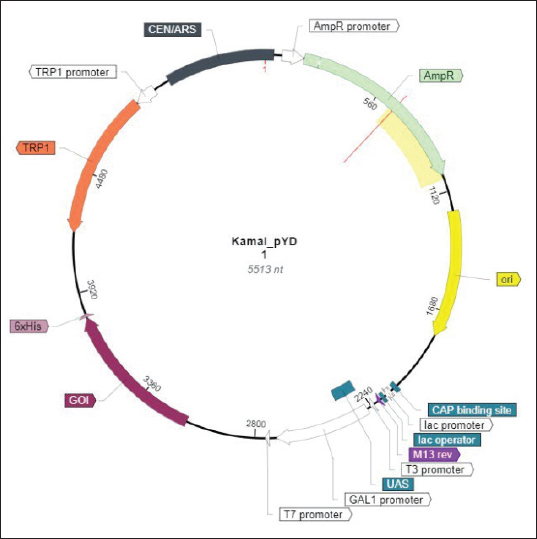
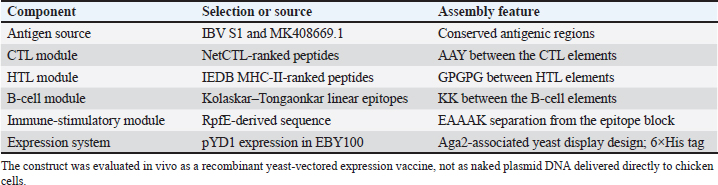
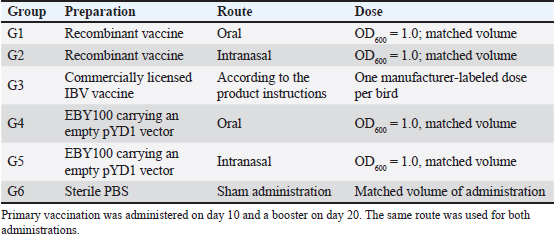
AbstractBackground: The infectious bronchitis virus (IBV) remains a major constraint on poultry production because rapid viral evolution can reduce cross-protection between circulating variants and vaccine strains. A mucosal vaccine platform capable of coordinating antigen-specific humoral, cellular, and local responses may complement conventional vaccination programs. Aim: This study aimed to evaluate the immunogenicity and growth-associated effects of a recombinant Saccharomyces cerevisiae-vectored multi-epitope vaccine derived from the IBV S1 protein after oral or intranasal administration to broiler chickens. Methods: Ninety-one-day-old broiler chicks were randomly assigned to six groups (15 birds/group): recombinant vaccine by the oral route (G1), recombinant vaccine by the intranasal route (G2), commercial IBV vaccine (G3), empty-vector yeast by the oral route (G4), empty-vector yeast by the intranasal route (G5), and phosphate-buffered saline (G6). Primary and booster administrations were given on days 10 and 20. Body weight, weekly gain, feed conversion ratio (FCR), IBV S-specific IgM, serum interferon-gamma (IFN-γ), and fecal IgA were measured. Data were summarized as mean ± standard error, and group differences were interpreted using the least significant difference (LSD) thresholds reported in the experimental dataset at p < 0.05. Results: Body weight differences remained below the reported LSD through day 14 but exceeded it from day 21 onward. G1 reached the highest day-35 weight (2650 ± 44.5 g), followed by G4 (2500 ± 44.09 g). After boosting, IBV-specific IgM was highest in G3 (6.174 ± 0.05 ng/ml) and G2 (5.639 ± 0.24 ng/ml), both exceeding the reported LSD by more than the vector and PBS controls. IFN-γ peaked after priming in G2 (45.489 ± 3.76 pg/ml), whereas fecal IgA increased most strongly in G1 and G2 after priming and remained higher than control values after boosting. No challenge experiment was performed; therefore, the findings demonstrate immunogenicity rather than protection. Conclusion: The recombinant yeast-vectored construct elicited route-dependent systemic, cellular, and mucosal immune responses, with intranasal administration favoring IFN-γ and IBV-specific IgM and oral administration sustaining fecal IgA. Before protective efficacy can be established, controlled IBV challenge, antigen-expression confirmation, duration-of-immunity studies, and field validation are required. Keywords: Bronchitis, Immunogenicity, Mucosa, Poultry, Yeast. IntroductionInfectious bronchitis is an acute, highly contagious disease that affects the respiratory tract and may also involve renal and reproductive tissues in chickens. Economic consequences include impaired growth, mortality, carcass condemnation, reduced egg production, and diminished egg quality. Control remains difficult because the S1 region of the spike glycoprotein accumulates mutations and recombination events that generate antigenically distinct lineages. Vaccines that protect well against homologous strains may provide incomplete protection against heterologous field variants (Cavanagh, 2007; Abozeid, 2023; Rafique et al., 2024). Live attenuated vaccines are widely used because they can stimulate local and systemic immunity, whereas inactivated vaccines are mainly used to reinforce circulating antibody responses. Vaccine strain, route, bird age, maternal antibody, and the antigenic relationship between vaccine and challenge strains can markedly influence the outcome (de Wit & Cook, 2014; Bhuiyan et al., 2021; Al-Rasheed et al., 2021). Studies have shown that no single immune marker is sufficient to infer protection, particularly in the absence of challenge, viral load, or lesion data (Chhabra et al., 2015; Ike et al., 2021). The S1 subunit contains receptor-binding and major neutralizing epitopes and is therefore a rational antigenic target. A multi-epitope design can enrich conserved B-cell, helper T-cell, and cytotoxic T-cell determinants while excluding unnecessary sequence regions, thereby broadening the intended immune coverage and reducing the antigenic payload. This approach differs from a full-length S1 vaccine and permits rational control of epitope order and processing when combined with explicit linker and adjuvant modules (Ashfaq et al., 2021; Zuo et al., 2021). Whole recombinant Saccharomyces cerevisiae offer a distinct platform for mucosal delivery. Yeast cells are nonpathogenic, protect against recombinant antigen during delivery, contain innate immunostimulatory cell wall components, and can present heterologous proteins through surface-display systems such as EBY100/pYD1. Oral yeast vaccines have generated mucosal and systemic responses against avian influenza, fowl adenovirus, infectious bursal disease, and coccidiosis in chickens, supporting the evaluation of the infectious bronchitis virus (IBV) platform (Sun et al., 2014; Lei et al., 2021; Cao et al., 2022; Li et al., 2023). Unlike attenuated bacterial vectors, yeast does not replicate as an invasive pathogen in the host; unlike purified proteins, the whole cell simultaneously provides antigen carriage and innate stimulation (Austriaco, 2023). Despite these advantages, evidence regarding simultaneous systemic, cellular, and mucosal responses to an S1-derived multi-epitope construct delivered by recombinant yeast in broiler chickens remains limited, and route-specific comparisons with a commercial vaccine and empty-vector controls are scarce. We hypothesized that the oral and intranasal administration of recombinant S. cerevisiae carrying an S1-derived multi-epitope expression cassette would induce greater IBV-specific IgM, IFN-γ, and fecal IgA responses than empty-vector yeast or PBS, while the magnitude and kinetics would differ between the oral and intranasal routes. Therefore, this study evaluated immunogenicity and growth performance without claiming protective efficacy. Materials and MethodsStudy design, birds, housing, and nutritionThe experiment was conducted in the Molecular Biotechnology Laboratory and animal facilities of the College of Veterinary Medicine, University of Al-Qadisiyah, Iraq. Ninety-one-day-old broiler chicks from Al-Atta Hatchery were randomly allocated to six groups of 15 birds. The archived protocol did not specify the method used to generate the allocation sequence, allocation concealment, assessor blinding, or a prospective power calculation. Chicks were housed in separate floor pens on eight-cm wood-shaving litter, with temperature reduced from 33°C during week 1 to 31°C, 29°C, and 27°C in subsequent weeks. Feed and water were provided ad libitum. The starter (days 1–10), grower (days 11–25), and finisher (days 26–35) diets supplied 22.3%, 20.4%, and 18.5% crude protein and 3020, 3100, and 3150 kcal/kg metabolizable energy, respectively. Standard husbandry and health monitoring were performed. Mortality was not reported in the archived result tables; consequently, the group summaries were used as recorded. Multi-epitope construct and recombinant yeast preparationThe IBV S1 sequence (GenBank accession MK408669.1) was used as the antigen source. Conserved regions were identified by multiple-sequence alignment. Cytotoxic T-lymphocyte, helper T-lymphocyte, and linear B-cell candidates were screened with NetCTL, the IEDB MHC-II prediction resource, and the Kolaskar–Tongaonkar method, respectively. Antigenicity, allergenicity, and toxicity were evaluated with the tools stated in the original design record before assembly. The construct architecture comprised an N-terminal RpfE-derived immune-stimulatory module followed by selected CTL, HTL, and B-cell epitope blocks separated by EAAAK, AAY, GPGPG, and KK linkers (Table 1). The RpfE module was included as an immunostimulatory sequence rather than as an IBV antigen. The final coding sequence was codon-optimized for S. cerevisiae and synthesized for insertion into pYD1. The plasmid map indicated an approximately 1.12-kb gene-of-interest segment, corresponding to an estimated 373-amino-acid fusion protein before vector-derived display sequences. Individual prediction scores and the complete synthesized nucleotide sequence were not contained in the archived manuscript files and should be supplied from the original construct certificate as supplementary data for full reproducibility (Fig. 1). The recombinant pYD1 plasmid was transformed into S. cerevisiae EBY100 by the lithium acetate/polyethylene glycol method with carrier DNA. Transformants were selected on an appropriate selective medium, and the presence of the insert was verified by insert-specific PCR. Cultures were expanded in yeast extract–peptone–dextrose medium at 30 °C. Yeast suspensions were standardized to OD600=1.0, corresponding in the study record to approximately 1 × 10⁷–3 × 10⁷ cells/ml, and matched administration volumes were used for recombinant and empty-vector preparations (Table 2). The pYD1 system is intended to express the encoded fusion protein in yeast; it is therefore described here as a recombinant yeast-vectored multi-epitope vaccine, not as naked plasmid DNA. Protein-level surface expression was not directly confirmed by Western blotting, immunofluorescence, or flow cytometry and was treated as a study limitation. Experimental groups and vaccinesSample collection and immunological analysisBlood was collected from the wing vein immediately before primary vaccination, 10 days after the primary dose, and 10 days after the booster. Serum was separated at 2,000 × g for 20 minutes and stored at −20°C. Fecal samples were collected at the same time points for mucosal IgA measurement. The archived methods did not document fecal mass normalization, extraction volume, protease-inhibitor use, storage temperature, or technical replication. Therefore, fecal IgA values were interpreted as assay concentrations under the laboratory procedure used and not as absolute IgA excretion per gram of feces.
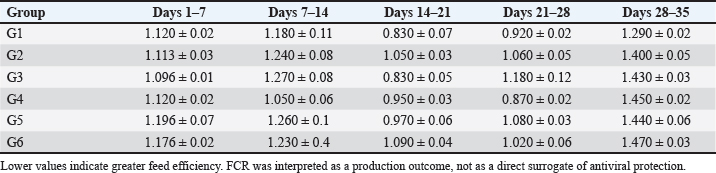
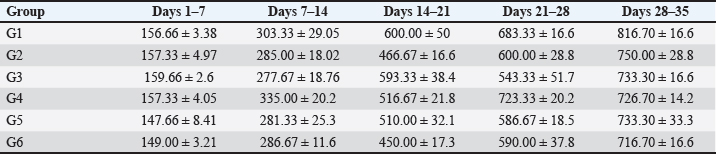
Fig. 1. Map of the pYD1 recombinant plasmid showing the gene-of-interest region, GAL1/UAS regulatory elements, 6×His tag, yeast selection marker, and bacterial propagation elements. IBV S-protein-specific IgM was measured with an indirect chicken ELISA (UpingBio, China; YP-W901133L). Serum IFN-γ was quantified with a sandwich ELISA (UpingBio; YP-W60027), and fecal IgA was quantified with a chicken IgA ELISA (UpingBio; YP-W60105). Assays were performed according to the manufacturer’s protocols, absorbance was read at 450 nm, and concentrations were obtained from the supplied standard curves. Standard-curve ranges, analytical detection limits, intra-assay and inter-assay variation, sample dilution factors, and replicate acceptance criteria were not available in the archived assay record and therefore were not used to support claims beyond the reported group comparisons. Growth performance and qualitative culture assessmentIndividual body weight was recorded on days 1, 7, 14, 21, 28, and 35. Weekly weight gain was calculated as the final minus the initial weight for each interval (Table 4). Feed conversion ratio (FCR) was calculated as feed consumed divided by body-weight gain for the corresponding interval (Table 5). A qualitative culture comparison of fecal material was also performed by serial dilution and plating. Because colony counts and taxonomic confirmation were not recorded in a form suitable for quantitative analysis, culture images were interpreted only as exploratory observations and were not used to support claims of microbiome modification. Statistical analysisAnalyses were conducted in SPSS 26.0. Continuous data are presented as mean ± standard error. The archived dataset contained group-level summaries and least significant difference (LSD) values rather than individual bird-level longitudinal records. Outcomes were therefore interpreted at each recorded time point using the reported p < 0.05 LSD thresholds: 65.64 g for body weight, 69.06 g for weekly gain, 0.170 for FCR, 1.49 ng/ml for IgM, 4.01 pg/ml for IFN-γ, and 2.19 µg/ml for IgA. Differences smaller than the applicable LSD were not described as significant. A repeated-measures ANOVA or mixed-effects reanalysis could not be performed without the individual longitudinal observations; temporal patterns are consequently interpreted cautiously. Qualitative culture images were not subjected to inferential analysis. Table 1. Architecture of the recombinant S1-derived multi-epitope construct.
Table 2. Experimental groups and interventions.
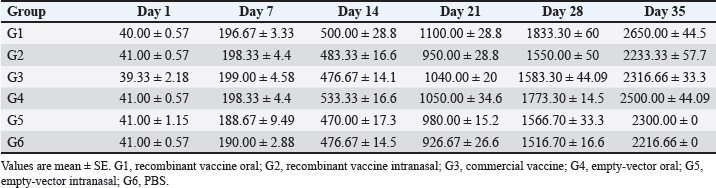
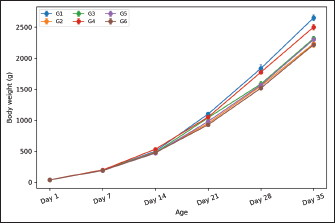
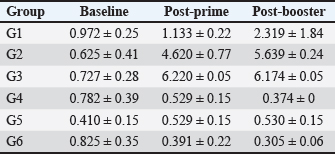
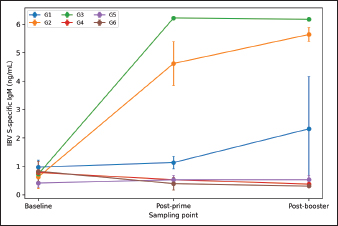
Ethical approvalThe Committee for Research Ethics, College of Veterinary Medicine, University of Al-Qadisiyah, Iraq, approved all experimental procedures (Approval Number 1626-April-2026). Animal care and handling were performed according to the institutional conditions under which the approval was issued. ResultsGrowth performanceBody weight did not differ significantly among the experimental groups on day 1 [F(5,12)=0.423, p= 0.824], day 7 [F(5,12)=0.751, p= 0.601], or day 14 [F(5,12)=1.595, p= 0.235]. A significant between-group difference emerged on day 21 [F(5,12)=6.298, p= 0.0043], when G1 had the highest mean body weight (1100 ± 28.8 g) and G6 had the lowest mean (926.67 ± 26.6 g). The group effect remained significant on day 28 [F(5,12)=10.829, p= 0.000406] and became more pronounced on day 35 [F(5,12)=20.841, p= 1.55 × 10⁻⁵]. On day 35, G1 recorded the highest body weight (2650 ± 44.5 g), followed by G4 (2500 ± 44.09 g). The corresponding values for G3, G5, G2, and G6 were 2316.66 ± 33.3, 2300 ± 0, 2233.33 ± 57.7, and 2216.66 ± 0 g, respectively. According to the reported LSD of 65.64 g, the final body weight of G1 was higher than that of each of the other groups, while G4 was higher than G2, G3, G5, and G6. Because the birds were not experimentally challenged with IBV, these findings represent treatment-associated differences in growth and cannot be interpreted as evidence of protection against infection (Table 3 and Fig. 2). IBV S-specific IgM responseNo significant between-group difference in IBV S-specific IgM was detected at baseline [F(5,12)=0.363, p= 0.864]. A marked group effect was detected after the primary immunization [F(5,12)=52.096, p= 1.01 × 10⁻⁷]. G3 exhibited the highest post-prime IgM concentration (6.220 ± 0.05 ng/ml), followed by G2 (4.620 ± 0.77 ng/ml). Based on the reported LSD of 1.49 ng/ml, G3 was higher than G2, G1, G4, G5, and G6, while G2 was higher than the oral recombinant-vaccine group and all three control groups. Table 3. Body weight (g) from day 1 to day 35.
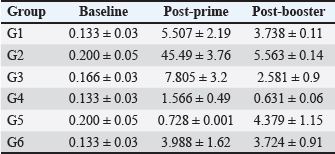
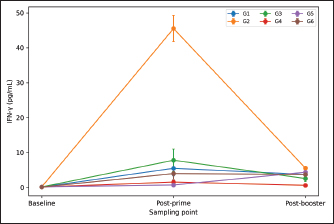
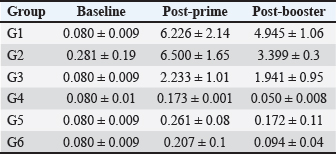
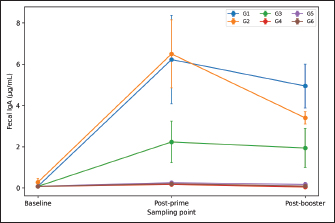
Fig. 2. Longitudinal body weight across the six experimental groups. Points and error bars represent mean ± SE. The group effect remained significant after the booster immunization [F(5,12)=12.645, p = 0.000194]. G3 and G2 maintained the highest concentrations, at 6.174 ± 0.05 and 5.639 ± 0.24 ng/ml, respectively. The difference was smaller than the reported LSD and was therefore not significant. Both groups remained higher than G4, G5, and G6, which recorded 0.374 ± 0, 0.530 ± 0.15, and 0.305 ± 0.06 ng/ml, respectively. G1 increased from 1.133 ± 0.22 ng/mL after priming to 2.319 ± 1.84 ng/mL after boosting. Within the recombinant-vaccine treatments, G2 exceeded G1 after both the primary and booster immunizations, indicating a greater IgM response following intranasal administration under the conditions of this experiment (Table 6 and Fig. 3). Cellular immune response (CIR)Baseline IFN-γ concentrations were comparable among the six groups [F(5,12)=0.756, p = 0.598]. After the primary immunization, a highly significant between-group effect was detected [F(5,12)=55.187, p= 7.28 × 10⁻⁸]. G2 produced the highest IFN-γ concentration (45.489 ± 3.76 pg/ml), exceeding every other group by more than the reported LSD of 4.01 pg/ml. The next highest means were observed in G3 (7.805 ± 3.20 pg/ml) and G1 (5.507 ± 2.19 pg/ml), whereas G4 and G5 recorded 1.566 ± 0.49 and 0.728 ± 0.001 pg/ml, respectively. After the booster immunization, IFN-γ concentrations differed significantly among groups [F(5,12)=5.682, p = 0.00648], although the magnitude and pattern of the differences changed substantially. G2 declined to 5.563 ± 0.14 pg/ml, while G5, G1, and G6 recorded 4.379 ± 1.15, 3.738 ± 0.11, and 3.724 ± 0.91 pg/ml, respectively. Using the reported LSD criterion, only the difference between G2 and G4, which recorded 0.631 ± 0.06 pg/ml, exceeded 4.01 pg/ml. Thus, intranasal administration of the recombinant vaccine produced a pronounced but transient IFN-γ peak after priming. This finding demonstrates early cellular immunogenicity but does not establish the duration or protective function of the response (Table 7 and Fig. 4). Mucosal immune responseFecal IgA concentrations did not differ significantly among the groups at baseline [F(5,12)=1.106, p = 0.407]. A significant group effect was observed after primary immunization [F(5,12)=6.559, p= 0.00367]. G1 and G2 recorded the highest IgA concentrations, at 6.226 ± 2.14 and 6.500 ± 1.65 µg/ml, respectively. Their difference was smaller than the reported LSD of 2.19 µg/ml. Both recombinant-vaccine groups exceeded G3 and the three control groups by more than the LSD, whereas G3 recorded an intermediate concentration of 2.233 ± 1.01 µg/ml. The between-group difference remained significant after the booster immunization [F(5,12)=11.879, p= 0.000262]. G1 retained the numerically highest IgA concentration (4.945 ± 1.06 µg/ml), followed by G2 (3.399 ± 0.30 µg/ml) and G3 (1.941 ± 0.95 µg/ml). G1 exceeded G3, G4, G5, and G6 according to the LSD criterion, while G2 exceeded the two empty-plasmid controls and the PBS control. The difference between G1 and G2 was below the LSD at both post-vaccination measurements. Therefore, both oral and intranasal delivery of the recombinant vaccine induced mucosal IgA, with no statistically supported difference between the two routes, although the oral group retained the numerically highest post-booster mean (Table 8 and Fig. 5). Table 5. Feed conversion ratio (g feed/g weight gain).
Table 4. Weekly body-weight gain (g).
Table 6. IBV S-specific IgM concentrations (ng/ml).
Exploratory fecal culture observationsRepresentative serially diluted fecal cultures showed visually denser colony growth in material obtained from the recombinant-vaccine treatment than in the comparison material. Colony density decreased progressively with increasing dilution, as expected. However, the assessment was qualitative because colony-forming units were not enumerated, bacterial isolates were not identified, and neither culture-independent sequencing nor community-diversity analysis was performed. No inferential statistical analysis was therefore applied to these observations, and the photographs were not interpreted as evidence that vaccination altered the intestinal microbiome (Fig. 6). DiscussionThis study aimed to determine whether an S1-derived multi-epitope construct carried by recombinant S. cerevisiae could stimulate coordinated immune responses after mucosal administration. The principal findings were route-dependent rather than uniformly superior responses: intranasal vaccination produced the largest early IFN-γ response and a strong post-booster IgM response, whereas oral vaccination produced the most sustained fecal IgA response. The commercial vaccine generated the highest IBV-specific IgM levels. These findings support the immunogenicity of the experimental platform. However, because no IBV challenge was included, they do not demonstrate protection, reduced shedding, or reduced lesions.
Fig. 3. IBV S-specific IgM response before vaccination, after priming, and after boosting. The absence of group differences in early weight measurements, followed by divergence after day 21, argues against interpreting baseline imbalance as the explanation for later differences in growth. G1 achieved the highest final body weight and favorable FCR values in several intervals, whereas G4 also performed well. The response in the empty-vector oral group indicates that yeast itself, feed intake, or other non-antigen-specific effects may have contributed to performance. Although whole yeast can provide nutrients and cell wall components with biological activity, the present study did not measure digestibility, individual feed intake, intestinal histology, or metabolic markers. Consequently, growth effects should not be directly attributed to the efficacy of antiviral vaccines. Table 7. Serum IFN-γ concentrations (pg/ml).
Fig. 4. Serum IFN-γ response before vaccination, after priming, and after boosting of the immune system. IBV-specific IgM increased most strongly in the G3 and G2 groups. The commercial vaccine response is consistent with exposure to a licensed IBV antigen preparation, although the product strain and manufacturer were not documented in the archived manuscript. The intranasal recombinant vaccine may have benefited from direct exposure of respiratory-associated lymphoid tissues, whereas the smaller oral IgM response could reflect antigen degradation, mucosal tolerance, or preferential local priming. Route-dependent responses have also been observed after IBV vaccination, where the administration route altered the magnitude and type of local and systemic immunity (Al-Rasheed et al., 2021). Recombinant S1 delivery by other vectors has induced humoral and cellular responses and reduced viral burden when challenged. This distinction emphasizes why the current IgM data should be interpreted as immunogenicity only (Zuo et al., 2021; Liu et al., 2024). Table 8. Fecal IgA concentrations (µg/ml).
Fig. 5. Fecal IgA response before vaccination, after priming, and after boosting. Pronounced post-prime IFN-γ response in G2 supports rapid cellular activation after intranasal delivery. IFN-γ is associated with Th1-type and cytotoxic antiviral responses in chickens; however, a circulating concentration alone cannot define the responding cell population or prove cytotoxic function. The decline after boosting may represent contraction after an early peak, altered sampling timing, or assay variability. Therefore, future studies should include lymphocyte phenotyping, antigen-specific proliferation, IFN-γ ELISpot, and tissue cytokine expression. Challenge studies that pair these measurements with viral load and lesion scoring would clarify whether the early IFN-γ signal is biologically protective (Chhabra et al., 2015; Ike et al., 2021). The fecal IgA pattern was the clearest evidence of mucosal immunogenicity. Both recombinant vaccination routes increased IgA levels after priming, and the oral route retained the highest post-booster value. Yeast-based oral vaccines, including recombinant EBY100/pYD1 systems against avian influenza and recombinant S. cerevisiae expressing fowl adenovirus or infectious bursal disease antigens, have elicited local and systemic responses in chickens (Lei et al., 2021; Cao et al., 2022; Li et al., 2023). The yeast cell wall may support mucosal antigen-presenting cell uptake, whereas oral delivery favors gut-associated lymphoid tissues. Nevertheless, fecal IgA is not equivalent to respiratory IgA; future IBV studies should also measure tracheal washes, tears, Harderian gland responses, and local antibody neutralization.
Fig. 6. Representative qualitative fecal culture plates from vaccinated and comparison material. The photographs are descriptive and were not used for quantitative microbiome inference. The head-to-head route comparison does not support the interchangeability of oral and intranasal administration. Intranasal vaccination was superior for the peak IFN-γ and IgM responses, whereas oral vaccination was associated with more persistent fecal IgA and higher final body weight. Intranasal delivery offers direct access to the respiratory mucosa but is labor-intensive when applied individually and may show dose variability during mass spray administration. Oral delivery is operationally attractive for flock-level administration; however, antigen stability, feed or water distribution, and uptake variability must be controlled. No economic or field-scale administration analysis was performed here; therefore, cost-effectiveness and scalability remain hypotheses for future evaluation rather than demonstrated outcomes. The commercial vaccine remained the strongest inducer of IBV-specific IgM, whereas the recombinant construct produced a more differentiated mucosal and cellular profile. This suggests that the current experimental platform should be considered a candidate complement or prime–boost component rather than a demonstrated replacement for licensed IBV vaccines. Multiepitope design may offer focused antigen composition and avoidance of unnecessary regions; however, these theoretical advantages depend on correct expression, folding, and epitope accessibility. Insert-positive polymerase chain reaction confirmed transformation, not protein display. Expression must be demonstrated by anti-tag or antigen-specific western blotting, immunofluorescence, or flow cytometry, and the genetic stability of the construct should be measured across serial passages before efficacy claims are advanced. This study is relevant to poultry production in Iraq, where environmental heat, management heterogeneity, maternal antibody, commercial strain, and flock health can modify vaccine responses. These factors were controlled as far as possible within the experiment, but were not directly analyzed. The findings provide a basis for a locally testable recombinant-vaccine program; however, translation to industry requires a challenge with locally circulating IBV lineages, evaluation in more than one broiler genotype, spray or drinking-water delivery trials, and comparison with commercial farms’ vaccination schedules. Such work would support evidence-based knowledge exchange with poultry producers without overstating the current experimental results. Study limitationsThe most important limitation of this study is the absence of a live IBV challenge; protective efficacy, viral shedding, tissue viral load, lesion reduction, clinical outcome, and survival were not evaluated. The post-booster observation period was short, and no assessment of long-term memory or durability was performed. Recombinant antigen expression and surface display at the protein level were not verified. The full construct sequence and individual prediction scores are not available in the archived files. The study used one broiler source and did not measure maternal antibody, host genotype, respiratory IgA, lymphocyte subsets, immune-organ histopathology, or individual feed intake. We were unable to obtain the randomization details, assessor blinding, mortality accounting, prospective sample size justification, commercial-vaccine identity, and complete ELISA validation records. Qualitative culture images lacked colony counts and taxonomic identification. These limitations restrict the conclusions to the reported immunogenicity and performance patterns under the stated experimental conditions. ConclusionOral and intranasal administration of the recombinant S. cerevisiae-vectored S1 multi-epitope construct induced measurable but distinct immune profiles in broiler chickens. Intranasal delivery generated the largest early IFN-γ response and strong IBV-specific IgM, whereas oral delivery sustained the highest fecal IgA and was associated with the greatest final body weight. The licensed commercial vaccine produced the highest IgM response. The findings demonstrate immunogenicity, not protective immunity. The next essential steps are protein-expression and stability validation, controlled homologous and heterologous IBV challenge, viral-shedding and lesion assessment, longer follow-up, and field trials using scalable mucosal delivery under commercial conditions. AcknowledgmentThe authors thank the College of Veterinary Medicine, University of Al-Qadisiyah, for laboratory and animal-facility support. FundingThis study was self-funded and received no external support. Authors’ contributionsAll authors contributed to study conception, experimental design, investigation, data curation, interpretation, manuscript preparation, and critical review, and all authors have approved the final version of the manuscript. Conflict of interestThe authors have no conflicts of interest to declare. Data availabilityThe data supporting the findings are available upon reasonable request from the corresponding author. ReferencesAbozeid, H.H. 2023. Global emergence of infectious bronchitis virus variants: Evolution, immunity, and vaccination challenges. Transbound. Emerg. Dis. 1144924; doi:10.1155/2023/1144924 Al-Rasheed, M., Ball, C. and Ganapathy, K. 2021. Route of infectious bronchitis virus vaccination determines the type and magnitude of immune responses in table egg laying hens. Vet. Res. 52, 139; doi:10.1186/s13567-021-01008-7 Ashfaq, U.A., Ahmed, B., Deeba, F., Khan, M.S. and Ahmad, B. 2021. Immunoinformatics approach for multi-epitope vaccine designing against viral pathogens. J. Biomol. Struct. Dyn. 39(18), 7090–7105. Austriaco, N. 2023. Yeast oral vaccines against infectious diseases. Front. Microbiol. 14, 1150412; doi:10.3389/fmicb.2023.1150412 Bande, F., Arshad, S.S., Hair Bejo, M., Moeini, H. and Omar, A.R. 2015. Progress and challenges toward the development of vaccines against avian infectious bronchitis. J. Immunol. Res. 424860; doi:10.1155/2015/424860 Bhuiyan, M.S.A., Amin, Z., Bakar, A.M.S.A., Saallah, S., Yusuf, N.H.M., Shaarani, S.M. and Siddiquee, S. 2021. Factor influences for diagnosis and vaccination of avian infectious bronchitis virus (Gammacoronavirus) in chickens. Vet. Sci. 8(3), 47; doi:10.3390/vetsci8030047 Cao, H., Hua, D., Zhang, H., Zhang, H., Liu, N., Feng, Z., Li, H., Zhao, B., Zhang, L., Guo, Y., Huang, J. and Zhang, L. 2022. Oral immunization of recombinant Saccharomyces cerevisiae expressing fiber-2 of fowl adenovirus serotype 4 induces protective immunity against homologous infection. Vet. Microbiol. 271, 109490; doi:10.1016/j.vetmic.2022.109490 Cavanagh, D. 2007. Coronavirus avian infectious bronchitis virus. Vet. Res. 38(2), 281–297. Chhabra, R., Forrester, A., Lemiere, S., Awad, F., Chantrey, J. and Ganapathy, K. 2015. Mucosal, cellular, and humoral immune responses induced by different live infectious bronchitis virus vaccination regimes and protection conferred against infectious bronchitis virus Q1 strain. Clin. Vaccine Immunol. 22(9), 1050–1059; doi:10.1128/CVI.00368-15 de Wit, J.J. and Cook, J.K.A. 2014. Factors influencing the outcome of infectious bronchitis vaccination and challenge experiments. Avian Pathol. 43(6), 485–497; doi:10.1080/03079457.2014.974504 Ike, A.C., Ononugbo, C.M., Obi, O.J., Onu, C.J., Olovo, C.V., Muo, S.O., Chukwu, O.S., Reward, E.E. and Omeke, O.P. 2021. Towards improved use of vaccination in the control of infectious bronchitis and Newcastle disease in poultry: understanding the immunological mechanisms. Vaccines 9(1), 20; doi:10.3390/vaccines9010020 Lei, H., Lu, X., Li, S., Ren, Y., et al. 2021. High immune efficacy against different avian influenza H5N1 viruses due to oral administration of a Saccharomyces cerevisiae-based vaccine in chickens. Sci. Rep. 11, 8977; doi:10.1038/s41598-021-88413-2 Li, H., Hua, D., Qu, Q., Cao, H., Feng, Z., Liu, N., Huang, J. and Zhang, L. 2023. Oral immunization with recombinant Saccharomyces cerevisiae expressing viral capsid protein 2 of infectious bursal disease virus induces unique specific antibodies and protective immunity. Vaccines 11(12), 1849; doi:10.3390/vaccines11121849 Liu, K., Li, Z., Li, Q., Wang, S., Curtiss, R., III and Shi, H. 2024. Salmonella typhimurium vaccine candidate delivering infectious bronchitis virus S1 protein to induce protection. Biomolecules 14(1), 133; doi:10.3390/biom14010133 Rafique, S., Jabeen, Z., Pervaiz, T., Rashid, F., Luo, S., Xie, L. et al. 2024. Avian infectious bronchitis virus review by continent. Front. Cell. Infect. Microbiol. 14, 1325346; doi:10.3389/fcimb.2024.1325346 Sun, H., Wang, L., Wang, T., Zhang, J., Liu, Q., Chen, P., Chen, Z., Wang, F., Li, H., Xiao, Y. and Zhao, X. 2014. Display of Eimeria tenella EtMic2 protein on the surface of Saccharomyces cerevisiae as a potential oral vaccine against chicken coccidiosis. Vaccine 32(16), 1869–1876; doi:10.1016/j.vaccine.2014.01.068 Zuo, L., Yan, W., Li, H., et al. 2021. Design and characterization of a DNA vaccine based on consensus S gene of infectious bronchitis virus. Viruses 13, 232; doi:10.3390/v13020232 | ||

| How to Cite this Article |
| Pubmed Style Khalid KW, Hamadi HA. Immunogenicity of a recombinant Saccharomyces cerevisiae - vectored multi-epitope vaccine targeting the infectious bronchitis virus S1 protein in broiler chickens. Open Vet. J.. 2026; 16(8): 5772-5781. doi:10.5455/OVJ.2026.v16.i8.65 Web Style Khalid KW, Hamadi HA. Immunogenicity of a recombinant Saccharomyces cerevisiae - vectored multi-epitope vaccine targeting the infectious bronchitis virus S1 protein in broiler chickens. https://www.openveterinaryjournal.com/?mno=317045 [Access: September 03, 2026]. doi:10.5455/OVJ.2026.v16.i8.65 AMA (American Medical Association) Style Khalid KW, Hamadi HA. Immunogenicity of a recombinant Saccharomyces cerevisiae - vectored multi-epitope vaccine targeting the infectious bronchitis virus S1 protein in broiler chickens. Open Vet. J.. 2026; 16(8): 5772-5781. doi:10.5455/OVJ.2026.v16.i8.65 Vancouver/ICMJE Style Khalid KW, Hamadi HA. Immunogenicity of a recombinant Saccharomyces cerevisiae - vectored multi-epitope vaccine targeting the infectious bronchitis virus S1 protein in broiler chickens. Open Vet. J.. (2026), [cited September 03, 2026]; 16(8): 5772-5781. doi:10.5455/OVJ.2026.v16.i8.65 Harvard Style Khalid, K. W. & Hamadi, . H. A. (2026) Immunogenicity of a recombinant Saccharomyces cerevisiae - vectored multi-epitope vaccine targeting the infectious bronchitis virus S1 protein in broiler chickens. Open Vet. J., 16 (8), 5772-5781. doi:10.5455/OVJ.2026.v16.i8.65 Turabian Style Khalid, Kamal Waleed, and Hassan Ali Hamadi. 2026. Immunogenicity of a recombinant Saccharomyces cerevisiae - vectored multi-epitope vaccine targeting the infectious bronchitis virus S1 protein in broiler chickens. Open Veterinary Journal, 16 (8), 5772-5781. doi:10.5455/OVJ.2026.v16.i8.65 Chicago Style Khalid, Kamal Waleed, and Hassan Ali Hamadi. "Immunogenicity of a recombinant Saccharomyces cerevisiae - vectored multi-epitope vaccine targeting the infectious bronchitis virus S1 protein in broiler chickens." Open Veterinary Journal 16 (2026), 5772-5781. doi:10.5455/OVJ.2026.v16.i8.65 MLA (The Modern Language Association) Style Khalid, Kamal Waleed, and Hassan Ali Hamadi. "Immunogenicity of a recombinant Saccharomyces cerevisiae - vectored multi-epitope vaccine targeting the infectious bronchitis virus S1 protein in broiler chickens." Open Veterinary Journal 16.8 (2026), 5772-5781. Print. doi:10.5455/OVJ.2026.v16.i8.65 APA (American Psychological Association) Style Khalid, K. W. & Hamadi, . H. A. (2026) Immunogenicity of a recombinant Saccharomyces cerevisiae - vectored multi-epitope vaccine targeting the infectious bronchitis virus S1 protein in broiler chickens. Open Veterinary Journal, 16 (8), 5772-5781. doi:10.5455/OVJ.2026.v16.i8.65 |


