




| Research Article | ||
Open Vet. J.. 2026; 16(8): 5179-5192
Open Veterinary Journal, (2026), Vol. 16(8): 5179–5192 Research Article Clinical efficacy and parasitological responses to selamectin–sarolaner combination therapy for Notoedric Mange in cats: A prospective case series from Yogyakarta city, IndonesiaLily Gunawan1, Soedarmanto Indarjulianto2*, Raden Wisnu Nurcahyo3, Agustina Dwi Wijayanti4, Ridha Avicena Ila Salsabila5, Cahyo Wibisono5,Luh Made Sudimartin5,6, Nine Dwindadari Meyana7, Deswandi Welhelmus Saputra Berri7 and Jesica Gloria Soerinta71Lilipoet Pet Clinic, Yogyakarta, Indonesia. 2Department of Internal Medicine, Faculty of Veterinary Medicine, Universitas Gadjah Mada, Yogyakarta, Indonesia 3Department of Parasitology, Faculty of Veterinary Medicine, Universitas Gadjah Mada, Yogyakarta, Indonesia 4Department of Pharmacology, Faculty of Veterinary Medicine, Universitas Gadjah Mada, Yogyakarta, Indonesia 5Veterinary Science Doctoral Program, Faculty of Veterinary Medicine, Universitas Gadjah Mada, Yogyakarta, Indonesia 6Laboratory of Veterinary Pharmacy, Faculty of Veterinary Medicine, Udayana University, Denpasar, Indonesia 7Master of Veterinary Science, Faculty of Veterinary Medicine, Universitas Gadjah Mada, Yogyakarta, Indonesia *Corresponding Author: Soedarmanto Indarjulianto. Department of Internal Medicine, Faculty of Veterinary Medicine, Universitas Gadjah Mada, Yogyakarta, Indonesia Email: indarjulianto [at] ugm.ac.id Submitted: 04/04/2026 Revised: 25/06/2026 Accepted: 08/07/2026 Published: 08/08/2026 © 2025 Open Veterinary Journal
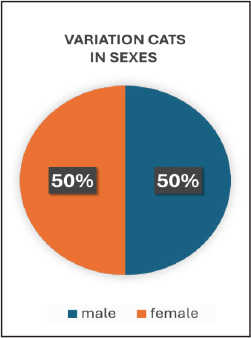
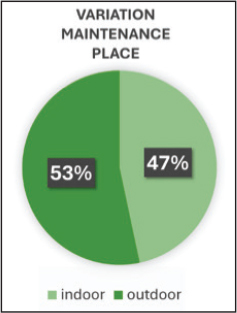
AbstractBackground: Feline Mange caused by Notoedres cati requires a safe, suitable, and effective therapy. Aim: This study aimed to describe the clinical and parasitological findings of naturally occurring Notoedric Mange in cats in Yogyakarta City, Indonesia, and to evaluate the clinical response, mite clearance, and short-term safety profile following a single topical administration of a selamectin–sarolaner combination. Methods: The study included 30 cats showing signs suggestive of Notoedres mange. All cats underwent physical and parasitological examinations for mites, particularly N. cati. Microscopic examination was performed using skin scrapings, trichograms, and acetate tape imprints. Clinical lesions were assessed using the Notoedres-Induced Skin Lesion Score (NISLS), which combines lesion severity (0–3) and lesion distribution (0–2) into a total score ranging from 0 to 5. Cats confirmed to be infested with mites also underwent hematological and biochemical analyses, including assessments of alanine aminotransferase, alkaline phosphatase, creatinine, glucose, total protein, and blood urea nitrogen. Confirmed cases received a single topical treatment of selamectin–sarolaner at a dose of 6 mg/kg selamectin and 1 mg/kg sarolaner, applied to the dorsal neck on day 1. Results: All cats were confirmed to be infested with N. cati and showed clinical signs, including erythema, alopecia, pruritus, and crusted pinnae. Following selamectin–sarolaner treatment, no live mites were detected in any cat on days 14 and 28; the observed live-mite clearance rate was 100% (30/30 cats; exact 95% CI, 88.4%–100.0%) at both follow-up points. Clinical improvement was also observed, including reduced lesion severity, inflammation resolution, and visible hair regrowth. No treatment-related adverse effects were observed during the 28-day observation period. Conclusion: A single topical administration of selamectin–sarolaner was associated with marked clinical improvement and clearance of live mites in cats naturally infested with N. cati during a 28-day follow-up period. However, the findings should be interpreted as preliminary treatment-associated outcomes because this study did not include an untreated or comparative control group, and the observation period was limited. Further controlled studies with blinded assessment and longer follow-up are needed to confirm comparative efficacy, recurrence prevention, and long-term safety. Keywords: Clinical recovery, Feline scabies, Mite clearance, Notoedric Mange, Topical antiparasitic. IntroductionDermatitis is one of the most common clinical problems in domestic pets. Mange, also known as scabies, is a dermatitis caused by mite infestation in mammals. Mites are tiny arthropods measuring less than 1 mm and are difficult to see with the naked eye (Sadhu et al., 2024). Notoedres cati, a member of the Sarcoptidae family characterized by rapid, broad transmission, is the most common species in cats. (Knaus et al., 2021). N. cati mites are easily identified by their modest characteristic size and are considerably smaller and more coiled than Sarcoptes spp. (Iqomah et al., 2020). Cat mites cause illness in cats and humans, leading to skin disorders (Martins et al., 2026). This illness is very serious and may be fatal if not treated correctly. It spreads easily from one cat to another (Sinha et al., 2023). Ivermectin is used to treat scabies in cats. The drug disrupts GABAergic neurotransmission, paralyzing the animal by preventing the activation of excitatory motor neurons by interneurons (Silva et al., 2021). Selamectin belongs to the avermectin class and is an antiparasitic that is extensively used for managing endoparasites and ectoparasites (Farmaki et al., 2009). Other treatment options include sulfur and sarolaner. If the mites have not penetrated deeply into the stratum corneum of the skin, sulfur is the most effective therapy (Sadhu et al., 2024). Sarolaner is a novel isoxazoline ectoparasiticide that has demonstrated remarkable activity against the most common dog parasites. (Györke et al., 2022). Recently, a selamectin–sarolaner combination was developed, which, according to Geurden et al. (2017), is effective against hookworms, roundworms, fleas, and ear mites. This combination also successfully eliminated D. cati, otodemodicosis, and D. gatoi in cats. (J. Nolan and B. Lok, 2012; Simpson, 2021). A combination product containing selamectin and sarolaner is commercially available for treating fleas (Otodectes cynotis), Toxocara cati, Ancylostoma tubaeforme, and Dirofilaria immitis in cats (Becskei et al., 2017). This selamectin–sarolaner combination is affordable and uses a once-monthly topical application regimen. This combination drug is also effective against fleas, ticks, ear mites, Demodex cati, and endo- and ectoparasites based on several existing studies. Although the selamectin–sarolaner combination has shown broad antiparasitic activity against several feline parasites, information on its use for naturally occurring N. cati infestation remains limited, particularly under field conditions in Indonesia. Therefore, this study aimed to describe the clinical and parasitological characteristics of cats naturally infested with N. cati in Yogyakarta City and to assess their clinical response, mite clearance, and short-term safety profile after selamectin–sarolaner topical administration. This study provides field-based clinical evidence from naturally affected cats; however, the findings should be interpreted as treatment-associated outcomes rather than definitive comparative efficacy because no untreated or alternative-treatment control group was included. Longer follow-up studies are also required to evaluate reinfection, recurrence, and sustained clinical recovery. Materials and MethodsSampling design and locationThis study ran from April 2022 to June 2022. Data collection was conducted at the Lilipoet Veterinary Clinic, and the Department of Internal Medicine, Faculty of Veterinary Medicine, Universitas Gadjah Mada, collected data from cat patients who visited the clinic for health checks. Clinical examinationThe same Notoedres-Induced Skin Lesion Score (NISLS) was used throughout the study to increase the objectivity of the examination. Lesion severity was scored from 0 to 3, lesion distribution was scored from 0 to 2, and both components were summed to obtain a total score ranging from 0 to 5. Each animal was systematically examined across all body areas to detect and analyze ectoparasites or skin lesions. Parasite samples were collected from the cats using 3 diagnostic tests. Cats that came to the clinic were physically examined in their entirety, including measurements of body temperature, capillary refill time, pulse, respirations, and skin turgor, as described by Gunawan et al. (2024). Examination of the general condition, respiratory, digestive, cardiovascular, genital, urogenital, musculoskeletal, nervous, lymphonodal, ocular, auditory, mucosal membranes, and integumentary systems was performed by inspection and palpation. Appetite, disease history, vaccination status, maintenance system, population number, itching, and other clinical symptoms were also recorded. Clinical examinations were conducted before and 2 and 4 weeks after treatment. Diagnostic tests to confirm the diagnosis of N. cati included a hair-pluck test, skin scraping, and a tape-impression test. Laboratory examinationClippers, arterial clamps, tourniquets, hematology analyzers (Abaxis VETSCAN HM5C Hematology Analyzer, USA), cooling machines, centrifugates, pipettes, micropipettes, digital scales, cameras, tube racks, and microscopes were used in this study. The combination of selamectin and sarolaner was administered topically using a single-dose product at the minimum recommended doses of selamectin (6 mg/kg body weight) and sarolaner (1 mg/kg body weight). The obtained data were compiled and analyzed to provide case data and determine treatment efficacy. Ethical clearance was obtained for pet sampling in this study. Data analysisAssessment of the severity of Notoedric Mange lesions in cats was performed using two scoring systems: a lesion severity score (0–3) and a lesion distribution score (0–2), adapted from Hellmann et al. (2013)and Sampaio et al. (2017). A lesion severity score of 0 indicates no skin lesions, alopecia, or scratching; 1 indicates mild lesions and alopecia with occasional scratching; 2 indicates moderate lesions and alopecia with intense scratching and scratch wounds; and 3 indicates severe lesions and alopecia, thickened/crusted/scabby skin with intense scratching and scratch wounds. The extent of lesion distribution was assessed based on the affected skin surface area, with a score of 0 indicating the presence of no lesions, a score of 1 indicating that lesions affected less than 50% of the body’s skin surface, and a score of 2 indicating that more than 50% of the skin surface was affected. These 2 scores were summed to yield the Notoedres-Induced Skin Lesion Score (NISLS), which ranged from 0 to 5. These scores were assessed on days 1 and 28 and then descriptively compared. Data from clinical, laboratory, hematological, and blood chemistry examinations, as well as mite counts, were descriptively and statistically analyzed using Microsoft Excel and SPSS Statistics 23. The treatment response against mite infestation was calculated on days 14 and 28 using the formula for percentage reduction in the average number of live mites, as described by Geurden et al. (2017). Live mite clearance was also expressed as the proportion of cats with no live mites at each follow-up visit. Exact two-sided 95% confidence intervals (Clopper–Pearson method) were calculated for the proportion of cats with complete live-mite clearance on days 14 and 28. Statistical analysis of NISLS scores was performed by comparing day 1 and day 28 values using a paired t-test if the data were normally distributed or a Wilcoxon signed-rank test if the parametric assumptions were not met, with a significance level of α=0.05. The number of live mites on days 1, 14, and 28 was analyzed using a one-way analysis of variance (ANOVA) if the data were normally distributed, or a Friedman test if not, with the hypothesis that at least one difference among observation times was significant. Hematology parameters (14 parameters) and blood chemistry (6 parameters) on days 1 and 28 were analyzed as two paired samples, starting with the Shapiro–Wilk normality test (n=30), then continued with the paired t-test for normal data or the Wilcoxon signed-rank test for non-normal data, with H0 rejected if the p-value < 0.05. Because all confirmed cats received selamectin–sarolaner treatment, an untreated placebo group or a comparison group treated with another acaricidal product was not included in this study. Therefore, treatment response was evaluated by comparing the clinical condition and mite status of each cat before and after therapy. The follow-up period was limited to 28 days; consequently, the study was designed to assess short-term clinical improvement, mite clearance, and safety, but not long-term outcomes, such as reinfection, recurrence, or sustained protection, after the observation period. Ethical approvalThis study received ethical approval from the Faculty of Veterinary Medicine, Universitas Gadjah Mada, under license number 019/EC-FKH/Int./2022. Written informed consent was obtained from all cat owners before the inclusion of all cats in the study. ResultsSample size and variationThis study involved 30 cats that tested positive for N. cati, with variation in age, breed, sex, housing location, and population system (Figures 1, 2, and 3). Of the total sample, 19 cats (63.3%) were 1 year old, 6 cats (20.0%) were between 1 and 2 years old, and 5 cats (16.6%) were >2 years old. Based on breed, 16 cats (53.0%) were long-haired domestic cats, and 14 cats (47.0%) were short-haired domestic cats. The sample was evenly distributed between males and females, with 15 cats each (50.0%). Based on housing location, 16 cats (53.0%) were kept outdoors and allowed to roam freely, whereas 14 cats (47.0%) were kept indoors or in cages. Most cats lived communally (24 cats; 80.0%), while 6 cats (20.0%) lived individually.
Fig. 1. Variation in age in the study cat sample (n=30).
Fig. 2. Cats with different sexes (n=30).
Fig. 3. Breeding grounds and population of cat samples (n=30).
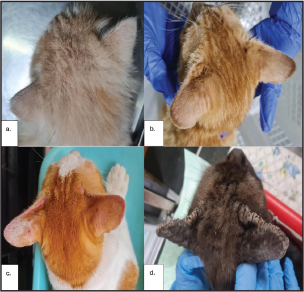
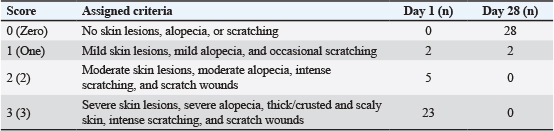
Fig. 4. Dermatological lesions in studies: (a) Score 0; (b) Score 1; (c) Score 2; and (d) Score 3. Notoedric Mange was more commonly found in cats younger than 1 year (Fig. 1). No significant difference was observed between male and female cats (Fig. 2). Based on housing location, infestation was slightly higher in cats kept outdoors (53.0%) than in those kept indoors (47.0%) (Fig. 2). Based on population density, most affected cats were maintained communally (80.0%), as shown in Figure 3. Clinical examinationA general clinical examination was performed on 30 cats showing lesions suggestive of Notoedric Mange. The cats were in normal general condition, were eating and drinking, and showed no gastrointestinal disturbances. Body temperature ranged from 38°C to 39°C, capillary refill time was 1–2 s, pulse rate ranged from 130 to 200 beats per minute, respiratory rate ranged from 20 to 30 breaths per minute, and skin turgor was normal. No other signs suggestive of a systemic disease were observed. Skin examinationClinical skin examination of the head, ears, face, neck, and shoulders was performed to assess irritation, erythema, scaling, alopecia, and gray to yellow crusts on the ear margins. Cats with severe infestation showed crusted and scabby lesions extending to the ear tips, whereas cats with less severe infestation showed erythematous lesions and alopecia around the ear tips (Fig. 4). Cats with mild Notoedric Mange had only a few scratch wounds, whereas cats with severe Notoedric Mange had numerous scratch wounds on multiple body regions. Clinical manifestations observed in this study included alopecia and erythema on the ear margins, with lesions on the pinnae margins characterized by redness, alopecia, crusting, and severe pruritus (Table 1). Notoedric lesion severity scoreBefore therapy, the severity of Notoedrosis lesions was scored as 1 in 2 cats (6.6%), 2 in 5 cats (16.6%), and 3 in 23 cats (76.6%). After therapy, lesion severity improved markedly, with 28 cats (93.3%) scoring 0, 2 cats (6.6%) scoring 1, and none remaining at 2 or 3 (Fig. 4; Table 1). Thick/crusted skin and scratch wounds were the most common lesions observed at baseline. Table 1. Notoedric lesion severity score results.
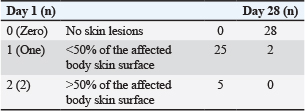
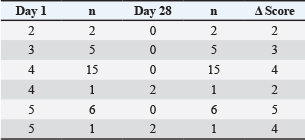
Fig. 5. Distribution of dermatological lesions in studies: (a) Score 0; (b) Score 1; and (c) Score 2. The lesion-score criteria are presented in Table 1, where a score of 0 indicates no skin lesions, no alopecia, and no scratching; a score of 1 indicates mild lesions and alopecia with occasional scratching; a score of 2 indicates moderate lesions and alopecia with intense scratching and excoriations; and a score of 3 indicates severe lesions with thick, crusted, and scaly skin, extensive alopecia, intense scratching, and scratch wounds. Notoedric lesion distribution rate score (NLRDS)The results of the notoedric lesion distribution score are shown in Fig. 5 and Table 2. Before therapy, 25 cats (83.3%) had a score of 1, and 5 cats (16.6%) had a score of 2. After therapy, 28 cats (93.3%) had a score of 0, 2 cats had mild residual distribution, and no cats remained in the higher score categories (Fig. 5; Table 2). Score results and statistical analysis of notoedres-induced skin lesionsThe Notoedres-Induced Skin Lesion Score (NISLS) ranged from 2 to 5 before therapy. Score 2 was recorded in 2 cats (6.6%), score 3 in 5 cats (16.6%), score 4 in 16 cats (53.3%), and score 5 in 7 cats (23.3%). After therapy, the NISLS ranged from 0 to 2, with 28 cats (93.3%) scoring 0 and 2 cats (6.6%) scoring 2 (Table 3). The change in score from baseline to day 28 showed a clear decrease in lesion severity in both mild and severe cases. Cats with mild lesions generally improved to score 0. In contrast, some cats with very severe lesions still showed residual abnormalities, partly because follicular damage and severe alopecia required a longer recovery period. In long-haired cats, irregular hair regrowth after therapy also suggested that skin and coat recovery had not yet become fully complete in some individuals. A Wilcoxon Signed-Rank Test (α=0.05) revealed a significant difference between NISLS on days 1 and 28, indicating that the change was associated with the therapeutic intervention. Table 2. Results of the notoedric lesion distribution score.
Table 3. Results of notoedres-induced skin lesion score.
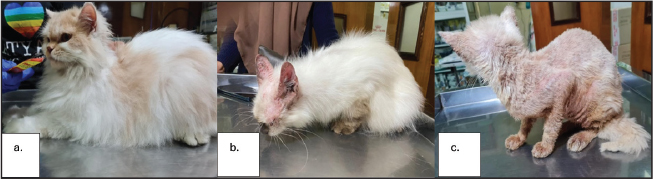
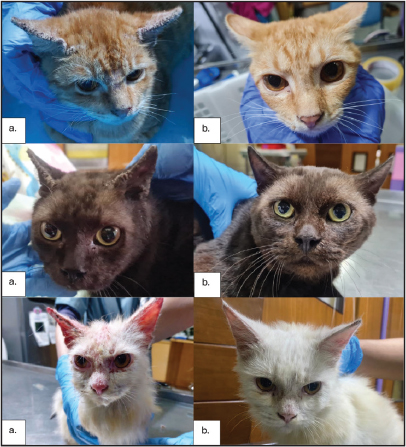
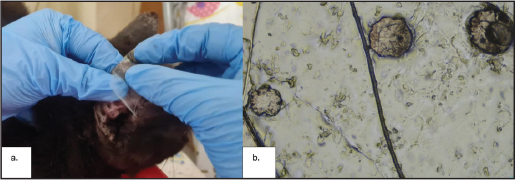
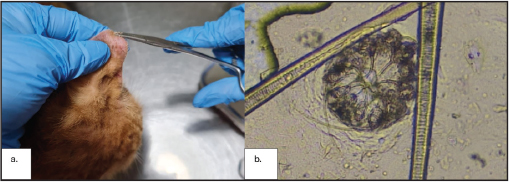
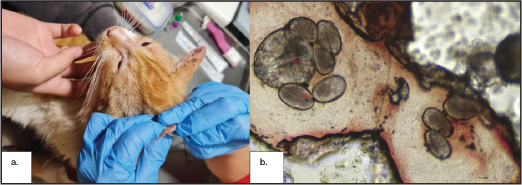
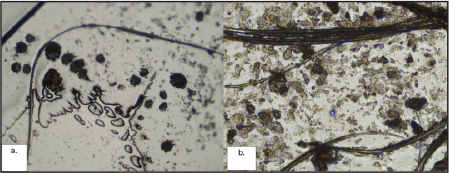
Clinical changeThe clinical evaluation indicated a significant improvement following therapy. Crusts on the edges of the ears fell off, erythema diminished, hair regrowth was noticed, and pruritus progressively decreased over the 28-day observation period. Based on observations throughout the study, all 30 cats showed clear clinical improvement, characterized by reduced or absent crusts, erythema disappearance, improved skin quality, and hair regrowth in previously alopecic areas. Owners also reported a marked reduction in pruritus, new hair growth, improved appetite, weight gain, and better general condition. Figure 6 shows the representative clinical changes. Evaluation of the skin sampling methodThe evaluation of the 3 sampling methods used in this study—hair pluck, tape impression test, and skin scraping—showed that all 3 methods were capable of isolating mites. However, the highest number of mites was obtained by skin scraping. The hair-pluck method yielded the fewest number of mites, whereas the tape impression test provided a broader view of parasite stages, from eggs to adults. The sampling procedures and microscopic findings are presented in Figures 7, 8, and 9.
Fig. 6. Clinical changes in dermatitis lesions. (a) before being treated; (b) post-therapy.
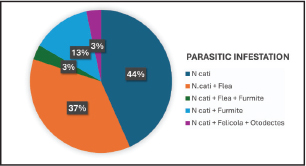
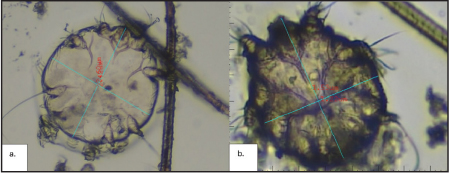
Fig. 7. (a) Tape impression test method; (b) sampling results. Skin samples were examined microscopically at 10× and 20× magnification. In cases of Notoedric Mange, N. cati was identified mainly by direct microscopic examination of superficial skin scraping-stained mites. Laboratory examination showed that in addition to N. cati, some cats were also infested with other ectoparasites, including Ctenocephalides felis felis, Felicola subrostratus, Otodectes cynotis, and Lynxacarus radovskyi (Fig. 10). Fig. 11 presents the occurrence of single and mixed parasitic infestations among the cats under study. Mite identificationMites were identified by measuring their body size, observing their typical shape, and comparing the findings with published descriptions. The mites collected from 30 samples were identified as N. cati based on morphology, including a circular body, short legs, and a dorsal anus. Female mites measured 200–260 μm in length and 200–240 μm in width, whereas male mites measured 130–150 μm in length and 100–130 μm in width (Fig. 12).
Fig. 8. (a) Hair-pluck method; (b) sampling results.
Fig. 9. (a) Skin scraping method; (b) sampling results.
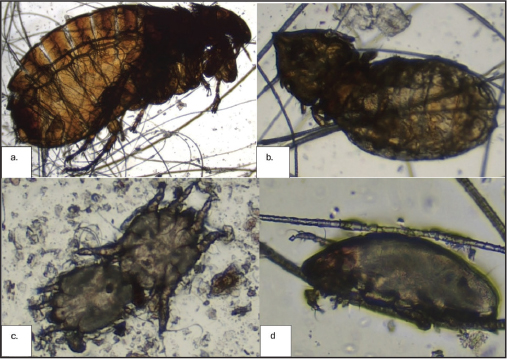
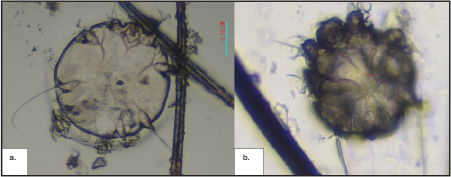
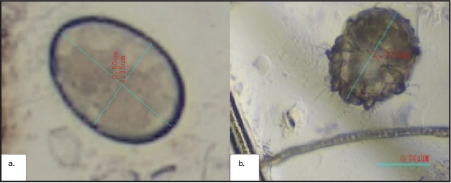
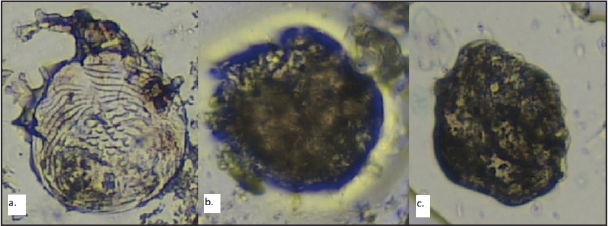
Fig. 10. Other parasites that have also been found infesting cats: (a) Ctenocephalides felis felis; (b) Felicola subrostratus; (c) Otodectes cynotis; and (d) Lynxacarus radovskyi. Evaluation of mite life stageAll developmental stages of N. cati—eggs, larvae, nymphs, and adults—were found on a single host. Figures 12, 13, 14, and 15 show the various life stages observed in this study. Based on the measurement results, eggs were 40–50 μm long and 30–35 μm wide, larvae were 95–100 μm long and 70–80 μm wide, and nymphs were 140–190 μm long and 120–140 μm wide.
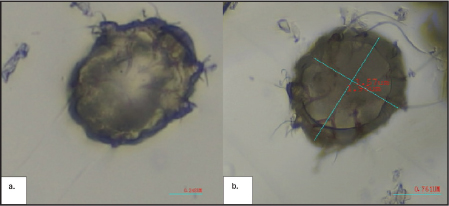
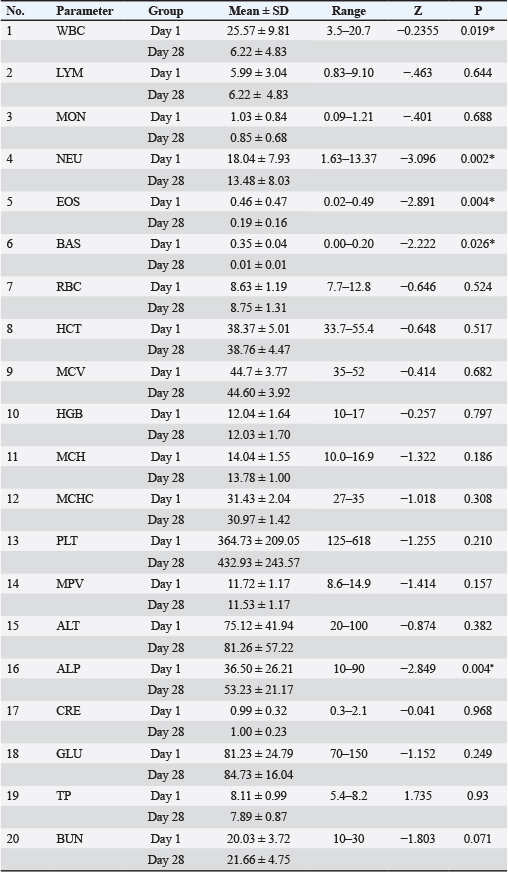
Fig. 11. Percentage: various parasites infesting cats. Evaluation of mite numberBefore treatment, we observed numerous live mites in different developmental stages, including eggs, larvae, nymphs, and adults. Many mites appeared dead after treatment, and no live mites were observed in any cat on day 14 or day 28. Therefore, the observed live-mite clearance rate was 100% on day 14 (30/30 cats; exact 95% CI, 88.4–100.0%) and 100% on day 28 (30/30 cats; exact 95% CI, 88.4–100.0%). Because this study lacked a control or comparator group, these results indicate short-term mite clearance after treatment and should not be interpreted as evidence of comparative therapeutic superiority. The Friedman test (α=0.05) revealed a significant difference in the number of mites between days 1 and 28. Table 4 presents the average mite counts, and Fig. 16 shows the trend in live-mite reduction. The dead mites appeared immobile, structurally damaged, and black or dark in color, as shown in Fig. 17. Evaluation of hematology and blood chemistryA Wilcoxon signed-rank test was performed on all hematological and blood chemistry parameters to compare values on days 1 and 28 in cats infested with N. cati. The results showed significant changes (p < 0.05) in WBC, NEU, EOS, BAS, and ALP levels. On the contrary, other parameters—LYM, MON, RBC, HCT, MCV, HGB, MCH, MCHC, PLT, MPV, ALT, CRE, GLU, TP, and BUN—showed no statistically significant difference (Table 5). These findings indicate that therapy mainly affected selected leukocyte and enzyme parameters, whereas erythrocyte indices, platelet indices, most liver enzymes, and kidney function remained stable.
Fig. 12. Diameter size (a) female; (b) male.
Fig. 13. Skin examination results (a) adult females; (b) adult males. Clinical and Parasitological Response to Combination Therapy of Selamectin and Salolaner The selamectin–sarolaner combination was topically administered once to 30 cats positive for N. cati at a dose of 6 mg/kg selamectin and 1 mg/kg sarolaner on day 1. Observations were conducted on days 1, 14, and 28. These findings indicate a short-term clinical and parasitological response following selamectin–sarolaner therapy, although the absence of a control group limits causal and comparative interpretation. DiscussionHost characteristics and risk factorsThe predominance of cases in cats younger than 1 year (Fig. 1) suggests that age is an important predisposing factor for Notoedric Mange. Younger animals generally have an immature immune system, which may make them more susceptible to infectious diseases and ectoparasitic infestation. (Susanto et al., 2021). However, severe ectoparasite infestation may also occur in older animals in poor health or under unhygienic conditions (Györke et al. 2022). Therefore, age is an important factor because it is associated with exposure level, behavior, and resistance to infectious agents. (Susanto et al., 2021).
Fig. 14. Results of skin examination (a) eggs; (b) larvae.
Fig. 15.Results of the skin examination (a) larvae; (b) nymph. Table 4. Live-mite counts before and after therapy (n=30).
No obvious difference was observed between male and female cats (Fig. 2), indicating that sex was not a major predisposing factor. This is consistent with reports that ectoparasites are generally not influenced by skin sex-related physiological differences. (Che Kamaruddin et al., 2020). Ansari et al. (2024) also emphasized that only a few skin diseases are directly related to reproductive hormones. Long-haired domestic cats were slightly more represented among the positive cases. This agrees with the findings of Lefkaditis et al. (2015) and Silva et al. (2021), who reported that hair length may act as a predisposing factor because it provides a favorable environment for mite development. Hygiene and husbandry conditions may further influence the level of infestation. (Foley et al., 2016). The higher proportion of outdoor and communally housed cats (Figures 2 and 3) suggests that the spread of the disease was influenced by environmental factors and population density. Notoedres cati is highly contagious and can be transmitted by direct contact or indirectly through contaminated objects such as bedding and grooming tools (Sivajothi et al., 2015; Sadhu et al., 2024). This explains why the use of communal housing can facilitate rapid transmission. Clinical manifestations and lesion patternsThe clinical lesions observed in this study (Fig. 4; Table 1) were characteristic of Notoedric Mange, namely, severe pruritus, erythema, alopecia, excoriation, and thick crusting on the ear margins, with more severe cases extending to the face and neck. These findings are consistent with those of Hellmann et al. (2013), who described Notoedrosis as a condition characterized by intense pruritus, hyperkeratosis, peeling skin, and lesions that primarily involve the face and ears and may extend to the neck, limbs, and other body regions. Foley et al. (2016) also described erythematous papules that rapidly progress to thick crusts, self-excoriation, progressive alopecia, and lichenification in chronic cases. Similarly, Ansari et al. (2024) reported that lesions typically begin on the margins of the pinnae and subsequently spread to the face, neck, back, and limbs. Possible differential diagnoses include ear mites, dermatophytosis, demodicosis, hypersensitivity disorders, and autoimmune skin disease (Kaler et al., 2024). Nevertheless, the presence of intense pruritus, crusting of the pinnae margins, and positive microscopic identification of mites strongly supported the diagnosis of Notoedric Mange.
Fig. 16. Differences in microscopic observations. (a) 1st day; (b) Day 28.
Fig. 17. N. cati mite after therapy. Table 5. Characteristics of hematological and blood chemistry parameters.
Therapeutic responseThe marked reduction in lesion severity score (Fig. 4; Table 1), lesion distribution score (Fig. 5; Table 2), and NISLS (Table 3) showed that the treatment protocol produced substantial clinical improvement within 28 days. Most cats with moderate-to-severe lesions showed complete or near-complete clinical recovery after therapy. The Wilcoxon signed-rank test showed a significant reduction in NISLS, and the Friedman test showed a significant reduction in live-mite counts across observation days. However, these results demonstrate within-case changes over time rather than comparative therapeutic superiority because all cats received therapy and no untreated or active-comparator groups were included. The absence of live mites on days 14 and 28, together with the presence of dead mites with damaged morphology (Fig. 17), supports the short-term parasitological clearance after treatment. Nevertheless, the 100% observed clearance rate should be interpreted with its exact 95% CI of 88.4%–100.0%, which reflects the small sample size’s statistical uncertainty. Some cats still showed residual abnormalities after therapy. This may have been related to follicular damage, severe baseline alopecia, or delayed coat recovery, rather than treatment failure, particularly in cats with long hair. (Packianathan et al., 2020; Borowski et al., 2025). Overall, the pattern of improvement in this study is consistent with reports showing the high efficacy of modern topical combination products against N. cati (Borowski et al., 2025; Knaus et al., 2021; Otranto and Little, 2017). Diagnostic value of the sampling methodsAll 3 diagnostic sampling methods were useful; however, skin scraping yielded the highest number of mites and eggs (Figs. 7–9). This finding is expected because N. cati inhabits the superficial epidermis, where mites and eggs are more readily recovered by superficial scraping. Therefore, skin scraping remains one of the most effective diagnostic methods for diagnosing Notoedric Mange. The tape impression test was also valuable because it showed a broader range of developmental stages and was less invasive than skin scraping. This makes it useful in cats that are difficult to restrain or in sensitive anatomical areas. Although the hair-pluck method yielded fewer mites, it still has value as an adjunct dermatological examination because it can help evaluate hair loss, self-induced trauma, and pruritic damage. Mite morphology and life cycleThe mites identified in this study had the typical morphology of N. cati, including a rounded body, short legs, and a dorsal anus (Fig. 12). These features clearly distinguish Notoedres from Sarcoptes and are consistent with previously published descriptions (Sivajothi et al., 2015; Sinha et al., 2023). The presence of eggs, larvae, nymphs, and adults on the same host (Figs. 12–15) confirmed an active life cycle in naturally infested cats. This finding is consistent with that of Yonetake et al. (2019) who described the N. cati life cycle as progressing from egg to larva, nymph, and adult within the superficial epidermis. Therapy was associated with changes in inflammatory and hypersensitivity-related parameters, as reflected by significant differences in WBC, neutrophil, eosinophil, basophil, and ALP values (Table 5). These findings are physiologically plausible because parasitic skin disease is often associated with inflammation, pruritus, eosinophilic responses, and neutrophilic inflammation (Katariya et al., 2018; Vatta et al., 2019). WBC, NEU, EOS, BAS, and ALP levels showed significant changes (p < 0.05). However, these changes should be interpreted in relation to reference ranges and clinical findings because statistical significance does not always indicate clinical relevance. The isolated ALP change should be interpreted cautiously because ALT, CRE, and BUN remained stable, and no local or systemic adverse effects were observed. Overall, the hematological and biochemical findings suggest reduced inflammatory activity without evident disturbance of the hepatic or renal system during the 28-day observation period. The selamectin–sarolaner combination was associated with clinical improvement and appeared to be well-tolerated in this study. Observer Bias and Study Limitations: The possibility of observer bias is an important limitation of this prospective case series. The clinical evaluations were not blinded, and several outcomes, especially pruritus, erythema, and perceived lesion improvement, included subjective assessment or owner-reported information. Although standardized NISLS scoring and microscopic mite evaluation were used to reduce subjectivity, the absence of blinded independent assessors may have influenced the magnitude of clinical improvement. To strengthen the reliability of clinical outcome assessment, future controlled studies should include blinded evaluators, standardized photographic scoring, and validated pruritus scales. ConclusionIn this prospective case series, a single topical administration of selamectin–sarolaner was associated with short-term clinical improvement and the absence of live N. cati mites on days 14 and 28 in cats with naturally occurring Notoedric Mange. The observed live-mite clearance rate was 100% (30/30 cats; exact 95% CI, 88.4%–100.0%) at both follow-up visits, while pruritus, crusting, erythema, and alopecia improved during the 28-day observation period. No local or systemic adverse effects were observed. However, because the study lacked a control or comparator group, was not blinded, and had a short follow-up period, the findings should be interpreted as preliminary treatment-associated outcomes rather than definitive evidence of comparative or long-term efficacy. Controlled studies with blinded assessment, larger samples, and longer follow-up are needed to confirm sustained efficacy, recurrence prevention, and long-term safety. AcknowledgmentsThe author would like to thank Lilipoet Pet Clinic and the Department of Internal Medicine of the Faculty of Veterinary Medicine-UGM for their laboratory support and LPDP Scholarship for financial support. Conflict of interestThere are no conflicts of interest to declare. FundingThis research received financial support from Lilipoet Pet Clinic and the Indonesian Ministry of Finance, Indonesia Endowment Fund for Education (LPDP Scholarship). Authors’ contributionsStudy Design: L.G., S.I., and W.N.; results analysis: L.G. and C.W. All authors have written, edited, read, and approved the final version of the manuscript. Data availabilityAll data are provided in the manuscript. ReferencesAnsari, S., Dabas, R., Rajpurohit, V., Yadav, A. and Dehru, S. 2024. Notoedres Cati infestation in a cat and its management: a case report. Uttar Pradesh J. Zool. 45, 297–300. Becskei, C., Cherni, J.A., Vatta, A.F., King, V.L., Lin, D. and Rugg, D. 2017. Efficacy and speed of kill of a new spot-on formulation of selamectin plus sarolaner against flea infestations in cats. Vet. Parasitol. 238, S18–S21. Borowski, S., Berlamont, H., Geurden, T., D’Hanis, L., Rapti, D., Cvejić, D., Suckstorff, O., Simović, N. and King, V.L. 2025. Efficacy of a spot-on combination product containing selamectin and sarolaner (Stronghold® Plus) in the treatment of naturally occurring Notoedres cati infestations in cats. Front. Vet. Sci. 12, 1652148. Che Kamaruddin, N., Adrus, M. and Wan Ismail, W.N. 2020. Prevalence of ectoparasites on a stray cat population from “Town of Knowledge” Kota Samarahan, Sarawak, Malaysian Borneo. Turk. J. Vet. Anim. Sci. 44(6), 1212–1221. Farmaki, R., Koutinas, A.F., Kasabalis, D., Papazahariadou, M.G. and Day, M.J. 2009. Effectiveness of a selamectin spot-on formulation in rabbits with sarcoptic mange. Vet. Rec. 164(14), 431–432. Foley, J., Serieys, L.E.K., Stephenson, N., Riley, S., Foley, C., Jennings, M., Wengert, G., Vickers, W., Boydston, E., Lyren, L., Moriarty, J. and Clifford, D.L. 2016. A synthetic review of notoedres species mites and mange. Parasitol 143(14), 1847–1861. Geurden, T., Becskei, C., Farkas, R., Lin, D. and Rugg, D. 2017. Efficacy and safety of a new spot-on formulation of selamectin plus sarolaner in the treatment of naturally occurring flea and tick infestations in cats presented as veterinary patients in Europe. Vet. Parasitol. 238, S12–S17. Gunawan, L., Indarjulianto, S., Yanuartono, Y., Nurcahyo, R.W. and Prastowo, J. 2024. Infestasi Ektoparasit pada Pasien Kucing yang Memiliki Masalah Kulit di Klinik Hewan Lilipoet Yogyakarta. J. Sains. Vet. 42, 169. Györke, A., Dumitrache, M.O., Ursache, A.L., D’Amico, G. and Mircean, V. 2022. Case report: Notoedric Mange and Aelurostrongylidosis in Two Domestic Cats from Rural Environment in Romania. Front. Vet. Sci. 9, 849525. Hellmann, K., Petry, G., Capari, B., Cvejic, D. and Krämer, F. 2013. Treatment of naturally Notoedres cati-infested cats with a combination of imidacloprid 10 % / moxidectin 1 % Spot-on (Advocate® / Advantage® Multi, Bayer). Parasitol. Res. 112 Suppl 1(Suppl 1), 57–66. Iqomah, M., Suwarno, N. and Yuliani, P. 2020. Cat scabies at the animal health clinic of salatiga agriculture service on august to november 2020. J. Parasite. Sci. 4(2), 45–48. J. Nolan, T. and B. Lok, J. 2012. Macrocyclic lactones in the treatment and control of parasitism in small companion animals. Curr. Pharm. Biotechnol. 13(6), 1078–1094. Kaler, I.G.B.U.A., Widyastuti, S.K. and Arjentinia, I.P.G.Y. 2024. Scabiosis in A 1 year old domestic cat accompanied by leukocytosis and normocity normochromic anemia. Bul. Vet. Udayana. 1459, 1459–1469. Katariya, A., Arora, N., Rajora, V., Ilyas, W., Mrigesh, M., Das, A. and Prasad, A. 2018. Hematobiochemical alterations in ectoparasite infestation in canines. J. Entomol. Zool. Stud. 6(5), 743–746. Knaus, M., Capári, B., Szabó, M., Kley, K. and Johnson, C. 2021. Efficacy of a novel topical combination of esafoxolaner, eprinomectin and praziquantel against Notoedres cati mange in cats. Parasite 28, 27. Lefkaditis, M.A., Sossidou, A.V., Panorias, A.H., Koukeri, S.E., Paştiu, A.I. and Athanasiou, L.V. 2015. Urban stray cats infested by ectoparasites with zoonotic potential in Greece. Parasitol. Res. 114(10), 3931–3934. Martins, A.L., Mourão, J., Amorim, I., Cardoso, L. and Mesquita, J.R. 2026. Antiparasitic practices in Portuguese animal shelters: a survey of veterinarians. Res. Vet. Sci. 202, 106073. Otranto, D. and Little, S. 2017. Tradition and innovation: selamectin plus sarolaner. A new tool to control endo- and ectoparasites of cats—a European perspective. Vet. Parasitol. 238, S1–S2. Packianathan, R., Pittorino, M., Hodge, A., Bruellke, N. and Graham, K. 2020. Safety and efficacy of a new spot-on formulation of selamectin plus sarolaner in the treatment and control of naturally occurring flea infestations in cats presented as veterinary patients in Australia. Parasites. &. Vectors. 13(1), 227. Sadhu, D., Rao, N., Patel, B., Joseph, J., Shah, A.I., Hadiya, K. and Patel, H. 2024. Therapeutic management of Notoedric Mange in domestic cats. Int. J. Vet. Sci. Anim. Husb. 9, 212–215. Sampaio, K.O., De Oliveira, L.M., Burmann, P.M., Sousa Filho, R.P., Evangelista, J.S. and Cunha, M.G. 2017. Acetate tape impression test for diagnosis of Notoedric Mange in cats. J. Feline Med. Surg. 19(6), 702–705. Silva TRM da., Schimmunech, M.S., Pott, P.J.K., Alves-Sobrinho, A.V., Oliveira PG de., Amaral AVC do., Saturnino, K.C., Romani, A.F. and Ramos DG de. 2021. Mange skin diseases in dogs and cats in Jatai, Brazil: a retrospective study with notes on zoonotic aspects. Res. Soc. Dev. 10(1), 1–7. Simpson, A.C. 2021. Successful treatment of otodemodicosis due to Demodex cati with sarolaner/selamectin topical solution in a cat. J. Feline Med. Surg. 7(1), 2055116920984386. Sinha, S., Maiti, S.K., Ratre, H.K., Raj, L. and Bante, N. 2023. Notoedric Mange in cats: it’s treatment and zoonotic importance. Pharma Innov. J. 12(7S), 2061–2062. Sivajothi, S., Sudhakara Reddy, B., Rayulu, V.C. and Sreedevi, C. 2015. Notoedres cati in cats and its management. J. Parasit. Dis. 39(2), 303–305. Susanto, E., Atma, C.D., Agustin, A.L.D. and Ningytas, N.S.I. 2021. Prevalensi skabiosis pada pasien kucing di klinik scotty pet care mataram. Mandalika. Vet. J. 1(1), 11 -16. Vatta, A.F., Young, D.R., Everett, W.R., King, V.L., Cherni, J.A., Von Reitzenstein, M., Holzmer, S.J., Chapin, S. and Rugg, D. 2019. Efficacy of a new topical formulation containing selamectin plus sarolaner against three common tick species infesting cats in the United States. Vet. Parasitol. 270, S19–S25. Yonetake, W., Fujii, T., Naito, M., Maeder, S. and Rugg, D. 2019. Efficacy and safety of a new topical formulation containing selamectin and sarolaner in the prevention of heartworm disease and the treatment of roundworm infection in cats presented as veterinary patients in Japan. Vet. Parasitol. 270, S38–S44. | ||


| How to Cite this Article |
| Pubmed Style Gunawan L, Indarjulianto S, Nurcahyo RW, Wijayanti AD, Salsabila RAI, Wibisono C, Sudimartin LM, Meyana ND, Berri DWS, Soerinta JG. Clinical efficacy and parasitological responses to selamectin–sarolaner combination therapy for Notoedric Mange in cats: A prospective case series from Yogyakarta city, Indonesia. Open Vet. J.. 2026; 16(8): 5179-5192. doi:10.5455/OVJ.2026.v16.i8.14 Web Style Gunawan L, Indarjulianto S, Nurcahyo RW, Wijayanti AD, Salsabila RAI, Wibisono C, Sudimartin LM, Meyana ND, Berri DWS, Soerinta JG. Clinical efficacy and parasitological responses to selamectin–sarolaner combination therapy for Notoedric Mange in cats: A prospective case series from Yogyakarta city, Indonesia. https://www.openveterinaryjournal.com/?mno=316315 [Access: August 08, 2026]. doi:10.5455/OVJ.2026.v16.i8.14 AMA (American Medical Association) Style Gunawan L, Indarjulianto S, Nurcahyo RW, Wijayanti AD, Salsabila RAI, Wibisono C, Sudimartin LM, Meyana ND, Berri DWS, Soerinta JG. Clinical efficacy and parasitological responses to selamectin–sarolaner combination therapy for Notoedric Mange in cats: A prospective case series from Yogyakarta city, Indonesia. Open Vet. J.. 2026; 16(8): 5179-5192. doi:10.5455/OVJ.2026.v16.i8.14 Vancouver/ICMJE Style Gunawan L, Indarjulianto S, Nurcahyo RW, Wijayanti AD, Salsabila RAI, Wibisono C, Sudimartin LM, Meyana ND, Berri DWS, Soerinta JG. Clinical efficacy and parasitological responses to selamectin–sarolaner combination therapy for Notoedric Mange in cats: A prospective case series from Yogyakarta city, Indonesia. Open Vet. J.. (2026), [cited August 08, 2026]; 16(8): 5179-5192. doi:10.5455/OVJ.2026.v16.i8.14 Harvard Style Gunawan, L., Indarjulianto, . S., Nurcahyo, . R. W., Wijayanti, . A. D., Salsabila, . R. A. I., Wibisono, . C., Sudimartin, . L. M., Meyana, . N. D., Berri, . D. W. S. & Soerinta, . J. G. (2026) Clinical efficacy and parasitological responses to selamectin–sarolaner combination therapy for Notoedric Mange in cats: A prospective case series from Yogyakarta city, Indonesia. Open Vet. J., 16 (8), 5179-5192. doi:10.5455/OVJ.2026.v16.i8.14 Turabian Style Gunawan, Lily, Soedarmanto Indarjulianto, Raden Wisnu Nurcahyo, Agustina Dwi Wijayanti, Ridha Avicena Ila Salsabila, Cahyo Wibisono, Luh Made Sudimartin, Nine Dwindadari Meyana, Deswandi Welhelmus Saputra Berri, and Jesica Gloria Soerinta. 2026. Clinical efficacy and parasitological responses to selamectin–sarolaner combination therapy for Notoedric Mange in cats: A prospective case series from Yogyakarta city, Indonesia. Open Veterinary Journal, 16 (8), 5179-5192. doi:10.5455/OVJ.2026.v16.i8.14 Chicago Style Gunawan, Lily, Soedarmanto Indarjulianto, Raden Wisnu Nurcahyo, Agustina Dwi Wijayanti, Ridha Avicena Ila Salsabila, Cahyo Wibisono, Luh Made Sudimartin, Nine Dwindadari Meyana, Deswandi Welhelmus Saputra Berri, and Jesica Gloria Soerinta. "Clinical efficacy and parasitological responses to selamectin–sarolaner combination therapy for Notoedric Mange in cats: A prospective case series from Yogyakarta city, Indonesia." Open Veterinary Journal 16 (2026), 5179-5192. doi:10.5455/OVJ.2026.v16.i8.14 MLA (The Modern Language Association) Style Gunawan, Lily, Soedarmanto Indarjulianto, Raden Wisnu Nurcahyo, Agustina Dwi Wijayanti, Ridha Avicena Ila Salsabila, Cahyo Wibisono, Luh Made Sudimartin, Nine Dwindadari Meyana, Deswandi Welhelmus Saputra Berri, and Jesica Gloria Soerinta. "Clinical efficacy and parasitological responses to selamectin–sarolaner combination therapy for Notoedric Mange in cats: A prospective case series from Yogyakarta city, Indonesia." Open Veterinary Journal 16.8 (2026), 5179-5192. Print. doi:10.5455/OVJ.2026.v16.i8.14 APA (American Psychological Association) Style Gunawan, L., Indarjulianto, . S., Nurcahyo, . R. W., Wijayanti, . A. D., Salsabila, . R. A. I., Wibisono, . C., Sudimartin, . L. M., Meyana, . N. D., Berri, . D. W. S. & Soerinta, . J. G. (2026) Clinical efficacy and parasitological responses to selamectin–sarolaner combination therapy for Notoedric Mange in cats: A prospective case series from Yogyakarta city, Indonesia. Open Veterinary Journal, 16 (8), 5179-5192. doi:10.5455/OVJ.2026.v16.i8.14 |


