




| Research Article | ||
Open Vet. J.. 2026; 16(8): 5750-5759 !
Open Veterinary Journal, (2026), Vol. 16(8): 5750–5759 Research Article Evaluation of turmeric (Ryudai gold)-derived curcuminoids on growth, meat composition and quality, serum biochemical profiles and intestinal health in broilerMd. Zahorul Islam1, Md. Amzad Hossain2*, Md. Morsalin Haque1, Jesmin Akter2, Bapon Dey3, Fatema Akter1, Muhammad Tofazzal Hossain4, Purba Islam1 and Jannatul Ferdous11Department of Pharmacology, Faculty of Veterinary Science, Bangladesh Agricultural University, Mymensingh, Bangladesh 2Faculty of Agriculture, University of the Ryukyus, Okinawa, Japan 3Department of Poultry Science, Faculty of Animal Husbandry, Bangladesh Agricultural University, Mymensingh, Bangladesh 4Department of Microbiology and Hygiene, Faculty of Veterinary Science, Bangladesh Agricultural University, Mymensingh-, Bangladesh *Corresponding Author: Md. Amzad Hossain. Faculty of Agriculture, University of the Ryukyus, Okinawa, Japan. Email: amzad [at] cs.u-ryukyu.ac.jp Submitted: 16/03/2026 Revised: 01/07/2026 Accepted: 15/07/2026 Published: 20/08/2026 © 2025 Open Veterinary Journal
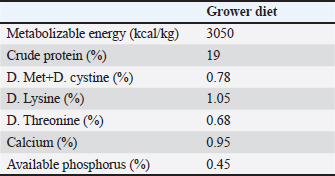
AbstractBackground: Rising concerns about antibiotic resistance and residues in meat have increased the need for viable alternatives in sustainable poultry production. Curcuminoids exhibit diverse biological activities and are considered potential natural growth promoters. Aim: We assessed the effects of the curcuminoids fraction derived from the Ryudai Gold variety of Curcuma longa on growth performance, serum biochemical profiles, and breast muscle composition and quality in broiler chickens. Methods: Ninety one-day-old broiler chicks were randomly assigned to three groups (n=30). All birds received a starter diet for 13 days. From day 14, two groups were provided a grower diet enriched with curcuminoids at doses of 100 and 300 mg/kg of feed, while a third group served as the control. Feed consumption and body weight were measured weekly. At 35 days of age, birds were sacrificed, and blood, caecal contents, breast meat, and duodenum were obtained for serum biochemical, gut microbial, and breast meat quality analysis and duodenal histopathology. Results: With curcuminoid supplementation at a dosage of 100 mg/kg, there was a significant increase in body weight compared to the control and 300 mg/kg groups. Feed conversion ratio improved in the 100 mg/kg group, whereas dressing percentage was higher in both supplemented groups. Breast meat proximate analysis revealed a significant increase in crude protein, while other components remained unchanged. Curcuminoid supplementation led to a decrease in serum total cholesterol, triglycerides, and low-density lipoprotein cholesterol levels, while high-density lipoprotein cholesterol levels increased, with no significant changes in alanine transaminase, aspartate transaminase, or creatinine. Meat quality improved, as indicated by increased redness and yellowness and reduced cooking loss. Gut microbial analysis showed dose-dependent reductions in total viable and Escherichia coli counts, while Lactobacillus increased at 100 mg/kg but decreased at 300 mg/kg. Duodenal histomorphology revealed an increase in villus length and breadth coupled with a reduction in crypt depth in the supplemented groups. Conclusion: Dietary curcuminoid supplementation at 100 mg/kg feed improved growth rates, feed conversion, carcass yield, meat characteristics, serum lipid profile, gut microbiota, and duodenal morphology in broiler chickens. Our findings suggested that curcuminoids at a lower dose may serve as an effective natural feed additive for broilers. Keywords: Broilers, Curcuminoids, Gut health, Lipid profile, Meat quality. IntroductionRegulatory restrictions and consumer demand for antimicrobial-free poultry meat have increased interest in sustainable alternatives to antibiotic growth promoters (AGPs) (Wickramasuriya et al., 2024). Traditionally, subtherapeutic antibiotics have been administered to boost growth and prevent diseases in poultry (Haque et al., 2020). However, concerns regarding antimicrobial resistance and drug residues have led to their restriction, including the European Union ban in 2006 (World Health Organization, 2011). The removal of AGPs has been associated with reduced growth performance and increased mortality (Cardinal et al., 2019), motivating research into plant-based solutions including phytochemicals, enzymes, organic acids, probiotics, and prebiotics (Abd El-Hack et al., 2022). Additionally, rapid growth and high metabolic activity in broilers increase susceptibility to oxidative stress from environmental, dietary, and pathogenic challenges (Hafez et al., 2022). Consequently, natural compounds with both antibacterial and antioxidant properties are considered promising substitutes for conventional AGPs. Turmeric (Curcuma longa), belonging to the Zingiberaceae family, serves as a commonly utilized phytogenic feed additive, high in curcuminoids, with approximately 77% curcumin, 17% demethoxycurcumin, and 3% bisdemethoxycurcumin (Emadi and Kermanshahi, 2006; Akter et al., 2018). These substances demonstrated antioxidant, anti-inflammatory, hepatoprotective, hypocholesterolemic, antifungal, and antimicrobial activities (Pulido-Moran et al., 2016; Akter et al., 2019a, 2019b; Islam et al., 2024). In poultry, turmeric and curcuminoids have been shown to improve feed efficiency, intestinal morphology, immune function, nutrient digestibility, lipid metabolism, and meat characteristics (Rajput et al., 2013; Salah et al., 2019; Galli et al., 2020; Dorra et al., 2025).; Curcumin, the principal bioactive component, stimulates the secretion of digestive enzymes, inhibits lipid peroxidation, and protects the liver, serum, and gut tissues against oxidative damage (Khan et al., 2012; Kotha and Luthria, 2019; Wu et al., 2023). While curcumin exhibits strong growth-promoting and antioxidant effects at lower doses than whole turmeric (Ogbuewu et al., 2022), its analogues—demethoxycurcumin and bisdemethoxycurcumin—also show potent antioxidant, anti-inflammatory, and wound-repair capabilities but remain underexplored in poultry (Akter et al., 2019a; Islam et al., 2024). The Ryudai gold strain of turmeric, bred by the University of the Ryukyus in Okinawa, Japan, contains higher curcuminoid levels than conventional cultivars (Akter et al., 2018), and its purified curcuminoids exhibit strong antioxidant, antifungal, hepatoprotective, and anti-inflammatory activities (Akter et al., 2019a, 2019b; Islam et al., 2024). This standardized purified fraction may provide a more consistent biological response than raw turmeric powder on broiler growth, gut health, and meat quality. This study aims to evaluate the effect of curcuminoids, particularly at a low inclusion level, on growth dynamics, serum profiles, intestinal health, and meat quality in broilers. Materials and MethodsPreparation of plant materialsWe previously described the detailed procedure of the isolation of curcuminoids (Akter et al., 2018). Briefly, fresh turmeric (Ryudai gold; a newly registered variety of Curcuma longa by the Ministry of Agriculture, Forestry, and Fisheries, Japan, under Registration No. 21485, on 29 February 2012) was macerated with methanol (MeOH) followed by partitioning with water, n-hexane, and ethyl acetate (EtOAc). The EtOAc fraction was then further purified using a mixture of 40% n-hexane and 60% EtOAc. According to our previous study, this fraction contains four curcuminoids: dihydrobisdemethoxycurcumin, bisdemethoxycurcumin, demethoxycurcumin, and curcumin (Akter et al., 2018). This fraction was stored at 4°C before use in the current study. Housing, management and experimental designThe experimental shed, cages, feeding trays, and drinkers were meticulously cleaned with water, disinfected using a sanitizer, and air-dried under the sun. All utensils within the shed were fumigated and sealed for 48 hours to ensure thorough disinfection, after which the shed was ventilated to expel any residual gases. Ninety one-day-old Arbor Acres broiler chicks were procured from Nourish Poultry and Hatchery Limited (Dhaka, Bangladesh) and randomly assigned to three groups, with 30 birds per group. Birds were housed in three separate cages under uniform environmental conditions, with brooding initiated at 35°C for the first three days and gradually reduced to 21°C, while relative humidity was maintained at 50%–60%. A starter diet was provided for the first 13 days. From day 14 to day 35, the control group was fed a standard grower diet, while the treatment groups were supplemented with curcuminoids at concentrations of 100 and 300 mg/kg of feed. These levels were selected to compare a low and a higher supplementation dose within the range used in previous poultry studies on curcumin/turmeric-derived phytogenic additives (Rajput et al., 2013; Hafez et al., 2022; Hernández-García et al., 2025). To avoid nutritional confounding, the supplemented diets were prepared by replacing an equivalent amount of basal feed. Strict biosecurity measures were enforced, including restricted access and daily sanitation of feeders and drinkers. The birds were administered the Newcastle Disease vaccine (BCRDV, Bangladesh Livestock Research Institute) on day five and the Infectious Bursal Disease vaccine (GUMBORO D78, Intervet, India) on day 11. The experimental trial continued for 35 days, with feed nutrient composition detailed in Table 1. Birds were subjected to 3 hours pre-slaughter feed withdrawal with free access to water, and sampling was conducted within the same morning period. Growth performance of broilerUpon receipt of the day-old chicks, their starting body weights were determined and documented. Feed intake and body weight were recorded weekly to calculate growth performance parameters. Body weight gain (BWG) was calculated as the difference between final body weight and initial body weight. Leftover feed from the troughs was collected and weighed to determine feed consumption, which was obtained by subtracting the weekly residual feed from the total amount of feed offered. Feed conversion ratio (FCR) was expressed as feed:gain and calculated as total feed intake divided by total BWG as follows: FCR=Total Feed Intake (g) / Total Weight Gain (g) Table 1. Nutrient composition of the hand-mixed broiler diets from 14 to 35 Days. The diets were formulated to be comparable in nutrient composition.
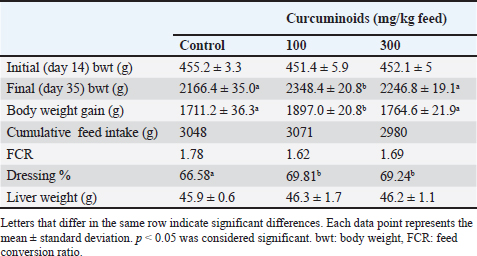
Proximate analysis of breast muscleThe proximate composition of the breast meat was analyzed following the procedure of the Association of Official Analytical Chemists (AOAC, 2012). Moisture content was quantified by drying 1 g of the sample in an oven at 100°C–105°C until constant weight. Crude protein (CP) content was determined using the Kjeldahl method and calculated as 6.25 times the nitrogen percentage (N%). Fat content was determined using Soxhlet extraction with petroleum ether as the solvent. Crude fiber content was determined through a sequential digestion process using 1.25% sulfuric acid and 1.25% sodium hydroxide, followed by drying at 100°C–105°C, ashing at 550°C, and weighing the remaining residue. Ash content was determined by incinerating the samples in a muffle furnace at 550°C for a duration of 3 hours. Collection and analysis of blood samplesOn day 35, blood was drawn from the wing vein without the use of an anticoagulant and left to clot at room temperature. The samples were centrifuged at 5,000 rpm for 10 minutes, and the serum was gently transferred into 2 ml Eppendorf tubes with a micropipette. The serum was preserved at −20°C until analysis. Plasma concentrations of aspartate transaminase (AST), alanine transaminase (ALT), creatinine, total cholesterol (TC), triglyceride (TG), high-density lipoprotein (HDL), and low-density lipoprotein cholesterol (LDL) were quantified spectrophotometrically using commercial assay kits according to Al-Garadi et al., 2025. Assessment of meat colorThe color of the broiler breast meat surface was assessed 24 hours after sample collection using a CR-400 Chroma Meter (Minolta Co., Osaka, Japan) (Islam et al., 2022). Skinless breast meat was deboned and cut into 2–3 cm thick sections to reduce background effects during color measurement. The color assessment was conducted on the rear surface of each sample. Color attributes were recorded using the Commission Internationale de l’Éclairage (CIE) color system, where L*, a*, and b* represent lightness, redness, and yellowness, respectively. The hue angle [tan–1(b*/a*)] and saturation index (SI=(a2 + b2)1/2) were calculated to assess changes in meat color. Assessing the water holding capacity (WHC) in meatWater-holding capacity (WHC) of the breast muscle was determined by a centrifugation-based technique (Islam et al., 2022). Briefly, one gram of breast tissue from each sample was precisely weighed and documented as the initial weight (W0). The tissue was finely chopped using a meat chopper and transferred into an Eppendorf tube. The total weight of the tube and the sample was recorded as W1. The tubes were then subjected to centrifugation at 10,000 relative centrifugal force (RCF) at 4°C for 10 minutes. After centrifugation, the released supernatant was carefully removed using a micropipette without disturbing the meat residue. The tube containing the remaining sample was weighed again, and this value was recorded as W2. The WHC was calculated using the following equation: WHC (%)=[1 − {(W1 − W2) / W0}] × 100. Evaluation of cooking lossThe meat samples designated for cooking loss determination were initially weighed and placed in double-layer polythene bags. These samples were then subjected to broiling using a Farberware Open Hearth electric broiler (Farberware, Bronx, NY). Throughout the broiling process, the samples were rotated every four minutes until an internal temperature of 71°C was reached. The internal temperature was continuously monitored with a digital thermometer (Model 31308-KF, Atkins Tech. Inc., Gainesville, FL), inserted at the approximate geometric center of each sample. Upon reaching the desired internal temperature, the samples were removed from the broiler and allowed to undergo surface drying for 10 minutes. Following this drying period, the samples were re-weighed. Cooking loss was subsequently calculated using the formula outlined below (Islam et al., 2022). Cooking loss (%)=(Sample weight before cooking - Sample weight after cooking)/ (Sample weight before cooking) ×100. Evaluation of drip lossAt 24 hours post-mortem, the drip loss from the breast muscles was quantified. Approximately 25 g of regularly shaped muscle tissue was excised from the breast at a consistent anatomical site for each sample, and the initial weight (W0) was recorded. The sample was subsequently suspended within an airtight container and stored at 4°C in a refrigerated environment. After a 24-hour period, the samples were removed, and the final weight was determined using a calibrated digital balance. Drip loss was then calculated using the following formula (Islam et al., 2022). Drip loss (%)=(Initial weight of the sample – final weight of the sample)/ (Initial weight of the sample) ×100 Gut microbial compositionCecal contents were aseptically collected from broilers on day 35 post-sacrifice, stored on ice at 4°C, and analyzed. One gram of cecal content was diluted using a 10-fold serial dilution with sterile PBS, and the 10−5 dilution was plated on Plate Count Agar, Eosin Methylene Blue agar, and De Man, Rogosa, and Sharpe agar (HiMedia, Mumbai, India) for total bacterial, Lactobacillus spp., and E. coli counts, respectively. Incubation was at 37°C for 24 hours, with Lactobacillus spp. incubated for 48 hours. Bacterial colonies were manually counted and expressed as Log10 CFU per gram of cecal content. Histomorphological analysisRepresentative samples of the duodenal loop of six birds from each group were gathered and gently rinsed with phosphate-buffered saline to remove intestinal contents. Tissue segments were excised from the duodenal loop and fixed in 10% neutral buffered formalin. The samples underwent dehydration through a graded ethanol series (70%, 80%, 90%, and 100% alcohol I and II, each for 2 hours, followed by 100% alcohol III for 12 hours). Subsequently, they were cleared in xylene (xylene I, II, and III, each for 2 hours) and infiltrated with molten paraffin at temperatures of 58°C, 60°C, and 62°C, with a 1-hour incubation at each respective temperature. The tissues were then infiltrated with paraffin, and 5 µm thick sections were sectioned using a microtome. For histomorphometric analysis, tissue sections were stained with hematoxylin and eosin. Morphometric data were obtained from ten randomly selected microscopic fields per section, with 5–8 measurements per field. Parameters measured included villus length (VL) (µm), villus breadth (µm), crypt depth (CD) (µm), and the VL-to-CD ratio of the duodenum, using the ImageJ freehand tool (Hoque et al., 2026; Khatun et al., 2025). Statistical analysisResults are shown as the mean together with the standard deviation. Comparisons across groups were performed using one-way ANOVA, and pairwise differences were further examined with Tukey’s HSD test. Analyses were conducted in KaleidaGraph 4.5, with p values below 0.05 considered statistically significant. Ethical approvalThis study was conducted in accordance with institutional ethical guidelines and approved by the Animal Welfare and Experimentation Ethics Committee at Bangladesh Agricultural University (BAU), Bangladesh [Approval No: AWEEC/BAU/2024(2a)/24, Date: 08-12-2024]. ResultsGrowth performanceThe effects of curcuminoid supplementation on performance metrics related to growth are presented in Table 2. At 14 days of age, the initial body weights of broiler chickens across the various experimental groups were statistically similar. Nevertheless, the incorporation of curcuminoids into the broiler diet resulted in a significant increase in body weight. Correspondingly, BWG was greatest in the 100 mg/kg group (1897.0 ± 20.8 g), while control and 300 mg/kg birds gained 1711.2 ± 36.3 g and 1764.6 ± 21.9 g, respectively. Cumulative feed intake was comparable among groups (Control: 3,048 g; 100 mg/kg: 3,071 g; 300 mg/kg: 2,980 g). The 100 mg/kg curcuminoid group showed a numerically lower FCR than the control group; however, no statistical comparison was performed for these parameters because SD/SE values were not available. Dressing percentage was also higher in both curcuminoid-supplemented groups (100 mg/kg: 69.81%; 300 mg/kg: 69.24%) than in the control (66.58%). Liver weights did not differ significantly between treatments (Table 2). Overall, supplementation with 100 mg/kg curcuminoids enhanced growth performance and carcass yield without affecting liver weight, whereas 300 mg/kg showed moderate improvements. Table 2. Impact of different concentrations of curcuminoids on the growth performance and dressing yields of broiler chickens.
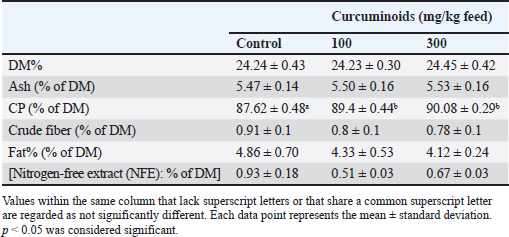
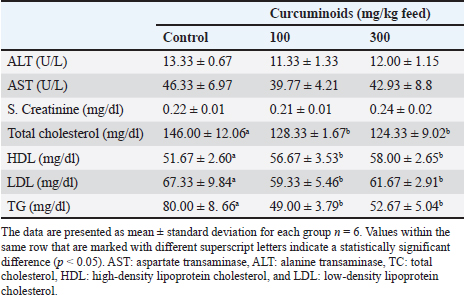
Proximate composition of breast muscleThe effects of dietary curcuminoid supplementation on the proximate composition of the carcass are presented in Table 3. The treatments did not have a significant impact on dry matter (DM), ash, crude fiber, fat, or nitrogen-free extract (NFE) (Table 3). CP content, however, increased significantly in birds fed 100 mg/kg (89.4% ± 0.44%) and 300 mg/kg (90.08% ± 0.29%) curcuminoids compared with the control (87.62% ± 0.48%), indicating an improvement in protein deposition with supplementation. Effects on biochemical profileThe influence of dietary curcuminoid supplementation on the serum biochemical parameters of broiler chickens is detailed in Table 4. The levels of AST, ALT, and creatinine did not show significant differences across the groups, suggesting that curcuminoid supplementation had no adverse impact on liver and kidney function. Lipid profile parameters were improved in birds receiving curcuminoids. Total cholesterol levels decreased from 146.00 ± 12.06 mg/dl in the control group to 128.33 ± 1.67 mg/dl and 124.33 ± 9.02 mg/dl in the 100 and 300 mg/kg groups, respectively. In contrast, HDL levels increased with curcuminoid supplementation, reaching 56.67 ± 3.53 mg/dl and 58.00 ± 2.65 mg/dl compared with 51.67 ± 2.60 mg/dl in the control group. LDL concentrations also tended to decrease in the treated groups, with values of 59.33 ± 5.46 mg/dl and 61.67 ± 2.91 mg/dl, compared to 67.33 ± 9.84 mg/dl in the control. A significant reduction (p < 0.05) was observed in serum TG levels in the curcuminoid-supplemented groups. The control group showed the highest value (80.00 ± 8.66 mg/dl), while the 100 and 300 mg/kg groups exhibited significantly lower levels (49.0 0 ± 3.79 mg/dl and 52.67 ± 5.04 mg/dl, respectively) (Table 4). Table 3. The impact of dietary supplementation with curcuminoids on the nutritional profile of breast meat in broiler chickens.
Table 4. Impact of curcuminoids on the serum biochemical parameters in broiler chickens.
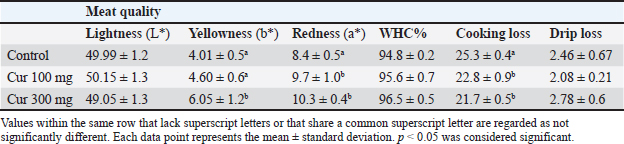
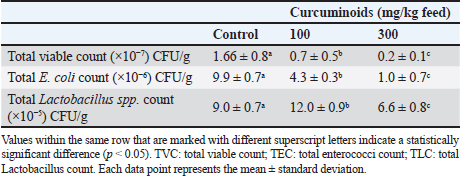
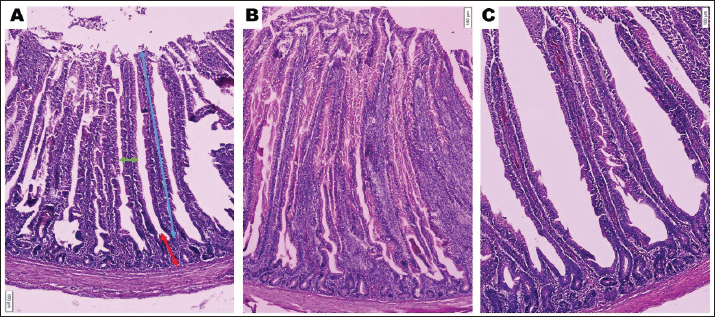
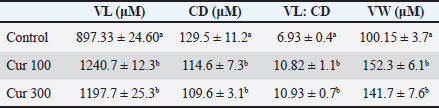
Impact of curcuminoids on meat quality characteristics in broilerThe colorimetric properties of the breast meat, quantified by parameters of redness (a*), yellowness (b*), and lightness (L*), demonstrated statistically significant variations between the different experimental groups (Table 5). The lightness of the breast meat remained uniform across all three groups, exhibiting no significant differences. The curcuminoids-supplemented group showed significantly higher yellowness and redness values (p < 0.01) compared to the control groups. (Table 5). Cooking loss was significantly decreased, but WHC was slightly increased, and no significant difference was observed among the groups. No significant change was observed in breast meat drip loss (Table 5). Impact on gut microbial compositionThe gut microbiota composition in the cecum is summarized in Table 6. A significant reduction in the total viable count (TVC) and total Enterobacteriaceae count (TEC) was observed in the curcuminoid-supplemented groups, in a dose-dependent manner. Notably, the group receiving curcuminoids at 100 mg/kg demonstrated a significantly higher population of Lactobacillus spp. compared to the other experimental groups (Table 6). Intestinal morphologyThe histomorphological features of the duodenum are depicted in Fig.1. The Villous lengths and widths were significantly increased in the curcuminoids-supplemented group compared to the control group. However, CDs were decreased significantly, so villous length and CD ratios were increased significantly in the treated group (Fig. 1 and Table 7). DiscussionIn this study, dietary supplementation of curcuminoids at 100 mg/kg for 3 weeks led to an increase in body weight, improved feed efficiency, enriched meat composition and quality, better serum biochemical parameters, and gut health of broiler chickens. Effect of dietary curcuminoids supplementation on broiler growth performanceOur findings indicate that dietary supplementation with curcuminoids from days 14 to 35 enhanced broiler growth performance, dressing percentage, and gut health, with the most beneficial outcomes observed at a supplementation level of 100 mg/kg. A reduction in feed intake was noted in the 300 mg/kg group, which may explain the plateau in growth performance, potentially due to the astringent properties of high-dose curcuminoids. This decreased feed intake could contribute to lower body weight and a higher FCR compared to the 100 mg/kg group. Recent studies suggest that curcuminoids may serve as a natural alternative to AGPs (Geevarghese et al., 2023). In line with previous research (Rajput et al., 2013), supplementation with curcuminoids improved BWG and FCR in broilers. The observed positive effects may be attributed to an increase in VL and width, enhanced nutrient digestibility, and the stimulation of digestive enzymes, including amylases, lipases, and proteases (Al-Sultan, 2003; Durrani et al., 2006). Similar improvements in growth performance following curcumin supplementation have been documented in quail and ducks, particularly with long-term supplementation at low doses (Pluta et al., 2020; Zhu and He, 2024). Table 5. Effect of curcuminoids on meat quality, Redness (a*), Yellowness (b*), and Lightness (L*) of the breast of meat of broiler chickens.
Table 6. Cecal microbial load of experimental broilers fed diet supplemented with different concentrations of curcuminoids.
Fig. 1. Histomorphology of the duodenum of control (A), curcuminoids 100 (B), and 300 (C) mg/kg supplemented group. The duodenal villus length (blue arrow) and width (green arrow) were increased, whereas crypt depth (red arrow) was decreased by curcuminoid supplementation. Magnification: 40X, scale bar 100 μm. Table 7. Histomorphometric attributes of the broiler duodenum were analyzed. VL, VW, and CD represent the villi length, villi width, and crypt depth, respectively. Values within the same column that share a different superscript letter are regarded as significantly (p < 0.05) different. Each data point represents the mean ± standard deviation. All data are presented as mean ± standard deviation.
Effect of dietary curcuminoids supplementation on breast meat proximate compositionBroiler meat is considered an ideal food source due to its high protein and low fat content, making it highly desirable for consumers. In this study, curcuminoid supplementation resulted in a significant increase in CP percentage in the breast muscle, likely through enhanced amino acid utilization and reduced oxidative protein degradation (Emadi and Kermanshahi, 2006; Salah et al., 2019). These findings align with previous reports of improved carcass yield and nutrient composition in broilers supplemented with turmeric-derived compounds (Al-Sultan, 2003; Geevarghese et al., 2023). However, curcuminoids had no significant effect on DM, ash, or crude fiber content, suggesting that these components are more influenced by mineral availability and plant residues than by phytogenic additives (Emadi and Kermanshahi, 2006). A slight, dose-dependent reduction in breast meat fat percentage was observed, likely due to the downregulation of lipogenic enzymes and stimulation of fatty acid β-oxidation (Xie et al., 2019). This shift toward leaner meat is consistent with previous studies and is considered beneficial for consumer health (Nouzarian et al., 2011). Furthermore, curcuminoids did not significantly alter the NFE content of the breast muscle, indicating no impact on the carbohydrate fraction of the muscle tissue. Effect of dietary curcuminoids supplementation on meat qualitySupplementation of curcuminoids in poultry diets has been demonstrated to significantly enhance dressing percentage and meat quality parameters, including drip loss, and color stability. These improvements are primarily attributed to the antioxidant-mediated protection of myoglobin and muscle proteins, which mitigate oxidative damage (Emadi and Kermanshahi, 2006; Suman and Joseph, 2013). The observed increases in redness (a*) and yellowness (b*) values upon curcuminoid supplementation are in agreement with prior studies (Nm et al., 2018; Hernández-García et al., 2025), indicate the stabilization of muscle pigments via antioxidant activity. These biochemical modifications may contribute to enhanced consumer acceptance and a subsequent increase in the marketability and economic value of broiler meat. Impact of dietary curcuminoids supplementation on biochemical profileSerum levels of ALT, AST, and creatinine are key indicators of liver and kidney function. The absence of significant changes in these biomarkers suggests that curcuminoids did not negatively affect liver or kidney performance. Furthermore, dietary curcuminoids improved serum biochemical profiles, reducing total cholesterol, TGs, and LDL, while increasing HDL. These findings suggest hypolipidemic effects mediated by antioxidant defense and hepatic lipid metabolism regulation (Xia et al., 2020; Hong et al., 2023). Curcumin has also been shown to suppress hepatic lipogenic enzymes and enhance bile acid excretion, supporting its role in lipid metabolism (Xie et al., 2019; Hong et al., 2023). Impact of dietary curcuminoids supplementation on gut healthThe gut microbiota is integral to host health, mediating nutrient absorption and modulating both digestive and immune processes. Escherichia coli-induced diarrhea is a prevalent and detrimental condition in poultry, contributing to significant morbidity and mortality rates. Lactobacillus species, which are indigenous to the gastrointestinal tract, are widely utilized as probiotics due to their antagonistic activity against pathogenic bacteria, such as E. coli, as well as their capacity to enhance host immune responses. Curcuminoids favorably modulate the gut microbiota by reducing total viable and E. coli counts while promoting Lactobacillus growth. These effects are attributed to the antimicrobial and prebiotic-like properties of curcuminoids, which disrupt pathogenic bacterial membranes and support commensals (Rajput et al., 2013; Pluta et al., 2020; Zhu and He, 2024). The expansion of lactic acid bacteria improves intestinal barrier integrity and nutrient utilization. The reduction of Lactobacillus might be due to antimicrobial activity at higher concentrations, as reported in previous in vitro and fermented dairy studies (Fu et al., 2016). The small intestine of broiler chickens is the primary site for nutrient digestion and absorption. Intestinal CD is crucial in regulating nutrient absorption and gastrointestinal function. Dietary curcuminoids enhance intestinal morphology, as demonstrated by increased VL, reduced CD, and a higher VL/CD ratio, reflecting improved nutrient absorption and mucosal health (Emadi and Kermanshahi, 2006; Rajput et al., 2013; Hernández-García et al., 2025). The treatment of curcuminoids began shortly after Infectious Bursal Disease vaccination, and the improved gut morphology and microbial profile in the 100 mg/kg group may partly reflect enhanced recovery from vaccine-associated intestinal or immune stress. Curcumin protects the intestinal epithelium from oxidative stress and microbial damage, modulating the gut microbiota to enhance villus growth, consequently enhancing growth performance and feed utilization efficiency (Chen et al., 2024). ConclusionThe present findings demonstrate that supplementation of curcuminoids at 100 mg/kg feed produced the most favorable response, while the 300 mg/kg dose did not significantly improve final body weight, BWG, or FCR compared with the control, indicating the absence of linear dose-response effects. These results suggested that low-dose supplementation is optimal for practical applications as a functional phytogenic feed additive. AcknowledgmentsThe authors would like to acknowledge BAURES for their financial management and logistical support throughout the research. Conflict of interestThe Author(s) declare(s) that there is no conflict of interest. FundingThis research was funded by the Bangladesh Agricultural University Research System (BAURES) (Project No 2024/99/BAU). Authors’ contributionsMZI and MAH: Concept, design, supervision, funding management, writing, review, and editing of the manuscript. MMH and JA: Curcuminoids isolation, conducting experiments, and writing the original draft. BD: Feed formulation, meat quality analysis, writing, review, and editing. FA, PI, and JF: Supervision, methodology, histology, writing, review, and editing. MTH: Gut microbial composition analysis, writing, review, and editing. Data availabilityAll data supporting the findings of this study are available within the manuscript. ReferencesAbd El-Hack, M.E., El-Saadony, M.T., Salem, H.M., El-Tahan, A.M., Soliman, M.M., Youssef, G.B.A., Taha, A.E., Soliman, S.M., Ahmed, A.E., El-Kott, A.F., Al Syaad, K.M. and Swelum, A.A. 2022. Alternatives to antibiotics for organic poultry production: types, modes of action and impacts on bird’s health and production. Poult. Sci. 101, 101696. Akter, J., Hossain, M.A., Takara, K., Islam, M.Z. and Hou, D.X. 2019a. Antioxidant activity of different species and varieties of turmeric (Curcuma spp): isolation of active compounds. Comp. Biochem. Physiol. C Toxicol. Pharmacol. 215, 9–17. Akter, J., Islam, M.Z., Takara, K., Hossain, M.A. and Sano, A. 2019b. Isolation and structural elucidation of antifungal compounds from Ryudai gold (Curcuma longa) against Fusarium solani sensu lato isolated from American manatee. Comp. Biochem. Physiol. C Toxicol. Pharmacol. 219, 87–94. Akter, J., Islam, M.Z., Takara, K., Hossain, M.A., Gima, S., and Hou, D.X. 2018. Plant growth inhibitors in turmeric (Curcuma longa) and their effects on Bidens pilosa. Weed Biol. Manag. 18, 136–145. Al-Garadi, M.A., Suliman, G.M., Hussein, E.O., Al-Owaimer, A.N., Swelum, A.A., Almalamh, N.A., et al. 2025. Synergistic and individual actions of nanoemulsified vegetable oil and betaine as natural growth promoters on broiler performance, serum proteins, lipid profile, and safety enzymes. PLoS One 20(10), e0333285; doi: 10.1371/journal.pone.0333285 Al-Sultan, S.I. 2003. The effect of Curcuma longa (turmeric) on overall performance of broiler chickens. Int. J. Poult. Sci. 2, 351–353. AOAC International. 2012. Official Methods of Analysis of AOAC International. 19th ed. Gaithersburg, MD: AOAC International. Cardinal, K.M., Kipper, M., Andretta, I. and Ribeiro, A.M.L. 2019. Withdrawal of antibiotic growth promoters from broiler diets: performance indexes and economic impact. Poult. Sci. 98, 6659–6667. Chen, X., Li, F., Xu, X., et al. 2024. Dietary curcumin supplementation enhances growth performance and anti-inflammatory functions by modulating gut microbiota, microbiota-derived metabolites, and expression of inflammation-related genes in broilers. J. Anim. Sci. 102, skae296. Durrani, F.R., Chand, N., Jan, M., Sultan, A., Khattak, F.M. and Durrani, Z. 2006. Effect of different levels of turmeric (Curcuma longa) on performance of broiler chicks. J. Agric. Biol. Sci. 1, 9–11. El-Gogary, M.R., Dorra, T.M. and El-Sayed, I.A. 2025. Impact of dietary supplementation levels of turmeric powder (Curcuma longa) on performance, carcass characteristics, blood biochemical, jejunum histological and gut microflora in broiler chickens. J. Anim. Poult. Prod. 16, 7–13. Emadi, M. and Kermanshahi, H. 2006. Effect of turmeric rhizome powder on performance and carcass characteristics of broiler chickens. Int. J. Poult. Sci. 5, 1069–1072. Fu, S., Augustin, M.A., Sanguansri, L., Shen, Z., Ng, K. and Ajlouni, S. 2016. Enhanced bioaccessibility of curcuminoids in buttermilk yogurt in comparison to curcuminoids in aqueous dispersions. J Food Sci. 81(3), H769–76; doi:10.1111/1750-3841.13235. Galli, G.M., Gerbet, R.R. and Griss, L.G. et al. 2020. Combination of herbal components (curcumin, carvacrol, thymol, cinnamaldehyde) in broiler chicken feed: impacts on response parameters, performance, fatty acid profiles, meat quality and control of coccidia and bacteria. Microb. Pathog. 139, 103916. Geevarghese, A.V., Kasmani, F.B. and Dolatyabi, S. 2023. Curcumin and curcumin nanoparticles counteract the biological and managemental stressors in poultry production: an updated review. Res. Vet. Sci. 162, 104958. Hafez, M.H., El-Kazaz, S.E., Alharthi, B., Ghamry, H.I., Alshehri, M.A., Sayed, S., Shukry, M. and El-Sayed, Y.S. 2022. The impact of curcumin on growth performance, growth-related gene expression, oxidative stress, and immunological biomarkers in broiler chickens at different stocking densities. Animals 12, 958. Haque, M.H., Sarker, S., Islam, M.S., Islam, M.A., Karim, M.R., Kayesh, M.E.H. and Anwer, M.S. 2020. Sustainable antibiotic-free broiler meat production: current trends, challenges, and possibilities in a developing country perspective. Biology 9, 411. Hernández-García, P.A., Granados-Rivera, L.D., Orzuna-Orzuna, J.F., Vázquez-Silva, G., Díaz-Galván, C. and Razo-Ortíz, P.B. 2025. Meta-analysis of dietary curcumin supplementation in broiler chickens: growth performance, antioxidant status, intestinal morphology, and meat quality. Antioxidants 14, 460. Hoque, M., Islam, M., Rahat, R., Roy, B., Dey, B., Islam, M., Hossain, M. and Islam, M. 2026. Evaluation of Alpinia nigra rhizome on growth performance, breast meat quality, serum biochemical parameters, and intestinal health in broilers. J. Adv. Biotechnol. Exp. Ther. 9, 502–513. Hong, T., Zou, J. and Yang, J. et al. 2023. Curcumin protects against bisphenol a-induced hepatic steatosis by inhibiting cholesterol absorption and synthesis in CD-1 mice. Food Sci. Nutr. 11, 5091–5101. Islam, M.Z., Akter, J., Hossain, M.A., Islam, M.S., Islam, P., Goswami, C., Nguyen, H.T.T. and Miyamoto, A. 2024. Anti-inflammatory, wound healing, and anti-diabetic effects of pure active compounds present in the Ryudai gold variety of Curcuma longa. Molecules 29, 2795. Islam, R., Sultana, N., Ayman, U., Islam, M.R. and Hashem, M.A. 2022. Role of steroid growth promoter on growth performance and meat quality traits in broiler. Poultry Sci. 101(7), 101904. Khan, R.U., Naz, S., Javdani, M., Nikousefat, Z., Selvaggi, M., Tufarelli, V. and Laudadio, V. 2012. The use of turmeric (Curcuma longa) in poultry feed. World’s Poult. Sci. J. 68, 97–103. Khatun, P., Sachi, S., Islam, R. Rafiq, K., Islam, P., Dey, B., Hossain, M.T. and Islam M.Z. 2025. Impact of dietary chia seed supplementation on body weight, breast meat proximate composition, hematological and biochemical parameters, and gut health in broiler chickens. Discov. Appl. Sci. 7, 486; doi:10.1007/s42452-025-06960-z Kotha, R.R. and Luthria, D.L. 2019. Curcumin: Biological, Pharmaceutical, Nutraceutical, and Analytical Aspects. Molecules 24, 2930. Nm, J., Joseph, A., Maliakel, B. and Im, K. 2018. Dietary addition of a standardized extract of turmeric (TurmaFEED™) improves growth performance and carcass quality of broilers. J. Anim. Sci. Technol. 60, 8. Nouzarian, R., Tabeidian, S., Toghyani, M. and Ghalamkari, G. 2011. Effect of turmeric powder on performance, carcass traits, humoral immune responses, and serum metabolites in broiler chickens. J. Anim. Feed Sci. 20, 389–400. Ogbuewu, I.P., Mokolopi, B.G. and Mbajiorgu, C.A. 2022. Meta-analysis of growth performance indices of broiler chickens in response to turmeric (Curcuma longa L.) supplementation. Anim. Feed Sci. Technol. 283, 115155. Pluta, R., Januszewski, S. and Ułamek-Kozioł, M. 2020. Mutual two-way interactions of curcumin and gut microbiota. Int. J. Mol. Sci. 21, 1055. Pulido-Moran, M., Moreno-Fernandez, J., Ramirez-Tortosa, C. and Ramirez-Tortosa, M. 2016. Curcumin and health. Molecules 21, 264. Rajput, N., Muhammad, N., Yan, R., Zhong, X. and Wang, T. 2013. Effect of dietary supplementation of curcumin on growth performance, intestinal morphology and nutrients utilization of broiler chicks. J. Poult. Sci. 50, 44–52. Salah, A.S., Mahmoud, M.A., Ahmed-Farid, O.A. and El-Tarabany, M.S. 2019. Effects of dietary curcumin and acetylsalicylic acid supplements on performance, muscle amino acid and fatty acid profiles, antioxidant biomarkers and blood chemistry of heat-stressed broiler chickens. J. Therm. Biol. 84, 259–265. Suman, S.P. and Joseph, P. 2013. Myoglobin chemistry and meat color. Annu. Rev. Food Sci. Technol. 4, 79–99. Wickramasuriya, S.S., Ault, J., Ritchie, S., Gay, C.G. and Lillehoj, H.S. 2024. Alternatives to antibiotic growth promoters for poultry: a bibliometric analysis of the research journals. Poult. Sci. 103, 103987. Wu, F., Yang, X., Wang, F., Liu, Y., Han, S., Liu, S., Zhang, Z. and Chen, B. 2023. Dietary curcumin supplementation alleviates diquat-induced oxidative stress in the liver of broilers. Poult. Sci. 102, 103132. Xia, Z.H., Chen, W.B., Shi, L., Jiang, X., Li, K., Wang, Y.X. and Liu, Y.Q. 2020. The underlying mechanisms of curcumin inhibition of hyperglycemia and hyperlipidemia in rats fed a high-fat diet combined with STZ treatment. Molecules 25, 271. Xie, Z., Shen, G., Wang, Y. and Wu, C. 2019. Curcumin supplementation regulates lipid metabolism in broiler chickens. Poult. Sci. 98, 422–429. Zhu, J. and He, L. 2024. The modulatory effects of curcumin on the gut microbiota: a potential strategy for disease treatment and health promotion. Microorganisms 12, 642. | ||
| How to Cite this Article |
| Pubmed Style Islam MZ, Hossain MA, Haque MM, Akter J, Dey B, Akter F, Hossain MT, Islam P, Ferdous J. Evaluation of turmeric (Ryudai gold)-derived curcuminoids on growth, meat composition and quality, serum biochemical profiles and intestinal health in broiler. Open Vet. J.. 2026; 16(8): 5750-5759. doi:10.5455/OVJ.2026.v16.i8.63 Web Style Islam MZ, Hossain MA, Haque MM, Akter J, Dey B, Akter F, Hossain MT, Islam P, Ferdous J. Evaluation of turmeric (Ryudai gold)-derived curcuminoids on growth, meat composition and quality, serum biochemical profiles and intestinal health in broiler. https://www.openveterinaryjournal.com/?mno=314086 [Access: September 03, 2026]. doi:10.5455/OVJ.2026.v16.i8.63 AMA (American Medical Association) Style Islam MZ, Hossain MA, Haque MM, Akter J, Dey B, Akter F, Hossain MT, Islam P, Ferdous J. Evaluation of turmeric (Ryudai gold)-derived curcuminoids on growth, meat composition and quality, serum biochemical profiles and intestinal health in broiler. Open Vet. J.. 2026; 16(8): 5750-5759. doi:10.5455/OVJ.2026.v16.i8.63 Vancouver/ICMJE Style Islam MZ, Hossain MA, Haque MM, Akter J, Dey B, Akter F, Hossain MT, Islam P, Ferdous J. Evaluation of turmeric (Ryudai gold)-derived curcuminoids on growth, meat composition and quality, serum biochemical profiles and intestinal health in broiler. Open Vet. J.. (2026), [cited September 03, 2026]; 16(8): 5750-5759. doi:10.5455/OVJ.2026.v16.i8.63 Harvard Style Islam, M. Z., Hossain, . M. A., Haque, . M. M., Akter, . J., Dey, . B., Akter, . F., Hossain, . M. T., Islam, . P. & Ferdous, . J. (2026) Evaluation of turmeric (Ryudai gold)-derived curcuminoids on growth, meat composition and quality, serum biochemical profiles and intestinal health in broiler. Open Vet. J., 16 (8), 5750-5759. doi:10.5455/OVJ.2026.v16.i8.63 Turabian Style Islam, Md. Zahorul, Md. Amzad Hossain, Md. Morsalin Haque, Jesmin Akter, Bapon Dey, Fatema Akter, Muhammad Tofazzal Hossain, Purba Islam, and Jannatul Ferdous. 2026. Evaluation of turmeric (Ryudai gold)-derived curcuminoids on growth, meat composition and quality, serum biochemical profiles and intestinal health in broiler. Open Veterinary Journal, 16 (8), 5750-5759. doi:10.5455/OVJ.2026.v16.i8.63 Chicago Style Islam, Md. Zahorul, Md. Amzad Hossain, Md. Morsalin Haque, Jesmin Akter, Bapon Dey, Fatema Akter, Muhammad Tofazzal Hossain, Purba Islam, and Jannatul Ferdous. "Evaluation of turmeric (Ryudai gold)-derived curcuminoids on growth, meat composition and quality, serum biochemical profiles and intestinal health in broiler." Open Veterinary Journal 16 (2026), 5750-5759. doi:10.5455/OVJ.2026.v16.i8.63 MLA (The Modern Language Association) Style Islam, Md. Zahorul, Md. Amzad Hossain, Md. Morsalin Haque, Jesmin Akter, Bapon Dey, Fatema Akter, Muhammad Tofazzal Hossain, Purba Islam, and Jannatul Ferdous. "Evaluation of turmeric (Ryudai gold)-derived curcuminoids on growth, meat composition and quality, serum biochemical profiles and intestinal health in broiler." Open Veterinary Journal 16.8 (2026), 5750-5759. Print. doi:10.5455/OVJ.2026.v16.i8.63 APA (American Psychological Association) Style Islam, M. Z., Hossain, . M. A., Haque, . M. M., Akter, . J., Dey, . B., Akter, . F., Hossain, . M. T., Islam, . P. & Ferdous, . J. (2026) Evaluation of turmeric (Ryudai gold)-derived curcuminoids on growth, meat composition and quality, serum biochemical profiles and intestinal health in broiler. Open Veterinary Journal, 16 (8), 5750-5759. doi:10.5455/OVJ.2026.v16.i8.63 |


