




| Research Article | ||
Open Vet. J.. 2026; 16(8): 5760-5771
Open Veterinary Journal, (2026), Vol. 16(8): 5760–5771 Research Article Contamination of Thai shrimp dishes with Vibrio spp. in Bangkok, ThailandPornpawit Tanpichai1, Sapon Semsirmboon2, Onanong Charoenwai3, Sirawit Pagdepanichkit4, Pattrarat Chanchaithong5 and Patharapol Piamsomboon6*1Aquatic Animals Clinic, Faculty of Veterinary Medicine, Mahanakorn University of Technology, Bangkok, Thailand 2Department of Anatomy, Faculty of Veterinary Science, Chulalongkorn University, Bangkok, Thailand 3Graduate Program in Veterinary Science and Technology (VST) International Program, Faculty of Veterinary Science, Chulalongkorn University, Bangkok, Thailand 4Department of Veterinary Public Health, Faculty of Veterinary Science, Chulalongkorn University, Bangkok, Thailand 5Department of Veterinary Microbiology, Faculty of Veterinary Science, Chulalongkorn University, Bangkok, Thailand 6Department of Veterinary Medicine, Faculty of Veterinary Science, Chulalongkorn University, Bangkok, Thailand *Corresponding Author: Patharapol Piamsomboon. Faculty of Veterinary Science, Chulalongkorn University, Bangkok, Thailand. Email: patharapol.p [at] chula.ac.th Submitted: 02/03/2026 Revised: 30/06/2026 Accepted: 16/07/2026 Published: 20/08/2026 © 2025 Open Veterinary Journal
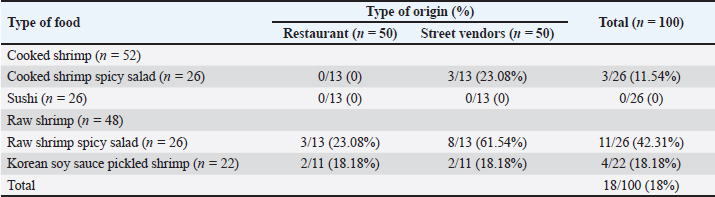
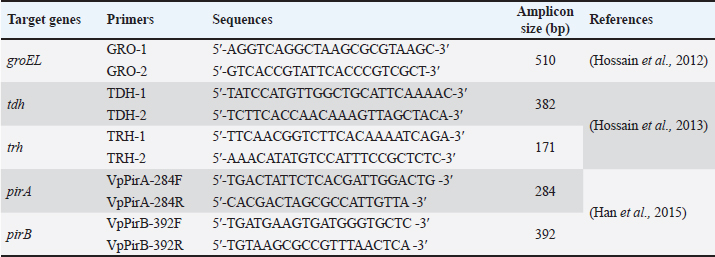
AbstractBackground: Vibrio parahaemolyticus and Vibrio cholerae are important foodborne pathogens found in marine shrimp, potentially causing gastrointestinal illness in humans. Diseases caused by these pathogens negatively impact public health, tourism, and Thailand’s seafood-processing industry. Aim: This study investigated the occurrence of Vibrio spp. in ready-to-eat raw and cooked shrimp dishes sold in Bangkok, Thailand, with an emphasis on V. parahaemolyticus prevalence, virulence gene carriage, and antimicrobial resistance. Methods: Between January and September 2023, 100 shrimp samples were collected from 50 restaurants and 50 street vendors. The shrimp samples (25 g) were enriched in alkaline peptone water and cultured on thiosulfate citrate bile salts sucrose agar. The suspected colonies were identified using matrix-assisted laser desorption/ionization time-of-flight mass spectrometry. Antimicrobial susceptibility was assessed by disk diffusion, and virulence genes were detected by polymerase chain reaction. Logistic regression analysis was conducted to estimate the odds ratios (ORs) for Vibrio prevalence by cooking status, food type, and restaurant type. Results: Vibrio cholerae was not detected, whereas V. parahaemolyticus was isolated from 18% of the samples. The hemolysin genes tdh and trh were absent from all V. parahaemolyticus isolates. The insecticidal toxin genes pirA and pirB were identified in 3 V. parahaemolyticus isolates. Resistance to ampicillin and cefotaxime was observed in 55.6% and 44.4% of isolates, respectively, whereas all isolates remained susceptible to meropenem. In addition, 88.9% of the isolates were susceptible to ceftazidime, azithromycin, erythromycin, and tetracycline. Logistic regression analysis identified “cooking status” as a significant risk factor: raw shrimp dishes were more than eight times more likely to be contaminated than cooked ones (ORs=8.238, p < 0.05). Conclusion: These findings highlight the risk of V. parahaemolyticus contamination in raw shrimp and the antimicrobial resistance of this bacterium. Although neither the tdh nor the trh genes were detected, raw shrimp consumption should be discouraged to minimize exposure to foodborne pathogens and antimicrobial-resistant bacteria. Keywords: AMR, Bacteria, Food safety, Shrimp, Virulence gene. IntroductionVibrio spp. are among the most common causative agents of food poisoning among Thai people (Chonsin et al., 2021). Consumption of street food has been identified as a risk factor for developing Vibrio infection (Kittitrakul et al., 2015; Sharma et al., 2020). Moreover, Thailand is a major tourist destination where travelers are frequently affected by seafood vibriosis (Bodhidatta et al., 2019; Mala et al., 2025). This illness, known as travelers’ diarrhea (TD), can sometimes cause mortality among foreigners who travel to Southeast Asian countries and consume seafood contaminated with foodborne pathogens. In Thailand, the disease negatively impacts public health, tourism, and the seafood-processing industry (Pisutsan et al., 2019; Sanders et al., 2019; Lurchachaiwong et al., 2020; Sharma et al., 2020). Vibrio spp. are facultatively anaerobic, Gram-negative bacteria that colonize the gastrointestinal tracts of marine animals, including piscines, mollusks, crabs, and shrimp (Letchumanan et al., 2014; Pumipuntu and Indrawattana, 2017; Guardiola-Avila et al., 2020). Vibrio cholerae and Vibrio parahaemolyticus are major Vibrio species and common foodborne pathogens that cause gastrointestinal distress in humans (Ottaviani et al., 2012; Thongjun et al., 2013). Cholera toxin is the key virulence factor produced by V. cholerae after colonizing the small intestine, disrupting the electrolyte balance of enterocytes and resulting in diarrhea (Sousa et al., 2020). Thermostable direct hemolysin (TDH) and TDH-related hemolysin (TRH) from V. parahaemolyticus are toxins associated with disease severity in humans (Hossain et al., 2013; Raghunath, 2014). Furthermore, V. parahaemolyticus strains carrying the pirA and pirB genes encoding Photorhabdus insect-related toxins A and B cause the devastating acute hepatopancreatic necrosis disease (AHPND) in cultured shrimp (Han et al., 2015; Jiang et al., 2025). Therefore, this study not only investigated foodborne pathogens relevant to human health but also evaluated the potential role of market-sized shrimp as carriers of aquaculture-associated pathogens. This approach supports the One Health perspective by linking the safety of ready-to-eat seafood to aquaculture biosecurity. Raw shrimp is commonly used as the main ingredient in Thai seafood dishes, such as fresh shrimp salad and shrimp in fish sauce, which are readily available in all types of restaurants. However, high Vibrio contamination levels in raw shrimp have been reported (Atwill & Jeamsripong, 2021). Vibrio parahaemolyticus and V. cholerae were detected in 8%–66% and 34% of raw shrimp samples, respectively, from various retail sources across Thailand (Yokyingyong & Nuanualsuwan, 2020; Preeprem et al., 2023). Among raw seafood materials, V. cholerae was the most prevalent bacterium in Pacific white shrimp (59%) and Asian seabass (Lates calcarifer) (91%). However, oysters (Saccostrea cuccullata) and blood cockles (Tegillarca granosa) were dominated by V. parahaemolyticus, detected at 45% and 78%, respectively (Atwill & Jeamsripong, 2021). Previous studies have primarily focused on the bacterial contamination of raw shrimp products available in markets before cooking (Vu et al., 2018; Guardiola-Avila et al., 2020); however, knowledge regarding the prevalence of bacterial contamination in foods containing both raw and cooked shrimp remains limited. In 2012, an outbreak of V. parahaemolyticus enteritis was identified in a group of people who consumed vegetable salad with raw octopus at a wedding banquet in Kampong Speu, Cambodia (Vandy et al., 2012). In Thailand, food poisoning linked to a V. parahaemolyticus-like pathogen was suspected in patients attending a festival in Chiang Mai province. The outbreak was associated with the consumption of spicy seafood salad containing inadequately boiled shrimp and squid (Janekrongtham et al., 2022). The Department of Medical Sciences, Ministry of Public Health (MOPH), Thai Bureau of Quality and Safety of Food, issued a notification in the Royal Thai Government Gazette specifying that V. parahaemolyticus and V. cholerae should be at non-detectable levels in 25 g of ready-to-eat seafood (Department of Medical Sciences, 2017). Therefore, this study aimed to investigate the prevalence of V. parahaemolyticus and V. cholerae contamination in ready-to-eat shrimp dishes (cooked shrimp spicy salad, sushi with cooked shrimp, raw shrimp spicy salad, and Korean soy sauce pickled shrimp) in the downtown area of Bangkok, Thailand, and to evaluate the presence of virulence genes and AMR profiles. Materials and MethodsStudy area and samplesFrom January to September 2023, 100 shrimp samples were collected from 50 restaurants (located within department stores) and 50 street vendors (open-air carts) in Siam Square, Bangkok. The sample size was determined using a logistic regression model with 0.95 statistical power and G*power Version 3.1. Samples were categorized by thermal preparation: raw shrimp (non-thermal, ready-to-eat) or cooked shrimp (thermally processed, e.g., Ebi sushi or boiled shrimp in salads). This dual-sampling approach allowed for a direct comparison of bacterial prevalence between different vendor types and preparation methods. The 50 shrimp samples collected from restaurants comprised 26 cooked shrimp samples, including cooked shrimp spicy salad (n= 13) and sushi with cooked shrimp (n= 13), and 24 raw shrimp samples, including raw shrimp spicy salad (n= 13) and Korean soy sauce pickled shrimp (n= 11). The numbers and types of shrimp samples collected from street vendors and restaurants were identical. Table 1 shows the types and numbers of samples obtained in this study. Bacterial isolation and identification of speciesBacterial isolation followed the USFDA Bacteriological Analytical Manual guidelines (FDA, 2004). In brief, 25 g of shrimp was homogenized with 225 ml of alkaline peptone water (HiMedia, Maharashtra, India) and incubated at 37°C for 24 hours. Enriched cultures were streaked in duplicate onto thiosulfate citrate bile salts sucrose agar (TCBS; HiMedia, Maharashtra, India). From each plate, five suspected Vibrio colonies (2–3 mm, yellow or bluish-green) were identified via matrix-assisted laser desorption/ionization time-of-flight mass spectrometry (MALDI-TOF MS; Microflex LRF, Bruker Daltonics, MA, USA) (Piamsomboon et al., 2020). Only isolates yielding a high-confidence identification with a MALDI-TOF log score value between 2.00 and 3.00 compared to database version 13.0 were included in this study. The confirmed isolates were subcultured on tryptic soy agar (TSA; HiMedia, Maharashtra, India), and DNA was extracted using the boiling method. Genotypic identification utilized polymerase chain reaction (PCR) amplification of the groEL gene (Hossain et al., 2012) in 25 µl reactions containing 12.5 ll Dream Taq Master Mix (Thermo Fisher Scientific, Waltham, MA, USA), 0.5 µM primers, and 100 ng DNA. Thermal cycling included an initial denaturation at 94°C (5 minutes), 30 cycles of 94°C (30 seconds), 69°C (30 seconds), and 72°C (30 seconds), with a final extension at 72°C (5 minutes). PCR was performed using a thermocycler (Biometra, Göttingen, Germany). Distilled water and genomic DNA extracted from a reference strain of V. parahaemolyticus (Han et al., 2017) served as negative and positive controls, respectively. Amplicons were visualized by 1% agarose gel electrophoresis under UV illumination using a Mupid-exU electrophoresis system (Takara Bio Inc., Japan). Detection of virulence genesGenes encoding toxins in V. parahaemolyticus were detected using two multiplex polymerase chain reaction assays. Multiplex PCR was performed to detect the tdh and trh genes (Hossain et al., 2013), while pirA and pirB were detected using a separate multiplex PCR assay (Han et al., 2015). Table 2 lists the specific primers and amplicon sizes. The PCR products were amplified in a 25 μl PCR mixture as described above. For tdh and trh amplification, the PCR conditions were the same as those for groEL. The PCR amplification for pirA and pirB consisted of an initial denaturation at 94°C for 3 minutes, followed by 35 cycles of denaturation at 94°C for 30 seconds, annealing at 60°C for 30 seconds, and extension at 72°C for 30 seconds, with a final extension at 72°C for 7 minutes. Distilled water and genomic DNA extracted from V. parahaemolyticus strains carrying the respective toxin genes were used as negative and positive controls, respectively. Antimicrobial susceptibility testingAST was performed using the disk diffusion assay modified from Tongkamsai et al. (2024). All V. parahaemolyticus isolates were evaluated on Mueller–Hinton Agar (Difco™, Becton, Dickinson and Company, NJ, USA) (Hudzicki, 2009). The antimicrobial disks used included: 10-µg ampicillin, 10-µg cefotaxime, 30-µg ceftazidime, 5-µg meropenem, 15-µg azithromycin, 15-µg erythromycin, 5-µg ciprofloxacin, 30-µg tetracycline, 30-µg doxycycline, and 25-µg sulfamethoxazole/trimethoprim. Escherichia coli ATCC 25922 was used as the reference strain for quality control. Clear zone diameters were measured using a sliding caliper and interpreted as susceptible (S), intermediate (I), or resistant (R) according to the Clinical and Laboratory Standards Institute (CLSI, 2016) interpretive criteria. Table 1. Prevalence (%) of V. parahaemolyticus isolates from each food type in restaurants and street vendors.
Table 2. The oligonucleotide primer sequences and amplicon sizes for groEL, tdh, trh, pirA, and pirB used in this study.
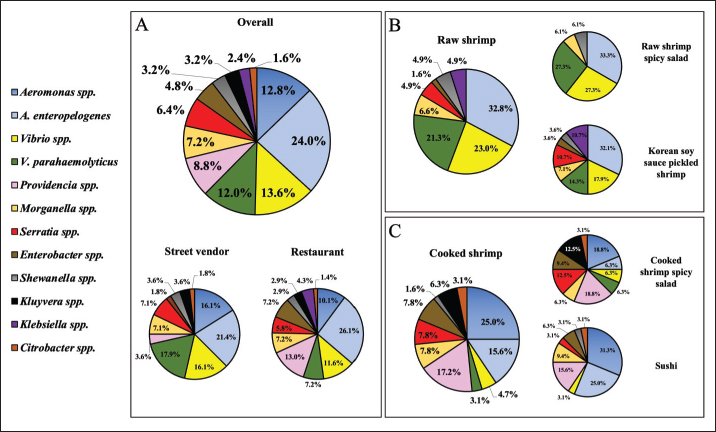
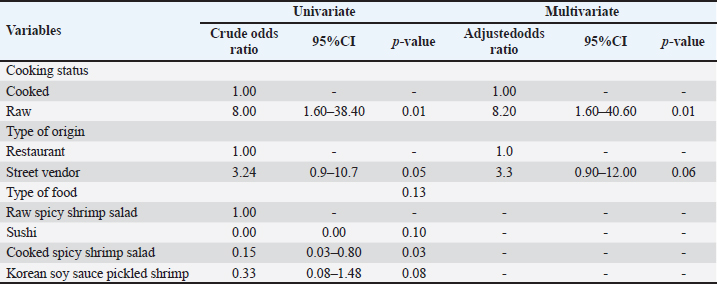
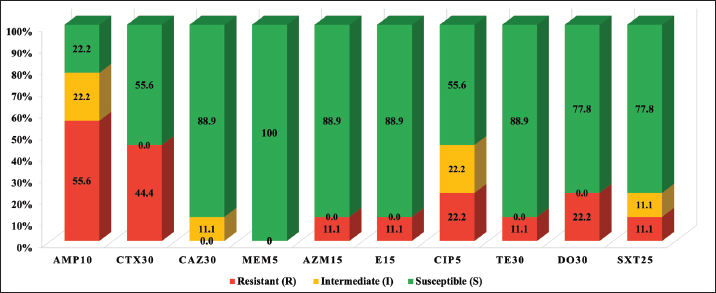
Statistical analysisBacterial prevalence was calculated as the number of species identified divided by the total number of identifications from ready-to-eat meals. Risk factors for V. parahaemolyticus, including “cooking status,” “type of origin,” and “type of food,” were analyzed using SPSS version 29.0 (SPSS Inc., Chicago, IL, USA) via a two-step logistic regression. Univariate logistic regression was used to estimate crude odds ratios (ORs) and 95% confidence intervals (CIs), with multicollinearity assessed using chi-square tests (p < 0.05). Second, variables with p < 0.2 and no significant multicollinearity were included in a multivariable logistic regression model (Hunprasit et al., 2019). Results were reported as adjusted ORs and 95% CIs, with variable significance evaluated using the Wald chi-square test. Ethical approvalNot needed for this study. ResultsPrevalence and frequency of V. cholerae and V. parahaemolyticus contamination in shrimp dishesOverall, V. parahaemolyticus was isolated from the shrimp samples at a prevalence of 18%, whereas V. cholerae was not detected in any of the samples. Table 1 presents the frequencies of V. parahaemolyticus isolated from each type of sample. V. parahaemolyticus was isolated from raw shrimp dishes from both restaurants and street vendors, while only cooked shrimp from street vendors were contaminated with V. parahaemolyticus. Raw shrimp spicy salad dishes were contaminated with V. parahaemolyticus at the highest frequency, whereas sushi dishes were not contaminated with V. parahaemolyticus. Bacterial species exhibiting V. parahaemolyticus- or V. cholerae-like colony morphology were also identified (Fig. 1). Yellow colonies mainly comprised Aeromonas spp. (36.8%) and Vibrio spp. (13.6%). A. enteropelogenes had the highest prevalence among Aeromonas spp. The yellow Vibrio-like colonies comprised V. albensis, V. alginolyticus, V. fluvialis, and V. metschnikovii. A. veronii, an important fish pathogen, was also detected in the green colony. Other bacterial species identified among the yellow colonies included Enterobacter spp., Kluyvera spp., Klebsiella pneumoniae, Providencia rettgeri, and Citrobacter freundii, whereas Morganella morganii, Providencia alcalifaciens, Serratia marcescens, and Shewanella putrefaciens were identified among the green colonies (Table 3). Odds ratios of V. parahaemolyticus contaminationORs were estimated using univariate and multivariate logistic regression. All variables had a p-value <0.2 in the univariate analysis; however, the type of food was collinear with the type of origin (p-value > 0.05). Therefore, the food type was excluded from the multivariable logistic regression model. Raw shrimp showed an adjusted OR of 8.238 (95% CI: 1.669–40.663, p-value < 0.05) when cooked shrimp was used as the reference; meanwhile, street vendors showed an adjusted OR of 3.383 (95% CI: 0.952–12.016, p-value > 0.05) when restaurants were used as the reference (Table 4). Virulence gene carriage and antimicrobial susceptibility testingA total of 18 V. parahaemolyticus isolates were confirmed by multiplex PCR using primers targeting the groEL gene (Fig. 2). The pirA and pirB genes were detected in three V. parahaemolyticus isolates from raw shrimp dishes, whereas the tdh and trh genes were not detected in any of the isolates. The antimicrobial susceptibility test results for V. parahaemolyticus were presented as percentages, categorizing the isolates into susceptible, intermediate, and resistant groups (Fig. 3). The highest proportions of isolates resistant to beta-lactam antibiotics were detected, with 55.6% and 44.4% of isolates resistant to ampicillin and cefotaxime, respectively. A total of 22.2% of the isolates exhibited resistance to both ciprofloxacin and doxycycline, whereas 11.1% of the isolates showed resistance to azithromycin, erythromycin, tetracycline, and sulfamethoxazole–trimethoprim. Regarding intermediate susceptibility, 22.2% of the isolates were intermediate to ampicillin and ciprofloxacin, whereas 11.1% of the isolates were intermediate to ceftazidime and sulfamethoxazole–trimethoprim. The highest susceptibility rate was observed for meropenem (100%), followed by ceftazidime, azithromycin, erythromycin, and tetracycline (88.9% each). Susceptibility to doxycycline and sulfamethoxazole–trimethoprim was also high, measuring 77.8% among the V. parahaemolyticus isolates. DiscussionThis study describes Vibrio spp. contamination in ready-to-eat shrimp dishes from a major urban area of Bangkok, with V. parahaemolyticus identified as the primary species of concern. In 2021, Thailand’s Department of Disease Control (DDC) reported food poisoning and acute diarrhea morbidity rates of 89.81 and 813.86 per 100,000 population, respectively. Despite a decrease in morbidity since 2018, the case fatality rate in 2021 reached a peak of 0.003% (DDC, 2022). While the measures implemented by the MOPH since 2015 have mitigated poor sanitation risks, the prevalence of food poisoning remains high, with Vibrio spp. identified as a primary pathogen (Sharma et al., 2020). V. cholerae and V. parahaemolyticus are major species found in shrimp that can cause diarrhea in humans (Zeidler et al., 2024), with V. parahaemolyticus responsible for the greatest number of outbreaks linked to raw seafood (Roy et al., 2024). A study in Germany found that 68% of black tiger shrimp (Penaeus monodon) and white-legged shrimp (Litopenaeus vannamei) from supermarkets and fish markets contained V. parahaemolyticus (68%), followed by V. cholerae (15%) and V. alginolyticus (14%) (Zeidler et al., 2024). Moreover, V. parahaemolyticus and V. cholerae were the two most frequently detected Vibrio spp. in crustacean seafood products in the EU between 2018 and 2021 (EFSA Panel on Biological Hazards (BIOHAZ) et al., 2024). In Thailand, year-round high ambient temperatures may favor the proliferation of Vibrio spp. (Changchai & Saunjit, 2014; Hsiao et al., 2016; Park et al., 2018). In addition to seasonal effects, storage temperature may also influence V. parahaemolyticus contamination in ready-to-eat seafood. Yu and Rhee (2026) reported higher levels of V. parahaemolyticus in seafood stored at 15°C–25°C than at 5°C, suggesting that inadequate temperature control may contribute to bacterial persistence or growth in ready-to-eat seafood. On the other hand, growth is further influenced by salinity. Vibrio cholerae is inhibited by NaCl levels above 6%, whereas V. parahaemolyticus thrives at 3%–8% (FDA, 2004). Thai salad dishes frequently contain high sodium levels, with 93.8% exceeding 1,000 mg per serving (Pongpattanawut et al., 2023). These hyper-saline conditions likely favor V. parahaemolyticus while inhibiting V. cholerae, potentially explaining the absence of V. cholerae in this study.
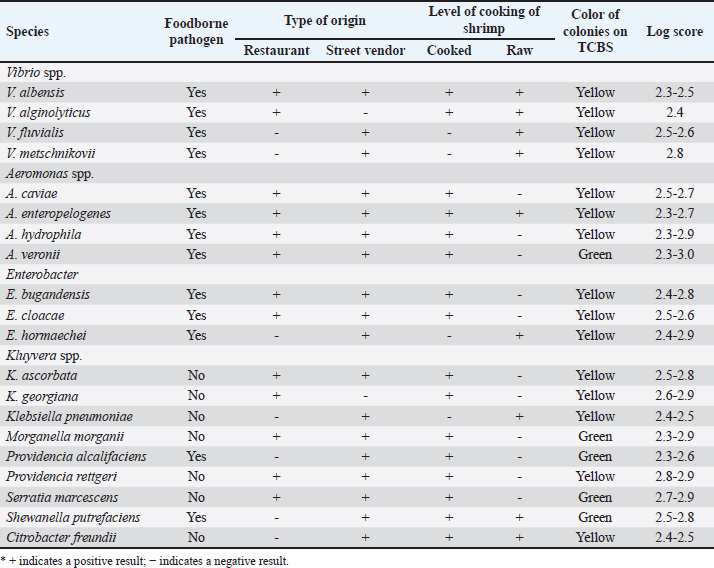
Fig. 1. Pie charts showing the prevalence of bacterial species. (A) Overall prevalence of bacterial identification in this study, as well as the prevalence of bacteria categorized as those found in restaurants and street vendors. (B) Prevalence of microorganisms in raw shrimp cultured in Korean soy sauce pickled shrimp, and raw shrimp spicy salad meals. (C) Microorganism prevalence from cooked shrimp cultured in spicy salad meals and sushi. Logistic regression indicated that raw shrimp dishes had an 8.23-fold higher likelihood of V. parahaemolyticus detection than cooked shrimp. The results confirm that heat treatment is highly effective. Previous research shows no growth of V. parahaemolyticus after heating at 85°C for 5 minutes (Al-Garadi et al., 2024). The detection of three positive cooked shrimp samples from street vendors likely stems from insufficient heating or post-process cross-contamination. Xiong et al. (2025) also supported this finding, reporting that V. parahaemolyticus in raw seafood can readily cross-contaminate cooked seafood, with wooden cutting boards as a key vehicle for contamination. Although no clear difference was observed between street vendors and restaurants, cooked dishes from street vendors exhibited a lower hygienic status. This supports previous findings that street food more frequently contributes to diarrhea cases than restaurant food (Kittitrakul et al., 2015; Sharma et al., 2020). A study in Nigeria reported that 50% of street vendors were unaware of the risks posed by V. parahaemolyticus, indicating a lack of knowledge about proper hygiene, glove use, and biosecurity practices (Beshiru et al., 2026). While the MOPH of Thailand mandates strict hygiene standards for ready-to-eat meals, including cooking temperatures above 74°C and proper storage (MOPH, 2021), restaurants may adhere more strictly to these regulations than street vendors, who may struggle with hygiene or temperature control. Table 3. Bacterial isolates other than V. parahaemolyticus and V. cholerae were selected based on the appearance of yellow or green colonies on TCBS agar and identified using MALDI-TOF MS.
Table 4. Univariate and multivariate logistic regressions were performed and reported as crude odds ratios and adjusted odds ratios with 95% confidence intervals, respectively. The Wald chi-square test was performed to confirm the significance of each variable in the model. A p-value < 0.05 was considered significant.
Fig. 2. Species-specific detection and virulence of V. parahaemolyticus using polymerase chain reaction assay. An amplicon size of 510 bp indicates a positive result. Lane M: 1 kb ladder; −ve: negative control; lanes 1–18: isolate numbers.
Fig. 3. Antimicrobial susceptibility test of V. parahaemolyticus were categorized according to the percentages of susceptible, intermediate, and resistant isolates to 10 antibiotics: ampicillin (AMP10), cefotaxime (CTX30), ceftazidime (CAZ30), meropenem (MEM5), azithromycin (AZM15), erythromycin (E15), ciprofloxacin (CIP5), tetracycline (TE30), doxycycline (DO30), and sulfamethoxazole-trimethoprim (SXT25). All V. parahaemolyticus isolates in this study lacked the classic virulence genes tdh and trh. A previous study focusing on V. parahaemolyticus in Thailand’s seafood samples also did not detect the tdh or trh virulence genes (Siriphap et al., 2024). Although all V. parahaemolyticus isolates were confirmed using MALDI-TOF MS and groEL-targeted PCR in the present study, we acknowledge that additional confirmation using toxR-based PCR would have further strengthened species identification. Therefore, the lack of confirmation of toxR should be addressed in future investigations. However, non-toxigenic strains have been previously reported in cases of clinical gastroenteritis (Ottaviani et al., 2012; Tewawong et al., 2024). Notably, three isolates carried the pirA and pirB genes, which are the primary indicators of AHPND (Santos et al., 2020). Although these toxins are not confirmed human pathogens, AHPND can cause up to 100% mortality in shrimp. Although typically associated with juvenile shrimp, our findings suggest that AHPND-carrying bacteria can persist in market-sized shrimp. This poses a significant risk of cross-contamination within the food chain, underscoring the importance of the “One Health” approach in recognizing the link between aquaculture health and food safety. Although TCBS is the standard selective medium for Vibrio spp., phenotypically similar non-Vibrio species, such as Aeromonas spp., can interfere with conventional culture results (Janda et al., 2015). Aeromonas is ubiquitous in aquatic environments and can cause gastrointestinal infections that mimic the symptoms of cholera (Ghenghesh et al., 1999; Mohan et al., 2017; Pessoa et al., 2022). This highlights the need for precise identification. This study demonstrates that MALDI-TOF MS provides rapid and highly accurate differentiation. MALDI-TOF MS analysis revealed that the shrimp samples harbored two distinct groups of pathogens: those from the marine environment (Aeromonas, Shewanella, Klebsiella, and Vibrio) and those associated with poor sanitation (Providencia, Morganella, Serratia, Enterobacter, Kluyvera, and Citrobacter). Environmental bacteria, such as Aeromonas, Shewanella, and Klebsiella, are facultative, Gram-negative organisms that thrive under warm storage conditions, contributing to spoilage of seafood (Feldhusen, 2000; Hoel et al., 2022). While many are harmless to shrimp, others, including A. hydrophila (Zhou et al., 2019) and A. veronii (Dewangan et al., 2022), act as opportunistic pathogens. These findings underscore the importance of using advanced proteomic identification to monitor the diverse microbial risks present in ready-to-eat shrimp products. We also identified other Vibrio species of public health concern. Vibrio alginolyticus was detected, confirming its role as a potential pathogen reservoir in aquafauna (Xie et al., 2005; Khouadja et al., 2022). It causes wound infections, gastroenteritis, and sepsis following seawater exposure (Masini et al., 2007; Lafisca et al., 2008). Vibrio fluvialis, a foodborne pathogen linked to diarrhea and septicemia, was also identified. (Smith et al., 2023). Poor sanitation and inadequate environmental hygiene typically cause contamination (Igbinosa and Okoh, 2010). Vibrio fluvialis infection can manifest as sepsis syndrome characterized by hemorrhagic bullae (Smith et al., 2023). Several underlying conditions, including liver disease (notably alcoholic cirrhosis), immunosuppression (e.g., HIV/AIDS), diabetes mellitus, and iron overload disorders such as hemochromatosis, significantly increase the risk of severe infection (Igbinosa and Okoh, 2010; Ramamurthy et al., 2014). Several studies have identified these Vibrio spp. in seafood products alongside V. parahaemolyticus and V. cholerae. For instance, a study in Germany reported that V. alginolyticus accounted for 14% of the contamination in shrimp products, trailing behind V. parahaemolyticus and V. cholerae (Zeidler et al., 2024). These findings emphasize that shrimp harbor a diverse range of Vibrio species capable of causing severe systemic disease in vulnerable populations. Antimicrobial susceptibility testing showed that while most isolates were susceptible to ceftazidime, azithromycin, erythromycin, and tetracycline, resistance to other antibiotics was significant. Ampicillin exhibited the highest resistance rate (55.6%), which is consistent with previous findings of 83% resistance in V. parahaemolyticus from Bangkok seafood (Changsen et al., 2023). Moreover, cefotaxime resistance reached 44.4%, which is consistent with previous reports (Letchumanan et al., 2015). These patterns likely stem from the historical misuse of first-generation antibiotics in aquaculture and the environment (Letchumanan et al., 2015; Elmahdi et al., 2016). The isolates showed reduced susceptibility to the recommended first-line treatments. Drugs belonging to the same classes as tetracycline and ceftazidime, such as doxycycline and cefotaxime, respectively, exhibited low susceptibility rates, suggesting that standard empirical therapies may be less effective against the current strains. This resistance serves as a critical indicator of the impact of antimicrobial use in the production of aquatic animals. Regular monitoring of susceptibility profiles is essential as it guides clinical drug selection for human patients and promotes prudent antimicrobial stewardship in the aquaculture industry. Although this investigation was limited to the Siam Square area, the study site is a major commercial and tourist district located near a national university and contains numerous restaurants and street-food vendors (Pechpakdee et al., 2022). The wide availability of ready-to-eat foods makes it a relevant setting for investigating potential foodborne hazards. Nevertheless, the findings may not be generalizable to other areas of Bangkok or Thailand. Another limitation of this study was its focus on the prevalence of V. parahaemolyticus rather than the level of contamination. Bacterial loads should be quantified using culture-based enumeration or quantitative real-time PCR to better assess the associated public health risks. In addition, although samples were collected over several months, we did not formally evaluate seasonal variation. The estimated ORs should also be interpreted with caution because the logistic regression analysis was exploratory and included relatively few V. parahaemolyticus-positive samples (n= 18), resulting in wide CIs. Potential confounding factors, including storage temperature, holding time, food-handling practices, and vendor hygiene, were not included in the model. Therefore, large-scale studies covering multiple locations and seasons and incorporating these variables are needed to better characterize the risk factors for V. parahaemolyticus contamination in ready-to-eat shrimp dishes. ConclusionThe findings indicate that shrimp preparation method is an important determinant of V. parahaemolyticus contamination in ready-to-eat shrimp dishes, with raw products presenting a substantially greater risk than cooked products. The detection of antimicrobial-resistant isolates and toxin genes associated with AHPND in market-sized shrimp extends the significance of food surveillance to aquaculture biosecurity. These findings support the implementation of integrated control measures that combine adequate cooking, cross-contamination prevention, improved hygiene training for food vendors, routine microbial surveillance, and responsible antimicrobial use. Incorporating aquaculture-associated virulence markers into food safety monitoring could help identify potential links between seafood distribution and pathogen circulation in shrimp production systems. Such a coordinated approach would strengthen consumer protection while supporting shrimp aquaculture sustainability and biosecurity. AcknowledgmentsWe greatly appreciate the technical assistance and recommendations regarding work planning from Professor Emeritus Janenuj Wongtavatchai and Associate Professor Supachai Nuanualsuwan, Faculty of Veterinary Science, Chulalongkorn University. We are also grateful to the sixth-year DVM students from the Faculty of Veterinary Science, Chulalongkorn University, for their valuable laboratory assistance, including Watcharapong Inchana, Nantaporn Wongsawas, Natwasa Kanhirun, Nontapat Tantakasem, and Tanthirat Narairat. Conflicts of interestThe authors declare no conflicts of interest. FundingThis study was supported by the Chulalongkorn University Veterinary Science Research Fund RI 15/2568, Faculty of Veterinary Science, Chulalongkorn University. Authors’ contributionsPornpawit Tanpichai: Validation, formal analysis, data curation, investigation, original draft preparation, and visualization. Sapon Semsirmboon: Software, visualization, writing, reviewing, and editing. Onanong Charoenwai: Investigation, software validation, data curation, writing-reviewing, and editing. Sirawit Pagdepanichkit: Conceptualization, methodology, supervision, writing-reviewing, and editing. Pattrarat Chanchaithong: Conceptualization, methodology, supervision, project administration, writing-reviewing, and editing. Patharapol Piamsomboon: Conceptualization, methodology, validation, formal analysis, resources, writing-reviewing and editing, supervision, project administration, and funding acquisition Data availabilityAll data supporting this study’s findings are available within the manuscript. ReferencesAl-Garadi, M.A., Aziz, R.N., Almashhadany, D.A., Al Qabili, D.M.A. and Abdullah Aljoborey, A.D. 2024. Validity of cold storage and heat treatment on the deactivation of Vibrio parahaemolyticus isolated from fish meat markets. Ital. J. Food Saf. 13(1),11516; doi:10.4081/ijfs.2024.11516 Atwill, E.R. and Jeamsripong, S. 2021. Bacterial diversity and potential risk factors associated with Salmonella contamination of seafood products sold in retail markets in Bangkok, Thailand. PeerJ. 9, e12694; doi:10.7717/peerj.12694 Beshiru, A., Uwhuba, K.E., Igbinosa, I.H., Igere, B.E., Isichei-Ukah, B.O. and Igbinosa, E.O. 2026. Vibrio parahaemolyticus contamination and high antimicrobial resistance in informal seafood supply chain in Delta State, Nigeria: low vendor awareness strongly predicts poor safety practices. Food Control 187, 112173; doi:10.1016/j.foodcont.2026.112173 Bodhidatta, L., Anuras, S., Sornsakrin, S., Suksawad, U., Serichantalergs, O., Srijan, A., Sethabutr, O. and Mason, C.J. 2019. Epidemiology and etiology of Traveler’s diarrhea in Bangkok, Thailand, a case-control study. Trop. Dis. Travel Med. Vaccines 5, 9; doi:10.1186/s40794-019-0085-9 Changchai, N. and Saunjit, S. 2014. Occurrence of vibrio parahaemolyticus and vibrio vulnificus in retail raw oysters from the eastern coast of Thailand. Southeast Asian J. Trop. Med. Public Health 45(3), 662–669. Changsen, C., Likhitrattanapisal, S., Lunha, K., Chumpol, W., Jiemsup, S., Prachumwat, A., Kongkasuriyachai, D., Ingsriswang, S., Chaturongakul, S., Lamalee, A., Yongkiettrakul, S. and Buates, S. 2023. Incidence, genetic diversity, and antimicrobial resistance profiles of Vibrio parahaemolyticus in seafood in Bangkok and eastern Thailand. PeerJ. 11, e15283; doi:10.7717/peerj.15283 Chonsin, K., Supha, N., Nakajima, C., Suzuki, Y. and Suthienkul, O. 2021. Characterization of Vibrio parahaemolyticus strains isolated from clinically asymptomatic seafood workers. FEMS Microbiol. Lett. 368(1), fnaa209. doi:10.1093/femsle/fnaa209 CLSI 2016. Methods for antimicrobial dilution and disk susceptibility testing of infrequently isolated or fastidious bacteria, 3rd Ed. Clinical and Laboratory Standards Institute. DDC 2022. Epidemiological surveillance report 2021. Available via https://apps-doe.moph.go.th/boeeng/annual/Annual/Annual_Report_2565.pdf Department of Medical Sciences 2017. Criteria of microbiological quality standardization of foods and food contact containers (Volume 3). Nonthaburi, Thailand: Department of Medical Sciences, Ministry of Public Health Available via http://bqsf.dmsc.moph.go.th/bqsfWeb/wp-content/uploads/2017/Publish/e-book/micro-ISBN60.pdf Dewangan, N.K., Gopalakrishnan, A., Shankar, A. and Ramakrishna, R.S. 2022. Incidence of multiple bacterial infections in Pacific whiteleg shrimp, Litopenaeus vannamei. Aquac. Res. 53(11), 3890–3897; doi:10.1111/are.15893 EFSA Panel on Biological Hazards (BIOHAZ), Koutsoumanis, K., Allende, A., Alvarez-Ordóñez, A., Bolton, D., Bover-Cid, S., Chemaly, M., De Cesare, A., Herman, L., Hilbert, F., Lindqvist, R., Nauta, M., Nonno, R., Peixe, L., Ru, G., Simmons, M., Skandamis, P., Baker-Austin, C., Hervio-Heath, D., Martinez-Urtaza, J., Sanjuán Caro, E., Strauch, E., Thébault, A., Guerra, B., Messens, W., Simon, A. C., Barcia-Cruz, R. and Suffredini, E. 2024. Public health aspects of Vibrio spp. related to the consumption of seafood in the EU. EFSA J. 22(7), e8896; doi:10.2903/j.efsa.2024.8896 Elmahdi, S., DaSilva, L.V. and Parveen, S. 2016. Antibiotic resistance of Vibrio parahaemolyticus and Vibrio vulnificus in various countries: a review. Food Microbiol. 57, 128–134; doi:10.1016/j.fm.2016.02.008 FDA 2004. Bacteriological analytical manual, Chapter 9: Vibrio cholerae, V. parahaemolyticus, V. vulnificus, and Other Vibrio spp. Washington, D.C.: U.S. Department of Health and Human Services. Available via https://www.fda.gov/media/183065/download Feldhusen, F. 2000. The role of seafood in bacterial foodborne diseases. Microbes. Infect. 2(13), 1651–1660; doi:10.1016/s1286-4579(00)01321-6 Ghenghesh, K.S., Bara, F., Bukris, B., el-Surmani, A. and Abeid, S.S. 1999. Characterization of virulence factors of Aeromonas isolated from children with and without diarrhoea in Tripoli. Libya. J. Diarrhoeal Dis. Res. 17(2), 75–80. Guardiola-Avila, I., Martinez-Vazquez, V., Juarez-Rendon, K., Alvarez-Ainza, M., Paz-Gonzalez, A. and Rivera, G. 2020. Prevalence and virulence of Vibrio species isolated from raw shrimp from retail markets in Reynosa, Mexico. Lett. Appl. Microbiol. 71(3), 280–286; doi:10.1111/lam.13315 Han, J.E., Tang, K.F., Tran, L.H. and Lightner, D.V. 2015. Photorhabdus insect-related (Pir) toxin-like genes in a plasmid of Vibrio parahaemolyticus, the causative agent of acute hepatopancreatic necrosis disease (AHPND) of shrimp. Dis. Aquat. Organ. 113(1), 33–40; doi:10.3354/dao02830 Han, J.E., Tang, K.F., Piamsomboon, P. and Pantoja, C.R. 2017. Evaluation of a reliable non-invasive molecular test for the diagnosis of the causative agent of acute hepatopancreatic necrosis disease of shrimp. Aquac. Rep. 5, 58-61: doi:10.1016/j.aqrep.2016.12.004 Hoel, S., Lerfall, J. and Jakobsen, A.N. 2022. Growth and spoilage potential of an Aeromonas salmonicida strain in refrigerated atlantic cod (Gadus morhua) stored under various modified atmospheres. Foods 11(18), 2757; doi:10.3390/foods11182757 Hossain, M.T., Kim, E.Y., Kim, Y.R., Kim, D.G. and Kong, I.S. 2012. Application of groEL gene for the species-specific detection of Vibrio parahaemolyticus by PCR. Lett. Appl. Microbiol. 54(1), 67–72; doi:10.1111/j.1472-765X.2011.03174.x Hossain, M.T., Kim, Y.O. and Kong, I.S. 2013. Multiplex PCR for the detection and differentiation of Vibrio parahaemolyticus strains using the groEL, tdh and trh genes. Mol. Cell. Probes. 27(5–6), 171–175; doi:10.1016/j.mcp.2013.04.001 Hsiao, H.I., Jan, M.S. and Chi, H.J. 2016. Impacts of climatic variability on Vibrio parahaemolyticus outbreaks in Taiwan. Int. J. Environ. Res. Public Health. 13(2), 188; doi:10.3390/ijerph13020188 Hudzicki, J. 2009. Kirby-Bauer disk diffusion susceptibility test protocol. Am. Soc. Microbiol. 15(1), 1–23. Hunprasit, V., Tanrattana, C. and Pengpis, S. 2019. Epidemiology of characteristics and risk factors for overweight in cats visiting an animal hospital in Bangkok, Thailand. The Thai J. Vet. Med. 49(2), 107–111; doi:10.56808/2985-1130.2981 Igbinosa, E.O. and Okoh, A.I. 2010. Vibrio fluvialis: an unusual enteric pathogen of increasing public health concern. Int. J. Environ. Res. Public Health. 7(10), 3628–3643; doi:10.3390/ijerph7103628 Janda, J.M., Newton, A.E. and Bopp, C.A. 2015. Vibriosis. Clin. Lab. Med. 35(2), 273–288; doi:10.1016/j.cll.2015.02.007 Janekrongtham, C., Dejburum, P., Sujinpram, S., Rattanathumsakul, T. and Swaddiwudhipong, W. 2022. Outbreak of seafood-related food poisoning from undetectable Vibrio parahaemolyticus-like pathogen, Chiang Mai Province, Thailand, December 2020. Trop. Med. Int. Health. 27(1), 92–98; doi:10.1111/tmi.13700 Jiang, L., An, N., Fan, R., Zhao, D. and Wang, M. 2025. Screening of proteins interacting with PirA and PirB from Vibrio parahaemolyticus causing acute hepatopancreatic necrosis disease in Pacific white shrimp Litopenaeus vannamei. Fish Shellfish Immunol. 166, 110606; doi;10.1016/j.fsi.2025.110606 Khouadja, S., Roque, A., Gonzalez, M. and Furones, D. 2022. Vibrio pathogenicity island and phage CTX genes in Vibrio alginolyticus isolated from different aquatic environments. J. Water Health. 20(10), 1469–1478; doi:10.2166/wh.2022.029 Kittitrakul, C., Lawpoolsri, S., Kusolsuk, T., Olanwijitwong, J., Tangkanakul, W. and Piyaphanee, W. 2015. Traveler’s diarrhea in foreign travelers in southeast asia: a cross-sectional survey study in Bangkok, Thailand. Am. J. Trop. Med. Hyg. 93(3), 485–490; doi:10.4269/ajtmh.15-0157 Lafisca, A., Pereira, C.S., Giaccone, V. and Rodrigues Ddos, P. 2008. Enzymatic characterization of Vibrio alginolyticus strains isolated from bivalves harvested at Venice Lagoon (Italy) and Guanabara Bay (Brazil). Rev. Inst. Med. Trop. Sao Paulo. 50(4), 199–202. doi:10.1590/s0036-46652008000400002 Letchumanan, V., Chan, K.G. and Lee, L.H. 2014. Vibrio parahaemolyticus: a review on the pathogenesis, prevalence, and advance molecular identification techniques. Front. Microbiol. 5, 705; doi:10.3389/fmicb.2014.00705 Letchumanan, V., Pusparajah, P., Tan, L.T., Yin, W.F., Lee, L.H. and Chan, K.G. 2015. Occurrence and antibiotic resistance of Vibrio parahaemolyticus from shellfish in Selangor, Malaysia. Front. Microbiol. 6, 1417; doi:10.3389/fmicb.2015.01417 Lurchachaiwong, W., Serichantalergs, O., Lertsethtakarn, P., Ruamsap, N., Srijan, A., Oransathid, W., Khemnu, N., Vesely, B.A., Demons, S.T., Waters, N.C., Crawford, J.M. and Swierczewski, B.E. 2020. Enteric etiological surveillance in acute diarrhea stool of United States Military Personnel on deployment in Thailand, 2013-2017. Gut. Pathog. 12, 17; doi:10.1186/s13099-020-00356-7 Mala, W., Kotepui, K.U., Masangkay, F.R., Wangdi, K., Wilairatana, P. and Kotepui, M. 2025. Evidence of pathogens associated with travelers’ diarrhea in Thailand: a systematic review. Trop. Dis. Travel. Med. Vaccines. 11(1), 8; doi:10.1186/s40794-024-00243-y Masini, L., De Grandis, G., Principi, F., Mengarelli, C. and Ottaviani, D. 2007. Research and characterization of pathogenic vibrios from bathing water along the Conero Riviera (Central Italy). Water Res. 41(18), 4031–4040; doi:10.1016/j.watres.2007.05.003 Ministry of Public Health 2021. Announcement of the Ministry of Public Health Re: criteria, methods, quality control and hygiene management of ready-to-eat food vending in food establishments B.E. 2564. Available via https://www.ratchakitcha.soc.go.th/DATA/PDF/2564/E/269/T_0038.PD Mohan, B., Sethuraman, N., Verma, R. and Taneja, N. 2017. Speciation, clinical profile & antibiotic resistancez in Aeromonas species isolated from cholera-like illnesses in a tertiary care hospital in north India. Indian J. Med. Res. 146(Supplement), S53–S58; doi:10.4103/ijmr. IJMR_378_15 Ottaviani, D., Leoni, F., Serra, R., Serracca, L., Decastelli, L., Rocchegiani, E., Masini, L., Canonico, C., Talevi, G. and Carraturo, A. 2012. Nontoxigenic Vibrio parahaemolyticus strains causing acute gastroenteritis. J. Clin. Microbiol. 50(12), 4141–4143; doi:10.1128/JCM.01993-12 Park, K., Mok, J.S., Kwon, J.Y., Ryu, A.R., Kim, S.H. and Lee, H.J. 2018. Food-borne outbreaks, distributions, virulence, and antibiotic resistance profiles of Vibrio parahaemolyticus in Korea from 2003 to 2016: a review. Fish. Aquat. Sci. 21(1); doi:10.1186/s41240-018-0081-4 Pongpattanawut, S., Pisutthanan, S., Jadnueng, P. and Rachpiakaew, P 2023. Investigation of Salinity in Readily Prepared Foods at Naresuan University Canteens. JPMAT. 13, 88–98. Pechpakdee, P., Muangyai, N., Turnbull, N., Muangyai, N. and Tudpor, K. 2022. Challenges of urban tourism, liveable city, and urban environment in Bangkok. Int. J. Health Sci. 11094–11106; doi:10.53730/ijhs.v6nS6.13043 Pessoa, R.B.G., de Oliveira, W.F., Correia, M., Fontes, A. and Coelho, L. 2022. Aeromonas and human health disorders: clinical approaches. Front. Microbiol. 13, 868890; doi:10.3389/fmicb.2022.868890 Piamsomboon, P., Jaresitthikunchai, J., Hung, T.Q., Roytrakul, S. and Wongtavatchai, J. 2020. Identification of bacterial pathogens in cultured fish with a custom peptide database constructed by matrix-assisted laser desorption/ionization time-of-flight mass spectrometry (MALDI-TOF MS). BMC Vet. Res. 16(1), 52; doi:10.1186/s12917-020-2274-1 Pisutsan, P., Soonthornworasiri, N., Matsee, W., Phumratanaprapin, W., Punrin, S., Leowattana, W., Mansanguan, C., Leshem, E. and Piyaphanee, W. 2019. Incidence of health problems in travelers to Southeast Asia: a prospective cohort study. J. Travel. Med. 26(7); doi:10.1093/jtm/taz045 Preeprem, S., Aksonkird, T., Nuidate, T., Hajimasalaeh, W., Hajiwangoh, Z. and Mittraparp-arthorn, P. 2023. Characterization and genetic relationships of Vibrio spp. isolated from seafood in retail markets, Yala, Thailand. Trend. Sci. 20(10), 5962; doi:10.48048/tis.2023.5962 Pumipuntu, N. and Indrawattana, N. 2017. Vibrio parahaemolyticus: a seafood-borne pathogen. J. Trop. Med. Parasitol. 40(2), 50–60. Raghunath, P. (2014). Roles of thermostable direct hemolysin (TDH) and TDH-related hemolysin (TRH) in Vibrio parahaemolyticus. Front. Microbiol. 5, 805; doi:10.3389/fmicb.2014.00805 Ramamurthy, T., Chowdhury, G., Pazhani, G.P. and Shinoda, S. 2014. Vibrio fluvialis: an emerging human pathogen. Front. Microbiol. 5, 91; doi:10.3389/fmicb.2014.00091 Roy, P.K., Roy, A., Jeon, E.B., DeWitt, C.A.M., Park, J.W. and Park, S.Y. 2024. Comprehensive analysis of predominant pathogenic bacteria and viruses in seafood products. Compr. Rev. Food Sci. Food. Saf. 23(4), e13410; doi:10.1111/1541-4337.13410 Sanders, J.W., Riddle, M.S., Brewster, S.J. and Taylor, D.N. 2008. Epidemiology of travelers’ diarrhea. In Travel Medicine: Second Edition, Eds., Keystone, J.S., Kozarsky, P.E., Freedman, D.O., Nothdurft, H.D. and Connor, B.A. Elsevier, pp: 177-189 Santos, H.M., Tsai, C.Y., Maquiling, K.R.A., Tayo, L.L., Mariatulqabtiah, A.R., Lee, C.W. and Chuang, K.P. 2020. Diagnosis and potential treatments for acute hepatopancreatic necrosis disease (AHPND): a review. Aquac. Int. 28(1), 169–185; doi:10.1007/s10499-019-00451-w Sharma, C., Poovorawan, K., Piyaphanee, W., Soonthornworasiri, N., Angsuwatcharakon, P., Phumratanaprapin, W., Leowattana, W. and Wilairatana, P. 2020. Incidence of travelers’ diarrhea among adult foreign travelers in thailand: a prospective study. Am. J. Trop. Med. Hyg. 102(5), 1009–1015; doi:10.4269/ajtmh.19-0672 Siriphap, A., Prapasawat, W., Borthong, J., Tanomsridachchai, W., Muangnapoh, C., Suthienkul, O. and Chonsin, K. 2024. Prevalence, virulence characteristics, and antimicrobial resistance of Vibrio parahaemolyticus isolates from raw seafood in a province in Northern Thailand. FEMS Microbiol. Lett. 371; doi:10.1093/femsle/fnad134 Smith, T. J., 3rd, Osmanzai, Y. and Faris, M. 2023. Vibrio fluvialis bacteremia with hemorrhagic bullae: a case report. Cureus 15(7), e42612; doi:10.7759/cureus.42612 Sousa, F.B.M., Noleto, I., Chaves, L.S., Pacheco, G., Oliveira, A.P., Fonseca, M.M.V. and Medeiros, J.V.R. 2020. A comprehensive review of therapeutic approaches available for the treatment of cholera. J. Pharm. Pharmacol. 72(12), 1715–1731; doi:10.1111/jphp.13344 Tewawong, N., Kowaboot, S., Kengkarn, S., Thawornwan, U., Ramasoota, P. and Suthienkul, O. 2024. Characterization of Vibrio parahaemolyticus isolated from clinical specimens and oysters in Thailand. J. Infect. Dev. Ctries. 18(6), 900–908; doi:10.3855/jidc.18470 Thongjun, J., Mittraparp-Arthorn, P., Yingkajorn, M., Kongreung, J., Nishibuchi, M. and Vuddhakul, V. 2013. The trend of Vibrio parahaemolyticus infections in southern Thailand from 2006 to 2010. Trop. Med. Health. 41(4), 151–156; doi:10.2149/tmh.2013-06 Tongkamsai, S., Chatmontee, W. and Nakbubpa, K. 2024. Multidrug-resistance in Escherichia coli and Klebsiella pneumoniae isolated from broiler chickens in Eastern Thailand. The Thai J. Vet. Med. 54(3), 1-6; doi:10.56808/2985-1130.3668 Vandy, S., Leakhann, S., Phalmony, H., Denny, J. and Roces, M.C. 2012. Vibrio parahaemolyticus enteritis outbreak following a wedding banquet in a rural village - Kampong Speu, Cambodia, April 2012. Western Pac. Surveill. Response. J. 3(4), 25–28; doi:10.5365/WPSAR.2012.3.4.004 Vu, T.T.T., Alter, T. and Huehn, S. 2018. Prevalence of Vibrio spp. in retail seafood in Berlin, Germany. J. Food. Prot. 81(4), 593–597; doi:10.4315/0362-028X.JFP-17-366 Xie, Z.Y., Hu, C.Q., Chen, C., Zhang, L.P. and Ren, C.H. 2005. Investigation of seven Vibrio virulence genes among Vibrio alginolyticus and Vibrio parahaemolyticus strains from the coastal mariculture systems in Guangdong, China. Lett. Appl. Microbiol. 41(2), 202–207; doi:10.1111/j.1472-765X.2005.01688.x Xiong, R., Liu, J., Hou, J., Li, W., Bai, L., Zhao, Y., Wang, Y. and Zhang, Z. 2025. Simulation of cross-contamination and risk assessment of vibrio parahaemolyticus transfer in raw and cooked fish under kitchen conditions. J. Future Foods. In Press; doi:10.1016/j.jfutfo.2025.02.019 Yokyingyong, P. and Nuanualsuwan, S. 2020. Risk assessment of Vibrio parahaemolyticus in white shrimp (Litopenaeus vannamei) from retail market. The Thai J. Vet. Med. 50, 41–43. Yu, H. and Rhee, M.S. 2026. Comparative persistence of opportunistic Vibrio alginolyticus and major foodborne Vibrio species (Vibrio cholerae, Vibrio parahaemolyticus, and Vibrio vulnificus) in ready-to-eat seafood under different storage conditions. Food Res. Int. 118957; doi:10.1016/j.foodres.2026.118957 Zeidler, C., Szott, V., Alter, T., Huehn-Lindenbein, S. and Fleischmann, S. 2024. Prevalence of Vibrio spp. in seafood from German supermarkets and fish markets. Foods 13(24); doi:10.3390/foods13243987 Zhou, H., Gai, C., Ye, G., An, J., Liu, K., Xu, L. and Cao, H. 2019. Aeromonas hydrophila, an emerging causative agent of freshwater-farmed whiteleg shrimp Litopenaeus vannamei. Microorganisms 7(10), 450; doi:10.3390/microorganisms7100450 | ||

| How to Cite this Article |
| Pubmed Style Tanpichai P, Semsirmboon S, Charoenwai O, Pagdepanichkit S, Chanchaithong P, Piamsomboon P. Contamination of Thai shrimp dishes with Vibrio spp. in Bangkok, Thailand. Open Vet. J.. 2026; 16(8): 5760-5771. doi:10.5455/OVJ.2026.v16.i8.64 Web Style Tanpichai P, Semsirmboon S, Charoenwai O, Pagdepanichkit S, Chanchaithong P, Piamsomboon P. Contamination of Thai shrimp dishes with Vibrio spp. in Bangkok, Thailand. https://www.openveterinaryjournal.com/?mno=312393 [Access: September 03, 2026]. doi:10.5455/OVJ.2026.v16.i8.64 AMA (American Medical Association) Style Tanpichai P, Semsirmboon S, Charoenwai O, Pagdepanichkit S, Chanchaithong P, Piamsomboon P. Contamination of Thai shrimp dishes with Vibrio spp. in Bangkok, Thailand. Open Vet. J.. 2026; 16(8): 5760-5771. doi:10.5455/OVJ.2026.v16.i8.64 Vancouver/ICMJE Style Tanpichai P, Semsirmboon S, Charoenwai O, Pagdepanichkit S, Chanchaithong P, Piamsomboon P. Contamination of Thai shrimp dishes with Vibrio spp. in Bangkok, Thailand. Open Vet. J.. (2026), [cited September 03, 2026]; 16(8): 5760-5771. doi:10.5455/OVJ.2026.v16.i8.64 Harvard Style Tanpichai, P., Semsirmboon, . S., Charoenwai, . O., Pagdepanichkit, . S., Chanchaithong, . P. & Piamsomboon, . P. (2026) Contamination of Thai shrimp dishes with Vibrio spp. in Bangkok, Thailand. Open Vet. J., 16 (8), 5760-5771. doi:10.5455/OVJ.2026.v16.i8.64 Turabian Style Tanpichai, Pornpawit, Sapon Semsirmboon, Onanong Charoenwai, Sirawit Pagdepanichkit, Pattrarat Chanchaithong, and Patharapol Piamsomboon. 2026. Contamination of Thai shrimp dishes with Vibrio spp. in Bangkok, Thailand. Open Veterinary Journal, 16 (8), 5760-5771. doi:10.5455/OVJ.2026.v16.i8.64 Chicago Style Tanpichai, Pornpawit, Sapon Semsirmboon, Onanong Charoenwai, Sirawit Pagdepanichkit, Pattrarat Chanchaithong, and Patharapol Piamsomboon. "Contamination of Thai shrimp dishes with Vibrio spp. in Bangkok, Thailand." Open Veterinary Journal 16 (2026), 5760-5771. doi:10.5455/OVJ.2026.v16.i8.64 MLA (The Modern Language Association) Style Tanpichai, Pornpawit, Sapon Semsirmboon, Onanong Charoenwai, Sirawit Pagdepanichkit, Pattrarat Chanchaithong, and Patharapol Piamsomboon. "Contamination of Thai shrimp dishes with Vibrio spp. in Bangkok, Thailand." Open Veterinary Journal 16.8 (2026), 5760-5771. Print. doi:10.5455/OVJ.2026.v16.i8.64 APA (American Psychological Association) Style Tanpichai, P., Semsirmboon, . S., Charoenwai, . O., Pagdepanichkit, . S., Chanchaithong, . P. & Piamsomboon, . P. (2026) Contamination of Thai shrimp dishes with Vibrio spp. in Bangkok, Thailand. Open Veterinary Journal, 16 (8), 5760-5771. doi:10.5455/OVJ.2026.v16.i8.64 |


