



| Research Article | ||
Open Vet. J.. 2026; 16(8): 5717-5739
Open Veterinary Journal, (2026), Vol. 16(8): 5717–5739 Research Article Effects of organic selenium–zinc enrichment of a feed supplement on nutrient utilization, milk performance, and blood status in early-lactation dairy cowsMoh Sofi’ul Anam1, Budi Prasetyo Widyoboroto2, Andriyani Astuti1, Gunawan Gunawan3 and Ali Agus1*1Department of Animal Nutrition and Feed Science, Faculty of Animal Science, Universitas Gadjah Mada, Yogyakarta, Indonesia 2Department of Animal Production, Faculty of Animal Science, Universitas Gadjah Mada, Yogyakarta, Indonesia 3Research Center for Animal Husbandry, National Research and Innovation Agency (BRIN), Bogor, Indonesia *Corresponding Author: Ali Agus. Department of Animal Nutrition and Feed Science, Faculty of Animal Science, Universitas Gadjah Mada, Yogyakarta, Indonesia. Email: aliagus [at] ugm.ac.id Submitted: 28/02/2026 Revised: 06/06/2026 Accepted: 15/07/2026 Published: 20/08/2026 © 2025 Open Veterinary Journal
AbstractBackground: Selenium (Se) and zinc (Zn) are essential trace minerals involved in antioxidant defense, immune function, rumen metabolism, and mineral transfer into milk. However, the additional benefit of organic Se and Zn enrichment within a feed supplement for early-lactation dairy cattle, particularly within the specific constraints of smallholder tropical production systems, remains inadequately characterized. Aim: This study evaluated the effects of a feed supplement enriched with organic Se and Zn on nutrient utilization efficiency, milk production, mineral partitioning in serum and milk, antioxidant status, and broader biochemical and hematological profiles of cows. Methods: Twenty-four Friesian Holstein crossbred cows (12.82 ± 2.08 kg/day milk yield; 452.09 ± 35.45 kg body weight; 37.65 ± 15.41 days in milk) were allocated to three treatments: control (CON), feed supplement (FS; 1 kg/head/day), and feed supplement enriched with organic Se and Zn (FS-SZ; 0.45 mg Se/kg dry matter [DM] and 60 mg Zn/kg DM) for 49 days under tropical smallholder conditions. Results: Compared with CON, FS and FS-SZ increased DM, organic matter, and crude protein (CP) intake (p < 0.05), while ether extract, acid detergent fiber, and neutral detergent fiber intake were unchanged (p > 0.05). Compared with FS, FS-SZ improved CP digestibility (p < 0.05) without affecting other digestibility parameters. Milk yield, feed efficiency, fat-corrected milk, and fat, protein, lactose, solid non-fat, and total solids yields increased in FS and FS-SZ compared with CON (p < 0.05), but no additional production response was observed between FS and FS-SZ. Milk and serum Se and Zn concentrations were significantly higher in the FS-SZ group than in the FS and CON (p < 0.05). FS-SZ increased serum glutathione peroxidase, superoxide dismutase, and total antioxidant capacity (p < 0.05), reduced aspartate aminotransferase and alanine aminotransferase, and increased blood urea nitrogen (p < 0.05). White blood cell count, neutrophil count, and mean corpuscular hemoglobin concentration were also elevated (p < 0.05), while other biochemical and hematological parameters remained within normal ranges. Conclusion: Organic Se and Zn enrichment of a feed supplement enhanced mineral transfer into milk, improved antioxidant indicators suggesting enhanced antioxidant defense, and increased CP digestibility without adverse metabolic effects, although it did not further increase milk yield beyond conventional supplementation. Keywords: Blood biochemical profiles, Dietary supplementation, Hematological indices, Lactation performance, Organic selenium and zinc. IntroductionThe escalating global demand for animal-derived protein has intensified the need to improve dairy production systems’ efficiency, sustainability, and resilience. This challenge is particularly relevant in developing countries, where domestic milk production is often insufficient to meet national consumption requirements (Dineva et al., 2021; Anam et al., 2022). Under practical smallholder farming conditions, dairy cow productivity is influenced by multiple factors, including feed quality, nutritional management, genetic potential, and micronutrient adequacy (Despal et al., 2022; Mukasafari et al., 2026). Dairy cows experience profound physiological and metabolic challenges associated with rapid milk synthesis, negative energy balance, and increased oxidative stress during early lactation. These conditions may impair immune function, reduce nutrient utilization efficiency, and ultimately compromise productive performance (Esposito et al., 2014; Mordak and Anthony, 2015). Therefore, optimizing both macro- and micronutrient supply is essential to sustain productive and physiological functions. Livestock systems, including dairy production, support approximately 1 billion people and significantly contribute to food availability, rural livelihoods, and nutritional security, particularly in vulnerable regions (Lamanna and Cavallini, 2026). Se and Zn are essential trace minerals that play critical roles in antioxidant defense, immune modulation, rumen function, and epithelial integrity (Salama et al., 2003; Kamada, 2017; Gong and Xiao, 2018; Chen et al., 2020). Se is incorporated into seleno-enzymes such as glutathione peroxidases and thioredoxin reductases, providing a defense mechanism against oxidative-induced cellular damage while enhancing immune system functionality during lactation (Meyer et al., 2014; Son et al., 2022; Anam et al., 2025a). Zn functions as a structural and catalytic component of numerous enzymes and transcription factors, including Cu/Zn-superoxide dismutase, contributing to redox balance, cellular proliferation, and immune signaling (Prasad, 2014; Goff, 2018). Maintaining optimal Se and Zn levels in ruminant nutrition has been linked to superior mammary gland health, heightened immunological competence, and optimized nutrient conversion efficiency (Salama et al., 2003; Kamada, 2017). Recent evidence also suggests that combined micromineral supplementation may exert synergistic effects on antioxidant defense, immune modulation, and productivity, particularly under challenging environmental conditions such as heat stress (Rezaei-Ahvanooei et al., 2025). In addition to systemic effects, trace minerals may influence rumen fermentation dynamics. Ruminants rely on anaerobic microbial fermentation in the rumen to convert structural carbohydrates into volatile fatty acids, which serve as primary energy sources. Se and Zn participate in enzymatic reactions essential for microbial growth, protein synthesis, and energy metabolism, potentially affecting volatile fatty acid production, microbial protein synthesis, and nutrient digestibility (Zhang et al., 2015; Faulkner et al., 2017; Biscarini et al., 2018; Ishaq et al., 2019; Anam et al., 2023a). However, the biological response to supplementation strongly depends on the mineral form and bioavailability. Compared with inorganic salts, organic trace mineral sources generally exhibit greater absorption efficiency and metabolic retention, which may undergo ruminal interactions that limit post-ruminal availability (Spears, 2003; Kumar et al., 2023). Although numerous studies have evaluated Se or Zn supplementation individually (Walker et al., 2010; Sobhanirad and Naserian, 2012; Wang et al., 2021; Anam et al., 2023b), their combined enrichment within a feed supplement matrix under practical production systems has received considerably less attention. Feed supplements are routinely incorporated in commercial and smallholder dairy farms to improve nutrient density and support milk production (Astuti et al., 2009; Wanapat et al., 2018; Eberly et al., 2023). However, whether enriching an existing feed supplement with organic Se and Zn provides additional physiological and productive benefits beyond the supplement’s intrinsic effect remains unclear. The additive impact of Se and Zn on antioxidant capacity and systemic mineral status in early-lactating cows under tropical stressors, especially their roles in rumen-mediated nutrient utilization and milk biofortification, has not yet been fully elucidated. These trace minerals may act synergistically to strengthen antioxidant defense systems and enhance metabolic resilience during early lactation given the coordinated roles of Se- and Zn-dependent antioxidant enzymes in maintaining redox homeostasis. Such a combined enrichment strategy may also improve the bioavailability of minerals and facilitate the efficient transfer of Se and Zn into milk. Therefore, this study aimed to evaluate the physiological and productive responses of early-lactation dairy cows to a feed supplement enriched with organic Se and Zn under practical feeding conditions. We hypothesized that dual Se–Zn enrichment would enhance antioxidant capacity and mineral bioavailability, as reflected by increased serum and milk mineral concentrations, while improving nutrient utilization efficiency. Furthermore, these benefits were expected to occur without adversely affecting metabolic health compared with conventional nonenriched supplementation strategies. The selected enrichment levels [0.45 mg Se/kg dry matter (DM); 60 mg Zn/kg DM] were based on dose–response results reported by Anam et al. (2025b) and fall within recommended supplementation ranges for dairy cows (NRC, 2001), providing the biological rationale for the doses evaluated in the present study. Materials and MethodsAnimals, diets, and experimental designThe study was conducted at Sarono Makmur Farm, Sleman Subdistrict, Yogyakarta, Indonesia. The animals were housed in an open-wall, floormat-bedded, tie-stall barn and managed under typical conditions for smallholder dairy production. The animals involved in this study consisted of 24 early-lactation Friesian Holstein crossbred dairy cows, including both multiparous and primiparous individuals, with an initial milk yield of 12.82 ± 2.08 kg/day, body weight of 452.09 ± 35.45 kg, and 37.65 ± 15.41 days in milk (DIM) (min: 16 days, max: 61 days). The sample size was determined based on available resources and previous studies with similar experimental designs (8 animals per treatment). Statistical power calculations indicated sufficient sensitivity to detect biologically meaningful differences in primary outcomes (milk yield: α=0.05, power ≥80%). Cows were allocated to treatment groups using a randomized block design, with parity (primiparous vs. multiparous) and days in milk as blocking criteria to minimize confounding effects. A total of 24 cows were divided into 3 treatment groups (n=8 per treatment) and housed individually throughout the study period. Each treatment group comprised 4 primiparous and 4 multiparous cows, ensuring a balanced parity distribution across treatments. All animals were fed a basal diet of forage and concentrate (Current Feeding System [CFS]). The experimental treatments included: (1) CFS (control), (2) CFS supplemented with 1 kg/head/day of feed supplement (FS), and (3) CFS supplemented with 1 kg/head/day of FS enriched with Se and Zn (FS-SZ; 0.45 mg Se and 60 mg Zn per kg DM). The study duration was 49 days (7 weeks). These levels were selected based on the results of a prior optimization study Anam et al. (2025b) and are consistent with the recommended ranges for organic trace minerals in dairy cows (NRC, 2001). The organic chelated-methionine form was chosen to maximize bioavailability and minimize ruminal antagonism compared with inorganic mineral sources. Palatability and supplement acceptance were confirmed through observation of complete consumption without refusals. The feed supplement used in this study was a mixture of corn, copra meal, soybean meal, palm kernel meal, corn gluten meal, cassava residue, wheat bran, molasses, palm oil, and a premix. Organic chelated-methionine mineral sources were used for the enrichment of Se and Zn, and the inclusion rates were based on results obtained from Anam et al. (2025b). The nutrient composition of the feed supplement was as follows: DM, 89.20%; organic matter (OM), 92.18%; crude protein (CP), 22.05%; ether extract (EE), 8.67%; acid detergent fiber (ADF), 23.23%; and neutral detergent fiber (NDF), 43.70%. Table 1 presents the ingredient composition and nutrient content of the diets used during the experimental period. Nutrient intake, milk production, and milk compositionFeed intake was recorded daily by weighing the feed before feeding and the refusals on the following day. The average feed intake was calculated weekly. The nutrient composition analysis was conducted according to the AOAC (2005) and Van Soest et al. (1991). Milk production was recorded daily, and milking was performed twice a day (morning and afternoon). Milk production data were standardized using 4% fat-corrected milk (FCM), calculated as follows: 4% FCM=(0.4 × milk yield) + [15 × (fat/100) x milk yield]. Milk production was standardized using FCM to ensure the comparability of milk energy output. Feed efficiency was calculated as follows: Feed efficiency=milk yield/DM intake. Milk samples were collected weekly from each cow for analysis of milk composition. Fat, protein, lactose, solids-not-fat (SNF), and total solids (TS) were the primary parameters analyzed to determine milk composition. Milk composition analysis was conducted using a Lactoscan (Milkotronic Ltd., Nova Zagora, Bulgaria) (Zanferari et al., 2018; Lianou et al., 2022). Nutrient intake was also expressed as a percentage of the body weight to improve the comparability across studies. Table 1. The ingredient composition and nutrient content of the diets used during the experimental period.
Concentrations of milk Se and ZnMilk samples were collected at 0, 21, and 49 days post-supplementation to determine Se and Zn levels. All mineral analyses were performed using inductively coupled plasma–mass spectrometry (ICP-MS) following the standard protocols of Khan et al. (2014). Blood sampling, serum Se and Zn concentrationsBlood samples (5 ml) were collected via the jugular vein using a vacutainer needle. Samples for hematological analysis were collected into ethylenediaminetetraacetic acid-containing venoject tubes, whereas samples for biochemical profile analysis were collected into plain venoject tubes and allowed to clot for 20 minutes. Subsequently, the samples were centrifuged at 3,000 rpm for 15 minutes. Serum was collected and stored at −20°C for further analysis. Serum samples for Se and Zn analysis were collected on days 0 and 49 after dietary supplementation. Se and Zn concentrations were determined by ICP-MS. Antioxidant statusOn day 49, serum samples were analyzed according to the manufacturer’s instructions for the kit: glutathione peroxidase (GSH-Px; Catalog No. E-BC-K096-S), superoxide dismutase (SOD; Catalog No. E-BC-K020-M), and total antioxidant capacity (T-AOC; Catalog No. E-BC-K136-S). Blood biochemical profileGlucose, total protein, albumin, cholesterol, triglycerides, creatinine, aspartate aminotransferase (AST), alanine aminotransferase (ALT), blood urea nitrogen (BUN), high-density lipoproteins (HDL), low-density lipoproteins (LDL), and creatinine were detected in serum at day 49 using the DiaSys Diagnostic System (Holzheim, Germany). Each parameter was measured using specific enzymatic reagent kits supplied by DiaSys Diagnostic Systems (Holzheim, Germany): glucose (Cat. No. 115029910930), total protein (Cat. No. 232009910930), albumin (Cat. No. 3020099), cholesterol (Cat. No. 113009910930), triglycerides (Cat. No. 127509910930), creatinine (Cat. No. 150009910930), AST (Cat. No. 5 10109910930), ALT (Cat. No. 502009910930), BUN (Cat. No. 130709910930), HDL (Cat. No. 117409910930), and LDL (Cat. No. 117709910930). All analyses were performed according to the manufacturer’s instructions. Hematological profileOn day 49, blood samples were collected with EDTA to determined: white blood cell (WBC), neutrophils, lymphocytes, monocytes, eosinophils, red blood cells (RBC), hemoglobin, platelets (PLT), hematocrit, mean corpuscular volume (MCV), mean corpuscular hemoglobin (MCH), mean corpuscular hemoglobin concentration (MCHC), red cell distribution width-standard deviation (RDW-CV), mean platelet volume (MPV), platelet distribution width (PDW), and plateletcrit (PCT) using a 5-diff automatic veterinary hematology analyzer. Fecal collection and apparent nutrient digestibilityFecal samples from all animals were collected during the final 3 days of the experiment according to Zhong et al. (2008). Briefly, fecal samples (300–500 g) were collected four times per day at different times: 06:00, 11:00, 17:00, and 22:00 on day 47; 05:00, 10:00, 15:00, and 20:00 on day 48; and 04:00, 09:00, 14:00, and 19:00 on day 49. The samples were obtained directly from the rectum or immediately after fresh defecation (Lee et al., 2012). Fecal samples were dried in an oven at 55°C until constant weight and ground using a Willey mill equipped with a 1-mm screen. Samples were analyzed for DM, OM, CP, EE, ADF, and NDF. Nutrient digestibility in dairy cows was determined using the apparent digestibility method based on acid-insoluble ash (AIA). The concentrations of AIA in feed and feces were analyzed according to the method described by Van Keulen and Young (1977). Apparent digestibility was calculated using the following equation: D=[1 − (Ad × Nf) / (Af × Nd)] × 100, where D represents nutrient digestibility (%), Ad represents the AIA concentration in feed (g/kg), Nd represents the nutrient concentration in feed (g/kg), Af represents the AIA concentration in feces (g/kg), and Nf represents the nutrient concentration in feces (g/kg). Urine collection and determination of purine derivativesSpot urine samples (100 ml) were collected via vulva stimulation (Gunun et al., 2013). Urine samples were acidified using 0.072 N H2SO4 at a 1:4 (urine:acid, v/v) ratio and stored at 20°C for further analysis (Faciola and Broderick, 2014). Prior to analysis, urine samples were thawed at room temperature, and equal portions of each sample were pooled to create composite samples, which were used to analyze creatinine and allantoin concentrations using spectrophotometry, while uric acid was measured using the Fluitest UA kit. The urine creatinine concentration was used to estimate the daily urine volume assuming a creatinine excretion rate of 29 mg/kg body weight (Valadares et al., 1999; Faciola and Broderick, 2014). Based on purine derivative (PD) excretion (mmol/d), PD absorption (mmol/d) was calculated according to Chen and Gomes (1995): Y=0.85X + (0.385W0,75), where Y represents excreted PD, X represents absorbed PD, 0.85 is the proportion of PD passing through plasma and excreted via urine, 0.385 represents endogenous PD contribution, and W0.75 represents metabolic body weight. Microbial nitrogen supply (MNS) was estimated based on urinary PD excretion according to Chen and Gomes (1995): MNS (g/d)=70X/(0.116 × 0.83 × 1,000)=0.727X, where X represents absorbed PD (mmol/d), microbial purine digestibility is assumed to be 0.83, microbial purine nitrogen content is 70 mg N/mmol, and the ratio of purine nitrogen to total nitrogen in rumen microbes is 11.6:100. Statistical analysisThe experimental data were analyzed using IBM SPSS Statistics version 26 (IBM Corp., Armonk, NY, USA). Variables measured repeatedly over time, including nutrient intake, milk production, milk composition, serum mineral concentrations, antioxidant variables, blood biochemical profiles, and hematological parameters, were analyzed using the repeated-measures procedure of the General Linear Model (GLM). Treatment, sampling week, and the treatment × sampling week interaction were included as fixed effects, whereas repeated observations were considered for individual cows. The baseline measurements were not included as covariates in the statistical analysis. Variables measured once during the experiment, including apparent nutrient digestibility and purine derivatives, were analyzed using one-way analysis of variance followed by Duncan’s multiple range test. Data were tested for normality using the Shapiro–Wilk test and for homogeneity of variance using Levene’s test. Statistical significance was declared at p < 0.05. Ethical approvalAll experimental procedures involving animals were conducted in accordance with the guidelines for the care and use of agricultural animals in research and teaching. The experimental protocol was reviewed and approved by the Institutional Animal Ethics Committee of Faculty of Veterinary Medicine, Universitas Gadjah Mada under approval number 025/EC-FKH/Eks./2023 ResultsNutrient, Se, and Zn intakeThe nutrient intake of dairy cows under different treatments is presented in Table 2. The results showed that the FS and FS-SZ treatment groups had significantly increased (p < 0.05) in DM, OM, and CP intake, whereas non-significant (p > 0.05) differences were observed in EE, ADF, and NDF intake compared with the CON group. The comparison between the FS and FS-SZ groups did not show significant differences (p > 0.05) in DM, OM, CP, EE, ADF, and NDF intake. Furthermore, the FS-SZ group had a significant increase p < 0.05) in the Se and Zn intake in dairy cows. Apparent nutrient digestibilityTable 3 presents the apparent nutrient digestibility of dairy cows under different treatments. Dietary treatments significantly affected (p < 0.05) the digestibility of DM, OM, and CP. The FS and FS-SZ groups had higher DM digestibility than the CON group. The FS-SZ treatment increased OM digestibility compared with CON but showed values relatively similar to FS. Furthermore, the FS-SZ group had higher CP digestibility than both FS and CON. However, no significant differences (p > 0.05) were observed in EE, ADF, and NDF digestibility among all treatment groups. Purine derivatives and microbial protein synthesis estimationTable 4 presents the PD and estimated microbial protein synthesis under different treatments. Dietary treatments did not significantly affect (p > 0.05) PD excretion, PD absorption, or MNS. Milk production and compositionTable 5 presents milk production and composition under different dietary treatments. The results showed that the FS and FS-SZ groups significantly increased (p < 0.05) milk yield, feed efficiency, and FCM compared with the CON group. However, no significant (p > 0.05) differences were observed between FS and FS-SZ for these parameters. The FS-SZ and FS treatments significantly increased (p < 0.05) milk protein and lactose content compared with CON, but no significant (p > 0.05) differences were found between FS-SZ and FS. The percentages of milk fat, SNF, and TS were not significantly affected (p > 0.05) by FS or FS-SZ supplementation. Both FS and FS-SZ significantly increased (p < 0.05) milk fat, protein, lactose, SNF, and TS yields compared with those of CON, with no significant (p > 0.05) differences between FS-SZ and FS. Concentrations of milk Se and ZnMilk Se and Zn concentrations on days 0, 21, and 49 are presented in Table 6. The FS-SZ treatment group had significantly increased (p < 0.05) milk Se and Zn concentrations on days 21 and 49 compared with the FS and CON groups. Table 2. Nutrient intake of dairy cows supplemented with a feed supplement enriched with organic Se–Zn.
Table 3. Apparent nutrient digestibility of dairy cows supplemented with a feed supplement enriched with organic Se–Zn.
Table 4. Purine derivatives and microbial nitrogen supply in dairy cows supplemented with a feed supplement enriched with organic Se–Zn.
Blood Se and Zn concentrationsBlood Se and Zn concentrations on days 0 and 49 are presented in Table 7. The FS-SZ treatment significantly increased (p < 0.05) serum Se and Zn concentrations on day 49 compared with FS and CON. Furthermore, no significant (p > 0.05) differences were observed in serum Se and Zn concentrations on day 0 among all dietary treatments. Antioxidant statusThe mean antioxidant status of the dairy cows is presented in Table 8. The FS-SZ treatment significantly increased (p < 0.05) serum GSH-Px and T-AOC concentrations compared with FS and CON, whereas SOD concentration was significantly higher (p < 0.05) in FS-SZ and FS treatments compared with CON. Blood biochemical profileTable 9 presents the blood biochemical profile of dairy cows. The FS-SZ and FS treatments significantly reduced (p < 0.05) serum AST concentrations compared with the CON treatment. In addition, FS-SZ significantly reduced (p < 0.05) ALT compared with CON (p < 0.05), but had no significant effect compared with FS. The FS-SZ and FS treatments significantly increased (p < 0.05) BUN concentrations compared with CON. Furthermore, no significant (p > 0.05) differences were observed in the concentrations of glucose, total protein, triglycerides, cholesterol, HDL, LDL, calcium, and phosphorus among all treatments. Hematological profileThe hematological profile of the dairy cows is presented in Table 10. The FS-SZ treatment significantly increased (p < 0.05) WBC count, lymphocyte count, and MCHC compared with CON and FS. Compared with the CON group, the FS-SZ group had significantly increased (p < 0.05) neutrophils and monocytes. No significant differences (p > 0.05) were observed in eosinophil count, neutrophil percentage, lymphocyte percentage, monocyte percentage, eosinophil percentage, basophil percentage, RBC, hemoglobin, PLT, hematocrit, MCV, MCH, RDW-CV, MPV, PDW, and PCT among all treatments. DiscussionNutrient intakeIn this study, both FS and FS-SZ significantly enhanced the intake of DM, OM, and CP compared with the CON group. This increase could be attributed to the fact that both treatments functioned as concentrates or supplemental feeds, which ultimately increased the intake of several macronutrients in dairy cows. Astuti et al. (2009) reported that the addition of a high-quality feed supplement concentrate at 300 g/l of milk significantly increased the DM intake of dairy cows by 21.79%, which was subsequently accompanied by a significant increase in CP intake. Concentrate as a feed supplement, with its DM intake, is related to the chemical characteristics of concentrate that can provide abundant energy and protein as substrates for rumen microbes and improve rumen fermentation efficiency, which in turn can increase DM intake (Hristov et al., 2022). A higher proportion of concentrate will lead to increased DM intake, which can potentially increase the outflow of rumen microbial protein (Agle et al., 2010) and reduce the diet’s fiber fraction (McDonald et al., 2010). Furthermore, diets with a high fiber fraction tend to be bulkier and reduce DM intake because the digestive tract becomes full more easily (Dida et al., 2024). Wanapat et al. (2018) also reported that feeding a high-protein concentrate increased DM intake by 10.95% in smallholder dairy cows in Thailand. Moreover, providing higher protein as a feed supplement increased CP intake, as reported by Gading et al. (2019) in weaned calves. In general, the DM and OM intakes obtained in the present study were slightly lower than those reported by Astuti et al. (2022), who reported that the DM and OM intakes of dairy cows in Indonesian smallholder farms were 18.72 kg/head/d and 17.72 kg/head/d, respectively. These differences may be due to differences in feeding programs, animal physiological status, and season. Table 5. Milk production and composition of dairy cows supplemented with a feed supplement enriched with organic Se–Zn.
Table 6. Milk selenium and zinc concentrations in dairy cows supplemented with a feed supplement enriched with organic Se–Zn.
Table 7. Serum selenium and zinc concentrations in dairy cows supplemented with a feed supplement enriched with organic Se–Zn.
Table 8. Antioxidant status of dairy cows supplemented with a feed supplement enriched with organic Se–Zn.
Table 9. Blood biochemical profile of dairy cows supplemented with a feed supplement enriched with organic Se–Zn.
The comparison between FS-SZ and FS did not show a significant difference in the DM intake of dairy cows. This indicates that the use of Se and Zn as trace mineral enrichment did not affect the DM intake of early-lactation dairy cows. Similar trends and results were also observed for other macronutrient intakes, namely OM, CP, EE, ADF, and NDF. Previous studies have reported similar results. Organic Se supplementation did not affect the DM intake of lactating cows in China. In the control treatment, the DM intake of dairy cows was 24.0 kg/d, whereas the DM intake was 23.9 kg/d with OH-SeMet-0.3 supplementation (Hachemi et al., 2023). The FS-SZ group showed higher Se intake than the CON and FS-SZ groups. A similar trend was observed for Zn intake. Se intake in the CON, FS, and FS-SZ treatments was 2.93 ± 0.18 mg/day, 3.25 ± 0.32 mg/day, and 10.76 ± 0.62 mg/day, respectively, while Zn intake was 0.48 ± 0.03 g/day, 0.53 ± 0.05 g/day, and 1.55 ± 0.09 g/day, respectively. The increased intake of trace minerals Se and Zn in the FS-SZ group is consistent with the Se and Zn enrichment model applied in that treatment. Direct findings related to the effect of trace mineral addition on the intake of those minerals in animals are rarely reported based on previous literature. However, through several calculations, Se supplementation in the ration increases the animal Se intake. In dairy cows, Se intake from a basal total mixed ration was 1.15 mg/d, and Se intake increased (10.15 mg/d) after adding organic Se at 0.50 mg/kg DM (Sun et al., 2017). Furthermore, a basal TMR containing 0.50 mg/kg Se resulted in 12.07 mg/d Se intake in dairy cows. This then increased to 28.13 mg/d with the addition of organic Se at 1.18 mg/kg DM (Hachemi et al., 2023). Jia et al. (2008) also reported that in Kashmir goats, the Zn intake in the control treatment was 15.4 mg/day and increased to 46.9 mg/day with the addition of Zn to the diet. Apparent nutrient digestibilityThe increase in DM digestibility in the FS and FS-SZ groups was presumably due to improved feed utilization efficiency, which would increase nutrient absorption. Agle et al. (2010) showed that increasing concentrate intake in dairy cows increased digestibility due to improvements in rumen fermentation processes, indicated by a decrease in NH3 concentration and an increase in NH3 utilization for rumen microbial development. In addition, the feed supplement used was a concentrate, which likely contained higher levels of non-structural carbohydrates, thereby increasing the digestibility of DM and OM. Bruckental et al. (2002) explained that higher non-structural carbohydrate levels increase nutrient digestibility. However, the FS-SZ group did not affect DM and OM digestibility compared with the FS group. Furthermore, the FS-SZ treatment group increased CP digestibility compared with FS. This indicates that the addition of organic Se and Zn did not affect DM and OM digestibility but did affect CP digestibility. The higher CP digestibility in the FS-SZ treatment may be related to the development of rumen bacteria that break down non-structural carbohydrates. An increase in the phylum Bacteroidetes was observed with organic Se and Zn supplementation, although on an in vitro scale (Anam et al., 2024b, 2025b). Bacteroidetes mainly breaks down carbohydrates and proteins (Li et al., 2023). Bacteroidetes also plays an important role in energy transformation and conversion (Ge et al., 2023). Therefore, the use of organic Se and Zn may stimulate polysaccharide degradation in the rumen (Cui et al., 2021). However, no rumen microbiome data were collected in the present study, and the proposed link between organic Se–Zn supplementation and Bacteroidetes enrichment is based on an in vitro study (Anam et al., 2025). Therefore, this mechanistic explanation remains speculative and should be confirmed in future studies by in vivo microbiome analyses. Table 10. Hematological profile of dairy cows supplemented with a feed supplement enriched with organic Se–Zn.
Rabee et al. (2023) conducted an in vivo study in dairy goats and noted that Bacteroidetes increased with Se addition in the diet. This agrees with Alimohamady et al. (2013), who reported an increase in CP digestibility with Se supplementation. Alimohamady et al. (2019) also showed that Zn supplementation increased CP digestibility in goat diets. However, Jia et al. (2008) found that Zn-Met supplementation at 20 mg/kg in a basal diet containing 22.3 mg Zn/kg DM increased ADF digestibility but did not affect DM, CP, and NDF digestibility. Furthermore, Garg et al. (2008) observed that the digestibility of DM, OM, CP, EE, NDF, and hemicellulose was not affected by Zn use in the ration, but ADF digestibility increased significantly in goats given 20 mg Zn/kg DM as Zn-Met compared with Zn sulfate and the control group. Se supplementation increased DM, OM, CP, NDF, ADF, and EE digestibility in lactating dairy cows. However, doses up to 450 mg/kg of DM resulted in decreased nutrient digestibility (Wang et al., 2009). Variations in the results may be caused by several factors, such as the chemical characteristics of the organic mineral source used, dietary dose, animal species, and factors affecting mineral solubility and stability in the digestive tract (Alimohamady et al., 2019). Purine derivatives and estimated microbial protein synthesisThe Se-Zn-enriched feed supplement did not affect PD metabolites and the estimated synthesis of rumen microbial protein. However, FS-SZ group showed a tendency to increase PD excretion (p=0.062), PD absorption (p=0.058), and MNS (p=0.058), which may also be related to the increased digestibility of DM, OM, and CP. Urinary PD excretion is associated with intestinal purine absorption and can be used to estimate rumen microbial N supply (Chen and Gomes, 1995). The results indicate that the organic Se-Zn-enriched feed supplement in dairy cow rations tended to increase urinary purine derivatives excretion and, consequently, increased MNS supply. Purine derivative excretion in crossbred Dorset sheep was higher with nano-Se and Se-yeast supplementation at 4 mg/kg DM, which was subsequently associated with a presumed increase in rumen microbial production (Xun et al., 2012). Liu et al. (2019) reviewed the effects of Se-yeast as a feed additive in dairy bulls. Se use up to a dose of 0.5 mg/kg DM increased PD excretion by 7.21% compared with the control. These results indicate that Se is required by rumen microbes. Se’s antioxidant properties can protect microbial membrane integrity from oxidation. Zn is also involved in various physiological processes in microorganisms, including DNA replication and protein synthesis (Molnar-Nagy et al., 2022). Nutrient content, especially protein, is required to support optimal rumen microbial growth. Nitrogen compounds released during protein degradation are essential for the growth of rumen microbes. Nitrogen compounds produced from rumen protein breakdown are used for microbial protein synthesis (Pathak, 2008). Nitrogen absorption and retention are effective indicators of nutrient use in ruminants (Chen and Gomes, 1995; Anam et al., 2020). Microbial protein synthesis in the rumen is a good indicator of nitrogen utilization efficiency. The close relationship between protein and carbohydrates is important for optimal nutrient utilization (Firkins et al., 2007). Milk production and compositionThe increased milk production in the FS and FS-SZ groups may be due to the macronutrient intake of the animals. Dida et al. (2024) showed that increasing concentrate supplementation increased DM intake, milk production, and farmer income and was correlated with decreased CH4 gas emissions. As reported by Kitilit et al. (2018), feeding concentrate with higher CP content in dairy cows has a positive effect on milk production. In a meta-analysis study in lactating dairy cows, a positive correlation was found between concentrate feeding level and total DM intake, milk production, FCM, and milk protein (Huhtanen and Hetta, 2012; Min et al., 2022). The increase in milk production observed in this study may be directly related to increased nutrient intake, including DM. DM intake has been identified as one of the key limiting factors for milk production in dairy cows (Bargo et al., 2003). In addition, increased propionate production in the rumen of cows fed higher concentrate diets has been reported (Agle et al., 2010), which may ultimately stimulate milk production (Danfaer, 1994). Compared with FS, the FS-SZ group in this study did not affect milk production. This indicates that Se and Zn intake of 10.76 mg/d and 1.55 g/d, respectively, did not increase milk production. Similarly, Azorín et al. (2024) reported that an Se intake of 11.56 mg/d and an iodine intake of 112.5 mg/d did not affect milk production. Furthermore, Mozart et al. (2024) associated similar DM intake between lactating dairy cows supplemented with Se and those not supplemented, resulting in no response in milk production. Several previous studies also showed that Se supplementation at various doses, both organic and inorganic, did not affect milk production (Juniper et al., 2006; Calamari et al., 2010; Gong et al., 2014).In addition, Sun et al. (2017) concluded that sodium selenite at 0.3 mg/kg DM and HMSeBA at 0.5 mg/kg DM did not affect feed intake and milk production in mid-lactation dairy cows. However, HMSeBA at 0.3 mg/kg DM increased milk production in high-producing dairy cows (36.1 kg/d) during early lactation (Li et al., 2022). Moreover, increasing Zn-Met supplementation in the diet from 76.0 to 97.0 mg/kg DM for 70 days decreased milk production in the first phase (1–35 days) but increased milk production in the second phase (36–70 days) (Oconitrillo et al., 2024). These differences may be due to differences in the study models, forms, feeding patterns, and production period status of the animals (Mozart et al., 2024). The absence of an additional milk production response in FS-SZ compared with FS, despite improvements in CP digestibility, antioxidant status, and mineral transfer, may reflect several interconnected factors. First, milk yield in early-lactation cows is primarily driven by energy availability and genetic potential rather than by micronutrient status alone; hence, within a 49-day trial period, improvements in antioxidant defense may not translate directly into measurable production increases. Second, the FS and FS-SZ groups already received substantially more CP than the CON group, and this macronutrient effect may have been the dominant driver of milk production, masking any additional benefit of Se–Zn enrichment. Third, the baseline mineral status of the animals was adequate, as serum Se and Zn concentrations at day 0 were within physiological ranges, suggesting that antioxidant and immune homeostasis may have been refined without inducing a production-level response. Similar improvements in antioxidant status without clear effects on production have been reported in young ruminants supplemented with organic trace minerals, suggesting that physiological benefits may precede measurable performance responses (Anam et al., 2022; Mortazavi et al., 2025). The milk lactose percentage increased in the FS and FS-SZ treatment groups compared with the control treatment. This was presumably due to the increased propionate production in the rumen. Lactose is largely synthesized from carbohydrates in the form of free glucose and UDP-galactose (Aschenbach et al., 2010; Lin et al., 2016). Propionate is the main gluconeogenic precursor for hepatic glucose synthesis. Almost all propionate absorbed into the portal vein is extracted by the liver and used for glucose synthesis (Aschenbach et al., 2010). Glucose precursors are derived not only from propionate but also from glucogenic amino acids (Aschenbach et al., 2010). The use of protein supplements or individual amino acids can increase milk protein content, as amino acids are the building blocks of protein and can stimulate milk protein biosynthesis (Kim and Lee, 2021). This may explain the increased milk protein content in the FS and FS-SZ groups. Dairy cows consuming CP at 2.72 kg/d produced milk protein of 34.1 g/kg, whereas CP intake of 3.98 kg/day produced milk protein of 37.2 g/kg (Katongole and Yan, 2020). Similarly, Broderick (2003) reported a significant effect of dietary CP level on milk protein composition when dietary CP increased from 15.1% to 16.7% and then to 18.4%. Conversely, some studies have observed that differences in CP intake had no effect on milk protein composition (Colmenero and Broderick, 2006; Law et al., 2009). Se-Zn enrichment did not affect milk lactose and protein content compared with FS treatment. Similar results were also reported by Sun et al. (2017) with the addition of Se or Zn to dairy cow diets. Dietary treatments did not affect the milk fat content. The milk fat content in dairy cows can be influenced by the fiber fraction in the consumed diet (Alzahal et al., 2009). However, in this study, there were no significant differences in the intake of fiber fractions (ADF and NDF) across all treatments. Concentrations of milk Se and ZnThe use of the Se-Zn-enriched feed supplement provided a positive increase in milk Se and Zn concentrations. This was presumably related to the higher Se and Zn intake in the animals. The increases in milk Se and Zn compared with the control were 124.06% and 26.43% at week 21 and 120.20% and 29.14%, respectively. This is consistent with Sun et al. (2017), who reported that HMSeBA supplementation at 0.5 mg/kg DM (milk Se, 65.99 µg/kg) and 0.3 mg/kg DM (milk Se, 50.95 µg/kg) increased milk Se compared with the control group (milk Se, 17.53 µg/kg). Furthermore, milk Se was higher with HMSeBA at 0.3 mg/kg DM than the control (milk Se, 42.06 vs. 25.18 µg/kg) (Li et al., 2022). Se supplementation in the diet increased Se content in milk within a short period of 14 days (Hoac et al., 2008). Zn-Met supplementation at 21 mg/kg added to a basal diet of 76 mg/kg DM tended to increase milk Zn concentration in dairy cows (milk Zn, 4.48 ppm vs. 4.06 ppm) compared with the control (Oconitrillo et al., 2024). Organic Zn supplementation in the form of Zinpro-Zn170 increased milk Zn content in early-lactation dairy cows compared with the control (milk Zn, 4.25 vs. 3.85 mg/l) (Xu et al., 2021). In addition, Martino et al. (2019) found that adding 375 mg/head of ZnO to lactating sheep increased milk Zn by 12.45% compared with the control. Interestingly, both milk Se and Zn concentrations increased markedly by day 21 and then remained relatively stable through day 49 despite continued supplementation. This temporal pattern suggests that the transfer of these trace minerals into milk may have reached a physiological steady state once mammary uptake and incorporation into milk constituents approached equilibrium. The distribution of Se and Zn from feed to milk is influenced by several factors, including mineral form (organic vs. inorganic), physiological status of the animals, and dietary composition (Cortinhas et al., 2012; Ullah et al., 2020; Anam et al., 2021; Arshad et al., 2021). Consequently, continued supplementation may be important for maintaining elevated milk mineral concentrations rather than producing a continuous increase over time. Nevertheless, the present study was not designed to investigate the kinetics of mineral transfer into milk. Further studies with more frequent sampling intervals and longer supplementation periods are warranted to better characterize these temporal responses. Blood Se and Zn concentrationsSupplementation with the Se-Zn-enriched feed supplement increased serum Se and Zn concentrations in early-lactation dairy cows. The trend was also linear with the Se and Zn contents in milk and the intake of both trace minerals. During the absorption process, trace minerals are absorbed from the digestive tract, transported through the blood, and subsequently distributed into milk (Xiao et al., 2024). Knowles et al. (1999) reported a positive relationship between serum Se concentration in blood and serum Se concentration in milk. This means that if the Se concentration in the blood is high, the Se concentration in milk will increase. Similarly, Sun et al. (2017) reported that organic Se supplementation with HMSeBA at 0.5 mg/kg DM produced plasma Se of 117.18 µg/kg, which was higher than that of the control group, which showed only 70.91 µg/kg. Serum Se levels were higher with organic Se supplementation at 0.3 mg/kg DM compared with the control (94.56 vs. 77.09 µg/kg) (Li et al., 2022). Zn glycine supplementation at 60 mg/kg DM increased blood Zn compared with control (2.45 vs. 1.21 µg/ml) (Bakhshizadeh et al., 2019). Oconitrillo et al. (2024) also showed that a total dietary Zn concentration of 108.20 mg/kg DM increased serum Zn concentration by 28.24% in lactating dairy cows with high Zn production. In addition, Zhao et al. (2015) showed that increasing the dietary organic Zn concentration from 50 to 100 mg/kg DM increased the serum Zn concentration in lactating dairy cows. In general, the serum Se concentration in the present study was higher than that in milk, consistent with previous studies (Juniper et al., 2006; Sun et al., 2017; Salles et al., 2022; Hachemi et al., 2023; Xiao et al., 2024). This may be due to differences in the distribution and transport mechanisms of Se in the body. Blood functions as the main transport medium, where Se is largely bound to proteins, such as selenoprotein P, which distributes Se to various tissues, including the mammary gland. This mechanism causes Se concentration in blood to remain higher than in milk (Mehdi and Dufrasne, 2016). Se in the blood functions as the main reservoir in various metabolic processes in the animal body, including binding to proteins such as α- and β-globulin, LDL, VLDL, and albumin. Se binds to proteins in the blood before being absorbed and utilized by the mammary gland for milk protein synthesis (Xiao et al., 2024). The transfer of Se from blood to milk involves uptake by the mammary gland, which integrates it into milk proteins. However, not all Se in blood can be efficiently transferred into milk because of limitations in mammary transport capacity, and a portion of Se remains used for other physiological functions in the body (Sun et al., 2021; Xiao et al., 2024). Ivancic and Weiss (2001) reported that, in general, plasma Se concentration is 3–5 times higher than that in milk. Se levels in milk are largely associated with proteins such as whey and casein (Mehdi and Dufrasne, 2016). Mehdi and Dufrasne (2016) reported that the highest Se content was found in whey (47.2%–73.6%) and casein (42.6%), while the lowest Se content was in the fat phase (4.8%–16.2%). In this study, the Zn concentration in milk was higher than that in serum. This is consistent with previous studies, such as Allahyari et al. (2019), which showed a serum Zn concentration of 1.02 mg/kg and a milk Zn concentration of 9.10 mg/kg. Oconitrillo et al. (2024) also reported blood Zn concentrations in high-producing lactating dairy cows of 0.71–1.06 ppm, whereas milk Zn concentrations were higher at 4.05–4.65 ppm. Cow milk contains specific proteins, such as casein and other milk proteins, which have a high affinity for Zn, allowing higher Zn accumulation in milk than in serum (Nogalski and Nogalska, 2023; Orino, 2017). In milk, Zn is largely bound to low molecular mass ligands, which increases its bioavailability and stability. In contrast, Zn in serum is generally present in free form or weakly bound to proteins such as albumin (Milačič et al., 2012; Nogalski and Nogalska, 2023). In addition, the presence of Zn-binding proteins in serum, such as transferrin, can hinder the accurate measurement of Zn concentration, often resulting in lower estimates of serum Zn than milk Zn (Orino, 2017). This phenomenon illustrates the efficiency of Zn-binding mechanisms in milk compared with serum, contributing to higher Zn concentration and stability in milk. Most Zn in milk is bound to casein (Fantuz et al., 2022). In bovine milk, α-casein is the main Zn-binding protein, possesses many Zn ion binding sites, and forms stable complexes. These complexes have potential for enriching Zn-containing milk-based products (Srinivas and Prakash, 2011; Pomastowski et al., 2014). The binding process occurs in two stages: a fast initial stage and a slow second stage, with most Zn eventually fixed by casein (Pomastowski et al., 2014). In addition, α-casein interacts with other proteins such as κ-casein and lactoferrin, which also have Zn-binding capacity (Naito et al., 2020; Orino, 2020). In the whey fraction, Zn is more bound to low-molecular-weight compounds, such as citrate, than to the major whey proteins such as β-lactoglobulin and α-lactalbumin (Hoac et al., 2007). However, some whey proteins, such as osteopontin, show good Zn-binding capacity, thereby increasing their bioavailability (Christensen et al., 2025). Other studies have also reported that whey proteins such as lactoferrin and bovine serum albumin can bind Zn, although their binding affinity is lower than that of casein (Tang and Skibsted, 2016). Antioxidant statusGSH-Px in whole blood or erythrocytes reflects long-term Se status, whereas serum or plasma GSH-Px indicates short-term Se status. Blood Se concentration is a reliable indicator of GSH-Px activity in the blood (Sun et al., 2017). GSH-Px functions as a Se-dependent antioxidant enzyme that can prevent ROS accumulation (Gong and Xiao, 2016). The present results showed that the Se-Zn-enriched feed supplement was effective in supporting the antioxidant defense system. Higher serum Se and Zn concentrations in the FS-SZ treatment group also support this. Se is an important component of GSH-Px (Wang et al., 2019; Anam et al., 2024a). Sun et al. (2017) showed that mid-lactation dairy cows supplemented with organic Se as HMSeBA exhibited increased serum GSH-Px compared with the control group and dairy cows supplemented with inorganic Se. Moreover, studies focusing on GSH-Px activity have reported significant effects of Se supplementation, particularly in organic forms, in improving antioxidant status in dairy cows under oxidative stress conditions such as the peripartum period (Gong and Xiao, 2018) and heat stress conditions (Sun et al., 2019). GSH-Px is a Se-containing enzyme that is important in blood and animal tissues. It functions as an antioxidant by reducing H2O2 to water and lipid hydroperoxides to alcohol. Se status is typically evaluated directly by determining Se concentration or indirectly by measuring GSH-Px activity in blood and tissues, with blood Se concentration being a good indicator of blood GSH-Px activity (Hall et al., 2014). In addition, increased blood Se concentration can lead to increased antioxidant capacity, as indicated by increased GSH-Px, SOD, and T-AOC activity in dairy cows (Pilarczyk et al., 2012). Furthermore, SOD is considered an important antioxidant status marker in animals (Gong et al., 2014). The SOD enzyme is widely distributed and protects various organs and tissues from peroxidation (Wang et al., 2018). Zn acts as a cofactor for SOD and plays an important role in the antioxidant system by protecting proteins and enzymatic activity and inhibiting free radical formation (Marreiro et al., 2017). As a cofactor, Zn increases SOD enzyme activity (Son et al., 2022), which converts highly reactive O2– into less reactive H2O2 (Oconitrillo et al., 2024). However, the FS-SZ treatment group did not show differences in blood SOD levels compared with FS. In a study by Oconitrillo et al. (2024), increased Zn supplementation caused a decrease in serum SOD concentration compared with the control group, indicating that higher Zn levels may not increase SOD activity in dairy cows. Similarly, Kumar et al. (2021) observed that Zn yeast supplementation at 40–60 mg/kg DM decreased SOD levels by 2.49%–5.61%, despite improvements in growth performance and immune responses in Sahiwal calves. However, Bakhshizadeh et al. (2019) reported that certain Zn sources, particularly Zn glycine and nano Zn, increased SOD levels compared with the control and ZnO groups. Patel et al. (2021) showed that Zn sulfate supplementation at 60 and 120 mg/kg DM increased plasma SOD levels in Karan-Fries cows at 45 days postpartum under heat-stress conditions. In addition, relatively high Zn sulfate monohydrate and Zn-Met supplementation at 500 mg Zn/kg increased serum SOD in early-lactation dairy cows (Sobhanirad and Naserian, 2012). A previous study in lactating dairy cows showed that HMSeBA supplementation at a dose of 0.5 mg/kg DM increased serum SOD levels (136.50 U/ml) compared with the control group (104.39 U/ml) and the inorganic Se-supplemented group (117.55 U/ml) (Sun et al., 2017). These differences illustrate the complexity of the role of trace minerals in SOD activity, indicating that mineral form and specific dietary rations can affect the outcomes obtained. The increase in SOD in FS and FS-SZ treatments compared with the control may be more related to supplementation with feed (Chen et al., 2021). It is important to note that although the increase in SOD was observed in both FS and FS-SZ treatments, the greater improvement in T-AOC and GSH-Px in FS-SZ specifically indicates a Se-dependent antioxidant enhancement beyond the basal supplementation effect. HMSeBA supplementation increased serum T-AOC and was associated with reduced markers of oxidative stress in midlactation dairy cows, confirming the specific role of organic Se forms in antioxidant capacity. T-AOC is also an important indicator of the body’s ability to counter oxidative stress, which can lead to cell and tissue damage (Tufarelli et al., 2023). In this study, the FS-SZ treatment group had a higher T-AOC than the CON and FS groups by 80.17% and 63.28%, respectively. The biosynthesis of antioxidant proteins, including GSH-Px and thioredoxin reductase, requires adequate Se (Barchielli et al., 2022). In addition, Zn is an antioxidant trace mineral that plays an important role in the growth and function of T and B cells and increases the production of immunoglobulin from these cells. Zn is also required for DNA synthesis, RNA transcription, cell division, and cell activation (Shankar and Prasad, 1998; Kumar et al., 2021). Sun et al. (2021) concluded that Se-yeast supplementation increased T-AOC in dairy cows. In midlactation dairy cows, HMSeBA supplementation increased serum T-AOC levels in both the inorganic Se-supplemented and control groups (Sun et al., 2017). Patel et al. (2021) found that Zn sulfate supplementation at 60 and 120 mg/kg DM increased blood T-AOC in Karan-Fries cows at 45 days postpartum under heat-stress conditions. Chen et al. (2020) reported that Zn-Met at 40 and 60 mg/kg DM significantly increased T-AOC levels in multiparous dairy cows. Blood biochemical profileBlood biochemical parameters are important indicators of physiological metabolism and animal health status. Immune suppression occurs when the body is deficient in Se. Conversely, excessive Se supplementation in rations can cause toxicity in dairy cows and may even cause liver and kidney necrosis, which is often reflected in changes in blood biochemical parameters (Xiao et al., 2024). AST and ALT activity measurement is considered a reliable indicator to determine liver metabolic function status in dairy cows (AlSuwaiegh et al., 2022). As one of the most important transaminases, AST is a clinical indicator used to assess liver damage (Wang et al., 2020). Se and Zn supplementation improved liver function by reducing serum AST and ALT levels in rats (Mousavi et al., 2018). Therefore, the lower serum AST and ALT levels in the FS-SZ treatment group may be related to the role of these trace minerals in protecting cell membranes from free radical damage. Reduced AST and ALT levels were observed in postpartum Sahiwal dairy cows with Zn and vitamin E supplementation (Chandra et al., 2014). Hachemi et al. (2023) reported different results, finding that OH-SeMet at 0.3 mg/kg and Se yeast at 0.3 mg/kg increased AST compared with the control. AST activity tended to increase linearly with increasing HMSeBA supplementation (up to 0.5 mg/kg DM) (Sun et al., 2017). However, AST was not affected by sodium selenite or HMBSe supplementation (Li et al., 2022). Differences in results may be influenced by several factors, including the mineral form in the diet (organic vs. inorganic), the physiological status of the animals, and the composition and nutrient content of the diet (Cortinhas et al., 2012; Ullah et al., 2020; Arshad et al., 2021). Compared with the control, the FS and FS-SZ treatments increased BUN levels. This was presumably due to the higher CP intake in both treatments. Xia et al. (2018) explained that increased protein degradation in the diet can cause changes in rumen NH3 concentration, leading to increased BUN concentration. Furthermore, CP intake has a significant positive effect on rumen NH3 concentration, which ultimately affects BUN concentration. Thus, the increased BUN in the FS and FS-SZ groups is most likely related to increased nitrogen in the digestive tract or renal reabsorption, both of which can be beneficial for protein use. In ruminants, BUN mainly originates from ammonia nitrogen produced by rumen-degradable protein and metabolites of rumen-undegradable protein entering the abomasum and small intestine. BUN is delivered to the liver through the portal vein to synthesize urea, which is excreted by the kidneys or recycled back to the rumen through saliva and the rumen epithelium (Xiao et al., 2024). Reid et al. (2015) reported that dairy cows fed grass with additional concentrate at a high CP level (302 g/kg CP) showed significantly higher BUN concentrations than those cows receiving additional concentrate at a low CP level (101 g/kg DM). However, other blood parameters, such as glucose, total protein, and albumin concentration, did not differ among cows fed different diets. Similarly, Gleghorn et al. (2004) and Pilachai et al. (2012) found that the BUN concentration increased significantly in animals fed with high-protein diets. Furthermore, Bahrami-Yekdangi et al. (2014) noted that Holstein dairy cows receiving high-CP diets showed higher CP intake and BUN concentration. These findings are consistent with the findings of this study. However, differences in organic Se and Zn supplementation (FS vs. FS-SZ) did not result in differences in BUN levels, consistent with previous studies (Danesh Mesgaran et al., 2022; Jamali et al., 2022). Nevertheless, some researchers have reported increased BUN, such as Fagari-Nobijari et al. (2012) using Zn at 150 mg/kg DM in Holstein calves and Xiao et al. (2024) using nano-Se injection at 10 ml per day in dairy cows. BUN concentration can be influenced by many factors, such as dietary protein content, sampling time, renal excretion, and renal reabsorption (Xiao et al., 2024). Furthermore, several blood biochemical parameters were not significantly affected by FS or FS-SZ supplementation. Some studies have shown that supplementation with trace minerals has only a small effect on blood biochemistry (Juniper et al., 2006; Phipps et al., 2008; Sun et al., 2017). However, according to Cozzi et al. (2011), the blood biochemical profile values obtained were still within normal categories; thus, it can be stated that the use of the Se-Zn-enriched feed supplement did not have negative effects on blood biochemical parameters in dairy cows. Hematological profileThe hematological profile is a good indicator of the physiological status of animals and has a positive relationship with nutrient status (Dalia et al., 2020). WBC values indicate immunological function in dairy cows, and an increase suggests enhanced immunity (Kvidera et al., 2017). This is consistent with Hachemi et al. (2023), who reported that OH-SeMet supplementation at 0.3 mg/kg Se in dairy cow diets increased WBC count by 9.41% compared with the control. Dresler et al. (2023) supplemented 30 mg Zn/kg DM as Zn-Met in a TMR diet and reported an increase in WBC count by 33.61% in postpartum dairy cows at 60 days compared with the control. The increased WBC with the Se-Zn-enriched feed supplement is presumably related to the increased number of individual cells, particularly lymphocytes, which had higher values compared with CON and FS treatments, along with a trend of increased monocytes and neutrophils, although not different from the FS group. The increased WBC and neutrophil counts observed in FS-SZ are biologically relevant because they indicate heightened non-specific immunity. Neutrophils constitute the first line of defense against pathogens and are particularly important during early lactation when cows are immunocompromised. Although these values remained within normal physiological ranges, the upward trend suggests that organic Se and Zn enrichment may have supported innate immune activation, potentially reducing susceptibility to periparturient infections such as mastitis. This finding is consistent with the established roles of Se in supporting neutrophil function through selenoprotein-mediated antioxidant mechanisms and of Zn in lymphocyte proliferation and immunoglobulin production. Lymphocytes are important components of the adaptive immune system and play critical roles in controlling humoral and cellular immune responses (Broome et al., 2004; Hoffmann and Berry, 2008). It was also reported that Zn yeast supplementation at 40 and 60 mg/kg DM increased lymphocytes in Sahiwal calves by 2.54% and 3.63%, respectively, compared with the control (Kumar et al., 2021). However, Li et al. (2019) reported that Se supplementation did not affect the neutrophil, lymphocyte, and monocyte counts in dairy cows. Moreover, Zn glycine at 60 mg/kg DM did not affect hematological parameters (Bakhshizadeh et al., 2019). MCHC is a measure of the average hemoglobin concentration in a given volume of RBC (Roland et al., 2014). There was an increase in MCHC in the FS-SZ treatment group by 2.46% and 2.18%. Although the increase was very small, it may be related to reduced hemoglobin damage induced by epithelial damage, indicating a protective role of Se that can indirectly support blood health (Baldwin and Wiley, 2002). However, the specific mechanisms by which Se and Zn minerals can increase MCHC levels are not yet fully understood. In several studies, Se and Zn supplementation has been associated with increased erythropoiesis, which may lead to increased MCHC levels, particularly under trace mineral deficiency conditions. Increased Se levels can enhance glutathione peroxidase function, an enzyme important for RBC integrity and function (Snarska et al., 2018). In the present study, there were no changes in RBC or hemoglobin with the dietary treatments. This may be due to factors such as supplementation duration, levels used, mineral form, and animal physiology. Relatively high supplementation of Zn sulfate monohydrate and Zn-Met at 500 mg Zn/kg increased MCHC in early-lactation dairy cows (Sobhanirad and Naserian, 2012). Overall, the hematological profile of dairy cows in the present study was still within normal categories. The normal hematological ranges in cattle are WBC 5.1–13.3 103/μl, neutrophils 1.7–6.0 103/μl, lymphocytes 1.8–8.1 103/μl, monocytes 0.1–0.7 103/μl, eosinophils 0.1–1.2 103/μl, basophils 0.0–0.2 103/μl, RBC 4.9–7.5 106/μl, hemoglobin 8.4–12.0 g/dl, PLT 160–650 103/μl, hematocrit 21.0–30.0%, MCV 36.0–50.0 fL, MCH 14.0–19.0 pg, MCHC 38.0–43.0 g/dl, RDW-CV 16.0–20.0%, and MPV 4.6–7.4 fL (Wood and Quiroz-Rocha, 2010). Although numerous studies have demonstrated the individual benefits of Se or Zn supplementation, relatively few have evaluated their combined application under practical dairy production conditions. The combined Se–Zn enrichment in the present study did not produce an additional increase in milk yield beyond that achieved by the feed supplement alone, indicating that the improved macronutrient supply primarily drove milk production. However, the combined supplementation was associated with enhanced Se and Zn transfer into both milk and serum, improved CP digestibility, and enhanced antioxidant status compared with the nonenriched feed supplement. These responses suggest that the principal value of combining organic Se and Zn lies in improving mineral biofortification and supporting physiological resilience rather than maximizing short-term milk production. Such improvements may be particularly relevant in tropical smallholder dairy systems, where enhancing animal health and milk nutritional quality can provide important long-term benefits for both farmers and consumers. Supplementation with a feed supplement enriched with organic Se and Zn may represent a cost-effective strategy to improve mineral status, antioxidant resilience, and milk micronutrient quality in early lactation dairy cows under tropical smallholder conditions. Although the Se–Zn enrichment did not further increase milk yield, the improvements in mineral transfer to milk (Se: +120%; Zn: +29%), antioxidant capacity, and CP digestibility have relevant implications for milk nutritional value and animal health, which may translate into reduced veterinary costs and improved herd longevity. One limitation of this study is that Se and Zn were supplied as methionine-chelated sources (Se-Met and Zn-Met). Consequently, a potential contribution of the methionine component to the observed responses cannot be entirely excluded, as methionine plays an important role in protein metabolism and antioxidant function. However, this experimental design did not allow the independent effects of methionine to be distinguished from those of Se and Zn. Future studies should evaluate the effects of Se–Zn enrichment over longer experimental periods, explore interactions with other dietary components, including methionine from chelated mineral sources, and assess cost–benefit ratios under different production systems. In addition, comparisons between methionine-chelated and non-chelated mineral sources under equivalent dietary methionine supply would help distinguish the specific biological effects of Se and Zn. ConclusionIn conclusion, supplementation with a feed supplement enriched with organic Se and Zn improved CP digestibility, enhanced antioxidant status, and increased immune-related hematological parameters in early-lactation Friesian Holstein crossbred cows under tropical smallholder conditions. Although feed supplementation improved milk yield and major production parameters, additional Se and Zn enrichment significantly increased Se and Zn concentrations in both milk and serum, demonstrating effective mineral transfer and biofortification potential. Furthermore, the enriched supplement reduced serum aspartate aminotransferase and alanine aminotransferase activities while maintaining biochemical and hematological parameters within normal physiological ranges, indicating no adverse metabolic effects. Overall, organic Se and Zn enrichment within a feed supplement can be considered a strategic nutritional approach to enhance mineral status, support antioxidant defense, and improve milk micronutrient quality in early-lactation dairy cows managed under tropical smallholder systems without negatively affecting production performance. For smallholder dairy farmers in tropical regions, this finding suggests that incorporating an Se–Zn-enriched supplement may be a practical strategy to enhance milk mineral quality and animal health resilience, with potential long-term benefits for herd welfare, even when immediate milk production gains are not observed. To further elucidate the productive benefits of combined Se–Zn enrichment, future research should investigate optimal inclusion levels, longer supplementation periods, and potential interactions with other dietary micronutrients. AcknowledgmentsThe authors gratefully acknowledge financial support from the Program Riset Inovatif untuk Indonesia Maju (RIIM) Gelombang 3 under contract numbers 30/IV/KS/05/2023 and 2243/UN1/DITLIT/Dit-Lit/PT.01.03/2023. The authors also express sincere appreciation to Sarono Makmur Farm, Sleman, Yogyakarta, for providing animals, facilities, and technical assistance during the experimental period. FundingThis research was funded by the Program Riset Inovatif untuk Indonesia Maju (RIIM) Gelombang 3, managed by the National Research and Innovation Agency (BRIN), under contract numbers 30/IV/KS/05/2023 and 2243/UN1/DITLIT/Dit-Lit/PT.01.03/2023. Authors’ contributionsMSA and AAg conceived and designed the study. MSA conducted the experiments and drafted the manuscript. AAs and G participated in the data collection and laboratory analyses. MSA and AAg performed the statistical analysis and data interpretation. GG and BPW contributed to the supervision, critical revision, and manuscript improvement. All authors have read, reviewed, and approved the final version of the manuscript for publication. Conflict of interestThe authors declare no conflicts of interest regarding the publication of this manuscript. Data AvailabilityAll data supporting this study’s findings are available within the manuscript. ReferencesAgle, M., Hristov, A.N., Zaman, S., Schneider, C., Ndegwa, P.M. and Vaddella, V.K. 2010. Effect of dietary concentrate on rumen fermentation, digestibility, and nitrogen losses in dairy cows. J. Dairy Sci. 93, 4211–4222; doi:10.3168/jds.2009-2977 Alimohamady, R., Aliarabi, H., Bahari, A. and Dezfoulian, A.H. 2013. Influence of different amounts and sources of selenium supplementation on performance, some blood parameters, and nutrient digestibility in lambs. Biol. Trace Elem. Res. 154, 45–54; doi:10.1007/s12011-013-9698-4 Alimohamady, R., Aliarabi, H., Bruckmaier, R.M. and Christensen, R.G. 2019. Effect of different sources of supplemental zinc on performance, nutrient digestibility, and antioxidant enzyme activities in lambs. Biol. Trace Elem. Res. 189, 75–84; doi:10.1007/s12011-018-1448-1 Allahyari, S., Chaji, M. and Mamuie, M. 2019. Investigation changes in production, some blood hormones, and metabolites, serum and colostrum IgG of calves of Holstein cows fed with two levels of zinc supplement in transitional period: zinc on production, blood hormones and metabolites, serum and colostrum IgG of calves. J. Appl. Anim. Res. 47, 440–448; doi:10.1080/09712119.2019.1653301 AlSuwaiegh, S.B., Almotham, A.M., Alyousef, Y.M., Mansour, A.T. and Al-Sagheer, A.A. 2022. Influence of functional feed supplements on the milk production efficiency, feed utilization, blood metabolites, and health of Holstein cows during mid-lactation. Sustainability (Switzerland) 14, 1–12; doi:10.3390/su14148444 Alzahal, O., Greenwood, S.L., Douglas, M.S. and Mcbride, B.W. 2009. The effect of dietary fiber level on milk fat concentration and fatty acid profile of cows fed diets containing low levels of polyunsaturated fatty acids. J. Dairy Sci. 92, 1108–1116; doi:10.3168/jds.2008-1472 Anam, M.S., Agus, A., Widyobroto, B.P. and Gunawan, A. 2024a. Organic selenium and zinc: their effects in feed on blood profiles and antioxidant capacity in early-lactating dairy cows. Adv. Anim. Vet. Sci. 12, 2512–2522; doi:10.17582/journal.aavs/2024/12.12.1512.1522 Anam, M.S., Agus, A., Yusiati, L.M., Hanim, C., Astuti, A., Bintara, S. and Anas, M.A. 2021. Blood biochemical profiles and pregnancy rate of brahman crossbred cows supplemented with mineral mixture. Am. J. Anim. Vet. Sci. 16, 176–184; doi:10.3844/ajavsp.2021.176.184 Anam, M.S., Astuti, A., Widyobroto, B.P. and Agus, A. 2024b. Effects of combined organic selenium and zinc supplementation on in vitro ruminal enzyme activities and relative populations of several bacterial species. World’s Vet. J. 14, 178–183; doi:10.54203/scil.2024.wvj22 Anam, M.S., Astuti, A., Widyobroto, B.P. and Agus, A. 2023a. Effect of dietary supplementation with zinc-methionine on ruminal enzyme activities, fermentation characteristics, methane production, and nutrient digestibility: an in vitro study. J. Adv. Vet. Anim. Res. 10, 696–703; doi:10.5455/javar.2023.j725 Anam, M.S., Astuti, A., Widyobroto, B.P. and Gunawan, A. 2023b. In vitro ruminal cumulative gas and methane production, enzyme activity, fermentation profile and nutrient digestibility on feed supplemented with organic selenium. Am. J. Anim. Vet. Sci. 18, 261–272; doi:10.3844/ajavsp.2023.261.272 Anam, M.S., Hanim, C. and Agus, A. 2025a. Effects of selenium-enriched high-protein concentrate supplementation on blood metabolites and pregnancy rate in beef cows fed a rice straw-based diet. Adv. Anim. Vet. Sci. 13, 2498–2507; doi:10.17582/journal.aavs/2025/13.11.2498.2507 Anam, M.S., Widyobroto, B.P., Agus, A., Astuti, A. and Retnaningrum, S. 2022. Effect of mixed mineral-enriched essential oils supplementation on milk production and feed efficiency of lactating dairy cows. Am. J. Anim. Vet. Sci. 17, 165–171; doi:10.3844/ajavsp.2022.165.171 Anam, M.S., Widyobroto, B.P., Astuti, A., Gunawan, G. and Agus, A. 2025b. Dietary effects of organic selenium and zinc combination on in vitro microbial dynamics in the rumen. J. Adv. Vet. Anim. Res. 12, 795–805; doi:10.5455/javar.2025.l942 Anam, M.S., Yusiati, L.M., Hanim, C., Bachruddin, Z. and Astuti, A. 2020. Effect of combination of protected and non-protected corn oil supplementation on in vitro nutrient digestibility. IOP Conf. Ser. Earth Environ. Sci. 478, 1–4; doi:10.1088/1755-1315/478/1/012026 AOAC 2005. Official metods of analysis, 18th ed. Arlington, Washington, DC., USA: Association of Official Analytical Chemists. Arshad, M.A., Ebeid, H.M. and Hassan, F.ul 2021. Revisiting the effects of different dietary sources of selenium on the health and performance of dairy animals: a review. Biol. Trace Elem. Res. 199, 3319–3337; doi:10.1007/s12011-020-02480-6 Aschenbach, J.R., Kristensen, N.B., Donkin, S.S., Hammon, H.M. and Penner, G.B. 2010. Gluconeogenesis in dairy cows: the secret of making sweet milk from sour dough. IUBMB Life 63, 869–877; doi:10.1002/iub.400 Astuti, A., Agus, A., Priyono, S. and Budhi, S. 2009. The effect of high quality feed supplement addition on the nutrient consumption and digestibility of early lactating dairy cow. Buletin Peternakan 33, 81–87. Astuti, A., Rochijan, Prasetyo Widyobroto, B. and Tri Noviandi, C. 2022. Nutrient status, hematological and blood metabolite profile of mid-lactating dairy cows during wet and dry seasons raised under Indo tropical environmental conditions. J. Anim. Behav. Biometeorol. 10, 1–6; doi:10.31893/jabb.22007 Azorín, I., Madrid, J., Martínez-Miró, S., López, M., López, M.B., López, M.J. and Hernández, F. 2024. Combined supplementation of two selenium forms (organic and inorganic) and iodine in dairy cows’ diet to obtain enriched milk, cheese, and yogurt. Animals 14, 1373; doi:10.3390/ani14091373 Bahrami-Yekdangi, H., Khorvash, M., Ghorbani, G.R., Alikhani, M., Jahanian, R. and Kamalian, E. 2014. Effects of decreasing metabolizable protein and rumen-undegradable protein on milk production and composition and blood metabolites of Holstein dairy cows in early lactation. J. Dairy Sci. 97, 3707–3714; doi:10.3168/jds.2013-6725 Bakhshizadeh, S., Aghjehgheshlagh, F.M., Taghizadeh, A., Seifdavati, J. and Navidshad, B. 2019. Effect of zinc sources on milk yield, milk composition and plasma concentration of metabolites in dairy cows. S. Afr. J. Anim. Sci. 49, 884–891; doi:10.4314/SAJAS.V49I5.11 Baldwin, A.L. and Wiley, E.B. 2002. Selenium reduces hemoglobin-induced epithelial damage to intestinal mucosa. Artif. Cells Blood Substit. Immobil. Biotechnol. 30, 1–22; doi:10.1081/BIO-120002724 Barchielli, G., Capperucci, A. and Tanini, D. 2022. The role of selenium in pathologies: an updated review. Antioxidants (Basel) 11, 251; doi:10.3390/antiox11020251 Bargo, F., Muller, L.D., Kolver, E.S. and Delahoy, J.E. 2003. Invited review: production and digestion of supplemented dairy cows on pasture. J. Dairy Sci. 86, 1–42; doi:10.3168/jds.S0022-0302(03)73581-4 Biscarini, F., Palazzo, F., Castellani, F., Masetti, G., Grotta, L., Cichelli, A. and Martino, G. 2018. Rumen microbiome in dairy calves fed copper and grape-pomace dietary supplementations: Composition and predicted functional profile. PLoS One 13, 1–20; doi:10.1371/journal.pone.0205670 Broderick, G.A. 2003. Effects of varying dietary protein and energy levels on the production of lactating dairy cows. J. Dairy Sci. 86, 1370–1381; doi:10.3168/jds.S0022-0302(03)73721-7 Broome, C.S., Mcardle, F., Kyle, J.A., Andrews, F., Lowe, N.M., Hart, A., Arthur, J.R. and Jackson, M.J. 2004. An increase in selenium intake improves immune function and poliovirus handling in adults with marginal selenium status 1-3. Am. J. Clin. Nutr. 80, 154–62. Bruckental, I., Abramson, S., Zamwell, S., Adin, G. and Arieli, A., 2002. Effects of dietary undegradable crude protein level on total non-structural carbohydrate (TNC) digestibility, and milk yield and composition of dairy cows, Livestock Production Science. Calamari, L., Petrera, F. and Bertin, G. 2010. Effects of either sodium selenite or Se yeast (Sc CNCM I-3060) supplementation on selenium status and milk characteristics in dairy cows. Livest. Sci. 128, 154–165; doi:10.1016/j.livsci.2009.12.005 Chandra, G., Aggarwal, A., Singh, A.K. and Kumar, M., 2014. Effect of vitamin E and zinc supplementation on liver enzymatic profile of pre- and post-partum Sahiwal cows. Indian J. Anim. Sci. 84, 507–510; doi:10.56093/ijans.v84i5.40650 Chen, F., Li, Yan, Shen, Y., Guo, Y., Zhao, X., Li, Q., Cao, Y., Zhang, X., Li, Yunqi, Wang, Z., Gao, Y. and Li, J. 2020. Effects of prepartum zinc-methionine supplementation on feed digestibility, rumen fermentation patterns, immunity status, and passive transfer of immunity in dairy cows. J. Dairy Sci. 103, 8976–8985; doi:10.3168/jds.2019-17991 Chen, H., Wang, C., Huasai, S. and Chen, A. 2021. Dietary concentrate supplementation alters serum metabolic profiles related to energy and amino acid metabolism in grazing Simmental heifers. Front. Vet. Sci. 8, 743410; doi:10.3389/fvets.2021.743410 Chen, X.B. and Gomes, M.J. 1995. Estimation of microbial protein supply to sheep and cattle based on urinary excretion of purine derivatives-An overview of technical details, 1995. Bucksburn Aberdeen AB2 9SB, UK. Christensen, B., Krüger, T.F., Hjorth, T.P., Buhl, E.H. and Sørensen, E.S. 2025. Milk osteopontin mediates zinc uptake in intestinal cells in the presence of phytic acid. Int. Dairy J. 161, 106113; doi:10.1016/j.idairyj.2024.106113 Colmenero, J.J.O., Broderick, G.A. 2006. Effect of dietary crude protein concentration on milk productivity traits in early lactation dairy cows. J. Dairy Sci. 89, 1704–1712; doi:10.3168/jds.S0022-0302(06)72238-X Cortinhas, C.S., Júnior, J.E. de F., Naves, J. de R., Porcionato, M.A. de F., Silva, L.F.P., Rennó, F.P. and dos Santos, M.V. 2012. Organic and inorganic sources of zinc, copper and selenium in diets for dairy cows: intake, blood metabolic profile, milk yield and composition. Revista Brasileira de Zootecnia 41, 1477–1483. Cozzi, G., Ravarotto, L., Gottardo, F., Stefani, A.L., Contiero, B., Moro, L., Brscic, M. and Dalvit, P. 2011. Short communication: Reference values for blood parameters in Holstein dairy cows: effects of parity, stage of lactation, and season of production. J. Dairy Sci. 94, 3895–3901; doi:10.3168/jds.2010-3687 Cui, X., Wang, Z., Tan, Y., Chang, S., Zheng, H., Wang, H., Yan, T., Guru, T. and Hou, F. 2021. Selenium yeast dietary supplement affects rumen bacterial population dynamics and fermentation parameters of Tibetan sheep (Ovis aries) in Alpine Meadow. Front. Microbiol. 12, 1–14; doi:10.3389/fmicb.2021.663945 Dalia, A.M., Loh, T.C., Sazili, A.Q. and Samsudin, A.A. 2020. Influence of bacterial organic selenium on blood parameters, immune response, selenium retention and intestinal morphology of broiler chickens. BMC Vet. Res. 16, 365; doi:10.1186/s12917-020-02587-x Danesh Mesgaran, M., Kargar, H., Janssen, R., Danesh Mesgaran, S., Ghesmati, A. and Vatankhah, A. 2022. Rumen-protected zinc–methionine dietary inclusion alters dairy cow performances, and oxidative and inflammatory status under long-term environmental heat stress. Front. Vet. Sci. 9, 935939; doi:10.3389/fvets.2022.935939 Danfaer, A. 1994. Nutrient metabolism and utilization in the liver. Livest. Prod. Sci. 39, 115–127. Despal, Faresty, C., Zahera, R. and Toharmat, T. 2022. The feeding behavior of dairy cattle under tropical heat stress conditions at smallholder urban farming. Biodiversitas 23, 3771–3777; doi:10.13057/biodiv/d230753 Dida, M.F., Garcia, S.C. and Gonzalez, L.A. 2024. Dietary concentrate supplementation increases milk production and reduces predicted greenhouse gas emission intensity in pasture-based commercial dairy farms. J. Dairy Sci. 107, 5639–5652; doi:10.3168/jds.2023-24303 Dineva, M., Rayman, M.P. and Bath, S.C. 2021. Iodine status of consumers of milk-alternative drinks v. cows’ milk: data from the UK national diet and nutrition survey. Br. J. Nutr. 126, 28–36; doi:10.1017/S0007114520003876 Dresler, S., Illek, J., Cebulska, K. and Šoch, M. 2023. Effect of organic zinc supplementation on hematological, mineral, and metabolic profile in dairy cows in early lactation. Pol. J. Vet. Sci. 26, 675–686; doi:10.24425/pjvs.2023.148287 Eberly, J.O., Wyffels, S.A., Carlisle, T.J. and DelCurto, T. 2023. Rumen microbiome response to sustained release mineral bolus supplement with low- and high-quality forages. Front. Anim. Sci. 4, 1188874; doi:10.3389/fanim.2023.1188874 Esposito, G., Irons, P.C., Webb, E.C. and Chapwanya, A. 2014. Interactions between negative energy balance, metabolic diseases, uterine health and immune response in transition dairy cows. Anim. Reprod. Sci. 144, 60–71; doi:10.1016/j.anireprosci.2013.11.007 Faciola, A.P. and Broderick, G.A. 2014. Effects of feeding lauric acid or coconut oil on ruminal protozoa numbers, fermentation pattern, digestion, omasal nutrient flow, and milk production in dairy cows. J. Dairy Sci. 97, 5088–5100; doi:10.3168/jds.2013-7653 Fagari-Nobijari, H., Amanlou, H. and Dehghan-Banadaky, M. 2012. Effects of zinc supplementation on growth performance, blood metabolites and lameness in young Holstein bulls. J. Appl. Anim. Res. 40, 222–228; doi:10.1080/09712119.2012.662776 Fantuz, F., Ferraro, S., Todini, L., Spurio, R., Fatica, A., Marcantoni, F. and Salimei, E. 2022. Distribution of selected trace elements in the major fractions of donkey milk. J. Dairy Sci. 105, 6422–6430; doi:10.3168/jds.2022-21901 Faulkner, M.J., Wenner, B.A., Solden, L.M. and Weiss, W.P. 2017. Source of supplemental dietary copper, zinc, and manganese affects fecal microbial relative abundance in lactating dairy cows. J. Dairy Sci. 100, 1037–1044; doi:10.3168/jds.2016-11680 Firkins, J.L., Yu, Z. and Morrison, M. 2007. Ruminal nitrogen metabolism: perspectives for integration of microbiology and nutrition for dairy. J. Dairy Sci. 90, E1–E16; doi:10.3168/jds.2006-518 Gading, B.M.W.T., Panjono, P. and Agus, A. 2019. The effect of high quality feed supplement on growth performance post-weaning calves. Buletin Peternakan 43, 97–102; doi:10.21059/buletinpeternak.v43i2.38905 Garg, A.K., Mudgal, V. and Dass, R.S. 2008. Effect of organic zinc supplementation on growth, nutrient utilization and mineral profile in lambs. Anim. Feed Sci. Technol. 144, 82–96; doi:10.1016/j.anifeedsci.2007.10.003 Ge, T., Yang, C., Li, B., Huang, X., Zhao, L., Zhang, X., Tian, L. and Zhang, E. 2023. High-energy diet modify rumen microbial composition and microbial energy metabolism pattern in fattening sheep. BMC Vet. Res. 19, 1–12; doi:10.1186/s12917-023-03592-6 Gleghorn, J.F., Elam, N.A., Galyean, M.L., Duff, G.C., Cole, N.A. and Rivera, J.D. 2004. Effects of crude protein concentration and degradability on performance, carcass characteristics, and serum urea nitrogen concentrations in finishing beef steers. J. Anim. Sci. 82, 2705–2717. Goff, J.P. 2018. Invited review: mineral absorption mechanisms, mineral interactions that affect acid–base and antioxidant status, and diet considerations to improve mineral status. J. Dairy Sci. 101, 2763–2813; doi:10.3168/jds.2017-13112 Gong, J., Ni, L., Wang, D., Shi, B. and Yan, S. 2014. Effect of dietary organic selenium on milk selenium concentration and antioxidant and immune status in midlactation dairy cows. Livest. Sci. 170, 84–90; doi:10.1016/j.livsci.2014.10.003 Gong, J. and Xiao, M. 2018. Effect of organic selenium supplementation on selenium status, oxidative stress, and antioxidant status in selenium-adequate dairy cows during the periparturient period. Biol. Trace Elem. Res. 186, 430–440; doi:10.1007/s12011-018-1323-0 Gong, J., Xiao, M. 2016. Selenium and antioxidant status in dairy cows at different stages of lactation. Biol. Trace Elem. Res. 171, 89–93; doi:10.1007/s12011-015-0513-2 Gunun, P., Wanapat, M. and Anantasook, N. 2013. Rumen fermentation and performance of lactating dairy cows affected by physical forms and urea treatment of rice straw. Asian-Australas. J. Anim. Sci. 26, 1295–1303; doi:10.5713/ajas.2013.13094 Hachemi, M.A., Sexton, J.R., Briens, M. and Whitehouse, N.L. 2023. Efficacy of feeding hydroxy-selenomethionine on plasma and milk selenium in mid-lactation dairy cows. J. Dairy Sci. 106, 2374–2385; doi:10.3168/jds.2022-22323 Hall, J.A., Bobe, G., Vorachek, W.R., Kasper, K., Traber, M.G., Mosher, W.D., Pirelli, G.J. and Gamroth, M. 2014. Effect of supranutritional organic selenium supplementation on postpartum blood micronutrients, antioxidants, metabolites, and inflammation biomarkers in selenium-replete dairy cows. Biol. Trace Elem. Res. 161, 272–287; doi:10.1007/s12011-014-0107-4 Hoac, T., Lundh, T., Purup, S., Önning, G., Sejrsen, K. and Åkesson, B. 2007. Separation of selenium, zinc, and copper compounds in bovine whey using size exclusion chromatography linked to inductively coupled plasma mass spectrometry. J. Agric. Food Chem. 55, 4237–4243; doi:10.1021/jf070169x Hoac, T., Stagsted, J., Lundh, T., Nielsen, J.H. and Åkesson, B. 2008. Short-term effects of selenium supplementation of cows’ feed on the content and distribution of selenium, copper and zinc in bovine milk, whey and blood plasma. J. Dairy Res. 75, 326–334; doi:10.1017/S0022029908003324 Hoffmann, P.R. and Berry, M.J. 2008. The influence of selenium on immune responses. Mol. Nutr. Food Res. 52, 1273–1280; doi:10.1002/mnfr.200700330 Hristov, A.N., Melgar, A., Wasson, D. and Arndt, C. 2022. Symposium review: effective nutritional strategies to mitigate enteric methane in dairy cattle. J. Dairy Sci. 105, 8543–8557; doi:10.3168/jds.2021-21398 Huhtanen, P. and Hetta, M. 2012. Comparison of feed intake and milk production responses in continuous and change-over design dairy cow experiments. Livest. Sci. 143, 184–194; doi:10.1016/j.livsci.2011.09.012 Ishaq, S.L., Page, C.M., Yeoman, C.J., Murphy, T.W., Van Emon, M.L. and Stewart, W.C. 2019. Zinc AA supplementation alters yearling ram rumen bacterial communities but zinc sulfate supplementation does not. J. Anim. Sci. 97, 687–697; doi:10.1093/jas/sky456 Ivancic, J. and Weiss, W.P. 2001. Effect of dietary sulfur and selenium concentrations on selenium balance of lactating Holstein cows. J. Dairy Sci. 84, 225–232; doi:10.3168/jds.S0022-0302(01)74472-4 Jamali, M., Rezayazdi, K., Sadeghi, M., Zhandi, M., Moslehifar, P., Rajabinejad, A., Fakooriyan, H., Gholami, H., Akbari, R. and Salehi Dindarlou, M. 2022. Effect of selenium on growth performance and blood parameters of Holstein suckling calves. J. Cent. Eur. Agric. 23, 1–8; doi:10.5513/JCEA01/23.1.3360 Jia, W., Jia, Z., Zhang, W., Wang, R., Zhang, S. and Zhu, X. 2008. Effects of dietary zinc on performance, nutrient digestibility and plasma zinc status in Cashmere goats. Small Rumin. Res. 80, 68–72; doi:10.1016/j.smallrumres.2008.09.009 Juniper, D.T., Phipps, R.H., Jones, A.K. and Bertin, G. 2006. Selenium supplementation of lactating dairy cows: effect on selenium concentration in blood, milk, urine, and feces. J. Dairy Sci. 89, 3544–3551; doi:10.3168/jds.S0022-0302(06)72394-3 Kamada, H. 2017. Effects of selenium-rich yeast supplementation on the plasma progesterone levels of postpartum dairy cows. Asian-Australas. J. Anim. Sci. 30, 347–354; doi:10.5713/ajas.16.0372 Katongole, C.B. and Yan, T. 2020. Effect of varying dietary crude protein level on feed intake, nutrient digestibility, milk production, and nitrogen use efficiency by lactating Holstein-friesian cows. Animals 10, 1–14. Khan, N., Jeong, I.S., Hwang, I.M., Kim, J.S., Choi, S.H., Nho, E.Y., Choi, J.Y., Park, K.S. and Kim, K.S. 2014. Analysis of minor and trace elements in milk and yogurts by inductively coupled plasma-mass spectrometry (ICP-MS). Food Chem. 147, 220–224; doi:10.1016/j.foodchem.2013.09.147 Kim, J.E. and Lee, H.G. 2021. Amino acids supplementation for the milk and milk protein production of dairy cows. Animals 11, 2118; doi:10.3390/ani11072118 Kitilit, J.K., Kios, D.K., Changwony, K., Rachuonyo, H.A. and Mureithi, G.M. 2018. Effect of concentrate supplementation on milk yield and density in dairy farms. Afr. J. Educ. Sci. Technol. 1, 111–114; doi:10.2022/ajest.v1i3.200 Knowles, S.O., Grace, N.D., Wurms, K. and Lee, J. 1999. Significance of amount and form of dietary selenium on blood, milk, and casein selenium concentrations in grazing cows. J. Dairy Sci. 82, 429–437; doi:10.3168/jds.S0022-0302(99)75249-5 Kumar, K., Sinha, R.R.K., Singh, P.K., Kishor, A., Kumar, P., Chauhan, S.S. and Kumar, R. 2023. Effects of organic selenium and probiotic supplementation on the performance of indigenous and crossbred dairy cows during summer in the tropics. Ruminants 3, 158–171; doi:10.3390/ruminants3020015 Kumar, V., Sahu, D.S., Ali, N., Kumar, R., Yadav, S.P., Chandra, G., Roy, D. and Maurya, P.S. 2021. Influence of zinc yeast supplementation on growth performance, antioxidant, and immune status of growing Sahiwal calves. Proc. Natl. Acad. Sci. India B - Biol. Sci. 91, 373–379; doi:10.1007/s40011-021-01228-z Kvidera, S.K., Horst, E.A., Abuajamieh, M., Mayorga, E.J., Fernandez, M.V.S. and Baumgard, L.H. 2017. Glucose requirements of an activated immune system in lactating Holstein cows. J. Dairy Sci. 100, 2360–2374; doi:10.3168/jds.2016-12001 Lamanna, M. and Cavallini, D. 2026. Climate narratives and global food security. Vet. Rec. 198, 319–320; doi:10.1002/vetr.70595 Law, R.A., Young, F.J., Patterson, D.C., Kilpatrick, D.J., Wylie, A.R.G. and Mayne, C.S. 2009. Effect of dietary protein content on animal production and blood metabolites of dairy cows during lactation. J. Dairy Sci. 92, 1001–1012; doi:10.3168/jds.2008-1155 Lee, C., Hristov, A.N., Heyler, K.S., Cassidy, T.W., Lapierre, H., Varga, G.A. and Parys, C. 2012. Effects of metabolizable protein supply and amino acid supplementation on nitrogen utilization, milk production, and ammonia emissions from manure in dairy cows. J. Dairy Sci. 95, 5253–5268; doi:10.3168/jds.2012-5366 Li, Y., Liu, J.X., Xiong, J.L., Wang, Y.M., Zhang, W.X. and Wang, D.M. 2019. Effect of hydroxyselenomethionine on lactation performance, blood profiles, and transfer efficiency in early-lactating dairy cows. J. Dairy Sci. 102, 6167–6173; doi:10.3168/jds.2019-16241 Li, Y., Zhang, W., Zhou, H., Zhu, J. and Pan, C. 2022. Effects of hydroxyselenomethionine with symmetrical and chelated chemical structure on lactation performances, anti-oxidative status and immunities, selenium transfer efficiencies for early-lactating dairy cows. Symmetry (Basel). 14, 1–10; doi:10.3390/sym14050916 Li, Z., Qiu, H., Lan, X., Wang, Z., Shen, W., Wan, F., Xiao, D. and He, J. 2023. Appropriate particle size of rice straw promoted rumen fermentation and regulated bacterial microbiota in a rumen simulation technique system. Front. Vet. Sci. 10, 1–9; doi:10.3389/fvets.2023.1185191 Lianou, D.T., Michael, C.K., Gougoulis, D.A., Cripps, P.J., Vasileiou, N.G.C., Solomakos, N., Petinaki, E., Katsafadou, A.I., Angelidou, E., Arsenopoulos, K. V., Papadopoulos, E., Albenzio, M., Mavrogianni, V.S., Caroprese, M. and Fthenakis, G.C. 2022. High milk somatic cell counts and increased teladorsagia burdens overshadow non-infection-related factors as predictors of fat and protein content of bulk-tank raw milk in sheep and goat farms. Foods 11, 443; doi:10.3390/foods11030443 Lin, Y., Sun, X., Hou, X., Qu, B., Gao, X. and Li, Q. 2016. Effects of glucose on lactose synthesis in mammary epithelial cells from dairy cow. BMC Vet. Res. 12, 81; doi:10.1186/s12917-016-0704-x Liu, Y.J., Wang, C., Liu, Q., Guo, G., Huo, W.J., Zhang, Y.L., Pei, C.X., Zhang, S.L. and Zhang, J. 2019. Effects of sodium selenite addition on ruminal fermentation, microflora and urinary excretion of purine derivatives in Holstein dairy bulls. J. Anim. Physiol. Anim. Nutr. (Berl). 103, 1719–1726; doi:10.1111/jpn.13193 Marreiro, D. do N., Cruz, K.J.C., Morais, J.B.S., Beserra, J.B., Severo, J.S. and Soares de Oliveira, A.R. 2017. Zinc and oxidative stress: current mechanisms. Antioxidants 6, 24; doi:10.3390/antiox6020024 Martino, C., Ianni, A., Grotta, L., Pomilio, F. and Martino, G. 2019. Influence of zinc feeding on nutritional quality, oxidative stability and volatile profile of fresh and ripened ewes’ milk cheese. Foods 8, 1–12; doi:10.3390/foods8120656 McDonald, P., Edwards, R.A., Greenhalgh, J.F.D., Morgan, C.A., Sinclair, L.A. and Wilkinson, R.G. 2010. Animal nutrition, 7th ed. London, UK: Pearson Education. Mehdi, Y. and Dufrasne, I., 2016. Selenium in cattle: a review. Molecules 21, 1–4; doi:10.3390/molecules21040545 Meyer, U., Heerdegen, K., Schenkel, H., Danicke, S. and Flachowsky, G. 2014. Influence of various selenium sources on selenium concentration in the milk of dairy cows. J. Verbr. Lebensm. 9, 101–109; doi:10.1007/s00003-014-0870-3 Milačič, R., Ajlec, D., Zuliani, T., Žigon, D. and Ščančar, J. 2012. Determination of Zn-citrate in human milk by CIM monolithic chromatography with atomic and mass spectrometry detection. Talanta 101, 203–210; doi:10.1016/j.talanta.2012.09.002 Min, B.R., Lee, S., Jung, H., Miller, D.N. and Chen, R. 2022. Enteric methane emissions and animal performance in dairy and beef cattle production: strategies, opportunities, and impact of reducing emissions. Animals 12, 948; doi:10.3390/ani12080948 Molnar-Nagy, V., Tso, K.H., Hall, J.W., Tellez-Isaias, G., Hernandez-Velasco, X., Layton, S. and Bata, Z., 2022. Effects of different nutritional zinc forms on the proliferation of beneficial commensal microorganisms. Microbiol. Res. (Pavia). 13, 500–513; doi:10.3390/microbiolres13030034 Mordak, R. and Anthony, S.P. 2015. Periparturient stress and immune suppression as a potential cause of retained placenta in highly productive dairy cows: examples of prevention. Acta Vet. Scand. 57, 1–8; doi:10.1186/s13028-015-0175-2 Mortazavi, M.S., Hajmohammadi, M., Buonaiuto, G., Colleluori, R., Lamanna, M., Cavallini, D., Valizadeh, R., Ebrahimi, S.H. and Oliveira, C.A.F. 2025. The effect of a pre-mix of essential organic minerals on growth, antioxidant indices, and the diarrhea incidence in dairy calves breed in arid climates. Ruminants 5, 22; doi:10.3390/ruminants5020022 Mousavi, S.N., Faghihi, A., Motaghinejad, M., Shiasi, M., Imanparast, F., Amiri, H.L. and Shidfar, F. 2018. Zinc and Selenium co-supplementation reduces some lipid peroxidation and angiogenesis markers in a rat model of NAFLD-Fed high fat diet. Biol. Trace Elem. Res. 181, 288–295; doi:10.1007/s12011-017-1059-2 Mozart, G.G., Köptcke, F.B.N., Pinto, L.A., Moebus, V.F., Tamy, W.P., Aronovich, M. and Keller, L.A.M. 2024. Enhancement of dairy cow milk quality with probiotic and inorganic selenium supplementation. Dairy 5, 336–345; doi:10.3390/dairy5020027 Mukasafari, M.A., Mpatswenumugabo, J.P., Mutimura, M., Ndahetuye, J.B., Wredle, E., Båge, R. and Gonda, H.L. 2026. Feed resources, feeding practices, and milk production at smallholder dairy farms in East African countries: a systematic review. Sci. Afr. 31, e03283; doi:10.1016/j.sciaf.2026.e03283 Naito, K., Iio, T., Katagi, M., Yoshikawa, Y., Ohtsuka, H. and Orino, K. 2020. Binding analysis of bovine milk proteins, especially casein interactions and the interaction between α-casein and lactoferrin, using beads immobilised with zinc ion, poly-L-lysine or α-casein. Int. Dairy J. 105, 104690; doi:10.1016/j.idairyj.2020.104690 Nogalski, Z. and Nogalska, A. 2023. Effect of milk performance and udder health on the zinc content of cow’s milk. J. Elem. 28, 1191–1202; doi:10.5601/jelem.2023.28.3.3136 NRC 2001. Nutrient requirements of dairy cattle, 7th ed. Washington, D.C: The National Academy Press; doi:10.17226/9825 Oconitrillo, M., Wickramasinghe, J., Omale, S., Beitz, D. and Appuhamy, R. 2024. Effects of elevating zinc supplementation on the health and production parameters of high-producing dairy cows. Animals 14, 1–11; doi:10.3390/ani14030395 Orino, K. 2020. Heme-binding ability of bovine milk proteins. BioMetals 33, 287–291; doi:10.1007/s10534-020-00252-2 Orino, K. 2017. Inhibitory effect of transferrin on serum zinc measurement. BioMetals 30, 615–621; doi:10.1007/s10534-017-0032-z Patel, B., Kumar, N., Prasad, K., Rajpoot, V. and Lathwal, S.S. 2021. Effect of zinc supplementation on physiological and oxidative stress status of peri-parturient Karan Fries cows during heat stress condition. J. Entomol. Zool. Stud. 9, 444–447. Pathak, A.K. 2008. Various factors affecting microbial protein synthesis in the. Vet. World 1, 186–189. Phipps, R.H., Grandison, A.S., Jones, A.K., Juniper, D.T., Ramos-Morales, E. and Bertin, G. 2008. Selenium supplementation of lactating dairy cows: effects on milk production and total selenium content and speciation in blood, milk and cheese. Animal 2, 1610–1618; doi:10.1017/S175173110800298X Pilachai, R., Schonewille, J.T., Thamrongyoswittayakul, C., Aiumlamai, S., Wachirapakorn, C., Everts, H. and Hendriks, W.H. 2012. The effects of high levels of rumen degradable protein on rumen pH and histamine concentrations in dairy cows. J. Anim. Physiol. Anim. Nutr. (Berl). 96, 206–213; doi:10.1111/j.1439-0396.2011.01139.x Pilarczyk, B., Jankowiak, D., Tomza-Marciniak, A., Pilarczyk, R., Sablik, P., Drozd, R., Tylkowska, A. and Skólmowska, M. 2012. Selenium concentration and glutathione peroxidase (GSH-Px) activity in serum of cows at different stages of lactation. Biol. Trace Elem. Res. 147, 91–96; doi:10.1007/s12011-011-9271-y Pomastowski, P., Sprynskyy, M. and Buszewski, B. 2014. The study of zinc ions binding to casein. Colloids Surf. B Biointerfaces 120, 21–27; doi:10.1016/j.colsurfb.2014.03.009 Prasad, A.S. 2014. Zinc is an antioxidant and anti-inflammatory agent: its role in human health. Front. Nutr. 1, 1–10; doi:10.3389/fnut.2014.00014 Rabee, A.E., Khalil, M.M.H., Khadiga, G.A., Elmahdy, A., Sabra, E.A., Zommara, M.A. and Khattab, I.M. 2023. Response of rumen fermentation and microbiota to dietary supplementation of sodium selenite and bio-nanostructured selenium in lactating Barki sheep. BMC Vet. Res. 19, 247; doi:10.1186/s12917-023-03799-7 Reid, M., O’Donovan, M., Elliott, C.T., Bailey, J.S., Watson, C.J., Lalor, S.T.J., Corrigan, B., Fenelon, M.A. and Lewis, E. 2015. The effect of dietary crude protein and phosphorus on grass-fed dairy cow production, nutrient status, and milk heat stability. J. Dairy Sci. 98, 517–531; doi:10.3168/jds.2014-8437 Rezaei-Ahvanooei, M.R., Lamanna, M., Colleluori, R., Formigoni, A., Norouzian, M.A., Assadi-Alamouti, A. and Cavallini, D. 2025. Effects of microminerals on performance and metabolic adaptation in heat-stressed dairy cows: A review. Biol. Trace Elem. Res. 204, 3504–3521; doi:10.1007/s12011-025-04911-8 Roland, L., Drillich, M. and Iwersen, M. 2014. Hematology as a diagnostic tool in bovine medicine. J. Vet. Diagn. Invest.; doi:10.1177/1040638714546490 Salama, A.A.K., Caja, G., Albanell, E., Such, X., Casals, R. and Plaixats, J. 2003. Effects of dietary supplements of zinc-methionine on milk production, udder health and zinc metabolism in dairy goats. J. Dairy Res. 70, 9–17; doi:10.1017/S0022029902005708 Salles, M.S. V, Netto, A.S., Zanetti, M.A., Samora, T.S.A., Junior, L.C.R., Lima, C.G. and Salles, F.A. 2022. Milk biofortification through dietary supplementation of combined selenium, Vitamin E and sunflower oil. Livest. Sci. 258, 1–10; doi:10.1016/j.livsci.2022.104856 Shankar, A.H. and Prasad, A.S. 1998. Zinc and immune function: the biological basis of altered resistance to infection. Am. J. Clin. Nutr. 8, 447S–463S. Snarska, A., Wysocka, D., Rytel, L., Zarczyńska, K., Sobiech, P. and Gonkowski, S. 2018. The influence of selenium and Vitamin E supplementation on cytological assessment of red blood cell line of bone marrow in fallow deer kept in captivity. Pol. J. Vet. Sci. 21, 431–436; doi:10.24425/122614 Sobhanirad, S. and Naserian, A.A. 2012. Effects of high dietary zinc concentration and zinc sources on hematology and biochemistry of blood serum in Holstein dairy cows. Anim. Feed Sci. Technol. 177, 242–246; doi:10.1016/j.anifeedsci.2012.06.007 Son, A.R., Kim, S.H., Islam, M., Oh, S.J., Paik, M.J., Lee, S.S. and Lee, S.S. 2022. Higher concentration of dietary selenium, zinc, and copper complex reduces heat stress-associated oxidative stress and metabolic alteration in the blood of Holstein and Jersey steers. Animals 12, 1–16; doi:10.3390/ani12223104 Spears, J.W. 2003. Comparative trace element nutrition trace mineral bioavailability in ruminants. J. Nutr. 133, 1506S–1509S; doi:10.1093/jn/133.5.1506S Srinivas, S. and Prakash, V. 2011. Interaction of zn(ii) with bovine milk α-casein: structure-function study. J. Food Biochem. 35, 1311–1326; doi:10.1111/j.1745-4514.2010.00453.x Sun, L., Liu, G., Xu, D., Wu, Z., Ma, L., Victoria, S.F.M., Baumgard, L.H. and Bu, D. 2021. Milk selenium content and speciation in response to supranutritional selenium yeast supplementation in cows. Anim. Nutr. 7, 1087–1094; doi:10.1016/j.aninu.2021.07.006 Sun, L.L., Gao, S.T., Wang, K., Xu, J.C., Sanz-Fernandez, M. V., Baumgard, L.H. and Bu, D.P. 2019. Effects of source on bioavailability of selenium, antioxidant status, and performance in lactating dairy cows during oxidative stress-inducing conditions. J. Dairy Sci. 102, 311–319; doi:10.3168/jds.2018-14974 Sun, P., Wang, J., Liu, W., Bu, D.P., Liu, S.J. and Zhang, K.Z. 2017. Hydroxy-selenomethionine: a novel organic selenium source that improves antioxidant status and selenium concentrations in milk and plasma of mid-lactation dairy cows. J. Dairy Sci. 100, 9602–9610; doi:10.3168/jds.2017-12610 Tang, N. and Skibsted, L.H. 2016. Zinc bioavailability from whey. Enthalpy-entropy compensation in protein binding. Food Res. Int. 89, 749–755; doi:10.1016/j.foodres.2016.10.002 Tufarelli, V., Colonna, M.A., Losacco, C. and Puvača, N. 2023. Biological health markers associated with oxidative stress in dairy cows during lactation period. Metabolites 13, 1–12; doi:10.3390/metabo13030405 Ullah, H., Khan, R.U., Tufarelli, V. and Laudadio, V. 2020. Selenium: an essential micronutrient for sustainable dairy cows production. Sustainability 12, 1–11; doi:10.3390/su122410693 Valadares, R.F.D., Broderick, G.A., Valadares Filho, S.C. and Clayton, M.K. 1999. Effect of replacing alfalfa silage with high moisture corn on ruminal protein synthesis estimated from excretion of total purine derivatives. J. Dairy Sci. 82, 2686–2696; doi:10.3168/jds.S0022-0302(99)75525-6 Van Keulen, J. and Young, B.A. 1977. Evaluation of acid-insoluble ash as a natural marker in ruminant digestibility studies. J. Anim. Sci. 44, 282–287; doi:10.2527/jas1977.442282x Van Soest, P.J., Robertson, J.B. and Lewis, B.A. 1991. Methods for dietary fiber, neutral detergent fiber, and nonstarch polysaccharides in relation to animal nutrition. J. Dairy Sci. 74, 3583–3597; doi:10.3168/jds.S0022-0302(91)78551-2 Walker, G.P., Dunshea, F.R., Heard, J.W., Stockdale, C.R. and Doyle, P.T. 2010. Output of selenium in milk, urine, and feces is proportional to selenium intake in dairy cows fed a total mixed ration supplemented with selenium yeast. J. Dairy Sci. 93, 4644–4650; doi:10.3168/jds.2010-3186 Wanapat, M., Foiklang, S., Sukjai, S., Tamkhonburi, P., Gunun, N., Gunun, P., Phesatcha, K., Norrapoke, T. and Kang, S. 2018. Feeding tropical dairy cattle with local protein and energy sources for sustainable production. J. Appl. Anim. Res. 46, 232–236; doi:10.1080/09712119.2017.1288627 Wang, C., Liu, Q., Yang, W.Z., Dong, Q., Yang, X.M., He, D.C., Zhang, P., Dong, K.H. and Huang, Y.X. 2009. Effects of selenium yeast on rumen fermentation, lactation performance and feed digestibilities in lactating dairy cows. Livest. Sci. 126, 239–244; doi:10.1016/j.livsci.2009.07.005 Wang, C., Xu, Y.Z., Han, L., Liu, Q., Guo, G., Huo, W.J., Zhang, J., Chen, L., Zhang, Y.L., Pei, C.X. and Zhang, S.L. 2021. Effects of zinc sulfate and coated zinc sulfate on lactation performance, nutrient digestion and rumen fermentation in Holstein dairy cows. Livest. Sci. 251, 1–8; doi:10.1016/j.livsci.2021.104673 Wang, Q., Zhang, Y., Zheng, N., Zhao, S., Li, S. and Wang, J. 2020. The biochemical and metabolic profiles of dairy cows with mycotoxins-contaminated diets. PeerJ 8, e8742; doi:10.7717/peerj.8742 Wang, Y., Branicky, R., Noë, A. and Hekimi, S. 2018. Superoxide dismutases: dual roles in controlling ROS damage and regulating ROS signaling. J. Cell Biol. 217, 1915–1928; doi:10.1083/jcb.201708007 Wang, Z., Tan, Y., Cui, X., Chang, S., Xiao, X., Yan, T., Wang, H. and Hou, F. 2019. Effect of different levels of selenium yeast on the antioxidant status, nutrient digestibility, selenium balances and nitrogen metabolism of Tibetan sheep in the Qinghai-Tibetan Plateau. Small Rumin. Res. 180, 63–69; doi:10.1016/j.smallrumres.2019.10.001 Wood, D. and Quiroz-Rocha, G.F. 2010. Normal hematology of cattle. In Schalm’s veterinary hematology. Eds., Weiss, D.J. and Wardrop, K.J. Ames, IA.: Wiley-Blackwell, pp. 829–835. Xia, C., Rahman, M.A.U., Yang, H., Shao, T., Qiu, Q., Su, H. and Cao, B. 2018. Effect of increased dietary crude protein levels on production performance, nitrogen utilisation, blood metabolites and ruminal fermentation of Holstein bulls. Asian-Australas. J. Anim. Sci. 31, 1643–1653; doi:10.5713/ajas.18.0125 Xiao, M., Wang, Yajing, Wei, M., Peng, W., Wang, Yuxiang, Zhang, R., Zheng, Y., Ju, J., Dong, C., Du, L. and Bao, M. 2024. Effects of nanoselenium on the performance, blood indices, and milk metabolites of dairy cows during the peak lactation period. Front. Vet. Sci. 11, 1418165; doi:10.3389/fvets.2024.1418165 Xu, N.N., Yang, D.T., Miao, C., Valencak, T.G., Liu, J.X. and Ren, D.X. 2021. Organic zinc supplementation in early-lactation dairy cows and its effects on zinc content and distribution in milk and cheese dairy cows and its effects on zinc content and. JDS Commun. 2, 110–113; doi:10.3168/jdsc.2020-0070 Xun, W., Shi, L., Yue, W., Zhang, C., Ren, Y. and Liu, Q. 2012. Effect of high-dose nano-selenium and selenium–yeast on feed digestibility, rumen fermentation, and purine derivatives in sheep. Biol. Trace Elem. Res. 150, 130–136; doi:10.1007/s12011-012-9452-3 Zanferari, F., Vendramini, T.H.A., Rentas, M.F., Gardinal, R., Calomeni, G.D., Mesquita, L.G., Takiya, C.S. and Rennó, F.P. 2018. Effects of chitosan and whole raw soybeans on ruminal fermentation and bacterial populations, and milk fatty acid profile in dairy cows. J. Dairy Sci. 101, 10939–10952; doi:10.3168/jds.2018-14675 Zhang, T.T., Zhao, G.Y., Zheng, W.S., Niu, W.J., Wei, C. and Lin, S.X. 2015. Effects of rare earth element lanthanum on rumen methane and volatile fatty acid production and microbial flora in vitro. J. Anim. Physiol. Anim. Nutr. (Berl). 99, 442–448; doi:10.1111/jpn.12251 Zhao, X.J., Li, Z.P., Wang, J.H., Xing, X.M., Wang, Z.Y., Wang, L. and Wang, Z.H. 2015. Effects of chelated Zn/Cu/Mn on redox status, immune responses and hoof health in lactating Holstein cows. J. Vet. Sci. 16, 439–446; doi:10.4142/jvs.2015.16.4.439 Zhong, R.Z., Li, J.G., Gao, Y.X., Tan, Z.L. and Ren, G.P. 2008. Effects of substitution of different levels of steam-flaked corn for finely ground corn on lactation and digestion in early lactation dairy cows. J. Dairy Sci. 91, 3931–3937; doi:10.3168/jds.2007-0957 | ||
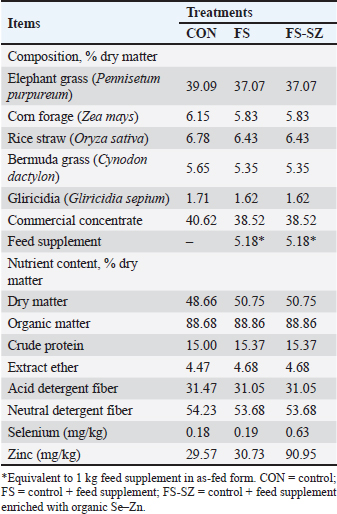
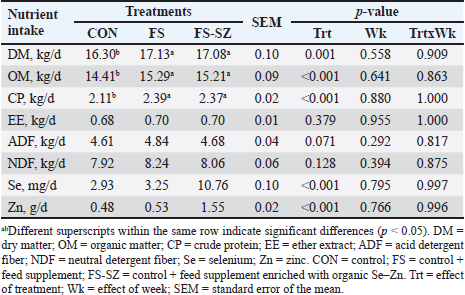
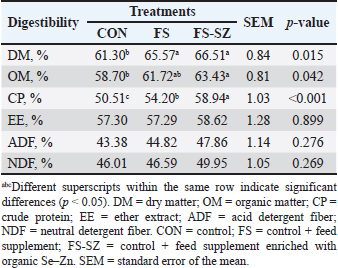
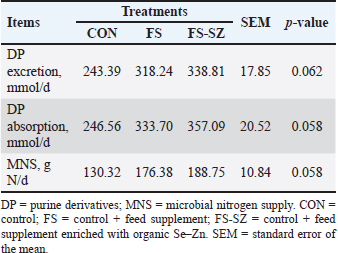
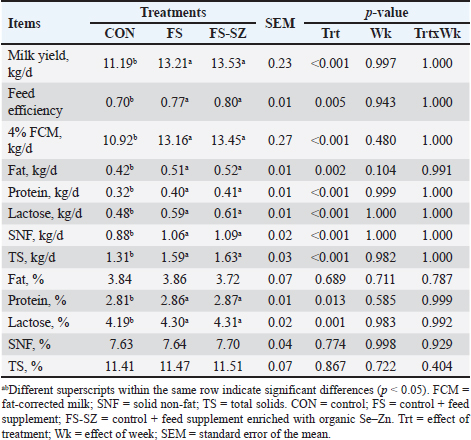
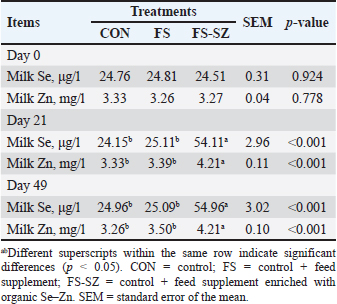
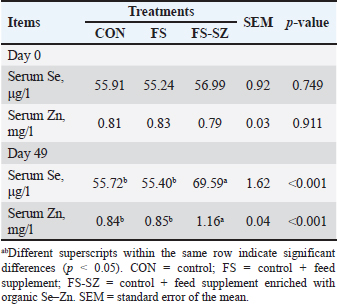
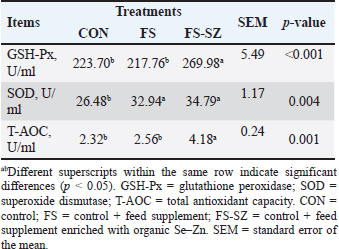


| How to Cite this Article |
| Pubmed Style Anam MS, Widyoboroto BP, Astuti A, Gunawan G, Agus A. Effects of organic selenium–zinc enrichment of a feed supplement on nutrient utilization, milk performance, and blood status in early-lactation dairy cows. Open Vet. J.. 2026; 16(8): 5717-5739. doi:10.5455/OVJ.2026.v16.i8.61 Web Style Anam MS, Widyoboroto BP, Astuti A, Gunawan G, Agus A. Effects of organic selenium–zinc enrichment of a feed supplement on nutrient utilization, milk performance, and blood status in early-lactation dairy cows. https://www.openveterinaryjournal.com/?mno=312223 [Access: September 03, 2026]. doi:10.5455/OVJ.2026.v16.i8.61 AMA (American Medical Association) Style Anam MS, Widyoboroto BP, Astuti A, Gunawan G, Agus A. Effects of organic selenium–zinc enrichment of a feed supplement on nutrient utilization, milk performance, and blood status in early-lactation dairy cows. Open Vet. J.. 2026; 16(8): 5717-5739. doi:10.5455/OVJ.2026.v16.i8.61 Vancouver/ICMJE Style Anam MS, Widyoboroto BP, Astuti A, Gunawan G, Agus A. Effects of organic selenium–zinc enrichment of a feed supplement on nutrient utilization, milk performance, and blood status in early-lactation dairy cows. Open Vet. J.. (2026), [cited September 03, 2026]; 16(8): 5717-5739. doi:10.5455/OVJ.2026.v16.i8.61 Harvard Style Anam, M. S., Widyoboroto, . B. P., Astuti, . A., Gunawan, . G. & Agus, . A. (2026) Effects of organic selenium–zinc enrichment of a feed supplement on nutrient utilization, milk performance, and blood status in early-lactation dairy cows. Open Vet. J., 16 (8), 5717-5739. doi:10.5455/OVJ.2026.v16.i8.61 Turabian Style Anam, Moh Sofi'ul, Budi Prasetyo Widyoboroto, Andriyani Astuti, Gunawan Gunawan, and Ali Agus. 2026. Effects of organic selenium–zinc enrichment of a feed supplement on nutrient utilization, milk performance, and blood status in early-lactation dairy cows. Open Veterinary Journal, 16 (8), 5717-5739. doi:10.5455/OVJ.2026.v16.i8.61 Chicago Style Anam, Moh Sofi'ul, Budi Prasetyo Widyoboroto, Andriyani Astuti, Gunawan Gunawan, and Ali Agus. "Effects of organic selenium–zinc enrichment of a feed supplement on nutrient utilization, milk performance, and blood status in early-lactation dairy cows." Open Veterinary Journal 16 (2026), 5717-5739. doi:10.5455/OVJ.2026.v16.i8.61 MLA (The Modern Language Association) Style Anam, Moh Sofi'ul, Budi Prasetyo Widyoboroto, Andriyani Astuti, Gunawan Gunawan, and Ali Agus. "Effects of organic selenium–zinc enrichment of a feed supplement on nutrient utilization, milk performance, and blood status in early-lactation dairy cows." Open Veterinary Journal 16.8 (2026), 5717-5739. Print. doi:10.5455/OVJ.2026.v16.i8.61 APA (American Psychological Association) Style Anam, M. S., Widyoboroto, . B. P., Astuti, . A., Gunawan, . G. & Agus, . A. (2026) Effects of organic selenium–zinc enrichment of a feed supplement on nutrient utilization, milk performance, and blood status in early-lactation dairy cows. Open Veterinary Journal, 16 (8), 5717-5739. doi:10.5455/OVJ.2026.v16.i8.61 |


