




| Research Article | ||
Open Vet. J.. 2026; 16(8): 5709-5716
Open Veterinary Journal, (2026), Vol. 16(8): 5709–5716 Research Article Effects of combined Bacillus subtilis and Saccharomyces cerevisiae fermentation on the nutritional profile of palm kernel mealFajri Maulana1, Rusfidra Rusfidra2*, Satri Yusasra Agasi1, Heppy Setya Prima3, Malikil Kudus Susalam4 and Fadhli Fajri11Department of Agricultural Industrial Technology, Study Program of Animal Feed Technology, Politeknik Negeri Tanah Laut, Tanah Laut, Indonesia 2Department of Technology and Livestock Production, Faculty of Animal Science, Universitas Andalas, Padang, Indonesia 3Department of Biology, Animal Science Study Program, Faculty of Mathematics and Natural Sciences, Universitas Negeri Medan, Medan, Indonesia 4Department of Agroindustry, Animal Science Study Program, Faculty of Mathematics and Natural Sciences, Universitas Negeri Padang, Sijunjung, Indonesia *Corresponding Author: Rusfidra Rusfidra. Department of Technology and Livestock Production, Faculty of Animal Science, Universitas Andalas, Padang, Indonesia. Email: rusfidra.unand [at] gmail.com Submitted: 21/02/2026 Revised: 06/06/2026 Accepted: 23/06/2026 Published: 20/08/2026 © 2025 Open Veterinary Journal
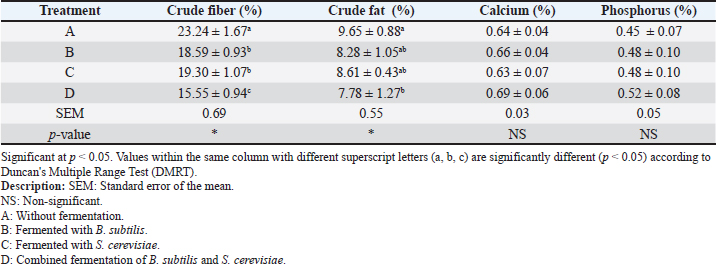
AbstractBackground: Palm kernel meal (PKM) is a by-product of the palm oil industry with considerable potential as a poultry feed ingredient. However, its utilization is limited due to its high crude fiber content and relatively low nutritional value. Microbial fermentation has been widely recognized as an effective strategy to improve feed quality through fiber degradation and enhanced nutrient availability. Previous studies have demonstrated that Bacillus subtilis and Saccharomyces cerevisiae individually improve the nutritional characteristics of feed materials through enzymatic activity and microbial protein synthesis. Nevertheless, studies evaluating the combined fermentation of PKM using these microorganisms remain limited, particularly regarding their potential synergistic effects on nutrient enhancement and fiber reduction for poultry feed utilization. Aim: This study aimed to evaluate the effects of fermenting PKM using B. subtilis and S. cerevisiae, either individually or in combination, on its nutritional value for poultry feed application. Methods: A completely randomized design with four treatments and five replicates was employed. The treatments consisted of: A (unfermented PKM), B (fermentation with B. subtilis), C (fermentation with S. cerevisiae), and D (combined fermentation with B. subtilis and S. cerevisiae). The evaluated parameters included dry matter, gross energy, crude protein, crude fiber, crude fat, calcium, and phosphorus. Data were analyzed using analysis of variance, and Duncan’s multiple range test was applied when significant differences were detected at p < 0.05. Results: Fermentation significantly improved the nutritional profile of PKM by increasing gross energy and crude protein content while decreasing dry matter, crude fiber, and crude fat levels (p < 0.05). No significant differences were observed in calcium and phosphorus content (p > 0.05). Conclusion: Combined fermentation using B. subtilis and S. cerevisiae resulted in higher crude protein and lower crude fiber content, indicating improved nutritional quality of PKM. These findings suggest its potential for further development as an alternative poultry feed resource. Keywords: Bacillus subtilis, Fermentation, Palm kernel meal, Poultry feed, Saccharomyces cerevisiae. IntroductionPoultry, particularly chickens, ducks, and quails, are important livestock commodities due to their high production efficiency, short production cycles, and ability to continuously meet market demand (Agasi and Maulana, 2025; Al-Obaidi et al., 2026). However, the increasing poultry population has led to a substantial rise in the demand for high-quality feed in large quantities. Feed represents the largest cost component in poultry production, accounting for approximately 60%–70% of total production expenses (Maulana et al., 2025). Dependence on conventional feed ingredients such as corn and soybean meal, many of which are still imported, contributes to price fluctuations and reduced production efficiency (Wizna et al., 2025). Therefore, the utilization of locally available alternative feed resources, particularly agricultural by-products, has gained increasing attention. Palm oil processing by-products, including palm kernel meal (PKM) and palm oil sludge, have considerable potential as alternative poultry feed ingredients due to their availability and economic value (Maulana et al., 2021; Wizna et al., 2026). PKM is a by-product of the palm oil industry that is abundantly available in Southeast Asian countries, particularly Indonesia, one of the world’s largest palm oil producers (BPS-Statistics Indonesia, 2024; Reyhan and Saputera, 2025). Due to its wide availability and relatively low cost, PKM has considerable potential as an alternative feed ingredient for poultry. However, its utilization remains limited because of its high crude fiber content and low digestibility. The nutritional potential of PKM as a poultry feed ingredient can be assessed from its nutrient composition. In the present study, PKM contained 89.24% dry matter, 13.84% crude protein, 23.24% crude fiber, 9.65% crude fat, 0.64% calcium, 0.45% phosphorus, and 4,150.63 kcal/kg gross energy. PKM contains moderate levels of crude protein and energy; however, its utilization in poultry feed is limited by its high crude fiber content and low digestibility (Blair et al., 2025). Despite its availability, the utilization of PKM in monogastric diets remains limited due to its high fiber content and relatively low nutrient digestibility compared to conventional feed ingredients. The high crude fiber fraction (24.18%), NDF (64.37%), and ADF (44.46%) may reduce nutrient utilization efficiency in poultry (Blair et al., 2025). The elevated fiber level in PKM is mainly attributed to non-starch polysaccharides (NSP), particularly mannan. Mannan is poorly digested by poultry because their digestive system lacks sufficient endogenous enzymes to degrade this polysaccharide. Consequently, the inclusion level of PKM in poultry diets is generally limited to approximately 10%–25% to avoid negative effects on production performance (Ong et al., 2024). Microbial fermentation is an effective biotechnological approach to enhance the nutritional value of high-fiber feed ingredients such as PKM. Fermentation can reduce crude fiber fractions, improve nutrient availability, and modify feed structure through microbial enzymatic activity (Nuraini et al., 2022). Solid-state fermentation (SSF) has been reported to degrade complex polysaccharides into more digestible forms while producing beneficial microbial metabolites for feed application (Zhu et al., 2024). The use of combined microorganisms in fermentation offers synergistic effects in substrate degradation and nutritional improvement. Enzymatic synergy allows more effective breakdown of complex components such as fiber and protein-bound compounds compared to single-microbe fermentation. Susalam et al. (2023)reported that multi-microbial fermentation is a promising strategy for enhancing feed nutritional quality. Among the potential microorganisms, Bacillus subtilis and Saccharomyces cerevisiae are widely recognized for their ability to improve fiber degradation and nutrient digestibility in feed substrates. Bacillus subtilis is known as a prolific producer of extracellular enzymes, including protease, amylase, cellulase, xylanase, and mannanase. These enzymes play essential roles in degrading complex proteins, starch, and NSP commonly found in high-fiber feed ingredients (Hmani et al., 2017; Norizan et al., 2020). Saccharomyces cerevisiae is a yeast extensively used in feed fermentation due to its ability to increase crude protein content through microbial biomass accumulation and to produce B-complex vitamins and fermentative enzymes. Its metabolic activity enhances nutrient availability, reduces anti-nutritional factors, and improves feed quality (Hoque et al., 2021). Previous studies on PKM fermentation have investigated the use of different microbial species, such as Bacillus amyloliquefaciens, Trichoderma harzianum, and microbial cocktails (Pasaribu et al., 2019), as well as combinations of Bacillus velezensis, S. cerevisiae, and Lactobacillus paracasei (Zhu et al., 2024). However, limited information is available regarding the comparative effects of single and combined fermentation using B. subtilis and S. cerevisiae on the nutritional characteristics of PKM, particularly in terms of crude protein enhancement, crude fiber reduction, and its suitability as a poultry feed ingredient. Therefore, this study aimed to evaluate the effects of fermenting PKM using B. subtilis and S. cerevisiae, either individually or in combination, on improving its nutritional value as a poultry feed ingredient. Materials and MethodsResearch materialsThe main material used in this study was PKM obtained from a local palm oil processing industry in Indonesia. The microorganisms used as fermentation inoculants were B. subtilis Food and Nutrition Culture Collection (FNCC) 0059 and S. cerevisiae FNCC 3012 obtained from the FNCC, Universitas Gadjah Mada, Indonesia. Chemicals used for proximate analysis included H₂SO₄, NaOH, ether solvent, indicators, and other reagents according to standard analytical procedures. Experimental designA completely randomized design was applied, consisting of four treatments with five replicates, resulting in a total of 20 experimental units. The treatments were as follows: A: Unfermented PKM (control), B: PKM fermented with B. subtilis, C: PKM fermented with S. cerevisiae, and D: PKM fermented with a combination of B. subtilis and S. cerevisiae. Each experimental unit consisted of 1 kg of PKM. Preparation of B. subtilis inoculumBacillus subtilis was propagated using rice bran as a carrier medium and nutrient source. The rice bran was first sieved to obtain a uniform particle size. It was then weighed and mixed with sterile water to achieve a moisture content of approximately 35%–40%, followed by thorough homogenization. The moistened bran medium was sterilized by steaming at approximately 100°C for 15 minutes to eliminate contaminating microorganisms. After sterilization, the medium was cooled to room temperature before inoculation. A pure culture of B. subtilis was rejuvenated on nutrient agar and incubated for 24 hours at 37°C. A single colony was then transferred into nutrient broth and incubated in a shaker incubator for 18–24 hours until reaching the logarithmic phase with a cell density of approximately 10⁸ CFU/ml. The culture was added to the sterilized rice bran medium at 5%–10% (v/w) and mixed aseptically until evenly distributed. The inoculated medium was incubated aerobically at 30℃–37°C for 48 hours. During incubation, the mixture was stirred every 12–24 hours to ensure adequate oxygen availability for bacterial growth. After incubation, the bran containing B. subtilis biomass was dried in an oven at 40℃–45°C until the moisture content was below 12% to maintain bacterial viability. The dried product was stored in airtight containers at room temperature and used as a starter for PKM fermentation. Preparation of S. cerevisiae inoculumSaccharomyces cerevisiae was propagated using rice bran as a carrier medium and an additional nutrient source. The rice bran was sieved to obtain a uniform particle size and cleaned of impurities. The required amount of bran was weighed and mixed with sterile water to achieve a moisture content of approximately 40%. To enhance the availability of simple carbon sources, molasses was added at 3%–5% (w/w), and the mixture was homogenized. The moistened bran medium was sterilized by steaming at approximately 100°C for 30 minutes to eliminate contaminants. After sterilization, the medium was cooled to room temperature (approximately 28℃–30°C) before inoculation. Saccharomyces cerevisiae was rejuvenated on potato dextrose agar and incubated for 24–48 hours at 28℃–30°C. A loopful of culture was then transferred into yeast peptone dextrose broth and incubated in a shaker incubator for 18–24 hours until reaching the logarithmic growth phase with a cell density of approximately 106-8 CFU/ml. The yeast suspension was subsequently added to the sterilized bran medium at 5%–10% (v/w) and mixed evenly under aseptic conditions. The inoculated medium was incubated at 28℃–30°C for 48 hours. During incubation, the mixture was stirred every 24 hours to maintain homogeneity and prevent fungal contamination. After optimal yeast growth was achieved, the product was dried in a forced-air oven at 40℃–45°C until the moisture content was below 12% to maintain cell viability. The bran containing S. cerevisiae biomass was stored in airtight containers at room temperature and used as a starter for PKM fermentation. PKM fermentation process (SSF)Fermentation of PKM was conducted using the SSF method with rice bran-based solid starters containing B. subtilis and/or S. cerevisiae biomass. The PKM was first cleaned of impurities and sieved to obtain a uniform particle size. One kilogram of PKM was weighed for each experimental unit. The initial moisture content was determined, and sterile water was gradually added until the substrate moisture content reached approximately 45%. Water was added gradually while mixing thoroughly to ensure uniform moisture distribution. The prepared starters, previously dried to <12% moisture content, were used as inocula. For single-microbe treatments, the starter was added at 5% (w/w) of substrate weight. In the combined treatment, each starter was added at 2.5% (w/w), maintaining a total inoculum level of 5% (w/w). The mixture was thoroughly homogenized to ensure even distribution of the inoculum. The inoculated substrate was placed in sterile polypropylene bags with a substrate layer thickness of approximately 3–5 cm to maintain adequate aeration. Fermentation was carried out at controlled room temperature (28℃–32°C) for 5 days. Since B. subtilis is an aerobic bacterium, the substrate was mixed every 24 hours to maintain oxygen supply and prevent heat accumulation resulting from microbial metabolic activity. Fermentation was terminated on day 5 by drying the material in a forced-air oven at 60°C until the final moisture content was below 12%. The drying process aimed to stop microbial activity and improve product stability. The dried material was ground to obtain a homogeneous product and stored in airtight containers at room temperature until chemical analysis was conducted in the laboratory. Laboratory analysisThe proximate analysis method (AOAC, 2016) was used to determine the following parameters: dry matter, gross energy, crude protein, crude fiber, crude fat, calcium, and phosphorus. Data analysisAll collected data were analyzed using analysis of variance. When significant differences among treatments were detected, Duncan’s multiple range test was applied for further comparison at a significance level of p < 0.05 (Steel and Torrie, 1991). Ethical approvalNot needed for this study ResultsDry matterThe dry matter content of PKM ranged from 87.55% ± 0.90% to 89.24% ± 0.57%. Fermentation significantly affected (p < 0.05) dry matter content, with the combined fermentation treatment resulting in the lowest value compared to the unfermented treatment. Duncan’s Multiple Range Test showed that the unfermented treatment was not significantly different (p > 0.05) from the single-microbe fermentations but differed significantly (p < 0.05) from the combined fermentation treatment (Table 1). Gross energyThe gross energy of fermented PKM ranged from 4,150.63 ± 76.60 to 4,580.55 ± 104.46 kcal/kg. Treatment A (without fermentation) was 4,150.63 ± 76.60 kcal/kg, treatment B (fermented with B. subtilis) was 4,350.79 ± 131.63 kcal/kg, treatment C (fermented with S. cerevisiae) was 4,420.70 ± 152.64 kcal/kg, and treatment D (combined fermentation of B. subtilis and S. cerevisiae) was 4,580.55 ± 104.46 kcal/kg. Gross energy content was analyzed using an adiabatic bomb calorimeter following AOAC standard methods (AOAC, 2016). Statistical analysis showed that fermentation significantly affected (p < 0.05) gross energy. The Duncan's Multiple Range Test (DMRT) results indicated that treatment D was not significantly different (p > 0.05) from treatment C but was significantly different (p < 0.05) from treatments B and A. Crude proteinThe crude protein content ranged from 13.84% ± 1.34% to 19.52% ± 0.83%. Treatment A (without fermentation) was 13.84% ± 1.34%, treatment B (fermented with B. subtilis) was 17.11% ± 1.08%, treatment C (fermented with S. cerevisiae) was 16.47% ± 0.91%, and treatment D (combined fermentation of B. subtilis and S. cerevisiae) was 19.52% ± 0.83%. Statistical analysis showed that fermentation significantly affected (p < 0.05) crude protein content. The DMRT results indicated that treatment D was significantly different (p < 0.05) from treatments C, B, and A. Crude fiberThe crude fiber content ranged from 15.55% ± 0.94% to 23.24% ± 1.67%. Treatment A (without fermentation) was 23.24% ± 1.67%, treatment B (fermented with B. subtilis) was 18.59% ± 0.93%, treatment C (fermented with S. cerevisiae) was 19.30% ± 1.07%, and treatment D (combined fermentation of B. subtilis and S. cerevisiae) was 15.55% ± 0.94%. Statistical analysis showed that fermentation significantly affected (p < 0.05) crude fiber content. The DMRT results indicated that treatment A was significantly different (p < 0.05) from treatments B, C, and D (Table 2). Crude fatThe crude fat content ranged from 7.78% ± 1.27% to 9.65% ± 0.88%. Treatment A (without fermentation) was 9.65% ± 0.88%, treatment B (fermented with B. subtilis) was 8.28% ± 1.05%, treatment C (fermented with S. cerevisiae) was 8.61% ± 0.43%, and treatment D (combined fermentation of B. subtilis and S. cerevisiae) was 7.78% ± 1.27%. Statistical analysis showed that fermentation significantly affected (p < 0.05) crude fat content. The DMRT results indicated that treatment A was not significantly different (p > 0.05) from treatments B and C but was significantly different (p < 0.05) from treatment D (Table 2). CalciumThe calcium content ranged from 0.63% ± 0.07% to 0.69% ± 0.06%. Treatment A (without fermentation) was 0.64% ± 0.04%, treatment B (fermented with B. subtilis) was 0.66% ± 0.04%, treatment C (fermented with S. cerevisiae) was 0.63% ± 0.07%, and treatment D (combined fermentation of B. subtilis and S. cerevisiae) was 0.69% ± 0.06%. Statistical analysis showed that fermentation with B. subtilis, S. cerevisiae, or their combination had no significant effect (p > 0.05) on calcium content (Table 2). PhosphorusThe phosphorus content ranged from 0.45% ± 0.07% to 0.52% ± 0.08%. Treatment A (without fermentation) was 0.45% ± 0.07%, treatment B (fermented with B. subtilis) was 0.48% ± 0.10%, treatment C (fermented with S. cerevisiae) was 0.48% ± 0.10%, and treatment D (combined fermentation of B. subtilis and S. cerevisiae) was 0.52% ± 0.08%. Statistical analysis showed that fermentation with B. subtilis, S. cerevisiae, or their combination had no significant effect (p > 0.05) on phosphorus content (Table 2). Table 1. Effect of PKM fermentation using a combination of B. subtilis and S. cerevisiae on dry matter, gross energy, and crude protein.
Table 2. Effect of PKM fermentation using a combination of B. subtilis and S. cerevisiae on crude fiber, crude fat, calcium, and phosphorus.
DiscussionThe lower dry matter content observed in treatment D was attributed to more intensive microbial metabolic activity during the fermentation process. Active microorganisms such as B. subtilis and S. cerevisiae consumed complex carbohydrate substrates and produced metabolic by-products such as CO₂ and water, resulting in the loss of part of the organic matter as gas during microbial respiration. SSF has also been reported to show that dry matter loss commonly occurs due to carbohydrate degradation and microbial respiration, which lead to CO₂ release and energy substrate consumption, thereby reducing the final dry matter percentage of fermented materials (Shi et al., 2017). The enzymatic degradation activity secreted by microorganisms can break down large molecular components into smaller fragments. Some degradation products are further metabolized by microbes, contributing to a reduction in the total substrate mass measured as dry matter. This phenomenon is common in SSF processes, where microorganisms convert complex nutrients into simpler and more degradable forms (Betchem et al., 2024). The increase in gross energy in treatment D (4,580.55 ± 104.46 kcal/kg) resulted from the degradation of complex fiber components into chemically more combustible fractions. During SSF, microorganisms produce enzymes capable of breaking down structural polysaccharides such as hemicellulose and cellulose, allowing complex and lower energy fractions to be converted into simpler and higher energy compounds (simple sugars, peptides, and lipids), which contribute to the measured gross energy after fermentation. Fermentation using microbial combinations such as S. cerevisiae together with bacteria significantly increases soluble protein, simple sugars, and metabolically available organic components while reducing indigestible fiber fractions, thereby indirectly enhancing the total energy value of feed ingredients (Zhu et al., 2024). Treatment A (without fermentation) had the lowest gross energy value because no significant chemical changes occurred, so the composition of fiber and complex polysaccharides remained dominant. Feed materials that do not undergo structural breakdown by microbial enzymes tend to retain their original composition, resulting in lower energy efficiency for monogastric animals (Rusfidra et al., 2025). The increase in crude protein in treatment D can be explained by two main mechanisms during microbial fermentation. First, the growth phase of B. subtilis and S. cerevisiae on the substrate leads to the accumulation of microbial biomass (single-cell protein), which inherently contains high protein levels. Second, proteolytic enzymes produced by B. subtilis break down complex proteins embedded within the fiber matrix into simpler peptides and amino acids, which are measured as increased crude protein. The use of S. cerevisiae as a feed additive contributes to the modification of complex feed components into simpler forms, improving feed efficiency, nutrient digestibility, and positively influencing gut microflora (Elghandour et al., 2020). The combination of these two microorganisms produces greater enzymatic synergy than single-microbe fermentation, thereby enhancing protein degradation efficiency and microbial biomass synthesis. The use of two or more microorganisms in feed fermentation can improve enzymatic synergy, resulting in better feed quality (Susalam et al., 2023). SSF with microbial combinations can significantly increase the protein content of high-fiber feed ingredients. SSF of PKM with various microbial strains, including yeast and bacteria, has shown increased total nitrogen and soluble peptides due to fiber matrix degradation and microbial cell growth (Zhu et al., 2024). This supports the idea that the role of both microorganisms in treatment D is not only to degrade unavailable components but also to facilitate the synthesis of new organic components contributing to the increase in final crude protein content. The greatest reduction in crude fiber was observed in treatment D (15.55% ± 0.94%). This indicates a synergistic effect between bacteria and yeast in degrading structural fiber components of PKM. PKM is known to contain high levels of NSP, particularly mannan, cellulose, and hemicellulose, which are major limiting factors in poultry utilization. Bacillus subtilis plays an important role in producing extracellular enzymes such as mannanase, xylanase, cellulase, and β-glucanase, which hydrolyze complex polysaccharides into oligosaccharides and simple sugars (Norizan et al., 2020). This enzymatic activity results in cell wall degradation and a significant reduction in crude fiber fraction. Saccharomyces cerevisiae utilizes the sugars produced from hydrolysis as an energy source for growth and microbial biomass synthesis, allowing fiber degradation to proceed more efficiently. The combination of these two microorganisms improves fiber breakdown efficiency compared to single fermentation due to complementary metabolic roles: bacteria dominate fiber hydrolysis, while yeast accelerates intermediate product utilization and stabilizes the fermentation environment. SSF of PKM with microbial combinations significantly reduces crude fiber content due to high hydrolytic enzyme activity while increasing the availability of nutrients (Zhu et al., 2024). The reduction in crude fat in treatment D (7.78% ± 1.27%) indicates that combined fermentation more effectively modified the lipid fraction compared to single fermentation. During SSF, microorganisms utilize part of the lipid components as an energy source through lipase enzyme activity, which hydrolyzes triglycerides into free fatty acids and glycerol. These hydrolysis products are subsequently used in microbial metabolic pathways for growth and biomass synthesis, resulting in decreased total fat content. Bacillus subtilis is capable of producing extracellular lipase enzymes that hydrolyze substrate lipids during SSF. This technique maximizes lipase production and secretion by bacteria, breaking ester bonds in fats into fatty acids and glycerol (Chaturvedi et al., 2010). Saccharomyces cerevisiae can also utilize fatty acids as a carbon source under certain fermentative conditions, particularly when lipid degradation products from bacterial activity are available. This interaction allows more efficient lipid utilization in combined fermentation compared to single inoculum treatments. Fermentation on agro-industrial residues has been reported to produce lipase with high activity relevant to complex lipid degradation (Mazhar et al., 2023). Calcium (Ca) and phosphorus (P) are inorganic minerals that are relatively stable during fermentation processes. Fermentation generally affects organic components such as protein, crude fiber, and fat through microbial enzymatic activity, whereas minerals do not undergo significant degradation or synthesis because they are not primary metabolic substrates for microorganisms. Calcium and phosphorus generally do not change significantly because the total mineral content in feed materials remains relatively stable during microbial fermentation, while organic components such as fiber and protein show more pronounced changes (Wizna et al., 2023). Calcium was analyzed before and after fermentation, and the results showed that total mineral content did not undergo dramatic changes, although the bioavailability of other nutrients increased (Amos et al., 2025). ConclusionCombined fermentation using B. subtilis and S. cerevisiae improved the nutritional quality of PKM by increasing crude protein content and reducing crude fiber levels. These findings indicate that combined microbial fermentation may enhance the potential utilization of PKM as an alternative feed resource. However, further studies evaluating animal performance and digestibility are required before practical application in poultry diets. AcknowledgmentsThe authors would like to express their sincere gratitude to Politeknik Negeri Tanah Laut, Universitas Andalas, Universitas Negeri Padang, and Universitas Negeri Medan for their institutional support, academic collaboration, and technical assistance provided during the conduct of this research. The authors also sincerely thank the laboratory staff and all individuals who contributed to sample preparation, laboratory analyses, and data collection throughout the study. Conflict of interestWe have no conflicts of interest to declare. FundingNot applicable. Authors' contributionsFajri Maulana conducted the experiment, performed laboratory analyses, collected data, and drafted the manuscript. Rusfidra, as the corresponding author, conceived and designed the study, supervised the research activities, and critically revised the manuscript. Satri Yusasra Agasi assisted in experimental design and data analysis. Heppy Setya Prima contributed to laboratory work and data validation. Malikil Kudus Susalam assisted in data interpretation and statistical analysis. Fadhli Fajri contributed to manuscript editing and literature review. Data availabilityAll data generated or analyzed during this study are included in this published article. ReferencesAgasi, S.Y. and Maulana, F. 2025. Effect of fermented local feed on egg quality of laying Quai. J. Biol. Trop. 25(3), 2652–2657; doi: 10.29303/jbt.v25i3.9230 Al-Obaidi, B.M.W., Saeed, O.A., Alnori, H.M. and Jasim, Z.M. 2026. Effect of dietary lemon citrus peel as a natural feed additive on egg yield and quality parameters in spent laying hens. Open Vet. J. 16(1), 81–87; doi: 10.5455/OVJ.2026.v16.i1.7 Amos, A.T., Kareem, D.U., Adeleye, T.M., Adeyeye, E.A., Abatan, M.O., Ayorinde, O.S., Adeboye, E.O., Sbardella, M., Fafiolu, A.O. and Oso, A.O. 2025. The effects of solid-state fermentation by Aspergillus spp. on the nutritional profile of selected agro-industrial by-products as potential feedstuffs for weaner rabbits. Fermentation 11, 356; doi: 10.3390/fermentation11060356 AOAC. 2016. Official methods of analysis of the association of the official analytical chemists, 20th ed. Rockville, MD: AOAC. Betchem, G., Monto, A.R., Lu, F., Billong, L.F. and Ma, H. 2024. Prospects and application of solid-state fermentation in animal feed production – a review. Ann. Anim. Sci. 24(4), 1–32; doi: 10.2478/aoas-2024-0029 Blair, J.A., Emmert, J.L. and Parsons, C.M. 2025. Nutritional composition, nitrogen-corrected true metabolizable energy and standardized amino acid digestibility of palm kernel meal from several countries. Poultry Sci. 104, 104717; doi: 10.1016/j.psj.2024.104717 BPS-Statistics Indonesia. 2024. Indonesian oil palm statistics 2023. Jakarta, Indonesia: Press BPS–Statistics Indonesia. Chaturvedi, M., Singh, M., Man, C.R. and Pandey, S. 2010. Lipase Production from Bacillus subtilis MTCC 6808 by solid state fermentation using ground nut oil cakes as substrate. Res. J. Microbiol. 5(8), 725–730; doi: 10.3923/jm.2010.725.730 Elghandour, M.M.Y., Tan, Z.L., Hafsa, S.H.A., Adegbeye, M.J., Greiner, R., Ugbogu, E.A., Monroy, J.C. and Salem, A.Z.M. 2020. Saccharomyces cerevisiae as a probiotic feed additive to non and pseudo‐ruminant feeding: a review. J. Appl. Microbiol. 128(3), 658–674; doi: 10.1111/jam.14416 Hmani, H., Daoud, M., Jlidi, M., Jelleli, K., Ali, M.B., Brahim, A.H., Bargui, M., Dammak, A. and Ali, M.B. 2017. A Bacillus subtilis strain as probiotic in poultry: selection based on in vitro functional properties and enzymatic potentialities. J. Ind. Microbiol. Biotechnol. 44, 1157–1166; doi: 10.1007/s10295-017-1944-x Hoque, M., Jung, H. and Kim, I. 2021. Effect of yeast culture (Saccharomyces cerevisiae) supplementation on growth performance, excreta microbes, noxious gas, nutrient utilization and meat quality of broiler chicken. J. Poultry Sci. 58(4), 217–221; doi: 10.2141/jpsa.0190144 Maulana, F., Fajri, F., Febrina, B.P., Sandri, D., Susalam, M.K., Agasi, S.Y. and Prima, H.S. 2025. Evaluation of the use of fermented palm kernel meal in laying quail rations. J. Peternakan. 22(1), 105–115; doi: 10.24014/jupet.v22i1:35353 Maulana, F., Nuraini, N. and Mirzah, M. 2021. Nutrient content and quality of fermented palm waste with Lentinus edodes. J. Peternakan Indonesia. 23(2), 174–182; doi: 10.25077/jpi.23.2.174-182.2021 Mazhar, H., Ullah, I., Ali, U., Abbas, N., Hussain, Z., Ali, S.S. and Zhu, H. 2023. Optimization of low-cost solid-state fermentation media for the production of thermostable lipases using agro-industrial residues as substrate in culture of Bacillus amyloliquefaciens. Biocatal. Agricu. Biotechnol. 47, 102559; doi: 10.1016/j.bcab.2022.102559 Norizan, N.A.B.M., Halim, M., Tan, J.S., Abbasiliasi, S., Mat Sahri, M., Othman, F. and Ariff, A.B. 2020. Enhancement of β-mannanase production by Bacillus subtilis ATCC11774 through optimization of medium composition. Molecules 25, 3516; doi: 10.3390/molecules25153516 Nuraini, N., Mirzah, M., Nur, Y.S. and Harnentis, H. 2022. Improving Azolla microphylla through fermentation with lignocellulolytic fungi and its application in broiler feed. Adv. Anim. Vet. Sci. 10(5), 1090–1100; doi: 10.17582/journal.aavs/2022/10.5.1090.1100 Ong, W.L., Chan, K.L., Suwanto, A., Li, Z., NG, K. and Zhou, K. 2024. Hydrolysis of palm kernel meal fibre using a newly isolated Bacillus subtilis F6 with high mannanase activity. Bioresour. Bioprocess. 11, 113; doi: 10.1186/s40643-024-00826-9 Pasaribu, T., Laconi, E.B. and Kompiang, I.P. 2019. Evaluation of the nutrient contents of palm kernel cake fermented by microbial cocktails as a potential feedstuff for poultry. J. Indonesian Trop. Anim. Agric. 44(3), 295–302; doi:10.14710/jitaa.44.3.295-302 Reyhan, F. and Saputera, D. 2025. A comparative study of crude palm oil exports to main producing countries in ASEAN. Golden Ratio Social Sci. Educ. 5(1), 127–140; doi:10.52970/grsse.v5i1.992 Rusfidra, R., Maulana, F., Prima, H.S., Susalam, M.K., Agasi, S.Y. and Fajri, F. 2025. Utilization of pesantren food waste as an alternative poultry feed through fermentation with Rhizopus oligosporus using different carbon sources. J. Anim. Health Prod. 13(2), 418–425; doi:10.17582/journal.jahp/2025/13.2.418.425 Shi, C., Zhang, Y., Lu, Z. and Wang, Y. 2017. Solid-state fermentation of corn-soybean meal mixed feed with Bacillus subtilis and Enterococcus faecium for degrading antinutritional factors and enhancing nutritional value. J. Anim. Sci. Biotechnol. 8(50), 2–9; doi:10.1186/s40104-017-0184-2 Steel, P. and Torrie, J. 1991. Statistical principles and procedures of a geometric approach. PT. Gramedia (Translator). Susalam, M.K., Harnentis, Jamsari. and Marlida, Y. 2023. New growth medium for culturing lactic acid bacteria as probiotic consortium isolated from fermented fish (Budu). Online J. Anim. Feed Res. 13(3), 199–203; doi: 10.51227/ojafr.2023.30 Wizna, Andika, R., Amizar, R., Rusfidra, Maulana, F., Agasi, S.Y., Suryani, R.F., Zurmiati. and Hidayah, M.N. 2026. Effects of fermented restaurant food waste on performance and carcass quality of broiler chickens. J. Anim. Health Prod. 14(1), 99–106; doi: 10.17582/journal.jahp/2026/14.1.99.106 Wizna, Rusfidra, Amizar, R., Andika, R., Haikal, M. and Zurmiati. 2023. The effect of fermentation of leftover food from restaurants and hotels with Bacillus amyloliquefaciens on total colony count of Bacillus sp. and nutrition content of leftover food. Adv. Anim. Vet. Sci. 11(9), 1451–1456; doi: 10.17582/journal.aavs/2023/11.9.1451.1456 Wizna, Rusfidra, Heryandi, Y., Andika, R., Maulana, F., Agasi, S.Y., Wulandari, M. and Safitri, R. 2025. Application of Bacillus amyloliquefaciens in fermenting water lettuce (Pistia stratiotes) as a feed source for mojosari ducks. J. Anim. Health Prod. 13(3), 555–564; doi: 10.17582/journal.jahp/2025/13.3.555.564 Zhu, X., Deng, Z., Wang, Q., Hao, S., Liu, P., He, S. and Li, X. 2024. Improvement in palm kernel meal quality by solid-sate fermentation with Bacillus velezensis, Saccharomyces cerevisiae and Lactobacillus paracasei. Fermentation 10, 655; doi: 10.3390/fermentation10120655 | ||

| How to Cite this Article |
| Pubmed Style Maulana F, Rusfidra R, Agasi SY, Prima HS, Susalam MK, Fajri F. Effects of combined Bacillus subtilis and Saccharomyces cerevisiae fermentation on the nutritional profile of palm kernel meal. Open Vet. J.. 2026; 16(8): 5709-5716. doi:10.5455/OVJ.2026.v16.i8.60 Web Style Maulana F, Rusfidra R, Agasi SY, Prima HS, Susalam MK, Fajri F. Effects of combined Bacillus subtilis and Saccharomyces cerevisiae fermentation on the nutritional profile of palm kernel meal. https://www.openveterinaryjournal.com/?mno=311322 [Access: September 04, 2026]. doi:10.5455/OVJ.2026.v16.i8.60 AMA (American Medical Association) Style Maulana F, Rusfidra R, Agasi SY, Prima HS, Susalam MK, Fajri F. Effects of combined Bacillus subtilis and Saccharomyces cerevisiae fermentation on the nutritional profile of palm kernel meal. Open Vet. J.. 2026; 16(8): 5709-5716. doi:10.5455/OVJ.2026.v16.i8.60 Vancouver/ICMJE Style Maulana F, Rusfidra R, Agasi SY, Prima HS, Susalam MK, Fajri F. Effects of combined Bacillus subtilis and Saccharomyces cerevisiae fermentation on the nutritional profile of palm kernel meal. Open Vet. J.. (2026), [cited September 04, 2026]; 16(8): 5709-5716. doi:10.5455/OVJ.2026.v16.i8.60 Harvard Style Maulana, F., Rusfidra, . R., Agasi, . S. Y., Prima, . H. S., Susalam, . M. K. & Fajri, . F. (2026) Effects of combined Bacillus subtilis and Saccharomyces cerevisiae fermentation on the nutritional profile of palm kernel meal. Open Vet. J., 16 (8), 5709-5716. doi:10.5455/OVJ.2026.v16.i8.60 Turabian Style Maulana, Fajri, Rusfidra Rusfidra, Satri Yusasra Agasi, Heppy Setya Prima, Malikil Kudus Susalam, and Fadhli Fajri. 2026. Effects of combined Bacillus subtilis and Saccharomyces cerevisiae fermentation on the nutritional profile of palm kernel meal. Open Veterinary Journal, 16 (8), 5709-5716. doi:10.5455/OVJ.2026.v16.i8.60 Chicago Style Maulana, Fajri, Rusfidra Rusfidra, Satri Yusasra Agasi, Heppy Setya Prima, Malikil Kudus Susalam, and Fadhli Fajri. "Effects of combined Bacillus subtilis and Saccharomyces cerevisiae fermentation on the nutritional profile of palm kernel meal." Open Veterinary Journal 16 (2026), 5709-5716. doi:10.5455/OVJ.2026.v16.i8.60 MLA (The Modern Language Association) Style Maulana, Fajri, Rusfidra Rusfidra, Satri Yusasra Agasi, Heppy Setya Prima, Malikil Kudus Susalam, and Fadhli Fajri. "Effects of combined Bacillus subtilis and Saccharomyces cerevisiae fermentation on the nutritional profile of palm kernel meal." Open Veterinary Journal 16.8 (2026), 5709-5716. Print. doi:10.5455/OVJ.2026.v16.i8.60 APA (American Psychological Association) Style Maulana, F., Rusfidra, . R., Agasi, . S. Y., Prima, . H. S., Susalam, . M. K. & Fajri, . F. (2026) Effects of combined Bacillus subtilis and Saccharomyces cerevisiae fermentation on the nutritional profile of palm kernel meal. Open Veterinary Journal, 16 (8), 5709-5716. doi:10.5455/OVJ.2026.v16.i8.60 |


