




| Research Article | ||
Open Vet. J.. 2026; 16(8): 5242-5255 !
Open Veterinary Journal, (2026), Vol. 16(8): 5242–5255 Research Article In vivo safety and efficacy evaluation of a shampoo formulated with Cymbopogon nardus and Azadirachta indicaHenny Endah Anggraeni1,2*, Lina Noviyanti Sutardi3, Aulia Andi Mustika4, Wasmen Manalu5 and Andriyanto Andriyanto41School of Veterinary Medicine and Biomedical Sciences, IPB University, Bogor, Indonesia 2College of Vocational Studies, IPB University, Bogor, Indonesia 3Subdivision of Veterinary Pharmacy, School of Veterinary Medicine and Biomedical Sciences, IPB University, Bogor, Indonesia 4Division of Pharmacology and Toxicology, School of Veterinary Medicine and Biomedical Sciences, IPB University, Bogor, Indonesia 5Division of Physiology, School of Veterinary Medicine and Biomedical Sciences, IPB University, Bogor, Indonesia *Corresponding Author: Henny Endah Anggraeni. School of Veterinary Medicine and Biomedical Sciences, IPB University, Bogor, Indonesia. Email: hennyendahanggraeni [at] apps.ipb.ac.id Submitted: 15/02/2026 Revised: 11/06/2026 Accepted: 26/06/2026 Published: 08/08/2026 © 2025 Open Veterinary Journal
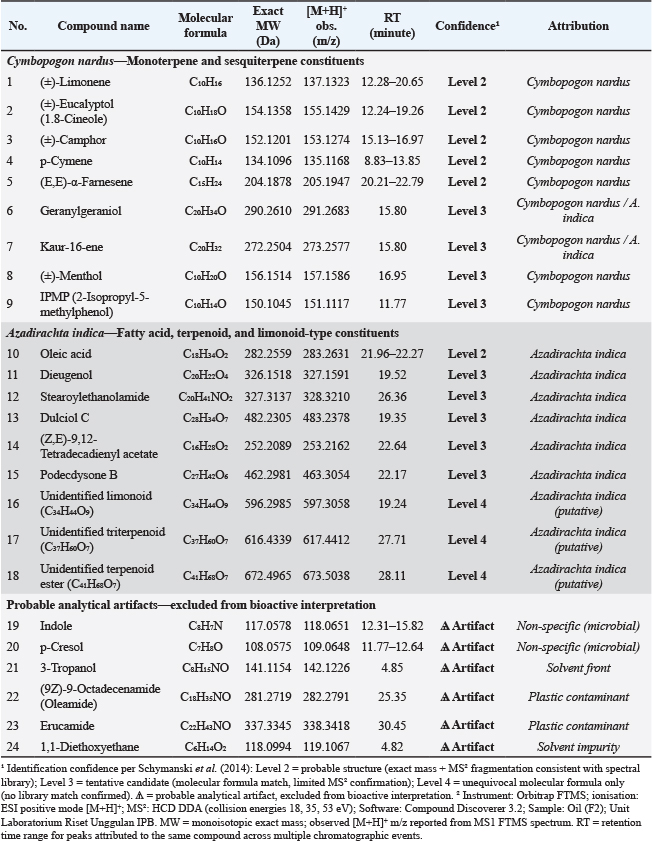
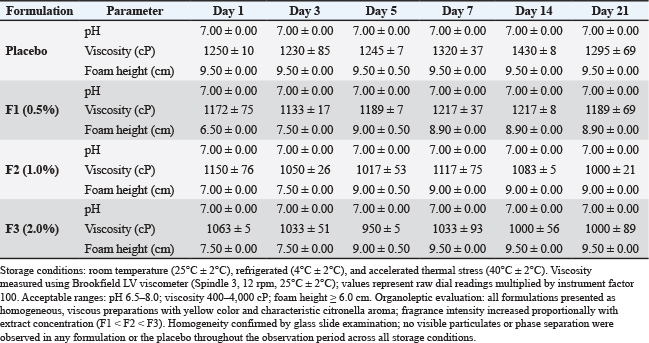
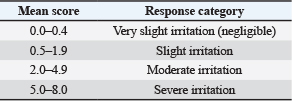
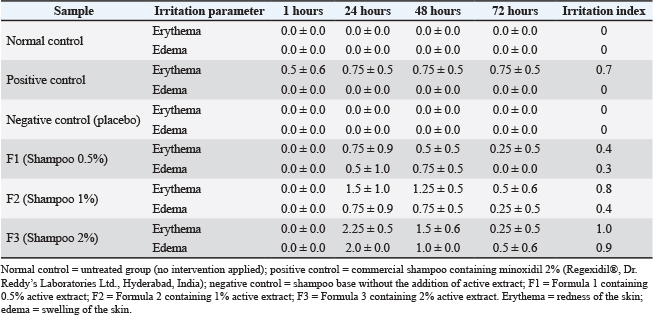
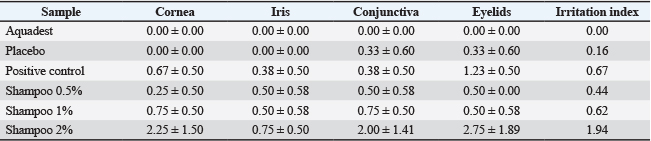
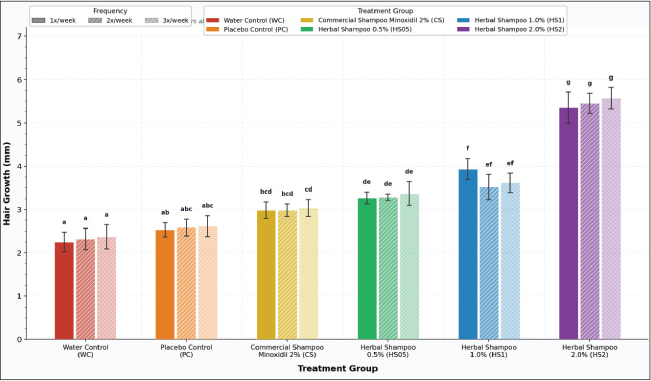
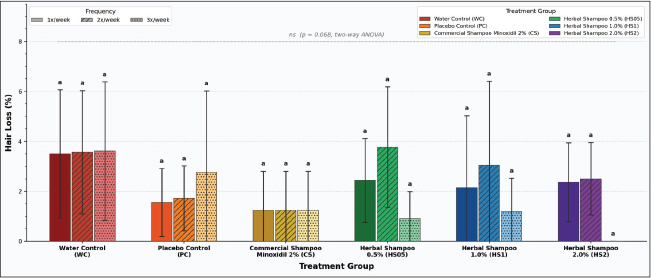
AbstractBackground: Growing interest in natural veterinary products has highlighted Cymbopogon nardus (citronella) and Azadirachta indica (neem) as promising botanical ingredients due to their antimicrobial, anti-inflammatory, repellent, and hair-supportive properties. These characteristics render them suitable for topical shampoo formulations designed to enhance skin and coat health, prevent ectoparasite infestation, and minimize hair shedding in companion animals. However, combined herbal formulations necessitate thorough in vivo safety and efficacy validation before practical implementation. Aim: This study aimed to formulate shampoos with combined C. nardus and A. indica extracts at 0.5%, 1.0%, and 2.0% concentrations, and to evaluate their safety profile and efficacy in enhancing hair growth parameters, follicular density, as well as in reducing shedding in animal models. Methods: Liquid Chromatography–Mass Spectrometry analysis identified 18 phytochemical compounds (six additional signals classified as analytical artifacts). Three shampoo formulations were subsequently assessed for organoleptic properties, homogeneity, pH, viscosity, foam height, and physicochemical stability. Acute dermal irritation tests were performed on four adult female New Zealand White rabbits, while ocular irritation tests were conducted on six rabbits, with both evaluated using the Draize scoring system at 1, 24, 48, and 72 hours post-application. Efficacy was assessed using 108 female ddY mouse strain mice divided into 18 experimental groups (n=6 per group) over 28 days. Parameters included weekly hair length measurements (weeks 1–4), a pull test to assess hair fragility, and histopathological quantification of follicular density at week 4. Data were analyzed using two-way analysis of variance followed by Tukey’s HSD post hoc test (p < 0.05). Results: All formulations satisfied quality standards (pH 7; viscosity 950 ± 5 to 1,430 ± 8 cP; homogeneous consistency). Irritation indices ranged from negligible to slight. Hair growth parameters improved significantly in a dose- and frequency-dependent manner, with the 2% formulation producing the greatest increases in hair length (5.57 ± 0.25 mm) and follicular density (156.67 ± 2.52 follicles/cm2), alongside near complete shedding reduction (p < 0.05). Conclusion: Shampoos combining C. nardus and A. indica shampoos (0.5%–2%) are topically safe and effectively enhance hair growth and follicular density, with the 2% formulation demonstrating optimal performance. Keywords: Azadirachta indica, Cymbopogon nardus, Hair growth, Irritation test, Veterinary shampoo. IntroductionGlobal interest in herbal veterinary products has surged in recent years, driven by pet owners’ preference for natural, sustainable, and low-toxicity alternatives to synthetic agents. The growing adoption of phytotherapy in veterinary practice reflects an increasing demand for plant-based alternatives, particularly in the context of antimicrobial resistance and consumer preference for holistic animal care (Mestorino and Reeve-Johnson, 2023; Nabi et al., 2023; Wiono et al., 2023). This trend is particularly evident in dermatological and grooming applications, where skin disorders such as atopic dermatitis and pyoderma, as well as ectoparasite infestations, including fleas, ticks, and lice, remain leading causes of morbidity in companion animals and are often accompanied by secondary hair loss, pruritus, and compromised coat quality (Ebani and Mancianti, 2020; Cotticelli et al., 2023). Cymbopogon nardus (citronella) and Azadirachta indica (neem) stand out due to their rich phytochemical profiles. Citronella essential oil contains limonene, eucalyptol, and geraniol, which confer antimicrobial, antifungal, anti-inflammatory, and insect-repellent activities (Silva et al., 2020; Sienkiewicz et al., 2021). Similarly, A. indica seed oil, rich in azadirachtin, nimbin, and oleic acid, has demonstrated efficacy against ectoparasites, reduction of skin inflammation, and support for follicular health in both in vitro and field studies (Kaur et al., 2020; Thi and Lam, 2021). Neem-based shampoos have shown clinical benefits in alleviating atopic dermatitis and reducing parasite loads in dogs and cats without significant irritation when properly formulated (Cotticelli et al., 2023). Despite these promising properties, scientific evidence regarding the combined use of C. nardus and A. indica extracts in pet shampoo formulations remains limited. In particular, data on potential combined effects, long-term topical safety, and quantitative effects on hair growth parameters are scarce. Most existing studies have focused on single-plant preparations or in vitro screening, leaving a critical knowledge gap in integrated in vivo safety and efficacy data for combined herbal shampoos intended for routine use in pets. Therefore, this study aimed to evaluate the safety and efficacy of shampoo formulations containing combined C. nardus and A. indica extracts at concentrations of 0.5%, 1.0%, and 2.0% (v/v). Safety assessment included physicochemical quality evaluation, dermal and ocular irritation tests, and histopathological examination in accordance with the guidelines of the Badan Pengawas Obat dan Makanan (BPOM (2022); Indonesian Food and Drug Authority) and the Organisation for Economic Co-operation and Development (OECD) test guidelines. Efficacy was investigated using quantitative measurements of hair length, follicular density, and shedding rate in a murine model over a 28-day observation period. Materials and MethodsStudy design and locationThis experimental study was conducted to evaluate the safety and efficacy of a herbal shampoo formulated with citronella oil (C. nardus) and neem oil (A. indica). The study consisted of five sequential stages: (1) active compound analysis, (2) shampoo formulation, (3) quality control evaluation, (4) skin and ocular irritation testing, and (5) efficacy evaluation. The experimental groups consisted of a negative control (WC: distilled water), a vehicle control (PC: placebo shampoo), a positive control (CS: commercial shampoo), and three test groups of herbal shampoo (HS05, HS1, and HS2) at concentrations of 0.5%, 1.0%, and 2.0% v/v, respectively. The study was conducted from June to September 2025 at the Laboratory Animal Management Unit (UPHL), the Pharmacy Laboratory of the School of Veterinary Medicine and Biomedical Sciences (SKHB), the Advanced Laboratory, and the Teaching Animal Clinic, Vocational School, IPB University, Bogor, Indonesia. Analysis of active compoundsActive compounds were analyzed using Ultra-High Performance Liquid Chromatography–Mass Spectrometry (Vanquish Tandem Q Exactive Plus Orbitrap, Thermo Fisher Scientific) with an Accucore C18 column (100 × 2.1 mm, 1.5 µm). Phytochemical identification was based on exact mass error (ppm), isotope patterns, and MS2 fragmentation data and was categorized according to Schymanski et al. (2014), confidence levels 1–3. Data processing, including library matching and m/z values, was conducted at the Advanced Laboratory, IPB University. Shampoo formulationThe oil phase consisted of C. nardus essential oil (COA No. 8000-29-1) and A. indica oil (COA No. 131W1), prepared at concentrations of 0.5%, 1.0%, and 2.0% (v/v). Concentration ranges were selected based on previous cosmetic studies involving herbal essential oils on Kaur et al. (2020). The aqueous phase was prepared by dissolving sodium lauryl sulfate Sodium Lauryl Sulfate (SLS; Sigma-Aldrich, St. Louis, MO), cocamide diethanolamine (cocamide DEA; Sigma-Aldrich, St. Louis, MO), cocamidopropyl betaine (CAB 30; Sigma-Aldrich, St. Louis, MO), and nipagin (methylparaben; Merck KGaA, Darmstadt, Germany) in distilled water to a final volume of 100 ml, under continuous stirring until homogeneous. The oil phase was gradually incorporated into the aqueous phase under constant agitation. Quality control evaluationQuality control tests were conducted for all three herbal shampoo formulations (F1: 0.5%, F2: 1.0%, and F3: 2.0%) and the placebo. Tests included organoleptic evaluation, homogeneity testing, pH measurement using a calibrated digital pH meter (Mettler Toledo, Columbus, OH), viscosity measurement using a Brookfield LV viscometer (Brookfield Engineering Laboratories Inc., Middleboro, MA; spindle 3, 12 rpm, at room temperature), and foam height measurement using the modified Ross–Miles method following ASTM D1173 (see Foam Height subsection below). Results for each physicochemical parameter are expressed as mean ± SD (n=3 storage conditions per time point) and are presented in Table 2. Stability testing protocolPhysical and chemical stability was evaluated over a 21-day observation period at six time points (Day 1, 3, 5, 7, 14, and 21) under three simultaneous storage conditions (Lachman et al., 1994; ICH, 2003): room temperature (25°C ± 2°C), refrigerated (4°C ± 2°C), and accelerated thermal stress (40°C ± 2°C). At each time point and storage condition, all physicochemical parameters (pH, viscosity, foam height, organoleptic appearance, and homogeneity) were reassessed. This 21-day protocol serves as a preliminary accelerated stability assessment consistent with exploratory formulation studies. Results are expressed as mean ± SD (n=3 storage conditions per time point). Dermal and ocular irritation testsDermal and ocular irritation tests were conducted in accordance with OECD Test Guidelines (TG) 404 and 405, respectively. All animals were acclimatized for five days prior to testing and housed individually under controlled conditions (20°C ± 3°C; 50%–60% relative humidity; 12-hour light/dark cycle) with ad libitum access to standard diet and water. For the dermal irritation test (OECD TG 404), four adult female New Zealand White rabbits (~2 kg) were used in a within-subject design. The dorsal area was clipped 24 hours prior to testing, and six spatially separated test sites were demarcated per animal. Each site received 0.5 ml of one test substance applied under an occlusive patch for 4 hours: distilled water (negative control), placebo shampoo (vehicle control), commercial shampoo containing 2% minoxidil (positive reference), and herbal shampoo at 0.5%, 1.0%, and 2.0% (v/v). Following patch removal, erythema and edema were scored using the Draize grading system at 1, 24, 48, and 72 hours, and the Primary Irritation Index (PII) was calculated per OECD TG 404 (OECD, 2015). This within-subject design yielded 24 experimental units (4 animals × 6 sites), corresponding to a resource equation error degree of E=18, within the recommended range of 10–20 for preclinical studies (Arifin and Zahiruddin, 2017). For the ocular irritation test (OECD TG 405), six adult female New Zealand White rabbits (~2 kg) were used, with one animal allocated per test substance. A single dose of 0.1 ml was instilled into the conjunctival sac of the test eye; the contralateral eye served as an untreated control. Corneal opacity, iris lesions, conjunctival redness, and chemosis were evaluated by Draize scoring at 1, 24, 48, and 72 hours post-instillation, and the Irritation Index (II) was calculated per OECD TG 405 (OECD, 2017). As all formulations produced Draize scores of zero at all observation time points, confirmatory testing with additional animals was not required, consistent with the sequential testing procedure of OECD TG 405. The validity of negative findings from appropriately designed small-sample studies is supported by Gaskill and Garner (2020). Efficacy evaluationOne hundred and eight female ddY mouse strain (DDY) mice (body weight 20–25 g; age 6–8 weeks) were randomly assigned to 18 groups (n=6 per group). Female animals were used to minimize intra-group hormonal variability arising from estrous cycle-dependent fluctuations in the anagen-to-telogen ratio; this single-sex design is acknowledged as a limitation (Discussion). The 18 groups followed a 6 × 3 factorial design: six treatment substances each applied at three frequencies (1×, 2×, and 3× per week). Substances were distilled water (WC; untreated negative control), shampoo base without active extract (PC; placebo control), commercial shampoo containing 2% minoxidil (CS; positive comparator), and herbal shampoo at 0.5% (HS05), 1.0% (HS1), and 2.0% (HS2) v/v. Minoxidil 2% was selected based on its established trichogenic activity in murine models (Huang et al., 2019), though its precise mechanism remains incompletely characterized; this group therefore serves as a pharmacological reference rather than a fully validated mechanistic positive control. Depilatory procedurePrior to shampoo application, the dorsal area (2 × 2.5 cm) of each mouse was shaved using an electric clipper. A thioglycolate-based depilatory cream (Veet® Sensitive Formula, Reckitt Benckiser, Slough, UK; active ingredient: calcium thioglycolate 5.0% w/w) was then applied evenly to the shaved area for exactly 5 minutes at room temperature, after which it was removed by gentle wiping with a warm damp cloth. The skin was subsequently rinsed with distilled water and allowed to recover for 24 hours before the first shampoo application. All experimental groups underwent an identical depilatory procedure under the same conditions to ensure uniformity across treatments. The potential confounding effect of thioglycolate-induced anagen synchronization on hair- growth outcomes is addressed in the Discussion section (Tsai et al., 2021; Wang et al., 2025). Hair- growth measurementShampoo was applied for 4 weeks according to the group assignment. Hair growth was evaluated weekly over a 4-week period using the trichogram method (Dhurat and Saraogi, 2009). Hair length was measured from the skin surface to the hair tip using a digital caliper (precision 0.01 mm). The pull test was performed to assess hair fragility. The threshold of >10% positive hairs described by Dhurat and Saraogi (2009) is defined for human clinical use; its applicability in DDY mice has not been formally validated. In this study, pull test results were therefore interpreted comparatively across treatment groups rather than as absolute diagnostic criteria, and this methodological limitation is acknowledged. Histological analysisAt the end of the 4-week treatment period, dorsal skin biopsies were collected from each mouse using a 6 mm punch biopsy instrument and immediately fixed in 10% neutral-buffered formalin (NBF) for 24 hours. Specimens were processed by graded ethanol dehydration (70%–100%), xylene clearing, and paraffin infiltration at 60°C (Bancroft and Gamble, 2008). Sections of 5 µm were cut using a rotary microtome (Leica RM2235, Leica Biosystems, Wetzlar, Germany) and mounted on poly-L-lysine-coated slides. Sections were stained with haematoxylin and eosin (H&E): Mayer’s haematoxylin (Merck KGaA, Darmstadt, Germany) for 5 minutes, bluing in running tap water for 5 minutes, and counterstaining with eosin Y (Sigma-Aldrich, St. Louis, MO) for 2 minutes, followed by dehydration and mounting with Entellan® (Merck KGaA, Darmstadt, Germany). Hair follicle density (follicles/cm2) was quantified from five randomly selected fields per section at 100× magnification (Zeiss Primostar, Carl Zeiss Microscopy GmbH, Jena, Germany) using ImageJ version 1.54 (NIH, Bethesda, MD; Schneider et al., 2012). Data analysisData were analyzed using two-way analysis of variance (ANOVA) to evaluate the main effects of concentration (0.5%, 1.0%, and 2.0%) and application frequency (1×, 2×, and 3× per week), and their interaction. Post hoc pairwise comparisons were performed using Tukey's HSD test when significant effects were detected (p < 0.05), with compact letter display (CLD) notation applied in all figures. All analyses were conducted using Minitab® version 22 (Minitab, LLC, State College, PA). Ethical approvalAll experimental procedures involving animals were approved by the SKHB Animal Ethics Commission, IPB University (Ethical Clearance Number: 269/KEH/SKE/XI/2024) and were conducted in accordance with institutional guidelines for animal care and use. ResultsPhytochemical profiling by Liquid chromatography–mass spectrometry (LC-MS/MS)LC-MS/MS analysis detected 24 compounds in the combined C. nardus and A. indica extract (RT 4.82–30.45 minutes), of which 18 were attributed to the phytochemical profile, and six were classified as probable analytical artifacts. Identification confidence was assigned per Schymanski et al. (2014): six compounds at Level 2 (probable structure; exact mass + MS2 fragmentation confirmed), nine at Level 3 (tentative candidate; molecular formula match with limited MS2 confirmation), and three at Level 4 (molecular formula only) (Table 1). From C. nardus, five compounds were confirmed at Level 2: (±)-limonene, (±)-eucalyptol, (±)-camphor, p-cymene, and (E,E)-α-farnesene. Four additional compounds were tentatively assigned at Level 3: geranylgeraniol, kaur-16-ene, (±)-menthol, and IPMP. From A. indica, oleic acid was the dominant constituent confirmed at Level 2, with five Level 3 compounds (dieugenol, stearoylethanolamide, dulciol C, (Z,E)-9,12-tetradecadienyl acetate, and podecdysone B) and three Level 4 compounds with limonoid-consistent elemental compositions (C₃₄H₄₄O₉; C₃₇H₆₀O₇; C₄₁H₆₈O₇). Six compounds (indole, p-cresol, 3-tropanol, oleamide, erucamide, and 1,1-diethoxyethane) were classified as analytical artifacts based on documented nonbiological sources and are excluded from bioactive interpretation (Table 1). Shampoo quality evaluationAll formulations (0.5%, 1.0%, and 2.0%) and the placebo exhibited homogeneous viscous consistency, yellow color, and a characteristic citronella aroma that intensified with higher concentrations. The pH of all formulations remained stable at 7.00 ± 0.00 across all time points and storage conditions. Foam height, determined using the modified Ross–Miles method at 40°C ± 0.5°C following ASTM D1173, ranged from 6.50 ± 0.00 to 9.50 ± 0.50 cm across all formulations and time points, with all values exceeding the minimum acceptable threshold of 6.0 cm. Viscosity ranged from 950 ± 5 to 1,430 ± 8 cP across all formulations throughout the 21-day observation period (Placebo: 1,230–1,430 cP; F1: 1,133–1,217 cP; F2: 1,000–1,150 cP; F3: 950–1,063 cP), remaining within the acceptable range of 400–4,000 cP (Lachman et al., 1994; Barel et al., 2014) under all three storage conditions. Physical stability was evaluated at six time points (Days 1, 3, 5, 7, 14, and 21) under room temperature (25°C ± 2°C), refrigerated (4°C ± 2°C), and accelerated thermal stress (40°C ± 2°C) conditions, with pH, viscosity, foam height, organoleptic properties, and homogeneity assessed at each time point. It is acknowledged that this 21-day protocol does not fulfill ICH Q1A(R2) long-term stability requirements; extended stability studies are recommended for future product development stages (ICH, 2003; Barel et al., 2014) Table 2. Dermal and ocular irritationDermal irritation scores and PII values are presented in Table 4. The normal control and placebo produced no erythema or edema at any time point (PII=0). The positive control produced slight erythema with no edema (PII=0.7). Among herbal formulations, all responses were transient and declined progressively from 24 to 72 hours. F1 (0.5%) was classified as negligible (PII erythema=0.4; edema=0.3); F2 (1.0%) and F3 (2.0%) were classified as slightly irritating (PII erythema=0.8 and 1.0; edema=0.4 and 0.9, respectively). No formulation exceeded the moderate irritation threshold (PII ≥ 2.0). Ocular irritation scores and II values are presented in Table 5. Distilled water produced no ocular response (II=0.00); the placebo produced minimal conjunctival reaction (II=0.16); and the positive control produced slight conjunctival redness and eyelid swelling (II=0.67). Among herbal formulations, F1 and F2 produced slight, reversible responses (II=0.44 and 0.62, respectively). F3 (2.0%) produced the highest response, with notable corneal opacity (2.25 ± 1.50) and eyelid reaction (2.75 ± 1.89), yielding an II of 1.94, classified as slightly irritating as it did not exceed the moderate irritation threshold (II ≥ 2.0). All ocular responses resolved within 72 hours. Hair- growth rateAll treated groups exhibited progressive hair regrowth compared to controls throughout the 28-day observation period. Two-way ANOVA revealed that concentration was the dominant driver of hair growth (F=393.31, df=2, p < 0.001), while application frequency had no significant main effect (F=0.997, df=2, p=0.377). A significant concentration × frequency interaction was detected (F=2.589, df=4, p=0.049), indicating that the effect of frequency differed across concentration levels. The greatest hair length at day 28 was recorded in HS2-3× (5.57 ± 0.25 mm; CLD: g), followed by HS2-2× (5.45 ± 0.23 mm; g) and HS2-1× (5.35 ± 0.36 mm; g). The lowest values were observed in WC groups (2.25–2.37 mm; CLD: a) (Fig. 1). Table 1. LC-MS/MS phytochemical profile of the combined Cymbopogon nardus and Azadirachta indica extract with Schymanski et al. (2014) identification confidence levels.
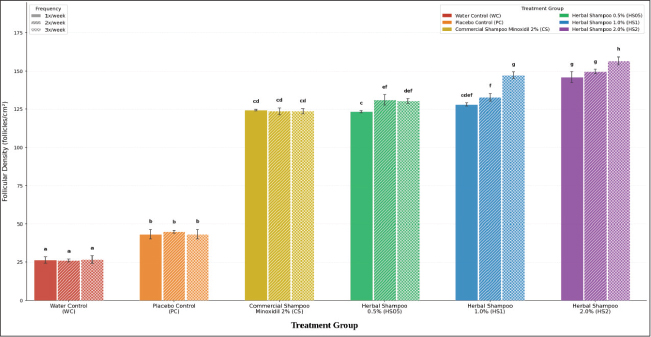
Follicular densityFollicular density at week 4 differed significantly among groups. Two-way ANOVA showed significant main effects of concentration (F=221.52, df=2, p < 0.001) and frequency (F=64.56, df=2, p < 0.001), as well as a significant interaction (F=9.677, df=4, p < 0.001). The lowest density was recorded in WC groups (26.00–26.67 follicles/cm2; CLD: a), while the highest was in HS2-3× (156.67 ± 2.52 follicles/cm2; CLD: h). Intermediate densities were recorded in HS05 (123.33–131.00 follicles/cm2; CLD: c–ef) and HS1 groups (128.00–147.33 follicles/cm2; CLD: cdef–g) (Fig. 2). Hair lossTwo-way ANOVA revealed no significant main effect of concentration on hair loss (F=0.649, df=2, p=0.527) but a significant main effect of application frequency (F=6.802, df=2, p=0.003), with no significant interaction (F=0.284, df=4, p=0.887). The lowest hair loss was recorded in HS2-3× (0.00% ± 0.00%), while WC groups showed the highest shedding rates (3.50%–3.62%). As no significant group differences were detected in the overall analysis (F=1.651, p=0.068), all groups were assigned the same CLD letter (a) (Fig. 3). DiscussionPhytochemical composition and bioactive relevanceThe five Level 2-confirmed terpenoids of C. nardus limonene, eucalyptol, camphor, p-cymene, and α-farnesene are among the most consistently reported constituents of citronella essential oil (Silva et al., 2020; Sienkiewicz et al., 2021). Limonene, the dominant compound (Group Area 1.61 × 101⁰), acts as a transdermal penetration enhancer by disrupting stratum corneum lipid bilayers (Williams and Barry, 2004), potentially facilitating follicular delivery of co-applied A. indica constituents. Eucalyptol inhibits proinflammatory cytokines, including tumor necrosis factor-alpha (TNF-α) and Interleukin-1 beta (IL-1β), and exhibits anti-ectoparasitic activity (Juergens et al., 2004), while camphor and p-cymene contribute anti-ectoparasitic and antimicrobial activities, respectively, complementing the repellent properties of α-farnesene (Seyoum et al., 2002). Oleic acid, the dominant A. indica constituent (Level 2; Group Area 7.13 × 10⁸), constitutes 50%–60% of cold-pressed neem seed oil and exhibits anti-inflammatory activity through inhibition of arachidonic acid metabolism (Carrillo et al., 2012), with additional emollient and skin-barrier-supportive properties relevant to the management of atopic dermatitis and ectoparasite infestations in companion animals (Cotticelli et al., 2023). The three Level 4 compounds with limonoid-consistent elemental compositions (C₃₄H₄₄O₉, C₃₇H₆₀O₇, and C₄₁H₆₈O₇) provide molecular-formula-level evidence for limonoid- or triterpenoid-class constituents attributable to A. indica, though definitive structural identification requires authentic standards or nuclear magnetic resonance characterization. Table 2. Physicochemical quality control parameters of herbal shampoo formulations during stability testing (Mean ± SD, n=3 replicates per time point).
Absence of azadirachtin and major neem limonoidsThe absence of azadirachtin (C₃₅H₄₄O₁₆, molecular weight (MW) 720.26 Da), nimbin, and salannin is attributed to two factors. First, the C18 reverse-phase column in electrospray ionization (ESI)-positive mode is unsuitable for detecting highly oxygenated, high-MW limonoids; azadirachtin requires Hydrophilic Interaction Liquid Chromatography or C8 columns with Atmospheric Pressure Chemical Ionization or ESI-negative mode for reliable detection (Morgan et al., 2000; Forim et al., 2010). Second, cold-pressed A. indica seed oil contains substantially lower azadirachtin concentrations than seed kernel extracts, further diminished by heat and light exposure during processing (Isman, 2006). The biological activities of the neem component are therefore attributed to oleic acid and the detected terpenoid and limonoid-type compounds. Table 3. Category of irritation response in rabbits based on the primary irritation index.
Analytical artifactsThe six artifact compounds have well-documented nonbiological sources: oleamide and erucamide are slip agent contaminants from polyethylene laboratory consumables (Keller et al., 2008); 1,1-diethoxyethane and 3-tropanol eluted in the solvent-front region (RT < 5 minutes), indicative of solvent impurities; and indole and p-cresol are microbial metabolites from sample storage contamination. Their retention in Table 1 follows best practices in nontargeted metabolomics reporting (Sumner et al., 2007) and does not affect the validity of the phytochemical interpretation. Table 4. Dermal irritation scores and primary irritation index of shampoo formulations.
Table 5. Ocular irritation scores in rabbits after single exposure to shampoo formulations.
Fig. 1. Mean hair growth (mm) ± SD.
Fig. 2. Mean follicular density (follicles/cm2) ± SD. Physicochemical quality and stabilityAll three herbal shampoo formulations satisfied established quality parameters for topical veterinary products throughout the 21-day observation period. The stable neutral pH (7.00 ± 0.00) across all formulations and time points falls within the physiologically compatible range for companion animal skin, for which canine cutaneous pH has been reported to range from 5.5 to 7.2, with values up to 9.1 recorded at the dorsal thoracolumbar region depending on anatomical site, breed, age, and sex (Matousek and Campbell, 2002; Kwon et al., 2025). pH stability throughout the observation period further indicates the absence of significant chemical degradation of active constituents under the tested storage conditions.
Fig. 3. Mean hair loss (%) ± SD. A consistent inverse relationship between herbal extract concentration and viscosity was observed: Placebo (1,230–1,430 cP) > F1 (1,133–1,217 cP) > F2 (1,000–1,150 cP) > F3 (950–1,063 cP), attributable to the diluting effect of incorporated oils on the surfactant network, consistent with the rheological behavior of oil-in-water surfactant systems (Lachman et al., 1994). All viscosity values remained within the acceptable range of 400–4,000 cP (Barel et al., 2014), confirming adequate product consistency for practical application. Foam height consistently exceeded the minimum threshold of 6.0 cm across all formulations and time points (F1: 6.50–9.00 cm; F2: 7.00–9.00 cm; F3: 7.50–9.50 cm), confirming adequate cleansing capacity attributable to the surfactant system comprising SLS and Cocamidopropyl Betaine (Budreckiene et al., 2016). No phase separation, visible particulates, or organoleptic changes were observed in any formulation throughout the observation period; the proportional increase in citronella fragrance intensity with extract concentration reflects the incorporation of volatile terpenoids characteristic of C. nardus essential oil (Silva et al., 2020) and serves as a practical organoleptic indicator of formulation consistency. It is acknowledged that the 21-day stability protocol represents a preliminary accelerated assessment and does not fulfill ICH Q1A(R2) long-term stability requirements (minimum 12 months) (ICH, 2003). Extended stability studies are therefore recommended as a prerequisite for future commercial development (Barel et al., 2014). Irritation profileSlight, dose-dependent dermal and ocular irritation at the 2% concentration is consistent with the known irritant potential of concentrated essential oils and preservatives (Soni et al., 2002; Vandecasteele et al., 2021). The reversible ocular response is consistent with transient disruption of epithelial tight junctions without stromal involvement (Yap et al., 2024). Importantly, no formulation exceeded the threshold for moderate irritation (PII ≥ 2.0; II ≥ 2.0), supporting the overall topical safety of all three concentrations for veterinary use. Efficacy on hair growth parametersTwo-way ANOVA confirmed a highly significant effect of shampoo concentration on hair growth in herbal treatment groups (F=393.31; p < 0.0001), with a significant concentration × frequency interaction (F=2.589; p=0.049), while frequency alone was not significant (F=0.997; p=0.377). Water control (WC) and placebo (PC) groups recorded the lowest hair growth at week 4 (2.25–2.62 mm), consistent with baseline anagen re-entry following thioglycolate-induced follicular synchronization (Tsai et al., 2021). The placebo response, though marginally higher than WC, did not differ significantly under Tukey HSD, indicating that the surfactant base (SLS, Cocamide DEA, CAB 30) exerted no biologically meaningful hair-growth effect independent of the herbal extracts. The commercial shampoo comparator (CS; minoxidil 2%: 2.98–3.03 mm; CLD: bcd–cd) confirmed assay sensitivity to a known trichogenic agent. All herbal concentrations exceeded minoxidil 2% in hair growth, with HS05 (3.27–3.37 mm; CLD: de), HS1 (3.52–3.93 mm; CLD: ef–f), and HS2 (5.35–5.57 mm; CLD: g) producing progressively superior outcomes. The optimal group, HS2-3×/W, achieved 5.57 ± 0.25 mm, approximately 84% greater than minoxidil 2% and 140% greater than WC. This pronounced response is consistent with the multiconstituent bioactivity of the formulation: limonene (dominant C. nardus constituent; Group Area 1.61 × 101⁰ (to match the value given on page 6, line ~442: "Group Area 1.61 × 101⁰"); Level 2) enhances transdermal and transfollicular penetration of co-applied bioactives by disrupting stratum corneum lipid bilayer organization (Williams and Barry, 2004), while eucalyptol (Level 2) suppresses perifollicular proinflammatory cytokines (TNF-α, IL-1β) that otherwise inhibit the telogen-to-anagen transition (Juergens et al., 2004; Sienkiewicz et al., 2021). Oleic acid (dominant A. indica constituent; Level 2; Group Area 7.13 × 10⁸) further suppresses arachidonic acid-derived inflammatory mediators that promote premature catagen entry (Carrillo et al., 2012). Since no molecular pathway assays were conducted, mechanistic attributions remain hypothetical and require future experimental validation. Follicular densityFollicular density at week 4 yielded the strongest statistical signal of all efficacy parameters (two-way ANOVA; F=1,534.626; p < 0.0001). Within herbal subgroups, both concentration (F=221.52; p < 0.0001) and frequency (F=64.56; p < 0.0001) significantly and independently drove follicular density, with a highly significant interaction (F=9.68; p=0.0002), indicating that the folliculogenic benefit of increased application frequency was amplified at higher extract concentrations. Follicular density is a direct histological index of net anagen induction, as anagen follicles occupy substantially greater dermal volume than telogen follicles and are therefore detected at higher counts per unit area (Stenn and Paus, 2001). The WC groups recorded the lowest density (26.00–26.67 ± 1.00–2.52 follicles/cm2; CLD: a), representing the unstimulated baseline following depilation. The PC groups showed significantly higher density than WC (43.33–45.00 follicles/cm2; CLD: b; +65%), attributable to the independent biological activity of the surfactant base on the follicular infundibulum (Williams and Barry, 2004). Although statistically significant, this base effect was markedly smaller than that of the lowest herbal concentration tested, confirming that the herbal extracts contributed substantially to folliculogenic activity beyond the excipient base. The absence of a single-ingredient base control is acknowledged as a study limitation. The CS group (minoxidil 2%: 123.67–124.33 follicles/cm2; CLD: cd) demonstrated the expected strong anagen-inducing response consistent with its established mechanism of action via ATP-sensitive Potassium (channel) channel opening and Vascular Endothelial Growth Factor upregulation in dermal papilla cells (Huang et al., 2019). Critically, the HS05-1×/W subgroup (123.33 ± 0.58 follicles/cm2; CLD: c) was statistically equivalent to the CS group, demonstrating that even the lowest herbal concentration applied once weekly was sufficient to match the folliculogenic output of the clinically validated comparator. All HS1 subgroups at ≥2×/week and all HS2 subgroups significantly exceeded minoxidil 2% under Tukey HSD (CLD: f–h vs. cd), with absolute increments of +8.3 to +32.7 follicles/cm2 (+6.7%–26.3%). The apex of the CLD hierarchy, HS2-3×/W (156.67 ± 2.52 follicles/cm2; CLD: h), was the sole group significantly superior to all others, establishing 2.0% extract applied three times weekly as the optimal dosing regimen for maximal follicular recruitment in this model. The observation that HS1-3×/W achieved density equivalent to HS2-1×/W and HS2-2×/W demonstrates that high application frequency can partially compensate for lower extract concentration, consistent with a cumulative follicular bioactive-loading mechanism. Hair loss (pull test)Two-way ANOVA across all treatment groups did not yield a statistically significant overall effect on hair loss (F=1.651; p=0.068), with Tukey HSD assigning all groups to the same CLD category. However, within herbal subgroups, application frequency was a significant predictor of shedding reduction (F=6.802; p=0.003), while concentration was not significant (F=0.649; p=0.527), and no interaction was detected (F=0.284; p=0.887). This parameter-specific dominance of frequency over concentration contrasts with the concentration-driven profiles of hair growth and follicular density and is biologically consistent with a mechanism in which follicular anchorage depends primarily on sustained anti-inflammatory exposure maintained by repeated topical application rather than on peak bioactive tissue concentration. Eucalyptol and oleic acid—identified at Level 2 confidence—reduce perifollicular mast cell activity, prostaglandin-mediated vasodilatation, and inner root sheath lipid degradation, effects that are sustained more effectively by frequent low-interval application than by infrequent high-dose exposure (Juergens et al., 2004; Carrillo et al., 2012). Descriptively, hair loss ranged from 3.62% (WC maximum) to 0.00% (HS2–3×/W), with all groups remaining below the >10% pathological threshold defined by Dhurat and Saraogi (2009). The uniformly low shedding across all groups—including WC—likely reflects broad anagen-synchronization by the thioglycolate depilatory procedure (Tsai et al., 2021), which compressed the dynamic range available for intergroup statistical differentiation. The HS2-3×/W group was the only group to achieve complete shedding suppression (0.00% ± 0.00%), indicating that the highest concentration combined with maximum weekly frequency can fully eliminate detectable hair loss under these experimental conditions. The nonsignificance of the overall analysis is further attributable to high intra-group variability inherent to the manual pull test methodology, where consistent traction force cannot be standardized across individual animals. The >10% threshold applied here was derived from human clinical studies and has not been validated for DDY mice; pull test results were therefore interpreted as relative comparative indicators, not absolute diagnostic criteria. Future studies should employ gravimetric or digital trichogram methods to improve statistical resolution for this parameter. The combined efficacy of C. nardus and A. indica is attributable to a complementary multitarget mechanism among their identified bioactives. Limonene (C. nardus, Level 2) acts as a transfollicular penetration enhancer by disrupting stratum corneum lipid bilayer organization, thereby facilitating delivery of co-applied bioactives to the dermal papilla (Williams and Barry, 2004). Eucalyptol (Level 2) suppresses perifollicular proinflammatory cytokines TNF-α and IL-1β via NF-κB inhibition (Juergens et al., 2004; Sienkiewicz et al., 2021), while oleic acid (A. indica, Level 2) further attenuates arachidonic acid-derived proinflammatory eicosanoids through COX-2 and 5-LOX inhibition (Carrillo et al., 2012), collectively maintaining an anagen-permissive follicular microenvironment (Stenn and Paus, 2001). Camphor, p-cymene, and α-farnesene (all Level 2) contribute antimicrobial- and ectoparasitic-repellent activities that reduce low-grade perifollicular inflammation (Seyoum et al., 2002; Ebani and Mancianti, 2020), while Level 4 limonoid-type compounds putatively attributed to A. indica may provide additional immunomodulatory support (Isman, 2006). Although direct pathway measurements were not performed in this study, the dose- and frequency-dependent efficacy gradients observed across all endpoints are consistent with a cumulative bioactive-loading model in which repeated topical application sustains effective tissue concentrations of the rate-limiting anti-inflammatory constituents; validation through targeted cytokine profiling and dermal papilla cell assays is warranted in future studies. Regarding study limitations, the use of a thioglycolate-based depilatory cream (Veet®; calcium thioglycolate 5.0%) may have induced anagen synchronization independent of shampoo treatment (Tsai et al., 2021; Wang et al., 2025). However, as all groups underwent an identical procedure under the same conditions, any such effect was uniformly distributed across groups and cannot account for the concentration-dependent intergroup differences observed. Thioglycolate-induced epidermal barrier disruption resolves within 48 hours (Duit et al., 2018), well before the 28-day observation period commenced. Future studies should employ mechanical depilation to eliminate this confounding variable (Magalhães et al., 2024). The exclusive use of female DDY mice, while consistent with the established standard for depilation-based hair growth models in which post-depilation cycle synchronization is more reproducible in females (Plikus and Chuong, 2008; Grymowicz et al., 2020), may limit generalizability given the modulatory role of 17β-estradiol on the telogen-to-anagen transition via estrogen receptor-α in dermal papilla cells (Oh and Smart, 1996; Tong and Coulombe, 2012). Furthermore, the anatomical differences between murine and companion animal skin—including epidermal thickness (mouse: ~10–20 µm vs. dog/cat: 200–500 µm) (Hegazy and Schwartz, 1984), compound follicular unit architecture (Meyer, 2009; Welle and Wiener, 2016), and asynchronous polycyclic hair cycling in dogs and cats (Stenn and Paus, 2001; Müntener et al., 2011)—preclude direct extrapolation of quantitative parameters to the target species. Translational validity must therefore be established through future controlled clinical trials in dogs or cats presenting with naturally occurring dermatological conditions. ConclusionShampoo formulations combining C. nardus essential oil and A. indica seed oil at concentrations of 0.5%, 1.0%, and 2.0% demonstrated acceptable topical safety profiles, with all formulations meeting established physicochemical quality standards and producing only negligible to slight, fully reversible irritation in dermal and ocular irritation tests conducted per OECD TG 404 and 405. No formulation exceeded the moderate irritation threshold (PII ≥ 2.0; II ≥ 2.0), confirming the topical safety of all tested concentrations for veterinary use. In vivo efficacy evaluation over 28 days in DDY mice demonstrated significant, dose- and frequency-dependent improvements in hair length, follicular density, and shedding reduction. The 2.0% formulation applied three times weekly (HS2–3×/W) achieved the greatest hair length (5.57 ± 0.25 mm), the highest follicular density (156.67 ± 2.52 follicles/cm2), and complete shedding suppression (0.00%), outperforming the minoxidil 2% positive comparator on all primary efficacy parameters. The phytochemical profile, dominated by limonene, eucalyptol, camphor, p-cymene, and α-farnesene (C. nardus), and oleic acid (A. indica), provides a preliminary mechanistic basis for the observed trichogenic and anti-inflammatory activities; however, direct pathway validation requires future mechanistic investigation. These findings support the potential of this combined herbal shampoo formulation as a safe and effective natural veterinary hair-care product for companion animals. Future studies should include controlled clinical trials in target species (dogs and cats), extended ICH Q1A(R2)-aligned stability assessments, and sex-inclusive experimental designs to fully characterize translational applicability. AcknowledgmentsThe authors would like to express their gratitude to the Laboratory Animal Management Unit (UPHL) and the Pharmacy Laboratory, School of Veterinary Medicine and Biomedical Sciences, IPB University, for providing facilities and technical support during the conduct of this research. Conflict of interestThe authors declare that there are no conflicts of interest. FundingThis research received no specific grant. Authors' contributionsHEA: conceptualization, methodology, investigation, data analysis, writing – original draft. LNS: formulation development, laboratory analysis, writing – review. AAM: animal experimentation, histopathological evaluation, writing – review. WM: data interpretation, statistical analysis, writing – review. AA: supervision, critical revision, approval of final manuscript. All authors read and approved the submitted version. Data availabilityAll data supporting the findings of this study are available within the manuscript. ReferencesArifin, W.N. and Zahiruddin, W.M. 2017. Sample size calculation in animal studies using resource equation approach. Malays. J. Med. Sci. 24(5), 101–105; doi:10.21315/mjms2017.24.5.11 Bancroft, J.D. and Gamble, M. 2008. Theory and practice of histological techniques, 6th ed. Philadelphia, PA: Churchill Livingstone Elsevier. Barel, A.O., Paye, M. and Maibach, H.I. 2014. Handbook of cosmetic science and technology, 4th ed. Boca Raton, FL: CRC Press. Budreckiene, R., Malinskaite, I. and Ivaskiene, M. 2016. Dogs’ shampoos for the coat care. Am. Sci. Res. J. Eng. Technol. Sci. 26(1), 224–229. Carrillo, C., Cavia, M.M. and Alonso Torre, S.R. 2012. Antitumor effect of oleic acid; mechanisms of action: a review. Nutr. Hosp. 27, 1860–1865; doi:10.3305/nh.2012.27.6.6010 Cotticelli, A., Matera, R., Piscopo, N., Bosco, A., Claps, S., Del Serrone, P., Zoratti, A., Castaldo, E., Veneziano, V., Rufrano, D. and Neglia, G. 2023. Efficacy and safety of neem oil for the topical treatment of bloodsucking lice Linognathus stenopsis in goats under field conditions. Animals 13(15), 2541; doi:10.3390/ani13152541 Dhurat, R. and Saraogi, P. 2009. Hair evaluation methods: merits and demerits. Int. J. Trichol. 1(2), 108–119; doi:10.4103/0974-7753.58553 Duit, R., Netzlaff, F., Lehr, C.M. and Schaefer, U.F. 2018. Depilatory chemical thioglycolate affects hair cuticle and cortex, degrades epidermal cornified envelopes and induces proliferation and differentiation responses in keratinocytes. Exp. Dermatol. 27(12), 1380–1387; doi:10.1111/exd.13800 Ebani, V.V. and Mancianti, F. 2020. Use of essential oils in veterinary medicine to combat bacterial and fungal infections. Vet. Sci. 7(4), 193; doi:10.3390/vetsci7040193 Forim, M.R., da Silva, M.F.G.F., Cass, Q.B., Fernandes, J.B. and Vieira, P.C. 2010. Simultaneous quantification of azadirachtin and 3-tigloylazadirachtol in Brazilian seeds and oil of Azadirachta indica: application to quality control and marketing. Anal. Methods 2, 860–869; doi:10.1039/C0AY00008F Gaskill, B.N. and Garner, J.P. 2020. Power to the people: power, negative results and sample size. J. Am. Assoc. Lab. Anim. Sci. 59(1), 9–16; doi:10.30802/AALAS-JAALAS-19-000042 Grymowicz, M., Rudnicka, E., Podfigurna, A., Napierala, P., Smolarczyk, R. and Smolarczyk, K. 2020. Hormonal effects on hair follicles. Int. J. Mol. Sci. 21(15), 5342; doi:10.3390/ijms21155342 Hegazy, M.A.F. and Schwartz, E.L. 1984. The influence of the hair cycle on the thickness of mouse skin. Br. J. Radiol. 57(676), 303–307; doi:10.1259/0007-1285-57-676-303 Huang, H.C., Lin, H. and Huang, M.C. 2019. Lactoferrin promotes hair growth in mice and increases dermal papilla cell proliferation through Erk/Akt and Wnt signaling pathways. Arch. Dermatol. Res. 311(5), 411–420; doi:10.1007/s00403-019-01920-1 ICH (International Council for Harmonisation of Technical Requirements for Pharmaceuticals for Human Use). 2003. Stability testing of new drug substances and products Q1A(R2). Geneva, Switzerland: ICH. Isman, M.B. 2006. Botanical insecticides, deterrents, and repellents in modern agriculture and an increasingly regulated world. Annu. Rev. Entomol. 51, 45–66; doi:10.1146/annurev.ento.51.110104.151146 Juergens, U.R., Engelen, T., Racké, K., Stöber, M., Gillissen, A. and Vetter, H. 2004. Inhibitory activity of 1.8-cineol (eucalyptol) on cytokine production in cultured human lymphocytes and monocytes. Pulm. Pharmacol. Ther. 17, 281–287; doi:10.1016/j.pupt.2004.06.002 Kaur, A., Singh, T.G., Dhiman, S., Arora, S. and Babbar, R. 2020. Novel herbs used in cosmetics for skin and hair care: a review. Plant Arch. 20(1), 3784–3793. Keller, B.O., Sui, J., Young, A.B. and Whittal, R.M. 2008. Interferences and contaminants encountered in modern mass spectrometry. Anal. Chim. Acta. 627, 71–81; doi:10.1016/j.aca.2008.08.029 Kwon, J.S., Bok, E.Y., Kim, D., Hong, C.Y., Choe, Y., Kim, J., Hwang, T.S., Lee, S.L. and Yoon, J.S. 2025. Variations in skin biophysical parameters with age, sex and breed in dogs. Vet. Dermatol. 36(5), 689–695; doi:10.1111/vde.13367 Lachman, L., Lieberman, H.A. and Kanig, J.L. 1994. The theory and practice of industrial pharmacy, 3rd ed. Mumbai, India: Varghese Publishing House. Magalhães, J., Lamas, S., Portinha, C. and Logarinho, E. 2024. Optimized depilation method and comparative analysis of hair growth cycle in mouse strains. Animals 14(14), 2131; doi:10.3390/ani14142131 Matousek, J.L. and Campbell, K.L. 2002. A comparative review of cutaneous pH. Vet. Dermatol. 13(6), 293–300; doi:10.1046/j.1365-3164.2002.00312.x Meyer, W. 2009. Hair follicles in domesticated mammals with comparison to laboratory animals and humans. In Hair loss disorders in domestic animals. Eds. Mecklenburg, L., Linek, M. and Tobin, D.J. (eds). Ames, IA: Wiley-Blackwell, , IA, pp: 43–62. Mestorino, N. and Reeve-Johnson, L. 2023. Phytotherapeutic alternatives in veterinary medicine, vol II. Front. Vet. Sci. 10, 1174494; doi:10.3389/fvets.2023.1174494 Morgan, E.D., Titus, C. and Edwards, R.M. 2000. Azadirachtin, a natural insecticide: occurrence, isolation and chemical methods of analysis. Phytochem. Anal. 11, 346–353; doi:10.1002/1099-1565(200011/12)11:6<346::AID-PCA534>3.0.CO;2-0 Müntener, T., Doherr, M.G., Guscetti, F., Suter, M.M. and Welle, M.M. 2011. The canine hair cycle—a guide for the assessment of morphological and immunohistochemical criteria. Vet. Dermatol. 22(5), 383–395; doi:10.1111/j.1365-3164.2010.00947.x Nabi, F., Shi, D., Wu, Q. and Baloch, D.M. 2023. Treatment of animal diseases with veterinary phytotherapy. Front. Vet. Sci. 10, 1171987; doi:10.3389/fvets.2023.1171987 OECD, 2015. Test No. 404: acute dermal irritation/corrosion. OECD guidelines for the testing of chemicals, section 4. Paris, France: OECD Publishing, France; doi:10.1787/9789264242678-en OECD, 2017. Test No. 405: acute ocular irritation/corrosion. OECD guidelines for the testing of chemicals, Section 4. Paris, France: OECD Publishing; , France; doi:10.1787/9789264185333-en Oh, H.S. and Smart, R.C. 1996. An estrogen receptor pathway regulates the telogen-anagen hair follicle transition and influences epidermal cell proliferation. Proc. Natl. Acad. Sci. USA 93(22), 12525–12530; doi:10.1073/pnas.93.22.12525 Plikus, M.V. and Chuong, C.M. 2008. Complex hair cycle domain patterns and regenerative hair waves in living rodents. J. Invest. Dermatol. 128(5), 1071–1080; doi:10.1038/jid.2008.7 Schneider, C.A., Rasband, W.S. and Eliceiri, K.W. 2012. NIH Image to ImageJ: 25 years of image analysis. Nat. Methods 9(7), 671–675; doi:10.1038/nmeth.2089 Schymanski, E.L., Jeon, J., Gulde, R., Fenner, K., Ruff, M., Singer, H.P. and Hollender, J. 2014. Identifying small molecules via high resolution mass spectrometry: communicating confidence. Environ. Sci. Technol. 48, 2097–2098; doi:10.1021/es5002105 Seyoum, A., Palsson, K., Kung’a, S., Kabiru, E.W., Lwande, W., Killeen, G.F., Hassanali, A. and Knols, B.G.J. 2002. Traditional use of plant-based repellents against malaria mosquitoes in western Kenya. Acta Trop. 90, 279–288; doi:10.1016/S0001-706X(02)00018-3 Sienkiewicz, M., Łysakowska, M., Pastuszka, M., Bienias, W. and Kowalczyk, E. 2021. Antibacterial and anti-inflammatory properties of eucalyptol (1.8-cineole) in veterinary dermatology. Vet. Dermatol. 32(1), 87–94; doi:10.1111/vde.12905 Silva, R.O., Oliveira, C.S., Moura, B.A. and Almeida, R.N. 2020. Biological activities of limonene and its potential use in medicine: a review. J. Pharm. Pharmacol. 72(12), 1631–1648; doi:10.1111/jphp.13319 Soni, M.G., Taylor, S.L., Greenberg, N.A. and Burdock, G. 2002. Evaluation of the health aspects of methyl paraben: a review of the published literature. Food Chem. Toxicol. 40(10), 1335–1373; doi:10.1016/S0278-6915(02)00107-2 Stenn, K.S. and Paus, R. 2001. Controls of hair follicle cycling. Physiol. Rev. 81(1), 449–494; doi:10.1152/physrev.2001.81.1.449 Sumner, L.W., Amberg, A., Barrett, D., Beale, M.H., Beger, R., Daykin, C.A., Fan, T.W., Fiehn, O., Goodacre, R., Griffin, J.L., Hankemeier, T., Hardy, N., Harnly, J., Higashi, R., Kopka, J., Lane, A.N., Lindon, J.C., Marriott, P., Nicholls, A.W., Reily, M.D., Thaden, J.J. and Viant, M.R. 2007. Proposed minimum reporting standards for chemical analysis. Metabolomics 3, 211–221; doi:10.1007/s11306-007-0082-2 Thi, Q.V. and Lam, A.N.L. 2021. Formulation and effectiveness of Neem oil shampoo on companion animals. AIP Conf. Proc. 2406(1), 040003; doi:10.1063/5.0067146 Tong, X. and Coulombe, P.A. 2012. Estrogen leads to reversible hair cycle retardation through inducing premature catagen and maintaining telogen. PLoS One 7(7), e40124; doi:10.1371/journal.pone.0040124 Tsai, P.F., Chen, W.C., Lin, Y.Y., Wu, C.H., Cheng, K.C. and Chiu, C.H. 2021. Depilatory creams increase the number of hair follicles, and dermal fibroblasts expressing interleukin-6, tumor necrosis factor-α, and tumor necrosis factor-β in mouse skin. Korean J. Physiol. Pharmacol. 25(6), 497–506; doi:10.4196/kjpp.2021.25.6.497 Vandecasteele, H.A., Gautier, F., Tourneix, F., van Vliet, E., Bury, D. and Alépée, N. 2021. Next generation risk assessment for skin sensitisation: a case study with propyl paraben. Regul. Toxicol. Pharmacol. 123, 104936; doi:10.1016/j.yrtph.2021.104936 Wang, W.H., Hou, R., Hsieh, T.S., Plikus, M.V. and Lin, S.J. 2025. Studying hair growth in mice: synchronization of hair follicle growth by depilation. Methods Mol. Biol. 1–14 (online ahead of print, 31 July 2025); doi:10.1007/7651_2025_653 Welle, M.M. and Wiener, D.J. 2016. The hair follicle: a comparative review of canine hair follicle anatomy and physiology. Toxicol. Pathol. 44(4), 564–574; doi:10.1177/0192623316631843 Williams, A.C. and Barry, B.W. 2004. Penetration enhancers. Adv. Drug Deliv. Rev. 56, 603–618; doi:10.1016/j.addr.2003.10.025 Wiono, A.A., Wijayanti, M.E.N., Primacitra, D.Y., Purnawarman, T., Andriyanto, Mustika, A.A. and Fadholly, A. 2023. Impact of PhytoceeTM supplementation on heat stress condition in broiler chicken. Adv. Anim. Vet. Sci., 11(7), 1152–1158; doi: 10.17582/journal.aavs/2023/11.7.1152.1158 Yap, X.F., Saw, S.H., Lim, V. and Tan, C.X. 2024. Plant essential oil nanoemulgel as a cosmeceutical ingredient: a review. Cosmetics 11(4), 116; doi:10.3390/cosmetics11040116 | ||
| How to Cite this Article |
| Pubmed Style Anggraeni HE, Sutardi LN, Mustika AA, Manalu W, Andriyanto A. In vivo safety and efficacy evaluation of a shampoo formulated with Cymbopogon nardus and Azadirachta indica. Open Vet. J.. 2026; 16(8): 5242-5255. doi:10.5455/OVJ.2026.v16.i8.19 Web Style Anggraeni HE, Sutardi LN, Mustika AA, Manalu W, Andriyanto A. In vivo safety and efficacy evaluation of a shampoo formulated with Cymbopogon nardus and Azadirachta indica. https://www.openveterinaryjournal.com/?mno=310568 [Access: August 08, 2026]. doi:10.5455/OVJ.2026.v16.i8.19 AMA (American Medical Association) Style Anggraeni HE, Sutardi LN, Mustika AA, Manalu W, Andriyanto A. In vivo safety and efficacy evaluation of a shampoo formulated with Cymbopogon nardus and Azadirachta indica. Open Vet. J.. 2026; 16(8): 5242-5255. doi:10.5455/OVJ.2026.v16.i8.19 Vancouver/ICMJE Style Anggraeni HE, Sutardi LN, Mustika AA, Manalu W, Andriyanto A. In vivo safety and efficacy evaluation of a shampoo formulated with Cymbopogon nardus and Azadirachta indica. Open Vet. J.. (2026), [cited August 08, 2026]; 16(8): 5242-5255. doi:10.5455/OVJ.2026.v16.i8.19 Harvard Style Anggraeni, H. E., Sutardi, . L. N., Mustika, . A. A., Manalu, . W. & Andriyanto, . A. (2026) In vivo safety and efficacy evaluation of a shampoo formulated with Cymbopogon nardus and Azadirachta indica. Open Vet. J., 16 (8), 5242-5255. doi:10.5455/OVJ.2026.v16.i8.19 Turabian Style Anggraeni, Henny Endah, Lina Noviyanti Sutardi, Aulia Andi Mustika, Wasmen Manalu, and Andriyanto Andriyanto. 2026. In vivo safety and efficacy evaluation of a shampoo formulated with Cymbopogon nardus and Azadirachta indica. Open Veterinary Journal, 16 (8), 5242-5255. doi:10.5455/OVJ.2026.v16.i8.19 Chicago Style Anggraeni, Henny Endah, Lina Noviyanti Sutardi, Aulia Andi Mustika, Wasmen Manalu, and Andriyanto Andriyanto. "In vivo safety and efficacy evaluation of a shampoo formulated with Cymbopogon nardus and Azadirachta indica." Open Veterinary Journal 16 (2026), 5242-5255. doi:10.5455/OVJ.2026.v16.i8.19 MLA (The Modern Language Association) Style Anggraeni, Henny Endah, Lina Noviyanti Sutardi, Aulia Andi Mustika, Wasmen Manalu, and Andriyanto Andriyanto. "In vivo safety and efficacy evaluation of a shampoo formulated with Cymbopogon nardus and Azadirachta indica." Open Veterinary Journal 16.8 (2026), 5242-5255. Print. doi:10.5455/OVJ.2026.v16.i8.19 APA (American Psychological Association) Style Anggraeni, H. E., Sutardi, . L. N., Mustika, . A. A., Manalu, . W. & Andriyanto, . A. (2026) In vivo safety and efficacy evaluation of a shampoo formulated with Cymbopogon nardus and Azadirachta indica. Open Veterinary Journal, 16 (8), 5242-5255. doi:10.5455/OVJ.2026.v16.i8.19 |


