



| Review Article | ||
Open Vet. J.. 2026; 16(8): 5603-5623
Open Veterinary Journal, (2026), Vol. 16(8): 5603–5623 Review Article Livestock waste and river pollution: Pathways, ecological risks, and integrated mitigation strategiesIrma Melati1, Aswin Rafif Khairullah2*, Dian Oktaviyani1, Agus Waluyo1, Eva Nafisyah1, Fajar Sumi Lestari1, Yosmaniar Yosmaniar3, Asrul Asrul4, Rahmawati Rahmawati5, Iskandar Lapanjang4, Bima Putra Pratama6, Sri Suryatmiati Prihandani2, Marhani Marhani4,7 and Syahputra Wibowo81Research Center for Limnology and Water Resources, National Research and Innovation Agency (BRIN), Bogor, Indonesia 2Research Center for Veterinary Science, National Research and Innovation Agency (BRIN), Bogor, Indonesia 3Research Center for Feshwater Aquaculture, National Research and Innovation Agency (BRIN), Bogor, Indonesia 4Department of Agrotechnology, Faculty of Agriculture, Universitas Tadulako, Palu, Indonesia 5Department of Agrotechnology, Faculty of Agriculture, Animal Husbandry, and Fisheries, Universitas Puangrimaggalatung (UNIPRIMA), South Sulawesi, Indonesia 6Research Center for Process Technology, National Research and Innovation Agency (BRIN), South Tangerang, Indonesia 7Post Doctoral from Research Center for Applied Microbiology, National Research and Innovation Agency (BRIN), Bogor, Indonesia 8Eijkman Research Center for Molecular Biology, Research and Innovation Agency (BRIN), Bogor, Indonesia *Corresponding Author: Aswin Rafif Khairullah. Research Center for Veterinary Science, National Research and Innovation Agency (BRIN), Bogor, Indonesia. Email: aswi002 [at] brin.go.id Submitted: 12/02/2026 Revised: 06/06/2026 Accepted: 16/06/2026 Published: 20/08/2026 © 2025 Open Veterinary Journal
AbstractPoorly managed livestock waste is a major environmental concern in modern animal production because it can degrade river water quality and disrupt aquatic ecosystems. Livestock waste, including feces, urine, uneaten feed, and wastewater, contains nutrients, pathogenic microorganisms, and bioactive substances such as antibiotics and hormones. Recent evidence further identifies livestock waste as an environmental reservoir of emerging contaminants and determinants of antimicrobial resistance, extending environmental risks beyond conventional nutrient pollution. Veterinary antibiotic residues have been detected in aquatic environments, with persistence influenced by organic matter adsorption, repeated manure application, and environmental degradation conditions. These contaminants may trigger eutrophication, oxygen depletion, microbial contamination, endocrine disruption, ecological imbalance, and public health risks when released without adequate treatment. Although previous studies have addressed pollution pathways, treatment technologies, or environmental impacts separately, integrated evaluations connecting livestock waste characteristics, transport mechanisms, ecological and socioeconomic consequences, and implementation challenges remain limited. This review provides an integrated source–pathway–impact–intervention framework that critically synthesizes contaminant transport, ecological and socioeconomic impacts, antimicrobial resistance, treatment performance, implementation barriers, and circular bioeconomy opportunities within a single analytical perspective, thereby extending beyond conventional descriptive reviews to address this knowledge gap. This review was conducted using published studies, government reports, and relevant literature on livestock waste management and water quality. The synthesis demonstrates that river pollution results from complex interactions among contaminant properties, hydrological processes, production intensity, and management practices, while the effectiveness of mitigation strategies depends on climate conditions, farm scale, economic feasibility, institutional capacity, and farmer adoption rather than technological performance alone. This review also identifies critical research gaps, particularly regarding long-term monitoring of emerging contaminants and antimicrobial resistance, standardized evaluation of treatment technologies, and integrated policy approaches that combine technological innovation, environmental governance, and stakeholder participation to support sustainable livestock production systems. Keywords: Environmental management, Livestock waste, Nutrient runoff, River pollution, Treatment strategies. IntroductionManaging livestock waste has become a major environmental challenge in modern livestock production as increasing animal density and the expansion of intensive farming systems generate progressively larger volumes of manure, urine, wastewater, and uneaten feed (Lombardi et al., 2025). When inadequately managed, these wastes contain organic matter, nutrients, pathogens, veterinary pharmaceuticals, and other bioactive compounds that may adversely affect surrounding ecosystems (Vasmara and Martini, 2025). Livestock-derived contaminants are transported from production areas to river systems through surface runoff, infiltration, drainage systems, and hydrological connectivity, where they affect water quality, ecosystem functioning, and the provision of essential aquatic ecosystem services (Hussain et al., 2025). Excessive nitrogen and phosphorus loading is one of the most recognized consequences of livestock waste, which accelerates eutrophication, promotes harmful algal blooms, reduces dissolved oxygen, and disrupts aquatic biodiversity (Sajjad et al., 2024). However, river degradation is increasingly understood as the result of interactions among nutrient inputs, organic loading, hydrological processes, landscape characteristics, and waste management practices rather than the effect of individual pollutants alone (Yang et al., 2008; Meyer et al., 2021). Consequently, pollution’s magnitude and ecological consequences vary considerably across environmental and production settings, highlighting the need for integrated assessments of contaminant sources, transport pathways, and environmental responses (van der Meer et al., 2022). Livestock waste is also an important source of microbial contamination and emerging pollutants (Abdugheni et al., 2023). Manure frequently contains pathogenic bacteria, protozoa, and viruses that increase the risk of waterborne diseases, particularly where sanitation and wastewater treatment remain inadequate (Cucina, 2023). More recently, attention has shifted toward veterinary antibiotics and hormone residues that are excreted as active compounds or metabolites and subsequently enter rivers through manure application and wastewater discharge (Okuthe et al., 2025). Antibiotic concentrations in surface water and sediments range from ng/l to mg/l, depending on production intensity and environmental conditions (Galas et al., 2025). These residues exert selective pressure that promotes the persistence of antibiotic-resistant bacteria and enrichment of ARGs even at subinhibitory concentrations. River sediments, biofilms, and manure-amended soils further function as environmental reservoirs where ARGs may persist and spread through horizontal gene transfer, emphasizing the contribution of livestock waste to AMR dissemination within a One Health framework (Some et al., 2021). In parallel, hormone residues may disrupt endocrine regulation and reproductive processes in aquatic organisms (Barbieri et al., 2025). The consequences of livestock-derived river pollution extend beyond environmental degradation (Ejiohuo et al., 2025). Contaminated water resources increase drinking water treatment costs, reduce fisheries productivity, threaten public health, and compromise the long-term sustainability of surrounding communities (Ljubojević Pelić et al., 2024). Conversely, livestock waste should not be regarded solely as an environmental burden because appropriate management can convert manure into renewable energy, organic fertilizers, recovered nutrients, and other value-added products that support the development of the circular bioeconomy (Sadeghpour and Afshar, 2024). The valorization of locally available biological resources into antioxidant and other high-value bioactive products may also provide economic incentives for environmental conservation and community-based sustainable resource management (Misgiati et al., 2024). Although numerous reviews have addressed livestock waste management, most examine pollution pathways, treatment technologies, ecological impacts, or nutrient recovery independently (Madjar et al., 2024; Sujan Sai et al., 2026). Consequently, they provide limited understanding of how contaminant characteristics, environmental transport, governance, socioeconomic factors, and mitigation strategies interact to determine river pollution outcomes under diverse production conditions (Ogbuewu et al., 2012). Furthermore, treatment technologies are often evaluated primarily based on technical efficiency, while contextual determinants of implementation—including climate, farm size, economic feasibility, institutional capacity, and farmer adoption barriers—receive comparatively little attention (Aprylasari et al., 2025). This fragmented perspective restricts the development of practical and context-specific management strategies. This review adopts an integrated source–pathway–impact–intervention framework that synthesizes livestock waste characteristics, contaminant transport, environmental and socioeconomic impacts, emerging contaminants, and mitigation strategies within a unified analytical structure to address these limitations. Unlike previous descriptive reviews, this review critically evaluates the influence of interactions among production intensity, environmental conditions, management practices, governance, and treatment selection on river pollution and sustainability outcomes. The environmental dissemination of AMR, context-dependent treatment effectiveness, barriers to technology adoption, and opportunities for waste valorization within circular bioeconomy systems are particularly emphasized. This review provides a broader analytical perspective that supports evidence-based policy development, identifies critical knowledge gaps, and facilitates the design of adaptive livestock waste management strategies across different environmental and production contexts by integrating these previously fragmented dimensions. Livestock wasteLivestock waste comprises solid, liquid, and slurry fractions generated during animal production, including feces, urine, spilled feed, bedding materials, and wash water from housing facilities (Qi et al., 2023). These waste streams differ in terms of physical properties, moisture content, nutrient composition, and handling requirements (Nurhapsa et al., 2024). Solid waste generally contains higher proportions of fibrous organic matter and is relatively easier to collect and process, whereas liquid waste and slurry contain greater amounts of dissolved constituents and require more controlled storage and treatment systems (Ho et al., 2022). Rather than representing a single homogeneous material, livestock waste should be understood as a dynamic and context-dependent mixture whose environmental behavior and treatment requirements vary across production systems (Silva et al., 2025a). The chemical composition of livestock waste is highly variable but commonly includes nitrogen, phosphorus, potassium, organic carbon, suspended solids, and diverse microbial populations (Dadrasnia et al., 2021). Nitrogen, including ammonium and nitrate, occurs in both organic and inorganic forms, while phosphorus may exist as dissolved or particle-associated fractions (Nuruzzaman et al., 2025). In addition to nutrients, livestock waste may contain pathogenic microorganisms depending on farm hygiene and animal health status (Abdugheni et al., 2023). Recent studies have increasingly recognized livestock waste as an important reservoir of emerging contaminants, including veterinary pharmaceuticals, hormone residues, antimicrobial-resistant bacteria, and ARGs, which may persist and spread after environmental release (Ogbuewu et al., 2012; Aprylasari et al., 2025). Antibiotics, such as tetracyclines, sulfonamides, and macrolides, have been detected in livestock manure and adjacent aquatic environments depending on livestock intensity, manure handling, and environmental conditions (Lai et al., 2025). Their persistence may be enhanced by adsorption to organic particles, repeated land application, incomplete biodegradation, and accumulation within sediments, creating prolonged selective pressure for AMR development (Ronquillo and Hernandez, 2017). Waste characteristics vary considerably among livestock species and production systems (Moonsamy et al., 2024). Cattle operations generally produce large manure volumes with relatively high organic matter and fiber contents (Symeon et al., 2025). Pig and poultry systems often generate waste with high nutrient concentrations, particularly nitrogen, and may produce more liquid or semiliquid waste streams (Gržinić et al., 2023). Feed formulation, animal age, water consumption, housing systems, bedding materials, veterinary practices, and manure management approaches further influence the composition of livestock waste (Alegbeleye et al., 2018). These differences directly affect contaminant mobility, treatment efficiency, and nutrient recovery opportunities. Differences between intensive and extensive production systems are also important in determining the characteristics of waste (Lombardi et al., 2025). Intensive systems typically generate larger volumes of concentrated waste due to higher stocking density and confined housing conditions (Gržinić et al., 2023). Extensive systems produce more spatially dispersed waste with different collection and storage requirements (Vasmara and Martini, 2025). Importantly, production intensity also influences the feasibility of treatment technologies because factors such as climate conditions, farm scale, infrastructure availability, operational costs, and institutional support determine whether these treatment systems can be successfully implemented across regions (Rachbauer et al., 2024). Therefore, livestock waste evaluation should extend beyond composition alone and include consideration of operational and socioeconomic contexts (Qi et al., 2023). Recent developments indicate that livestock waste should not be viewed solely as a pollution source but also as a potential feedstock within circular bioeconomy systems (Mehdizadeh et al., 2026). Properly characterized waste streams may support resource recovery through nutrient recycling, AD, renewable energy generation, and conversion into higher-value products (Mehdizadeh et al., 2026). Future circular bioeconomy strategies may also explore the recovery or production of value-added bioactive compounds with antimicrobial and antioxidant properties for food, veterinary, and biotechnological applications, although their environmental safety and production feasibility require further assessment (Sukmanadi et al., 2025). Emerging agri-waste valorization frameworks have highlighted that successful implementation depends not only on technological performance but also on economic feasibility and regional adoption capacity (Silva et al., 2025a). Therefore, a clear characterization of livestock waste provides the foundation for understanding pollutant transport, environmental risks, treatment performance, and resource recovery opportunities, as discussed in subsequent sections of this review (Silva-Gálvez et al., 2024; Arsic et al., 2025). Within the integrated source–pathway–impact–intervention framework adopted in this review, livestock waste characteristics function as the initial determinant that shapes subsequent environmental outcomes and management effectiveness. Figure 1 shows the interactions between livestock waste sources, transport pathways, and river pollution. Processes that lead to river pollutionLivestock waste can reach river systems through multiple transport and transformation pathways that determine the type, timing, and intensity of contaminants entering aquatic environments (Hussain et al., 2025). These pathways involve the movement of nutrients, microorganisms, organic matter, and bioactive residues from livestock production areas to surface water and interconnected groundwater systems (Qi et al., 2023). Rather than functioning independently, these transport processes interact dynamically and collectively determine environmental outcomes. This review adopts a source–pathway–impact–intervention perspective to explain how pollutant characteristics, environmental conditions, and management decisions jointly shape river pollution risks. Local hydrology, soil characteristics, topography, climate variability, production intensity, and waste management practices strongly influence the dominant pathway (Withers and Lord, 2002).
Fig. 1. Pathways and impacts of livestock waste on river pollution and aquatic ecosystems. Surface runoff is often the dominant transport route in areas characterized by intense rainfall, sloping landscapes, compacted soils, or manure application near waterways (Sheikholeslami et al., 2024). Leaching and subsurface flow become more important in permeable or coarse-textured soils, particularly under repeated waste application and excessive irrigation conditions (Sarti et al., 2023). Therefore, transport efficiency is context dependent and may vary substantially across regions and farming systems. Climatic conditions, farm infrastructure, and land management practices determine not only contaminant movement but also mitigation interventions’ feasibility (Ghavi Hossein-Zadeh, 2026). Rainfall events, drainage connectivity, and direct hydrological links between livestock facilities and adjacent streams may also accelerate microbial transport (Oliver et al., 2009). This section focuses on contaminant movement processes rather than ecological or health consequences to reduce overlap with later impact discussions. Consequently, the following subsections examine four principal pollution pathways associated with livestock waste: nutrient runoff and leaching, microbial contamination, organic matter loading and oxygen depletion, and transport of antibiotic residues and hormones (Hooda et al., 2000; Li et al., 2022). Table 1 provides a structured comparison of these pathways, highlighting the transport pathway, controlling mechanisms, environmental and management factors, implementation challenges, and corresponding mitigation strategies to facilitate comparison across pollution categories. Nutrient runoff and leachingThe application of livestock waste to agricultural land or its direct disposal can become a major source of N and P entering aquatic environments (Dauda et al., 2019). Nutrient transport primarily occurs through surface runoff and subsurface percolation (Soupir et al., 2006). Phosphorus may occur in both dissolved and particle-bound forms, whereas nitrogen is commonly present as ammonium, nitrate, and organic compounds (Nuruzzaman et al., 2025). These compounds can be mobilized and transported into rivers or groundwater systems during rainfall events or irrigation (Minos et al., 2026). Because nutrient transfer is controlled by interactions among soil retention capacity, hydrological connectivity, and waste application intensity, contamination cannot be interpreted as a simple consequence of manure disposal alone (Gebreslassie et al., 2025). Environmental conditions strongly regulate the dynamics of nutrient transport (Withers and Lord, 2002). Heavy rainfall increases runoff generation, whereas prolonged dry periods may enhance nutrient accumulation before mobilization (Skidmore et al., 2023). Soil texture, infiltration capacity, and OM content influence nutrient retention and movement (Kuo et al., 2020). Sandy soils generally favor nitrate leaching, whereas clay-rich soils may retain phosphorus for longer periods through adsorption processes (Alghamdi et al., 2024). Table 1. Major livestock waste pollution pathways, controlling mechanisms, context-dependent factors, implementation challenges, and management implications.
Management effectiveness depends not only on technical measures but also on the capacity of local implementation. Waste storage systems, application timing, application rates, farm size, and buffer-zone availability substantially influence nutrient loss reduction (Singh et al., 2023; Grieco et al., 2024). Consequently, treatment success should be interpreted within environmental and socio-economic contexts rather than as a universally transferable solution (Andini et al., 2024). Microbial contaminationLivestock waste contains numerous microorganisms that enter aquatic systems through hydrological transport processes (Alegbeleye and Sant’Ana, 2020). Salmonella spp., Cryptosporidium spp., and Escherichia coli are frequently detected (Abdugheni et al., 2023). Microbial contamination reflects both biological loading and transport efficiency and therefore serves as an indicator of waste management performance rather than merely farm hygiene conditions (Cabral, 2010). Pathogen transfer may occur through runoff, drainage systems, and infiltration following rainfall events (Pandey et al., 2014). Environmental persistence varies with temperature, pH, sunlight exposure, and the availability of organic matter (Sosah et al., 2025). Escherichia coli may persist for days to weeks, whereas Cryptosporidium demonstrates greater environmental resistance (Cabral, 2010). Microbial transport can facilitate the dissemination of ARGs across aquatic environments (Qaiser et al., 2023). ARGs associated with livestock production have been increasingly detected in rivers that receive manure inputs, suggesting that livestock waste acts not only as a microbial source but also as a vector for resistance propagation (Hariyani et al., 2025; Rose et al., 2025). This observation expands conventional concerns beyond the presence of pathogens alone and highlights the environmental dimension of AMR. Integrated mitigation strategies that reduce pathogen mobility before environmental discharge include sedimentation, filtration, composting, biofiltration, and anaerobic treatment systems (Kuppan et al., 2024). However, treatment performance varies with operational scale, retention time, environmental conditions, and economic accessibility, indicating that no single intervention is universally optimal. Organic matter and oxygen depletionLivestock waste contributes to organic loads that increase biochemical and chemical oxygen demand in receiving waters (Anh et al., 2023). Heterotrophic microorganisms decompose organic materials, consuming dissolved oxygen and potentially generating hypoxic conditions (Serna-Galvis et al., 2022; Dey et al., 2025). This section emphasizes the controlling mechanisms of oxygen depletion rather than repeating the ecological consequences discussed later (Ali et al., 2022; Yavuz, 2025). The intensity of oxygen consumption depends on organic loading rates, residence time, temperature, and hydrological exchange conditions (Nguyen et al., 2023; Morote-Sánchez et al., 2025). Low-flow systems and warm environments are particularly susceptible to oxygen depletion (Zhang et al, 2023a; Lv et al., 2024). Management approaches, such as composting, anaerobic biodigestion, and biofiltration, can substantially reduce organic loading before environmental release (Farahdiba et al., 2023; Luna Juncal et al., 2023). However, treatment efficiency varies geographically because climatic conditions, infrastructure availability, and operational costs strongly influence implementation success (Ulusoy et al., 2024; Shah et al., 2025). Antibiotic residues and hormone levelsLivestock waste frequently contains antibiotic and hormone residues originating from veterinary treatment and production management practices (Manyi-Loh et al., 2018). These substances may enter aquatic systems through feces, urine, slurry, and runoff pathways (Yang et al., 2021; Dimuccio et al., 2026). Veterinary antibiotics have been reported in agricultural runoff and adjacent river systems at concentrations ranging from ng/l to mg/l, depending on livestock density and environmental conditions (Ogbuewu et al., 2012). For example, tetracyclines have been detected in livestock-affected surface waters at concentrations ranging from approximately 0.12 to 5.8 μg/l, whereas sulfonamides and macrolides are frequently detected in both the water column and sediments at concentrations ranging from several to 100 of ng/l, reflecting differences in veterinary use, environmental transport, and degradation processes (Aprylasari et al., 2025). Residues such as tetracyclines, sulfonamides, and macrolides may persist because of strong adsorption to sediments, incomplete biodegradation, and repeated manure application (Ifedinezi et al., 2024). The affinity of tetracyclines for clay minerals and organic matter, the reduced microbial degradation that occurs under anaerobic conditions, and the continuous reintroduction of antibiotics through repeated manure application allow these compounds to remain in soils and sediments for extended periods (Lai et al., 2025). Even low environmental concentrations may exert selective pressure that promotes ARG enrichment and horizontal transfer, contributing to the emergence of AMR in aquatic environments (Ronquillo and Hernandez, 2017). Recent monitoring studies have also reported ARG abundances ranging from approximately 104 to 108 gene copies g–1 sediment in rivers influenced by livestock production, supporting the role of aquatic sediments as long-term environmental reservoirs of AMR (Tian et al., 2023). Hormone residues—including estrogens and androgens—may also persist and undergo transformation in sediments and water columns (Kumar et al., 2022; Li et al., 2024). Environmental persistence is influenced by pH, temperature, light exposure, dissolved organic matter, and oxygen availability, resulting in substantial regional variability in ecological risk (Song et al., 2022). Photodegradation, microbial transformation, and sediment sorption further regulate hormone persistence, causing substantial spatial and seasonal variability in environmental concentrations and ecological effects (Pinto et al., 2014). The management of antibiotic and hormone contamination remains particularly challenging because removal efficiency differs across treatment systems (Abate and Birhanu, 2025). Although anaerobic digestion may partially degrade antibiotics, its efficiency depends strongly on temperature and retention time (Fu et al., 2021). Reported removal efficiencies vary considerably among antibiotic classes, with mesophilic anaerobic digestion generally achieving moderate removal, whereas thermophilic systems often provide higher degradation because of enhanced microbial activity and longer effective retention times (Wang et al., 2025). Biochar-assisted filtration systems have demonstrated removal efficiencies exceeding 80% for selected veterinary antibiotics but require higher investment and technical expertise (Dalahmeh et al., 2019; Bratovčić and Tomašić, 2024). Consequently, selecting appropriate treatment technologies should consider not only contaminant removal efficiency but also contaminant persistence, local climatic conditions, operational costs, and the potential to limit the long-term dissemination of ARGs within aquatic environments. Environmental and socioeconomic impactsLivestock waste-derived pollution exerts interconnected environmental, public health, and socioeconomic consequences that extend beyond local ecological disturbance and influence regional sustainability outcomes (Cai et al., 2021). These impacts result from the combined effects of nutrient enrichment, organic matter accumulation, microbial contamination, and emerging contaminants such as antibiotic residues and endocrine-active compounds (Li et al., 2022). These stressors frequently interact across environmental compartments and generate cumulative effects that vary according to hydrological conditions, production intensity, institutional capacity, and local management practices. This section evaluates impacts through four linked dimensions: water quality degradation, ecological responses, human health implications, and economic consequences (Singh and Rashid, 2017) to provide a more integrated perspective than previous reviews. Figure 2 summarizes the interconnections among these pathways.
Fig. 2. Environmental, human health, and socioeconomic impacts of pollution in livestock-derived rivers. Degradation of water qualityThe accumulation of nutrients, organic matter, and contaminants from livestock waste substantially alters river water quality and ecosystem functioning (Anh et al., 2023). Excess nitrogen and phosphorus inputs stimulate eutrophication characterized by excessive algal growth and altered primary productivity (Glibert, 2020). Subsequent decomposition of algal biomass consumes dissolved oxygen and may trigger hypoxic or anoxic conditions (Khalili and Moridi, 2025). Such changes reduce ecological integrity and may impair river services, including irrigation, recreation, and drinking water supply (Bashir et al., 2020). Livestock-derived pollutants also modify the physical and chemical properties of water, including pH, turbidity, sediment dynamics, and contaminant transport (Akinnawo, 2023). Organic decomposition may acidify local aquatic conditions, while suspended particles reduce light penetration and alter benthic habitats (Ferreira et al., 2020; Gonzalez et al., 2024). The magnitude of these effects is strongly influenced by rainfall intensity, river residence time, watershed morphology, and pollutant loading, indicating that rather than following a universal response pattern, environmental vulnerability differs substantially across regions (Damseth et al., 2024). Ecological impactsRiver pollution associated with livestock waste alters the structure and function of aquatic ecosystems (Bashir et al., 2020). Nutrient enrichment promotes species composition shifts, often favoring pollution-tolerant taxa while reducing biodiversity and ecosystem resilience (Lan et al., 2024; Ma et al., 2024). These ecological changes extend through food webs by reducing plankton and benthic invertebrate populations that support higher trophic levels (Mustafa et al., 2024). Sedimentation and oxygen depletion further intensify habitat degradation (Britten et al., 2014). Organic deposition can smother spawning grounds and reduce habitat suitability for sensitive aquatic organisms (Rangel-Buitrago et al., 2024). Long-term ecological consequences may include reduced ecosystem recovery capacity, altered nutrient cycling, and diminished ecosystem services that support fisheries and local livelihoods (Quintana et al., 2015). Repeated exposure to mixed contaminant loads may generate chronic ecological stress even in rivers that do not experience visible pollution events (Kim et al., 2023). Human health risksLivestock waste pollution poses significant human health concerns through the contamination of water resources used for drinking, irrigation, aquaculture, and recreation (Li et al., 2022). Animal feces may contain pathogenic microorganisms, including Escherichia coli, Salmonella spp., Cryptosporidium, and Giardia, which increase the risk of gastrointestinal and waterborne diseases (Abdugheni et al., 2023). Preventive risk-management systems, including hazard identification, critical control point monitoring, sanitation, and traceability, are therefore essential for limiting cross-contamination and reducing the transmission of microbial hazards throughout animal-food production chains (Kurniawan et al., 2026). Besides microbial hazards, recent evidence has identified livestock waste as an important environmental reservoir of AMR (Ramírez-Castillo et al., 2015; Lanrewaju et al., 2022). Antibiotic residues originating from veterinary use have been detected in agricultural runoff and aquatic environments at concentrations ranging from ng/l to μg/l, levels sufficient to exert selective pressure on environmental microbial communities (Khmaissa et al., 2024). Antibiotics such as tetracyclines, sulfonamides, and macrolides may persist through adsorption to sediments and reduced biodegradation under low-oxygen conditions, facilitating the enrichment and dissemination of ARGs (Rayan, 2023). Therefore, rivers receiving untreated livestock waste may function as transmission interfaces connecting environmental, animal, and human health domains within the One Health framework (Chinemerem Nwobodo et al., 2022). In addition, hormones and endocrine-disrupting compounds may contribute to public health concerns through long-term exposure pathways (Di Pietro et al., 2023). Although environmental concentrations are often low, chronic exposure and mixture effects remain insufficiently understood and represent an important research priority (Martinez-Urtaza et al., 2004). Economic lossesRiver pollution associated with livestock waste generates direct and indirect economic costs across multiple sectors (Andesgur et al., 2025). Fisheries are particularly vulnerable to eutrophication, oxygen depletion, and habitat degradation, which reduce fish abundance and productivity. Eutrophication-related fish mortality and declining aquatic biodiversity have been associated with measurable reductions in inland fisheries production in several intensively farmed watersheds, leading to substantial income losses for communities that depend on freshwater fisheries (Moldavan et al., 2024). Economic impacts extend beyond ecological losses (Hasselberg et al., 2024). Case-based assessments indicate that degraded water quality may increase municipal water treatment expenditures by 20%–50%, depending on contaminant burden and treatment requirements, while agricultural communities dependent on river systems may experience reduced productivity and higher operational costs (Warren and Steenbergen, 2021; Meradji et al., 2025). In the United States, nutrient pollution has been estimated to generate hundreds of millions of dollars annually in additional drinking water treatment and freshwater ecosystem management costs, whereas intensive livestock-producing regions in Europe have reported increasing expenditures for nutrient removal and compliance with water quality regulations (Sun et al., 2025). In addition, additional public health expenditures associated with waterborne disease outbreaks have been reported in regions with inadequate sanitation infrastructure (Price and Heberling, 2018). These examples demonstrate that livestock-derived water pollution’s socio-economic burden extends well beyond the agricultural sector and affects public utilities, fisheries, health care systems, and regional economic development. Pollution control policies and regulatory compliance may impose additional financial burdens on producers (Wu and Tham, 2023). However, despite increasing environmental awareness, the adoption of waste mitigation technologies remains uneven (Zhang and Chang, 2022). Recent literature suggests that barriers include high initial investment costs, limited technical expertise, insufficient institutional support, uncertain economic returns, and constraints related to farm size and local infrastructure (Raphael et al., 2025). Economic feasibility also considerably differs between large commercial farms and smallholder production systems. Large-scale operations are generally better positioned to recover investments through biogas production, nutrient recycling, or carbon-related incentives, whereas smallholder farms often face limited access to financing, technical assistance, and stable markets for recovered products (Belinska et al., 2024). Consequently, to improve adoption and long-term effectiveness, environmental interventions should combine technological innovation with financial incentives, extension services, targeted subsidy programs, low-interest financing mechanisms, and region-specific governance approaches (Dopelt et al., 2019). Treatment and management strategiesLivestock waste management strategies integrate separation, biological, physical, chemical, and nutrient recovery approaches to reduce environmental burdens and improve resource efficiency (Tryhuba et al., 2025). These interventions aim not only to decrease pollutant loads entering aquatic systems but also to recover valuable outputs, including renewable energy, reusable water, and recycled nutrients (Vasmara and Martini, 2025). However, evidence from recent studies indicates that treatment performance is highly context-dependent and cannot be generalized across production systems. Factors such as climatic conditions, waste composition, farm scale, economic feasibility, technological accessibility, and institutional support strongly influence treatment outcomes and long-term sustainability (Silva-Gálvez et al., 2024; Sravan et al., 2024). Unlike previous descriptive reviews that present treatment technologies independently, this review uses an integrated source–treatment–resource recovery framework that links pollutant characteristics, operational constraints, environmental effectiveness, and implementation barriers to evaluate livestock waste management (Ye et al., 2026). Table 2 provides a structured comparison of treatment strategies by integrating treatment mechanisms, environmental outcomes, context-dependent success factors, implementation barriers, resource recovery potential, and practical management recommendations within a unified analytical framework. Figure 3 shows the integrated treatment and recycling framework. Segregation and collection of wasteThe separation and collection of livestock waste represent the foundational steps for effective waste management (Hajam et al., 2023). Livestock waste contains solid and liquid fractions with distinct physical, chemical, and microbiological characteristics that require different handling strategies (Zhang et al., 2023b; Silva et al., 2025a). Solid–liquid separation reduces wastewater volume and limits nutrient and microbial mobility (Pakdel et al., 2023). This process improves downstream treatment efficiency by enabling targeted treatment of each waste fraction (Singh et al., 2023). Proper storage using impermeable and enclosed facilities minimizes leakage, pathogen release, GHG emissions, and uncontrolled runoff (Ayilara et al., 2020). However, implementation success varies considerably across regions. Mechanical separation systems may improve the efficiency of large commercial operations but remain financially inaccessible for smallholder farms (Ghavi Hossein-Zadeh, 2026). Simpler gravity-based systems and decentralized collection infrastructure often provide more feasible alternatives in low-resource settings despite lower separation efficiency. Therefore, rather than assuming universal applicability, technology selection should reflect local production conditions and operational capacity (Liu et al., 2021). Biological treatmentBiological treatment is one of the most widely applied strategies for reducing environmental impacts while converting livestock waste into value-added products (Silva-Gálvez et al., 2024). These approaches rely on microbial processes to stabilize organic matter, reduce nutrient loads, and decrease pathogen abundance (Oro et al., 2024; DelaVega-Quintero et al., 2025). Under oxygen-limited conditions, anaerobic biodigestion converts organic waste into methane-rich biogas (Pilarski et al., 2025). This process reduces biochemical oxygen demand (BOD) and chemical oxygen demand (COD) while generating renewable energy and producing digestate that can be reused as fertilizer (Lacalamita et al., 2024; Jacob et al., 2025). Recent evidence indicates that anaerobic digestion should not be evaluated solely on methane yield because economic viability, feedstock variability, climate conditions, and infrastructure availability strongly affect long-term adoption. Mehdizadeh et al. (2025) highlighted that livestock manure represents an important component of broader agri-waste valorization systems, but due to differences in capital investment, technical capacity, and policy incentives, technology uptake remains uneven across regions. Their analysis further demonstrated that integrating biochemical and thermochemical pathways may improve the efficiency of overall resource recovery and strengthen circular bioeconomy outcomes. Composting remains an effective aerobic process for converting solid waste into stable, nutrient-rich material (Ayilara et al., 2020). In addition to reducing pathogen loads and odors, composting lowers the environmental risks associated with untreated waste (Gao et al., 2024). However, compost quality is highly sensitive to carbon:nitrogen ratio, aeration, moisture control, and climatic variability (Zhu et al., 2021). Warm climates generally accelerate decomposition, whereas excessive rainfall may reduce efficiency through nutrient losses and leachate generation (Roy et al., 2010). Before wastewater discharge, biofiltration uses microbial communities and biological media to remove nutrients and organic contaminants (Maurya et al., 2020). Although biofiltration performs effectively under controlled conditions, maintenance requirements and operational complexity may limit its implementation in small-scale systems (Muszyński et al., 2021). Physical and chemical treatmentPhysical and chemical treatments are frequently used to complement biological processes and improve the removal of solids, nutrients, and contaminants (Cescon and Jiang, 2020; Silva-Gálvez et al., 2024). Filtration removes suspended solids using media such as sand, gravel, and membrane systems (Sravan et al., 2024; Zezulka et al., 2024). Sedimentation separates particles through gravitational settling and reduces phosphorus associated with suspended solids (Chaudhary et al., 2003; Utari and Herdiansyah, 2020). Table 2. Evaluation of livestock waste treatment strategies, context-dependent implementation factors, and resource recovery opportunities.
Fig. 3. Integrated livestock waste treatment and recycling framework for river pollution mitigation. Although these technologies may substantially improve effluent quality, their effectiveness depends on influent characteristics and operating costs (Bajcar et al., 2011). Membrane systems often achieve high removal efficiency but require significant capital and maintenance expenditure, whereas sedimentation ponds offer lower-cost alternatives with reduced treatment precision (Patziger et al., 2012). Therefore, treatment selection should balance environmental performance with affordability and operational simplicity (Li et al., 2025). Chemical nutrient control through coagulants, flocculants, and phosphorus-binding compounds may further reduce nutrient mobility (Iwuozor, 2019; Tsoutsa et al., 2024). However, excessive chemical dependence may generate secondary environmental burdens and increase treatment costs, emphasizing the need for integrated rather than technology-exclusive solutions (Vaishnav et al., 2023; Puhlmann et al., 2024). Nutrient recovery and recyclingNutrient recovery and recycling transform livestock waste from an environmental liability into a productive resource (Vasmara and Martini, 2025). Nitrogen, phosphorus, potassium, and micronutrients can be recaptured and returned to agricultural systems (Chojnacka and Moustakas, 2024; Aprylasari et al., 2025). Recovery technologies include composting, biodigestion, pelleting, and nutrient extraction (Ahmed et al., 2019). Recent developments emphasize nutrient circularity and multifunctional biomass use rather than fertilizer production alone (Oueld Lhaj et al., 2024; Mancuso et al., 2024). Proper treatment of livestock waste can improve soil structure, nutrient uptake, plant resilience, and crop productivity (Turan et al., 2026). Recent advances in agricultural waste valorization indicate opportunities for producing higher-value products beyond conventional applications. Mehdizadeh et al. (2026) demonstrated that agricultural residues may serve as feedstocks for biodegradable nanocomposites and other sustainable materials, highlighting broader circular bioeconomy opportunities. Although livestock manure requires additional processing considerations, these findings expand the conceptual role of livestock waste disposal management toward integrated resource innovation (Zhang et al., 2023c; Miao and Zeller, 2025). Policy and farm-level best practicesPolicy frameworks and farm-level practices are essential for effective livestock waste management (Shakya et al., 2022). Environmental regulations commonly include nutrient discharge limits, storage standards, and treatment requirements (Singh et al., 2023; Terpou et al., 2025). However, regulatory compliance alone does not guarantee adoption (Mehdizadeh et al., 2025). Recent literature emphasizes that implementation barriers—including limited financial resources, inadequate technical support, labor constraints, weak institutional enforcement, and uncertainty regarding economic returns—often prevent farmers from adopting recommended practices despite awareness of environmental risks (Correll, 2005; Ataei et al., 2025; Ejiohuo et al., 2025). At the farm level, buffer zones, waste segregation, controlled storage, and nutrient-based application rates remain important mitigation measures (Gene et al., 2019; Zhang et al., 2023b; Derossi et al., 2024). Capacity building, participatory extension programs, financial incentives, and accessible technology transfer mechanisms are increasingly recognized as critical determinants of successful adoption (Nastis et al., 2019; Kechagias et al., 2024). Subsidies for treatment infrastructure, technical assistance, and market incentives for sustainable livestock products may improve implementation rates, particularly among small- and medium-scale producers (Bhandari et al., 2025; Mondal et al., 2025). Challenges and research gapsDespite substantial progress in livestock waste management technologies, important scientific and implementation challenges remain unresolved. Existing studies frequently emphasize treatment performance under controlled conditions but provide limited understanding of how environmental, economic, and institutional factors influence long-term adoption and environmental outcomes across different production systems (Mata et al., 2026). This review identifies these gaps by linking pollutant pathways, treatment effectiveness, and implementation constraints within a broader SI framework. One major challenge is the limited adoption of waste treatment technologies among small- and medium-scale livestock producers (Morka et al., 2025). Although technologies such as biodigesters, sedimentation systems, and biofilters have demonstrated environmental benefits, adoption remains uneven due to high initial investment costs, limited technical capacity, uncertain economic returns, inadequate infrastructure, and insufficient institutional support (Silva et al., 2025b). These barriers indicate that technological availability alone is insufficient to ensure environmental improvement. Therefore, future studies should move beyond technical performance assessment and evaluate social acceptance, financing mechanisms, and policy incentives that determine implementation success across regions (Kulkarni et al., 2021). Another significant gap is the limited availability of comprehensive environmental monitoring data for rivers that receive livestock-derived pollutants. Existing monitoring programs frequently prioritize conventional indicators, such as BOD, COD, turbidity, and nutrient concentrations, while long-term information on pathogenic microorganisms, veterinary pharmaceuticals, antibiotic resistance markers, and endocrine-active compounds remains scarce (Cargnin and João, 2024). The absence of integrated datasets restricts environmental risk assessment and weakens the development of evidence-based policies and AMS frameworks (Logsdon Muenich et al., 2025). Research on antibiotic and hormone residues requires particular attention because these contaminants represent emerging environmental and public health concerns that remain poorly characterized. Antibiotic concentrations detected in livestock-affected aquatic environments may range from ng/l to µg/l, depending on livestock density, hydrological conditions, and treatment efficiency, with some compounds exhibiting prolonged persistence through sediment adsorption and reduced biodegradation under low-oxygen conditions (Behera et al., 2026). These conditions create favorable environments for AMR selection and dissemination, allowing resistant genes and microorganisms to persist and potentially move through aquatic food webs and human exposure pathways (Shafiq et al., 2025). Chronic low-level exposure to hormone residues may induce endocrine disruption and alter reproductive function in aquatic organisms (Park and Lim, 2025). Future research should prioritize standardized monitoring protocols, environmental concentration mapping, persistence modeling, and integrated assessment of AMR transmission pathways. A further limitation of the current literature is the fragmented evaluation of livestock waste management and river conservation. Most studies focus on isolated components—including nutrient mitigation, biological treatment, or water quality monitoring—without adequately addressing the interactions among waste characteristics, ecological responses, agricultural productivity, and socioeconomic outcomes (Obaideen et al., 2022). This separation limits the ability to design integrated interventions capable of delivering environmental and economic cobenefits (Mehdizadeh et al., 2026). Therefore, interdisciplinary and systems-based approaches that combine environmental science, microbiology, agricultural engineering, hydrology, economics, and policy analysis should be adopted (Singh et al., 2023). Digital monitoring technologies, predictive watershed modeling, climate-resilient treatment systems, and circular bioeconomy approaches that transform livestock waste into value-added products rather than treating it solely as waste should be given particular attention (Ghavi Hossein-Zadeh, 2026). Recent developments in agri-waste valorization indicate that livestock waste management goes beyond conventional disposal and nutrient recovery pathways. Mehdizadeh et al. (2026) emphasized that integrating biochemical and thermochemical conversion technologies may improve resource efficiency while overcoming regional adoption and economic feasibility disparities. Mehdizadeh et al. (2026) demonstrated broader circular economy opportunities through the conversion of agricultural residues into biodegradable functional materials. These advances indicate promising directions for future innovation and highlight the need to connect river protection strategies with sustainable bioresource utilization, although additional adaptation is required for livestock-derived waste streams. ConclusionLivestock waste management should be recognized as an integrated environmental management challenge rather than a waste disposal issue. This review synthesizes current evidence using a source–pathway–impact–intervention framework to demonstrate how river pollution outcomes are determined by interactions among waste characteristics, contaminant transport, environmental conditions, and management practices. This integrated perspective provides a comprehensive basis for understanding livestock-derived river pollution and identifying context-specific mitigation strategies compared to conventional technology- or pollutant-oriented reviews. Livestock waste introduces nutrients, organic matter, pathogenic microorganisms, antibiotic residues, and hormones into aquatic environments, resulting in interconnected ecological, public health, and socioeconomic impacts. Particular attention is required for emerging contaminants and AMR, as the persistence of veterinary pharmaceuticals and antibiotic resistance genes represents an increasing environmental and One Health concern. Effective mitigation requires integrated and context-dependent management rather than reliance on a single treatment technology. The effectiveness of waste segregation, biological treatment, physical and chemical processes, nutrient recovery, and farm-level best practices is strongly influenced by climatic conditions, farm scale, economic feasibility, technological accessibility, and institutional capacity. Simultaneously, livestock waste should increasingly be regarded as a valuable resource within a circular bioeconomy, supporting renewable energy production, nutrient recycling, and other value-added applications. Future research should prioritize long-term monitoring of emerging contaminants, standardized assessment of AMR risks, and comparative evaluation of treatment performance under diverse environmental and socioeconomic conditions. Strengthening integrated policies, farmer capacity building, and incentives for sustainable waste management are essential to protect river ecosystems while improving livestock production systems’ long-term sustainability and resilience. AcknowledgmentsThis work was supported by the Prototype Program for Disaster and Earth Resources Research and Innovation Outcomes (Rumah Program Purwarupa Hasil Riset dan Inovasi Kebencanaan dan Sumber Daya Kebumian), Earth and Maritime Research Organization, National Research and Innovation Agency (BRIN), Republic of Indonesia, under Grant No. 7/III.4/HK/2026. The authors also gratefully acknowledge the National Research and Innovation Agency (BRIN), Republic of Indonesia, for providing Marhani with the opportunity to participate in a postdoctoral program. FundingThe authors independently funded all writing and manuscript preparation activities, and no external funding was received for this work. Author’s contributionsIM, DO, RR, and ARK drafted the manuscript. AW, BPP, and SW revised and edited the manuscript. EN, IL, SSP, and YY prepared and critically checked this manuscript. FSL, MM, and AA edited the references. All authors are major contributors to this work and have approved the final version of the manuscript. Conflict of interestThe authors declare no conflict of interest. Data availabilityAll references are open access, so data can be obtained from the internet. ReferencesAbate, T.A. and Birhanu, A.G. 2025. Antibiotic use in livestock and environmental antibiotic resistance: a narrative review. Environ. Health Insights 19(1), 11786302251357775. Abdugheni, R., Li, L., Yang, Z.N., Huang, Y., Fang, B.Z., Shurigin, V., Mohamad, O.A.A., Liu, Y.H. and Li, W.J. 2023. Microbial risks caused by livestock excrement: current research status and prospects. Microorganisms 11(8), 1897. Ahmed, M., Ahmad, S., Fayyaz-Ul-Hassan., Qadir, G., Hayat, R., Shaheen, F.A. and Raza, M.A. 2019. Innovative processes and technologies for nutrient recovery from wastes: a comprehensive review. Sustainability 11(18), 4938. Akinnawo, S.O. 2023. Eutrophication: causes, consequences, physical, chemical and biological techniques for mitigation strategies. Environ. Chall. 12(1), 100733. Alegbeleye, O.O. and Sant’Ana, A.S. 2020. Manure-borne pathogens as an important source of water contamination: an update on the dynamics of pathogen survival/transport as well as practical risk mitigation strategies. Int. J. Hyg. Environ. Health. 227(1), 113524. Alegbeleye, O.O., Singleton, I. and Sant’Ana, A.S. 2018. Sources and contamination routes of microbial pathogens to fresh produce during field cultivation: a review. Food Microbiol. 73(1), 177–208. Alghamdi, A.G., Majrashi, M.A. and Ibrahim, H.M. 2024. Improving the physical properties and water retention of Sandy soils by the synergistic utilization of natural clay deposits and wheat straw. Sustainability 16(1), 46. Ali, B., and Mishra, A. 2022. Effects of dissolved oxygen concentration on freshwater fish: a review. Int. J. Fish. Aquat. Stud. 10(4), 113–127. Andesgur, I., Setyono, H. and Gravitiani, E. 2025. Estimated health impact and economic loss from river water pollution. Int. J. Innov. Res. Sci. Stud. 8(2), 1715–1728. Andini., Mutiara Ramadani., Mutiara Cantika., Rini., Fatimawali. and Asriyana S Kaseng. 2024. Organic fertilizer from animal waste: a community-based economic strategy for sustainable agriculture. J. Community Serv. Econ. Bus. Isl. Finance 2(1), 17–29. Anh, N.T., Can, L.D., Nhan, N.T., Schmalz, B. and Luu, T.L. 2023. Influences of key factors on river water quality in urban and rural areas: a review. Case. Stud. Chem. Environ. Eng. 8(1), 100424. Aprylasari, D., Indana, K., Wibowo, A. and Azizah, S. 2025. Eco-friendly farming: the role of Livestock waste processing in organic fertilizer production. Indones. Green Technol. J. 14(1), 18–23. Arsic, M., Abdalla, A.L., Dong, H., Loyon, L., Packer, A.P.C., Saha, C.K., Si, B., Meo Zilio, D. and Amon, B.R. 2025. Circular bioeconomy approaches for livestock manure and post-consumer wastes: opportunities for biofertilizers and bioenergy. Anim. Front. 15(4), 54–64. Ataei, P., Karimi, H., Hallaj, Z. and Menatizadeh, M. 2025. Agricultural waste recycling by farmers: a behavioral study. Sustain. Futures. 9(1), 100443. Ayilara, M., Olanrewaju, O., Babalola, O. and Odeyemi, O. 2020. Waste management through composting: challenges and potentials. Sustainability 12(11), 4456. Bajcar, T., Steinman, F., Širok, B. and Prešeren, T. 2011. Sedimentation efficiency of two continuously operating circular settling tanks with different inlet- and outlet arrangements. Chem. Eng. J. 178(1), 217–224. Barbieri, M.V., González, M.P., Araya Piqué, V., Blasco, J. and Eljarrat, E. 2025. Contaminants in fish and seafood from the marine environment: a global overview of current status and future perspective. Mar. Pollut. Bull. 219(1), 118319. Bashir, I., Lone, F.A., Bhat, R.A., Mir, S.A., Dar, Z.A. and Dar, S.A. 2020. Concerns and threats of contamination on aquatic ecosystems. Bioremediat. Biotechnol. 1(1), 1–26. Behera, D., Fathima, J., Saady, N.M.C., Zendehboudi, S., Albayati, T.M., Al-Nayili, A., Chatterjee, P., Ponnusami, V., Peach, B. and Espinoza, J.E.R. 2026. Sustainable agriculture through environmental adaptation engineering for waste management. Green. Technol. Sustain. 4(1), 100242. Belinska, S., Bielik, P., Adamičková, I., Husárová, P., Onyshko, S. and Belinska, Y. 2024. Assessment of environmental and economic-financial feasibility of biogas plants for agricultural waste treatment. Sustainability 16(7), 2740. Bhandari, M., Tiwari, G. and Dhakal, M. 2025. Assessing waste management practices and sustainable recycling opportunities in Nepal. Waste. Manag. Bull. 3(3), 100228. Bratovčić, A. and Tomašić, V. 2024. Photocatalytic composites based on biochar for antibiotic and dye removal in water treatment. Processes 12(12), 2746. Britten, G.L., Dowd, M., Minto, C., Ferretti, F., Boero, F. and Lotze, H.K. 2014. Predator decline leads to decreased stability in a coastal fish community. Ecol. Lett. 17(12), 1518–1525. Cabral, J.P.S. 2010. Water microbiology. Bacterial pathogens and water. Int. J. Environ. Res. Public Health 7(10), 3657–3703. Cai, Y., Tang, R., Tian, L. and Chang, S.X. 2021. Environmental impacts of livestock excreta under increasing livestock production and management considerations: implications for developing countries. Curr. Opin. Environ. Sci. Health 24(1), 100300. Cargnin, J.M.R. and João, J.J. 2024. Biological denitrification and physico-chemical treatment for removing contaminants and toxicity in wastewater generated by shrimp farming. Int. J. Environ. Sci. Technol. 8(1), 6287–6296. Cescon, A. and Jiang, J.Q. 2020. Filtration Process and Alternative Filter Media Material in Water Treatment. Water 12(12), 3377. Chaudhary, D.S., Vigneswaran, S., Ngo, H.H., Shim, W.G. and Moon, H. 2003. Biofilter in water and wastewater treatment. Korean. J. Chem. Eng. 20(6), 1054–1065. Chinemerem Nwobodo, D., Ugwu, M.C., Oliseloke Anie, C., Al-Ouqaili, M.T.S., Chinedu Ikem, J., Victor Chigozie, U. and Saki, M. 2022. Antibiotic resistance: the challenges and some emerging strategies for tackling a global menace. J. Clin. Lab. Anal. 36(9), e24655. Chojnacka, K. and Moustakas, K. 2024. Anaerobic digestate management for carbon neutrality and fertilizer use: a review of current practices and future opportunities. Biomass. &. Bioenergy. 180(1), 106991. Correll, D.L. 2005. Principles of planning and establishment of buffer zones. Ecol. Eng. 24(5), 433–439. Cucina, M. 2023. Integrating anaerobic digestion and composting to boost energy and material recovery from organic wastes in the Circular Economy framework in Europe: a review. Bioresour. Technol. Rep. 24(1), 101642. Dadrasnia, A., De Bona Muñoz, I., Yáñez, E.H., Lamkaddam, I.U., Mora, M., Ponsá, S., Ahmed, M., Argelaguet, L.L., Williams, P.M. and Oatley-Radcliffe, D.L. 2021. Sustainable nutrient recovery from animal manure: a review of current best practice technology and the potential for freeze concentration. J. Clean. Prod. 315(1), 128106. Dalahmeh, S.S., Alziq, N. and Ahrens, L. 2019. Potential of biochar filters for on-site wastewater treatment: effects of active and inactive biofilms on adsorption of per- and polyfluoroalkyl substances in laboratory column experiments. Environ. Pollut. 247(1), 155–164. Damseth, S., Thakur, K., Kumar, R., Kumar, S., Mahajan, D., Kumari, H., Sharma, D. and Sharma, A.K. 2024. Assessing the impacts of river bed mining on aquatic ecosystems: a critical review of effects on water quality and biodiversity. HydroResearch 7(1), 122–130. Dauda, A.B., Ajadi, A., Tola-Fabunmi, A.S. and Akinwole, A.O. 2019. Waste production in aquaculture: sources, components and managements in different culture systems. Aquacult. Fish. 4(3), 81–88. Delavega-Quintero, J.C., Nuñez-Pérez, J., Lara-Fiallos, M., Barba, P., Burbano-García, J.L. and Espín-Valladares, R. 2025. Advances and challenges in anaerobic digestion for biogas production: policy, technological, and microbial perspectives. Processes 13(11), 3648. Derossi, F.N., Ribeiro, P.F. and Santos, J.L. 2024. Farming system choice is key to preserving surface water quality in agricultural watersheds. Agronomy 14(1), 214. Dey, S., Talukdar, A. and Bhattacharya, S. 2025. Microbial degradation and valorization of food wastes: waste to wealth approaches towards sustainability. Discov. Chem. 2(1), 147. Di Pietro, G., Forcucci, F. and Chiarelli, F. 2023. Endocrine disruptor chemicals and children’s health. Int. J. Mol. Sci. 24(3), 2671. Dimuccio, M.M., Conforti, V., Celentano, F.E., Circella, E., Salvaggiulo, A., Bozzo, G. and Corrente, M. 2026. Regulation of antibiotic use in Livestock: European and International strategies to prevent and control antimicrobial resistance and ensure animal welfare. Antibiotics 15(1), 67. Dopelt, K., Radon, P. and Davidovitch, N. 2019. Environmental effects of the Livestock industry: the relationship between knowledge, attitudes, and behavior among students in Israel. Int. J. Environ. Res. Public. Health. 16(8), 1359. Ejiohuo, O., Onyeaka, H., Akinsemolu, A., Nwabor, O.F., Siyanbola, K.F., Tamasiga, P. and Al-Sharify, Z.T. 2025. Ensuring water purity: mitigating environmental risks and safeguarding human health. Water. Biol. Secur. 4(2), 100341. Farahdiba, A.U., Warmadewanthi, I.D.A.A., Fransiscus, Y., Rosyidah, E., Hermana, J. and Yuniarto, A. 2023. The present and proposed sustainable food waste treatment technology in Indonesia: a review. Environ. Technol. Innov. 32(1), 103256. Ferreira, V., Elosegi, A., Tiegs, S., Von Schiller, D. and Young, R. 2020. Organic matter decomposition and ecosystem metabolism as tools to assess the functional integrity of streams and rivers–a systematic review. Water 12(12), 3523. Fu, S., Angelidaki, I., Cetecioglu, Z., Kong, Q., Zheng, Y. and Tsapekos, P. 2021. Biological strategies to enhance the anaerobic digestion performance: fundamentals and process development Editorial. Front. Microbiol. 12(1), 762875. Galas, M., Grabska, M., Zienkiewicz, M., Valdés, M.E. and Grzesiuk, M. 2025. Single antibiotics and their mixture at environmentally relevant concentrations may disrupt the physiology of A. obliquus. Sci. Rep. 15(1), 23812. Gao, X., Zhang, J., Liu, G., Kong, Y., Li, Y., Li, G., Luo, Y., Wang, G. and Yuan, J. 2024. Enhancing the transformation of carbon and nitrogen organics to humus in composting: biotic and abiotic synergy mediated by mineral material. Bioresour. Technol. 393(1), 130126. Gebreslassie, H., Berhane, G., Gebreyohannes, T., Hagos, M., Hussien, A. and Walraevens, K. 2025. Water harvesting and groundwater recharge: a comprehensive review and synthesis of current practices. Water 17(7), 976. Gene, S.M., Hoekstra, P.F., Hannam, C., White, M., Truman, C., Hanson, M.L. and Prosser, R.S. 2019. The role of vegetated buffers in agriculture and their regulation across Canada and the United States. J. Environ. Manag. 243, 12–21. Ghavi Hossein-zadeh, N. 2026. Advancing climate-resilient livestock systems: next-generation emission mitigation strategies and integrated technological innovations. Vet. Anim. Sci. 31(1), 100588. Glibert, P.M. 2020. Harmful algae at the complex nexus of eutrophication and climate change. Harmful Algae 91(1), 101583. Gonzalez, M.J., Gonzalez, S.M., Paira, A.R. and Collins, P.A. 2024. Dredging and sediment discharge in a river with floodplain. Physicochemical and microbiological effects in Paraná river. Heliyon 11(1), e41224. Grieco, R., Cervelli, E., Bovo, M., Pindozzi, S., Scotto Di Perta, E., Tassinari, P. and Torreggiani, D. 2024. The role of geospatial technologies for sustainable livestock manure management: a systematic review. Sci. Total. Environ. 954(1), 176687. Gržinić, G., Piotrowicz-Cieślak, A., Klimkowicz-Pawlas, A., Górny, R.L., Ławniczek-Wałczyk, A., Piechowicz, L., Olkowska, E., Potrykus, M., Tankiewicz, M., Krupka, M., Siebielec, G. and Wolska, L. 2023. Intensive poultry farming: a review of the impact on the environment and human health. Sci. Total. Environ. 858(1), 160014. Hajam, Y.A., Kumar, R. and Kumar, A. 2023. Environmental waste management strategies and vermi transformation for sustainable development. Environ. Chall. 13(1), 100747. Hariyani, D., Hariyani, P., Mishra, S. and Sharma, M.K. 2025. A literature review on waste management treatment and control techniques. Sustain. Futures. 9(1), 100728. Hasselberg, A.E., Frøyland, L., Kögel, T., Markhus, M.W., Plata, J., Van Der Meeren, T., Sørhus, E., Sanden, M., Lunestad, B.T., Hannisdal, R. and Olsen, E. 2024. Maximizing the potential of sustainable aquatic food systems for global food security: key opportunities and challenges. Front. Ocean Sustain. 2(1), 1504689. Ho, T.T.K., Tra, V.T., Le, T.H., Nguyen, N.K.Q., Tran, C.S., Nguyen, P.T., Vo, T.D.H., Thai, V.N. and Bui, X.T. 2022. Compost to improve sustainable soil cultivation and crop productivity. Case. Stud. Chem. Environ. Eng. 6(1), 100211. Hooda, P.S., Edwards, A.C., Anderson, H.A. and Miller, A. 2000. A review of water quality concerns in livestock farming areas. Sci. Total Environ. 250(1–3), 143–167. Hussain, F., Ahmed, S., Muhammad Zaigham Abbas Naqvi, S., Awais, M., Zhang, Y., Zhang, H., Raghavan, V., Zang, Y., Zhao, G. and Hu, J. 2025. Agricultural non-point source pollution: comprehensive analysis of sources and assessment methods. Agriculture 15(5), 531. Ifedinezi, O.V., Nnaji, N.D., Anumudu, C.K., Ekwueme, C.T., Uhegwu, C.C., Ihenetu, F.C., Obioha, P., Simon, B.O., Ezechukwu, P.S. and Onyeaka, H. 2024. Environmental antimicrobial resistance: implications for food safety and public health. Antibiotics 13(11), 1087. Iwuozor, K.O. 2019. Prospects and challenges of using coagulation-flocculation method in the treatment of effluents. Adv. J. Chem. A 2(2), 105–127. Jacob, S., Kundu, D., Chintagunta, A.D., Kumar N. S, S., Samanta, P., Mahata, C., Dey, S., Shibirathna, R.G., Barathi, A., Kumar, S., Wang, Z. and Goel, G. 2025. Anaerobic digestion-derived digestate valorization: green chemistry innovations for resource recovery and reutilization. Green Chem. 27(1), 7472–7505. Kechagias, E.P., Gayialis, S.P., Panayiotou, N. and Papadopoulos, G.A. 2024. A holistic framework for evaluating food Loss and Waste Due to Marketing Standards across the Entire Food Supply Chain. Foods 13(20), 3273. Khalili, R. and Moridi, A. 2025. A comprehensive review of eutrophication in water resources: from identifying contributing factors to proposing management strategies. Interdiscip. J. Civ. Eng. 1(1), 1003. Khmaissa, M., Zouari-Mechichi, H., Sciara, G., Record, E. and Mechichi, T. 2024. Pollution from livestock farming antibiotics an emerging environmental and human health concern: a review. J. Hazard. Mater. Adv. 13(1), 100410. Kim, H., Franco, A.C. and Sumaila, U.R. 2023. A selected review of impacts of ocean deoxygenation on fish and fisheries. Fishes 8(6), 316. Kulkarni, I., Zang, J.W., Leandro, W.M., Parikh, P., Adler, I., Da Fonseca-zang, W.A. and Campos, L.C. 2021. Closed-loop biodigesters on small-scale farms in low- and middle-income countries: a review. Water 13(19), 2744. Kumar, J.A., Krithiga, T., Sathish, S., Renita, A.A., Prabu, D., Lokesh, S., Geetha, R., Namasivayam, S.K.R. and Sillanpää, M. 2022. Persistent organic pollutants in water resources: fate, occurrence, characterization and risk analysis. Sci. Total. Environ. 831(1), 154808. Kuo, Y.L., Lee, C.H. and Jien, S.H. 2020. Reduction of nutrient leaching potential in coarse-textured soil by using biochar. Water 12(7), 2012. Kuppan, N., Padman, M., Mahadeva, M., Srinivasan, S. and Devarajan, R. 2024. A comprehensive review of sustainable bioremediation techniques: eco friendly solutions for waste and pollution management. Waste. Manag. Bull. 2(3), 154–171. Kurniawan, M.A., Khairullah, A.R., Puspitasari, Y., Nifa, F.H., Ahmad, R.Z. and Pratama, B.P. et al. 2026. Cross-contamination risks and hazard analysis and critical control point (HACCP) strategies in the meat industry: a review. J. Adv. Vet. Res. 16(2), 292–300. Lacalamita, D., Mongioví, C. and Crini, G. 2024. Chemical oxygen demand and biochemical oxygen demand analysis of discharge waters from laundry industry: monitoring, temporal variability, and biodegradability. Front. Environ. Sci. 12, 1387041. Lai, C., Wang, Z., Gu, T., Jian, L., Meng, X., Meng, Q. and Gao, D. 2025. Overall evaluation of antibiotics occurrence from large-scale livestock farms in Sichuan Basin, China: spatial distribution, source apportionment, and risk assessment. Toxics 13(3), 154. Lan, J., Liu, P., Hu, X. and Zhu, S. 2024. Harmful algal blooms in eutrophic marine environments: causes, monitoring, and treatment. Water 16(17), 2525. Lanrewaju, A.A., Enitan-Folami, A.M., Sabiu, S., Edokpayi, J.N. and Swalaha, F.M. 2022. Global public health implications of human exposure to viral contaminated water. Front. Microbiol. 13(1), 981896. Li, X., Shen, X., Jiang, W., Xi, Y. and Song, L. 2024. Comprehensive review of emerging contaminants: detection technologies, environmental impact, and management strategies. Ecotoxicol. Environ. Saf. 278(1), 116420. Li, X., Zhang, Y., Wang, Z., Chen, H. and Liu, J. 2025. Reduction of COD and nutrient runoff losses by eco-ditch with embedded nutrient interception and sediment trapping tank. Results Eng. 28(1), 107743. Li, Y., Wang, M., Chen, X., Cui, S., Hofstra, N., Kroeze, C., Ma, L., Xu, W., Zhang, Q., Zhang, F. and Strokal, M. 2022. Multi-pollutant assessment of river pollution from livestock production worldwide. Water Res. 209(1), 117906. Liu, Q., Yang, L. and Yang, M. 2021. Digitalisation for water sustainability: barriers to implementing circular economy in smart water management. Sustainability 13(21), 11868. Ljubojević Pelić, D., Radosavljević, V., Pelić, M., Živkov Baloš, M., Puvača, N., Jug-Dujaković, J. and Gavrilović, A. 2024. Antibiotic residues in cultured fish: implications for Food Safety and Regulatory Concerns. Fishes 9(12), 484. Logsdon Muenich, R., Aryal, S., Ashworth, A.J., Bell, M.L., Boudreau, M.R., Cunningham, S.A., Flynn, K.C., Hamilton, K.A., Liu, T., Mashtare, M.L., Nelson, N.G., Rashid, B., Saha, A., Schaffer-Smith, D., Showalter, C., Tchamdja, A. and Thompson, J. 2025. Gaps in U.S. livestock data are a barrier to effective environmental and disease management. Environ. Res. Lett. 20(3), 31. Lombardi, A., Bifulco, G., Campanile, G., Neglia, G., Piscopo, N., Paparella, A. and Cembalo, L. 2025. Intensive vs. environmentally sustainable: the livestock dilemma. Livest. Sci. 300(1), 105789. Luna Juncal, M.J., Masino, P., Bertone, E. and Stewart, R.A. 2023. Towards nutrient neutrality: a review of agricultural runoff mitigation strategies and the development of a decision-making framework. Sci. Total Environ. 874(1), 162408. Lv, Y., Zhang, M. and Yin, H. 2024. Phosphorus release from the sediment of a drinking water reservoir under the influence of seasonal hypoxia. Sci. Total Environ. 917(1), 170490. Ma, M., Li, J., Lu, A., Zhu, P. and Yin, X. 2024. Effects of phytoplankton diversity on resource use efficiency in a eutrophic urban river of Northern China. Front. Environ. Sci. 12(1), 1389220. Madjar, R.M., Vasile Scăețeanu, G. and Sandu, M.A. 2024. Nutrient water pollution from unsustainable patterns of agricultural systems, effects and measures of integrated farming. Water 16(21), 3146. Mancuso, G., Habchi, S., Maraldi, M., Valenti, F. and El Bari, H. 2024. Comprehensive review of technologies for separate digestate treatment and agricultural valorisation within circular and green economy. Bioresour. Technol. 409(1), 131252. Manyi-Loh, C., Mamphweli, S., Meyer, E. and Okoh, A. 2018. Antibiotic use in agriculture and its consequential resistance in environmental sources: potential public health implications. Molecules 23(4), 795. Martinez-Urtaza, J., Saco, M., De Novoa, J., Perez-Piñeiro, P., Peiteado, J., Lozano-Leon, A. and Garcia-Martin, O. 2004. Influence of environmental factors and human activity on the presence of Salmonella serovars in a marine environment. Appl. Environ. Microbiol. 70(4), 2089–2097. Mata, F., Jesus, M. and Santos, J. 2026. The role of Livestock in circular agriculture and waste valorisation. Sustainability 18(11), 5780. Maurya, A., Singh, M.K. and Kumar, S. 2020. Biofiltration technique for removal of waterborne pathogens. Waterborne. Pathogens. 1(1), 123–141. Mehdizadeh, M., Abed, M.A.K., Al-Taey, D.K.A., Abideen, Z., Morya, S. and Chameh, T. 2026. Valorization of agricultural waste into biodegradable nanocomposites for sustainable food packaging: a systematic review. Circ. Econ. Sust. 6(1), 25. Mehdizadeh, M., Omidi, A., Matindike, R., Nigussie, Z.G., Ikegwu, T.M., Agu, H.O., Onen, P., Gumula, I., Ezzat, S.M. and Merghany, R.M. 2025. Agri-waste valorization: pathways to sustainable bioenergy and biochemical innovation. Circ. Econ. Sust. 5(1), 5247–5277. Meradji, S., Basher, N.S., Sassi, A., Ibrahim, N.A., Idres, T. and Touati, A. 2025. The role of water as a reservoir for antibiotic-resistant bacteria. Antibiotics 14(8), 763. Meyer, N., Schafft, M., Wegner, B., Wolter, C., Arlinghaus, R., Venohr, M. and Von Oheimb, G. 2021. A day on the shore: ecological impacts of non-motorised recreational activities in and around inland water bodies. J. Nature Conserv. 64(1), 126073. Miao, C. and Zeller, V. 2025. Nutrient circularity from waste to fertilizer: a perspective from LCA studies. Sci. Total Environ. 965(1), 178623. Minos, T., Stamatakis, A., Golia, E.E., Adamantidou, C., Tziourrou, P., Spiliotopoulos, M.E. and Barbieri, E. 2026. The impacts of extreme weather events on soil contamination by heavy metals and polycyclic aromatic hydrocarbons: an integrative review. Land 15(1), 165. Misgiati, Winarni I., Murniasih, T., Novriyanti, E., Tarman, K. and Safithri, M. et al. 2024. The anticancer and antioxidant potential of local sea cucumber Holothuria edulis, an ecology balancer of Labuan Bajo marine ecosystem. Case Stud. Chem. Environ. Eng. 9, 100625; doi:10.1016/j.cscee.2024.100625 Moldavan, L., Pimenowa, O., Prus, P. and Pimenow, S. 2024. Pollution problems in the economic agricultural sector: evaluating the impact on natural resources and solutions for improvement. Sustainability 16(24), 11294. Mondal, K., Chowdhury, M., Dutta, S., Satpute, A.N., Jha, A., Khose, S., Gupta, V. and Das, S. 2025. Synergising agricultural systems: a critical review of the interdependencies within the water-energy-food nexus for sustainable futures. Water-Energy Nexus 8(1), 167–188. Moonsamy, T.A., Rajauria, G., Priyadarshini, A. and Jansen, M.A.K. 2024. Food waste: analysis of the complex and variable composition of a promising feedstock for valorisation. Food Bioprocess Technol. 148(1), 31–42. Morka, E., Oketayo, A., Chukwuka, O. and Olaoye, G. 2025. Revolutionizing waste management in livestock farming: the role of biogas technology in advancing energy efficiency and sustainable practices in Ikorodu, Lagos. J. Sci. Innov. Technol. Res. 8(9), 153–168. Mustafa, S.A., Al-Rudainy, A.J. and Salman, N.M. 2024. Effect of environmental pollutants on fish health: an overview. Egypt. J. Aquat. Res. 50(2), 225–233. Muszyński, A., Tabernacka, A. and Załęska-Radziwiłł, M. 2021. How to reduce the emission of microorganisms from a biofilter used to treat waste gas from a food industry plant. Atmosphere 12(6), 673. Nastis, S.A., Mattas, K. and Baourakis, G. 2019. Understanding Farmers’ Behavior towards Sustainable Practices and Their Perceptions of Risk. Sustainability 11(5), 1303. Nguyen, T.P., Koyama, M. and Nakasaki, K. 2023. Effect of oxygen deficiency on organic matter decomposition during the early stage of composting. Waste Manag. 160(1), 43–50. Nurhapsa, N., Rahmawati, R., Semaun, R., Nurhaedah, N. and Mukhlis, M. 2024. Utilization of livestock waste for organic production: an environmentally friendly and sustainable solution. Unram J. Community Serv. 5(4), 318–323. Nuruzzaman, M., Bahar, M.M. and Naidu, R. 2025. Diffuse soil pollution from agriculture: impacts and remediation. Sci. Total. Environ. 962(1), 178398. Obaideen, K., Shehata, N., Sayed, E.T., Abdelkareem, M.A., Mahmoud, M.S. and Olabi, A.G. 2022. The role of wastewater treatment in achieving sustainable development goals (SDGs) and sustainability guideline. Energy Nexus 7(1), 100112. Ogbuewu, I.P., Odoemenam, V.U., Omede, A.A., Durunna, C.S., Emenalom, O.O., Uchegbu, M.C., Okoli, I.C. and Iloeje, M.U. 2012. Livestock waste and its impact on the environment. Sci. J. Rev. 1(2), 17–32. Okuthe, G.E., Dube, E. and Mafunda, P.S. 2025. Effects of pharmaceuticals and endocrine-disrupting chemicals on reproductive biology of aquatic fauna: penguins as sentinel species. J. Xenobiot. 15(4), 110. Oliver, D.M., Fish, R.D., Hodgson, C.J., Heathwaite, A.L., Chadwick, D.R. and Winter, M. 2009. A cross-disciplinary toolkit to assess the risk of faecal indicator loss from grassland farm systems to surface waters. Agricult. Ecosystems. &. Environ. 129(4), 401–412. Oro, C.E.D., Saorin Puton, B.M., Venquiaruto, L.D., Dallago, R.M. and Tres, M.V. 2024. Effective microbial strategies to remediate contaminated agricultural soils and conserve functions. Agronomy 14(11), 2637. Oueld Lhaj, M., Moussadek, R., Zouahri, A., Sanad, H., Saafadi, L., Mdarhri Alaoui, M. and Mouhir, L. 2024. Sustainable agriculture through agricultural waste management: a comprehensive review of composting’s impact on soil health in moroccan agricultural ecosystems. Agriculture 14(12), 2356. Pakdel, M., Olsen, A. and Bar, E.M.S. 2023. A review of food contaminants and their pathways within food processing facilities using open food processing equipment. J. Food. Prot. 86(12), 100184. Pandey, P.K., Kass, P.H., Soupir, M.L., Biswas, S. and Singh, V.P. 2014. Contamination of water resources by pathogenic bacteria. AMB Express 4(1), 51. Park, C. and Lim, H.B. 2025. Unveiling the endocrine-disrupting potential of plant-derived compounds: an ecotoxicological review. Toxins (Basel). 17(8), 423. Patziger, M., Kainz, H., Hunze, M. and Józsa, J. 2012. Influence of secondary settling tank performance on suspended solids mass balance in activated sludge systems. Water Res. 46(7), 2415–2424. Pilarski, K., Pilarska, A.A. and Dach, J. 2025. Biogas as renewable energy source: a brief overview. J. Ecol. Eng. 26(7), 408–416. Pinto, P., Estêvão, M. and Power, D. 2014. Effects of estrogens and estrogenic disrupting compounds on fish mineralized tissues. Mar. Drugs. 12(8), 4474–4494. Price, J.I. and Heberling, M.T. 2018. The effects of source water quality on drinking water treatment costs: a review and synthesis of empirical literature. Ecol. Econ. 151(1), 195–209. Puhlmann, N., Vidaurre, R. and Kümmerer, K. 2024. Designing greener active pharmaceutical ingredients: insights from pharmaceutical industry into drug discovery and development. Eur. J. Pharm. Sci. 192(1), 106614. Qaiser, Z., Aqeel, M., Sarfraz, W., Rizvi, Z.F., Noman, A., Naeem, S. and Khalid, N. 2023. Microplastics in wastewaters and their potential effects on aquatic and terrestrial biota. Case Stud. Chem. Eng. &. Environ. Sci. 8(1), 100536. Qi, J., Yang, H., Wang, X., Zhu, H., Wang, Z., Zhao, C., Li, B. and Liu, Z. 2023. State-of-the-art on animal manure pollution control and resource utilization. J. Environ. Chem. Eng. 11(5), 110462. Quintana, X.D., Arim, M., Badosa, A., Blanco, J.M., Boix, D., Brucet, S., Compte, J., Egozcue, J.J., De Eyto, E., Gaedke, U., Gascón, S., De Solá, L.G., Irvine, K., Jeppesen, E., Lauridsen, T.L., López-Flores, R., Mehner, T., Romo, S. and Søndergaard, M. 2015. Predation and competition effects on the size diversity of aquatic communities. Aquat. Sci. 77(1), 45–57. Rachbauer, L., Granda, C.B., Shrestha, S., Fuchs, W., Gabauer, W., Singer, S.W., Simmons, B.A. and Urgun-Demirtas, M. 2024. Energy and nutrient recovery from municipal and industrial waste and wastewater-a perspective. J. Ind. Microbiol. Biotechnol. 51(1), kuae040. Ramírez-Castillo, F., Loera-Muro, A., Jacques, M., Garneau, P., Avelar-González, F., Harel, J. and Guerrero-Barrera, A. 2015. Waterborne pathogens: detection methods and challenges. Pathogens 4(2), 307–334. Rangel-Buitrago, N., Ben-Haddad, M., Galgani, F., Pereira Da Silva, C. and Neal, W.J. 2024. Understanding the animal waste issue on World beaches. Ocean Coast. Manag. 256(1), 107287. Raphael, A., Iluz, D. and Mastai, Y. 2025. Agricultural plastic waste challenges and innovations. Sustainability 17(17), 7941. Rayan, R.A. 2023. Pharmaceutical effluent evokes superbugs in the environment: a call to action. Biosaf. Health. 5(6), 363–371. Ronquillo, G.M. and Hernandez, J.C.A. 2017. Antibiotic and synthetic growth promoters in animal diets: review of impact and analytical methods. Food Control. 72, 255–267. Rose, J.B., Örmeci, B. and Aw, T.G. 2025. Water quality and health: an ecological perspective. Water. Ecol. 1(2), 100007. Roy, D., Hassan, K. and Boopathy, R. 2010. Effect of carbon to nitrogen (C: n) ratio on nitrogen removal from shrimp production wastewater using sequencing batch reactor. J. Ind. Microbiol. Biotechnol. 37(10), 1105–1110. Sadeghpour, A. and Afshar, R.K. 2024. Livestock manure: from waste to resource in a circular economy. J. Agric. Food. Res. 17(1), 101255. Sajjad, M., Huang, Q., Khan, S., Nawab, J., Khan, M.A., Ali, A., Ullah, R., Kubar, A.A., Guo, G., Yaseen, M. and Sajjad, M. 2024. Methods for the removal and recovery of nitrogen and phosphorus nutrients from animal waste: a critical review. Ecol. Front. 44(1), 2–14. Sarti, O., El Mansouri, F., Otal, E., Morillo, J., Ouassini, A., Brigui, J. and Saidi, M. 2023. Assessing the effect of intensive agriculture and sandy soil properties on groundwater contamination by nitrate and potential improvement using olive pomace biomass slag (OPBS). C. 9(1), 1; doi:10.3390/c9010001 Serna-Galvis, E.A., Porras, J. and Torres-Palma, R.A. 2022. A critical review on the sonochemical degradation of organic pollutants in urine, seawater, and mineral water. Ultrason. Sonochemistry 82(1), 105861. Shafiq, M., Obinwanne Okoye, C., Nazar, M., Ali Khattak, W. and Algammal, A.M. 2025. Ecological consequences of antimicrobial residues and bioactive chemicals on antimicrobial resistance in agroecosystems. J. Adv. Res. 74(1), 99–120. Shah, A.M., Zhang, H., Shahid, M., Ghazal, H., Shah, A.R., Niaz, M., Naz, T., Ghimire, K., Goswami, N., Shi, W., Xia, D. and Zhao, H. 2025. The vital roles of agricultural crop residues and agro-industrial by-products to support sustainable livestock productivity in subtropical regions. Animals. (Basel). 15(8), 1184. Shakya, S.K., Rawat, N.S., Mishra, A.K., Ranjan, R., Singh, S.K., Upadhyay, N., Kakotiya, K., Shakya, N. and Kumar, S. 2022. Livestock waste management practices to strengthen the farm profitability. J. Entomol. Zool. Stud. 10(5), 321–326. Sheikholeslami, R., Golkar, M.K. and Hall, J.W. 2024. Large uncertainty in global estimates of manure phosphorus runoff. Environ. Model. Softw. 177(1), 106067. Silva, L., Martinez-Cordero, F.J., Baganz, G., Baganz, D., Hernández-Pérez, A., Coronado, E. and Portella, M.C. 2025. Advancing circularity in small-scale rural aquaponics: potential routes and research needs. Resources 14(8), 119. Silva, M.J., Zainol, I., Tanoeiro, J.R., Sitowski, A., Major, I., Murphy, E.J. and Fehrenbach, G.W. 2025. Livestock Slurry and Sustainable Pasture Management: microbial Roles, Environmental Impacts, and Regulatory Perspectives in Ireland and Europe. Microorganisms 13(4), 788. Silva-Gálvez, A.L., López-Sánchez, A., Camargo-Valero, M.A., Prosenc, F., González-López, M.E. and Gradilla-Hernández, M.S. 2024. Strategies for livestock wastewater treatment and optimised nutrient recovery using microalgal-based technologies. J. Environ. Manag. 354(1), 120258. Singh, A. and Rashid, M. 2017. Impact of livestock waste on environment and strategies to reduce environmental contamination – a review. J. Biodivers. 8(2), 76–86. Singh, B.J., Chakraborty, A. and Sehgal, R. 2023. A systematic review of industrial wastewater management: evaluating challenges and enablers. J. Environ. Manag. 348(1), 119230. Skidmore, M., Andarge, T. and Foltz, J. 2023. The impact of extreme precipitation on nutrient runoff. J. Agric. Appl. Econ. Assoc. 2(4), 769–785. Some, S., Mondal, R., Mitra, D., Jain, D., Verma, D. and Das, S. 2021. Microbial pollution of water with special reference to coliform bacteria and their nexus with environment. Energy Nexus 1(1), 100008. Song, W., Zhang, L., Li, Y., Zhang, W., Wang, L., Niu, L., Zhang, H., Ji, Y. and Liao, Z. 2022. Hydrodynamic zones and the influence of microorganisms on nitrogen transformation in the diverging area of branched rivers. Environ. Res. 208, 112778. Sosah, F.K., Odoom, A., Anim-Baidoo, I. and Donkor, E.S. 2025. How long do pathogens persist and survive in water? A systematic review. Front. Microbiol. 16(1), 1654785. Soupir, M.L., Mostaghimi, S. and Yagow, E.R. 2006. Nutrient transport from livestock manure applied to pastureland using phosphorus-based management strategies. J. Environ. Qual. 35(4), 1269–1278. Sravan, J.S., Matsakas, L. and Sarkar, O. 2024. Advances in Biological Wastewater Treatment Processes: focus on Low-Carbon Energy and Resource Recovery in Biorefinery Context. Bioengineering. (Basel). 11(3), 281. Sujan Sai, P., Hemanth Kumar, K., Nidhi Sri, A., Katakojwala, R., Shanthi Sravan, J. and Hemalatha, M. 2026. Emerging Contaminants in Wastewater: mitigation Approaches for Environmental Management and Future Sustainability. Water 18(7), 860. Sukmanadi, M., Khairullah, A.R., Sudjarwo, S.A., Effendi, M.H., Srianto, P. and Madyawati, S.P. et al. 2025. Unlocking the power of capsaicin: a comprehensive review of its mechanisms and applications. Trends Sci. 22(9), 10202; doi:10.48048/tis.2025.10202 Sun, J., Fang, X., Dai, G. and Gao, X. 2025. The impact of water pollution on health expenditures of residents: evidence from urban sewage in China. Water. Resour. Econ. 52(1), 100268. Symeon, G.K., Akamati, K., Dotas, V., Karatosidi, D., Bizelis, I. and Laliotis, G.P. 2025. Manure Management as a Potential Mitigation Tool to Eliminate Greenhouse Gas Emissions in Livestock Systems. Sustainability 17(2), 586. Terpou, A., Arvaniti, O., Afratis, N. and Zahariadis, T. 2025. Sustainability challenges in the bovine sector and the implementation of waste management policies within the EU framework. Food Chem. Adv. 9(1), 101129. Tian, L., Fang, H., Mao, Q., Bai, Y., Ye, Z., Hu, D., Wang, X., Hou, Y., Ye, N., Zhang, S. and Ma, Y. 2023. Low concentrations of antibiotics alter microbial communities and induce high abundances of antibiotic-resistant genes in ornamental water. Water 15(17), 3047. Tryhuba, A., Mudryk, K., Tryhuba, I., Kotsylovskyi, M., Sorokin, D., Bezaltychna, O., Pysz, P. and Hutsol, T. 2025. Models for sustainable management of livestock waste based on neural network architectures. Sci. Rep. 15(1), 28082. Tsoutsa, E.K., Tolkou, A.K., Kyzas, G.Z. and Katsoyiannis, I.A. 2024. New trends in composite coagulants for water and wastewater treatment. Macromol 4(3), 509–532. Turan, M., Ekinci, M., Yigider, E., Aydin, M., Akca, M., Argin, S., Eken Türer, N.I. and Yildirim, E. 2026. Biostimulants enhance the growth and nutritional quality of lettuce (Lactuca sativa L.). Horticulturae 12(1), 75. Ulusoy, A., Atılgan, A., Rolbiecki, R., Jagosz, B. and Rolbiecki, S. 2024. Innovative approaches for sustainable wastewater resource management. Agriculture 14(12), 2111. Utari, A.W. and Herdiansyah, H. 2020. Using filtration as a technology to remove pollutants in domestic wastewater. IOP Conf Ser Mater Sci Eng. 725, 012025; doi:10.1088/1757-899X/725/1/012025 Vaishnav, S., Saini, T., Chauhan, A., Gaur, G.K., Tiwari, R., Dutt, T. and Tarafdar, A. 2023. Livestock and poultry farm wastewater treatment and its valorization for generating value-added products: recent updates and way forward. Bioresour. Technol. 382(1), 129170. Van Der Meer, T.V., Verdonschot, P.F.M., Dokter, L., Absalah, S. and Kraak, M.H.S. 2022. Organic matter degradation and redistribution of sediment associated contaminants by benthic invertebrate activities. Environ. Pollut. 306(1), 119455. Vasmara, C. and Martini, A. 2025. Transforming livestock and aquaculture waste into renewable energy and materials—a review. Sustainability 17(23), 10590. Wang, Y., Du, B. and Wu, G. 2025. Tetracycline in anaerobic digestion: microbial inhibition, removal pathways, and conductive material mitigation. J. Hazard. Mater. 496(1), 139378. Warren, C. and Steenbergen, D.J. 2021. Fisheries decline, local livelihoods and conflicted governance: an Indonesian case. Ocean Coast. Manag. 202(1), 105498. Withers, P.J.A. and Lord, E.I. 2002. Agricultural nutrient inputs to rivers and groundwaters in the UK: policy, environmental management and research needs. Sci. Total Environ. 282–283(1), 9–24. Wu, Y. and Tham, J. 2023. The impact of environmental regulation, Environment, Social and Government Performance, and technological innovation on enterprise resilience under a green recovery. Heliyon 9(10), e20278. Yang, Q., Gao, Y., Ke, J., Show, P.L., Ge, Y., Liu, Y., Guo, R. and Chen, J. 2021. Antibiotics: an overview on the environmental occurrence, toxicity, degradation, and removal methods. Bioengineered 12(1), 7376–7416. Yang, X.E., Wu, X., Hao, H.L. and He, Z.L. 2008. Mechanisms and assessment of water eutrophication. J. Zhejiang Univ. Sci. B 9(3), 197–209. Yavuz, V.S. 2025. Impact of temperature and flow rate on oxygen dynamics and water quality in major Turkish rivers. Sci. Rep. 15(1), 22830. Ye, X., Shen, C. and Zhang, J. 2026. Regional characteristics of livestock and poultry manure production and sustainable resource utilisation technologies in china—a review. Sustainability 18(4), 1844. Zezulka, S., Maršálek, B., Maršálková, E., Odehnalová, K., Pavlíková, M. and Lamaczová, A. 2024. Suspended particles in water and energetically sustainable solutions of their removal—a review. Processes 12(12), 2627. Zhang, J., Akyol, C. and Meers, E. 2023a. Nutrient recovery and recycling from fishery waste and by-products. J. Environ. Manag. 348(1), 119266. Zhang, K. and Chang, Y.C. 2022. Daily penalty system under revision of the marine environment protection law in china: review and prospect. Sustainability 14(22), 14994. Zhang, W., Han, S., Zhang, D., Shan, B. and Wei, D. 2023b. Variations in dissolved oxygen and aquatic biological responses in China’s coastal seas. Environ. Res. 223(1), 115418. Zhang, Y., Bo, Q., Ma, X., Du, Y., Du, X., Xu, L. and Yang, Y. 2023c. Solid–liquid separation and its environmental impact on manure treatment in scaled pig farms—evidence based on life cycle assessment. Agriculture 13(12), 2284. Zhu, P., Shen, Y., Pan, X., Dong, B., Zhou, J., Zhang, W. and Li, X. 2021. Reducing odor emissions from feces aerobic composting: additives. RSC. Adv. 11(26), 15977–15988. | ||
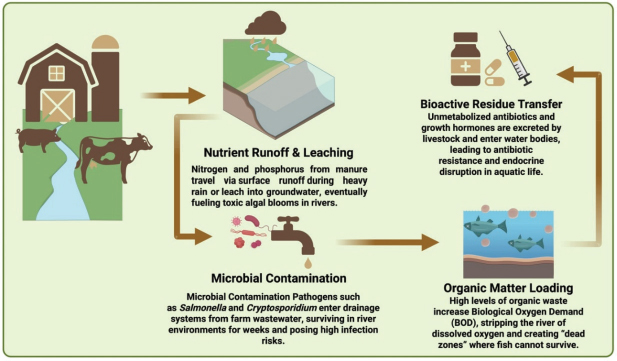
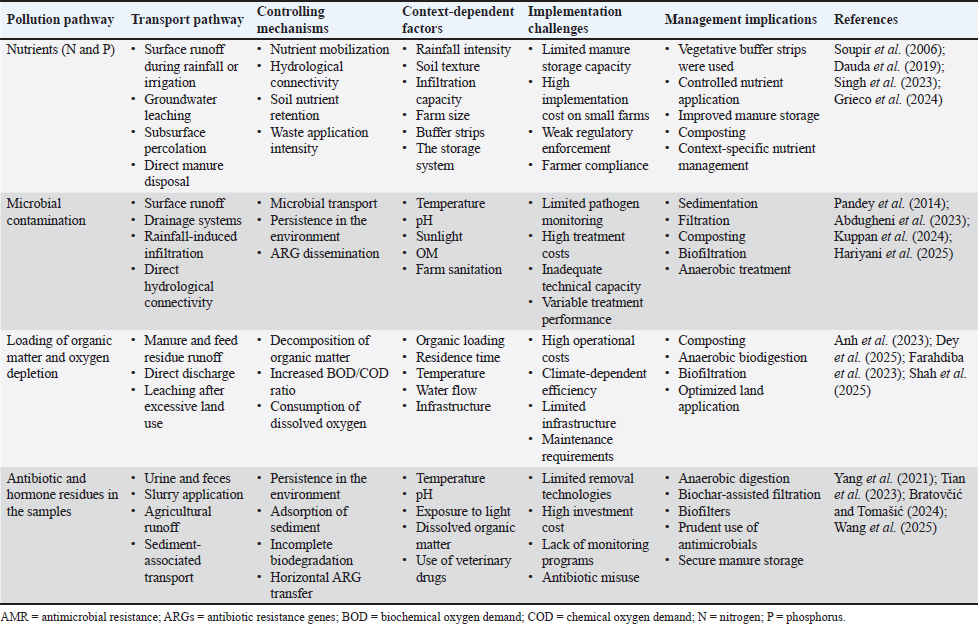
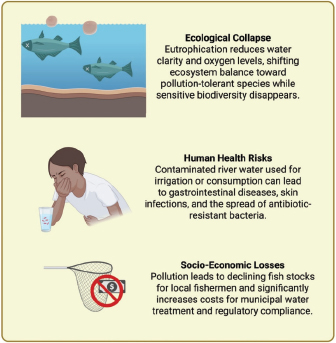
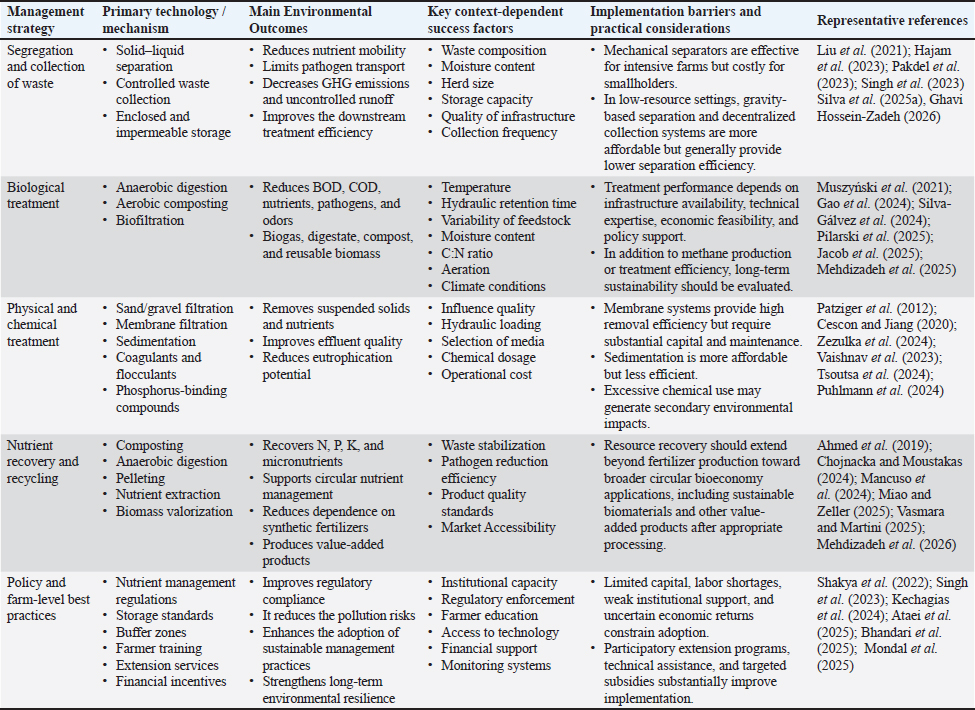
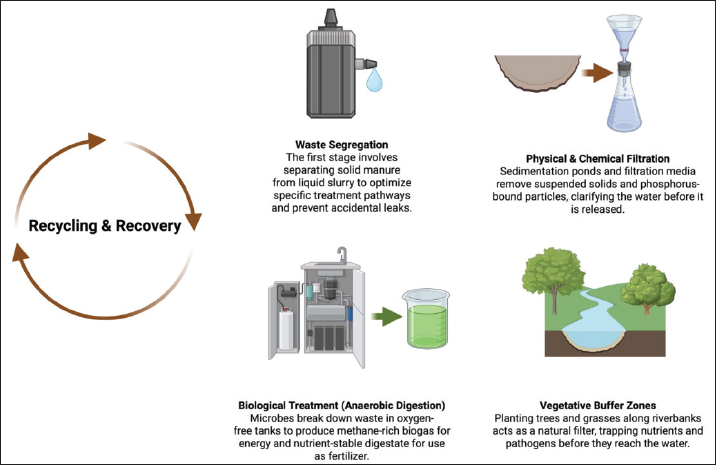
| How to Cite this Article |
| Pubmed Style Melati I, Khairullah AR, Oktaviyani D, Waluyo A, Nafisyah E, Lestari FS, Yosmaniar Y, Asrul A, Rahmawati R, Lapanjang I, Pratama BP, Prihandani SS, Marhani M, Wibowo S. Livestock waste and river pollution: Pathways, ecological risks, and integrated mitigation strategies. Open Vet. J.. 2026; 16(8): 5603-5623. doi:10.5455/OVJ.2026.v16.i8.52 Web Style Melati I, Khairullah AR, Oktaviyani D, Waluyo A, Nafisyah E, Lestari FS, Yosmaniar Y, Asrul A, Rahmawati R, Lapanjang I, Pratama BP, Prihandani SS, Marhani M, Wibowo S. Livestock waste and river pollution: Pathways, ecological risks, and integrated mitigation strategies. https://www.openveterinaryjournal.com/?mno=310258 [Access: September 03, 2026]. doi:10.5455/OVJ.2026.v16.i8.52 AMA (American Medical Association) Style Melati I, Khairullah AR, Oktaviyani D, Waluyo A, Nafisyah E, Lestari FS, Yosmaniar Y, Asrul A, Rahmawati R, Lapanjang I, Pratama BP, Prihandani SS, Marhani M, Wibowo S. Livestock waste and river pollution: Pathways, ecological risks, and integrated mitigation strategies. Open Vet. J.. 2026; 16(8): 5603-5623. doi:10.5455/OVJ.2026.v16.i8.52 Vancouver/ICMJE Style Melati I, Khairullah AR, Oktaviyani D, Waluyo A, Nafisyah E, Lestari FS, Yosmaniar Y, Asrul A, Rahmawati R, Lapanjang I, Pratama BP, Prihandani SS, Marhani M, Wibowo S. Livestock waste and river pollution: Pathways, ecological risks, and integrated mitigation strategies. Open Vet. J.. (2026), [cited September 03, 2026]; 16(8): 5603-5623. doi:10.5455/OVJ.2026.v16.i8.52 Harvard Style Melati, I., Khairullah, . A. R., Oktaviyani, . D., Waluyo, . A., Nafisyah, . E., Lestari, . F. S., Yosmaniar, . Y., Asrul, . A., Rahmawati, . R., Lapanjang, . I., Pratama, . B. P., Prihandani, . S. S., Marhani, . M. & Wibowo, . S. (2026) Livestock waste and river pollution: Pathways, ecological risks, and integrated mitigation strategies. Open Vet. J., 16 (8), 5603-5623. doi:10.5455/OVJ.2026.v16.i8.52 Turabian Style Melati, Irma, Aswin Rafif Khairullah, Dian Oktaviyani, Agus Waluyo, Eva Nafisyah, Fajar Sumi Lestari, Yosmaniar Yosmaniar, Asrul Asrul, Rahmawati Rahmawati, Iskandar Lapanjang, Bima Putra Pratama, Sri Suryatmiati Prihandani, Marhani Marhani, and Syahputra Wibowo. 2026. Livestock waste and river pollution: Pathways, ecological risks, and integrated mitigation strategies. Open Veterinary Journal, 16 (8), 5603-5623. doi:10.5455/OVJ.2026.v16.i8.52 Chicago Style Melati, Irma, Aswin Rafif Khairullah, Dian Oktaviyani, Agus Waluyo, Eva Nafisyah, Fajar Sumi Lestari, Yosmaniar Yosmaniar, Asrul Asrul, Rahmawati Rahmawati, Iskandar Lapanjang, Bima Putra Pratama, Sri Suryatmiati Prihandani, Marhani Marhani, and Syahputra Wibowo. "Livestock waste and river pollution: Pathways, ecological risks, and integrated mitigation strategies." Open Veterinary Journal 16 (2026), 5603-5623. doi:10.5455/OVJ.2026.v16.i8.52 MLA (The Modern Language Association) Style Melati, Irma, Aswin Rafif Khairullah, Dian Oktaviyani, Agus Waluyo, Eva Nafisyah, Fajar Sumi Lestari, Yosmaniar Yosmaniar, Asrul Asrul, Rahmawati Rahmawati, Iskandar Lapanjang, Bima Putra Pratama, Sri Suryatmiati Prihandani, Marhani Marhani, and Syahputra Wibowo. "Livestock waste and river pollution: Pathways, ecological risks, and integrated mitigation strategies." Open Veterinary Journal 16.8 (2026), 5603-5623. Print. doi:10.5455/OVJ.2026.v16.i8.52 APA (American Psychological Association) Style Melati, I., Khairullah, . A. R., Oktaviyani, . D., Waluyo, . A., Nafisyah, . E., Lestari, . F. S., Yosmaniar, . Y., Asrul, . A., Rahmawati, . R., Lapanjang, . I., Pratama, . B. P., Prihandani, . S. S., Marhani, . M. & Wibowo, . S. (2026) Livestock waste and river pollution: Pathways, ecological risks, and integrated mitigation strategies. Open Veterinary Journal, 16 (8), 5603-5623. doi:10.5455/OVJ.2026.v16.i8.52 |


