




| Research Article | ||
Open Vet. J.. 2026; 16(8): 5686-5697
Open Veterinary Journal, (2026), Vol. 16(8): 5686–5697 Research Article Use of beehive products in veterinary clinical practice: A cross-sectional study for apitherapy investigation in Southern ItalyRoberto Bava1†, Stefano Ruga1†, Roberta Bellavista1, Giovanna Liguori2, Filip Štrbac3, Filippo Vergata4, Giuseppe Garcea5, Rodolfo Piterà6, Renato Lombardi2, Emilia Langella7*, Vincenzo Musella1, Ernesto Palma1, Domenico Britti1 and Fabio Castagna11Department of Health Sciences, University of Catanzaro Magna Græcia, Catanzaro, Italy 2Local Health Authority (ASL) Foggia, Foggia, Italy 3Institute for Multidisciplinary Research, University of Belgrade, Belgrade, Serbia 4Veterinary Ambulatory “Dr. Filippo Vergata”, Settingiano (CZ), Catanzaro, Italy 5Veterinary Clinic “CeveCa” – Catanzaro Veterinary Center, Catanzaro, Italy 6Veterinary Buiatrics “Dr. Rodolfo Piterà”, Cosenza, Italy 7Department of Agricultural, Forestry, Food and Environmental Sciences (DAFE), University of Basilicata, Potenza, Italy †These authors contributed equally to the work Submitted: 07/02/2026 Revised: 29/06/2026 Accepted: 14/07/2026 Published: 20/08/2026 © 2025 Open Veterinary Journal
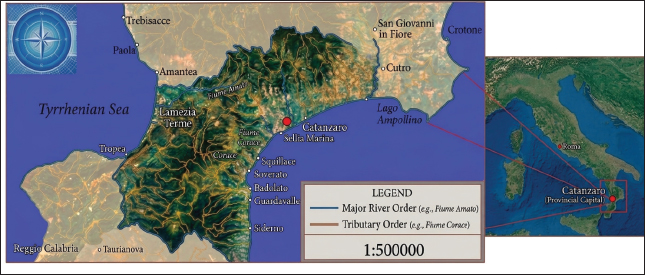
AbstractBackground: Bee products are recognized for their medicinal properties and are utilized in veterinary practice, yet there is a paucity of systematic data on their specific applications and validated clinical outcomes. Aim: This study aimed to assess the patterns of use and perceived efficacy of beehive products among veterinarians in Southern Italy and to evaluate the acceptance of such treatments by animal owners. Methods: A cross-sectional study was conducted between March 2023 and January 2024 in the province of Catanzaro. Two structured questionnaires were administered to 70 veterinarians and 100 animal owners to investigate usage patterns, indications, perceived effectiveness, and client attitudes. Results: The results indicated that 85.7% of veterinarians use beehive products, primarily honey (71.4%), followed by propolis (10%) and royal jelly (4.3%). The main application was for treating wounds, ulcers, and other skin conditions (68.3% of users) in companion animals (71.7% of users). Furthermore, 64% of owners were aware of honey's therapeutic properties, and their willingness to accept apitherapy was strongly associated with trust in their veterinarian's recommendation. Conclusion: Beehive products, particularly medical-grade honey (i.e., sterilized honey with standardized antibacterial activity, intended for topical medical use), are an established therapeutic option in companion animal practice in the studied region, with good alignment between professional use and client acceptance. However, the field requires standardization of products and protocols, alongside enhanced professional training, to optimize clinical outcomes and ensure therapeutic efficacy and safety. Keywords: Apitherapy, Beehive products, Cross-sectional study, Honey, Veterinary medicine. IntroductionApitherapy is the science that deals with the use of beehive products for the prevention, treatment, and recovery of well-being with products collected and processed by bees (Bava et al., 2023; Ibiyeye et al., 2026). Providing an even more precise definition, in addition to the most commonly used products, one should also include the secretion of venom glands, the scents of the hive (rich in resins and essential oils useful for the well-being of the entire respiratory system), and the sound of the buzzing (which promotes relaxation and meditation), which can be perceived through the holistic apiaries. Just like phytotherapy for plants, medicine that uses beehive products has a flourishing and ancient history that has its roots in testimonies that date back at least 2000 years (Eteraf-Oskouei and Najafi, 2013). Just as the use of beehive products in human medicine is ancient, so too is it in veterinary medical practice (Bava et al., 2025). There is a significant amount of information about their medical use: Egyptian papyri of 1,500 Before Christ (BC) mentioned the treatment of wounds in cattle with honey, while Hippocrates treated the animals for various diseases with a mixture of honey and vinegar (Boukraâ, 2023). With the discovery of bioactive compounds included in pharmaceutical preparations and the consolidation of modern medicines during the 20th century, these traditional remedies were gradually replaced. However, in recent decades, much interest has been revived in natural therapies and apitherapy (Eberl-Kadlec, 2017; Gupta and Stangaciu, 2014a). The value of this traditional knowledge is confirmed by a growing body of scientific literature exploring its applications in modern veterinary practice (Bava et al., 2023, 2024a, 2025). This renewed attention stems from multiple converging factors. First and foremost, the global crisis of antibiotic and antiparasitic efficacy manifesting in the concerning phenomenon of antimicrobial and antiparasitic resistance (Prestinaci et al., 2015; Bava et al., 2024b; Štrbac et al., 2025); secondly, the growing consumer demand for natural and sustainable products (Pedro Pereira Luzio and Lemke, 2013; Pradeep and Akhil, 2016), which has extended from human to veterinary medicine, with pet owners increasingly seeking “chemical-free” options for their companion animals (Peter, 2025); third, the growing scientific evidence that has validated many traditional uses of beehive products, revealing important and unquestionable antibacterial, anti-inflammatory, and wound-healing properties, among others (Henatsch et al., 2016; Nader et al., 2021; Alvarez-Suarez, 2025; Bava et al., 2025, 2024a). Apitherapy also deserves attention for another important aspect: the integration of apitherapy into veterinary practice aligns with the One Health concept, which recognizes the interconnection between human health, animal health, and environmental integrity (Who, 2017). Finally, beehive products offer a sustainable therapeutic approach that reduces dependence on synthetic antimicrobials, minimizes chemical residues in animal products intended for human consumption, supports pollinator conservation by valorizing beekeeping activities, and provides economically accessible treatments for resource-limited settings (Machado et al., 2023). While extensive research has documented the use of medicinal plants in veterinary medicine throughout Europe (Romero et al., 2022; Štrbac et al., 2024; Ratajac et al., 2025), specific data on the utilization of beehive products remain fragmented. With its long tradition of beekeeping and ethnobotanical knowledge, Italy represents an important but understudied source of knowledge for apitherapy research (Canalicchio, n.d.; Patti et al., 2025). In the national context, the region of Calabria boasts strong traditions in beekeeping, as well as a rich melliferous flora (Denami et al., 2025), which may influence local veterinary practices. This study aims to investigate the integration and the employment of beehive products in veterinary clinical medicine. It represents the first systematic inquiry into the current patterns of use of beehive products by veterinarians in southern Italy and will specifically seek to determine: (1) prevalence and pattern of use of beehive products; (2) evaluation of the perceived efficacy of such products by veterinarians; (3) barriers and facilitating practices for the inclusion and adoption of apitherapy in medical protocols; (4) knowledge of beehive properties and the acceptance for their use by animal owners; and (5) contextualization of Italian veterinary clinical practices within the context of university teaching in veterinary medicine. Materials and MethodsExperimental designThe cross-sectional study was carried out between March 2023 and January 2024 in the province of Catanzaro, located in the Calabria Region of Southern Italy. The study area covers approximately 2,400 km2 and includes 80 municipalities. The territory is characterized by a mix of urban (Catanzaro city centre), coastal, and mountainous rural areas. A map of the study area showing the province’ location of the study is provided in Figure 1. Two complementary survey instruments were addressed to different populations: veterinarians and pet owners. The research protocol adhered to the STROBE-Vet guidelines for reporting observational studies in veterinary medicine (Sargeant et al., 2016). All participants provided informed consent before survey participation, data were anonymized immediately after collection, and all procedures complied with the EU General Data Protection Regulation and the Italian Legislative Decree 196/2003 (Finocchiaro, 2018). The target population included veterinarians enrolled in the National Federation of Italian Veterinary Orders, having practiced for a period of not less than six months within the same province. In January 2023, a total of 178 authorized veterinarians met the inclusion criteria according to the Provincial Order Register. Sample size calculation using standard epidemiological formulas for cross-sectional surveys with finite populations determined a minimum sample size of 61 veterinarians. Study participants were contacted through direct interviews, communication from the regional delegation of the Italian Society of Livestock Veterinarians, via professional WhatsApp groups of veterinarians in the Province of Catanzaro, direct email invitations to clinic directors, and follow-up reminders at 2-week intervals with a maximum of 3 reminders. A structured questionnaire was specifically developed, based on a literature review of similar surveys, consultation with expert veterinarians, and adaptation to the context of Italian veterinary practice. The questionnaire comprised 8 closed-ended questions and 2 open-ended questions organized into two sections: (1) professional demographic data with questions on primary practice focus, prevalent location of veterinary practice municipality, years of professional experience, and animal species regularly treated and (2) use of beehive products, with questions on which products were used for therapeutic purposes, on which animal species, for which pathological conditions, difficulties encountered in administration, client receptivity, and perceived clinical outcomes. The questionnaire did not differentiate between pure honey, diluted honey, or honey mixed with other chemicals, as this level of detail was beyond the scope of this initial exploratory survey. The questionnaire underwent pilot testing with 5 veterinarians, not included in the final sample, to assess question comprehension and clarity, completion time, and appropriateness of response options.
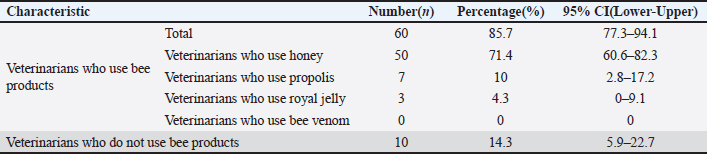
Fig. 1. Map of the study area. In the present study, a convenience sample of pet owners was selected from a companion animal clinic in the city of Catanzaro from June to August 2023. The inclusion criteria were: ownership of at least one pet, an age of ≥18 years, residence in the Province of Catanzaro, and adequate knowledge of the Italian language. For the estimation of a population proportion, with 95% confidence and a precision of ±10%, assuming maximum variability, 96 participants were needed; therefore, the sample was increased to 100. The structured questionnaire consisted of 8 questions, assessing the respondents’ knowledge, attitudes, and behavioral intentions regarding veterinary treatments based on beehive products, such as awareness of honey’s therapeutic properties, expectations following its use for dressing, willingness to use honey-based dressings for their animal, propensity to propose honey-based treatments to their trusted veterinarian, a comparative evaluation of the characteristics of alternative natural products compared with conventional drugs, previous experiences with medical-grade honey for the treatment of wounds, previous application of treatments based on beehive products by the veterinarian, and what properties of honey they were already aware of. Animal owners were approached by a trained research assistant in the waiting room of the visited clinic. Following an explanation of the aims of the research and the voluntary nature of the participation, verbally informed consent was obtained and documented in a consent log. After that, the questionnaire was administered using a tablet interface, and the research assistant remained available to clarify any questions without influencing responses. The time to fill out the questionnaire averaged 6.5 minutes. Statistical analysisAll analyses were conducted in IBM SPSS Statistics software (v. 27, IBM Corp., Armonk, NY, USA). Data underwent systematic quality control, verification of completeness and logical consistency, and identification of duplicate responses. Descriptive analyses were conducted to characterize the sample. Associations between categorical variables were assessed by chi-square tests or, where appropriate, Fisher’s exact tests. The value p < 0.05 was considered indicative of statistical significance. Ethical approvalNot needed for this study. ResultsVeterinary population and beehive products used in clinical practiceSeventy veterinarians from 19 municipalities in the Province of Catanzaro responded to the questionnaire. Due to some professionals' unwillingness to participate, 70 veterinarians were recruited and completed the survey, yielding a response rate of 39.3% and a precision of ±11.8% at a 95% confidence interval (CI). The sample was geographically diversified, with representation from the urban centers in the city of Catanzaro (accounting for 42% of the interviewed) and smaller rural communities (constituting 58% of the interviewed). Regarding professional focus, many respondents were specialized in companion animal medicine. Conventional companion animals, dogs and cats, represented the primary practice area for over two-thirds of participants at 68%, reflecting the demographic shift toward pet ownership in Italian society. Livestock veterinarians constituted 14%, while non-conventional or exotic companion animal specialists represented 12%. Of the 70 veterinarians involved in the study, 85.7% [95% CI: 77.3%–94.1%] claimed to use beehive products. More precisely, 71.4% (95% CI: 60.6%–82.3%) used honey (type not specified in the questionnaire), 10% (95% CI: 2.8%–17.2%) used propolis, and 4.3% (95% CI: 0%–9.1%) used royal jelly, while none of them used bee venom. On the other hand, 14.3% (95% CI: 5.9%–22.7%) of the respondents reported not using bee products (Table 1). Table 1. General use and products.
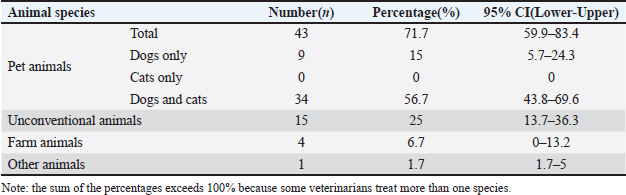
Table 2. Species treated (by 60 veterinarians using the product).
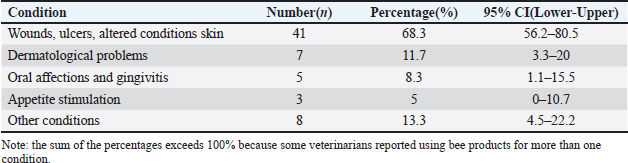
Table 3. Conditions treated (by 60 veterinarians using the product).
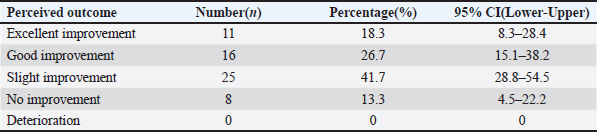
Among the 60 veterinarians using bee products, 71.7% (95% CI: 59.9%–83.4%) reported treating pet animals. In particular, 15% (95% CI: 5.7%–24.3%) treated only dogs, while 56.7% (95% CI: 43.8%–69.6%) treated both dogs and cats. Additionally, 25% (95% CI: 13.7%–36.3%) treated unconventional animals, and 6.7% (95% CI: 0%–13.2%) used bee products for livestock animals. Only 1.7% (95% CI: 1.7%–5%) treated other animal species. It should be noted that the sum of percentages exceeds 100% because some veterinarians treat more than one species (Table 2). Among the 60 veterinarians using bee products, 68.3% (95% CI: 56.2%–80.5%) administer them for the treatment of wounds, ulcers, or skin conditions. Other indications included 11.7% (95% CI: 3.3%–20%) for dermatological diseases and 8.3% (95% CI: 1.1%–15.5%) for oral lesions and gingivitis. Indication of use for appetite stimulation was reported by 5% (95% CI: 0%–10.7%) of the respondents. Other clinical conditions accounted for 13.3% (95% CI: 4.5%–22.2%) of the use of bee products (Table 3). Among all 70 veterinarians surveyed, 14.3% (95% CI: 5.9%–22.7%) reported challenges related to the use of bee products. Among the 10 veterinarians who experienced difficulties, 60% (95% CI: 23.1%–96.9%) declared the attraction of insects as the main concern. Regarding owners’ willingness, 81.7% (95% CI: 71.6%–91.7%) of the 60 veterinarians using bee products reported good receptiveness from their clients. Indeed, 68.3% (95% CI: 56.2%–80.5%) reported acceptance by the pet owners, whereas only 13.3% (95% CI: 4.5%–22.2%) reported such a disposition on the part of farm animal owners. Contrasting this, 15% (95% CI: 5.7%–24.3%) reported owner scepticism, while 3.3% (95% CI: 1.3%–8%) reported that treatment was not advised by veterinarians themselves (Table 4). Among the 60 veterinarians using bee products, 18.3% (95% CI: 8.3%–28.4%) reported observing excellent improvement and efficacy in the treated animals, while 26.7% (95% CI: 15.1%–38.2%) described the outcome as a good improvement. Slight improvement was the most frequently reported result, observed by 41.7% (95% CI: 28.8%–54.5%) of respondents. Conversely, 13.3% (95% CI: 4.5%–22.2%) indicated no improvement following the use of beehive products, and none of the veterinarians (0%) reported a deterioration of the animals’ condition (Table 5). Table 4.Challenges and willingness.
Table 5. Perceived effectiveness (by 60 veterinary users).
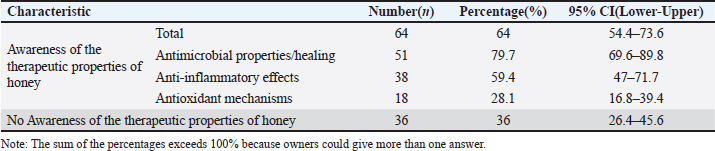
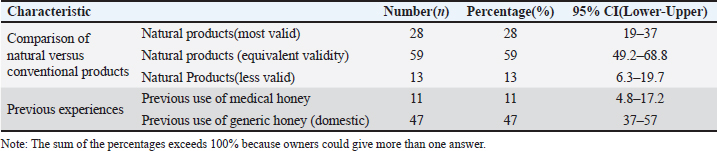
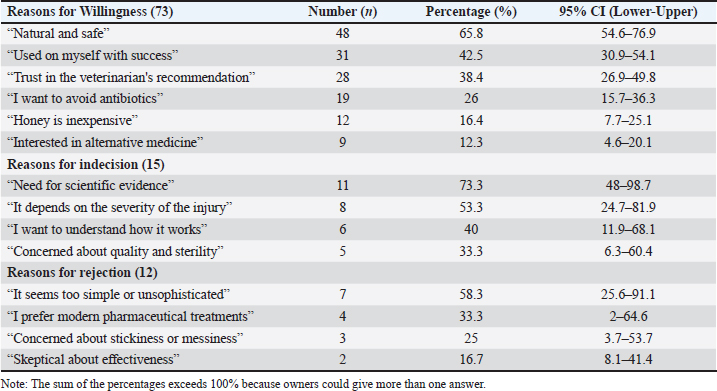
Survey of ownersA total of 100 owners participated in the survey, and 64% (95% CI: 54.4%–73.6%) claimed that they were aware of the therapeutic properties of honey. In this group of aware owners, the most declared and recognized property was the antibacterial/antimicrobial (79.7%; 95% CI: 69.6%–89.8%), followed by anti-inflammatory effect (59.4%; 95% CI: 47%–71.7%) and antioxidant mechanisms (28.1%; 95% CI: 16.8%–39.4%). No knowledge of any therapeutic properties was declared from the remaining 36% (95% CI: 26.4%–45.6%) of the total sample (Table 6). Of the 100 interviewed owners, infection prevention was the main expectation for medications, as reported by 87% of respondents (95% CI: 80.3%–93.7%). The other most indicated expectations were the promotion of healing and pain reduction, with 73% (95% CI: 64.1%–81.9%) and 41% (95% CI: 31.2%–50.8%), respectively. Other expectations were less frequently referred to and included the absorption of exudate, trauma protection, ease of application, the characteristic of being natural and non-toxic, and being cost-effective, with 28% (95% CI: 19%–37%), 22% (95% CI: 13.7%–30.3%), 19% (95% CI: 11.2%–26.8%), 16% (95% CI: 8.7%–23.3%), and 8% of the responses, respectively (95% CI: 2.6%–13.4%). Furthermore, most owners claimed that they would be willing to use honey on their own animal; some were undecided or refused to do so (73% vs. 15% and 12%, respectively, 95% CI: 64.1%–81.9%, 5.7%–24.3%, and 5.6%–12.4%). A fair proportion of them also stated a propensity to suggest it to their veterinarian (68%, 95% CI: 58.7%–77.3%) (Table 7). Regarding the comparison of beehive products to conventional medicinal products, the majority of the 100 owners surveyed (59%; 95% CI: 49.2%–68.8%) declare to perceive natural products as having equivalent validity. A further 28% (95% CI: 19%–37%) considered natural products to be more valid, while 13% (95% CI: 6.3%–19.7%) rated them as less valid. Regarding previous experiences, almost half of the owners (47%; 95% CI: 37%–57%) reported prior use of generic and commercially available in supermarkets. In contrast, fewer owners had experience with medical-grade honey (11%; 95% CI: 4.8%–17.2%) (Table 8). Among the 73 owners willing to use honey on their animals, the main reason bought to evidence was that honey was perceived as a “natural and safe” product, as stated by 65.8% (95% CI: 54.6%–76.9%) of this group. Other major reasons were “used on myself with success” (42.5%; 95% CI: 30.9%–54.1%) and “trust in the veterinarian’s recommendation” (38.4%; 95% CI: 26.9%–49.8%). Less common motivations were the desire “to avoid antibiotics” (26%; 95% CI: 15.7%–36.3%), the fact that “honey is inexpensive” (16.4%; 95% CI: 7.7%–25.1%), and an interest in “alternative medicine” in general (12.3%; 95% CI: 4.6%–20.1%) (Table 9). Among the 15 undecided owners, the most common main reason for this indecision was “in need of scientific evidence,” as stated by 73.3% (95% CI: 48%–98.7%). Table 6. Awareness and knowledge.
Table 7. Expectations and willingness.
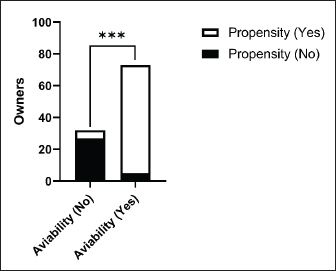
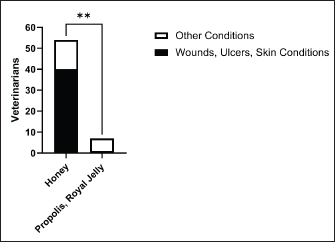
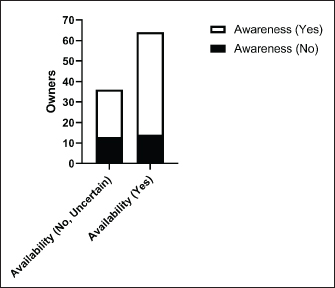
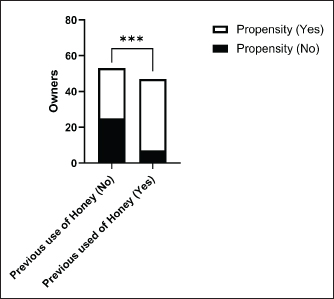
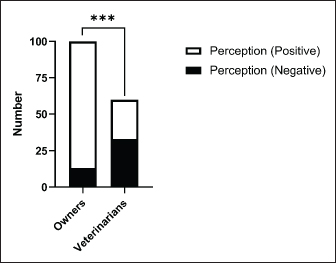
Inferential statistical analysisThe bivariate analysis on owners explored the association between willingness to use bee products and propensity to propose their use to the veterinarian. The results, presented in Figure 2, indicate a very strong and highly significant statistical association (p < 0.001). More specifically, the owners who were ready to suggest the treatment to their veterinarian were 73.44 times more likely to accept the treatment with the use of bee products than those who were not (OR=73.44, 95% CI: 20.2–252.9). Although the sample size limitations were reflected in the wide CI, its lower bound remained high, confirming the robustness of this strong positive association. This data underscored the crucial role of trust in the veterinarian as a predictor of owner willingness (Fig. 3). The bivariate analysis explored the association between the type of bee product used and the primary pathological condition treated. As shown in Table 3, the use of honey was found to be significantly associated with the treatment of wounds, ulcers, and skin conditions compared to the use of other products (propolis and royal jelly). Fisher’s exact test revealed a very statistically significant association: p < 0.01. The calculated odds ratio (OR)=17.14, indicating veterinarians were 17 times more likely to choose honey for managing wounds and skin conditions compared with the other bee products. Although the CI was wide, the lower bound remained above 1; this was indicative of a strong, positive association despite sample size limitations (Fig. 4). The relationship between prior awareness of the therapeutic properties of honey and owners’ willingness to use it for their animals was analyzed. Although aware owners showed a greater propensity to use it (78.1%) than unaware owners (63.9%), this difference did not reach conventional statistical significance (p > 0.05). The calculation of the OR indicated that prior awareness doubles the likelihood of willingness (OR=2.01), but the 95% CI (0.8–4.7) included the value of no association (OR=1.0), preventing a definitive conclusion on significance (Fig. 4). A statistically significant association emerged between previous domestic use of honey and the propensity to suggest its use to the veterinarian (p < 0.001). Overall, owners who had personal experience with honey for wounds were significantly more likely (85.1%, 95% CI: 72.3%–92.6%) to recommend this treatment than owners without this experience (52.8%, 95% CI: 39.5%–65.8%). The strength of association was strong; the odds ratio was 4.83 (95% CI: 1.8–12.4), suggesting that any personal experience with honey increased the likelihood of recommending its veterinary use fivefold (Fig. 5). The comparison between owners’ perception of the effectiveness of natural products and the effectiveness observed by veterinarians for bee products revealed a statistically significant difference (p < 0.001). While 87% of owners considered natural products to be superior or equivalent to conventional drugs, only 45% of veterinarians reported a “good or excellent” improvement with the use of bee products. The analysis shows that owners were significantly more likely to express a positive perception than veterinarians (OR=0.12; 95% CI: 0.05–0.26) (Fig. 6). Table 8. Comparison with medications and previous experiences.
Table 9. Owners' reported reasons for their stance on using honey for their animals.
Fig. 2. Association between owners’ willingness to use bee products and their propensity to suggest them to the veterinarian. ***Asterisks indicate statistical significance (p < 0.001).
Fig. 3. Association between bee product type and primary indication. **Asterisks indicate statistical significance (p < 0.01).
Fig. 4. Association between owners’ awareness of honey’s therapeutic properties and their willingness to use it on their animals.
Fig. 5. Association between owners’ previous personal use of honey and their propensity to suggest it to the veterinarian. ***Asterisks indicate statistical significance (p < 0.001).
Fig. 6. Comparison between owners' perception of the efficacy of natural products and veterinarians' reported clinical outcomes with bee products. Although the constructs are not directly equivalent (owners’ theoretical perception vs. veterinarians’ clinical experience), this comparison highlights a relevant expectation–experience gap. ***Asterisks indicate statistical significance (p < 0.001) DiscussionMain findings and prevalence of useThis cross-sectional survey provides the first systematic documentation of beehive product usage among veterinarians in Southern Italy. The observed prevalence (85.7%) is substantially higher than might be expected given the absence of formal apitherapy training in Italian veterinary schools (D’Ascenzi et al., 2023). Medical-grade honey was the predominant product (71.4% of users), applied mainly to wounds, ulcers, and dermal conditions in companion animals, consistent with international literature (Kumar et al., 2010; Meo et al., 2017). Clinical applications and product choiceThe association between honey use and wound management was strong (95% CI: 2.2–200.4; p < 0.01), reflecting the well-established hygroscopic, antibacterial, and healing properties of honey (Lay-flurrie, 2008; Vandamme et al., 2013; Scepankova et al., 2021). The substantial preference for honey likely reflects its established evidence base for wound healing (Scepankova et al., 2021), commercial availability of medical preparations, ease of application, client acceptance, and lower cost compared to specialized pharmaceutical dressings (Gupta and Stangaciu, 2014b). The favorable safety profile, with no adverse events or treatment-related complications reported, supports honey's reputation as a low-risk therapeutic option. The perception of efficacy was positive but modest: although most users reported some degree of improvement, only a minority rated outcomes as "good" or "excellent," suggesting that honey more often functions as a useful adjunct rather than a definitive monotherapy. Species-specific patternsUsage was concentrated in companion animals (96.7% of users, including non-conventional animals). Within the companion animal category, dogs and cats are treated with approximately equal frequency, although no veterinarian reported treating cats exclusively. This may reflect feline behavioural characteristics, such as reduced tolerance for bandaging and greater difficulty in restraint (Moody et al., 2018), or species-specific safety concerns, as cats' deficient glucuronidation pathways raise theoretical concerns about the metabolism of phenolic compounds (Court, 2013). The relatively high proportion treating non-conventional animals (25%) deserves particular attention. Non-conventional species (rabbits, guinea pigs, reptiles, and birds) suffer limited pharmaceutical options and a lack of authorized veterinary drugs (Romero et al., 2024); furthermore, adverse reactions to conventional antibiotics (such as clostridial enterotoxaemia in rabbits after certain antibiotics) (Metleva et al., 2024) and dosing challenges related to size are commonly reported (Di Girolamo et al., 2022). Therefore, beehive products may fill an important therapeutic gap in non-conventional animal medicine. The limited use in livestock animals (6.7%, with only 10% of professionals using beehive products for livestock) contrasts with the ethnoveterinary literature documenting historical use of honey in cattle (Gakuya et al., 2011). Potential explanations include the impracticality of maintaining honey dressings on pastured animals, attraction of insects in open agricultural environments (mentioned by respondents as a significant challenge), economic constraints with a risky cost-effectiveness ratio compared to basic antiseptics, lack of organic certification frameworks that explicitly permit beehive products in Italy, and absence of standardized protocols for applications in large animals. The absence of bee venom use likely reflects both regulatory constraints and safety concerns regarding anaphylactic reactions (Rayamane et al., 2014), as well as the lack of shared and validated protocols for administration. The fact that pollen is not used as a therapeutic agent, as opposed to a nutritional supplement, may indicate limited awareness of its properties or a lack of commercially available veterinary products. Owner acceptance and trustThe strong client acceptance, with pet owners demonstrating high awareness at 64% and willingness at 73% regarding honey-based treatments, is significant. However, our analysis revealed that this willingness was complex and driven by multiple factors. The analysis of the relationship between prior awareness and willingness to use, although not statistically significant (p=0.12), revealed a suggestive trend. The OR of 2.01 (95% CI: 0.8–4.7) indicates that aware owners show a tendency to be more than twice as likely to accept treatment, although the wide CI reflects substantial uncertainty. This pattern suggests that owner knowledge may act more as a facilitator than as an independent determinant of willingness. Its impact may be mediated or enhanced by other crucial factors, foremost among which is trust in the veterinarian’s recommendation, which emerges from our study as the strongest predictor. Therefore, client awareness campaigns on apitherapy, while likely useful, may achieve maximum effectiveness when integrated into a broader context of communication and building clinical trust. Furthermore, personal experience appears to be a powerful motivator. The OR of 4.83 (95% CI: 1.8–12.4; p < 0.001) highlights a remarkably strong association: direct experience increases the likelihood that an owner will promote this therapy to their veterinarian fivefold. This data underscores the power of direct 'anecdotal evidence' in overcoming cultural barriers or scepticism towards unconventional therapies. Honey is widely accepted in human folk medicine (Kuropatnicki et al., 2018), and this familiarity, once confirmed by a positive experience, translates into a high level of trust that extends to the veterinary sphere. For clinicians, inquiring about this previous experience during the anamnesis can serve as a useful tool for opening a dialogue about apitherapy with already predisposed clients. Crucially, the single most important driver of owner acceptance is the relationship with the veterinarian. The association between owners' willingness and their propensity to actively propose apitherapy to their veterinarian (used as a proxy for trust in the professional) was extremely strong (OR=73.44; 95% CI: 20.2–252.9; p < 0.001). This role of the veterinarian as a trusted mediator finds a significant parallel in consumer behaviour in other European contexts. A survey of the general population in Lithuania found that the primary sources of information on bee products are family and friends (28.3%) and that the preferred purchasing channel is directly from the beekeeper (45.0%), highlighting a strong search for authenticity and a direct trust-based relationship with the producer (Labokas and Kleibaitė, 2025). In our study, the veterinarian appears to fulfil a similar role, acting as an expert and reliable guarantor who legitimizes the therapeutic use of these natural products. Expectation gapA notable discrepancy emerged between owners' perceptions and veterinarians' clinical observations: 87% of owners considered natural products superior or equivalent to conventional drugs, whereas only 45% of veterinarians rated honey outcomes as “good or excellent” (OR=0.12; 95% CI: 0.05–0.26; p < 0.001). This cautious optimism by veterinarians contrasts sharply with the perceptions of animal owners, revealing a critical expectation gap. This “optimism bias” on the part of owners could be influenced by cultural perceptions associated with the concept of “natural,” personal experiences with self-medication, or an overestimation of therapeutic properties. In contrast, veterinarians evaluate efficacy through observable clinical outcomes and comparisons with reference treatments, applying more stringent criteria. This misalignment highlights the need for clinical communication that realistically manages expectations, balancing owners' enthusiasm with transparent sharing of likely outcomes based on clinical evidence. Owner enthusiasm likely stems from cultural familiarity, as the long history of honey in human wound care creates conceptual acceptance, the appeal of the “natural” product aligns with consumer preferences for chemical-free alternatives, the perception of safety is seen as gentler than pharmaceutical options, anecdotal evidence with positive personal or family experiences with honey, and cost considerations are often less expensive than specialized veterinary dressings. The predominant view that natural and conventional products possess equivalent validity (59%) suggests a pragmatic perspective, with owners recognizing value in both approaches depending on context. Educational gaps and practice heterogeneityThe 84% usage rate, despite the absence of formal curricula in veterinary schools on apitherapy, reveals a critical educational gap. The current veterinary curriculum in Italy offers limited teaching of evidence-based complementary therapies, pharmacology regarding the products of beekeeping, quality assessment of natural products, and integration of traditional approaches with conventional. Professionals gain information on apitherapy from self-study, literature review, continuing education seminars that are often variable in quality, trial and error in clinical practice, clients' requests, and informal communication between colleagues. This approach risks producing inconsistent information, low therapeutic quality, and therapeutic failure. A reform of veterinary clinical training is necessary (D’Ascenzi et al., 2023). Finally, this study highlights the need for uniform clinical guidelines. The heterogeneity in application protocols is concerning: concentrations of therapeutically used honey range from 50% to 100%, frequencies from once daily to every 3 days, and durations from 3 days to 8 weeks. Another aspect that should not be underestimated is the frequent use of non-medical honey, reported by several professionals. Commercial culinary honey may contain bacterial spores, potentially causing botulism (Hubtanen et al., 1981) (particularly in young or immunocompromised animals), variable antimicrobial activity, contaminants such as pesticides and antibiotics used in beekeeping (Al-Waili et al., 2012), and inconsistent composition affecting clinical outcomes. Study limitationsSeveral limitations should be acknowledged. First, the sample was restricted to a single province in Southern Italy (n=70 veterinarians, n=100 owners), limiting generalizability to other regions. Second, the questionnaire did not capture specific product formulations: for honey (pure vs diluted vs with chemicals), for propolis (ointment, water-soluble, powder), and for royal jelly (fresh, powder, capsules). Third, the study relied on self-reported perceived efficacy rather than objective clinical outcome measures. Fourth, social desirability bias may have influenced responses. Fifth, the cross-sectional design precludes causal inferences. Future studies should investigate these variables, as they may significantly influence clinical efficacy. Recommendations for practice and researchBased on these findings, specific veterinary pharmacology requires investigations into absorption and systemic exposure from topical application for safety assessment, species differences in the metabolism of honey components, potential for interaction with concomitant medications, and immunological effects in companion species. Microbiological investigations should examine the spectrum of antimicrobial activity against veterinary pathogens, the potential for resistance development in longitudinal studies, biofilm disruption, and the effects of combinations with antibiotics, evaluating synergy, antagonism, or independence. Practical protocols should be developed for dressing fixation methods on large animals, insect repellent strategies for free-range animals, cost-effectiveness in the context of production animals, integration with organic farming regulations, and the treatment of specific conditions such as digital dermatitis, mastitis, and umbilical cord infections in newborns. ConclusionThis study confirms that beehive products, particularly honey, are widely used by veterinarians in Southern Italy, with good owner acceptance driven by trust in the veterinarian's recommendation. However, clinical application protocols are heterogeneous, and perceived efficacy is moderate, with only 45% of users reporting “good” or “excellent” outcomes. Standardization of products (distinguishing medical-grade from generic honey) and treatment protocols, alongside formal integration of apitherapy into veterinary education and evidence-based clinical research, are necessary to optimize therapeutic outcomes and ensure safety and reproducibility. AcknowledgmentsThe authors express their gratitude to all the interviewees, pet owners, veterinarians, and veterinary nurses, who, by responding to the questionnaire, contributed to a better understanding of the use of apitherapy in veterinary clinical practice. FundingThis research receives no external funding. Author’s contributionsConceptualization R.B. (Roberto Bava), S.R., F.C.; Methodology: R.B. (Roberto Bava), S.R., G.L., E.P., D.B., F.C.; Investigation: R.B. (Roberta Bellavista), F.V., R.P., G.G. Data Curation S.R., R.B.(Roberto Bava), F.C. Formal Analysis: S.R., R.B. (Roberto Bava), F.Š.; Writing—Original Draft R.B. (Roberto Bava), S.R., R.B. (Roberta Bellavista), F.Š., F.V., G.G., R.P., R.L., G.L., V.M., E.P., D.B., F.C. Writing—Review & Editing R.B. (Roberto Bava), S.R., R.B. (Roberta Bellavista), F.Š., F.V., G.G., R.P., R.L., G.L., V.M., E.P., D.B., F.C. Visualization R.B. (Roberto Bava), S.R., G.L., F.C.; Supervision E.P., D.B., and F.C. All authors have read and agreed to the published version of the manuscript. Conflict of interestThe authors declare that there is no conflict of interests. Data availabilityData are available upon request to the corresponding author. ReferencesAlvarez-Suarez, J.M. 2025. Bee products—chemical and biological properties. Cham, Springer Nature Switzerland; doi:10.1007/978-3-031-89049-9 Al-Waili, N., Salom, K., Al-Ghamdi, A. and Ansari, M.J., 2012. Antibiotic, pesticide, and microbial contaminants of honey: human health hazards. ScientificWorldJournal 2012, 1–9; doi:10.1100/2012/930849 Bava, R., Castagna, F., Lupia, C., Poerio, G., Liguori, G., Lombardi, R., Naturale, M.D., Bulotta, R.M., Biondi, V. and Passantino, A. 2024a. Hive products: composition, pharmacological properties, and therapeutic applications. Pharmaceuticals (Basel) 17, 646. Bava, R., Castagna, F., Lupia, C., Poerio, G., Liguori, G., Lombardi, R., Naturale, M.D., Mercuri, C., Bulotta, R.M. and Britti, D. 2024b. Antimicrobial resistance in livestock: a serious threat to public health. Antibiotics (Basel) 13, 551. Bava, R., Castagna, F., Musella, V., Lupia, C., Palma, E. and Britti, D. 2023. Therapeutic use of bee venom and potential applications in veterinary medicine. Vet. Sci. 10, 119. Bava, R., Puteo, C., Lombardi, R., Garcea, G., Lupia, C., Spano, A., Liguori, G., Palma, E., Britti, D. and Castagna, F. 2025. Antimicrobial properties of hive products and their potential applications in human and veterinary medicine. Antibiotics (Basel) 14, 172. Boukraâ, L. 2023. Honey in traditional and modern medicine. Boca Raton, FL: CRC Press. Canalicchio, M. 2022. State of the art on beekeeping and bee products in Italy [PDF]. MEDI-BEEB Project. Available via https://medibeebe.com/Images/Dosya/251/SoA-ITALY-_CIA-Umbria-EN.pdf Court, M.H. 2013. Feline drug metabolism and disposition: pharmacokinetic evidence for species differences and molecular mechanisms. Vet. Clin. North Am. Small Anim. Pract. 43, 10–1016. D’Ascenzi, C., Power, K., Maiolino, P. and Mortarino, M. 2023. Training in honey bee veterinary medicine in italy: an observational study and practical proposals to face professional challenges. Animals 13, 1795. Denami, M., Mercuri, A.M., Piana, L. and Musci, M. 2025. Integrated analysis of pollen and volatile compounds to trace Calabrian honey floral origin: insights into floristic diversity In 120° Congresso Della Società Botanica Italiana/XI International Plant Science Conference-Abstract Book. Società Botanica Italiana, pp 45–45. Di Girolamo, N., Caron, M., Brandão, J. and Reynders, R.M. 2022. Most veterinarians treating exotic animals use formularies to select drug dosages without consistently checking their sources. J. Am. Vet. Med. Assoc. 260, 1–11. Eberl-Kadlec, S. 2017. A bridge BEEtween medicines: Exploring the interconnection between medical knowledge and home remedies using the example of apitherapy. BoD–Books on Demand. Eteraf-Oskouei, T. and Najafi, M. 2013. Traditional and modern uses of natural honey in human diseases: a review. Iran. J. Basic Med. Sci. 16, 731. Finocchiaro, G. 2018. Italy: the legislative procedure for national harmonisation with the gdpr. Eur. Data Prot. L. Rev. 4, 496. Gakuya, D.W., Mulei, C.M. and Wekesa, S.B. 2011. Use of ethnoveterinary remedies in the management of foot and mouth disease lesions in a diary herd. Afr. J. Tradit. Complement Altern. Med. 8, 165. 2. Gupta, R.K. and Stangaciu, S. 2014b. Apitherapy: holistic healing through the honeybee and bee products in countries with poor healthcare system. In Beekeeping for poverty alleviation and livelihood security. Eds. Gupta, R.K., Reybroeck, W., van Veen, J.W. and Gupta, A. Dordrecht: Springer, pp: 413–446. Henatsch, D., Wesseling, F., Kross, K.W. and Stokroos, R.J. 2016. Honey and beehive products in otorhinolaryngology: a narrative review. Clin. Otolaryngol. 41, 519–531; doi:10.1111/coa.12557 Hubtanen, C.N., Knox, D. and Sbimanuki, H. 1981. Incidence and origin of Clostridium botulinum spores in honey. J. Food Prot. 44, 812–815. Ibiyeye, R.Y., Mohammed, A., Sulaimon, F.A., Ambali, D.O., Ayoola, O.E. and Agboola, A.O. 2026. Historical perspective of apitherapy. In Apitherapy for neurodegenerative diseases. Eds. Olaniyan, O.T., Asuku, A.O. and Ohanenye, C.A. Boca Raton: CRC Press, pp: 1–12 Kumar, K.S., Bhowmik, D., Biswajit, C. and Chandira, M.R. 2010. Medicinal uses and health benefits of honey: an overview. J. Chem. Pharm. Res. 2, 385–395. Kuropatnicki, A.K., Kłósek, M. and Kucharzewski, M. 2018. Honey as medicine: historical perspectives. J. Apic. Res. 57, 113–118; doi:10.1080/00218839.2017.1411182 Labokas, J. and Kleibaitė, G. 2025. Knowledge and use of bee products in Lithuania. Nutrients 17(24), 3927 Lay-flurrie, K. 2008. Honey in wound care: effects, clinical application and patient benefit. Br. J. Nurs. 17, S30–S36; doi:10.12968/bjon.2008.17.Sup5.29649 Machado, A., Zamora-Mendoza, L., Alexis, F. and Álvarez-Suarez, J.M. 2023. Use of plant extracts, bee-derived products, and probiotic-related applications to fight multidrug-resistant pathogens in the post-antibiotic era. Future Pharmacol. 3, 535–567. Pradeep, M.D. and Akhil, A. 2016. Green marketing to meet consumer demands and sustainable development-challenges and opportunities. Int. J. Adv. Trends Eng. Technol. 1, 34–41. Meo, S.A., Al-Asiri, S.A., Mahesar, A.L. and Ansari, M.J. 2017. Role of honey in modern medicine. Saudi J. Biol. Sci. 24, 975–978. Metleva, A.S., Khakimzyanova, M.N. and Sionikhin, E.E. 2024. Clinical signs and post-mortem lesions caused by clostridial enterotoxemia in rabbits. Vet. Sci. Today 13, 234–241. Moody, C.M., Picketts, V.A., Mason, G.J., Dewey, C.E. and Niel, L. 2018. Can you handle it? Validating negative responses to restraint in cats. Appl. Anim. Behav. Sci. 204, 94–100. Nader, R.A., Mackieh, R., Wehbe, R., El Obeid, D., Sabatier, J.M. and Fajloun, Z. 2021. Beehive products as antibacterial agents: a review. Antibiotics (Basel) 10, 717. Patti, M., Musarella, C.M. and Spampinato, G. 2025. Ethnobotanical knowledge in Calabria (southern Italy): a summary review. Heliyon 11 (2). Pedro Pereira Luzio, J. and Lemke, F., 2013. Exploring green consumers’ product demands and consumption processes: the case of Portuguese green consumers. Eur. Bus. Rev. 25, 281–300. Peter, S.M. 2025. International business strategies for natural pet foods: responding to consumer demand, ethical sourcing, and regulatory challenges. Prestinaci, F., Pezzotti, P. and Pantosti, A. 2015. Antimicrobial resistance: a global multifaceted phenomenon. Pathog. Glob. Health 109, 309–318; doi:10.1179/2047773215Y.0000000030 Ratajac, R., Štrbac, F., Petrović, J., Stojanov, I., Pušić, I., Kačarević, T., Simin, N., Orčić, D., Stojanović, D. and Ali Hailan, W. 2025. Evaluation of antibacterial potential of Satureja montana L., Ocimum basilicum L. and Salvia officinalis L. essential oils against reproductive tract pathogens in cattle and their toxicity impact on endometrial and kidney cells Pak. Vet. J. 45(3), 1122–1134. Rayamane, A.P., Kumar, M.P. and Kishor, D.G. 2014. Honey bee stings and anaphylaxis. J. Forensic Med. Sci. Law 23, 53–60. Romero, B., Susperregui, J., Sahagún, A.M., Diez, M.J., Fernández, N., García, J.J., López, C., Sierra, M. and Díez, R. 2022. Use of medicinal plants by veterinary practitioners in Spain: A cross-sectional survey. Front. Vet. Sci. 9, 1060738. Romero, B., Susperregui, J., Sahagún, A.M., Fernández, N., López, C., de la Puente, R., Altónaga, J.R. and Díez, R. 2024. Drug prescription pattern in exotic pet and wildlife animal practice: a retrospective study in a Spanish veterinary teaching hospital from 2018 to 2022. Front. Vet. Sci. 10, 1328698. Sargeant, J.M., O’Connor, A.M., Dohoo, I.R., Erb, H.N., Cevallos, M., Egger, M., Ersbøll, A.K., Martin, S.W., Nielsen, L.R. and Pearl, D.L. 2016. Methods and processes of developing the strengthening the reporting of observational studies in epidemiology- veterinary (STROBE-Vet) statement. Prev. Vet. Med. 134, 188–196. Scepankova, H., Combarros-Fuertes, P., Fresno, J.M., Tornadijo, M.E., Dias, M.S., Pinto, C.A., Saraiva, J.A. and Estevinho, L.M. 2021. Role of honey in advanced wound care. Molecules 26, 4784. Štrbac, F., Krnjajić, S., Ratajac, R., Rinaldi, L., Musella, V., Castagna, F., Stojanović, D., Simin, N., Orčić, D. and Bosco, A. 2025. Anthelmintic activity of winter savory (Satureja montana L.) essential oil against gastrointestinal nematodes of sheep. BMC Vet. Res. 21, 405; doi:10.1186/s12917-025-04771-3 Štrbac, F., Krnjajić, S., Simin, N., Orčić, D., Rinaldi, L., Vincenzo, M., Castagna, F., Ratajac, R., Stojanović, D. and Abdullah Thagfan, F. 2024. In vitro anthelmintic potential of selected essential oils against gastrointestinal nematodes of sheep. Pak. Vet. J. 44, 1053–1062. Vandamme, L., Heyneman, A., Hoeksema, H., Verbelen, J. and Monstrey, S. 2013. Honey in modern wound care: a systematic review. Burns 39, 1514–1525. Who, O. 2017. One health. World Health Organization, 736. | ||


| How to Cite this Article |
| Pubmed Style Bava R, Ruga S, Bellavista R, Liguori G, Štrbac F, Vergata F, Garcea G, Piterà R, Lombardi R, Langella E, Musella V, Palma E, Britti D, Castagna F. Use of beehive products in veterinary clinical practice: A cross-sectional study for apitherapy investigation in Southern Italy. Open Vet. J.. 2026; 16(8): 5686-5697. doi:10.5455/OVJ.2026.v16.i8.58 Web Style Bava R, Ruga S, Bellavista R, Liguori G, Štrbac F, Vergata F, Garcea G, Piterà R, Lombardi R, Langella E, Musella V, Palma E, Britti D, Castagna F. Use of beehive products in veterinary clinical practice: A cross-sectional study for apitherapy investigation in Southern Italy. https://www.openveterinaryjournal.com/?mno=309644 [Access: September 04, 2026]. doi:10.5455/OVJ.2026.v16.i8.58 AMA (American Medical Association) Style Bava R, Ruga S, Bellavista R, Liguori G, Štrbac F, Vergata F, Garcea G, Piterà R, Lombardi R, Langella E, Musella V, Palma E, Britti D, Castagna F. Use of beehive products in veterinary clinical practice: A cross-sectional study for apitherapy investigation in Southern Italy. Open Vet. J.. 2026; 16(8): 5686-5697. doi:10.5455/OVJ.2026.v16.i8.58 Vancouver/ICMJE Style Bava R, Ruga S, Bellavista R, Liguori G, Štrbac F, Vergata F, Garcea G, Piterà R, Lombardi R, Langella E, Musella V, Palma E, Britti D, Castagna F. Use of beehive products in veterinary clinical practice: A cross-sectional study for apitherapy investigation in Southern Italy. Open Vet. J.. (2026), [cited September 04, 2026]; 16(8): 5686-5697. doi:10.5455/OVJ.2026.v16.i8.58 Harvard Style Bava, R., Ruga, . S., Bellavista, . R., Liguori, . G., Štrbac, . F., Vergata, . F., Garcea, . G., Piterà, . R., Lombardi, . R., Langella, . E., Musella, . V., Palma, . E., Britti, . D. & Castagna, . F. (2026) Use of beehive products in veterinary clinical practice: A cross-sectional study for apitherapy investigation in Southern Italy. Open Vet. J., 16 (8), 5686-5697. doi:10.5455/OVJ.2026.v16.i8.58 Turabian Style Bava, Roberto, Stefano Ruga, Roberta Bellavista, Giovanna Liguori, Filip Štrbac, Filippo Vergata, Giuseppe Garcea, Rodolfo Piterà, Renato Lombardi, Emilia Langella, Vincenzo Musella, Ernesto Palma, Domenico Britti, and Fabio Castagna. 2026. Use of beehive products in veterinary clinical practice: A cross-sectional study for apitherapy investigation in Southern Italy. Open Veterinary Journal, 16 (8), 5686-5697. doi:10.5455/OVJ.2026.v16.i8.58 Chicago Style Bava, Roberto, Stefano Ruga, Roberta Bellavista, Giovanna Liguori, Filip Štrbac, Filippo Vergata, Giuseppe Garcea, Rodolfo Piterà, Renato Lombardi, Emilia Langella, Vincenzo Musella, Ernesto Palma, Domenico Britti, and Fabio Castagna. "Use of beehive products in veterinary clinical practice: A cross-sectional study for apitherapy investigation in Southern Italy." Open Veterinary Journal 16 (2026), 5686-5697. doi:10.5455/OVJ.2026.v16.i8.58 MLA (The Modern Language Association) Style Bava, Roberto, Stefano Ruga, Roberta Bellavista, Giovanna Liguori, Filip Štrbac, Filippo Vergata, Giuseppe Garcea, Rodolfo Piterà, Renato Lombardi, Emilia Langella, Vincenzo Musella, Ernesto Palma, Domenico Britti, and Fabio Castagna. "Use of beehive products in veterinary clinical practice: A cross-sectional study for apitherapy investigation in Southern Italy." Open Veterinary Journal 16.8 (2026), 5686-5697. Print. doi:10.5455/OVJ.2026.v16.i8.58 APA (American Psychological Association) Style Bava, R., Ruga, . S., Bellavista, . R., Liguori, . G., Štrbac, . F., Vergata, . F., Garcea, . G., Piterà, . R., Lombardi, . R., Langella, . E., Musella, . V., Palma, . E., Britti, . D. & Castagna, . F. (2026) Use of beehive products in veterinary clinical practice: A cross-sectional study for apitherapy investigation in Southern Italy. Open Veterinary Journal, 16 (8), 5686-5697. doi:10.5455/OVJ.2026.v16.i8.58 |


