




| Research Article | ||
Open Vet. J.. 2026; 16(8): 5671-5685
Open Veterinary Journal, (2026), Vol. 16(8): 5671–5685 Research Article Effects of cinnamon and nutmeg essential oils on oxidative stability, physicochemical properties, and sensory quality of Se’i meat during accelerated storage at 40°CUlil Afidah1,2, Inthawoot Suppavorasatit2, Safna Fauziah3, Andi Febrisiantosa4, Dita Aviana Dewi3, Sularso Sularso3, Nisrina Sri Fitriana1, Pradita Iustitia Sitaresmi5 and Endy Triyannanto3*1Food Technology Department, Faculty of Animal Science and Agricultural, Diponegoro University, Semarang, Indonesia 2Department of Food Technology, Faculty of Science, Chulalongkorn University, Bangkok, Thailand 3Department of Animal Products Technology, Faculty of Animal Science, Universitas Gadjah Mada, Yogyakarta, Indonesia 4Research Center for Food Technology and Processing, National Research and Innovation Agency of the Republic of Indonesia (BRIN), Yogyakarta, Indonesia 5Research Center for Animal Husbandry, National Research and Innovation Agency, Cibinong Science Center, Bogor, Indonesia *Corresponding Author: Endy Triyannanto. Department of Animal Product Technology, Faculty of Animal Science, Universitas Gadjah Mada, Yogyakarta, Indonesia. Email: endy.triyannanto [at] ugm.ac.id Submitted: 05/02/2026 Revised: 27/06/2026 Accepted: 13/07/2026 Published: 20/08/2026 © 2025 Open Veterinary Journal
AbstractBackground: The global demand for meat is expected to increase due to rising incomes, growing populations, and heightened consumer demand for nutritious meals. The demand for protein-rich food, in this case, animal proteins, has significantly increased owing to dietary and population changes. Aim: This study evaluated the effects of 750-ppm cinnamon (CEO) and nutmeg essential oils (NEO) on lipid oxidation, physicochemical properties, and sensory stability of smoked beef (Se’i meat) during 60 days of accelerated storage at 40°C. The storage temperature of 40°C was selected as an accelerated storage condition to increase the quality deterioration rate. Methods: Smoked meat samples were vacuum-packed in retort pouches and then thermally sterilized. Three treatments (control, NEO, and CEO) were applied to smoked beef (Se’i meat), each prepared in three independent replicates under a completely randomized design. The pH, color, water-holding capacity (WHC), moisture content, and hardness of the samples were examined, along with the thiobarbituric acid (TBA) values and sensory attributes. Data were analyzed using analysis of variance, and differences among treatments were considered significant at p < 0.05. Results: During the storage period, the pH values of all treated samples dropped slightly; however, the NEO and CEO samples exhibited higher stability than the control (p < 0.05). No significant changes in color parameters were observed during storage, which may be associated with the essential oils’ (EOs) antioxidant properties. The highest WHC (92.96%) and lowest TBA value (0.30 mg MDA/kg) were exhibited by the CEO-treated samples, indicating better oxidative resistance than the NEO-treated samples (0.32 mg MDA/kg) and controls (0.45 mg MDA/kg) (p < 0.05). No significant differences in water content or hardness were found among the treatments (p > 0.05). Sensory evaluation indicated that the addition of EOs enhanced the aroma, taste, color, and overall acceptability throughout the storage period. Conclusion: The physicochemical and sensory qualities of Se’i meat were improved after the addition of CEO and NEO, which effectively reduced oxidation while maintaining product freshness. CEO has potential as a natural antioxidant for improving the oxidative stability of Se’i meat. However, this study was limited to physicochemical and sensory evaluations, and further studies, including microbiological analyses, are required for a comprehensive assessment of product safety and quality stability. Keywords: Essential oils, Lipid oxidation, Meat quality, Natural quality-preserving agents, Smoked meat. IntroductionThe global demand for meat is expected to increase due to rising incomes, growing populations, and heightened consumer demand for nutritious meals. The demand for protein-rich food, in this case animal proteins, has significantly increased owing to dietary and population changes (Wu et al., 2014). Consumption of sufficient animal protein, especially from meat, plays an important role in supporting human growth and health because it contains essential nutrients, such as protein, fat, vitamins, and minerals. However, meat is highly susceptible to spoilage due to its contents. Meat spoilage occurs due to the activity of microorganisms, such as bacteria and fungi (mold and yeast), which produce chemical changes in the components of meat, particularly fat and protein oxidation. Deterioration in meat not only reduces its sensory quality (such as color, taste, and aroma) but can also lead to a loss of nutritional value and trigger health problems if pathogenic microbial contamination occurs (Yu et al., 2021). Se’i meat is a popular traditional meat product in Indonesia and originates from East Nusa Tenggara. To make Se’i meat, the meat is traditionally cured before smoking using table salt (NaCl) and saltpeter or sodium nitrate to enhance its flavor and extend its quality stability (Sunayardi, 2021). This product has high nutritional value, with 30%–32% protein and approximately 0.81%–0.92% fat (Sunayardi, 2021). However, its high water content of approximately 60% makes Se'i meat susceptible to spoilage. Therefore, as a perishable food, Se'i meat requires more effective preservation methods. Natural quality-preserving agents are gaining attention in the meat sector because they can reduce or even replace the use of synthetic preservatives, which are often associated with serious health risks (Beya et al., 2021). Plant extracts are one natural quality-preserving agent currently being researched. Essential oil (EO) is one form of plant extract with great potential for improving meat oxidative stability. EOs are obtained from the secondary metabolism of aromatic plant volatile fractions (Santana de Oliveira et al., 2023). The antimicrobial and antioxidant compounds contained in EOs slow down the rate of food spoilage. In this case, antioxidants can prevent the oxidation of lipids in food because of their scavenging mechanism (Chib et al., 2020). In addition, EOs act as antimicrobials by inhibiting the activity of microorganisms that cause meat spoilage and pathogenic bacteria. EOs, such as nutmeg and cinnamon, contain antioxidant compounds that may help maintain the structural integrity of meat proteins and lipids during storage. These compounds may contribute to preserving water-holding capacity (WHC) and moisture retention, which are important quality parameters in processed meat products, by reducing oxidative damage to muscle proteins (Shoqairan et al., 2023). Nutmeg (Myristica fragrans) and cinnamon (Cinnamomum burmannii) are commonly used as natural quality-preserving agents because of their antioxidant and antibacterial properties (Burt, 2004). The use of cinnamon (CEO) and nutmeg essential oils (NEO) in Se'i meat is an innovative approach in the development of natural quality-preserving agents, considering that both EOs have antimicrobial activity that can inhibit the growth of microorganisms. In addition, the application of EOs in traditional meat products, such as Se'i, is still limited. CEO contains compounds such as eugenol, safrole, cinnamaldehyde, and linalool (Nugraha et al., 2021). These bioactive compounds quench free radicals and delay lipid oxidation. Meanwhile, sabinene (41.7%), α-pinene, β-pinene, terpin-4-ol, limonene, safrole, and myristin constitute the majority of the composition of NEO at 6.85% (Pal et al., 2011). Although many studies have shown the potential of NEO and CEO as antioxidants (Su et al., 2006; Özcan and Arslan, 2011; De-Montijo-Prieto et al., 2021), few studies have highlighted the efficiency of using these EOs as antioxidants in meat products. Studies that directly compare the effectiveness of EOs with different bioactive compositions in one product system, especially in smoked processed meat, are still limited. The novelty of this study lies in the comparative evaluation of the effect of NEO (Myristica fragrans) at a concentration of 750 ppm and CEO (Cinnamomum burmannii) at a concentration of 750 ppm on the physicochemical and sensory stability of smoked beef (Se'i meat) during 60 days of storage at 40°C. Therefore, this study aimed to assess the effect of NEO and CEO on Se'i meat stored at 40°C for 60 days by observing its texture, sensory, and physicochemical aspects. Materials and MethodsExperimental designThis study consisted of three treatment groups: control (without EO), (NEO, 750 ppm), and (CEO, 750 ppm). The 750-ppm concentration was selected based on preliminary experiments conducted before this study. Each treatment was prepared in three independent batches as biological replicates (n=3), and each analytical measurement was performed in triplicate as a technical replicate. All measurements were performed in triplicate from the same samples as technical replicates. The samples were stored at 40°C and analyzed at seven storage intervals (0, 10, 20, 30, 40, 50, and 60 days). Samples were stored at 40°C to simulate accelerated quality stability testing conditions, which are commonly used to accelerate chemical and oxidative reactions, thus allowing the product stability to be evaluated in a shorter time. Preparation of smoked meatFresh beef was obtained from a local commercial slaughterhouse in Yogyakarta, Indonesia. Meat was collected from cattle aged approximately 2–3 years. The L dorsi muscle was selected for this study because of its relatively uniform composition and its common use in meat quality research. After slaughter, the meat was transported under refrigerated conditions (4°C) and processed within 24 hours postmortem. Smoked meat used in this study was prepared from beef (Se’i sapi) using the technique described by Lopi et al. (2014). The flesh was initially chopped into 10 × 3 × 2-cm pieces using a meat cutter. Subsequently, it was soaked in a solution (ratio 3:1) containing 0.05% (w/v) KNO3, 2% (w/v) NaCl, 0.05% (w/v) pepper, and 1% (v/v) liquid smoke. NEO or CEO was used at a concentration of 750 ppm, which was selected based on preliminary experiments that demonstrated a balance between the effectiveness of the oil in inhibiting oxidation and sensory acceptability. Higher concentrations tended to produce overpowering aromas, whereas lower concentrations were less effective. To improve the dispersion of EOs in the meat matrix, 0.1 % (v/v) Tween 80 was added as an emulsifier. Tween 80 and EOs were not used in the control samples. A digital Ultra-Turrax (T18, IKA, Belgium) was used to homogenize the marinade mixture at 10,000 rpm for 5 minutes. The meat was kept at 4°C for 1.5 hours after being placed on a sterile tray and covered with air-permeable polyethylene film. Following the marinating process, the meat was drained for 15 minutes, placed in pans covered with aluminum foil, and baked at 140°C for 80 minutes, or until the internal temperature reached 75°C. The resultant smoked meat was vacuum-sealed, placed in clear retort pouches, and autoclaved for 10 minutes at 121°C (F₀=5). The meat was then kept at 40°C for 60 days and observed every 10 days. A direct experimental storage test was conducted at a constant temperature of 40°C for 60 days. pH analysisThe pH measurements were performed using the method of Bakhsh et al. (2021). Three grams of smoked beef (Se’i meat) (control, NEO, and CEO) were homogenized in a sterile container with 20 mL of distilled water for 60 seconds at 10,000 rpm until a homogenous mixture was achieved. The pH level was measured using an Orion Star A111 Benchtop (Thermo Fisher Scientific Inc., Singapore). Color analysisColor analysis was performed using a Konica Minolta CM-5 spectrophotometer (United States) with (L*, a*, and b*) color parameters, in accordance with the CIE Lab* color system. The red–green axis is represented by the a* value, the yellow–blue axis by the b* value, and brightness is represented by the L* value (0=black, 100=white). The instrument was calibrated using black and white tiles to ensure its accuracy. After three separate measurements were taken, the mean value was taken for each sample. The color change during storage was determined by ΔE (delta E), which represents the sum of the color difference between observation points in the CIE Lab* color space. Analysis of WHCA modified method from Wilhelm et al. (2010) was employed to analyze the WHC. An analytical balance was used to precisely weigh 2 g of the sample. After the weighing process, the sample was placed between two pieces of filter paper. The sample was then wrapped in paper and placed between two flat plexiglass plates. A 10-kg load was applied vertically to the upper surface of the plate for 10 minutes at room temperature (±25°C). After the weight application, the filter paper was immediately removed from the sample and reweighed to obtain the mass after treatment. To calculate the WHC value, the remaining water retained in the sample after being subjected to external pressure was calculated as follows:
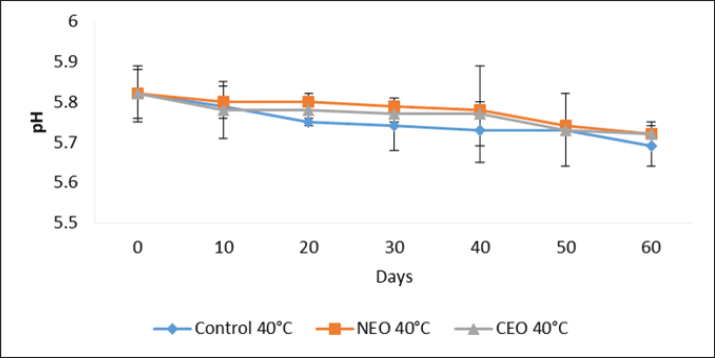
Moisture content analysisThe moisture content was measured based on the AOAC (1999) procedure. The method measures water loss from the sample during the drying process at a constant temperature until a constant mass is obtained. After drying at 105°C for 3 hours, an empty dish was cooled in a desiccator and weighed. Three grams of the sample were placed in a dish and dried in an oven for 3 hours at 105°C. After cooling, the dish was weighed again to calculate the amount of moisture lost. Hardness analysisA TA.XT Plus texture analyzer (Stable Micro System Ltd., Godalming, UK) was used to measure hardness in accordance with Choe et al. (2016). Meat samples were cut parallel to the muscle fibers, resulting in 15-mm-thick cubes. A cylindrical probe with a diameter of 25 mm was used to compress the samples to 60% of their initial height. The device’s pre-test, test, and post-test speeds were 3, 1, and 3 mm/s, respectively. Lipid oxidation analysisThe thiobarbituric acid (TBA) value was measured using the method of Kurniadi et al. (2017). A total of 10 g of smoked meat was placed in a distillation flask, and then 2.5 ml of 4 M HCl and 47.5 mL of distilled water were added. The distillation process was performed until 50 mL of the distillate was obtained. Next, 5 mL of the distillate was mixed with 5 mL of TBA reagent (0.02 M TBA in 90% glacial acetic acid), then heated in boiling water for 35 minutes and retained for 10 minutes. The absorbance was measured at a wavelength of 528 nm. The results of lipid oxidation measurements in this study are reported and discussed consistently as TBA values to avoid terminological ambiguity. Descriptive analysis of sensory evaluationA descriptive analysis was performed using the method of Meilgaard et al. (2007). Eleven Panelists participated in seven evaluations and five training sessions. Sensory evaluations were conducted using a seven-point hedonic scale. The panel consisted of researchers and students from the National Research and Innovation Agency, comprising six men and women aged 18–40 years. The trained panel performed the descriptive sensory evaluation in a standardized sensory evaluation laboratory equipped with individual testing booths. The testing room was maintained at a controlled temperature of 22℃ ± 2°C and relative humidity of 50%–60%, under uniform daylight-balanced lighting. The panel was selected based on the following criteria: good health, no impairments in taste or smell, and willingness to participate in the entire training and evaluation process. The evaluation process was divided into three stages: attribute development, training, and evaluation. Attribute generationThe panelists were presented with a variety of smoked meat samples, including commercial products, smoked meats with NEO or CEO, and samples stored at 40°C for up to 60 days, and evaluated every 10 days. All samples were presented blindly using a three-digit random code, so panelists were unaware of each sample’s treatment. The presentation order was also randomized to minimize bias. After completing the sensory attribute identification process, the panelists were asked to determine the intensity and reference for each agreed-upon attribute through context. Training and evaluation sessionsThe panelists underwent a month of training to familiarize themselves with a 15-cm line scale for quality evaluation. During the evaluation process, the panelists were presented with uniformly cut samples (3 × 2 × 0.3 cm) placed in small cups that were covered during the evaluation sessions. The panelists were given three samples (control, NEO-, and CEO-treated samples). The samples were coded in each session using randomly generated three-digit numbers. The panelists rated the samples using a 15-cm line scale based on appearance, texture, taste, and aroma. Water was provided between the samples as a neutralizer. Experiment design and statistical evaluationAll analyses, including pH, color, WHC, moisture content, hardness, lipid oxidation, and descriptive sensory analysis, were performed in triplicate. Each measurement was independently performed for each sample to ensure data accuracy and reproducibility. Analysis of variance was employed to assess the data using a fully randomized design. A randomized complete block design was employed to examine the sensory evaluation data. Duncan’s multiple range test was performed using SPSS Statistics 22.0 (IBM, USA) to assess treatment differences. Ethical approvalThe Research Ethics Committee of Universitas Gadjah Mada, Indonesia, approved this study (Approval Number KE/UGM/027/20220). All procedures involving human participants were conducted in accordance with the committee’s ethical standards. Written informed consent was obtained from all participants before they participated in this study. ResultspHAs shown in Figure 1 and Table 1, the pH values of all samples gradually decreased over the storage period. The pH of the control sample decreased from 5.82 ± 0.01 on day 0 to 5.69 ± 0.05 on day 60. A similar trend was observed in the samples treated with NEO, which, as shown by the data, decreased from 5.82 ± 0.06 to 5.72 ± 0.03 during storage. Statistical analysis revealed no significant differences in pH among the treatments at any storage interval (p > 0.05). However, storage time significantly affected the pH values in each treatment (p < 0.05), with the lowest pH values recorded on day 60. Overall, the pH values of all treatments remained within a narrow range (5.69–5.82), indicating that the addition of EO did not significantly affect pH changes during storage.
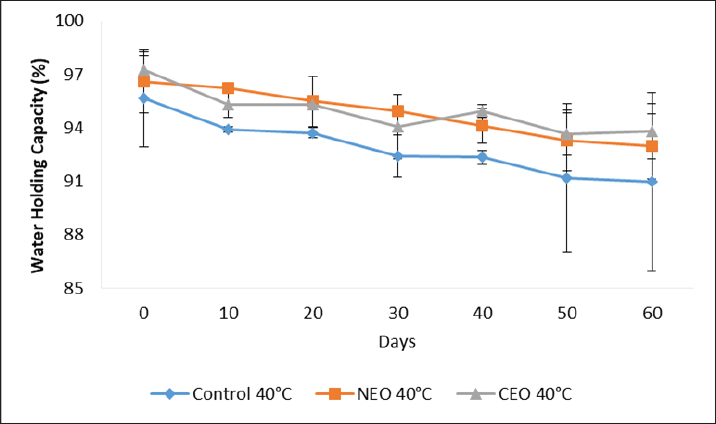
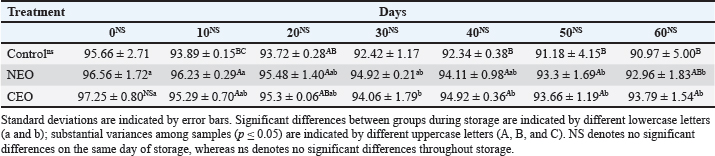
Fig. 1. Changes in pH values of smoked meat treated with CEO and NEO during 60 days of storage at 40°C. *Error bars indicate standard deviations. a,b,c: different letters indicate significant differences during storage; A, B, and C: different letters indicate significant differences between samples (p ≤ 0.05); NS: nonsignificant differences among samples on the same day of evaluation. ColorAs shown in Figure 2 and Table 2, the color values of all samples remained within a relatively narrow range during the 60-day storage period. The control sample showed a slight decrease from 71.45 ± 0.22 on day 0 to 69.26 ± 0.06 on day 20, followed by a gradual increase to 71.15 ± 0.85 at the end of storage. The NEO-treated samples exhibited the most stable color values, ranging from 70.37 ± 0.71 to 71.55 ± 1.07 throughout the observation period. Meanwhile, samples treated with CEO showed more pronounced fluctuations, with color values decreasing from 72.24 ± 0.01 on day 0 to 70.20 ± 0.49 on day 30, before increasing again to 72.19 ± 1.30 on day 60. Overall, these results indicate that the NEO treatment maintained more consistent color stability during storage than the control and CEO treatments. Water-holding capacityAs shown in Figure 3 and Table 3, the WHC of Se’i meat decreased gradually over 60 days of storage across all treatment groups. In the control group, WHC decreased from 95.66% ± 2.71% on day 0 to 90.97% ± 5.00% on day 60. Samples treated with NEO showed a smaller decrease, from 96.56% ± 1.72% to 92.96% ± 1.83% over the same storage period. A similar pattern was also observed in samples treated with CEO, which tended to maintain a higher WHC value during storage, reaching 93.79% ± 1.54% on day 60. At the end of storage, the WHC of the CEO samples was significantly higher than that of the control group (p < 0.05), whereas the NEO samples did not differ significantly from the control. Overall, WHC decreased significantly with increasing storage time across all treatments, indicating a reduced ability of Se’i meat to retain water during storage. Table 1. pH values of the smoked meats treated with the addition of CEO and NEO during storage for 60 days at an extreme temperature (40°C).
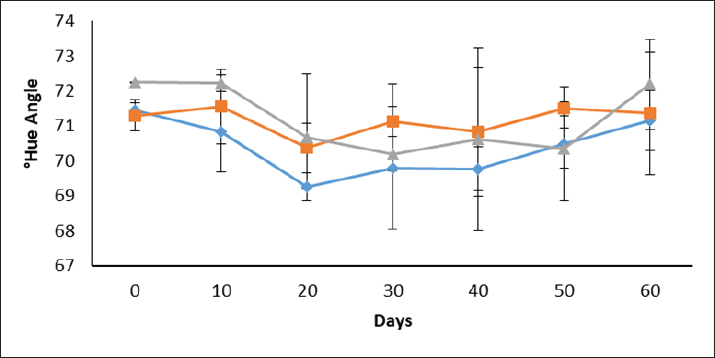
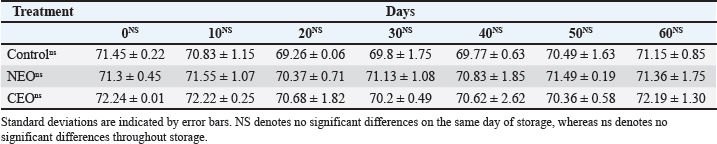
Fig. 2. Changes in the color values of smoked meat treated with CEO and NEO during 60 days of storage at 40°C. *Error bars indicate standard deviations. a,b,c: different letters indicate significant differences during storage; A, B, and C: different letters indicate significant differences between samples (p ≤ 0.05); NS: nonsignificant differences among samples on the same day of evaluation. Table 2. Color values of smoked meats treated with the addition of CEO and NEO during 60 days of storage at an extreme temperature (40°C).
Fig. 3. Changes in the WHC of smoked meat treated with CEO and NEO during 60 days of storage at 40°C. *Error bars indicate standard deviations. a,b,c: different letters indicate significant differences during storage; A, B, and C: different letters indicate significant differences between samples (p ≤ 0.05); NS: nonsignificant differences among samples on the same day of evaluation. Table 3. WHC values (%) of smoked meats treated with the addition of CEO and NEO during 60 days of storage at an extreme temperature (40°C).
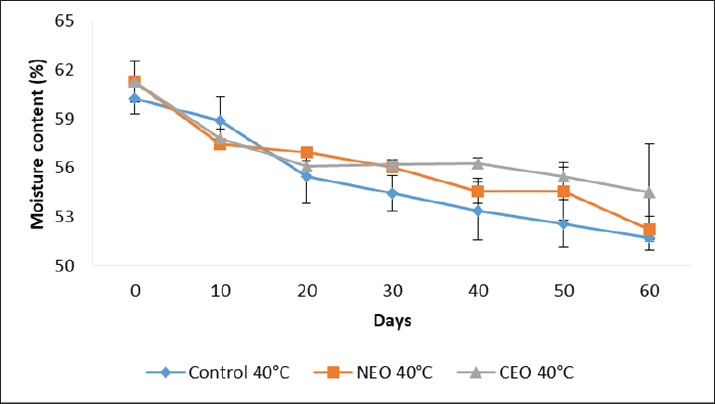
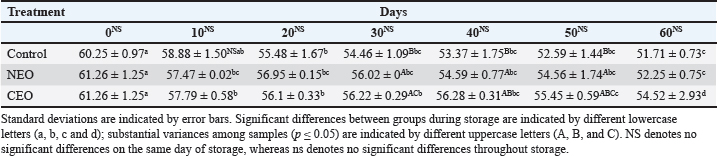
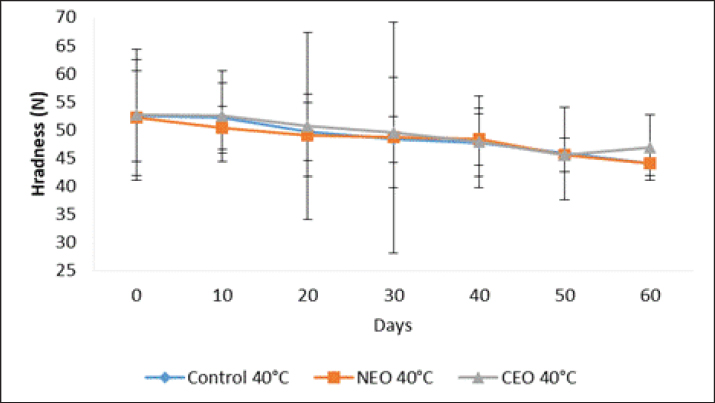
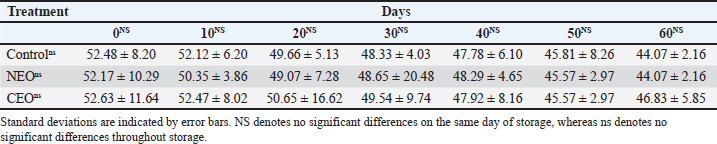
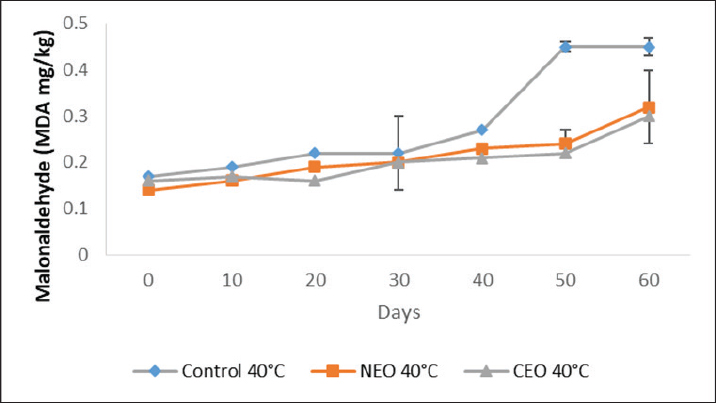
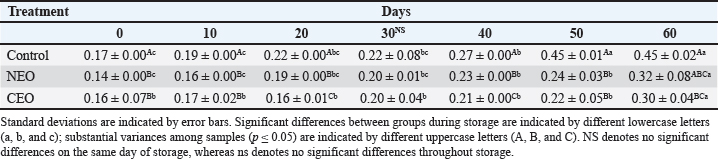
Moisture contentFigure 4 and Table 4 shows that the initial water contents were 60.25% ± 0.97%, 61.26% ± 1.25%, and 61.26% ± 1.25% for the samples related to the control, NEO, and CEO. These values decreased to 51.71% ± 0.73% for the control sample, 52.25% ± 0.75% for the sample treated with NEO, and 54.52% ± 2.93% for the sample treated with CEO after the storage period. HardnessAs shown in Figure 5 and Table 5, the meat hardness of Se’i tended to decrease during storage across all treatment groups. In the control group, firmness decreased from 52.48 ± 8.20 N at hour 0 to 44.07 ± 2.16 N at hour 60. A relatively similar pattern of decline was observed in the NEO-treated samples, i.e., from 52.17 ± 10.29 N to 44.07 ± 2.16 North Meanwhile, the CEO-treated samples showed a smaller decrease, from 52.63 ± 11.64 N at hour 0 to 46.83 ± 5.85 N at hour 60. Overall, these results indicate that meat firmness decreases with increasing storage time, but the decrease appears to be lower in the CEO-treated samples than in the control and NEO groups. Lipid oxidationAs shown in Figure 6 and Table 6, the TBA values increased gradually in all samples over the 60-day storage period, indicating lipid oxidation during storage. The control sample showed the greatest increase, from 0.17 ± 0.00 mg MDA/kg on day 0 to 0.45 ± 0.02 mg MDA/kg on day 60. On the contrary, the sample treated with NEO increased from 0.14 ± 0.00 to 0.32 ± 0.08 mg MDA/kg, whereas the sample treated with CEO increased from 0.16 ± 0.07 to 0.30 ± 0.04 mg MDA/kg over the same period. At the end of storage, both EO treatments showed lower TBA values than the control, with the lowest final value observed in the CEO sample. These results indicate that the NEO and CEO treatments are associated with a reduction in the lipid oxidation level in Se’i meat during storage.
Fig. 4. Changes in the moisture content of smoked meat treated with CEO and NEO during 60 days of storage (40°C). *Error bars indicate standard deviations. a,b,c: different letters indicate significant differences during storage; A, B, and C: different letters indicate significant differences between samples (p ≤ 0.05); NS: nonsignificant differences among samples on the same day of evaluation. Table 4. Moisture content values of smoked meats treated with the addition of CEO and NEO during 60 days of storage at an extreme temperature (40°C).
Fig. 5. Changes in the hardness of smoked meat treated with CEO and NEO during 60 days of storage at 40°C. *Error bars indicate standard deviations. a,b,c: different letters indicate significant differences during storage; A, B, and C: different letters indicate significant differences between samples (p ≤ 0.05); NS: nonsignificant differences among samples on the same day of evaluation. Table 5. Hardness values of smoked meats treated with the addition of CEO and NEO during storage for 60 days at an extreme temperature (40°C).
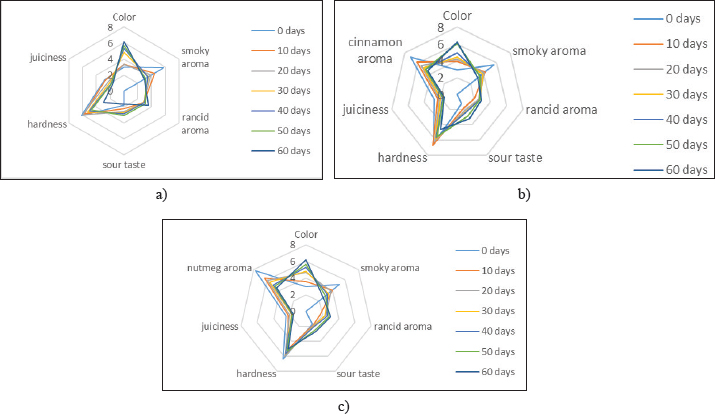
Descriptive analysisThe sensory profiles of samples treated with cinnamon, nutmeg, and the control group are shown in Figure 7. In general, all samples showed a downward trend in smoke aroma, nutmeg or cinnamon aroma, hardness, and moisture, while other characteristics (color, rancid aroma, and sour taste) showed an upward trend during storage. Samples treated with NEO and CEO continuously showed higher hardness scores, less color loss, and a milder rancid aroma than the control group during storage. A steady increase in ΔE values can be observed from sensory observations and instrumental color analysis. Instrumental measurements and descriptive analysis were consistent, as demonstrated by the sensory panel’s reliability in detecting subtle differences. The color maintenance and lipid stability of Se'i meat are important quality attributes for indicating its storage duration. TBA values and the sensory characteristics of rancid aroma and hardness showed similar trends, indicating a strong relationship between chemical markers of lipid oxidation and the sensory perception of rancidity. Oxidation plays an important role in influencing aroma and taste perception, as mentioned in previous studies. Sensory evaluation of hardness showed that the hardness level gradually decreased with increasing storage time.
Fig. 6. Changes in TBA values of smoked meat treated with CEO and NEO during 60 days of storage at 40°C. *Error bars indicate standard deviations. a,b,c: different letters indicate significant differences during storage; A, B, and C: different letters indicate significant differences between samples (p ≤ 0.05); NS: nonsignificant differences among samples on the same day of evaluation. Table 6. TBA values of smoked meats treated with the addition of CEO and NEO during 60 days of storage at an extreme temperature (40°C).
DiscussionpHThe gradual decrease in pH observed during storage can be attributed to the formation of acidic compounds, such as organic and free fatty acids, resulting from lipid hydrolysis and oxidative reactions. In addition, microbial metabolic activity during storage may also contribute to acidic metabolite production, leading to a gradual pH decline (Chauhan and England, 2018; Yang et al., 2026). All samples (control, NEO, and CEO) were not statistically different at the onset of the storage period 0–30 days. On days 40 and 60, the control sample showed a significantly lower pH value than the EO-treated samples, although the magnitude of the difference remained relatively small. Retort-packed buffalo meat products reportedly experienced the same decline in pH during 90 days of storage (Devadason et al., 2014). This occurs because of lipid oxidation, in which fatty acids degrade and produce weak acids, resulting in a lower pH (Yun et al., 2007). The concentration of hydrogen ions in meat can also be affected by free fatty acids produced by triglyceride hydrolysis. According to Kristott (2000), oxidative and hydrolytic damage to the oil components of food causes lipid oxidation and pH decline. In addition, pH reduction during storage may be linked to microbial metabolism and enzymatic reactions within the meat matrix, including amino acid release and protein denaturation during extended storage, which collectively enhance acid accumulation (Wereńska and Okruszek, 2023).
Fig. 7. Spider-web plots of the sensory descriptor for smoked meat treated with a) control, b) CEO, and c) NEO over 60 days of storage at a high temperature (40°C). ColorThe hue angle values of all samples varied slightly during storage, showing neither a consistent upward nor downward trend. The hue angle values of all samples varied only slightly during storage, with no significant differences among treatments (p > 0.05). Although CEO has a naturally darker color that may contribute to the initial hue characteristics of the treated samples, its addition did not significantly alter the product’s overall color stability during storage at 40°C. These findings suggest that both EOs exhibited a comparable effect on maintaining color stability under the conditions of this study. After the storage period (day 60), the hue angle values were 71.15, 71.36, and 72.19 for the control, NEO-treated sample, and 72.19 for the CEO-treated sample. The values indicate no substantial changes (p > 0.05). The addition of NEO and CEO did not significantly affect the color of the product at 40°C. Although cinnamon oil contains cinnamaldehyde with stronger antioxidant activity than the dominant compounds in nutmeg oil, such as myristicin and sabinene, this difference was not observed in the color parameters in this study. This is likely due to the relatively high storage temperature (40°C), which accelerates oxidation while increasing the volatility of the active compounds, thereby reducing their effectiveness. Furthermore, the concentration of EOs used and the complexity of the meat matrix, which involves the interaction of proteins, lipids, and oxygen, are thought to limit the antioxidant activity against myoglobin oxidation. Therefore, although cinnamon oil theoretically has a higher antioxidant potential, its effect on color stability was not significantly different when compared to nutmeg oil under the conditions of this study. The results of this study align with research reporting that the CEO has stronger antimicrobial and antioxidant activity than other EOs, particularly due to its cinnamaldehyde content as the main bioactive compound. According to Gheorghe-Irimia et al. (2024), cinnamaldehyde damages microbial cell membranes, interferes with enzymatic activity, and scavenges free radicals, thus contributing to inhibiting lipid oxidation and maintaining meat quality. Color changes in samples during storage are mostly correlated with alterations in the conformational structure of meat proteins due to oxidation, which subsequently affects the appearance of the color. According to Langer et al. (2010), the rate at which lipid oxidation induces myoglobin oxidation is directly correlated with meat color variation. Mancini and Hunt (2005) presented a similar view, stating that several variables, including oxygen partial pressure, oxygen consumption, and lipid oxidation, play an important role in meat color changes. Ramanathan et al. (2021) also stated that oxidative processes mostly affect the brownish discoloration of meat and meat products. The color angle stability in samples treated with NEO and CEO is likely related to the presence of antioxidant chemicals in NEO and CEO. These substances are known for their ability to slow down oxidative processes that can lead to color changes in the meat. According to Matulyte et al. (2020), NEO has antioxidant activity, which may preserve food quality. The CEO showed a similar pattern, exhibiting a potent antioxidant capacity and attaining a 2,2-diphenyl-1-picrylhydrazyl (DPPH) radical scavenging activity of 91.4% at a concentration of 5 mg/mL (Lin et al., 2009). However, there was not enough antioxidant activity in this study to considerably change the hue angle value compared with the control. This finding is in line with the findings of Zhang et al. (2019), who stated that adding small amounts of CEO to fresh beef products can postpone lipid oxidation, but it does not affect color characteristics. Although the CEO exhibited strong antioxidant activity (DPPH radical scavenging activity of 91.4%), the effectiveness of antioxidants can be reduced at high storage temperatures because of interactions with proteins and lipids, oxygen availability, and accelerated oxidation. Water-holding capacityThe decrease in WHC during storage may be associated with protein degradation and structural changes in muscle proteins, which reduce their ability to retain water. Oxidative and enzymatic reactions can disrupt the myofibrillar network, leading to increased fluid loss. The graph shows a notable difference between the control and CEO-treated samples, which may be due to the ability of the CEO to reduce protein oxidation and maintain myofibrillar protein integrity. The presence of phenolic compounds in EOs may enhance the stability of muscle protein structure, thereby improving its capacity to retain water and reducing drip loss during storage (Binsi et al., 2017). Consequently, both EO treatments (CEO and NEO) demonstrated significant effectiveness in maintaining WHC compared with the control group at the end of the storage period (p < 0.05). The CEO-treated samples exhibited the highest absolute WHC retention, although it was statistically comparable to the NEO treatment. Several studies have reported similar results, in which the WHC of broiler meat has been reported to be similar to that of the application of blended EOs (Agus et al., 2019). Furthermore, Siroli et al. (2020) stated that oregano, rosemary, and juniper EOs enhanced the WHC of marinated pork loin. The WHC preservation and the concurrent quality loss retardation under extreme 40°C thermal stress can be directly attributed to the microstructural protection of muscle proteins by the incorporated EOs. Quantitatively, the magnitude of the protection observed in this study closely aligns with, and in some aspects outperforms, the recent literature on EOs applied to meat systems. For instance, the final WHC retention achieved by the CEO treatment on day 60 (93.79%) represents a major improvement over standard untreated controls under thermal stress. This protective magnitude is highly consistent with the findings of Siroli et al. (2020), who reported a 4%–6% higher water retention in EO-treated marinated pork compared to controls due to minimized degradation of the structural matrix. Furthermore, while typical blended EOs applications in broiler meat matrices demonstrate a moderate reduction in drip loss (approximately 1.5 to 2.5 times slower than the control group) under ambient storage conditions (Agus et al., 2019), our direct empirical challenge clearly highlights that the protective threshold of cinnamaldehyde remains highly resilient even when subjected to prolonged accelerated thermal stress at 40°C. By preventing the oxidative breakdown and cross-linking of myofibrillar proteins, specifically actin and myosin, the treatments successfully maintain the structural integrity of the lattice network and prevent the collapse of capillary micro-spaces that otherwise lead to drip and fluid loss (Estévez, 2011). Moisture contentThe decrease in moisture content during storage may be attributed to water loss through evaporation and drip loss, as well as structural changes in muscle proteins that reduce water retention capacity. The moisture content of all samples decreased with increasing storage time (p > 0.05). However, no appreciable changes were found between the samples after the storage period. The initial moisture content was 60.25%, 61.26%, and 61.26% for the control, NEO, and CEO samples, respectively. After the storage period, the values decreased to 51.71% for the control sample, 52.25% for the NEO-treated sample, and 54.52% for the CEO-treated sample. The moisture content is the total amount of water in meat, whereas the WHC is the capacity of muscle proteins to hold water inside the myofibrillar structure throughout processing or storage. Variations in protein integrity and oxidative stability may result in notable changes in WHC, even if the overall moisture content remains relatively constant. According to Jiang et al. (2019), increased moisture loss was noted during storage, which may be related to protein aggregation caused by fiber contraction. The results of the current research agree with those of Al-Zaidi and Ahmed (2020), who revealed that EOs do not significantly affect the content of beef sausage. In addition, no significant change in moisture content was observed between broiler meat samples treated with EO and control samples (Agus et al., 2019). HardnessThe decrease in firmness during storage may be attributed to muscle structure degradation, particularly damage to myofibrillar proteins. Proteolytic enzyme activity and oxidative reactions can weaken the muscle matrix, thereby softening the texture over time. Figure 2 shows that the hardness values of all samples tended to progressively decrease after storage. Hardness values at day 60 were 44.07 N for the control sample, 44.07 N for the NEO-treated samples, and 46.83 N for the CEO-treated samples; no notable changes were found between treatments (p > 0.05). NEO and CEO do not significantly affect the product’s hardness during storage at 40°C. Proteolytic activity and oxidative changes may play an important role in the hardness decline over storage time because they cause protein degradation and structural weakening of the meat matrix. Soeparno (2015) also stated that meat metabolism, either through autolysis or through energy in meat cells, contributes to the decrease in meat hardness. Furthermore, Koohmaraie et al. (2002) stated that the main factors that affect meat tenderness are connective tissue content, muscle sarcomere contraction, and myofibrillar degradation. Several factors, including the heating process, storage duration, and storage temperature, can trigger myofibrillar degradation (Vaskoska R Ha et al., 2020). The effects of sterilization on meat tenderness were similar in all samples. The results agree with the findings of Noshad et al. (2021), who revealed that buffalo meat texture was not significantly affected by the application of lemon EO. On the contrary, Siroli et al. (2020) reported conflicting findings, showing that the application of EO-based marinade solutions can affect pork loin hardness. Lipid oxidationBased on the results of the study, an upward trend in TBA values was observed over time during storage. After the storage period, significantly lower TBA values were recorded in the NEO (0.32 mg MDA/kg) and CEO (0.30 mg MDA/kg) samples than in the control group (0.45 mg MDA/kg). This indicates that the observed effect is likely related to the antioxidant properties of NEO and CEO, which are capable of capturing free radicals. This is supported by the report of Matulyte et al. (2020), who found antioxidant properties in NEO and investigated its potential as a natural antioxidant agent in food products. The antioxidant activity of CEO has also been reported. Lin et al. (2009) reported a remarkable DPPH free-radical scavenging activity, with an efficiency of 91.4% at a concentration of 5 mg/mL, highlighting its potent antioxidant capability. The present findings are consistent with those of Zhu et al. (2024), who indicated that NEO strengthened the protein interaction network in beef batter, thereby limiting protein oxidation and slowing lipid oxidation. The addition of 0.1% CEO to fresh Italian-style sausage has been reported to extend quality stability by inhibiting lipid oxidation (Liu et al., 2019). In addition, eugenol in NEO possesses a specific chemical structure that enables substantial TMT-chelating activities (Zhou et al., 2023). This property physically sequesters pro-oxidant catalyst ions, such as free iron (Fe2⁺) or copper (Cu2⁺), typically released from disrupted heme proteins under thermal abuse (Zhang et al., 2022). By blocking the participation of these transition metals in Fenton-like pathways, the EOs significantly minimize the formation of highly destructive hydroxyl radicals (OH•) (Estévez, 2011). This multipathway defense mitigates the oxidative cross-linking, carbonylation, and cleavage of myofibrillar proteins within the meat matrix (Chen et al., 2025; Liu et al., 2022). Interestingly, after the storage period, samples treated with NEO showed higher TBA values than samples treated with CEO. This discrepancy may be explained by the fact that cinnamon oil contains phenolic compounds, which give it more potent antioxidants than nutmeg oil. Descriptive analysisThe panelists for the experiment, which included five males and six females between the ages of 18 and 40, defined the characteristics of each sample. Color, smoky scent, rancid scent, nutmeg or cinnamon scent, sour taste, hardness, and juiciness were among the sensory characteristics assessed. These qualities were the main factors that developed and changed in the Se'i meat product over the 60-day storage period. Figure 7 shows the sensory profiles of the samples treated with cinnamon, nutmeg, and the control. All samples generally showed declining trends in smoky aroma, nutmeg or cinnamon aroma, hardness, and juiciness, while other characteristics (color, rancid aroma, and sour taste) showed increasing trends over storage. Throughout storage, the NEO- and CEO-treated samples continuously showed higher hardness scores, less color deterioration, and a milder rancid odor than the control group. By preventing the oxidation of proteins and lipids, EOs may add to the quality and stability of Se'i meat (Šojić et al., 2019). The gradual increase in color scores over long storage times is usually associated with oxidative processes, particularly lipid oxidation and pigment breakdown, that alter the appearance of meat products. According to Liu et al. (2020), meat oxidation results in the formation of primary and secondary metabolites that affect the meat’s color. The steady rise in ΔE values can be observed from sensory observation and instrumental color analysis. The instrumental measurements and descriptive analysis are consistent, as demonstrated by the reliability of the sensory panel in detecting subtle differences. The color preservation and lipid stability of Se'i meat are important quality attributes that indicate the duration of storage. TBA values and the sensory characteristics of rancid odor and hardness showed a similar trend, suggesting a strong relationship between the chemical markers of lipid oxidation and the sensory perceptions of rancidity. Oxidative degradation plays an important role in affecting the aroma and flavor perception, as mentioned in the previous research. A significant positive correlation (0.77) was found between TBA values and the presence of rancid flavor or odor in cooked ground beef (Vasavada et al., 2006). This implies that the sensory perception of rancidity increases in tandem with the TBA values, indicating increased lipid oxidation. The rising TBA values indicate an increase in rancidity, indicating that lipid oxidation is increasing. Sensory assessments of hardness showed that the level of hardness gradually decreased with the extension of storage times. Protein denaturation and structural alterations caused by prolonged storage under oxidative stress may be related to the decline in perceived firmness. The sensory results were supported by texture instrumental measurements, which showed a similar declining trend. LimitationsThis study has several limitations that should be considered when interpreting the results. First, the use of a single EO concentration may limit the understanding of the dose-response relationship, thus not reflecting the optimal concentration. Second, the relatively limited sample size may affect the statistical power and generalizability of the results. Third, the controlled storage conditions at 40°C may not fully represent real-world storage practices. Furthermore, this study did not include chemical profile analysis of EOs using gas chromatography–mass spectrometry, so the specific composition of bioactive compounds in the samples used could not be directly confirmed and relied solely on the literature. Therefore, future studies are recommended to examine various concentrations, use larger sample sizes, test efficacy under more diverse and rational storage conditions, and conduct direct chemical characterization to gain a more accurate understanding of the relationship between composition and biological activity. Further research is recommended to use a more controlled experimental design, including consistent application of emulsifiers across samples, so that the specific effects of EOs can be more clearly separated from the effects of other additives. ConclusionThe results showed that the addition of NEO (Myristica fragrans) and CEO (Cinnamomum burmannii) maintained pH stability and water-holding capacity, as well as suppressed lipid oxidation, as indicated by lower TBA values compared to the control. The addition of EOs, particularly cinnamon oil, also reduced meat oxidation levels and improved sensory attributes, such as color, aroma, and overall acceptability. These findings indicate that both EOs, have the potential to act as natural antioxidant agents, thereby preserving oxidative stability and sensory quality throughout the 60-day storage period, despite the lack of significant differences in color, moisture content, and firmness. Practically, these results suggest that these EOs, especially cinnamon oil, hold promise as alternative natural antioxidants in the processed meat industry to optimize oxidative and organoleptic protection. However, these findings do not imply a comprehensive extension of product shelf-life given the absence of microbiological validation. Further research remains imperative to evaluate their antimicrobial efficacy, demonstrate effectiveness across various concentrations and diverse storage environments, and validate these formulations on an industrial scale to achieve comprehensive and applicable preservation models. AcknowledgmentsThe author would like to thank Chulalongkorn University, the National Research and Innovation Agency (BRIN) of Indonesia, and Universitas Gadjah Mada for their valuable provision and contribution to this research. Conflict of interestThe authors declare no conflict of interest. FundingChulalongkorn University, the National Research and Innovation Agency of Indonesia, and Universitas Gadjah Mada Authors' contributionsThe experiment was conducted by U.A. and S.F. U.A., D.A.D., and S. wrote the manuscript, with assistance from N.S.F., I.S., E.T., P.I.S., and A.F. The project was overseen by I.S., E.T., P.I.S., and A.F. The original concept came from I.S. and E.T. Data availabilityData sets generated and analyzed during this study include data on pH values during 60 days of storage at extreme temperatures (40°C), WHC values during 60 days of storage at extreme temperatures (40°C), color values during 60 days of storage at extreme temperatures (40°C), moisture content during 60 days of storage at extreme temperatures (40°C), firmness values during 60 days of storage at extreme temperatures (40°C), firmness values during 60 days of storage at extreme temperatures (40°C), TBA values during 60 days of storage at extreme temperatures (40°C), and spider web plots of sensory descriptors for smoked meat treated with a) control, b) CEO, and c) NEO during the 60-day storage period. at high temperature (40°C), pH value of smoked meat processed with the addition of CEO and NEO during 60 days of storage at extreme temperature (40°C), color value of smoked meat processed with the addition of CEO and NEO during 60 days of storage at extreme temperature (40°C), WHC value of smoked meat processed with the addition of CEO and NEO during 60 days of storage at extreme temperature (40°C), moisture content value of smoked meat processed with the addition of CEO and NEO during 60 days of storage at extreme temperature (40°C), hardness value of smoked meat processed with the addition of CEO and NEO during 60 days of storage at extreme temperature (40°C), TBA value of smoked meat processed with the addition of CEO and NEO during 60 days of storage at extreme temperature (40°C) are available from the corresponding author upon reasonable request. ReferencesAgus, A., Anas, M.A., Luthfiana, R. and Hidayat, A.A. 2019. Effect of blend of natural essential oils addition in the drinking water on productivity, carcass yield and meat quality of broiler. IOP Conf. Ser. Earth Environ. Sci. 387, 12078; doi:10.1088/1755-1315/387/1/012078 Al-Zaidi, R.M.K. and Ahmed, M.M. 2020. Effect of adding essential oils to the physicochemical properties of frozen beef sausage with different storage periods. Plant. Arch. 20, 2605–2609. AOAC. 1999. Official methods of analysis of AOAC International, Bakhsh, A., Lee, S.J., Lee, E.Y., Hwang, Y.H. and Joo, S.T. 2021. Evaluation of rheological and sensory characteristics of plant-based meat analog with comparison to beef and pork. Food. Sci. Anim. Resour. 41, 983–996; doi:10.5851/kosfa.2021.e50 Beya, M.M., Netzel, M.E., Sultanbawa, Y., Smyth, H. and Hoffman, L.C. 2021. Plant-based phenolic molecules as natural preservatives in comminuted meats: a review. Antioxidants 10, 263; doi:10.3390/antiox10020263 Binsi, P.K., Ninan, G. and Ravishankar, C.N. 2017. Effect of curry leaf and clove bud essential oils on textural and oxidative stability of chill-stored sutchi catfish filets. J. Texture Stud. 48, 258–266; doi:10.1111/jtxs.12237 Burt, S. 2004. Essential oils: their antibacterial properties and potential applications in foods: a review. Int. J. Food Microbiol. 94, 223–253; doi:10.1016/j.ijfoodmicro.2004.03.022 Chauhan, S.S. and England, E.M. 2018. Postmortem glycolysis and glycogenolysis: insights from species comparisons. Meat. Sci. 144, 118–126; doi:10.1016/j.meatsci.2018.06.021 Chen, Y., Wang, M., Zhang, Z., Liu, K., Li, X., Zheng, H. and Sun, J. 2025. Effects of curcumin and sodium bicarbonate on the structure and gel properties of oxidation-induced beef myofibrillar proteins. Food Chem. 475, 143209; doi: 10.1016/j.foodchem.2025.143209 Chib, A., Gupta, N., Bhat, A., Anjum, N. and Yadav, G. 2020. Role of antioxidant in food. Int. J. Chem. Stud. 8, 2354–2361. Choe, J.H., Choi, M.H., Rhee, M.S. and Kim, B.C. 2016. Estimation of sensory pork loin tenderness using Warner-Bratzler shear force and texture profile analysis measurements. Asian-Australas. J. Anim. Sci. 29, 1029–1036; doi:10.5713/ajas.15.0482 De-Montijo-Prieto, S., Razola-Díaz, M.D.C., Gómez-Caravaca, A.M., Guerra-Hernandez, E.J., Jiménez-Valera, M., Garcia-Villanova, B., Ruiz-Bravo, A. and Verardo, V. 2021. Essential oils from fruit and vegetables, aromatic herbs, and spices: composition, antioxidant, and antimicrobial activities. Biology 10, 1091; doi:10.3390/biology10111091 Devadason, I.P., Anjaneyulu, A.S.R., Mendiratta, S.K. and Murthy, T.R.K. 2014. Quality and shelf life of buffalo meat blocks in retort pouches. Food. Sci. Technol. 51, 3991–3997. Estévez, M. 2011. Protein carbonyls in meat systems: a review. Meat Sci. 89(3), 259–279; doi:10.1016/j.meatsci.2011.04.025 Gheorghe-Irimia, R.A., Tăpăloagă, D., Tăpăloagă, P.R., Ghimpețeanu, O.M., Tudor, L. and Militaru, M. 2024. Spicing up meat preservation: cinnamomum zeylanicum essential oil in meat-based functional foods: a five-year review. Foods 13, 2479; doi:10.1016/j.foods.2024.2479 Jiang, S., Liu, Y., Shen, Z., Zhou, B. and Shen, Q.W. 2019. Acetylome profiling reveals the extensive involvement of lysine acetylation in muscle to meat conversion. J. Proteomics. 205, 103412. Koohmaraie, M., Kent, M.P., Shackelford, S.D., Veiseth, E. and Wheeler, T.L. 2002. Meat tenderness and muscle growth: is there any relationship?. Meat. Sci. 62, 345–352. Kristott, J. 2000. Fats and oils. In The stability and shelf life of food. Eds., Kilcast, D. and Subramaniam, P. Cambridge, UK: Woodhead Publishing, pp: 261–276. Kurniadi, M., Bintang, R., Kusumaningrum, A., Nursiwi, A., Nurhikmat, A., Susanto, A., Angwar, M., Triwiyono, A. and Frediansyah, A. 2017. Shelf life prediction of canned fried-rice using accelerated shelf life testing Arrhenius method. In IOP Conference Series: Earth and Environmental Science, vol. 101, p 12029; doi:10.1088/1755-1315/101/1/012029 Langer, R.O.S., Simoes, G.S., Soares, A.L., Oba, A., Rossa, A., Shimokomaki, M. and Ida, E.I. 2010. Broiler transportation conditions in a Brazilian commercial line and the occurrence of breast PSE and DFD-like meat. Braz. Arch. Biol. Technol. 53, 1161–1167. Lin, C.W., Yu, C.W., Wu, S.C. and Yih, K.H. 2009. DPPH free-radical scavenging activity, total phenolic content, and chemical composition of 42 essential oils. Food Drug Anal. 17, 386–395. Liu, J., Liu, D., Zheng, A. and Ma, Q. 2022. Haem-mediated protein oxidation affects water-holding capacity and structure of myofibrillar proteins. Food Chem. 380, 132102; doi:10.1016/j.foodchem.2022.132102 Liu, W., Luo, X., Yang, X., Zhang, Y., Zhu, L., Mao, Y., Liang, R., Han, M. and Cheng, H. 2020. Recent progress in research on the effect of lipid oxidation on meat color. Food Sci. 41, 238–247. Lopi, F., Sipahelut, G.M. and Sabtu, B. 2014. Effects of using South oleosa liquid smoke on the nutrient content, cholesterol, and taste of beef Se’i. J. Nukleus Peternakan I. 1, 117–122. Mancini, R.A. and Hunt, M.C. 2005. Current research in meat color. Meat. Sci. 71, 100–121; doi:10.1016/j.meatsci.2005.03.003 Matulyte, I., Jekabsone, A., Jankauskaite, L., Zavistanaviciute, P., Sakiene, V., Bartkiene, E., Ruzauskas, M., Kopustinskiene, D.M., Santini, A. and Bernatoniene, J. 2020. The essential oil and hydrolats from Myristica fragrans seeds with magnesium aluminometasilicate as excipient: antioxidant, antibacterial, and anti-inflammatory activity. Foods 9, 37; doi:10.3390/foods9010037 Meilgaard, M.C., Carr, B.T. and Civille, G.V. 2007. Sensory evaluation techniques, Noshad, M., Behbahani, A.B., Jooyandeh, H., Rahmati-Joneidabad, M., Kaykha HM East. and Sheikhjan, G.M. 2021. Plantago major seed mucilage containing Citrus limon essential oil as an edible coating to improve the shelf-life of buffalo meat under refrigeration conditions. Food. Sci. Nutr. 9, 1625–1639. Nugraha, P.Y., Astuti, E.S.Y. and Tunggadewi, N.P.T.N. 2021. Efektivitas ekstrak kayu manis (Cinnamomum burmannii) terhadap Streptococcus mutans pada karies gigi anak Makassar. Dent. J. 10, 163–170. Özcan, M.M. and Arslan, D. 2011. Antioxidant effect of rosemary, clove, and cinnamon essential oils on hazelnut and poppy oils. Food. Chem. 129, 171–174. Pal, M., Srivastava, M., Soni, D.K., Kumar, A. and Tewari, S.K. 2011. Composition and antimicrobial activity of the essential oil of M. fragrans from Andaman Nicobar Island. Int. J. Pharm. Life. Sci. 2, 1115–1117. Ramanathan, R., Hunt, M.C., Price, T. and Mafi, G.G. 2021. Strategies to limit meat wastage: meat discoloration. Adv. Food Nutr. Res. 95, 183–205. Santana De Oliveira, M., Vostinaru, O., Rigano, D. and De Aguiar Andrade, E.H. 2023. Bioactive compounds present in essential oils: advances and pharmacological applications. Front. Pharmacol. 14, 1130097; doi:10.3389/fphar.2023.1130097 Shoqairan, Y.I., Darwish, H.K., Hamami, M.A.H., Al-Juhaimi, F.Y., Ahmed, I.A.M. and Babiker, E.E. 2023. Influence of cinnamon powder on the antioxidant and antimicrobial properties of beef burger during storage in the refrigerator. LWT 188, 115422. Siroli, L., Baldi, G., Soglia, F., Bukvicki, D., Patrignani, F., Petracci, M. and Lanciotti, R. 2020. Use of essential oils to increase the safety and the quality of marinated pork loin. Foods 9, 987; doi:10.1016/j.foods.2020.09.010 Soeparno. 2015. Meat science and technology, Šojić, B., Tomović, V., Džinić, N. and Pavlić, B. 2019. Plant extracts as natural antioxidants in meat processing. Bulg. J. Agric. Sci. 25, 584–593. Su, L., Yin, J.J., Charles, D., Zhou, K., Moore, J. and Yu, L. 2006. Total phenolic contents, chelating capacities, and radical-scavenging properties of black peppercorn, nutmeg, rosehip, cinnamon and oregano leaf. Food Chem. 100, 990–997. Sunayardi, Z. 2021. Karakteristik mutu sei sapi yang diolah secara tradisional terhadap berbagai kombinasi waktu dan suhu pengasapan. J. Ilmu Ternak Univ. Padjadjaran 21, 58–65. Vasavada, M.N., Dwivedi, S. and Cornforth, D. 2006. Evaluation of garam masala spices and phosphates as antioxidants in cooked ground beef. J. Food Sci. 71, C292–C297. Vaskoska, R., Ha, M., Naqvi, Z.B., White, J.D. and Warner, R.D . 2020. Muscle, aging and temperature influence the changes in texture, cooking loss and shrinkage of cooked beef. Foods 9, 1289; doi:10.3390/foods9091289 Wereńska, M. and Okruszek, A. 2023. Impact of frozen storage on some functional properties and sensory evaluation of goose meat. Poultry Sci. 102, 102894. Wilhelm, A.E., Maganhini, M.B., Hernández-Blazquez, F.J., Ida, E.I. and Shimokomaki, M. 2010. Protease activity and ultrastructure of PSE meat from broiler chicken. Food. Chem. 119, 1201–1204. Wu, G., Fanzo, J., Miller, D.D., Pingali, P., Post, M., Steiner, J.L. and Thalacker‐Mercer, A.E. 2014. Production and supply of high-quality food protein for human consumption: sustainability, challenges, and innovations. Ann. New. York. Acad. Sci. 1321, 1–19. Yang, X., Wang, T., Gan, J., Meng, C., Shen, J., Li, Z., Li, X., Zeng, Y., Ren, W., Yao, X. and Meng, J. 2026. Dynamic metabolic changes during postmortem aging of Yili horsemeat revealed by untargeted metabolomics. Animals 16, 508; doi:10.1016/j.animal.2026.1058 Yu, H.H., Chin, Y.W. and Paik, H.D. 2021. Application of natural preservatives for meat and meat products against food-borne pathogens and spoilage bacteria: a review. Foods 10, 2418; doi:10.3390/foods10102418 Yun, J.H., Cha, Y.J. and Lee, D.S. 2007. Characteristics of storage stability and shelf life of Korean savory sauce products. J. Food Sci. Nutr. 12, 242–250. Zhang, X., Wang, H., Li, X., Sun, Y., Pan, D., Wang, Y. and Cao, J. 2019. Effect of cinnamon essential oil on the microbiological and physiochemical characters of fresh Italian style sausage during storage. Anim. Sci. J. 90, 389–400; doi:10.1016/j.animscience.2019.03.010 Zhou, C., Li, Y., Zhang, X., Mao, Y. and Liang, R. 2023. Effect of natural plant extracts on the quality of meat products: a meta-analysis. Front. Nutr. 10, 114251; doi:10.3389/fnut.2023.114251 Zhu, Y., Li, C., Cui, H. and Lin, L. 2024. Plasma enhanced-nutmeg essential oil solid liposome treatment on the gelling and storage properties of pork meat batters. Food Res. Int. 171, 113013. | ||


| How to Cite this Article |
| Pubmed Style Afidah U, Suppavorasatit I, Fauziah S, Febrisiantosa A, Dewi DA, Sularso S, Fitriana NS, Sitaresmi PI, Triyannanto E. Effects of cinnamon and nutmeg essential oils on oxidative stability, physicochemical properties, and sensory quality of Se’i meat during accelerated storage at 40°C. Open Vet. J.. 2026; 16(8): 5671-5685. doi:10.5455/OVJ.2026.v16.i8.57 Web Style Afidah U, Suppavorasatit I, Fauziah S, Febrisiantosa A, Dewi DA, Sularso S, Fitriana NS, Sitaresmi PI, Triyannanto E. Effects of cinnamon and nutmeg essential oils on oxidative stability, physicochemical properties, and sensory quality of Se’i meat during accelerated storage at 40°C. https://www.openveterinaryjournal.com/?mno=309343 [Access: September 03, 2026]. doi:10.5455/OVJ.2026.v16.i8.57 AMA (American Medical Association) Style Afidah U, Suppavorasatit I, Fauziah S, Febrisiantosa A, Dewi DA, Sularso S, Fitriana NS, Sitaresmi PI, Triyannanto E. Effects of cinnamon and nutmeg essential oils on oxidative stability, physicochemical properties, and sensory quality of Se’i meat during accelerated storage at 40°C. Open Vet. J.. 2026; 16(8): 5671-5685. doi:10.5455/OVJ.2026.v16.i8.57 Vancouver/ICMJE Style Afidah U, Suppavorasatit I, Fauziah S, Febrisiantosa A, Dewi DA, Sularso S, Fitriana NS, Sitaresmi PI, Triyannanto E. Effects of cinnamon and nutmeg essential oils on oxidative stability, physicochemical properties, and sensory quality of Se’i meat during accelerated storage at 40°C. Open Vet. J.. (2026), [cited September 03, 2026]; 16(8): 5671-5685. doi:10.5455/OVJ.2026.v16.i8.57 Harvard Style Afidah, U., Suppavorasatit, . I., Fauziah, . S., Febrisiantosa, . A., Dewi, . D. A., Sularso, . S., Fitriana, . N. S., Sitaresmi, . P. I. & Triyannanto, . E. (2026) Effects of cinnamon and nutmeg essential oils on oxidative stability, physicochemical properties, and sensory quality of Se’i meat during accelerated storage at 40°C. Open Vet. J., 16 (8), 5671-5685. doi:10.5455/OVJ.2026.v16.i8.57 Turabian Style Afidah, Ulil, Inthawoot Suppavorasatit, Safna Fauziah, Andi Febrisiantosa, Dita Aviana Dewi, Sularso Sularso, Nisrina Sri Fitriana, Pradita Iustitia Sitaresmi, and Endy Triyannanto. 2026. Effects of cinnamon and nutmeg essential oils on oxidative stability, physicochemical properties, and sensory quality of Se’i meat during accelerated storage at 40°C. Open Veterinary Journal, 16 (8), 5671-5685. doi:10.5455/OVJ.2026.v16.i8.57 Chicago Style Afidah, Ulil, Inthawoot Suppavorasatit, Safna Fauziah, Andi Febrisiantosa, Dita Aviana Dewi, Sularso Sularso, Nisrina Sri Fitriana, Pradita Iustitia Sitaresmi, and Endy Triyannanto. "Effects of cinnamon and nutmeg essential oils on oxidative stability, physicochemical properties, and sensory quality of Se’i meat during accelerated storage at 40°C." Open Veterinary Journal 16 (2026), 5671-5685. doi:10.5455/OVJ.2026.v16.i8.57 MLA (The Modern Language Association) Style Afidah, Ulil, Inthawoot Suppavorasatit, Safna Fauziah, Andi Febrisiantosa, Dita Aviana Dewi, Sularso Sularso, Nisrina Sri Fitriana, Pradita Iustitia Sitaresmi, and Endy Triyannanto. "Effects of cinnamon and nutmeg essential oils on oxidative stability, physicochemical properties, and sensory quality of Se’i meat during accelerated storage at 40°C." Open Veterinary Journal 16.8 (2026), 5671-5685. Print. doi:10.5455/OVJ.2026.v16.i8.57 APA (American Psychological Association) Style Afidah, U., Suppavorasatit, . I., Fauziah, . S., Febrisiantosa, . A., Dewi, . D. A., Sularso, . S., Fitriana, . N. S., Sitaresmi, . P. I. & Triyannanto, . E. (2026) Effects of cinnamon and nutmeg essential oils on oxidative stability, physicochemical properties, and sensory quality of Se’i meat during accelerated storage at 40°C. Open Veterinary Journal, 16 (8), 5671-5685. doi:10.5455/OVJ.2026.v16.i8.57 |


