




| Research Article | ||
Open Vet. J.. 2026; 16(8): 5376-5382 !
Open Veterinary Journal, (2026), Vol. 16(8): 5376–5382 Research Article Investigation of avian malaria in domestic turkeys (Meleagris gallopavo): morphological and molecular phylogeny of Plasmodium spp. in Sulaymaniyah, IraqShadan Hassan Abdullah1*, Sazan Qadr Amin2, Hadia Karim Zorab2, Zhilan Hussain Yaba2, Hawzheen Jamal Mahmood2 and Twana Salih Muhamed31Department of Microbiology, Veterinary Medicine College, University of Sulaimani, Sulaymaniyah, Iraq 2Department of Anatomy and Histopathology, Veterinary Medicine College, University of Sulaimani, Sulaymaniyah, Iraq 3Independent Researcher, Sulaymaniyah, Iraq *Corresponding Author: Shadan Hassan Abdullah. Department of Microbiology, Veterinary Medicine College, University of Sulaimani, Sulaymaniyah, Iraq. Email: shadan.abdullah [at] univsul.edu.iq Submitted: 20/01/2026 Revised: 22/06/2026 Accepted: 06/07/2026 Published: 08/08/2026 © 2025 Open Veterinary Journal
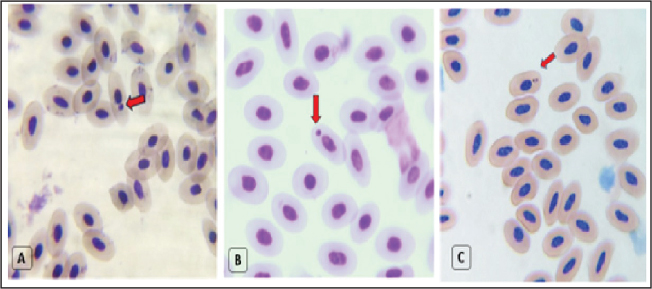
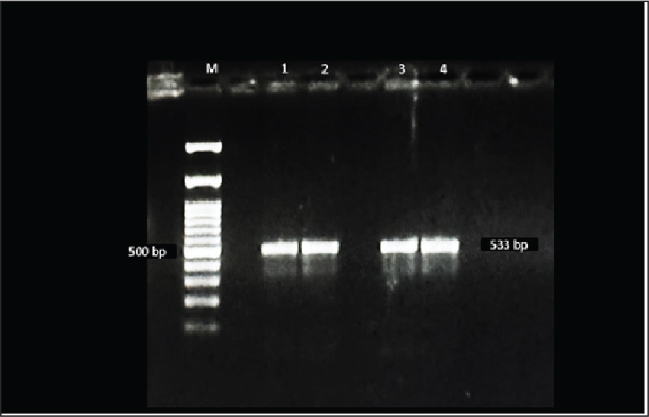
AbstractBackground: Hemoprotozoans belonging to the Plasmodium spp. are distributed worldwide, infecting various avian species, including both wild and domestic birds. Despite the risk of avian malaria, limited data underscore the need for a study on Plasmodium spp. in different avian species. Aim: The current study aimed to investigate avian malaria infection in domestic turkeys (Meleagris gallopavo) and to genetically characterize the reported Plasmodium species. Methods: Peripheral blood samples were obtained from 100 turkeys from October 2024 to May 2025 in five counties of Sulaymaniyah province, northeast of Iraq. Giemsa-stained blood smears were prepared and examined microscopically to detect hemoparasite stages, followed by conventional PCR targeting the cyt b1 gene to detect Plasmodium spp. The genetic characterization of the detected Plasmodium pathogen was based on sequencing of selected positive isolates and phylogenetic analysis. Results: The combined results of both analysis techniques indicated an overall avian malaria infection rate of 28% among the examined turkeys, with 95% CI [19.2%–36.8%]. Sequence analysis of the current isolates confirms that the reported malarial pathogen was Plasmodium gallinaceum. The phylogenetic analysis places the current Plasmodium gallinaceum isolates from domestic turkeys within the same lineage as previously detected Plasmodium isolates in the GenBank database. Conclusion: The study was the first attempt to detect avian malaria among the domestic turkey population in the study area, and the data represented a higher infection rate. Attention should be directed toward the significant effects of Plasmodium infection on poultry husbandry, which might be capable of inflicting substantial economic consequences. Keywords: Avian malaria, Plasmodium, Phylogeny, Turkey, Sulaymaniyah. IntroductionPlasmodium (Hemosporida: Plasmodiidae) parasites, which cause avian malaria, are found worldwide, except in Antarctica (Marzal, 2012). Plasmodium spp. are vector-borne pathogens that naturally circulate between birds and insects (Knowles et al., 2010; Lachish et al., 2011), with sexual stages occurring in invertebrate hosts (Ishtiaq et al., 2008). There are 65 Plasmodium spp. that have been isolated from birds. More than 1,000 distinct bird species have been found to harbor certain Plasmodium species. A small number of the reported Plasmodium spp. seem to be native parasites of domestic poultry, P. gallinaceum, P. juxtanucleare, P. durae, and P. relictum, which can cause up to 90% mortality, seem to be the most hazardous species (Amaka et al., 2018). Birds are adversely affected by endemic avian malaria in terms of their health, survival prospects, and reproductive capacity (Knowles et al., 2010; Lachish et al., 2011). Climate-related changes are expected to affect the distribution and prevalence of vector-borne blood parasites (Van Hemert et al., 2019). Altitude and migratory bird movements also affect the dissemination and development of the vectors and parasites (Rogers and Randolph, 2006; Ishtiaq et al., 2007). Avian malaria is a vector-borne infection. Malaria parasites require an invertebrate vector and a vertebrate host species to complete the life cycle. Vectors for Plasmodium include mosquitoes from the genera Culex, Aedes, and Culiseta (Miranda Paez et al., 2022). Avian Plasmodium species frequently exhibit distinct characteristics from those affecting mammals, notably the presence of an exoerythrocytic schizogony phase within vascular endothelial cells (Dwight, 2014). The exposed skin surrounding the eyes, beak, and legs is where insect vectors feed. After entering the bird’s body, the sporozoites enter the mesodermal tissues and proliferate for one or more generations before becoming merozoites. Merozoites develop into mature, infectious gametocytes after entering RBCs (Panhwer et al., 2016). The effects of Plasmodium infections exhibit considerable variability, ranging from negligible or mild clinical manifestations to severe morbidity or mortality in individuals who have not been previously exposed (Dimitrov et al., 2015). Within 7 days, birds begin to exhibit symptoms, including fever, loss of appetite, dyspnea, weakness, and depression. Infected birds are listless, have bulging, almond-shaped eyes, may also exhibit problems with body balance or vision, and may vomit. Impaired blood circulation to organs causes the liver and spleen to enlarge, and anemia caused by RBC destruction. The deep green color of the infected birds’ excrement is a possible sign; mortality from severe infections is frequent (Panhwer et al., 2016). PCR and microscopy are the current diagnostic methods for detecting avian malaria (Yan et al., 2024). The most reliable technique for species identification remains morphological analysis of avian hemosporidian blood stages (Valkiunas, 2005). For over a century, microscopic identification of parasites on Giemsa-stained blood smears has been the gold standard for diagnosing malaria in laboratories. However, it is a weak standard that relies heavily on microscopists’ technical proficiency. It may occasionally be deceptive in identifying Plasmodium species, particularly in cases of mixed parasitic infections, low parasitemia, or changes attributable to antimalarial therapy. There are now molecular diagnostic techniques for detecting parasitic diseases, and PCR assays have proven useful for epidemiological investigation of parasites (Panhwer et al., 2016). Different lineages of avian malaria parasites have been successfully identified using partial sequences of the mitochondrial cytochrome b (cyt b) gene, considered a useful molecular marker for disease diagnosis (Valkiūnas et al., 2018). Despite the importance and widespread distribution of avian malaria species, their pathogenicity has not been thoroughly studied in both domestic and wild birds (Marzal, 2012), and limited investigations have been conducted (Kim et al., 2025). Related studies remain limited regarding the detection and prevalence of avian hemosporidians in domestic poultry in the study area using molecular methods. In particular, there is a lack of data on avian malaria in turkeys. The present study aimed to assess the incidence of blood parasites in domestic turkeys across various locations in Sulaymaniyah Province, Iraq, by applying smear inspection and molecular assay, and identifying the recovered pathogen via sequencing. Materials and MethodsStudy area and bird samplingThe investigation was conducted in Sulaymaniyah Province, in the northeast of Iraq, between (35°04 ́–36°30 ́) latitude and (44°50 ́–46°16 ́) longitude. During October 2024 to May 2025, a total of 100 domestic turkeys (Meleagris gallopavo), irrespective of age and sex, were randomly selected from 14 poultry farms in five districts that were reared under a traditional rearing system. Wing vein punctures were used to obtain peripheral blood samples, which were then stored in tubes coated with EDTA. The obtained blood samples were transferred to the research center at Veterinary Medicine College, University of Sulaimani, and stored at 4°C until further processing. Laboratory examinationThin smears were prepared from the collected blood samples, air-dried, fixed in methanol, and stained using the Giemsa staining technique (Valkiunas, 2005). The smears were examined microscopically at 100× magnification with an oil immersion lens to detect infected erythrocytes. The remaining whole blood in anticoagulated tubes was stored at −20 °C for PCR analysis after genomic DNA extraction. Extraction of DNA and PCR analysisGenomic DNA was extracted from the whole blood. A commercial extraction kit (ADD-Bio, Korea) was used following the manufacturer’s instructions. The extracted DNA aliquots were stored at −80 °C until PCR was performed. To determine the occurrence of hemosporidian parasites belonging to Plasmodium spp. A fragment of 533 bp targeting the partial sequence of the cyt b gene gene was amplified by conventional PCR using primer sets previously applied: F 5- GAGTGGATGGTGTTTTAGAT -3, R 5- TGGAACAATATGTARAGGAGT -3 (Beadell et al., 2004). PCR amplification was performed on 100 aliquots of DNA in a total volume of 20 μl and consisted of 10-μL green master mix (Genet Bio, Korea), 5-μl DNA template, 1-μl forward primer, 1-μl reverse primer, and 3-μl nuclease-free water. Amplification was carried out using an automated prime thermal cycler. Thermal cycling conditions were started with: initial denaturation at 95 °C for 5 minutes; 40 cycles of denaturation at 95 °C for 30 seconds, annealing at 58 °C for 30 seconds, and extension at 72 °C for 1 minute; followed by a final extension at 72 °C for 5 minutes. Electrophoresis was accomplished to analyze PCR amplicons; a total of 5 μl of PCR products, along with a DNA ladder, was run on a 1% agarose gel stained with SYBR Safe DNA gel stain (Thermo Fisher Scientific Inc., USA). Sequencing and bioinformatics analysisPCR products from two samples that showed the expected amplicon size were purified and sent to Macrogen Inc. (Korea) for sequencing. To confirm the identity of the obtained sequences, the BLAST (Basic Local Alignment Search Tool) was used. The verified partial gene sequences were submitted to GenBank and assigned accession numbers PV089539.1 and PV089540.1. Phylogenetic analysis was conducted using MEGA X software. The tree was constructed using the Kimura 2-parameter model with pairwise deletion and bootstrap analysis of 1000 replicates (Felsenstein, 1985), and evolutionary distances were calculated using the p-distance method (Nei and Kumar, 2000). Ethical approvedThis research study was reviewed and approved by the College of Veterinary Medicine Ethics Committee, University of Sulaimani. Blood samples were collected according to the standard procedure. ResultThe study results showed that 28% of the examined domestic turkeys (Meleagris gallopavo) were positive for the hemosporidian parasite by PCR and blood smear screening, which stands at approximately [19.5%–37.9%] with 28 positive cases out of 100 blood samples. Morphometric screening of Giemsa-stained blood smears revealed the presence of the malaria pathogen at different developmental stages within infected erythrocytes. The early trophozoite stage of Plasmodium was the dominant stage in the examined smears, appearing as oval or round bodies within infected erythrocytes, as shown in Figure 1. PCR analysis targeting the cyt b gene gene confirmed that the recovered hemopathogen belonged to the genus Plasmodium. All microscopically positive screened samples also showed a clear band at 533 bp, confirming Plasmodium positivity (Fig. 2). Sequence analysis obtained from the amplification of two positive samples confirmed that the identified hemosporidian from the examined turkey belonged to Plasmodium gallinaceum. The nucleotide sequence identity showed 98.5% homology with previously published P. gallinaceum isolates KT290918.1 and KT290904.1 from Malaysia, KU248842.1 and MZ634503.1 from Thailand. Topology based on the cyt b gene positioned the current study’s P. gallinaceum isolates in a clade containing Plasmodium species from different avian hosts, as shown in Figure 3. DiscussionAvian malaria has a worldwide distribution and is caused by unicellular protozoa of the genus Plasmodium, which are transmitted by female mosquitoes and other biting flies (Panhwer et al., 2016). Avian hemosporidian may reduce productivity and increase mortality in domestic birds. Birds from most Neotropical areas appear to have low blood parasite prevalence rates, regardless of habitat or region type (Fecchio et al., 2007). The study results provide preliminary data on the prevalence and genetic diversity of avian malaria in domestic turkey (Meleagris gallopavo). Of the total one hundred examined turkey blood samples in this study, 28% were positive for the presence of the Plasmodium pathogen via smear screening and conventional PCR assay. Morphological identification through microscopic examination of a stained blood smear remains important for malaria diagnosis and is particularly valuable if applied with PCR as a diagnostic tool (Valkiūnas and Iezhova, 2018). A combination of microscopic and PCR-based diagnostic methods provides more accurate estimates, particularly in studies of virulence, prevalence, and biodiversity (Valkiunas and Atkinson, 2020).
Fig. 1. Photomicrograph of erythrocytes from infected turkeys with hemosporidian (arrow). The intracytoplasmic stages of Plasmodium spp., Giemsa stain 100x.
Fig. 2. PCR amplification of Plasmodium spp., obtained from the turkeys’ blood samples. A fragment of 533 bp of the cyt b gene was detected in Lanes 1, 2, 3, and 4, representing positive samples, and Lane M: DNA marker. This result was in accordance with the Plasmodium incidence rate of 25% reported by Amaka et al., 2018, among examined turkeys in Nigeria. Although it remains lower than the higher occurrence rates of previously reported: 40% (Opara et.al. 2014) and 44.1% (Orajaka et al., 1991) in Nigeria, and 69.4% in Thailand (Chatan et al., 2024), in contrast to the current finding, a lower prevalence rate of 1.4% was reported by Mirzaei et al. (2020) in Iran. The malaria-producing agent was also detected in other domesticated birds; in chickens, an infection rate of 18% was reported by Ibrahim and Al-Rubaie (2020), and in Passeriformes, 24.24% was reported by Kim et al. (2025). Based on the morphological appearance of thin blood smears, the detected hemopathogen was identified as Plasmodium. Morphological examination using a microscope to determine Plasmodium species is challenging and requires sufficient skill (Tattiyapong et al., 2016). Molecular methods for studying mitochondrial DNA sequences have become an essential part of avian hemosporidian research over the last two decades for parasite identification (Bensch and Hellgren, 2020). In the current study, the sequencing data confirm the presence of Plasmodium gallinaceum, and phylogenetic analysis based on the cyt b gene revealed that the study isolates from domestic turkeys were in a clade with Plasmodium gallinaceum isolates from various bird species. The turkeys were sampled from selected farms reared under a traditional rearing system, which increases the rate of infection. Transmission of Plasmodium spp. can be influenced by numerous biotic and abiotic factors, including temperature and proximity to water, which help regulate the parasites’ diversity and prevalence across regions (Lachish et al., 2011; Ferraguti et al., 2018). Garamszegi (2011) reported that climate change is a risk factor for increased malaria infection rates in various avian species. The rate of parasite development has been demonstrated to be impacted by both increasing mean temperatures and daily temperature variations (Paaijmans et al., 2010) and range extension, or permitting an extended breeding season for arthropod vectors, both of which may change the rates at which malaria parasites spread (Ishtiaq and Barve, 2018). Plasmodium infections not only worsen the condition of infected birds but also facilitate their spread to wild birds, thereby affecting the ecosystem of wild avifauna (Hernández-Ospina et al., 2024; Marzal et al., 2024). Inadequate knowledge of the risk factors and epidemiology of Plasmodium infection can increase infection prevalence and high mortality in wild birds (Yan et al., 2024). Hemosporidian infections can have a wide range of outcomes, from severe morbidity or mortality in previously unexposed individuals to very minor or no clinical effects in individuals that have coevolved with these parasites (Van Hemert et al., 2019).
Fig. 3. Phylogenetic tree based on DNA sequence data of the partial cytb1 gene of Plasmodium spp. The tree was constructed using the neighbor-joining method with the Kimura two-parameter distance. Complete recovery from malaria infection does not always occur; minor persistent infections can persist (Asghar et al., 2015), despite exhibiting no symptoms. Some birds may therefore show no signs of illness and sustain infection, permitting parasite survival in the dry season when vector populations are low (Mirzaei et al., 2020). The indications of hemosporidian infection include reduced reproductive success and a weakened immune response (Asghar et al., 2015). However, previous studies have indicated that low parasitemia rates offer some protection against infection (Gong et al., 2012). Recent poultry farming has significantly reduced parasitic contamination; however, it decreases the birds’ normal activity and sometimes leads to death. According to field studies, poultry kept in free-range environments may be highly susceptible to parasitic infections, with hemoparasites the most common type. In addition to supplying animal protein (meat and eggs) to humans, the poultry sector is a major source of national income. Control measures to improve weight gain and egg production are essential management practices (Opara et al., 2014). The main limitations of the study were farm selection and obtaining the owner’s acceptance to take a blood sample from their poultry; however, sampling was performed with ethical consideration for the birds to avoid any annoyance or injury to the selected turkeys. The study was cross-sectional, with preliminary data obtained, and domestic turkeys were surveyed only for the malaria parasite. In addition, the phylogeny and genetic diversity were based on two sequence isolates. ConclusionThe study provides insight into the occurrence of hemosporidian pathogens by reporting higher Plasmodium infection rates among domestic turkeys, confirming the presence of avian malaria agents and their insect vectors in the study area. The recovered hemoparasite was Plasmodium gallinaceum based on sequence analysis of two recent isolates; it is considered the prevalent species among domestic poultry, including turkeys. Hemopathogens might negatively affect the growth and production in avian species, including turkeys. Further study involving numerous avian species and large population groups is essential; assessing the pathogenic effects of various hemoparasites in combination with Plasmodium spp. may provide significant data regarding the status of hemopathogen infection. AcknowledgmentsThe authors thank the owners in the study regions for their collaboration. Conflict of interestThe authors declare that they have no known competing financial interests or personal relationships that influence the work reported in this research. FundingThis research did not receive any specific grant. Authors’ contributionShadan H Abdullah performed study design, wrote the manuscript, and reviewed the final version. Sazan Q Amin, data evaluation, laboratory work, Hadia K Zorab, Zhilan H Yaba, Hawzheen J Mahmood, and Twana S Muhamed participated in sample collection and practical laboratory work. Data availabilityAll data supporting the findings of this study are available within the manuscript. ReferencesAmaka ,J.I., Ijaiya, I.S. and Umar, Y.K. 2018. Investigation of avian malaria parasites of domestic birds in Nsukka local government area of Enugu State, Nigeria. South Asian J. Parasitology 1(4), 1–9. Asghar, M., Hasselquist, D., Hansson, B., Zehtindjiev, P., Westerdahl, H. and Bensch, S. 2015. Hidden costs of infection: chronic malaria accelerates telomere degradation and senescence in wild birds. Science 347, 436–438. Beadell, J.S., Gering, E., Austin, J., Dumbacher, J.P., Peirce, M.A., Pratt, T.K., Atkinson, C.T. and Fleischer, R.C. 2004. Prevalence and differential host-specificity of two avian blood parasite genera in the Australo-Papuan region. Mol. Ecol. 13, 3829–3844. Bensch, S. and Hellgren, O. 2020. The use of molecular methods in studies of avian haemosporidians. In Avian malaria and related parasites in the tropics: ecology, evolution and systematics. Eds., Diego Santiago-Alarcon, Alfonso Marzal. Switzerland: Springer International Publishing, pp: 113–35;10.1007/978-3-030-51633-8 Chatan, W., Khemthong, K., Akkharaphichet, K., Suwarach, P., Seerintra, T. and Piratae, S. 2024. Molecular survey and genetic diversity of Plasmodium sp. infesting domestic poultry in northeastern Thailand. J. Vet. Res. 68(1), 101–108. Dimitrov, D., Palinauskas, V., Iezhova, T.A., Bernotienė, R., Ilgūnas, M., Bukauskaitė, D., Zehtindjiev, P., Ilieva, M., Shapoval, A.P., Bolshakov, C.V., Markovets, M.Y., Bensch, S. and Valkiūnas, G. 2015. Plasmodium spp.: an experimental study on vertebrate host susceptibility to avian malaria. Exp. Parasitol. 148, 1–16. Dwight, D.B. 2014. Georgis’ Parasitology for Veterinarians, Edition 10. St. Louis, MO. Fecchio, A., Marini, M. and Braga. 2007. Baixa prevalência de hemoparasitos em aves silvestres no Cerrado do Brasil Central. Neotrop. Biol. Conserv. 2, 127–135. Felsenstein, J. 1985. Confidence limit on phylogenies: an approach using Botts’ rapt. Evol 39(4), 783–791. Ferraguti, M., Martínez-de La Puente, J., Bensch, S., Roiz, D., Ruiz, S., Viana, D.S., Soriguer, R.C. and Figuerola, J. 2018. Ecological determinants of avian malaria infections: an integrative analysis at landscape, mosquito and vertebrate community levels. J. Anim. Ecol. 87, 727–740. Garamszegi, L.Z. 2011. Climate change increases the risk of malaria in birds. Glob. Change. Biol. 17, 1751–1759. Gong, L., Maiteki-Sebuguzi, C., Rosenthal, P.J., Hubbard, A.E., Drakeley, C.J., Dorsey, G. and Greenhouse, B. 2012. Evidence for both innate and acquired mechanisms of protection from Plasmodium falciparum in children with sickle cell trait. Blood 119, 3808–3814. Hernández-Ospina, M.C., Chitan-Guerrero, D., Alvarez-Londoño, J., Bohada-Murillo, M., Martínez-Sánchez, E.T., Rivera-Páez, F.A. and Castaño-Villa, G.J. 2024. Avian haemosporidians of the genera Plasmodium and Haemoproteus from resident and Neotropical migrant birds in Colombia. Parasitol. Res. 123, 252–264. Ibrahim, R.M. and Al-Rubaie, H.M.A. 2020. Molecular Detection of Avian Malaria (Plasmodium gallinaceum) in Local Domesticated Breed Chickens (Gallus gallus domesticus) in Baghdad. Iraqi. J. Vet. Med. 44(E0), 75–79. Ishtiaq, F. and Barve, S. 2018. Do avian blood parasites influence hypoxia physiology in a high elevation environment?. BMC Ecol. 18, 15. Ishtiaq, F., Gering, E., Rappole, J.H., Rahmani, A.R., Jhala, Y.V., Dove, C.J., Milensky, C., Olson, S.L., Peirce, M.A. and Fleischer, R.C. 2007. Prevalence and diversity of avian haematozoan parasites in Asia: a regional survey. J. Wildlife. Dis. 43, 382–398. Ishtiaq, F., Guillaumot, L., Clegg, S.M., Phillimore, A.B., Black, R.A., Owens, I.P.F., Mundy, N.I. and Sheldon, B.C. 2008. Avian haematozoan parasites and their associations with mosquitoes across Southwest Pacific Islands. Mol. Ecol. 17, 4545–4555. Kim, M., Wut Hmohn, Z.Z. and Han, J.I. 2025. The prevalence and genetic diversity of avian malaria in wild birds in the Republic of Korea. Animals 15(7), 957. Knowles, S.C.L., Palinauskas, V. and Sheldon, B.C. 2010. Chronic malaria infections increase family inequalities and reduce parental fitness: experimental evidence from a wild bird population. J. Evol. Biol. 23, 557–569. Lachish, S., Knowles, S.C.L., Alves, R., Wood, M.J. and Sheldon, B.C. 2011. Fitness effects of endemic malaria infections in a wild bird population: the importance of ecological structure. J. Anim. Ecol. 80(6), 1196–1206. Marzal, A. 2012. Recent advances in studies on avian malaria parasites. In Malaria Parasites. Okwa, O.O Rijeka, Croati: InTech, pp: 135–58. Marzal, A., Magallanes, S., Salas-Rengifo, T., Muriel, J., Navarro, C., Vecco, D., Guerra-Saldaña, C., Mendo, L., Paredes, V., González-Blázquez, M., García-Longoria, L. and Díez-Fernández, A. 2024. Prevalence and diversity of avian malaria parasites in illegally traded white-winged parakeets in Peruvian Amazonas. Anim. Conserv. 27, 364–373. Miranda Paez, A., Chalkowski, K., Zohdy, S. and Willoughby, J.R. 2022. Management of avian malaria in populations of high conservation concern. Parasites. &. Vectors. 15, 208. Mirzaei, F., Siyadatpanah, A., Norouzi, R., Pournasir, S., Nissapatorn, V. and Pereira, M.D.L. 2020. Blood parasites in domestic birds in Central Iran. Vet. Scie. 7(3), 126. Nei, M. and Kuma, S. 2000. Molecular evolution and phylogenetics Oxford University Press. New York. Opara, M.N., Osowa, D.K. and Maxwell, J.A. 2014. Blood and gastrointestinal parasites of chickens and turkeys reared in the tropical rainforest zone of southeastern Nigeria. Open. J. Vet. Med. 4(12), 308–313. Orajaka, L.J., Anene, B.M. and Dike, M.C. 1991. Prevalence of malaria parasites in turkeys of the Nsukka area in the Anambra State, Nigeria. Revue. D’élevage. Et. De. Médecine. Vétérinaire. Des. Pays. Tropicaux. 44(3), 283–286. Paaijmans, K.P., Blanford, S., Bell, A.S., Blanford, J.I., Read, A.F. and Thomas, M.B. 2010. Influence of climate on malaria transmission depends on daily temperature variation. Proc. Nat. Acad. Sci. USA. 107, 15135–15139. Panhwer, S.N., Arijo, A., Bhutto, B. and Buriro, R. 2016. Conventional and molecular detection of Plasmodium in domestic poultry birds. J. Agric. Sci. Technol. 6, 283–289. Rogers, D.J. and Randolph, S.E. 2006. Climate change and vector-borne diseases. Adv. Parasitology. 62, 346–383. Tattiyapong, M., Deemagarn, T. and Jiratanh, S. 2016. Molecular characterization of Plasmodium juxtanucleare in Burmese red junglefowls (Gallus gallus spadiceus) in Thailand. J. Protozool. Res. 26, 1–10. Valkiunas, G. and Atkinson, C.T. 2020. Introduction to life cycles, taxonomy, distribution, and basic research techniques.In Avian malaria and related parasites in the tropics: ecology, evolution and systematics. Cham: Springer International Publishing, pp: 45–80. Valkiūnas, G. and Iezhova, T.A. 2018. Keys to the avian malaria parasites. Malar. J. 17, 212. Valkiūnas, G., Ilgūnas, M., Bukauskaitė, D., Fragner, K., Weissenböck, H., Atkinson, C.T. and Iezhova, T.A. 2018. Characterization of Plasmodium relictum, a cosmopolitan agent of avian malaria. Malar. J. 17, 184. Valkiunas. 2005. Avian malaria parasites and other haemosporidia. Boca Raton, FL: CRC Press, 11. Van Hemert, C., Meixell, B.W., Smith, M.M. and Handel, C.M. 2019. Prevalence and diversity of avian blood parasites in a resident northern passerine. Parasite and Vector 12, 292. Yan, W.L., Sun, H.T., Zhao, Y.C., Hou, X.W., Zhang, M., Zhao, Q., Elsheikha, H.M. and Ni, H.B. 2024. Global prevalence of Plasmodium infection in wild birds: a systematic review and meta-analysis. Res. Vet. Sci. 168, 105136. | ||

| How to Cite this Article |
| Pubmed Style Abdullah SH, Amin SQ, Zorab HK, Yaba ZH, Mahmood HJ, Muhamed TS. Investigation of avian malaria in domestic turkeys (Meleagris gallopavo): morphological and molecular phylogeny of Plasmodium spp. in Sulaymaniyah, Iraq. Open Vet. J.. 2026; 16(8): 5376-5382. doi:10.5455/OVJ.2026.v16.i8.31 Web Style Abdullah SH, Amin SQ, Zorab HK, Yaba ZH, Mahmood HJ, Muhamed TS. Investigation of avian malaria in domestic turkeys (Meleagris gallopavo): morphological and molecular phylogeny of Plasmodium spp. in Sulaymaniyah, Iraq. https://www.openveterinaryjournal.com/?mno=307495 [Access: August 08, 2026]. doi:10.5455/OVJ.2026.v16.i8.31 AMA (American Medical Association) Style Abdullah SH, Amin SQ, Zorab HK, Yaba ZH, Mahmood HJ, Muhamed TS. Investigation of avian malaria in domestic turkeys (Meleagris gallopavo): morphological and molecular phylogeny of Plasmodium spp. in Sulaymaniyah, Iraq. Open Vet. J.. 2026; 16(8): 5376-5382. doi:10.5455/OVJ.2026.v16.i8.31 Vancouver/ICMJE Style Abdullah SH, Amin SQ, Zorab HK, Yaba ZH, Mahmood HJ, Muhamed TS. Investigation of avian malaria in domestic turkeys (Meleagris gallopavo): morphological and molecular phylogeny of Plasmodium spp. in Sulaymaniyah, Iraq. Open Vet. J.. (2026), [cited August 08, 2026]; 16(8): 5376-5382. doi:10.5455/OVJ.2026.v16.i8.31 Harvard Style Abdullah, S. H., Amin, . S. Q., Zorab, . H. K., Yaba, . Z. H., Mahmood, . H. J. & Muhamed, . T. S. (2026) Investigation of avian malaria in domestic turkeys (Meleagris gallopavo): morphological and molecular phylogeny of Plasmodium spp. in Sulaymaniyah, Iraq. Open Vet. J., 16 (8), 5376-5382. doi:10.5455/OVJ.2026.v16.i8.31 Turabian Style Abdullah, Shadan Hassan, Sazan Qadr Amin, Hadia Karim Zorab, Zhilan Hussain Yaba, Hawzheen Jamal Mahmood, and Twana Salih Muhamed. 2026. Investigation of avian malaria in domestic turkeys (Meleagris gallopavo): morphological and molecular phylogeny of Plasmodium spp. in Sulaymaniyah, Iraq. Open Veterinary Journal, 16 (8), 5376-5382. doi:10.5455/OVJ.2026.v16.i8.31 Chicago Style Abdullah, Shadan Hassan, Sazan Qadr Amin, Hadia Karim Zorab, Zhilan Hussain Yaba, Hawzheen Jamal Mahmood, and Twana Salih Muhamed. "Investigation of avian malaria in domestic turkeys (Meleagris gallopavo): morphological and molecular phylogeny of Plasmodium spp. in Sulaymaniyah, Iraq." Open Veterinary Journal 16 (2026), 5376-5382. doi:10.5455/OVJ.2026.v16.i8.31 MLA (The Modern Language Association) Style Abdullah, Shadan Hassan, Sazan Qadr Amin, Hadia Karim Zorab, Zhilan Hussain Yaba, Hawzheen Jamal Mahmood, and Twana Salih Muhamed. "Investigation of avian malaria in domestic turkeys (Meleagris gallopavo): morphological and molecular phylogeny of Plasmodium spp. in Sulaymaniyah, Iraq." Open Veterinary Journal 16.8 (2026), 5376-5382. Print. doi:10.5455/OVJ.2026.v16.i8.31 APA (American Psychological Association) Style Abdullah, S. H., Amin, . S. Q., Zorab, . H. K., Yaba, . Z. H., Mahmood, . H. J. & Muhamed, . T. S. (2026) Investigation of avian malaria in domestic turkeys (Meleagris gallopavo): morphological and molecular phylogeny of Plasmodium spp. in Sulaymaniyah, Iraq. Open Veterinary Journal, 16 (8), 5376-5382. doi:10.5455/OVJ.2026.v16.i8.31 |


