




| Research Article | ||
Open Vet. J.. 2026; 16(5): 2631-2640 Open Veterinary Journal, (2026), Vol. 16(5): 2631-2640 Research Article Chicory (Cichorium intybus L.) and plantain (Plantago lanceolata L.) inclusion improves some growth, production, and carcass characteristics of guinea pigs (Cavia porcellus L.) in the Peruvian highlandsShirley B. Pariona-Rodas1, Misael Rodriguez1, Flor L. Mejía2, Medali Cueva-Rodríguez3, Yolvi López4, Héctor V. Vásquez5, José A. Saucedo-Uriarte5, Segundo J. Zamora-Huamán2and Ysai Paucar2*1Escuela Profesional de Ingeniería Agropecuaria, Facultad de Agronomía y Zootecnia, Universidad Nacional de San Antonio Abad del Cusco, Andahuaylas, Perú 2Laboratorio de Nutrición Animal y Bromatología de Alimentos, Instituto de Investigación en Ganadería y Biotecnología, Facultad de Ingeniería Zootecnista, Biotecnología, Agronegocios y Ciencia de Datos, Universidad Nacional Toribio Rodríguez de Mendoza de Amazonas, Chachapoyas, Perú 3Laboratorio de Patología Veterinaria, Facultad de Ciencias Veterinarias, Universidad Nacional de Cajamarca, Cajamarca, Perú 4Instituto Nacional de Innovación Agraria, Estación Experimental Andenes, Cusco, Perú 5Laboratorio de Agrostología, Instituto de Investigación en Ganadería y Biotecnología, Facultad de Ingeniería Zootecnista, Biotecnología, Agronegocios y Ciencia de Datos, Universidad Nacional Toribio Rodríguez de Mendoza de Amazonas, Chachapoyas, Perú *Corresponding Author: Ysai Paucar. Laboratorio de Nutrición Animal y Bromatología de Alimentos, Instituto de Investigación en Ganadería y Biotecnología, Facultad de Ingeniería Zootecnista, Biotecnología, Agronegocios y Ciencia de Datos, Universidad Nacional Toribio Rodríguez de Mendoza de Amazonas, Chachapoyas, Perú. Email: ysai.paucar [at] untrm.edu.pe Submitted: 20/01/2026 Revised: 10/04/2026 Accepted: 20/04/2026 Published: 31/05/2026 © 2025 Open Veterinary Journal
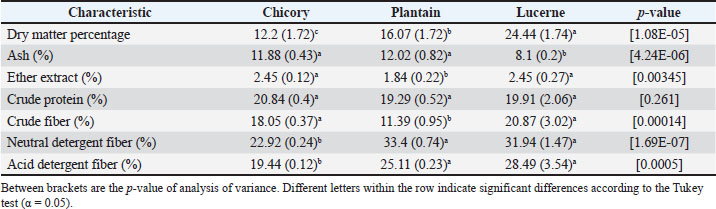
AbstractBackground: Alternative forages, such as chicory and plantain, have been successfully applied in various animal species. As a result, these forages could serve as an alternative for raising guinea pigs in high Andean regions; however, few, if any, reports have been published on the effects of their inclusion on growth, production, and carcass yield. Aim: This study aimed to determine the effects of incorporating chicory and plantain into the diet of guinea pigs on growth, production, and carcass yield, elucidating the possibility of using these species for feeding guinea pigs. Methods: The study was conducted in Andahuaylas—Perú, in an experimental period of 6 weeks. Five guinea pigs were randomly assigned to each diet treatment (30% chicory–70% lucerne, 30% plantain–70% lucerne, 50% chicory–50% lucerne, 50% plantain–50% lucerne, and 100% lucerne as a control). Growth, production, and carcass yield were measured. Covariance analysis was performed using R software, and the means were compared using Dunnett’s method (α=0.05). Results: Diets with chicory (30%–50%) improved the final live weight, weight gain, feed conversion ratio, and hot carcass weight, whereas diets with plantain (30%) improved the final live weight, dry matter intake, feed conversion ratio, and carcass weight compared with diets with 100% lucerne. Conclusion: Chicory and plantain can optimize the growth, production, and hot carcass weight of guinea pigs in high Andean areas, surpassing traditional lucerne diets. Keywords: Carcass, Cichorium intybus, Growth, Guinea pig, Plantago lanceolata. IntroductionThe guinea pig (Cavia porcellus L.) is a species of rodent mammal native to the Andes of South America, and its breeding represents an important source of economic income for many Peruvian families (Avilés et al., 2014). Guinea pigs represent a food resource of high nutritional value, being an important source of animal protein (Bazay et al., 2014; Cáceres et al., 2021). Traditionally, guinea pig farming occurred within families in small spaces in the yards of low-income rural populations (Avilés et al., 2014). However, in recent years, it has shown a sustained increase in demand due to its high protein and low-fat contents, which are 19.49% and 3.67%, respectively (Guevara Vásquez et al., 2021; Huaman et al., 2021; Barreto, 2024). According to a recent report from 2017, a total of 827,234 livestock farmers produced 21,103 tons of guinea pig meat (INEI, 2017). This increase in demand represents a challenge for family farms, which must move toward a more technologically advanced operation that guarantees productive performance and the quality of the final product (Morales, 1994; Meza Bone et al., 2014; Huaman et al., 2021). As Meza et al. (2014) pointed out, the productive capacity of the guinea pig is improved when there is an adequate feeding system because it directly influences growth, feed conversion, and the nutritional quality of the meat obtained. The main feed sources in the diet of guinea pigs in the high Andean zone of Peru, under family or family-commercial breeding systems, are based on green forages, such as lucerne, clover, and concentrate or mixed diets (Chauca, 2007; Huamaní et al., 2016). The problem with forage-based feeding is that its availability and quality vary throughout the year, and the land available for its cultivation becomes a limiting factor (Chauca, 2007). In that sense, it is necessary to explore other types of feed that maintain a stable economic and nutritional value despite the dry season or drought. Several studies have indicated that plantain (Plantago lanceolata L.) and chicory (Cichorium intybus L.) are good alternatives; even under unfavorable environmental conditions, they can grow, maintain their nutritional quality, and have a high annual yield of dry matter per hectare (Cranston et al., 2015; Minneé et al., 2019; Rattanasomboon et al., 2019; Rodríguez et al., 2020). Furthermore, these species possess medicinal properties due to the presence of secondary compounds beneficial to animals; chicory has been shown to exhibit immunostimulatory, antimicrobial, antioxidant, hyperlipidemic, and anti-inflammatory biological activity (Rodríguez et al., 2020; Seidavi et al., 2021; Saeed et al., 2022). Plantain is also a species recognized for its medicinal effects, having anti-asthmatic, dyspneic, and antitussive properties (Boskabady et al., 2006). These characteristics, combined with their nutritional value, make them a good alternative for feeding guinea pigs. The contribution of plantain and chicory to animal nutrition in various species has been studied. In Australia, Rodríguez et al. (2020) found that mixed grazing of plantain and chicory improves the quality of lamb milk and meat by increasing polyunsaturated fatty acids (PUFA), eicosapentanoic acid 20:5n-3 (EPA), and docosahexanoic acid 22:6n-3 (DHA) contents. In Sweden, chicory has been shown to be a highly digestible and palatable fibrous ingredient in the feeding of chickens and pigs (Liu et al., 2013). Similarly, a diet supplemented with 0.5% plantain positively affected broiler chicken growth, feed intake, feed conversion ratio, performance index, and carcass characteristics (Chacrabati et al., 2013). However, studies on the effects of including chicory (Cichorium intybus) and plantain (Plantago lanceolata) in the diet of guinea pigs are scarce. Therefore, this study aimed to determine the effect of incorporating chicory and plantain into the diet of guinea pigs on their growth, production, and carcass yield, contributing to the proper use of chicory and plantain in guinea pig diets. Materials and MethodsThis research was conducted at the Choccepuquio farm, belonging to the School of Agricultural Engineering of the Universidad Nacional de San Antonio Abad del Cusco, located at 2,853 m above sea level, 73°24'28.22'' west longitude and 13°40'8.66'' south latitude, in the Peruvian highlands. The average annual temperature is 9.3°C, and the annual rainfall is 1,474 mm (Climate Data, 2025). Rainfall is concentrated from November to April and coincides with the highest temperatures, whereas rainfall decreases and temperatures are lowest from May to October. Experimental designTwenty-five one-month-old male Andina guinea pigs with an average (SD) weight of 0.329 (0.036) kg were housed in individual cages measuring 0.5 × 0.45 × 0.40 m. Each cage was equipped with a clay feeder and automatic waterers to ensure constant water access. The selected animals were previously fed 100% lucerne diet. Five treatments were designed: 100% lucerne (100 Lu), 30% chicory and 70% lucerne (30 Ch_70 Lu), 30% plantain and 70% lucerne (30 Pl_70 Lu), 50% chicory and 50% lucerne (50 Ch_50 Lu), and 50% plantain with 50% lucerne (50 Pl_50 Lu). Treatment with 100% lucerne was considered as the control. The nutritional composition of chicory, plantain, and lucerne used in this experiment was also evaluated in four samples for each at the Laboratorio de Nutrición Animal y Bromatología de Alimentos of the Universidad Nacional Toribio Rodríguez de Mendoza de Amazonas. The species influenced all nutritional characteristics, except for the crude protein, which was similar between species (Table 1). Table 1. Means (standard deviation) of the nutritional composition of chicory, plantain and lucerne used in this experiment (n=4/species).
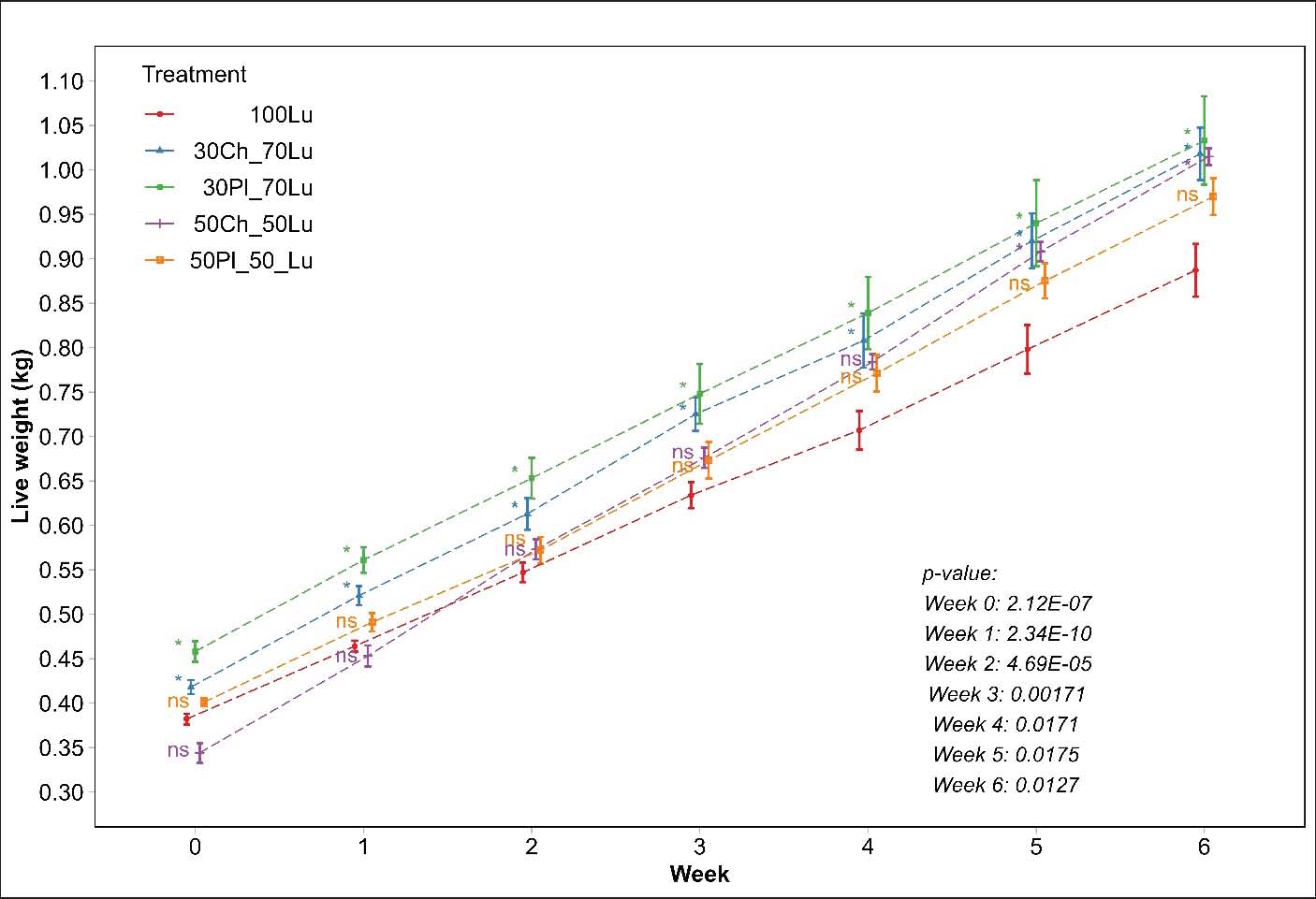
Five guinea pigs were randomly assigned to each treatment in a completely randomized design, and the study was conducted in 2 stages: habituation and evaluation. The habituation period lasted for 5 days, during which the diets were provided according to the assigned treatments. Each guinea pig received 0.5 kg of diet daily to guarantee ad libitum feeding, half in the morning (8:00 am) and the remainder in the afternoon (3:00 pm). This feeding routine was the same as that for the evaluation period. The evaluation period lasted for 6 weeks. The animals’ initial live weight (ILW) was recorded, and the amount of feed provided, and any remaining feed was recorded daily. Productive parametersThe live weight of the animals was recorded weekly before feeding using a scale with a reading capacity of 0.001 kg. Samples of each diet were oven-dried at 105°C for 24 hours, and dry matter intake was calculated weekly by subtracting the feed residue from the offered feed. The weight gain was calculated weekly by subtracting the initial weight from the final weight. Daily weight gain was estimated from this data by dividing the weekly gain by the number of days (7). The feed conversion ratio was calculated by dividing dry matter intake by weight gain. Carcass yieldThe animals were fasted for 12 hours (Kouakou et al., 2013), their live weight at slaughter (LWS) was recorded, and they were immediately slaughtered. The animals were stunned with a neck hit (Sánchez-Macías et al., 2016), and the jugular and carotid veins were immediately punctured for exsanguination. A trained personnel member manually performed scalding in hot water, after which the viscera (digestive tract and bladder) were removed. The hot carcass weight (HCW) was measured on a scale with a reading capacity of 0.001 kg 20 minutes after slaughter (Sánchez-Macías et al., 2016). The carcass included the skin, feet, head, and red viscera (heart, lung, liver, spleen, diaphragm, and kidneys). Perirenal fat was subsequently removed, and its weight was recorded. The hot carcass yield (HCY) was determined as the ratio between the HCW and LWS (de Figueiredo et al., 2020). Data analysisAn exploratory analysis of the data was performed, and the absence of outliers was verified. Furthermore, the assumptions of normality and homoscedasticity were verified using the Kolmogorov–Smirnov and Levene's tests, respectively, which were successfully met. Covariance analysis was performed on the growth, productive, and carcass yield characteristics using a linear model that included the treatments as a factor and the initial live weight as a covariate. When evidence of differences between treatments was found, the means of the treatments were compared with the control group (100 Lu), for which Dunnett’s method was used (Dunnett, 1955) in the PMCMRplus package (Pohlert, 2024). The null hypothesis was that the mean of all variables (except for dry matter intake and fed conversion ratio) was less than or equal to that of the control group. For dry matter intake and feed conversion ratio, the null hypothesis was that the control group’s mean was greater than or equal to the treatments’ mean. A one-way analysis of variance was performed to evaluate the nutritional composition of the forages, including the species as a factor. When significant differences were found, Tukey’s method was used to compare means. The free software R v. 4.5.1 (R Core Team, 2025) was used for all data analysis, and a significance level of 0.05 was used; in addition, graphs were made with the ggplot2 package (Wickham, 2016). Ethical approvalThe study was designed in strict compliance with Law No. 30407 (Animal Protection and Welfare Law—Peru) and was approved by the Institutional Ethics Committee for Research of the Universidad Nacional Toribio Rodríguez de Mendoza de Amazonas (CIEI-No. 00243). ResultsGrowth and productive parametersThe live weight of the animals increased in all treatments from the beginning until week 6 (Fig. 1). During the 6 weeks of evaluation, the 30Ch_70Lu and 30Pl_70Lu treatments showed greater live weight than the control group (p < 0.05), whereas the remaining treatments (50Ch_50Lu and 50Pl_50Lu) showed no differences (p > 0.05) compared to the control group.
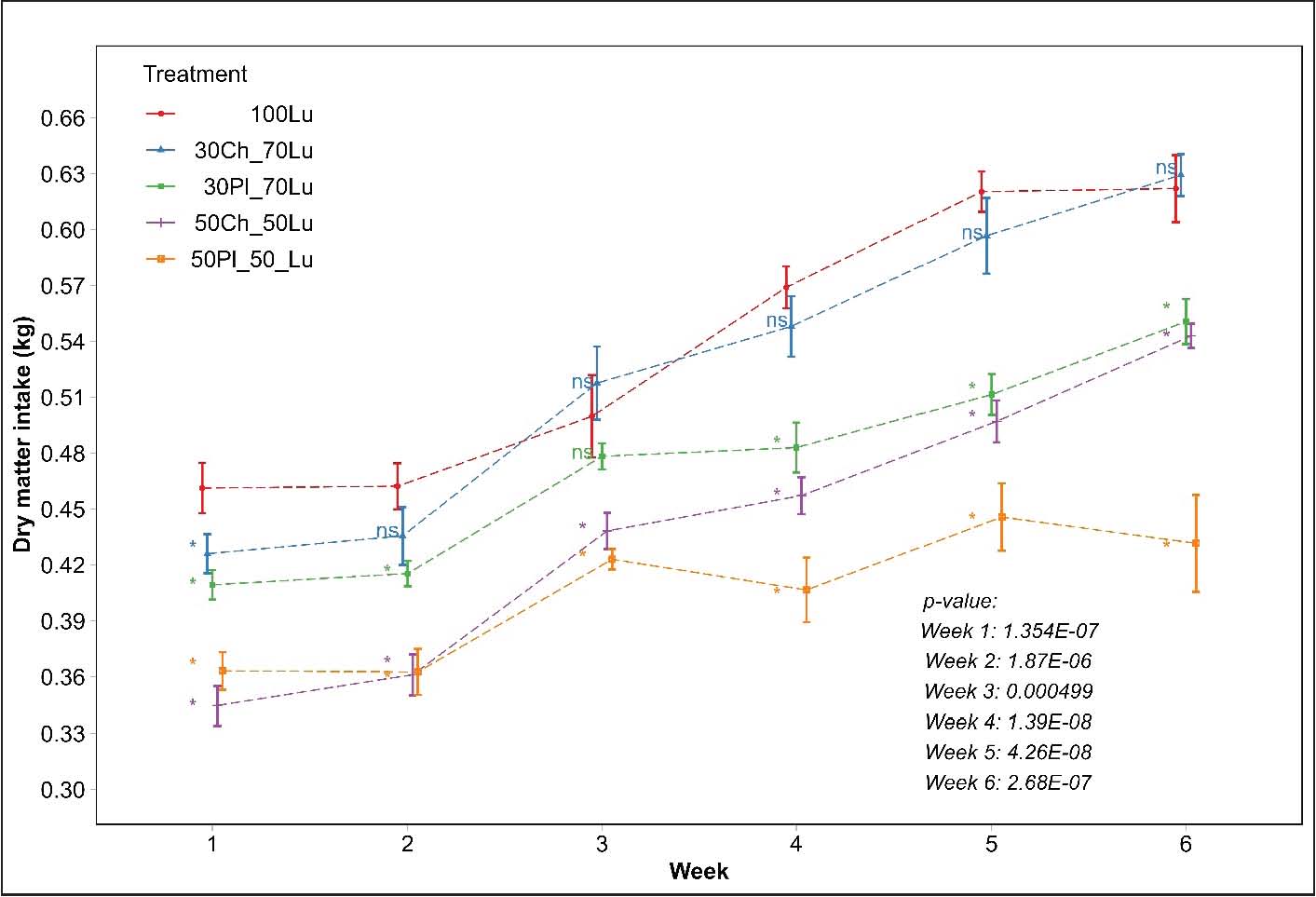
Fig. 1. Growth of guinea pigs fed with chicory and plantain at different inclusion levels. The bars represent the standard error. *, within a week indicates significant differences to the Dunnett test (α=0.05) that compares the inclusion of chicory and plantain with de control (100% lucerne); ns, non-significant differences. 100 Lu, 100% lucerne; 30Ch_70Lu, 30% chicory and 70% lucerne; 30Pl_70Lu, 30% plantain and 70% lucerne; 50Ch_70Lu, 50% chicory and 50% lucerne; 50Pl_50Lu, 50% plantain and 50% lucerne. Regarding weekly dry matter intake, the 100 Lu treatment was superior to the 30Pl_70Lu, 50Ch_50Lu, and 50Pl_50Lu treatments (p < 0.05) in all weeks, except for week 3, in which it was similar to 30Pl_70Lu (p > 0.05). In contrast, the dry matter intake of 100 Lu and 30Ch_70Lu was similar (p > 0.05) in all weeks, except for week 1, in which 100 Lu outperformed 30ch_70 Lu (p < 0.05) (Fig. 2).
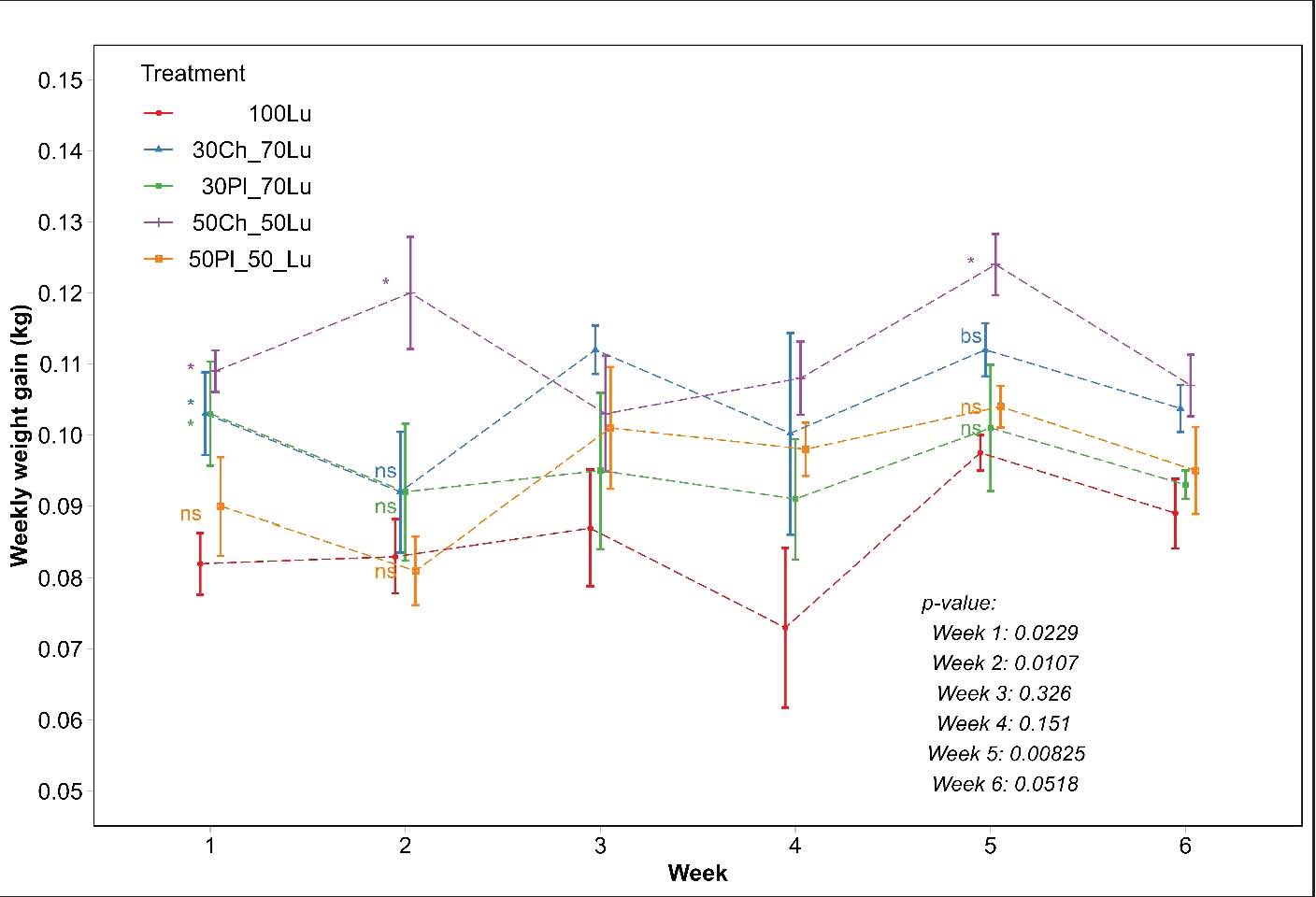
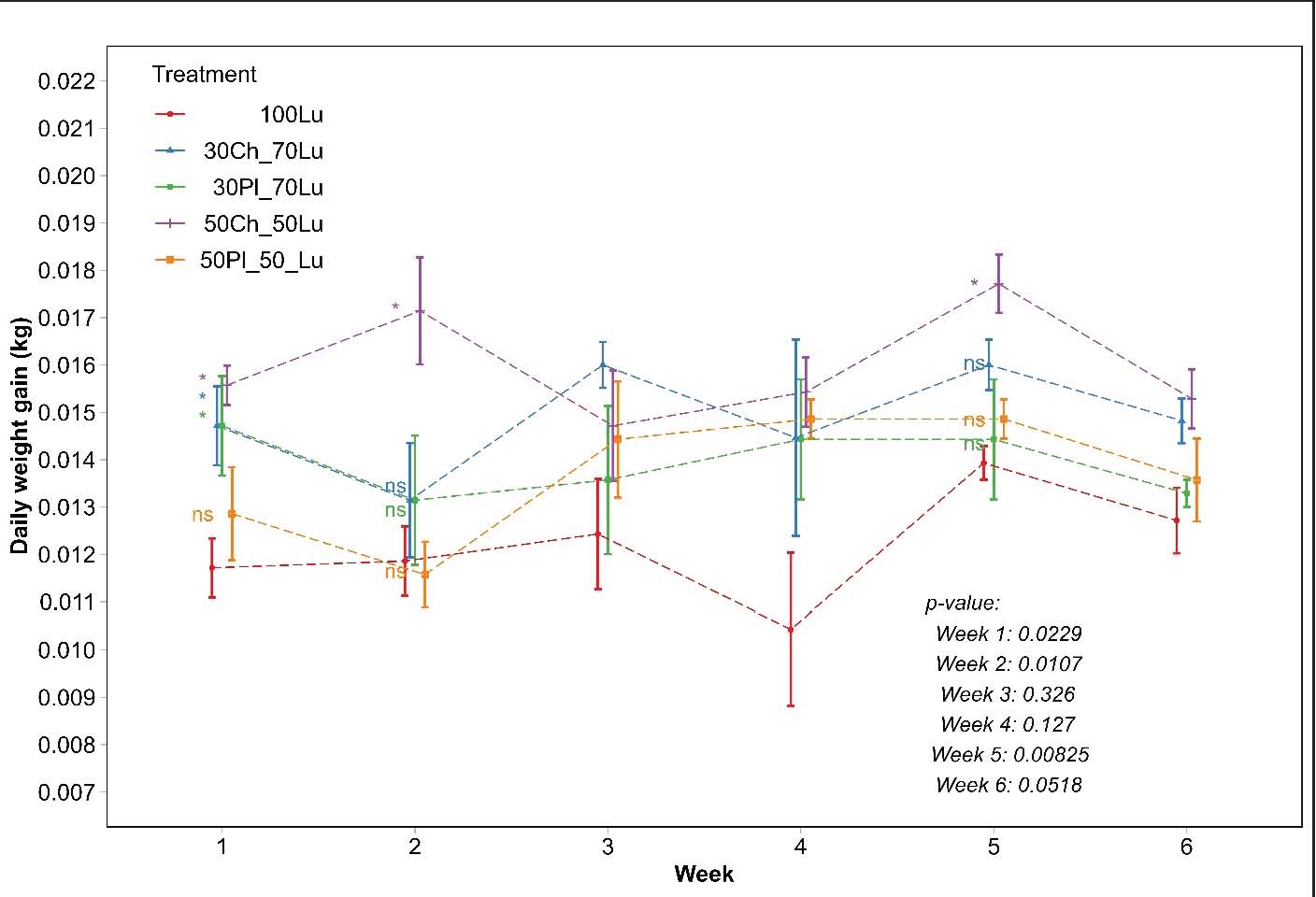
Fig. 2. Weekly dry matter intake of guinea pigs fed with different chicory and plantain inclusion levels. The bars represent the standard error. *, within a week indicates significant differences to the Dunnett test (α=0.05) that compares the inclusion of chicory and plantain with de control (100% lucerne); ns, non-significant differences. 100 Lu, 100% lucerne; 30Ch_70Lu, 30% chicory and 70% lucerne; 30Pl_70Lu, 30% plantain and 70% lucerne; 50Ch_70Lu, 50% chicory and 50% lucerne; 50Pl_50Lu, 50% plantain and 50% lucerne. Weekly and daily weight gain followed a similar pattern. In weeks 1, 2, and 5, 50Ch_50Lu outperformed 100 Lu (p < 0.05); in week 1, 30Ch_70Lu and 30Pl_70Lu showed higher values than the control. No significant differences were detected in weeks 3, 4, and 6 (Figs. 3 and 4).
Fig. 3. Weekly weight gain of guinea pigs fed with different chicory and plantain inclusion levels The bars represent the standard error. *, within a week indicates significant differences to the Dunnett test (α=0.05) that compares the inclusion of chicory and plantain with de control (100% lucerne); ns, non-significant differences. 100 Lu, 100% lucerne; 30Ch_70Lu, 30% chicory and 70% lucerne; 30Pl_70Lu, 30% plantain and 70% lucerne; 50Ch_70Lu, 50% chicory and 50% lucerne; 50Pl_50Lu, 50% plantain and 50% lucerne.
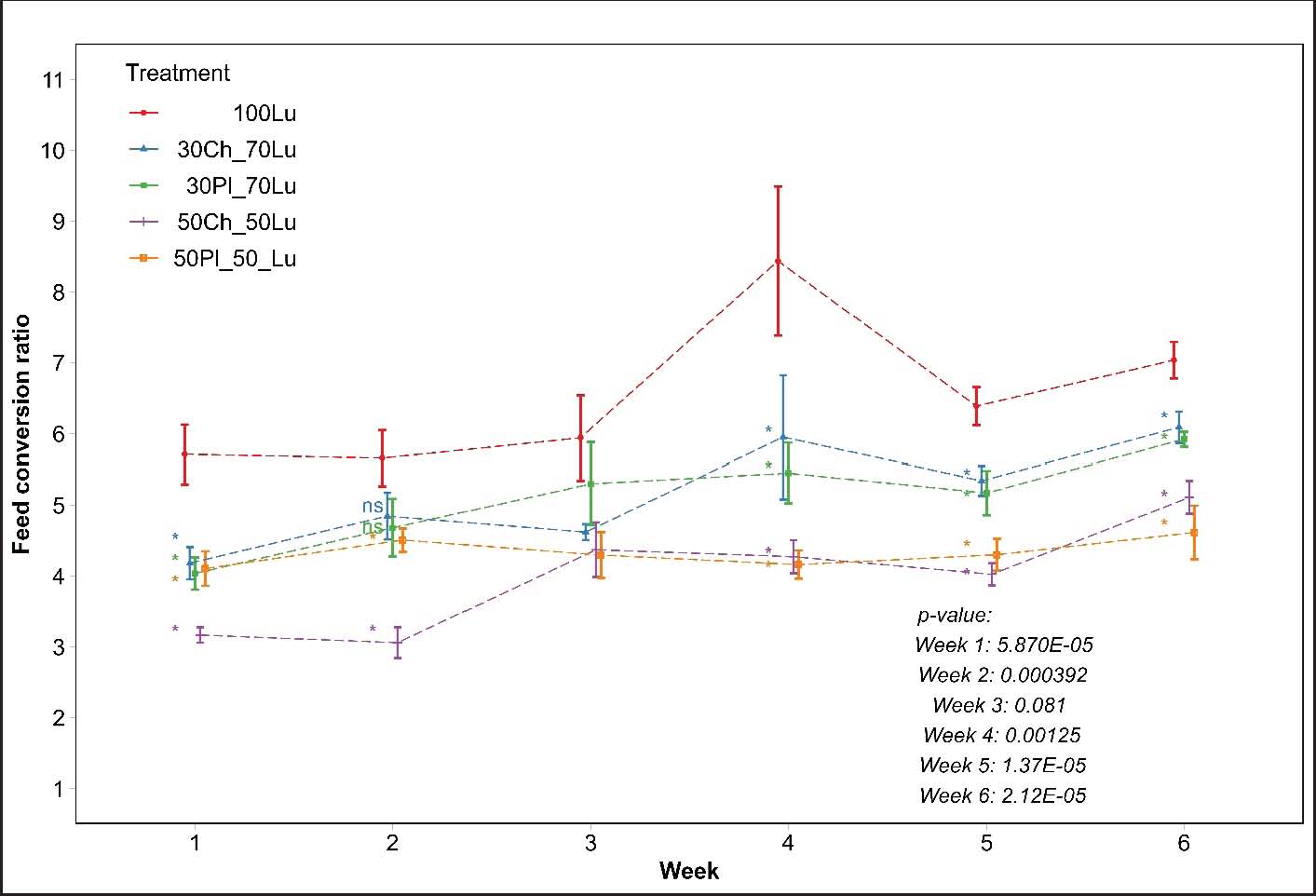
Fig. 4. Daily weight gain of guinea pigs fed with different chicory and plantain inclusion levels The bars represent the standard error. *, within a week indicates significant differences to the Dunnett test (α=0.05) that compares the inclusion of chicory and plantain with de control (100% lucerne); ns, non-significant differences. 100 Lu, 100% lucerne; 30Ch_70Lu, 30% chicory and 70% lucerne; 30Pl_70Lu, 30% plantain and 70% lucerne; 50Ch_70Lu, 50% chicory and 50% lucerne; 50Pl_50Lu, 50% plantain and 50% lucerne. The feed conversion ratio was higher in the 100 Lu group during weeks 1, 4, 5, and 6 (p < 0.05), while in week 2, the 50Ch_50Lu and 50Pl_50Lu groups had lower values than the control. No differences were found between the experimental diets and the control at week 3 (Fig. 5).
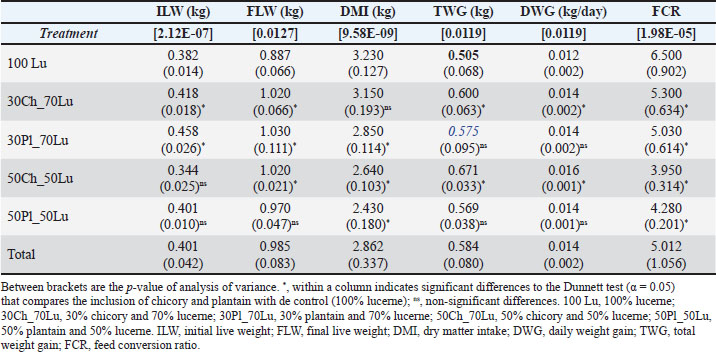
Fig. 5. Feed conversion ratio of guinea pigs fed with different chicory and plantain inclusion levels The bars represent the standard error. *, within a week indicates significant differences to the Dunnett test (α=0.05) that compares the inclusion of chicory and plantain with de control (100% lucerne); ns, non-significant differences. 100 Lu, 100% lucerne; 30Ch_70Lu, 30% chicory and 70% lucerne; 30Pl_70Lu, 30% plantain and 70% lucerne; 50Ch_70Lu, 50% chicory and 50% lucerne; 50Pl_50Lu, 50% plantain and 50% lucerne. Throughout the evaluation period, initial weight, final weight, total dry matter intake, total weight gain, daily weight gain, and feed conversion ratio were influenced by the type of feed (p < 0.05). The final weight, total weight gain, and daily weight gain for the 30Ch_70Lu and 50Ch_50Lu treatments were higher than those for the 100 Lu treatment; they also had lower feed conversion ratios (Table 2). Table 2. Global (42 days) means in bold SE of the productive performance of guinea pigs fed with different levels of chicory and plantain inclusion (n=5/treatment).
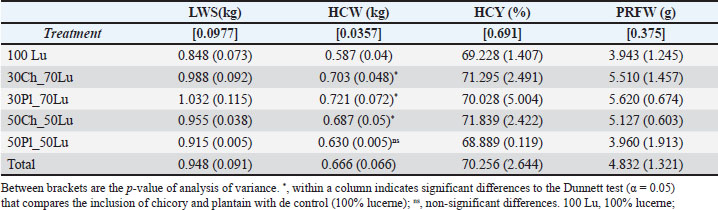
Carcass characteristics The hot carcass weight of 30Ch_70Lu, 30Pl_70Lu, and 50Ch_50 Lu was higher than that of the control (100 Lu) (p < 0.05); however, the control was similar to that of the 50Pl_50Lu treatment (p > 0.05). In contrast, the live weight at slaughter, hot carcass yield, and perirenal fat weight of guinea pigs fed chicory, or plantain, were similar (p > 0.05) to those fed 100% lucerne (Table 3). Table 3. Means (SD) of carcass characteristics of guinea pigs fed with different chicory and plantain inclusion levels (n=3/treatment).
DiscussionThis study evaluated the effect of including chicory and plantain in different proportions on the productive parameters and carcass yield of guinea pigs over 6 weeks. Treatments containing 30% chicory or plantain resulted in greater weight gain and better feed conversion ratio compared with the control group (100% lucerne). These results are consistent with those of studies conducted in guinea pigs and sheep. In guinea pigs, the inclusion of alternative forages improved the conversion efficiency and final live weight (Barreto, 2024), whereas in ewes’ milk and in lambs’ fat (Rodríguez et al., 2020), there were higher concentrations of polyunsaturated fatty acids. In this sense, the type and proportion of forage is an important variable because it is related to the availability of nutrients and the presence of secondary compounds that influence the digestibility of the feed and the development of the guinea pigs (Minneé et al., 2019). The nutritional composition of the studied forages (chicory, plantain, and lucerne) was as follows: dry matter percentage (12.2%, 16.07% and 24.44%), ash (11.88%, 12.08% and 8.10%), ether extract (2.45%, 1.84%, and 2.45%), crude protein (20.84%, 19.29%, and 19.91%), and crude fiber (18.05%, 11.39%, and 20.87%) (Table 1). Chicory and plantain showed low values of dry matter percentage, high values of ash, and similar values of crude protein compared with lucerne. Therefore, chicory and plantain can be incorporated as alternative forages in the diet of guinea pigs in the appropriate proportions. This represents a good alternative to traditional forages that decrease in nutritional value or become scarce during the dry season, thus increasing their price (Chauca, 2007; Ivarsson et al., 2012; Cáceres et al., 2021). The changes in dry matter intake and weight gain in relation to the guinea pigs that consumed only lucerne could be related to the nutritional composition of each forage. The dry matter percentage of chicory and plantain was lower than that of lucerne; the crude fiber of plantain was lower than that of chicory and lucerne; and the neutral and acid detergent fibers of chicory were lower than those of plantain and lucerne, but the latter showed similar values (Table 1). In this regard, Minneé et al. (2019) indicated that a diet consisting of plantain has a lower amount of dry matter and structural fiber but a higher amount of non-structural fiber than Ryegrass pastures, which means that they have a greater availability of easily fermentable carbohydrates. Similarly, Cranston et al. (2015) reported that green forages, such as chicory, plantain, and clover, can produce high-quality dry matter even during the summer and fall, indicating that diets based on these forages can increase animal production rates. This aligns with the results of this study, where diets containing chicory and plantain improved production indicators compared to a diet consisting solely of lucerne. Furthermore, the greater weekly and daily weight gain achieved in guinea pigs with the 50Ch_50Lu, 30Ch_70Lu, and 30Pl_70Lu treatments could be related to greater digestibility and intestinal health influenced by chicory and plantain consumption. Liu et al. (2013) and Rattanasomboon et al. (2019) found that chicory, due to its high pectin content, can improve the digestibility of certain fiber fractions and modulate the intestinal microbiota in young pigs, although it can decrease digestibility in birds at high inclusion levels. In this study, the different crude fiber, neutral, and acid detergent fiber contents of chicory and plantain (Table 1) may have improved their digestibility. Although these results provide some insight into the effect of chicory on the microbiota and digestibility of some animals, further studies in guinea pigs are needed to fully understand its effect. Dicksved et al. (2015) and Abate et al. (2022) reported that plantain contains bioactive compounds with antioxidant, anti-inflammatory, and antibacterial properties that can influence the microbiota and immune parameters. Therefore, the improvement observed in weight gain and feed conversion in this study could be associated with these effects on digestibility and microbiota, although specific studies are required to confirm this. On the other hand, the effect of chicory and plantain on the guinea pig carcass was also evaluated. Only the hot carcass weight was significantly influenced by the treatments. No significant differences were found between the experimental treatments and the control in terms of live weight at slaughter, hot carcass yield, and perirenal fat weight, which coincides with findings in broiler chickens and quail supplemented with plantain and chicory (Chacrabati et al., 2013; Temur and Usla, 2019), where improvements in live performance were observed without marked changes in carcass characteristics. This suggests that the inclusion of these forages can improve productive efficiency without altering carcass composition, although some studies in sheep have shown improvements in the fatty acid profile of the meat when the animals are grazed on chicory and plantain (Rodríguez et al., 2020). ConclusionThe incorporation of chicory (30% or 50%) and plantain (30%) improves the growth characteristics, production, and carcass weight of guinea pigs compared with a 100% lucerne diet. Therefore, chicory and plantain show good potential for improving guinea pig production, especially in high Andean areas, such as the Apurímac region (Peru). AcknowledgmentsNone. Conflict of interestThe authors declare no conflict of interest. FundingThis research received no specific grant.Authors' contributionsConceptualization, Ysai Paucar and M. Rodriguez; methodology, Shirley B. Pariona-Rodas; formal analysis, José A. Saucedo-Uriarte and Flor L. Mejía; investigation, Shirley B. Pariona-Rodas and Yolvi López; data curation, Ysai Paucar and Héctor V. Vásquez; writing-original draft preparation, Medali Cueva-Rodríguez and Segundo J. Zamora-Huamán; writing-review and editing, all authors; visualization, Yolvi López; supervision, Ysai Paucar. All authors have read and agreed to the published version of the manuscript. Data availabilityThe data that support the findings of this study are available from the corresponding author upon reasonable request. ReferencesAbate, L., Bachheti, R.K., Tadesse, M.G. and Bachheti, A. 2022. Ethnobotanical Uses, Chemical Constituents, and Application of Plantago lanceolata L. J. Chem. 2022, 1532031. Avilés, D.F., Martínez, A.M., Landi, V. and Delgado, J.V. 2014. The guinea pig (Cavia porcellus): an Andean resource of interest as an agricultural food source. Anim. Genet. Resour. 55, 87–91. Barreto, M. 2024. Efecto de hierbas forrajeras en la alimentación de cuyes (Cavia porcellus) raza Perú en el distrito de Independencia—Huaraz, undergraduate tesis, Universidad Nacional Hermilio Valdizán, Huaraz. Bazay D., G., Carcelen C., F., Ara G., M., Jiménez A., R., González V., R. and Quevedo G., W. 2014. Efecto de los manano-oligosacáridos sobre los parámetros productivos de cuyes (Cavia porcellus) durante la fase de engorde. Rev. Investig. Vet. Perú. 25(2), 198–204. Boskabady, M., Rakhshandah, H., Afiat, M., Aelami, Z. and Amiri, S. 2006. Antitussive Effect of Plantago lanceolata in Guinea Pigs. Iran. J. Med. Sci. 31(3). Cáceres, F.C., Howard, F.S.M., Gómez, M.A., Quintana, S.B., Méndez, A.A., Ruiz-García, L., Sandoval-Monzón, R., Aliaga, R.J., Camacho, R.P., Altamirano, G.S. and Vásquez, J.G. 2021. Inclusion of different levels of inulin on productive parameters and intestinal morphology in fattening guinea pigs (Cavia porcellus). Ciênc. Rural 51(11), 51. Chacrabati, R., Chowdhury, R., Yesmin, S., Sano, H. and Al-Mamun, M. 2013. Comparison of broiler performance using Plantain (Plantago lanceolata L.), Bio-Sel-E and commercial diet. Bangladesh J. Anim. Sci. 42(2), 123–130. Chauca, L. 2007. Realidad y perspectiva de la crianza de cuyes en los países andinos. Arch. Latinoam. Prod. Anim. 15(1), 223–228. Climate Data 2025. Clima Andahuaylas. Available via https://es.climate-data.org/america-del-sur/peru/apurimac/andahuaylas-27824/ Cranston, L.M., Kenyon, P.R., Morris, S.T. and Kemp, P.D. 2015. A review of the use of chicory, plantain, red clover and white clover in a sward mix for increased sheep and beef production. J. N. Z. Grassl. 77, 89–94. De Figueiredo, L.B.F., Rodrigues, R.T.D.S., Leite, M.F.S., Gois, G.C., Araújo, D.H.D.S., De Alencar, M.G., Oliveira, T.P.R., Figueirêdo Neto, A., Silva Junior, R.G.C. and Queiroz, M.A.A. 2020. Effect of sex on carcass yield and meat quality of guinea pig. J. Food. Sci. Technol. 57(8), 3024–3030. Dicksved, J., Jansson, J.K. and Lindberg, J.E. 2015. Fecal microbiome of growing pigs fed a cereal based diet including chicory (Cichorium intybus L.) or ribwort (Plantago lanceolata L.) forage. J. Anim. Sci. Biotechnol. 6(1), 53. Dunnett, C.W. 1955. A Multiple comparison procedure for comparing several treatments with a control. J. Am. Stat. Assoc. 50(272), 1096–1121. Guevara Vásquez, J.E., Carcelén Cáceres, F.D. and García Zapata, T.D. 2021. Comportamiento productivo de cuyes (Cavia porcellus L.) en crecimiento suplementados con prebióticos y probióticos naturales. Cienc. Tecnol. Agropecuaria 22(3), e1920. Huaman, D., Huayhua, J.B., Acosta, E.J. and Palomino-Guerrera, W. 2021. Productive performance in male guinea pigs (Cavia porcellus) of Perubreed under three feeding systems reared in the conditions of the inter-Andean valleys of Peru. Agroind. Sci. 11(2), 179–183. Huamaní Ñ., G., Zea M., O., Gutiérrez R., G. and Vílchez P., C. 2016. Efecto de Tres Sistemas de Alimentación sobre el Comportamiento Productivo y Perfil de Ácidos Grasos de Carcasa de Cuyes (Cavia porcellus). Rev. Investig. Vet. Perú 27(3), 486. INEI. 2017. Encuesta Nacional Agropecuaria 2017 Principales Resultados Pequeñas, Medianas y Grandes Unidades Agropecuarias. , Available via https://www.inei.gob.pe/media/ MenuRecursivo/publicaciones_digitales/Est/Lib1593/ Ivarsson, E., Liu, H.Y., Dicksved, J., Roos, S. and Lindberg, J.E. 2012. Impact of chicory inclusion in a cereal-based diet on digestibility, organ size and faecal microbiota in growing pigs. Animal 6(7), 1077–1085. Kouakou, N.D.V., Grongnet, J.F., Assidjo, N.E., Thys, E., Marnet, P.G., Catheline, D., Legrand, P. and Kouba, M. 2013. Effect of a supplementation of Euphorbia heterophylla on nutritional meat quality of Guinea pig (Cavia porcellus L.). Meat. Sci. 93, 821–826. Ley N° 30407. 2016. Ley de Protección y Bienestar Animal. Congreso de la República del Perú. Available via https://www.leyes.congreso.gob.pe/documentos/leyes/30407.pdf Liu, H., Ivarsson, E., Lundh, T. and Lindberg, J.E. 2013. Chicory (Cichorium intybus L.) and cereals differently affect gut development in broiler chickens and young pigs. J. Anim. Sci. Biotechnol. 4(1), 50. Meza Bone, G.A., Cabrera Verdezoto, R.P., Morán Morán, J.J., Meza Bone, F.F., Cabrera Verdesoto, C.A., Meza Bone, C.J., Meza Bone, J.S., Cabanilla Campos, M.G., López Mejía, F.X., Pincay Jiménez, J.L., Bohórquez Barros, T. and Ortiz Dicado, J. 2014. Mejora de engorde de cuyes (Cavia porcellus L.) a base de gramíneas y forrajeras arbustivas tropicales en la zona de Quevedo, Ecuador. Idesia. (Arica). 32(3), 75–80. Minneé, E.M.K., Kuhn-Sherlock, B., Pinxterhuis, I.J.B. and Chapman, D.F. 2019. Meta-analyses comparing the nutritional composition of perennial ryegrass (Lolium perenne) and plantain (Plantago lanceolata) pastures. J. N. Z. Grassl. 81, 117–124. Morales, E. 1994. The Guinea Pig in the Andean Economy: from Household Animal to Market Commodity. Lat. Am. Res. Rev. 29(3), 129–142. Pohlert T. 2024. PMCMRplus: calculate pairwise multiple comparisons of mean rank sums extended; doi: 10.32614/CRAN.package R Core Team. 2025. R: A Language and Environment for Statistical Computing. Vienna: R Foundation for Statistical Computing. Rattanasomboon, T., Wester, T.J., Smith, S.L. and Morel, P.C.H. 2019. Nutritive value of plantain and chicory for pigs. Livest. Sci. 223, 8–15. Rodríguez, R., Alomar, D. and Morales, R. 2020. Milk and meat fatty acids from sheep fed a plantain–chicory mixture or a grass-based permanent sward. Animal 14(5), 1102–1109. Saeed, M., Siddique, F., Sultan, R., El-Sayed, S.A.A., Ahmed, S.Y.A., Farag, M.R., Abd El-hack, M.E., Shehata, A.M. and Alagawany, M. 2022. Use of Chicory (Cichorium intybus) and its Derivatives in Poultry Nutrition.In Antibiotic Alternatives in Poultry and Fish Feed. Singapore: BENTHAM SCIENCE PUBLISHERS, pp: 98–110. Sánchez-Macías, D., Castro, N., Rivero, M.A., Argüello, A. and Morales-Delanuez, A. 2016. Proposal for standard methods and procedure for Guinea pig carcass evaluation, jointing and tissue separation. J. Appl. Anim. Res. 44(1), 65–70. Seidavi, A., Tavakoli, M., Slozhenkina, M., Gorlov, I., Hashem, N.M., Asroosh, F., Taha, A.E., Abd El-hack, M.E. and Swelum, A.A. 2021. The use of some plant-derived products as effective alternatives to antibiotic growth promoters in organic poultry production: a review. Environ. Sci. Pollut. Res. 28(35), 47856–47868. Temur, C. and Usla, S. 2019. Effects of Plantain (Plantago lanceolata) Containing Diets of Quails on Growth Performance, Carcass Characteristic, Some Blood Parameters and Mast Cell Numbers. 29(1), 114–120. Wickham. 2016. Elegant graphics for data analysis. New York, NY: Springer-Verlag New York. | ||
| How to Cite this Article |
| Pubmed Style Pariona-rodas SB, Rodriguez M, Mejía FL, Cueva-rodríguez M, López Y, Vásquez HV, Saucedo-uriarte JA, Zamora-huamán SJ, Paucar Y. Chicory (Cichorium intybus L.) and plantain (Plantago lanceolata L.) inclusion improves some growth, production, and carcass characteristics of guinea pigs (Cavia porcellus L.) in the Peruvian highlands. Open Vet. J.. 2026; 16(5): 2631-2640. doi:10.5455/OVJ.2026.v16.i5.6 Web Style Pariona-rodas SB, Rodriguez M, Mejía FL, Cueva-rodríguez M, López Y, Vásquez HV, Saucedo-uriarte JA, Zamora-huamán SJ, Paucar Y. Chicory (Cichorium intybus L.) and plantain (Plantago lanceolata L.) inclusion improves some growth, production, and carcass characteristics of guinea pigs (Cavia porcellus L.) in the Peruvian highlands. https://www.openveterinaryjournal.com/?mno=307481 [Access: June 26, 2026]. doi:10.5455/OVJ.2026.v16.i5.6 AMA (American Medical Association) Style Pariona-rodas SB, Rodriguez M, Mejía FL, Cueva-rodríguez M, López Y, Vásquez HV, Saucedo-uriarte JA, Zamora-huamán SJ, Paucar Y. Chicory (Cichorium intybus L.) and plantain (Plantago lanceolata L.) inclusion improves some growth, production, and carcass characteristics of guinea pigs (Cavia porcellus L.) in the Peruvian highlands. Open Vet. J.. 2026; 16(5): 2631-2640. doi:10.5455/OVJ.2026.v16.i5.6 Vancouver/ICMJE Style Pariona-rodas SB, Rodriguez M, Mejía FL, Cueva-rodríguez M, López Y, Vásquez HV, Saucedo-uriarte JA, Zamora-huamán SJ, Paucar Y. Chicory (Cichorium intybus L.) and plantain (Plantago lanceolata L.) inclusion improves some growth, production, and carcass characteristics of guinea pigs (Cavia porcellus L.) in the Peruvian highlands. Open Vet. J.. (2026), [cited June 26, 2026]; 16(5): 2631-2640. doi:10.5455/OVJ.2026.v16.i5.6 Harvard Style Pariona-rodas, S. B., Rodriguez, . M., Mejía, . F. L., Cueva-rodríguez, . M., López, . Y., Vásquez, . H. V., Saucedo-uriarte, . J. A., Zamora-huamán, . S. J. & Paucar, . Y. (2026) Chicory (Cichorium intybus L.) and plantain (Plantago lanceolata L.) inclusion improves some growth, production, and carcass characteristics of guinea pigs (Cavia porcellus L.) in the Peruvian highlands. Open Vet. J., 16 (5), 2631-2640. doi:10.5455/OVJ.2026.v16.i5.6 Turabian Style Pariona-rodas, Shirley B., Misael Rodriguez, Flor L. Mejía, Medali Cueva-rodríguez, Yolvi López, Héctor V. Vásquez, José A. Saucedo-uriarte, Segundo J. Zamora-huamán, and Ysai Paucar. 2026. Chicory (Cichorium intybus L.) and plantain (Plantago lanceolata L.) inclusion improves some growth, production, and carcass characteristics of guinea pigs (Cavia porcellus L.) in the Peruvian highlands. Open Veterinary Journal, 16 (5), 2631-2640. doi:10.5455/OVJ.2026.v16.i5.6 Chicago Style Pariona-rodas, Shirley B., Misael Rodriguez, Flor L. Mejía, Medali Cueva-rodríguez, Yolvi López, Héctor V. Vásquez, José A. Saucedo-uriarte, Segundo J. Zamora-huamán, and Ysai Paucar. "Chicory (Cichorium intybus L.) and plantain (Plantago lanceolata L.) inclusion improves some growth, production, and carcass characteristics of guinea pigs (Cavia porcellus L.) in the Peruvian highlands." Open Veterinary Journal 16 (2026), 2631-2640. doi:10.5455/OVJ.2026.v16.i5.6 MLA (The Modern Language Association) Style Pariona-rodas, Shirley B., Misael Rodriguez, Flor L. Mejía, Medali Cueva-rodríguez, Yolvi López, Héctor V. Vásquez, José A. Saucedo-uriarte, Segundo J. Zamora-huamán, and Ysai Paucar. "Chicory (Cichorium intybus L.) and plantain (Plantago lanceolata L.) inclusion improves some growth, production, and carcass characteristics of guinea pigs (Cavia porcellus L.) in the Peruvian highlands." Open Veterinary Journal 16.5 (2026), 2631-2640. Print. doi:10.5455/OVJ.2026.v16.i5.6 APA (American Psychological Association) Style Pariona-rodas, S. B., Rodriguez, . M., Mejía, . F. L., Cueva-rodríguez, . M., López, . Y., Vásquez, . H. V., Saucedo-uriarte, . J. A., Zamora-huamán, . S. J. & Paucar, . Y. (2026) Chicory (Cichorium intybus L.) and plantain (Plantago lanceolata L.) inclusion improves some growth, production, and carcass characteristics of guinea pigs (Cavia porcellus L.) in the Peruvian highlands. Open Veterinary Journal, 16 (5), 2631-2640. doi:10.5455/OVJ.2026.v16.i5.6 |


