




| Research Article | ||
Open Vet. J.. 2026; 16(8): 5657-5670
Open Veterinary Journal, (2026), Vol. 16(8): 5657–5670 Research Article Effects of varying proportions of complete silage and protein–carbohydrate supplementation on performance of fattening Kacang goatsPaulus Klau Tahuk*, Oktovianus R. Nahak and Marselinus BanuDepartment of Animal Science, Faculty of Agriculture, Science, and Health, University of Timor, Kefamenanu, Indonesia *Corresponding Author: Paulus Klau Tahuk. Department of Animal Science, Faculty of Agriculture, Science, and Health, University of Timor, Kefamenanu, Indonesia.- Email: paulklau [at] yahoo.co.id Submitted: 19/01/2026 Revised: 30/05/2026 Accepted: 09/06/2026 Published: 20/08/2026 © 2025 Open Veterinary Journal
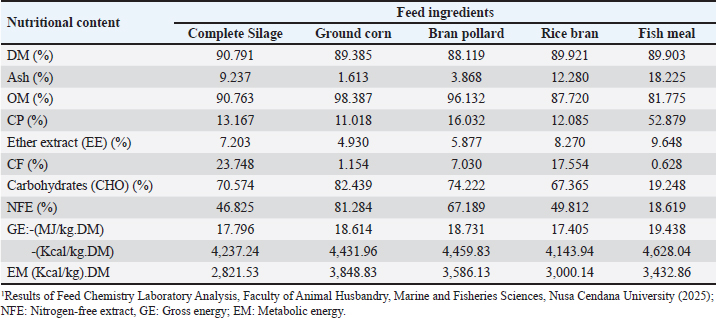
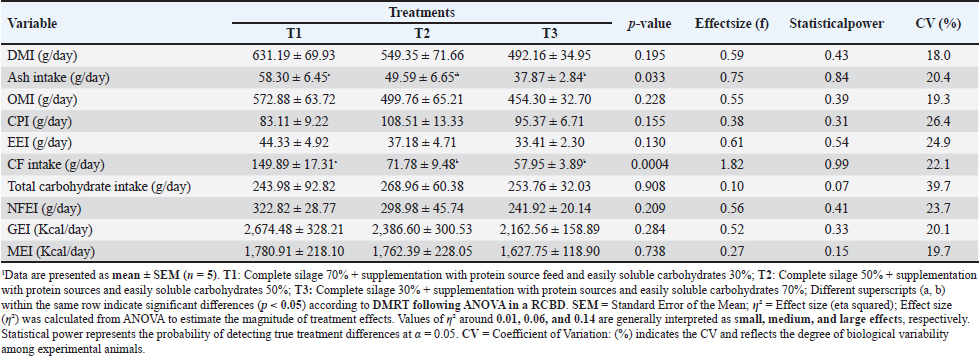
AbstractBackground: Feed availability in tropical regions fluctuates between rainy and dry seasons and is a major constraint on goat productivity. While forage is abundant during the rainy season, dry-season shortages often result in inadequate nutrient intake, reduced growth, and increased mortality. Complete silage technology offers a practical solution due to its balanced nutrient composition, long storage life, and ability to ensure year-round feed availability. However, exclusive feeding of complete silage has not consistently produced optimal performance, likely due to nutrient degradation during fermentation. Supplementation with protein sources and readily soluble carbohydrates is therefore necessary to improve nutrient availability and animal performance. Aim: This study evaluated the effects of protein and readily soluble carbohydrate supplementation on the productivity of Kacang goats fed a complete silage diet. Methods: A randomized complete block design was used with 15 Kacang goats allocated to three dietary treatments and five replications. The treatments consisted of T1 (70% complete silage + 30% supplementation of protein sources and readily soluble carbohydrates), T2 (50% complete silage + 50% supplementation of protein sources and readily soluble carbohydrates), and T3 (30% complete silage + 70% supplementation of protein sources and readily soluble carbohydrates). Results: Results of analysis of variance showed that dietary treatments did not significantly affect (p > 0.05) intake of dry matter (DM), organic matter (OM), crude protein (CP), Ether extract (EE), carbohydrates, nitrogen-free extract, gross energy (GE), or metabolizable energy (ME). However, ash intake (p < 0.05) and crude fiber (CF) intake (p < 0.01) were significantly influenced by treatment. Digestibility of DM, OM, ash, CP, EE, CF, carbohydrates, GE, and ME differed significantly among treatments (p < 0.05), with higher values observed in diets containing 50%–70% complete silage (T1–T2) than in T3. Growth performance parameters did not differ significantly among treatments (p > 0.05), although T1 and T2 tended to show higher values than T3. Conclusion: Diets containing 50%–70% complete silage with 30%–50% supplementation of protein sources and readily soluble carbohydrates improved nutrient and energy digestibility and tended to enhance growth, despite no significant effects on intake or overall growth performance. Keywords: Complete silage, Fattening, Kacang goats, Performance, Protein–carbohydrate supplementation. IntroductionFeed limitations in tropical regions represent a major constraint to goat productivity. Seasonal fluctuations in feed availability between the rainy and dry seasons are recurrent phenomena that occur annually (Lamidi and Ologbose, 2014; Duguma and Janssens, 2021). During the rainy season, forage availability is generally abundant, which is reflected in improved livestock performance. On the contrary, forage availability declines markedly during the dry season (Lamidi and Ologbose, 2014; Koura et al., 2023). Consequently, the nutrients available to livestock often become insufficient to meet their requirements, leading to reduced growth rates and, in some cases, increased mortality (Tahuk and Dethan, 2010). One feasible strategy to mitigate feed shortages in tropical regions is the development of feed preservation technologies, particularly through the production of complete silage. Complete silage offers several advantages, including a balanced nutritional composition, extended storage life, year-round feed availability, and a relatively simple production process, making it a promising solution for dry-season feed shortages (Ahni et al., 2019; Tahuk et al., 2021 Moreover, complete silage is well suited to tropical conditions because it enables the utilization of abundant feed resources available during the rainy season, such as forage grasses and agricultural by-products (Langgajanji et al., 2024). The use of complete silage as goat feed has been previously reported by Tahuk et al. (2021); however, its application has not consistently resulted in optimal fattening performance. Their findings showed that complete silage formulated from natural grass, sorghum, and king grass produced daily body weight gains (BWGs) of Kacang goats ranging from 14.71 ± 2.91 to 44.19 ± 26.50 g/head/day, accompanied by relatively high and variable feed conversion ratios (FCRs) (18.45 ± 9.88–53.38 ± 59.76). In addition, carcass yield remained low, ranging from only 32% to 36% (Tahuk and Bira, 2020). These results indicate that, although complete silage can serve as an alternative feed resource to overcome dry-season feed shortages, its effectiveness in supporting optimal goat fattening performance remains limited. The suboptimal performance observed in goats fed complete silage as a sole diet is likely associated with nutrient degradation and imbalanced nutrient availability during the ensiling process, which may reduce nutrient utilization efficiency and animal productivity. Nutrient losses during silage production have been reported to reach 12%–17% (Marin, 2024).Losses of dry matter (DM) and deterioration in silage quality can reduce the nutritional value of the feed provided to livestock. These losses primarily occur during forage harvesting, respiration and fermentation processes within the silo, effluent production during fermentation, and oxygen exposure during storage and feeding (Borreani et al., 2018). Therefore, proper implementation of silage production procedures is essential to minimize nutrient losses and maintain silage quality. In addition, rather than applying complete silage as a sole feed, strategic supplementation with protein sources and readily digestible carbohydrates may represent a more effective feeding approach to improve nutrient availability and utilization efficiency in goats. However, limited studies have systematically evaluated the effectiveness of such supplementation strategies on goat productivity under tropical feeding conditions. Previous studies evaluating the use of complete silage for Kacang goats have primarily focused on differences in forage composition and supplementation levels as separate factors (Tahuk et al., 2021; Tahuk et al., 2025). Although supplementation with protein sources, such as fish meal, and readily digestible carbohydrates has been reported to improve nutrient intake, digestibility, and animal performance, information regarding the optimal ratio of complete silage to supplementation in fattening diets remains limited. Most previous studies emphasized the effects of individual feed components rather than evaluating complete silage and supplementation as an integrated feeding system under tropical dry-season conditions. Therefore, the novelty of the present study lies not merely in the use of complete silage or protein supplementation, but in evaluating the optimal ratio of complete silage to supplementation with protein and readily digestible carbohydrates in fattening diets. This approach shifts previous research from individual ingredient evaluation toward feeding-system optimization by assessing nutrient utilization efficiency, growth performance, feed efficiency (FE), and carcass characteristics of fattened Kacang goats. Such information is important for developing practical and scientifically sound feeding strategies to improve goat productivity under tropical dry-season conditions. Accordingly, this study aimed to evaluate the optimal ratio of complete silage to supplementation with protein and readily digestible carbohydrates in the ration and its effects on nutrient utilization efficiency, growth performance, FE, and carcass characteristics of fattened Kacang goats. The findings are expected to provide practical and scientifically sound feeding strategies for improving nutrient utilization efficiency and maintaining productive performance under tropical dry-season feeding conditions. Materials and MethodsLocation and time of studyThe study was conducted at the University of Timor, Indonesia, from July to October 2025. Feed, feces, and urine samples were analyzed at the Feed Chemistry Laboratory, Faculty of Animal Husbandry, Marine and Fisheries Sciences, Nusa Cendana University, Kupang. During the study period, the average ambient temperature ranged from 26°C to 34°C, with relative humidity between 65% and 85%, representing typical tropical dryland conditions. Livestock, feed, and housingLivestockThe study involved 15 male Kacang goats aged 18–24 months, determined based on the eruption of permanent incisors. The initial body weight ranged from 14 to 16 kg. Feed and ration formulationThe feed used in this study consisted of complete silage and concentrate. The ration was formulated to meet the nutrient requirements of growing goats with an average body weight of 15 kg (Kearl, 1982), targeting an expected daily weight gain of 100 g/head/day. Fish meal was used as the primary protein source, while readily digestible carbohydrate sources included ground corn, rice bran, and pollard bran. A mineral premix was added to prevent mineral deficiencies (Tables 1 and 2). The experimental rations were formulated to provide relatively comparable levels of nutrients and energy across treatments, although slight variations in crude protein (CP) and energy content were present (Table 3). Feed was offered at approximately 3%–4% of body weight on a DM basis and adjusted weekly according to body weight changes. Feed refusals were maintained at approximately 10%–15% to ensure ad libitum intake. Table 1. Nutritional content of feed ingredients for research1.
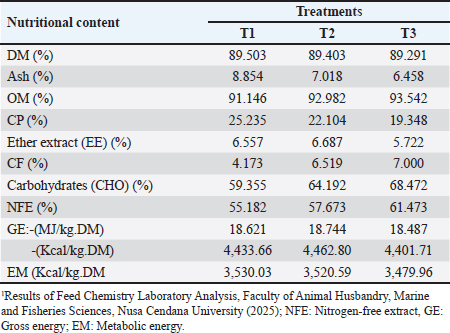
HousingThe goats were housed individually in pens measuring 70 × 150 cm. Each pen was equipped with separate feeders and drinkers to allow accurate measurement of feed intake. Clean drinking water was provided ad libitum. Equipment and materialsThe equipment used included a digital livestock scale with a sensitivity of 0.1 kg, a feed scale with a capacity of 2 kg and a sensitivity of 10 g, and equipment for feces and urine collection. A Wiley mill with a 1-mm sieve was used to grind feed and feces samples. Laboratory equipment was used for proximate analysis. Chemical analysis of feed and samplesThe chemical composition of feed, refusals, feces, and urine samples was determined using standard proximate analysis procedures according to AOAC (2005). Parameters analyzed included DM, ash, CP, ether extract (EE), and crude fiber (CF). Nitrogen content in urine was determined using the Kjeldahl method. Gross energy (GE) was measured using a bomb calorimeter, and metabolizable energy (ME) was estimated based on digestible energy values. Experimental designThe study employed a randomized complete block design (RCBD) with three dietary treatments and five blocks (replications), yielding 15 experimental units. The treatments were as follows: T1: 70% complete silage + 30% protein and readily soluble carbohydrate supplementation T2: 50% complete silage + 50% protein and readily soluble carbohydrate supplementation T3: 30% complete silage + 70% protein and readily soluble carbohydrate supplementation Blocking criteriaBlocking was based on initial body weight to reduce variability among experimental units. Animals with similar body weights were grouped within the same block before random allocation to treatments. Experimental proceduresComplete silage productionFresh Pennisetum purpuphoides and Gliricidia sepium leaves were chopped and mixed with pollard bran. Lontar palm (Borassus flabellifer) sugar solution was added, and the mixture was compacted into airtight plastic drums. The silage was stored for 21 days before use. Silage quality evaluationSilage quality was evaluated after 21 days based on physical characteristics (color, smell, and texture) and pH measurement. Good-quality silage was indicated by a greenish-brown color, a slightly acidic smell, firm texture, and pH values ranging from 3.5 to 4.5. Feed adaptationAnimals were adapted to the experimental diets for 14 days. Feed was offered twice daily at 08:00 and 16:00, and water was provided ad libitum. Goats were treated with an anthelmintic and vitamin B-complex prior to the experiment. Variables and data collectionObserved variablesThe variables observed included feed intake, nutrient digestibility, and growth performance parameters such as BWG, average daily gain (ADG), FCR, and FE. Data collectionFeed intake was determined by recording the difference between feed offered and refusals daily. Body weight was measured at the beginning of the experiment and every 2 weeks thereafter. Feces and urine were collected using the total collection method (Harris, 1970) for 10 consecutive days. Feces were weighed daily, subsampled, preserved, dried, and analyzed. Urine volume was measured daily, subsampled, acidified with H2SO2, and analyzed for nitrogen content (Harris, 1970). Dry matter intake (DMI) was calculated as the difference between feed offered and refusals on a DM basis. Nutrient intake was determined by multiplying DMI by the nutrient concentration of the feed. Dry matter digestibility (DMD) and nutrient digestibility were calculated using the total collection method as the difference between intake and fecal output divided by intake, expressed as a percentage. Growth performance parameters included BWG, ADG, FCR, and FE. BWG was calculated as the difference between final and initial body weight. ADG was obtained by dividing BWG by the number of experimental days. FCR was calculated as the ratio of total DMI to total BWG, while FE was expressed as the percentage ratio of BWG to DMI. Data analysisData were analyzed using analysis of variance (ANOVA) based on the RCBD. When significant differences were detected, Duncan’s multiple range test (DMRT) was applied (Sorzano, 2025). Effect size (Cohen’s f), statistical power, and coefficient of variation (CV) were also calculated to estimate the magnitude and reliability of treatment effects. Effect size values were interpreted as small (f=0.10), medium (f=0.25), and large (f ≥ 0.40). All results are presented as mean ± standard error of the mean (SEM). Statistical analyses were performed using SPSS software. Statistical modelThe statistical model used was as follows: Yij=μ + τi + βj + εij where: Yij=observed variable, μ=overall mean, τi=treatment effect, βj=block effect, εij=experimental error. Ethical approvalAll procedures involving animals were conducted in accordance with animal welfare guidelines. The study involved non-invasive procedures and did not cause pain or distress; therefore, formal ethical approval was not required. ResultsFeed intakeFeed intake of male Kacang goats fed different proportions of complete silage and supplementation with protein sources and readily soluble carbohydrates is presented in Table 4. Dietary treatments did not significantly affect (p > 0.05) DMI, organic matter intake (OMI), crude protein intake (CPI), ether extract intake (EEI), carbohydrate intake, nitrogen-free extract intake (NFEI), gross energy intake (GEI), or metabolizable energy intake (MEI). DMI ranged from 492.16 to 631.19 g/day, with the highest value observed in treatment T1. Although the treatment effect was not statistically significant (p=0.195), the effect size was moderate (f=0.59), while the statistical power was relatively low (0.43) with a CV of 18.0%, indicating moderate variability among animals. The ash intake was significantly affected by dietary treatment (p < 0.05). Goats receiving treatment T1 showed the highest ash intake (58.30 g/day), followed by T2 (49.59 g/day) and T3 (37.87 g/day). This variable showed a large effect size (f=0.75) and high statistical power (0.84) with a CV of 20.4%. OMI ranged from 454.30 to 572.88 g/day and did not differ significantly among treatments (p=0.228). The effect size was moderate (f=0.55) with statistical power of 0.39 and a CV of 19.3%. The CPI ranged from 83.11 to 108.51 g/day and was not significantly affected by treatment (p=0.155). The effect size was small to moderate (f=0.38) with statistical power of 0.31 and a CV of 26.4%. EEI ranged from 33.41 to 44.33 g/day and did not show a significant treatment effect (p=0.130). However, the effect size was moderate (f=0.61) with statistical power of 0.54 and a CV of 24.9%. The CF intake differed highly significantly among treatments (p < 0.01). Goats fed treatment T1 had the highest CF intake (149.89 g/day), which differed from T2 (71.78 g/day) and T3 (57.95 g/day). This variable showed a very large effect size (f=1.82) with very high statistical power (0.99) and a CV of 22.1%, indicating a strong treatment effect. The carbohydrate intake ranged from 243.98 to 268.96 g/day and was not significantly affected by treatment (p=0.908). This variable showed a very small effect size (f=0.10) with very low statistical power (0.07) and a relatively high CV (39.7%). NFEI ranged from 241.92 to 322.82 g/day and also did not show a significant treatment effect (p=0.209), with a moderate effect size (f=0.56), statistical power of 0.41, and a CV of 23.7%. GEI ranged from 2,162.56 to 2,674.48 kcal/day and was not significantly affected by treatment (p=0.284). The effect size was moderate (f=0.52) with statistical power of 0.33 and a CV of 20.1%. The MEI ranged from 1,627.75 to 1,780.91 kcal/day and did not differ significantly among treatments (p=0.738). The effect size was small (f=0.27) with statistical power of 0.15 and a CV of 19.7%. Feed digestibilityDietary treatments significantly affected most nutrient digestibility parameters in Kacang goats (Table 5). DMD differed among treatments (p=0.047), with higher values in T1 (89.45%) and T2 (89.84%) compared with T3 (83.50%). The treatment effect was moderate (η2=0.22) with statistical power of 0.34 and CV of 4.25%. Ash digestibility showed a similar pattern (p=0.032), where T1 (79.91%) and T2 (77.73%) exceeded T3 (63.18%), with a relatively strong treatment effect (η2=0.33) and statistical power of 0.57. Organic matter (OM) digestibility was also significantly higher in T1 (90.39%) and T2 (90.84%) than in T3 (85.07%) (p=0.044; η2=0.21; CV=3.71%). CP digestibility differed significantly among treatments (p=0.009), with higher values in T1 (95.42%) and T2 (95.44%) than in T3 (91.65%). The magnitude of the treatment effect was moderate (η2=0.29) with statistical power of 0.48 and CV of 1.74%. Ether extract digestibility showed the strongest treatment effect (p=0.002; η2=0.44), where T1 (97.10%) and T2 (97.01%) were higher than T3 (93.19%). CF digestibility also differed significantly (p=0.011; η2=0.36), with higher values in T1 and T2 than in T3. Carbohydrate digestibility followed a similar pattern (p=0.044; η2=0.31). On the contrary, nitrogen-free extract digestibility was not significantly affected by treatment (p=0.836), showing a negligible effect size (η2=0.01). GE digestibility differed among treatments (p=0.034; η2=0.23). Likewise, ME digestibility showed a significant treatment effect (p=0.003; η2=0.40), with higher values in T1 and T2 than in T3. Overall, diets containing 50%–70% complete silage (T1 and T2) resulted in higher nutrient and energy digestibility than diets containing 30% silage (T3). Growth performanceDaily weight gain of Kacang goatsGrowth performance of Kacang goats fed complete silage with different levels of protein and readily soluble carbohydrate supplementation is presented in Table 6. Initial body weight ranged from 15.11 to 16.91 kg and did not differ significantly among treatments (p > 0.05). The highest initial body weight was observed in T1 (16.91 kg), followed by T2 (16.07 kg), while the lowest value occurred in T3 (15.11 kg). Similarly, initial metabolic body weight ranged from 7.65 to 8.31 kg and was not significantly affected by dietary treatment. Final body weight and final metabolic body weight also showed no significant differences among treatments (p > 0.05). Goats receiving T1 tended to exhibit higher final body weight (22.70 kg) compared with those receiving T2 (21.80 kg) and T3 (19.05 kg). The calculated effect sizes for these parameters were relatively small to moderate (η2=0.15–0.17), indicating limited treatment effects on final body weight. BWG and ADG likewise did not differ significantly among treatments (p=0.745). Goats fed T1 showed numerically higher weight gain (5.49 kg) and ADG (66.99 g/day) compared with T2 (5.09 kg; 62.01 g/day) and T3 (4.59 kg; 55.94 g/day). However, the effect size values for these variables were relatively small (η2=0.07) and were accompanied by low statistical power (0.12), indicating that the magnitude of treatment effects on growth rate was limited. The CV values for BWG and ADG were relatively high (≈36%), suggesting substantial biological variability among animals during the experimental period. Feed conversion and FEFCR and FE were not significantly affected by dietary treatments (p > 0.05). FCR ranged from 9.87 in T1 to 10.34 in T2, while goats receiving T3 showed an FCR value of 9.88. Similarly, FE ranged from 10.16% to 10.83% across treatments. The calculated effect sizes for FCR and FE were very small (η2=0.02), indicating minimal treatment influence on feed utilization efficiency. In addition, statistical power values for these parameters were relatively low (0.06–0.07), suggesting that the probability of detecting treatment differences was limited. The CV values for FCR and FE were 23.01% and 26.44%, respectively, indicating moderate variability among animals in their ability to convert feed into BWG. Overall, these results indicate that variations in the proportion of complete silage and supplementation with protein and readily soluble carbohydrate sources did not significantly influence feed utilization efficiency in Kacang goats. DiscussionFeed intakeThe results presented in Table 4 indicate that variations in the proportion of forage and concentrate in the ration influenced feed and nutrient intake in male Kacang goats, although most variables were not statistically significant (p > 0.05). DMI in treatment T1 (70% complete silage, 20% soluble carbohydrates, and 10% fish meal) tended to be higher than in T2 and T3. The decline in DMI observed from T1 to T3 indicates that increasing the proportion of readily fermentable soluble carbohydrates in the ration tended to reduce voluntary feed intake Table 2. DMI in ruminants is strongly influenced by the balance between forage and concentrate in the diet. Diets with higher forage proportions generally provide physically effective fiber, which stimulates chewing activity and saliva secretion, thereby increasing rumen buffering capacity and maintaining stable rumen fermentation (Jang et al., 2017; Allen et al., 2009). In treatment T1, the higher proportion of complete silage likely supplied sufficient structural fiber to support rumen function, resulting in relatively higher DMI. Conversely, increasing the proportion of soluble carbohydrates in T2 and particularly in T3 may accelerate rumen fermentation and increase the production of volatile fatty acids (VFAs). Rapid VFA production can lower rumen pH and trigger metabolic regulation of feed intake. Under such conditions, feed intake is more strongly controlled by metabolic signals associated with VFA absorption rather than by rumen fill alone (Plaizier et al., 2017; Ramos et al., 2021). Propionate absorbed from the rumen is utilized in hepatic gluconeogenesis and may provide an earlier satiety signal, which consequently reduces DMI. Table 2. Nutritional content of concentrate feed for research1.
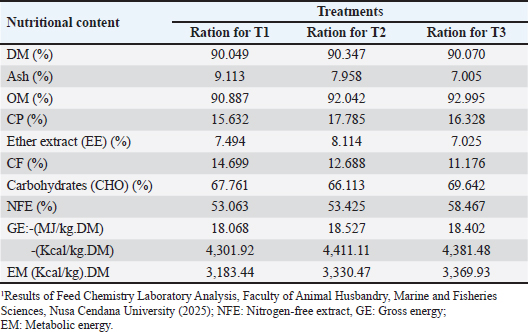
Table 3. Nutritional content of rations for research1.
In addition, diets containing high levels of rapidly fermentable carbohydrates may increase the risk of ruminal pH depression or mild subacute acidosis. Such conditions may reduce the activity of cellulolytic microorganisms responsible for fiber degradation, thereby decreasing rumen fermentation efficiency and feed intake (Van Soest, 1994; Fu et al., 2022). Therefore, maintaining a balance between rapidly fermentable energy sources and structural fiber in the ration is an important factor in sustaining DMI in ruminants (Huhtanen et al., 2007). Ash intake differed significantly among treatments (p < 0.05), with the highest value observed in T1 and the lowest in T3. This pattern reflects the higher proportion of forage in T1, which generally contributes more mineral components than concentrate-based diets. Similar tendencies were observed for OMI, which numerically declined from T1 to T3, indicating that increasing concentrate proportions did not stimulate higher feed consumption. CPI showed a slightly different trend, with the highest value observed in T2. This pattern may reflect the interaction between feed intake level and dietary nutrient composition. Although fish meal was included at the same proportion in all diets, differences in total feed intake and nutrient composition may have influenced CPI. Similar variations have been reported in ruminant feeding studies where concentrate levels influence voluntary intake and nutrient partitioning (Serment et al., 2011; Ramos et al., 2021; Wang et al., 2024). Table 4. Nutrient and energy intake of male Kacang goats fed complete silage with protein–carbohydrate supplementation1.
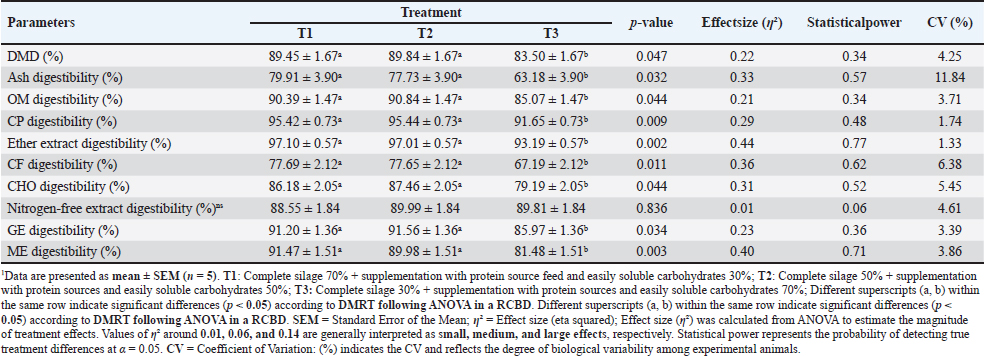
Table 5. Nutrient digestibility of male Kacang goats fed complete silage with protein–carbohydrate supplementation1.
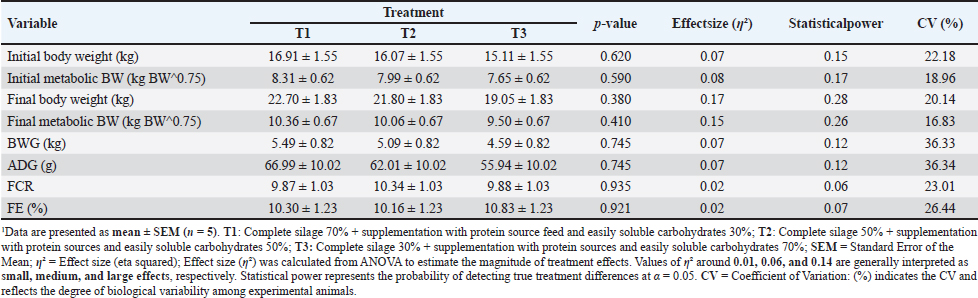
Table 6. Growth performance, feed conversion, and FE of male Kacang goats fed complete silage with protein–carbohydrate supplementation1.
EEI followed a decreasing trend from T1 to T3, consistent with the reduction in DMI. These results suggest that increasing the proportion of rapidly fermentable carbohydrates in the diet did not promote higher feed consumption. Instead, higher levels of soluble carbohydrates may accelerate rumen fermentation and increase VFA production, which can influence appetite regulation. CF intake showed a highly significant difference among treatments (p < 0.05), with markedly higher values in T1 than in T2 and T3. This result reflects the higher proportion of forage in the T1 diet and indicates that dietary composition strongly influenced fiber consumption. Adequate fiber intake is essential for maintaining rumen function because structural carbohydrates stimulate chewing activity and saliva secretion, thereby increasing rumen buffering capacity and maintaining rumen stability (Jang et al., 2017). Diets with reduced fiber levels, such as those in T2 and particularly T3, may decrease the physical effectiveness of fiber and alter rumen microbial activity. Total carbohydrate intake did not differ significantly among treatments, although numerical variations were observed. NFEI tended to decline as the proportion of soluble carbohydrates increased in the ration, mainly due to reduced feed intake. This decline may be associated with faster rumen fermentation in high-concentrate diets, leading to greater VFA production and a decrease in ruminal pH. Such conditions can alter rumen microbial populations and reduce fiber degradation (Plaizier et al., 2017; Fu et al., 2022). GEI and MEI followed a pattern similar to DMI, where the highest values were recorded in T1 and the lowest in T3. These results indicate that increasing the proportion of rapidly fermentable carbohydrates did not increase energy intake because overall feed consumption declined. Ramos et al. (2021) reported that in high-concentrate diets, feed intake may be regulated more strongly by metabolic signals associated with VFA production and ruminal pH than by rumen fill alone. When ruminal pH decreases, cellulolytic microorganisms decline while amylolytic and lactate-producing bacteria become dominant, resulting in altered rumen fermentation and reduced fiber degradation (Van Soest, 1994). Interpretation of effect size (Cohen’s f) supports these findings, with CF intake showing a very large effect (f=1.82), indicating a strong influence of dietary composition. On the contrary, other variables exhibited small to moderate effect sizes (f=0.10–0.61), suggesting relatively modest biological differences. Statistical power ranged from 0.07 to 0.99; high values for CF (0.99) and ash intake (0.84) indicate adequate sensitivity, whereas lower values in other variables suggest limited ability to detect smaller effects (Lakens, 2017; Amrhein et al., 2019). The CV (18.0%–39.7%) indicates moderate variability, reflecting common individual differences in feed intake among ruminants (Huhtanen et al., 2007). Although several variables showed relatively small effect sizes, low statistical power, or moderate to high CV, the observed trends among treatments still provide meaningful biological insights into the responses of male Kacang goats to different forage–concentrate ratios. These findings remain valuable for understanding feeding strategies and ration formulation under practical production conditions, particularly in dryland production systems where variability in feed intake and animal responses is commonly observed. These findings suggest that a ration containing 70% complete silage provides a more balanced rumen fermentation environment and supports higher voluntary feed intake in male Kacang goats. On the contrary, increasing the proportion of rapidly fermentable soluble carbohydrates tended to reduce feed consumption, likely due to accelerated rumen fermentation and metabolic regulation of appetite. Therefore, maintaining an appropriate forage-to-concentrate ratio is essential to sustain rumen stability, optimize nutrient intake, and support efficient goat production systems, particularly in dryland areas where feed resources are often limited and seasonal fluctuations in forage availability are common. Feed digestibilityFeed digestibility reflects the efficiency with which nutrients contained in feed are degraded, absorbed, and utilized by livestock after ingestion. In ruminants, digestibility is largely determined by rumen microbial activity, which is strongly influenced by dietary composition, particularly the balance between structural fiber and fermentable carbohydrates (Van Soest, 1994; Hristov et al., 2019). The present results demonstrate that diets containing 50%–70% complete silage (T1 and T2) resulted in higher digestibility of DM, OM, CP, EE, CF, carbohydrates, and ME compared with diets containing only 30% complete silage (T3). These findings suggest that a balanced combination of structural fiber from silage and moderate levels of readily fermentable carbohydrates creates a more favorable rumen fermentation environment. Structural fiber stimulates rumination activity and saliva production, which increases rumen buffering capacity and maintains rumen pH stability, thereby promoting the activity of fibrolytic microorganisms responsible for fiber degradation (Jang et al., 2017; Wang et al., 2024). On the contrary, the lower digestibility observed in treatment T3 may be associated with the higher inclusion of soluble carbohydrates in the ration. Diets rich in rapidly fermentable carbohydrates tend to increase VFA production and reduce rumen pH, which can suppress cellulolytic microbial populations and reduce fiber digestion efficiency (Ramos et al., 2021; Fu et al., 2022). Under such conditions, rumen fermentation becomes dominated by amylolytic bacteria, while fibrolytic microorganisms decline, resulting in reduced degradation of structural carbohydrates and consequently lower overall nutrient digestibility. Similar responses have been reported in ruminants fed high-concentrate diets, where excessive fermentable carbohydrates disrupt rumen fermentation balance and reduce nutrient utilization efficiency (Wang et al., 2024). The higher CP digestibility observed in T1 and T2 indicates a better synchronization between fermentable energy and nitrogen supply in the rumen. Efficient synchronization between these nutrients enhances microbial protein synthesis and improves nitrogen utilization efficiency (Tahuk et al., 2016; Hristov et al., 2019; Jiao et al., 2025). When dietary carbohydrates and protein are optimally balanced, rumen microbes can efficiently capture ammonia and convert it into microbial protein, which subsequently contributes to the host animal’s amino acid supply. Conversely, excessively fermentable carbohydrates, as observed in T3, may disrupt this synchrony and reduce the efficiency of nitrogen utilization. Similarly, EE digestibility was higher in treatments T1 and T2 than in T3. Lipid digestion in ruminants is closely associated with rumen microbial activity and the processes of lipolysis and biohydrogenation. Diets containing excessive soluble carbohydrates can alter rumen microbial populations and interfere with lipid metabolism processes, thereby reducing fat digestibility (Silva et al., 2022). Previous studies have also shown that dietary composition can significantly influence rumen microbial communities and nutrient digestibility in goats (Liu et al., 2024; Rabee, 2025). From a statistical perspective, the magnitude of treatment effects on digestibility parameters ranged from moderate to large, with effect size (η2) values between 0.21 and 0.44. Particularly strong treatment effects were observed for EE digestibility and ME digestibility, indicating that dietary composition substantially influenced nutrient utilization efficiency in Kacang goats. Although statistical power values ranged from 0.34 to 0.77, which are below the ideal threshold of 0.80, such values are commonly encountered in animal feeding trials with limited experimental units. The relatively low CV (1.33%–11.84%) further indicate acceptable experimental precision and relatively low variability among experimental animals. Overall, these findings confirm that maintaining an appropriate balance between structural fiber derived from complete silage and readily fermentable carbohydrates is essential to optimize rumen fermentation and nutrient utilization. Diets containing 50%–70% complete silage combined with moderate supplementation of protein and soluble carbohydrates appear to provide the most favorable conditions for improving nutrient digestibility and ME utilization in fattening Kacang goats under tropical feeding systems. Growth performanceDaily weight gain of Kacang goatsGrowth performance of Kacang goats is closely associated with nutrient intake, digestibility, and rumen fermentation efficiency. In the present study, dietary treatments did not significantly affect BWG or ADG, although goats receiving T1 showed numerically higher values than those receiving the other treatments. Although statistically non-significant, the numerically higher values observed in T1 suggest that dietary balance between structural fiber and fermentable carbohydrates may have contributed to maintaining productive responses. Adequate structural fiber may help maintain rumen fermentation stability and support efficient nutrient utilization through improved rumination activity and rumen buffering capacity (Jang et al., 2017). Conversely, increasing the proportion of rapidly fermentable carbohydrates, as observed in treatment T3, may alter ruminal fermentation patterns and potentially influence fiber digestion efficiency and nutrient utilization (Ramos et al., 2021; Mao and Wang, 2025). Growth responses in goats are influenced not only by nutrient digestibility but also by feed intake level, metabolic efficiency, and nutrient partitioning between maintenance and production (Tahuk et al., 2021; Semwogerere et al., 2023). Therefore, the absence of statistically significant differences in daily weight gain may also be associated with biological variability among animals and the relatively small experimental population used in the present study. The relatively small sample size (n=5 per treatment) may have limited the statistical power to detect treatment differences, particularly for biologically variable traits such as growth performance. Accordingly, the present findings should be interpreted cautiously, and further studies using larger experimental populations are required to confirm the observed responses. Feed conversion and FEFCR and FE are important indicators of how efficiently animals convert feed nutrients into BWG. In the present study, dietary treatments did not significantly affect FCR or FE, indicating that goats utilized feed nutrients with relatively similar efficiency across diets. Nevertheless, goats receiving diets containing higher proportions of complete silage tended to exhibit slightly better feed utilization efficiency. Diets with adequate structural fiber promote more stable rumen fermentation and support balanced microbial activity, which improves the efficiency of nutrient capture from feed. Efficient rumen microbial fermentation enhances the production of VFAs and microbial protein, which serve as major sources of energy and amino acids for ruminants (Davison et al., 2023; Nunes et al., 2024; Rauw et al., 2025). Conversely, diets containing excessive levels of rapidly fermentable carbohydrates may disrupt rumen fermentation balance by accelerating acid production and reducing rumen pH. Such conditions may decrease fiber digestion efficiency and reduce the effectiveness of microbial protein synthesis, ultimately limiting improvements in feed conversion efficiency (Ramos et al., 2021; Mao and Wang, 2025). Overall, the results suggest that diets containing 50%–70% complete silage combined with moderate supplementation of protein and soluble carbohydrate sources can maintain efficient feed utilization in Kacang goats while supporting stable rumen fermentation conditions. The overall responses observed in the present study indicate that goat productivity is determined by the interaction among feed intake, nutrient digestibility, and rumen fermentation stability. Feed intake regulates the amount of nutrients entering the digestive system, while nutrient digestibility determines the proportion of those nutrients that can be absorbed and utilized for metabolic processes. In the present experiment, goats receiving diets containing higher proportions of complete silage tended to maintain relatively stable feed intake while simultaneously exhibiting higher digestibility of several nutrients. Improved digestibility increases the availability of metabolizable nutrients such as VFAs and microbial protein, which represent the major energy and amino acid sources supporting growth in ruminants. However, improvements in digestibility do not always produce proportional increases in growth performance because growth responses depend not only on nutrient availability but also on biological factors such as nutrient partitioning between maintenance and production, metabolic efficiency, and individual animal variation. Similar observations have been reported in goat feeding studies where improvements in nutrient digestibility enhanced metabolic utilization efficiency without necessarily resulting in statistically significant increases in BWG (Tahuk et al., 2021; Semwogerere et al., 2023). Therefore, the combined evaluation of feed intake, nutrient digestibility, and growth performance provides a more comprehensive understanding of how dietary treatments influence animal productivity. Although the dietary treatments did not significantly affect most growth performance parameters, the additional statistical indicators presented in Table 6 provide further insight into the biological relevance of the results. The calculated effect sizes suggest that dietary treatments exerted only small to moderate influences on growth variables such as final body weight and DMI. These values indicate that the magnitude of treatment effects on growth performance was limited, which is consistent with the absence of statistically significant differences among treatments. The relatively low statistical power observed for several variables may be associated with the limited number of experimental animals used in the present study. In small ruminant nutrition experiments, variation among individual animals is often substantial due to differences in metabolic efficiency, feed utilization capacity, and physiological adaptation to dietary treatments. Such biological variation may reduce the ability of statistical tests to detect treatment differences even when observable biological trends exist. ConclusionVariations in the proportion of whole-crop silage and the addition of easily digestible protein and carbohydrate sources did not significantly affect most nutrient intake and growth performance parameters of Kacang goats. However, diets containing a higher proportion of whole-crop silage (50%–70%) significantly improved nutrient digestibility compared with diets containing lower proportions. Although this improvement in digestibility was not accompanied by a statistically significant increase in weight gain, goats fed higher levels of whole-crop silage tended to show better growth responses and stable feed conversion efficiency. This finding indicates that maintaining an appropriate balance between structural fiber and readily fermentable carbohydrates is essential for supporting rumen fermentation and efficient nutrient utilization. Therefore, the inclusion of 50%–70% whole-crop silage combined with appropriate supplementation can be recommended as an effective feeding strategy for improving nutrient utilization in Kacang goats under tropical conditions. AcknowledgmentsThe author would like to express his sincere gratitude to the Directorate of Research and Community Service, Ministry of Higher Education, Science and Technology of the Republic of Indonesia for funding the implementation of Regular Fundamental Research in 2025. Contract Number: 19/C3/DT.05.00/PL/2025, dated 28 May 2025. Conflict of interestThe authors declare that there are no financial or non-financial conflicts of interest related to the conduct of this study. FundingDirectorate of Research and Community Service, Ministry of Higher Education, Science and Technology of the Republic of Indonesia. Authors’ contributionsP.K.T. served as the principal and corresponding author and was responsible for the study design and implementation, data collection, data analysis, and manuscript preparation. O.R.N. and M.B. contributed as co-authors to data collection, data analysis, and critical revision of the manuscript prior to publication. All authors read and approved the final manuscript. Data availabilityAll data generated in this study are included in this published article. ReferencesAhni, J., Hamid, P., dan Abdullah, S. 2019. Performa Produksi Domba yang Diberi Silase Komplit. E-Jurnal Mitra Sains 7(1), 47–52; doi:10.22487/mitrasains.v7i1.222 Allen, M.S., Bradford, B.J. and Oba, M. 2009. Board invited review: the hepatic oxidation theory of the control of feed intake and its application to ruminants. J. Anim. Sci. 87(10), 3317–3334; doi:10.2527/jas.2009-1779 Amrhein, V., Greenland, S. and Mcshane, B. 2019. Scientists rise up against statistical significance. Nature 567(7748), 305–307; doi:10.1038/d41586-019-00857-9 AOAC. 2005. Official methods of analysis, 18th ed. Washington, DC: Association of Official Analytical Chemists. Borreani, G., Tabacco, E., Schmidt, R.J., Holmes, B.J. and Muck, R.E. 2018. Silage review: factors affecting dry matter and quality losses in silages. J. Dairy Sci. 101(5), 3952–3979; doi:10.3168/jds.2017-13837 Davison, C., Michie, C., Tachtatzis, C., Andonovic, I., Bowen, J. and Duthie, C.A. 2023. Feed conversion ratio (FCR) and performance group estimation based on predicted feed intake for the optimisation of beef production. Sensors 23(10), 4621; doi:10.3390/s23104621 Duguma, B. and Janssens, G.P.J. 2021. Assessment of livestock feed resources and coping strategies with dry season feed scarcity in mixed crop–livestock farming systems around the Gilgel Gibe Catchment, Southwest Ethiopia. Sustainability 13(19), 10713; doi:10.3390/su131910713 Fu, Y., He, Y., Xiang, K., Zhao, C., He, Z., Qiu, M., Hu, X. and Zhang, N. 2022. The role of rumen microbiota and its metabolites in subacute ruminal acidosis (SARA)-induced inflammatory diseases of ruminants. Microorganisms 10(8), 1495; doi:10.3390/microorganisms10081495 Harris, L.E. 1970. Chemical and biological methods for feeds analysis. Gainnesville, FL: Center for tropical Agriculture Feed Composition Project, Livestock Pavilion University of Florida. Hristov, A.N., Bannink, A., Crompton, L.A., Huhtanen, P., Kreuzer, M., McGee, M., Nozière, P., Reynolds, C.K., Bayat, A.R., Yáñez-Ruiz, D.R., Dijkstra, J., Kebreab, E., Schwarm, A. and Shingfield, K.J. 2019. Nitrogen in ruminant nutrition: a review of measurement techniques. J. Dairy Sci. 102(7), 5811–5852; doi:10.3168/jds.2018-15829 Huhtanen, P., Rinne, M. and Nousiainen, J. 2007. Evaluation of the factors affecting silage intake of dairy cows: a revision of the relative silage dry-matter intake index. Anim. Int. J. Anim. Biosci. 1(5), 758–770; doi:10.1017/S175173110773673X Jang, S.Y., Kim, E.K., Park, J.H., Oh, M.R., Tang, Y.J., Ding, Y.L., Seong, H.J., Kim, W.H., Yun, Y.S. and Moon, S.H. 2017. Effects of physically effective neutral detergent fiber content on dry matter intake, digestibility, and chewing activity in Korean native goats (Capra hircus coreanae) fed with total mixed ration. Asian-Australasian. J. Anim. Sci. 30(10), 1405–1409; doi:10.5713/ajas.16.0868 Jiao, N., Feng, W., Ma, C., Li, H., Zhang, J., Zheng, J. and Guo, P. 2025. Effects of dietary protein levels on digestion, metabolism, serum biochemical indexes, and rumen microflora of lanzhou fat-tailed sheep. Animals 15(1), 25; doi:10.3390/ani15010025 Kearl, L.C. 1982. Nutrient requirement of ruminants in developing countries. Logan, UT: International Feedstuffs Institute, Utah Agricultural Experiment Station, Utah State University; doi:10.26076/6328-a024 Koura, B.I., Shipandeni, M. and Cutrignelli, M.I. 2023. Sustainable feeds for animal nutrition in tropical areas. Animals. Open. Access. J. From. MDPI. 13(8), 1379; doi:10.3390/ani13081379 Lakens, D. 2017. Equivalence tests: a practical primer for t tests, correlations, and meta-analyses. Soc. Psychol. Personality Sci. 8(4), 355–362; doi:10.1177/1948550617697177 Lamidi, A.A. and Ologbose, F.I. 2014. Dry season feeds and feeding: a threat to sustainable ruminant animal production in Nigeria. J. Agric. Soc. Res. 14(1), 17–30. Available via https://www.ajol.info/index.php/jasr/article/view/166692 Langgajanji, V.D., Maranatha, G., dan Noach, Y.R. 2024. Efek Pemberian Pakan Komplit Berbasis Silase Campuran Sorghum dan Daun Gamal pada Level Berbeda terhadap Konsumsi Kecernaan Protein Kasar dan Serat Kasar Ternak Kambing Lokal Betina. Anim. Agric. 1(3), 230–240; doi:10.59891/animacultura.v1i3.42 Liu, H., Mao, H., Wang, W., Peng, W., Mao, K., Sun, W., Yang, Y., Wu, Q., Wang, K., Zeng, M., Han, J. and Zhou, H. 2024. Comparison of average daily gain, apparent digestibility, rumen fermentation parameters and bacterial communities, and serum antioxidant indices in Leizhou goats fed with or without rumen-protected fat. Front. Vet. Sci. 11, 1518826; doi:10.3389/fvets.2024.1518826 Mao, J. and Wang, L. 2025. Rumen acidosis in ruminants: a review of the effects of high-concentrate diets and the potential modulatory role of rumen foam. Front. Vet. Sci. 12, 1595615; doi:10.3389/fvets.2025.1595615 Marin, M. 2024. Nutrition. Available via https://www.groupe-esa.com/ladmec/bricks_modules/brick04/co/ZBO_Brick04.html (Accessed 18 March 2025) Nunes, A.T., Faleiros, C.A., Poleti, M.D., Novais, F.J., López-Hernández, Y., Mandal, R., Wishart, D.S. and Fukumasu, H. 2024. Unraveling ruminant feed efficiency through metabolomics: a systematic review. Metabolites 14(12), 675; doi:10.3390/metabo14120675 Plaizier, J.C., Li, S., Danscher, A.M., Derakshani, H., Andersen, P.H. and Khafipour, E. 2017. Changes in microbiota in rumen digesta and feces due to a grain-based subacute ruminal acidosis (SARA) challenge. Microbial. Ecol. 74(2), 485–495; doi:10.1007/s00248-017-0940-z Rabee, A.E. 2025. Reproductive performance, digestibility, and rumen bacteria of goats fed phytogenic mixtures. AMB. Express. 15, 163; doi:10.1186/s13568-025-01961-y Ramos, S.C., Jeong, C.D., Mamuad, L.L., Kim, S.H., Kang, S.H., Kim, E.T., Cho, Y.I., Lee, S.S. and Lee, S.S. 2021. Diet transition from high-forage to high-concentrate alters rumen bacterial community composition, epithelial transcriptomes and ruminal fermentation parameters in dairy cows. Animals 11(3), 838; doi:10.3390/ani11030838 Rauw, W.M., Baumgard, L.H. and Dekkers, J.C.M. 2025. Review: feed efficiency and metabolic flexibility in livestock. Anim. Int. J. Anim. Biosci. 19(1), 101376; doi:10.1016/j.animal.2024.101376 Semwogerere, F., Chikwanha, O.C., Katiyatiya, C.L.F., Marufu, M.C. and Mapiye, C. 2023. Nutrient intake, digestibility, and utilization in goats fed graded levels of hempseed cake finisher diets. Trop. Anim. Health. Prod. 56(1), 21; doi:10.1007/s11250-023-03864-1 Serment, A., Schmidely, P., Giger-Reverdin, S., Chapoutot, P. and Sauvant, D. 2011. Effects of the percentage of concentrate on rumen fermentation, nutrient digestibility, plasma metabolites, and milk composition in mid-lactation goats. J. Dairy. Sci. 94(8), 3960–3972; doi:10.3168/jds.2010-4041 Silva, C.F., Véras, A.S.C., Conceição, M.G., Macedo, A.V.M., Luna, R.E.M., Monteiro, C.C.D.F., Souza, F.G., Almeida, M.D.P., Silva, J.A.B.A. and Ferreira, M.D.A. 2022. Intake, digestibility, water balance, ruminal dynamics, and blood parameters in sheep fed diets containing extra-fat whole corn germ. Anim. Feed. Sci. Technol. 285, 115248; doi:10.1016/j.anifeedsci.2022.115248 Sorzano, C.O.S. 2025. Statistical experiment design for animal research. Available via https://i2pc.es/coss/Articulos/Sorzano2023.pdf (Accessed 28 March 2025) Tahuk, P.K. and Bira, G.F. 2020. Carcass and meat characteristics of male Kacang goat fattened by complete silage. Vet. World 13(4), 706–715; doi:10.14202/vetworld.2020.706715 Tahuk, P.K., Bira, G.F., Lopi, K.R.M., Nenabu, A.B. and Kolo, N. 2021. Nutrient intake, digestibility and performance of male Kacang goats fattened by complete silage. Adv. Anim. Vet. Sci. 9(12), 2147–2156; doi: 10.17582/journal.aavs/2021/9.12.2147.2156 Tahuk, P.K. and Dethan. 2010. Performance of Bali Bull in Greenlot fattening by farmers when rainy season in Timor Island. J. Indonesian. Trop. Anim. Agric. 35(4), 257–261; doi:10.14710/jitaa.35.4.257-261 Tahuk, P.K., Banu, M. and Kolo, Y. 2025. Effects of fish meal and soluble carbohydrate supplementation in complete silage on the performance of fattened Kacang goats. J. Anim. Health. Prod. 13(4), 1176–1187; doi:10.17582/journal.jahp/2025/13.4.1176.1187 Tahuk, P.K., Budhi, S.P.S., Panjono and Baliarti, E. 2016. In vitro characteristics of rumen fermentation of fattening rations with different protein-energy levels fed to Bali cattle. Pakistan J. Nutr. 15, 897–904; doi: 10.3923/pjn.2016.897.904 Van Soest, P.J. 1994. Nutritional ecology of the ruminant (2nd ed.). Cornell University Press. Wang, S., Tang, W., Jiang, T., Wang, R., Zhang, R., Ou, J., Wang, Q., Cheng, X., Ren, C., Chen, J., Huang, Y. and Zhang, Z. 2024. Effect of dietary concentrate-to-forage ratios during the cold season on slaughter performance, meat quality, rumen fermentation and gut microbiota of Tibetan sheep. Animals 14(22), 3305; doi:10.3390/ani14223305 | ||
| How to Cite this Article |
| Pubmed Style Tahuk PK, Nahak OR, Banu M. Effects of varying proportions of complete silage and protein–carbohydrate supplementation on performance of fattening Kacang goats. Open Vet. J.. 2026; 16(8): 5657-5670. doi:10.5455/OVJ.2026.v16.i8.56 Web Style Tahuk PK, Nahak OR, Banu M. Effects of varying proportions of complete silage and protein–carbohydrate supplementation on performance of fattening Kacang goats. https://www.openveterinaryjournal.com/?mno=307393 [Access: September 04, 2026]. doi:10.5455/OVJ.2026.v16.i8.56 AMA (American Medical Association) Style Tahuk PK, Nahak OR, Banu M. Effects of varying proportions of complete silage and protein–carbohydrate supplementation on performance of fattening Kacang goats. Open Vet. J.. 2026; 16(8): 5657-5670. doi:10.5455/OVJ.2026.v16.i8.56 Vancouver/ICMJE Style Tahuk PK, Nahak OR, Banu M. Effects of varying proportions of complete silage and protein–carbohydrate supplementation on performance of fattening Kacang goats. Open Vet. J.. (2026), [cited September 04, 2026]; 16(8): 5657-5670. doi:10.5455/OVJ.2026.v16.i8.56 Harvard Style Tahuk, P. K., Nahak, . O. R. & Banu, . M. (2026) Effects of varying proportions of complete silage and protein–carbohydrate supplementation on performance of fattening Kacang goats. Open Vet. J., 16 (8), 5657-5670. doi:10.5455/OVJ.2026.v16.i8.56 Turabian Style Tahuk, Paulus Klau, Oktovianus R. Nahak, and Marselinus Banu. 2026. Effects of varying proportions of complete silage and protein–carbohydrate supplementation on performance of fattening Kacang goats. Open Veterinary Journal, 16 (8), 5657-5670. doi:10.5455/OVJ.2026.v16.i8.56 Chicago Style Tahuk, Paulus Klau, Oktovianus R. Nahak, and Marselinus Banu. "Effects of varying proportions of complete silage and protein–carbohydrate supplementation on performance of fattening Kacang goats." Open Veterinary Journal 16 (2026), 5657-5670. doi:10.5455/OVJ.2026.v16.i8.56 MLA (The Modern Language Association) Style Tahuk, Paulus Klau, Oktovianus R. Nahak, and Marselinus Banu. "Effects of varying proportions of complete silage and protein–carbohydrate supplementation on performance of fattening Kacang goats." Open Veterinary Journal 16.8 (2026), 5657-5670. Print. doi:10.5455/OVJ.2026.v16.i8.56 APA (American Psychological Association) Style Tahuk, P. K., Nahak, . O. R. & Banu, . M. (2026) Effects of varying proportions of complete silage and protein–carbohydrate supplementation on performance of fattening Kacang goats. Open Veterinary Journal, 16 (8), 5657-5670. doi:10.5455/OVJ.2026.v16.i8.56 |


