




| Research Article | ||
Open Vet. J.. 2026; 16(3): 1734-1742 Open Veterinary Journal, (2026), Vol. 16(3): 1734-1742 Research Article Effect of probiotic and herbal complex supplementation on health status, mineral composition, and bone morphometric characteristics of fattening lambsKameliya Zhelyazkova1*, Radina Vasileva2, Lazarin Lazarov3, Nikolay Ivanov1, Ivan Slavov1, Natalya Miteva1, Ivelina Alexandrova1 and Stayka Laleva11Department of Sheep Husbandry and Breeding, Agricultural Academy, Agricultural Institute Stara Zagora, Stara Zagora, Bulgaria 2Department of Veterinary Surgery, Faculty of Veterinary Medicine, Trakia University, Stara Zagora, Bulgaria 3Department of Internal Medicine, Faculty of Veterinary Medicine, Trakia University, Stara Zagora, Bulgaria *Corresponding Author: Kameliya Zhelyazkova. Department of Sheep Husbandry and Breeding, Agricultural Academy, Agricultural Institute Stara Zagora, Stara Zagora, Bulgaria. E-mail: k.zhelyazkova [at] abv.bg Submitted: 13/11/2025 Revised: 12/02/2026 Accepted: 26/02/2026 Published: 31/03/2026 © 2026 Open Veterinary Journal
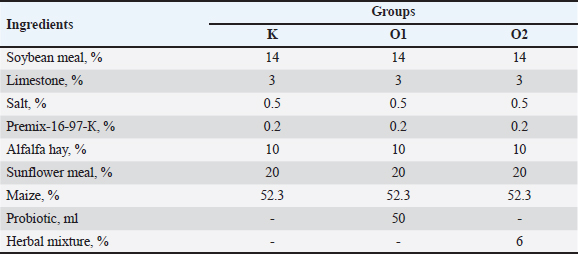
AbstractBackground: The health of animals during fattening is essential. Various studies have been used to track how different additives affect health. Computed tomography (CT) is a more in-depth method for tracking the impact of food additives. Aim: This study aimed to evaluate the effects of dietary probiotic and herbal complex supplementation on the health, bone mineral composition, and morphometric characteristics of fattening lambs of the Bulgarian Dairy Synthetic Population (BDSP) breed. Methods: The experiment included 36 lambs in 3 groups of 12 animals. The control group (K) received a standard compound pellet; the first experimental group (O1) received the same feed and an oral supplement of 50 ml Zoovit LL probiotic/animal/day; and the second experimental group (O2) was fed a compound pellet supplemented with 6% herbal mixture (milk thistle, sage, thyme, elderberry, nettle, and chamomile). The experiment was continued until an average live weight of 25±2 kg over a period of 44 days. Blood biochemical parameters were determined at the beginning, middle, and end of the experiment using a Seamaly SMT-120 VP automated blood sample analyzer. Computed tomography scans of the humeral bones were performed using a 32-slice CT scanner. The Ca, Mg, and P contents of the sternum bone were analyzed by coupled plasma mass spectrometry (ICP-MS) for mineral quantitation. Results: The analysis of the time course of blood parameters in the three groups throughout the experiment showed statistically significant differences in serum ALP and PHOS. Serum ALP activities were significantly lower in the middle of the experimental period in the group receiving the probiotic supplement than in the control. In the herbal mixture group, significantly lower serum PHOS values were determined at the end of the experiment. For the cranial cortex (CrCT), a statistically significantly lower radiodensity was demonstrated in the herbal complex group compared with the control group. Conclusion: Dietary supplementation of fattening lambs with probiotics and herbal complexes had no prolonged effect on bone mineral balance. Keywords:Lambs, Computed tomography analysis, Macrominerals, Skeletal development, Serum biochemical parameters. IntroductionBone tissue development and health in young lambs are important for their future productivity and lifespan, as bones actively participate in mineral metabolism, serving as the main depot of calcium, phosphorus, and magnesium (Ciosek et al., 2021). The optimum balance of macrominerals is important for normal growth, bone mineralization, and structural integrity (Upadhaya and Kim, 2020). Disturbances in the systemic mineral metabolism may lead to retarded growth, reduced bone density, and an increased risk of fractures, especially in intensive livestock farming systems (Radwińska and Żarczyńska, 2014). In recent decades, there has been an increasing interest in the use of probiotics and phytogenic supplements in animal husbandry as a possible alternative to synthetic growth promoters (Wang et al., 2024). However, scientific research in this field is not able to provide complete information about the effects of their use. Probiotics can influence mineral metabolism by regulating the intestinal microbiota and possibly by improving nutrient absorption. They could increase calcium and phosphorus bioavailability and modulate the immune response (McCabe and Parameswaran, 2018). The use of probiotics in animal husbandry decreases the incidence of gastrointestinal disorders, which likely improves the animal organism’s absorption of minerals and vitamins (Zeng et al., 2025). Phytogenic feed additives (PFAs), on the other hand, contain bioactive substances and antioxidants with anti-inflammatory and metabolism-boosting properties and are considered promising as a means for improving the productivity and health parameters of farmed animals (Biswas et al., 2024). Some PFAs have beneficial effects on enzyme activity, mineral absorption, and osteogenesis in animals (Nastoh et al., 2024). Milk thistle (Silybum marianum) contains silymarin, a flavonoid with antioxidant and hepatoprotective effects. Silymarin improves liver function, which may contribute to better absorption of nutrients, including calcium and phosphorus, consequently leading to a more efficient metabolism of vitamin D and lipids involved in the absorption of these minerals (Rezaeieh et al., 2015; Gonçalves and Eisingher, 2024). Sage (Salvia officinalis) is rich in phenolic compounds and flavonoids with anti-inflammatory, antioxidant, and antibacterial effects against conventional antibiotic-resistant microbial pathogens (Lopresti, 2017; Ben Akacha et al., 2024). Thyme (Thymus vulgaris) contains thymol and carvacrol, compounds with potent antimicrobial and antioxidant effects (Lasc et al., 2022; Hammoudi Halat et al., 2022). They possibly improve the digestive microflora and hence the absorption of minerals such as calcium, magnesium, and phosphorus. The elderberry (Sambucus nigra) flowers and leaves contain kaempferol, quercetin, and rutin. Elderberry is also renowned for its high trace elements, anthocyanin, and vitamin content, which reduces oxidative stress (Vlaicu et al., 2025). Nettle (Urtica dioica) has antibacterial and antioxidant properties and contains high amounts of vitamins, minerals, polyphenols, carotenoids, and tannins. Its use as an animal feed additive may promote growth and strengthen immunity (Jin et al., 2018; Bhusal et al., 2022). Chamomile (Matricaria chamomilla) is rich in apigenin and flavonoids, which have anti-inflammatory, antibacterial, antioxidant, and relaxing properties (El Mihyaoui et al., 2022; Akram et al., 2024). It can provide indirect support to the mineral balance of the animal body by reducing oxidative stress. According to Gamil et al. (2025) the combination of different herbs in a single dietary supplement achieves a synergistic effect that significantly exceeds the individual effects of the herbs. Combining plants with different phytochemical profiles and their addition to animal feed can optimize body development, reduce oxidative stress, and promote animal adaptation during the early growth stages (Hanga-Farcaș et al., 2023). In the context of sustainable livestock production, the application of natural supplements not only contributes to improving animal productivity and health but also meets the increasing demands for safe food and reduces the use of antibiotics and synthetic additives (Wang et al., 2024). The combination of different herbs has the potential to support the metabolism of calcium, magnesium, and phosphorus and skeletal development in the animal body, especially in young growing lambs, by their complementary antioxidant, anti-inflammatory, and metabolic-boosting properties. This study aimed to assess the impact of probiotic and herbal complex supplementation on the health status, mineral composition, and morphometric characteristics of bones in fattened lambs of the Bulgarian dairy synthetic population (BDSP) breed. Materials and MethodsAnimals used and experimental designThe experiment was conducted at the sheep farm of the Agricultural Institute, Stara Zagora, Bulgaria, with a total of 36 lambs (initial live weight 11 ± 1 kg and 30 ± 5 days of age) of the BDSP breed from March to May 2025. Lambs were allocated by the uniformity method into three groups of 12 animals (six males and six females per group), one control group, and two experimental groups, with similar live body weights in each group and uniform sex ratios and date of birth. The groups were raised in boxes (4 × 6 m) bedded with straw, supplied with hay troughs, pellet feeders, and drinkers with constantly running fresh tap water in accordance with Ordinance No. 40 and Ordinance No. 20. Diets and supplementsThe composition of feeds offered to the experimental groups of lambs is presented in Table 1. Table 1. Compound pelleted feed composition for BDSP lambs.
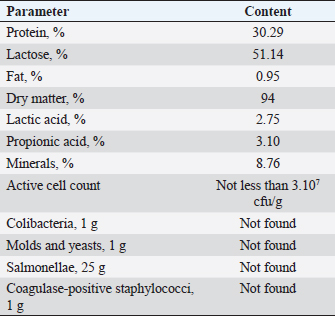
The control group (K) received a standard compound pellet; the first experimental group (O1) received the same feed and an oral supplement of 50 ml Zoovit LL probiotic/animal/day containing Lactobacillus delbrueckii subsp. bulgaricus, Streptococcus thermophilus, Lactobacillus casei, Kluyveromyces lactis, Lactobacillus rhamnosus, and composition shown in Table 2. Table 2. Composition of the Zoovit LL probiotic.
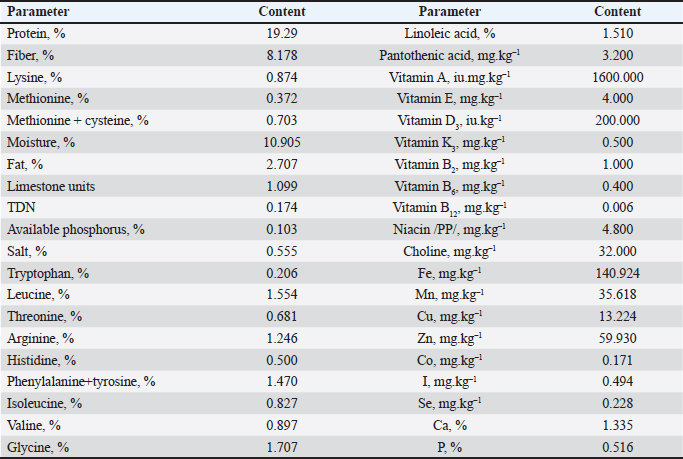
The second experimental group (O2) was fed a compound pellet supplemented with a 6% herbal mixture (milk thistle, sage, thyme, elderberry, nettle, and chamomile). The lambs received ad libitum feed according to their age and were compliant with the requirements for the content of nutrients and biologically active substances. The nutritional composition of the pelleted feed is presented in Table 3. Table 3. Nutritional composition of pelleted feed for BDSP lambs.
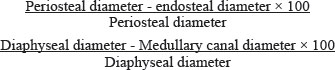
The experiment continued to an average live weight of 25 ± 2 kg, achieved for 44 days. Then, 5 male lambs from each group were slaughtered in a licensed slaughterhouse, following all requirements for humane treatment of animals during transportation and slaughter by Ordinance 26 and Ordinance No. 22. Sampling and analytical methodsBlood samplingBlood samples were obtained from all animals from the experimental groups before the beginning of the trial (day 0), in the middle (day 22), and at the end of the experimental period (day 44) for biochemical analysis. Blood samples were collected from the vena jugularis interna in sterile vacuum tubes without anticoagulant. Analyses were performed in the laboratory of the Agricultural Institute, Stara Zagora. Biochemical parameters were determined using an automated blood sample analyzer Seamaly SMT-120 VP. Venous blood samples were drawn in sterile plain vacuum tubes. The samples were left upright at room temperature for 20 to 30 minutes until complete coagulation was achieved. Centrifugation was performed at 6000 rpm for 10 minutes to separate the serum. The obtained serum was carefully transferred into clean tubes using an automatic pipette to avoid contamination with cellular elements. Serum samples were assayed immediately after processing using commercial reagents and standard calibrations. The following serum biochemical parameters were measured: alkaline phosphatase (ALP, U/L), calcium (Ca, mmol/L), and inorganic phosphate (PHOS, mmol/L). Morphometric analysis of humeral bones using computed tomographyAfter slaughter/euthanasia of lambs at the end of the trial (day 44), the humeri were carefully separated from the shoulder and subjected to computed tomography (CT) morphometric analysis using a 32-slice CT scanner (Somatom Go Now, Siemens Healthcare GmbH, Erlangen, Germany). The humeri were scanned in a helical mode, craniocaudal view. The detector slice thickness was 1 mm, scan parameters: 120 kV, 80 mA, and 400 ms. DICOM images were imported into Syngo Via View&Go software (Syngo CT VA30, Siemens Health care GmbH, Erlangen, Germany) to obtain 3D reconstructed images and precise linear measurements. For the purpose of morphometric analysis, humerus length was measured in centimeters, and the following parameters were determined in the mid-diaphyseal region: external mediolateral diameter (ExtMLD), internal mediolateral diameter (IntMLD), external craniocaudal diameter (ExtCrCD), and internal craniocaudal diameter (IntCrCD). The radiodensities of the medial (MCT), lateral (LCT), cranial (CrCT), and caudal (CCT) cortex were measured in HU. The craniocaudal and mediolateral cortico-medullary indices were calculated using the following formulas (Mabelebele, 2017):
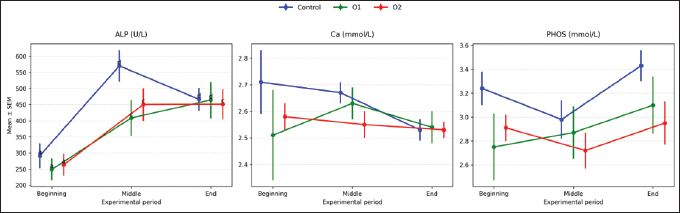
Calcium, magnesium, and phosphorus content determination in the sternumTo determine the bone tissue contents of calcium (Ca), magnesium (Mg), and phosphorus (P), samples were collected from the sternum of animals from the experimental groups. To this end, the 3rd sternebra was used. The samples were prepared by soft tissue removal, drying, and homogenization, followed by mineralization according to the respective protocols. The assays were carried out in a licensed laboratory in Plovdiv according to protocol BJIM-PIM-ICP/MS-01:2014, using ICP-MS for mineral quantitation. The tests were conducted at a temperature of 20°C ± 2.5°C and a relative air humidity 35% ± 4%. Statistical analysisData analysis was done with the software Statistica (v. 14.0.0.15; 1984-2020 TIBCO Software Inc., 2020 ). Experimental data were expressed as mean and SD (± SD) and SEM. The degree of confidence was determined by t-test, independent, by variables, with p ≤ 0.05*, p ≤ 0.01**, and p ≤ 0.001*** indicating different levels of statistically significant differences. Ethical approvalAll case data were obtained with the owner’s consent for research use. All lambs received appropriate and maximum veterinary care based on animal welfare. ResultsThe time course of the blood biochemical parameters ALP, Ca, and PHOS in the groups throughout the study period is presented in Figure 1. There were statistically significant (p ≤ 0.001) changes in the control group (K), where serum ALP increased in the middle of the experiment, followed by a decline at the end of the experiment compared with the initial values. In the experimental group with the addition of probiotic (O1), a statistically significant increase in serum ALP activities was observed in the middle of the experimental period (p ≤ 0.01) and at its end (p ≤ 0.001) compared with the beginning. The analysis of the serum ALP data in lambs receiving an herbal supplement (O2) showed a statistically significant (p ≤ 0.01) increased activity in the middle of the experiment vs. the beginning, which persisted unchanged until the end. No significant differences (p > 0.05) were observed in the serum Ca and PHOS concentrations in the three experimental groups during the study period.
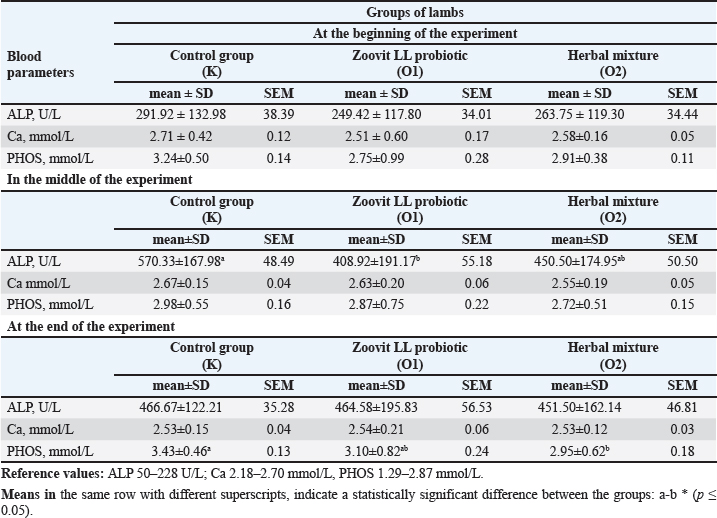
Fig. 1. Dynamics of biochemical blood parameters during the experiment with fattening BDSP lambs. The values of the biochemical blood parameters ALP, Ca, and PHOS in the three groups during the experimental period are presented in Table 4. At the beginning, no significant (p > 0.05) differences in ALP between the controls and the groups receiving either probiotic or herbal mixture supplements. A significant (p ≤ 0.05) decrease in ALP activities occurred in the middle of the experimental period in the group receiving probiotic supplementation (O1) compared with the control (K), but the differences were inconsistent (p > 0.05) at the end of the experiment. This study did not demonstrate any statistically significant differences (p > 0.05) in serum Ca levels among the groups fed a probiotic or herbal complex in relation to controls at the time of the three samplings. Table 4. Biochemical blood parameters in fattening BDSP lambs.
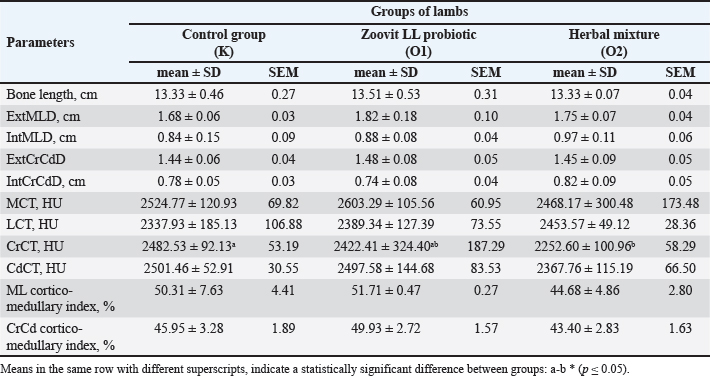
Regarding between-group serum PHOS concentrations, they did not change significantly (p > 0.05) in the middle of the experiment, but at the end, significantly (p ≤ 0.05) lower values were measured in lambs receiving the herbal complex supplement (O2), compared to the control group (K). Morphometric humeral bone indicators analyzed in lambs by computed tomography, including bone length, external mediolateral diameter (ExtMLD), internal mediolateral diameter (IntMLD), external craniocaudal diameter (ExtCrCdD), internal craniocaudal diameter (IntCrCdD), medial cortical thickness (MCT), lateral cortical thickness (LCT), cranial cortical thickness (CrCT), caudal cortical thickness (CdCT), ML cortico-medullary index (%), and CrCd cortico-medullary index (%), are presented in Table 5. Table 5. Computed tomography analysis of the humeral bones in fattening BDSP lambs.
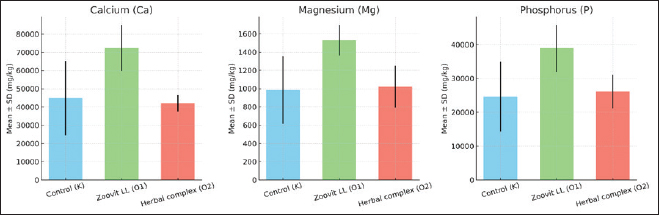
No statistically significant difference (p > 0.05) was found between the CrCd cortico-medullary index (%) in the experimental groups and the control group. Regarding bone density, the greatest CrCT, HU, and CdCT, HU were found in the control group (K), followed by the group supplemented with probiotic (O1), with a statistically significant difference (p ≤ 0.05) for CrCT, HU between the control and the group receiving a herbal complex supplement (O2). The differences between the groups may be due to the different mechanisms of action of the supplements. The contents of Ca, Mg, and P (mg/kg) in the sternum bone tissue are presented in Figure 2. In this study, the numerically greatest sternal bone Ca, Mg, and P levels were recorded in the group receiving a probiotic supplement (O1). However, no statistically significant differences (p > 0.05) were found between the three experimental groups.
Fig. 2. Ca, Mg, and P (mg/kg) content in the sternum bone tissue of fattening BDSP lambs. DiscussionRegarding the time course of the blood biochemical parameters, Dorantes-Iturbide et al. (2022)reported opposite results in Pelibuey lambs receiving a mixture of herbs, showing unchanged blood ALP throughout the experimental period. A study in Holstein calves whose ration was supplemented with a mixture of herbs also found no changes in ALP (Díaz-Galván et al., 2020). A similar effect was registered in Ile de France lambs after the addition of a prebiotic/probiotic combination to their feed, showing a tendency for increased blood ALP during the experiment, but without significant differences (Ivanov et al., 2024). This supports the data of Antunović et al. (2011)who found that the addition of probiotics to the diet of growing lambs before and after weaning did not change the values of biochemical indicators Ca and PHOS. The variations in ALP values within the groups during the experimental period are probably due to physiological processes and metabolic changes associated with lamb growth. Our results contradict those presented by Chiofalo et al. (2004)who reported a significantly increased serum ALP activity in growing Maltese goat kids supplemented with a probiotic containing Bifidobacterium bifidum and Lactobacillus acidophilus, compared with the control. Dorantes-Iturbide et al. (2022)and Orzuna-Orzuna et al. (2024)reported that herbal complex supplementation had no effect on hematological and biochemical blood parameters, including ALP, Ca, and PHOS, in Pelibuey lambs. Gibson et al. (2022)reported that the inclusion of a high-protein diet in Romney lambs during the pre-weaning period can improve growth and feed efficiency, indirectly contributing to increased cortical thickness. Based on these results, we believe that the inclusion of probiotics in lamb diets not only improves digestion and nutrient absorption but also may be an efficient strategy in optimizing bone system development, especially during intensive growth periods. Saravani et al. (2025)affirmed that the addition of 4 g of a nutritional synbiotic supplement can improve growth performance, valuable carcass parts, and nutrient digestibility in fattening male Zell lambs. In our opinion, the improvement of these indicators, both in our study and in those by other authors, is directly related to more efficient nutrient absorption and optimal musculoskeletal system development with the addition of herbs. Ohlsson et al. (2014)reported that treatment with a probiotic supplement containing L. paracasei or a mixture of L. spp. strains protected ovariectomized (low estrogen levels) experimental mice from substantial bone loss, including the cortical layer. According to Collins et al. (2017)dietary probiotic supplementation in experimental mice can positively influence bone repair via intestinal environment and bone immune status modulation. Scholz-Ahrens et al. (2007)reported similar findings from tests of a probiotic supplement, leading to significantly better bone mineral density and increased Ca deposition in experiments with mice and pigs. Despite the lack of statistically significant differences between the groups in our experiment, we believe that the observed higher deposition of calcium in the bones in the group supplemented with probiotics may be due to the supplementation effect. This highlights the need for further research in fattening lambs to determine whether probiotics and herbal complexes stimulate bone tissue. ConclusionSerum ALP was significantly lower in the middle of the experiment in the group receiving a probiotic supplement than in the control group. In the lambs supplemented with the herbal complex, significantly lower serum PHOS values were observed at the end of the experiment than in controls. Regarding the humerus bone density, the best results were found for the CrCT and HU indicator in the control group, followed by the group receiving probiotics, with statistically significantly lower CrCT and HU in the lambs receiving a mixture of herbs than in the control animals. AcknowledgmentsTo Bulgarian National Science Fund and the Ministry of Education and Science. Conflict of interestThe authors have no conflicts of interest to declare. FundingThe experiment was funded by the Bulgarian National Science Fund (BNSF) and the Ministry of Education and Science (MES) under project No. KP-06-N76/6 of 05.12.2023 "Impact of probiotic therapies on reproductive functions and bone system development in farm animals". Authors' contributionsAll authors have contributed equally to this work. Review, revision, and approval of the final version of the manuscript. Data availabilityAll data supporting the findings of this study are available within the manuscript. ReferencesAkram, W., Ahmed, S., Rihan, M., Arora, S., Khalid, M., Ahmad, S., Ahmad, F., Haque, S. and Vashishth, R. 2024. An updated comprehensive review of the therapeutic properties of Chamomile (Matricaria chamomilla L.). Int. J. Food Prop. 27(1), 133–164; doi:10.1080/10942912.2023.2293661 Antunović, Z., Šperanda, M., Liker, B., Vegara, M., Mioč, B. and Šerić, V. 2011. Effect of probiotic supplementation before and after weaning on fattening performance, biochemical parameters, and acid-base balance of lambs. Tierarztl. Umsch. 66(3), 106–111. Ben Akacha, B., Kačániová, M., Generalić Mekinić, I., Kukula-Koch, W., Koch, W., Erdogan Orhan, I., Čmiková, N., Taglieri, I., Venturi, F., Samartin, C., Taieb Bouteraa, M., Ben Saad, R., Mnif, W., Garzoli, S. and Ben Hsouna, A. 2024. Sage (Salvia officinalis L). A botanical marvel with versatile pharmacological properties and sustainable applications in functional foods. S. Afr. J. Bot. 169, 361–382; doi:10.1016/j.sajb.2024.04.044 Bhusal, K.K., Magar, S.K., Thapa, R., Lamsal, A., Bhandari, S., Maharjan, R., Shrestha, S. and Shrestha, J. 2022. Nutritional and pharmacological importance of stinging nettle (Urtica dioica L.). A review. Heliyon 8(6), 1–8; doi: 10.1016/j.heliyon.2022.e09717 Biswas, S., Ahn, J.M. and Kim, I.H. 2024. Assessing the potential of phytogenic feed additives: a comprehensive review on their effectiveness as a potent dietary enhancement for nonruminant in swine and poultry. J. Anim. Physiol. Anim. Nutr. 108(3), 711–723; doi:10.1111/jpn.13922 Chiofalo, V., Liotta, L. and Chiofalo, B. 2004. Effects of the administration of Lactobacilli on body growth and on the metabolic profile in growing Maltese goat kids. Reprod. Nutr. Dev. 44(5), 449–457; doi:10.1051/rnd:2004051 Ciosek, Z., Kot, K., Kosik-Bogacka, D., Łanocha-Arendarczyk, N. and Rotter, I. 2021. The effects of calcium, magnesium, phosphorus, fluoride, and lead on bone tissue. Biomolecules 11(4), 506; doi:10.3390/biom11040506 Collins, F.L., Rios-Arce, N.D., Schepper, J.D., Parameswaran, N. and Mccabe, L.R. 2017. The Potential of Probiotics as a Therapy for Osteoporosis. Microbiol. Spectr. 5(4), 10. Díaz-Galván, C., Plata-Pérez, F.X., Rojo, R., Dorantes-Iturbide, G., Salem, A.Z.M. and Mendoza-Martínez, G.D. 2020. Effect of polyherbal mixture supplementation on performance, digestibility, and blood metabolites of dairy calves. Front. Vet. Sci. 7, 623710; doi:10.3389/fvets.2020.623710 Dorantes-Iturbide, G., Orzuna-Orzuna, J.F., Lara-Bueno, A., Miranda-Romero, L.A., Mendoza-Martínez, G.D. and Hernández-García, P.A. 2022. Effects of a polyherbal dietary additive on performance, dietary energetics, carcass traits, and blood metabolites of finishing lambs. Metabolites 12(5), 413; doi:10.3390/metabo12050413 El Mihyaoui, A., Esteves Da Silva, J.C.G., Charfi, S., Candela Castillo, M.E., Lamarti, A. and Arnao, M.B. 2022. Chamomile (Matricaria chamomilla L.): a review of ethnomedicinal use, phytochemistry and pharmacological uses. Life 12, 479; doi:10.3390/life12040479 Gamil, N.M., Elsayed, H.A., Hamed, R.M., Salah, E.T., Ahmed, A.M., Mostafa, H.A., El-Shiekh, R.A. and Abou-Hussein, D. 2025. Insights from herb interactions studies: a foundational report for integrative medicine. Future. J. Pharm. Sci. 11, 46; doi:10.1186/s43094-025-00794-7 Gibson, M.J., Adams, B.R., Back, P.J., Dittmer, K.E., Herath, H.M.G.P., Pain, S.J., Kenyon, P.R., Morel, P.C.H., Blair, H.T. and Rogers, C.W. 2022. Increased dietary protein to energy ratio in pre-weaning lambs increases average daily gain and cortical bone Thickness in the Tibia. Ruminants 2, 478–486; doi:10.3390/ruminants2040034 Gonçalves, G.M.S. and De Camargo Eisingher, A.B. 2024. Possible uses for silymarin in human health: systematic Review. Am. J. Plant Sci. 15, 95–109; doi:10.4236/ajps.2024.152007 Hammoudi Halat, D., Krayem, M., Khaled, S. and Younes, S. 2022. A focused insight into thyme: biological, chemical, and therapeutic properties of an indigenous mediterranean herb. Nutrients 14, 2104; doi:10.3390/nu14102104 Hanga-Farcaș, A., Miere Groza, F., Filip, G.A., Clichici, S., Fritea, L., Vicaș, L.G., Marian, E., Pallag, A., Jurca, T., Filip, S.M. and Muresan, M.E. 2023. Phytochemical compounds involved in the bone regeneration process and their innovative administration: a Systematic Review. Plants (Basel. Switzerland). 12(10), 2055; doi:10.3390/plants12102055 Ivanov, N., Slavov, I. and Laleva, S. 2024. Influence of prebiotic Immunobeta and the combination Immunobeta + Zoovit probiotic on blood biochemical parameters in Ile-de-France lambs. Black Sea J. Agric. 7(6), 758–765; doi:10.47115/bsagriculture.1567145 Jin, Y.M., Jiang, C., Zhang, X.Q., Shi, L.F. and Wang, M.Z. 2018. Effect of dietary Urtica cannabina on the growth performance, apparent digestibility, rumen fermentation and gastrointestinal morphology of growing lambs. Anim. Feed. Sci. Technol. 243, 1–9; doi:10.1016/j.anifeedsci.2018.06.014 Lasc, C., Huiban, F., Sorina, P. and Breica, B.A. 2022. Thymus vulgaris L. – a multifunctional plant with antimicrobial and antiviral properties. J. Hortic. For. Biotechnol. 26(4), 27–30. Lopresti, A.L. 2017. Salvia (Sage): a Review of its potential cognitive-enhancing and protective effects. Drugs. RD. 17, 53–64; doi:10.1007/s40268-016-0157-5 Mabelebele, M. 2017. Bone Morphometric Parameters of the Tibia and Femur of Indigenous and Broiler Chickens Reared Intensively. Appl. Ecol. Environ. Res. 15(4), 1387–1398; http://irepo.futminna.edu.ng:8080/jspui/handle/123456789/4265 Mccabe, L.R. and Parameswaran, N. 2018. Advances in probiotic regulation of bone and mineral metabolism. Calcif. Tissue Int. 102, 480–488; doi:10.1007/s00223-018-0403-7 Nastoh, N.A., Waqas, M., Çınar, A.A. and Salman, M. 2024. The impact of phytogenic feed additives on ruminant production: a review. J. Anim. Feed Sci. 33(4), 431–453; doi:10.22358/jafs/191479/2024 Ohlsson, C., Engdahl, C., Fåk, F., Andersson, A., Windahl, S.H., Farman, H.H., Movérare-Skrtic, S., Islander, U. and Sjögren, K. 2014. Probiotics protect mice from ovariectomy-induced cortical bone loss. PLos One. 9(3), e92368; doi:10.1371/journal.pone.0092368 Ordinance 26 of 28 February 2006 on the conditions for the protection and humane treatment of animals during their transportation; in force from 01.05.2006; issued by the Minister of Agriculture and Forestry; State Gazette, issue 23 of 17 March 2006; https://www.ciela.net/svobodna-zona-normativi/view/2135518328/naredba-%E2%84%96-26-ot-28-fevruari-2006-g-za-usloviyata-za-zashtita-i-humanno-otnoshenie-kam-zhivotnite-po-vreme-na-transportiraneto-im Ordinance No 22 of December 14,14 December 2005 on minimizing the suffering of animals during slaughter or killing; in force from 01.05.2006; issued by the Minister of Agriculture and Forestry; State Gazette, issue 42 of 23 May 2006; https://www.ciela.net/svobodna-zona-normativi/view/2135526211/naredba-%E2%84%96-22-ot-14-dekemvri-2005-g-za-namalyavane-do-minimum-stradaniyata-na-zhivotnite-po-vreme-na-klane-ili-umartvyavane Ordinance No, 40 of 2 December 2008 on the conditions for raising farm animals, according to their physiological and ethological characteristics; in force from 12.12.2008; issued by the Minister of Agriculture and Forestry; State Gazette, issue 106 of 12. 12.2008; https://www.ciela.net/svobodna-zona-darjaven-vestnik/document/2135609448/issue/2893/naredba-%E2%84%96-40-ot-2-dekemvri-2008-g-za-usloviyata-za-otglezhdane-na-selskostopanski-zhivotni-saobrazeni-s-tehnite-fiziologicheski-i-povedencheski-osobenosti Ordinance No. 20 of November 1, 2012 on the minimum requirements for the protection and humane treatment of experimental animals and the requirements for facilities for their use, breeding, and/or supply; in force from 01.01.2013; issued by the Minister of Agriculture and Forestry; State Gazette, issue 87 of 9 November 2012., amended and supplemented by State Gazette No. 80 of 30 September 2025; https://lex.bg/laws/ldoc/2135820878 Orzuna-Orzuna, J.F., Lara-Bueno, A., Gloria-Trujillo, A., Mendoza-Martínez, G.D., Miranda-Romero, L.A. and Hernández-García, P.A. 2024. Growth performance, dietary energetics, blood metabolites, carcass traits, meat quality, and gene expression of lambs supplemented with a polyherbal phytogenic additive. Vet. Sci. 11(11), 520; doi:10.3390/vetsci11110520 Radwińska, J. and Żarczyńska, K. 2014. Effects of mineral deficiency on the health of young ruminants. J. Elem. 19, 915–928. Rezaeieh, K.A.P., Gurbuz, B., Vash, F.N.H., Çatıkkag, E. and Yıldırım, B. Screening the physicochemical and phytotherapic characteristics of milk thistle (Silybum marianum L. Gaert) seed oil: a brief review. In Tarla Bitkileri Kongresi (7-10 Eylül 2015, Çanakkale),2015 , Saravani, M., Hajipour, M., Khorshidi, K., Kashani, S.M. and Shoorang, P. 2025. Effect of prebiotic, synbiotic and phytobiotic supplements on performance, digestibility and blood parameters of lambs. J. Hell. Vet. Med. Soc. 76(1), 8855–8864; doi.org/10.12681/jhvms.38127 Scholz-Ahrens, K.E., Ade, P., Marten, B., Weber, P., Timm, W., Açil, Y., Glüer, C.C. and Schrezenmeir, J. 2007. Prebiotics, probiotics, and synbiotics affect mineral absorption, bone mineral content, and bone structure. J. Nutr. 137(2), 838–846; doi.org/10.1093/jn/137.3.838S Statistica software v. 14.0.0.15; 1984-2020 TIBCO Software Inc. 2020. StatSoft EUROPE [Internet]. statistica.com by StatSoft (Europe) GmbH: TIBCO Data Science / StatisticaTM; 2020 v. 14.0.0.15, Palo Alto, CA: TIBCO Software Inc. Available viua https://www.statistica.com/en/software/tibco-data-science-/-tibco-statistica (Accessed 6 March 2026). Upadhaya, S.D. and Kim, I.H. 2020. Importance of micronutrients in bone health of monogastric animals and techniques to improve the bioavailability of micronutrient supplements - A review. Asian-Australas. J. Anim. Sci. 33(12), 1885–1895; doi.org/10.5713/ajas.19.0945 Vlaicu, P.A., Oancea, A.G., Saracila, M., Varzaru, I. and Untea, A.E. 2025. Unveiling the nutrients profile of wild black elderberry (Sambucus nigra L.) flowers, berries and leaves from Northern and Southern Romanian regions as potential source of pro-health bioactives in human nutrition. Appl. Food Res. 5(2), 101139; doi.org/10.1016/j.afres.2025.101139 Wang, J., Deng, L., Chen, M., Che, Y., Li, L., Zhu, L., Chen, G. and Feng, T. 2024. Phytogenic feed additives as natural antibiotic alternatives in animal health and production: A review of the literature of the last decade. Anim. Nutr. 17, 244–264; doi.org/10.1016/j.aninu.2024.01.012 Zeng, Q., Li, P., Wu, H., Zhuang, Y., Zhang, Y., Asemani, S., Jamilian, P., Jamali, M. and Yu, H. 2025. Probiotics and gastrointestinal disorders: an umbrella meta-analysis of therapeutic efficacy. Eur. J. Med. Res. 30, 515; doi.org/10.1186/s40001-025-02788-w | ||
| How to Cite this Article |
| Pubmed Style Zhelyazkova K, Vasileva R, Lazarov L, Ivanov N, Slavov I, Miteva N, Alexandrova I, Laleva S. Effect of probiotic and herbal complex supplementation on health status, mineral composition, and bone morphometric characteristics of fattening lambs. Open Vet. J.. 2026; 16(3): 1734-1742. doi:10.5455/OVJ.2026.v16.i3.31 Web Style Zhelyazkova K, Vasileva R, Lazarov L, Ivanov N, Slavov I, Miteva N, Alexandrova I, Laleva S. Effect of probiotic and herbal complex supplementation on health status, mineral composition, and bone morphometric characteristics of fattening lambs. https://www.openveterinaryjournal.com/?mno=306610 [Access: June 26, 2026]. doi:10.5455/OVJ.2026.v16.i3.31 AMA (American Medical Association) Style Zhelyazkova K, Vasileva R, Lazarov L, Ivanov N, Slavov I, Miteva N, Alexandrova I, Laleva S. Effect of probiotic and herbal complex supplementation on health status, mineral composition, and bone morphometric characteristics of fattening lambs. Open Vet. J.. 2026; 16(3): 1734-1742. doi:10.5455/OVJ.2026.v16.i3.31 Vancouver/ICMJE Style Zhelyazkova K, Vasileva R, Lazarov L, Ivanov N, Slavov I, Miteva N, Alexandrova I, Laleva S. Effect of probiotic and herbal complex supplementation on health status, mineral composition, and bone morphometric characteristics of fattening lambs. Open Vet. J.. (2026), [cited June 26, 2026]; 16(3): 1734-1742. doi:10.5455/OVJ.2026.v16.i3.31 Harvard Style Zhelyazkova, K., Vasileva, . R., Lazarov, . L., Ivanov, . N., Slavov, . I., Miteva, . N., Alexandrova, . I. & Laleva, . S. (2026) Effect of probiotic and herbal complex supplementation on health status, mineral composition, and bone morphometric characteristics of fattening lambs. Open Vet. J., 16 (3), 1734-1742. doi:10.5455/OVJ.2026.v16.i3.31 Turabian Style Zhelyazkova, Kameliya, Radina Vasileva, Lazarin Lazarov, Nikolay Ivanov, Ivan Slavov, Natalya Miteva, Ivelina Alexandrova, and Stayka Laleva. 2026. Effect of probiotic and herbal complex supplementation on health status, mineral composition, and bone morphometric characteristics of fattening lambs. Open Veterinary Journal, 16 (3), 1734-1742. doi:10.5455/OVJ.2026.v16.i3.31 Chicago Style Zhelyazkova, Kameliya, Radina Vasileva, Lazarin Lazarov, Nikolay Ivanov, Ivan Slavov, Natalya Miteva, Ivelina Alexandrova, and Stayka Laleva. "Effect of probiotic and herbal complex supplementation on health status, mineral composition, and bone morphometric characteristics of fattening lambs." Open Veterinary Journal 16 (2026), 1734-1742. doi:10.5455/OVJ.2026.v16.i3.31 MLA (The Modern Language Association) Style Zhelyazkova, Kameliya, Radina Vasileva, Lazarin Lazarov, Nikolay Ivanov, Ivan Slavov, Natalya Miteva, Ivelina Alexandrova, and Stayka Laleva. "Effect of probiotic and herbal complex supplementation on health status, mineral composition, and bone morphometric characteristics of fattening lambs." Open Veterinary Journal 16.3 (2026), 1734-1742. Print. doi:10.5455/OVJ.2026.v16.i3.31 APA (American Psychological Association) Style Zhelyazkova, K., Vasileva, . R., Lazarov, . L., Ivanov, . N., Slavov, . I., Miteva, . N., Alexandrova, . I. & Laleva, . S. (2026) Effect of probiotic and herbal complex supplementation on health status, mineral composition, and bone morphometric characteristics of fattening lambs. Open Veterinary Journal, 16 (3), 1734-1742. doi:10.5455/OVJ.2026.v16.i3.31 |