





| Research Article | ||
Open Vet. J.. 2026; 16(5): 3060-3066 Open Veterinary Journal, (2026), Vol. 16(5): 3060-3066 Research Article Molecular diagnosis of methicillin-resistant Staphylococcus aureus in backyard chickens affected with bumble footEzzalden B. Ghayib, and Sumaya Y. A. Al-Dabbagh*Department of Microbiology, College of Veterinary Medicine, University of Mosul, Mosul, Iraq *Corresponding Author: Sumaya Yaseen Aldabbagh. Department of Microbiology, College of Veterinary Medicine, University of Mosul, Mosul, Iraq. Email: sumayayase18 [at] uommosul.edu.iq Submitted: 24/12/2025 Revised: 22/02/2026 Accepted: 05/04/2026 Published: 31/05/2026 © 2025 Open Veterinary Journal
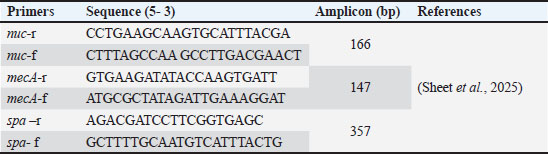
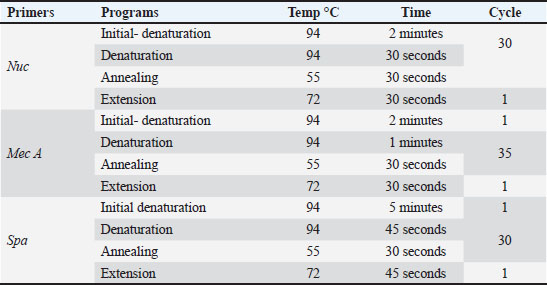
ABSTRACTBackground: Staphylococcus aureus (S. aureus) is an important zoonotic infection that causes diseases in chickens. Aim: The study aimed to isolate of MRSA from chickens that suffered from bumblefoot and perform molecular diagnosis using the mecA gene and detection of protein A using the spa gene. Methods: The samples were subjected to standard bacteriological examinations, including morphological and cultural characteristics, biochemical properties, and antibiotic sensitivity tests. Polymerase chain reaction (PCR) was done for the detection of S. aureus using the (nuc, mecA, and spa) genes. Results: The study showed that S. aureus formed 68/100 (68%) from chickens with bumble foot disease, while only 49 / 68 (72%) of the isolates were resistant to methicillin according to the disc diffusion test. The results of molecular detection showed that all tested isolates possessed (nuc, mecA, and spa) genes that gave amplicon products at (166 bp,147 bp, and 357 bp), respectively. Conclusion: The existence of MRSA in chicken samples comprises a threat to public health due to its potential transmission to humans and the environment. Keywords: Bumble foot, Chickens, Spa gene, MRSA. IntroductionBumble foot is a chronic infection of the plantar surface of the foot in chickens, usually occurring when bacteria penetrate the tissue through cuts or abrasions in the skin (Jacob et al., 2016). The inflammation may range from a very mild redness or abrasion to chronic, deep-seated abscesses. This condition is found on the plantar aspect of the feet. It looks like callus, feels hard, and occasionally affects both feet (Haidar et al., 2024). Skin is a potent initial element for protection against attacking bacterial pathogens (Hanon and AL-Khafajy, 2022). S. aureus is the most common pathogen in broiler chickens (Tabar et al., 2024) that causes many infections, such as subdermal abscesses, arthritis, and bumble foot or pod dermatitis (Szafraniec et al., 2022) Staphylococci are Gram-positive cocci, non-spore-forming (Krupa et al., 2014). Staphylococcus is considered normal flora on the skin; thus, it causes skin diseases and abscesses when predisposing factors are available, such as trauma, scratches, excessive dryness of feet in chickens, high weight, unhealthy conditions, and when chickens’ immunity is decreased (Song et al., 2024). S. aureus has several virulence agents that help the bacterium to avoid the immune system of the host, adhere to epithelial cell, and invade the host tissue, leading to sepsis (Taii et al., 2024). The Thermonuclease gene (nuc) is considered the brilliant standard goal for identifying S. aureus rapidly using PCR because of this action in breaking down the DNA and biofilm disarrangement (Pondit et al., 2018). The serious pathogenic Staphylococci that are responsible for infection in chickens and other poultry are methicillin- resistant S. aureus (MRSA) (Hanon and Al-Khafajy, 2022). It contains some resistance genes such as methicillin resistance A (mecA) and protein A (spa) (Abunna et al., 2022). Methicillin is a β-lactam derivative drug that has been described as treating S. aureus, which has been resistant to penicillin infections since 1959 (Otto, 2012). In 1960, the first infection of MRSA is recorded and established to be interceded by mecA gene (Harkins et al., 2017). Staphylococcal protein A (Spa) is an important anti-phagocytic factor; it links to the Fc piece of IgG, which prevents antibody-mediated immune reactions and prevents phagocytosis (El Bayomi et al., 2016). In addition, Spa A interacts with the Fab fragment of VH3 class immunoglobulins, leading to disrupted adaptive immunity (Abdulah and Al-Hejjaj, 2022). Protein A also participates in inflammation via stimulating TNFR1, causing inflammatory responses and tissue damage (Shakur and Aburesha, 2023; Rasheed, 2025). Many reports indicate the probability of transfer of MRSA bacteria from chicken via direct contact with infected chickens and droppings or through ingestion of the contaminated meat of chickens (Al-Hissen, 2005; Algammal et al., 2020; Abd El-Ghany, 2021). Given the importance of this bacterium to the chickens industry, causing economic losses represented by poor growth, low production, weight loss, and the possibility of transmission of S. aureus isolates from chicken to meat (Krupa et al., 2014), and due to the lack of a specialized molecular study on methicillin-resistant S. aureus isolated from cases of bumble foot in Mosul City, the study aimed to isolate MRSA from chickens that suffered from this disease and molecularly diagnose it using the standard mecA gene and detect staphylococcal protein A using the spa gene. Materials and MethodsSpecimens collectionOne hundred samples were taken from the feet of backyard chickens suffering from bumble foot from different regions of Mosul City for the period from September to October 2025. The swabs were transferred directly under cooled and sterile conditions to the microbiology lab in the College of Veterinary Medicine for microbiological examination. Isolation and identificationNutrient broth was used to inoculate the swabs at 37°C for 3 hours, then one loop full of culture was streaked on mannitol salt agar (MSA) for the mannitol-fermenting isolates. The isolated bacteria will be diagnosed according to bacterial morphological, cultural, and biochemical characters, which include catalase and coagulase. The tests were done according to Collee et al. (1996). Antibiotic susceptibility testAn antibiotic susceptibility test was done for S. aureus isolates according to the Kirby-Bauer method on Mueller-Hinton agar. Eight antibiotic discs, measured in micrograms (µg) and supplied by the Bioanalyses (Turkey) company were used, including Methicillin (10), Levofloxacin (5), Vancomycin (30), Oxacillin (5), Amoxicillin (30), Ceftazidime (30), Cephalexin (30), and Ciprofloxacin (10). The outcome was interpreted according to Clinical and Laboratory Standards Institute (2020). DNA extractionOnly phenotypically methicillin-resistant S. aureus isolates were subjected to molecular conformation and detection of nuc, mecA & spa genes. DNA extraction was performed by Add Prep Genomic DNA Extraction (Korea) according to the company instructions, and the DNA concentration was determined using Nanodrop (Nano Photometer N50/Germany). The DNA was stored at –800C (Sheet et al., 2025). Molecular detectionPCR test was used for 3 primers (nuc, mecA, and spa) of methicillin-resistant S. aureus. The molecular weight of the (nuc) gene was 166 bp, (mecA) gene was 147bp while the (spa) gene varied in molecular weight (Table 1). According to the instruction of the company (Biozym- Germany), 12.5 μl of 2× Taq Green Mix-Master (Promega Corporation, USA). Ten μM of forward primer (1 μl) and 1 μl of 10 μM of reverse primer, then 6.5 μl of DNeasy-free water from Promega Corporation (USA), and 4 μl of MRSA DNA templates. PCR conditions in the thermal cycler were initially denatured at 94°C for 5 minutes, followed by denaturation at 94°C for 30 sec, annealing at 55°C for 30 sec, and extension at 72°C for 45 sec (Table 2). Negative template controls (NTC) used contained all reagents (master mix, primers, and water) except the template DNA. Two percent (2%) of agarose gel (Peqlab, Germany) was used for gel electrophoresis, with a 100 bp ladder as a reference to analyze the resulting amplicons. Table 1. Primers of S. aureus.
Table 2. PCR programs of methicillin resistance S. aureus (MRSA).
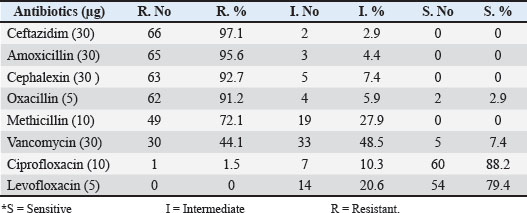
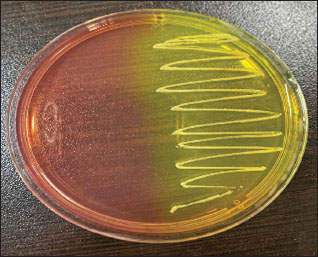
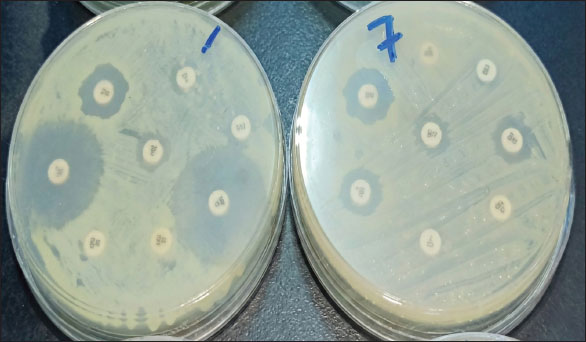
Ethical approvalAll samples were taken in accordance with permission granted by Institutional Animal Care Committee, University of Mosul, College of Veterinary Medicine, under authority number UM.VET.2025.093. ResultsAccording to morphological and cultural characteristics, S. aureus isolates formed 68/100 (68%) from chickens with bumble foot disease. However, only 49/68 (72%) of isolates were resistant to methicillin. All S. aureus isolates showed fermentation of mannitol on MSA medium, as shown in (Fig. 1). According to the antibiotic susceptibility test, S. aureus isolates showed high resistance to Ceftazidime, Amoxicillin, Cephalexin, Oxacillin, and Methicillin at percentages (97.1%, 95.6%, 92.7%, 91.2%, and 72.1%), respectively, followed by Vancomycin (44.1%). While the most isolates showed high sensitivity to Ciprofloxacin (88.2%), followed by Levofloxacin (79.4%), as shown in (Fig. 2) and (Table 3). Table 3. Antibiotics sensitivity test for S. aureus.
Fig. 1. Staphylococcus aureus on mannitol salt agar.
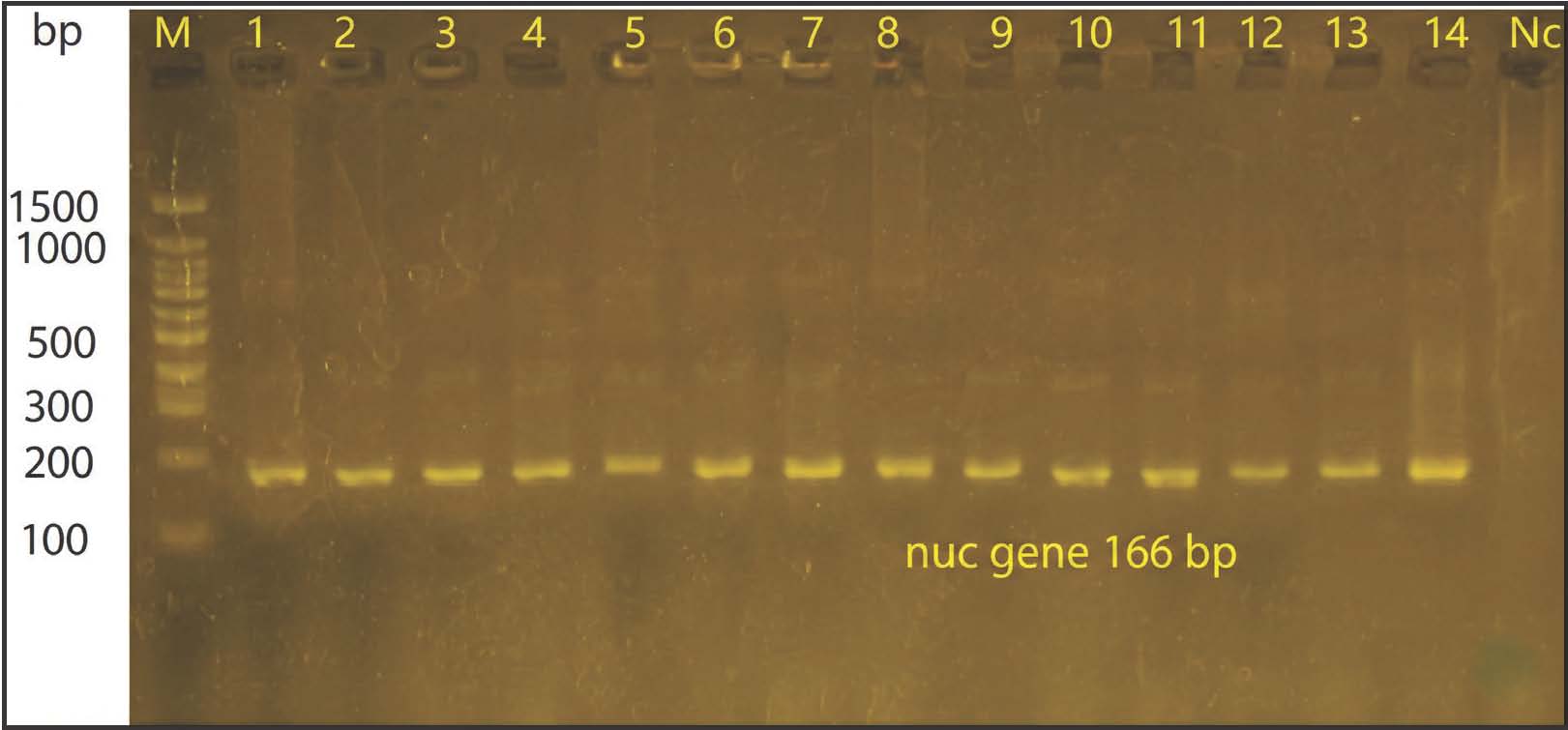
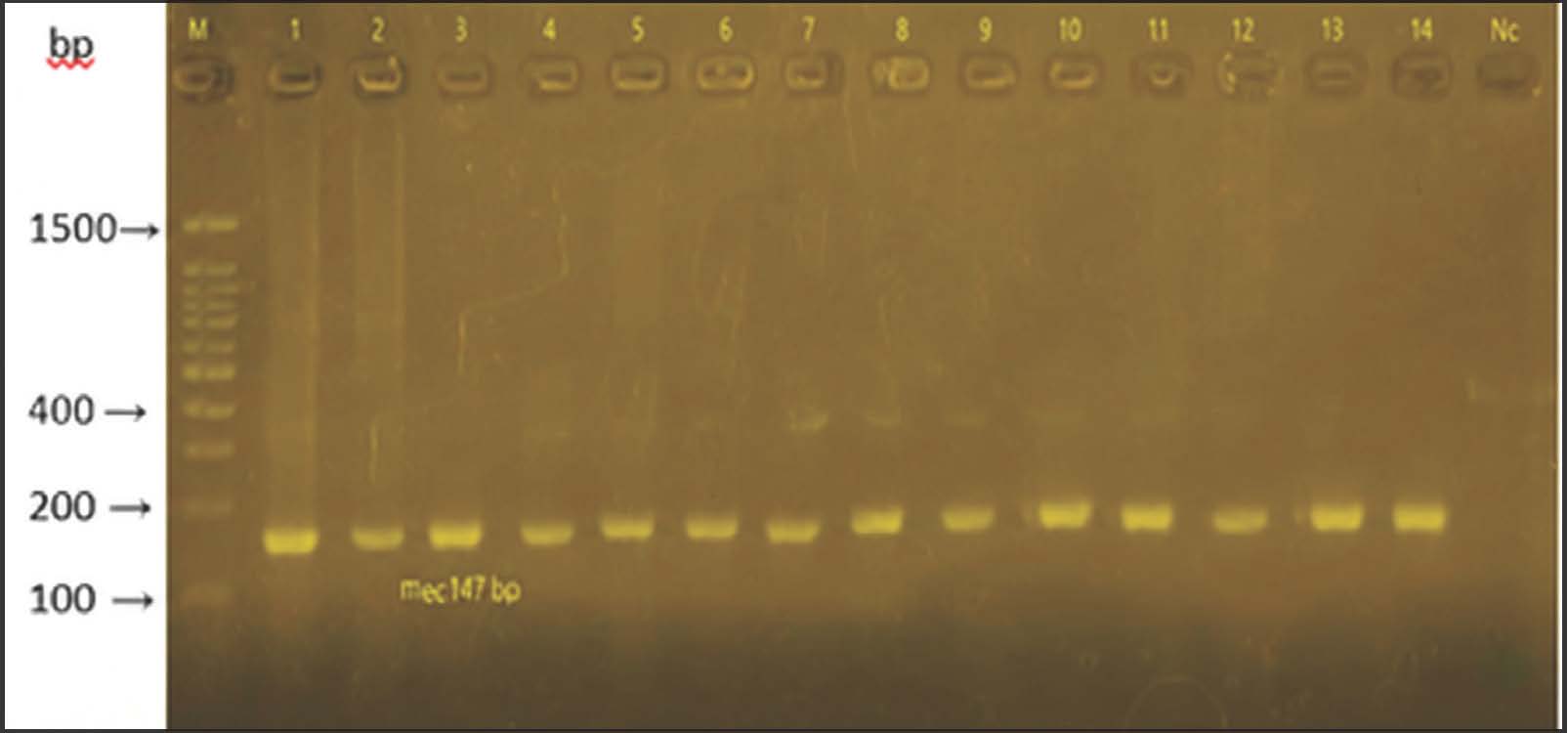
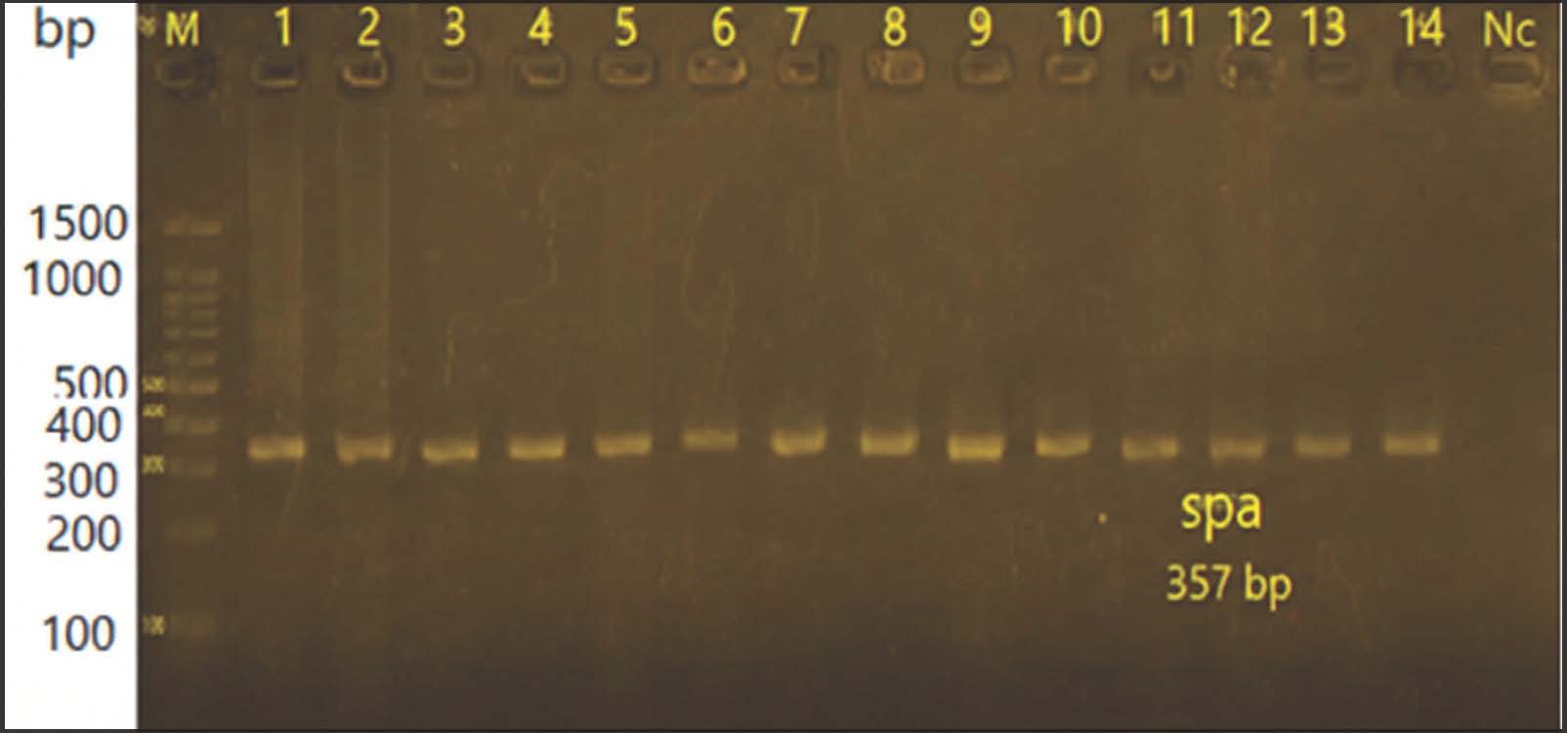
Fig. 2. Antibiotics sensitivity test for Staph aureus on Muller –Hinton agar. The results of molecular confirmation indicated that all isolates subjected to PCR were given a positive (166 bp, 147 bp, 357 bp) amplicon product for the (nuc, mecA, and spa) genes, respectively (Figs. 3–5).
Fig. 3. PCR test; amplicon products of nuc gene. Lane M; DNA molecular marker. Lane (1to14) positive tested isolates giving 166 bp by agarose gel electrophoresis.
Fig. 4. PCR products of mec gene. Lane M; DNA molecular marker. Lane (1 to14) positive tested isolates giving 147 bp by agarose gel electrophoresis.
Fig. 5. PCR products of spa gene. Lane M; DNA marker. Lane (1 to14) positive isolates giving 357 bp by agarose gel electrophoresis. DiscussionStaphylococcus aureus is regarded as a commensal bacterium of poultry (Abd El-Ghany, 2021). The current study showed that (68%) of isolates belonged to S. aureus. This results in consilience with Aldabbagh (2015) who recorded (75%) for this bacterium in Mosul city, and Algammal et al. (2020) who recorded (78.7%) from birds with bumble foot. While disagreeing with the results of (Hanon and AL-Khafajy, 2022), who recorded an isolate rate of (48%) from infected chickens with bumble foot in Wasit province, Iraq. Also, according to the antibiotic susceptibility test, our findings showed that (72%) of isolates belonged to methicillin-resistant S. aureus (MRSA). This result is close to (Saleh et al., 2021) (66.6℅) and disagrees with (Algammal et al., 2020; Hanon and AL-Khafajy, 2022), who recorded (28.57%, 16%) respectively. The difference in the rate of MRSA isolates could be associated with various reasons, the first of which is the immune status of chickens, age, and misuse of antibiotics in poultry feed rations. (Abd El Tawab et al., 2017; Okorie-Kanu et al., 2020). Molecular detection confirmation showed that all isolates subjected to PCR gave positive results on gel electrophoresis for the (nuc) gene. This gene is considered a specific gene used to identify Staphylococcus aureus that is found in isolates of bumble foot (Pondit et al., 2018). The (mecA) gene permits a bacterium to be resistant to various antimicrobial agents such as methicillin and penicillin antibiotics, indicating that the (mecA) gene is capable of shifting across horizontal gene transfer between different strains. Although previous studies indicate that MRSA isolated from chickens is typically thought to come from human sources (El Bayomi et al., 2016), live chickens can transmit MRSA to workers and veterinarians in close contact on poultry farms (Abolghait et al., 2020). Naturally, plasmids carried genes frequently coded to proteins, which defend the bacterium against some antibiotics (Saleh et al., 2021). Staphylococcus aureus isolates showed high resistance to many antibiotics, such as Ceftazidime, Amoxicillin, Cephalexin, Oxacillin, and Methicillin that may be the product of penicillin-binding protein and beta-lactamase. This results in agreement with the finding (Saleh et al., 2021). Although the antibiotic sensitivity test by the disk diffusion method consumes 18–24 hours for estimating the results. Nevertheless, the identification of resistance genes by PCR test remains the brilliant standard because infections by MRSA demand accuracy and rapidity in most bacteriological circumstances (Lee et al., 2022). The study showed that all MRSA strains were harboring the (spa) gene; this result is in agreement with (Shakur and Aburesha, 2023), who recorded the (spa) gene in MRSA strains at a percentage of (100%). Molecular assays such as (spa) typing that depend on polymorphisms in the X- region, which is characterized by having repeated tandem sequences, have played a potent role because the (spa) gene is important as a valuable epidemiological indicator for tracking the strains of S. aureus and recognizing their role in outbreaks (Gonzalez et al., 2015; Faraj et al., 2025). ConclusionThe current study indicated the importance of methicillin-resistant S. aureus in chickens with bumble foot due to its high prevalence and high resistance to antibiotics. Additionally, possessing the isolates the methicillin-resistant gene (mecA), indicating the seriousness of this bacterium for chickens. Furthermore, the presence of the (spa) gene, associated with bacterial virulence, in all methicillin-resistant isolates suggests the ability of these bacteria to cause disease, and constitute an alarm given the possibility of transmission of these bacteria to human. AcknowledgmentThe authors express their gratitude to the Department of Microbiology and the College of Veterinary Medicine at the University of Mosul for their support, follow-up, and facilitation of the research. FundingThe research did not receive any funding from any source. Authors’ contributionsThe research idea and experimental design were developed by researcher SYA. Samples collection, media preparation, microscopic and molecular examination were performed by EBG. SYA oversaw the work. The research draft was written by SYA and reviewed and finalized by both researchers. Conflict of interestAccording to the authors, there are no conflicts of interest. Data availabilityData from the results of this study are not publicly available due to sensitivity. However, they can be obtained from the corresponding author upon reasonable request. ReferencesAbd El Tawab, A.A., Hofy, F.I., Mohamed, S.R. and Amin, S.H. 2017. Characterization of methicillin-resistant Staphylococcus aureus isolated from chicken and human. Benha. Vet. Med. J. 32(1), 132–137; doi:10.21608/BVMJ.2017.31198 Abd El-ghany, W.A. 2021. Staphylococcus aureus in poultry, with special emphasis on methicillin-resistant strain infection: a comprehensive review from one health perspective. Int. J. One. Health. 7(2), 257–267. Abdulah, N.S. and Al-Hejjaj, M.Y. 2022. The relative of spa gene types, prevalence and antibiotic resistance in methicillin-resistant Staphylococcus aureus. Arch. Razi Inst. 77(6), 2423–2430; doi:10.22092/ARI.2022.358867.2320 Abolghait, S.K., Fathi, A.G., Youssef, F.M. and Algammal, A.M. 2020. Methicillin-resistant Staphylococcus aureus (MRSA) isolated from chicken meat and giblets often produces staphylococcal enterotoxin B (SEB) in non-refrigerated raw chicken livers. Int. J. Food. Microbiol. 328, 108669; doi:10.1016/j.ijfoodmicro.2020.108669 Abunna, F., Adugna, B., Tufa, T.B., Ayana, D., Gutema, F.D., Waktole, H., Regassa, F. and Abdi, R.D. 2022. Detection and antimicrobial resistance of Staphylococcus species from chicken, chicken litter and humans in Addis Ababa. Vet. Med. Int. 2022, 9084334; doi:10.1155/2022/9084334 Aldabbagh, S.Y. 2015. Isolation and identification of bacteria causing bumble foot disease in backyard chickens in Mosul city. Basrah J. Vet. Res. 14(2), 6–17. Algammal, A.M., Hetta, H.F., Elkelish, A., Alkhalifah, D.H., Hozzein, W.N., Batiha, G.E., Nahhas, N.E. and Mabro, M.A. 2020. Methicillin-resistant Staphylococcus aureus (MRSA): one health perspective approach to the bacterium epidemiology, virulence factors, antibiotic resistance and zoonotic impact. Infect. Drug. Resist. 13, 3255–3265; doi:10.2147/IDR.S272733 Al-Hissen, S.F. 2005. Study the incidence of bacterial and fungal contaminants in imported chicken femurs. Iraqi J. Vet. Med. 29(2), 21–25; doi:10.30539/iraqijvm.v29i2.849 Clinical and Laboratory Standards Institute. 2020. Performance standards for antimicrobial susceptibility testing. 30th ed. CLSI supplement M100. Wayne, PA: Clinical and Laboratory Standards Institute. Collee, J.G., Marmion, B.P., Fraser, A.C. and Simmons, A. 1996. Mackie and McCartney practical medical microbiology. 14th ed. New York: Churchill Livingstone, 245–258. El Bayomi, R.M., Ahmed, H.A., Awadallah, M.A., Mohsen, R.A., Abd El-ghafar, A.E. and Abdelrahman, M.A. 2016. Occurrence, virulence factors, antimicrobial resistance and genotyping of Staphylococcus aureus strains isolated from chicken products and humans. Vector. Borne. Zoonotic. Dis. 16, 157–164; doi:10.1089/vbz.2015.1891 Faraj, R., Ramadan, H., Bentum, K.E., Alkaraghulli, B., Woube, Y., Hassan, Z., Samuel, T., Adesiyun, A., Jackson, C.R. and Abebe, W. 2025. Antimicrobial resistance, virulence gene profiling and spa typing of Staphylococcus aureus isolated from retail chicken meat in Alabama, USA. Pathogens 14, 107. Gonzalez, C.D., Ledo, C., Giai, C., Garófalo, A. and Gómez, M.I. 2015. The Sbi protein contributes to Staphylococcus aureus inflammatory response during systemic infection. PLos One 10(6), 131879; doi:10.1371/journal.pone.0131879 Haidar, O.G., Mirafzal, A., Jan, A.A. and Ihsanullah, H. 2024. Prevalence of bumble foot disease in backyard chickens in Qarabagh District of Kabul, Afghanistan. Int. J. Biosci. 3(1), 27–32; doi:10.70436/nuijb.v3i01.154 Hanon, B.M. and Al-Khafajy, A.A. 2022. Methicillin resistant Staphylococcus aureus (MRSA) isolated from skin infections in poultry (bumble foot).REDVET 23(4). Revista electrónica de Veterinaria. Available via http://www.veterinaria.org- - ISSN 1695-7504 Harkins, C.P., Pichon, B., Doumith, M., Parkhill, J., Westh, H., Tomasz, A., De Lencastre, H., Bentley, S.D., Kearns, A.M. and Holden, M.T.G. 2017. Methicillin-resistant Staphylococcus aureus emerged long before the introduction of methicillin into clinical practice. Genome Biol. 18, 130; doi:10.1101/122408 Jacob, F.G., Baracho, M.D.S., Nääs, I.D.A., Souza, R. and Salgado, D.D. 2016. The use of infrared thermography in the identification of pododermatitis in broilers. Eng. Agríc. 36(2), 253–259. Krupa, P., Bystroń, J., Bania, J., Podkowik, M., Empel, J. and Mroczkowska, A. 2014. Genotypes and oxacillin resistance of Staphylococcus aureus from chicken and chicken meat in Poland. Poult. Sci. 93(12), 3179–3186; doi:10.3382/ps.2014-04321 Lee, G.Y., Lee, S.I., Kim, S.D., Park, J.H., Kim, G.B. and Yang, S.J. 2022. Clonal distribution and antimicrobial resistance of methicillin-susceptible and resistant Staphylococcus aureus strains isolated from broiler farms, slaughterhouses and retail chicken meat. Poult. Sci. 101, 102070; doi:10.1016/j.psj.2022.102070 Okorie-Kanu, O.J., Anyanwu, M.U., Ezenduka, E.V., Mgbeahuruike, A.C., Thapaliya, D., Gerbig, G., Ugwuijem, E.E., Okorie-Kanu, C.O., Agbowo, P., Olorunleke, S., Nwanta, J.A., Chah, K.F. and Smith, T.C. 2020. Molecular epidemiology, genetic diversity and antimicrobial resistance of Staphylococcus aureus isolated from chicken and pig carcasses, and carcass handlers. PLos One 15, 232913; doi:10.1371/journal.pone.0232913 Otto, M. 2012. MRSA virulence and spread. Cell. Microbiol. 14(10), 1513–1521; doi:10.1111/j.1462-5822.2012.01832.x Pondit, A., Haque, Z.F., Sabuj, A.A.M., Khan, M.S.R. and Saha, S. 2018. Characterization of Staphylococcus aureus isolated from chicken and quail eggshell. J. Adv. Vet. Anim. Res. 5(4), 466–471; doi:10.5455/javar.2018.e300 Rasheed, N.A. 2025. Heterogeneity of Staphylococcal protein A (spa) genotypes of methicillin-resistant Staphylococcus aureus strains isolated from Duhok City, Northern Iraq. IJID. Reg. 16, 100674; doi:10.1016/j.ijregi.2025.100674 Saleh, M.A., El Hady, A.M.M., Mohamed, S.R., El-Shafei, A.A. and El-Shafei, M. 2021. Genetic characterization of methicillin-resistant Staphylococcus aureus isolates of poultry and human origin. Egypt. J. Vet. Sci. (special issue). 61–68; doi: 10.21608/ejvs.2021.95036.1292 Shakur, J.A. and Aburesha, R.A. 2023. Investigating the presence of eap and spa genes of Staphylococcus aureus and their relation to antibiotic resistance. Iraqi. J. Hum. Pure. Appl. Sci. 37(3), 115–124; doi:10.30526/37.3.3436 Sheet, O.H., Al-Mahmood, Y.S., Taha, A.H. and Abdulmawjood, A.A. 2025. Detection of the spa type of methicillin-resistant Staphylococcus aureus isolated from local Basturma in Mosul city, Iraq. Iraqi. J. Vet. Sci. 38(4), 739–745; doi:10.33899/ijvs.2024.148254 Song, M., Tang, Q., Ding, Y., Tan, P., Zhang, Y., Wang, T., Zhou, C., Xu, S., Lyu, M., Bai, Y. and Ma, X. 2024. Staphylococcus aureus and biofilms: transmission, threats and promising strategies in animal husbandry. J. Anim. Sci. Biotechnol. 15, 44; doi:10.1186/s40104-024-01007-6 Szafraniec, G.M., Szeleszczuk, P. and Dolka, B. 2022. Review on skeletal disorders caused by Staphylococcus spp. in poultry. Vet. Q. 42(1), 21–40; doi:10.1080/01652176.2022.2033880 Tabar, M.M, Peighambari, S.M. and Bagheri, S. 2024. Lameness caused by Staphylococcus aureus in poultry: a review. J. Poultry Sci. Avian Dis. 2(1), 11–17; doi: 10.61838/kman.jpsad.2.1.3 Taii, N., Gburi, N. and Khalil, N. 2024. Detection of biofilm formation and antibiotics resistance of Staphylococcus spp. isolated from humans’ and birds’ oral cavities. Open. Vet. J. 14(9), 2215–2223; doi:10.5455/OVJ.2024.v14.i9.9 | ||
| How to Cite this Article |
| Pubmed Style Ghayib EB, Al-dabbagh SYA. Molecular diagnosis of methicillin-resistant Staphylococcus aureus in backyard chickens affected with bumble foot. Open Vet. J.. 2026; 16(5): 3060-3066. doi:10.5455/OVJ.2026.v16.i5.48 Web Style Ghayib EB, Al-dabbagh SYA. Molecular diagnosis of methicillin-resistant Staphylococcus aureus in backyard chickens affected with bumble foot. https://www.openveterinaryjournal.com/?mno=304398 [Access: June 26, 2026]. doi:10.5455/OVJ.2026.v16.i5.48 AMA (American Medical Association) Style Ghayib EB, Al-dabbagh SYA. Molecular diagnosis of methicillin-resistant Staphylococcus aureus in backyard chickens affected with bumble foot. Open Vet. J.. 2026; 16(5): 3060-3066. doi:10.5455/OVJ.2026.v16.i5.48 Vancouver/ICMJE Style Ghayib EB, Al-dabbagh SYA. Molecular diagnosis of methicillin-resistant Staphylococcus aureus in backyard chickens affected with bumble foot. Open Vet. J.. (2026), [cited June 26, 2026]; 16(5): 3060-3066. doi:10.5455/OVJ.2026.v16.i5.48 Harvard Style Ghayib, E. B. & Al-dabbagh, . S. Y. A. (2026) Molecular diagnosis of methicillin-resistant Staphylococcus aureus in backyard chickens affected with bumble foot. Open Vet. J., 16 (5), 3060-3066. doi:10.5455/OVJ.2026.v16.i5.48 Turabian Style Ghayib, Ezzalden B., and Sumaya Y. A. Al-dabbagh. 2026. Molecular diagnosis of methicillin-resistant Staphylococcus aureus in backyard chickens affected with bumble foot. Open Veterinary Journal, 16 (5), 3060-3066. doi:10.5455/OVJ.2026.v16.i5.48 Chicago Style Ghayib, Ezzalden B., and Sumaya Y. A. Al-dabbagh. "Molecular diagnosis of methicillin-resistant Staphylococcus aureus in backyard chickens affected with bumble foot." Open Veterinary Journal 16 (2026), 3060-3066. doi:10.5455/OVJ.2026.v16.i5.48 MLA (The Modern Language Association) Style Ghayib, Ezzalden B., and Sumaya Y. A. Al-dabbagh. "Molecular diagnosis of methicillin-resistant Staphylococcus aureus in backyard chickens affected with bumble foot." Open Veterinary Journal 16.5 (2026), 3060-3066. Print. doi:10.5455/OVJ.2026.v16.i5.48 APA (American Psychological Association) Style Ghayib, E. B. & Al-dabbagh, . S. Y. A. (2026) Molecular diagnosis of methicillin-resistant Staphylococcus aureus in backyard chickens affected with bumble foot. Open Veterinary Journal, 16 (5), 3060-3066. doi:10.5455/OVJ.2026.v16.i5.48 |


