



| Research Article | ||
Open Vet. J.. 2026; 16(5): 2803-2811 Open Veterinary Journal, (2026), Vol. 16(5): 2803-2811 Research Article Metabolic and reproductive responses to calcium propionate and 1,25-dihydroxyvitamin D3 in transition dairy cowsAshraf Farag Al-Saied El-Hawary, Abd El-Fadeel Abd El-Hafeez Gabr, Tarek Messllam Mahmoud Mahdy, Ashraf Ali Mehany, Al-Moataz Bellah Mahfouz Shaarawy, and Emad Fawzy Ali El-Maghraby*Animal Production Research Institute, Agricultural Research Center, Ministry of Agriculture, Giza, Egypt *Corresponding Author: Emad Fawzy Ali El-Maghraby. Animal Production Research Institute, Agricultural Research Center, Ministry of Agriculture, Giza, Egypt. Email: emadel_maghraby [at] yahoo.com Submitted: 18/12/2025 Revised: 31/03/2026 Accepted: 13/04/2026 Published: 31/05/2026 © 2025 Open Veterinary Journal
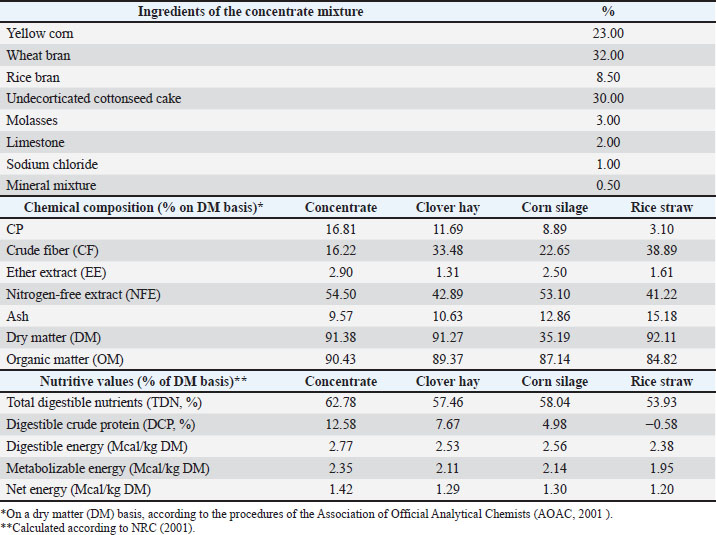
AbstractBackground: The transition period in dairy cows, covering approximately 3 weeks before and after calving, represents a physiologically demanding phase characterized by profound metabolic and endocrine adjustments that strongly influence subsequent health and fertility. Aim: This study aimed to evaluate the effects of oral calcium propionate (CP) and/or intramuscular 1,25-dihydroxyvitamin D3 (VitD3) supplementation on calving-related disorders, blood metabolites, and reproductive performance in Friesian dairy cows during this critical period. Methods: Forty multiparous cows were randomly assigned to four groups (n=10 each): control (no supplementation), CP (125 g twice weekly, orally), VitD3 (10,000 IU once weekly, intramuscularly), and a combined CP + VitD3 group. Supplements were administered for 4 weeks before and after parturition. Results: Compared with the control group, cows supplemented with CP and/or VitD3 exhibited a significant improvement in uterine involution rate, time of placental expulsion, and duration of lochial discharge. The combined CP + VitD3 treatment resulted in earlier placental separation, a shorter duration of uterine involution, and a lower incidence of postpartum disorders, such as dystocia, retained placenta, uterine prolapse, abnormal lochia, endometritis, hypocalcemia, and repeat breeding. Moreover, treated cows showed higher serum glucose, calcium, total protein, and immunoglobulin G concentrations, alongside lower cortisol, non-esterified fatty acids, and aspartate aminotransferase activities, indicating improved metabolic adaptation and hepatic function. Reproductive performance was markedly enhanced, as reflected by a shorter interval to first estrus, reduced days open, fewer services per conception, and a higher conception rate, particularly in cows receiving the combined treatment. Conclusion: In conclusion, concurrent supplementation with CP and VitD3 during the transition period effectively enhances metabolic stability, mitigates periparturient complications, and substantially improves reproductive efficiency in Friesian dairy cows. Keywords: 1,25-dihydroxyvitamin D3, Calcium propionate, Friesian cows, Metabolic profile, Reproductive performance. IntroductionThe transition period in dairy cows, which extends from 3 weeks before to 3 weeks after parturition, represents one of the most physiologically demanding phases in the lactation cycle. During this period, cows experience profound metabolic, endocrine, and immune adjustments required to support fetal growth, initiate lactation, and restore reproductive function (Goff and Horst, 1997; Herdt, 2000; Ingvartsen and Andersen, 2000). However, these changes often predispose cows to metabolic and reproductive disorders, such as hypocalcemia, ketosis, retained placenta, metritis, and delayed uterine involution, which can compromise overall health, milk yield, and fertility (Kara and C, 2013; Abdel-Latif et al., 2016; Abdelhamid et al., 2017). Calcium plays a central role in maintaining neuromuscular activity, smooth muscle contractility, and secretory functions. A decline in serum calcium concentration around calving can lead to uterine atony, dystocia, and retained fetal membranes, as well as impair immune responsiveness and metabolic homeostasis (Pehrson et al., 1998; Goff, 1999). Thus, effective calcium supplementation strategies are essential to support metabolic balance and reproductive performance during the periparturient period. Calcium propionate (CP) is a glycogenic compound that serves as both a source of calcium and a precursor for glucose synthesis via hepatic gluconeogenesis (El-Nagar et al., 2022; Zhang et al., 2025). Its oral supplementation during late gestation and early lactation has been shown to increase blood glucose and calcium concentrations, prevent ketosis and hypocalcemia, and enhance reproductive outcomes (Pehrson et al., 1998; Kara et al., 2009; Abdelhamid et al., 2017; Zhang et al., 2025). Vitamin D3, particularly its biologically active form 1,25-dihydroxyvitamin D3 (VitD3), regulates calcium absorption, bone metabolism, and immune and reproductive functions (Plum and DeLuca, 2010; Hafez, 2012; Mohammed et al., 2016). Supplementation with VitD3 has been associated with improved calcium utilization, better uterine contractility, and enhanced ovarian activity in dairy cows (Ward et al., 1971; Nelson et al., 2010; Hafez, 2012; Mohammed et al., 2016). However, limited research has examined the combined effects of CP and VitD3 supplementation during the transition period on reproductive efficiency, calving-related disorders, and metabolic indicators in dairy cows. Therefore, this study was designed to evaluate the individual and synergistic effects of oral CP and intramuscular VitD3 administration on blood metabolites, reproductive performance, and periparturient health in Friesian dairy cows. Materials and MethodsExperimental animals and their managementThis study was conducted on 40 multiparous Friesian dairy cows (parity 3–6), with an average body condition score of 3.15 ± 0.20, body weight of 600 ± 25 kg, and age ranging from 5 to 8 years. The experimental period covered the last 4 weeks of gestation and the first 4 weeks postpartum. All animals were clinically healthy, free from internal and external parasites, and maintained under uniform housing and feeding conditions at the Animal Production Research Institute, Agricultural Research Center, El-Gemmizah, Egypt. Cows were randomly assigned to four experimental groups (n=10 each) as follows: a control group (C) received no supplementation; a CP group was orally administered 125 g CP (Alpha Chemical Co., Egypt) twice weekly; a vitamin D3 group (VitD3) was injected intramuscularly once weekly with 10,000 IU of VitD3 (Devrol-S, Memphis Co., Egypt); and a combined group (CP + VitD3) received both treatments concurrently. Supplements were given for 4 weeks prepartum and continued for 4 weeks postpartum, representing the transition (periparturient) period. All cows were vaccinated according to the herd health program and maintained under strict hygienic management. Before calving, the animals were kept in open yards and moved to maternity pens at parturition. Each cow was individually fed a balanced ration made according to the National Research Council (NRC, 2001). The diet consisted of 60% pelleted concentrate, 10% clover hay, 15% rice straw, and 15% corn silage. Clean drinking water and mineral blocks were available ad libitum. Table 1 presents the composition and nutritive values of the experimental feedstuffs. Table 1. Ingredients, chemical composition, and nutritive values of the experimental feedstuffs.
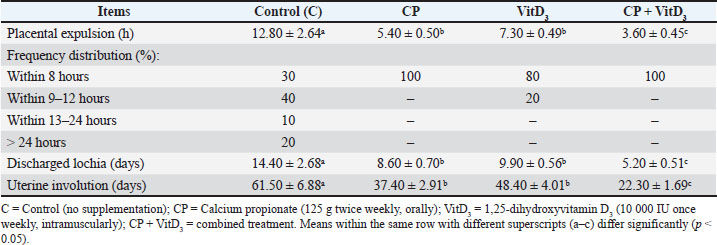
Postcalving reproductive performanceAfter calving, each cow was carefully monitored to record the time required for placental expulsion, the duration of lochial discharge until complete cessation, and the time taken for full uterine involution. Rectal palpation was performed twice weekly to assess uterine involution, evaluating cervical closure, uterine position, and horn symmetry. The first corpus luteum formation and the first postpartum estrus were determined through behavioral observation and rectal palpation according to Arthur et al. (2001). Artificial insemination was conducted at the first observed estrus, and rectal palpation was used to diagnose pregnancy 45 days post-insemination. Reproductive parameters, including the estrus period duration, days open (interval from calving to conception), service period, number of services per conception, conception rate (percentage of confirmed pregnant cows out of those inseminated), gestation length, and calving interval, were subsequently evaluated. Calving-related disordersAll cows were carefully observed throughout the periparturient period to detect any calving-related disorders, including dystocia, retained fetal membranes, uterine prolapse, abnormal lochial discharge, endometritis, hypocalcemia, and repeat breeding. Each case was recorded based on clinical signs and confirmed by veterinary examination according to standard procedures. The incidence of these disorders was calculated as the number of affected cows relative to the total number of cows in each group. Blood sampling and biochemical analysis of the samplesBlood samples were collected from the jugular vein at conception (fertile service) into plain tubes without anticoagulant. Samples were centrifuged at 3,000 rpm for 15 minutes, and serum was stored at −20°C until analysis. Serum total protein (TP), albumin (ALB), globulin (GLB), aspartate aminotransferase (AST), glucose, calcium, and non-esterified fatty acids (NEFA) were determined using commercial kits (Bio-Diagnostics Co., Egypt). Serum immunoglobulin G (IgG) was quantified by enzyme-linked immunosorbent assay, and cortisol was determined using a radioimmunoassay (Diagnostic Products Corporation, Los Angeles, CA). Statistical analysisData were analyzed using SAS software, version 9.1 (SAS Institute Inc., Cary, NC). One-way analysis of variance was applied to evaluate treatment effects, and mean differences were tested using Duncan’s multiple range test. Statistical significance was set at p < 0.05. Ethical approvalAll experimental procedures involving animals were conducted in accordance with the institutional guidelines for animal welfare and were approved by the Animal Care and Use Committee of the Animal Production Research Institute, Agriculture Research Center, Egypt. ResultsPlacental expulsion, lochia discharge, and uterine involutionThe data presented in Table 2 indicate that supplementation with CP and/or VitD3 during the transition period significantly shortened the duration of placental expulsion and lochial discharge compared with untreated cows. The combined CP + VitD3 treatment produced the most pronounced effect, yielding the shortest (p < 0.05) values, followed by the CP and VitD3 groups, whereas the control cows exhibited the longest durations (Table 2). Differences between CP and VitD3 alone were not statistically significant. Regarding the frequency distribution of placental expulsion time, all cows in the CP and CP + VitD3 groups (100%) expelled their fetal membranes within 8 hours postpartum, compared with 80% in the VitD3 group and only 30% among controls. Approximately 20% and 40% of VitD3-treated and control cows, respectively, expelled their placenta within 9–12 hours, while 10% and 20% of the control cows required 13–24 hours or more than 24 hours, respectively (Table 2). Similarly, the time required for complete uterine involution, which was assessed based on cervical closure, uterine positioning, and uterine horn symmetry, was significantly reduced in all groups compared with the control. Among the treatments, the combination of CP + VitD3 achieved the most rapid (p < 0.05) uterine involution, whereas the difference between CP and VitD3 alone remained nonsignificant (Table 2). Table 2. Placental expulsion, lochial discharge, and uterine involution in cows administered with CP and/or VitD3 during the transition period.
Cow reproductive metricsCows supplemented with CP + VitD3 exhibited markedly improved reproductive parameters compared with those of the other groups. Specifically, the combination treatment resulted in a shorter interval to the appearance of ovarian structures, earlier onset of first postpartum estrus, fewer services per conception, and a substantial reduction (p < 0.05) in days open and calving interval compared with both single treatments and controls (Table 3). The differences between CP and VitD3 alone were not statistically significant, although cows receiving CP exhibited a slightly better response. In contrast, untreated cows exhibited prolonged ovarian quiescence, delayed estrus onset, extended service periods, and the lowest conception rate (Table 3). Regarding conception rate distribution, all cows (100%) in the CP + VitD3 group conceived within 100 days postpartum, compared with 60% and 40% for CP and VitD3 alone, respectively, while none of the control cows conceived during this period. Between 101 and 150 days postpartum, the conception rates were 40% in CP-treated, 60% in VitD3-treated, and 10% in control cows. Most untreated animals (90%) conceived after 150 days, indicating delayed reproductive recovery in this group. Table 3. Reproductive metrics of cows administered with CP and/or VitD3 during the transition period.
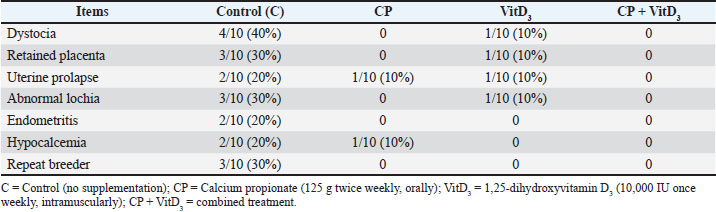
Calving-related disorders in cowsThe control group had the highest overall incidence of calving-related disorders, including dystocia (40%), retained placenta (30%), uterine prolapse (20%), abnormal lochia (30%), endometritis (20%), hypocalcemia (20%), and repeat breeding (30%) (Table 4). In contrast, cows treated individually with CP or VitD3 exhibited a marked reduction in these complications, whereas the combined CP + VitD3 treatment showed the lowest incidence, and no cases were observed within the experimental group. Specifically, supplementation with either CP or VitD3 alone reduced the prevalence of hypocalcemia, retained placenta, and uterine infections to 10%–20% of that recorded in control cows, while no occurrences were detected in the combined treatment group (Table 4). These findings clearly indicate that both treatments improved periparturient health, with the combination providing the most substantial protective effect against postpartum reproductive disorders. Table 4. Incidence of calving-related disorders in cows administered with CP and/or VitD3 during the transition period.
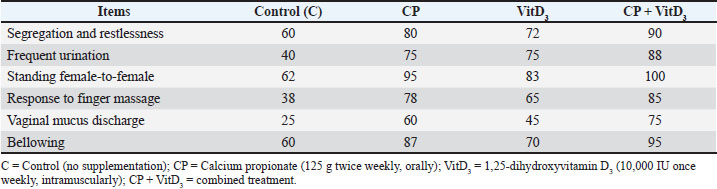
Estrus signs of the cowsData presented in Table 5 demonstrate that supplementation with CP and/or VitD3 during the transition period markedly improved the intensity and frequency of estrus signs compared with the control group. All treated cows displayed more pronounced estrous behavior, including increased restlessness, segregation, frequent urination, standing-to-be-mounted behavior, responsiveness to finger massage, vaginal mucous discharge, and bellowing. Among treatments, cows receiving the combined CP + VitD3 supplementation exhibited the highest expression of estrus signs, followed by the CP and VitD3 groups, whereas control cows showed the lowest behavioral expression. Specifically, 90%–100% of cows in the CP + VitD3 group displayed typical estrus manifestations, compared with 70%–95% in the CP group, 65%–83% in the VitD3 group, and only 25%–62% in controls. This pattern indicates that supplementation, particularly in combination, enhanced estrus detection and reproductive responsiveness postpartum. Table 5. Estrus signs (%) of cows administered with CP and/or VitD3 during the transition period.
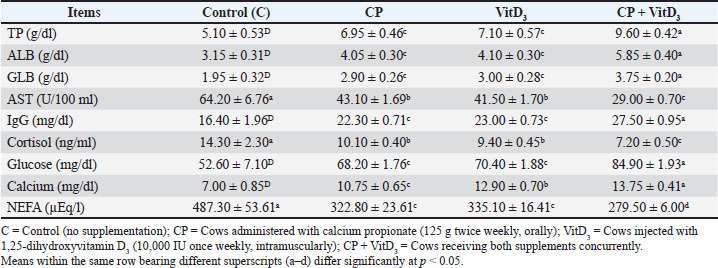
Blood metabolites and biochemical profilesCows receiving CP + VitD3 recorded the highest (p <0.05) levels of TP, ALB, GLB, IgG, glucose, and calcium, along with the lowest concentrations of AST, cortisol, and NEFA (Table 6). Individually, CP or VitD3 administration also enhanced these parameters compared with untreated cows, but the combined treatment showed a clear synergistic effect, indicating improved liver function, immune competence, and metabolic status in transition cows. The pronounced increase in TP, ALB, and GLB in the treated groups suggests enhanced hepatic synthetic capacity, while the elevated glucose and calcium concentrations reflect better energy and mineral homeostasis. Conversely, the reduction in serum cortisol and NEFA levels indicates stress attenuation and lipid mobilization, confirming improved metabolic adaptation to the transition period. Table 6. Blood serum components of cows administered with CP and/or VitD3 during the transition period.
DiscussionIn dairy cows, the transition period represents a physiologically demanding phase characterized by extensive metabolic, endocrine, and reproductive adaptations (Goff, 1999; Herdt, 2000; Ingvartsen and Andersen, 2000). Nutritional and metabolic interactions are key reproductive success determinants in dairy cows, as imbalances in energy or mineral status can disrupt ovarian function and delay conception (Butler, 2000). Calcium and energy metabolism disturbances during this stage may impair uterine contractility, delay uterine involution, and increase the risk of retained fetal membranes and other postpartum complications (Kara and C, 2013; Abdel-Latif et al., 2016; Abdelhamid et al., 2017). Maintaining calcium homeostasis and energy balance through targeted supplementation is essential for optimal uterine recovery and reproductive efficiency. In this study, supplementation with CP and/or VitD3 (VitD3) improved placental expulsion, uterine involution, and postpartum reproductive performance. These findings are consistent with those of Abdel-Latif et al. (2016) and Abdelhamid et al. (2017), who reported that CP supplementation shortened placental expulsion time and enhanced uterine recovery in buffalo cows. The beneficial effects observed in our study may be attributed to increased serum glucose and calcium concentrations, which enhance myometrial contractility and uterine tone. CP serves as both a glycogenic precursor and a calcium source, supporting smooth muscle function and preventing hypocalcemia-associated uterine atony (Pehrson et al., 1998; Kara et al., 2009). Similarly, Goff (1999) and Melendez and P (2006) noted that the oral administration of CP rapidly elevates plasma calcium levels, sustaining them for up to 60 hours postpartum and thereby reducing calving-related complications. Vitamin D₃ complements these effects by promoting intestinal calcium absorption, modulating immune function, and facilitating uterine muscle activity (Pehrson et al., 1998; Goff, 1999; Reinhardt et al., 1999; Melendez and P, 2006; Plum and DeLuca, 2010). Its biological activity is mediated primarily through its active metabolite, VitD₃, which regulates calcium homeostasis and modulates gene expression in target tissues (DeLuca, 2008). The synergistic improvement observed with CP + VitD₃ supplementation likely reflects enhanced metabolic efficiency, calcium utilization, and immune competence. Furthermore, the reduced cortisol levels in treated cows indicate lower physiological stress and improved immune responsiveness, supporting faster uterine clearance. Reproductive performance in dairy cows is closely related to metabolic stability. Negative energy balance, hypocalcemia, and elevated stress hormones can delay ovarian cyclicity and extend the calving-to-conception interval (Goff and Horst, 1997; Herdt, 2000; Melendez et al., 2003). Cows supplemented with CP and VitD3, particularly in combination, exhibited shorter intervals to first estrus, fewer services per conception, and higher conception rates. These findings are consistent with those of Abdel-Latif et al. (2016)and Abdelhamid et al. (2017), who reported improved ovarian activity and fertility following CP supplementation. The enhancement likely results from increased glucose availability and calcium-mediated stimulation of gonadotropin secretion. Similarly, Ward et al. (1971) and Mohammed et al. (2016) demonstrated that vitamin D3 improves fertility by regulating calcium metabolism and ovarian steroidogenesis. An accelerated rate of uterine involution is associated with earlier resumption of ovarian activity (Marteus et al., 2002), which in turn contributes to improved conception rates and overall reproductive efficiency (Thatcher et al., 2006; Wafa et al., 2020). The synergistic effect of CP + VitD3 may be attributed to the combined enhancement of metabolic and endocrine functions. Adequate glucose and calcium availability improve the release of gonadotropin-releasing hormone and luteinizing hormone, supporting normal follicular development and ovulation (Pehrson et al., 1998; Abd El-Kariem et al., 2004; Liu et al., 2010). These findings align with those of Endecott (2006); Zeedan Kh et al. (2016)and Wafa et al. (2020) who observed that improved energy status shortens days open and calving intervals, whereas negative energy balance predisposes to cystic ovaries and anovulation (Melendez et al., 2003; Peralta et al., 2011). The reduction in the average number of days open following AD₃E administration was expected because this treatment enhances immune competence, overall health status, and body metabolism in dairy cows (Bearden and Fuquay, 1997). Supplementation with CP and VitD3 also minimized the occurrence of postpartum complications, such as retained placenta, dystocia, and endometritis. These results corroborate the findings of Abdel-Latif et al. (2016) who found that CP supplementation reduced the incidence of reproductive disorders. Abdelhamid et al. (2017) further demonstrated that glycogenic precursors improve postpartum uterine health by elevating glucose and insulin concentrations, thereby supporting uterine contractility and placental separation. Similarly, Goff (2008) emphasized that calcium supplementation prevents hypocalcemia and associated disorders by restoring calcium equilibrium during early lactation. Vitamin D3 immunomodulatory function further contributes to reproductive health by enhancing innate immunity and reducing uterine inflammation (Nelson et al., 2010; Mohammed et al., 2016). Abdelhameed et al. (2009) also reported that multivitamin AD3E supplementation during late gestation reduced reproductive complications and improved fertility in dairy cows. The active form, VitD₃, enhances innate immune function, regulates inflammatory responses, and improves resistance to uterine infections during the postpartum period. Reduced inflammatory stress promotes faster uterine involution and improves the resumption of ovarian activity Nelson et al. (2010) demonstrated that vitamin D modulates immune responses in dairy cattle, whereas Eder and Grundmann (2022) and Khan et al. (2023) reported that vitamin D₃ enhances immune competence in periparturient cows, supporting reproductive recovery and overall health. Estrus expression in dairy cows depends on the metabolic and hormonal balance. Energy or mineral deficiencies suppress estrogen synthesis and estrus behavior (Herdt, 2000; Melendez and P, 2006; Kara and C, 2013). This study demonstrated that CP and VitD3 supplementation, particularly their combination, enhanced signs of estrus, such as restlessness, mounting behavior, and vaginal discharge. The improved glucose and calcium levels likely supported ovarian steroidogenesis and estrogen release, consistent with the observations of Abdelhamid et al. (2017) El-Hawary et al. (2020), and Likittrakulwong et al. (2022). These behaviors are reliable indicators of ovulatory readiness in dairy cows. The improved blood biochemical profile observed in treated cows, including higher TP, ALB, glucose, calcium, and IgG levels and lower NEFA, AST, and cortisol levels, reflects better hepatic and metabolic adaptation during the periparturient period. Supplementation with CP enhances hepatic gluconeogenesis and energy supply, while VitD3 improves calcium mobilization and immune efficiency (Hafez, 2012; Gabr et al., 2017; EL-Nagar et al., 2022). Reduced AST activity suggests diminished hepatic stress and improved liver function (Abdel-Latif et al., 2016; Abdelhamid et al., 2017). Similarly, elevated IgG concentrations indicate strengthened immunity, which is consistent with the findings of Likittrakulwong et al. (2022) and Ferdouse et al. (2024). The combined supplementation of CP and VitD₃ appears to exert a synergistic effect by simultaneously improving energy metabolism and calcium homeostasis. Adequate glucose supply reduces metabolic stress and supports endocrine function, whereas optimal calcium status enhances uterine contractility, neuromuscular activity, and immune competence. This integrated metabolic–endocrine interaction promotes faster uterine involution, earlier ovarian cyclicity resumption, and improved conception outcomes. Previous studies have similarly reported that improving both calcium and energy balance during the transition period significantly reduces postpartum disorders and enhances the fertility of dairy cows (Pehrson et al., 1998; Melendez et al., 2003; Thatcher et al., 2006). Despite the consistent and biologically meaningful responses observed in this study, the relatively small sample size should be considered when interpreting the results. Although the controlled experimental design enabled a clear evaluation of treatment effects, the limited number of animals per group may restrict the generalizability of the findings to broader dairy populations and varying management systems. Therefore, further large-scale, multiherd studies are warranted to confirm these outcomes’ reproducibility and practical applicability under diverse production conditions. While one-way ANOVA was suitable for the present balanced experimental design, future investigations employing mixed-effects models for repeated measures could enhance statistical robustness by accounting for individual animal variability and longitudinal responses over time. ConclusionCombined supplementation with CP and VitD3 during the transition period significantly improved metabolic balance, minimized calving-related disorders, and enhanced reproductive efficiency in Friesian cows. These results suggest that integrating both supplements offers a synergistic strategy for stabilizing calcium and energy metabolism in dairy herds, thereby promoting uterine recovery, immune competence, and overall fertility. AcknowledgmentsNone. Conflicts of interestThe authors have no conflicts of interest to declare. FundingThis research did not receive any specific grant from public, commercial, or not-for-profit funding agencies. Authors' contributionsAshraf Farag Al-Saied El-Hawary and Emad Fawzy Ali Elmaghraby designed the experiments, Abd El-Fadeel Abd El-Hafeez Gabr and Tarek Messllam Mahmoud Mahdy performed the experiments, Emad Fawzy Ali Elmaghraby wrote the first draft of the manuscript, Ashraf Ali Mehana and Al-Moataz Bellah Mahfouz Shaarawy provided assistance, and Ashraf Farag Al-Saied El-Hawary analyzed the data, revised, and edited the manuscript. Data availabilityThe data supporting the findings of this study are available from the corresponding author upon reasonable request. ReferencesAbd El-Kariem, M.A., El-Neanaey, M.H. and Mohamed, M.M. 2004. Post-partum blood composition and reproductive performance of high and low milk producing Friesian cows under Egyptian conditions. In Proceedings of 3rd International Conference Animal Production. Health Semi-Arid Areas, El-Arish, Egypt, pp 137–149. Abdelhameed, A.R., Ahmed, W.M., El-Ekhnawy, K.L. and El-Khadrawy, H.H. 2009. Strategy trials for prevention of retained fetal membranes in Friesian herd in Egypt. Glob. Vet. 3(1), 63–68. Abdelhamid, A.M., Ebraheam, S.E.A., Ismael, R.F.S. and El-Meligy, M.S.M.M. 2017. Effect of propylene glycol and calcium propionate on morphometric, productive, reproductive and metabolic parameters in Egyptian water-buffalo heifers. Int. J. Curr. Res. Biosci. Plant. Biol. 4(12), 35–59. Abdel-Latif, N.A., El-Gohary, E.S., Gabr, A.A., El-Hawary, A.F., Ahmed, S.A., Ebrahim, S.A. and Fathala, M.M. 2016. Impact of supplementing propylene glycol and calcium propionate to primiparous buffalo cows during late gestation and early lactation on reproductive performance and metabolic parameters. Alex. J. Vet. Sci. 51(1), 114–121. AOAC. 2001. Official Methods of Analysis. 17th ed. Gaithersburg, MD: AOAC International. Arthur, G.H., Noakes, D.E., Pearson, H. and Parkinson, T.J. 2001. Arthur’s veterinary reproduction and obstetrics, 8th ed. London, UK: W.B. Saunders, pp: 86–114. Bearden, H.J. and Fuquay, J.W. 1997. Applied animal reproduction, Butler, W.R. 2000. Nutritional interactions with reproductive performance in dairy cattle. Anim. Reprod. Sci. 60–61(61), 449–457. Deluca, H.F. 2008. Evolution of our understanding of vitamin D. Nutr. Rev. 66(Suppl 2), S73–S87. Eder, K. and Grundmann, S.M. 2022. Vitamin D in dairy cows: metabolism, status and functions in the immune system. Arch. Anim. Nutr. 76, 1–33. El-Hawary, A.F.A., El-Kishk, M.A.M. and Abou-Aiana, R.M. 2020. Prevention of retention of placenta in lactating Friesian cows with dystocia and its relation to productive and reproductive efficiency and blood constituents. J. Anim. Poult. Prod. Mansoura Univ. 11(9), 339–347. El-Nagar, H.A., Gabr, S.A., Atia, S.E. and El-Fiky, M.A. 2022. Blood metabolic parameters and body weight of replacement Friesian heifers treated with different energy sources. Egypt. J. Nutr. Feeds. 25(2), 169–180. Endecott, R.L. 2006. Nutrient partitioning in ruminants: mechanisms and manipulation of acetate and glucose metabolism. Ph. D. Thesis, New Mexico State University, Las Cruces, NM. Ferdouse, S., Hossain, S., Talukder, R.M.D., Lovelu, A., Rahman, N. and Nath, S.K. 2024. Effects of dietary vitamins A, D3, E, and garlic on heat detection, pregnancy rate, and serum profile in anestrus dairy cows. Vet. Anim. Sci. 26, 1–5. Gabr, A.A.A., Ebrahim, S.A., El-Hawary, A.F.A., Fathala, M.M., El-Gohary, E.S.H., Ahmed, S.E.M. and Abdel-Latif, A.M. 2017. Upgrading milk productivity of primiparous buffaloes using glycogenic precursors. Zagazig Vet. J. 45(2), 92–103. Goff, J.P. 1999. Treatment of calcium, phosphorus and magnesium balance disorders. Vet. Clin. North. Am. Food. Anim. Pract. 15, 619–639. Goff, J.P. 2008. Monitoring, prevention and treatment of milk fever and subclinical hypocalcemia in dairy cows. Vet. J. 176, 50–57. Goff, J.P. and Horst, R.L. 1997. Physiological changes at parturition and their relationship to metabolic disorders. J. Dairy Sci. 80, 1260–1268. Hafez, Y.M. 2012. Enhance milk production in periparturient buffalo fed protected fat with and without vitamin AD3E treatment. Egypt. J. Anim. Prod. 49(3), 249–256. Herdt, T.H. 2000. Ruminant adaptation to negative energy balance: influence on the etiology of ketosis and fatty liver. Vet. Clinics. North. Amer. Food. Anim. Pract. 15, 215–230. Ingvartsen, K.L. and Andersen, J.B. 2000. Integration of metabolism and intake regulation in periparturient animals. J. Dairy. Sci. 83, 1573–1597. Kara, C., Orman, A., Udum, D., Yavuz, H.M. and Kovanlikaya, A. 2009. Effects of calcium propionate applications in the first week postpartum of dairy cows. Ital. J. Anim. Sci. 8, 259–270. Kara, C. 2013. Physiological and metabolic changes during the transition period and the use of calcium propionate in periparturient cows. J. Biol. Environ. Sci. 7(17), 9–17. Khan, M.Z., Huang, B., Kou, X., Chen, Y., Liang, H., Ullah, Q., Khan, I.M., Khan, A., Chai, W. and Wang, C. 2023. Enhancing bovine immune, antioxidant and anti-inflammatory responses with vitamins, rumen-protected amino acids, and trace minerals to prevent periparturient mastitis. Front. Immunol. 14, 1290044. Likittrakulwong, W., Poolprasert, P., Hanthongkul, W. and Roytrakul, S. 2022. Effects of IM injections of vitamins A, D3, E and C on fertility, immunity and proteomic profile in dairy cows during early gestation. BioTech 11(2), 20. Liu, Q., Wang, C., Yang, W.Z., Guo, G., Yang, X.M., He, D.C., Dong, K.H. and Huang, Y.X. 2010. Effects of calcium propionate on lactation performance and blood metabolites in early lactation cows. J. Anim. Physiol. Anim. Nutr. 94, 605–614. Marteus, L., Lopes, D.A., Costa, L., Bernardino, F. and Silva, J. 2002. Influence of puerperal uterine infection on uterine involution and postpartum ovarian activity. Reprod. Domest. Anim. 37, 31–35. Melendez, P., Donovan, G.A., Risco, C.A., Littell, R. and Goff, J.P. 2003. Effect of calcium-energy supplements during transition period on calving disorders and fertility. Theriogenology 60, 843–854. Melendez, P. 2006. Nutritional management of transition period to optimize fertility in dairy cattle. In Proceedings of 3rd Florida & Georgia Dairy Road Show Conference, Tifton, GA, pp 1–50. Mohammed, H.A., Toma, F.B., Kamil, D.Q. and Dabagh, A.S.A.L. 2016. Effect of vitamin AD3E during pregnancy and parturition on blood parameters of dairy cattle. Int. J. Adv. Res. Biol. Sci. 3, 227–231. Nelson, C.D., Reinhardt, T.A., Thacker, T.C., Beitz, D.C. and Lippolis, J.D. 2010. Modulation of the bovine innate immune response by production of 1alpha,25-dihydroxyvitamin D(3) in bovine monocytes. J. Dairy. Sci. 93, 1041–1049. NRC. 2001. Nutrient requirements of dairy cattle. Washington, DC: National Academy Press. Pehrson, B., Svensson, C. and Jonsson, M. 1998. Effectiveness of calcium propionate vs calcium chloride for prevention of parturient paresis. J. Dairy Sci. 81, 2011–2016. Peralta, O.A., Monardes, D., Duchens, M., Moraga, L. and Nebel, R.L. 2011. Calcium propionate–propylene glycol drenching or trace minerals in transition cows. Arch. Med. Vet. 43, 65–71. Plum, L.A. and DeLuca, H.F. 2010. Vitamin D: disease associations and therapeutic potential. Nat. Rev. Drug Discov. 9, 941–955. Reinhardt, T.A., Stabel, J.R. and Goff, J.P. 1999. 1,25-dihydroxyvitamin D3 enhances milk antibody titers to E. coli J5 vaccine. J. Dairy Sci. 82, 1904–1909. Thatcher, W.W., Bilby, T.R., Bartolome, J.A., Silvestre, F., Staples, C.R. and Santos, J.E.P. 2006. Strategies for improving fertility in the modern dairy cow. Theriogenology 65, 30–40. Wafa, W.M., Farag, M.A. and Elkisk, M.A. 2020. Productive and reproductive performance of primiparous Friesian cows treated with yeast culture. J. Anim. Poult. Prod. Mansoura. Univ. 11(9), 331–337. Ward, G., Marion, G.B., Campbell, C.W. and Dunham, J.R. 1971. Influence of calcium intake and vitamin D supplementation on reproductive performance of dairy cows. J. Dairy Sci. 54, 204–206. Zeedan Kh, I.I., Abdel-Latif, M.A., El-Bltagy, E.A., Weld Abd-elkader, S.I., El-Giziry, A.A. and Ghoniem, A.H. 2016. Effect of dietary dry fat on productive and reproductive performance of Egyptian lactating buffaloes. Egypt. J. Nutr. Feeds. 19(3), 399–413. Zhang, F., Tang, X. and Xiong, B. 2025. Optimal calcium propionate supplementation in early lactation dairy cows. Animals 15(20), 2995. | ||
| How to Cite this Article |
| Pubmed Style El-hawary AFA, Gabr AEAE, Mahdy TMM, Mehany AA, Shaarawy ABM, El-maghraby EFA. Metabolic and reproductive responses to calcium propionate and 1,25-dihydroxyvitamin D3 in transition dairy cows. Open Vet. J.. 2026; 16(5): 2803-2811. doi:10.5455/OVJ.2026.v16.i5.22 Web Style El-hawary AFA, Gabr AEAE, Mahdy TMM, Mehany AA, Shaarawy ABM, El-maghraby EFA. Metabolic and reproductive responses to calcium propionate and 1,25-dihydroxyvitamin D3 in transition dairy cows. https://www.openveterinaryjournal.com/?mno=303635 [Access: June 26, 2026]. doi:10.5455/OVJ.2026.v16.i5.22 AMA (American Medical Association) Style El-hawary AFA, Gabr AEAE, Mahdy TMM, Mehany AA, Shaarawy ABM, El-maghraby EFA. Metabolic and reproductive responses to calcium propionate and 1,25-dihydroxyvitamin D3 in transition dairy cows. Open Vet. J.. 2026; 16(5): 2803-2811. doi:10.5455/OVJ.2026.v16.i5.22 Vancouver/ICMJE Style El-hawary AFA, Gabr AEAE, Mahdy TMM, Mehany AA, Shaarawy ABM, El-maghraby EFA. Metabolic and reproductive responses to calcium propionate and 1,25-dihydroxyvitamin D3 in transition dairy cows. Open Vet. J.. (2026), [cited June 26, 2026]; 16(5): 2803-2811. doi:10.5455/OVJ.2026.v16.i5.22 Harvard Style El-hawary, A. F. A., Gabr, . A. E. A. E., Mahdy, . T. M. M., Mehany, . A. A., Shaarawy, . A. B. M. & El-maghraby, . E. F. A. (2026) Metabolic and reproductive responses to calcium propionate and 1,25-dihydroxyvitamin D3 in transition dairy cows. Open Vet. J., 16 (5), 2803-2811. doi:10.5455/OVJ.2026.v16.i5.22 Turabian Style El-hawary, Ashraf Farag Al-saied, Abd El-fadeel Abd El-hafeez Gabr, Tarek Messllam Mahmoud Mahdy, Ashraf Ali Mehany, Al-moataz Bellah Mahfouz Shaarawy, and Emad Fawzy Ali El-maghraby. 2026. Metabolic and reproductive responses to calcium propionate and 1,25-dihydroxyvitamin D3 in transition dairy cows. Open Veterinary Journal, 16 (5), 2803-2811. doi:10.5455/OVJ.2026.v16.i5.22 Chicago Style El-hawary, Ashraf Farag Al-saied, Abd El-fadeel Abd El-hafeez Gabr, Tarek Messllam Mahmoud Mahdy, Ashraf Ali Mehany, Al-moataz Bellah Mahfouz Shaarawy, and Emad Fawzy Ali El-maghraby. "Metabolic and reproductive responses to calcium propionate and 1,25-dihydroxyvitamin D3 in transition dairy cows." Open Veterinary Journal 16 (2026), 2803-2811. doi:10.5455/OVJ.2026.v16.i5.22 MLA (The Modern Language Association) Style El-hawary, Ashraf Farag Al-saied, Abd El-fadeel Abd El-hafeez Gabr, Tarek Messllam Mahmoud Mahdy, Ashraf Ali Mehany, Al-moataz Bellah Mahfouz Shaarawy, and Emad Fawzy Ali El-maghraby. "Metabolic and reproductive responses to calcium propionate and 1,25-dihydroxyvitamin D3 in transition dairy cows." Open Veterinary Journal 16.5 (2026), 2803-2811. Print. doi:10.5455/OVJ.2026.v16.i5.22 APA (American Psychological Association) Style El-hawary, A. F. A., Gabr, . A. E. A. E., Mahdy, . T. M. M., Mehany, . A. A., Shaarawy, . A. B. M. & El-maghraby, . E. F. A. (2026) Metabolic and reproductive responses to calcium propionate and 1,25-dihydroxyvitamin D3 in transition dairy cows. Open Veterinary Journal, 16 (5), 2803-2811. doi:10.5455/OVJ.2026.v16.i5.22 |


