Open Veterinary Journal, (2026), Vol. 16(5): 3264-3273
Short Communication
10.5455/OVJ.2026.v16.i5.66
Influence of Lactobacillus acidophilus D2/CSL as a dietary supplement on faecal parameters in rabbits
Elisa Martello1, Muhammad Irfan Malik2, Corrado Biolatti3, Francesca Perondi4*,
Ilaria Biasato5, and Maria Teresa Capucchio5,
1Centre for Evidence Based Healthcare, School of Medicine, University of Nottingham, Nottingham, UK
2Department of Veterinary Sciences, University of Turin, Turin, Italy
3Independent Researcher, Baar, Switzerland
4Department of Veterinary Science, University of Pisa, San Piero a Grado, Pisa, Italy
5Department of Agricultural, Forest and Food Sciences, University of Turin, Grugliasco, Italy
*Corresponding Author: Francesca Perondi. Department of Veterinary Science, University of Pisa, San Piero a Grado, Pisa, Italy. Email: f.perondi87 [at] gmail.com
Submitted: 09/12/2025 Revised: 04/04/2026 Accepted: 15/04/2026 Published: 31/05/2026
© 2025 Open Veterinary Journal
This is an Open Access article distributed under the terms of the Creative Commons Attribution-Non Commercial-No Derivatives License (http://creativecommons.org/licenses/by-nc-nd/4.0/), which permits non-commercial re-use, distribution, and reproduction in any medium, provided the original work is properly cited, and is not altered, transformed, or built upon in any way.
ABSTRACT
Background: The quality of meat, short life cycles, prolific nature, and efficient feed utilization make rabbits an interesting farm animal and an emerging business entity. Intensive farming still poses many types of stress that can lead to multifactorial gastrointestinal syndrome. The ban on antibiotics and the need for sustainable solutions make probiotic supplementation a possible strategy to improve rabbit growth performance.
Aim: This study aimed to characterize the effect of the probiotic in rabbits by measuring fecal parameters, including weight, dry matter, pH, and consistency, to confirm their beneficial use.
Methods: To perform a multicentric study, three trials were organized, including 30 animals/trial, and were randomly allocated into two groups: a TRT, with the administration of an oral paste containing Lactobacillus acidophilus, and a control group (CTR). Fecal weight, dry matter, pH, and consistency were recorded weekly.
Results: Significant increases in fecal weight were observed in the CTR and TRT groups across the 45-day study period (p < 0.0001). Unlike the CTR group, the TRT group exhibited a consistent and significant decrease in fecal pH and an increase in fecal dry matter and fecal hardness throughout the study period (p < 0.0001).
Conclusion: Our findings suggest that L. acidophilus supplementation improved fecal consistency and fecal dry matter and reduced fecal pH, potentially improving the caecotrophy behavior with a beneficial effect on nutrient digestibility.
Keywords: Lactobacillus, Fecal parameters, Probiotic, Rabbits.
Introduction
Due to ideal meat production, which is characterized by high protein, low fat, cholesterol, and sodium contents (Dalle Zotte and Szendrő, 2011), short life cycles, and high fecundity, rabbit is considered as one of the most interesting production animals. Additionally, rabbits are highly efficient in feed utilization (2–2.3 on high-grain diets and 3–3.8 on high-forage, grain-free diets) (Lebas et al., 1997; Cullere and Dalle Zotte, 2018). Rabbit farming is gaining popularity and emerging as a promising business in developing countries due to its unique meat qualities (Wu, 2024). Despite these positive traits, intensive farming exposes rabbits to various stressors (Mancini and Paci, 2021) that predispose them to parasitic (i.e., Coccidia spp) and bacterial infections, such as Clostridia spp. and enteropathogenic Escherichia coli, which contribute to multifactorial gastrointestinal syndromes (Marlier et al., 2006). To cure these diseases, the routine use of antibiotics in livestock farming has raised concerns about antimicrobial resistance (AMR) and its potential impact on human health. In response, regulatory measures have been implemented to restrict or ban the use of non-therapeutic antibiotics in farm animals. Probiotics have emerged as a promising alternative to antibiotics in farm animals. These live microorganisms confer health benefits to the host by enhancing gut health, improving nutrient absorption, and improving the immune status. Probiotics can effectively replace in-feed antibiotics, leading to improved growth performance, meat quality, and disease resistance (Mancini and Paci, 2021; Yaqoob et al., 2022). Additionally, the use of probiotics in livestock farming may aid in combating AMR (Leistikow et al., 2022). By reducing antibiotic dependence, they can mitigate the spread of AMR within animal populations and the environment. However, the efficacy of probiotics can vary based on factors such as strain selection, dosage, and animal species. Therefore, further research is necessary to optimize probiotic applications and fully understand their role in addressing AMR challenges (Leistikow et al., 2022).
Lactobacillus acidophilus is the most extensively studied probiotic in farm animals (Corcionivoschi et al., 2010). Lactobacillus acidophilus is a diverse group of gram-positive, nonsporulating, catalase-negative microorganisms (Bull et al., 2013). Lactobacillus acidophilus is highly active in lactic acid production as the major metabolic end-product of carbohydrate fermentation and short-chain fatty acids, consequently decreasing the intestinal pH and creating a favorable microenvironment for the proliferation of beneficial bacteria (Gadde et al., 2017). Many probiotics has already been tested specifically in rabbits such as L. acidophilus (Phuoc and Jamikorn, 2017) , L. casei (Shen et al., 2020), L. plantarum (El-Shafei et al., 2019), a combination of Bacillus subtilis and L. acidophilus (Phuoc and Jamikorn, 2017), a combination of L. acidophilus and Lactococcus lactis (Bhatt et al., 2017). However, limited data exist on the effects of L acidophilus supplementation on rabbit fecal pH, consistency, and dry matter content. Given the caecotrophic nature of rabbits, these fecal parameters are crucial for optimal growth, gut health, and effective caecotrophy.
A previous study by Colombino et al. (2022)on growing rabbits showed that supplementing their diet with L. acidophilus D2/CSL (1 × 10⁹ CFU/kg feed/day) reduced mortality rates without significantly affecting feed intake, biochemical parameters, gut histomorphology, cecal pH, microbiota composition, or short-chain fatty acid (SCFA) levels. Some rabbits receiving the probiotic showed an improved BCS, indicating better health due to the absence of disease. In addition, the rabbits revealed increased alpha-1 globulin levels in the treated group, suggesting an enhanced immune response. Overall, supplementation improved health and immune status, making it a potentially valuable strategy for both pet and commercial rabbit husbandry. This probiotic supplementation may serve as a valuable strategy in rabbit husbandry by potentially reducing the risk of disease development and enhancing overall well-being (Colombino et al., 2022).
This manuscript represents a complementary analysis of fecal parameters derived from the trial previously described by Colombino et al. (2022). The specific scientific objective of this study was to evaluate the influence of the probiotic exclusively on fecal parameters, including weight, dry matter, pH, and consistency, which were not investigated in the earlier publication. These data are essential for defining the product’s impact on intestinal homeostasis and digestive stability in rabbits, thereby providing a scientific basis for its use as a functional alternative to antimicrobials.
Materials and Methods
Animals and diets
The experimental design of this study was previously reported by Colombino et al. (2022). To give a brief summary, three trials were performed, including 30 animals each (15 males and 15 females) to adhere to the EFSA guidelines for registering additives (EFSA, 2018). Two trials were performed in the experimental facility of the University of Turin (Italy) and one in a rabbit farm (Cuneo province, Italy).
In each trial, the animals were randomly allocated into two groups: a probiotic group (TRT) receiving an oral paste containing L. acidophilus D2/CSL (CECT 4529) at the recommended dosage of 1 × 10⁹ cfu/kg of feed once a day and a control group (CTR) receiving a placebo oral paste (Maltodextrin) as reported in Colombino et al. (2022). The oral paste preparation and its transfer in the syringes used for the product administration during the study have already been described in a previous study.
The trial lasted for 45 days with one week of adaptation period before starting the supplement/placebo administration.
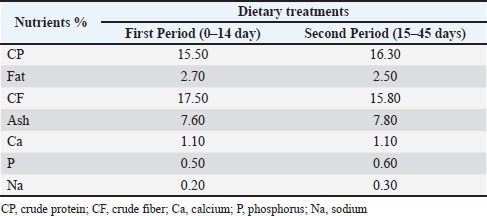
Rabbits were fed with two pelleted diets, one in the first period (days 0–14) and the other in the second period (days 15–45). Both diets (Mangimi Monge, Torre San Giorgio, CN, Italy) were based on similar ingredients (wheat bran, sunflower seed extraction meal, dried beet pulp, alfa-alfa meal, soy husks, sugar cane molasses, and soy oil added with a mineral–vitamin premix and coccidiostats). Table 1 lists the analytical components of both diets. Both water and feed were provided ad libitum.
Table 1. Analytical components of feeds reported on the labeling of rabbits.
The rabbits were randomly assigned to individual cages, each equipped with separate drinkers and feeders. The facilities were equipped with automated heating and lighting systems that maintained a stable temperature of 22 °C and operated on a lighting schedule of 16 hours of light and 8 hours of darkness.
Data collection
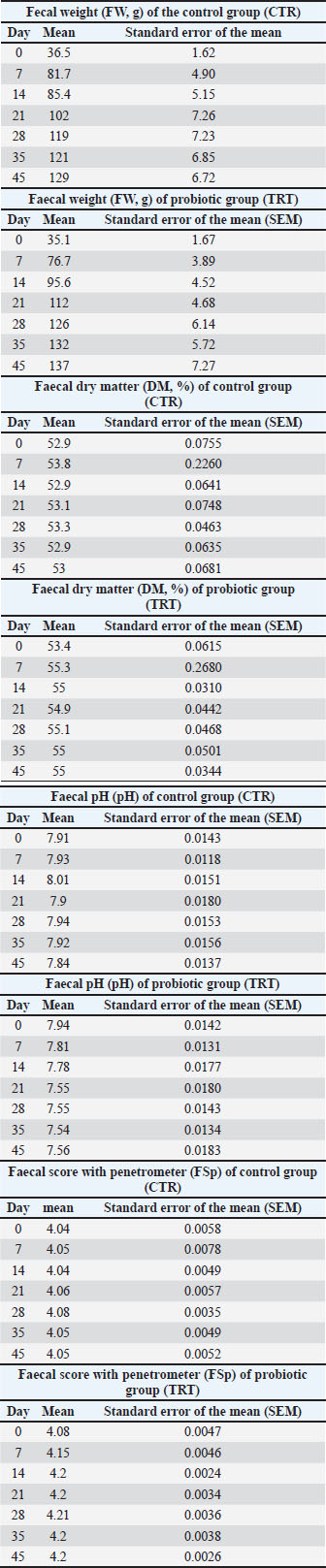
Health status, clinical illness (such as diarrhea, weight changes, or hair alterations), and mortality were monitored daily by a trained veterinarian throughout the trials. Any changes were promptly reported to the research group. Productive parameters were described in a previous study (Colombino et al., 2022). Here, the attention was focused on four fecal parameters (fecal weight, FW; fecal dry matter, DM; fecal pH, and fecal score with penetrometer, FSp), recorded on days 0, 7, 14, 21, 28, 35, and 45.
The fecal materials were collected under each cage for 24 hours. The weight of the total fecal materials was recorded, and the samples were preserved for DM analysis. Specifically, 1–20 g of fresh stool sample was weighed, dried in an oven at 108 °C ± 2 °C for 24 hours, and reweighed immediately to determine the percentage of DM. To measure the fecal pH, feces were diluted 1:10 with quarter-strength Ringer solution and mixed in a beaker until homogeneous; pH was determined using a portable pH meter (Crison Instruments, S.A., Alella, Spain) (Du Toit et al., 1998).
The fecal hardness (Fsp) in kg/cm2 was performed on fresh stool using a Penetrometer 53220 FTA (GUSS Manufacturing, PTY Ltd, South Africa) following the technique described by Davies et al. (1986). The amount of stool used for each analysis was at least 40–50 g, depending on the type and shape of the stool. Fecal hardness was defined as the mean of 3 measurements. The final value was converted to the FSp using a validated scale (Colombino et al., 2022).
Statistical analysis
All statistical analyses were performed using R (version 4.4.1). Two rabbits, one from the test group and one from the control group, were excluded because of incomplete data records. Statistical significance was set at p < 0.05. To account for multiple comparisons, the p-values were adjusted using the Holm-Bonferroni method. Changes over time within each group were analyzed using Dunnett’s test, comparing all subsequent time points to baseline values (day 0).
Ethical approval
This study was conducted at the poultry facilities of the University of Turin (Italy) and Cuneo (Italy). The experimental protocol (prot. N. 446923) was approved by the Ethical Committee of the University of Turin (Italy). The experimental protocol was designed according to the guidelines of the European Directive (2010/63/EU) on the care and protection of animals.
Results and Discussion
No adverse reactions were reported in any of the study participants. Compared with baseline, both CTR and TRT (Table 2, Fig. 1) demonstrated significant increases in FW across the 45-day study period (p < 0.0001, for all time points). In the CTR group, the mean FW increased by +45.15 g (SE=6.45) on day 7 and progressively increased up to +92.83 g (SE=6.45) by day 45, indicating no clear stabilization. Similarly, in the TRT group, the mean FW increased by +41.63 g (SE=6.07) on day 7 and continued to rise through day 45, reaching +101.46 g (SE=6.07) increase from day 0, with no evident plateau.
Table 2. Mean difference (SE) from time 0 for fecal weight in both the control (CTR) and probiotic (TRT) groups at each time point (days 7, 14, 21, 28, 35, and 45).
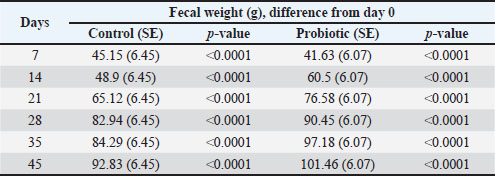
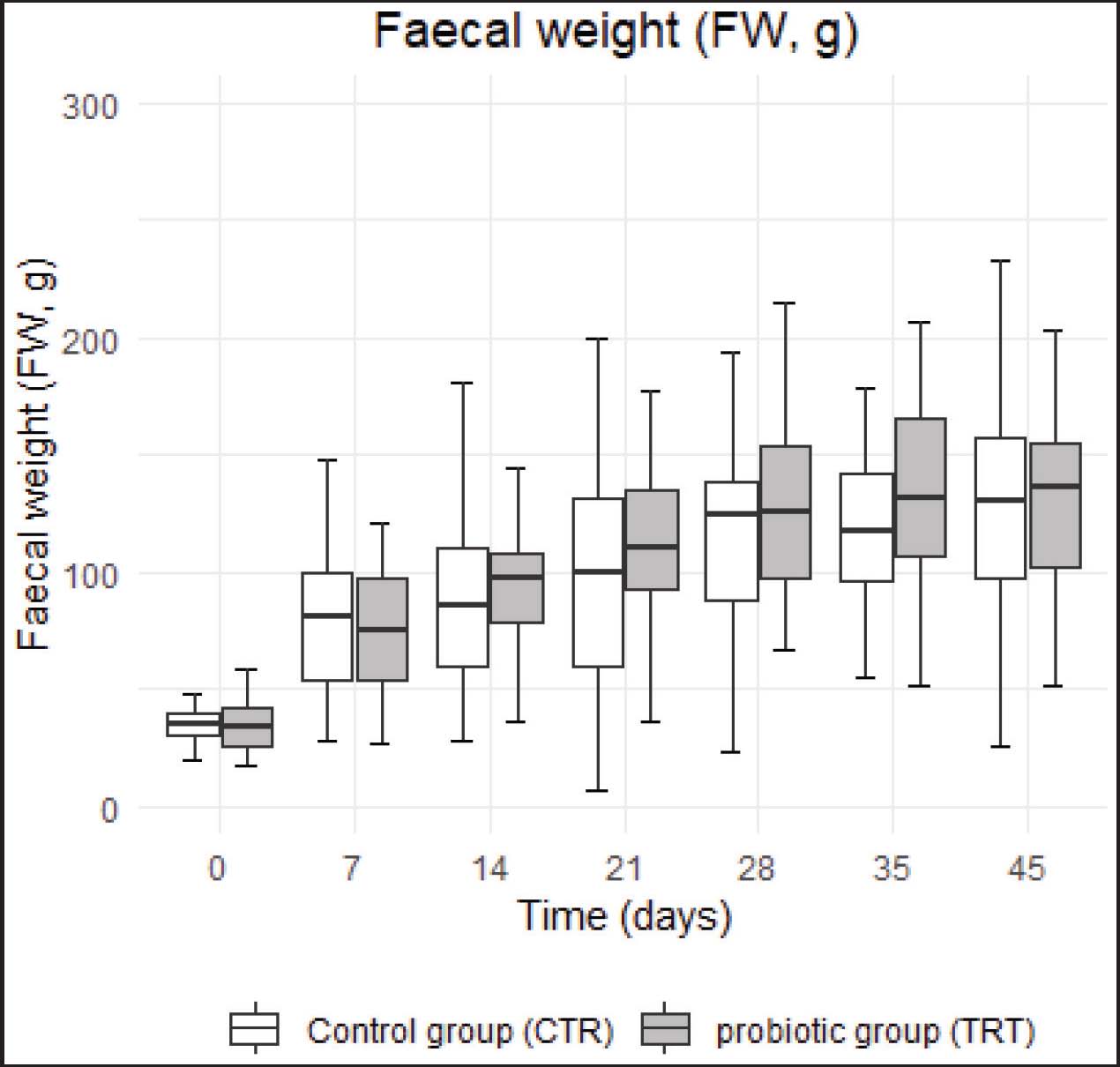
Fig. 1. Fecal weight (FW) measured (g) for the control (CTR) and probiotic (TRT) groups on days 0, 7, 14, 21, 28, 35, and 45.
In the CTR group, fecal DM (Table 3, Fig. 2) showed a significant increase from baseline only on days 7 and 28 (+0.99 percentage points, SE=0.14, p < 0.0001 and +0.49 percentage points, SE=0.14, p=0.02, respectively), with no stable pattern observed. The TRT group demonstrated consistently higher fecal DM content compared to baseline (day 0), with significant increases from baseline ranging from 1.56 to 1.94 percentage points (SE=0.16, p < 0.0001 for all time points), stabilizing after day 7 with variations of less than 0.4 percentage points.
Table 3. Mean difference (SE) from time 0 for fecal dry matter in both the control (CTR) and probiotic (TRT) groups at each time point (days 7, 14, 21, 28, 35, and 45).
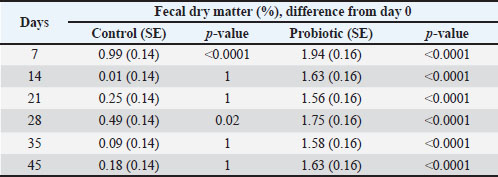
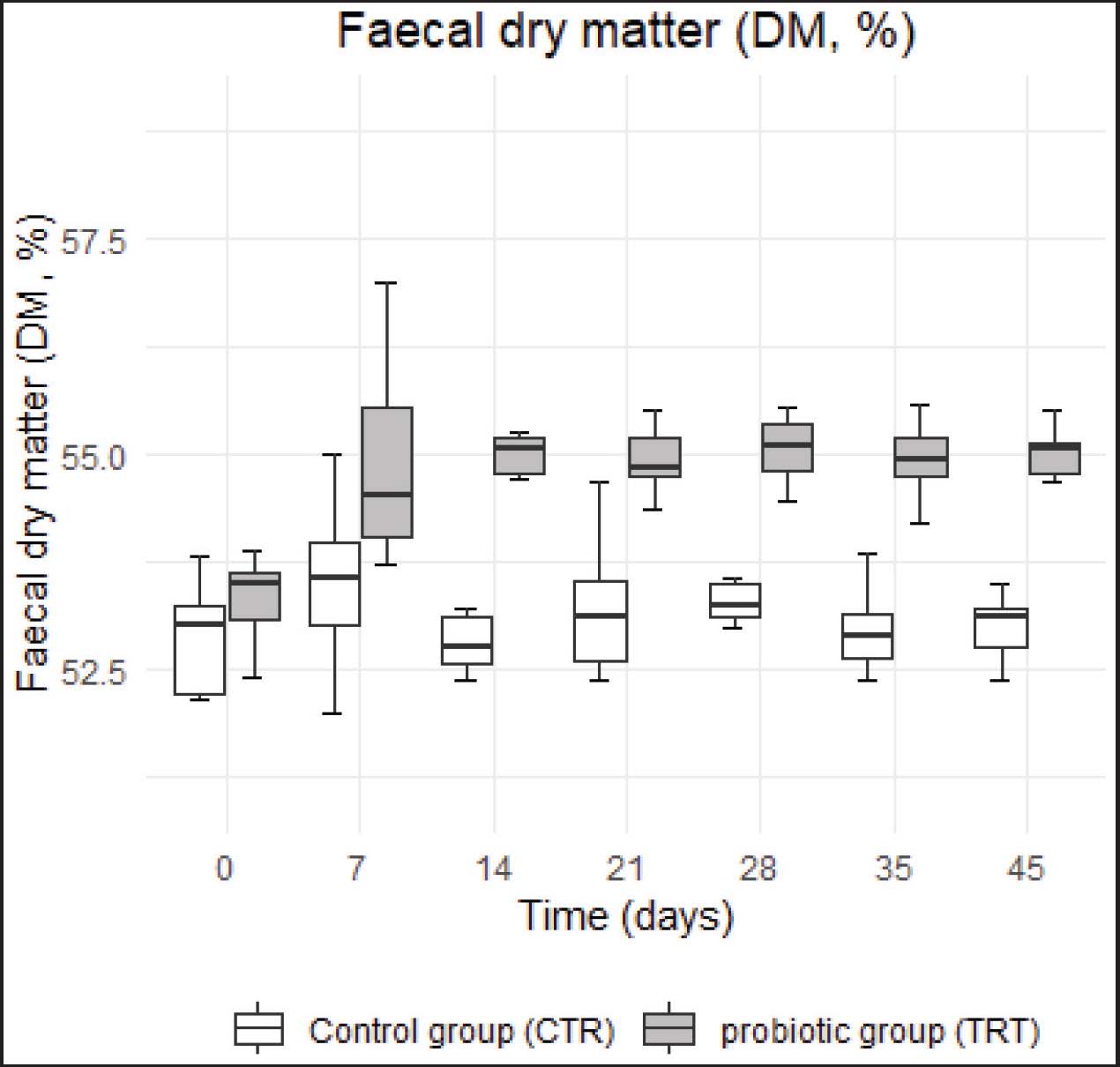
Fig. 2. Fecal dry matter (DM, %) for the control (CTR) and probiotic (TRT) groups on days 0, 7, 14, 21, 28, 35, and 45.
The pH (Table 4, Fig. 3) in the CTR group showed minimal fluctuation from baseline, while significant differences were observed only on days 14 (+0.10, SE=0.02, p < 0.0001) and day 45 (–0.07, SE=0.02, p=0.01). The TRT group exhibited a consistent and significant decrease in pH throughout the study period (p < 0.0001 for all time points), with values stabilizing from day 21 onwards at approximately –0.39 to –0.40 (SE=0.02) compared to baseline.
Table 4. Mean difference (SE) from time 0 for fecal pH in both the control (CTR) and probiotic (TRT) groups at each time point (days 7, 14, 21, 28, 35, and 45).
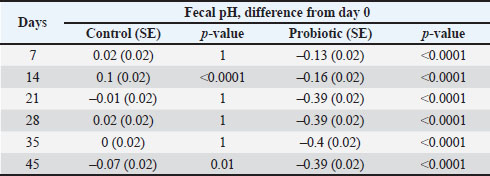
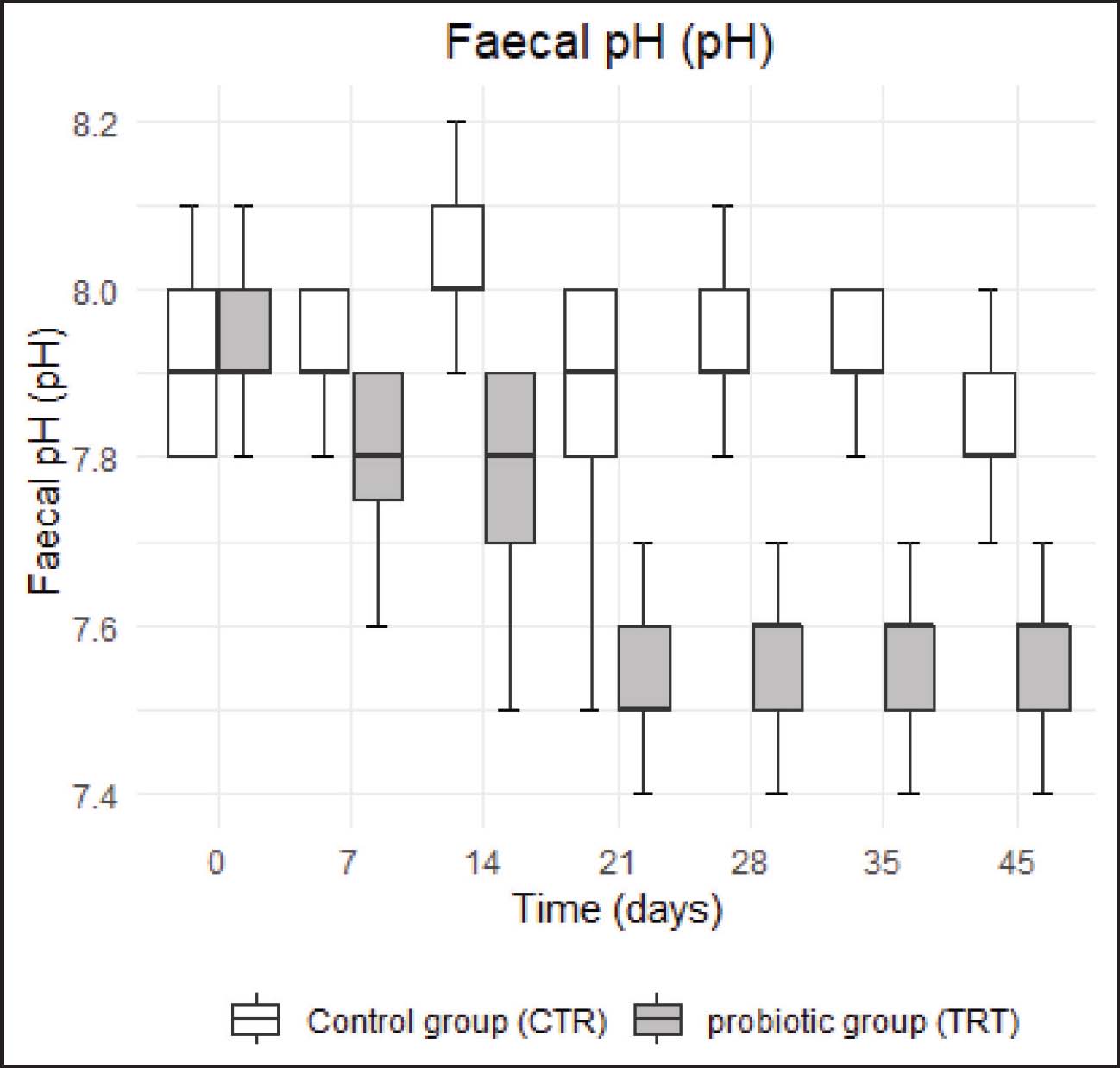
Fig. 3. Fecal pH (pH) for the control (CTR) and probiotic (TRT) groups on days 0, 7, 14, 21, 28, 35, and 45.
The FSp scores (Table 5, Fig. 4) in the CTR group remained largely unchanged from baseline, with a significant increase observed only on day 28 (+0.04, SE=0.01, p < 0.0001). For FSp, the TRT group demonstrated significant increases across all time points (p < 0.0001), with values stabilizing from day 14 onwards at +0.12–0.13 compared to baseline (SE=0.01), representing a sustained change in FSp. Results with absolute values are provided in Supplementary Material (S1).
Table 5. Mean difference (SE) from day 0 for fecal score with penetrometer in both control (CTR) and probiotic (TRT) groups at each time point (days 7, 14, 21, 28, 35, and 45).
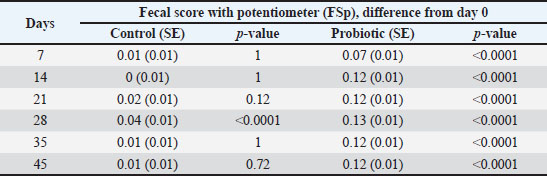
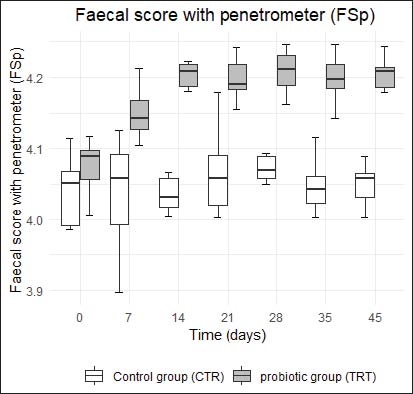
Fig. 4. Fecal score with penetrometer (FSp) for the control group (CTR) and probiotic group (TRT) on days 0, 7, 14, 21, 28, 35, and 45.
An inappropriate diet or any disturbance in the gastrointestinal tract (GIT) can disrupt microbial ecology, resulting in poor digestion, fecal consistency, and poor growth performance (Oglesbee and Lord, 2020). The pathogenic microbes, such as Clostridium spp. and coliform species, start proliferating and dominating the GIT. Supplementation of probiotics could be important to stabilize the normal microflora of the GIT. Additionally, probiotics can create beneficial conditions for nutrient use. The effects of probiotics on intestinal digestion and energy utilization in rabbits have been documented (Pogány Simonová et al., 2009; Colombino et al., 2022).
The TRT and CTR groups displayed an increase in FW over time. Only the CTR group showed a sustained decrease in fecal pH and a sustained increase in fecal DM and fecal consistency. Fecal consistency is directly correlated with fecal DM content (Renaud et al., 2020). The effects of Lactobacillus strains on DM content/FSp vary and depend on the strain, dosage, and species tested (Pascher et al., 2008; Rahayu et al., 2021; Panja et al., 2023). Rabbits have a unique digestive system, which is characterized by the relative importance of the cecum and colon compared with other species. The caecotrophy behavior of rabbits makes microbial digestion in the cecum more important for the overall use of nutrients. To maintain caecotrophy and proper use of ingested feed nutrients, fecal consistency should be optimum so that fecal pellets can be easily picked and ingested (Blas and Wiseman, 2010). Our findings suggest that L. acidophilus supplementation could potentially influence fecal consistency, which might affect caecotrophy behavior, as rabbits may encounter difficulties in ingesting pellets with lower consistency. If intact, cecotrophs appear as multiple, soft fecal pellets that stick together and have a strong odor. If cecotrophs are not eaten, they often stick to the fur around the perineum or are smeared on the fur and flooring. Rabbits that do not consume their cecotrophs are either physically unable to do so or do not eat them because cecotrophs are abnormally formed (Oglesbee and Lord, 2020). Moreover, the higher fecal consistency in the rabbits fed diets containing L acidophilus could contribute to the improvement of nutrient digestibility (Giang et al., 2012).
Fecal pH in rabbits reflects gastrointestinal health and diet. Although specific data on the exact pH range of rabbit feces are limited, the pH levels within different sections of the rabbit’s digestive tract influence fecal pH. While acknowledging that this study did not perform direct measurements of cecal or intestinal pH, it is important to clarify that the analysis and interpretation of the available fecal parameters were conducted independently, thereby ensuring the objectivity of the results. Lower gut pH has been shown to have a beneficials effect on nutrient digestibility (Canibe and Jensen, 2003; Lyberg et al., 2006) and may be due to a lower fecal concentration of biogenic amines. The addition of organic acids can decrease intestinal pH in pig diets to suppress pathogenic growth and improve digestion, absorption, and mucosal immunity (Mroz, 2005). In our study, the fecal pH decreased consistently in rabbits supplemented with L. acidophilus, which is involved in lactic acid production, creating a favorable environment for the proliferation of beneficial bacteria (Gadde et al., 2017). Lower fecal pH in rabbits fed with citric acid leads to better growth performance, feed effciency, digestion, and absorption (Uddin et al., 2014).
The effect of organic acids in animal diets can be addressed to suppress pathogenic growth and improve digestion, absorption, and mucosal immunity (Mroz, 2005 ).
Conclusion
Based on the findings of this study, supplementation of rabbits with L. acidophilus D2/CSL (CECT 4529) positively impacts gut function. The probiotic improved fecal consistency, increased dry matter content, and reduced fecal pH, indicating enhanced gut microbiota balance and digestive efficiency. These results suggest that L. acidophilus D2/CSL (CECT 4529) can be a beneficial dietary additive for promoting gastrointestinal health in rabbits. Further research is recommended to explore its long-term effects and potential applications on nutrient digestibility, gut beneficial microflora, and caecotrophic behavior.
Acknowledgements
The authors would like to thank the rabbit breeders and the University of Turin for their support during the trial.
Funding
This study was supported by Candioli Pharma S.r.l., Italy.
Authors’ contributions
Elisa Martello: Conceptualization, Data curation, Project administration, Resources, Supervision, Visualization, Roles/Writing of original draft, and Writing-review and editing. Muhammad Irfan Malik: Conceptualization, Data curation, Project administration, Resources, Supervision, Visualization, Roles/Writing original draft, and Writing-review and editing. Corrado Biolatti: formal analysis; investigation; methodology; software; validation; writing, review, and editing. Francesca Perondi: Conceptualization, Data curation, Supervision, Visualization, Roles/Writing of original draft, and Writing-review and editing. Ilaria Biasato: Data curation, formal analysis, investigation, methodology, software, validation, writing, review, and editing Maria Teresa Capucchio: Conceptualization; Funding acquisition; Project administration; Resources; Supervision; Validation; Visualization; Roles/Writing original draft; and Writing - Review & Editing.
Conflict of interest
Two authors are scientific consultants for Candioli Pharma S.r.l., Italy.
Data availability
Data are available from the corresponding author upon request.
References
Bhatt, R.S., Agrawal, A.R. and Sahoo, A. 2017. Effect of probiotic supplementation on growth performance, nutrient utilization and carcass characteristics of growing Chinchilla rabbits. J. Appl. Anim. Res. 45(1), 304–309.
Blas, C. and Wiseman, J. 2010. Nutrition of the Rabbit. 2nd ed. Wallingford, Oxfordshire: cABI International. 2nd ed., Wallingford, United Kingdom: CABI International, pp: 233–61.
Bull, M., Plummer, S., Marchesi, J. and Mahenthiralingam, E. 2013. The life history of Lactobacillus acidophilus as a probiotic: a tale of revisionary taxonomy, misidentification and commercial success. FEMS Microbiol. Lett. 349(2), 77–87; doi:10.1111/1574-6968.12293
Canibe, N. and Jensen, B.B. 2003. Fermented and nonfermented liquid feed to growing pigs: effect on aspects of gastrointestinal ecology and growth performance. J. Anim. Sci. 81(8), 2019–2031; doi:10.2527/2003.8182019x
Colombino, E., Biasato, I., Michetti, A., Rubino, M.G., Franciosa, I., Giribaldi, M., Antoniazzi, S., Bergagna, S., Paliasso, G., Ferrocino, I., Cavallarin, L., Gasco, L. and Capucchio, M.T. 2022. Effects of Dietary Supplementation of Lactobacillus acidophilus on Blood Parameters and Gut Health of Rabbits. Animals 12(24), 3543; doi:10.3390/ani12243543
Corcionivoschi, N., Drinceanu, D., Stack, D., Ștef, L., Julean, C. and Bourke, B. 2010. The effect of probiotics on animal health. Review. Sci. Pap. Anim. Sci. Biotechnol. 43(1), 35–41.
Cullere, M. and Dalle Zotte, A. 2018. Rabbit meat production and consumption: state of knowledge and future perspectives. Meat. Sci. 143, 137–146; doi:10.1016/j.meatsci.2018.04.029
Dalle Zotte, A. and Szendrő, Z. 2011. The role of rabbit meat as functional food. Meat. Sci. 88(3), 319–331; doi:10.1016/j.meatsci.2011.02.017
Davies, G.J., Crowder, M., Reid, B. and Dickerson, J.W. 1986. Bowel function measurements of individuals with different eating patterns. Gut 27(2), 164–169; doi:10.1136/gut.27.2.164
Du Toit, M., Franz, C.M.A.P., Dicks, L.M.T., Schillinger, U., Haberer, P., Warlies, B., Ahrens, F. and Holzapfel, W.H. 1998. Characterisation and selection of probiotic lactobacilli for a preliminary minipig feeding trial and their effect on serum cholesterol levels, faeces pH and faeces moisture content. Int. J. Food Microbiol. 40(1-2), 93–104; doi:10.1016/s0168-1605(98)00023-5
EFSA. 2018. Guidance on the assessment of the efficacy of feed additives. EFSA. J. 16(5), e05274; doi:10.2903/j.efsa.2018.5274
El-Shafei, A.E.R., Younis, T., Al-Gamal, M. and Hesham, A. 2019. Impact of probiotic (Lactobacillus planterium) supplementation on productive and physiological performance of growing rabbits under egyptian conditions. Egypt J. Rabbit Sci. 29(1), 125–148.
Gadde, U., Kim, W.H., Oh, S.T. and Lillehoj, H.S. 2017. Alternatives to antibiotics for maximizing growth performance and feed efficiency in poultry: a review. Anim. Health. Res. Rev. 18(1), 26–45; doi:10.1017/S146625231600020X
Giang, H.H., Viet, T.Q., Ogle, B. and Lindberg, J.E. 2012. Growth performance, digestibility, gut environment and health status in weaned piglets fed a diet supplemented with a complex of lactic acid bacteria alone or in combination with Bacillus subtilis and Saccharomyces boulardii. Livest. Sci. 143(2-3), 132–141; doi:10.1016/j.livsci.2011.09.004
Lebas F, Coudert P, Rouvier R, De Rochambeau H. 1997. The Rabbit: husbandry, health, and production. FAO: Rome, Italy.
Leistikow, K.R., Beattie, R.E. and Hristova, K.R. 2022. Probiotics beyond the farm: benefits, costs, and considerations of using antibiotic alternatives in livestock. Front. Antibiot. 1, 1003912; doi:10.3389/frabi.2022.1003912
Lyberg, K., Lundh, T., Pedersen, C. and Lindberg, J.E. 2006. Influence of soaking, fermentation and phytase supplementation on nutrient digestibility in pigs offered a grower diet based on wheat and barley. Anim. Sci. 82(6), 853–858; doi:10.1017/ASC2006105
Mancini, S. and Paci, G. 2021. Probiotics in rabbit farming: growth performance, health status, and meat quality. Animals 11(12), 3388; doi:10.3390/ani11123388
Marlier, D., Dewrée, R., Lassence, C., Licois, D., Mainil, J., Coudert, P., Meulemans, L., Ducatelle, R. and Vindevogel, H. 2006. Infectious agents associated with epizootic rabbit enteropathy: isolation and attempts to reproduce the syndrome. Vet. J. 172(3), 493–500; doi:10.1016/j.tvjl.2005.07.013
Mroz, Z. 2005. Organic acids as potential alternatives to antibiotic growth promoters for pigs. Adv. Pork Prod. 16, 169–182.
Oglesbee, B.L. and Lord, B. 2020. Gastrointestinal diseases of rabbits.In Ferrets, Rabbits, and Rodents. Quesenberry, K. and et al 4th, St. Louis, MO: Elsevier, pp: 174–87. https://doi.org/ 10.1016/B978-0-323-48435-0.00014-9
Panja, K., Areerat, S., Chundang, P., Palaseweenun, P., Akrimajirachoote, N., Sitdhipo, J., Thaveethaptaikul, P., Chonpathompikunlert, P., Niwasabutra, K., Phapugrangkul, P. and Kovitvadhi, A. 2023. Influence of dietary supplementation with new Lactobacillus strains on hematology, serum biochemistry, nutritional status, digestibility, enzyme activities, and immunity in dogs. Vet. World. 16(4), 834–846; doi:10.14202/vetworld.2023.834-846
Pascher, M., Hellweg, P., Khol-Parisini, A. and Zentek, J. 2008. Effects of a probiotic Lactobacillus acidophilus strain on feed tolerance in dogs with non-specific dietary sensitivity. Archiv Für Tierernährung 62(2), 107–116; doi:10.1080/17450390801892550
Phuoc, T.L. and Jamikorn, U. 2017. Effects of probiotic supplement (Bacillus subtilis and Lactobacillus acidophilus) on feed efficiency, growth performance, and microbial population of weaning rabbits. Asian-Australas. J. Anim. Sci. 30(2), 198–205.
Pogány Simonová, M., Lauková, A., Chrastinová, L., Strompfová, V., Faix, S., Vasilková, Z., Ondruška, L., Jurčík, R. and Rafay, J. 2009. Enterococcus faecium CCM7420, bacteriocin PPB CCM7420 and their effect in the digestive tract of rabbits. Czech. J. Anim. Sci. 54(8), 376–386; doi:10.17221/48/2009-CJAS
Rahayu, E.S., Mariyatun, M., Putri Manurung, N.E., Hasan, P.N., Therdtatha, P., Mishima, R., Komalasari, H., Mahfuzah, N.A., Pamungkaningtyas, F.H., Yoga, W.K., Nurfiana, D.A., Liwan, S.Y., Juffrie, M., Nugroho, A.E. and Utami, T. 2021. Effect of probiotic Lactobacillus plantarum Dad-13 powder consumption on the gut microbiota and intestinal health of overweight adults. World J Gastroenterol. 27(1), 107–128; doi: 10.3748/wjg.v27.i1.107
Renaud, D., Buss, L., Wilms, J. and Steele, M. 2020. Is fecal consistency scoring an accurate measure of fecal dry matter in dairy calves?. J. Dairy Sci. 103(11), 10709–10714; doi:10.3168/jds.2020-18540
Shen, X.M., Cui, H.X. and Xu, X.R. 2020. Orally administered Lactobacillus casei exhibited several probiotic properties in artificially suckling rabbits. Asian-Australas. J. Anim. Sci. 33(8), 1352–1361; doi:10.5713/ajas.19.0435
Uddin, M.S., Ahammed, M. and Kim, Y.H. 2014. Effects of dietary citric acid on growth performance, nutrient digestibility and faecal microflora of rabbits. J. Anim. Feed Sci. 23(1), 60–65; doi:10.22358/jafs/65618/2014
Wu, L. 2024. Worldwide Rabbit Meat Trade. In: Veterinary care of farm rabbits: a complete practice guide to rabbit medicine and production. Eds., Simões, J. and Monteiro, J.M. Cham, Switzerland: Springer Nature, pp. 67–92; doi: 10.1007/978-3-031-45730-2_4
Yaqoob, M.U., Wang, G. and Wang, M. 2022. An updated review on probiotics as an alternative of antibiotics in poultry—A review. Anim. Biosci. 35(8), 1109–1120; doi:10.5713/ab.22.0147
Supplementary Material (S1)