




| Research Article | ||
Open Vet. J.. 2026; 16(5): 2823-2830 Open Veterinary Journal, (2026), Vol. 16(5): 2823-2830 Research Article Effect of Moringa oleifera leaf extract supplementation on motility and viability of Boer crossbreed buck spermatozoa during cold storageRahmat Rahmat1*, Muhammad Rizal1, Nursyam Andi Syarifuddin1, Muhammad Riyadhi1, Athhar Manabi Diansyah2, Muhammad Fajar Amrullah3,4, Andi Ni'mahtul Churriyah1, Anis Wahdi1, Ahmad Alfaruqi Syahrandi Adam2, Andi Muhammad Alfian2 and Muhammad Rizal51Department of Animal Science, Faculty of Agriculture, Lambung Mangkurat University, Banjarbaru, Indonesia 2Department of Animal Production, Faculty of Animal Science, Hasanuddin University, Makassar, Indonesia 3Doctoral Student of Animal Biomedical Science, School of Veterinary Medicine and Biomedical Sciences, IPB University, Bogor, Indonesia 4Research Center for Applied Zoology, National Research and Innovation Agency, Cibinong Science Center, Bogor, Indonesia 5Department of Agronomy, Faculty of Agriculture, Lambung Mangkurat University, Banjarbaru, Indonesia *Corresponding Author: Rahmat Rahmat. Department of Animal Science, Faculty of Agriculture, Lambung Mangkurat University, Banjarbaru, Indonesia. Email: rahmatr [at] ulm.ac.id Submitted: 25/11/2025 Revised: 11/04/2026 Accepted: 23/04/2026 Published: 31/05/2026 © 2025 Open Veterinary Journal
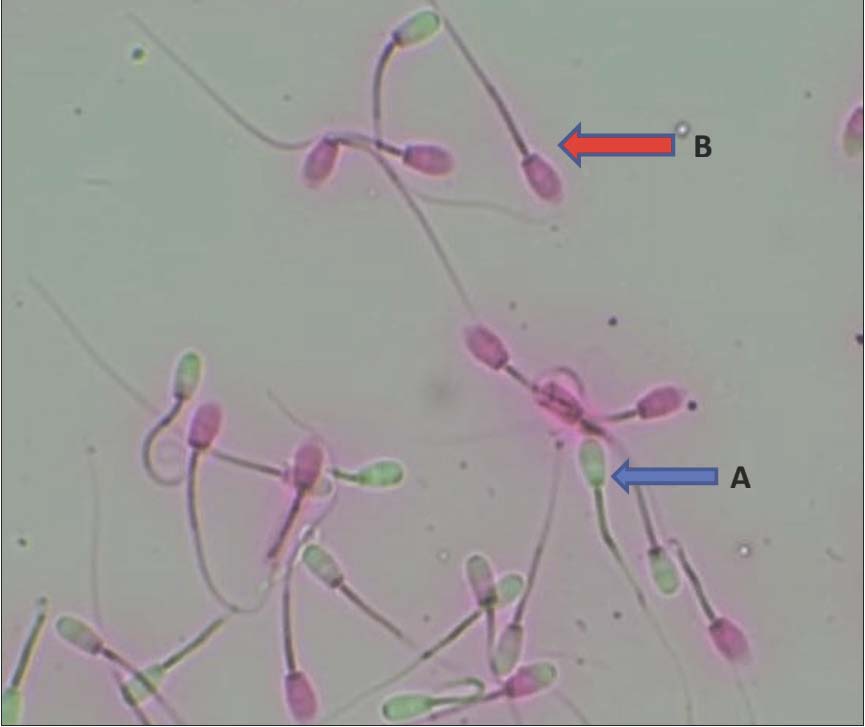
AbstractBackground: Chilled semen preservation is essential for supporting artificial insemination programs in Boer goats, but spermatozoa rapidly deteriorate during cold storage due to cold shock and oxidative stress. Natural antioxidants such as Moringa oleifera leaf extract (MLE), which contains flavonoids, phenolics, and vitamin, may enhance extender performance for maintaining semen quality by reducing oxidative damage. However, Studies evaluating MLE supplementation in commercial extenders such as Andromed® are still limited and have not been widely conducted, particularly for Boer goat semen stored at 5°C. Aim: This study aims to evaluate the effect of different concentrations of MLE supplementation (2%, 4%, and 6%) in Andromed® extender on the motility and viability of Boer goat sperm during 5 days of chilled storage. Methods: Semen from six Boer goats was diluted with Andromed® containing 0% (T0 as control), 2% (T1), 4% (T2), and 6% (T3) MLE and stored at 5°C for 5 days. Sperm motility and viability were assessed daily using eosin-nigrosin staining. Results: Sperm motility and viability showed distinct responses among treatments during storage. The 4% (T2) MLE treatment consistently maintained the highest sperm motility and viability from Day 2 onward. On Day 5, T2 exhibited the greatest motility (40.00% ± 0.00%) and viability (51.00% ± 2.16%), significantly outperforming T0, T1, and T3. Increasing the MLE concentrations to 6% did not provide further improvement and resulted in lower values than T2, suggesting that excessive extract may exert negative effects. Conclusion: In conclusion, supplementation of 4% MLE in Andromed® extender effectively preserves sperm motility and viability in chilled Boer goat semen. MLE serves as a promising natural antioxidant additive for improving short-term semen preservation, particularly under tropical conditions. Keywords: Antioxidant supplementation, Boer buck, Chilled semen, Moringa oleifera leaf extract, Semen extender. IntroductionThe Boer goat (Capra hircus) is globally recognized as a superior meat-producing breed, valued for its rapid growth rate, high feed efficiency, and favorable carcass characteristics. In Indonesia, Boer goats have been introduced and widely promoted as an important genetic breed resource to enhance the productivity and meat quality of indigenous goat populations (Syarifuddin et al., 2025). In line with national breeding strategies, numerous institutions and breeding centres have implemented both crossbreeding and purebreeding programs involving Boer goats to meet the growing consumer demand for high-quality meat while simultaneously supporting rural economic development. To accelerate the dissemination of Boer goat genetics and maximise genetic improvement, assisted reproductive technologies, particularly artificial insemination (AI), have become increasingly important (Toleng et al., 2020; Diansyah et al., 2025a). Nevertheless, a major limitation in the practical application of AI in goats is the preservation of semen quality during chilled storage, a challenge that is further exacerbated by tropical environments characterized by frequent temperature fluctuations and logistical constraints. Consequently, the development of improved semen extenders capable of maintaining sperm quality under such conditions has become an urgent priority (Riyadhi et al., 2022). The maintenance of semen quality during storage is a key determinant of the success of AI. In goats, semen preservation under chilled conditions is widely applied for short-term storage and transportation, as it provides a practical and economically feasible alternative to cryopreservation (Arif et al., 2025). However, spermatozoa are highly susceptible to detrimental factors such as cold shock, oxidative stress, and structural damage to the plasma membrane. These factors can significantly influence sperm motility, viability, and fertilizing capacity throughout the storage periods (Wiyanti et al., 2013; Nirmala et al., 2025). Commercial semen extenders, such as Andromed® are commonly utilised in ruminant reproduction as they supply essential nutrients and cryoprotective components necessary for maintaining sperm function. In recent years, research has increasingly focused on incorporating natural antioxidants into extenders to enhance sperm protection during storage. Among the potential additives, Moringa oleifera leaf extract (MLE) has gained attention due to its richness in bioactive compounds, including flavonoids, phenolics, and vitamins, which exhibit strong antioxidant activity. Previous studies have demonstrated that MLE can attenuate oxidative stress and enhance sperm quality across different animal breeds (El-Seadawy et al., 2022; Chhikara et al., 2021). Despite its potential, studies evaluating the effect of MLE in combination with commercial extenders, particularly in Boer goat semen under chilled storage conditions, remain limited. Given the strategic importance of Boer goat breeding in Indonesia and the increasing interest in natural, plant-based biocomponents, further investigation is warranted. Therefore, the objective of this study was to evaluate the effect of different concentrations of MLE supplementation in Andromed® extender on the motility and viability of chilled-stored Boer goat semen. This study aims to contribute to the development of more effective and natural semen preservation strategies to support the sustainability and scalability of Boer goat breeding programs in Indonesia. Materials and MethodsStudy sites and animal managementThis study was conducted at the laboratory of Animal Production and the laboratory of Animal Nutrition and Feed using six Boer bucks as experimental subjects. Semen was collected twice weekly from each buck using an artificial vagina. Multiple ejaculates were obtained from each buck; each ejaculate was considered an independent experimental replicate and was randomly and evenly allocated across treatments to minimize individual buck effects. The objective of the study was to evaluate the effectiveness of semen extenders supplemented with different concentrations of MLE during chilled storage. The treatments were as follows: T0 (Control): 100% Andromed® T1 (MLE-2): 98% Andromed® +2% MLE T2 (MLE-4): 96% Andromed® +4% MLE T3 (MLE-6): 94% Andromed® +6% MLE. Each treatment was applied to fresh semen samples, which were subsequently stored at 5°C. Semen motility and viability were evaluated daily over a storage period of 5 days (Day 1 to 5) to determine the preservative efficacy of each extender formulation. MLE preparationMoringa (Moringa oleifera) leaves were extracted using a rotary vacuum evaporator. The results of extraction in paste were diluted by dissolving 1 g of extract in 100 ml of double-distilled water (w/v). The diluted extract was then aliquoted into 1 ml Eppendorf tubes and stored in a freezer (−20°C) until use. Semen dilution and processingThe study was conducted using fresh semen, immediately after semen collection and initial quality assessment. Qualified semen was diluted with Andromed® extender supplemented with MLE at concentrations of 0%, 2%, 4%, and 6% (v/v). These concentrations were prepared by adding 2, 4, or 6 ml of MLE stock solution per 100 ml of extender, respectively, with the remaining volume adjusted using Andromed® to maintain a constant final volume. Diluted semen samples were gently homogenized and transferred into sterile tubes, with a uniform semen volume per tube to ensure a consistent number of spermatozoa per experimental unit. The samples were then stored at 5°C for up to 5 days, and sperm motility and viability were evaluated daily. Semen evaluationSemen evaluation was performed based on two primary parameters: sperm motility and viability, to assess the effects of different extender formulations during chilled storage. All evaluations were conducted at room temperature (35°C) immediately after homogenisation of the samples. Sperm motilitySperm motility was evaluated subjectively using a light microscope at 400× magnification, equipped with a heated stage maintained at 37°C to ensure optimal observation conditions. Fresh semen samples were accepted for processing when initial progressive motility was ≥ 70%. A drop of semen was placed onto a pre-warmed glass slide, covered with cover glass, and examined across eight randomly selected field (Sahiruddin et al., 2026). The percentage of progressively motile spermatozoa was estimated by a single experienced observer to reduce variability (Diansyah et al., 2025b). Sperm viabilitySperm viability was determined using the eosin-nigrosin staining technique as described by Diansyah et al. (2025c). Briefly, 10 µl of semen was mixed with 20 µl of eosin-nigrosin solution, smeared onto a clean glass slide. The prepared slides were evaluated under a light microscope with 400× magnification. Sperm with normal intact plasma membranes characterised by unstained (white) heads, whereas non-viable spermatozoa displayed pink or red-stained heads as a result of membrane damage (Fig. 1). Fresh semen samples were accepted for processing when initial sperm viability was ≥80%. For each slide, a minimum of 200 sperm cells were counted to calculate the percentage of viable spermatozoa (Rahmat et al., 2024).
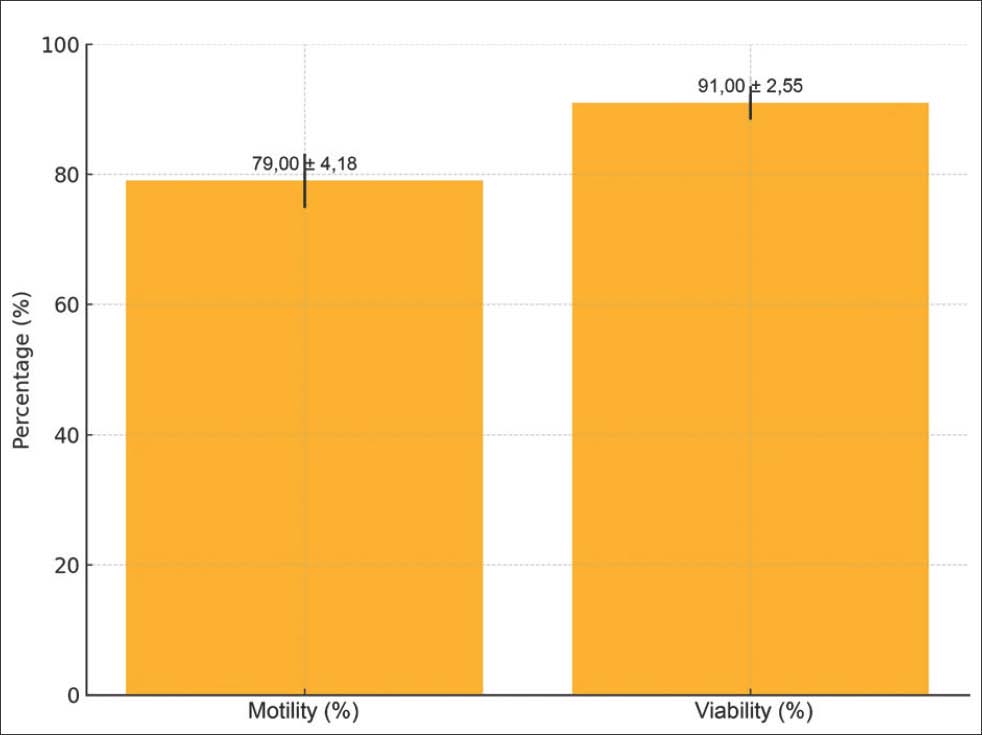
Fig. 1. Sperm viability of Boer buck assessed under a light microscope (400× magnification) Scale bar=10 µm; a) Viable spermatozoa appear with white (unstained) heads; b) Non-viable spermatozoa exhibit red (stained) heads. Statistical analysesData were analysed using one-way analysis of variance (ANOVA) performed separately for each storage day based on a completely randomized design consisting of four treatments and six replications. Each ejaculate was considered as the experimental unit. Although multiple ejaculates were obtained from the same bucks, ejaculates were evenly distributed across treatments to minimize individual buck effects, and no pooling of ejaculates was performed. The day-wise ANOVA approach was applied to evaluate treatment effects at each storage time point independently. While a repeated measures or mixed model approach could also be considered for longitudinal data, the present approach was deemed appropriate for assessing treatment differences at each specific storage day. This analytical limitation has been acknowledged in the Discussion section. All variables satisfied the assumptions of parametric analysis (p > 0.05). Differences among treatment means were evaluated using the least significant differences test. All statistical analyses were performed using SAS statistical software (SAS Institute Inc., Cary, NC). Results are presented as mean ± standard deviation. Each mean was calculated from six independent ejaculates (n=6) per treatment per storage day. Ethical approvalThis study was conducted in accordance with animal welfare standards and approved by the Animal Ethics Committee of Faculty of Agriculture, Lambung Mangkurat University (Approval No. 017/UN8.1.23.5/PG/2025) and adhered to Indonesian animal welfare guidelines. ResultsSperm motility and viability in fresh semen of Boer bucksThe results demonstrated that the fresh semen of Boer bucks exhibited high initial quality, as reflected in both sperm motility and viability parameters (Fig. 2). The mean percentage of sperm motility was 79.00% ± 4.18%, indicating that a substantial proportion of sperm cells displayed active, progressive movement at the time of collection. Meanwhile, the viability percentage reached 91.00% ± 2.55%, indicating that the vast majority of spermatozoa remained unstained following eosin assessment. These values suggest that the semen samples collected were in good physiological condition, providing a reliable baseline for further evaluation under chilled storage.
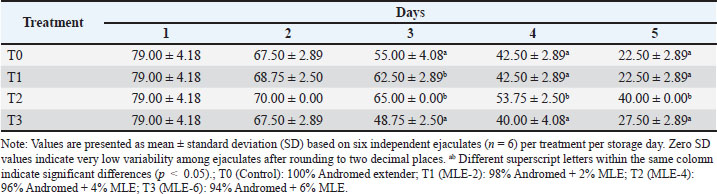
Fig. 2. Sperm motility and viability on fresh semen of Boer crossbreed buck. values are presented as mean ± standard deviation (SD) based on six independent ejaculates (n=6). Effectiveness of MLE on sperm motility during chilled storageThe percentage of sperm motility during 5 days of chilled storage in Boer Goat semen is presented in Table 1. Day 1 represents baseline semen quality (0 hour) measured immediately after dilution and prior to chilled storage, while Days 2–5 represent 24, 48, 72, and 96 hours of storage at 5°C. On Day 1, all treatment groups showed equal sperm motility values (79.00% ± 4.18%), indicating comparable semen quality prior to storage. Throughout the storage period, sperm motility declined progressively in all groups, although the rate of decline varied. By Day 3, significant differences were observed among treatments (p < 0.05). the T2 group (MLE-4) maintained the highest sperm motility at 65% ± 0.00%, which was significantly higher than T0 (55% ± 4.08%), T1 (62.50% ± 2.89%), and T3 (48.75% ± 2.50%). A similar trend was observed on Day 4, with T2 maintaining a higher motility value (53.75% ± 2.50%) compared to T0 and T1 both (42.50% ± 2.89%) and T3 (40.00% ± 4.08%). By Day 5, sperm motility continued to decline across all treatments. T2 remained the group with the highest sperm motility (40.00% ± 4.08%), followed by T3 (27.50% ± 2.89%), T0 and T1 (22.50% ± 2.89%). Statistically significant differences between groups persisted on Days 3, 4, and 5, as indicated by different superscript letters within the same coloumn (p < 0.05). Among the four treatments, T2 consistently maintained the highest sperm motility throughout the chilled storage period, particularly from Day 3 onward. Table 1. Effectiveness of MLE on sperm motility during chilled storage.
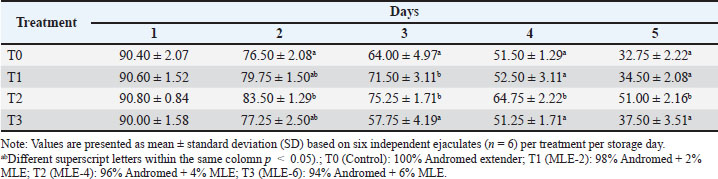
Effectiveness of MLE on sperm viability during chilled storageSperm viability during chilled storage of Boer goat semen across a 5-day period is presented in Table 2. Day 1 represents baseline semen quality (0 hour) assessed immediately after dilution and prior to chilled storage, whereas Days 2–5 correspond to 24, 48, 72, and 96 hours of storage at 5°C. On Day 1, all treatment groups exhibited similar sperm viability, ranging from 90.00% ± 1.58% (T3) to 90.80% ± 0.84% (T2), with no significant differences observed among the treatment (p > 0.05), indicating uniform initial semen quality. As storage progressed, sperm viability declined in all groups, with differences emerging from Day 2 onward. On Day 2, the T2 group maintained the highest sperm viability at 83.50% ± 1.29%, which was significantly higher (p < 0.05) than T0 (76.50% ± 2.08%), and showed moderate but not always significant differences from T1 (79.75% ± 2.08%) and T3 (77.25% ± 2.50%). By Day 3, the effect of treatment became more pronounced. T2 consistently preserved the highest sperm viability at 75.25% ± 1.71%, which was significantly higher (p < 0.05) than that T0 (64.00% ± 4.97%) and T3 (57.75% ± 4.19%). T1 maintained intermediate viability (71.50% ± 3.11%). On Day 4, sperm viability in the T2 group remained higher (64.75% ± 2.22%) compared to the other treatments, all of which had decreased to approximately 51%–52% (T0, T1, and T3), with no significant difference among the treatments (p > 0.05). By Day 5, T2 sustained the highest sperm viability at 51.00% ± 2.16%, followed by T3 (37.50% ± 3.51%), T1 (34.50% ± 2.08%), and T0 (32.75% ± 2.22%). The differences among groups were statistically significant (p < 0.05), with T2 consistently maintaining superior sperm viability throughout the chilled storage period, particularly from Day 2 onward. Table 2. Effectiveness of MLE on sperm viability during chilled storage.
DiscussionThe results of the study demonstrate that the supplementation of MLE in Andromed® extender improves the preservation of sperm motility and viability in chilled Boer buck semen, with the 4% MLE treatment consistently showing superior performance during storage. This finding indicates that MLE, when applied at an optimal concentration, enhances the protective capacity of the extender against cold-induced deterioration of sperm function, in line with reports describing the relatively high baseline fertility potential of Boer buck semen (Rizal et al., 2018). Sperm motility and viability are two key indicators of fertilizing potential. However, the parameters are known to decline during chilled storage conditions, and both parameters typically decline over time due to cold shock, membrane destabilization, and oxidative stress (Ibáñez-Arancibia et al., 2021; Tanga et al., 2021). Chilled storage promotes the accumulation of reactive oxygen species (ROS), which initiate lipid peroxidation of sperm plasma membranes rich in polyunsaturated fatty acids. This process compromises membrane integrity, disrupts mitochondrial function, and ultimately reduces sperm motility and viability. The progressive decline in sperm quality observed across all treatment groups in this study aligns with such physiological deterioration. However, the slower decline in MLE-supplemented groups, particularly at the 4% concentration, supports a protective role of MLE that is plausibly mediated by its antioxidant activity. MLE contains a range of bioactive compounds such as flavonoids (e.g., quercetin, kaempferol, phenolic acids, saponins, and vitamins (particularly vitamins C and E), which are known to act as free radical scavengers (Kashyap et al., 2022; Chatzimitakos et al., 2024). ROS, although naturally generated during sperm metabolism, can accumulate during storage and induce lipid peroxidation, DNA damage, and loss of membrane integrity (Blegur et al., 2020; Nurlatifah et al., 2025). By neutralizing excessive ROS, antioxidants contribute to the maintenance of sperm membrane structure and function. The superior performance of T2 in preserving sperm motility and viability supports this mechanism, as also reported in similar studies using plant-based antioxidant supplementation in semen extenders (Hameed et al., 2024; Syarifuddin et al., 2026). In contrast, the reduced effectiveness observed at the higher MLE concentration (6%) suggests a dose-dependent biphasic antioxidant effect. At excessive levels, antioxidants may exert pro-oxidant activity, disrupt osmotic balance, or increase extender viscosity, all of which can impair membrane fluidity and sperm metabolism. Such effects can negate the benefit of antioxidant supplementation and lead to diminished sperm quality as reported in other semen preservation systems (Ferramosca and Zara, 2022; Mattioli et al., 2023). These findings underscore the importance of optimizing antioxidant dosage rather than assuming a linear dose-response relationship. From an applied perspective, the use of MLE as a natural additive in semen extenders presents several advantages. Moringa is widely available, inexpensive, and environmentally sustainable, making it a practical solution for improving semen preservation in tropical regions like Indonesia (Suprapto et al., 2021). The consistent superiority of the 4% MLE treatment highlights its potential to enhance chilled semen quality, which is essential for the success of AI programs in Boer goats. Boer goats are increasingly promoted in Indonesia as a superior meta-type breed to improve local livestock productivity. The successful dissemination of Boer genetics across regions depends heavily on the availability of high-quality semen for AI (Rizal et al., 2018). However, semen distribution in tropical climates often faces challenges such as temperature fluctuations and inadequate cold chain infrastructure (Kujoana et al., 2024; Moretti and Signorini, 2024). The development of improved extender formulations that incorporate locally sourced natural antioxidants such as Moringa may address this limitation by extending semen shelf life and improving fertility outcomes. Despite the promising findings, several limitations of the present study should be acknowledged. First, sperm motility was assessed subjectively using conventional light microscopy rather than computer-assisted sperm analysis, which may introduce observer-related variability, although this was minimized by using a single experienced evaluator. Second, oxidative stress biomarkers such as ROS levels, lipid peroxidation indices, or total antioxidant capacity were not directly measured. Therefore, the proposed antioxidant mechanism of MLE is inferred from sperm quality outcomes and supported by previous literature rather than confirmed by direct biochemical evidence. Future study incorporating objective motility assessment and oxidative stress markers is recommended. ConclusionIn conclusion, the present findings provide strong evidence that 4% of MLE supplementation in Andromed® extender effectively preserves sperm motility and viability in chilled Boer goat semen. This study supports the use of MLE as a natural and functional biocomponent in semen preservation, contributing to the advancement of reproductive biotechnology and genetic improvement programs in small ruminants, particularly in tropical environments. AcknowledgmentsThe authors would like to express their sincere gratitude to Maju Sejahtera Bersama Farmer Group, Cindai Alus, Martapura, Banjar Regency, for their cooperation and assistance during the sample collection process. Appreciation is also extended to the Head and laboratory staff of the Animal Production Laboratory and the Animal Nutrition and Feed Laboratory, Department of Animal Science, Faculty of Agriculture, Lambung Mangkurat University, for providing the necessary facilities and technical support throughout the course of the study. Conflict of interestThe authors declared that there is no conflict of interest. FundingNone. Author’s contributionsMuhammad Rizal, Nursyam Andi Syarifuddin, Anis Wahdi, and Muhammad Riyadhi conducted the study. Rahmat Rahmat, Athhar Manabi Diansyah, Andi Ni’mahtul Churriyah, Muhammad Fajar Amrullah, and Ahmad Alfaruqi Syahrandi Adam were responsible for drafting and editing the manuscript. Andi Muhammad Alfian and Muhammad Rizal⁵ performed the statistical analyses of the experimental data. All authors participated in the study design, preparation, drafting, and revision of the manuscript. All authors equally contributed to the study design and approved the final copy of the manuscript. Data availabilityAll data supporting the findings of the study are available within the manuscript. ReferencesArif, A., Zahoor, N., Tang, J., Tang, M., Dong, L., Khan, S.Z. and Dai, G. 2025. Cryopreservation strategies for poultry semen: a comprehensive review of techniques and applications. Vet. Sci. 12(12), 145. Blegur, J., Nalley, W.M. and Hine, T.M. 2020. Pengaruh penambahan virgin coconut oil dalam pengencer tris kuning telur terhadap kualitas spermatozoa sapi Bali selama preservasi. J. Nukleus Peternakan 7(2), 130–138. Chatzimitakos, T., Athanasiadis, V., Kotsou, K., Mantiniotou, M., Kalompatsios, D., Makrugiannis, I., Bozinoi, E. and Lalas, S.I. 2024. Optimization of pressurized liquid extraction parameters for extraction of bioactive compounds from Moringa oleifera leaves and bioactivity assessment. Int. J. Mol. Sci. 25(9), 4628. Chhikara, N., Kaur, A., Mann, S., Garg, M.K., Sofi, S.A. and Panghal, A. 2021. Bioactive compounds, associated health benefits and safety considerations of Moringa oleifera L.: an updated review. Nutr. Food Sci. 51(2), 255–277. Diansyah, A.M., Nurlatifah, A., Damaris, C., Rahmat, R., Saili, T., Amrullah, M.F., Alfian, A.M., Adam, A.A.S., Kain, E.M. and Damayanti, E. 2025a. Evaluation of sperm sexing technique using BSA column medium in Garut rams: enhancing sperm quality, kinematics, and fertility performance. Open. Vet. J. 15(8), 372–3736. Diansyah, A.M., Santoso, S., Herdis, H., Yusuf, M., Priyatno, T.P., Maulana, T., Toleng, A.L., Dagong, M.I.A., Said, S., Iskandar, H., Nurlatifah, A., Lestari, P., Affandy, L. and Baharun, A. 2025b. Identification of reproductive performance in Bali-polled bulls using CASA and seminal plasma proteomics. Vet. World 18(1), 102–109. Diansyah, A.M., Yusuf, M., Rahmat, R. and Alfian, A.M. 2025c. Enhanced sperm sexing efficiency and quality preservation in Bali bulls using freeze-dried albumin separation media. Open. Vet. J. 15(6), 2416–2426. El-Seadawy, I.E., Kotp, M.S., El-Maaty, A.M.A., Fadl, A.M., El-Sherbiny, H.R. and Abdelnaby, E.A. 2022. Impact of Moringa leaf methanolic extract supplementation in cryopreservation media on ram sperm quality. Trop. Anim. Health Prod. 54(6), 344. Ferramosca, A. and Zara, V. 2022. Diet and male fertility: the impact of nutrients and antioxidants on sperm energetic metabolism. Int. J. Mol. Sci. 23(5), 2542. Hameed, N., Akhter, S., Shouza-Fabjanm, J.M.G., Zubair, M. and Khan, M.I.U.R. 2024. Effect of different extenders, storage temperatures, and antioxidant supplementation on chilled semen quality: a review. Trop. Anim. Health Prod. 56(2), 85. Ibáñez-Arancibia, E., Farías, J.G. and Valdebenito, I. 2021. Use of antioxidant and time of cold storage: effects on viability and enzymatic levels in rainbow trout semen. Braz. J. Biol. 83, e245329. Kashyap, P., Kumar, S., Riar, C.S., Jindal, N., Baniwal, P., Guiné, R.P.F., Correia, P.M.R., Mehra, R. and Kumar, H. 2022. Recent advances in bioactive compounds of Moringa oleifera leaves: composition, health benefits, and applications. Antioxidants 11(2), 402. Kujoana, T.C., Sehlabela, L.D., Mabelebele, M. and Sebola, N.A. 2024. Significance of antioxidants in livestock reproduction: sperm viability and cryopreservation. Anim. Reprod. Sci. 267, 107512. Mattioli, S., Angelucci, E., Dal Bosco, A., Signorini, C., Sylla, L., Bosa, L., Collodel, G., Durand, T., Galano, J.M., Oger, C. and Castellini, C. 2023. Pro-atherogenic and pro-oxidant diets influence semen and blood traits in rabbit bucks. Antioxidants 12(10), 1880. Moretti, E. and Signorini, C. 2024. Antioxidants in male and animal reproduction: applications and critical issues. Antioxidants 13(11), 1283. Nirmala, A., Toleng, A.L., Yusuf, M., Herdis, H., Diansyah, A.M., Amrullah, M.F., Rahmat, R., Rajamuddin, R., Alfian, A.M. and Hasrin, H. 2025. Effect of kasumba turate extract in tris-egg yolk diluent on sperm quality in Bali bulls. J. Anim. Health. Prod. 13(1), 154–159. Nurlatifah, A., Diansyah, A.M., Churriyah, A.N., Yusuf, M., Sahiruddin, S., Muhajir, M., Damayanti, E., Irawan, F., Azis, I.U., Alfian, A.M., Adam, A.A.S., Rahmat, R. and Amrullah, M.F. 2025. Dietary supplementation of phytogenic leaf powder enhances reproductive parameters in Bali bulls. J. Anim. Health Prod. 13(4), 1252–1260. Rahmat, R., Yusuf, M., Toleng, A.L., Herdis, H., Diansyah, A.M. and Hasrin, H. 2024. Quality of Bali bull sexed sperms using freeze-dry albumin at different medium concentrations. Adv. Anim. Vet. Sci. 12(2), 249–258. Riyadhi, M., Syarifuddin, N.A., Thahir, M. and Rizal, M. 2022. Effect of Moringa leaf extract in lactose extender in frozen semen quality of Boer crossbred goats. Int. J. Biosci. 21(5), 77–82. Rizal, M., Riyadhi, M. and Sulaiman, A. 2018. Quality of Boer goat semen preserved with sugar palm juice. Bul. Peternak. 42(2), 97–102. Sahiruddin, S., Yusuf, M., Diansyah, A.M., Masturi, M., Herdis, H., Maulana, T., Sihombing, V.R., Rahmat, R., Amrullah, M.F., Adam, A.A.S., Said, S. and Alfian, A.M. 2026. Proteomic profiling of bull spermatozoa and seminal plasma to inform the rational development of functionally targeted semen extenders for tropical cattle. Vet. World 19(3), 1163–1177. Suprapto, S., Toleng, A.L., Yusuf, M., Sahiruddin, S. and Masturi, M. 2021. Suplementation of Moringa oleifera seed extract in extender on the quality of Bali bull semen. IOP Conf. Ser. Earth Environ. Sci. 788(1), 012143. Syarifuddin, N.A., Rizal, M., Riyadhi, M., Wahdi, A., Habibah, H., Diansyah, A.M., Churriyah, A.N. and Rahmat, R. 2026. Impact of urea moringa molasses multi-nutrient block supplementation on liquid semen quality and fertility in Etawah crossbreed goats. J. Anim. Health Prod. 14(1), 289–296. Syarifuddin, N.A., Rizal, M., Riyadhi, M., Wahdi, A., Yusuf, M., Syamsu, J.A., Diansyah, A.M. and Rahmat, R. 2025. Moringa oleifera enriched UMMB improves semen quality and fertility in Etawah cross bucks. Adv. Anim. Vet. Sci. 13(10), 2225–2233. Tanga, B.M., Qamar, A.Y., Raza, S., Bang, S., Fang, X., Yoon, K. and Cho, J. 2021. Semen evaluation: methodological advancements in sperm-quality fertility assessment. Anim. Biosci. 34(8), 1253–1270. Toleng, A.L., Yusuf, M. and Hasbi, H. 2020. Conception rate of Bali cows inseminated with semen supplemented with Moringa oleifera leaf powder block. IOP Conf. Ser. Earth Environ. Sci. 492(1), 12071. Wiyanti, D.C., Isnaini, N. and Trisunuwati, P. 2013. Pengaruh lama simpan semen pada NaCl fisiologis suhu kamar terhadap kualitas spermatozoa ayam kampung. J. Kedokt. Hewan 7(1), 53–55. | ||
| How to Cite this Article |
| Pubmed Style Rahmat R, Rizal M, Syarifuddin NA, Riyadhi M, Diansyah AM, Amrullah MF, Churriyah AN, Wahdi A, Adam AAS, Alfian AM, Rizal M. Effect of Moringa oleifera leaf extract supplementation on motility and viability of Boer crossbreed buck spermatozoa during cold storage. Open Vet. J.. 2026; 16(5): 2823-2830. doi:10.5455/OVJ.2026.v16.i5.24 Web Style Rahmat R, Rizal M, Syarifuddin NA, Riyadhi M, Diansyah AM, Amrullah MF, Churriyah AN, Wahdi A, Adam AAS, Alfian AM, Rizal M. Effect of Moringa oleifera leaf extract supplementation on motility and viability of Boer crossbreed buck spermatozoa during cold storage. https://www.openveterinaryjournal.com/?mno=299211 [Access: June 26, 2026]. doi:10.5455/OVJ.2026.v16.i5.24 AMA (American Medical Association) Style Rahmat R, Rizal M, Syarifuddin NA, Riyadhi M, Diansyah AM, Amrullah MF, Churriyah AN, Wahdi A, Adam AAS, Alfian AM, Rizal M. Effect of Moringa oleifera leaf extract supplementation on motility and viability of Boer crossbreed buck spermatozoa during cold storage. Open Vet. J.. 2026; 16(5): 2823-2830. doi:10.5455/OVJ.2026.v16.i5.24 Vancouver/ICMJE Style Rahmat R, Rizal M, Syarifuddin NA, Riyadhi M, Diansyah AM, Amrullah MF, Churriyah AN, Wahdi A, Adam AAS, Alfian AM, Rizal M. Effect of Moringa oleifera leaf extract supplementation on motility and viability of Boer crossbreed buck spermatozoa during cold storage. Open Vet. J.. (2026), [cited June 26, 2026]; 16(5): 2823-2830. doi:10.5455/OVJ.2026.v16.i5.24 Harvard Style Rahmat, R., Rizal, . M., Syarifuddin, . N. A., Riyadhi, . M., Diansyah, . A. M., Amrullah, . M. F., Churriyah, . A. N., Wahdi, . A., Adam, . A. A. S., Alfian, . A. M. & Rizal, . M. (2026) Effect of Moringa oleifera leaf extract supplementation on motility and viability of Boer crossbreed buck spermatozoa during cold storage. Open Vet. J., 16 (5), 2823-2830. doi:10.5455/OVJ.2026.v16.i5.24 Turabian Style Rahmat, Rahmat, Muhammad Rizal, Nursyam Andi Syarifuddin, Muhammad Riyadhi, Athhar Manabi Diansyah, Muhammad Fajar Amrullah, Andi Nimahtul Churriyah, Anis Wahdi, Ahmad Alfaruqi Syahrandi Adam, Andi Muhammad Alfian, and Muhammad Rizal. 2026. Effect of Moringa oleifera leaf extract supplementation on motility and viability of Boer crossbreed buck spermatozoa during cold storage. Open Veterinary Journal, 16 (5), 2823-2830. doi:10.5455/OVJ.2026.v16.i5.24 Chicago Style Rahmat, Rahmat, Muhammad Rizal, Nursyam Andi Syarifuddin, Muhammad Riyadhi, Athhar Manabi Diansyah, Muhammad Fajar Amrullah, Andi Nimahtul Churriyah, Anis Wahdi, Ahmad Alfaruqi Syahrandi Adam, Andi Muhammad Alfian, and Muhammad Rizal. "Effect of Moringa oleifera leaf extract supplementation on motility and viability of Boer crossbreed buck spermatozoa during cold storage." Open Veterinary Journal 16 (2026), 2823-2830. doi:10.5455/OVJ.2026.v16.i5.24 MLA (The Modern Language Association) Style Rahmat, Rahmat, Muhammad Rizal, Nursyam Andi Syarifuddin, Muhammad Riyadhi, Athhar Manabi Diansyah, Muhammad Fajar Amrullah, Andi Nimahtul Churriyah, Anis Wahdi, Ahmad Alfaruqi Syahrandi Adam, Andi Muhammad Alfian, and Muhammad Rizal. "Effect of Moringa oleifera leaf extract supplementation on motility and viability of Boer crossbreed buck spermatozoa during cold storage." Open Veterinary Journal 16.5 (2026), 2823-2830. Print. doi:10.5455/OVJ.2026.v16.i5.24 APA (American Psychological Association) Style Rahmat, R., Rizal, . M., Syarifuddin, . N. A., Riyadhi, . M., Diansyah, . A. M., Amrullah, . M. F., Churriyah, . A. N., Wahdi, . A., Adam, . A. A. S., Alfian, . A. M. & Rizal, . M. (2026) Effect of Moringa oleifera leaf extract supplementation on motility and viability of Boer crossbreed buck spermatozoa during cold storage. Open Veterinary Journal, 16 (5), 2823-2830. doi:10.5455/OVJ.2026.v16.i5.24 |


