




| Review Article | ||
Open Vet. J.. 2026; 16(8): 5077-5095 !
Open Veterinary Journal, (2026), Vol. 16(8): 5077–5095 Review Article Optimizing the thermal environment for piglets in farrowing houses: A comprehensive narrative reviewNombuso N. Nkosi, Peter A. Idowu, Khathutshelo A. Nephawe and Takalani J. Mpofu*Department of Animal Sciences, Tshwane University of Technology, Pretoria, South Africa *Corresponding Author: Takalani J. Mpofu. Department of Animal Sciences, Tshwane University of Technology, Pretoria, South Africa. Email: MpofuTJ [at] tut.ac.za Submitted: 18/11/2025 Revised: 23/06/2026 Accepted: 09/07/2026 Published: 08/08/2026 © 2025 Open Veterinary Journal
AbstractOptimizing the thermal environment in farrowing houses is essential for enhancing neonatal piglet survival, welfare, and production efficiency. Newborn piglets possess limited thermoregulatory capacity and low energy reserves, making them highly susceptible to hypothermia during the early postnatal period. Cold stress and crushing collectively account for up to 25% of piglet deaths within the first week of life, underscoring the importance of maintaining suitable microclimates. Despite advances in housing and breeding techniques, increasing litter sizes and variable piglet birth weights have increased the vulnerability of pigs to thermal stress. Current management practices often fail to maintain optimal temperature gradients between sows and piglets, leading to welfare concerns and productivity losses. A comprehensive literature review is required to guide evidence-based strategies for effective thermal regulation in farrowing environments. This narrative review integrates peer-reviewed studies published between 2010 and 2025 from Scopus, Web of Science, and ScienceDirect. The literature was categorized into four themes: piglet thermoregulation and physiology, environmental and housing factors, heating technologies, and maternal–offspring interactions. Key outcomes of thermal comfort, mortality, and performance were synthesized. Localized heating systems, such as infrared lamps, heated mats, and underfloor heating, effectively create microclimates that sustain optimal piglet body temperatures while avoiding heat stress. Piglets that were guided to these heat sources shortly after birth showed improved survival and growth. Sow factors, such as colostrum quality and maternal attentiveness, and piglet traits, such as birth weight and vitality, strongly influence thermoregulation and performance. Ensuring optimal thermal conditions in farrowing houses significantly reduces pre-weaning mortality and supports sustainable productivity. Adoption of localized, sensor-driven heating systems, targeted piglet assistance post-birth, and artificial intelligence-based environmental monitoring are strongly recommended to enhance survival, welfare, and efficiency in modern pig production systems. Keywords: Neonatal survival, Piglet traits, Pre-weaning mortality, Sow traits. IntroductionPig production is a significant sector of global livestock agriculture, making substantial contributions to food supply, economic development, and rural livelihoods (Mbuthia et al., 2015; Food and Agriculture Organization, 2022; Adesehinwa et al., 2024; Giglio et al., 2025; Mabunda et al., 2025). Pig farming has a broader economic impact, driving related industries such as animal feed production, veterinary care, and equipment manufacturing. Rising pork demand, advances in genetics, and housing and nutrition innovations have accelerated commercial pig farming across many regions of the world (FAO, 2022; Maher et al., 2025; McDowall and McDermott, 2025). The industry continues to expand (McGlone, 2013; Diehl et al., 2022; Vonderohe et al., 2022), and ensuring pigs’ health and productivity, particularly during their early stages of life, is vital to pig production sustainability (Vonderohe et al., 2022; Sossidou et al., 2025). Neonatal piglet mortality remains a major challenge, leading to significant economic losses and raising animal welfare concerns in pig production (Blavi et al., 2021; Farmer, 2022; Farmer and Edwards, 2022). Thermal vulnerability is one of the underlying factors leading to early piglet mortality (Zhao et al., 2022). Newborn piglets have a high surface/volume ratio (Villanueva-García et al., 2020), limited energy reserves, and underdeveloped thermoregulatory mechanisms (Lezama-García et al., 2022; Gomes et al., 2025). Many mammals, including newborn piglets, lack brown adipose tissue and have poor insulation, making them dependent on external heat sources for survival. Piglets require a much warmer microclimate of 32°C–35°C, whereas sows are most comfortable at 18°C–22°C. Failure to meet these divergent needs within shared farrowing spaces creates management conflicts that directly influence piglet health and outcomes (Andersen and Pedersen, 2016; Lane et al., 2020; Reza et al., 2025). Cold stress at around 20°C (ambient temperatures) can reduce colostrum intake, lower growth performance, and increase hypothermia-related mortality, whereas excessive heat can impair energy balance and immunity, further compromising survival (Mota-Rojas et al., 2024). Suboptimal thermal conditions, including malnutrition and crushing, are also linked to major causes of pre-weaning death (Heldmaier, 1974; Machado et al., 2016; Hu et al., 2023; Malmkvist et al., 2025). Therefore, efficient thermal regulation in the farrowing house is essential not only for survival but also for enhancing growth, reducing disease incidence, and improving both sow and piglet welfare (Blavi et al., 2021; Farmer and Edwards, 2022; Johnson et al., 2022; Zhao et al., 2022; Mabunda et al., 2025). Lower body weight piglets are vulnerable to cold stress due to lower body temperatures and underdeveloped thermoregulation (Villanueva-García et al., 2020). To mitigate these risks, farmers employ various heating interventions, such as radiant heaters, lamps, floor mats, and creep areas, that generate warmer microenvironments specifically for piglets (Andersen and Pedersen, 2016; de Oliveira et al., 2019; Lane et al., 2020; Opderbeck et al., 2021; Smith et al., 2021; Sutherland Ramirez et al., 2022). While such systems improve survival and growth rates, they also introduce new challenges related to energy consumption, cost efficiency, and environmental sustainability (Lane, 2019; Wang et al., 2019; Lane et al., 2020; Deeken et al., 2023; Malm, 2024). This trade-off is particularly relevant in the context of global climate change and the need to balance productivity with resource efficiency. Despite the significance of this issue, the current literature provides disaggregated insights into the interplay between piglet physiology, thermal regulation, housing systems, and sustainability considerations (Gourdine et al., 2021). Some studies have focused on piglet survival or heating technologies; however, few comprehensively integrate these perspectives. Therefore, this review aims to synthesize the current evidence on optimizing the thermal environment for piglets in farrowing houses. This is achieved by examining the physiological and behavioral basis of piglets’ thermal needs and evaluating the impacts of suboptimal temperatures on piglets. Health, survival, and performance, assessing supplemental heating systems and microclimate management strategies, and exploring technological innovations and sustainability implications within the global pig production context. Materials and MethodsThe review followed a narrative approach, synthesizing findings from relevant peer-reviewed studies. An electronic search strategy involved a systematic search of electronic databases. Only articles that investigated the effect of the thermal environments on pre-weaning piglets were selected. The review critically evaluated the evidence and provided a synthesis of the key findings, synthesizing areas of consensus and disagreement in the literature. Peer-reviewed journal articles, publications in English, and articles discussing the temperature in farrowing houses with a direct focus on piglet growth, health, and welfare were included. Nevertheless, editorials, opinion pieces, conference abstracts, non-English language articles, and articles not related to the temperature of the farrowing houses focusing on piglet growth, health, and welfare were excluded. Thermal environment in the farrowing housesThe poor capacity of newborn piglets to control body temperature makes them extremely physiologically sensitive, especially in the early days of life (Bienboire-Frosini et al., 2023). In contrast to mature pigs, piglets have a poorly developed thermoregulatory system and very little body fat at birth. They are highly dependent on external heat sources to regulate their body temperature because they lack brown adipose tissue, which is necessary for producing metabolic heat. A high surface-area-to-volume ratio and thin skin also facilitate rapid heat loss through evaporation, convection, and conduction, particularly when exposed to cooler air and surfaces after birth (Curtis, 1983; Vande Pol et al., 2020; Vande Pol et al., 2021; Ramirez et al., 2022). Consequently, if proper warmth is not provided, piglets undergo a sharp and abrupt decrease in body temperature following delivery, which may result in hypothermia. Piglets experience a combination of factors, and their thermal comfort is a result of this complex interplay, not just a single thermometer reading (Fig. 1). Recent computational and physiological models have underscored that heat loss in neonatal piglets occurs not only from thermal gradients but also from airflow turbulence and surface material interactions, which can now be predicted using Computational fluid dynamics (CFD)-based thermal mapping (Damasceno et al., 2018). These tools simulate air-surface-animal heat interactions by providing precise insights into how design modifications, such as underfloor heating or microclimate shields, can reduce cold stress zones. The thermal environment is crucial for piglet survival and growth as it directly affects metabolic rate, feed efficiency, immunological response, and vitality (Cottrell et al., 2015). When piglets are kept within their thermoneutral zone, their energy can be directed toward growth and immunological development rather than thermoregulation. However, thermal neutrality is not a static target, but rather a dynamic process influenced by microclimate heterogeneity, sow heat load, and local airflow velocity (Li et al., 2023). Targeted ventilation systems, which provide individualized airflow directly to piglet areas, have achieved up to 77.9% reduction in ventilation energy while enhancing temperature uniformity and biosecurity in farrowing houses. This explains the need for precise, pen-level environmental control, as this condition outperforms conventional tunnel ventilation systems in optimizing thermal balance and pathogen management. Figure 2 presents the decision-making flowchart for optimizing the thermal environment of piglets in farrowing houses. This flowchart provides a structured approach for farmers to make informed decisions regarding thermal management. It starts with an initial assessment of the age of the piglets and the surrounding environmental factors. Then, it guides the farmers through a series of diagnostic questions based on piglet behavior and existing thermal parameters. Adjusting the heating strategies, considering both sow and piglet welfare and energy efficiency, is important. A continuous monitoring loop is recommended to ensure optimal and sustainable thermal environments for piglets.
Fig. 1. Effective environmental temperature (EET) and its components influencing piglet thermal comfort. Extremely high temperatures can also compromise the welfare of piglets by causing dehydration, heat stress, and pain (Matthews et al., 2016; Pietrosemoli and Tang, 2020; Gómez-Prado et al., 2022), especially as they develop a greater capacity for heat output. Physiological indices, such as the Temperature-Humidity Index (THI) and the Equivalent Temperature Index for Sows (ETIS), are increasingly being used to assess thermal comfort not only in sows but also in piglets exposed to fluctuating humidity and radiant heat loads (Bjerg et al., 2018; Mengbing Cao et al., 2021). Integrating these indices with real-time sensors can provide adaptive feedback to control systems, ensuring that piglets remain within optimal heat zones while minimizing energy waste. Such physiological-environmental coupling explains the transition from fixed temperature control to responsive, data-driven climate management. Additionally, computational modeling has further shown that hybrid heating systems, which combine solar energy with electric lamps, are more effective than electric lamps alone (Damasceno et al., 2018). Moreover, CFD simulations have validated that solar-assisted water heating designs maintain floor surface temperatures of approximately 27°C–28°C. This closely aligns with the thermal preference of piglets, signifying a sustainable route for heating design in tropical and subtropical regions. These results indicate that integrating renewable energy-based heating systems can significantly reduce electricity dependence while maintaining animal welfare. The thermal environment in farrowing houses influences piglets’ survival, health, and growth performance (Machado et al., 2016; Villanueva-García et al., 2020; Zhu et al., 2020; Peltoniemi et al., 2021; Ramirez et al., 2022; Zhao et al., 2022). Newborn piglets are extremely vulnerable to cold stress during the first few days of life (Villanueva-García et al., 2020; Gómez-Prado et al., 2022; Lezama-García et al., 2022; Mota-Rojas et al., 2024). Due to their physiological limitations, piglets rely heavily on external heat sources to maintain their body temperature and prevent hypothermia (Pedersen et al., 2013; Baxter et al., 2015; Andersen and Pedersen, 2016; Opderbeck et al., 2021). The ideal ambient temperature for newborn piglets immediately after birth is between 34°C and 35°C, which lies within their thermoneutral zone (Vande Pol et al., 2021).
Fig. 2. Decision-making flowchart for optimizing the piglet thermal environment in farrowing houses. Failure to maintain temperatures within this optimal range, especially during the first 48–72 hours of life, can lead to severe consequences, including reduced colostrum intake, weakened immune response, slower weight gain, and higher pre-weaning mortality (Vande Pol et al., 2020). The need for warmth in the neonatal period is further emphasized by the high rate of heat loss experienced by piglets immediately after birth. Piglets lose heat quickly because of wet skin, a high surface-area-to-body-weight ratio, and exposure to cooler surfaces in the farrowing environment due to a mix of environmental and physiological variables (Le Dividich and Noblet, 1981; Godyń et al., 2020). Cooling might cause hypothermia, which limits mobility and the ability to consume colostrum unless piglets are promptly dried and warmed. Piglets dissipate heat more quickly into the environment due to their high surface area to volume ratio. Because of their modest body mass relative to surface area, more body heat can escape per unit of tissue, and their lack of subcutaneous fat reduces their ability to insulate against cold (Pedersen et al., 2013; Pardo et al., 2022). Convective and conductive heat losses have more than a tenfold cooling effect. The direct transmission of body heat to the floor occurs when pigs lie on cold, uninsulated flooring, causing conductive losses (Godyń et al., 2020; Smith et al., 2021; Ramirez et al., 2022). Meanwhile, cool air currents passing over the piglet’s body cause convective losses (Taylor et al., 2014; Godyń et al., 2020; Ramirez et al., 2022). When combined, these processes can lower the body temperature by 3°C–4°C in the first hour after farrowing if no additional heat is provided. As the piglets grow older and their thermoregulatory abilities improve, the need for such high ambient temperatures gradually decreases (Zhu et al., 2020; Gómez-Prado et al., 2022; Ramirez et al., 2022). Due to the significant temperature mismatch between the thermal needs of piglets (34°C–35°C) and the typical farrowing house temperature (around 20°C–22°C), supplemental heating methods are essential to provide localized warmth and improve piglet survival (Pedersen et al., 2013; Baxter et al., 2015; Andersen and Pedersen, 2016; Opderbeck et al., 2021). Methods are designed to create microclimates within the farrowing pen that allow piglets to regulate their body temperature independently from the sow’s thermal environment. The integration of computational fluid dynamics-based environmental modeling, real-time physiological monitoring, and targeted ventilation represents a paradigm shift toward precision thermal management (Bjerg et al., 2018; Damasceno et al., 2018; Cao et al., 2021). Supplemental heating methodsSupplemental heating is indispensable for neonatal piglets, whose limited thermoregulatory capacity and lack of brown adipose tissue make them highly vulnerable to hypothermia immediately post-farrowing (Romero et al., 2022). Their thermoneutral zone of 30°C–34°C is considerably higher than that of lactating sows, creating a thermal disparity that must be balanced within farrowing facilities (Malmkvist et al., 2012). Beyond simple temperature elevation, effective supplemental heating requires the creation of spatially stable, behaviorally adaptive, and energy-efficient microclimates that simultaneously accommodate the needs of both sows and piglets (Sutherland et al., 2009; Smith et al., 2019; Lane et al., 2020; Leonard et al., 2020). Selecting an appropriate supplemental heat source for piglet rearing requires a comprehensive evaluation of multiple factors to ensure optimal welfare and economic efficiency. This decision-making process should meticulously consider the heating unit’s thermal efficiency, which quantifies how effectively it converts energy into usable heat. Equally important is the efficacy of heating piglets, focusing on the system’s ability to deliver warmth directly and uniformly to the animals, thereby creating a suitable microclimate and mitigating cold stress. Furthermore, the cost and ease of maintenance and operation are crucial for long-term economic viability, encompassing energy consumption, labor requirements, and routine upkeep simplicity. Finally, the initial investment and the practical challenges associated with setting up the system, including material expenses, labor, and any necessary infrastructure modifications, are represented by the cost and ease of installation. Traditionally, supplemental heating relies on radiant or conductive systems to generate localized warmth. Radiant systems, predominantly infrared (IR) lamps, deliver short-wave energy that uniformly warms the piglets and nearby floor surface but not the air. Conductive systems, such as heated mats or underfloor heating, transmit warmth through direct contact and maintain consistent temperature gradients across creep areas (Lane et al., 2020; Zhu et al., 2020). However, the modern approach has shifted toward precision-controlled heating, where geometry, heat flow distribution, and behavioral feedback guide system performance rather than static temperature setpoints. The integration of advanced ventilation and heating strategies is emerging as a major innovation (Deeken et al., 2023; Khaowdang et al., 2025). Coupling targeted ventilation systems with localized heating creates a self-regulating microenvironment that maintains temperature uniformity while reducing ventilation energy (Hu et al., 2023; Kim et al., 2023; Li et al., 2023). These CFD-based systems are designed to optimize airflow and heat distribution concurrently, effectively balancing animal welfare, energy efficiency, and biosecurity. Furthermore, solar-assisted and hybrid renewable heating systems are being tested as sustainable alternatives to fossil fuel-dependent methods (Zhu et al., 2020). Incorporating phase-change materials or solar collectors into underfloor heating configurations can sustain consistent surface temperatures even under variable climatic conditions, aligning with the drive for low-emission livestock systems. Collectively, these findings position supplemental heating as part of a broader precision thermal ecosystem, which is a concept where temperature regulation, airflow management, animal behavior, and renewable energy integration function cohesively to enhance piglet survival, welfare, and production efficiency. Efficacy of the heating sourcesComparative studies on heating technologies have revealed limitations between radiant and conductive systems that extend beyond simple thermal efficiency. The effectiveness of any heating system depends not only on heat output but also on how it interacts with piglet behavior, stall design, and environmental management (Table 1). Heated mats consistently maintain more stable surface temperatures and lower energy consumption than IR lamps (Lane et al., 2020; Zhu et al., 2020; Ramirez et al., 2022). Their conductive mechanism minimizes convective losses and concentrates warmth directly beneath resting piglets, thereby promoting even distribution and reducing piling behavior. In controlled trials, no differences in growth rates were observed between piglets using one or two lamps, but the energy use doubled with the two-lamp configuration (Leonard et al., 2020). On the other hand, Sutherland et al. (2009) and Smith et al. (2019) reported that compared with open lamps, semi-enclosed mats reduced overlay mortality and electricity consumption by over 45%. Collectively, these results indicate that conductive systems provide more stable and behaviorally favorable conditions while meeting sustainability targets. Nonetheless, the performance of heated mats depends heavily on operational management. Poor insulation, inadequate thermostatic control, or insufficient mat size can diminish their benefits and increase heat stratification within creep zones (Smith et al., 2019; Smith et al., 2021; Ramirez et al., 2022; Sun et al., 2024). Recent studies have advocated the integration of temperature sensors and feedback controllers to dynamically regulate mat output according to piglet activity and age (Xiang et al., 2025; Zhang et al., 2025; Cuan et al., 2026). Modern heating solutions are evolving from a constant output model to a sophisticated, demand-responsive approach to thermal regulation. In contrast, heat lamps retain unique advantages during the immediate post-farrowing period, when rapid surface drying and localized radiant heat help prevent early hypothermia and hypoglycemia (de Oliveira et al., 2019). However, their long-term energy efficiency is limited; lamps primarily warm the air and nearby structures rather than piglets directly (Lane, 2019; Zhu et al., 2020; Malm, 2024). Some researchers (Leonard et al., 2020; Zhu et al., 2020) further note that uneven radiant fields can lead to piglet clustering beneath heat lamps, thereby increasing the risk of crushing and competitive stress. Therefore, contemporary design thinking favors hybrid strategies using radiant sources for the first 24–48 hours post-farrowing, followed by conductive or semi-enclosed heating for sustained thermoregulation. This hybridization aligns with the precision thermal ecosystem framework proposed by several researchers (Costantino et al., 2021; Li et al., 2023; Malm, 2024), where adaptive control systems harmonize localized heat, airflow, and animal distribution data to maintain both comfort and energy balance. Ultimately, the efficacy of supplemental heating must be evaluated through a multi-dimensional lens encompassing thermal stability, behavioral outcomes, biosecurity, and carbon footprint. Radiant and conductive systems should no longer be compared solely on energy metrics, but with their contribution to integrated welfare-performance-energy optimization in modern farrowing houses. Table 1 shows the different heating systems and how they enhance piglet survival and welfare. Table 1. Effect of different supplemental heating sources on the performance and behavior of piglets.
Microclimates in the farrowing stallsThe concept of microclimates within farrowing stall crates has become an essential component of thermal management in modern pig production systems (Lane et al., 2020; Smith et al., 2021; Ramirez et al., 2022; Lucas et al., 2025). A microclimate refers to a small, localized area within a larger environment that is maintained at a specific set of environmental conditions, particularly temperature, to suit the unique needs of piglets. Localized climate is often created using supplemental heating sources such as heat lamps. Microclimates allow piglets to access a warm zone even when the ambient temperature of the farrowing house is kept lower for the comfort of the sow (de Oliveira et al., 2011). The fundamental thermal differences between the requirements of the sow and her piglets play a key role in the importance of microclimates (Wang et al., 2019; Lane et al., 2020; Ramirez et al., 2022). Newborn piglets need an ambient temperature of approximately 34°C–35°C to maintain their body temperature during the first few days of life, while lactating sows are most comfortable at around 18°C–22°C. Maintaining the microclimate of the whole farrowing room at piglet-level temperatures would compromise the sow’s comfort and result in significant energy waste (Johnson et al., 2022). Microclimates provide a practical solution by allowing the sow to remain in a cooler environment while giving piglets access to warmer areas that support their early development and survival (Andersen and Pedersen, 2016; Lane et al., 2020; Reza et al., 2024). One of the key benefits of creating microclimates is reducing energy consumption and heating costs. Instead of heating the entire room, energy is concentrated in specific zones, such as creep areas, where it is most needed (Lane et al., 2020; Ramirez et al., 2022; Lucas et al., 2025). Microclimates improve piglet survival and growth performance. Microclimates also encourage piglets to lie away from the sow when resting, thereby reducing crushing incidents, one of the leading causes of pre-weaning deaths (Smith et al., 2019; Lane et al., 2020; Malmkvist et al., 2025). In warm microclimates, piglets are more active, nurse more effectively, and convert energy into growth rather than using it for thermoregulation (Wang et al., 2019; Sadeghi et al., 2023). The success of a microclimate depends on several key elements, including the type of heating source, insulation quality, and floor space allocation to ensure that each piglet has adequate and consistent access to warmth (Sutherland et al., 2009; Vasdal et al., 2010; Smith et al., 2019; Ramirez et al., 2022). The heating source type is fundamental in shaping the thermal environment within the creep area. As discussed in previous sections, conductive heating sources such as heated mats offer uniform surface temperatures, encouraging piglets to spread evenly and rest comfortably (Pedersen et al., 2013). When paired with thermostatic controls, systems are particularly effective, allowing for temperature adjustment as piglets grow. Barriers, such as plastic or rubber side panels, around the microclimate zone are effective in retaining heat and shielding piglets from drafts, further stabilizing the thermal environment. Space allocation is another vital aspect of microclimate design. Each piglet must have adequate space to comfortably access the heated area without crowding. The optimal floor space per pre-weaned piglet varies across countries (Chidgey, 2024), which consequently determines the creep area microclimate size depending on the number of piglets in the litter. Ensuring sufficient space within the heated zone improves piglet distribution, reduces stress, and improves growth performance. Well-designed microclimates can significantly lower electricity use compared with uniform heating strategies, making them both economically and environmentally advantageous (Lane et al., 2020; Ramirez et al., 2022). Different farrowing system designs, such as conventional farrowing crates, free farrowing pens, and compromised designs, influence piglet survival, particularly mortality due to sow crushing. Conventional farrowing crates, which restrict the sow’s movement, are widely used to reduce the risk of piglet crushing because they limit sudden posture changes and rolling movements that can injure or kill piglets. Free farrowing pens provide the sow with greater freedom of movement, which improves sow welfare, but if not properly managed, can result in higher piglet mortality due to crushing (Baxter et al., 2018; Goumon et al., 2022; Baxter et al., 2024). Modern designs often include protective features such as anti-crush bars, sloped walls, and designated heated creep areas to encourage piglets to be away from the sow (Hales et al., 2014; Nicolaisen et al., 2019; Nevrkla et al., 2024; Pedersen, 2024). A compromise design is the temporary crating system, where the sow is confined only for the first few days after farrowing, when the risk of crushing is highest, and then released into a larger pen. The system can maintain low mortality rates while improving sow comfort in the later lactation period (Hales et al., 2014). The inclusion of well-designed microclimates, such as heated creep areas, within farrowing pens not only supports piglet thermoregulation but also reduces their need to stay close to the sow, thereby reducing crushing risk. The overall design of the farrowing environment must strike a balance between ensuring piglet safety and allowing the sow to express natural behaviors (Vande Pol et al., 2020). Effect of cold stress on piglet health, growth performance, and behaviorCold stress is a major environmental challenge that adversely affects neonatal piglets’ survival and productivity (Mota-Rojas et al., 2024; Lucas et al., 2025). Piglets have limited thermoregulatory ability due to their small body size, lack of brown adipose tissue, and minimal subcutaneous fat reserves. These characteristics result in rapid heat loss through conduction, convection, and evaporation, particularly in cold or drafty farrowing environments (Gómez-Prado et al., 2022; Tucker et al., 2023). A drop in body temperature immediately after birth reduces the mobility and vitality of piglets (Santiago et al., 2019). Failure of a piglet to successfully locate and suckle from the sow’s teats to ingest colostrum can subsequently lead to severe consequences such as starvation, dehydration, and a compromised immune system, increasing the risk of disease and mortality. Cold piglets tend to huddle together for warmth, often lying in proximity to the sow, which increases the likelihood of crushing incidents (Mayorga et al., 2018; Conrad et al., 2022). Low temperatures prolong the time piglets spend lying in wet bedding or on cold surfaces, further worsening heat loss and increasing the chance of hypothermia-related mortality (Renaudeau et al., 2012). Cold stress also negatively affects piglet physiology, leading to measurable changes in body temperature, heart rate, and respiratory rate. Piglets exposed to cold environments can experience a drop in rectal temperature from 38°C–39°C to 34°C within the first hour of life (Pedersen et al., 2013; Conrad et al., 2022; Tucker et al., 2023), accompanied by reduced heart and respiratory rates. Physiological disturbances not only impair organ function but also decrease the piglet’s ability to metabolize energy efficiently, leading to weight loss and poor growth performance (Blavi et al., 2021). Cold stress impairs piglet immune function. Hypothermic piglets absorb less colostrum, which contains the essential immunoglobulins needed for passive immunity. Lower colostrum intake reduces serum IgG levels, leaving piglets more vulnerable to infections such as scours, respiratory diseases, and systemic bacterial infections (Miguel et al., 2021). Cold-stressed piglets also have delayed leukocyte responses and lower disease resistance, which contributes to increased morbidity in the pre-weaning phase (Vande Pol et al., 2020). When exposed to cold, piglets respond behaviorally by huddling, shivering, and becoming more restless. Table 2 summarizes the effect of cold stress on piglet performance and behavior. Behaviors are energy-consuming and reflect the piglet’s attempt to conserve or generate heat. However, the energy diverted toward thermoregulation would otherwise be used for growth and immune development. Cold-exposed piglets may spend more time in high-risk areas, such as under the sow or in areas with high traffic, increasing their chances of injury or death (Lane et al., 2020; Ramirez et al., 2022). Maintaining appropriate thermal conditions in farrowing houses is critical for minimizing the negative impacts of low temperatures on piglet health, physiology, and behavior. Preventing cold stress through proper heating systems, microclimate design, and immediate postnatal care is crucial for enhancing piglet survival, reducing disease incidence, and promoting healthy growth. Table 2 summarizes the effect of cold stress on piglet performance and behavior. As indicated in Table 2, cold stress is harmful to piglet growth performance, welfare, and behavior. This underscores the importance of supplemental heating for piglets. Effects of heat stress on piglet health, growth performance, and behaviorIn farrowing environments, exposure to high ambient temperatures negatively impacts piglet health, growth performance, and welfare (Pedersen et al., 2015; Johnson and Stewart, 2025). When temperatures rise above the upper critical limit of the piglet’s thermoneutral zone, above 34°C for neonatal piglets and 28°C–30°C for older pre-weaned piglets, animals experience heat stress, triggering physiological and behavioral changes that compromise productivity (Gourdine et al., 2021). High temperatures impair growth traits, including average daily gain (ADG), body weight, and Feed conversion ratio (FCR) (Serviento et al., 2020; Dourmad et al., 2022). Heat-stressed piglets naturally reduce feed intake to minimize metabolic heat from digestion (Nguyen et al., 2023). Reduced feed intake, coupled with energy redirected from growth to thermoregulation, results in lower weight gain and higher FCR, reflecting decreased feed efficiency and increased production costs (Serviento et al., 2020; Wang et al., 2023). Heat stress also induces distinct behavioral adaptations. Feeding behavior declines, with piglets reducing nursing and creep feed intake to avoid generating additional metabolic heat (Liu et al., 2022; Kazantseva et al., 2025). As a compensatory mechanism for fluid loss through respiration and evaporation, water intake increases (Gómez-Prado et al., 2022), highlighting the importance of providing easy access to clean water (Hoeck and Büscher, 2015; Brody, 2021; Liu et al., 2022; Vande Pol et al., 2022; Schale et al., 2023). Under heat stress, resting behavior is altered; piglets spread out, lie on cooler surfaces, and avoid contact to maximize heat dissipation (Lane, 2019; Zhu et al., 2020; Liu et al., 2022; Kazantseva et al., 2025; Kim et al., 2025). As thermoregulatory responses, they seek shaded, ventilated areas and exhibit increased panting or labored breathing (Liu et al., 2022; Chidgey, 2024; Kazantseva et al., 2025). Social interactions are also affected by increased aggression or competition for cooler spots in crowded or poorly ventilated environments (Renaudeau, 2020; Liu et al., 2022; Chidgey, 2024; Kazantseva et al., 2025). Activity and play behavior decline in extreme heat, and piglets often become lethargic and isolated to minimize internal heat production (Godyń et al., 2020; Liu et al., 2022; Kim et al., 2025). Table 2. Effect of cold stress on piglet health, growth performance, and behavior.
Understanding these physiological and behavioral responses is essential for designing effective thermal management strategies, including environmental modifications, supplemental heating or cooling, and water and shade access. The effects of heat stress on piglet health, growth performance, and behavior are summarized in Table 3. Table 3. Effect of heat stress on piglet health, growth performance, and behavior.
Mitigation strategies for heat stress in pigletsHeat stress is a major challenge in pig production, particularly during warmer seasons or in poorly ventilated farrowing environments. Therefore, effective mitigation strategies must be implemented to minimize its adverse impacts on piglets (Cottrell et al., 2015; Mayorga et al., 2019; Godyń et al., 2020; Kumar et al., 2025). Strategies often involve a combination of environmental modifications and nutritional adjustments aimed at improving thermal comfort and supporting physiological resilience during periods of elevated temperature (Justino et al., 2014; Cottrell et al., 2015; Perin et al., 2015; Godyń et al., 2020; Renaudeau, 2020; Blavi et al., 2021). Environmental modifications, such as evaporative cooling pads, misters, and tunnel ventilation, to enhance air circulation and lower ambient temperatures, are particularly effective in tropical or subtropical regions where natural ventilation alone is insufficient (Mayorga et al., 2018; Mayorga et al., 2019; Liu et al., 2021). Air quality and ventilation are also vital elements of environmental management (Mayorga et al., 2019; Hu et al., 2023; Li et al., 2023; Khaowdang et al., 2025). Inadequate ventilation leads to heat accumulation and poor air quality, increasing the risk of respiratory infections and heat stress (Mayorga et al., 2019; Godyń et al., 2020; Brody, 2021; Ramirez et al., 2022; Hu et al., 2023; Li et al., 2023). Providing shaded areas, reflective roofing, and insulation in farrowing houses can help minimize heat build-up during the day (Machado et al., 2016; Malm, 2024; Lucas et al., 2025). Installing flooring materials with good heat dissipation properties and separating sow and piglet thermal zones using barrier curtains also improves microclimate control for each age group (Godyń et al., 2020; de Oliveira et al., 2021; de Oliveira et al., 2024). Nutritional strategies designed to support piglet health and performance under heat stress conditions are also important and effective (Mayorga et al., 2018; Liu et al., 2021). Piglets typically reduce their feed intake during periods of high temperature, which can negatively affect their growth and immune response. However, to counteract this, dietary energy density can be increased using highly digestible fats and oils, allowing piglets to meet energy requirements without increasing feed volume (Liu et al., 2021). Supplementation with antioxidants such as vitamin C, vitamin E, selenium, and zinc improves cellular defense mechanisms and reduces high-temperature-induced oxidative stress (Gomes et al., 2025). Functional feed additives, such as electrolytes, probiotics, and betaine, also help maintain hydration, gut integrity, and metabolic balance during thermal stress (Sales, 2011; Mendoza et al., 2017; Singh et al., 2022; Lachica et al., 2024). Water management is also an essential component of the mitigation of nutritional heat stress. Piglets exposed to heat stress have an increased need for cool, clean, and easily accessible drinking water. Ensuring that water is continuously available at appropriate temperatures not only supports hydration but also regulates body temperature and aids digestion (Schale et al., 2023). Continuous availability of water promotes regular intake, which facilitates digestion and nutrient absorption, ensuring efficient use of energy and minerals even under high-temperature settings (Shurson et al., 2021). Water at appropriate temperatures can help dissipate excess body heat, acting as a simple yet effective cooling mechanism that complements environmental and dietary interventions. Management practices such as proper placement of waterers, regular cleaning to prevent microbial contamination, and monitoring flow rates ensure that all piglets are healthy and grow well (Kumar et al., 2025). Monitoring technologies in farrowing environmentsThe monitoring technologies in farrowing houses are tools and systems used to monitor the health, behavior, and environmental circumstances of sows and piglets. Their goal is to improve piglet welfare, productivity, and survival, especially during the critical newborn period when they are more susceptible to temperature stress, crushing, malnutrition, or sickness. These tools enable farm managers to identify problems early and take appropriate action to reduce losses and boost overall herd performance. The assessment of piglet welfare using thermal imaging involves the use of IR cameras to measure and display the surface temperatures of piglets, thereby preventing physical contact or distress (Kammersgaard et al., 2013; Gómez-Prado et al., 2022; Reza et al., 2024). Using this technology, the natural IR radiation of the piglet’s body is detected and transformed into a thermal image, in which the temperature fluctuations throughout its skin are represented by distinct colors (Kammersgaard et al., 2013; Soerensen and Pedersen, 2015; Gómez-Prado et al., 2022). The health, comfort, and thermal welfare of a piglet can all be determined by thermal imaging (Vranken and Berckmans, 2017; Akinyemi et al., 2023; Reza et al., 2024) because temperature is directly related to physiological and environmental factors (Vranken and Berckmans, 2017; Govindasamy et al., 2022). Piglets benefit greatly from thermal imaging due to their inability to control their body temperature and susceptibility to hypothermia or heat stress. Piglets are in their thermoneutral zone, which is the range of temperatures where they are at ease and do not expend more energy to be warm or cool. Farmers and researchers can obtain temperature readings from key body parts, such as the ears, snout, and limbs. Thermal imaging can be used to detect fever, poor blood circulation, or cold stress without the need to handle the animal. The thermal imaging readings have a strong correlation with rectal temperatures, making it a viable non-invasive welfare evaluation method (Kammersgaard et al., 2013; Pardo et al., 2022; Stukelj et al., 2022; Tucker et al., 2023). The adoption of precision livestock farming technologies can enhance producers’ ability to maintain optimal environmental conditions in farrowing houses. Technologies enable the continuous monitoring of temperature, humidity, and air quality, allowing for real-time adjustments to ensure the welfare of both sows and piglets (Njenga et al., 2021; Papakonstantinou et al., 2024). The integration of smart sensors, automated controllers, and data management systems has become a cornerstone of modern pig production (Pandey et al., 2021; Burns and Spajić, 2024; Neethirajan, 2024; Marić et al., 2025), especially during the critical farrowing and lactation stages, when thermal and environmental stressors are highly sensitive to animals. Environmental sensors are installed at various points within the farrowing unit to measure air temperature, relative humidity, floor temperature, CO2 levels, and ammonia concentration (Wang et al., 2023). Sensors transmit real-time data to central control units or cloud-based platforms, enabling producers to detect deviations early and automatically adjust ventilation rates, heating elements, or cooling systems (Leliveld et al., 2024; Gassar and Jafar, 2025). The use of automated environmental monitoring improves piglets’ thermal comfort and reduces energy costs by maintaining consistent microclimates tailored to their developmental stage (Zheng et al., 2021; Kim et al., 2023; Burns and Spajić, 2024; Gassar and Jafar, 2025; Reza et al., 2025). The ability of real-time data collection to prevent environmental extremes that can lead to health problems and increased mortality is important (McLennan and Mahmoud, 2019; Njenga et al., 2021; Papakonstantinou et al., 2024). Temperature drops in the creep area may expose newborn piglets to hypothermia, and humidity levels can increase the risk of respiratory infections (Kim et al., 2023). Continuous monitoring ensures that such risks are minimized by alerting farm personnel or triggering automatic system responses. Moreover, real-time data allow for the documentation and analysis of environmental trends, which can be used to optimize management decisions and improve overall farm performance (McLennan and Mahmoud, 2019; Njenga et al., 2021; Papakonstantinou et al., 2024). Prospects and opportunitiesDespite advances in optimizing farrowing environments, significant gaps remain in the understanding of individual variability in piglet thermoregulation, especially regarding hybrid, birth weight, and intrauterine growth restriction (Diehl et al., 2022). Future work should shift from generalized thermal recommendations toward precision phenotyping that links physiology, genotype, and behavior to adaptive microclimate requirements (Prates, 2025). Integrating precision livestock farming tools, such as IR thermography, wearable sensors, and Artificial intelligence-driven analytics, offers opportunities for real-time monitoring and predictive adjustment of temperature and airflow (Khaowdang et al., 2025), transforming thermal management from reactive to proactive control (Kammersgaard et al., 2013; Gómez-Prado et al., 2022; Akinyemi et al., 2023; Trabachini et al., 2025). Coupling these technologies with computational fluid dynamics modeling and digital twin simulations could enable genotype-specific, data-informed environmental design, while genomic and metabolomic insights may identify thermotolerant lines for selective breeding. Thus, the future of piglet climate control lies in the development of climate-smart farrowing systems that integrate animal physiology, engineering, and digital intelligence to enhance welfare, energy efficiency, and sustainability in intensive pig production (Pietrosemoli and Tang, 2020). ConclusionMaintaining an optimal thermal environment in farrowing houses is fundamental to the survival, growth, and welfare of neonatal piglets. Because newborn piglets possess limited energy reserves and immature thermoregulatory capacity, even minor deviations from their thermoneutral zone can result in hypothermia or heat stress, compromising feed intake, immune function, and overall vitality. Effective thermal management requires an integrated approach that combines localized heating systems, precision ventilation, and data-driven microclimate control to sustain stable and comfortable environments. Recent advances in renewable energy integration, sensor-based environmental monitoring, and adaptive control algorithms offer new opportunities to enhance pig production efficiency while reducing the carbon footprint. Continued innovation in intelligent, energy-efficient heating technologies and climate-smart farrowing design will be pivotal for improving piglet welfare, reducing pre-weaning mortality, and ensuring resilient, sustainable productivity under changing climatic and production conditions. AcknowledgmentsNone. Conflict of interestThe authors declare no conflicts of interest. FundingThe APC was provided by the Tshwane University of Technology. Author contributionsN. N. Nombuso: Conceptualization; methodology; validation; resources; writing—original draft preparation. Peter A. Idowu: Methodology; validation; resources; writing—review and editing. Khathutshelo A. Nephawe: Writing—review and editing; supervision. Takalani J. Mpofu: Conceptualization; methodology; validation; resources; writing—review and editing; supervision. Data availability statementAll data were provided in the manuscript. No new data were created or analyzed in this study. ReferencesAdesehinwa, A.O.K., Boladuro, B.A., Dunmade, A.S., Idowu, A.B., Moreki, J.C. and Wachira, A.M. 2024. Invited review—pig production in Africa: current status, challenges, prospects and opportunities. Anim. Biosci. 37(4), 730–741; doi:10.5713/ab.23.0342 Akinyemi, B.E., Vigors, B., Turner, S.P., Akaichi, F., Benjamin, M., Johnson, A.K., Pairis-Garcia, M.D., Rozeboom, D.W., Steibel, J.P., Thompson, D.P., Zangaro, C. and Siegford, J.M. 2023. Precision livestock farming: a qualitative exploration of swine industry stakeholders [Original Research]. Front. Anim. Sci. 4; doi:10.3389/fanim.2023.1150528 Andersen, H.M. and Pedersen, L.J. 2016. Effect of radiant heat at the birth site in farrowing crates on hypothermia and behaviour in neonatal piglets. Animal 10(1), 128–134; doi:10.1017/s1751731115001913 Andersen, I.L., Haukvik, I.A. and Bøe, K.E. 2009. Drying and warming immediately after birth may reduce piglet mortality in loose-housed sows. Animal 3(4), 592–597; doi:10.1017/S1751731108003650 Bateson, M. and Martin, P. 2021. Measuring behaviour: an introductory guide. Cambridge, UK: University Press. Baxter, E.M., Adeleye, O.O., Jack, M.C., Farish, M., Ison, S.H. and Edwards, S.A. 2015. Achieving optimum performance in a loose-housed farrowing system for sows: the effects of space and temperature. Appl. Anim. Behav. Sci. 169, 9–16; doi:10.1016/j.applanim.2015.05.004 Baxter, E.M., Andersen, I.L. and Edwards, S.A. 2018. 2 - Sow welfare in the farrowing crate and alternatives. In Advances in pig welfare. Ed., Špinka M. Woodhead Publishing, pp: 27–72; doi:10.1016/B978-0-08-101012-9.00002-2 Baxter, E.M., Bowers, N., King, R., Brocklehurst, S. and Edwards, S.A. 2024. Factors contributing to high performance of sows in free farrowing systems. Porc. Health Manag. 10(1), 16; doi:10.1186/s40813-024-00366-w Bienboire-Frosini, C., Muns, R., Marcet-Rius, M., Gazzano, A., Villanueva-García, D., Martínez-Burnes, J., Domínguez-Oliva, A., Lezama-García, K., Casas-Alvarado, A. and Mota-Rojas, D. 2023. Vitality in newborn farm animals: adverse factors, physiological responses, pharmacological therapies, and physical methods to increase neonate vigor. Animals 13(9), 1542. Available via https://www.mdpi.com/2076-2615/13/9/1542 Bjerg, B., Rong, L. and Zhang, G. 2018. Computational prediction of the effective temperature in the lying area of pig pens. Comput. Electron. Agric. 149, 71–79; doi:10.1016/j.compag.2017.09.016 Blavi, L., Solà-Oriol, D., Llonch, P., López-Vergé, S., Martín-Orúe, S.M. and Pérez, J.F. 2021. Management and feeding strategies in early life to increase piglet performance and welfare around weaning: a review. Animals 11(2), 302. Available via https://www.mdpi.com/2076-2615/11/2/302 Brody, S. 2021. Dealing with heat stress in pigs. Farmer’s Wkly 2021(21018), 29–29; doi:10.10520/ejc-farmweek-v2021-n21018-a7 Burns, R. and Spajić, R. 2024. Precision livestock farming in swine production. In Tracing the domestic pig. Eds., Kušec G. and Djurkin Kušec I. IntechOpen. doi:10.5772/intechopen.114845 Cao, M., Zong, C., Wang, X., Teng, G., Zhuang, Y. and Lei, K. 2021. Modeling of heat stress in sows—Part 1: establishment of the prediction model for the equivalent temperature index of the sows. Animal 11(5), 1472. Available via https://www.mdpi.com/2076-2615/11/5/1472 Cao, M., Zong, C., Zhuang, Y., Teng, G., Zhou, S. and Yang, T. 2021. Modeling of heat stress in sows part 2: comparison of various thermal comfort indices. Animals (Basel) 11(6); doi:10.3390/ani11061498 Chidgey, K.L. 2024. Review: space allowance for growing pigs: animal welfare, performance and on-farm practicality. Animal 18, 100890; doi:10.1016/j.animal.2023.100890 Conrad, L., Aubé, L., Heuchan, E., Conte, S., Bergeron, R. and Devillers, N. 2022. Effects of farrowing hut design on maternal and thermoregulatory behaviour in outdoor housed sows and piglets. App. Anim. Behav. Sci. 251, 105616; doi:10.1016/j.applanim.2022.105616 Costantino, A., Fabrizio, E. and Calvet, S. 2021. The role of climate control in monogastric animal farming: the effects on animal welfare, air emissions, productivity, health, and energy use. App. Sci. 11(20), 9549. Available via https://www.mdpi.com/2076-3417/11/20/9549 Cottrell, J.J., Liu, F., Hung, A.T., DiGiacomo, K., Chauhan, S.S., Leury, B.J., Furness, J.B., Celi, P. and Dunshea, F.R. 2015. Nutritional strategies to alleviate heat stress in pigs. Anim. Prod. Sci. 55(12), 1391–1402; doi:10.1071/an15255 Cuan, K., Hu, F., Wang, X., Yan, X., Wang, Y. and Wang, K. 2026. Automatic body temperature detection of group-housed piglets based on infrared and visible image fusion. Artif. Intell. Agric. 16(1), 1–11; doi:10.1016/j.aiia.2025.06.008 Curtis, S.E. 1983. Environmental management in animal agriculture. Ames, IA: Ames Iowa State University Press, p: 405. Damasceno, F.A., Oliveira, C.E., Saraz, J.A., Schiassi, L. and Oliveira, J.L.D. 2018. Validation of a heating system in the farrowing house using a CFD approach. Eng. Agríc. 38(4), 471–477; doi:10.1590/1809-4430-Eng.Agric.v38n4p471-477/2018 Deeken, H.F., Lengling, A., Krommweh, M.S. and Büscher, W. 2023. Improvement of piglet rearing’s energy efficiency and sustainability using air-to-air heat exchangers—A two-year case study. Energies 16(4), 1799. Available via https://www.mdpi.com/1996-1073/16/4/1799 Diaz, D., Lopez-Orrantia, A.M., Camacho, A.N., Rosiles, R.J., Rodriguez-Gaxiola, M.A., Romo-Rubio, J.A., Portillo-Loera, J.J., Gaxiola, S.M. and Montero-Pardo, A. 2022. A scoping review and systematic map of primary studies assessing heat stress on reproductive, physiological, and productive parameters of farm animals. Vet. Méx. OA, 9; doi:10.22201/fmvz.24486760e.2022.1121 Diehl, B., Oster, M., Vernunft, A., Wimmers, K. and Bostedt, H. 2022. Intrinsic challenges of neonatal adaptation in swine. Arch. Anim. Breed 65(4), 427–438; doi:10.5194/aab-65-427-2022 Dourmad, J.Y., Le Velly, V., Gourdine, J.L. and Renaudeau, D. 2022. Effect of ambient temperature in lactating sows, a meta-analysis and simulation approach in the context of climate change. Anim. - Open Space 1(1), 100025; doi:10.1016/j.anopes.2022.100025 FAO. 2022. Meat market review: emerging trends and outlook. In: FAO Rome, Italy. Farmer, C. 2022. Achieving optimal sow performance, still an ongoing challenge in 2022. Anim. Front. 12(6), 53–55; doi:10.1093/af/vfac064 Farmer, C. and Edwards, S.A. 2022. Review: improving the performance of neonatal piglets. Animal 16, 100350. doi:10.1016/j.animal.2021.100350 Gassar, A.A.A. and Jafar, R. 2025. Artificial intelligence-enabled heating, ventilation, and air conditioning systems toward zero-emission buildings: a systematic review of applications, challenges, and future directions. App. Sci. 15(19), 10497. Available via https://www.mdpi.com/2076-3417/15/19/10497 Giglio, L., Rousing, T., Łodyga, D., Reyes-Palomo, C., Sanz-Fernández, S., Soffiantini, C. S. and Ferrari, P. 2025. Economic resilience in intensive and extensive pig farming systems. Sustainability 17(15), 7026. Available via https://www.mdpi.com/2071-1050/17/15/7026 Godyń, D., Herbut, P., Angrecka, S. and Corrêa Vieira, F.M. 2020. Use of different cooling methods in pig facilities to alleviate the effects of heat stress-a review. Animals (Basel) 10(9), 1459; doi:10.3390/ani10091459 Gomes, M.S., Rocha, G.C., Dalto, D.B., Toledo, D.C.F. and Genova, J.L. 2025. Impacts of trace minerals (zinc, copper, and selenium) supplementation on pig’s health under different challenge models. R. Bras. Zootec. 54, e20250041; doi:10.37496/rbz5420250041 Gómez-Prado, J., Pereira, A.M.F., Wang, D., Villanueva-García, D., Domínguez-Oliva, A., Mora-Medina, P., Hernández-Avalos, I., Martínez-Burnes, J., Casas-Alvarado, A., Olmos-Hernández, A., Ramírez-Necoechea, R., Verduzco-Mendoza, A., Hernández, A., Torres, F. and Mota-Rojas, D. 2022. Thermoregulation mechanisms and perspectives for validating thermal windows in pigs with hypothermia and hyperthermia: an overview. Front. Vet. Sci. 9, 1023294; doi:10.3389/fvets.2022.1023294 Goumon, S., Illmann, G., Moustsen, V.A., Baxter, E.M. and Edwards, S.A. 2022. Review of temporary crating of farrowing and lactating sows [Review]. Front. Vet. Sci. 9; doi:10.3389/fvets.2022.811810 Gourdine, J.L., Rauw, W.M., Gilbert, H. and Poullet, N. 2021. The genetics of thermoregulation in pigs: a review. Front. Vet. Sci. 8, 770480; doi:10.3389/fvets.2021.770480 Govindasamy, K., Gonmei, C., Singh, N.S. and Singh, N.M. 2022. Thermal stress-related physiological, behavioral, and serum biochemical responses in indigenous pigs adapted to Eastern Himalayan region [Original Research]. Front. Vet. Sci. 9; doi:10.3389/fvets.2022.1034635 Hales, J., Moustsen, V.A., Nielsen, M.B.F. and Hansen, C.F. 2014. Higher preweaning mortality in free farrowing pens compared with farrowing crates in three commercial pig farms. Animal 8(1), 113–120; doi:10.1017/S1751731113001869 Heldmaier, G. 1974. Cold adaptation by short daily cold exposures in the young pig. J. Appl. Physiol. 36(2), 163–168; doi:10.1152/jappl.1974.36.2.163 Herpin, P., Damon, M. and Dividich, J.l. 2002. Development of thermoregulation and neonatal survival in pigs. Livest. Prod. Sci. 78(1), 25–45; doi:10.1016/s0301-6226(02)00183-5 Hoeck, J. and Büscher, W. 2015. Temperature-dependent consumption of drinking water in piglet rearing. Appl. Anim. Behav. Sci. 170, 20–25; doi:10.1016/j.applanim.2015.06.007 Hu, Z., Yang, Q., Tao, Y., Shi, L., Tu, J. and Wang, Y. 2023. A review of ventilation and cooling systems for large-scale pig farms. Sustai. Cities Soc. 89, 104372; doi:10.1016/j.scs.2022.104372 Huynh, T.T., Aarnink, A.J., Verstegen, M.W., Gerrits, W.J., Heetkamp, M.J., Kemp, B. and Canh, T.T. 2005. Effects of increasing temperatures on physiological changes in pigs at different relative humidities. J. Anim. Sci. 83(6), 1385–1396; doi:10.2527/2005.8361385x Johnson, A.K., Rault, J.L., Marchant, J.N., Baxter, E.M. and O’Driscoll, K. 2022. Improving young pig welfare on-farm: the five domains model. J. Anim. Sci. 100(6); doi:10.1093/jas/skac164 Johnson, J.S. and Stewart, K.R. 2025. Heat stress matters: insights from United States swine producers. Transl. Anim. Sci. 9; doi:10.1093/tas/txaf001 Justino, E., Nääs, I. de A., Carvalho, T.M.R. de, Neves, D.P. and Salgado, D.D. 2014. The impact of evaporative cooling on the hermoregulation and sensible heat loss of sows during farrowing. Engenharia Agrícola 34(6), 1050–1061; doi: 10.1590/s0100-69162014000600003 Kammersgaard, T.S., Malmkvist, J. and Pedersen, L.J. 2013. Infrared thermography--a non-invasive tool to evaluate thermal status of neonatal pigs based on surface temperature. Animal 7(12), 2026–2034; doi: 10.1017/s1751731113001778 Kazantseva, A., Bilyalov, A., Filatov, N., Perepechenov, S. and Gusev, O. 2025. Genetic contributions to aggressive behaviour in pigs: a comprehensive review. Genes 16(5), 534. Available via https://www.mdpi.com/2073-4425/16/5/534 Khaowdang, S., Suriyachai, N., Imman, S., Suwannahong, K., Wongcharee, S. and Kreetachat, T. 2025. Application of internet of things technology for ventilation and environmental control in conventional open-air pig housing systems in Thailand. AgriEngineering 7(6), 165. Available via https://www.mdpi.com/2624-7402/7/6/165 Kim, J.G., Lee, I.B., Aarnink, A., Lee, B.J., Jeong, D.Y., Jeong, H.H., Kim, S.H., Lee, B.K. and Lee, D.K. 2023. Development and validation of an air recirculated ventilation system, Part 1: application of system in a pig farm and evaluation of pig productivity during winter. Biosyst. Eng. 230, 106–130; doi:10.1016/j.biosystemseng.2023.04.008 Kim, J.G., Lee, I.B., Jeong, D.Y., Park, S.J., Cho, J.H. and Kim, R.W. 2023. Development and validation of an air recirculated ventilation system, Part 2: evaluation of pig productivity in spring and summer seasons including examination of cooling methods. Biosyst. Eng. 230, 83–105; doi:10.1016/j.biosystemseng.2023.04.007 Kim, J.H., Ni, J.Q., Ogundare, W., Schinckel, A.P., Minor, R.C., Johnson, J.S. and Casey, T.M. 2025. Sow and piglet behavior characterization using visual observation, sensor detection, and video recording. Appl. Sci. 15(6), 3018. Available via https://www.mdpi.com/2076-3417/15/6/3018 Krogh, U., Højberg, O., Foldager, L., Rani, S., Nørskov, N.P. and Sørensen, M.T. 2021.0 Performance and mineral status of weaning pigs fed diets with different levels of glyphosate and tryptophan. Livest. Sci. 252, 104681; doi:10.1016/j.livsci.2021.104681 Kumar, N., Thakur, R., Harini, K.R., Ajay, A. and Das, A. 2025. Chapter 11 - Care and management of piglets. In Commercial pig farming. Eds., Chauhan, A, Tarafdar, A., Gaur, G.K., Jadhav, S.E., Tiwari, R. and Dutt, T. Academic Press, pp: 173–184; doi:10.1016/B978-0-443-23769-0.00011-7 Lachica, M., Pardo, Z., Lara, L., Nieto, R. and Fernández-Fígares, I. 2024. Heat production of iberian pig exposed to high temperature and effect of dietary supplementation with betaine or zinc. Animals 14(14), 2033. https://www.mdpi.com/2076-2615/14/14/2033 Lane, K.J. 2019. Heat lamps and heat mats in the farrowing house: Effect on piglet production, piglet and sow behavior and energy usage Iowa State University. Lane, K.J., Johnson, A.K., Stilwill, C.E.J., Karriker, L.A., Harmon, J.D. and Stalder, K.J. 2020. Comparison of heat lamps and heat mats in the farrowing house: effect on piglet production, energy use, and piglet and sow behavior through live observation. J. Swine Health Prod. 28(4), 205–212. Available via https://www.aasv.org/shap/issues/v28n4/v28n4p205.html Larsen, M.L.V. and Pedersen, L.J. 2015. Does light attract piglets to the creep area? Animal 9(6), 1032–1037; doi: 10.1017/S1751731115000257 Larsen, M.L.V., Thodberg, K. and Pedersen, L.J. 2017. Radiant heat increases piglets’ use of the heated creep area on the critical days after birth. Livest. Sci. 201, 74–77; doi:10.1016/j.livsci.2017.05.008 Le Dividich, J. and Noblet, J. 1981. Colostrum intake and thermoregulation in the neonatal pig in relation to environmental temperature. Biol. Neonate 40(3–4), 167–174; doi:10.1159/000241486 Leliveld, L.M.C., Brandolese, C., Grotto, M., Marinucci, A., Fossati, N., Lovarelli, D., Riva, E. and Provolo, G. 2024. Real-time automatic integrated monitoring of barn environment and dairy cattle behaviour: technical implementation and evaluation on three commercial farms. Comput. Electro. Agric. 216, 108499; doi:10.1016/j.compag.2023.108499 Leonard, S.M., Xin, H., Brown-Brandl, T.M., Ramirez, B.C., Dutta, S. and Rohrer, G.A. 2020. Effects of farrowing stall layout and number of heat lamps on sow and piglet production performance. Animals (Basel) 10(2); doi:10.3390/ani10020348 Lezama-García, K., Mota-Rojas, D., Martínez-Burnes, J., Villanueva-García, D., Domínguez-Oliva, A., Gómez-Prado, J., Mora-Medina, P., Casas-Alvarado, A., Olmos-Hernández, A., Soto, P. and Muns, R. 2022. Strategies for hypothermia compensation in altricial and precocial newborn mammals and their monitoring by infrared thermography. Vet. Sci. 9(5), 246. Available via https://www.mdpi.com/2306-7381/9/5/246 Li, H., Li, H., Li, B., Shao, J., Song, Y. and Liu, Z. 2023. Smart temperature and humidity control in pig house by improved three-way K-means. Agriculture 13(10), 2020. Available via https://www.mdpi.com/2077-0472/13/10/2020 Li, Y., Li, T., Shang, B., Zhao, Y., Tao, X., Peng, F., Zou, X. and Zhang, S. 2023. Evaluation of the effect of the indoor environment on the physiological responses of early-gestation sows in a commercial house in China [Original Research]. Front Vet. Sci. 10; doi:10.3389/fvets.2023.1178970P Liu, F., Braden, C.J., Smits, R.J., Craig, J.R., Henman, D.J., Brewster, C.J., Morrison, R.S., Athorn, R.Z., Leury, B.J., Zhao, W., Cottrell, J.J., Dunshea, F.R. and Bell, A.W. 2021. Compensatory feeding during early gestation for sows with a high weight loss after a summer lactation increased piglet birth weight but reduced litter size. J. Anim. Sci. 99(9); doi:10.1093/jas/skab228P Liu, F., de Ruyter, E.M., Athorn, R.Z., Brewster, C.J., Henman, D.J., Morrison, R.S., Smits, R.J., Cottrell, J.J. and Dunshea, F.R. 2019. Effects of L-citrulline supplementation on heat stress physiology, lactation performance and subsequent reproductive performance of sows in summer. J. Anim. Physiol. Anim. Nutr. (Berl) 103(1), 251–257; doi:10.1111/jpn.13028 Liu, F., Zhao, W., Le, H.H., Cottrell, J.J., Green, M.P., Leury, B.J., Dunshea, F.R. and Bell, A.W. 2022. Review: what have we learned about the effects of heat stress on the pig industry? Animal 16, 100349; doi:10.1016/j.animal.2021.100349 Liu, K., Liu, L., Tai, M., Ding, Q.A., Yao, W. and Shen, M. 2022. Light from heat lamps affects sow behaviour and piglet salivary melatonin levels. Animal 16(6), 100534; doi:10.1016/j.animal.2022.100534 Lucas, M.E., Wotherspoon, L. and Sofra, A. 2025. This little piggy got cold: door flaps on outdoor farrowing huts improve piglet survival during winter in Australia. Appl. Anim. Behav. Sci. 292, 106795; doi:10.1016/j.applanim.2025.106795 Mabunda, R.N., Modiba, M.C., Idowu, A.P., Nephawe, K.A. and Mpofu, T.J. 2025. Piglet survival from birth to weaning: a narrative review of associated sow and piglet characteristics and environmental factors. Lett. Anim Biol. 5(1), 100–113; doi:10.62310/liab.v5i1.251 Machado, S.T., Nääs, I.A., Reis, J.G.M., Caldara, F.R. and Santos, R.C. 2016. Sows and piglets thermal comfort: a comparative study of the tiles used in the farrowing housing. J. Braz. Assoc. Agric. Eng. 36(6), 996–1004; doi:10.1590/1809-4430-Eng.Agric.v36n6p996-1004/2016 Maher, S., Sweeney, T. and O’Doherty, J.V. 2025. Optimising nutrition for sustainable pig production: strategies to quantify and mitigate environmental impact. Animals 15(10), 1403. https://www.mdpi.com/2076-2615/15/10/1403 Malm, T. 2024. Energy use and indoor climate in livestock buildings for pigs: an introductory paper. In Introductory paper at the Faculty of Landscape Architecture, Horticulture and Crop Production Science 2024, number: 2024:2, Issue. https://res.slu.se/id/publ/130087 Malmkvist, J., Kobek-Kjeldager, C. and Pedersen, L.J. 2025. Creep heating in outdoor farrowing huts may increase piglet welfare without impacting survival and growth. Appl. Anim. Behav. Sci. 292, 106794; doi:10.1016/j.applanim.2025.106794 Malmkvist, J., Pedersen, L.J., Damgaard, B.M., Thodberg, K., Jørgensen, E. and Labouriau, R. 2006. Does floor heating around parturition affect the vitality of piglets born to loose housed sows? Appl. Anim. Behav. Sci. 99(1), 88–105; doi:10.1016/j.applanim.2005.10.007 Malmkvist, J., Pedersen, L.J., Kammersgaard, T.S. and Jørgensen, E. 2012. Influence of thermal environment on sows around farrowing and during the lactation period. J. Anim. Sci. 90(9), 3186–3199; doi:10.2527/jas.2011-4342 Marić, K., Gvozdanović, K., Djurkin Kušec, I., Kušec, G. and Margeta, V. 2025. Smart pig farms: integration and application of digital technologies in pig production. Agriculture 15(9), 937. https://www.mdpi.com/2077-0472/15/9/937 Matthews, S.G., Miller, A.L., Clapp, J., Plötz, T. and Kyriazakis, I. 2016. Early detection of health and welfare compromises through automated detection of behavioural changes in pigs. Vet. J. 217, 43–51; doi:10.1016/j.tvjl.2016.09.005 Mayorga, E.J., Renaudeau, D., Ramirez, B.C., Ross, J.W. and Baumgard, L.H. 2018. Heat stress adaptations in pigs. Anim. Front. 9(1), 54–61; doi:10.1093/af/vfy035 Mayorga, E.J., Renaudeau, D., Ramirez, B.C., Ross, J.W. and Baumgard, L.H. 2019. Heat stress adaptations in pigs. Anim. Front. 9(1), 54–61; doi:10.1093/af/vfy035 Mbuthia, J.M., Rewe, T.O. and Kahi, A.K. 2015. Evaluation of pig production practices, constraints and opportunities for improvement in smallholder production systems in Kenya. Trop. Anim. Health. Prod. 47(2), 369–376; doi:10.1007/s11250-014-0730-2 McDowall, L.S. and McDermott, K. 2025. Review: opportunities and challenges for the pork industry from circular livestock waste management systems. Animal, 101547; doi:10.1016/j.animal.2025.101547 McGlone, J.J. 2013. The future of pork production in the world: towards sustainable, welfare-positive systems. Animals 3(2), 401–415. https://www.mdpi.com/2076-2615/3/2/401 McLennan, K. and Mahmoud, M. 2019. Development of an automated pain facial expression detection system for sheep (Ovis Aries). Animals 9(4), 196. Mendoza, S.M., Boyd, R.D., Ferket, P.R. and van Heugten, E. 2017. Effects of dietary supplementation of the osmolyte betaine on growing pig performance and serological and hematological indices during thermoneutral and heat-stressed conditions. J. Anim. Sci. 95(11), 5040–5053; doi:10.2527/jas2017.1905 Miguel, J., Mitjana, O., Tejedor, M.T., Martínez, A. and Falceto, M.V. 2021. Supplementing colostrum from multiparous sows: effects on performance and health in piglets from gilts in farm conditions. Animals 11(9), 2563. https://www.mdpi.com/2076-2615/11/9/2563 Mota-Rojas, D., Ghezzi, M.D., Hernández-Ávalos, I., Domínguez-Oliva, A., Casas-Alvarado, A., Lendez, P.A., Ceriani, M.C. and Wang, D. 2024. Hypothalamic neuromodulation of hypothermia in domestic animals. Animals 14(3), 513. https://www.mdpi.com/2076-2615/14/3/513 Neethirajan, S. 2024. Artificial intelligence and sensor innovations: enhancing livestock welfare with a human-centric approach. Hum.-Cent. Intell. Syst. 4(1), 77–92; doi:10.1007/s44230-023-00050-2 Nevrkla, P., Sečkář, J., Weisbauerová, E., Horký, P., Knitlová, D.Č., Lustyková, A., Hadaš, Z. and Rozkot, M. 2024. The effect of different farrowing housing systems on the reproductive performance of sows and the losses and growth of piglets. Agriculture 14(7), 1084. https://www.mdpi.com/2077-0472/14/7/1084 Nguyen, H.T., Dao, T.X. and Ngo, D.T. 2023. Non-contact evaluation of pigs’ body temperature under various infrared sources. Indones. J. Electr. Eng. Comput. Sci. 31(3), 1382–1391; doi:10.11591/ijeecs.v31.i3.pp1382-1391 Nicolaisen, T., Lühken, E., Volkmann, N., Rohn, K., Kemper, N. and Fels, M. 2019. The effect of sows’ and piglets’ behaviour on piglet crushing patterns in two different farrowing pen systems. Animals (Basel) 9(8); doi:10.3390/ani9080538P Njenga, M.K., Kemunto, N., Kahariri, S., Holmstrom, L., Oyas, H., Biggers, K., Riddle, A., Gachohi, J., Muturi, M., Mwatondo, A., Gakuya, F., Lekolool, I., Sitawa, R., Apamaku, M., Osoro, E., Widdowson, M.-A. and Munyua, P. 2021. High real-time reporting of domestic and wild animal diseases following rollout of mobile phone reporting system in Kenya. PLoS One 16(9), e0244119; doi:10.1371/journal.pone.0244119 Opderbeck, S., Keßler, B., Gordillio, W., Schrade, H., Piepho, H.-P. and Gallmann, E. 2021. Influence of cooling and heating systems on pen fouling, lying behavior, and performance of rearing piglets. Agriculture 11(4), 324. https://www.mdpi.com/2077-0472/11/4/324 Pandey, S., Kalwa, U., Kong, T., Guo, B., Gauger, P.C., Peters, D.J. and Yoon, K.J. 2021. Behavioral monitoring tool for pig farmers: ear tag sensors, machine intelligence, and technology adoption roadmap. Animals (Basel) 11(9); doi:10.3390/ani11092665P Papakonstantinou, G.I., Voulgarakis, N., Terzidou, G., Fotos, L., Giamouri, E. and Papatsiros, V.G. 2024. Precision livestock farming technology: applications and challenges of animal welfare and climate change. Agriculture 14(4), 620. Available via https://www.mdpi.com/2077-0472/14/4/620 Pardo, Z., Seiquer, I., Lachica, M., Nieto, R., Lara, L. and Fernández-Fígares, I. 2022. Exposure of growing Iberian pigs to heat stress and effects of dietary betaine and zinc on heat tolerance. J. Therm. Biol. 106, 103230; doi:10.1016/j.jtherbio.2022.103230 Pearce, S.C., Sanz Fernandez, M.V., Torrison, J., Wilson, M.E., Baumgard, L.H. and Gabler, N.K. 2015. Dietary organic zinc attenuates heat stress-induced changes in pig intestinal integrity and metabolism. J. Anim. Sci. 93(10), 4702–4713; doi:10.2527/jas.2015-9018 Pedersen, L.J. 2024. 6 - Overview of commercial pig production systems and their main welfare challenges. In Advances in pig welfare, 2nd ed. Eds., Camerlink, I. and Baxter, E.M. Woodhead Publishing, pp: 115–133; doi:10.1016/B978-0-323-85676-8.00022-5 Pedersen, L.J., Larsen, M.L. and Malmkvist, J. 2016. The ability of different thermal aids to reduce hypothermia in neonatal piglets. J. Anim. Sci. 94(5), 2151–2159; doi:10.2527/jas.2015-0219 Pedersen, L.J., Malmkvist, J., Kammersgaard, T. and Jørgensen, E. 2013. Avoiding hypothermia in neonatal pigs: effect of duration of floor heating at different room temperatures. J. Anim. Sci. 91(1), 425–432; doi:10.2527/jas.2011-4534 Pedersen, L.J., Schild, S.L.A. and Malmkvist, J. 2015. The influence of the thermal environment and other early life events on growth rate of piglets during lactation. Animal 9(9), 1529–1535; doi:10.1017/S1751731115001007 Peltoniemi, O., Yun, J., Björkman, S. and Han, T. 2021. Coping with large litters: the management of neonatal piglets and sow reproduction. J. Anim. Sci. Technol. 63(1), 1–15;doi: 10.5187/jast.2021.e3 Perin, J., Gaggini, T.S., Manica, S., Magnabosco, D., Bernardi, M.L., Wentz, I. and Bortolozzo, F.P. 2015. Evaporative snout cooling system on the performance of lactating sows and their litters in a subtropical region. Ciência Rural 46(2), 342–347; doi: 10.1590/0103-8478cr20141693 Pietrosemoli, S. and Tang, C. 2020. Animal welfare and production challenges associated with pasture pig systems: a review. Agriculture 10(6), 223. Available via https://www.mdpi.com/2077-0472/10/6/223 Prates, J.A.M. 2025. Heat stress effects on animal health and performance in monogastric livestock: physiological responses, molecular mechanisms, and management interventions. Vet. Sci 12(5), 429. https://www.mdpi.com/2306-7381/12/5/429 Ramirez, B.C., Hayes, M.D., Condotta, I.C.F.S. and Leonard, S.M. 2022. Impact of housing environment and management on pre-/post-weaning piglet productivity. J. Anim. Sci 100(6); doi: 10.1093/jas/skac142 Renaudeau, D. 2020. Impact of single or repeated short-term heat challenges mimicking summer heat waves on thermoregulatory responses and performances in finishing pigs. Transl. Anim. Sci. 4(4); doi: 10.1093/tas/txaa192 Renaudeau, D., Collin, A., Yahav, S., de Basilio, V., Gourdine, J.L. and Collier, R.J. 2012. Adaptation to hot climate and strategies to alleviate heat stress in livestock production. Animal 6(5), 707–728; doi:10.1017/s1751731111002448 Reza, M.N., Ali, M.R., Haque, M.A., Jin, H., Kyoung, H., Choi, Y.K., Kim, G. and Chung, S.-O. 2025. A review of sound-based pig monitoring for enhanced precision production. J. Anim. Sci. Technol. 67(2), 277–302; doi: 10.5187/jast.2024.e113 Reza, M.N., Ali, M.R., Kabir, M. S. N., Karim, M.R., Ahmed, S., Kyoung, H., Kim, G. and Chung, S.O. 2024. Thermal imaging and computer vision technologies for the enhancement of pig husbandry: a review. J. Anim. Sci. Technol. 66(1), 31–56; doi:10.5187/jast.2024.e4 Romero, M., Calvo, L., Morales, J.I., Rodríguez, A.I., Escudero, R.M., Olivares, Á. and López-Bote, C. 2022. Short- and long-term effects of birth weight and neonatal care in pigs. Animals 12(21), 2936. Available via https://www.mdpi.com/2076-2615/12/21/2936 Sadeghi, E., Kappers, C., Chiumento, A., Derks, M. and Havinga, P. 2023. Improving piglets health and well-being: a review of piglets health indicators and related sensing technologies. Smart Agric. Technol. 5, 100246; doi: 10.1016/j.atech.2023.100246 Sales, J. 2011. A meta-analysis of the effects of dietary betaine supplementation on finishing performance and carcass characteristics of pigs. Anim. Feed Sci. Technol. 165(1), 68–78; doi:10.1016/j.anifeedsci.2011.02.008 Santiago, P.R., Martínez-Burnes, J., Mayagoitia, A.L., Ramírez-Necoechea, R. and Mota-Rojas, D. 2019. Relationship of vitality and weight with the temperature of newborn piglets born to sows of different parity. Livest. Sci. 220, 26–31; doi:10.1016/j.livsci.2018.12.011 Schale, P., Arkenau, E.F., Schmitt, A.O., Dänicke, S., Kluess, J. and Grümpel-Schlüter, A. 2023. Estimates of water consumption of growing pigs under practical conditions based on climate and performance data. Animals (Basel) 13(9); doi:10.3390/ani13091547 Serviento, A.M., Labussière, E., Castex, M. and Renaudeau, D. 2020. Effect of heat stress and feeding management on growth performance and physiological responses of finishing pigs. J. Anim. Sci. 98(12); doi: 10.1093/jas/skaa387 Shurson, G.C., Hung, Y.-T., Jang, J.C. and Urriola, P.E. 2021. Measures matter—determining the true nutri-physiological value of feed ingredients for swine. Animals 11(5), 1259. https://www.mdpi.com/2076-2615/11/5/1259 Singh, S.V., Deshpande, A.D. and Somagond, Y.M. 2022. Betaine: a potent feed additive for amelioration of adverse effect of heat stress in livestock and poultry. Indian J. Anim. Sci. 92(3), 277–282; doi: 10.56093/ijans.v92i3.122253 Smith, B.C., Ramirez, B.C. and Hoff, S.J. 2021. Modeling and assessing heat transfer of piglet microclimates. AgriEngineering 3(4), 768–782. Available via https://www.mdpi.com/2624-7402/3/4/48 Smith, B.C., Ramirez, B.C., Hoff, S.J. and Greiner, L.L. 2019. Pilot-scale assessment of a novel farrowing creep area supplementary heat source. Animals (Basel) 9(11); doi: 10.3390/ani9110996 Soerensen, D.D. and Pedersen, L.J. 2015. Infrared skin temperature measurements for monitoring health in pigs: a review. Acta. Vet. Scand 57(1), 5; doi: 10.1186/s13028-015-0094-2 Sossidou, E.N., Banias, G.F., Batsioula, M., Termatzidou, S.-A., Simitzis, P., Patsios, S.I. and Broom, D.M. 2025. Modern pig production: Aspects of animal welfare, sustainability and circular bioeconomy. Sustainability 17(11), 5184. Available via https://www.mdpi.com/2071-1050/17/11/5184 Stukelj, M., Hajdinjak, M. and Pusnik, I. 2022. Stress-free measurement of body temperature of pigs by using thermal imaging – Useful fact or wishful thinking. Comput. Electron. Agric. 193, 106656; doi: 10.1016/j.compag.2021.106656 Sun, B., Wang, H., Pan, X., Zeng, Y., Hu, B., Qi, R., Long, D. and Xu, S. 2024. Design and experiment of a PLC-based intelligent thermal insulation box for nursing piglets. Animals (Basel) 14(24); doi:10.3390/ani14243580 Sutherland, M.A., Krebs, N., Smith, J.S., Dailey, J.W., Carroll, J.A. and McGlone, J.J. 2009. The effect of three space allowances on the physiology and behavior of weaned pigs during transportation. Livest. Sci. 126(1), 183–188: doi: 10.1016/j.livsci.2009.06.021 Taylor, N.A., Tipton, M.J. and Kenny, G.P. 2014. Considerations for the measurement of core, skin and mean body temperatures. J. Therm. Biol. 46, 72–101; doi: 10.1016/j.jtherbio.2014.10.006 Trabachini, A., Moreira, M.d.R., Harada, É.d.S., Amorim, M.d.N. and Silva-Miranda, K.O.d. 2025. Precision livestock farming applied to swine farms—A systematic literature review. Animals 15(14), 2138. Available via https://www.mdpi.com/2076-2615/15/14/2138 Tucker, B.S., Petrovski, K.R., Craig, J.R., Morrison, R.S., Smits, R.J. and Kirkwood, R.N. 2023. Associations between surface and rectal temperature profiles of low-birth-weight piglets. Animals 13(20), 3259. Available via https://www.mdpi.com/2076-2615/13/20/3259 Vande Pol, K.D., Grohmann, N.S., Weber, T.E., Ritter, M.J. and Ellis, M. 2022. Influence of high cyclic ambient temperature and water drinker design on growth performance and water disappearance of growing-finishing pigs. Transl. Anim. Sci. 6(3), txac117; doi:10.1093/tas/txac117 Vande Pol, K.D., Tolosa, A.F., Shull, C.M., Brown, C.B., Alencar, S.A.S. and Ellis, M. 2020. Effect of method of drying piglets at birth on rectal temperature over the first 24 h after birth. Transl. Anim. Sci. 4(4), txaa183; doi:10.1093/tas/txaa183 Vande Pol, K.D., Tolosa, A.F., Shull, C.M., Brown, C.B., Alencar, S.A.S., Lents, C.A. and Ellis, M. 2021. Effect of drying and/or warming piglets at birth under warm farrowing room temperatures on piglet rectal temperature over the first 24 h after birth. Transl. Anim. Sci. 5(3), txab060; doi:10.1093/tas/txab060 Vasdal, G., Glærum, M., Melišová, M., Bøe, K.E., Broom, D.M. and Andersen, I.L. 2010. Increasing the piglets’ use of the creep area—A battle against biology? Appl. Anim. Behav. Sci. 125(3), 96–102; doi:10.1016/j.applanim.2010.04.010 Villanueva-García, D., Mota-Rojas, D., Martínez-Burnes, J., Olmos-Hernández, A., Mora-Medina, P., Salmerón, C., Gómez, J., Boscato, L., Gutiérrez-Pérez, O., Cruz, V., Reyes, B. and González-Lozano, M. 2020. Hypothermia in newly born piglets: mechanisms of thermoregulation and pathophysiology of death. J. Anim. Behav. Biometeorol. 9(1), 2101; doi:10.31893/jabb.21001 Vonderohe, C.E., Brizgys, L.A., Richert, J.A. and Radcliffe, J.S. 2022. Swine production: how sustainable is sustainability? Anim. Front. 12(6), 7–17; doi:10.1093/af/vfac085 Vranken, E. and Berckmans, D. 2017. Precision livestock farming for pigs. Anim. Front. 7(1), 32–37; doi:10.2527/af.2017.0106 Wang, M., Ren, F., Zang, J., Chen, Z., Hao, W., Zhang, X. and Liu, J. 2019. Environmental control and energy saving effect of heat lamp with variable power heating for piglets. Trans. Chin. Soc. Agric. Eng.(Trans. CSAE) 35, 182–191. Wang, X., Hu, F., Yang, R. and Wang, K. 2023. An infrared temperature correction method for the skin temperature of pigs in infrared images. Agriculture 13(3), 520. Available viahttps://www.mdpi.com/2077-0472/13/3/520 Xiang, R., Zhang, Y., Lin, H., Fu, Y., Rao, X., Pan, J. and Pan, C. 2025. Body temperature detection of group-housed pigs based on the pairing of left and right ear roots in thermal images. Animals (Basel) 15(5); doi:10.3390/ani15050642 Zhang, C., Wu, X., Xiao, D., Zhang, X., Lei, X. and Lin, S. 2025. An automatic ear temperature monitoring method for group-housed pigs adopting infrared thermography. Animals 15(15), 2279. Available via https://www.mdpi.com/2076-2615/15/15/2279 Zhao, W., Artaiz, O., Iqbal, Y., Le, H.H., DiGiacomo, K., Leury, B.J., Fothergill, L.J., Furness, J.B., Liu, F., Green, M. P., Finger, B. J., Navarro, M., Roura, E., D’Souza, D. N., Dunshea, F.R., Plush, K.J. and Cottrell, J.J. 2022. Heat stress of gilts around farrowing causes oxygen insufficiency in the umbilical cord and reduces piglet survival. Animal 16(11), 100668; doi:10.1016/j.animal.2022.100668 Zheng, P., Zhang, J., Liu, H., Bao, J., Xie, Q. and Teng, X. 2021. A wireless intelligent thermal control and management system for piglet in large-scale pig farms. Inf. Process. Agric. 8(2), 341–349; doi:10.1016/j.inpa.2020.09.001 Zhu, Y., Li, Y., Reese, M., Buchanan, E., Tallaksen, J. and Johnston, L. 2020. Behavior and performance of suckling piglets provided three supplemental heat sources. Animals 10(7), 1155. Available via https://www.mdpi.com/2076-2615/10/7/1155 | ||
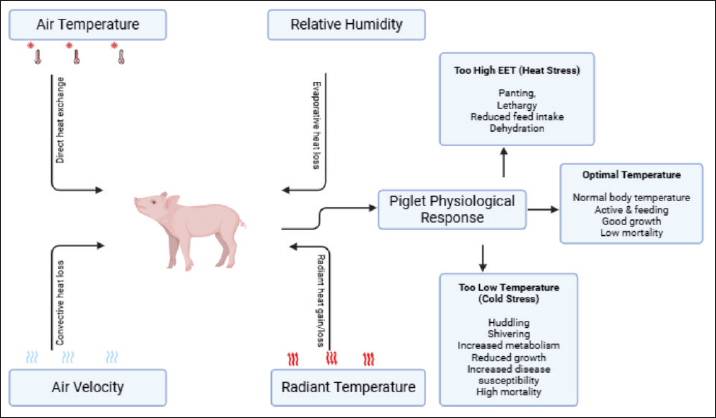

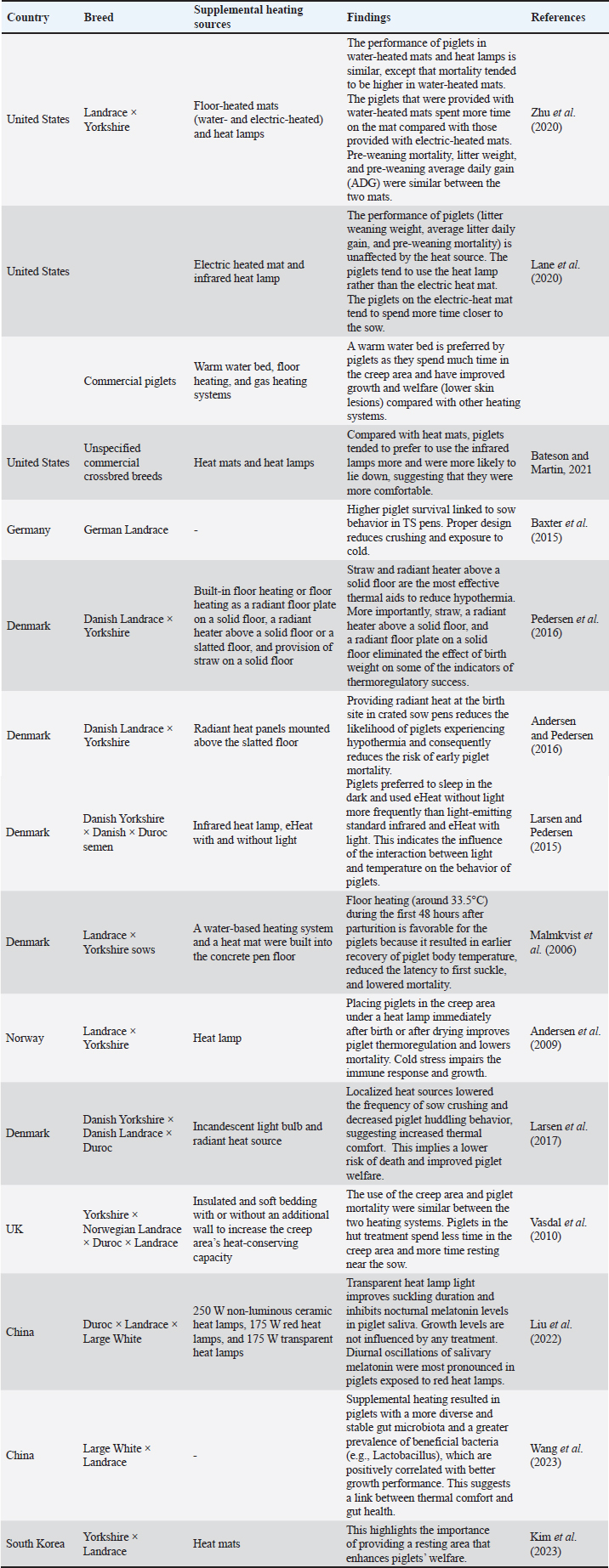

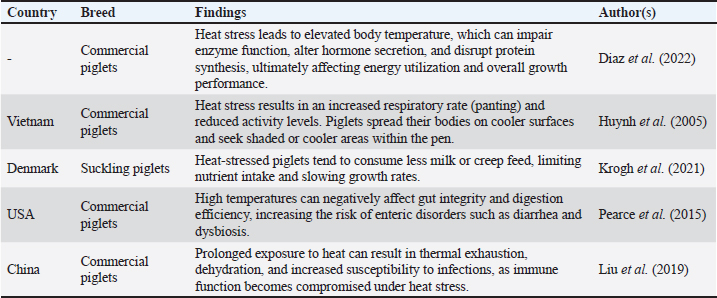
| How to Cite this Article |
| Pubmed Style Nkosi NN, Idowu PA, Nephawe KA, Mpofu TJ. Optimizing the thermal environment for piglets in farrowing houses: A comprehensive narrative review. Open Vet. J.. 2026; 16(8): 5077-5095. doi:10.5455/OVJ.2026.v16.i8.5 Web Style Nkosi NN, Idowu PA, Nephawe KA, Mpofu TJ. Optimizing the thermal environment for piglets in farrowing houses: A comprehensive narrative review. https://www.openveterinaryjournal.com/?mno=297682 [Access: August 08, 2026]. doi:10.5455/OVJ.2026.v16.i8.5 AMA (American Medical Association) Style Nkosi NN, Idowu PA, Nephawe KA, Mpofu TJ. Optimizing the thermal environment for piglets in farrowing houses: A comprehensive narrative review. Open Vet. J.. 2026; 16(8): 5077-5095. doi:10.5455/OVJ.2026.v16.i8.5 Vancouver/ICMJE Style Nkosi NN, Idowu PA, Nephawe KA, Mpofu TJ. Optimizing the thermal environment for piglets in farrowing houses: A comprehensive narrative review. Open Vet. J.. (2026), [cited August 08, 2026]; 16(8): 5077-5095. doi:10.5455/OVJ.2026.v16.i8.5 Harvard Style Nkosi, N. N., Idowu, . P. A., Nephawe, . K. A. & Mpofu, . T. J. (2026) Optimizing the thermal environment for piglets in farrowing houses: A comprehensive narrative review. Open Vet. J., 16 (8), 5077-5095. doi:10.5455/OVJ.2026.v16.i8.5 Turabian Style Nkosi, Nombuso N., Peter A. Idowu, Khathutshelo A. Nephawe, and Takalani J. Mpofu. 2026. Optimizing the thermal environment for piglets in farrowing houses: A comprehensive narrative review. Open Veterinary Journal, 16 (8), 5077-5095. doi:10.5455/OVJ.2026.v16.i8.5 Chicago Style Nkosi, Nombuso N., Peter A. Idowu, Khathutshelo A. Nephawe, and Takalani J. Mpofu. "Optimizing the thermal environment for piglets in farrowing houses: A comprehensive narrative review." Open Veterinary Journal 16 (2026), 5077-5095. doi:10.5455/OVJ.2026.v16.i8.5 MLA (The Modern Language Association) Style Nkosi, Nombuso N., Peter A. Idowu, Khathutshelo A. Nephawe, and Takalani J. Mpofu. "Optimizing the thermal environment for piglets in farrowing houses: A comprehensive narrative review." Open Veterinary Journal 16.8 (2026), 5077-5095. Print. doi:10.5455/OVJ.2026.v16.i8.5 APA (American Psychological Association) Style Nkosi, N. N., Idowu, . P. A., Nephawe, . K. A. & Mpofu, . T. J. (2026) Optimizing the thermal environment for piglets in farrowing houses: A comprehensive narrative review. Open Veterinary Journal, 16 (8), 5077-5095. doi:10.5455/OVJ.2026.v16.i8.5 |


